“She took everything from me. I want to take everything from her.”
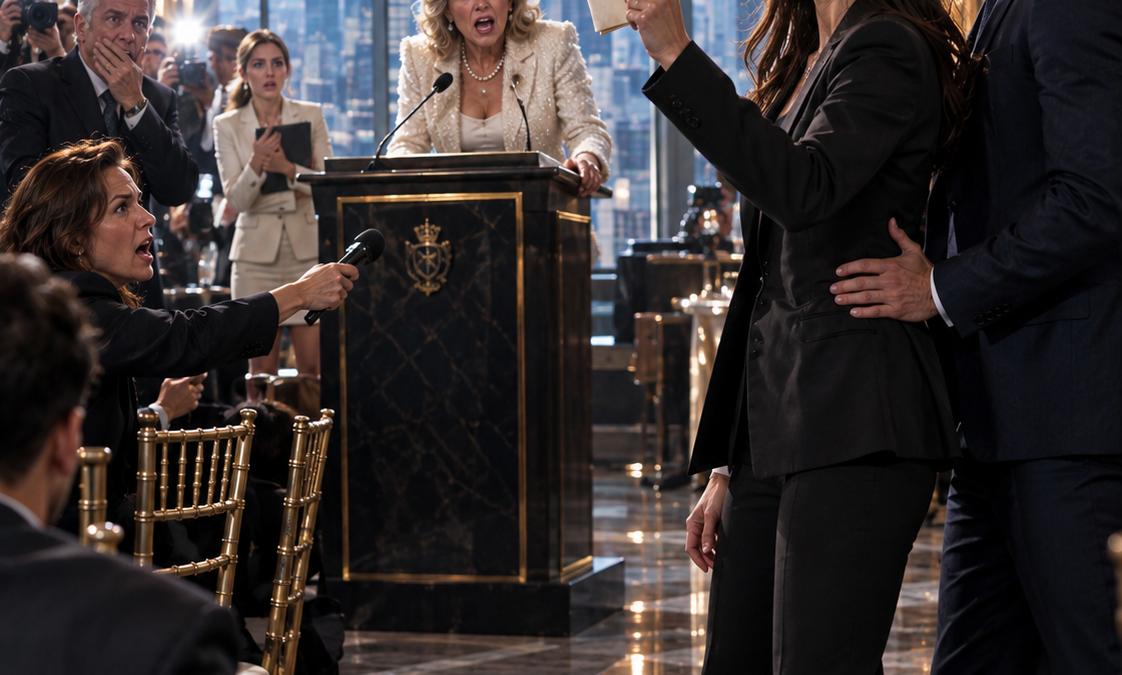
“She took everything from me. I want to take everything from her.”
She married into a family of secrets. She walked out with the truth.
The first blow landed before the champagne was poured.
Elena Ashford stood in the marble foyer of the Ashford estate, her fingers still wrapped around the stem of a flute she hadn’t touched, watching her husband’s mouth move against another woman’s ear.
Not just any woman.
Vivienne Cross. Her mother-in-law’s goddaughter. The one woman in Boston society who had made it her personal mission to remind Elena that she was new money’s attempt at old money — a curator’s daughter who had married above her station, and everyone knew it.
The photograph in Alexander’s breast pocket — she’d found it that morning, tucked behind his wallet. A Polaroid, faded at the edges. A woman’s face, young and laughing, dark hair spilling across a pillow Elena recognized as her own. The same pillow she’d woken up on for six years. Six years of marriage. Six years of Alexander’s hands on her skin, his mouth on her throat, his voice rough in her ear.
And now this.
Vivienne’s laugh cut through the string quartet’s version of a Vivaldi concerto — sharp, practiced, meant to carry. She had her hand on Alexander’s forearm. Her diamond bracelet caught the chandelier light and threw it back, a thousand tiny knives.
Three hundred guests filled the ballroom behind them. The Ashford Foundation’s annual gala — the event of the season, the one where Boston’s elite came to see and be seen, to trade alliances and destroy reputations over caviar and Cristal. Senator Margaret Ashford, Alexander’s mother, held court near the ice sculpture, her silver hair swept into a chignon that probably cost more than Elena’s entire wardrobe.
Every one of them would be watching.
Elena set her champagne flute down on a passing tray with a hand that didn’t shake. She had learned, in six years of Ashford family dinners, how to hide the tremor. How to smile through the subtle digs about her background, her father’s unfortunate business dealings, her mother’s bohemian tendencies. How to be the perfect political wife for a man who was never home.
But this — this was different.
This was a photograph in her husband’s pocket. This was his mouth on Vivienne Cross’s ear, his body angled toward hers in a way that spoke of intimacy, not accident. This was the end of something Elena had fought for so hard she’d forgotten what it felt like to want anything else.
She walked toward them. Her heels clicked against the marble — a steady, deliberate rhythm that cut through the noise. Guests turned. Conversations faltered. She felt their eyes on her like a physical weight, the whispers already starting.
There she is.
Did you hear?
Poor thing.
Elena stopped three feet from her husband. Close enough to see the way his jaw tightened when he registered her presence. Close enough to see the flicker of something — guilt? irritation? — cross his face before his mask slid back into place.
“Elena.” His voice was smooth, controlled. The voice he used in boardrooms, in negotiations, in front of cameras. Not the voice he used in bed, when he was too tired to pretend. “You remember Vivienne.”
“Of course.” Elena’s smile was porcelain. “How could I forget? She’s been at every family dinner for the past two years.”
Vivienne’s laugh was a little too bright. “Elena, darling. You look exhausted. Are you feeling well?”
“I’m fine.” Elena’s gaze didn’t leave Alexander’s face. “But I’d like to speak with my husband. Privately.”
The silence around them was absolute. Even the senator had stopped mid-sentence, her eyes sharp and calculating. She was measuring the situation, Elena knew — calculating the political cost of a public scene, weighing her son’s reputation against her daughter-in-law’s potential for damage.
Alexander’s hand closed around Elena’s elbow. His grip was firm, proprietary. The grip of a man who owned things and expected them to stay where he put them.
“Later,” he said quietly. “After the speeches.”
“No.” Elena pulled her arm free. The movement was small, but it sent a ripple through the crowd. “Now.”
His eyes — gray, cold, the color of the Atlantic in winter — flickered. For a moment, something raw surfaced. Something that looked almost like pain.
Then it was gone.
“Very well.” He turned to Vivienne, his voice pitched low. “Excuse us.”
Vivienne’s smile didn’t waver, but her fingers tightened on her champagne glass. She was afraid, Elena realized. Afraid of what Elena might say. Afraid of what she might know.
Good.
Alexander led Elena through the crowd, his hand hovering at the small of her back — not touching, but present. A warning. A claim. The guests parted for them like water around a stone, their whispers rising in their wake.
He didn’t take her to the library, where they’d had their first real conversation six years ago. He didn’t take her to the terrace, where they’d stood on their wedding night and watched the city lights, his arms around her waist, his breath warm against her ear.
He took her to the study. The one room in the house he’d forbidden her from entering.
That told her everything.
The door clicked shut behind them. The study was exactly as she’d imagined — dark wood, leather chairs, a desk the size of a small car. The walls were lined with books she suspected he’d never read, their spines pristine. A fire burned in the hearth, unnecessary for the mild September evening, but Alexander liked the aesthetic of power.
He walked to the desk and turned to face her. His shoulders were squared, his hands clasped behind his back. The posture of a man who expected to win.
“You’re making a scene,” he said.
“I’m making a point.”
“You’re embarrassing yourself. And me. And my mother, who has spent the last twenty years building this family’s reputation—”
“Your mother.” Elena laughed, and the sound was ugly. “You’re worried about your mother? Your mother has spent the last six years making my life a living hell. Your mother told me, on our wedding day, that I would never be good enough for you. That I was a duty, not a choice.”
Alexander’s expression didn’t change. “She was trying to protect you.”
“From what? From you?”
From the silence, she knew she’d hit something.
Elena reached into her clutch and pulled out the photograph. She’d taken it from his coat pocket that morning, after he’d left for a breakfast meeting. She’d stared at it for an hour before the gala, trying to convince herself it meant nothing. That it was an old picture. A memory. That the woman’s face was just a face.
But she knew the pillow. She knew the light slanting through the window — their bedroom window, the one that faced the harbor. She knew the curve of the woman’s shoulder, because she’d seen it in the mirror every day for six years.
“This is Vivienne,” Elena said. “Isn’t it.”
Alexander didn’t look at the photograph. He looked at her. His gaze was steady, unreadable. “You went through my things.”
“Answer the question.”
“Vivienne and I have a history.”
“A history.” Elena’s voice cracked, and she hated herself for it. “You married me. You stood in that church and swore to love me, to cherish me, to forsake all others. And the whole time—”
“The whole time, I was doing what was necessary.” His voice was quiet, but there was steel beneath it. “You know this, Elena. You’ve always known this. Our marriage was an arrangement. A contract. I needed a wife who could help me secure the Wentworth deal, and you needed—”
“I needed you.” The words tore out of her, raw and bleeding. “I loved you. I loved you, Alexander. I loved you so much I convinced myself you loved me back. That the way you touched me, the way you looked at me when you thought I was asleep — that it meant something. That I meant something.”
He was silent.
“Say something.” Her voice was barely a whisper. “Tell me I’m wrong. Tell me it was real.”
Alexander turned away. He walked to the window, his hands shoved into his pockets, his reflection a ghost in the dark glass.
“It was real,” he said. “That’s the problem.”
She didn’t understand.
He turned back to face her, and for the first time, she saw something beneath the mask. Something cracked. Something human.
“Vivienne is my past,” he said. “You are my present. But my mother — my mother wants a different future. She wants the Wentworth merger. She wants the political connections. She wants a wife who can play the game the way she plays it.”
“And Vivienne can play the game.”
“Vivienne is the game.” He crossed the room, stopping close enough that she could smell his cologne — sandalwood and something sharper. “I was going to tell you. After tonight. After the speeches. I was going to explain everything.”
“Explain what?”
He reached into his jacket and pulled out a folded document. The Ashford crest was embossed on the envelope — a lion and a rose, the family motto coiled beneath: Fortis et Fidelis. Strong and faithful.
“Divorce papers,” he said.
The world tilted.
“I’m not signing them,” he continued. “I’m showing you because I want you to know what’s at stake. My mother drafted them six months ago. She’s been pushing for this since the day we married. She believes Vivienne is the better match. The better asset.”
Elena stared at the envelope. Her hands felt numb. Her lips felt numb. Everything felt numb.
“You’re not signing them,” she repeated.
“I’m not signing them.” He tossed the envelope onto the desk. “But the decision isn’t mine alone. It never has been. You know how this family works, Elena. My mother controls the trust. She controls the board. She controls everything I’ve spent my life building.”
“And what do I control?”
The question hung between them.
Alexander’s jaw tightened. “Yourself. Your choices. The people you let in.”
“You’re telling me to fight.”
“I’m telling you to be smart.” He stepped closer, close enough that she had to tilt her head to meet his eyes. “My mother is dangerous. She’s been playing this game for forty years. She’s destroyed people, Elena. Careers. Lives. If she decides you’re a liability—”
“She’ll destroy me.”
“She’ll try.”
Elena’s breath caught. The fire crackled behind her. The photograph was still in her hand, the edges bent from her grip.
“Who is she?” she asked. “The woman in the photograph. It’s not Vivienne.”
Alexander was silent for a long moment. Then he reached out and gently took the photograph from her hand. He looked at it — really looked at it — and something in his expression shifted. Something raw and ancient and unguarded.
“She was my sister,” he said.
Elena’s heart stopped.
“Her name was Sarah. She died when I was nineteen. A car accident — or that’s what the police report said. My mother made sure it stayed that way.” His thumb traced the edge of the photograph. “She would have liked you. She always said I needed someone who would fight back.”
“I don’t understand.”
Alexander looked up, and his eyes were wet. He was crying, she realized. Her husband was crying, and she had never seen him cry, not once in six years.
“The Wentworth merger is a trap,” he said. “My mother is using it to consolidate power. She’s planning to take over the company — put me on the board and pull the strings from behind. And the only way to stop her is to prove she’s been hiding something. Something about Sarah. Something about why she really died.”
He pressed the photograph into Elena’s palm and closed her fingers over it.
“I can’t investigate her myself. She’s watching me too closely. But she doesn’t watch you. She doesn’t think you’re a threat.” His voice dropped to a whisper. “Help me, Elena. Help me prove what my mother did. And I swear to you — I will make it worth everything.”
She stared at him. At this man she had married. At this stranger.
“What about Vivienne?”
“She’s leverage. My mother’s leverage.” He stepped back, his mask sliding back into place. “But I’m done playing her game.”
The door opened.
Senator Margaret Ashford stood in the doorway, her silver dress catching the light, her expression a perfect mask of polite concern. Behind her, the murmur of the party continued — three hundred witnesses to the scene Elena was about to make.
“Alexander,” the senator said. “The speeches are starting. Whatever this is—”
“It’s handled,” Alexander said smoothly. He turned to Elena, and his voice was cool, formal, the voice of a man addressing a business associate. “We’ll finish this later.”
Elena looked at the photograph in her hand. Sarah’s face, laughing. Alive.
Then she looked at her mother-in-law.
“No,” she said. “We’ll finish it now.”
CHAPTER TWO: The Lion and the Rose
Margaret Ashford had a way of looking at people that made them feel small.
She did it now, standing in the doorway of Alexander’s study, her perfectly arched brows lifting just slightly as she took in the scene. Her son, stiff-shouldered and pale. Her daughter-in-law, clutching a photograph like a weapon.
“Elena, darling,” Margaret said, her voice dripping honey. “You look upset. Are you feeling unwell? I told Alexander you shouldn’t have had that second glass of champagne.”
“I’ve had half a glass of champagne,” Elena said. “I’m not drunk. I’m angry.”
“Angry.” Margaret stepped into the room, closing the door behind her with a soft click. “What an ugly word. At a charity gala, no less. Think of the optics.”
“Think of the ethics.” Elena held up the photograph. “Why did Alexander have a picture of his dead sister in his pocket tonight?”
The silence that followed was thick enough to choke on.
Margaret’s expression didn’t change. Her smile didn’t waver. But something in her eyes flickered — a shadow of something cold and calculating.
“Sarah,” she said. “You found the photograph.”
“You knew about it.”
“I know everything that happens in this house.” Margaret walked to the desk, her heels silent on the Persian rug. “I know what Alexander does, what he thinks, what he wants. I know what he’s never been able to say to you.”
“He told me about Sarah.”
“Did he?” Margaret picked up the divorce papers, her fingers gliding over the embossed envelope. “How touching. Did he also tell you that Sarah was mentally unstable? That she’d been in and out of institutions for years? That the accident was—”
“A car accident.” Elena’s voice was steady. “That’s what the police report said.”
“The police report said a lot of things.” Margaret set the envelope down. “Most of them true.”
Alexander stepped forward, his body angled between Elena and his mother. “Don’t.”
“Don’t what? Tell the truth?” Margaret’s smile was cold. “You’ve been shielding Elena from the truth since the day you married her. It’s one of your most endearing qualities, really. This chivalrous need to protect her. But it’s time she knew what she was getting into.”
“Say it, then.” Elena’s hands were shaking, but her voice wasn’t. “Say what you want to say.”
Margaret studied her for a long moment. Then she laughed — a low, elegant sound that made the hair on Elena’s arms rise.
“You have spirit,” Margaret said. “I’ll give you that. It’s why I chose you for him. Vivienne is beautiful, well-connected, well-bred — everything a wife should be. But she lacks that fire. That desperation. The hunger that comes from being nobody and wanting to be somebody.”
“You chose me for him.” Elena’s voice was flat.
“I arranged your meeting. Your first date. Your proposal.” Margaret’s eyes gleamed. “You thought it was fate, didn’t you? The way you ran into him at that gallery opening. The way he looked at you across the room. The way he pursued you, courted you, fell in love with you.”
Elena felt the floor shift beneath her feet. The memory replayed in her mind — the gallery opening, three years before the wedding. Alexander, standing in front of a Klimt print, his profile sharp and beautiful. The way he’d turned and caught her staring. The way he’d smiled.
It had felt like fate.
It had felt like a dream.
“There’s no such thing as fate,” Margaret said. “There’s only strategy. You were the perfect choice — beautiful enough to be an asset, ordinary enough to be controlled. No family connections. No wealth. No power. The kind of woman who would be grateful to be chosen, and terrified of being cast aside.”
“That’s enough.” Alexander’s voice was sharp.
“Is it?” Margaret turned to her son, and her smile was poison. “Tell her the rest, darling. Tell her why you really married her. Tell her what happens if she walks out that door.”
Alexander’s jaw tightened. He didn’t speak.
“I’ll tell her myself.” Margaret faced Elena, and for a moment, her mask slipped — and Elena saw the cold, calculating predator underneath. “You were never supposed to be more than a temporary placement. A prop for the Wentworth deal. Once Alexander secured the merger, we planned to annul the marriage quietly — a private settlement, a generous severance package, a promise to keep your name out of the press.”
“Planned,” Elena repeated. “You planned to throw me away.”
“We planned to be practical. But then Alexander — sentimental fool that he is — decided he wanted to keep you. And then you got pregnant.”
The word hit Elena like a physical blow.
“I’m not pregnant.”
“You’re not now.” Margaret’s voice softened, and that was somehow worse. “But you were. Three years ago. Did you even know? Did you notice the missed period, the fatigue, the way your body felt different? Or were you too busy playing the happy wife to pay attention to what was really happening?”
Elena’s hand flew to her stomach. Three years ago. The year she’d been so exhausted she could barely get out of bed. The year the doctors had said it was stress, just stress, nothing to worry about.
“I lost it,” she whispered.
“You did.” Margaret’s expression was almost pitying. “And I have to admit, I was relieved. A child would have complicated things. A child would have given you leverage. But you recovered, and Alexander got his merger, and we’ve been living with the consequences ever since.”
“What consequences?”
“The consequences of keeping you.” Margaret glanced at her son. “Alexander refused to let you go. He threatened to expose the arrangements — the contracts, the payments, the deals I’d made with the Wentworth family. He said if I touched you, if I even looked at you wrong, he would destroy everything I’ve built.”
“Why?” Elena looked at Alexander. Her voice was small. “Why would you do that?”
He didn’t answer. He was looking at the floor, his jaw tight, his hands clenched at his sides.
“Because he loves you,” Margaret said. “Pathetically, inconveniently, dangerously — he loves you. And it’s going to be the death of him.”
She walked to the door, her heels clicking on the marble. She paused with her hand on the handle, looking back over her shoulder.
“The divorce papers are real, Elena. I expect them signed by the end of the month. If you refuse — if you make this difficult — I will release the records from your father’s embezzlement trial. I will tell the press about your mother’s affair with her psychiatrist. I will make sure every bank, every employer, every possible future you might have is destroyed.”
“You wouldn’t.”
“I would.” Margaret’s smile was serene. “I’ve done worse for less. Ask Alexander.”
She left, closing the door softly behind her.
The silence in the room was absolute.
Elena stood frozen, her hand still pressed to her stomach. Three years ago. The exhaustion. The nausea she’d blamed on stress. The bleeding she’d thought was a heavy period.
She’d been pregnant. She’d lost it. And no one had told her.
“You knew.” Her voice was barely a whisper. “You knew I was pregnant and you didn’t tell me.”
Alexander looked up. His eyes were red, hollow. “I didn’t know until after. She’d arranged the whole thing — the doctors, the tests, the secrecy. I found out six months later, when I was going through her files.”
“And you didn’t tell me.”
“I was going to. I was. But then—” He ran a hand through his hair, disheveling the careful arrangement. “You were so happy. You’d finally started to settle in. You were making friends, decorating the house, talking about the future. I couldn’t — I didn’t want to—”
“You didn’t want to hurt me.”
“I didn’t want to lose you.” He crossed the room in three strides, his hands cupping her face, his forehead pressed to hers. “I know that makes me a coward. I know it makes me a monster. I know you hate me right now, and you have every right to. But I need you to understand: everything I’ve done, everything I’ve hidden — it was all to protect you from her.”
Elena closed her eyes. She could feel the warmth of his hands, the solidity of his body. She could feel the love that had been there, once — the love she’d built her whole life around.
It felt like ashes now.
“I don’t know who you are,” she said.
“I’m your husband.”
“You’re a stranger.” She pulled back, her hands dropping to her sides. “You’ve been a stranger for six years. I thought I knew you. I thought I could trust you. But you’ve been lying to me since the day we met.”
“I never lied. I just didn’t tell you everything.”
“That’s the same thing.”
Alexander’s hands fell to his sides. He looked broken, she realized. Truly broken. Not the polished, controlled man who ran a billion-dollar conglomerate. Not the political husband who knew how to work a room. Just a man who had made impossible choices, and was now living with the consequences.
“I need time,” Elena said. “I need to think.”
“You’re not leaving.”
“I’m not staying either.” She walked to the door, her hand on the handle. “I’m going to the guest house. I’m going to spend the night alone. And tomorrow, I’m going to decide what to do next.”
“Elena—”
“Don’t.” She didn’t turn around. “Don’t follow me. Don’t call. Don’t send anyone. If you do — if you so much as look at me wrong — I will sign those divorce papers and disappear. And you will never see me again.”
She opened the door and walked out.
The gala was still going. The music drifted through the halls, the laughter, the clink of glasses. Three hundred guests, unaware that the Ashford marriage had just collapsed in the study behind them.
Elena walked past them all. Past the senator, who watched her with cold satisfaction. Past Vivienne, who smirked into her champagne. Past the whispers and the stares and the rumors already spreading.
She walked out the front door, into the cool September night, and didn’t look back.
CHAPTER THREE: The Guest House
The guest house sat at the edge of the property, a small stone cottage overlooking the harbor. It had been built for Alexander’s grandmother, a woman who — according to family legend — had hated her husband enough to demand separate living quarters.
Elena understood the impulse.
She let herself in with the key she’d never used, in six years of marriage. The cottage was clean and cold, the furniture covered in sheets, the air stale with disuse. She turned on a lamp, and the room flickered to life — a small sitting area, a kitchenette, a bedroom visible through an open door.
She sat on the edge of the bed and stared at the photograph in her hand.
Sarah Ashford. Alexander’s sister. Nineteen years old, dark-haired, laughing. The same gray eyes as her brother.
She would have liked you.
Elena didn’t know what to do with that. Didn’t know what to do with any of it — the photograph, the divorce papers, the confession. The baby she’d never known she’d lost.
The baby Alexander had never told her about.
She pressed her palm to her stomach. Empty. It had been empty for three years, and she hadn’t known. Hadn’t felt it. Hadn’t mourned it.
You were never supposed to be more than a temporary placement.
Margaret’s voice, cold and precise, echoed in her mind. A prop for the Wentworth deal. A pretty face for the photos.
The wedding. The vows. The way Alexander had looked at her as she walked down the aisle — had that been real? Had any of it been real?
Or had she been playing a role she hadn’t known she’d been cast in?
A knock at the door.
Elena’s head snapped up. She’d told him not to follow. She’d told him to leave her alone.
But it wasn’t Alexander.
A woman stood on the doorstep — mid-thirties, dark hair pulled back in a practical ponytail, wearing jeans and a sweater instead of evening wear. She held a leather satchel in one hand and a bottle of whiskey in the other.
“You’re Elena,” the woman said. “I’m Dr. Nora Chen. I work for the Ashford Foundation — I’m the medical director.”
“I know who you are. Alexander has mentioned you.” Elena hesitated. “Why are you here?”
“Because Margaret Ashford is a monster, and I’ve been waiting six years for someone to figure that out.” Nora held up the whiskey. “Can I come in?”
Elena stepped aside.
Nora walked into the cottage like she owned it, setting the whiskey on the kitchen counter and pulling two glasses from a cabinet. She poured generously, then handed one to Elena.
“Drink,” she said. “You look like you need it.”
Elena took the glass. The whiskey burned going down, but it warmed something cold inside her. “How do you know what happened?”
“Margaret’s assistant is a friend of mine. She texted me when the senator left the study.” Nora sat on the arm of the sofa. “I’ve been waiting for this night for years. The night someone finally stood up to her.”
“You’ve been waiting.”
“I was Sarah’s doctor. Before she died.” Nora’s voice was quiet. “I was the one who signed the death certificate. I was the one who told the police it was an accident.”
Elena’s hand tightened on the glass. “It wasn’t.”
“No. It wasn’t.” Nora took a long drink. “Sarah was healthy. She wasn’t mentally unstable, no matter what Margaret told everyone. She was sharp, funny, fierce. And she knew something about her mother — something Margaret couldn’t afford to have exposed.”
“What?”
“I don’t know. She never told me. But she was scared. The week before she died, she called me in the middle of the night. She said she’d found proof of something — something that would destroy Margaret’s reputation. She said she was going to confront her mother, and she needed me to be her witness.”
“Her witness for what?”
“For whatever happened next.” Nora set her glass down. “She never made it to the confrontation. The next day, she was dead. And Margaret made sure the investigation was closed within a week.”
Elena’s pulse was racing. The photograph. The divorce papers. The confession in the study. It was all connected — a web of secrets and lies that stretched back twenty years.
“Why are you telling me this?”
“Because you’re the only one who can stop her.” Nora leaned forward. “Alexander has been trying for years, but he’s too close. She’s his mother. She knows how to manipulate him. But you — you’re an outsider. You see things he can’t.”
“I don’t see anything. I don’t know anything.”
“You know she’s dangerous. You know she’ll destroy you if you let her.” Nora’s eyes were steady. “The question is: what are you going to do about it?”
Elena stared at the photograph in her hand. Sarah’s laughing face. Sarah’s gray eyes.
She would have liked you.
“I don’t know,” she said. “I don’t know who to trust. I don’t know what’s real.”
“The only thing that’s real is what you decide to believe.” Nora stood. “I have to go — Margaret has people watching me. But I wanted you to know: you’re not alone. There are others who want to see her fall.”
She walked to the door, then paused.
“One more thing. The baby you lost — the one Alexander never told you about. It wasn’t a natural miscarriage.”
Elena’s blood ran cold. “What?”
“Margaret arranged it. She gave you a drug — slipped it into your tea at a family dinner. I saw the records. I couldn’t prove anything without risking my career, but I kept a copy of everything. If you ever need it—”
She reached into her satchel and pulled out a manila envelope. She set it on the counter.
“I’m sorry it took me so long to tell you.” Nora’s voice cracked. “I was scared. But I’m not scared anymore.”
She left.
Elena stood in the center of the cottage, holding the envelope, holding the photograph, holding the weight of everything she’d just learned.
She’d been pregnant. She’d lost the baby. And it hadn’t been an accident.
Margaret arranged it.
Her hand moved to her stomach again. Empty. She’d been so tired that year. So sick. She’d thought it was stress. She’d thought it was the pressure of being a politician’s wife.
It had been murder.
Not of a life, not yet — but of a potential. A future. A child she’d never had the chance to know.
Elena sank onto the sofa, her legs suddenly weak. The envelope was heavy in her hands. Evidence. Proof of what Margaret had done. Proof that could destroy her — if Elena was brave enough to use it.
But using it meant going to war. It meant exposing the Ashford family for what they were. It meant hurting Alexander, who had lied to protect her. It meant risking everything she’d built — her reputation, her safety, her life.
She thought of Sarah. Nineteen years old, laughing in a Polaroid. Dead a week later, because she’d found the truth and tried to tell it.
She would have liked you.
Elena opened the envelope.
The documents inside were damning.
Medical records, dated the week of her supposed miscarriage. Blood tests that showed traces of a drug called misoprostol — a medication used to induce abortion. A prescription slip, signed by a doctor Elena had never heard of, paid for by a shell company she traced back to the Ashford Foundation.
And a note, in Margaret’s precise handwriting:
Make sure it looks natural. No questions.
Elena’s hands shook. She set the papers down, her stomach heaving. She made it to the bathroom just in time, retching into the toilet until there was nothing left but bile.
When she was finished, she washed her face with cold water and stared at herself in the mirror. Pale. Hollow-eyed. A stranger.
You’re the only one who can stop her.
She walked back to the sitting area and picked up the photograph of Sarah. The woman who had died trying to expose the truth. The woman who had been silenced, erased, forgotten.
Elena wouldn’t be forgotten.
She pulled out her phone. Eleven missed calls from Alexander. Twice as many texts. She ignored them all.
Instead, she called the one person she knew she could trust. The one person who had never lied to her, never manipulated her, never used her for political gain.
Her mother.
“Elena?” Her mother’s voice was groggy with sleep. “It’s two in the morning. What’s wrong?”
“Everything.” Elena’s voice broke. “Everything is wrong. I need your help.”
“Tell me.”
And Elena told her. All of it — the photograph, the confession, the divorce papers, the baby. The baby Margaret had killed.
Her mother was silent for a long moment. Then she said, “I’m coming to get you.”
“No. Not yet. I need to stay. I need to find out what Sarah knew — what she found that was worth killing for.”
“Elena—”
“I’m not the girl who married Alexander Ashford anymore.” Elena’s voice was steady now, cold and clear. “I’m not the naive curator’s daughter who thought love could fix everything. I’m something else now.”
“What are you?”
“I’m a woman with nothing left to lose.” Elena looked at the photograph of Sarah. At the documents spread across the table. At the future she was about to build from the ashes of her past. “And that makes me dangerous.”
CHAPTER FOUR: The Morning After
Alexander found her at dawn.
She was sitting on the porch of the guest house, wrapped in a blanket, watching the sun rise over the harbor. The water was still, glassy, reflecting the pink and gold of the sky. It should have been beautiful. It felt like a wound.
He approached slowly, his footsteps loud on the gravel path. He’d changed out of his tuxedo into jeans and a sweater, and he looked exhausted — dark circles under his eyes, his hair disheveled, his jaw shadowed with stubble.
“You didn’t answer my calls,” he said.
“I didn’t want to talk to you.”
“I know. I just — I needed to see you. To make sure you were okay.”
“I’m not okay.” Elena didn’t look at him. “I’m about as far from okay as it’s possible to be.”
He sat on the step below her, his back to the railing, his gaze fixed on the water. For a long moment, neither of them spoke.
“I should have told you,” he said finally. “About the baby. About Sarah. About everything.”
“Yes. You should have.”
“I was afraid.”
“Of what?”
“Of losing you.” He laughed, a hollow sound. “Pathetic, right? I’m the CEO of a billion-dollar company. I negotiate with foreign governments. I’ve faced down hostile takeovers and corporate espionage. But the thought of telling you the truth — of seeing the look on your face when you realized what kind of family you’d married into — that terrified me.”
Elena finally looked at him. His profile was sharp against the sunrise, his gray eyes fixed on the horizon. He looked like a stranger. He looked like the man she’d loved.
“Who is Vivienne?” she asked.
“My mother’s choice. The woman she wanted me to marry.” He picked at a loose thread on his sweater. “We dated in college. Briefly. It was never serious — at least, not for me. But my mother saw an opportunity. Vivienne’s family has connections, money, influence. Everything the Ashfords needed to expand.”
“And me?”
“You were different.” He turned to face her. “You were real. You didn’t care about the money, the power, the politics. You cared about art, about beauty, about the world. You made me feel like I could be something other than what my mother wanted me to be.”
“So you married me to spite her.”
“I married you because I loved you.” His voice cracked. “I still love you. That’s the problem.”
Elena looked away. The sun was fully up now, the harbor glittering with light. It was going to be a beautiful day. She felt nothing.
“Margaret killed our baby,” she said.
Alexander went very still. “What?”
“I have proof. Medical records. Prescriptions. A note in her handwriting.” Elena’s voice was flat. “She arranged the miscarriage. She drugged me at a family dinner. She murdered our child before it was even born.”
Alexander didn’t speak. He didn’t move. For a moment, she thought he hadn’t heard her.
Then he stood, walked to the railing, and gripped it with both hands. His knuckles went white. His shoulders shook.
“I didn’t know,” he whispered. “I swear to you, Elena — I didn’t know.”
“Would it have mattered if you did?”
He turned to face her, and she saw the tears streaming down his face. Not the controlled tears of the night before. Real tears. Raw and ugly and human.
“It would have mattered,” he said. “It would have changed everything. I would have—” He stopped, his voice breaking. “I would have killed her. I would have destroyed everything she’s ever built. I would have burned this family to the ground.”
Elena studied him. The grief on his face. The rage in his eyes. The way his hands trembled.
“Then help me,” she said.
“Help you what?”
“Destroy her.” Elena stood, letting the blanket fall. The morning air was cold, but she didn’t feel it. She felt nothing but the fire in her chest. “She took everything from me — my husband, my child, my future. I want to take everything from her.”
Alexander stared at her. “How?”
“I don’t know yet. But I know what Sarah found — the thing that got her killed. I know it’s still out there. And I know that if we find it, we can destroy Margaret once and for all.”
“She’ll come after you.”
“Let her.” Elena’s voice was cold. “I’m not afraid of her anymore.”
Alexander reached out and took her hand. His fingers were warm, calloused, familiar. She didn’t pull away.
“I’m with you,” he said. “Whatever it takes. Whatever it costs. I’m with you.”
“Good.” Elena looked at their joined hands. At the man who had lied to her, betrayed her, failed her. At the man who was now the only ally she had. “Because we’re going to need each other.”
 [Tap here for the Next Part ]

