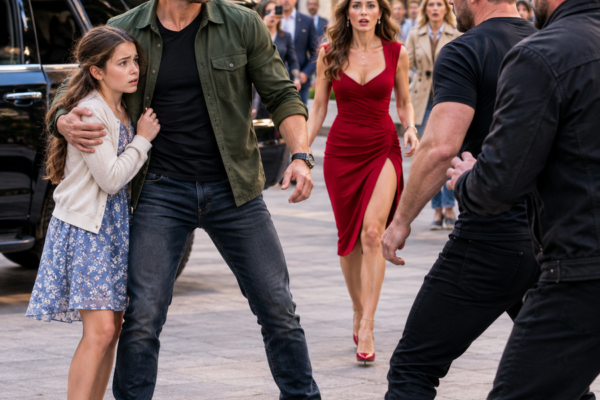
“Some men just can’t handle being in the same room as their betters.”
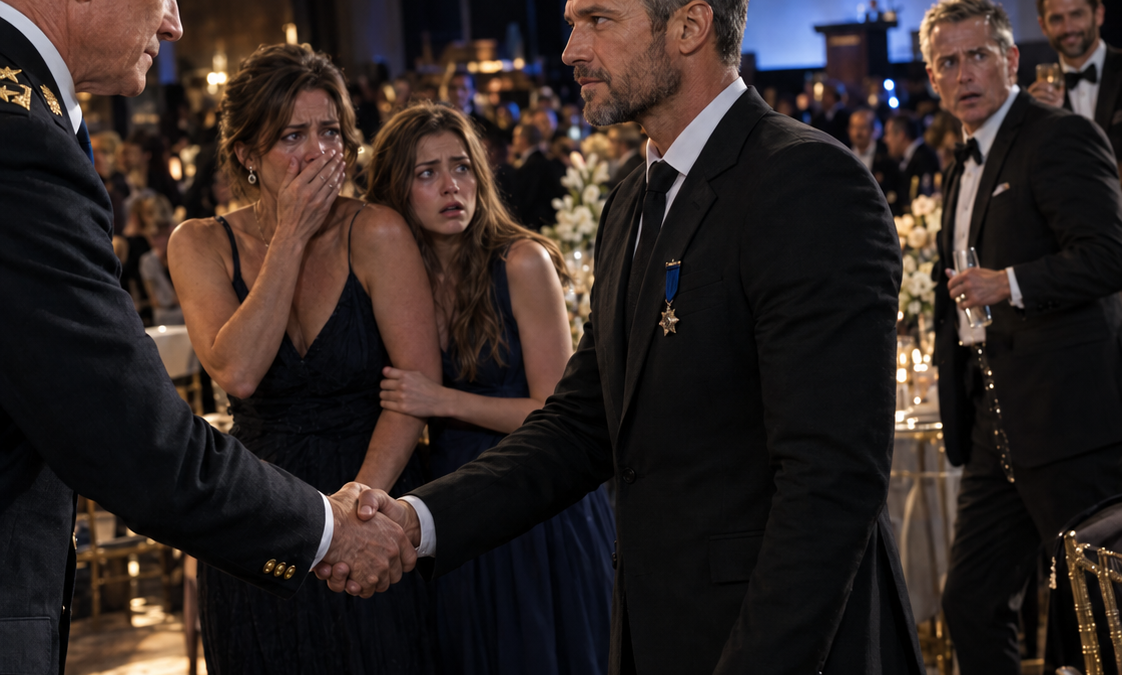
“The hand on my wife’s shoulder didn’t belong there. I watched it from fifteen feet away, a glass of flat champagne in my hand, and I said nothing.”
They thought Daniel Briggs was just a quiet carpenter who married above his station → They learned he was a Silver Star recipient who’d saved the life of a billionaire — and Richard Calloway learned it in a jail cell.
I watched it from fifteen feet away, a glass of flat champagne in my hand, and I said nothing. The man who owned that hand was Richard Calloway, CEO of Calloway Capital Partners, and he was smiling at my wife the way a man smiles at a piece of art he owns.
“Claire, darling,” he said, loud enough for the table to hear. “You’re the best thing that ever happened to this firm.”
She laughed. The polite laugh. The one I’d heard her use at parties for twenty-two years.
Then he turned to me.
“You must be the husband.”
“I am.”
He looked me up and down. Slow. Deliberate. The way a man sizes up a piece of furniture he’s considering throwing out.
“Marine, right?” He didn’t wait for an answer. “Claire mentioned. Must be tough, transitioning back to civilian life. Not everyone can keep up.”
The table laughed. His wife. His CFO. Two junior associates who wanted to be him when they grew up.
I said nothing.
What he didn’t know was that I’d been in this room for two hours before he arrived, and I already knew three things about him that would end his career.
My name is Daniel Briggs. I was forty-seven years old when Richard Calloway put his hand on my wife’s shoulder and called me lucky to be in the room.
I spent twelve years in Marine Corps Force Recon, then another eight in MARSOC. Three deployments to Afghanistan. Two to Iraq. One to places I still can’t name. I retired as a Master Sergeant with a Silver Star, two Bronze Stars with V, and a Purple Heart I never told anyone about.
My wife knew I was a Marine. She didn’t know the rest.
That was by design.
The gala was at the Meridian Hotel in downtown Charlotte. Black tie. Crystal chandeliers. A string quartet playing something safe and expensive. Calloway Capital Partners was celebrating its fifteenth anniversary, and Richard Calloway wanted everyone to know it.
Claire had been his executive vice president for six years. She was good at her job. Better than good. She’d built the client relations division from nothing, brought in forty million in new assets her first three years. Richard promoted her twice and took credit for her work both times.
She came home tired. She came home frustrated. But she came home.
I worked from my shop in the garage. Custom furniture. High-end pieces for people who wanted something real instead of something manufactured. I made enough to cover our bills, not enough to impress anyone at a black-tie gala.
That was fine.
I didn’t need to impress anyone.
“You’re staring,” Claire whispered.
We were at our table now. Table seven. Close enough to the stage to see the sweat on Richard’s forehead when he gave his speech, far enough that he’d forgotten we existed.
“I’m observing,” I said.
“Same thing.”
She wasn’t wrong.
I’d been observing Richard Calloway for six months. Not because I was jealous. Because I’d noticed things.
The way he touched his female employees. The way he touched my wife.
The way his financial reports didn’t match the public filings.
The way one of his junior partners, a kid named Marcus Webb, had stopped coming to work three weeks ago and nobody would say why.
I noticed things. That was the job. Old habits.
“What do you think of him?” Claire asked.
“Which him?”
“Richard.”
I took a sip of champagne. It was warm and sweet and tasted like money pretending to be taste.
“He’s careful,” I said.
“What does that mean?”
“It means he knows what he’s doing.”
She looked at me. That look she gets when she knows I’m not saying everything. Twenty-two years of marriage teaches you things.
“Daniel.”
“Claire.”
She sighed and turned back to the stage. Richard was at the podium now, telling a story about the early days. How he’d built the firm from nothing. How he’d taken chances on people nobody else would.
How he’d made Calloway Capital Partners the most trusted name in wealth management in the Southeast.
The crowd applauded.
I set down my champagne.
What they didn’t know was that Richard Calloway had been running a Ponzi scheme for eight years, and I had the documents to prove it.
The night got worse before it got better.
Dinner was served at eight. Filet mignon, truffle risotto, a wine pairing that cost more than my monthly mortgage. I ate mechanically and watched the room.
Richard worked it like a politician. Handshakes. Back slaps. The fake laugh that meant nothing. He spent twenty minutes with the CFO of a local bank, then ten with a city councilman, then five with a woman who I recognized from the news. Some kind of philanthropist.
He avoided table seven until dessert.
When he finally came over, he brought his wife. Patricia. Blonde, sixty, surgically maintained. She looked at Claire like she was a piece of furniture that needed dusting.
“Claire, sweetheart,” Patricia said. “You look exhausted.”
“I’m fine.”
“You work too hard.” Patricia’s eyes slid to me. “Richard tells me you’re married to a… carpenter?”
“Furniture maker,” I said.
“Same thing.”
“Not quite.”
She smiled. It didn’t reach her eyes.
Richard put his hand on Claire’s shoulder again. The same spot. The same possessive grip.
“You know,” he said, “I’ve been meaning to talk to you about something.”
Claire stiffened. “What’s that?”
“A promotion. Senior VP of the whole division. But I need to know you’re committed. No distractions.”
His eyes flicked to me.
“What does that mean?” Claire asked.
“It means I need someone who’s all in. Someone whose focus is on the firm, not on… other things.”
The table went quiet.
I watched my wife’s face. The flush. The anger. The fear.
She’d worked for this. For years.
“What are you saying?” she asked.
“I’m saying I need to think about it.” Richard smiled. “But I’m sure we can work something out. You’re valuable, Claire. Very valuable.”
His hand tightened on her shoulder.
I set my napkin on the table.
“Richard,” I said.
He looked at me. Surprised. Like a chair had spoken.
“Yes?”
“I’d like to ask you something.”
Claire’s hand found my knee under the table. A warning. Don’t.
I ignored it.
“Of course,” Richard said. His smile was back. “Ask away.”
“How long have you known Marcus Webb?”
The smile froze.
Just for a second. A blink. But I saw it.
“Marcus?” Richard laughed. “Marcus was a junior associate. He left. Decided the corporate life wasn’t for him.”
“He left three weeks ago. Mid-project. No notice.”
“That’s right.”
“Did you know he filed a complaint with the SEC before he left?”
The table went silent.
Richard’s face didn’t change. He was good. I’d give him that.
“I have no idea what you’re talking about,” he said.
“I think you do.”
“Daniel.” Claire’s voice was sharp. “Stop.”
I looked at her. Her eyes were wide. Scared.
Not of Richard.
Of me.
“Apologize,” she said. “Right now.”
I studied her face. Twenty-two years. Three deployments. Two miscarriages. One daughter who lived.
I’d seen her through all of it.
“I’m not going to apologize,” I said.
“Daniel—”
“Because I didn’t say anything that wasn’t true.”
Richard stepped back from the table. His hand was off Claire’s shoulder now. Good.
“Claire,” he said. “I think your husband needs some air.”
“He’s fine.”
“I think he needs to leave.”
Claire stood. Her chair scraped against the marble floor.
“Come on,” she said to me. “We’re going.”
I stood. Slowly. Deliberately.
“I’m sorry,” Claire told Richard. “He’s not usually like this.”
“It’s fine.” Richard’s smile was back. “Some men just can’t handle being in the same room as their betters.”
He said it loud enough for the neighboring tables to hear.
I felt the weight of it. The old weight. The thing I’d spent years learning to carry without showing.
I could have said something.
I chose not to.
Not yet.
We didn’t speak in the car.
Claire drove. Her hands were tight on the wheel. Her jaw was set.
I watched the city pass by. Charlotte at night. Glass towers and parking lots. A city that had never known war.
“Richard Calloway is a fraud,” I said.
She didn’t respond.
“I have documents. Financial records. A witness who’s willing to testify.”
Still nothing.
“Claire.”
She pulled into our driveway. Killed the engine. Sat in the dark without looking at me.
“I’ve been working for him for six years,” she said. “Six years. I built that division. I made him millions.”
“I know.”
“And you—” She stopped. Breathed. “You show up at a company event, in a suit you haven’t worn in three years, and start talking about SEC complaints?”
“Those documents are real.”
“I don’t care if they’re real.” She turned to face me. Her eyes were wet. “I care that you just blew up my career in front of my boss and every important person in the industry.”
“I didn’t blow up anything.”
“You threatened him.”
“I asked him a question.”
“In front of everyone.”
I looked at her. The woman I’d married. The woman who’d waited for me through three deployments, who’d held our daughter while I was in a hospital in Germany, who’d never once asked me to explain the scars on my chest or the nights I woke up screaming.
“He touches you,” I said.
She blinked.
“What?”
“Richard. He touches you. At work. The way he touched you tonight.”
Her face went pale.
“Daniel—”
“I’ve seen it. At the Christmas party. At the summer picnic. At the office when I picked you up. The hand on your shoulder. The arm around your waist. The way he stands too close.”
Her mouth opened. Closed.
“Has he ever done more than that?”
“No.” The word came out fast. Too fast. “No. Nothing like that.”
“But he’s made you uncomfortable.”
She looked away.
“Claire.”
“I need this job,” she said. “You don’t understand. The money. The benefits. Sara’s college fund. The house.”
“I understand.”
“No, you don’t. You’ve been out for twelve years. You don’t know what it’s like in the private sector. You don’t know what it costs to walk away.”
“I know exactly what it costs.”
She looked at me. Her eyes were hard.
“You had the Marines,” she said. “You had your team. Your missions. Your medals that you never talk about. You had something to be proud of. I have this job. That’s it. That’s all I have.”
“That’s not true.”
“It is true.” Her voice cracked. “You come home every day and work in your shop and make your beautiful furniture and you never talk about what you did or where you were or who you lost. You carry it all yourself. You always have.”
I didn’t respond.
“I’m alone in this marriage,” she said. “I’ve been alone for twenty years. And now you want to take away the one thing I’ve built for myself.”
The words hit like bullets.
I’d taken worse.
“I’m not trying to take anything from you,” I said.
“Then what are you doing?”
“I’m trying to protect you.”
“From what?”
I looked at her. The woman I loved. The woman who had no idea what I’d done to keep her safe. The woman who thought I’d spent my career in an office somewhere, filing reports and counting inventory.
“Sara’s not in her room,” I said.
Claire frowned.
“What?”
“I checked when we pulled in. The light’s off. She’s not home.”
“She’s at a friend’s house. She texted me.”
“Which friend?”
“Daniel, what does this have to do with—”
“Which friend?”
She pulled out her phone. Scrolled. Her face changed.
“I don’t know,” she said. “I don’t know this number.”
I was already getting out of the car.
Sara was seventeen. Our only child. Born the year I came home for the last time, when I looked at my wife’s face and decided I was done.
She had my eyes and her mother’s laugh. She wanted to be a doctor. She had a boyfriend named Ethan who I didn’t like but had never said so, because that’s not what fathers do.
She was supposed to be at a friend’s house.
She was not at a friend’s house.
I found her car in a parking lot outside a bar on the south side of town. A place I knew from a different life. A place where drugs moved through the back door and nobody called the police.
I called her phone. It went to voicemail.
I called again.
Nothing.
Claire was calling the friend. The real friend. The one whose house Sara was supposed to be at.
“Did she leave?” Claire asked. “Did you see her?”
I could hear the panic in her voice.
I walked to the bar’s front door. A man in a black jacket stood outside, smoking.
“Looking for someone?” he asked.
“Teenage girl. Dark hair. Blue eyes.”
“Lots of girls come through here.”
“This one’s mine.”
He looked at me. Really looked. Something in my face made him step back.
“Inside,” he said. “Back room. But I wouldn’t go in there if I was you.”
I went in.
The back room was dark. Red lights. A bar. A couple of tables. And in the corner, a group of men I recognized.
I recognized them because I’d seen them before. In Richard Calloway’s office. On the security footage I’d reviewed six weeks ago, trying to understand why Marcus Webb had quit.
Two of them were mid-level executives at Calloway Capital.
The third was Richard Calloway’s nephew.
And they had my daughter.
She was sitting at a table, her face pale, her hands shaking. One of the men was talking to her. Close. Too close.
I didn’t run. I didn’t shout.
I walked over.
“Stand up,” I said to Sara.
She looked at me. Her eyes were wide. Scared.
“Dad—”
“Stand up. Walk to the door. Don’t look back.”
She stood. The man who’d been talking to her grabbed her arm.
“Who the hell are you?”
I looked at him.
“I’m her father.”
“Your daughter’s fine. We’re just having a conversation.”
“Take your hand off her arm.”
“Or what?”
I didn’t answer. I didn’t need to.
He looked at me. At my face. At whatever he saw there.
He let go.
Sara walked to the door. I followed.
At the entrance, I turned back.
“Tell Richard,” I said, “that I’ll be seeing him soon.”
Then I walked out.
The drive home was silent.
Claire had Sara in the back seat, holding her, crying. Sara was crying too. I kept my eyes on the road.
“What happened?” Claire asked. “What were you doing there? Who were those men?”
Sara shook her head. “I don’t know. Ethan said he’d meet me there. He said it was a surprise.”
“Ethan?” My voice was flat.
“He’s been acting weird lately. Distant. He said he wanted to make things right.”
“Did he tell you who he was working for?”
Sara looked at me. Confused.
“What?”
“Ethan works for Calloway Capital,” I said. “Intern. Summer program. Richard Calloway got him the job.”
Claire’s face went white.
“How do you know that?”
“I know a lot of things.”
“But how—”
“I’ve been watching Richard Calloway for six months. I know his habits. His associates. His schedule. I know he’s been running a Ponzi scheme for eight years, and I know he’s been using his nephew to recruit young people to do his dirty work.”
The car was silent.
“I know he’s been harassing you,” I said to Claire. “I know he’s been threatening your career if you don’t cooperate. I know he’s been touching you and saying things to you that no boss should ever say.”
Claire’s mouth opened. Closed.
“I know you’ve been afraid to tell me because you thought I’d react the way I did tonight. Loud. Public. The way a Marine reacts.”
I looked at her.
“But I’m not that person anymore. I haven’t been for a long time.”
“Then what are you?”
I pulled into the driveway. Killed the engine.
“I’m someone who watches,” I said. “I’m someone who waits. And I’m someone who keeps his promises.”
“What promises?”
I didn’t answer.
Instead, I opened the door and stepped out into the night.
Behind me, my daughter was crying. My wife was silent.
And somewhere in the city, Richard Calloway was pouring himself a drink and thinking he’d won.
He was wrong.
What he didn’t know was that I’d already made the call. Two hours ago. Before the gala. Before the confrontation. Before any of it.
I’d made the call to a man I hadn’t spoken to in fifteen years.
A man who owed me his life.
A man who would be on a plane to Charlotte by morning.
PART 2 — THE CALL
The house was quiet by midnight.
Claire had taken Sara upstairs. I could hear them through the floor — low voices, the creak of the bathroom door, the muffled sound of my daughter crying. I stayed in the kitchen. Sat at the table. Drank cold coffee.
I didn’t sleep.
I hadn’t slept more than four hours a night since 2007. That was the year I learned to operate on empty. The year I learned that rest was a luxury and vigilance was a currency.
I used the time.
The laptop was already open. I’d set it up months ago — encrypted, air-gapped, running off a dedicated hotspot. Nothing on it could be traced back to me through normal channels. I’d learned that from people who taught me things I was never supposed to talk about.
The files were organized by date. Eight years of financial records, internal memos, transfer logs, and audio recordings. I’d been collecting them since March. Since the first time I noticed Richard Calloway’s numbers didn’t add up.
I pulled up the call log from my phone. The call I’d made at seven-fifteen. Two hours before the gala.
The number had a Virginia area code. I hadn’t dialed it in fifteen years.
It rang four times.
“Briggs?” The voice on the other end was older. Rougher. But I recognized it.
“Cross.”
A pause. Long enough that I checked the connection.
“You’re alive,” he said.
“Mostly.”
“Where are you?”
“Charlotte.”
Another pause. I heard him moving. A door closing. The sound of a chair scraping.
“What do you need?”
I told him. All of it. The fraud. The harassment. The documents. The boy Marcus Webb. The nephew. The bar. My daughter.
He listened without interrupting. That was one of the things I remembered about him. He never interrupted. He waited. He absorbed.
When I finished, there was a long silence.
“I’m coming,” he said.
“You don’t have to.”
“I know I don’t have to.”
“You have a life. A company. Responsibilities.”
“I have a debt.”
I closed my eyes.
“That was twenty years ago.”
“Not to me.”
“You don’t owe me anything.”
“I owe you everything.” His voice was flat. Final. “I’ll be on the first flight out.”
“You don’t even know what I need.”
“I know exactly what you need. You need someone who can walk into that room and make Richard Calloway understand who he’s dealing with.”
I didn’t respond.
“I’ll see you tomorrow,” he said. “Don’t do anything stupid before I get there.”
“I never do.”
He laughed. It was a short, harsh sound.
“You’re the most dangerous man I’ve ever met,” he said. “And you’ve spent twenty years pretending you’re not. That’s not stupid. That’s something else.”
He hung up.
I sat in the dark and listened to the silence.
Nathan Cross and I met in 2003.
I was a Staff Sergeant then. Force Recon. Attached to a joint task force in the mountains of eastern Afghanistan. He was a First Lieutenant. Young. Green. Smart. The kind of officer who read the manual twice and then asked questions the manual couldn’t answer.
He wasn’t a Marine. He was Navy. A SEAL, attached to our task force for a specific operation. We didn’t trust him at first. SEALs and Recon didn’t always mix.
That changed on the third day.
We were moving through a valley. Six of us. Cross was point. I was second. The rest of the team was strung out behind us, carrying radios and medical gear and the weight of everything we’d been told to carry.
The ambush came from the ridgeline.
I heard the first shot before I saw the muzzle flash. A single crack. Then everything.
Cross went down. Gut shot. He didn’t scream. Just folded. I saw him hit the ground and I knew he was bleeding out.
I didn’t think. I moved.
I dragged him behind a rock. Applied a field dressing. Called for the doc. Held pressure while the rest of the team laid down covering fire.
The firefight lasted eleven minutes.
Cross lasted long enough for the medevac.
He spent four months in a hospital in Germany. They told him he’d never walk right again.
He walked fine.
He walked fine for twenty years, and then he built a company, and then he built another one, and then he became the kind of man who could walk into any room in America and make people stand up.
That was Nathan Cross.
That was the man I called.
I left the kitchen at four in the morning.
Sara’s light was on. I knocked.
“Come in.”
She was sitting on her bed. Her eyes were red. Her hands were wrapped around a mug of cold tea.
“Can’t sleep,” she said.
“Neither can I.”
I sat on the edge of the bed. Not too close. She was seventeen. She needed space.
“Dad.”
“Yeah.”
“Who were those men?”
I looked at her.
“They work for a man named Richard Calloway. Your mom’s boss.”
“I know who he is.”
“Then you know he’s not a good person.”
She was quiet.
“Ethan told me he could get me a job,” she said. “A summer internship. He said Mr. Calloway was looking for bright young people.”
“What else did he tell you?”
“That I was special. That I could have a future in finance. That I just needed to trust him.”
“Sara.”
She looked at me.
“Did he hurt you?”
“No.” The word came fast. “No. He just… he said things. Things that made me uncomfortable. And then those men showed up, and Ethan left, and I didn’t know what to do.”
I nodded.
“I know that feeling,” I said.
“What feeling?”
“Being alone in a room with people who want something from you.”
She looked at me. Her eyes were wide.
“How do you know?”
I didn’t answer right away.
“I spent a lot of years in rooms like that,” I said. “Different kind of room. Different kind of people. Same feeling.”
“Mom says you never talk about it.”
“Mom’s right.”
“Why not?”
I looked at my daughter. Seventeen years old. Smart. Brave. Innocent in the way that only people who’ve never been shot at can be.
“Because some stories aren’t meant to be told at the dinner table,” I said. “But that doesn’t mean they didn’t happen.”
She was quiet for a long time.
“Dad.”
“Yeah.”
“Are you going to hurt Richard Calloway?”
I looked at her.
“No.”
“Are you lying?”
I smiled. Just a little.
“I’m not going to hurt him,” I said. “I’m going to do something worse.”
The morning came gray and cold.
Claire was up before I was. Coffee made. Emails open. Her face was a mask.
“I have a meeting with HR at ten,” she said.
I looked at her.
“Why?”
“Because I’m going to file a complaint.”
I set down my coffee.
“Claire.”
“I’m not asking for your permission.”
“I’m not giving it.”
She looked at me. Her eyes were hard.
“He touched me. He threatened my career. He used my daughter to get to me. I’m not going to sit in silence.”
“HR works for him.”
“I know.”
“Then why are you going?”
“Because I need to do something.” Her voice cracked. “Because I’ve spent six years pretending everything was fine. Because I’ve been afraid for so long I don’t remember what it feels like to not be afraid.”
I walked over to her. Took her hands.
“I’m not telling you to be silent,” I said. “I’m telling you to wait.”
“For what?”
“For the right moment.”
“And when is that?”
I looked at my watch.
“Today.”
She didn’t understand.
She went to HR anyway. I didn’t stop her. Some things you have to let people do on their own.
I spent the morning in the garage. Not working. Just sitting. Listening. Waiting.
At nine-forty-five, my phone buzzed.
A text from an unknown number.
Landed at CLT. Car service to your place. ETA 30 min.
I typed back.
Understood.
Then I stood up. Walked into the house. Found Claire in the kitchen, putting on her coat.
“Stay home,” I said.
“I have to—”
“Stay home.”
She looked at me.
“What’s going on?”
“Someone’s coming.”
“Who?”
I looked at her.
“An old friend.”
The car pulled into the driveway at 10:15.
Black SUV. Tinted windows. Driver stepped out and opened the back door.
Nathan Cross stepped out.
He looked older than I remembered. Gray at the temples. Deep lines around his eyes. A suit that cost more than my car.
But he walked the same. Straight. Deliberate. Like a man who’d spent years learning how to move through rooms where people wanted to kill him.
He saw me in the doorway. Stopped.
“Briggs.”
“Cross.”
We looked at each other for a long moment.
Then he walked up the steps and shook my hand.
“You look good,” he said.
“You look rich.”
He laughed. The same short, harsh sound from the phone.
“Same as I ever was,” he said. “Just more expensive clothes.”
“Come in.”
He stepped into the house. Looked around. The plain furniture. The family pictures. The coffee cups on the counter.
“This is your life,” he said.
“This is it.”
“Not what I expected.”
“What did you expect?”
He looked at me.
“I expected a fortress,” he said. “I expected someone who never stopped fighting.”
I didn’t respond.
“Claire?” he asked.
“Upstairs. Scared. Angry. Confused.”
“She doesn’t know?”
“She doesn’t know anything.”
He nodded.
“Same as always.”
“Same as always.”
He walked into the living room. Sat down in the chair by the window. Looked out at the yard.
“Richard Calloway,” he said.
“Yeah.”
“I know him.”
I looked at him.
“What do you mean, you know him?”
“He came to me three years ago. Wanted me to invest in his fund. Pitched me a return that was too good to be true.”
“What did you say?”
“I said no.” He looked at me. “I’ve been doing this for fifteen years. I know what a Ponzi scheme looks like.”
“You knew?”
“Not for sure. But I knew something was off. I had my people dig. They found enough to make me walk away. But not enough to blow the whistle.”
“You didn’t report him.”
“Not my job.”
I looked at him.
“And now?”
He turned from the window.
“Now it’s personal.”
Claire came downstairs ten minutes later.
She was dressed. Professional. Armored. The way she looked before meetings she knew would be hard.
“Who’s this?” she asked.
“Nathan Cross,” I said. “An old friend.”
She looked at him. At the suit. At the SUV in the driveway.
“What kind of old friend?”
“The kind who owes your husband his life,” Nathan said.
Claire blinked.
“What?”
He stood up. Walked over. Extended his hand.
“You’re married to a man who saved my life in Afghanistan. I’m here to return the favor.”
She shook his hand. Slowly.
“I don’t understand.”
“You will.” He looked at me. “Does she know?”
“Not yet.”
“Know what?” Claire demanded.
I looked at her. My wife. My partner. The woman I’d been lying to for twenty-two years.
“I wasn’t a regular Marine,” I said.
“What does that mean?”
“It means I spent twelve years in Force Recon. And eight in MARSOC. And three deployments where I did things I’m not allowed to talk about.”
She stared at me.
“Force Recon?”
“Yes.”
“Special operations?”
“Yes.”
“You told me you were in logistics.”
“I told you what I had to tell you.”
She sat down. Hard. On the couch. Her face was white.
“Twenty-two years,” she said. “Twenty-two years and you never told me.”
“I couldn’t.”
“Why?”
“Because some of it is classified. And some of it is… not.”
“What does that mean?”
I looked at Nathan. He nodded.
“It means I’m not the man you think I am,” I said. “And I haven’t been for a very long time.”
 [Tap here for the Next Part ]