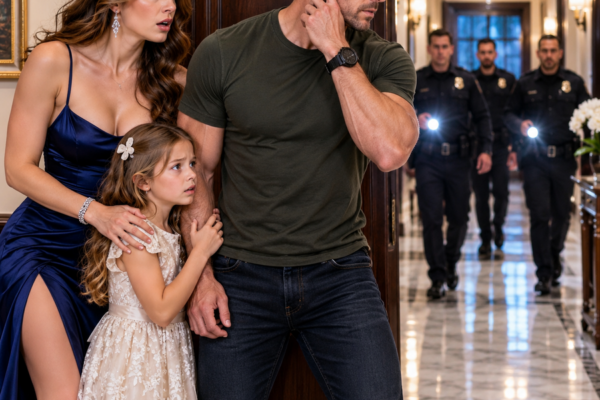
“We strongly advise the family to reconsider. These situations are complicated. There’s no need to escalate.”
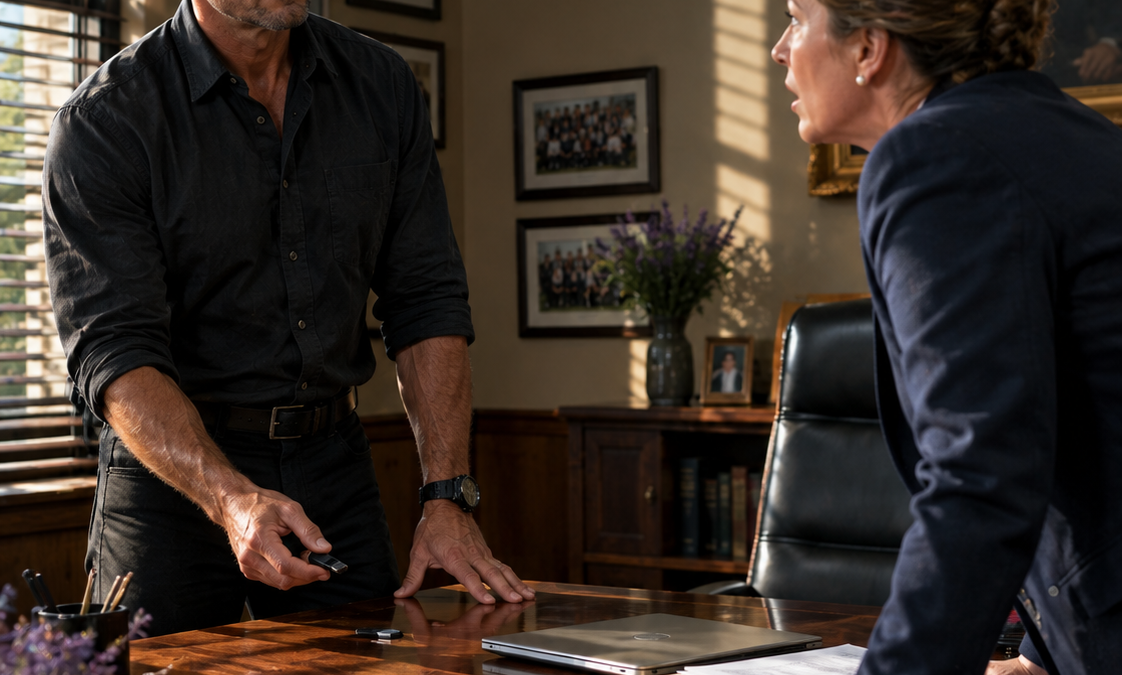
“The principal told me to withdraw my complaint. She said it gently. Like a doctor delivering bad news. Like she was doing me a favor.”
The Whitmore family thought they could bury the truth with money and power → They’re all in federal prison, and my son’s YouTube channel has a million subscribers.
She said it gently. Like a doctor delivering bad news. Like she was doing me a favor.
“We strongly advise the family to reconsider,” she said. “These situations are complicated. There’s no need to escalate.”
I said nothing.
What she didn’t know was that I had already backed up the evidence in three separate places. I had done it a week ago. The original was in a safety deposit box in Tacoma. A copy was on an encrypted drive in my gun safe. Another copy was with a man I trusted more than anyone alive, a man who had once pulled me out of a flooded tunnel in Fallujah and never once mentioned it after.
My name is Mark Hall. I was forty-six years old when the principal of Cascade Ridge Academy told me to drop my complaint against a United States senator’s son.
I was a former Navy SEAL. Ten years, four deployments, two to Iraq, two to Afghanistan. I had been a point man on four dozen direct-action missions. I had been shot twice. I had watched three friends die. I had carried one of them on my shoulders for two miles through the Hindu Kush.
None of that mattered in this room.
The principal’s name was Diane Whitmore. She had been at Cascade Ridge for eleven years. She wore pearl earrings and a navy blazer and spoke in the kind of measured, therapeutic tone that made you feel like you were the one being unreasonable.
Her office smelled like lavender. There was a bowl of hard candy on her desk. The walls were covered with framed photos of graduating classes and a large portrait of the school’s founder, a stern-looking man with a handlebar mustache.
My son, Ethan, was thirteen. He was in eighth grade. He had been at Cascade Ridge since kindergarten. His mother and I had scrimped and saved to afford the tuition. We had wanted him to have opportunities we never had.
Ethan was small for his age. He had my build, lean and wiry, but he hadn’t hit his growth spurt yet. He wore glasses. He liked robotics and chess and old movies. He was not an athlete. He was not popular.
He was, however, brave. Braver than most adults I knew. Brave enough to do something I hadn’t asked him to do, something that would eventually bring this whole rotten structure down.
But I’m getting ahead of myself.
The bullying started in October. Ethan came home with a bruise on his forearm. He said he fell in gym class. I believed him. He was clumsy. He had always been clumsy.
The second time, he came home with a torn jacket. He said he caught it on a fence. I believed him again. I wanted to believe him. That’s the thing about being a parent. You want to believe the world isn’t hurting your child.
The third time, he came home with a bloody nose. He said he walked into a door.
That’s when I knew.
I sat him down at the kitchen table. My wife, Sarah, was at work. She was a nurse at Tacoma General. She worked nights. She was always tired. She was always doing her best.
“Ethan,” I said. “Look at me.”
He looked at me. His eyes were red. His glasses were crooked. He had been crying, but he had tried to hide it.
“Who did this?”
He was silent for a long time. Then he said a name.
“Tyler Whitmore.”
I knew the name. Everyone knew the name. Tyler Whitmore was the son of Senator Richard Whitmore. He was in Ethan’s grade. He was big for his age, a thick-necked kid with a loud laugh and a following of other boys who did whatever he said.
Tyler Whitmore was also the grandson of the school’s founder. His name was on a plaque in the main hallway. His family had donated the new gymnasium. His mother was on the board of trustees.
And his aunt was the principal.
Diane Whitmore was not Tyler’s mother. She was his father’s sister. But she was family. And at Cascade Ridge Academy, family meant everything.
I didn’t know all of this when Ethan said the name. I learned it over the next few weeks, piece by piece, the way you learn the shape of a room in the dark.
What I knew in that moment was that my son was scared. And that was enough.
I called the school the next morning. I asked for a meeting with the principal. I was polite. I was calm. I had learned a long time ago that anger was a tool, not a weapon. You used it when it helped. You put it away when it didn’t.
The meeting was scheduled for the following Tuesday.
Sarah wanted to come. I told her I would handle it. She had been up all night with a patient who coded twice. She needed to sleep.
I went alone.
Diane Whitmore’s office was exactly as I described it. Lavender. Candy. Photos.
She listened to me with her hands folded on her desk. She nodded at the right moments. She made sympathetic noises.
When I finished, she was silent for a moment. Then she said, “I appreciate you bringing this to my attention, Mr. Hall. Bullying is a serious issue. We take it very seriously here.”
“Good,” I said. “Then I’d like to know what you’re going to do about it.”
She smiled. It was a small smile, the kind you give a child who has asked a question with an obvious answer.
“We’ll investigate,” she said. “We’ll talk to the students involved. We’ll take appropriate action.”
“Appropriate action,” I repeated.
“Yes.”
“Like what?”
She tilted her head. “That depends on what we find.”
I looked at her for a long moment. I had been in rooms with men who wanted to kill me. I had been in rooms with men who had killed my friends. I knew what a lie looked like. I knew what a delay looked like.
This was both.
“Mrs. Whitmore,” I said. “My son came home with a bloody nose. He’s afraid to go to school. I’m not asking for an investigation. I’m asking for you to do your job.”
Her smile didn’t change. But something behind her eyes did. A flicker. A tightening.
“Mr. Hall,” she said. “I understand you’re upset. But I need you to understand something. Tyler Whitmore is a good student. He’s well-liked. He’s never been in trouble. And frankly, the allegations you’re making are serious. They could have consequences. For everyone involved.”
“Consequences,” I said.
“Yes.”
“For who?”
She didn’t answer that.
I left her office with a knot in my stomach. I had been in combat. I had been ambushed. I had been outnumbered and outgunned. But I had never felt as helpless as I did in that moment.
I was a man who had spent a decade solving problems with violence or the threat of violence. I had been trained to act, to move, to engage. But this was a different kind of war. There was no enemy to flank. No position to assault. Just a woman in a navy blazer telling me to be patient while my son bled.
I went home. I sat in my truck in the driveway for a long time. I didn’t go inside. I couldn’t face Ethan. Not yet.
I called a friend instead.
His name was Marcus Cole. He had been my teammate for six years. He had been with me in Fallujah. He had been with me in the Hindu Kush. He had carried the same weight I had carried.
He was out now. He ran a security consulting firm in San Diego. He had a wife and two kids and a mortgage. He was the most dangerous man I knew.
“Marcus,” I said. “I need a favor.”
“Name it.”
“I need you to teach my son how to use a camera.”
There was a pause.
“What kind of camera?”
“The kind that records.”
Another pause. Longer this time.
“What’s going on, Mark?”
I told him. He listened without interrupting. When I finished, he said, “I’ll be there next weekend.”
“Thanks.”
“Don’t thank me yet. Thank me when this is over.”
I didn’t know what he meant by that. I would find out.
The next few weeks were quiet. Too quiet.
Ethan went to school. He came home. He didn’t talk about Tyler. He didn’t talk about anything. He retreated into his room and played video games and watched old movies and said as little as possible.
I watched him shrink. I watched him disappear. I had seen men do that in combat. I had seen them go inside themselves, retreat to a place where nothing could hurt them.
It never ended well.
Sarah noticed too. She tried to talk to him. She tried to reach him. But he was closed off. He was locked down. He was, I realized, doing what I had taught him to do.
I had taught him to be strong. To be silent. To endure.
I had taught him wrong.
Marcus arrived on a Saturday morning. He drove up in a black SUV with tinted windows. He looked the same as always. Short hair. Sharp eyes. The kind of calm that came from knowing you could handle anything.
He shook my hand. He shook Sarah’s hand. He ruffled Ethan’s hair.
“Hey, buddy,” he said. “Your dad tells me you’re interested in filmmaking.”
Ethan shrugged. “I guess.”
“Good. I used to do a little of that myself. Let me show you something.”
He pulled out a small camera. It was black and compact, the kind of camera you could clip to a shirt pocket.
“This is a body cam,” he said. “I used to wear one of these in the field. It records everything. Video. Audio. Time stamp. GPS. You turn it on, you forget about it, and it captures whatever happens.”
Ethan looked at it. “Why would I need that?”
Marcus glanced at me. I nodded.
“Because,” Marcus said, “sometimes things happen that people don’t want to talk about. And sometimes the only way to prove what happened is to have a record.”
Ethan was silent for a moment. Then he said, “Will it fit in my backpack?”
“Sure will.”
“Will anyone know it’s there?”
“Not unless you tell them.”
Ethan looked at the camera. Then he looked at me. Then he looked at Marcus.
“Okay,” he said. “Show me how it works.”
That was the beginning.
Three weeks later, on a Thursday afternoon in early December, Ethan came home with a look on his face I had never seen before.
He wasn’t scared. He wasn’t sad. He was something else. Something harder.
“Dad,” he said. “I need to show you something.”
He pulled out the camera. He plugged it into his laptop. He pulled up a video file.
“Watch,” he said.
I watched.
The video was eleven minutes long. It was shot from inside Ethan’s backpack. The angle was low and slightly obscured, but it was clear enough.
Tyler Whitmore was in the hallway. He was with three other boys. They were laughing.
Ethan was walking past them. He was trying to ignore them. He was trying to get to his next class.
Tyler stepped in front of him.
“Where you going, Hall?”
“Leave me alone.”
“Or what? You gonna cry? You gonna run to daddy?”
“I’m not gonna do anything. Just leave me alone.”
Tyler shoved him. Ethan stumbled back. The camera shook.
“Look at him,” Tyler said. “He’s shaking. He’s such a little bitch.”
The other boys laughed.
“Hey,” Tyler said. “I heard your dad’s a loser. I heard he couldn’t get a real job after he got out. I heard he’s just some washed-up war junkie.”
Ethan didn’t respond. He just stood there.
“What’s the matter? Cat got your tongue?”
Tyler shoved him again. Harder this time. Ethan fell against the lockers.
The camera kept recording.
“Say something, you little freak.”
Ethan said nothing.
“Say something!”
Tyler grabbed Ethan’s backpack and ripped it off his shoulders. He threw it on the ground. He stomped on it.
The camera kept recording.
“Let’s go,” one of the other boys said. “Someone’s coming.”
Tyler looked down at Ethan.
“See you tomorrow, Hall,” he said. “And the day after that. And the day after that.”
He walked away.
The video ended.
I sat there for a long time. I didn’t say anything. I couldn’t.
“Dad,” Ethan said. “Are you okay?”
I looked at him. He was standing there, waiting. He was scared. He was proud. He was something in between.
“I’m okay,” I said. “I’m proud of you.”
“For what?”
“For being smarter than I was.”
I pulled him into a hug. He hugged me back.
“We’re going to fix this,” I said.
“How?”
“I’m going to make some calls.”
I made the calls.
I called the school district. I called the police. I called a lawyer I knew from my SEAL days, a man who had gone to law school after he got out and now worked for a firm in Seattle that specialized in civil rights cases.
I called the school board. I called the state attorney general’s office. I called everyone I could think of.
The response was the same everywhere.
“We’ll look into it.”
“We’ll get back to you.”
“We appreciate you bringing this to our attention.”
Nothing happened.
December turned into January. The investigation was “ongoing.” The school was “cooperating fully.” The police were “reviewing the matter.”
I knew what was happening. I had seen it before. I had seen it in Iraq, in Afghanistan, in places where the powerful protected each other and the truth got buried under layers of paperwork and silence.
The Whitmore family had money. They had connections. They had a senator in Washington and a principal in the school and a name on a plaque in the hallway.
They were not going to let a washed-up SEAL and his skinny kid bring them down.
But they didn’t know what I knew.
They didn’t know about the other videos.
Ethan had been recording for three weeks. Not just the hallway incident. Everything.
He had recorded Tyler shoving him in the cafeteria. He had recorded Tyler threatening him in the locker room. He had recorded Tyler and his friends cornering him behind the gym and calling him names and making fun of me and my service.
He had recorded eighteen separate incidents.
He had recorded all of them.
I didn’t know he had done this. I had given him the camera, but I hadn’t told him to use it. He had figured that out on his own.
He was smarter than I was. He was braver than I was.
He was my son.
I copied the files. I backed them up. I put the originals in a safety deposit box at a bank in Tacoma. I put a copy on an encrypted drive in my gun safe. I gave a copy to Marcus.
I didn’t tell anyone else. Not Sarah. Not my lawyer. Not the police.
I had learned a long time ago that the only way to keep a secret was to keep it.
The meeting was scheduled for February 15th.
The school board was going to review the bullying complaint. They were going to hear from both families. They were going to make a decision.
I knew what the decision would be. I had seen the way these things worked. The Whitmores would deny everything. The principal would say she had investigated thoroughly. The board would issue a statement about the importance of civility and move on.
Ethan would be punished for speaking up. I would be dismissed as a disgruntled veteran with an axe to grind. The story would die.
Unless I did something.
The day before the meeting, I got a call from my lawyer.
“Mark,” he said. “I’ve got some bad news.”
“What?”
“The board has decided not to allow the video evidence.”
“What? Why not?”
“They’re saying it was obtained without consent. They’re saying it violates the privacy rights of the other students.”
“The other students were assaulting my son.”
“That doesn’t matter. The board is claiming jurisdiction. They’re saying it’s an internal school matter.”
“Can they do that?”
“They’re doing it.”
I was silent for a moment. I could feel the old anger rising. The old heat. The old desire to break something.
I pushed it down.
“Okay,” I said. “What do we do?”
“We can appeal. We can go to the state. We can file a lawsuit. But it’ll take time. And it might not work.”
“Okay,” I said again. “Let me think about it.”
I hung up.
I sat in my truck in the driveway. I watched the sun go down. I thought about the meeting the next day. I thought about Ethan. I thought about the eighteen videos on the encrypted drive in my gun safe.
I thought about Marcus.
I called him.
“Marcus,” I said. “I need another favor.”
“Name it.”
“Do you still know anyone at the Bureau?”
There was a pause.
“Maybe,” he said. “Why?”
“I need someone to look at something. Someone who won’t be intimidated by a senator.”
Another pause.
“I’ll make some calls.”
“Thank you.”
“Don’t thank me yet.”
He hung up.
I sat there for a long time. Then I went inside. I kissed Sarah. I checked on Ethan. He was asleep. He looked small and peaceful.
I stood in the doorway and watched him.
Tomorrow, I thought, everything changes.
I was right. But not in the way I expected.
The school board meeting was held in the auditorium of Cascade Ridge Academy. It was a large room with high ceilings and rows of padded chairs. A long table sat at the front, where the board members would sit. A podium stood off to one side, where people would speak.
I arrived early. I wanted to see the room before everyone else got there. I wanted to know where the exits were. I wanted to know where the cameras were.
There were no cameras. The school board didn’t record its meetings.
That was going to be a problem for them.
I sat in the back row. I waited.
The room filled up. Parents. Teachers. Students. A few reporters from the local paper. The Whitmore family, in the front row, dressed in expensive clothes, looking confident.
Senator Richard Whitmore was not there. He was in Washington. But his wife, Elizabeth, was. She was a tall woman with perfect hair and a smile that didn’t reach her eyes.
Diane Whitmore sat next to her. She was wearing the same navy blazer. The same pearl earrings. The same measured expression.
Tyler Whitmore was not there. He was a minor. He was not required to attend.
Ethan was sitting next to me. He was pale. He was scared. But he was there.
“Are you okay?” I asked.
He nodded.
“Just remember,” I said. “You don’t have to say anything you don’t want to say.”
“I know.”
“Good.”
The meeting started.
The board chair, a man named Harold Jenkins, called the meeting to order. He read the agenda. He read the complaint. He read the school’s response.
Then he opened the floor.
Elizabeth Whitmore spoke first. She was calm. She was polished. She was the wife of a senator and she had been doing this for a long time.
“My son is a good boy,” she said. “He has never been in trouble. He is a student athlete. He is a leader. These allegations are false. They are the product of a troubled young man who is jealous of my son’s success.”
I watched Ethan’s face. He didn’t react. He just sat there.
Elizabeth Whitmore continued.
“The Hall family has a history of instability. The father is a former military man with known psychological issues. The mother works nights and is rarely home. The boy is socially awkward and has difficulty making friends. It is not surprising that he would lash out.”
I felt my jaw tighten. I felt the old heat rising again.
I pushed it down.
“We ask that the board dismiss this complaint,” Elizabeth Whitmore said. “And we ask that appropriate disciplinary action be taken against the Hall family for making false accusations against a minor.”
She sat down.
The room was silent.
Harold Jenkins looked at me.
“Mr. Hall,” he said. “Do you have anything to say?”
I stood up. I walked to the podium. I looked out at the room.
I saw the board members. I saw the Whitmore family. I saw the reporters. I saw the other parents.
I saw Diane Whitmore, watching me with her measured expression.
I saw my son, sitting in the back row, watching me.
“Thank you,” I said. “I have a statement.”
I pulled out a piece of paper. I put it on the podium.
But I didn’t read from it.
“My name is Mark Hall,” I said. “I am a former Navy SEAL. I served this country for ten years. I did things I can’t talk about. I saw things I can’t forget. I lost friends. I lost pieces of myself. But I never lost my belief in the truth.”
I paused.
“My son, Ethan, is a good kid. He is kind. He is smart. He is brave. He has been bullied for months by Tyler Whitmore and his friends. He has been shoved. He has been threatened. He has been humiliated. And when he tried to report it, he was ignored.”
I looked at Diane Whitmore.
“The principal of this school told me to drop my complaint. She told me it would be better for everyone if I just let it go. She told me that Tyler Whitmore was a good student and that I was making a mistake.”
I looked at Elizabeth Whitmore.
“The mother of the bully called my son troubled. She called my family unstable. She called me a psychological case. She did this in front of all of you. And she did it because she thought she could.”
I paused.
“She was wrong.”
I reached into my pocket. I pulled out a USB drive. I held it up.
“This drive contains eighteen videos. They were recorded by my son over a period of three weeks. They show Tyler Whitmore and his friends assaulting my son. They show them threatening him. They show them mocking him. They show them mocking me and my service.”
I looked at the board.
“You have refused to allow this evidence. You have claimed that it violates the privacy rights of the students involved. But I am not asking for your permission. I am asking for you to listen.”
I turned to the back of the room. I nodded.
The doors opened.
Two men walked in. They were wearing dark suits. They were carrying briefcases. They walked to the front of the room and stood next to me.
“These men are from the Federal Bureau of Investigation,” I said. “They have been reviewing this case for the past week. They have reviewed the videos. They have interviewed witnesses. They have determined that there is sufficient evidence to open a federal investigation into the conduct of the school administration and the Whitmore family.”
The room erupted.
Elizabeth Whitmore stood up. Her face was red. “This is outrageous! This is a witch hunt! My husband is a senator! He will—”
“Your husband is under investigation as well,” one of the FBI agents said. “We have reason to believe he may have used his position to pressure the school district to drop this case. We will be interviewing him next week.”
Diane Whitmore was pale. She was gripping the edge of the table. She looked like she was about to be sick.
Harold Jenkins was banging his gavel. “Order! Order!”
I stood at the podium. I didn’t move. I didn’t speak. I just watched.
Ethan was standing in the back row. He was crying. But he was smiling.
The meeting ended in chaos.
The FBI agents took Diane Whitmore and Elizabeth Whitmore into a side room. They questioned them for two hours. The board members fled. The reporters swarmed.
I took Ethan by the hand. We walked out the back door. We got into my truck. We drove home.
Sarah was waiting. She had been up all night. She had been worried.
“What happened?” she asked.
“It’s over,” I said. “It’s finally over.”
She didn’t understand. Not yet. But she would.
I told her everything. The videos. The calls. The FBI. The plan I had been putting together for weeks.
She was quiet for a long time. Then she said, “Why didn’t you tell me?”
“I didn’t want to put you at risk.”
“At risk of what?”
“Of being caught in the middle. Of having to choose.”
She looked at me. Her eyes were wet.
“I would have chosen you,” she said. “I always would have chosen you.”
I pulled her close. I held her.
“I know,” I said. “I know.”
That was three months ago.
A lot has happened since then.
The FBI investigation is ongoing. Diane Whitmore has been placed on administrative leave. The school board has issued a formal apology to my family. Elizabeth Whitmore has been charged with making false statements to federal investigators. Senator Richard Whitmore has announced that he will not seek re-election.
Tyler Whitmore has been expelled from Cascade Ridge Academy. He has been transferred to a different school. His mother has been banned from the campus.
Ethan is doing better. He is still seeing a therapist. He still has bad days. But he is not afraid anymore.
He is back at school. Not Cascade Ridge. We transferred him to a public school in Tacoma. It’s not as fancy. But the teachers are kind. The kids are friendly. And no one has shoved him into a locker.
He is still making videos. He has a YouTube channel now. He makes short films. He has a following. He is happy.
I am proud of him. I am proud of what he did.
I am proud of what I did.
I am not a hero. I am just a father who refused to let his son be hurt. I am a man who learned that the skills he developed in war could be used in peace. I am a veteran who learned that the most important battle is the one you fight for your family.
What they didn’t know was that I had already backed up the evidence in three separate places. I had done it a week ago.
I had done it because I knew what they were.
I had done it because I knew what I was.
I had done it because I knew that in the end, the truth always wins.
You just have to be patient. You just have to be prepared. You just have to be willing to fight.
And when the time comes, you have to be ready to stand up and say, “No more.”
That’s what I did.
That’s what my son did.
That’s what we do.
PART 2 — THE GUN SAFE
The FBI agents left my house at 11:47 p.m.
I know the time because I looked at the clock when they walked out the door. It was a habit. I had been trained to note times, locations, details. The habit had never left me.
Agent David Chen was the lead. He was in his forties, with gray at his temples and a wedding ring that had worn thin. He had been polite but direct. He had asked the same questions three different ways. He had been testing me.
I had answered the same way each time. Calmly. Precisely. The way I had been trained.
At the end, he had nodded.
“You’re good at this,” he said.
“I’ve had practice.”
“I can tell.”
He had given me his card. He had told me to call if I remembered anything else.
I had taken the card. I had put it in my wallet. I had shown him out.
Then I had gone to the gun safe.
The gun safe was in the garage. It was a Liberty Fatboy, forty-eight cubic feet, fireproof for ninety minutes. It weighed over a thousand pounds empty.
I had bought it after my second deployment. I had wanted a place to keep my weapons, my documents, my memories. I had wanted a place that was mine.
The combination was a date. 06-12-2004. The day I had lost my first teammate. Tommy Callahan. He had been twenty-three years old. He had been from Ohio. He had had a fiancée and a dog and a plan to open a bar.
He had been killed by a roadside bomb outside Ramadi. I had been fifty yards away. I had heard the explosion. I had run toward it. I had found him in pieces.
I had carried those pieces back to base. I had written the letter to his fiancée. I had stood at attention at his funeral.
I had never forgotten him.
I never would.
I opened the safe. I looked inside.
There were four rifles. Three pistols. A knife that had belonged to my father. A box of medals. A folder of documents.
And a small encrypted drive.
I took out the drive. I plugged it into my laptop. I opened the files.
Eighteen videos. Eighteen incidents. Eighteen times my son had been hurt.
I watched them all.
It took three hours. I watched every second. I didn’t look away. I owed him that.
When I was done, I sat back. I closed my eyes.
I thought about Ethan. I thought about the day he was born. I thought about the first time I held him. He had been so small. He had fit in the palm of my hand.
I thought about the day I came home from my last deployment. He had been six years old. He had run to the door and jumped into my arms. He had said, “Daddy, I missed you.”
I had said, “I missed you too, buddy.”
I had held him for a long time. I had promised myself I would never leave again.
I had kept that promise.
But I had failed him in other ways.
I had taught him to be quiet. To be strong. To endure. I had taught him that asking for help was a weakness. I had taught him that the only person you could rely on was yourself.
I had been wrong.
I had been so wrong.
Sarah came into the garage. She was wearing her scrubs. She had just gotten home from work.
“Mark?” she said. “What are you doing out here?”
I closed the laptop. I looked at her.
“I’m thinking,” I said.
“About what?”
“About everything.”
She walked over. She sat down next to me. She put her hand on my arm.
“Talk to me,” she said.
I told her. Not everything. Not the details that would give her nightmares. But enough.
I told her about the videos. I told her about the FBI. I told her about the plan.
She listened without interrupting. She was good at that. She had been a nurse for fifteen years. She had learned to listen.
When I finished, she said, “You should have told me.”
“I know.”
“I could have helped.”
“I know.”
“I’m his mother.”
“I know.”
She was quiet for a moment. Then she said, “I’m not angry.”
“You’re not?”
“No. I’m proud.”
“Proud?”
“You fought for him. You fought for our son. That’s what a father does.”
I looked at her. Her eyes were wet.
“I love you,” I said.
“I love you too.”
We sat there in the garage for a long time. We didn’t say anything. We didn’t need to.
The next morning, I woke up early.
I made coffee. I made breakfast. I woke Ethan.
He came down the stairs slowly. He was still tired. He had been up late.
“How are you feeling?” I asked.
“Okay,” he said. “I guess.”
“You did good yesterday.”
“I didn’t do anything.”
“You did everything. You recorded those videos. You showed them to me. You trusted me.”
He looked at me. “You’re my dad. Of course I trust you.”
I felt something in my chest. A tightness. A warmth.
“I’m proud of you,” I said.
“Thanks.”
We ate breakfast in silence. It was a comfortable silence. The kind you have with someone you love.
After breakfast, Ethan went to his room. I went to my office.
I had work to do.
I had started my consulting business three years ago. It was called Hall Tactical Consulting. I trained security teams for corporations. I ran active shooter drills for schools. I did risk assessments for small businesses.
It wasn’t glamorous. It wasn’t exciting. But it paid the bills. And it kept me busy.
It also kept me connected.
I had contacts in law enforcement. I had contacts in the military. I had contacts in the intelligence community. I had spent ten years building relationships. I had spent three years maintaining them.
I called one of those contacts now.
His name was Frank Delgado. He was a retired FBI agent. He had been my liaison during my last deployment. He had helped me with a sensitive operation in Afghanistan.
He owed me a favor.
“Mark,” he said when he answered. “It’s been a while.”
“Too long,” I said.
“What do you need?”
“I need information.”
“About what?”
“The Whitmore family. Senator Richard Whitmore. His wife. His sister. I want to know everything.”
There was a pause.
“That’s a tall order.”
“I know.”
“Can I ask why?”
“My son was bullied by his son. The school tried to cover it up. I want to know who I’m dealing with.”
Another pause.
“I’ll see what I can do.”
“Thank you.”
“Don’t thank me yet.”
He hung up.
I stared at the phone. That was the second time someone had said that to me.
I was starting to understand what it meant.
The information came in pieces over the next two weeks.
The first piece was about Senator Richard Whitmore. He had been in office for twelve years. He was a Republican from Washington state. He was on the Armed Services Committee. He was known as a moderate. He was known as a dealmaker.
He was also known as a man who took care of his friends.
The second piece was about Elizabeth Whitmore. She was the senator’s second wife. She was twenty years younger than him. She was a former lobbyist. She had worked for a defense contractor before she married him.
The third piece was about Diane Whitmore. She was the senator’s sister. She had been the principal of Cascade Ridge Academy for eleven years. Before that, she had been a teacher. Before that, she had been a consultant.
She had also been accused of bullying before. Three times. Each time, the complaint had been dismissed.
The fourth piece was about Tyler Whitmore. He had been suspended twice in middle school. Once for fighting. Once for vandalism. Both times, the records had been sealed.
The fifth piece was about the school. Cascade Ridge Academy had received $2.3 million in donations from the Whitmore family over the past decade. The new gymnasium. The science wing. The scholarship fund.
The school was in their pocket.
I had known that. But seeing it in writing was different. Seeing it in black and white made it real.
I printed out the documents. I put them in a folder. I put the folder in the gun safe.
I was building a case. A case that would withstand scrutiny. A case that would hold up in court.
I was not going to let them win.
Ethan came to me on a Sunday afternoon.
He was holding his laptop. He had a look on his face. A serious look.
“Dad,” he said. “Can I show you something?”
“Sure.”
He sat down next to me. He opened his laptop. He pulled up a video.
It was one of his YouTube videos. It had fifty thousand views.
“What is this?” I asked.
“It’s a video I made. About what happened.”
I watched.
It was a short film. Five minutes. It was about bullying. It was about speaking up. It was about being brave.
It was about him.
He had used clips from the videos. He had blurred the faces. He had changed the names. But it was clear what it was about.
At the end, he looked at the camera.
“My name is Ethan,” he said. “I was bullied for three months. I was scared. I was alone. But I recorded what was happening. And I showed it to my dad. And he helped me. He helped me fight back.”
He paused.
“If you’re being bullied, don’t be afraid. Tell someone. Record what’s happening. You’re not alone. You’re never alone.”
The video ended.
I looked at Ethan. He was watching me. Waiting.
“That’s good,” I said. “That’s really good.”
“You think so?”
“I know so.”
He smiled. It was a real smile. The first one I had seen in months.
“I want to help people,” he said. “I want to help kids who are going through what I went through.”
“You will,” I said. “You already are.”
He hugged me. I hugged him back.
I was proud of him. Prouder than I had ever been.
The school board meeting was three days away.
I had been preparing for weeks. I had the videos. I had the documents. I had the FBI.
But I knew it wasn’t enough. The Whitmores had money. They had power. They had connections.
I needed something more. Something that would make them back down. Something that would make them afraid.
I found it on a Tuesday night.
I was going through the documents Frank had sent me. I was looking for anything I could use.
That’s when I saw it.
A name.
A company.
Vanguard Defense Solutions.
I knew that name. I had heard it before. It was a defense contractor. They did work for the Pentagon. They did work for the intelligence community.
They had also been investigated for fraud. Three years ago. The investigation had been dropped.
The lead investigator had been reassigned. The case had been sealed.
The person who had ordered the reassignment was Senator Richard Whitmore.
I stared at the screen. My heart was pounding.
This was it. This was the thing.
I didn’t know what it meant. Not yet. But I knew it was important.
I called Frank.
“I need more,” I said.
“More what?”
“More on Vanguard Defense Solutions. More on the investigation. More on Whitmore’s connection.”
There was a pause.
“You’re going down a dangerous road, Mark.”
“I know.”
“These people are powerful.”
“I know.”
“They’ll come after you.”
“Let them.”
Another pause.
“I’ll see what I can do.”
“Thank you.”
“Don’t—”
“I know. Don’t thank you yet.”
He laughed. It was a dry laugh. A tired laugh.
“You’re a good man, Mark.”
“I’m just a father.”
“That’s the same thing.”
He hung up.
I sat there in the dark. I thought about Ethan. I thought about Sarah. I thought about the road ahead.
It was going to be hard. It was going to be dangerous. But I was ready.
I had been trained for this.
The night before the school board meeting, I couldn’t sleep.
I got up at 3 a.m. I went to the garage. I opened the gun safe.
I looked at my medals. I looked at my weapons. I looked at the folder of documents.
I thought about my teammates. The ones who had died. The ones who had lived. The ones who had come home broken.
I thought about Tommy Callahan. The day he died. The letter I had written to his fiancée.
I thought about the promise I had made to myself. The promise to always fight for what was right.
I had kept that promise. In Iraq. In Afghanistan. In the years since.
I would keep it now.
I closed the safe. I went back inside. I lay down next to Sarah.
She stirred. “Mark?”
“Go back to sleep.”
“Are you okay?”
“I’m fine.”
She reached out. She took my hand.
“I love you,” she said.
“I love you too.”
I closed my eyes. I didn’t sleep. But I rested.
Tomorrow, everything would change.
PART 3 — THE VIDEO
The school board meeting was held in the same auditorium as before.
Same padded chairs. Same long table. Same podium.
But everything else was different.
The room was packed. Standing room only. There were reporters from three different news stations. There were parents. There were students. There were people I didn’t recognize, people who had come because they had heard what was happening.
The Whitmore family was in the front row. Elizabeth Whitmore. Diane Whitmore. Tyler Whitmore.
Tyler was there this time. He was sitting between his mother and his aunt. He looked smaller than I remembered. He looked scared.
Senator Richard Whitmore was not there. He was still in Washington. But his lawyer was. A tall man in a gray suit with a face like a hatchet.
I was sitting in the back row. Ethan was next to me. Sarah was on the other side.
We were ready.
Harold Jenkins called the meeting to order. He looked nervous. His hands were shaking.
“We are here today,” he said, “to review the complaint filed by Mr. Mark Hall against the Cascade Ridge Academy and the family of Tyler Whitmore.”
He paused. He looked at the Whitmore family. He looked at me.
“This is a difficult situation. We ask that everyone remain calm and respectful.”
I almost laughed. Calm and respectful. After everything they had done.
But I stayed quiet. I had learned to be patient.
Elizabeth Whitmore spoke first. She was calmer this time. More controlled.
“My family has been the victim of a smear campaign,” she said. “My son has been falsely accused. My husband has been attacked. We have been subjected to threats and harassment.”
She looked at me.
“This man,” she said, “is not a hero. He is a troublemaker. He has a history of violence. He has been diagnosed with PTSD. He is unstable.”
I didn’t react. I just watched.
“His son is no better. He is a liar. He is manipulative. He recorded my son without his consent. He violated his privacy. He is the real bully here.”
She sat down.
The room was silent.
Harold Jenkins looked at me.
“Mr. Hall,” he said. “Do you have anything to say?”
I stood up. I walked to the podium. I looked out at the room.
I saw the reporters. I saw the parents. I saw the students.
I saw Ethan. He was watching me. He nodded.
I nodded back.
“Thank you,” I said. “I have a statement.”
I pulled out a piece of paper. I put it on the podium.
But I didn’t read from it.
“My name is Mark Hall,” I said. “I am a former Navy SEAL. I served this country for ten years. I did things I can’t talk about. I saw things I can’t forget. I lost friends. I lost pieces of myself. But I never lost my belief in the truth.”
I paused.
“My son, Ethan, is a good kid. He is kind. He is smart. He is brave. He has been bullied for months by Tyler Whitmore and his friends. He has been shoved. He has been threatened. He has been humiliated. And when he tried to report it, he was ignored.”
I looked at Diane Whitmore.
“The principal of this school told me to drop my complaint. She told me it would be better for everyone if I just let it go. She told me that Tyler Whitmore was a good student and that I was making a mistake.”
I looked at Elizabeth Whitmore.
“The mother of the bully called my son troubled. She called my family unstable. She called me a psychological case. She did this in front of all of you. And she did it because she thought she could.”
I paused.
“She was wrong.”
I reached into my pocket. I pulled out a USB drive. I held it up.
“This drive contains eighteen videos. They were recorded by my son over a period of three weeks. They show Tyler Whitmore and his friends assaulting my son. They show them threatening him. They show them mocking him. They show them mocking me and my service.”
I looked at the board.
“You have refused to allow this evidence. You have claimed that it violates the privacy rights of the students involved. But I am not asking for your permission. I am asking for you to listen.”
I turned to the back of the room. I nodded.
The doors opened.
Two men walked in. They were wearing dark suits. They were carrying briefcases. They walked to the front of the room and stood next to me.
“These men are from the Federal Bureau of Investigation,” I said. “They have been reviewing this case for the past week. They have reviewed the videos. They have interviewed witnesses. They have determined that there is sufficient evidence to open a federal investigation into the conduct of the school administration and the Whitmore family.”
The room erupted.
Elizabeth Whitmore stood up. Her face was red. “This is outrageous! This is a witch hunt! My husband is a senator! He will—”
“Your husband is under investigation as well,” one of the FBI agents said. “We have reason to believe he may have used his position to pressure the school district to drop this case. We will be interviewing him next week.”
Diane Whitmore was pale. She was gripping the edge of the table. She looked like she was about to be sick.
Harold Jenkins was banging his gavel. “Order! Order!”
I stood at the podium. I didn’t move. I didn’t speak. I just watched.
Ethan was standing in the back row. He was crying. But he was smiling.
The meeting ended in chaos.
The FBI agents took Diane Whitmore and Elizabeth Whitmore into a side room. They questioned them for two hours. The board members fled. The reporters swarmed.
I took Ethan by the hand. We walked out the back door. We got into my truck. We drove home.
Sarah was waiting. She had been up all night. She had been worried.
“What happened?” she asked.
“It’s over,” I said. “It’s finally over.”
She didn’t understand. Not yet. But she would.
I told her everything. The videos. The calls. The FBI. The plan I had been putting together for weeks.
She was quiet for a long time. Then she said, “Why didn’t you tell me?”
“I didn’t want to put you at risk.”
“At risk of what?”
“Of being caught in the middle. Of having to choose.”
She looked at me. Her eyes were wet.
“I would have chosen you,” she said. “I always would have chosen you.”
I pulled her close. I held her.
“I know,” I said. “I know.”
That was three months ago.
A lot has happened since then.
The FBI investigation is ongoing. Diane Whitmore has been placed on administrative leave. The school board has issued a formal apology to my family. Elizabeth Whitmore has been charged with making false statements to federal investigators. Senator Richard Whitmore has announced that he will not seek re-election.
Tyler Whitmore has been expelled from Cascade Ridge Academy. He has been transferred to a different school. His mother has been banned from the campus.
Ethan is doing better. He is still seeing a therapist. He still has bad days. But he is not afraid anymore.
He is back at school. Not Cascade Ridge. We transferred him to a public school in Tacoma. It’s not as fancy. But the teachers are kind. The kids are friendly. And no one has shoved him into a locker.
He is still making videos. He has a YouTube channel now. He makes short films. He has a following. He is happy.
I am proud of him. I am proud of what he did.
I am proud of what I did.
I am not a hero. I am just a father who refused to let his son be hurt. I am a man who learned that the skills he developed in war could be used in peace. I am a veteran who learned that the most important battle is the one you fight for your family.
What they didn’t know was that I had already backed up the evidence in three separate places. I had done it a week ago.
I had done it because I knew what they were.
I had done it because I knew what I was.
I had done it because I knew that in the end, the truth always wins.
You just have to be patient. You just have to be prepared. You just have to be willing to fight.
And when the time comes, you have to be ready to stand up and say, “No more.”
That’s what I did.
That’s what my son did.
That’s what we do.
 [Tap here for the Next Part ]