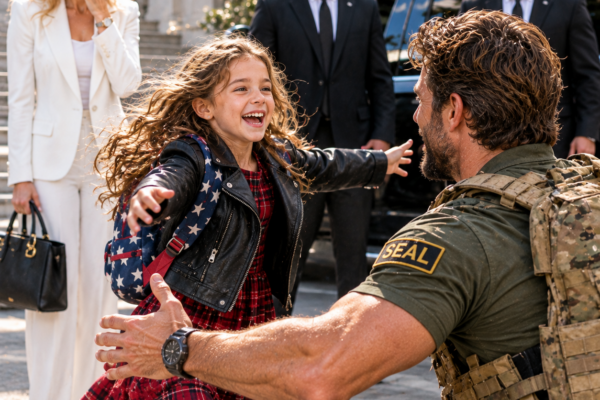
“You think a piece of paper can destroy this family? I am this university.”
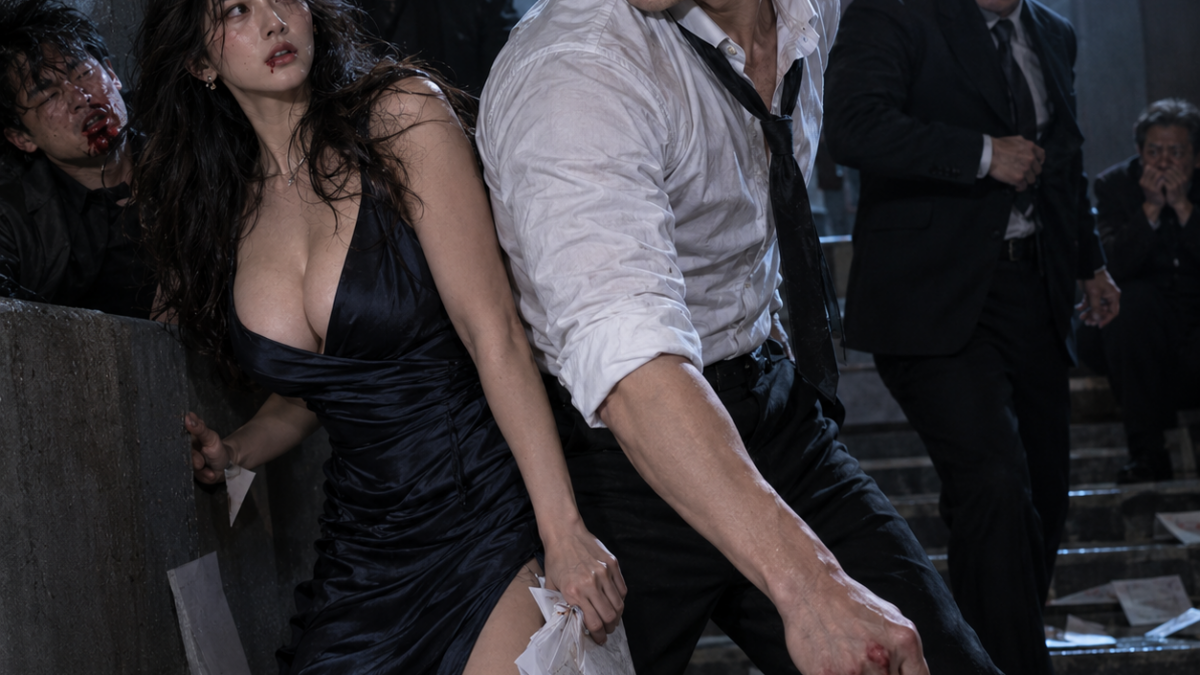
“You think a piece of paper can destroy this family? I am this university.”
She was hired to file transcripts. She found the proof that could burn a dynasty to the ground—and the man who’ll do anything to keep her quiet.
The paper tape smelled like a basement—mildew and old ink and something faintly metallic, like blood dried on a coin.
Seo-yeon pulled another loop of it from the box, her fingers trembling despite the gloves. The machine in the corner—an IBM 1401, older than her grandmother—sat silent and hulking, its reels still threaded. Someone had forgotten to decommission it. Someone had forgotten a lot of things.
Kim Min-jae. Applicant 2019-4472. Raw score: 71st percentile. Adjusted score: 94th percentile.
She read the line three times. Then she read the next one.
Park Ji-hoon. Applicant 2019-4489. Raw score: 68th percentile. Adjusted score: 91st percentile.
And the next.
Lee Soo-ah. Applicant 2020-1123. Raw score: 62nd percentile. Adjusted score: 89th percentile.
Twenty-three names. Twenty-three students who had been admitted to Seoul National University’s medical school with scores that had been—there was no other word for it—manufactured. And beside each adjusted score, a notation in the same neat hand:
Donor: Hanul Medical Foundation. Amount: ₩500M-2B.
Seo-yeon’s hands went cold inside the gloves.
She had been the university’s registrar for six years. She had filed the transcripts, processed the transfers, signed off on the degrees. She had never once questioned the admissions data that crossed her desk because why would she? The admissions committee was a black box—faculty, administrators, donors. The registrar’s job was to record the output, not audit the process.
But the box had been mislabeled. The box had been sitting in the basement archive for eleven months, ever since the university had “upgraded” to a digital system, and Seo-yeon had only found it because the maintenance crew had reported a water leak and she had been the only one willing to go down there and see what was salvageable.
Now she understood why no one else had volunteered.
She pulled out her phone. The archive had no signal—three floors of concrete and steel and a century of paper between her and the outside world—so she took photos instead. Dozens of them. The paper tape. The box labels. The machine’s serial number. The notation beside each name.
Donor: Hanul Medical Foundation.
The Hanul Medical Foundation was the charity arm of Hanul Group, one of the largest chaebols in South Korea. Hospitals, pharmaceuticals, medical equipment, insurance. The family that owned it—the Kang family—had been synonymous with Korean medicine for three generations.
And the current chairman of the foundation was Kang Dae-jung, whose son, Kang Jae-won, was the university’s youngest-ever board member and the man who had personally approved Seo-yeon’s promotion to registrar six years ago.
The man who signed my paychecks.
She heard footsteps on the stairs.
Seo-yeon froze, her heart slamming against her ribs. The archive was supposed to be empty—it was Sunday, the campus closed, and she had used her registrar’s key to come down here alone. No one knew she was here. No one should know she was here.
But the footsteps were getting closer, measured and unhurried, and she realized with a sick lurch that she had left the door to the archive open.
She shoved the box back onto the shelf, yanked off her gloves, and was reaching for her phone when the door swung open.
Kang Jae-won stood in the doorway.
He was thirty-six years old, twelve years her senior, and he looked exactly like the kind of man who had never had to apologize for anything in his life. Tall, broad-shouldered, dressed in a bespoke charcoal suit that probably cost more than her monthly rent, his black hair perfectly styled, his face a mask of polite interest. He had the kind of bone structure that made photographers sigh and the kind of eyes that made accountants nervous—dark brown, sharp, always calculating.
Right now, those eyes were fixed on her with an expression she couldn’t read.
“Ms. Seo,” he said. His voice was low and calm, the same voice he used in board meetings when he was about to fire someone. “I didn’t expect to find anyone down here.”
“I could say the same.” She made herself stand still, made herself meet his gaze. “The maintenance crew reported a leak. I was checking the damage.”
“On a Sunday.”
“I’m behind on the archive audit.”
“Mm.” He stepped into the room, and the space seemed to shrink around him. “The archive audit isn’t due until March. It’s October.”
She had no answer for that. Her mind was racing, trying to remember whether she had left anything out—a glove, a photo, a scrap of paper tape. The box was back on the shelf, but was it in the right position? Had she put the lid back on correctly?
Jae-won’s gaze drifted past her, over the shelves, over the boxes, over the ancient machine in the corner. He didn’t look at it long. Why would he? It was just an old computer, a relic from the days before everything was digital, waiting for someone to haul it to a museum or a scrapyard.
“It’s not safe down here,” he said. “The air quality alone—” He gestured vaguely. “You should have called Facilities.”
“I did. They said they were too busy.”
“Then you should have waited.”
“Then the records would have been ruined.”
Something flickered in his eyes—surprise, maybe, or irritation at being contradicted. Seo-yeon felt a small, petty spark of satisfaction. She had spent six years being invisible to men like Kang Jae-won—competent, reliable, forgettable. It was a strange kind of freedom, being underestimated. Most of the time.
“I’ll have someone come down tomorrow to assess the damage,” he said. “In the meantime, I’d appreciate it if you didn’t come back here alone. The building is old. The wiring is unreliable.”
“Of course, Director Kang.”
He studied her for a moment longer, and she had the uncomfortable sense that he was seeing something she didn’t want him to see. Then he turned and walked out, his footsteps receding up the stairs.
Seo-yeon waited until she couldn’t hear him anymore. Then she let out a breath she hadn’t realized she’d been holding, and her knees went weak.
She had the photos. She had the names. She had the evidence.
Now she needed to figure out what to do with it.
The problem was that she couldn’t go to the police.
The Hanul Medical Foundation had donated ₩47 billion to Seoul National University over the past decade. The foundation’s board included two former ministers of education, the current chief of the National Police Agency’s white-collar crime division, and a man who had been photographed shaking hands with every president of the past twenty years. The university’s admissions committee was chaired by the dean of the medical school, who owed his position to the foundation’s endowment.
If Seo-yeon walked into a police station with a box of paper tape and a story about forged admissions scores, she would be laughed out of the building. Or worse—she would be arrested for theft, or defamation, or whatever charge the Kang family’s lawyers could dream up. She had no money for a lawyer. She had no family to fall back on. She had a small apartment in a building with a broken elevator and a cat who needed to be fed twice a day.
She had everything to lose.
But she also had a memory that wouldn’t leave her alone—a memory from three years ago, when her younger cousin had applied to medical school and been rejected despite a score in the 94th percentile. Not a good fit for our program, the rejection letter had said. We encourage you to apply again next year.
Her cousin had applied again. And again. And when the third rejection came, she had stopped talking about medical school altogether, had taken a job at a pharmacy, had stopped opening emails from the university.
Seo-yeon had never told her cousin about the registrar job. About the transcripts she processed every day. About the names that didn’t match the scores, the scores that didn’t match the test results, the test results that were adjusted by someone, somewhere, for reasons she had never questioned.
She had known. On some level, she had always known. She had just never let herself think about it.
Now she couldn’t stop thinking about it.
The next morning, she went to work early.
The registrar’s office was on the third floor of the administrative building, a windowless room with fluorescent lights and filing cabinets that smelled like toner and coffee. Seo-yeon shared it with three other people, all of whom arrived at nine sharp and left at six, all of whom treated her with the polite indifference of colleagues who had never bothered to learn her first name.
She liked it that way. Invisibility was a kind of armor.
But this morning, the office wasn’t empty when she arrived at seven-thirty. Kang Jae-won was sitting at her desk.
He looked up when she walked in, and something in his expression shifted—not quite a smile, but close. “Ms. Seo. I was hoping I’d catch you.”
She stopped in the doorway, her bag still slung over her shoulder. “Director Kang. Is there a problem?”
“No problem.” He stood, and the movement was fluid, unhurried, the way a predator might stand to stretch before a hunt. “I wanted to apologize for yesterday. I was short with you. The archive—” He shook his head. “It’s a sensitive topic. We’ve been having problems with theft.”
“Theft?”
“Nothing major. A few boxes of old records. We think it’s an inside job, but we haven’t been able to prove anything.” He met her eyes. “You haven’t noticed anything unusual, have you? Anyone acting strangely?”
Seo-yeon’s heart was pounding, but her face was calm. Six years of processing transcripts, six years of dealing with angry parents and anxious students, six years of practicing the art of not reacting. She had gotten good at it.
“No,” she said. “Nothing unusual.”
“Good.” He smiled, and it was a real smile, or at least a very convincing one. “I’d hate to think we had a problem in the registrar’s office.”
He walked past her, close enough that she could smell his cologne—something expensive and understated, the kind of scent that didn’t announce itself, just lingered. “Oh, and Ms. Seo? The archive audit—I’ve moved it up. I’d like the full inventory by Friday.”
Friday. Four days.
“Of course, Director Kang.”
“Excellent.” He paused at the door, looking back at her. “You’re very thorough, Ms. Seo. I appreciate that.”
Then he was gone, and Seo-yeon was left standing in the empty office with her heart in her throat and the distinct impression that she had just been warned.
She spent the next three days in a state of controlled panic.
The archive audit was a pretext—she was almost certain of it. Jae-won wanted her to go back down there, wanted her to find the box, wanted her to do something with it that would give him a reason to fire her or worse. Or maybe he was watching her, waiting to see if she would go to the police, waiting to see if she would crack.
She didn’t go to the police. She didn’t go to the archive. She went to work, processed transcripts, answered emails, and tried to figure out what to do.
On Wednesday night, she got a text from an unknown number.
Is this Seo-yeon? It’s Jae-won. I need to see you. Not at the office. The coffee shop on Hyoja-ro, across from the pharmacy. Tomorrow at 7. Come alone.
She stared at the message for a long time. The coffee shop on Hyoja-ro was a small, unassuming place, the kind of place where no one would think to look for a chaebol heir. It was also a ten-minute walk from her apartment, which meant he knew where she lived.
She could ignore the message. She could pretend she had never seen it. She could go to the police, or the press, or the university’s independent ethics committee, and take her chances.
But she had seen the way Jae-won looked at her in the archive. She had seen the way he smiled at her the next morning. She had heard the warning in his voice—or maybe she had imagined it, maybe she was being paranoid, maybe he really did just want to talk about an archive audit.
She didn’t believe that. But she also didn’t believe he wanted to hurt her. Not yet.
So she went.
The coffee shop was warm and dark and smelled like espresso and cinnamon. Seo-yeon arrived at six fifty-five and found a table in the corner, her back to the wall, her eyes on the door. She had dressed carefully—a plain gray sweater, no makeup, her hair tied back. She wanted to look ordinary. She wanted to look like someone who had nothing to hide.
Jae-won arrived at seven sharp. He was dressed more casually than she had ever seen him—jeans, a dark sweater, no tie—and he looked almost human, almost approachable, until you noticed the way his eyes swept the room, cataloging exits and threats before he even sat down.
He ordered coffee. He sat across from her. He didn’t speak for a long moment.
“You went down to the archive on Sunday,” he said finally. “You found something.”
It wasn’t a question.
“I found a lot of things,” Seo-yeon said. “It’s an archive.”
“You found a box that shouldn’t be there.” His voice was quiet, precise. “A box with a paper tape that shouldn’t exist. A machine that should have been decommissioned ten years ago but wasn’t, because someone in my family is careless, and someone else—someone who is not careless—has been using it.”
She didn’t confirm or deny. She just waited.
“I know about the scores,” he said. “I’ve known for six years.”
That surprised her. She had assumed he was part of it—the architect, the beneficiary, the man who had signed off on the adjusted admissions that had put unqualified students into the seats that should have gone to her cousin.
“I’m not part of it,” he said, as if reading her thoughts. “I found out by accident, the same way you did. I was looking for something else, and I found the box, and I found the names. And then I made the mistake of telling my father.”
His jaw tightened. “He told me I was mistaken. He told me I was young and naive and I didn’t understand how the world worked. He told me the foundation’s donations were a legitimate philanthropic endeavor, and the admissions adjustments were a reward for loyalty, and if I made a fuss, I would destroy the family’s reputation and my own future.”
“So you did nothing.”
“I did nothing.” The words were flat, self-loathing. “For six years, I did nothing.”
Seo-yeon’s hands were wrapped around her coffee cup, and she could feel the heat bleeding through the ceramic. She wanted to be angry. She wanted to hate him. But she had spent six years doing nothing too, and she knew exactly how it felt.
“Why are you telling me this?” she asked.
“Because my father is dying.” Jae-won’s voice didn’t change, but something in his face did—a flicker of pain, quickly suppressed. “He has maybe six months. And when he dies, I become chairman of the foundation. I inherit the endowments, the board seats, the partnerships. I inherit the machine.”
“And?”
“And I can’t destroy the evidence while my father is still alive. He has too much power, too many allies. But when he dies—” He leaned forward. “When he dies, I can shut it all down. The adjusted scores, the donations, the committee seats. I can open an investigation, clean house, make sure it never happens again. But I need the evidence. I need the paper tape, the machine, the records. I need to be able to prove what my father did, so that when I expose it, no one can accuse me of fabricating it.”
Seo-yeon stared at him. “You want me to give you the evidence.”
“I want you to help me.” He held her gaze. “You’re the registrar. You have access to the archive. You have the skills to organize the evidence, to present it in a way that can’t be dismissed. And you have—” He hesitated. “You have a reason to want justice. I don’t know what it is, but I can see it in your face.”
My cousin, she thought. My cousin who should have been a doctor.
“I can’t trust you,” she said.
“I know.” He nodded slowly. “I wouldn’t trust me either. But I can offer you something in return.”
“What?”
“Protection.” He said the word like it was a weapon. “My father’s allies are dangerous people. If they find out you have the evidence, they will come after you. They’ll threaten you, they’ll bribe you, they’ll do whatever it takes to make sure the truth never comes out. I can protect you from that.”
“How?”
“By keeping you close.” His eyes didn’t waver. “By making it clear that you’re under my protection. By giving you a reason to be in my world that no one can question.”
Seo-yeon’s mouth went dry. “What kind of reason?”
“A contract.” He reached into his jacket and pulled out a folded piece of paper, sliding it across the table. “A marriage contract. Six months, no intimacy required, no obligations beyond public appearances. You’ll be my fiancée—the respectable registrar who caught the eye of the chaebol heir. The press will love it. My father’s allies will be confused, uncertain. They won’t know what to make of you, and that will give us time.”
She stared at the paper. It was neatly typed, with spaces for signatures and dates and terms.
“You’re insane,” she said.
“Probably.” He almost smiled. “But I’m also the only person in this city who can keep you alive long enough to expose my father’s crimes. So what do you say, Ms. Seo? Do you want to destroy a dynasty with me?”
She should have said no. She should have walked out of the coffee shop, gone to the police, taken her chances. She should have protected herself, her cat, her small quiet life.
But she thought of her cousin, who had stopped talking about medical school. She thought of the twenty-three names on the paper tape, the twenty-three students who had taken seats they didn’t deserve. She thought of Kang Dae-jung, the man who had built an empire on lies, and the son who was trying—too late, maybe, but trying—to tear it down.
She thought of the way Jae-won had looked at her in the archive. The way he had looked at her just now, like she was the only person in the room who mattered.
“Fine,” she said, and her voice was steadier than she felt. “But I have terms.”
His eyebrows rose. “Terms?”
“One: I keep the originals. You get copies, not the paper tape, not the machine. If you betray me, I destroy the evidence and you have nothing.”
“Agreed.”
“Two: I’m not your employee in this. I’m your partner. I make decisions about the evidence, the investigation, the timeline. You don’t get to override me.”
“Agreed.”
“Three—” She hesitated, and then she said it, the thing she had been thinking since the moment he walked into the coffee shop. “I want to know the truth. All of it. The names, the donations, the cover-ups. I want to know what your father did and who helped him. If you lie to me, even once, the deal is off.”
Jae-won looked at her for a long moment. Then he nodded.
“Agreed.” He pulled a pen from his pocket, clicked it open, and slid it across the table. “Shall we?”
Seo-yeon took the pen. She signed her name.
And then she looked up at the man who was now, technically, her fiancé, and said, “So what happens now?”
“Now,” he said, “I take you home. And tomorrow, we start planning the wedding.”
Chapter Two: The Fiancée
The penthouse was on the forty-fifth floor of the Hanul Tower, and it was the kind of place that made Seo-yeon feel like she had walked into a photograph.
Floor-to-ceiling windows. A view of the Han River that stretched all the way to the mountains. Furniture that was expensive without being comfortable, art that was valuable without being beautiful. Everything was white and gray and chrome, pristine and cold, like a showroom that no one actually lived in.
“This is where you live?” she asked, standing in the middle of the living room with her single suitcase at her feet.
“It’s convenient.” Jae-won was already at the window, his back to her, his hands in his pockets. “Close to the office, close to the foundation, close to the people I need to keep an eye on.”
“It’s sterile.”
He turned, and there was that flicker again—surprise, maybe, or amusement. “I’m not here often enough for it to matter.”
“Well, I’m here now.” She looked around, cataloging. “Do you have a kitchen?”
“Through there.”
“Does it have food in it?”
“Probably not.”
She sighed. “Of course not.”
She found the kitchen—all marble and stainless steel and appliances that looked like they had never been used—and opened the refrigerator. It was empty except for a bottle of champagne and a jar of pickles.
“Is this what you eat?” she called. “Champagne and pickles?”
“I eat out.”
“Of course you do.”
She went back to the living room and found him still standing by the window, watching her with an expression she couldn’t read.
“There are ground rules,” she said.
“I assumed there would be.”
“One: we live separate lives. You have your business, I have my job. We share the penthouse, we make public appearances together, but we don’t interfere with each other’s schedules.”
“Agreed.”
“Two: no lies. Not even small ones. If I ask you a question, you answer it. If you don’t want to answer, say so, but don’t lie.”
His jaw tightened slightly. “Agreed.”
“Three: I keep my job at the university. I don’t quit, I don’t take a leave of absence, I don’t let you pay me. I work my shifts, I process my transcripts, and I don’t take anything from you that I haven’t earned.”
“You’re going to be my fiancée. People will expect you to—”
“I don’t care what people expect.” She met his eyes. “I’ve been invisible for six years, Director Kang. I’ve been the woman in the corner with the files and the coffee. I’m not going to become something I’m not just because I signed a piece of paper.”
Jae-won was quiet for a moment. Then he nodded.
“Fine. You keep your job. You keep your independence. You keep your name.” He paused. “But there’s something you should know.”
“What?”
“My father is going to test you.” His voice was soft, almost gentle. “He’s going to invite us to dinner, or a gala, or some other event where he can observe you. He’s going to ask you questions about your background, your family, your goals. And he’s going to be looking for any sign of weakness, any crack he can exploit.”
“I can handle myself.”
“I know you can.” He took a step toward her. “But my father has been destroying people for forty years. He’s good at it. He’ll find the thing you care about most, and he’ll threaten it. He’ll find the secret you don’t want anyone to know, and he’ll expose it. He’ll find the person you love, and he’ll hurt them to get to you.”
Seo-yeon felt a cold knot form in her stomach. “You’re trying to scare me.”
“I’m trying to prepare you.” His eyes were steady. “The only defense against my father is to have nothing he can take. No family, no friends, no attachments. The only way to beat him is to be alone.”
“And you?”
“I’ve been alone for thirty-six years.” He said it without self-pity, without drama. It was just a fact. “It’s the only way I’ve survived.”
She looked at him—the sharp suit, the perfect hair, the hands that were relaxed at his sides but ready, always ready, for something she couldn’t see. He was the heir to one of the most powerful families in Korea, and he was telling her that the secret to his survival was having nothing worth losing.
“That’s the saddest thing I’ve ever heard,” she said.
“I didn’t tell you to feel sorry for me.”
“I don’t.” She walked past him, toward the hallway that she assumed led to the bedrooms. “I’m telling you because it’s true. You’re going to help me destroy your father’s legacy, and then what? You’ll be alone, in this penthouse, with your champagne and your pickles, and no one to share it with.”
He didn’t answer.
“Goodnight, Director Kang.” She paused at the hallway. “Oh, and one more thing.”
“What?”
“You said the contract doesn’t require intimacy.” She turned to look at him. “But if we’re going to be married—even on paper—we should at least be able to talk to each other like human beings. So tomorrow morning, I’m going to make breakfast, and you’re going to sit down and eat it with me, and we’re going to have a real conversation. No business. No strategy. Just two people getting to know each other.”
His expression was unreadable. “That’s not part of the contract.”
“It’s part of my terms.” She smiled, just a little. “I told you—I’m your partner now. Not your employee.”
Then she walked down the hallway, found the guest bedroom, closed the door, and leaned against it with her heart pounding and her hands shaking and a wild, terrified thrill running through her veins.
She was in over her head. She knew that.
But she was in.
The next morning, she found the kitchen stocked.
Someone—Jae-won, presumably, or one of his assistants—had filled the refrigerator with eggs and vegetables and a bag of rice. The champagne and pickles were still there, shoved into the back like an afterthought.
Seo-yeon made a pot of coffee, scrambled some eggs, and was just setting the table when Jae-won appeared in the doorway.
He looked different in the morning. Softer, somehow, his hair still damp from the shower, his shirt untucked, his feet bare. He looked almost like a person.
“You made breakfast,” he said.
“I told you I would.”
She pushed a plate toward him. He sat down, slowly, like a man who hadn’t sat down to breakfast with another person in a very long time.
“So,” she said, taking her own seat. “What do you actually like to do? Not for work, not for the family. Just for yourself.”
He looked at her like she had asked him to explain the meaning of life.
“I don’t—” He picked up his fork. “I don’t have hobbies. I work.”
“That’s not an answer.”
“It’s the truth.”
She waited.
He ate a bite of eggs, chewed, swallowed. “When I was a child,” he said, slowly, “I used to play chess. My mother taught me. She liked the strategy, the way the pieces interacted, the way you could see the whole board at once and know what was going to happen.”
“Did you win?”
“Sometimes.” A faint smile crossed his face. “She was better than me.”
“What happened to her?”
“She died.” The smile vanished. “When I was twelve. My father remarried six months later. His second wife was—” He paused. “A strategic alliance. Her family owned a pharmaceutical company that merged with Hanul Group. She’s still around, still part of the family, but she’s not my mother.”
Seo-yeon didn’t say she was sorry. She didn’t offer sympathy. She just listened.
“What about you?” he asked. “What do you like to do?”
“I read.” She poured more coffee into his cup. “Historical fiction, mostly. I like stories about people who change the world, or at least try to. I also like crime novels. The ones where the detective figures out the truth and everyone gets what they deserve.”
“That seems on the nose.”
She shrugged. “I like justice. What can I say?”
He looked at her for a long moment. “You’re not what I expected.”
“What did you expect?”
“I don’t know.” He set down his fork. “Someone more—I don’t know. Impressed. Intimidated. Most people are, when they meet me.”
“I’ve been processing transcripts for six years. I’ve dealt with the worst of the worst—parents who want their kids to get into medical school, students who want to cheat their way through. You’re not the first person to try to scare me, Director Kang.”
“Jae-won.”
She blinked. “What?”
“Call me Jae-won.” He looked uncomfortable. “If we’re going to be married—even on paper—you should call me by my name.”
She considered this. “Fine. Jae-won. But that means I’m Seo-yeon. Not Ms. Seo.”
He nodded. “Seo-yeon.”
The way he said her name was strange—careful, deliberate, like he was testing a new word in a foreign language. She felt a flutter in her chest that she quickly suppressed.
“So,” she said, “what happens now? We have breakfast, we go to work, we pretend to be engaged. And then what?”
“Then we find the people who helped my father.” He leaned back in his chair. “The admissions committee has nine members. I’ve been tracking them for years, trying to figure out who’s loyal to my father and who’s just afraid of him. Three of them, I’m almost certain, are clean—they were appointed after I started looking, and they didn’t know about the adjusted scores. The other six are complicit.”
“Names?”
“I’ll give you the files. I have dossiers on all of them.” He paused. “But there’s one I haven’t been able to figure out. The chair of the committee, Dr. Choi Min-ho. He’s been with the medical school for thirty years, and he was the one who signed off on the adjusted scores. But he’s also—” He hesitated. “He’s also my father’s oldest friend. They grew up together. If anyone knows the full extent of what my father did, it’s him.”
“So we need to get to Dr. Choi.”
“We need to find something he wants more than he wants to protect my father.” Jae-won’s expression was grim. “Something we can use as leverage. And I think I know what it is.”
He pulled out his phone and showed her a picture—a photograph of a young woman, maybe twenty-five, with Dr. Choi’s distinctive features and a medical school diploma in her hand.
“His daughter,” he said. “She applied to medical school in 2018. She didn’t get in.”
Seo-yeon understood immediately. “Because Dr. Choi knew his daughter’s scores weren’t high enough to get in on merit.”
“Exactly. He adjusted the scores for everyone else, but not his own daughter. He knew what would happen if he gave her a seat—the scrutiny, the questions, the possibility of discovery. So he sent her to a different school instead. A lower-ranked one, in the provinces. She never forgave him for it.”
“And you think he regrets it.”
“I think he’s a man who’s been carrying a secret for thirty years, and it’s been eating him alive.” Jae-won’s eyes were sharp, calculating. “If we can convince him that we’re going to expose the scheme anyway, that the evidence is going to come out no matter what, he might be willing to help us. He might be willing to tell us everything he knows in exchange for a chance to make amends with his daughter.”
Seo-yeon stared at the photograph. She thought about her own cousin, who had stopped opening emails from the university. She thought about the twenty-three names on the paper tape, the students who had been cheated out of their futures.
“Okay,” she said. “When do we start?”
“Tonight.” Jae-won stood up, his chair scraping against the floor. “My father is hosting a dinner party. He’s invited the entire board of the foundation, including Dr. Choi. And he’s expecting me to bring my new fiancée.”
Seo-yeon’s stomach dropped. “Tonight?”
“Tonight.” He met her eyes. “Consider it a test. My father will be watching you, evaluating you, trying to figure out how to use you against me. The board members will be doing the same. If you can survive this, you can survive anything.”
“What should I wear?”
He smiled—a real smile, the first one she had ever seen from him. “Something that makes you look like you’re worth billions. I’ll have my assistant take you shopping this afternoon.”
“I told you I don’t want your money.”
“This isn’t about money.” He walked toward her, stopping just close enough that she could feel the warmth of his body. “This is about armor. The Kang family judges people by what they wear, how they speak, how they carry themselves. If you walk into that dinner party looking like a registrar, they’ll eat you alive.”
“And if I walk in looking like a chaebol bride?”
“Then they’ll be too busy trying to figure out who you are to figure out what you’re doing.” He reached out, and for a moment she thought he was going to touch her face. But he just straightened the collar of her shirt, his fingers brushing against her neck.
“Be ready at seven,” he said. “And Seo-yeon?”
“What?”
“Don’t let them see you sweat.”
Then he was gone, and she was left standing in the kitchen, her heart racing, her palms damp, and the distinct impression that she had just made a deal with the devil.
 [Tap here for the Next Part ]