“You’ve always thought you were better than me.”
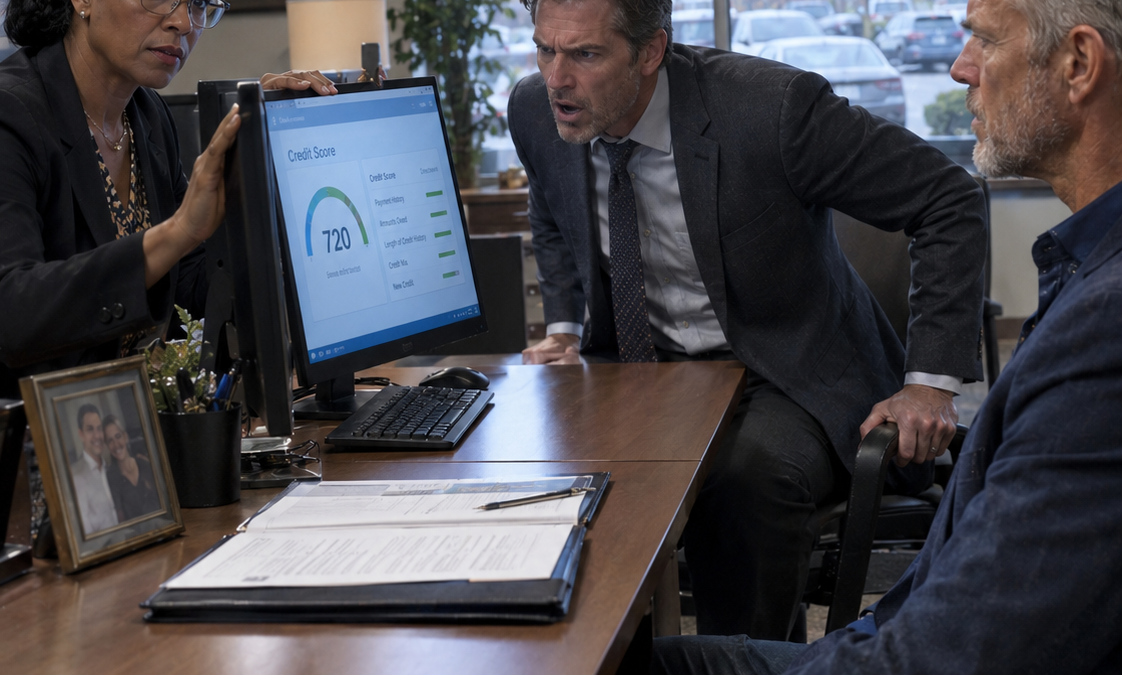
“The loan officer’s name was Denise Okonkwo, and she had kind eyes. That’s what I remember most about that morning. Not the fluorescent lights. Not the smell of stale coffee. Not the way my brother’s voice had sounded when he’d called me two days earlier, all warmth and brotherly concern, telling me he wanted to sit down with me about ‘the family business.'”
They thought a former SEAL with a quiet life would be the perfect scapegoat for their fraud → He ended up owning the family business and his brother ended up in federal prison.
That’s what I remember most about that morning. Not the fluorescent lights. Not the smell of stale coffee. Not the way my brother’s voice had sounded when he’d called me two days earlier, all warmth and brotherly concern, telling me he wanted to sit down with me about “the family business.”
Her kind eyes.
She looked at me like I was a decent man. Like I deserved a fair hearing. That was about to become a rare commodity in my life.
“You’re Robert Hale?” she asked.
“Yes, ma’am.”
“Co-signer on the Cascade Peak Outfitters business loan?”
“That’s what we discussed.”
She nodded and typed something. Her fingers paused. She frowned at the screen.
“What they didn’t know,” I would say later, when I finally understood the full shape of it, “was that the truth was already on her monitor. It had been there since before I walked in the door.”
But I’m getting ahead of myself.
My name is Robert Hale. I was fifty-four years old when my brother told a bank officer I wasn’t fit to co-sign a loan I’d already been approved for.
I’m a former Navy SEAL. Twelve years, active duty. SEAL Team Five, then Team Six. Two deployments to the Persian Gulf. One to Bosnia. A shoulder that clicks when it rains and a left knee that was rebuilt by a surgeon at Landstuhl who told me I’d never run again. I ran a 5K last month. Slow, but I finished.
After the Navy, I spent eighteen years as a risk analyst for a maritime insurance firm in Seattle. Boring work, mostly. Boring was the point. I wanted boring. Boring kept me close to my daughter, Marcy, who was born three weeks before I left active duty. Boring meant I could pick her up from school and help her with math homework and teach her to drive on the back roads of Snohomish County.
I’ve been retired for four years now. I live on eleven acres outside Monroe, Washington, with a blue heeler named Mack and a shop full of half-finished woodworking projects. I keep my finances clean. I pay my bills on time. I have a credit score that I checked exactly once, two years ago, and then never worried about again.
That’s who I am. That’s who I’ve always been.
My brother Nathan is two years younger. He runs Cascade Peak Outfitters, a sporting goods store in Everett that our father started in 1979. Dad ran it for thirty years. Nathan took over in 2009. I was overseas when the transition happened — my last deployment, the one that ended with the knee and a medical retirement I didn’t ask for.
I never wanted the store. Never asked for it. I told Dad that in 2007, when he first started talking about succession. I told him I was a SEAL, that I’d made my choice, that Nathan was the one who loved the retail floor and the customers and the smell of new hiking boots. That was true.
What I didn’t know was that Nathan had spent twenty years believing I’d been offered something he had to earn.
“Robert.”
Nathan’s voice, on the phone, two days before the meeting. He called me “Robert,” never “Rob” or “Bob.” Always full name, like a lawyer addressing a witness.
“Got a minute?”
“Sure.”
“It’s about the store. We’re restructuring some debt. Expanding the rental side. I need you to co-sign something.”
That was unusual. Nathan had never asked me for anything financial. He’d made it clear, over the years, that he considered me the family’s black sheep — the one who’d run off to play soldier while he’d stayed home and built something real.
“Why me?” I asked.
“Bank wants two signatures. I’ve got equity in the building but they want a personal guarantee from a family member. Dad’s too old. Mom’s name isn’t on anything. You’re it.”
“Okay.”
That should have been my first warning. Nathan saying “okay” to anything I was involved in. He hadn’t said okay to me since we were kids.
“Can you come to the credit union Thursday? Ten o’clock. Cascade Federal, downtown Everett.”
“I’ll be there.”
“Wear something decent.”
He hung up before I could respond.
I wore a navy blazer and gray slacks. I shaved. I parked my truck two blocks away and walked, because I knew Nathan would make a comment about the truck if he saw it.
That’s the thing about being the family’s disappointment. You learn to minimize.
Cascade Federal Credit Union occupied the ground floor of a brick building on Hewitt Avenue. Old building, newer interior. Glass walls. A receptionist who smiled at me and asked if I had an appointment.
“Nathan Hale,” I said. “Ten o’clock.”
She checked something. Her smile flickered.
“One moment.”
She picked up a phone. Spoke quietly. Hung up.
“Someone will be right with you.”
I sat in a chair by the window. Watched the street. A woman walked by with a stroller. A man in a suit checked his phone. Normal morning. Normal town.
Nathan appeared through a glass door on the far side of the lobby. He was wearing a charcoal suit that probably cost more than my monthly mortgage payment. Gold watch. Hair perfectly styled. He looked like a man who’d never spent a night in the dirt.
“Robert.”
“Nathan.”
He didn’t shake my hand. He gestured toward the door.
“Denise is ready for us.”
Denise Okonkwo’s office was small and neat. Two chairs on the visitor side of the desk. A window with a view of the parking lot. A framed photo of her and a man I assumed was her husband. A small cross on the wall.
Nathan took the chair closest to the door. I took the other one. That was deliberate, I realized later. He wanted to be between me and the exit.
“Mr. Hale,” Denise said, looking at me. “Thanks for coming in.”
“Of course.”
She opened a folder. “I’ve got the application here. Cascade Peak Outfitters. You’re listed as a co-signer.”
“That’s right.”
“Can you confirm your date of birth and Social Security number for me?”
I gave them to her.
She typed. She waited. She frowned.
“Everything okay?” Nathan asked.
“Just a moment.”
She typed some more. Clicked her mouse. Her frown deepened.
“Mr. Hale,” she said, still looking at the screen. “I’m seeing something here I need to clarify.”
“What’s that?”
She looked up at me. Then at Nathan. Then back at me.
“Your credit profile. It’s — well, it’s exceptionally strong.”
Nathan laughed. A short, sharp sound.
“That’s got to be a mistake.”
Denise looked at him. “I’m sorry?”
“My brother’s finances are — I mean, no offense, Robert, but you’ve been retired for years. You’ve got the property, sure, but the income side…”
“I have income,” I said.
Nathan waved a hand. “Consulting, right? That’s what you tell people.”
“That’s what I do.”
“Right. Consulting.”
Denise was still looking at her screen. “Mr. Hale, your credit score is 842.”
Nathan stopped talking.
“Your debt-to-income ratio is under nine percent. You have three open lines of credit, all in good standing, all with zero balances. You have no derogatory marks of any kind. I’m also showing a mortgage on a property in Monroe that was paid off in 2021.”
She looked at me. “You paid off your mortgage?”
“Yes, ma’am.”
She nodded slowly. “That’s — that’s excellent, Mr. Hale. I don’t think I’ve seen a profile this clean in six months.”
Nathan’s face had gone still. The way a man’s face goes still when he’s recalculating something he thought he understood.
“That can’t be right,” he said.
Denise turned to him. Her voice was polite but firm. “It’s right.”
“He was in the military. He didn’t — I mean, he doesn’t have…”
“Mr. Hale,” Denise said to me, ignoring Nathan entirely, “you’re more than qualified to co-sign this loan. In fact, I’d go so far as to say you’re the stronger applicant.”
Silence.
Nathan stood up. His chair scraped the floor.
“I need a minute.”
He walked out of the office. The glass door swung shut behind him.
Denise and I sat there. She looked at me with those kind eyes.
“I’m sorry,” she said. “That was awkward.”
“It’s not your fault.”
“Your brother called me earlier this week,” she said quietly. “Before our meeting. He asked me to — and I’m only telling you this because I believe you deserve to know — he asked me to look at your profile and see if there was any reason you couldn’t be on the loan.”
I said nothing.
“He said you had some financial issues. He said he wasn’t sure if you’d told me the truth about your situation.”
I kept my face still. Years of training. Years of sitting in briefing rooms while officers said things that made my blood run cold.
“What did you tell him?” I asked.
“I told him I’d review the application myself.” She paused. “I didn’t tell him what I found.”
“Which was?”
“That your profile is stronger than his.”
I looked at the folder on her desk.
“His score?” I asked.
She hesitated.
“694.”
I nodded slowly.
Two hundred points. My brother had spent years telling anyone who would listen that I was the family’s weak link, the one who couldn’t manage money, the one who’d run off and wasted his life. And his credit score was one hundred and forty-eight points below mine.
“Mr. Hale,” Denise said. “I need to ask you something, and I want you to know it’s not personal. It’s just procedure.”
“Go ahead.”
“Your brother has been the primary on this account for eleven years. In that time, there have been four late payments, two overdrafts, and a default on a supplier line of credit that was only resolved last year.”
I said nothing.
“Did you know about any of that?”
“No, ma’am.”
She nodded. “I didn’t think so.”
The glass door opened. Nathan came back in. He’d composed himself. His face was smooth again, his posture straight. He sat down.
“I apologize,” he said. “I was — surprised. I didn’t realize Robert had cleaned things up so much.”
“Cleaned things up?” I said.
“You know. After the divorce.”
There was no divorce. My wife had died in a car accident in 2011. Nathan knew that. He’d come to the funeral.
Denise looked at me. I shook my head slightly. She understood.
“Let’s proceed,” Nathan said. “I’m ready to sign.”
“Actually,” Denise said, “I’m going to need to run a few more checks. Given the discrepancy in profiles, I want to make sure everything is in order before we finalize.”
Nathan’s jaw tightened. “What discrepancy?”
“Just routine. I’ll call you both tomorrow.”
Nathan stood up again. He didn’t look at me.
“Robert. Walk with me.”
We walked out of the credit union together. The morning sun was bright on Hewitt Avenue. A bus pulled away from the curb. Normal town. Normal morning.
Nathan stopped on the sidewalk. Turned to face me.
“What are you doing?” he said.
“I’m co-signing your loan.”
“No. What are you doing.”
I looked at him. Same face I’d known for fifty-two years. Same eyes. Same mouth. But something behind them had changed. Something had gone hard.
“I don’t know what you mean.”
“You show up here with your — your whatever that was. Your score. Your paid-off mortgage. You made me look like an idiot in there.”
“Denise ran the numbers. I didn’t say anything.”
“You didn’t have to.” He stepped closer. “You’ve always done this. Always. You show up with your quiet competence and your — your thing. Your little act. The humble veteran. The man who sacrificed. And everyone falls for it.”
“Nathan.”
“You think I don’t know what you’re doing? You think I don’t see it?”
I said nothing.
“I built that store,” he said. “I built it. Dad handed it to me and it was a mess, and I made it work. I put in the hours. I made the deals. And you? You were off playing soldier. You were off being a hero. And now you want to come back and — what? Take credit?”
“I don’t want anything.”
“Bullshit.”
His voice had risen. A woman walking by glanced at us and kept moving.
“You’ve been waiting for this,” he said. “Waiting for your moment. Waiting to show up and be the better son. The one who did it right.”
“Nathan, I never wanted the store.”
“Then why are you here?”
“Because you asked me to be.”
He stared at me.
“Two days ago,” I said. “You called me. You said the bank wanted a second signature. You said you needed me.”
He said nothing.
“I said yes. That’s why I’m here.”
He shook his head. “You’re lying.”
“I’m not.”
“You’re always lying. You’ve been lying since we were kids. Lying about what you did overseas. Lying about why you left. Lying about — about everything.”
I looked at him. My brother. My only sibling.
“I never lied to you,” I said.
“You never told me the truth.”
“That’s different.”
He laughed. Cold. “Is it?”
I didn’t answer. He turned and walked away. Didn’t say goodbye. Didn’t look back.
I stood on the sidewalk for a long time.
What Nathan didn’t know — what he couldn’t know, because he’d never asked — was that I’d spent twelve years in rooms where men lied for a living. I’d learned to hear the truth underneath. I’d learned to wait. I’d learned that the moment you react is the moment you lose.
I walked to my truck. Started the engine. Drove home.
Mack met me at the door. Blue heeler. Ten years old. He’d been with me since Marcy was twelve.
“Hey, buddy.”
He wagged his tail. I knelt down and scratched his ears.
“You want to go for a walk?”
He did.
We walked the back fence line. The November air was cold and clean. The Cascades were white on the horizon. My knee ached.
I thought about Nathan. About the store. About Dad.
Dad had died in 2018. Heart attack. Fast. I’d been at his bedside when it happened. Nathan had been on a buying trip in Reno.
Dad’s last words to me were: “Take care of your brother.”
I’d said I would.
I’d meant it.
But I was beginning to understand that my brother didn’t want to be taken care of. He wanted something else. Something I couldn’t name yet.
My phone buzzed. Denise Okonkwo.
“Mr. Hale?”
“Yes.”
“I’ve completed my review.”
“And?”
“Your brother’s application has been flagged for further review. There are some discrepancies I need to look into. But the loan itself — if you’re still willing to co-sign, it’s approved. Your signature alone would be sufficient.”
I was silent for a moment.
“Mr. Hale?”
“I’m here.”
“Are you still willing?”
I looked out at the mountains. Mack sat at my feet, watching me with his one good eye.
“I need to think about it,” I said.
“Of course.”
“Can you send me the documents? Everything. The full application, the financials, all of it.”
“Everything?”
“Everything.”
She paused. “That’s — that’s not standard, Mr. Hale. Some of that information is confidential.”
“I understand. But if I’m going to co-sign, I need to see what I’m signing for.”
Another pause.
“I’ll see what I can do.”
“Thank you.”
I hung up. Mack looked up at me.
“Come on, buddy. Let’s go inside.”
That night, I sat at my kitchen table and opened my laptop. I pulled up the credit union’s website. Then I pulled up something else — a search bar, and a name I hadn’t thought about in years.
Tommy Vicks.
Tommy had been in my platoon. Team Five. He’d gotten out in 2005 and gone into forensic accounting. We’d kept in touch. Christmas cards. The occasional phone call. He’d married a woman from Spokane and had three kids and a life that looked nothing like mine.
But some things don’t change.
I found his number. I sent him a text.
“Tommy. Rob Hale. Need a favor. Call me when you can.”
He called back in twenty minutes.
“Rob Hale. As I live and breathe.”
“Hey, Tommy.”
“How’s the knee?”
“Still attached.”
“That’s more than I can say for my hip.”
We talked for a few minutes. The way old friends do. The shorthand. The history. The jokes that didn’t need explanations.
Then I told him what I needed.
“I want you to look at some financials for me,” I said. “My brother’s business. I’m co-signing a loan and I want to know what I’m getting into.”
“Send it over.”
“You don’t have to—”
“Rob. Send it over.”
I did.
Three days later, he called me back.
“Rob.”
“Tommy.”
“Your brother’s books are a mess.”
I sat down. “How much of a mess?”
“I’m still working through it. But I can tell you right now — there’s money that’s not where it’s supposed to be. A lot of it. Some of these supplier payments don’t match up with the invoices. And there’s a line of credit that was paid down last year that shouldn’t have been paid down.”
“What do you mean?”
“I mean the money came from somewhere. And it wasn’t from the business.”
I was quiet.
“Rob?”
“I’m here.”
“You want me to keep digging?”
“Yeah.”
“This could get complicated.”
“I know.”
“If your brother finds out—”
“He won’t.”
A pause.
“Okay,” Tommy said. “But Rob — be careful. Family stuff gets ugly fast.”
I looked at the photo on my refrigerator. Marcy, age sixteen, holding a fish she’d caught on a trip to the Yakima River. Her smile was the best thing I’d ever made.
“I know,” I said.
I hung up and sat in the dark for a long time.
What I didn’t know yet — what I wouldn’t know for weeks — was that Tommy’s digging would uncover something far worse than a few missing payments. Something that had been going on for years. Something that would tear my family apart and put everything I’d built at risk.
But that was still coming.
For now, I just sat there, listening to the wind outside and Mack’s breathing from his bed by the door.
And I waited.
PART 2 — THE SHOP ON HEWITT
Tommy Vicks called me back four days later.
I was in my shop when the phone rang. Sanding a walnut slab for a coffee table I’d been working on for three months. Mack was asleep on a pile of shop rags in the corner.
“Rob.”
“Tommy.”
“You sitting down?”
I set the sander on the bench. “I am now.”
“Your brother’s been moving money.”
I said nothing.
“For at least three years. Maybe longer. I’m still tracing it, but I can see the pattern.”
“What kind of money?”
“Cash. Lots of it. He’s been taking cash out of the business in ways that don’t show up on the profit and loss. Small amounts, mostly. Five hundred here. Two thousand there. Spread out. But it adds up.”
“How much?”
“Best estimate so far? Two hundred and forty thousand. Maybe more.”
I looked at the half-finished table. The grain was beautiful. Dark and swirling, like water.
“Where’s it going?”
“That’s the thing. I don’t know yet. He’s not putting it in a personal account — or if he is, he’s hiding it well. Could be a safe. Could be real estate. Could be a girlfriend.”
“Nathan’s been married for twenty-two years.”
“Rob, I’ve been doing this for fifteen years. I’ve seen everything.”
I picked up the sandpaper. Put it down again.
“Keep digging.”
“I will. But there’s something else.”
“What?”
“The loan you’re supposed to co-sign. The expansion of the rental side.”
“What about it?”
“It’s not for expansion. The numbers don’t support expansion. He’s using that loan to cover a hole.”
I stood there. The shop was cold. November in western Washington. I could see my breath.
“How big a hole?”
“Big enough that if the bank finds out what he’s doing, they’ll call every loan he’s got. Including the mortgage on the building.”
“And if I co-sign?”
“Then you’re on the hook for it. Every penny.”
I closed my eyes. Counted to five. Opened them.
“Tommy.”
“Yeah.”
“Can you find out where the money’s going?”
“I can try. But Rob — this is your brother. Are you sure you want to know?”
“No,” I said. “But I need to anyway.”
I didn’t sleep that night.
I lay in bed and stared at the ceiling and thought about Nathan. About the store. About Dad.
Dad had started Cascade Peak Outfitters when I was five years old. He’d been a logger before that, working the woods east of Everett. When the spotted owl ruling came down and the timber industry collapsed, he’d taken his savings and leased a storefront on Hewitt Avenue and filled it with fishing rods and hunting rifles and sleeping bags.
I remembered being in that store as a kid. The smell of canvas and gun oil. The creak of the floorboards. Dad behind the counter, talking to customers, always talking. He knew everyone’s name. He knew their kids’ names. He knew which rivers were running high and which trails were washed out.
Nathan was always there too. Stocking shelves. Sweeping floors. Learning the business.
I was there too, but differently. I was the one who’d climb the ladder to fix the roof. The one who’d carry the heavy boxes. The one who’d stay late with Dad, closing up, walking the aisles to make sure everything was in its place.
I loved that store. I loved the way it smelled. I loved the way Dad’s face lit up when a customer walked in.
But I never wanted to run it.
When I was seventeen, a Navy recruiter came to my high school. I’d never thought about the military before. I was a decent student. Decent athlete. No real plans. But something about the recruiter’s pitch — the discipline, the purpose, the sense of something bigger than myself — lit something in me.
I told Dad I wanted to enlist.
He didn’t say anything for a long time. Then he said: “I figured you would.”
“You did?”
“You’ve always been looking for something I couldn’t give you.”
I didn’t know what to say to that.
“The store’s here if you want it,” he said. “But I don’t think you do.”
He was right.
I enlisted three months later. Went to BUD/S. Made it through. First try. Then Team Five. Then Team Six. Twelve years.
Nathan took over the store in 2009. I was in Afghanistan when it happened. Dad called me on a satellite phone, told me he was stepping back, that Nathan was ready. I said that was good. I meant it.
I came home for Dad’s funeral in 2018. Nathan had aged. He was running the store, had expanded it twice, had a staff of twelve. He was proud of it. He should have been.
But something had changed between us. Somewhere in those twelve years, my brother had stopped being my brother and become something else. A rival. A competitor. A man who looked at me and saw everything he thought he wasn’t.
I didn’t know why. I still don’t.
But I knew it was there. I’d known for years.
I just hadn’t known how far it went.
The next morning, I drove to Everett.
I didn’t tell Nathan I was coming. I didn’t call ahead. I just parked on Hewitt Avenue, two blocks from the store, and walked.
Cascade Peak Outfitters looked good. The windows were clean. The sign was freshly painted. Through the glass, I could see customers browsing the aisles, a couple of employees at the counter.
I stood on the sidewalk and watched for a while.
Then I saw Nathan. He was in the back of the store, near the rental counter, talking to a man in a suit. They were both smiling. The man handed Nathan an envelope. Nathan put it in his jacket pocket.
Then they shook hands. The man walked out.
I stepped into the doorway of a coffee shop across the street and watched.
The man got into a black SUV. Drove away.
I memorized the license plate. Old habit. Twelve years of noticing things you’re not supposed to notice.
Then I walked back to my truck and drove home.
Tommy called that afternoon.
“Rob. The license plate you gave me. The black SUV.”
“What about it?”
“It’s registered to a company called Emerald Ridge Holdings.”
“Never heard of it.”
“You wouldn’t. It’s a shell company. Incorporated in Nevada three years ago. No website. No address. Just a registered agent and a bank account.”
“Who owns it?”
“That’s the interesting part. The registered agent is a lawyer in Vegas. But the signatory on the bank account is a woman named Carla Reyes.”
“Who’s Carla Reyes?”
“According to her LinkedIn, she’s a sales rep for a medical supply company in Bellevue. But her Facebook says she’s in a relationship with a man named Nathan Hale.”
I sat down on the porch steps. Mack came over and put his head on my knee.
“Nathan’s having an affair,” I said.
“That’s what it looks like.”
“And he’s moving money to a shell company.”
“Also looks that way.”
I looked out at my property. Eleven acres. Paid off. Clean. The way I’d built it.
“How long have you known me, Tommy?”
“Since 1998.”
“In all that time, have I ever asked you for anything?”
“No.”
“Would you do something for me?”
“Name it.”
“I need to see the full picture. Everything Nathan’s been doing. Every account. Every transaction. I need to know what he’s hiding.”
“Rob, I can do that. But it’s going to take time. And if he finds out—”
“He won’t.”
“You don’t know that.”
“I know my brother. He’s not as smart as he thinks he is.”
A pause.
“Okay,” Tommy said. “I’ll get you what you need.”
“Thank you.”
“Rob?”
“Yeah.”
“Are you okay?”
I looked at the mountains. The snow. The clean, cold sky.
“I’ll let you know,” I said.
That night, Marcy called.
Marcy lives in Portland now. She’s a nurse at a hospital there, working in the ICU. She’d been there for five years. She called me every Sunday.
“Hey, Dad.”
“Hey, sweetheart.”
“How’s Mack?”
“Fat and happy.”
“You’re not feeding him table scraps again, are you?”
“I’m not confirming or denying.”
She laughed. It was the best sound I’d heard in days.
“Listen,” she said. “I talked to Uncle Nathan yesterday.”
I went still.
“You did?”
“Yeah. He called me. Wanted to know if I’d be willing to co-sign something for him. Some loan for the store.”
My hand tightened on the phone.
“What did you say?”
“I said I’d think about it. But Dad, something felt off. He was — I don’t know. Pushy. He kept saying it was a family thing and I should want to help.”
“What did you tell him about me?”
“About you? Nothing. Why?”
“Just curious.”
She was quiet for a moment.
“Dad. Is something going on?”
I looked at the kitchen window. My reflection looked back at me. Gray hair. Gray stubble. Tired eyes.
“No,” I said. “Nothing you need to worry about.”
“You’re lying.”
“I’m not.”
“You’re using your SEAL voice.”
I had to smile. She’d been able to read me since she was six years old.
“Marcy. I need you to do something for me.”
“Okay.”
“If Uncle Nathan asks you to sign anything — anything at all — don’t. Tell him you need to talk to me first.”
“Why?”
“Just trust me.”
She was quiet for a long moment.
“Dad. What did he do?”
“Nothing yet.”
“That’s not an answer.”
“I know.”
She sighed. “Okay. I won’t sign anything. But you have to promise me you’ll tell me what’s going on. When you can.”
“I promise.”
“I love you, Dad.”
“I love you too, sweetheart.”
I hung up and sat in the dark.
My daughter. My only child. The best thing I’d ever made.
If Nathan was willing to drag her into this — if he was willing to put her name on a loan he knew was toxic — then this was worse than I’d thought.
This wasn’t just about me. It was about everyone Nathan could reach.
I picked up my phone and texted Tommy.
“Find everything. No matter what it costs.”
He replied in thirty seconds.
“Already on it.”
The next morning, I went to see Dad.
He’s buried in a small cemetery outside Snohomish. The kind of place with old oak trees and crooked headstones and a view of the valley. I hadn’t been there in months. I should have gone more often.
I parked at the gate and walked to his grave. The grass was wet. My knee ached.
“Hey, Dad.”
The headstone was simple. Granite. His name, his dates, a small etching of a fishing rod.
“I need to ask you something.”
The wind moved through the trees. A crow called from somewhere nearby.
“I know you told me to take care of Nathan. I know that was your last wish. I’ve tried. I’ve tried for years.”
I knelt down. Put my hand on the stone.
“But I don’t know if I can anymore.”
I stayed there for a long time. Long enough that the sky started to gray. Long enough that my knee went numb.
Then I stood up and walked back to my truck.
When I got home, there was a package on my porch. Brown envelope. No return address. Inside was a thumb drive and a single sheet of paper.
The paper said: “Everything you need is on here. I’m sorry. — T”
I plugged the thumb drive into my laptop.
The files were organized in folders. Bank statements. Wire transfers. Corporate registrations. Tax returns. Photographs of documents. Tommy had been busy.
I spent the next six hours going through it.
By the time I finished, I understood.
Nathan had been embezzling from the store for years. Small amounts at first. Then larger. He’d set up shell companies, moved money through fake vendors, used Carla Reyes to open accounts he couldn’t open himself. He’d taken out loans against the store’s assets without telling anyone. He’d forged Dad’s signature on at least two documents.
He’d also been lying to the bank.
The loan he wanted me to co-sign wasn’t for expansion. It was to cover a debt he’d been hiding. A debt that was about to come due.
And if I signed, I’d be responsible for every penny.
I closed my laptop. Looked at Mack.
“Well,” I said. “That’s that.”
He wagged his tail.
I didn’t know what I was going to do. But I knew what I wasn’t going to do.
I wasn’t going to sign.
And I wasn’t going to let Nathan take Marcy down with him.
I picked up my phone. Called Denise Okonkwo.
“Mr. Hale. I was just about to call you.”
“I need to see you. Tomorrow. Before I make any decisions.”
“Of course. What time?”
“Ten o’clock.”
“I’ll clear my schedule.”
“Thank you.”
I hung up. Looked at the mountains. The snow was coming down now. Soft and quiet.
Tomorrow was going to be a long day.
PART 3 — THE SECOND MEETING
Denise Okonkwo was waiting for me when I walked in.
Same office. Same window. Same photo of her and her husband. But something was different. She looked tired. The kind of tired that comes from not sleeping.
“Mr. Hale.”
“Ms. Okonkwo.”
“Please. Denise.”
“Robert.”
She gestured to the chair. I sat.
“I’ve been doing some digging of my own,” she said.
“You have?”
“After our last meeting, I couldn’t stop thinking about it. The discrepancy between you and your brother. The way he reacted. Something felt wrong.”
“And?”
She opened a folder. Not the same folder from before. A thicker one.
“I pulled the full history on Cascade Peak Outfitters. Every loan. Every payment. Every interaction with this institution going back fifteen years.”
She turned the folder toward me.
“There’s something you should see.”
I looked at the documents. Statements. Ledgers. A timeline someone had drawn by hand.
“Two years ago,” Denise said, “your brother took out a line of credit against the store’s inventory. One hundred and twenty thousand dollars. It was supposed to be used for a renovation of the rental department.”
“And?”
“It was never used for that.”
I said nothing.
“I can see the disbursement records. The money went into an account that isn’t associated with the store. An account I’ve never seen before.”
She pointed to a line on the paper.
“Emerald Ridge Holdings.”
I looked at her. She looked back.
“You already knew,” she said.
“I had my suspicions.”
“Who told you?”
“A friend. Someone I trust.”
She nodded slowly. “I should probably stop talking to you about this. I could lose my job.”
“You could.”
“You’re not going to make this easy, are you?”
“No, ma’am.”
She almost smiled.
“Mr. Hale. I’ve been doing this job for nineteen years. I’ve seen a lot of things. Fraud. Embezzlement. Families torn apart over money. But I’ve never seen someone try to drag their brother down with them.”
“You think that’s what he’s doing?”
“I know it is.”
She closed the folder.
“I’m going to deny the loan.”
I said nothing.
“Not because your brother isn’t qualified. He is, technically. But because I can’t in good conscience approve a loan that I believe is being used to cover fraudulent activity.”
“What happens then?”
“An internal review. Possibly a report to the credit union’s fraud department. Possibly a report to law enforcement.”
I let that sit.
“And Nathan?”
“He’ll be notified. He’ll have a chance to respond.”
“He won’t like it.”
“No. He won’t.”
I looked out the window. The parking lot. A woman loading groceries into her car. Normal life.
“I need to ask you something,” I said.
“Go ahead.”
“Is there anything you can do to protect my daughter?”
Denise frowned. “Your daughter?”
“Nathan called her. Asked her to co-sign. She said no. But if he tries again — if he finds someone else in the family — I want to know there’s something in place.”
Denise was quiet for a moment.
“I can flag your family’s names in the system. Anyone who tries to co-sign on that account will trigger a manual review. It won’t stop him from asking, but it will slow him down.”
“That’s enough.”
She wrote something on a notepad. Then she looked at me.
“Mr. Hale. Can I ask you something personal?”
“Sure.”
“You could have just refused to sign. You could have walked away. Why are you doing all this?”
I thought about Dad. About the store. About the way Nathan had looked at me on the sidewalk.
“Because he’s my brother,” I said. “And I promised someone I’d take care of him.”
“Even after everything?”
“Especially after everything.”
I drove home the long way. Through Snohomish. Past the cemetery. Past the old dairy farms that were now subdivisions. Past the high school where I’d first heard a Navy recruiter talk about honor and duty and sacrifice.
I thought about Dad. About the last conversation we’d had. Two days before he died. He’d been in the hospital, heart monitor beeping, oxygen tube in his nose. He’d looked at me and said: “Robert. You’ve always been the strong one.”
“No, Dad.”
“You have. You just don’t know it.”
He’d closed his eyes then. I thought he was sleeping. But then he said one more thing.
“Nathan’s not like you. He needs — he needs to feel important. Don’t take that from him.”
I hadn’t understood what he meant.
Now I did.
When I got home, there was a truck in my driveway.
I recognized it. Silver Ford F-150. Washington plates. Nathan’s.
He was sitting on my porch. Mack was sitting next to him. Traitor.
“Nathan.”
“Robert.”
I got out of my truck. Walked up the steps. Mack wagged his tail.
“What are you doing here?”
“We need to talk.”
“About what?”
“About the loan. Denise called me. Said she’s denying it. Said there’s some kind of problem.”
I said nothing.
“You know something about this.”
“I do.”
He stood up. His face was red. His hands were shaking.
“What did you do?”
“I didn’t do anything. I just asked questions.”
“Questions? What kind of questions?”
“The kind you should have asked yourself before you started moving money into a shell company.”
He went still.
“What did you say?”
“You heard me.”
“Robert. I don’t know what you’re talking about.”
“Emerald Ridge Holdings. Carla Reyes. Two hundred and forty thousand dollars over three years. Does that ring a bell?”
He took a step back. His mouth opened. Closed.
“Who told you that?”
“Doesn’t matter.”
“It was that friend of yours. The accountant. You had him investigate me.”
“I did.”
“You had no right.”
“I had every right. You tried to make me responsible for your debts. You tried to drag my daughter into it. You lied to a bank officer. You lied to me.”
“I didn’t lie.”
“You told me the loan was for expansion. You told me it was legitimate. You told me you needed me.”
“I do need you.”
“No. You need someone to blame when this falls apart. And you picked me. Just like always.”
He stared at me. His eyes were wet. Angry.
“You’ve always thought you were better than me,” he said.
“No, I haven’t.”
“You have. You’ve always been the hero. The one who went off and did something important. And I stayed here. I stayed with Dad. I ran the store. I did everything he asked.”
“And I’m grateful for that.”
“You’re not. You’ve never been grateful. You’ve looked down on me since the day you came home from BUD/S with your trident and your medals and your — your stories.”
“I never told you any stories.”
“That’s worse. You never told me anything. You just sat there. Quiet. Like you knew something I didn’t.”
I looked at him. My brother. Fifty-two years old. Gray at the temples. Tired.
“There’s a lot you don’t know,” I said.
“Then tell me.”
“No.”
“Why not?”
“Because you’re not asking to understand. You’re asking to find a weapon.”
He laughed. Cold and sharp.
“You think I want to hurt you?”
“I think you’ve been hurting me for years. I just didn’t know why.”
He was quiet.
“I never wanted the store,” I said. “I never wanted Dad’s approval. I never wanted to be the one who stayed. I wanted something else. Something you couldn’t understand. And I went and got it. That’s all.”
“You got a war.”
“I got a purpose.”
“And what did I get?”
“You got a family. A home. A business Dad built with his own hands. You got everything I couldn’t have.”
He looked at me. For a moment — just a moment — something flickered behind his eyes. Something that might have been understanding.
Then it was gone.
“You’re going to regret this,” he said.
“No. I’m not.”
“I’ll make sure of it.”
He walked to his truck. Got in. Slammed the door.
I watched him drive away.
That night, I sat on the porch with Mack and a cup of coffee.
The stars were out. Bright and cold. The kind of sky you only get in the winter, when the air is clear and the world is quiet.
I thought about Nathan. About the way he’d looked at me. About the way he’d said “I’ll make sure of it.”
I’d heard threats before. Real ones. Men who meant to kill me. Men who’d tried.
This was different. This was family.
And family could hurt you in ways no enemy ever could.
My phone buzzed. A text from Tommy.
“Found something else. Call me in the morning.”
I stared at the message for a long time.
Then I went inside. Locked the door. Checked the windows.
Old habits.
I didn’t sleep much.
The next morning, I called Tommy.
“What did you find?”
“There’s a second shell company. Different name. Different registered agent. Same pattern.”
“How long?”
“Four years. Maybe five. It’s not as active as Emerald Ridge, but it’s there. Moving money. Small amounts.”
“Where’s the money going?”
“That’s the thing. I can’t tell. It’s going into an account that’s not associated with any business I can find. Not in Washington. Not in Nevada.”
“Where then?”
“I don’t know. Could be offshore. Could be a personal account under a different name.”
“Nathan’s name?”
“No. He’s not that stupid.”
I thought about it.
“Can you find out?”
“I can try. But Rob — this is getting into territory that could get dangerous. If there’s organized money involved — if Nathan’s gotten tangled up with someone he shouldn’t have —”
“I know.”
“You should tell someone. Law enforcement. The FBI.”
“And say what? My brother’s moving money around? I don’t have proof of anything illegal yet.”
“You have proof of fraud. That’s enough.”
“Not for the FBI. Not yet.”
A pause.
“Rob. What are you going to do?”
I looked at the mountains. The snow. The clean, cold sky.
“I’m going to wait,” I said. “And I’m going to watch. And when he makes a mistake — and he will — I’m going to be there.”
“That’s not a plan. That’s a hope.”
“It’s what I’ve got.”
“You’ve got more than that. You’ve got me. You’ve got your daughter. You’ve got people who care about you.”
“I know.”
“Do you?”
I didn’t answer.
“Rob. Listen to me. I know you. I know how you operate. You’re going to try to handle this alone. You’re going to try to protect everyone and not ask for help. But this isn’t a mission. You’re not on a team anymore. You don’t have to do this by yourself.”
I closed my eyes.
“I know,” I said again.
“I’m here. Whatever you need.”
“Thank you.”
I hung up. Looked at Mack.
“You ready?”
He wagged his tail.
I grabbed my keys. Headed for the truck.
I had somewhere to go.
The Cascade Peak Outfitters store was closed when I got there.
It was early. Seven a.m. The windows were dark. The parking lot was empty.
I sat in my truck and watched.
At seven-fifteen, a woman came out of the back door. Dark hair. Red coat. She walked to a small car parked in the alley and drove away.
Carla Reyes.
I memorized the car. The plates. The direction she went.
Then I waited.
At eight o’clock, Nathan arrived. He unlocked the front door and went inside. Didn’t look around. Didn’t notice my truck parked across the street.
I watched him through the window. Watched him turn on the lights. Watched him walk the aisles. Watched him stop at the counter and stare at something.
I knew that look. I’d seen it on men in combat. Men who knew they were about to be caught.
Nathan was scared.
Good.
I started my truck and drove home.
I had work to do.
PART 4 — THE FAMILY MEETING
My mother called me on a Tuesday.
I was in the shop when the phone rang. Working on a cabinet door. Dovetail joints. Slow, precise work. The kind that required all of my attention.
I almost didn’t answer.
“Robert.”
“Hi, Mom.”
“I need you to come over. Tonight.”
Her voice was tight. The way it got when she was upset.
“What’s going on?”
“Your brother came by. He told me some things. I want to hear your side.”
I set down the chisel.
“What did he tell you?”
“That you’re trying to destroy him. That you had him investigated. That you’re trying to take the store away from him.”
I closed my eyes.
“That’s not true.”
“Then come over. Explain it to me.”
“I’ll be there at six.”
I hung up. Looked at Mack.
“Family stuff,” I said.
He tilted his head.
“Yeah. I know.”
Mom lived in a small house in Lake Stevens. Two bedrooms. A garden she’d kept up since Dad died. A porch swing where she read mystery novels in the summer.
I pulled into her driveway at exactly six o’clock. Nathan’s truck was already there.
Of course it was.
I walked to the door. Knocked. Mom answered.
She was seventy-eight years old. Small and gray and sharp as a tack. She looked at me the way she’d looked at me when I was sixteen and came home late — not angry, but disappointed.
“Robert.”
“Mom.”
“Come in.”
The living room smelled like her. Lavender and old books. Nathan was sitting on the couch. Arms crossed. Face hard.
“Robert.”
“Nathan.”
“Sit down.”
I sat in Dad’s old chair. The leather was cracked. Worn. I remembered sitting on Dad’s lap in that chair when I was a kid. He’d read me fishing magazines and tell me stories about the woods.
“Now,” Mom said, sitting in her rocking chair. “Nathan tells me you’ve been investigating him. That you hired someone to look into his finances.”
“That’s true.”
Nathan snorted. “See? He admits it.”
“Why?” Mom asked.
“Because he asked me to co-sign a loan. And I wanted to know what I was signing for.”
Mom looked at Nathan. “Is that true?”
“He’s lying. The loan was legitimate. He’s just trying to make me look bad.”
I reached into my jacket pocket. Pulled out a folder. Set it on the coffee table.
“What’s that?” Nathan asked.
“Bank statements. Wire transfers. Corporate registrations. Everything you’ve been doing for the past three years.”
Nathan went pale.
“You can’t—”
“I can. And I did.”
Mom opened the folder. Started reading.
“Mom, don’t—” Nathan reached for it.
“Don’t touch that,” I said. My voice was quiet. Calm.
He froze.
Mom read for a long time. Her face didn’t change. That was the thing about Mom. She’d been a nurse for forty years. She’d seen everything. She didn’t rattle easy.
When she finished, she closed the folder and looked at Nathan.
“Is this true?”
“It’s — it’s not what it looks like.”
“Did you take money from the store?”
“I borrowed it. I was going to pay it back.”
“Did you put your brother’s name on a loan without telling him what it was for?”
“I—”
“Did you call your niece and ask her to co-sign a loan you knew was fraudulent?”
Nathan didn’t answer.
“Did you tell a bank officer that your brother wasn’t fit to co-sign because of financial problems you knew he didn’t have?”
Silence.
Mom looked at me. Then at Nathan. Then back at me.
“I need a minute,” she said.
She stood up. Walked into the kitchen. I heard the tap run. A glass fill.
Nathan leaned toward me. His voice was low. Angry.
“You brought this into her house? You brought your — your evidence into her house?”
“She asked.”
“You could have lied.”
“I don’t lie.”
“You could have said you’d handle it. You could have kept her out of it.”
“She’s our mother. She deserves to know.”
“She’s seventy-eight years old. She doesn’t need this.”
“She raised us. She ran a hospital ward. She can handle it.”
Nathan stood up. Started pacing.
“You think you’re so noble. You think you’re protecting her. But you’re just — you’re just trying to hurt me.”
“No.”
“You are. You’ve always wanted to hurt me. You’ve always wanted to be the one who was right. The one who was good. The one who — who did everything perfectly.”
“That’s not true.”
“It is. You went off to the Navy and you came back and you were — you were different. You were better. You knew things. You’d done things. And I was just — I was just the guy who stayed.”
“You were the guy who stayed with Dad. You were the guy who built the business. That matters.”
“It doesn’t. Not to you.”
“It matters to me.”
He stopped pacing. Looked at me.
“Then why didn’t you ever say so?”
I didn’t have an answer.
Mom came back. She sat down. She looked at both of us.
“I’ve made a decision,” she said.
Nathan and I waited.
“I’m not going to take sides. I’m not going to choose between my sons. But I’m not going to pretend I didn’t see what I saw.”
She looked at Nathan.
“You need to fix this. Whatever you’ve done — whatever you’ve taken — you need to make it right. Before it destroys you.”
“And him?” Nathan pointed at me. “What does he need to do?”
“Your brother didn’t do anything.”
“He investigated me.”
“Because you gave him a reason to.”
Nathan stared at her.
“You told a bank that your brother wasn’t fit to co-sign. You tried to use his name to cover your mistakes. You tried to use your niece. That’s not — that’s not what family does.”
“Family,” Nathan said. “Family. You always took his side.”
“I never took sides.”
“You did. You always did. When he came home from BUD/S and everyone was so proud. When he got his trident and Dad cried. When he went overseas and Mom prayed for him every night. I was here. I was here the whole time.”
“We were proud of you too.”
“You were proud of what I did. You were proud of the store. But you were never proud of me.”
Mom was quiet.
Nathan walked to the door. Stopped. Turned.
“I’ll fix it,” he said. “But don’t expect me to forgive you.”
He walked out. Slammed the door.
Mom and I sat in silence.
“I’m sorry,” I said.
“For what?”
“For bringing this to you.”
She reached over. Took my hand.
“You didn’t bring it. He did. A long time ago.”
She looked at the folder on the table.
“How bad is it?”
“Bad.”
“How bad?”
“He’s been taking money for years. Moving it into shell companies. Hiding it from the bank. From the IRS. From everyone.”
“Where’s it going?”
“I don’t know yet. Tommy’s still looking.”
She nodded slowly.
“Your father knew,” she said.
I looked at her.
“What?”
“He knew something was wrong. Nathan had been — he’d been strange. Distant. Dad tried to talk to him but Nathan wouldn’t listen. He told me: ‘Something’s not right with that boy.'”
“When?”
“Before he died. A few months before.”
I let that sit.
“Did he say anything else?”
“He said: ‘Watch out for Robert. Nathan’s going to try to hurt him.'”
I closed my eyes.
“I didn’t understand,” Mom said. “I didn’t know what he meant. But I think I do now.”
I sat with her for a while longer. Drank tea. Talked about other things. Marcy. The garden. Mack.
When I left, she walked me to the door.
“Robert.”
“Yes?”
“Whatever happens — I’m proud of you. I’ve always been proud of you.”
I kissed her cheek.
“Thank you, Mom.”
I drove home the long way. Through the dark. Through the rain that had started falling.
I thought about Dad. About what he’d known. About what he’d tried to warn me about.
I thought about Nathan. About the look on his face when he’d walked out the door.
I thought about the folder on Mom’s table. The truth that couldn’t be put back.
And I wondered what Nathan would do next.
The answer came two days later.
I was at the hardware store when my phone buzzed. A text from an unknown number.
“Your brother filed a restraining order against you. He claims you threatened him at your mother’s house. You’ll be served tomorrow.”
I stared at the message.
Then I called Tommy.
“Did you see?”
“I saw.”
“He’s lying. I never threatened him.”
“I know. But it doesn’t matter. The filing is enough. Now you’ve got a court date. And he’s got a story.”
“What story?”
“That you’re unstable. That you’re harassing him. That you’re trying to take the store.”
“That’s insane.”
“It doesn’t have to be true to work. It just has to be believed.”
I leaned against the hardware store wall. Watched a man load lumber into his truck.
“What do I do?”
“You fight it. You get a lawyer. You show up to court with your evidence and your witnesses and your — your record. Your service. Your reputation.”
“That’s a lot of work.”
“It’s your life, Rob. You don’t have a choice.”
I looked at the sky. Gray. Heavy. The kind of sky that promised rain for weeks.
“Okay,” I said. “Find me a lawyer.”
The restraining order hearing was set for December 12th.
I had three weeks.
I hired a lawyer named Patricia Chen. She was a former JAG officer. She’d worked with veterans before. She understood the military. She understood what it meant to have your credibility attacked.
“This is a classic smear campaign,” she told me. “He can’t win on the facts, so he’s trying to make you look dangerous. He’s hoping the court will side with him because he filed first.”
“Will they?”
“Not if we do this right.”
She looked at my file. My DD-214. My service record. My letters of commendation. My clean financial history.
“You’ve got a lot of ammunition,” she said. “We just need to use it.”
The hearing was held in a small courtroom in Everett. Wood paneling. Fluorescent lights. A judge who looked tired.
Nathan was there with his lawyer. A man in a shiny suit who kept glancing at his phone.
I sat at the table with Patricia. Calm. Still.
The judge asked Nathan to state his case.
“He threatened me,” Nathan said. “At my mother’s house. He said he’d destroy me. He said he’d make sure I lost everything.”
“Did anyone witness this?”
“My mother was there. But she’s — she’s old. She doesn’t remember things right.”
I kept my face still.
Patricia stood up.
“Your Honor, we have a different account. Mr. Hale never threatened his brother. He was invited to his mother’s home by his mother herself. He brought documents — legitimate documents — that showed his brother’s financial misconduct. When confronted with those documents, his brother became agitated and left. No threats were made.”
She handed the judge a folder.
“These are the documents Mr. Hale brought to his mother’s house. They show that Mr. Nathan Hale has been embezzling from the family business for years. They show that he attempted to defraud a credit union by using Mr. Robert Hale’s name on a loan without his knowledge or consent. And they show that he attempted to involve his niece in the same fraud.”
The judge looked at the folder. Then at Nathan.
“Mr. Hale. Are these documents accurate?”
Nathan’s lawyer stood up. “Your Honor, we object. These documents are not relevant to the restraining order.”
“They’re entirely relevant,” Patricia said. “They show motive. The petitioner isn’t afraid of my client. He’s afraid of what my client knows.”
The judge held up a hand.
“I’m going to take a recess. I want to review these documents.”
He left the courtroom.
Nathan looked at me. His eyes were wild. Scared.
I looked back.
I didn’t smile. I didn’t gloat. I just looked at him.
The judge came back twenty minutes later.
“I’ve reviewed the documents,” he said. “And I’ve made a decision.”
He looked at Nathan.
“The restraining order is denied. There is no evidence that Mr. Robert Hale poses a threat to Mr. Nathan Hale. In fact, the evidence suggests the opposite.”
He looked at me.
“Mr. Hale. You’re free to go.”
I stood up. Patricia gathered her papers.
Nathan sat frozen in his chair.
I walked past him. Didn’t say a word.
Outside the courthouse, the rain had stopped. A weak sun was breaking through the clouds.
Patricia shook my hand.
“Good outcome,” she said.
“Thank you.”
“What’s next?”
I looked at the sky. The sun. The clean, cold air.
“I don’t know,” I said. “But I’m not done.”
 [Tap here for the Next Part ]


