ASSASSIN Entered the ICU to Kill a NAVY SEAL — Until ONE NURSE Ruined His Entire Mission (part 3)
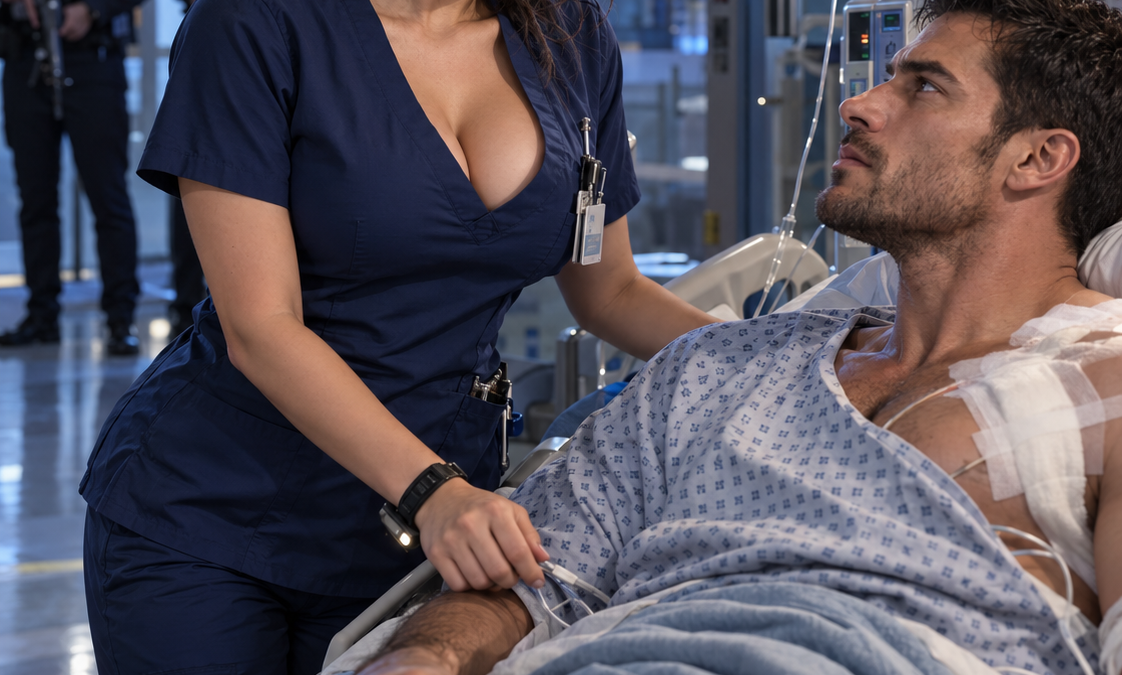
Part 3
Recently, with access to the building schematics and the ICU equipment configurations, Emily heard this from Kesler 40 minutes later, delivered without embellishment in the second floor conference room where they had established a temporary operations space. She was sitting at the end of the table. Taigga was in a reclining chair against the wall, eyes closed, doing the disciplined rest of someone who had learned to sleep in 2-hour windows in places far less comfortable than this.
She listened to the assessment.
When Kesler finished, she said, “The false panel required fabrication.
That’s not something you do the night before.”
Correct. Briggs was at the whiteboard, which had a rough diagram of the third floor in a timeline and dry erase marker.
We’re looking at a minimum 72-hour lead time for the panel alone, probably longer.
So, before the contractor operation, yes, he circled something on the board. The cart and the contractor were parallel tracks. If one failed, the other was already in place.
He looked at her, which means whoever is running this was never counting on a single point of failure. Emily thought about that, the patience of it.
the architecture of a plan that had multiple layers running simultaneously, each invisible to the others, each capable of completing the objective alone. Tolman, she said, how much of this did he know? Based on his statement so far, not the device.
He was a scheduling source.
He didn’t know the operational end, but he knew enough to come in at 5:47, she said, to assess.
Yes. Kesler picked up his coffee, looked into it, put it back down.
We think he was given a specific window to check in and report the status of the operation. When he walked onto the floor, he was looking for whether his patient was still alive or not.
He didn’t know exactly what had been deployed, just that something had been.
He didn’t look at the cart, Emily said.
Kesler looked at her sharply.
When he came down the corridor, she said he didn’t look at the medication cart.
It was in his sighteline when he came out of the elevator and he didn’t look at it.
Most people glance at anything out of place in a corridor they know.
He didn’t because he either knew it was there or he was deliberately not looking at something he’d been told was there.
The room was quiet. Briggs wrote something on the board.
That’s not Kesler stopped.
Started again.
We’ll need to put that in your witness statement.
Write it down.
She said, “I’ll sign it.”
At 10:20, in a secured conference room on the second floor that had been swept twice and had two agents outside the door and one inside standing against the wall, Commander Rowan Taigga began his debrief. Emily sat in a chair against the far wall, not at the table. Against the wall, with a blood pressure cuff on the chair arm and a tablet with his current vitals open in her lap, she was there the way the wall was there.
present functional not the focus. The debrief was conducted by Kesler and Colonel Marsh.
A digital recorder on the table, two additional agents taking parallel notes, a legal timestamp running on an independent device. The room was carefully lit, nothing harsh, nothing that was going to create fatigue at a rate faster than the debrief itself would. Taigga talked.
He talked for 47 minutes without stopping.
And Emily listened to all of it while monitoring his respiratory rate and his color and the micro expressions of pain management that she’d learned to read in people who were determined not to show when something was costing them.
He was precise. He was sequenced. The information came out in clean chronological blocks, each one verified by the timestamps he cited from memory with the accuracy of someone who had spent his career in environments where getting times wrong had body counts
attached.
He named the four people who had known the full operational timeline.
He described the anomaly he’d identified in the intelligence feed 48 hours before extraction, a data pattern in the communications traffic that had been too clean, too timed.
The kind of clean that meant someone was managing what was being seen rather than simply monitoring. He named the member of the joint chiefs.
He said the name the way he’d said everything else, without drama, without emphasis, just as the next piece of information in a sequence that needed to be delivered completely and accurately.
A name, a rank, a specific set of actions, dates, and communications that he had observed, participated adjacent to, or had documented evidence of through his own operational records. The room absorbed it.
Colonel Marsh’s pen kept moving.
Kesler’s face was absolutely still.
Emily watched Taigga’s color and his breathing and the way his right hand was resting on the table.
Occasionally, the fingers would close slightly, just slightly, the micro tension of someone pressing through something and then release. She noted the timing.
She noted when the frequency increased around the 23rd minute when the sequence he was describing had involved watching people he’d served with die in a situation that had been deliberately compromised.
She didn’t say anything.
She didn’t intervene.
The story was his to tell and it needed to be told intact. At the 47 minute mark, she said he needs 10 minutes. Kesler looked at her.
His respiration rate has gone up 12% and he’s been managing rib level pain for the last 8 minutes.
10 minutes. Water position change.
You’ll get better material from a rested system.
Taigga looked at her from across the room. Something in his face.
Not gratitude exactly. something quieter, the acknowledgement of being seen accurately.
10 minutes, Kesler said. The debrief resumed and completed at 12:14.
When it was done, when Kesler and Marsh had stepped out, and the recording equipment was being secured, and it was just Emily and Taigga and the agent by the wall, Taigga leaned back in the reclining chair and looked at the ceiling with the specific emptiness of someone who has poured something out and hasn’t yet begun refilling.
Is it enough? Emily asked.
It’s everything I have, he said.
Whether it’s enough depends on things I can’t control from here.
She checked his pressure. It was lower than she wanted.
Not alarming, but trending.
I’m going to get you back to a monitored room, she said.
Third floor? Second floor?
At least for today. She began packing the portable kit.
The third floor is still being processed. It was quiet for a moment.
The device gone. EOD handled it. The tech who placed it still being located.
She didn’t dress it up.
They haven’t found him yet.
Tiger nodded slowly.
They won’t, he said.
It wasn’t fatalism, just the knowledge of someone who understood what professional disappearance looked like when it was executed properly.
Maybe not, she said. But they have enough without him. He looked at her.
How are you holding up?
The question caught her slightly sideways, not because it was unexpected from him, she’d taken the measure of him well enough by now to know he was the kind of person who asked, but because it had been a long time since anyone in a professional context had asked her with any expectation of a real answer.
I’ve been awake for, she calculated, 23 hours.
That’s not what I asked.
She looked at him, looked at the middle distance.
I’m okay, she said, I’ll be better when you’re stable and I’ve slept.
And after that, she looked at him.
After that, she said carefully, I’ll go back to work.
He was quiet for a moment at Hartwell. Yes, after all of this.
That’s my job, she said.
It was my job before this, and it’ll be my job after.
She closed the kit.
Not everybody’s path goes back.
Mine does.
He looked at her with the expression he sometimes had, the sustained direct attention that didn’t soften or look away.
I think you’re more than Hartwell can actually use, he said.
Maybe, she said, but they needed me last night. He had no answer to that. She went to find Kesler.
He was in the corridor outside on his phone, but he ended the call when she approached. Tolman, she said, where are we?
Federal custody. Formal charges being drawn up.
wire fraud, obstruction of a federal investigation, an accessory.
The charge structure is still being built, but he’s not walking out.
He paused. His attorney is already there.
He’ll probably cooperate on the chain above him in exchange for consideration on the lower charges.
And the name Taigga gave you. Kesler looked at her steadily.
That process is going to take time. That is not a that is not something that happens in a news cycle.
That’s months of additional investigation, corroboration, legal architecture.
But he he paused, but it started. What Taigga gave us today is the foundation.
Will he be protected? Fully.
He’ll be moved to a secure medical facility within the next 6 hours.
She nodded. Vasquez. He held her gaze.
what you did from last night through this morning. The clinical work, the tactical assessment, the debrief support. I want it formally documented.
My incident reports are already in the Heartwell system. I mean documented on our side, the DIA side.
He paused. With your permission. She looked at him.
Why? He looked like he was choosing his words. because there are people in my organization who need to see what right looks like.
He said, “Sometimes I find it in unexpected places and I think it’s worth documenting.”
She held that for a moment.
“Okay,” she said.
She went back to her patient. The afternoon moved in the compressed, slightly unreal way that time moves after a period of sustained high intensity, faster than it should, flattened in a way that made individual hours hard to distinguish from each other. Tiger was moved to a second floor room with a different security configuration.
Emily stayed with him through the transition, ensured the handoff to the incoming clinical team, updated the medication orders, and wrote the most detailed shift note she had ever produced in 14 months at Hartwell. At 3:15, Pendleton appeared in the second floor corridor.
He was in his white coat now, the one that meant he was back in clinical mode rather than the street closed version she’d last seen him in.
He walked to where she was standing at the nurse’s station and he stopped a respectful distance away which was itself a change from his standard geometry.
Administration wants to see you at 4. He said I know they sent a message.
He nodded stood there. There was something unresolved in his posture.
Shiti not the earlier apology which he’d made and which she’d received but something else something he was still working on.
I recommended you for the patient safety excellence citation last month, he said and then pulled it. She looked at him.
I pulled it because I thought you were I thought the documentation style was too rigid, too military. He paused.
I’m going to resubmit it.
She held his gaze.
That’s your call, she said.
It was always your call. I know.
He looked at the floor briefly. I just wanted you to know I was doing it. He left.
She watched him go. The administration meeting at 4 was in the executive suite on the sixth floor, and it was not the meeting Emily had expected. She had expected questions, liability management, the careful institutional language of an organization that had nearly had a federal witness killed in one of its ICU rooms and was now trying to understand the shape of its exposure.
She had prepared for that, not with defensiveness, just with the clean, factual account she’d been giving all day to everyone who asked.
What she walked into was a conference room with six people she didn’t know, two, she did, the Hartwell CEO and the board chair, and Kesler, who was sitting at the table with a folder she had not seen before.
She sat down. The CEO, a woman named Adrienne Marsh, who was no relation to the JAG colonel and who had the manner of someone who had run a large institution for long enough that almost nothing surprised her, looked at Emily across the table.
We’ve spent the last several hours in conversation with federal representatives.
She said, “We’ve been informed of the full scope of what occurred in our building since approximately 11 p.m.last night.
” She paused.
We’ve also been informed that Dr.Dr.Tolman’s involvement predates last night’s incident by approximately 11 months, and that a thorough review of his access and communications during that period is going to be necessary.
Emily nodded. That review is going to require cooperation from clinical staff. Adrienne Marsh looked at her steadily.
We’re going to be asking a great deal of the people on your floor over the coming weeks.
I want you to know that the board and I understand what happened last night, what you saw, what you did, and why. She paused.
“And I want you to hear directly from me that what has been documented about your role here is extraordinary.”
Emily said nothing.
“We’d also like to talk to you about your current position.”
The board chair said, “He was a careful-looking man in his 60s, the kind of careful that came from years of managing institutions through crisis.
We believe your skills are not well matched to your current assignment.”
She looked at him.
“I’m a nurse,” she said.
You’re a nurse with a background that Hartwell has not been using well, he said.
And that’s on us.
He looked at Kesler.
There’s a proposal on the table.
Kesler opened the folder. Emily looked at it.
The document inside was not from Hartwell.
It was from the Department of Defense, and it was addressed to her by name, and it had been drafted at some point between 11:00 p.m.last night and this afternoon, which meant someone had started writing it before the debrief was complete, which meant they’d known what they were going to find in the debrief before they’d finished hearing it.
She looked at Kesler. You were ahead of this, she said.
We were building contingencies, he said.
It’s what we do.
She picked up the document. She read it. She read it again.
She set it down. This is a joint position, she said.
D I A and D O D medical. A new role, Kesler said, being created specifically civilian capacity, fully credentialed clinical work with an advisory function on medical intelligence and protective medical operations. He paused.
You’d keep your nursing license.
You’d be doing clinical work, but you’d also be doing the other thing.
The other thing doesn’t have a name yet, she said.
No. He almost smiled.
We’re working on the name.
She looked at the document, at the official seals, at her name printed in the body of it. Official and permanent, the way names look in institutional documents, like something that had been decided before the individual knew it was being considered.
She looked at Kesler, then at Adrienne Marsh, then at the board chair. She thought about room 9, about the camera feed she checked every hour because she had decided it should be checked. About the backward stethoscope and the two new scrubs, about the specific quality of stillness in a corridor that meant something was wrong before she could have told anyone why she thought so.
She thought about Pendleton saying overstepped in the corridor at 3:00 in the morning.
She thought about 23 hours without sleep and cold coffee and Tiger’s hand on the mattress closing around nothing.
She thought about what Kesler had said that he found right in unexpected places and thought it was worth documenting. She looked back at the document.
She was still looking at it when Kesler’s phone buzzed.
He glanced at it. His expression changed. Not dramatically.
Not a full collapse into alarm, just the specific micro shift she’d learned to read in him over the past several hours.
The one that meant the perimeter of something had changed. He stood. Excuse me, he said, and his voice was controlled in the way that voices get controlled when control is actively being applied to something pressing against it.
He stepped out of the conference room. Through the glass partition, Emily could see him in the corridor, phone to his ear, the body language of someone receiving information that required immediate processing.
The others at the table were looking at each other. Emily kept her eyes on Kesler. She watched him listen.
She watched the point where listening became deciding. He came back into the room. He looked at Emily.
The pharmacy tech, he said. We found him.
Where? She said.
He held her gaze for one long beat. Third floor, he said. He never left the building.
Emily was out of her chair before Kesler finished the sentence. Not running, moving.
The specific quality of motion she’d spent years developing.
fast without the noise of fast, purposeful without the waste of urgency. The conference room door, the corridor, the elevator bank.
She hit the stairwell instead because elevators were slow, and slow was the one thing she couldn’t use right now.
Vasquez, Kesler was behind her, matching her pace. We have agents going up.
How many people are still on that floor? She said without breaking stride.
EOD cleared out at noon. We had two agents doing a secondary sweep. They found him in a maintenance corridor behind the east utility room.
He was on his radio simultaneously talking to her and into the device in overlapping channels.
He’s contained.
He’s not Is he armed?
A pause. Half a second. Yes.
She pushed through the stairwell door to the third floor. The corridor was different from this morning. emptier with the particular flat stillness of a space that had been officially cleared and then left.
The overhead lights were all on which gave it a quality closer to interrogation than hospital.
The nurse’s station was unoccupied.
The doors to the patient room stood open, beds stripped to their mattresses, monitors dark. Room 9 was at the end of the hall.
Its door was closed. Two federal agents were positioned at the entrance to the maintenance corridor that ran behind the east wall. a narrow utility passage, staff access only, not on any patient facing map.
One agent had his hand up, holding the approach. The other was on a radio.
Both of them looked up when Emily and Kesler came through the stairwell door.
“He’s in the utility corridor,” the first agent said.
He went in through the access panel at the south end.
“We’ve got both exits covered.”
“What’s he doing?”
Kesler said.
“Not moving, not responding to verbal.”
Kesler looked at the access panel, a gray metal door flush with the wall, the kind of door that disappears into a building’s visual architecture because it’s designed to.
It was a jar by about 2 in. From behind it, nothing.
No sound, no movement. Emily looked at the 2-in gap.
“He’s been in there since this morning,” she said.
The first agent nodded.
“We think he went in when we started the evacuation and couldn’t get out cleanly.
Both exits were covered within minutes.
So he’s been sitting in a maintenance corridor for 6 hours.
She said, “Yes, she thought about that.
The specific texture of it.
A person in a narrow, dark space for 6 hours with whatever he’d done and whatever he knew and whatever was waiting for him on the other side of the door.
She’d been in narrow spaces.
She knew what 6 hours did to the inside of a person’s head when there was nowhere to put what was in it.
“Is he injured?”
she said. The agents looked at each other. Unknown.
She looked at Kesler. He looked at her.
Don’t, he said.
He might need medical attention. He might also shoot you.
He had one job this morning and it’s done.
She said the device is gone.
He doesn’t have a second objective.
He’s a man in a box who knows he’s caught.
She paused. Let me talk to him.
Vasquez, I’m not going in.
I’ll talk through the door.
She held his gaze. You want him intact.
You want him talking. You want the chain above whoever hired him.
And that chain doesn’t come from a federal standoff.
It comes from a conversation.
Kesler’s jaw tightened.
He stepped back. She walked to the access door.
She She stood next to the 2-in gap and angled her body so she wasn’t directly in front of it.
Old instinct, never stand in a doorway. and she said calmly at a volume that carried without amplifying. My name is Emily Vasquez.
I’m a nurse.
I was on this floor last night. A pause.
I know you’ve been in there a long time.
I’m not asking you to come out yet.
I just want to know if you’re hurt.
Silence. She waited. 20 seconds.
30.
Then from behind the door, a voice, male, young, younger than she’d expected, with the particular quality of someone who had been holding themselves very still for a very long time.
No. Okay, she said. Good.
Another silence.
You’re the one who stopped Marcus, the voice said.
Marcus, the contractor. She filed the name. Yes, she said.
He said there wouldn’t be anyone like you on the floor.
He was wrong about that. A pause. Yeah.
The word came out slightly uneven, and she recognized what was in it. Not grief, not exactly, but the sound of someone whose certainty about the structure of a situation had been systematically dismantled over the course of several hours alone in the dark.
“How old are you?”
she said. A longer pause this time.
24, he said. She held that 24 years old in a maintenance corridor in a hospital in Brunswick, Georgia.
Having spent the morning placing a bomb designed to kill a man he’d probably never met for people whose names he probably didn’t know.
What’s your name?
She said. You already have it from the badge.
I want to hear it from you. A very long pause. Daario, he said.
Dario. She said it back to him without inflection.
Not softening it, not weaponizing it, just confirming she’d heard it.
Daario, I’m going to be honest with you about what’s outside this door.
There are federal agents and they’re not going to leave.
You know that. She paused.
But there’s a difference between walking out now and what happens if this goes another direction.
And that difference is significant and it’s real and it’s the only thing still in your control.
Nothing for a moment.
I’m 24, he said.
And this time there was something raw in it. I know, she said.
They said it was He stopped.
They said it was a target who’d done bad things, that I was on the right side.
She didn’t answer that directly, not because there was nothing to say, but because the right thing to say wasn’t an argument and wasn’t a contradiction.
People who use someone and then leave them in a maintenance corridor aren’t usually the right side of anything, she said.
That’s for you to figure out over time, she paused.
But you can’t figure it out from in there.
The silence this time had a different quality. She heard movement, slow, careful, the sound of someone getting to their feet in a confined space.
The door opened.
Dario Vas was 24 years old, and he looked it slight, dark-haired, with the face of someone who had been recruited for an asset he didn’t fully understand, and had spent 6 hours arriving at the cost of that.
His hands were up before the agents could tell him to raise them. The weapon, a compact semi-automatic, was tucked in his waistband, and he reached for it with two fingers slowly and held it out to the side until an agent took it.
He didn’t look at the agents.
He looked at Emily. She looked back at him.
She didn’t say anything.
There was nothing to say that the next several years of his life wouldn’t say more thoroughly.
She nodded once, not approval, just acknowledgement, and stepped back. The agents moved in.
She walked back to where Kesler was standing. He was looking at her with an expression she was getting used to on his face. The recalibrating expression, the expression of a man who kept encountering data that required him to update his models.
You knew he’d come out, he said.
I thought he probably would, she said.
I wasn’t certain.
What was the difference? She thought about it.
He was 24 and he’d been alone in there for 6 hours.
At some point, the decision to come out stops being about what happens after and starts being about what it costs to stay. She watched the agents walk Daario Vas toward the stairwell.
Most people can’t pay that price indefinitely, even trained people.
He wasn’t trained, Kesler said.
No, she agreed.
He wasn’t.
She looked at the third floor corridor, the empty rooms, the stripped beds, the nurse’s station with nobody in it.
the floor that had been her floor for 14 months.
She had walked this corridor at 2 in the morning more times than she could count, checking feeds and pressures and the breathing of people who were too sick to monitor themselves, doing the work that didn’t get seen because the hours it happened in were the hours when most people who decided what mattered were asleep.
She was very
tired. She had been awake for 26 hours. She was standing in a quarter that was half crime scene and half hospital, and the combination felt for the first time since 2:47 the previous night, like something that might resolve into something she could leave.
“Go home,” Kesler said.
“Not an order.
Something closer to the way a person says a thing when they mean it.
” “I need to check on my patient first,” she said.
He almost smiled.
“He’s not technically your patient anymore.
He’s on my floor.
He’s on the second floor.
I’ll check on him on the second floor, she said, and then I’ll go home.
She took the stairwell down. Taigga was awake when she came into the room.
He’d been moved to a proper bed.
His IV was running cleanly, and the monitors showed a picture that was measurably better than anything she’d seen from him in the last 18 hours.
He was eating something. Crackers from a small package. the specific institutional crackers that came with the soup that nobody ever ate.
And he looked up when she came in with the expression of a man who had been wondering when she’d appear.
“The tech,” he said, “in custody.”
He nodded.
“You talked him out.”
Kesler told you already. Kesler told me there was a negotiation.
The agents told me a nurse talked him out. He looked at her. I filled in the rest.
She checked his monitor out of habit. His pressure was good.
His rate was good. You should sleep, she said. I slept for 2 hours.
You need more than 2 hours. So do you.
He looked at her steadily. Sit down for a minute. She considered it.
She pulled the chair from against the wall and sat down because the alternative was continuing to stand and her left knee, which had been politely quiet all day, had begun to register its objections in the specific way it registered objections when she’d been on her feet for too long.
“Did you read the document?”
he said.
“Yes.”
“And she looked at him.”
“I haven’t decided.”
He was quiet for a moment, then what’s the hesitation?
She thought about how to answer that honestly without it becoming something longer than she had the energy for right now. I came back to nursing because it was the one thing I could still do completely.
She said after everything, the knee, the discharge, all of it. Nursing was the one place where I knew exactly what I was and what I was for.
She paused.
taking something that’s whole and adding complexity to it.
That’s a risk or it’s growth.
He said growth and risk are the same thing at the start.
She said you don’t find out which one it was until later.
He considered that he ate another cracker.
She had the thought that she had probably saved this man’s life and was now watching him eat crackers in a hospital bed discussing her career and that there was something in that combination that was very specific to what her life actually was as opposed to any cleaner version of it.
I think you’ve been making yourself smaller than you are for 14 months, he said.
And I think part of you knew it and accepted it because the smaller version felt safer. He paused.
I’m not saying that’s wrong.
I’m saying it might be over.
She looked at him.
She didn’t answer, but she didn’t argue.
She stood up, checked his IV one more time, told him to sleep, and left.
The weeks that followed were the most administratively dense of Emily’s professional life, which was saying something given that she had once spent 3 weeks filling out army paperwork after an incident in a forward operating base that the paperwork was specifically designed to make sound like less of what it had been.
The federal investigation expanded outward from Hartwell General in the way that these things expand methodically with a pace that bore no relationship to urgency and total relationship to thoroughess. Daario Vas cooperated fully within 48 hours of his arrest, which was 47 hours and 50 minutes faster than Kesler had privately expected.
He gave them the handler who had recruited and deployed him, a man operating under a consulting company registered in Delaware that had no clients, no employees, and a business address that was a mail forwarding service in Wilmington. That handler gave them, after considerable legal negotiation, the next layer up. Doctor Avery Tolman was formally charged on a Tuesday morning in a federal courtroom in Savannah with 18 counts, including obstruction of federal investigation, conspiracy to commit murder, and violations of the Espionage Act relating
to the unauthorized disclosure of protected intelligence schedules.
His attorney entered a not-uilty plea. Tolman stood in a gray suit and looked at the courtroom with the expression of a man who had spent several weeks trying to maintain a narrative about himself and was finding the effort increasingly structural, like a building that looked intact from the outside while the interior supports were being systematically removed. The plea changed 3 weeks later.
Guilty on 14 of the 18 counts in exchange for full cooperation with the ongoing investigation into the chain above him. The cooperation produced names.
The names produced additional charges. The additional charges produced more cooperation in the way that these things cascade once the first person decides that the cost of loyalty to people who had used them is higher than the cost of honesty.
Hartwell General’s board convened an emergency governance review.
The review found systemic failures in security protocol, credentiing oversight, and staff communication that had collectively created the conditions that allowed a contractor to access the thirdf flooror ICU with a false badge and a fabricated pharmacy tech placement to go unquestioned for 3 weeks. The board chair presented the findings publicly, not in a press release, but in a full staff meeting in the building with every department represented.
Emily was in that meeting. She sat toward the back in a chair near the wall, which was where she tended to sit in large gatherings. She listened to the board chair enumerate the failures in the careful, precise language of institutional accountability.
Not defensive, not minimizing, just factual. This happened. This failed.
This will change.
When he was done, he looked out at the assembled staff and said, “The reason any of this came to light, the reason Commander Taigga is alive and the reason the people responsible for this are facing federal charges is because one person on the night shift checked a camera feed that wasn’t in her job description, recognized something that didn’t fit and acted on it at considerable personal risk.”
He paused. That person was not in leadership. She was not senior clinical staff.
She was the night shift nurse that the attending physician of record had described in documented communications as unsuitable for complex case management. Another pause deliberately placed.
I want every person in this room to sit with that for a moment. The room was very quiet. Emily looked at her hands.
She was not someone who needed a room to be quiet on her behalf.
She was not someone who had done what she’d done in order to be acknowledged by a board chair in a staff meeting.
She had done it because a man in two new scrubs had walked toward a patient and she had been the only thing standing between them. And that was the entire architecture of the decision.
But she was human and she felt the weight of the quiet and she let herself feel it and it cost her something to do that to not deflect or minimize or move immediately to the next task. and she paid that cost and sat still and let it land.
Pendleton was three rows in front of her. She saw him from the back, the set of his shoulders, the particular stillness of a man who was hearing something that he was making himself listen to rather than manage. She had no way of knowing what it was doing on the inside of him.
She didn’t need to know.
His internal accounting was his own business. What she needed was for him to be a better physician going forward.
And whether that happened was also ultimately his own business.
What she knew was that he’d resubmitted the citation and that 3 days after the staff meeting, he had requested to observe her trauma response protocol review session formally through the department calendar, not as a supervisor, but as a colleague seeking continuing education credit.
She had approved the request.
Small things, not resolved, not finished, not the clean narrative of a changed man, just a different set of choices than the ones he’d been making before.
That was what actual change looked like. Not a moment, not a speech, not a not an apology, but different choices repeated until they became a different pattern. She could work with a different pattern.
The member of the joint chiefs whose name Taigga had provided was not arrested quickly because men at that level of institutional power are not arrested quickly.
What happened first was an investigation that operated at a level of classification Emily would never have access to, involving agencies whose names appeared in documents she wasn’t cleared to read, producing evidence that moved through legal channels she couldn’t directly observe.
What she knew was what Kesler told her in a brief phone call 6 weeks after the Hartwell incident, standing in the parking lot of a grocery store in Brunswick on a Tuesday evening. The general was under formal investigation, had been relieved of his position pending the outcome, and had retained legal counsel.
The formal charges, when they came, would come through military justice channels, a court marshal proceeding of a scope and visibility that had no recent precedent.
It’s going to be public, Kesler said.
When it moves to charges, it’s going to be very public.
Good, she said. A pause. Vasquez, he said the document.
She’d been waiting for him to come back to it.
I know, she said.
You’ve had 6 weeks.
I know that, too. What are you waiting for? She stood in the parking lot in the early evening, the Georgia air still warm
at 7:00 p.m.The sky that particular shade of blue that came right before it committed to dark.
She had a bag of groceries in her car. She had a shift in 4 hours.
She had a left knee that was going to complain about those 4 hours. And she was going to work through it the way she worked through everything.
Not ignoring it, not pretending it wasn’t there, just incorporating it into the picture of what was possible and moving forward inside that picture.
I’m not waiting for anything, she said.
I’ve decided a pause.
And Kesler said, “Send me the onboarding documents.”
She said she heard something in the silence on his end. Not a cheer, not a celebration, just the quiet exhale of a man who had made a calculated bet and had just found out it paid.
I’ll have them to you by morning, he said.
She went back to her car. She sat in it for a moment without starting it, looking at the parking lot at the ordinary Tuesday evening of it, other people loading groceries, a kid on a bicycle, someone arguing on the phone near the entrance, the unremarkable texture of an ordinary world doing ordinary things.
She had always loved that, had loved specifically the way that the ordinary world continued regardless of what was happening inside the places where the extraordinary happened.
People had been buying groceries and arguing on phones while she was in a forward surgical tent at 4 in the morning with her hands in someone’s chest.
The ordinary world didn’t stop for any of it.
It just kept moving. And at some point, the people inside the extraordinary came back out into it.
And the work was to know how to do both things.
to exist in the ordinary and to be available when ordinary wasn’t enough.
That was what she was.
She’d known it for a long time.
She’d spent 14 months in the ordinary, which hadn’t been wrong.
The ordinary needed her, too. And Dorothy with her IV anxiety and the hundred other patients who had needed someone who paid attention had gotten something real from her being there.
But the ordinary wasn’t all she was.
She started the car. 3 months after the Hartwell incident on a Thursday morning in November, Commander Rowan Taigga walked into Hartwell General through the main entrance.
He was not a patient. He was walking without assistance, his shoulder in the final phase of recovery, his ribs long since healed.
He was in civilian clothes, dark jacket, no insignia, and he carried a small flat box under one arm. Emily was on the second floor when she got the text from Rosalind.
There’s someone at the desk asking for you.
military says he knows you. She came down. He was standing in the main lobby looking slightly out of place in the way that people who are used to purposeful environments look in spaces designed for waiting.
He saw her come off the elevator and the expression on his face shifted. Not dramatically, just the settling of something that had been held in suspension.
“You look better,” she said.
“I feel better,” he said.
“That’s not always the same thing, but this time it is.”
He held out the box. I wanted to bring this in person.
She took it. Inside was a challenge coin.
Not standard issue, not the generic version. Custom heavy brass detailed engraving on both faces. On one side, a caducious overlaid with a ranger tab.
On the other, a date in the words third floor 0247. She looked at it for a long time.
Seal team challenge coins don’t usually have nursing imagery on them.
She said this one was made specifically. He said I had some input. She held it in her palm.
The weight of it was specific. Not heavy in the way of decoration.
Heavy in the way of something made to last. The investigation. She said moving.
He said slowly but moving.
The general’s legal team is trying to build a procedural defense, which means they know the evidence case is too strong to argue on the merits.
He paused.
It’s going to hold.
What I gave them in that room is going to hold. And you?
He looked at her. Back on active status in 6 weeks.
Modified assignment while the joint heals the rest of the way. A pause.
Then we’ll see.
She nodded. What about you?
He said. She looked at the coin in her hand. Then she looked at the lobby of Hartwell General, the information desk, the elevator bank, the corridor that led to the third floor where this had all happened, and where right now Rosalyn Park was running the dayshift with the particular steady competence of someone who had watched something extraordinary
happen in her unit and had come back the next week and done her job.
“I start the new role in January,” she said.
He nodded slowly. nervous? She thought about it.
The honest answer, not the easy one.
Yes, but she said, “The last time I took a role that asked that much for me, I came out the other end of it missing things I didn’t expect to miss.”
She paused.
But I also came out of it knowing things I wouldn’t trade.
That’s how it usually works, he said.
I know. She closed her fingers around the coin.
That’s why I said yes.
He looked at her for a moment with the direct sustained attention she’d gotten used to from him.
The look that didn’t negotiate with discomfort or soften itself for social ease.
“The people who wrote you off,” he said.
“Does it still bother you?”
She thought about Pendleton, about Tolman, about the hundred small moments of a 14-month period in which she had been competent and invisible in equal measure, in which her warnings had been filtered through the assumption that she couldn’t have anything important to say.
It bothered me more before, she said. Now it mostly just seems like information about them.
he said about them and about systems that sort people wrong and about what happens when the wrong sorting goes uncorrected long enough. She paused and occasionally about what happens when it gets corrected. He nodded.
They stood in the lobby of Hartwell General for another few minutes, not saying much, not needing to.
The kind of standing together that was possible between people who had been through something real and didn’t need to perform the fact of it.
Then he left and Emily went back upstairs. She had a patient in room 7 who was 3 days posttop and whose drainage number she wanted to check before the attending came through and a medication reconciliation to finish for the woman in room 4 who was being discharged that afternoon and was
anxious about the transition and a new admission coming up from the ER in about 40 minutes that she wanted to have a bed ready for. She had work.
She put the coin in her pocket, the left one, close to her hand, and she went to do it.
There’s a thing that happens to people who make themselves easy to overlook.
Sometimes they do it on purpose.
They carry their abilities quietly because the world they’re in doesn’t have a framework for what they are, and building that framework from scratch.
Every time they walk into a room is exhausting, and they have other things to spend that energy on.
Sometimes it’s done to them.
the accumulation of dismissals and assumptions that gradually builds a ceiling so low they stop standing at full height. Emily Vasquez had done some of both. She had walked into Hartwell General 14 months earlier carrying things nobody had asked about.
And she had put her head down and done the work because the work was real and the patients were real and the rest of it was just the ambient noise of institutions that hadn’t figured out how to see her yet.
She had not stopped being what she was because the people around her couldn’t see it.
That was the thing. The one that mattered.
The one that held in every version of this story, in every profession, in every building where someone quietly capable has ever been told they weren’t quite right for the room.
The ceiling they put over you is not the measure of your height. The dismissal is not the verdict. The corridor they expect you to stay in is not the boundary of where you can go.
You know what you are. You do your work and you stay ready.
Because eventually, not always on your timeline, not always in the way you’d choose, often at 2:47 in the morning in circumstances nobody planned for.
Eventually, the moment comes when what you actually are is the only thing that matters.
And then there’s no ceiling at all.
Emily Vasquez walked back onto the third floor of Hartwell General, pulled the chart for room 7, uncapped her pen, and got to
—END—