ASSASSIN Entered the ICU to Kill a NAVY SEAL — Until ONE NURSE Ruined His Entire Mission
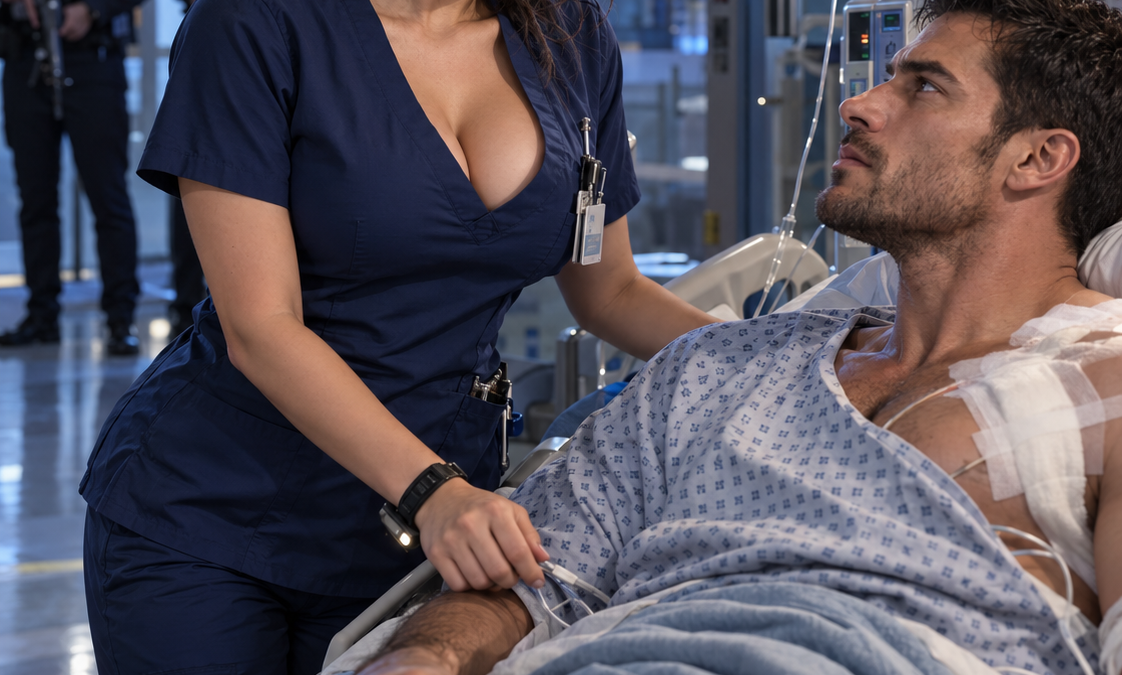
ASSASSIN Entered the ICU to Kill a NAVY SEAL — Until ONE NURSE Ruined His Entire Mission
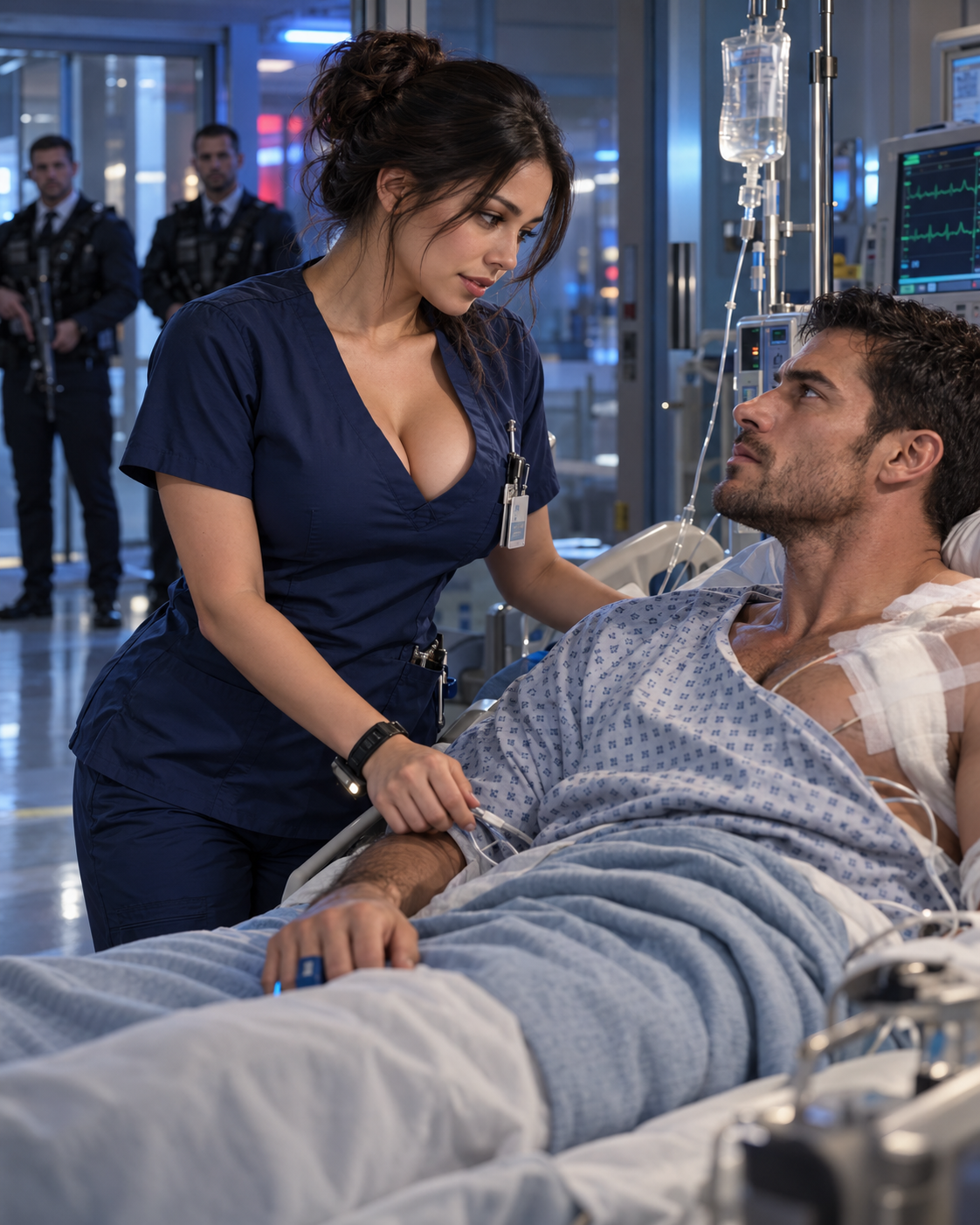
A man in surgical scrubs walked into the ICU at 2:47 in the morning carrying a suppressed pistol tucked beneath his lab coat and a syringe loaded with enough potassium chloride to stop a heart in under 90 seconds. His target was unconscious, sedated, and completely alone. The federal agents assigned to protect him had just been pulled to the opposite end of the building by a staged emergency.
The cameras on the third floor had gone dark 11 minutes earlier. Every single layer of protection had been stripped away except one.
One woman, one night shift nurse who wasn’t supposed to matter.
One person nobody had ever bothered to take seriously. That was their first mistake and their last.
The overnight shift at Hartwell General Hospital in Brunswick, Georgia started the way it always did with someone making a comment about Emily Vasquez that she was never meant to hear. She was at the nurses station on the third floor pulling a patient chart off the rack when she caught the tail end of it.
Dr.Marcus Pendleton, one of the senior attending physicians in the ICU, was talking to a resident just around the corner of the corridor. His voice carried the way voices do when a man has never once in his life felt the need to lower it.
Night shift supervisor wants to put her on the critical case in room 9, he was saying. I told her no. Vasquez is fine for vitals and IV changes.
You put her on a complex trauma case, she’s going to miss something and then we’re all filling out incident reports until Easter.
The resident laughed.
A short, nervous laugh, the kind that means I don’t entirely agree, but I’m not going to say that to your face.
Emily pulled the chart she needed and walked back to her station without looking around the corner. She had stopped being surprised by Marcus Pendleton about four months ago.
The man had been attending at Hartwell for 11 years, and in those 11 years, he had apparently decided that night shift nurses existed primarily to do the work that didn’t require thinking.
He called her the overnight girl in front of patients twice. The second time, she had very calmly written it in her shift notes. Nothing came of it.
Nothing ever did. She set the chart on the desk, uncapped her pen, and began writing. Her handwriting was precise, small, controlled letters in perfectly even rows.
A hospitalist who had worked with her 3 months ago told her once that her documentation was some of the cleanest he’d ever read.
She had said thank you and gone back to work. That was mostly how Emily operated.
She noticed things. She wrote them down. She went back to work.
The third floor of Hartwell General was a mixed unit, part general ICU, part step down with a short stay surgical recovery section at the far end. Tonight, it was running at 81% capacity, which meant the staff was lean and the hallways were quiet in the specific way that quiet hospitals are quiet.
Not peaceful, just suppressed, like something holding its breath. Emily made her first full round at 11:15. She checked drips, assessed pressures, talked to the one patient who was awake and anxious, a 63-year-old retired school teacher named Dorothy, who was recovering from a bowel resection and was convinced her IV line was infected.
Emily looked at it carefully, explained what she was seeing, and stayed an extra 4 minutes until Dorothy’s shoulders came down from around her ears.
At 11:40, the patient in room 9 was transferred in.
She wasn’t told much about him.
The charge nurse, Priya Okafor, pulled Emily aside near the medication al cove and spoke quietly. Federal hold, Priya said. Do involvement.
He’s listed under a cover name.
Patient record says Daniel Warren, but that’s all we’re getting.
He came in through the ER about 40 minutes ago. Blunt force trauma to the skull, two cracked ribs, and what looks like a through and through GSW to the left shoulder that somebody already field dressed before he got here.
Emily processed that. Who field dressed it? Nobody knows.
He was dropped off at the ambulance bay. No ID on the car.
Plates came back stolen. Okay.
What’s his access restriction?
ICU staff only. No family contact, no visitors, nothing without a federal badge.
We’ve got two agents posted downstairs.
They checked in with the ER about an hour ago. Priya paused.
Pendleton’s primary on him.
He said, “You can handle overnight monitoring, but any clinical decisions go through him directly.”
Emily nodded.
She didn’t point out that Pendleton had gone home 2 hours ago and wasn’t answering his personal line on a good day, let alone at midnight.
She went to room 9.
The man they were calling Daniel Warren was in his mid30s, heavily built across the shoulders in a way that wasn’t gym muscle.
It was loadbearing muscle, the kind that came from years of wearing weight and moving fast in it. His hands, even at rest, were the hands of someone who had spent a long time outdoors in harsh conditions. The knuckles were scarred in that particular pattern, she recognized without consciously registering it.
Small, irregular marks, not from fighting, from equipment, from climbing and repelling and catching herself on rocks in the dark. She checked his pupils, equal and reactive. She assessed his breathing, his pressure, the drainage around the wound site.
The field dressing was professional militarygrade heostatic gauze applied with pressure and precision. Whoever had put it on him knew what they were doing. She reset his IV drip, updated his chart, and left the room.
In the corridor outside room 9, she stood still for a moment. Something felt wrong.
She couldn’t have put it into a sentence yet.
It was the particular texture of a situation that didn’t quite fit together.
the unmarked car, the cover name, the prehosp wound treatment, the federal presence that was conspicuously confined to the floor below. She had learned a long time ago not to dismiss that feeling, not to explain it away with logic or defer to the hierarchy that told her somebody else was handling it.
She went back to the nurse’s station and pulled the security contact list.
At 12:30, Dr.Pendleton’s resident, a young man named Gareth Wolf, came through on rounds.
He was 29 years old, earnest in the way residents are earnest in their second year, still slightly stunned by the reality of the work, still trying to figure out the social architecture of the floor.
You’re watching the federal patient?
He asked, pausing at her desk. Monitoring, she said. Yes.
Any changes? Stable. Blood pressure is trending a little low, and I adjusted the fluid rate.
I’d want Pendleton to know before morning if it doesn’t come up.
Gareth made a note, then he hesitated.
You know, Pendleton’s going to say you should have paged him tonight.
I know. She looked at him evenly.
I’ll page him if the situation changes.
Right now, I’m watching a trend.
He nodded slowly. She could see him trying to figure out how much to push. He was not a bad person, Gareth Wolf.
He was just trained to default to whoever was loudest in the room. And in this hospital, that was usually Pendleton. Just he stopped.
Keep me posted. I guess I will.
He left. Emily went back to room 9 at 1:15 and stood at the doorway for a long moment before going in.
The man’s breathing was unchanged.
His color was reasonable. The monitors were doing what monitors did. She checked the hallway again, both directions.
The floor was quiet. She went in and did a secondary assessment. unhurried, methodical, checked his wound drainage, checked the consistency of his blood pressure across three readings.
There was a slight asymmetry she didn’t like, left side marginally lower than right.
She made a note of it. She was recapping her pen when she noticed the edge of something under the left side of his hospital gown.
She looked more carefully. Beneath the standard issue cotton against the skin of his left upper chest, there was the faint rectangular outline of something thin and rigid.
She didn’t touch it.
She wrote the observation in her chart notes with the exact time. She went back to the station and called down to the lobby to confirm the federal agents were still on site.
The security desk said yes. Two agents ground level.
She called down again at 150. Same answer.
At 219, both agents were redirected to the second floor because of a reported altercation in the step down unit. Emily found out about this not from security, not from the federal agents, and not from any official channel. She found out because she was walking past the stairwell when she heard the radio crackle and caught enough of it to understand what was happening.
She stopped moving.
She replayed what she’d heard.
A reported altercation. She had been on this floor for 6 hours. There was nothing happening in the step down unit.
She had just checked down there 20 minutes ago.
She turned around and walked quickly, not running, not yet, back toward the nurse’s station.
She pulled up the internal security camera feed on the monitor at her desk. The software was clunky, the kind that hospitals bought in 2016 and never updated, but it worked.
She clicked through the feeds. Third floor, east corridor, clear. Third floor, west corridor, clear.
Third floor, room 9, camera, black. The feed for room 9 had been dark for at least several minutes.
The time stamp in the corner was frozen. Emily was already moving.
She didn’t take the direct route.
She went through the supply corridor that ran parallel to the patient rooms, came out at the far end of the hall, and approached room 9 from the west. She moved quietly, not tiptoeing, not the performative silence of someone trying to be sneaky, just the automatic economy of motion of someone who had spent years learning how to move without announcing herself.
She stopped outside the door.
The gap at the bottom showed a sliver of light, the room’s ambient monitoring light, always on, and something else, a shadow that moved.
She pushed the door open.
The man standing at the patient’s bedside was wearing surgical scrubs, a white coat, and a stethoscope positioned backward around his neck.
His hands were gloved. In his right hand, he held a syringe cap already removed, needle pointed upward.
With his left hand, he was reaching beneath his coat. He stopped when he heard the door. He turned slowly.
He was about 40, athletic, with the controlled stillness of someone very comfortable in dangerous situations.
The kind of stillness that isn’t calm.
It’s calculation.
His eyes moved over her once, a complete assessment in under two seconds. Emily stood in the doorway.
She was 5’4.
She was wearing navy blue scrubs, a hospital badge clipped to her breast pocket, and non-slip nursing shoes. She had a pen in her front pocket and a small flashlight on a lanyard around her wrist.
She looked to any reasonable observer like exactly what she appeared to be. That was the second mistake.
“You’re not on this patient’s care team,” she said.
Her voice was flat. Not aggressive, not frightened, just stating a fact.
He tilted his head slightly. The hand beneath the coat moved.
“And you are?”
he asked.
“Emily Vasquez, night shift, third floor.”
She didn’t move from the doorway.
“What’s in the syringe?”
He smiled.
It didn’t reach his eyes.
Scheduled medication.
“That medication needs to come from the dispensing cabinet with a logged pull.
I didn’t see a pull request in the system tonight.”
“Then you missed it.”
“I don’t miss things,” she said.
He looked at her the way people look at someone they’ve already decided doesn’t matter.
That flat dismissive appraisal.
The same look she’d gotten from Pendleton, from a dozen doctors over the years, from every person who had looked at her scrubs and her badge and her face and decided the equation was simple.
“Go back to your station,” he said.
His tone was that of a man addressing someone significantly below him on a food chain he was very certain about.
“I’ll be done in a few minutes.”
Emily’s eyes went briefly to the patient in the bed, still sedated, chest rising and falling in slow, medicated rhythm.
The hand she could see was slack against the mattress. She looked back at the man in the coat.
“No,” she said.
His expression shifted. The smile stayed, but the quality of it changed completely.
“That’s going to be a problem for you,” he said quietly.
His left hand came out from beneath the coat. What happened in the next several seconds was not something Emily decided to do in any conscious step-by-step way.
It was the result of muscle memory laid down across 8 years of training and deployment. A framework so deeply encoded that her body moved before her mind finished processing the threat.
He raised the weapon. She was already inside his reach.
Her right hand came up and struck the inside of his wrist at the precise point where the radial nerve runs closest to the surface. Not a dramatic blow, not theatrical, just a compact, accurate impact that sent a jolt of dead numbness up his forearm and caused his grip to open involuntarily. The suppressed pistol dropped and she caught it with her left hand before it cleared his fingertips, stepping into him simultaneously to eliminate his range and take away the space he needed to recover.
He was fast. She knew he would be.
He pivoted, tried to use his size and momentum to throw her off. She let him move, actually helped him move, redirecting his weight rather than opposing it.
And when his shoulder rotated past the point of control, she locked his elbow from beneath, applied upward torque with both hands, and felt the joint go at the shoulder socket with a sound like a branch under ice. He made a sound, not a scream, a compressed, involuntary grunt, the sound a trained person makes when pain arrives faster than suppression. She put him on the floor.
It wasn’t a fall.
He didn’t stumble.
She directed him down, controlled the descent, and the moment he hit the lenolium, she had his uninjured arm behind him and her knee on the back of his shoulder blade. She reached over, took the syringe from where it had rolled against the bed frame, and set it upright on the bedside table out of his reach. He tried to move.
“Don’t,” she said.
He went still. The room was completely silent except for the monitors and the sound of him breathing through clenched teeth. Emily was also breathing a little faster than normal, a slight bloom of heat across her shoulders, but her hands on him were steady.
She kept her weight forward and her position locked. 40 seconds later, she heard feet in the corridor. The door burst open.
Two hospital security guards, then two more people she didn’t recognize.
Dark tactical gear, weapons drawn, federal badges visible on chest rigs. They stopped.
One of the agents, a woman in her 40s, short hair, the kind of face that had learned to show nothing easily, stared at the scene in front of her, a man face down on the floor, a nurse on his back, a suppressed pistol on the lenolium near the wall.
“Ma’am,” she started.
“He had a syringe,” Emily said.
“Still on the table.
Don’t let anyone touch it before you run it.”
She paused.
“And your camera feed for this room’s been cut.
You’ll want to find where that happened.
The agent stared at her for another full second.
Then she said, “Get me a zip tie.
” The man on the floor attempted something, then shifted his weight, tried to use the distraction to create space.
Emily moved her knee fractionally, and pressed two fingers into the muscle cluster just below his shoulder blade. He stopped.
“Please don’t do that again,” she said.
She said it the same way she’d told Dorothy that her IV wasn’t infected.
Matter of fact, not unkind, just true.
By the time the second agent got the zip ties on the man’s wrists and helped haul him upright, a third person had appeared in the doorway.
Not federal, not hospital security. A man in his early 50s, wearing civilian clothes, but carrying himself with the particular posture of someone who had spent a significant portion of his life being the most dangerous person in a room. He looked at Emily.
He looked at the man, now seated with his back against the wall, wrist dislocated, face entirely blank. He looked at the syringe on the table. He said nothing for a long moment.
Then he pulled out his phone and made a call. Back at the nurses station, Pria was staring at the monitor showing the now active camera feed from room 9.
Someone had restored it while Emily was still inside. When Emily came out, Pria looked at her like she had never seen her before.
Down the corridor, the door to the stairwell opened and Dr.Pendleton walked through it. Someone had clearly called him in because he was in his street clothes with his lanyard twisted, his face flushed for moving faster than he usually did. He stopped when he saw Emily standing at the nurses station.
He stopped when he saw the two federal agents behind her. He stopped when he saw the man from the room nine door being walked down the hallway in zip ties with his right arm hanging at a wrong angle.
“What happened?”
Pendleton demanded. The agent with the short hair looked at him.
“Your nurse happened,” she said, and she kept walking.
Pendleton turned to Emily, his mouth opened. Emily picked up the patient chart for room 9 and made a note of the time.
She capped her pen. His blood pressure came up, she said.
“I’ll do a reassessment in 30 minutes.”
She walked back toward room 9. Behind her, she heard Pendleton say something to Priya.
A low, tense exchange she didn’t fully catch.
She caught enough. She caught the word overstepped and the phrase not her call.
She pushed open the door to room 9.
The man in the bed hadn’t moved.
His monitors were steady. His breathing was unchanged.
She stood at the bedside for a moment and looked at him. Really looked.
The way she’d learned to look at patients who couldn’t speak for themselves.
Looked at the faint line under the gown, the field dressing on his shoulder, the hands that told their own story. Whatever he was carrying, someone had very badly wanted to make sure he never woke up to deliver it.
Whatever he was, she had just made an enemy of the people trying to kill him. She checked his pressure.
She noted it in the chart. She was still writing when the man in civilian clothes appeared in the doorway again. He looked at her for a long moment without speaking.
She looked back.
“What’s your name?”
he asked.
“Emily Vasquez.”
He nodded slowly. How long have you been at Hartwell?
14 months. Another pause.
Before that, she held his gaze. I think you already know.
He didn’t answer.
He looked at the patient, then back at her. Something shifted in his expression.
Not surprise exactly, more like confirmation of something he’d suspected, but hadn’t been sure of until now.
Don’t go anywhere tonight, he said.
He left. Emily turned back to the chart. Her pen moved steadily across the page, neat, even letters, exact times, precise observations.
Whatever was coming next was already in motion. She could feel it in the particular quality of the silence that had settled over the floor.
The held breath kind, the kind that meant everyone around her was processing a version of events they didn’t yet have the context to understand.
She finished the chart entry. She set the pen down. Then she walked to the small window at the end of the room and looked out at the dark Georgia sky.
And for a brief moment before she turned back to work, she let herself feel the weight of what she’d carried quietly for 14 months in this building.
Not bitterness, not quite pride, just the knowledge of what she was. The knowledge that she had never stopped being it, no matter what anyone in this hospital had decided she was when they looked at her badge. Outside, she heard the sound of rotor blades approaching from the north.
She turned away from the window. Her hands were steady.
The rotor sound grew louder, and then the helicopter was directly overhead, close enough that the window glass vibrated in its frame, and the monitoring equipment on the wall trembled in its brackets.
Emily didn’t move from the bedside.
She finished the line she was writing in the chart, set her pen on the tray table, and listened to the aircraft settle onto the rooftop landing pad four floors above her.
The rotors didn’t cut out.
They reduced to idle. The particular sound of a helicopter that intended to leave again very soon. She looked at the patient, still sedated, still breathing, still whatever he was to whoever had sent an armed man to kill him.
She picked up her pen and went back to work. The third floor corridor outside room 9 had transformed in the 20 minutes since the incident.
Two federal agents were stationed at the door now, one on each side of the frame, and a third had taken a position at the end of the hall near the stairwell.
The nurse’s station, usually the social center of the floor at this hour, was almost empty.
Priya had moved to the far end of the unit and was doing something with paperwork that didn’t require her to look at anyone.
Gareth Wolf had reappeared briefly, seeing the federal presence, and retreated without speaking. Dr.Pendleton had not retreated.
He was standing at the nurse’s station when Emily came out of room 9, and his expression had cycled through several versions of itself before landing on something controlled and professionally neutral, which on his face looked about as natural as a fire blanket on a chandelier.
We need to talk, he said.
I’m doing rounds, she said.
Now, Emily. She stopped.
She turned and looked at him. He was a tall man, gray at the temples, with the kind of face that had spent decades being authoritative at people and had gotten very good at it.
He was not fundamentally a cruel person. He was something almost more difficult, a person who had been competent for so long in environments that rewarded a specific kind of confidence that he had simply never developed the muscle for doubt.
Then talk, she said. He glanced at the federal agents, lowered his voice.
What you did in that room was outside your scope. You intervened in a federal security situation without authorization and without notifying the attending physician. I called downstairs twice, she said.
Both times confirmed security was on site. When I identified a threat to the patient, I acted. You physically engaged with someone.
He had a syringe at the patient’s IV line and a suppressed firearm he was drawing.
What would you have done? He opened his mouth, closed it.
That’s not This isn’t about what I would have done.
Then what is it about? He looked at the agents again. His jaw worked slightly.
I’m going to need a full incident report.
I already filed it, she said, timestamped at 241. You can pull it from the system. She paused.
Is that everything?
The question wasn’t aggressive.
It was sincere, and it was somehow worse for it. Pendleton looked at her for a long moment with the expression of a man trying to locate the exact place where the ground had shifted. For now, he said.
She nodded and went back to her rounds. The man in civilian clothes reappeared at 258. He came through the stairwell door and walked directly to Emily without stopping at the desk or announcing himself to anyone.
Up close, he had the look of someone who had spent significant time at altitude. dry skin, eyes slightly creased at the corners from squinting into wind or sun or both.
He was carrying a thin folder and a cold cup of coffee.
He didn’t appear to be drinking.
“They’re coming down,” he said.
“Not to explain, just to tell her the way you tell someone when information is relevant to them.”
“Who is people who need to talk to you?”
He paused.
“I’m Harlon Briggs.
I’m with the Defense Intelligence Agency.
We’ve been running protective coverage on your patient since he was extracted from a situation in the Western Pacific 4 days ago.
Emily looked at him. Your coverage has a gap.
Yes. He said it without any defensiveness, which surprised her slightly.
It does.
That gap was engineered, which means someone with access to our scheduling and our radio frequencies fed tonight’s operation.
We’re working it.
He looked toward room 9. The man you put on the floor is being processed right now.
He’s not talking yet, but he will.
A beat. How did you know?
She thought about how to answer that. The camera was down in his room.
That shouldn’t have been visible from your station.
I checked it manually. I check all feeds on my floor every hour.
It’s not in my job description.
She paused. It should be. Briggs looked at her with the expression of someone recalibrating something.
The stethoscope, he said. You saw it was backward.
That and the boots.
Those aren’t surgical shoes, and his scrubs were too new.
No wash fade, no pilling at the cuffs. Someone dressed him for the role in a hurry.
She didn’t say it wasn’t hard to see.
She didn’t say anything extra.
Briggs nodded slowly. Staff file says you were army.
He said it says what it says. 14 months at Hartwell. Before that, Fort Benning, then a forward surgical team in eastern Afghanistan.
Then he stopped himself, looked at her. You know, I know.
Then you don’t need me to confirm it.
He almost smiled. Not quite.
No, I don’t.
He tucked the folder under his arm. The people coming down are going to have more questions than I do.
That’s fine, she said.
I have a patient to monitor. He looked at her for another beat.
Something working behind his eyes that wasn’t quite admiration and wasn’t quite assessment.
Something between the two. Yes, he said. You do.
He moved back toward the stairwell. At 3:11, the elevator at the end of the corridor opened and four people stepped out. Two were in uniform, army, senior rank, ranger tab visible on one, special forces on the other.
The third was a woman in a dark suit carrying a briefcase. and the particular expression of someone from a legal or intelligence oversight function.
The fourth was a man in his late 40s. Civilian clothing, no visible identification, who walked in the way that people walk when they are used to rooms reorganizing themselves around them.
They went directly to Hartwell’s small family consultation room across from the nurses station.
Priya appeared at Emily’s shoulder.
“They’re asking for you,” she said quietly.
Emily finished the medication record she was updating, capped the pen, went to the consultation room. It was a small space, two chairs, a couch that had seen better years, a fake plant in the corner, a box of tissues on the table that was more institutional reflex than genuine comfort.
The four people from the elevator were standing, which made the room crowded.
The man who walked like rooms reorganized around him looked at Emily and said, “Sergeant First Class Emily Vasquez, 75th Ranger Regiment, then attached to First Special Forces Operational Detachment, three rotations.”
She didn’t correct or confirm.
She waited.
“Medically retired,” he continued.
14 months ago.
He paused on the word medically in a way that wasn’t unkind, but was precise, like pressing on something to test whether it held.
Then, Hartwell General. Yes, she said. You want to walk me through what you saw tonight?
She did cleanly, chronologically, without embellishment. She told him about the camera feed, the boots, the stethoscope, the syringe, the weapon.
She told him what she’d done and why in the order she’d done it.
She didn’t use the word neutralized or any of the vocabulary she’d left behind 14 months ago.
She used nursing language, the subject, the situation, the patients safety, and the people in the room noted the choice. When she finished, the woman with the briefcase made a brief note on a tablet.
The special forces officer with the Ranger tab said, “The joint was dislocated, not broken.”
“Yes,” Emily said.
“That’s a controlled application.”
She looked at him. He was going to talk to you eventually.
I didn’t want to complicate that.
A pause.
He hasn’t yet.
The ranger tab officer said he will. There was something in the room after that. A shift in the air pressure almost.
The four people exchanged glances in the practiced way of people who had worked together long enough that conversation happened mostly below the surface.
The man who made rooms reorganized said, “The patient in room 9 is commander Rowan Taiga, Navy Seal Team 8.
He was extracted from a joint intelligence operation that was compromised 6 days ago.
He’s carrying evidence of that compromise, but not physically in memory.
Things he can testify to when he’s stable enough.”
Emily held that information. Someone with access to sensitive operational timelines put tonight together, he continued. Engineered the distraction.
Cut your camera. Rerouted our agents.
That’s not improvised.
That’s someone who knew exactly what our protocol looked like.
He paused. The man you stopped was confirmed as a contract operator.
No state affiliation we can identify yet. Third party acquisition. He looked at her steadily.
Which means whoever ordered this knows their own footprint well enough to keep distance between themselves and the action. Someone inside, she said.
That’s the current working assumption.
She absorbed this.
“Why are you telling me?”
“Because you’re going to be here when he wakes up,” he said.
“And whoever sent that man tonight is going to want to try again.
” The consultation room went quiet.
Emily looked at the fake plant in the corner, looked at the box of tissues, looked back at him.
“I have a 12-hour shift,” she said.
“We know I’m not an agent.”
“No, you’re a nurse.”
He said it without any edge.
But you’re also the only person on this floor tonight who correctly identified a threat and responded appropriately.
So, we’re asking you to keep doing your job and let us do ours alongside it.”
He paused.
Unless you’d rather we move the patient.
She thought about Commander Rowan Taigga in room 9.
His field-dressed shoulder, his sealed file, the thing he was carrying inside him that someone wanted so badly they’d put a contractor in surgical scrubs and given him access to the third floor of a civilian hospital.
Moving him creates another transit window, she said. The man looked at her.
Yes, he said. It does.
Then he stays. She stood up.
I’ll be at the nurse’s station.
She walked out. The corridor felt different when she came back into it. Not in any visible way, but in the specific atmospheric way of a space that has been recatategorized.
Hartwell’s third floor ICU was no longer just a hospital floor.
It had become something else. As of approximately 2:47 this morning, and everyone on it, whether they fully understood it or not, was operating inside a different set of stakes.
Pendleton was still at the nurse’s station.
He was on his phone, turned half away, but she could see his face in profile.
The slightly pinched look of a man receiving information he wasn’t sure how to metabolize.
He ended the call when she approached.
“Administration is being notified,” he said.
His voice was careful now. The earlier confrontational energy had subsided into something more like strategic caution.
That’s appropriate, she said.
They’re going to want to talk to you in the morning.
That’s also appropriate.
He looked at her.
Really looked the sustained kind that he didn’t typically spend on her.
She could see him trying to reassemble something in his understanding. Not the event itself, something older than the event. Where were you?
he said slowly before Hartwell.
That’s in my HR file, she said.
He opened his mouth again, then stopped. His jaw worked.
She’d seen him confident in this corridor for 14 months, and she’d seen him dismissive, and she’d seen him irritable.
But she had never seen him look as he looked now, which was simply like a man who understood for possibly the first time that he had been confidently wrong about something for a very long time.
He didn’t apologize.
She hadn’t expected him to.
Not tonight.
Tonight wasn’t that kind of night.
Get some coffee, she said.
It’s going to be a long rest of the shift.
She went back to room 9. Briggs was standing outside the door with one of the federal agents going over something on a tablet. He looked up when she approached.
“Anything I should know?”
she asked.
“We’ve got eyes on the floor now.
Cameras restored plus supplemental.
And we’ve got two additional agents coming up from the lobby.”
He paused. The guy you took down, his prince came back to an alias. Real identity is still being worked, but the alias has a history, contract work, mostly Eastern Europe and Southeast Asia.
He’s been active for about 8 years.
She looked at the door to room 9, so he’s not going to give you whoever hired him.
Probably not voluntarily. Briggs tucked the tablet under his arm.
But there was a phone on him, burner, but it had contact on it from 6 hours ago.
We’re running the metadata now.
He looked at her. The call originated from inside the hospital. Emily was still for a moment.
How far inside? She said.
We’re narrowing it.
She looked at the door, then at Briggs. Who has access to our O scheduling and the ICU assignment system? She asked.
Anyone with senior staff credentials? He said.
And who knew Daniel Warren was being put in room 9 tonight? Briggs looked at her.
His expression didn’t change, but something shifted behind it.
The charge nurse, the ER attending who triaged him. And the attending physician of record, she said.
Briggs said nothing. She looked at him steadily.
I’m not accusing anyone.
I’m telling you the pool is smaller than you might think.
He was quiet for 3 seconds. Then we know. She went into room 9.
Commander Rowan Taigo was still unconscious, his chest rising and falling in the slow cadence of someone under sedation, but his color had improved slightly from her last check, and his blood pressure had stabilized in the range she’d been working toward.
She stood at his bedside and did her assessment without rushing. Pressure cuff, drainage, wound sight, pupilary response. Everything held.
She was checking his IV line when he moved. Not a dramatic shift.
Not the movie’s version where someone rises suddenly from unconsciousness with a gasp.
Just a slight tension in the forearm, fingers curling fractionally against the mattress. The subtle muscular response of a nervous system beginning to claw its way back towards surface.
She leaned in slightly. Commander, she said quietly.
Nothing. Then the smallest flicker behind his eyelids.
You’re in a hospital.
You’re safe.
Don’t try to move.
His eyes didn’t open, but the tension in his arm changed, released just slightly, like something at the edge of hearing.
She straightened. She wrote the time in the chart.
Outside, she could hear voices. The military people who had come down in the elevator, moving through the corridor, multiple conversations happening in controlled low registers.
The night had its own momentum now, its own logic, and Emily was both inside it and watching it from a slight remove. She came out of room 9 at 4:15 and found Gareth Wolf at the nurses station trying to pretend he was reviewing charts while clearly listening to everything happening around him.
Go get some sleep, she told him. He looked up.
I’m on until 6.
There’s a cot in the resident lounge.
You’ve got 45 minutes.
She said it without cruelty. He looked young to her right now. Not incompetent, just young in the way that people look young when the situation around them has grown significantly larger than their experience of what situations could be.
Are you is everything? He stopped. Tried again.
Did you actually Another stop. Go sleep, she said.
I’ll get you if anything changes clinically.
He went at 4:52. Briggs found her in the medication al cove. His expression was different than it had been.
There was a tightness around his mouth that hadn’t been there an hour ago.
We’ve got a problem, he said.
She waited. The metadata on the phone contact. He paused.
It didn’t come from hospital admin.
It came from an office on the fourth floor. Medical staff only.
What office? He looked at her. Chief medical officer suite.
Emily held that. Dr.Pendleton, supervisor, she said.
Yes. Do you have anything more than a phone ping?
We have the contact record and a secondary piece. About 20 minutes ago, one of our agents spotted a camera in the fourth floor corridor that was physically repositioned, pointed away from the CMO suite entrance.
He looked at her. Somebody moved it tonight from inside the building before the incident.
She stood still in the medication al cove, the soft hum of the refrigeration unit behind her, the smell of antiseptic and plastic, and the specific flat cold of institutional air.
“Does whoever’s in that suite know you’ve identified it?”
she said.
“Not yet.
” “Then don’t move yet.”
He looked at her sharply.
“If they know you found the ping,” she said.
“They’ll move whatever else they have.
Let them think tonight was just a contractor failure.”
She paused.
Let them think it’s still containable.
Briggs was quiet. He was looking at her with the expression of a man who was recalibrating again.
That’s not a nursing instinct, he said.
No, she agreed.
It isn’t.
He looked at her for a long moment.
We’ll hold the approach for now, he said.
He turned to leave, then stopped. Vasquez.
He didn’t look back.
The contractor, the one you took down.
He’s asking for medical attention for his shoulder.
He should have that, she said immediately. Briggs turned slightly, surprised.
He’s in custody, she said.
He gets care, she paused. I can recommend the attending.
He won’t want Pendleton.
Neither would I right now, she said. Call the on call ortho. Briggs moved away.
Emily stood in the medication al cove for a moment longer.
Outside the narrow window above the counter, the Georgia sky was the deep pre-dawn color that wasn’t quite black anymore.
A kind of charged dark, the sky accumulating its energy before the change.
She’d seen that color from a lot of different windows and from a lot of different positions over the years.
from a cot in a tent at 4,000 ft, from the back of a helicopter over terrain that had no name on any map she was allowed to see, from a hospital window in Germany when she’d been the patient briefly before she’d signed herself out against medical advice and gone back.
She breathed. She went back to work.
At 5:30, Commander Rowan Tiger opened his eyes. Not all the way, not clearly.
They opened a half mast and found the ceiling and stayed there and Emily was at his side before he could try to move.
Still, she said, “Don’t reach for anything yet.
You’re okay.”
His eyes moved to her. The color was dark brown, bloodshot from the trauma, and they moved with the specific calculation of someone whose first conscious act in any new environment was to assess the threat level.
She’d seen that look before.
She knew what it meant and where it came from. hospital.
His voice was almost nothing, dry and fractured from the intubation tube that had been in and out of his airway.
Yes, you’re secure.
She reached for the water. Helped him take a small sip.
Don’t try to talk.
You have at least one cracked rib and your throat is going to be rough for a while. He looked at her.
His hand moved slowly, deliberately to the left side of his chest. She put her hand over his gently.
“It’s still there,” she said quietly.
He held her gaze for a moment. Then something in his face let go. Not relief exactly, more like the release of a specific sustained tension.
A soldier standing down.
“Who are you?”
he rasped.
“Emily Vasquez, I’m your nurse.”
He was quiet for a moment. She could see him working through the sedation haze, pulling himself toward coherence through sheer will.
“Something happened tonight,” he said.
Not a question. Yes. Stopped.
Yes. He looked at the ceiling again.
His jaw worked. How?
He said. She looked at him calmly.
There was a nurse on duty. A long pause.
His eyes came back to her. He was still putting it together. She could see it happening behind his eyes.
The slow reconstruction. And then something else appeared in his expression.
Something she didn’t fully expect.
Not surprise, not confusion, concern.
They’ll try again, he said.
I know, she said. He tried to move, pushing himself upward against the mattress with one arm.
She put a firm hand on his shoulder and held him down with exactly enough pressure. Not yet, she said.
You don’t understand what I Commander.
Her voice was quiet, but it landed precisely. He stopped.
She met his eyes. I understand the situation better than you think. And right now, what you need to do is stay still.
Can you do that? He looked at her. The calculation was back like reading her, reading the room, reading whatever it was that people like him read when they were trying to understand what they were dealing with.
His arm relaxed. Yeah, he said. The word was almost nothing.
Good. She went back to charting.
At 5:47, she heard footsteps in the corridor that were different from the federal agents footsteps. Purposeful but civilian fast.
She looked up. Dr.Avery Tolman, chief medical officer of Hartwell General, was walking toward the nurses station in a cashmere coat and a face arranged into professional concern. He was 61 years old, silver-haired, and moved through the hospital the way men of his stature moved through things they owned.
Not quickly, not urgently, but with a settled authority that expected the world to organize itself around his arrival.
He hadn’t been called in.
Nobody on the third floor had called him. He had come on his own. Emily watched him come down the corridor and felt the air on the floor change in the specific way that a room changes when something has crossed over from threat to evidence.
👉 [Tap here for the Next Part ] 👈

