Every Waiter Ignored the Billionaire Single Dad—Until a Shy Waitress Noticed What No One Else Did

Every Waiter Ignored the Billionaire Single Dad—Until a Shy Waitress Noticed What No One Else Did
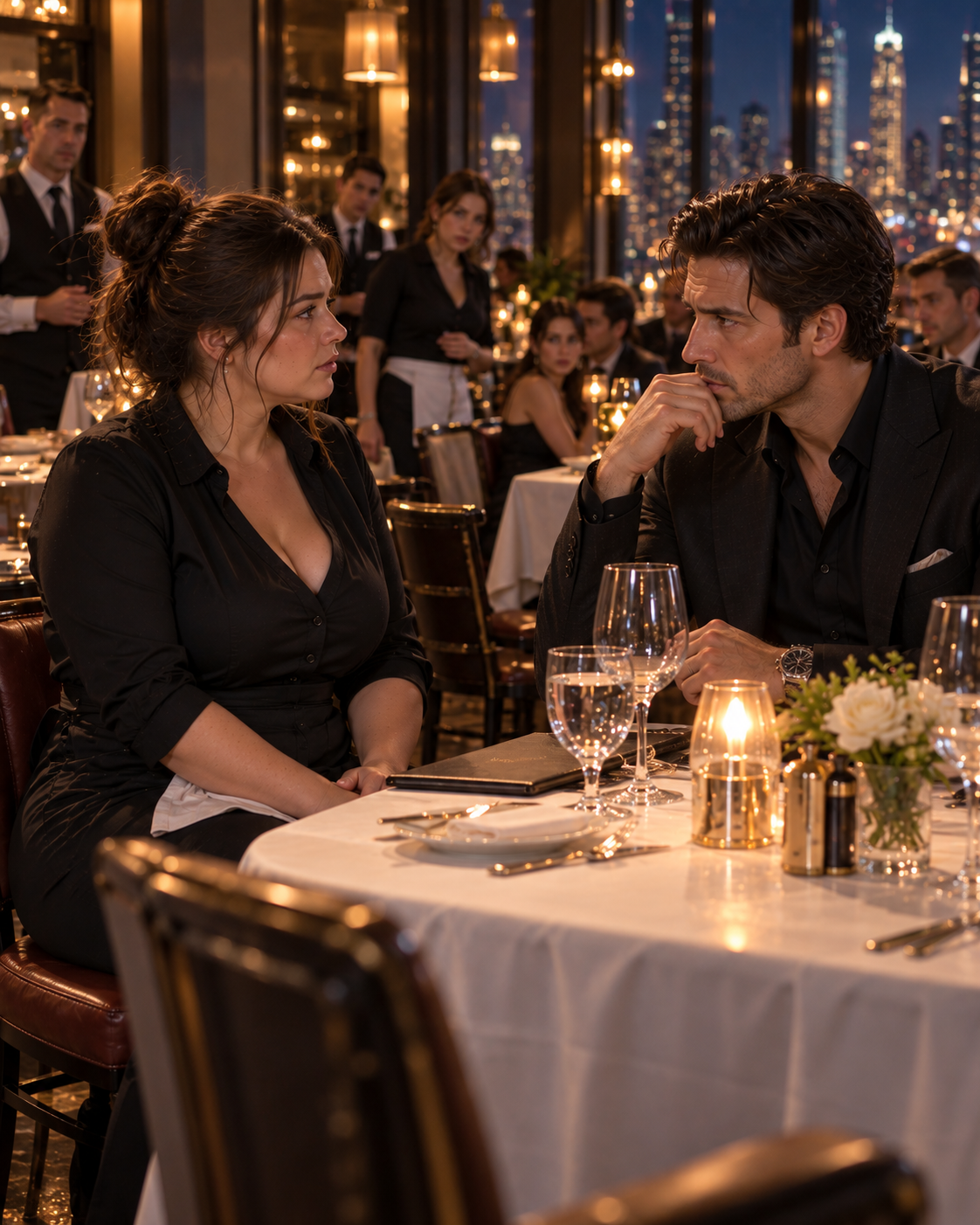
The entire restaurant staff vanished the second he walked through the door. Not literally, but they might as well have.
Managers suddenly discovered urgent paperwork buried deep in their offices. Veteran servers developed mysterious back problems that seemed to flare up at exactly the wrong moment.
Even the hostess, Maria, a woman who had worked that same front podium for 12 years, pretended her reservation system had completely crashed. All because Ethan Callaway, a 32-year-old self-made billionaire they had only ever seen in corporate emails and Forbes magazine covers, had just quietly sat himself down at table 17.
Nobody wanted to serve him. Nobody dared except for one person, who never got the memo.
a tired waitress balancing three jobs and a dream she had almost given up on who had absolutely no idea she had just walked straight into the most dangerous table of her working life. Amelia Brooks was 30 years old, perpetually exhausted and currently holding a coffee pot that felt heavier than her entire sense of selfworth. The downtown restaurant where she pulled evening shifts smelled like expensive French wine and the particular kind of anxiety that comes with $70 steaks and clientele who tip based on your smile.
She had been on her feet for 6 hours straight. Her lower back felt like someone had quietly replaced her spine with broken glass sometime around hour three and just never mentioned it. Table 9 needs water refills.
Marcus hissed as he rushed past balancing a tray of appetizers that probably cost more than her monthly rent on that tiny studio apartment she could barely hold on to. She nodded and grabbed the picture.
Her reflection caught in the polished silver surface for half a second, and she almost wished it hadn’t.
Brown hair pulled into a bun that had started out neat 8 hours ago. Makeup that had quietly surrendered somewhere around hour 4. dark circles.
She had long since stopped bothering to hide beneath concealer. She looked exactly like what she was, someone working three jobs in the greatest city in America, just to keep a roof over her head and a sliver of a dream alive.
The restaurant was one of five establishments owned by Callaway Hospitality Group. Amelia knew that much from the employee handbook she had skimmed during orientation while eating a granola bar in the breakroom. What she did not know, what nobody bothered to mention to the evening shift servers was that the company had been hemorrhaging employees for the past 6 months like a ship taking on water, or that the CEO had a wellocumented reputation for showing up unannounced at his own restaurants and dismantling careers before dessert even arrived.
Amelia, she turned. Gerald, the floor manager, stood near the kitchen entrance.
His face had gone the color of old wallpaper paste. Yeah, table 17 just sat down. Okay.
She waited for more context. Gerald just stared at her like she had asked him to explain quantum physics in Spanish. Do you want me to take it?
No. He said it too fast. Actually, I mean, he glanced toward the dining room, then back at her.
His hands were visibly trembling. just stay in your section. That was strange.
Gerald never turned down table assignments. The man would serve food during a category 4 hurricane if it meant a better shot at his quarterly bonus.
But before Amelia could ask a single follow-up question, he disappeared into the kitchen like someone had set his khakis on fire.
The restaurant’s atmosphere had changed.
Amelia felt it the way you feel a storm coming in off the Gulf before it even shows up on radar. Conversations had dropped to murmurss.
Two servers she had worked alongside for months were suddenly very interested in folding napkins at the wait station. Marcus, who genuinely never stopped talking, had gone completely silent.
She looked toward table 17. A man sat alone near the window, mid30s, dark suit that probably cost more than her car, which admittedly was not saying a whole lot.
He was not looking at the menu. He was not looking at anything in particular, just sitting there with the kind of absolute stillness that made the air feel different around him. His face was sharp, controlled, the kind of face that understood exactly how much power it held, and had made peace with that understanding a long time ago.
Nobody approached him. Amelia watched Sarah, one of the senior servers, literally walk in the opposite direction when the hostess tried to guide her toward table 17.
Another server named Danny suddenly discovered urgent business in the supply closet that apparently could not wait another second.
“This was insane.”
She walked to the wait station where Marcus was aggressively polishing already spotless wine glasses.
“What is going on?”
she asked quietly.
“Nothing.”
He did not look up.
“Just stay away from that table.
” “Why?”
He stopped polishing. His jaw worked like he was chewing on words he could not quite bring himself to spit out.
“That is Ethan Callaway.”
The name meant absolutely nothing to her. She waited for context.
“The owner,” Marcus said like she was slow on the uptake.
“The CEO, the guy who fires people for sport on a Tuesday afternoon and sleeps perfectly fine that same night.
Last month, he walked into the Houston location without a single warning. Three managers were terminated before they even got to lunch service. Marcus finally met her eyes.
He shut down the entire Denver restaurant because a line cook used the wrong brand of olive oil. The man is a walking HR nightmare, Amelia.
Nobody wants to serve him because nobody wants to be the one who makes the mistake that ends their career. She glanced back toward table 17. Ethan Callaway, if that was really who he was, had not moved a single inch.
He sat perfectly still, hands folded on the white linen tablecloth, waiting, just waiting. So what?
Amelia said slowly. We are just going to ignore a paying customer that is not a customer. That is a corporate bomb with excellent taste and suits.
He is a person sitting at a table. He is the reason Jenkins got fired last year. the reason Portland lost half its staff before Christmas.
He is one person, Amelia interrupted. Who needs someone to take his order?
Marcus stared at her like she had suggested they both go cliff jumping after the dinner rush. You are not seriously.
But she already was.
Honestly, she was too tired for corporate drama, too broke to care about rich people’s egos.
She had exactly $43 in her checking account and rent coming due in 9 days. If this man wanted to fire her for bringing him water, fine.
She would find another job. She had been finding other jobs her entire adult life.
That was practically her superpower at this point. She grabbed a menu and a fresh water glass. The walk to table 17 felt longer than it should have, like the dining room had quietly stretched itself out while she was not paying attention.
She could feel every eye in the restaurant tracking her movement. The kitchen had gone suspiciously quiet. Even the background jazz seemed to drop half a volume like the universe itself was holding its breath to see what happened next.
Amelia reached the table and put on her best professional smile, the one that said, “I am warm and friendly and completely on top of everything while internally acknowledging that her soul had left her body somewhere around 4:00 in the afternoon and had not checked back in since.”
“Good evening,” she said.
“My name is Amelia.
I will be taking care of you tonight.”
Ethan Callaway looked up. His eyes were dark gray, cold as January pavement on a Chicago morning. They locked onto her face with the kind of focused attention that made her skin prickle just slightly, like standing too close to a live electrical wire.
This was a man who noticed everything. Every hesitation, every false note, every hairline crack in your armor. She could feel him reading her the way a forensic accountant reads a balance sheet, calculating her worth in real time without blinking.
Water, he said. His voice was quiet, controlled, every word placed exactly where he intended it.
No ice. Of course, she poured from the pitcher, keeping her hand absolutely steady.
Would you like to hear tonight’s specials?
No. Okay, then.
Direct. She could work with direct. Direct.
She actually appreciated. Take your time with the menu, she said.
I will check back in a few minutes. She turned to leave. Wait, she stopped.
turned back. Ethan was watching her with that same cold calculation she had noticed the moment she walked up like she was a variable in an equation he had not quite solved yet. You are new here.
It was not a question, but she answered anyway. 3 months.
You do not know who I am. I know you are a customer who came in for dinner.
She kept her voice level and professional. Is there something specific you would like to order? Or should I come back in a few minutes?
Something flickered across his face then. Surprise, maybe, or annoyance.
She genuinely could not tell which. For a long moment, he just studied her in silence. The weight of his attention felt like standing under a laboratory microscope, except the microscope had opinions.
“Bring me the ribeye,” he said finally.
“Mium rare, no sides.”
He paused. And tell Gerald I want to speak with him before the food arrives. Of course.
She walked away before he could drop any more conversational grenades into her evening. Her heart was hammering. Not from fear exactly, but from the sheer compressed intensity of that interaction.
The man radiated control the way summer asphalt radiates heat. Every word measured, every movement calculated down to the millimeter. Gerald materialized the second she reached the kitchen.
What did he say?
The manager’s face was slick with a thin layer of nervous sweat.
Did he seem angry? Did he say anything about the restaurant?
About service quality? About the He ordered a steak.
Gerald, calm down. But Gerald did not calm down.
He practically sprinted toward table 17, straightening his tie on the way like a man preparing to meet his own judgment day. Amelia put in the order and returned to her other tables. Table 9 needed dessert menus.
Table 12 wanted separate checks. Table 6 was celebrating an anniversary and somehow expected the staff to sing, which was always awkward because the anniversary version of the birthday song made absolutely no sense and everyone knew it. But nobody wanted to be the one to say so.
20 minutes later, she carried out the ribeye. Ethan was sitting in exactly the same position she had left him.
Same posture, same expression, like someone had hit pause on him and only just now hit play again. She sat down the plate. Ribbey medium rare.
Can I get you anything else? Sit down. Amelia blinked.
I am sorry. Sit. He gestured to the empty chair across from him.
I want to ask you something. Every single instinct she had told her this was a trap. She glanced toward the kitchen.
Marcus was watching through the service window with eyes the size of dinner plates. Gerald stood near the host stand, looking like he might actually pass out onto the marble floor. I am working, Amelia said carefully.
I have other tables. They can wait.
Sit. Not a request.
She pulled out the chair and sat down, folding her hands in her lap with all the composure she could manufacture on short notice. Up close, Ethan Callaway looked exhausted. Not physically tired, not the kind of tired that sleep fixes, worn down in a way that went much deeper than missed rest.
There were shadows under his eyes that no amount of expensive skin care was touching. Tension in his jaw that looked like it had been living there long enough to get comfortable.
How long have you worked in the service industry? He asked. 12 years.
Different restaurants, different cities. You have never been fired. Again, not a question.
No. Why?
She frowned slightly. Because I show up on time and do my job. Most people show up on time.
He cut into his stake with the kind of surgical precision that suggested he approached everything in his life the same way. What makes you different?
This felt like a job interview she had absolutely not applied for. I do not know. I am professional.
I treat people well. You are deflecting.
I am confused about why you are asking. Ethan set down his fork. Everyone in this restaurant is terrified of me, he said.
You are not. Why? Amelia considered giving him a polished non-answer.
Instead, she went with honesty. Because something about his directness seemed to demand it in return. Because fear does not help me do my job.
She said, “You want a steak?
I bring you a steak. Your bank account does not change the fact that you are hungry.
And I am here to help with that. That is the whole transaction.
He studied her for a long moment. You actually believe that?
I do. She met his eyes steadily.
Look, I do not know what you want me to say here. You are clearly someone important. Everyone around me is having a quiet personal crisis.
But you sat down at a table in a restaurant where I work, which means right now you are my customer. That is the only thing that matters to me in this moment.
Ethan leaned back in his chair. The ghost of something amusement maybe touched the very corner of his mouth.
Gerald told me you are studying business management online. Her stomach dropped.
He did. Seems like a significant commitment for someone working three jobs.
He paused. Why bother?
The question stung more than it should have. probably because she had asked herself the exact same thing at 3:00 in the morning while studying for midterm exams between back-to-back shifts, running on cold coffee and sheer stubbornness.
“Because I want to do more than serve food,” she said quietly.
“No offense to servers.
I have been one for half my life, but I want to build something, understand how businesses actually work from the inside, maybe run one someday.”
Noble, his tone suggested it was anything but realistic. Thanks for the encouragement.
I am not here to encourage you. I am here to eat a steak and observe how my employees behave when they believe nobody important is watching.
The honesty of that surprised her completely. So this is a test.
Call it research. How is everyone doing? Terribly.
He took another bite. They are so consumed with protecting themselves that they have forgotten how to actually do their jobs.
Fear makes people stupid. Amelia could not argue with that. She had watched Gerald nearly dissolve into a puddle over a table assignment.
Your steak okay? She asked.
It is fine. Just fine. It is overcooked.
Medium rare means a warm pink center. Not brown all the way through with a faint pink apology at the edges. He sat down his fork briefly.
But I did not come here for the food. She should have kept her mouth shut. She absolutely should have nodded and professionally exited the conversation instead.
Then why did you come? Ethan set down his knife and fork with careful, deliberate precision.
Because 6 months ago, he said, I realized I had built a company where people are more concerned with avoiding mistakes than actually doing things right. Profits are up. Employee retention is down.
Customer satisfaction is dropping. And I have no idea exactly when it started or how to fix it.
So you are going undercover. I am observing by terrifying your staff. I am not doing anything.
They are terrifying themselves. He had a point. Nobody had forced Gerald to panic.
Nobody had told Marcus to hide in the storage closet like a man avoiding jury duty. Your ribeye is getting cold, Amelia said. I do not care about the ribeye.
Then what do you care about? The question hung between them in the warm restaurant air. For a single unguarded moment, Ethan Callaway looked almost vulnerable, like the corporate armor had slipped just enough to reveal the actual person underneath.
Someone tired, someone carrying weight he did not know how to set down. I have a daughter, he said quietly.
She is seven. Smart, funny, completely fearless in the way only seven-year-olds can be.
And lately, she has been asking me why I am always angry. Amelia did not know what to say to that. I am not angry.
Ethan continued. I am just, he stopped, started again. My wife died four years ago.
Car accident. One day she was here, the next day she was not.
And I had this company to run and a three-year-old who did not understand why mommy was not coming home anymore. So I worked, I built, I controlled every variable I could possibly control because I could not control the one variable that actually mattered.
He looked directly at her. Somewhere in that process, I became the kind of person my own employees are afraid of. The kind of father who makes his daughter ask why he is always angry.
And I genuinely do not know how to be anyone else anymore. The restaurant noise faded to background static. Amelia sat across from this billionaire CEO who had just quietly cracked himself open in the middle of a dining room, and she had absolutely nothing polished to offer him.
No corporate wisdom, no motivational poster quote, just honesty. I think she said slowly.
You start by remembering that fear and respect are not the same thing. Explain.
Your employees are afraid of you. That is not the same as respecting you.
Fear makes people freeze up, avoid risks, hide their mistakes. Respect makes people want to do better because they actually care about the outcome, not just about protecting themselves.
Ethan was quiet for a long moment. And you think I have built a culture of fear. I think you have built a culture of survival, she said.
Which might work short term, but long-term? She shrugged. Good people burn out.
The best ones leave. The ones who stay are often just the ones too scared to jump ship. You are brutally honest, you asked.
Most people do not answer honestly when I ask.
Most people are probably worried you will fire them, aren’t you?
Amelia considered it genuinely. I mean, yeah, kind of, but also, I have $43 in my bank account and rent due next week, so I am already operating from a place of pretty constant lowgrade panic. you firing me would just be another Tuesday at this point.
For the first time that entire evening, Ethan actually smiled. Small, barely there, but completely real. You are either very brave or very stupid.
Probably both, she said. He picked up his fork again and took another bite of his overcooked steak.
Gerald tells me you are the most requested server in this location. Gerald talks too much.
Customers ask for you by name, even the difficult ones. I am good at my job. Why?
Because I do not take things personally. Someone is rude to me.
90% of the time it has nothing to do with me. They are stressed, having a terrible day, fighting with their spouse in the car on the way over. I just try to make their hour here slightly less terrible than whatever they are dealing with outside.
He studied her. That is surprisingly empathetic for someone working three jobs just to survive.
Empathy does not cost anything. She stood up.
I should get back to my other tables. Your steak okay? Despite being overcooked?
It is fine. Just fine, Miss Brooks.
She paused and looked back. Thank you for the conversation.
You are welcome, Mr.Callaway. She walked away feeling like she had just survived something, though she could not have named exactly what.
The rest of the shift passed in a blur of ordinary tasks. Ethan finished his meal, paid in cash, left a tip that made her genuinely stare at it for three full seconds, and departed without speaking to another soul. The moment his car pulled away from the curb, the entire restaurant collectively exhaled.
Gerald emerged from whatever anxiety spiral had been consuming him for the past hour. Marcus immediately began compiling his analysis of what had happened at table 17.
What did he say to you?
Sarah grabbed Amelia’s arm near the weight station.
Did he threaten to fire anyone? Is he shutting us down?
He ate a steak and asked about my degree. That is it. That was it.
Except it was not because 3 days later, Amelia arrived for her evening shift to find Ethan Callaway sitting at table 17 again. Same table, same dark suit, same unsettling quality of stillness. Gerald looked like he might actually cry.
“Not again,” Marcus muttered.
“Why is he back?
What does he want?”
Amelia grabbed the water pitcher and walked over. Good evening.
She smiled. Water, no ice. Ethan looked up.
You remembered. It is my job to remember. Most servers do not.
Most servers are not supporting themselves entirely on tips and goodwill. She poured his water.
Ribeye again tonight or are you feeling adventurous? The salmon?
He paused. And tell the chef it is for me specifically.
I want to see whether the quality changes when they know who they are cooking for. Amelia hesitated.
That feels like a setup. It is an experiment.
Same thing. His mouth twitched. Just place the order, Miss Brooks.
She did. The kitchen lost their collective minds.
The head chef personally prepared the salmon like he was performing delicate surgery on national television. It came out perfect. crispy golden skin, tender center, plated like something from a Michelin starred kitchen.
Ethan ate it without comment, paid, left. He came back the next night and the night after that.
By the end of the week, table 17 effectively belonged to Ethan Callaway, and Amelia had somehow become the only server in the building brave enough or sufficiently unbothered to treat him like a regular human being who happened to be very wealthy. You are playing with fire, Marcus warned after the fifth consecutive visit.
He is building a case against you. One mistake and you are gone. Then I will not make mistakes.
Everyone makes mistakes, Amelia. Then I guess we will see what happens. But the strange thing was Ethan never seemed to punish her when she slipped up.
She forgot his water once. He simply asked for it again without any edge in his voice. She brought the wrong appetizer by accident.
He ate it anyway and did not mention it. She interrupted him mid-sentence during a phone call once completely by accident and he just held up one polite finger and finished his conversation. He was demanding, yes, exacting, precise about everything, but not cruel.
And slowly, very carefully, something shifted between them. They started having real conversations, not just order taking pleasantries, but actual exchanges back and forth, the kind you remember. He asked about her online courses.
She asked about his daughter. He told her about hostile board meetings that felt like trench warfare and expensive suits.
She told him about the regular customer who left Christian pamphlets instead of a tip every single week without fail. That is technically illegal.
Ethan said, “It is annoying,” Amelia corrected.
“But not worth fighting over.”
“You let people take advantage of you.
I pick my battles.”
“That is just another way of saying you do not fight back.”
She met his eyes.
“Not everything has to be a fight, Mr.Callaway.
In my world, it does.”
“Then maybe your world is the problem.”
The conversations were sharp, direct, sometimes genuinely uncomfortable, but they were real. And Amelia got the distinct sense that Ethan Callaway did not have many real conversations in his life anymore, just strategic ones, careful ones, conversations engineered to maintain control and distance. With her, he did
not maintain distance.
He told her that Sophie asked him to read bedtime stories, but he always came home after she was already asleep. Amelia told him to leave work earlier.
He said it was not that simple. She said it absolutely was that simple.
And he just did not want to admit he was choosing work over his child. Most people did not talk to billionaires like that.
Most billionaires did not keep coming back. You know what I think?
Amelia said one evening while refilling his coffee on the eighth consecutive night. I think you are lonely.
Ethan went very still. Excuse me. You show up here every single night, sit alone, have long conversations with your waitress.
That is lonely behavior, Mr.Callaway. I recognize it because I have done it myself.
I am conducting ongoing research. You are avoiding an empty house. His jaw tightened.
You are overstepping. You literally asked me to be honest with you. I asked you to take my order.
And yet here we are talking about your daughter again for the fourth time this week. She sat down the coffee pot.
Look, I am not a therapist. I am barely holding my own life together with office tape and caffeine.
But I know what lonely looks like because I see it every single morning when I look in the mirror. And you, Mr.Callaway, are lonely.
For a long moment, he did not speak. Just looked at his coffee like it held the answer to something important.
“Her name is Sophie,” he said quietly.
“My daughter, she wants a dog, but I work too much to give one a proper life.
She wants me to come to her school plays, but I am always traveling or in meetings. She drew a picture of our family last week.
He paused. It was just her and the nanny. I was not even in the picture.
Amelia’s chest tightened.
Did you ask her why? No. Why not?
Because I am afraid of the answer. She sat down across from him. She had stopped asking permission to do that somewhere around the third visit.
You want my completely unqualified opinion? It appears I am going to receive it regardless.
Your daughter does not need a perfect father. She just needs a father who shows up even when you are tired, even when you mess it up. Showing up is the whole thing.
That is 90% of it right there. You do not have children.
No, but I had a father who worked constantly and a mother who left when I was 12.
I know exactly what it feels like to be the kid in the corner wondering whether you are worth someone’s time.
Ethan looked at her. Really? Looked at her pass the uniform and the tired smile and the coffee pot.
Are you worth someone’s time?
Miss Brooks? The question knocked the air clean out of her lungs.
I would like to think so, she said quietly. Most days. Some days I am not sure.
That makes two of us. They sat there in that expensive downtown restaurant, a billionaire and a waitress, both lonely in completely different ways that somehow felt exactly the same. Neither of them noticed Gerald watching from the kitchen with his phone in hand, already typing an email to corporate HR about inappropriate fraternization and potential liability exposure.
Neither of them knew everything was about to change, but it would very soon. The email arrived on a Tuesday morning while Amelia was sleeping off a double shift in her tiny studio apartment. She did not see it until almost noon when her phone buzzed with a calendar notification for something she absolutely had not scheduled.
Corporate meeting today, 300 p.m.Callaway Hospitality Group headquarters. Attendance mandatory. She read it three times, convinced it was some kind of fishing attempt.
Then she checked the sender. Gerald Patterson, floor manager.
Her stomach dropped straight to the floor. She called the restaurant. Marcus picked up on the fourth ring with kitchen noise loud in the background.
Marcus, did you get a weird corporate meeting email? Nope. Why?
I just got summoned to headquarters today in 3 hours. Silence then. Oh no.
What? Amelia, nobody gets called to headquarters unless they are getting promoted or fired. And they do not promote waitresses.
Not like this. Not this fast. Her hands went cold.
I did not do anything wrong. Does not matter.
Callaway has been coming in every single night for 2 weeks. People have been talking. Gerald has been acting weird.
I heard him on the phone with someone from HR last week talking about inappropriate workplace dynamics or some corporate speak version of that. Marcus lowered his voice.
Listen, if they’re letting you go, do not sign a single thing without reading every word first, and do not let them bully you into an NDA unless they are paying you real money for it.
She hung up, feeling genuinely sick.
3 hours later, she stood outside a glass tower in the financial district wearing the only professional outfit she owned, a black skirt and white blouse she had bought for her mother’s funeral 6 years ago and never found another occasion for.
The building stretched up into the gray afternoon sky, all polished steel and floor to ceiling windows and serious accumulated money. The lobby was marble and pure intimidation. A receptionist with perfect makeup and a headset directed her to the 14th floor.
The elevator moved so smoothly she could not feel it, which somehow made everything worse. When the doors opened, she stepped into a hallway that looked like a magazine spread about what success is supposed to look like.
Everything white and chrome and ruthlessly expensive. A woman in a tailored charcoal suit appeared immediately with a clipboard.
Amelia Brooks. Yes. Follow me, please.
They walked past glasswalled offices where people in expensive clothes had importantlooking conversations using a lot of hand gestures. Everyone looked purposeful, polished, like they had been designed by committee rather than born by parents. Amelia had never felt more out of place in her entire life, and she had felt out of place in a lot of places.
The woman stopped at a conference room. Wait here. Someone will be with you shortly.
Then she vanished, leaving Amelia alone with her panic and a view of the city that probably cost more per square foot than anything she had ever owned. The conference room was genuinely ridiculous. a table that could seat 20 leather chairs that probably had their own warranty.
She sat at the far end and tried not to touch anything expensive. The door opened. She expected HR, maybe Gerald looking apologetic.
Instead, a woman in her 50s walked in. Sharp gray suit, sharper expression.
She carried herself like someone who had spent decades perfecting the sides of intimidation and had achieved a kind of mastery in it. Miss Brooks, I am Patricia Chen, VP of human resources.
She did not offer to shake hands, just sat down across from Amelia and opened a leather portfolio with quiet efficiency. Thank you for coming on short notice. I was not aware I had a choice.
Patricia’s smile was thin as paper.
You always have choices. Some are simply better than others. She clicked a pen.
How long have you been employed at our downtown location? 3 months.
And in that time, you have had multiple interactions with Ethan Callaway. Is that correct? He has been a customer.
Yes. A customer you have served exclusively for the past 2 weeks because your colleagues declined to approach his table.
And during these interactions, what did you discuss? This felt like a trap. Every single question felt like a carefully laid trap.
His orders mostly, sometimes other things. What other things?
Normal conversation topics, work, life. I do not have a transcript. Patricia wrote something down.
Did Mr.Callaway ever make you feel uncomfortable? No. Did he ask personal questions?
Sometimes I asked him personal questions, too. We talked. That is what people do when they are having a conversation.
Not typically what employees do with the CEO of a multi-billion dollar hospitality company.
Amelia’s patience was wearing thin at the edges.
Look, I do not know what Gerald told you, but nothing inappropriate happened. Ethan, Mr.Callaway, came in to eat. I served him.
We talked like normal human beings. That is the entirety of it.
You call him Ethan? Sometimes he calls me Amelia.
It is called first names. It is how humans often address each other.
That level of familiarity raises concerns. Why?
Amelia leaned slightly forward. Why exactly does it concern you that two people had actual conversations?
What are you accusing me of here? Patricia closed her portfolio. I am not accusing you of anything, Miss Brooks.
I am trying to understand the nature of your relationship with Mr.Callaway so we can determine appropriate next steps. Next steps for what? The door opened before Patricia could answer and Ethan Callaway walked in.
He was not alone. Three men in expensive suits followed him. Executives clearly from the way they moved through a room.
But Amelia barely registered them. her entire focus locked onto Ethan, who looked absolutely nothing like the tired man who had sat at table 17 every night for two weeks.
This version of him wore power like a second skin, tailored charcoal suit, perfect tie, hair styled with precision. His face had that corporate neutrality she had seen in magazine photos, cold and controlled and completely unreadable.
He walked to the head of the table as if it had always been reserved specifically for him, which in this building it probably had. Miss Brooks, his voice was different, professional, measured. Thank you for coming.
She could not quite find words, just looked at him, trying to reconcile this person with the one who had told her about Sophie’s school plays.
Ethan gestured to the executives. This is James Rodriguez, chief operating officer. Michael Tang, VP of operations.
And you have already met Patricia. He sat.
Please sit. She was already sitting.
She did not point that out. One of the executives, James, opened a laptop.
Miss Brooks, we have asked you here today to discuss concerns that have been raised regarding workplace conduct at our downtown location. Specifically, multiple employees have noted unusual interactions between yourself and Mr.Callaway. Unusual.
How? Extended conversations, personal discussions, time spent at his table that significantly exceeded normal service parameters.
Amelia looked directly at Ethan. He was watching her with that same calculating expression from the very first night, like she was a problem he was actively solving.
“Are you firing me?”
she asked directly.
“No,” Ethan said.
Then what is this? He leaned back in his chair. Tell me something, Miss Brooks.
In the past 2 weeks, how many times did you observe me interact with other employees at the restaurant? The question threw her. A few times.
How did those interactions go? She thought back.
Gerald’s panic attacks.
Marcus hiding in the storage closet. Sarah literally walking in the opposite direction.
People were scared of you. Why?
Because you are the CEO. Because they believed you were there to fire someone. And you?
I thought you were there to eat dinner. Something shifted in the room.
The executives exchanged glances.
Patricia’s pen went still.
Ethan stood and walked to the window. For a long moment, he looked out at the city below like he was organizing his thoughts in order. 6 months ago, he said, our employee satisfaction scores dropped to an all-time low.
Turnover hit 40% across all locations. We are losing good people to competitors who pay them less, but treat them like human beings. He turned back to face the room.
At the same time, our profit margins increased by 12%. Revenue is up.
Stock price is up. By every conventional corporate metric, this company is succeeding. So what is the problem?
Amelia asked. The problem is that I have built a company where people are terrified to do their jobs. Where managers care more about avoiding blame than solving actual problems, where employees would rather quit and start over somewhere else than speak honestly about what is broken.
He looked directly at her. You were the only person in that restaurant who treated me like a human being instead of a threat. Do you understand why that matters?
She shook her head slowly. Because if my own employees cannot be honest with me, how am I supposed to fix anything?
James cleared his throat. Sir, with respect, Miss Brooks is a server.
She does not have the corporate experience or training to She has something better. Ethan cut him off cleanly. She has perspective.
She sees how this company actually functions at ground level. not from a 14th floor conference room. He sat back down.
For the past 2 weeks, I have been conducting an unofficial audit of our workplace culture, visiting the restaurant repeatedly to observe how employees behave when they believe nobody important is watching. The results were worse than I anticipated. Michael frowned.
We have formal audit processes. HR conducts regular formal audits tell me what people want me to hear.
I needed to see what they actually do. Ethan pulled out a folder.
Gerald Patterson has been manipulating scheduling to reduce labor costs below safe staffing levels. He has also been skimming tips meant for servers to offset his operational expenses.
Amelia’s breath caught.
She had suspected the tip thing for weeks. Had never been able to prove it.
Marcus Chen has been selling premium shift assignments in exchange for favors from the events coordinator. Sarah Williams has been accepting cash payments from vendors for preferential ordering.
And the head chef has been running a private side catering business using company supplies and the restaurant kitchen. The executives in the room looked deeply uncomfortable. Patricia had gone noticeably pale.
How long have you known this? James asked.
two weeks since I started actually paying attention. Ethan closed the folder. But the individual violations are not the real problem.
The real problem is that we have created a culture where this behavior makes logical sense to people. Where employees feel like they have to cheat and scheme just to survive inside this company. Where fear drives every decision more than integrity does.
He looked at Amelia one more time. Miss Brooks is the only employee who did not change her behavior when I showed up. She did not panic, did not lie, did not try to impress me or outmaneuver me.
She just did her job and extended basic human respect. He paused. That should not be exceptional.
But in this company, it is. Patricia spoke first.
What exactly are you proposing? A complete cultural overhaul starting with leadership accountability and ending with rebuilt trust across every level of operation.
Ethan’s voice was steel.
I am not interested in firing my way out of this problem. I am interested in understanding why good people feel like they have to compromise their values just to work here.
That is a significant undertaking, Michael said carefully. Resources, time, retraining. I am aware which is why I am creating a new position.
He turned to Amelia, director of cultural development and employee advocacy, someone who reports directly to me, who has authority to investigate workplace complaints, recommend policy changes, and hold leadership accountable for toxic behavior. The room went completely silent.
Amelia’s heart was pounding so hard she could feel it in her ears.
You are not serious. I am completely serious.
I am a waitress. You are someone who understands what it feels like to work at the bottom of a corporate hierarchy.
Someone who knows firsthand how fear and power dynamics affect people trying to do their jobs. Someone who has proven she can be honest even when honesty is uncomfortable. He leaned forward.
I need someone in this company who is not afraid of me. who will tell me the truth even when it is not what I want to hear. You have been doing that for two weeks already.
I am offering you the chance to do it with a salary and an actual office. I do not have the qualifications.
You have the most important qualification, integrity. Everything else can be learned. James looked like he was preparing an objection.
Michael was already quietly shaking his head.
Patricia’s expression suggested she considered this the most reckless corporate decision she had witnessed in 20 years of HR.
“What about my current job?”
Amelia asked.
“You would be giving notice.
This is a full-time position.
Starting salary of $90,000 plus full benefits.”
“9 $90,000?”
She had made 22,000 last year, working three jobs every single day. I need to think about it, she said.
Take 24 hours. The full offer letter will be ready by tomorrow afternoon. The meeting ended shortly after.
The executives filed out looking thoroughly shell shocked. Patricia gave Amelia a business card with the expression of someone handing over a subpoena. Then it was just the two of them in the massive conference room.
You are genuinely insane.
She said, “Possibly.
Your entire executive team thinks this is a disaster waiting to happen. My executive team helped build the culture I am trying to fix.
Their opinion on this particular subject carries limited weight with me.”
She stood up, legs slightly shaky.
“Why me really?
There are thousands of more qualified people.”
Because you are not trying to impress me. You are not calculating what answer I want to hear.
You just say what you actually think. He stood too and walked slightly closer. Do you have any idea how rare that is in my world?
How genuinely exhausting it is to constantly wonder whether people are being honest with you or simply telling you what they think you want to hear. So I am basically your corporate honesty insurance. You are someone I trust and trust is worth more than any qualification on a resume.
Amelia looked at him. really looked at him.
This was the same man who had told her about Sophie’s drawings, who had admitted out loud that he was afraid of his own daughter’s honesty.
But he was also a billionaire CEO offering her a job that could change her entire life in ways she had stopped letting herself imagine.
“If I say yes,” she said slowly, “I am going to make enemies.
Your executives already resent this. Employees will assume I got the position through something other than merit.
Gerald will probably attempt a lawsuit. When I fire him, you cannot keep a manager who has been stealing tips. When I fire him, Ethan agreed.
Come on, you are already thinking like leadership. I am thinking like someone who has been stolen from. Even better.
She took a breath and let it out slowly. I need the full night.
This is too significant to decide right now. Understood. He waited until she met his eyes.
Whatever you decide. Thank you for the past 2 weeks for being honest, for reminding me that not everyone in this company is running some kind of angle.
Some people are genuinely just trying to pay rent and do their jobs with dignity. That is what makes your perspective valuable.
She left the building in a complete days. The bus ride home felt surreal. Her apartment, the tiny studio with the faucet that dripped, and the neighbor who argued with his television at volume, felt even smaller than usual.
$9,000. She could pay off her student loans entirely, get a car that did not sound like it was coughing up a lung on the highway, maybe save money for the first time in her adult life, actually build something resembling a financial foundation.
But she would also be walking directly into a corporate war zone. Ethan was essentially asking her to be his eyes and ears inside a company that had spent years perfecting the art of hiding its own dysfunction. The executives would resist.
The managers would resent her. The employees would question her motives before she even opened her mouth.
Her phone buzzed. Marcus. So, are you fired?
No. Suspended?
No. I She sat down on the edge of her bed.
I got offered a job, a real corporate position, 90,000 a year, working directly with Callaway on transforming the company culture. Silence. Then you are absolutely messing with me right now.
I am not, Amelia. That does happen. You do not just go from waitress to corporate executive.
That is not how any of this works in the real world. Apparently, it does. Are you going to take it?
That was the question, was it not? She looked around her apartment.
the peeling paint near the window, the stained carpet she had covered with a secondhand rug, the stack of bills on the kitchen counter marked in alarming red letters.
“I do not know,” she said honestly.
“But she was lying.
She knew.”
She had known from the moment Ethan described the position because for the first time in her life, someone was offering her a chance to do more than survive, a chance to actually build something real, to matter in a way that lasted longer than a dinner shift. The fact that it terrified her completely did not make it any less true.
She called Ethan’s office the next morning at 9 sharp.
His assistant, a woman with a voice like professional efficiency personified, put her through immediately. Miss Brooks, I will take the job. She said it before she could second guessess herself.
But I have conditions. I am listening.
First, I need real training. Not being thrown into executive meetings and hoping I figure it out through osmosis. If I am going to do this job right, I need to understand corporate structure, HR law, conflict resolution, all of it.
Agreed. We will arrange it. Second, I need formal protection in writing.
If I am investigating complaints and holding people accountable, there will be retaliation. I need a documented guarantee that I cannot be fired or demoted without your direct approval and that any attempt to circumvent that results in immediate termination for whoever tries. Done.
Third, I need full transparency. If you are asking me to be your honesty barometer, then I need you to be honest with me, too.
No corporate games, no hidden agendas. If you want my trust, it goes both directions.
A pause. That is fair.
Anything else? Yes. She took a breath.
your daughter Sophie. Part of fixing company culture means actually fixing work life balance.
Which means you need to go home at a reasonable hour, attend her school plays, read bedtime stories sometimes. Because if you are asking your employees to trust that you care about human well-being, you need to prove you care about your own family first. That is not technically part of your job description.
Then consider it a personal condition of my employment. You want honesty. Here it is.
You cannot build a culture that values people while actively dismantling your relationship with your own child. Fix both or fix neither.
The silence stretched long enough that she genuinely thought he might have set the phone down. Then you are going to be a significant challenge, Miss Brooks. That is literally what you are hiring me for.
Fair point. When can you start? I need 2 weeks to give proper notice.
I will handle that. Start Monday, 9:00 a.m.14th floor.
Wait, I cannot just abandon. Gerald is being terminated today for theft and labor violations.
The restaurant needs a complete management overhaul regardless. Your colleagues will be fine.
He hung up before she could argue. Amelia stood in her tiny apartment with her phone still pressed to her ear, wondering what on earth she had just set in motion.
By Friday afternoon, the downtown restaurant was in controlled chaos. Gerald was gone. Security had walked him out Thursday morning.
Marcus reported that the head chef had preemptively quit before he could be fired. Sarah had been transferred to a different location pending review.
The entire management structure had effectively collapsed in 72 hours.
“It is a full bloodbath,” Marcus said when she came in to collect her last check.
Corporate sent in an interim manager who was interviewing every single person, asking about working conditions, tip distribution, scheduling practices, everything good. Easy for you to say. You are getting promoted to corporate.
The rest of us are just trying not to get caught in the crossfire. She felt a real pull of guilt about that, about leaving while things were still burning. But she also understood that this needed to happen, that the restaurant could not heal without first removing what was making it sick.
Her last official shift was Saturday night. She worked her section, served her tables, did her job the same way she always had. Around 9:00 in the evening, a woman came in and sat at table 17.
She was in her 40s.
elegant coat, a wedding ring that probably cost more than Amelia’s car.
She ordered a glass of wine and the salmon. When Amelia brought it out, the woman smiled in a particular way.
You must be Amelia. Do we know each other? Not yet.
I am Rebecca Thornton. I work in HR at Callaway Hospitality. She slid a folder across the white tablecloth.
Ethan asked me to bring this. your offer letter, benefits package, full training schedule.
He wanted you to have the weekend to review everything before Monday. Amelia took it.
Her hands were trembling slightly. He also wanted me to pass along a message.
Rebecca’s expression shifted into something warmer.
He left the office at 5:30 today. First time in 3 years.
Amelia went very still. He had a school play to attend.
Sophie’s play.
He called me from the parking lot, Rebecca continued, a small smile forming, completely panicked because he did not know what one wears to a second grade theatrical production. I told him to relax and simply show up.
That showing up is the whole thing. Did he? He has not called back in a panic.
I am taking that as a very good sign. She finished her wine and stood. I have worked for Ethan for 8 years.
I have never once seen him leave early for anything non-emergency related. Whatever you said to him, it worked.
She left a generous tip on the table. See you Monday, Miss Brooks. Welcome to corporate.
Then she was gone. Amelia stood in the middle of the dining room holding a folder that represented her entire future and felt something she had not felt in a very long time, something that felt a lot like hope.
She opened the folder that night in her apartment. The offer letter was completely real.
90,000 base salary, full health benefits, dental, vision, 4 weeks of vacation, a retirement plan she could actually contribute to. There was a handwritten note paperclip to the final page.
Miss Brooks, thank you for the honesty. Thank you for the push.
Sophie’s play was three hours of second graders singing off key about friendship and the importance of recycling.
It was absolutely perfect. See you Monday.
EC. She read it three times and smiled despite herself for a long time after. Monday morning, Amelia walked into the glass tower wearing a new suit she had bought with her very last paycheck.
Her stomach was in genuine knots. Her hands were slightly damp. She had approximately zero idea what she was actually doing, but she showed up because showing up was the whole thing.
The receptionist on the 14th floor looked at her with barely concealed confusion. Can I help you?
I am Amelia Brooks, starting today, director of cultural development.
The woman’s perfectly shaped eyebrows rose by about half an inch.
Oh, right, Mr.Callaway mentioned. She caught herself and rearranged her face into professional neutrality. Your office is down the hall, third door on the left.
He is expecting you at 9:30. Amelia found the office.
It was small compared to the executive suite she had walked past, but it had a window, an actual window with a real view of the city. Her own desk, her own computer, a door that closed. She stood in the doorway for a solid minute just trying to convince herself this was actually real and not some very elaborate stress stream.
You planning to go in or just admire it from out here? She turned. A woman in her mid-40s stood behind her holding two coffee cups, dark hair and a nononsense bun, glasses.
The kind of expression that suggested she had witnessed every variety of corporate chaos imaginable and was not particularly impressed by any of it. Rebecca Thornton. The woman extended one of the coffees.
We met briefly at the restaurant. I am VP of human resources, which means we will be working together constantly, probably more constantly than either of us will enjoy. Amelia took the coffee.
Thank you. Do not thank me yet.
I put real sugar in yours around here. That is basically an act of corporate rebellion. Everyone else drinks a black or with whatever synthetic sweetener is trending.
this quarter. Rebecca walked past her into the office and set her own cup on the desk. The reversal of positions was clearly deliberate.
Let me give you the unofficial orientation before your official one starts at 10. What is the difference? Your official orientation is paperwork and videos about policies you already understand as a decent human being.
The unofficial one is the truth.
She sat in the desk chair and gestured for Amelia to take the visitor’s seat.
Half the executive team thinks Ethan is having some kind of breakdown. The other half thinks you slept your way into this position.
Nobody believes this role is legitimate yet.
Amelia’s stomach clenched.
Great start. I am not finished. The restaurant managers are terrified you are about to audit all of them next.
The employees think you are a corporate plant and the board. Rebecca laughed without real humor. The board thinks Ethan has genuinely lost the plot and is quietly looking for ways to remove him without cratering the stock price.
Why are you telling me all of this? Because if you walk in here expecting people to be happy about your existence, you will be deeply disappointed in approximately 6 minutes. But if you understand the landscape clearly, you might survive long enough to actually make a difference.
Rebecca leaned forward. I have worked here 8 years.
I have watched this company slowly strangle itself with fear and quarterly earnings pressure. Ethan is right.
The culture is genuinely toxic, but fixing it means going to war with everyone who benefits from keeping things exactly as they are, which is basically everyone who currently holds power. So, here is my question. She looked directly at Amelia.
Are you actually ready for that fight? Or did you take this job for the salary bump and a good story?
Amelia met her eyes without flinching. I took it because someone finally offered me a chance to do something that matters and because Ethan asked me to be honest, which means calling out problems even when it makes powerful people uncomfortable.
Even when those people are in this building. And you think honesty is actually going to work here? I think it is the only thing that will.
Rebecca studied her for a long moment. Then she smiled.
Not the professional version, a real one. Okay, she said. I am in.
In what? Your corner.
Someone needs to be. Might as well be the person who controls HR complaints and termination procedures. She stood up.
Come on. Ethan is waiting.
And he genuinely cannot stand when people are late. They walk down the hallway together. Amelia noticed the quick glances, the conversations that stopped when they got too close, the careful way people found somewhere else to look.
She had been here 20 minutes and could already feel the organizational immune system trying to identify and reject her like a foreign body.
Ethan’s office was at the end of the hall, corner suite, floor toseeiling windows with a view that probably had its own line item in the building’s budget.
Rebecca knocked once and opened the door without waiting. Ethan was at his desk reading something on his screen.
He looked up. For just a half second, Amelia saw the man from table 17. Tired, human, real.
Then the professional composure settled back into place. Miss Brooks, welcome. He gestured to the chair across from his desk.
How was your first morning? Terrifying.
Half the building thinks you have lost your mind. The other half thinks I got here through something other than merit. Possibly both, he said.
I see Rebecca gave you the honest version of the orientation. She is very direct.
I like her. She is one of three people in this building I actually trust.
Now there are four. He stood and walked to the window. I want to be honest with you about something before we start.
And I want to acknowledge upfront that it is going to sound worse than it actually is. That is a deeply concerning way to begin a sentence. I do not know for certain that this is going to work.
He kept his eyes on the city below. The position, the cultural reform, any of it. I know clearly what needs to change.
I do not know how to actually change it without burning the entire structure down in the process. Amelia waited.
6 months ago, he continued, Sophie drew that picture, the one without me in it, and I realized I had spent 4 years building a company I told myself would secure her future while completely disappearing from her actual present. I had become this, he gestured at himself with something close to distaste, this corporate machine that made money and fired people and attended board meetings.
Father anymore. But I was not a father.
I was a function. He turned to face her. You were the only person who treated me like I was a human being instead of a position title.
Do you understand how genuinely depressing that is? That I had to go undercover in my own restaurant just to have one honest conversation. It sounds lonely, she said.
It was. It is.
He sat on the edge of his desk. I am asking you to help me fix something I do not fully understand.
To hold people accountable when I have been the one setting the tone of fear for years to rebuild trust in a company where I have consistently rewarded silence. No pressure, she said. I am being serious, Amelia.
It was the first time he had used her first name in this building. If this does not work, if you cannot do it or I cannot support you properly or the board shuts us down before we make any real progress, I need you to know that is not a reflection on you.
This might genuinely be impossible. She stood up and walked to the window beside him, looked out at the city below. From up here, everything looked small, manageable, like you could rearrange the blocks with your hands.
My mom left when I was 12, she said quietly. Just walked out one ordinary afternoon.
My dad worked construction, gone before I woke up. Home after I went to bed, I raised myself mostly.
Learned to cook, do laundry, forge his signature on permission slips. She paused.
I remember thinking that if I just did everything perfectly, maybe she would come back. Maybe he would notice me. Maybe someone would care enough to stay.
Ethan was quiet beside her. I am 30 years old and I am still fighting that voice, the one that says I am only worth whatever people decide to give me. Still working myself to exhaustion trying to justify my own existence.
She looked at him.
So when you ask whether I can do this impossible job, “Yes, I can.
because I have been doing impossible things my entire life just to earn the right to take up space. At least this time I am getting paid for it. That is not I know what you are going to say that I do not need to prove anything that my worth is not conditional but knowing something in your mind and actually believing it in your body are two completely different things.
She
crossed her arms. So here is the arrangement.
I will help you fix this company if you actually let me fix it. No corporate games. No quietly undermining me when I make decisions you disagree with.
And when your executives push back, and they absolutely will, you back me up publicly, not in a meeting room after the fact. Done.
I am not finished. Of course, you are not.
You also keep going to Sophie’s school events.
You keep leaving work at reasonable hours because if you slide back into being the corporate machine, I walk. I am not helping you build a better company culture while you actively destroy the one relationship that should matter most to you.
Both or neither? He extended his hand.
Deal. She shook it.
His grip was firm and warm. For just a moment, they were not CEO and new hire. They were two very tired people trying to figure out how to be better than they had been.
Okay, Ethan said, releasing her hand. Let us start with the concrete work. I need you to conduct exit interviews with everyone who has left in the past 6 months.
Find out why they actually left. Not the polished reason they put in the exit form, the real one.
How many people are we talking about? 47.
47 employees in 6 months. Most will not want to talk. They will be afraid of burning references or legal retaliation.
But some will, and the ones who do, he pulled out a folder and handed it to her. They will tell you things my executives have been hiding from me for months.
47 names. 47 people who had walked away from steady salaries because working at Callaway Hospitality had become something they could no longer endure.
What am I specifically looking for? Patterns.
Are people leaving because of individual managers or because of something systemic? Is it workload culture?
Lack of any real growth path? I need data, not assumptions. Real data from real people.
Amelia flipped through the folder. One name jumped out immediately. Jennifer Martinez, server, worked at the downtown location for 6 years before resigning 3 months ago.
She had been there long before Amelia ever walked through the door. The official orientation started at 10:00.
3 hours of paperwork and policy videos and a guided tour by someone who clearly had no idea what Amelia’s actual role was going to be.
The other new hires, all corporate positions with impressive resumes and expensive graduate degrees, kept glancing at her with that particular combination of confusion and suspicion.
During lunch, one of them finally asked, “So, what department are you joining?”
“Cultural development and employee advocacy.”
Blank expressions all around.
“It is a new position,” Amelia explained, reporting directly to the CEO.
more blank expressions now with a subtle overlay of suspicion.
“How impressive,” a woman in a designer blazer said carefully.
Her tone suggested it was anything but.
“What is your background, McKenzie Deote?”
“I was a server at one of the restaurants.”
The table went completely silent. At our downtown location, actually, Amelia continued, because apparently she was constitutionally incapable of not making things more awkward. For about 3 months, someone laughed, caught themselves, pretended to cough into their napkin.
The woman in the designer blazer smiled with perfect precision, sharp and cold. How progressive.
I am sure that brings a genuinely unique perspective to corporate strategy. That is entirely the point, Amelia said pleasantly.
She ate the rest of her salad alone. That afternoon, she started making calls. Most went to voicemail.
The few people who answered were polite but guarded, clearly uncomfortable discussing their former employer with someone still inside the organization. Then she reached Jennifer Martinez.
Hello. Hi. Is this Jennifer?
This is Amelia Brooks calling from Callaway Hospitality. I am reaching out about I know why you are calling.
Gerald already tried this approach. I am not interested in coming back. I am not calling to recruit you.
Gerald does not work there anymore. A pause. What?
He was terminated last week. Theft and labor violations. I am calling because I want to understand why you left.
Not to bring you back. Not to manage liability to actually understand what went wrong.
Who are you again? I am new. I work in cultural development which is corporate language for trying to identify and fix everything that has been broken for years and I cannot fix what I do not understand.
A long pause. Then Jennifer laughed bitter and sharp. You want to know why I left?
How much time do you have? As much as you need.
Not over the phone. You want to hear this?
We meet in person somewhere public. They met the next morning at a coffee shop in the financial district.
Jennifer was in her early 40s with the kind of exhaustion in her eyes that comes from years of absorbing other people’s dysfunction without anyone ever asking if you were okay.
She ordered black coffee and sat across from Amelia with her arms crossed and her expression set at default skeptical. So, Gerald is really gone. Really gone.
Security escort and everything. Good.
She took a long sip of coffee.
He was a thief and a predator, and every single person who worked there knew it, but nobody did anything because he made the location’s numbers look good to corporate.
That was all anyone upstairs seemed to care about. She unccrossed her arms. You know what he used to do with scheduling?
He would put two people on closing shift for a restaurant that legally required at least four for safe operations. Two people to close everything, clean the entire kitchen, prep for the morning rush.
We would be there until 2:00 in the morning sometimes, completely against labor law, but he did not care because it saved on overtime. Amelia wrote it all down. And the tips.
Jennifer’s voice rose slightly.
He skimmed 20% off the top every single night. Told us it was a credit card processing fee.
Said it was just how the restaurant industry worked. I actually did the math once.
She leaned forward. He stole over $30,000 from servers making minimum wage over the course of 2 years. People who needed every single dollar of that money.
Did you report it? To who?
His direct supervisor did not care as long as labor costs stayed below target. HR never responded to formal complaints. I filed three separate reports over 18 months.
Nothing happened. Not a single follow-up, not even an acknowledgement that the complaint was received.
She met Amelia’s eyes.
You want to know the real reason I left? Not the polished version I put on my exit form. I left because I finally understood that the company did not care about me.
They put beautiful language about values and integrity in the employee handbook. And when real problems came up, they protected the managers and ignored the workers every single time without exception. What would have made you stay?
Jennifer paused, surprised by the question. Honestly, someone listening.
Someone actually investigating complaints instead of filing them in a drawer somewhere. someone holding managers accountable instead of promoting them for hitting profit numbers while systematically abusing their staff.
She looked carefully at Amelia. If things actually changed, if these problems were genuinely being fixed and not just rebranded, would you consider coming back at some point?
Are you serious right now? Completely.
Jennifer studied her for a long moment. Who are you really?
because you do not sound like any HR person I have ever dealt with. I was a server at the downtown location.
Worked there 3 months before she hesitated then committed. Before Ethan Callaway showed up and offered me this position, Ethan Callaway, the CEO?
Yes. He just offered you a corporate job out of nowhere. It is a long story, but essentially yes.
Jennifer’s expression moved through skepticism and landed somewhere close to cautious hope.
Is he actually trying to fix things or is this PR clean up before someone files a class action lawsuit? I genuinely believe he is trying.
I cannot promise it will all work, but I believe his intent is real. Then tell him this.
Jennifer leaned forward. The problem is not individual bad managers.
It is a system that rewards bad behavior. Gerald stole tips because doing so improved his labor cost percentages, which earned him bonuses.
Managers cut corners on safety and legal requirements because it made their locations look more profitable on paper. Everyone is incentivized to extract value from employees because that is literally what corporate measures and rewards.
Amelia wrote faster. This was exactly what Ethan needed to hear.
They talked for another full hour.
Jennifer gave names, specific incidents, patterns of behavior that traced back years before Amelia had ever walked through the restaurant’s front door.
By the time they finished, Amelia had filled 15 pages of notes.
“Thank you,” she said.
Genuinely, “This is more useful than you know.”
Jennifer stood to leave, then paused.
“Hey, you seem like you actually give a damn.
That is not common. Not in that company, anyway.
She paused. Be careful.
People who try to change things at Callaway tend to not last very long. Either they burn out or they get strategically pushed out. Do not let them break you.
I will try. No. Decide that you will not.
There is a real difference between those two things. Amelia watched her leave, then sat alone with her coffee and 15 pages of evidence confirming that Callaway hospitality was every bit as broken as Ethan had suspected.
She conducted eight more exit interviews over the following two weeks. Same patterns surfacing in different colors.
Managers manipulating schedules, tip skimming, retaliation against anyone who filed a formal complaint. HR either incompetent or deliberately burying documentation. A culture in which fear maintained order and quarterly numbers justified everything else.
Ethan read her preliminary report in silence.
This is significantly worse than I thought,” he said finally.
“This is just the restaurant division.
I have not even started on the corporate side yet.”
He rubbed both hands over his face. The board meeting is in 2 weeks. They are already questioning my judgment regarding your position.
If I present this, they will fight every recommendation. Amelia finished.
Because acknowledging these problems means admitting they existed, which reflects directly on their oversight, which makes them look incompetent. Exactly. So, do not ask permission, just fix it.
Ethan looked up. Explain.
You are the CEO. You do not need board approval to terminate bad managers or restructure incentive systems.
Major financial decisions require their signoff cultural and operational reform. She leaned forward. That is internal operations, your domain, your call.
They can still make my life miserable. Let them.
What are they actually going to do? Fire you?
You own 30% of the company. They would crater the stock trying to force you out. A slow smile spread across his face.
You are suggesting I simply move forward without their blessing. I am suggesting you do exactly what you hired me to help you do. Fix the company.
They can complain all they want, but if the numbers improve, and they will once you stop hemorrhaging talented people, they will eventually stop complaining. And if they do not, she let the thought settle. At least you will have tried.
At least Sophie will not grow up wondering why her dad saw something broken and chose bored politics over actually fixing it. That landed. She could see it in the way something shifted behind his eyes.
Okay, Ethan said quietly. Let us do it.
Pull together a complete list of managers with substantiated complaints against them. I want documentation, specific incidents, clear patterns.
We are going to clean house properly. Over the next week, Amelia worked 18-hour days building the case brick by brick. Rebecca helped, pulling HR files and complaint records that had been quietly buried for years.
What they found went beyond mismanagement into active retaliation. Negative performance reviews filed against employees who had submitted formal complaints.
Sudden terminations for minor policy violations following days after someone spoke up. A clear and consistent pattern of punishing people who tried to use the system the system was supposedly there to protect.
“This is a class action lawsuit waiting to be filed,” Rebecca said one evening, looking at the documentation spread across the conference table.
“Has anyone actually sued?”
Two former employees tried, both settled, both signed NDAs. The company paid them to disappear quietly rather than address a single underlying cause. Amelia added it to the report.
On Thursday afternoon, Ethan called an emergency meeting with his executive team. Amelia sat in the corner with her laptop ready to present findings if needed. James Rodriguez walked in first, then Michael Tang and three other executives whose names Amelia was still learning.
They all had the particular look of people who resented being pulled from whatever they had been doing. Ethan did not waste words.
We have a systemic management accountability crisis across our restaurant division. Miss Brooks has been conducting exit interviews and investigating formal complaints.
The findings are significant and require immediate action. James glanced toward Amelia with barely concealed contempt.
With respect, sir, exit interviews are notoriously unreliable sources. Disgruntled former employees have obvious incentive to exaggerate.
17 former employees independently described the exact same patterns of behavior. Amelia said tip theft, schedule manipulation below legal staffing minimums, active retaliation against anyone who filed a formal complaint.
That is not exaggeration. That is a documented pattern.
Michael leaned back in his chair. And your recommendation is what exactly?
Terminate everyone who has ever had a complaint filed against them. That is half our management structure. My recommendation is to terminate managers with substantiated evidence of theft, harassment, or deliberate retaliation.
Then implement actual accountability measures so this cycle does not simply restart under new names. That is a massive operational disruption.
The disruption is already happening, Ethan said. His voice was quiet and final. We have lost 47 employees in 6 months.
Good people who left because we created an environment where bad management goes unpunished indefinitely. That is the disruption.
We are going to address it. One of the executives, someone Amelia did not know yet, spoke up.
The board will not support this. They will interpret it as an admission of liability. I do not require board approval for operational personnel decisions, Ethan said flatly.
This is an internal matter. We are making these changes. The room went very cold.
James’s expression hardened into something that looked like the beginning of a long strategic decision.
You are making a mistake. Probably, but it is mine to make. The meeting ended badly.
The executives filed out in a quiet cluster of shared frustration. James stopped at the door and looked back at Amelia.
Enjoy it while it lasts, he said quietly. This company has a way of correcting course on things like this.
She held his gaze without responding until he left. Ethan waited until they were alone.
That went better than expected. They are going to undermine us. They can try.
They cannot stop us. That is what matters. He closed his laptop.
Tomorrow we start the terminations. I need you present for every single meeting.
HR representation. Full documentation, proper formal process, no shortcuts. Are you certain you want me there?
I am not exactly popular with management. That is precisely why I want you there.
Someone needs to witness this who is not invested in protecting the existing structure.
The next two weeks were among the hardest of Amelia’s life.
Nine managers terminated across six locations. Each meeting followed the same arc. Shock, denial, anger rising to threats of legal action.
Some cried, some became loud, one threw a chair across a conference room. Amelia sat through all of it, taking notes, remaining quiet unless she needed to provide specific documentation, watching Ethan maintain absolute composure throughout, never wavering, never apologizing, never offering false comfort. This was a different version of him.
Harder in a way that was not the same as cold. More direct, more honest, dismantling the very structure he had allowed to develop without pretending it was anything other than what it was.
By the end of the second week, the company was in genuine operational chaos. Locations running on interim managers or no dedicated management at all.
Employees confused and scared and energized all at once. corporate in full reactive mode, fielding calls from the board and shareholders and business journalists, asking pointed questions about the mass management changes.
Amelia’s office had become a war room.
She lived on coffee and whatever food could be delivered quickly. She was coordinating with Rebecca to implement new oversight structures while simultaneously trying to prevent the operational side from completely falling apart.
Around 10 on a Friday night, she finally looked up from her screen to find Ethan standing in her doorway.
“Go home,” he said.
“I am almost finished with the new manager evaluation framework.
” “It will be there Monday because we have three locations running without proper management and if we do not have a hiring system in place by next week,” Amelia, he walked in and sat down in the visitor’s chair.
“Go home, sleep, eat something that was not vending machine adjacent.
She wanted to argue with every part of that. Instead, she saved her work and closed the laptop. How was Sophie?
Confused about why I am home for dinner every single night. He smiled slightly. She asked me yesterday if I got fired.
What did you tell her? That I was trying to be less terrible at my job.
What did she say?
She said, “Good, because you were pretty bad at it before.
” Amelia laughed despite everything.
Honest kid. She comes by it naturally.
He stood up. Come on. I will walk you to the parking garage.
They rode the elevator down in easy silence. The building was empty at that hour except for security and a handful of dedicated insomniacs still at their desks.
Outside the city was dark and cold. The first real edge of winter settling in.
They are going to push back harder now, Ethan said as they walked. The executives, the board. Once the initial shock fades, the real resistance begins.
I know you could still walk away from this. I would give you severance, strong references, whatever you needed. Nobody who knew the full story would blame you.
She stopped walking and turned to face him. Do you want me to walk away? No.
Then stop handing me the door. He studied her face in the dim light of the parking garage. Why are you staying?
This is not what you signed up for. The job was supposed to be investigating complaints and recommending changes, not being at the center of a corporate civil war.
Because for the first time in my life, I am doing something that actually matters beyond just surviving the weak. She crossed her arms against the cold. You asked me to help you fix this company.
That is what I am doing. Stop trying to protect me from the consequences of the thing you hired me to do.
I am not fragile. I am not trying to protect you. I am trying to make sure you understand that once we cross certain points, there is no clean way back.
The board could force me out. They could eliminate your position entirely. They could make both our lives extremely unpleasant.
Let them try. something shifted in his expression. Relief or recognition or both.
You are genuinely not afraid of them. I am completely terrified of them, she said, but fear stopped getting to make my decisions a long time ago.
She walked to her car. See you Monday, Ethan.
Actually, get some rest this weekend. She drove home through quiet streets, exhausted and wired and more fully alive than she had felt in years. The fight was barely beginning and she was ready for it.
Monday morning arrived carrying an email from the board of directors requesting Ethan’s presence at an emergency meeting.
Rebecca appeared in Amelia’s doorway at 8:15, looking characteristically direct.
They are circling. She dropped a printed copy of the email on the desk.
Full board meeting 2 p.m.today. The subject line says operational concerns and management restructuring. Amelia scanned it.
The language was careful, formal, but the intent behind it was completely clear. Can they actually remove him?
They cannot fire him outright. He owns too much stock, but they can make his position so constrained and miserable that he effectively cannot do his job.
or they can vote to strip his operational authority entirely, make him CEO in title only while someone else runs the actual company. Rebecca sat down. I have seen this exact play before, different company.
Same board dynamics. They do not like losing control. What do we do?
The smart play is to keep your head down and stay out of the crossfire. Rebecca paused. The stupid play is to walk in there with him and make them look you in the eye while they try to dismantle everything you have built together.
Amelia was definitely choosing the stupid play. She spent the morning assembling documentation, exit interview summaries, complaint records, the financial mathematics of turnover costs versus management restructuring investment numbers the board could not conveniently ignore even if they wanted to. At 1:30, Ethan stopped by her office.
He looked completely composed, the corporate armor fully in place.
“You do not have to be in this meeting,” he said.
“They are going to attack the position, attack the process, attack you personally if they think it serves their argument.
It will not be a pleasant experience.”
“When has any of this been pleasant?”
He almost smiled.
“Fair point.
Bring your laptop. If they want to argue with data, we bury them in it. The boardroom on the 16th floor was all dark wood and leather and aggressively curated wealth.
Eight board members around a table that could have seated 20. Most were older and expensive and accustomed to being the most consequential people in any given room. A man named Robert sat at the head of the table.
silver hair, sharp eyes, the particular bearing of someone who had spent decades making other people feel small and had come to consider it a professional skill. Ethan, his voice was carefully neutral.
Thank you for making time on short notice. Robert.
Ethan’s tone matched.
I believe you know Amelia Brooks, our director of cultural development.
Robert’s gaze moved to her and dismissed her in approximately the same motion.
Yes, we have heard quite a bit about Miss Brooks. They sat.
Robert did not waste time building to it. Ethan, in the past 3 weeks, you have terminated nine managers across six locations. You have created a new corporate position without board consultation, and you have initiated what appears to be a unilateral restructuring of our restaurant operations, all without prior approval.
Operational decisions do not require board approval, Ethan replied. That is outlined clearly in the corporate bylaws. Operational decisions that create this level of company instability do we have locations running without management.
Employee confusion is at measurable highs. Shareholders are asking questions about leadership stability.
The instability already existed. Ethan said we were losing employees at a 40% annual rate. I am addressing the reason for it by removing the managers who were causing it.
Managers who consistently delivered their profit targets. Managers who hit their profit targets by stealing from their own employees.
A board member named Catherine who sat to Robert’s left spoke carefully.
Help us understand the logic, Ethan. From where we sit, you have taken a system that was producing results and dismantled it.
A system that was producing short-term numbers while destroying the foundation underneath them, Amelia said. She felt every eye turned toward her. Roberts narrowed.
Miss Brooks, with respect, you have been with this company for 3 weeks. I am not certain you have the full picture yet. I have exit interviews from 17 former employees documenting systemic theft, harassment, and deliberate retaliation against anyone who complained.
I would consider that a fairly clear picture. Exit interviews from disgruntled former employees are hardly a pattern, Amelia said.
Not isolated incidents, a pattern. She pulled up her data on her laptop. Would you like to see the financial mathematics?
We spent $1. 2 $2 million last year on recruitment and training to replace employees who resigned.
That does not include the productivity losses during transition, the customer satisfaction decline, or the two settlements we paid to former employees who threatened litigation rather than fix the conditions that caused their complaints. The room was very quiet. Catherine spoke next, her voice measured and cool.
Those settlements were confidential. Rebecca Chen provided access to HR records as part of a sanctioned internal review. The settlements are not confidential from internal leadership conducting that review.
This was not a sanctioned review. I sanctioned it.
Ethan said, “Miss Brooks operates with my full authority.
Every file accessed, every recommendation made, I approved all of it.
” Robert’s expression hardened by several degrees.
Then let us address Miss Brooks’s qualifications directly.
She has no corporate experience, no management background, no relevant formal education. She has no foundation for the decisions she is being empowered to make.
She has integrity, Ethan said, which is more than I can say for several people we have recently been required to terminate. That is genuinely insulting.
It is accurate. The managers we terminated were not simply underperforming. They were actively harming employees and stealing from them and nobody in this building noticed or chose to intervene because they were hitting their profit numbers.
That is the system we have all been running. Robert leaned forward.
We have shareholders to answer to Ethan. We have quarterly earnings reports.
We cannot run a profitable company on employee satisfaction surveys and feelings. We cannot run a sustainable company without people who want to work here.
That is the nature of the restaurant industry. High turnover is structural.
High turnover caused by bad management is a choice. The room went cold again. A younger board member, one Amelia had not noticed before, spoke up.
At what cost exactly? You are proposing entirely new management hires, new oversight infrastructure, new evaluation systems, that is millions in operational expense before we see a single dollar of return. Amelia pulled up the next file.
Based on current turnover costs versus projected management investment, we break even in 18 months. After that, reduced turnover saves us approximately $800,000 annually.
conservatively. That is speculative projection.
It is a conservative estimate based on established industry standards. Companies with strong culture and low turnover consistently and measurably outperform companies with high turnover.
This is not a new idea. It is documented business reality.
Robert looked at Ethan.
You are staking this company’s operational stability on theories from a waitress with a spreadsheet.
I am staking it on data and basic human decency, both of which appear to be in genuinely short supply in this room. The temperature dropped another 10°.
Catherine set down her pen. Ethan, we understand you feel passionately about this, but passion alone does not constitute sound policy. We need stability right now, not upheaval.
The instability is not coming from the reforms. It is coming from years of poor management that we are finally correcting. Robert stood up.
Then let me be very clear. The board does not support this direction.
We believe you are making decisions driven by personal sentiment rather than sound business judgment. And if you continue down this path, we will have no choice but to take formal action. What action?
Ethan’s voice was very quiet, very precise.
You cannot terminate me. You cannot override my operational authority.
What exactly are you threatening? We can restrict your decision-making capacity.
We can communicate our formal concerns to major shareholders. We can create pressure you cannot sustain indefinitely.
Robert’s expression was cold and confident.
Do not force us into open conflict over this Ethan. It will not end the way you hope.
Ethan stood slowly, deliberately. I have already been at war, he said quietly.
With myself, with what I allowed this company to become, with the person I became while building it, and I decided that I would rather lose fighting for the right thing than keep winning the wrong way. He picked up his laptop.
The cultural reform continues with or without board support. If you want to fight me on it, that is your choice.
But I am not backing down from this. He walked out.
Amelia grabbed her things and followed.
Behind them, she heard Robert’s voice.
This is not over. In the elevator, Ethan was completely silent, jaw set, hands very still at his sides. Amelia had never seen him this close to something that looked like barely managed fury.
“That went remarkably well,” she said.
He laughed once, sharp and completely humorless. They are going to make this as difficult as possible. Let them.
Amelia turned to face him. They threatened you because they are scared. Scared of losing control.
Scared of having to acknowledge they were wrong. Scared that you might actually succeed and prove they have been running this company badly for years. The elevator opened.
That is not a reason to stop. That is proof we are doing something that actually matters. Over the following week, the board made exactly good on their word.
Robert began calling major shareholders.
Business reporters started writing pieces, questioning Ethan’s leadership judgment and mental state.
The stock price dipped 3%. The executive team became openly hostile.
James stopped attending certain meetings. Michael began copying the board on emails that had no operational reason to involve them.
Clearly building a very careful paper trail. Even small decisions became small battles.
And through all of it, Amelia kept working. She hired new managers, people with genuine operational experience, but also crucially something like empathy.
People who understood that leading a team and actually supporting the people on it rather than managing your own metrics through them. She implemented anonymous complaint systems so employees could report problems without having to bet their jobs on it. She created new evaluation frameworks that measured not just financial performance but employee retention rates, customer satisfaction trends, workplace safety compliance.
It was relentless work. Most days ran 14 hours.
Her apartment became a place she visited occasionally between shifts at the office. But things were genuinely changing.
Complaints started coming in through the new systems, real ones, specific and documentable. People who now felt safe enough to speak honestly about what was still broken.
Some complaints were legitimate and serious. Others were minor misunderstandings, but Amelia treated every single one with the same seriousness.
Because the moment she dismissed something as too small, the trust that had taken weeks to build would start eroding. 3 weeks after the board meeting, Marcus called her. I heard you are hiring new managers for the downtown location.
Applications are open. Yes. I am applying.
She sat up straighter. Are you serious? You said you needed people who care about the staff and not just the numbers.
I care. I have been working restaurant shifts for 12 years.
I know how to run a good service without it becoming a survival situation. Marcus, if you get this job, there will be people who assume I hired you because we are friends.
Let them assume that. Did you hire me because we are friends or because I am actually qualified? Both, honestly.
Then that is fine. I can handle gossip. What I cannot handle is watching another bad manager run a good team into the ground.
She added his application to the stack. A week later, she hired him. She also called Jennifer Martinez.
Jennifer came back and three other former employees who had left because of toxic management followed.
The downtown location became Amelia’s test case.
New management, new policies, new culture built deliberately from the ground up. The first month was genuinely rough. Turnover actually increased briefly as some employees quit rather than adapt to actual accountability.
Others thrived immediately and visibly. By month two, things stabilized.
Customer satisfaction scores started climbing. The location hit its profit targets for the first time in 6 months. Not by cutting corners on labor or stealing from the tip pool, but by running cleanly and efficiently with staff who actually wanted to be there.
Ethan visited on a random Tuesday night. Sat at table 17.
Marcus walked over with a grin. Ribeye tonight, sir. Medium rare.
Actually, Ethan looked at the menu. I will try the salmon. Excellent choice.
Adventurous. When Amelia stopped by after closing, Ethan was still there working quietly on his laptop.
What are you doing here? Working?
Sophie has a sleepover. Figured I would get caught up on correspondence. You could do that at home.
I could, but I wanted to see how this location is actually running with new management. He closed the laptop.
Marcus is genuinely good. He has been checking on tables, coaching new servers through difficult situations.
He handled a kitchen issue tonight without breaking a sweat and without once losing his composure. You made exactly the right call hiring him. He made it easy by being qualified.
Still, you took a risk bringing back former employees. It could have read as a signal to the rest of the organization that there are no real consequences for leaving. Everything we are doing carries some risk.
Amelia sat down across from him. might as well take the ones that feel right.
He smiled, a real one, the kind she had only seen rarely and that still surprised her every time it appeared. The board meeting is next week, he said.
Robert is going to push for my resignation. Her stomach dropped.
Can he actually make that happen? He can try.
He has been building his case with shareholders since the moment we walked out of that boardroom. He is good at politics, better than me. So, what do we do?
We show up with real results. He pulled out his phone and turned the screen toward her, a spreadsheet.
The downtown location is up 12% in customer satisfaction, 8% in revenue. Turnover dropped from 40% to 15.
Those are real numbers from a real operation, not projections. One location is not enough to prove the model scales.
No, but it is an undeniable start and we have three other locations implementing the same changes right now.
The week before the board meeting, Amelia’s office phone rang late on a Tuesday.
Unknown number. This is Amelia.
Miss Brooks, this is Katherine Yates. We met at the board meeting.
Amelia’s grip on the phone tightened.
I remember. I would like to meet with you off the record. Tomorrow morning, 7:00 a.m., there is a coffee place on Fifth Street near the financial district.
Why? Because I have been trying to decide whether you are genuinely brilliant or genuinely delusional. I have not reached a conclusion, and I prefer not to vote on something I do not fully understand.
They met the next morning. Catherine was already there with two coffees.
I ordered for you, she said. Latte with two sugars. Rebecca mentioned you drink it sweet.
Rebecca talks a great deal. Rebecca is the only person in that building I trust completely, which is why when she called you the real thing, I took it seriously.
Catherine took a sip of her own black coffee. I am going to be direct with you.
Robert is going to push for Ethan’s resignation at next week’s meeting.
He has enough support to make it uncomfortable, but he needs a unanimous vote to force it. And right now, I am the undecided variable.
Amelia’s pulse picked up.
Why are you telling me this? Because I want to understand what you are actually trying to accomplish. Robert says you are unqualified and reckless.
Ethan says you are necessary. Rebecca says you are honest. I need to decide which version is closest to true.
Ask me whatever you want to know. Why did you take this job? The real reason.
Amelia thought briefly about giving the polished version. Then she just did not because I spent 12 years working jobs where I was invisible, replaceable, where I could feel myself becoming convinced that minimum wage plus tips was the ceiling of what I deserved. Not because anyone told me that directly, just because it was the only reality being offered.
She met Catherine’s eyes.
Ethan offered me something different, a chance to actually matter beyond the length of a dinner shift, to help build something real. So, I took it, even knowing I was not the obvious choice. Catherine was quiet for a moment.
And you believe this model actually scales. I believe that treating employees with basic dignity and holding managers accountable is not a revolutionary concept.
It is just good business practice that we forgot how to do because we started measuring the wrong things. Catherine made a note on her phone.
You sound like Ethan when he is being honest. Ethan sounds like someone who got tired of pretending profit and people are competing priorities. That landed.
Catherine almost smiled. I am not making any promises, she said finally. But I am not voting with Robert next week.
Not yet. She stood and gathered her coat. Do not make me regret that decision, Miss Brooks.
The board meeting was Thursday at 10:00. Amelia spent Wednesday night preparing, running the data one more time, rehearsing answers to every objection she could anticipate, printing documentation she hoped they would not need. At midnight, Ethan found her surrounded by printouts and coffee cups.
Same scene as before. Full circle.
Go home, he said. Almost done. You are going to be exhausted.
She looked up at him. What if we lose?
Then we lose. He sat across from her. But we lose fighting for something that mattered.
That does not disappear regardless of what the board decides. That is not exactly comforting.
It is not meant to be. It is just true.
He leaned forward. I have been thinking about what happens if they force me out. Who takes over?
What happens to your position? whether everything we have built just gets quietly reversed.
Do not let me finish. If they remove me, they install someone who undoes all of it. Every policy change, every new manager, every accountability measure gone back to the version of the company where fear is the primary management tool.
So, we cannot lose. We might not have the final say in that, he rubbed his face. But if we do lose, I need you to promise me something.
Do not quit. Stay and keep fighting.
Document everything. Build the case piece by piece, even without me there to back you up.
She wanted to tell him they would win, that the data was too strong, that Catherine’s position was solid enough to hold.
Instead, she said the honest thing. I promise.
He nodded, stood to leave, paused at the doorway. Thank you for everything. For being honest when it would have been so much easier not to be.
For making me remember why I built this company in the first place instead of just what it had become. Whatever happens tomorrow, she closed her laptop.
Get some sleep. Thursday morning arrived cold and clear.
Amelia wore her best suit, the one she had bought with her first corporate paycheck. The boardroom felt different this time, more tense, more loaded, like the air before a major storm. Robert sat at the head of the table, looking confident and settled.
Catherine sat beside him with an expression that gave absolutely nothing away. The other board members looked like people who knew they were about to witness something they could not fully predict the outcome of. Ethan walked in and the room changed.
“Let us begin,” Robert said.
We have significant concerns regarding company leadership and the operational direction of the past quarter. For an hour, Robert built his case. Stock price decline, shareholder concerns, operational disruption, management instability.
He presented all of it with the smooth competence of someone who had spent years in these rooms and knew exactly how to shape a narrative. Then Ethan presented the actual data, the downtown location numbers, retention improvements, customer satisfaction trends, revenue, then the projections for rolling the same model across the entire company.
We are not gambling, Ethan said. We are correcting.
The previous system was producing short-term numbers while actively destroying our foundation. We are building something sustainable.
That is a claim.
Robert said, “Based on one location for one quarter, based on documented improvement across every metric that reflects genuine operational health, not just the ones that look good on a quarterly slide,” Robert’s expression tightened.
“And your solution to a companywide structural challenge is to trust an employee with no corporate background to redesign everything.
My solution is to listen to people who actually understand what is broken instead of executives who benefit from pretending it is not. Catherine spoke.
Then Ethan, we understand the passion behind this, but we need concrete and sustained proof before we can support the disruption you are creating. One quarter from one location is not that. Then give me 6 months.
He stood up. 6 months full operational authority to implement this model across multiple locations. If the numbers do not improve in a real and measurable way, I will resign.
No fight, no drama, no litigation. And if we do not give you those 6 months, Robert asked.
Then you force me out now. You install someone who reverses everything and you watch this company continue its slow decline while convincing yourselves that quarterly earnings reports are the same thing as genuine health.
That sounds like a threat. It is a prediction. Silence moved through the room.
Then Catherine said, “I want to hear from Miss Brooks.
” Every pair of eyes in the room settled on Amelia.
Miss Brooks, Catherine said carefully, you have been implementing these changes at the operational level. In your assessment, is this actually working?
Amelia stood. Her legs felt uncertain beneath her, but she did not let it show.
It is working, she said. Not perfectly, not without setbacks, but the direction is clear.
Employees are staying instead of leaving. They are reporting problems through proper channels instead of hiding them or quitting over them. Customers are noticing a measurable difference in service quality.
She opened her laptop and pulled up her slides. I have statements from over 50 employees across multiple locations. They talk about reliable schedules, fair treatment, actually being heard when they have a legitimate concern.
That is not a projection. That is people telling me in their own words that things are different.
She looked at Robert directly. The question is not whether this model works. The data confirms it does.
The question is whether you believe a company can be profitable and humane at the same time. Or whether you are committed to the belief that you have to choose between them.
Robert’s expression did not change.
Businesses exist to generate shareholder value. That is the primary obligation.
Shareholder value built on a foundation that is actively collapsing is not sustainable. It is just slow motion failure that looks fine until it does not.
Our competitors are not implementing these expensive cultural programs. Our competitors are calling us asking how we are doing it. I fielded three inquiries from industry consultants in the past month alone.
If we abandon this now, we hand them the competitive advantage. That settled differently in the room.
Catherine made a decision visible on her face. The six-month trial is complete. The results support continuation.
She looked around the table.
I move that we approve Ethan’s continued full operational authority and the companywide implementation of the cultural development program.
Second, said another board member.
Robert’s expression went cold.
I would like to call for a vote on requesting Ethan Callaway’s resignation.
There is already a motion on the table, Catherine said evenly. All in favor of my motion. Seven hands.
Robert did not raise his. Neither did one other member.
Motion passes, Catherine said. Ethan, you have full board support.
Continue the work. Robert stood slowly and with great deliberate dignity.
I would like to formally submit my resignation from this board effective immediately. I fundamentally disagree with this direction.
I believe the company is prioritizing sentiment over financial discipline and I cannot in good conscience support that. He gathered his materials.
I genuinely hope you prove me wrong. He left. The room let out a collective breath it had apparently been holding.
Catherine looked at Ethan. That is unfortunate but probably necessary. Robert has been resistant to anything that challenged the existing model for years.
She looked at Amelia. Do not make me regret this vote, Miss Brooks.
I will do my best. Your best will need to be better than best.
When the boardroom finally cleared, it was just the two of them at the large empty table.
“We did it,” Amelia said quietly.
“We bought ourselves time,” he said.
“Which is different?”
“It is enough to work with,” he looked at her.
“6 months?
If we cannot show real results across multiple locations in 6 months, then we show the results.”
She grabbed her laptop. So, let us get to work. They worked.
6 months felt impossible and eternal simultaneously. Amelia stopped measuring time in days and started measuring it in small victories instead.
A complaint taken seriously and resolved fairly. A toxic manager replaced with someone who understood what leadership actually meant.
An employee who chose to stay rather than quietly update their resume. The work was brutal and relentless and necessary. January brought the roll out across four more locations.
February brought a wave of resistance from managers who resented oversight and employees who had been burned too many times to trust immediately. She understood both. She kept showing up for both.
James Rodriguez was the most persistent obstacle. He never confronted her directly.
He was far too sophisticated for that. Instead, he worked around her quietly and consistently. told managers the new complaint system was optional, characterized her policy recommendations to executives as theoretical overreach from someone without real operational background, forwarded her communications to the board with carefully worded commentary about her lack of experience.
Chipping at her authority the way water chips at stone, slowly, continuously believing that eventually she would simply be worn through. In early March, she caught him doing it in writing. One of the new managers called her upset.
James told me the anonymous complaint system is optional. Said experienced managers know when to apply their discretion to corporate policy. He put that in an email.
Yes. Do you want me to forward it?
20 minutes later, Amelia walked into James’ office without knocking.
He looked up from his screen, startled. You told a restaurant manager that the complaint system is optional, she said. It is not optional.
You know it is not optional. You are actively telling people to ignore mandatory policy.
His expression smoothed into practice neutrality. I provided operational context to a manager who understands real world restaurant dynamics better than a corporate framework designed by someone with 3 months of industry experience. Stop.
She set the printed email on his desk. You can reframe this however you want in this room. Ethan is going to see it for exactly what it is.
James’ jaw tightened.
You are going to run to Ethan over a philosophical difference and management approach. This is not philosophy. This is you protecting the old system because it benefited you specifically.
The old system worked. The old system let managers steal tips and retaliate against employees who complained.
It worked for you. It destroyed everyone below you.
He stood up. The corporate mask came fully off for the first time since she had known him. You do not belong here.
You know that. Everyone in this building knows it. Ethan might be too personally attached to see it clearly, but the rest of us see exactly what this is.
There is nothing personal happening. There is a CEO trying to fix a broken company and a director doing her job.
He stepped closer. You think this little crusade of yours matters? That you are genuinely changing anything?
All you are doing is making everyone uncomfortable until the board grows tired of the disruption and removes Ethan entirely and then everything goes back to how it was. Then I guess you have about 3
months to wait for that.
His smile was cold. I am counting on it. She took the email directly to Ethan.
He read it twice. His expression darkened in a way she had not seen before.
“He has been doing this the entire time,” Ethan said quietly.
“Small resistances, quiet sabotage.
I knew he disagreed with the direction.
I did not realize he was actively working to undermine it at the manager level.”
“What are you going to do?”
A long pause. Then Ethan picked up his phone. Rebecca, I need termination paperwork prepared for James Rodriguez today.
Amelia’s breath caught.
He hung up. You are firing him. I am firing him.
He had every opportunity to disagree professionally and through proper channels. He chose this instead.
He looked at her. This is going to create turbulence. James has relationships throughout the executive team and on the board.
Send the message anyway. It is going to get uncomfortable.
It is already uncomfortable. Send the message that this is real, that you actually mean it.
James was terminated 2 hours later. By the following morning, two more executives had submitted resignations rather than operate inside the new accountability structure. Ethan did not attempt to stop them.
The executive floor process the information with the particular energy of a building that has just felt its own foundations shift. Michael Tang called an emergency meeting.
Three senior positions gone in 24 hours, he said. This is the operational instability the board warned about. The instability was already present, Ethan replied.
We are making it visible rather than concealing it. And who fills these roles?
More restaurant employees with laptops? Amelia looked at him directly. Actually, yes.
Jennifer Martinez is interviewing for regional management. Marcus Chen is being assessed for multilocation oversight.
Both of them have more genuine operational experience than several of the executives who just quit. Michael stared. You are promoting servers to executive positions.
I am promoting people who understand how this company actually functions and who care about making it better. Their previous job titles are not the relevant variable.
The board will never support this level of disruption. The board gave us 6 months.
Ethan said, “We are using them.
If you cannot support that direction, Michael, I will accept your resignation as well.”
Michael’s face went red.
But he did not quit. He sat there seething quietly, but present.
The meeting ended badly, but something had shifted permanently. The executives who remained now understood that Ethan was not performing, not going through a temporary phase he would eventually walk back from. The old order was actually changing.
March became April. The cold finally broke into something that felt like possibility. And slowly, grudgingly, the numbers started moving in the right direction.
Turnover companywide dropped from 40% to 28. Customer satisfaction scores climbed across every location where the new management model was in place.
The downtown location, Amelia’s original test case, hit record revenue while posting the lowest turnover in the entire company’s history.
Employee complaints were up measurably, which looked alarming on a surface reading until Rebecca explained what it actually meant. They are not complaining more, she said during a review. They are reporting problems they used to hide or simply leave over.
That is the definition of a system that is beginning to work. Amelia spent April traveling to different locations, listening, not just collecting data, but genuinely hearing people out. What was working?
What was still broken? What was better than anyone had expected?
What was slower to change than anyone had hoped? She heard real optimism from people who had not felt it in years. She also heard real skepticism from people who had been burned by corporate promises before and needed to see consistency over time before they believed anything had fundamentally changed.
Fair enough. Consistency over time was something she could commit to.
In late April, Sophie’s school called Ethan during a leadership meeting.
Amelia watched his face change. Concern then real fear.
He ended the call and stood up immediately. I have to go. Sophie fell on the playground.
They think her arm might be broken. Go.
Amelia said, “We have everything here.”
He was out the door in 30 seconds. She covered his afternoon meetings, made decisions that technically required his sign off, but could not reasonably wait. Handled three separate issues that came up before dinner.
Around 6:00, he texted. Fractured wrist. She is okay, but scared.
staying at the hospital tonight. Stay as long as she needs. We are fine.
He did not come in the next day or the day after that. For three full days, Ethan Callaway, CEO of a multi-billion dollar hospitality company, stayed home with his 7-year-old daughter while she watched the same animated movie four times and made him rate her dinosaur drawings on a scale he did not fully understand.
And the world did not end. Operations continued.
Decisions got made. The company kept running. When he returned Thursday morning, he looked exhausted in a particular way that was completely different from the exhaustion she had seen in him before.
Lighter somehow, like something he had been carrying for years without realizing it had been quietly set down. How is she? Amelia asked.
Milking the attention expertly, he said. She made me watch the same movie four times yesterday.
She has very specific opinions about which characters made poor decisions. He smiled. It was perfect.
You stayed home three full days. I did. The board is going to have thoughts.
The board can have all the thoughts they want. My daughter needed me.
That was the only relevant fact. That was when Amelia understood something important.
Whatever happened at the final board meeting, whatever the vote turned out to be, they had already won the part that mattered most. Because Ethan had remembered who he actually was, not just who he had been performing.
May brought unexpected momentum, two business publications ran pieces on Callaway Hospitality’s cultural transformation.
One was skeptical but honest. The other was surprisingly enthusiastic and featured employee interviews describing specific improvements in working conditions. Stock price stabilized then started climbing.
The board noticed. Catherine called Amelia directly. The quarterly numbers look considerably better than projected.
She said, “It turns out that when people stop constantly resigning, you spend dramatically less money on replacement training.
a genuinely revolutionary concept. Apparently, Robert is still pushing for a formal vote against Ethan at the six-month review. Is he going to have the numbers?
Not anymore, but he is going to make noise regardless. Be prepared.
The final board meeting was scheduled for the third week of May. Amelia prepared for two weeks straight.
Every number verified, every testimonial documented, every projection triplech checked against actual results. The night before the meeting, Ethan found her at midnight, surrounded by the familiar landscape of printouts and coffee cups.
Full circle, he said. I am almost done.
He sat across from her. Whatever happens tomorrow, you know that this worked. The company is genuinely better.
The people in it are better. That is real regardless of what the board decides.
Is that your way of saying we might lose? It is my way of saying we have already won the part that cannot be taken from us. She looked at him.
6 months ago, he had been a man sitting alone at a table in his own restaurant, wearing his power like a cage he had built around himself. This version was tired and real and present.
You are different, she said. So are you.
You walk into executive meetings like you have always belonged there. I still feel like I am faking it most mornings.
Everyone does. The difference is you walk in anyway.
Silence for a moment. Sophie wants to meet you, he said.
Amelia blinked. She knows about the work you have been doing. She asked me why I come home earlier now.
I told her someone helped me remember that being her dad matters more than staying late in an office. He paused. She wants to meet that person.
Ethan, just dinner, nothing formal. She is seven and deeply passionate about dinosaurs. You would get along immediately.
Amelia’s throat felt tight.
Okay. Yes, I would like that. The board meeting, same room, same expensive table, but the energy was completely different, less hostile, more uncertain, more curious.
Robert sat at the head as always, but something in his bearing had shifted. He looked like a man who was running a calculation and was not fully confident of the outcome.
Catherine sat beside him. She nodded slightly when Amelia walked in. Ethan presented first.
6 months of data laid out cleanly and completely. Retention rates, customer satisfaction trends, revenue growth across every location that had implemented the new model.
cost savings from reduced turnover. All of it pointing clearly in the same direction.
The downtown location is now the most profitable restaurant in our portfolio, Ethan said. Not because we raised prices or cut labor, because we reduced turnover dramatically and improved service quality.
Customers notice the difference. They come back more frequently.
They spend more when they do. The results are not theoretical.
Robert’s response was careful.
One location, one quarter. That is hardly conclusive proof of a scalable model.
Four locations, Ethan said. All four are now in the top tier for profitability and customer satisfaction companywide.
Catherine looked at Amelia. Miss Brooks, you have been implementing these changes directly.
In your honest assessment, what is actually working and what is not? Amelia stood. The accountability systems are working.
The anonymous complaint channels are working. The new management profiles we are hiring for are producing measurably better outcomes.
The culture of fear is not gone, but it is genuinely weakening in places where we have been consistent. She pulled up her final presentation.
50 employee statements, before and after retention data, customer satisfaction trend lines. The financial mathematics of treating people decently versus treating them as disposable. What is not working yet is deep trust, she said honestly.
Some employees still expect the reforms to be reversed. Some managers are complying in form but not in spirit. Long-term cultural change takes more than 6 months to become fully self- sustaining.
She looked at the board, but the direction is clear and the data supports it. The question for this room is whether you believe this is worth continuing, not because it is easy or immediately perfect, but because it is right and because it actually works. Robert made his final argument.
Businesses exist to create shareholder value. Everything else is secondary. Sustainable shareholder value requires sustainable operations, Amelia replied.
And sustainable operations require people who want to be there. Right now, for the first time in years, people are starting to want to be here again. Our competitors are not doing this.
Our competitors are calling us asking how we are doing it. Catherine leaned forward.
I move that we approve Ethan’s continued leadership and authorize full companywide implementation of the cultural development program.
Second, Robert’s expression went very flat.
All in favor? Seven hands.
Robert did not raise his. Neither did one other member. Motion passes.
Catherine said, “Ethan, continue the work.
Full board support.”
Robert set down his pen with careful precision. I would like to formally submit my resignation from this board. Effective immediately, he stood.
I believe you are prioritizing sentiment over discipline. I cannot support that in good conscience.
I hope you prove me wrong. He left without another word. The room let out a long collective breath.
Catherine looked at Amelia one last time before departing. Do not make me regret that vote.
I will not. Good. When the room cleared, it was just the two of them.
We did it, Amelia said. We bought six more months, he said, which is different. 6 months, then six more after that.
Then we actually build something that outlasts both of us. He looked at her for a long moment. Let us get to work.
They worked. The companywide roll out was massive and messy and necessary.
New training programs, management restructuring across all 73 locations, policy implementations that touched every level of the organization. She built a team to help carry the weight, promoted Jennifer to senior leadership, gave Marcus oversight of the full restaurant division. The resistance continued.
Some managers quit rather than adapt to real accountability. Others were removed for refusing to implement changes they had formally agreed to. It was painful and necessary in equal measure, but the culture was shifting slowly, measurably in the direction it needed to go.
In late June, Marcus called her. You need to come to the restaurant tonight, 7:00. What is wrong?
Nothing is wrong. Just come. When she walked in, the restaurant was full, but not with customers, with people.
Current employees, former employees, colleagues from other locations across the city. Marcus stood near table 17 with a grin she could see from the entrance.
Surprise! Someone pressed a glass of champagne into her hand.
Jennifer appeared beside her.
“We wanted to celebrate,” Jennifer said.
6 months ago, this place was somewhere people came to survive until something better came along. Now it is somewhere people actually want to work.
That is because of you. It is because of all of us.
Do not do that. Do not minimize it. Just this once.
Marcus raised his glass. To Amelia, who took a job she was not remotely qualified for on paper and somehow did it anyway. To Amelia, the room echoed.
She blinked back something warm and inconvenient. I did not do this alone, she said. Ethan created the space.
Rebecca built the systems. You all made it real at ground level.
I just listened. You listened when nobody else would, a young service said from the back of the crowd.
He could not have been more than 20. First time in my life I have had a manager who did not treat me like I was already replaceable from day one. That matters more than you know.
Others echoed the same sentiment. Small stories about fair schedules and resolved complaints and managers who actually returned phone calls.
Small things that had become everything to the people who needed them. Amelia looked at table 17. Just a table now.
6 months ago, a billionaire had sat there alone, and she had walked over without a single calculation because she had had nothing left to lose. Now she had something worth protecting, and somehow that made her braver than the nothing ever had.
Ethan arrived around 8 with Sophie and tow. The little girl had a bright pink cast on her wrist and was currently delivering an encyclopedic breakdown of cretaceious predators to three servers who were clearly charmed despite themselves.
“You threw me a party,” Amelia said when Ethan reached her.
“Marcus threw you a party.
I provided a budget and stayed out of the way.”
Sophie tugged on Amelia’s sleeve.
“Are you the one who made my dad stop being grumpy all the time?”
Amelia laughed. I helped maybe, but he did most of the actual work. He is way better now, Sophie said with the absolute certainty of someone who has been collecting data for 7 years.
We went to the zoo last weekend. The whole weekend, no phone calls or anything. I am really glad.
Sophie hugged her then, sudden and fierce and completely unself-conscious, then ran off to continue educating people about dinosaurs. Ethan watched her go with something soft and open in his face. She likes you.
I like her. She is going to be formidable. She gets it from her mother.
He paused. Thank you for everything.
For pushing me when I needed pushing. For refusing to let me hide behind excuses.
For reminding me what I actually built this company for in the first place. You would have figured it out maybe.
But you made it faster and you made it real. They stood together watching employees laugh and talk and exist in a space that 6 months ago had been defined entirely by fear. Amelia had spent 30 years believing she needed to earn her place in the world through perfection and relentless effort.
That her worth was always conditional, always one mistake away from being revoked. She was still learning that was not true. still working on believing it in the parts of herself that logic could not easily reach.
But she was getting there one day at a time. One decision to choose honesty over fear. One moment of refusing to make herself smaller than she actually was.
And maybe that was the real lesson buried in all of it. That worth was not something you earned through suffering or proved through exhaustion. It was something you claimed by showing up honestly, by refusing to shrink, by believing that your perspective mattered even when powerful people told you it did not.
For tonight, in this restaurant that had become something worth being proud of, Amelia let herself feel exactly that, pride. Not for being perfect, she had never been perfect and was done apologizing for it, but for being brave enough to try.
for showing up when it was scary, for trusting that showing up was enough. Three months later, the annual report landed with record profits alongside record employee retention.
Business publications ran features. Other companies called asking for consulting guidance on cultural transformation. A speaking invitation arrived from a hospitality industry conference that would have seemed like science fiction a year ago.
Amelia hired a small team to handle the consulting requests, promoted Rebecca to chief people officer, built systems and processes deliberately designed to outlast individual leaders, including herself. And she kept showing up.
Some mornings she still woke up with the old voice waiting for her, the one that said she did not belong here, that someone was going to figure out the mistake and correct it. Those mornings were hard, but she got up anyway because going back to believing she was only worth minimum wage and whatever validation people decided to offer her, that was simply not an option anymore. She had tasted what it felt like to matter, to build something real, to help people instead of just serving them.
There was no going back from that. On a random Tuesday in September, almost exactly one year after Ethan had first walked into the restaurant, Amelia found herself at table 17 again.
Marcus had called and told her to come down for lunch. Said there was something she needed to see. When she walked in, the table was set for 2.
Ethan was already there.
“What is this?”
she asked.
“Lunch,” I ordered for both of us.
He gestured to the chair across from him. Sit.
She said, “You are being mysterious.
I am being reflective.
There is a meaningful difference.”
He put down his phone.
“One year ago, I sat at this exact table thinking I was testing my employees, diagnosing problems from a safe distance, maintaining control.”
He met her eyes.
“You walked over and treated me like a person instead of a position.
and it broke something open in me that had been closed for 4 years. He slid an envelope across the table.
I am offering you a promotion. She opened it. Chief cultural officer, an executive compensation package that made her previous salary look like a rounding error.
Ethan, before you list all the reasons you are not ready, remember that one year ago you were a server who took a job she was not qualified for and helped transform how an entire company operates. I think you can handle this.
She read the offer letter twice. This is an executive position. Yes, I will be in board meetings making companywide policy decisions, representing us publicly.
Yes. She looked up at him.
A year ago, I was bringing you ribeye and now you’re changing how an entire industry thinks about the relationship between profit and people.
He leaned forward. You have earned this, Amelia, not because I am feeling generous because you have proven it every single day for a year.
Say yes. She wanted to deflect to list the reasons she needed more time.
Instead, she said yes. They ate lunch at table 17 together talking about implementation timelines and strategic priorities and hundred small decisions that went into running something real. But underneath the business conversation was something quieter.
Two people who had found each other at exactly the right moment when they both needed someone who would tell them the truth. Not romance. Neither of them was looking for that.
just partnership, friendship, the kind of mutual respect that forms between people who have been genuinely honest with each other when it actually costs something. Sophie wants to know if you will come to her science fair next month, Ethan said over coffee.
What is her project? Something involving dinosaur bone density and comparative structural analysis. I did not follow all the details, but her enthusiasm is genuinely alarming in the best possible way.
I will be there. Fair warning, she will probably also appoint you as a judge for the other projects.
I can live with that. Amelia looked around the restaurant.
New staff, new management, completely different energy from the place she had walked into one year ago. People laughing and working with actual ease, treating customers well because they themselves were being treated well. Not perfect.
There were still problems, still complaints, still days when everything felt like too much. but better, measurably, meaningfully, permanently better. She had spent most of her life waiting to feel like she deserved good things, waiting for the catch, the reversal, the voice that would eventually confirm what she had always half believed about herself.
It had not come, and she was learning slowly to stop waiting for it. One day, one decision, one moment of choosing to believe she was worth the seat she was sitting in. at this table, in this restaurant, in this city, in this life she was finally building instead of just surviving.
She had given herself that chance the moment she picked up a water pitcher and walked toward the most difficult table in the room. Everything else, all of it, had just been details. The best kind of details, the kind that change everything.
Starting, always starting with yourself.

