Former Navy SEAL Single Dad Took a Bullet for a Little Girl—Then Her Billonaire Mom Changed His Life (part 2)
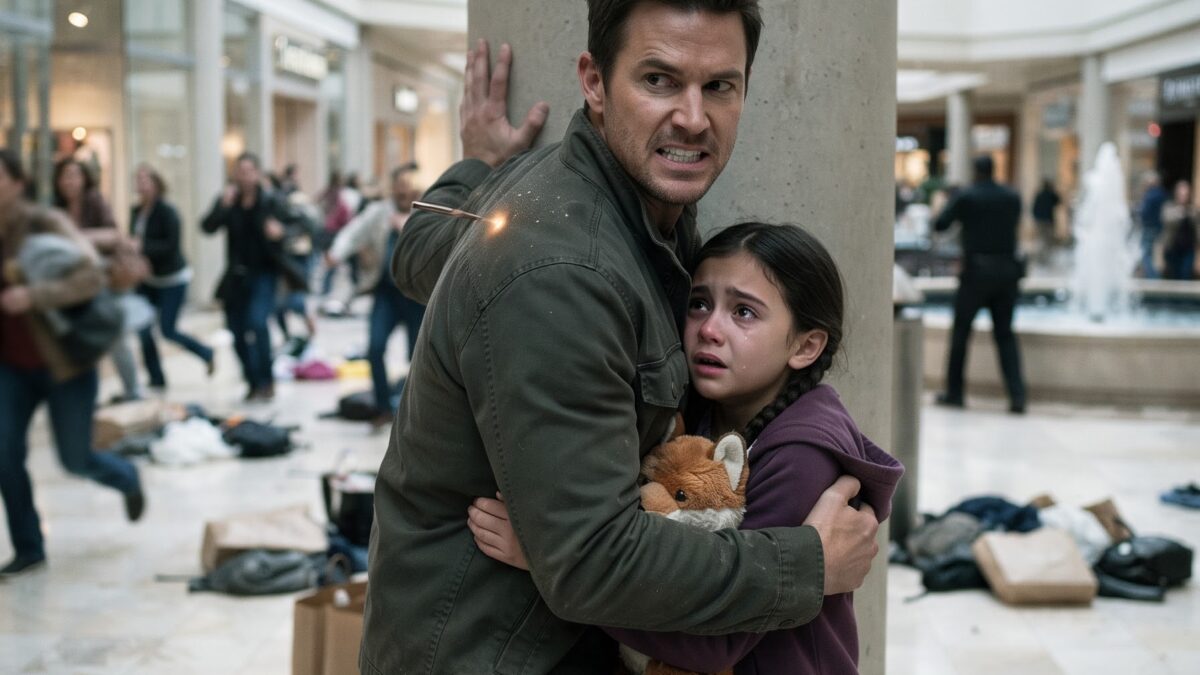
Part 2
Marceline. He said her name carefully.
The way you said something when the word itself carried weight. One more thing.
When I was doing the log analysis, I found something that wasn’t in the security documentation.
He waited a beat. Someone has been pulling your personal schedule data.
Not the company calendar your private appointment system and Tessa’s school routing.
The pickup schedule, the route your driver takes. The silence this time was different in quality, shorter and harder.
How long? She said.
The earliest flag I can trace is 8 weeks ago. He heard something shift on her end of the line. A sound that might have been her sitting down or standing up.
something changing position because the body needed to move when the mind received certain information.
They’re not just after the system, she said.
No, he said they’re not.
Outside the kitchen window, Carver Lane was empty and quiet. The street light at the corner put a yellow circle on the wet pavement and a car moved through it slowly and was gone. Everything looked the same as it always did at this hour, the neighborhood settling into its night sounds, ordinary and still.
But Bennett looked at it differently now than he had three weeks ago when he’d driven to a shopping mall with a grocery list and nothing more dangerous on his mind than which brand of orange juice his son preferred.
I’ll find out who’s on the other end, he said.
I’ll close it before they can use what they have.
And if you can’t, she said not desperate, just straight.
Then we call in federal support earlier than I’d like and deal with the gaps.
Okay, she said. Bennett. Yeah, thank you again.
A pause. I keep ending up thanking you.
You hired me, he said.
That’s different, is it?
He thought about this honestly about whether there was a clean line between a man who ran toward a stranger’s child because he couldn’t do otherwise and a man now sitting at his kitchen table at 11:30 at night running access logs to make sure that same child’s school.
Route wasn’t being used as leverage against her mother.
Probably not, he said.
She was quiet for a moment, and in the quiet, there was something he didn’t try to name or reach toward.
Just acknowledge the way you acknowledged whether something present and real that you weren’t going to pretend wasn’t there.
Good night, she said. Good night. He put the phone down and looked at the spreadsheet.
Then he looked at the drawing Milo had made him in the hospital, which he taped to the cabinet above the stove, the bandaged figure, the house that might have been a large sandwich.
He thought about Milo’s description of Tessa.
That chess comment who says that the logic of it that to understand the game, you had to understand what the other player was thinking about. That the point was not the pieces in front of you, but the person across from you. He pulled the laptop closer.
He had two names and a pattern and the beginning of a shape in his mind of what was coming. He needed to understand what the other player was thinking about. He went back to work.
Part three. The call came at 7:43 in the morning. Bennett was in the sub-level corridor beneath Voss Meridian headquarters, standing in front of an open electrical panel with a flashlight and a tablet tracing the secondary power routing that fed the server rooms auxiliary systems.
He had been there since 6:15 before most of the building staff arrived because the work that mattered most was the work done before people started moving through spaces and leaving the particular noise of their presence in the data.
He’d learned that in the teams and never unlearned it.
The early hours had a clarity that the rest of the day couldn’t replicate.
His phone buzzed in his jacket pocket.
He didn’t recognize the number.
He answered it anyway because in the last 3 weeks he had developed the habit of answering numbers he didn’t recognize.
Mr.Straoud. The voice was male flat, professionally neutral in the way that voices were when the person on the other end had rehearsed their tone.
We have your son. The electrical panel ceased to exist.
The sub-level corridor ceased to exist. Everything reduced to three words and the specific quality of silence that followed them. Milo Bennett said.
His voice came out leveled, which was a physiological response he did not choose and did not feel. The interior of his chest was doing something that had no accurate name in any language he spoke.
He was picked up on Avery Street at 7:18.
He’s unheard.
Whether he stays that way depends on what happens in the next 40 minutes. Let me talk to him.
A pause. a sound of movement.
Then Milo’s voice tight, trying to hold itself steady, the way his father held things steady, mimicking a composure he’d learned from watching Bennett, without ever being taught it explicitly.
Dad, I’m here.
Bennett pressed his back against the corridor wall, not because he needed the support, but because he needed to know where the wall was. Are you hurt?
No, there’s two men.
I’m in a car.
I can’t.
A sound on the other end. Brief, not violent, just the sound of the phone being moved.
The flat voice returned. Marceline Voss comes alone to the Delmore parking structure on 9th Avenue in 40 minutes. She brings the biometric key and the authentication token for the Meridian encryption system.
She comes without security, without a phone. If we see anyone else, any police presence, any surveillance, we execute the boy.
She doesn’t have the full authentication.
Bennett said she needs both the physical token and a secondary confirmation from a locked terminal.
You can’t.
40 minutes, the voice said.
If she’s not there in 40 minutes, you’ll receive proof that time has run out.
The line went dead. For exactly 2 seconds, Bennett stood against the wall and let the information settle in his body, because panic was a luxury, and he had never been able to afford it.
Not in the water off the coast of somewhere he couldn’t name.
Not in the dark corridors of buildings that wanted to kill him, and not now in a sub-level corridor under a glass office tower in Bellweather, Virginia, with 40 minutes on a clock that had already been running for 11 of them. Then he moved.
He was calling Marceline before he reached the stairwell.
She answered on the first ring, and he could tell from her voice that she’d already heard something, not the call, but the shape of something wrong.
The way the building’s atmosphere had shifted in some way she hadn’t been able to name yet.
They have Milo, he said. Delmore structure on 9th 40 minutes. They want you with the biometric key and the authentication token.
No security, no phone.
They said they he didn’t finish the sentence.
He didn’t need to.
Silence from her end. 3 seconds of it, which was an eternity.
Bennett, don’t listen to me.
They’re not planning an exchange.
If you walk into that structure alone with the credentials, you don’t come out of it.
They want the authentication and they want to remove both witnesses who can testify to the conspiracy. He was moving up the stairwell now, taking the steps fast without letting his shoulder dictate the pace. This is a termination event wrapped inside a ransom demand.
The ransom is the cover. Where is he? Do you know where?
9inth in Delmour is 12 blocks northeast. The structure is eight levels.
Open face on the north side. He was through the stairwell door now onto the ground floor, crossing the lobby toward the parking exit.
The vehicle they used was on Avery Street at 7:18.
That’s near his school, which means they picked him up on the walk.
His driver, he walks Tuesdays and Thursdays.
He told me, “Bennett pushed through the parking exit door into the cold morning air.
I need you to listen to me very carefully.
They’re focused on you, your arrival, your credentials, your physical presence.
That’s where their attention is going to be, which means they’re not going to be fully focused on the perimeter.
He heard her breathing on the other end, controlled, measured, the breathing of someone holding themselves together by force of will. What do you need me to do?
She said, he was already at his car. He got in, put the phone on speaker on the passenger seat, started the engine. I need you to be visible.
You agree?
You’re compliant.
You’re scared.
All of that is fine because it’s honest.
They know you’re scared.
They’re counting on it.
I need you to call Agent Reyes from the federal team and give him the location.
Then you put your phone away and you go to that structure in your car with your driver because if you go alone and something goes wrong, there’s no one who knows where you are.
They said no security. They said no police presence and no security they can see. Your driver waiting in a vehicle on the street is not a tactical threat to them.
It’s a mother arriving in a car.
The structure is on a public street.
They can’t control every vehicle on 9th Avenue.
And you?
I’ll be there before you are.
Bennett, your shoulder. Marceline.
He said her name with enough weight to stop her.
I know what I’m doing.
Let me do it. A pause.
He’s 8 years old, she said.
Her voice dropped on the last two words in a way that had nothing controlled about it. I know what he is, Bennett said.
I’m going to get him.
He ended the call because there was nothing more to say and pulled out of the Voss Meridian parking structure onto Bellham Avenue and turned northeast.
The Delore parking structure on 9th was exactly the kind of location a person selected when they wanted control without exposure a commercial structure that went quiet on weekday mornings because the businesses it served didn’t open until 9.
A north face opened to the elements so there were no enclosed entry points to monitor. eight levels of concrete that provided sound absorption and sighteline obstacles and multiple internal positions from which you could see approaches without being seen from outside. Bennett drove past it once on the parallel street, which gave him the north and east faces.
What he could see was consistent with what he’d expected.
No unusual vehicle concentration, no visible movement on the upper levels, two vehicles on the second level that could be empty or occupied, impossible to determine from the street. He parked on Garrison a block west and got out into the cold.
His shoulder was talking to him. It had been talking to him for most of the last 3 weeks in the specific language of surgical repair.
Not the sharp report of the original wound, but the deeper, more complicated communication of tissue, deciding at its own pace how much it wanted to cooperate.
He’d been managing it, compensating for it, doing the physical therapy with more compliance than he usually gave to recovery protocols because he’d known, without having a specific event in mind, that at some point compliance would matter.
This was
the point.
He opened the trunk of his car and retrieved the tactical bag he’d been carrying since the second week at Voss Meridian, when it had become clear that whatever was happening inside the company had a shape and a direction he didn’t like.
He checked the contents with practiced efficiency, made the selections he needed, and closed the trunk. He went into the structure from the south entrance on garrison, which put him on the ground level, facing north. The structures internal ramp system ran clockwise ground to 8, and he moved up the east ramp rather than the central ramp because the east ramp kept him closer to the concrete outer wall and further from the central sightelines.
He heard them before he saw them. Second level, the voices were low but not inaudible, the acoustics of open concrete carrying sound in ways that people underestimated when they were not specifically trained to exploit or account for them.
Two voices, one doing the talking, one responding in shorter intervals. The talking one was discussing timing. The shorter one said something about the northeast corner.
Bennett stopped on the ramp, listened for 4 seconds, and built a preliminary picture. Two active voices. northeast corner of level two, which was the corner with the best sight line to the street level approach from 9th Avenue standard covering the approach positioning.
That left the question of where Milo was. He continued up the ramp, but slower now, pressing himself to the east wall and moving in the heel totoe quiet that left no impact sound on the concrete.
At the top of the ramp, he stopped before the corner and looked. Level two of the Delmore structure was roughly the size of a full city block open on the north face to the morning air with 60 odd parking spaces, 11 of which were occupied by vehicles ranging from a panel van to a compact sedan. The northeast corner held two men early 30s, dark tactical clothing positioned behind the concrete outer wall at the corner gap with sightelines to both the north approach and the east ramp.
They apparently did not realize Bennett had already ascended.
and between the ramp exit and the two men bound with zip ties to a concrete column approximately 30 feet from Bennett’s position.
Milo, he was sitting on the cold concrete floor with his back against the column, arms zip tied behind it, ankles bound. His jacket was unzipped.
They’d probably checked his pockets, taken his phone if he had it.
His face was pale, but set in that particular expression, Bennett recognized because he’d made that face himself more times than he could count the expression of someone who had decided that whatever was about to happen, they were not going to give the other side the satisfaction of watching them fall apart.
8 years old, his
father’s son, in the specific way that meant Bennett couldn’t afford to look at him for more than the second it took to confirm his position and condition because looking at him for any longer than that required something he couldn’t spend right now.
He checked the rest of the level in sections.
A third figure near the vehicle ramp on the far west side, which he hadn’t been able to see from the external approach positioned facing west, monitoring the vehicle ramp rather than the pedestrian entrances, not expecting approach from the east.
Three confirmed, possibly a fourth outside he hadn’t accounted for.
Possibly not. He needed to move in the next 4 minutes because Marceline would be arriving in 7.
And when she came visible from the street, the two men at the northeast corner would be fully forward- facing, and anything he hadn’t already resolved became significantly more complicated.
He studied the distance from his position to Milo. The column Milo was bound to was between him and the two cornermen, which meant approaching the column put Bennett in the columns sighteline gap, not the full open approach the cornermen were covering. The third figure on the west
ramp had a partial sight line to the column, but only partial the panel van in the mid-level parking blocked the lower third of the approach angle.
It was manageable.
It wasn’t good, but it was manageable.
He moved.
The heelto toe walk across open concrete required every concentration that wasn’t currently occupied with sighteline geometry and timing because concrete transmitted vibration.
and he was covering 30 ft of it toward a child who would react to seeing his father coming, whose face would change, whose body would shift against the zip ties.
And that reaction was both inevitable and dangerous because any of the three visible targets could catch a peripheral shift in the bound child’s posture and understand what it meant.
He needed Milo to see him and not react.
He was 10 ft out when Milo’s head turned.
Bennett held up one open hand at his side below the sighteline of the cornermen low deliberate the gesture they’d worked out over years without ever formalizing the signal that meant hold and wait and trust me.
He’d used it at a school play when Milo forgot his lines and looked at the audience with that same pale set face.
He’d used it when Milo’s bike chain came off at the top of a hill and he needed the boy to break rather than panic.
Milo saw it and he did something that made Bennett’s chest do something complicated and specific.
He looked back at the concrete floor, dropped his eyes, kept his face still, kept his body still, 8 years old and bound to a column on a cold parking structure and holding himself together because his father asked him to with one open hand. Bennett reached the column.
He pressed his back against it directly behind Milo, left shoulder toward the northeast corner men. He could hear the two men in the corner.
Their conversation had shifted. They were checking something. A phone.
Their attention momentarily internal. He had a tactical blade on his right side.
He reached around the column left-handed, his left arm protested in no uncertain terms, the shoulder registering its objection with the kind of specificity that made vision briefly gray and cut the zip tie on Milo’s wrists.
One stroke, the tie released.
Milo’s arms came forward slowly.
He didn’t shake them.
Didn’t make a sound.
Bennett moved around the columns right side, crouched, cut the ankle binding, pressed Milo’s shoulder toward the east ramp in a direction that was unmistakable.
Milo moved. He got up in one quiet motion.
Not all children could have done that, but this child had watched his father move through spaces his whole life. Had absorbed some wordless knowledge of what careful and quiet looked like, and he went toward the east ramp without running, fast but controlled, and Bennett put himself between his son and the northeast corner, and followed.
They were 8 ft from the ramp when one of the cornermen turned.
Not because he’d heard something, because he’d looked toward the column, and the column was empty.
Hey, Bennett shoved Milo toward the ramp entrance. Run.
Then he turned. What followed was not elegant or controlled, or the kind of thing anyone watching would have mistaken for competence in the traditional sense, because his left arm was significantly less cooperative than it had been 6 weeks ago.
and he was dealing with two men who were themselves trained rather than the panicked shooter from the Crestmont Galleria. The northeast corner closed the distance fast and the third figure on the west side was already moving and Bennett made the assessment in the in the fraction of a second available to him that the goal was not to win a fight.
The goal was to remain functional and vertical until the federal team arrived and to keep both men’s attention on him and away from the ramp.
He managed the first man with his right arm, getting inside the reach before the swing landed, using the man’s own forward momentum against his balance.
The second man connected across Bennett’s right side.
His ribs registered this opinion, and Bennett went into the side of a parked car, used the car’s surface to redirect his weight, came back around.
His shoulder was something he was choosing not to fully experience at the moment. The third figure from the west arrived just as Bennett and the second corner man went down to the concrete together, and for approximately 10 seconds Bennett was in the specific situation of having two people attempting to resolve him, while he attempted to keep them from doing so, and it was neither clean nor comfortable, and his shoulder made its
position on this situation abundantly clear.
Then the sound he’d been listening for.
Federal Agents Agent Race’s voice specifically unmistakable from the vehicle ramp on the west side and then from the pedestrian entrance on the east and the two men who had been attending to Bennett stopped attending to Bennett because the alternative had become significantly worse.
Bennett rolled away from the nearest concrete pillar, got a hand under himself, got upright. His shoulder was informing him that it had opinions.
He looked toward the east ramp. Milo was standing at the top of it, which was not where Bennett had told him to go.
He told him to run, but which was exactly where he would have stood because he was Milo.
And Milo didn’t leave.
Bennett walked toward him.
His son looked at him from the ramp entrance at the state of his jacket, at the way he was holding his left arm at whatever was showing in his face that Bennett wasn’t fully monitoring.
And then Milo crossed the distance between them at a pace that was not quite running, not quite walking, something that was both, and put his arms around his father’s right side because he’d apparently noted the left shoulder situation and made a structural decision about how to do this.
Bennett got his
right arm around his son and held him. Neither of them said anything for a moment.
Then Milo said into Bennett’s jacket, I kept still like you showed me.
I know, Bennett said. You did good.
My hands are cold.
We’ll get them warm, your shoulder.
Don’t worry about my shoulder.
Milo tightened his grip briefly in the specific way that communicated more than tightening grip communicated in most circumstances.
I knew you’d come, he said quietly, not dramatic about it.
The way you stated a thing you’d been certain of through a period of being not certain about much else.
Bennett pressed his hand against the back of his son’s head and stood there on the second level of the Delmour parking structure while the federal team secured three men below them.
and the cold morning air came through the open north face in the city went about its business on the streets below.
Then he heard footsteps on the ramp, fast ones, and Marceline appeared at the ramp entrance she’d been on 9th Avenue when the federal team went in.
And whatever instructions she’d been given to wait by the car had apparently not accounted for the comprehensive thoroughess with which she would disregard them.
She stopped when she saw Bennett and Milo.
Her face was doing doing something that Bennett recognized because Milo’s face had been doing a version of the same thing, the work of holding together, giving way to the fact that there was no longer anything requiring the holding.
She looked at them both, and Bennett gave her a single nod that meant what it was intended to mean.
And then she crossed the remaining distance and put her hands on Milo’s shoulders.
And the boy turned and looked at her and she pulled him briefly against her and held him there with the particular fierceness of someone holding what nearly wasn’t there to hold.
“You okay?”
she said.
“Yeah, Milo said.
He sounded surprised to be okay slightly.
The way you were when your assessment of a situation had been significantly negative and the outcome defied the assessment.”
“Bennett came.”
“I know he did,” she said.
She looked up at Bennett over Milo’s shoulder.
There were things in her face that he didn’t try to read completely, and she didn’t try to conceal them, and that was a specific kind of exchange that required no words and didn’t get any.
From below, Agent raises again, calling for Bennett. Bennett looked down toward the ramp, then back at Milo, who was now standing between him and Marceline with his cold hands tucked in the front pocket of his jacket.
“Stay right here,” Bennett told his son.
“Both of you, don’t move.
We’re not going anywhere, Marceline said.
He went down the ramp to meet the federal team, and the morning was still cold, and his shoulder was still doing what it was doing, and there were three men being cuffed on the ground floor of the Delmour structure, with whatever remained of their operation rapidly dismantling around them.
Reyes met him at the base of the ramp, a compact man in his 40s, with a permanent slight frown that wasn’t unfriendly, just the natural set of a face that had been doing serious work for a long time.
You called us in with 11 minutes on a 40-minute clock,” Reyes said.
The window was enough, unheard, Bennett paused.
“The three you have down here aren’t the full picture.
I need you to cross reference their IDs with the network I’ve been building on the inside.
Callaway and Sain are the company side connectors.
Whoever funded the outside team is still out of custody.”
Reyes looked at him steadily.
“You think this is over?”
“I think it’s the part that’s visible,” Bennett said.
The part underneath it is still intact.
Reyes nodded slowly, the nod of a man confirming something he’d already suspected.
We’ll need everything you have today.
You’ll have it.
They stood for a moment in the parking structures ground level.
Both of them aware of the same thing that three men in cuffs and a recovered child and a tharted operation was a significant morning’s work and also not anywhere close to the end of something that had been running longer and deeper than any single morning could resolve.
One more thing, Bennett said.
Whoever is on the outside of this operation, whoever Callaway and Soen have been passing information to, they know my son’s name now.
They know his school route.
That doesn’t go away because we rolled up three of their people.
Reyes met his eyes.
We’ll need to discuss protective arrangements.
Yeah, Bennett said. We will.
He went back up the ramp to where Milo and Marceline were waiting. His son was talking to her about something.
Bennett caught the words chess and strategy and unfair, which suggested the conversation had moved with remarkable speed from a kidnapping to Milo’s ongoing grievances about Tessa’s approach to board games.
And this was possibly the most clarifying data point in the whole terrible morning about how deeply his son needed things to be normal again. Marceline looked up when Bennett came back through the ramp entrance.
“All right,” she said.
“Working on it,” he said.
She accepted this as the accurate answer it was. Outside on 9th Avenue, more federal vehicles were arriving and the building was waking up around them. And somewhere in the city, the people who had paid for this morning were already receiving news of its failure.
Through whatever channels they used, making whatever calculations they made when operations failed, determining what came next. Bennett knew something was coming next.
He just didn’t know yet what shape it would take or how long they had before it arrived.
He put his right hand on Milo’s shoulder and steered him toward the east exit and the cold street beyond it.
And Marceline walked beside them, and the three of them went out into the morning that was still somehow the same morning it had been at 7:18 when everything changed. The sky the same honest gray that might clear by noon, the city producing its ordinary sounds around an event that had been anything but ordinary.
And Bennett walked through it with his son’s shoulder under his hand and his own shoulder making itself comprehensively known.
The full weight of understanding settling in around him that they were not done yet.
That the people who had sent three men to a parking structure on a Tuesday morning were still out there, still intact, still wanting what they’d come for.
They just hadn’t gotten it.
Not today. He intended to make sure not any day.
But that was tomorrow’s problem.
and the day after that and the weeks that came next.
For the length of this walk from the ramp to the street, he let himself just feel the weight of his son’s shoulder under his hand, and the specific relief of Milo walking beside him on his own two feet, unharmed, cold-handed, already complaining about Tessa’s chess strategy, alive in the full and ordinary way.
That was the only way that mattered. Bennett kept walking.
The street opened up around them, wide and cold, and full of the unremarkable noise of the city. And somewhere ahead of them was a car and warmth and the next problem waiting to be solved. One step at a time.
That was how you got through anything. One step and then the next one.
The arrests took 11 days to fully process. Callaway went first.
Federal agents picked him up at his apartment on a Wednesday morning while he was still in the clothes he’d slept in, which was how these things usually went when the timing was right.
And the subject hadn’t yet received word that the structure around him was collapsing.
He had sat in the back of the federal vehicle and said nothing, which was either legal instinct or shock. And Bennett had watched the footage later without particular satisfaction.
Callaway was the mechanism. He was not the engine. So was harder.
Richard Soain had been in the security industry for 26 years, which meant he understood surveillance, understood how federal approach patterns worked, understood what it looked like when a net was closing.
When the agents arrived at his house in the suburb of Carol Crossing, he was already at the kitchen table with a lawyer he’d apparently had on call, and the entire arrest had the quality of a man who had known this particular morning was coming and had simply decided to meet it in a pressed shirt.
Bennett watched that footage, too, and what he noted was not so composure, but his eyes, the brief scan toward something off camera. When the agents came through the door, a look that lasted less than a second, and that anyone not specifically watching for it would have missed entirely.
Not fear, not defeat. The specific look of a man checking whether a particular piece of information had been secured before the door came off the hinges. He brought it to Reyes the same afternoon.
He looked left, Bennett said. Northeast corner of the kitchen off camera before he said a word to the agents. Reyes watched the footage again, paused.
It could be anything. Reflex. His wife and kids are in Carol Crossing.
His personal laptop was seized on the table. His phone was in his pocket.
There’s nothing in the northeast corner of that kitchen that should matter to him in that moment.
Unless something was there that isn’t there anymore.
Reyes looked at him. You want us to go back?
I want you to check the property. Every inch of it.
If he had a secondary communications channel, a device, a drop, anything, and it wasn’t in the house near people searched it, then either he moved it beforehand or someone came after.
A pause. If someone came after, they know more about the timeline of these arrests than they should. Rehea sent a second team to Carol Crossing the next morning.
In the backyard of Sain’s property, beneath a loose PA stone behind the garden shed, they found a waterproof case containing a burner phone with a single contact and a USB drive with partial copies of 4 months of encrypted data transfers.
The phone had been used 4 hours before the arrest. Someone had been warned, just not in time to matter. The USB drive took the federal forensics team 6 days to partially decrypt, and what they found confirmed what Bennett had told Marceline from the beginning.
The organization receiving the stolen data wasn’t a competitor.
It was a private intelligence broker operating under three shell companies with clients that Reyes described carefully as entities with a significant interest in undermining federal encryption infrastructure.
He didn’t use other words.
He didn’t need to.
The encryption platform that Marceline’s team had spent 4 years building wasn’t valuable because it was useful.
It was valuable because it was dangerous to the people who profited from infrastructure that the platform would make obsolete. Marceline received this information in her office on the night floor, sitting across from Reyes and Bennett.
And she was quiet for a long time after Reyes finished explaining.
4 years, she said, not angry, not particularly anything in the way that you sometimes weren’t anything when the scale of something exceeded the emotional range available for it.
The data that was transferred represents incomplete portions of the architecture.
Rehea said, “Our technical consultants have reviewed what was on the drive and they believe the transferred material alone is insufficient to reconstruct the full system.
They believe.
” Marceline said with high confidence, but not certainty.
Reyes paused. Not certainty.
She was quiet again for a moment, and Bennett watched her do what he’d watched her do several times over the past weeks.
absorb a piece of information that was worse than she’d hoped.
Hold it somewhere internal without letting it come apart and then move to the next thing that required deciding.
“What’s the exposure period?”
she asked.
“From when Sain’s override credentials were first used to when Bennett identified the pattern.”
“Our best estimate is 14 weeks,” Reyes said.
“And the federal demonstration is in 4 weeks.”
She wasn’t asking.
We’ll need to work with your technical team to assess what was transferred and whether the systems demonstration schedule needs adjustment.
That’s a conversation between your legal team, your development lead, and the relevant federal counterparts.
I’ll need that conversation to happen this week, Marceline said.
It’ll happen Monday, she nodded.
Then she looked at Bennett, and it was a look that carried more in it than what was relevant to the present conversation, which was a thing that had been happening more frequently over the preceding weeks. Looks that started s in one place somewhere else, without either of them having navigated the distance deliberately.
Thank you, she said to both of them technically, but she was looking at Bennett when she said it. He nodded once because thank you had been said enough times between them now that it had accumulated its own weight and adding to that weight every time seemed unnecessary.
Reyes left 20 minutes later with a stack of documents and a schedule for the Monday meeting. Bennett stayed.
He stayed because there was more to say and because Marceline had not moved from her chair after Reyes left, which indicated she either had something to say or needed the room to not be empty for a minute. And both of those things he understood the organization they identified. She said the broker.
Reyes was careful about how he described them. Yes. Careful in the way people are careful when the full description is worse than the summary.
Probably Bennett said. Are they done? She met his eyes.
Genuinely done. Not done for now.
Not setting aside done. He considered giving her the optimistic version and then did not. No.
You’ve cost them an operation and exposed two of their access points.
The people at the top of that structure don’t stop because of that.
They recalibrate. How long before they recalibrate?
Depends on how much organizational damage the arrests caused and how quickly they can rebuild access. He kept his voice level.
Weeks to months, not years. She accepted this. We have a window.
We have a window. She stood up, then moved to the window, the actual window, the one that looked north over Belleather toward the waterfront, and stood with her arms crossed and looked at the city.
In the particular way, people looked at things they were deciding about.
“I’m moving, Tessa,” she said temporarily.
“My sister is in Asheville.
She’s been asking for a visit, and Tessa loves it there.
I’d like to send her down for a few weeks.
That’s sensible.
I’d like Milo to go with her.”
He looked at her back.
He’s safer outside bellweather right now, she said, still facing the window.
And Tessa does better with him there. Since the mall, she has nightmares.
Milo doesn’t make her feel.
She paused, finding the right word.
He doesn’t treat her like she’s damaged.
She can be normal around him. A short pause.
If you’re willing, Bennett thought about Milo.
about the drawing taped above the kitchen stove, about a boy who’d been zip tied to a concrete column, and had kept still because his father asked him to, and who’d walked out of the Delmore structure on steady legs, and complained about chess within 10 minutes, and who had also since that morning started
sleeping with his bedroom light on again, which he hadn’t done since he was 5.
“I’ll talk to him,” Bennett said.
“If he wants to go, “Your neighbor, Mrs.Aldara’s niece, is a teacher in Asheville.
I’ll see if she can connect.”
He paused.
Milo doesn’t go without adult supervision he trusts.
That’s a condition, of course.
She turned from the window. Your conditions are always reasonable.
I have a condition that isn’t reasonable, he said.
She waited.
I’m not going to stop until the people at the top of that broker network are identified and federally charged.
Not just the shell companies, the people.
I’m telling you this because it’s going to require more than the next four weeks.
and you should know what you’re looking at when you look at the shape of the next several months.
He held her gaze.
I’m also telling you because it’s not only your company anymore.
They took my son to a parking structure. That changed what this is to me. She looked at him steadily.
I know that. I just wanted to say it out loud. I know that, too.
She uncrossed her arms.
For what it’s worth, whatever you need, you have it.
Resources, access, time. Whatever it requires.
It requires the trap, he said, which is what I want to talk to you about next. She moved back to her chair and sat down, and her expression shifted to the particular attentiveness she brought to things that mattered.
“Tell me,” she said.
So he told her, “The plan had been forming since the morning in the Delmour structure, not the full shape of it, but the skeleton, the essential bones of it.”
The organization had one remaining objective, Marceline’s biometric authorization.
The physical authentication token combined with her biometric key was the only path to accessing the completed encryption system without the development team’s cooperation.
They’d tried direct acquisition in the parking structure.
That had failed. Their next attempt would be smarter and more patient, and it would focus on creating an opportunity rather than forcing one.
Which means they need me in a vulnerable position.
Marceline said they need an opening that looks natural, a gap in the security perimeter that isn’t visibly created something they discover rather than something that’s handed to them.
He paused, so we hand it to them in a way that looks like they discovered it. She was quiet for a moment. You want to put me in the position of being the visible weak point while you build the actual structure around me.
You’d be inside the estate, he said fully covered.
The weak point isn’t you.
It’s the appearance of the perimeter.
We create something that their surveillance can find. Something that looks like a security gap created by the stress of a few weeks someone overworked.
A sensor miscalibrated. A coverage overlap that a trained team could exploit.
We let them plan against it.
And when they come through the opening we’ve given them, the trap closes.
She thought about it for a long time.
How confident are you that they’ll take it?
I’m confident they need the authorization badly enough to try again.
The broker’s clients paid significantly for what Callaway and Suain were providing, and what they received was incomplete.
The only way to complete it is through you.”
He paused, “And I’m confident that if we don’t set the terms of the next engagement, they will.
I’d rather pick the ground.”
She looked at her hands for a moment, then up at him. You need me to trust you completely on this, to do exactly what you tell me when you tell me.
Yes. And you need me not to tell anyone outside the immediate team, not board members. Not my assistant.
Not anyone except the people who need to know for the operation to function. Yes, because any leak in the circle rebuilds their intelligence. Yes.
She looked at him for a long time. The afternoon light through the window had shifted, coming in at a lower angle now, putting a line of gold along the edge of the desk between them. All right, she said.
Tell me what I need to do. He told her.
The next three weeks were the kind of weeks that were difficult to describe accurately to anyone who hadn’t lived them because on the surface they appeared almost normal.
Milo went to Asheville with Tessa and Mrs.Aldara’s niece who turned out to be a woman named Carol who had Aldara’s practical temperament and Tessa’s approval within 24 hours.
Marceline ran her company. Bennett worked in his office on the eighth floor. visible, unremarkable, a security director doing security work in the post incident period while federal investigations proceeded around him.
Underneath that surface, he was building.
He spent the first week rewriting the estate’s security documentation, not improving it, but carefully deliberately degrading one specific element of it.
The northwest perimeter of Marceline’s acetate had a sensor array that covered the access corridor between the outer wall and the garden structure.
In the new documentation, that array was shown as fully operational. In the actual system, Bennett left a 90-second cycling gap in the sensors refresh rate, not enough to be obvious to routine monitoring, but enough to be discoverable by a surveillance team doing patient technical reconnaissance.
He seated a corresponding gap in the estate’s camera coverage, a 19° blind spot in the Northwest approach that didn’t exist in the previous system, but appeared in the current one, logged as a pending hardware fix that had been deprioritized in the aftermath of the Delmour incident.
Then he waited for the surveillance to find it.
He didn’t wait long.
On the ninth day after the documentation changes were uploaded to the estates management system which he had deliberately connected to the same server architecture that Callaway had previously used to pull Marceline’s scheduling data on the assumption that whoever was on the outside still had access to some version of that channel.
He detected a query that didn’t belong.
37 seconds of passive reconnaissance in the estate systems external facing documentation layer. Not an attempt to penetrate, an attempt to read.
Reading the documentation was the point. They wanted to find the gap.
They’d found it.
He called Reyes that evening.
They’re planning, he said.
I’d estimate four to seven days before they move.
They’ll need time to build the assault team and confirm the vulnerability.
How many? Reyes asked.
Based on the Delore team size and the fact that the estate is a more complex target, I’d say four to six trained.
Not the same level as Delmour. Whoever they hire for this will be a step above. He paused.
They’ll come before dawn.
The gap in the sensor array is most exploitable between 3 and 5 a.m.when the overnight security staffing is at its low point and there’s enough darkness to cover the northwest approach from the outer wall.
We’ll be staged a/4 mile out.
I need your team at minimum distance on my signal. Not before.
If they pick up any federal presence in the surrounding blocks during their approach, they abort and we don’t get a second setup.
Understood. Ray has paused. What about Miss Voss?
She’s inside the main residence covered by two members of my team from the inside.
Her job is to be exactly where she’s supposed to be visible in the first floor study from the northwest approach angle working lights on.
He paused. She knows what to do.
You’ve briefed her thoroughly.
She’s not the kind of person who needs extensive briefing.
Bennett said she needs accurate information and then she handles the rest herself. Reyes was quiet for a moment.
For what it’s worth, Strad.
The forensics team finished the soain drive this afternoon. They have names, real names, not shell company principles. The people at the top of the broker network.
A pause.
It’s going to be a significant federal case.
When this is over, good, Bennett said, and meant it in the specific and uncomplicated way that he meant things he had no ambivalence about.
He spent the next 3 days running the estate’s interior team through scenarios, walking the northwest perimeter himself in the early morning hours until he knew every inch of the approach corridor in the dark, working the sight lines from every angle that an incoming team might use and confirming that the trap closed the way he designed it to close.
On the second night at 2 in the morning, Marceline found him in the estate’s kitchen.
