Mafia Boss Fired the Plus-Size Woman Keeping His Empire Alive—Days Later, Everything Collapsed
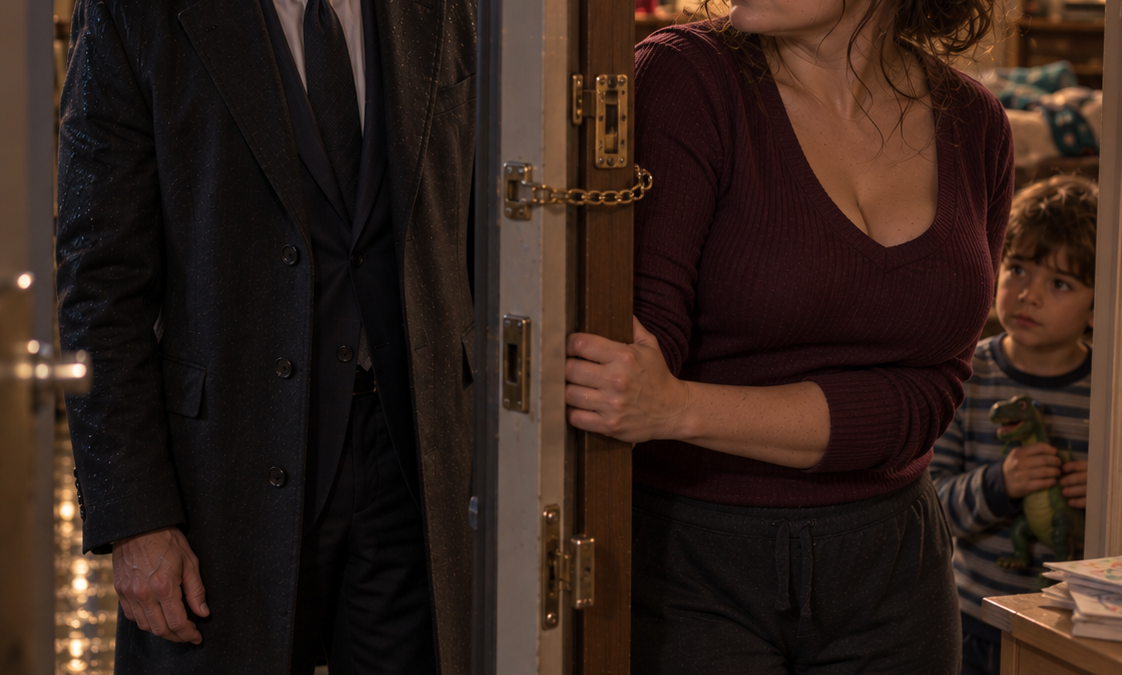
Mafia Boss Fired the Plus-Size Woman Keeping His Empire Alive—Days Later, Everything Collapsed
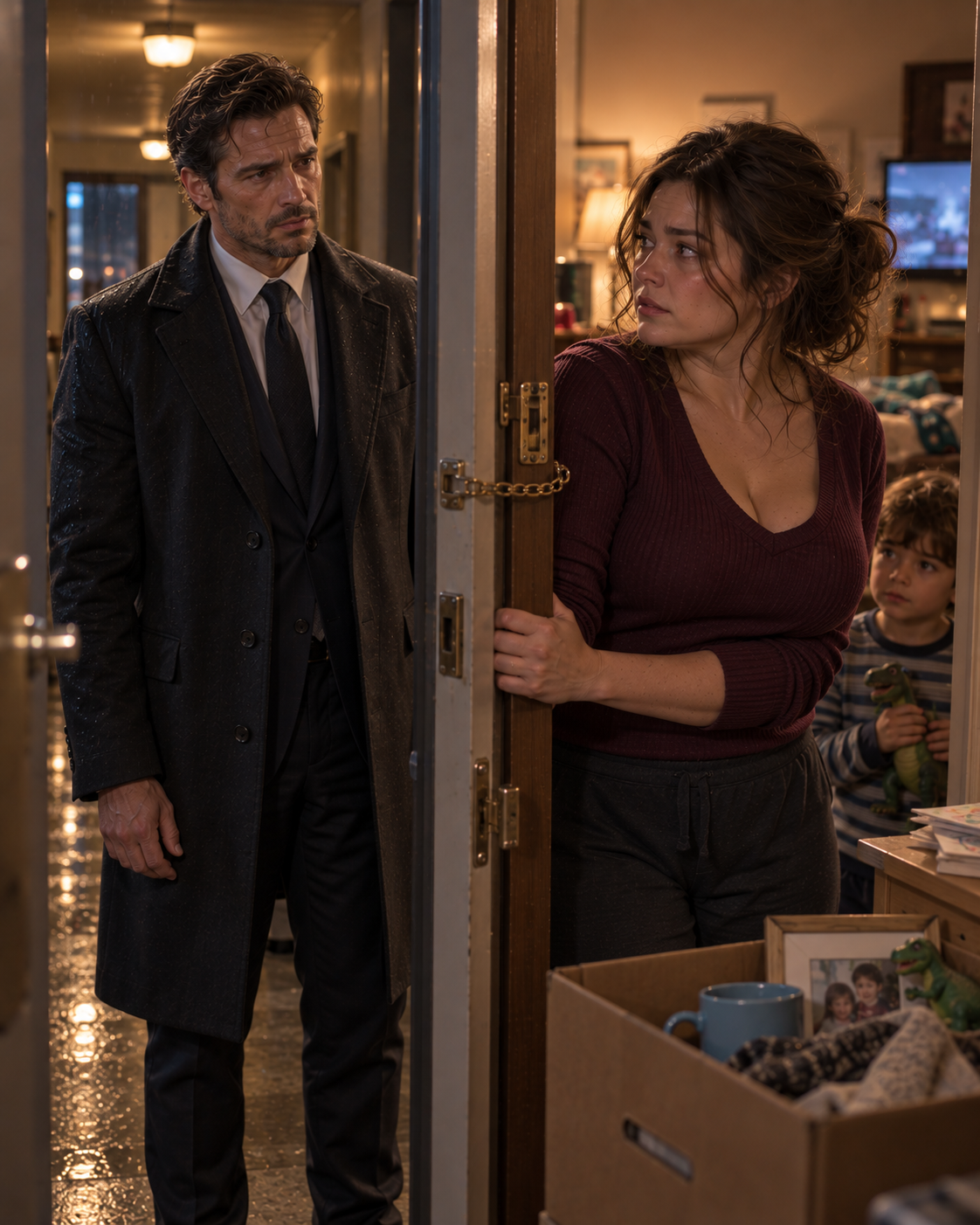
The mafia boss fired the fat woman who was quietly keeping his shipping empire alive and he did not learn her name until the whole company started bleeding money without her. Andrew Vaughn signed the termination approval at 7:43 on a rainy Thursday morning, standing beside the tall window of his private office while the Savannah River moved gray and slow beneath the clouds.
He did not sit down.
Men like Andrew rarely sat when signing away someone else’s life.
They stood. They glanced.
They trusted the clean little summaries that landed on expensive desks. Junior operations analyst responsible for critical rooting failure.
Internal negligence confirmed. Immediate dismissal recommended. Blake Turner had written it like a man placing a napkin over a spill.
Smooth, careful, almost kind.
Andrew read the first page, skimmed the second, and signed his name at the bottom with a black fountain pen that cost more than Jenna Reed’s monthly rent.
To him, she was a file, a name. One more employee in a company that moved freight through ports, warehouses, rail yards, and roads with the kind of precision that made politicians smile and rivals nervous.
Harborline freight systems had trucks in five states, ships under contract, warehouses with locked gates, and enough private security to make people whisper that the company did not simply belong to Andrew Vaughn. It obeyed him.
Everyone in Savannah knew harbor line was protected by him. Everyone knew Andrew wore spotless suits, spoke softly, and had no patience for betrayal. But on that rainy morning, the betrayal was not what he thought it was.
Jenna Reed was packing her desk when the storm began to press against the office windows. Not hard rain, not dramatic rain, just a steady gray curtain that blurred the city and made the fluorescent lights feel even colder.
She had always hated those lights. They made everyone look tired, even the people who did not have a reason to be. Her cardboard box sat open on her chair.
It was the kind of box used for printer paper with one bent corner and a shipping label half peeled from the side. There was something cruel about that.
Harborline moved whole city’s worth of cargo.
But when it was done with a person, it handed her a used box and watched her carry herself out in pieces. Jenna placed her coffee mug inside first.
It was chipped on the rim, pale blue, with the words, “Mom runs on hope,” printed across the front in crooked white letters.
Mason had picked it out from a dollar shelf with such pride that Jenna used it everyday, even though it barely held enough coffee to be useful. Next came the framed picture of Mason at the park, smiling with two missing baby teeth, and one hand raised like he was waving at the future. Jenna stared at that picture longer than she meant to.
Her son was six, almost seven, though he liked to say almost seven, like it gave him legal authority over bedtime. He believed his mother fixed big problems at a big company.
He believed she was brave because she once removed a spider from the bathtub without screaming. He did not know that grown-up fear was quieter than spiders. It lived in rent notices, school lunch balances, gas prices, and the way your manager said your name when he had already decided you would be the sacrifice.
The office around her pretended not to watch. That was what made it worse.
If people had stared openly, Jenna could have hated them properly. Instead, keyboards clicked too loudly. Chairs shifted.
Conversations died when she walked past and came back in whispers once she turned away. Logan Pierce stood near the coffee machine with his arms crossed, looking at the floor like it had suddenly become fascinating. Parker Cole had disappeared into a side office and shut the glass door, though Jenner could still see his reflection in it.
He was pretending to check his phone. Blake Turner hovered beside her desk with the heavy sorrow of a man who enjoyed looking regretful when regret cost him nothing.
He was broad, blonde, clean shaven, and always smelled faintly of mint and expensive soap. He had the calm face of someone who could lie without raising his voice.
That had helped him rise faster than men twice as smart.
It had helped him take Jenna’s reports, strip her name from them, and present them upstairs as department insight.
It had helped him nod at her warnings, bury them, and then act surprised when the world did exactly what she said it would do. I wish this had gone differently, Blake said.
Jenna folded a cardigan and set it in the box beside Mason’s picture.
No, you don’t.
His mouth tightened only for a second, long enough for her to know she had hit something tender. Not guilt, maybe.
Men like Blake usually protected themselves from guilt. Maybe it was annoyance.
He liked people quiet. He liked them grateful.
He liked them easy to move around. This is not personal, he said. Jenna looked up at him.
Then really looked. She was tired in a way sleep could not repair. Her dark hair was pinned at the back of her head, though a few curls had escaped around her face.
Her blouse had stretched at the buttons because most office clothes were made by people who acted like fat women stopped needing professional dignity after a certain size. Her shoes hurt.
Her shoulder achd from carrying her laptop bag and Mason’s school supplies that morning because the strap had snapped near the bus stop.
Her heart hurt worse. But Blake did not get to see that. He did not get her tears.
He did not get the satisfaction of watching her beg.
“You blamed me for something I warned you about in writing,” she said.
“That feels a little personal.”
Blake glanced toward the cubicles.
“Lower your voice.”
Jenna almost laughed.
“Not because anything was funny, because of course that was what he cared about.
Not the truth, not the report, not the mistake, just the volume of the woman being ruined. My voice is fine, she said. You made an unauthorized escalation.
I documented a critical rooting weakness. You went outside chain of command. I sent it to you and copied system support without approval because the system was mclassifying refrigerated medical freight as standard container cargo during route compression.
Blake’s face hardened.
He hated when she said things clearly. He liked words foggy. Fog was where men like him hid.
“That’s no longer your concern,” he said.
Jenna picked up the small plastic dinosaur Mason had given her for luck, and placed it carefully in the corner of the box. It was green, missing one arm, and had protected her keyboard through 6 months of bad meetings.
“No,” she said softly.
“I guess it’s yours now.”
Something moved through Blake’s expression, a flash of worry, quick but real.
Jenna saw it, and for one strange second, she felt almost calm, because he knew. He knew exactly what he had done. He knew she had been the one catching the loose wires before the whole machine sparked.
He knew Logan and Parker could talk about forecasting models all day and still forget to check whether the warehouse numbers matched the actual freight sitting on the floor. He knew his department looked smart because Jenna came in early, stayed late, corrected silent errors, built backup sheets nobody thanked her for, and translated chaos into reports clean enough for executives to praise. He knew, and still he had chosen her.
Human resources had already taken her badge. That little piece of plastic had opened every secure door she needed for 3 years.
Now it sat in a tray on Blake’s desk like evidence from a small crime.
Jenna lifted the box. It was not heavy.
That made it worse. Three years of work, late nights, skipped lunches, quiet miracles, and it fit into cardboard with room left over. As she walked down the aisle, the office became so silent she could hear the rain against the windows.
Nora Bennett, one of the younger coordinators from warehouse support, stood near the printer with her hands clasped tightly in front of her. Her eyes were red.
She looked like she wanted to say something and was afraid to lose her own job by caring out loud. Jenna gave her the smallest nod.
It was not forgiveness. It was not comfort.
It was only recognition. I see you. I know you know.
Stay safe. Near the elevator, Logan finally stepped forward. Jenna, she stopped.
He swallowed. He was handsome in the easy way that made clients trust him before he opened his mouth.
He had presented Jenna’s root recovery matrix last month and received a personal compliment from Blake in front of the whole department.
He had not looked at Jenna then either.
I’m sorry, Logan said.
Jenna looked at him for a long moment. She could have said many things.
She could have told him that sorry was what people said when they wanted their conscience cleaned without returning what they stole. She could have asked why he had not spoken in the meeting.
She could have asked if he remembered how the original warning sat in the shared audit folder with her name attached, but the elevator opened behind her and she suddenly wanted nothing from him. Not an apology, not an excuse, not even shame.
No, you’re not.
she said. Then she stepped inside. The doors closed before anyone could answer.
Downstairs, the lobby of Harborline Freight Systems looked like success dressed in marble. The floor shone.
The ceiling rose high and bright.
A huge metal sculpture of a ship’s hull curved behind the reception desk, polished until it reflected anyone who walked past it.
Jenna had once thought the lobby was beautiful. On her first day, she had stood there in her best black dress and felt small but hopeful. She had told herself that big places always looked cold from the outside.
Maybe warmth came later once you found your people. Now she knew some buildings were designed to make people feel lucky to be allowed inside. Lucky people did not ask for credit.
Lucky people did not complain when their work was stolen. Lucky people smiled when managers called them dependable in the same tone used for office printers.
The security guard at the desk, Mr.Alvarez, saw the box in her arms. His face changed.
Not much, just enough. He was older with silver hair and kind eyes that had watched too many people walk out holding pieces of themselves. He stood.
Ms.Reed, he said quietly. Jenna smiled because if she did not, something in her mouth might tremble.
Morning, Mr.Alvarez. He looked toward the elevators, then back at her.
Do you need help getting to your car? I took the bus. His jaw tightened.
Then let me call you a cab.
I’m okay.
You sure? No, she was not sure. She was not sure about anything.
Not rent, not groceries, not Mason’s afterchool care, not the phone call she would have to make to explain that she no longer had employee insurance after the end of the month.
Not the careful way she would need to smile when Mason asked why she was home early, but there were kinds of help that felt like kindness and kinds that made the pain more visible. A cab would be too much right now.
If one person was too gentle with her, she might break.
I’m sure,” she said.
He did not believe her, but he nodded. Outside, the air smelled like wet pavement, river water, diesel, and storm drains. Savannah had a way of making even bad days look old and pretty.
Moss hung from the oaks near the street. The sidewalk shone black in the rain.
Cars passed with their headlights blurred. Jenna stood under the awning and shifted the box against her hip.
The photo of Mason slid sideways and she caught it before it fell. Her fingers pressed against the frame a little too hard.
She had warned him. That thought kept repeating, not loud, but steady.
She had warned Blake. She had attached screenshots.
She had run the test route three times. She had shown that when the system compressed overflow freight after a weather delay, it sometimes reassigned temperature sensitive cargo into standard routes, if the warehouse code had been manually edited within the previous 48 hours. It was not glamorous work.
It was not the kind of thing people praised in meetings. It was boring, specific, and essential. The kind of problem that sat quietly until it became expensive.
Jenna had seen it because she looked where other people skimmed.
She had written, “If this is not corrected before next week’s combined outbound schedule, a major shipment may be routed incorrectly.
” Blake had replied, “Noted.”
Then he had done nothing. When the shipment failed, Harborline lost more money in one morning than Jenna would earn in 10 years.
A refrigerated medical supply load went through the wrong transfer path, sat too long, and had to be rejected. A client threatened legal action.
A hospital network paused future contracts. Executives wanted someone to blame before the day ended. Blake gave them Jenna and Andrew Vaughn signed.
The bus arrived late and hissed against the curb like it was tired, too. Jenna climbed aboard with her box, apologized to a woman whose umbrella she bumped, and found a seat near the back.
Rain tracked down the window beside her. The city slid past in gray pieces.
Harbor Line’s glass tower disappeared behind her, but the feeling of it stayed in her body, the held breath, the swallowed anger, the way people watched without helping.
Her phone buzzed. A message from Mason school. Reminder, beach drawing project due Monday.
Please send crayons if available. Jenna closed her eyes.
Mason had been talking about that project all week. The class was making pictures of places they wanted to visit.
He wanted to draw Tybee Island because he had seen pictures of the lighthouse in a library book and decided the ocean must sound like the whole world whispering at once. Jenna had promised they would go one day. Not today, not soon, but one day when things were steady, when there was extra gas money, when she could pack sandwiches and not count every dollar.
One day had been a bridge she kept building for him out of hope. She opened her eyes and typed back with one thumb.
“Thank you.
I’ll send crayons.”
Then she stared at the message until the letters blurred. At Harbor Line, the first mistake after Jenna left happened before lunch. It was small.
So small, no one treated it like a warning. A warehouse update from Doc 4 failed to sync with the outbound schedule.
Normally, Jenna would have caught it during her daily reconciliation because she never trusted the automated dashboard until she had checked the raw numbers underneath. Logan saw the red flag and dismissed it as a lag.
Parker said the software had been acting weird all week. Blake told them to keep moving because executives were already watching the department closely.
Three trucks left with incomplete load confirmations. One arrived at the wrong distribution yard by late afternoon. Another sat behind a locked gate because the receiving team had not been notified.
The third carried half of what the client expected and twice of what another client had not ordered. By evening, customer support had 17 open complaints.
Blake called the day difficult.
Logan called it cleanup from Jenner’s failure.
Parker called it bad timing. No one called it what it was.
The beginning.
Andrew Vaughn did not hear about the first day’s problems.
Not directly. Problems at that level were supposed to be digested before they reached him, softened into summaries, wrapped in confidence, and presented only when someone had already found a solution. That was how Harborline worked.
Andrew handled acquisitions, contracts, protection, political pressure, and the kinds of private disputes that never appeared in company records. Department managers handled operations. Blake Turner was supposed to be one of the reliable ones.
Calm, ambitious, polished, hungry enough to perform, but not stupid enough to steal from Andrew. That was the first mistake. Andrew assumed ambition came with competence.
The second day was worse. A billing batch duplicated charges for a long-term client in Charleston, then failed to invoice another client in Atlanta. Warehouse 8 reported three pallets missing, then found them under the wrong priority code.
A driver arrived for a pickup that had been cancelled the week before, except no one had told dispatch. A refrigerated container sat too long because the receiving team thought it belonged to a different schedule.
Each problem looked separate if a person did not know where to look. software, staffing, weather, human error, normal friction inside a company too large to move without noise.
Jenna would have seen the pattern. She was not there. By the third day, Nora Bennett stopped sleeping properly.
She stayed late in the warehouse support office with a vending machine dinner and six open spreadsheets glowing across two monitors. She tried to rebuild the morning reconciliation Jenna used to do.
But Jenna’s system was not one file.
It was a living web of notes, checks, saved queries, color rules, and instincts built over years. Jenna had never made herself important on purpose. That was the saddest part.
She had built things to help everyone. She had left instructions. She had trained people when they asked.
But most people had not asked because invisible work only seemed simple to the people not doing it. Norah found an old note in a shared folder. If DOC for manual override appears with weather delay compression, verify cold chain assignments before release.
She stared at it, then looked at the week’s failed shipment record.
Jenna had known. Norah sat very still. Across town, Jenna was at a bakery after closing, sitting at a flower dusted table while the owner, Mrs.Harlon, showed her a laptop full of inventory records that had been broken since spring.
The bakery smelled like sugar, yeast, cinnamon, and exhaustion.
Jenner had found the job through a neighbor’s cousin.
It paid in cash, not much, but enough to buy groceries and maybe keep the electric bill from becoming a threat. She had changed out of her office blouse and into a soft gray sweater.
Her feet achd. Her back hurt. Her pride was somewhere inside her chest, bruised but breathing.
“You sure you can make sense of it?”
Mrs.Harlland asked. Jenna looked at the spreadsheet. It was messy, inconsistent, full of duplicate entries and handwritten adjustments typed into the wrong columns.
Compared to Harborline, it was a sleepy little puzzle with powdered sugar on top.
“Yes,” Jenna said.
“I can fix it.”
Mrs.Harland gave her a relieved look.
“You’re a blessing.”
Jenna almost looked behind her to see who the woman meant.
“A blessing.”
At Harbor Line, she had been negligent. At the bakery, she was a blessing.
The difference was not her ability. It was who had control of the story. She worked for 3 hours.
She rebuilt the sheet, added simple drop- down options, marked the recurring inventory losses, and made a separate tab that showed how much butter and flour were actually being wasted each week. Mrs.Harlon put one hand over her mouth when she saw the number. That much?
Jenna nodded. Mostly from double ordering and expired stock.
It’s fixable.
Mrs.Harland looked at her like she had performed magic. Jenna wanted to tell her it was not magic.
It was attention. It was patience. It was the habit of caring even when no one clapped.
But instead, she smiled, accepted the folded cash, and took home a bag of day old rolls for Mason. Mason was awake when she got home.
He was sitting at the kitchen table in pajamas, coloring the ocean with a blue crayon worn almost down to the paper. Her neighbor, Miss Denise, had stayed with him and left a note saying he tried to wake up and absolutely did not fall asleep on his math homework, which meant he definitely had. Mom, Mason said brightening.
You’re late.
I know, baby. I made the beach too blue, but maybe the ocean is dramatic. Jenna set the bakery bag on the counter and kissed the top of his head.
The ocean is very dramatic. He studied her face.
Children were dangerous that way. They noticed the things adults tried to fold away. Did work get better?
He asked. Jenna took off her coat slowly. Work changed.
His crayon paused. Changed how? She sat beside him.
The kitchen light hummed above them. There were dishes in the sink, a rent notice under a magnet on the fridge, and a small boy looking at her like she held the weather in her hands.
I’m not going back to Harbor Line right now, she said carefully.
Mason frowned. Did they run out of trucks? Despite everything, Jenna laughed once.
It came out soft and surprised. No, they still have trucks.
Did you quit? The truth stood in the room with them. Big, heavy.
Not something a six-year-old should have to carry. Not exactly. His frown deepened.
Did they make you leave? Jenna touched his cheek. Yes.
Mason looked down at his drawing, his little mouth tightened, and for one second she saw anger there, pure and bright.
But you’re smart.
Something in Jenna’s chest broke cleanly.
I know, she whispered. Did they know that was worse? Jenna looked at the blue ocean on the page at the lighthouse.
at the small brown box Mason had drawn in the sand filled with shells, though he had never actually collected shells in his life. He had drawn himself beside it, and beside him he had drawn Jenna with a big smile and a round body in a purple dress because he liked when she wore purple.
“No,” she said.
“I don’t think they did.”
Mason pressed harder with the crayon.
“Then they’re dumb.”
“Mason, they are.”
She should have corrected him. She was his mother. She should have said something mature about kindness, misunderstanding, and not calling people names.
But she was tired. And he was not entirely wrong.
Maybe a little, she said. That made him smile.
Only a little. Then he pushed the drawing toward her.
When we go, can we get a real box for shells, not a paper one? Jenna looked at the cardboard box from Harbor Line sitting near the door. Her mug was still inside it.
So was the little dinosaur, Mason’s photo, and the parts of a life she had not figured out how to rebuild.
Yes, she said, though she had no idea when, a real one. At Harbor Line, the fourth day brought Andrew Vaughn into the operations floor. That never happened without a reason.
People felt him before they saw him. Conversations softened, spines straightened.
Men who had been loud became careful. Women who had been interrupted suddenly finished their sentences because even arrogant men knew better than to perform stupidity too close to Andrew Vaughn. He stepped out of the executive elevator in a charcoal suit, his dark hair brushed back, his expression unreadable.
Rocco Marini walked a few paces behind him, broad and quiet, with the calm watchfulness of a man who missed nothing and forgave less. Blake saw Andrew coming and turned pale beneath his office tan.
Mr.Vaughn, Blake said, I didn’t know you were coming down.
That would ruin the purpose, Andrew said. His voice was calm. That was what made people nervous.
Andrew did not need to raise his voice. He had learned long ago that volume was often used by men who lacked certainty. Blake smiled too quickly.
Of course, we’re still managing the residual issues from last week’s incident, but I have the team aligned.
Andrew looked across the floor, desks cluttered with coffee cups, employees moving too fast, phones ringing, three people gathered around a printer as if paper might save them. A dashboard on the wall blinked with amber alerts that should have been cleared before midm morning.
Aligned, Andrew repeated.
Blake’s smile twitched.
Yes. Andrew walked past him without permission. The operations floor seemed to hold its breath.
He stopped behind Norah Bennett’s desk.
She froze with one hand on her mouse. Her screen showed a raw shipment log, not the polished dashboard Blake preferred.
Andrew noticed that. He noticed everything when he chose to look.
Your name?
He said, “Nora Bennett, sir.
What are you doing, Nora Bennett?”
She glanced toward Blake. Andrew did not turn around.
I asked you, Norah swallowed. Her voice came out thin but steady, trying to rebuild the morning error reconciliation.
Why? Because things keep slipping through.
Didn’t they slip through before?
Her eyes moved to the old note open on her second monitor. Andrew followed her gaze.
If DOC 4 manual override appears with weather delay compression, verify cold chain assignments before release. Below it, initials JR.
Andrew stared at those letters. Who is JR?
The room became quieter. Blake stepped forward.
That would be Jenna Reed, the former junior analyst responsible for the initial failure. Andrew did not look at him. I asked Nora.
Norah’s hands tightened.
Fear was there. Real fear.
Not of Andrew alone, but of what happened after he left. Blake still controlled her schedule, her reviews, her future. Andrew understood that kind of fear.
He had built half his life on recognizing it in enemies and allies. It irritated him now to see it inside his own company. She was the person who made this, Norah said softly.
the reconciliation process? Not officially.
She just sort of did it. Why unofficially? Norah hesitated.
Andrew waited.
Because when she asked for it to be formalized, Mr.Turner said the department didn’t have time to document personal habits.
Blake’s face stiffened.
That’s not the context.
Andrew finally turned his head. Then pray I ask for context.
Blake shut his mouth. Andrew leaned closer to the screen. There were notes everywhere.
Careful, plain, exact, nothing dramatic, nothing self-important, just warnings, checks, patterns, and fixes. The kind of work that did not ask to be admired. The kind of work a company only noticed after it was gone.
“Pull every entry tagged with her initials for the last 6 months,” Andrew said.
Blake cleared his throat.
“That may not be necessary.”
Andrew looked at him fully. Blake stopped breathing for half a second.
“Roco,” Andrew said.
Rocco moved to the nearest empty desk and opened a laptop already on it. The next hour changed the temperature of Harbor Line.
Files surfaced, logs opened, hidden revision histories told their quiet stories. Jenna Reed had corrected root conflicts before sunrise. Jenna Reed had flagged billing mismatches before clients saw them.
Jenna Reed had caught warehouse count errors, driver schedule overlaps, mislabeled cargo and system misreads that could have turned into expensive failures. She had done this without title, without authority, without bonus, without applause.
She had sent warnings that Blake marked as reviewed and then buried. She had built reports that Logan later presented under his own name.
She had drafted a process improvement memo that Parker copied almost word for word into a quarterly strategy deck. Andrews face did not change as the evidence grew.
That was how Rocco knew he was furious. Some men flared when angry. Andrew became still.
The more rage he felt, the less of it he allowed to spill. Spilled anger wasted energy. Held anger became a blade.
Then Rocco found the warning. There it was, timestamped days before the failed shipment.
Jenna Reed had identified the exact weakness. She had named the risk.
She had attached proof. She had copied systems support. She had asked for immediate correction.
Blake had replied with one word, noted. Then he had hidden it. Andrew read the message once, then again.
The office waited around him. No one typed. No one spoke.
Even the phone seemed far away. To Andrew, Blake began, then caught himself.
Mr.Vaughn, I can explain. Andrew kept his eyes on the screen. Do not start with a lie.
Blake’s mouth opened, then closed.
Andrew scrolled through the audit trail. You received her warning.
You received her warning. Yes, but the situation was more complicated than you buried it.
No, I prioritized. You buried it, Andrew said again, still calm.
Blake’s face reened.
She overstepped. She was a junior employee making claims outside her role. Logan and Parker had reviewed the rooting model and did not see the same risk.
Andrew looked at Logan. Logan looked sick.
“Did you review it?”
Andrew asked.
Logan’s throat moved.
Not fully. Did you understand it? Silence.
Andrew turned to Parker behind the glass office door. Did you?
Parker’s hand trembled against his phone.
We were under pressure. That was not my question.
No, Parker said. Andrew looked back at Blake. You framed her to protect three weak men from one competent woman.
Blake’s voice dropped with respect.
She was difficult. There it was.
The word men used when a woman did not fold herself small enough. Andrews eyes darkened. Difficult.
She challenged decisions in front of senior staff. She was right. She created tension.
She was right. She lacked executive presence. Andrew stood very still.
You mean she was fat, quiet, and easier to blame than the men stealing from her.
The color drained from Blake’s face.
Around them, the office changed again. Not loud, not openly, but something moved through the people listening.
A truth finally said by someone too powerful to punish for saying it. Blake swallowed.
That is not what I meant. It rarely is, Andrew said, until someone translates. He closed the laptop.
For the first time in days, Andrew thought about the signature at the bottom of the termination approval. His signature, black ink, clean line, careless hand.
He had not known her. That did not comfort him. It made it worse.
Power did not excuse ignorance. It made ignorance more expensive. That night, Andrew stayed at Harbor Line long after most of the building emptied.
Rain tapped the windows again, softer than before. The city lights reflected in the glass behind his desk. Files on Jenna Reed covered the conference table.
Not employee gossip, not Blake’s summaries.
Real records, her work, her warnings, her corrections, her performance reviews, all written in that slippery managerial language that praised her dependability while denying her growth. Strong contributor, reliable support, needs confidence in larger meetings, valuable behind the scenes. Behind the scenes.
Andrew hated the phrase by midnight. Rocco stood near the table with his arms crossed.
Blake thought she wouldn’t fight.
He was right, Andrew said. Rocco looked at him.
Andrew touched the edge of Jenna’s old warning report.
She didn’t fight.
She survived.
There’s a difference.
Rocco said nothing. Andrew read the address on her employee file.
An apartment complex on the south side. Modest. Too far from the office for the hours she had been working.
Single dependent listed. Mason Reed. Son.
Emergency contact. Denise Walker. Neighbor.
A child. Andrew leaned back slowly.
He thought of the box she must have carried out. Everyone carried a box when companies decided to make humiliation portable. He had seen it happen many times.
He had caused it many times, usually to people who had stolen, betrayed, lied, or threatened what belonged to him. He had never lost sleep over those boxes.
This one sat in his mind like evidence. Rocco watched him carefully.
“What do you want done?”
Andrew looked at the file. The old version of him had many answers.
Fire Blake by dawn. Ruin Logan and Parker quietly.
Send money. Send a letter.
Send lawyers. Send someone to offer Jenner a position so generous she would have to accept. Repair the company.
Fix the problem. Move forward. All clean.
All cowardly.
because none of those things required him to stand in front of the woman he had harmed and say, “I signed without looking closely enough.
I believed the easier story.
I let them make you small because it was convenient for me.”
Andrew Vaughn was feared in Savannah because he did not avoid hard rooms. He entered them. He made other men sweat inside them.
But as he looked at Jenna Reed’s address, he felt something he had not felt before a meeting in many years.
nervous. The feeling irritated him.
Then it humbled him.
Tomorrow, Andrew said, “I’m going to see her.”
Rocco lifted one eyebrow with security.
“No, boss.
She has already been cornered by men from this company.
I won’t arrive like another threat.
You are another threat to most people.”
Andrews mouth curved without humor.
Then I’ll have to be less of one.
Rocco studied him for a moment, then nodded. He knew when not to argue.
And Blake, Andrew, looked out at the dark river. The rain had stopped, but the glass still held its ghost.
“Let him come in tomorrow thinking he still has a job.”
Rocco almost smiled.
“That seems unkind.”
“No,” Andrew said quietly.
“Unkind was what he did to Jenna Reed.
This is patience.”
Across town, Jenna woke before dawn because worry had become louder than her alarm. Mason was asleep in the next room, one arm flung over his pillow, his dinosaur pajamas twisted at the waist.
She stood in the doorway and watched him breathe the way mothers do when the world has reminded them it cannot be trusted. Then she made coffee, opened her laptop at the kitchen table, and searched for jobs while the sky turned pale behind the blinds.
