MILLIONAIRE SURGEON Mocked the NURSE — “You Don’t Belong Here,” Until a NAVY SEAL Exposed Her SECRET
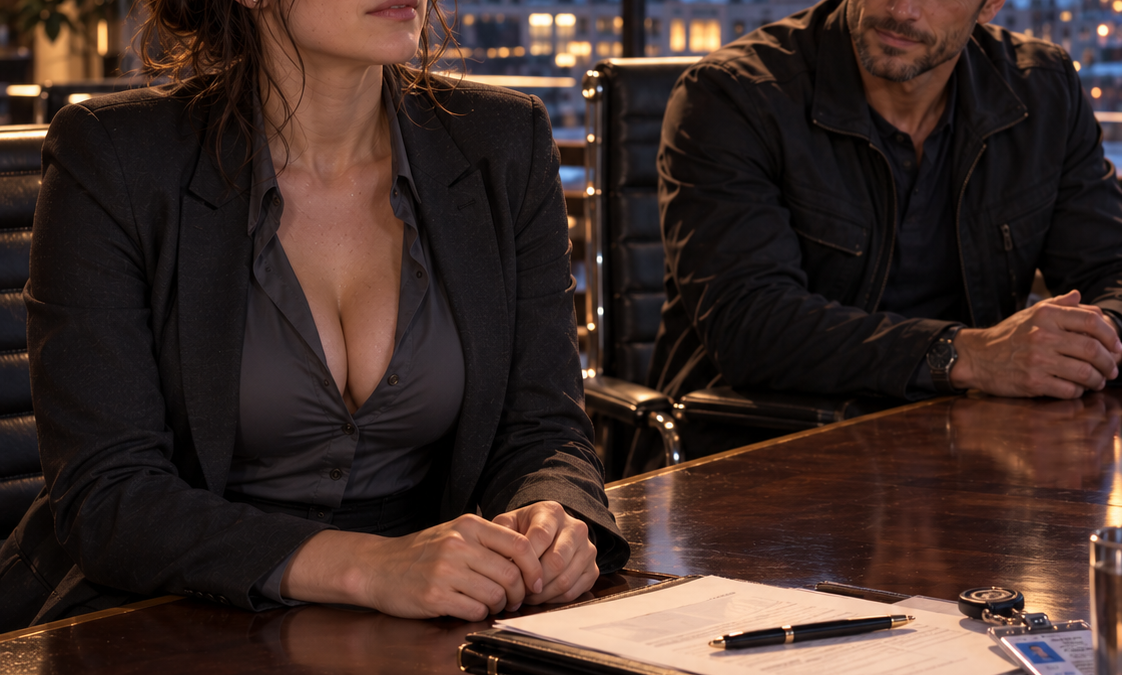
MILLIONAIRE SURGEON Mocked the NURSE — “You Don’t Belong Here,” Until a NAVY SEAL Exposed Her SECRET
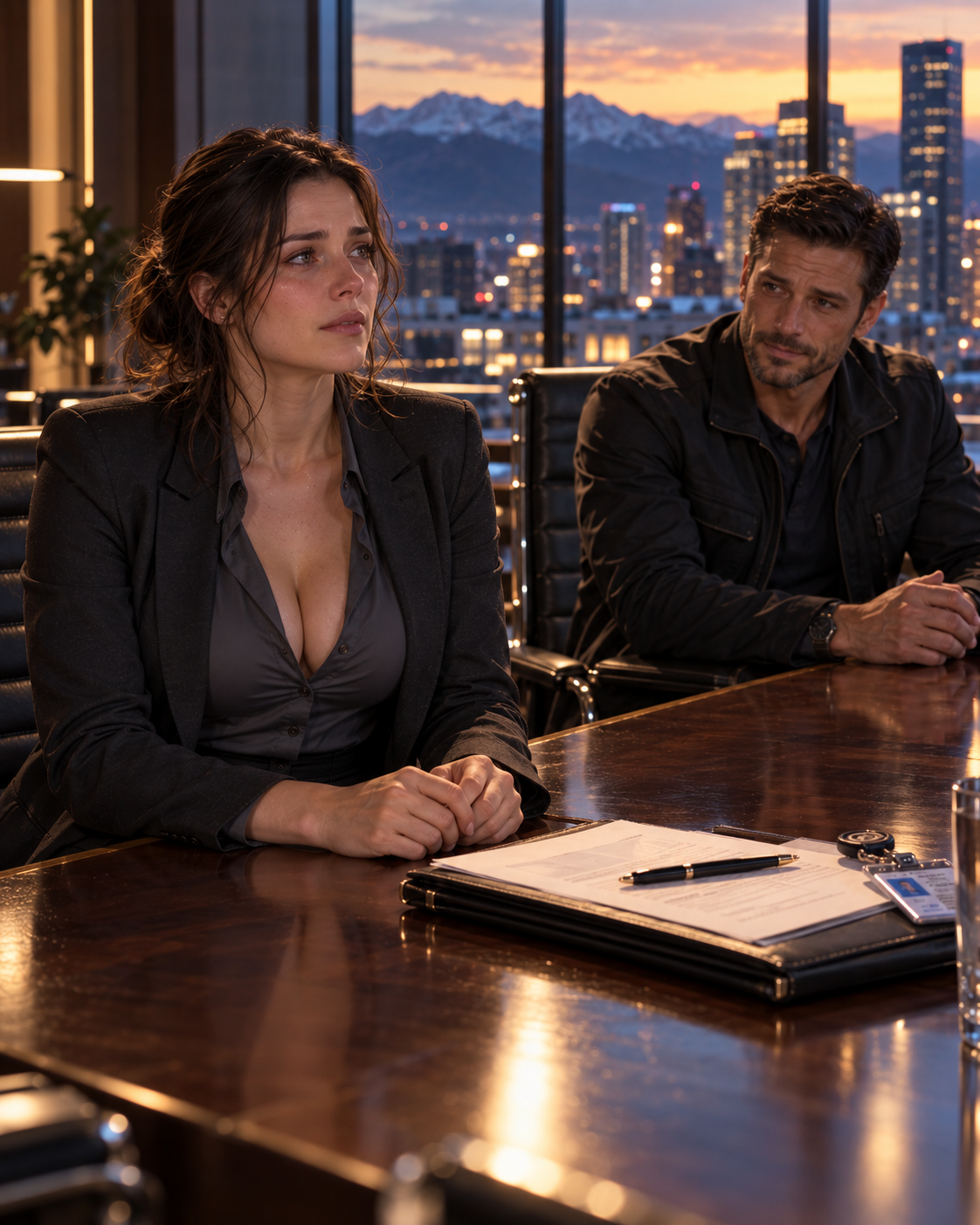
The emergency room went dead quiet the moment Dr.Marcus Vale pointed his finger at her.
You don’t belong here, he said loud enough for the whole floor to hear.
Someone like you never did.
Elena Voss didn’t flinch.
She stood in her worn scrubs with a clipboard pressed against her chest, blood still drying on her sleeve from the last patient she’d worked on for 40 minutes straight.
She looked at him, said nothing.
What Marcus Vale didn’t know, what nobody in that hospital knew, was that the woman he was humiliating in front of his staff had once kept three special operations soldiers alive in a collapsed forward operating base with nothing but field supplies in her own two hands.
The military had been looking for her for 2 years, and they were about to find her.
Part one. The shift started the way bad nights usually did, quietly. Elena Voss clocked in at 6:47 p.m.13 minutes before her scheduled start because she always clocked in early, not for recognition, not because anyone asked her to.
She did it because Ravenwood Medical Center’s trauma bay ran short staffed on weekday evenings.
And she knew that. And that knowledge sat in her chest the way most things did, heavy, practical, unavoidable. She hung her coat on the hook in the staff locker room and stood for a moment looking at her reflection in the narrow strip of mirror above the sink.
34 years old, brown hair pulled back tight, a small scar near her left temple that she’d stopped noticing years ago.
She looked exactly like what Marcus Vale called her, ordinary. She tied her hair back, picked up her badge, and went to work.
The trauma bay at Ravenwood wasn’t impressive by large hospital standards.
It was a level two facility in a midsized stretch of Denver’s northeast corridor.
The kind of hospital that handled car accidents and construction injuries and the occasional cardiac arrest. Competent work, necessary work, but nothing that made the papers.
The staff was a mix of experienced lifers and rotating residents who were always either exhausted or overconfident. Elena had been there 3 years. She knew every squeaky wheel on every crash cart.
She knew which monitors threw false alarms and which attending physicians actually listened during handoffs. She kept her head down.
She did her job.
People either didn’t notice her or didn’t bother.
That was the point.
She picked up her first patient at 7:02 p.m.a 61-year-old man named Gerald who’d been brought in after a fall from a ladder at his house.
His daughter was in the waiting room. Elellanena introduced herself, took his vitals, noted the way he was holding his right arm and the mild disorientation in his responses, and flagged the attending on duty with her concern about a possible concussion compounding a suspected hairline
fracture.
The attending, a tall resident named Dr.Patel, who had the specific energy of someone 2 hours into a 12-hour shift, looked at her flag and nodded.
“Good catch.”
Elena didn’t say anything.
She updated the chart and moved on. By 8:15, she had managed four patients, assisted in a chest compression rotation, and restocked the supply card in bay 3 that someone had left half empty from the previous shift.
She was writing up notes on patient 2 when she heard his voice at the nursing station.
Marcus Vale didn’t enter rooms.
He arrived in them. He was 52, broad- shouldered in the specific way of men who had once been athletic and never stopped reminding people of it, with silver hair swept back from a face that had learned early how to project authority.
He was Ravenwood’s chief of surgical services, a position he’d held for 11 years and intended to hold until retirement, and the way he moved through the hospital made clear he considered the building his by right of occupation.
Staff adjusted around him the way water adjusts around a boat. Elena had noticed in her three years at Ravenwood that Marcus Vale only appeared in the trauma bay during evening shifts when he wanted something or when he was unhappy about something. Tonight she suspected it was both.
She kept writing. Voss.
She looked up. I was standing 6 ft away with his hands in his coat pockets watching her with the expression he reserved for administrative problems. A flat performative patience like someone waiting for a slow computer to load.
Dr.prevail. I need you to walk me through what happened in Bay 7 at 6:30.
Bay 7. Elena set down her pen. There was no 6:30 admission to Bay 7.
The bay was empty from 5:00 p.m.until I pulled Gerald Marsh in at 7:02.
That’s not what I’m hearing.
She waited. What are you hearing?
He pulled a tablet from under his arm and held it toward her. Not close enough for her to read it clearly, just close enough to make the point that he was holding something she was supposed to care about.
There’s a notation in the system from the charge nurse indicating a medication discrepancy flagged in Bay 7 at 1832.
Your badge was scanned at the Bay 7 cart at 1829. Elena thought back.
She had gone to Bay 7 before her shift technically started because she’d known the cart was low and she’d wanted to check before the rush hit.
She had scanned in, taken a full inventory, and found that someone from the previous shift had logged two doses of a sedative as administered that matched neither the patient volume nor the patient records from that window. She had flagged it in writing to the charge nurse. I flagged that discrepancy, she said.
I documented it. I brought it to Dana Reyes before my shift started.
Dana says she has no record of that conversation. The words landed with the precise weight Marcus Vale intended.
Not loud enough to be a scene yet, but loud enough to be heard. A resident near the printer had gone still.
The unit clerk at the desk had stopped typing. Elena kept her voice level.
Then Dana is mistaken. I spoke to her at 6:41. She was standing at the North Corridor junction.
Marcus tilted his head.
The way someone tilts their head when they’ve already decided not to believe you.
Miss Voss, this is the third documentation concern raised about your charting in the past four months. One of those was a system error that it confirmed. The second was a notation format issue that I corrected within the hour.
And the third is this one, which I’m telling you right now is not accurate.
He looked at her for a long moment. The trauma bay had the specific silence of a room where people are pretending not to listen.
You know what I think?
Marcus said he wasn’t looking at the tablet anymore.
He was looking at her. And there was something in it that was less about the medication log and more about something older.
Something he’d decided about her long before tonight.
I think you’ve been in this department long enough to develop some habits that aren’t serving the patients or the staff.
I think you’ve gotten comfortable and I think comfort is a problem in traumaare.
Elena said, “I agree that comfort is a problem in traumaare.
I don’t think that’s what’s happening here.
I’m not asking for your opinion on what’s happening.
I know. She picked her pen back up.
I’m giving it anyway.
Something shifted in his face. It was small.
A tightening around the eyes. A fractional drop in the performative patience.
He wasn’t used to being answered.
Not like that. Not flatly, without apology or difference from someone who looked the way she looked and wore the badge she wore.
I want a formal response on my desk by 8:00 a.m.,” he said, “regarding the Bay 7 discrepancy in your account of the interaction with Dana Reyes.
” “I’ll have it to you by 7.”
He stared at her, then he turned and left. The resident near the printer exhaled.
The unit clerk started typing again. Elena looked down at her notes and finished her sentence.
The problem with Marcus Vale was not that he was incompetent.
He wasn’t.
He was a skilled surgeon with a genuine record. There were outcomes under his knife that other surgeons in the city would have called losses. The problem was that his competence had calcified over the years into the belief that competence made him the final word on everything.
Process, personnel, priority.
He had stopped listening before he’d ever learned to listen well.
And the hospital had accommodated that because his surgical numbers were good and his donor relationships were better. and those two things in an institution that needed both could forgive a lot.
Elena had understood this within her first month at Ravenwood. She had filed it under known conditions the way she filed most things accurately without drama and with a clear-eyed assessment of what it meant for how she operated. What it meant was stay small, document everything.
Don’t volunteer information that requires justification.
Do the work. She had done that for 3 years.
It had worked until tonight, and the reason it had stopped working tonight was not the medication log. She was almost certain the medication log was clean.
Her documentation was thorough. Dana Reyes knew it.
And Marcus Vale would find nothing when he went looking. The reason it had stopped working tonight was something else.
Something she’d felt shifting in the past few weeks, like a pressure change before weather.
Marcus was building something.
She didn’t know why and she didn’t know what, but she recognized the pattern of a person who had decided someone needed to go and was now collecting reasons.
She was halfway through patient 4’s intake notes when Dana Reyes appeared beside her.
Dana was the charge nurse, 47, brisk, efficient, someone Elena had respected and been professionally cordial with for 3 years without ever becoming close to. She had the look of a person who had just had an uncomfortable conversation and was now having another one on purpose.
Elena, she said, keeping her voice low about earlier.
You told him you didn’t remember.
A pause. He caught me off guard.
I didn’t think Dana.
Elena turned to look at her. You know what I flagged and when I flagged it?
You initialed the verbal acknowledgement.
That’s in the log.
The log is Dana stopped. pressed her lips together.
“Marcus is going to make this difficult.”
“I know.
He’s going to make it difficult for me, too, if I I know,” Elena said again.
She looked at Dana for a moment at the exhaustion in her face and the specific shape of a person trying to calculate the least painful path through something. Elena understood it.
She didn’t resent it.
“You should do what you need to do.”
Dana looked at her with something that might have been relief or might have been guilt.
The two looked almost identical in people who didn’t want to examine the difference.
Then she walked away. Elena turned back to her notes.
At 9:20 p.m.Marcus Vale returned to the trauma bay. This time he brought someone with him.
Harriet Stowe, Ravenwood’s director of nursing operations, a woman in her 60s with reading glasses on a chain and the general energy of someone who had been dragged here from somewhere she’d rather be.
Elena watched them approach from the periphery of her vision and kept writing.
“Miss Voss,” Harriet said, “Can you step away for a moment?”
Elena capped her pen and stepped away.
They took her to the small staff consultation room off the main corridor, the one with the round table and the chairs that didn’t match and the motivational poster on the wall that someone had partially defaced with a permanent marker.
In what appeared to be a moment of peak shift fatigue honesty, Marcus stood near the wall. Harriet sat down across from Elena.
Neither of them offered Elena a chair, so she stood, which suited her.
“We’ve been reviewing the Bay7 documentation,” Harriet said.
“I expected you would be.
There are some inconsistencies that concern us.
The inconsistencies are from the previous shift’s charting.
My documentation is accurate.”
Harriet glanced at Marcus. It was a small glance, half a second, but Elena caught it. Ms.Voss.
Marcus said, “How long have you been in trauma nursing?”
“6 years across three facilities.
And before nursing, you were what? A military medic.
” The word landed differently than he probably intended, or maybe exactly as he intended.
It was hard to tell with Marcus Vale, who was skilled at packaging condescension as curiosity.
“Field medical technician,” she said.
“Army, four years.”
“Right.”
He nodded slowly as if this confirmed something he’d suspected.
That’s Look, that’s a different environment, a different standard.
The protocols here are I’m current on all Ravenwood protocols, she said.
I’ve completed every required competency and every optional one I’ve been able to access.
I’m also current on ACLS, TNCC, and ENPC, which are not required for my position.
A brief silence.
The issue, Harriet said carefully, isn’t your certifications.
Then what is the issue? Marcus said the issue is judgment.
Elena looked at him. Whose?
The temperature in the room dropped about 2°. Yours, he said flatly. The way you interact with the team, the way you handle escalations.
There’s a pattern, Ms.Voss.
a pattern of acting outside your scope, inserting yourself into clinical decisions that aren’t yours to make, and then when things go sideways, deflecting accountability onto other staff members.
He paused. Dana Reyes has been with this hospital for 16 years.
She is not someone who makes errors and recall. Elena said she initialed the acknowledgement.
She says she didn’t.
It’s in the log.
Marcus leaned forward slightly.
I’m going to be direct with you.
This department doesn’t work when staff members undermine each other.
It doesn’t work when someone consistently positions themselves as above the team dynamic.
And frankly, he paused again. And in that pause was the thing Elena had been waiting for. The thing beneath the documentation complaint and the protocol language.
Frankly, this was probably never the right fit. This is a high pressure, high visibility department, and some people do better in say it, Elena said.
He blinked.
Whatever you’re about to say, she said.
Her voice was quiet. Not angry. Quieter than angry.
Quieter than almost anything. Say it clearly.
He stared at her.
Then he said, “You’re being placed on administrative suspension pending a full review of the Bay 7 incident and a broader assessment of your performance in this department effective tonight.”
The room was very still.
“I did my job,” Elena said.
“Nothing more.
you can collect your things. She looked at him for a long moment, then at Harriet, who was studying the table, then back at Marcus, who met her gaze with the settled expression of a man who had done this before, and found it went more smoothly when the other person understood the power structure.
Elena understood a great many things about the power structure.
She had operated inside some of the most extreme power structures on Earth in conditions Marcus Vale couldn’t navigate with a map and a translator.
She had taken orders from men who could end careers with a word, and she had followed those orders precisely, and she had also, in specific moments that remain classified, made decisions that contradicted those orders because she had assessed the field and made the call and been right. She understood power. She had simply, deliberately chosen not to use most of hers.
She nodded once.
I’ll need 15 minutes to complete the handoff documentation for my current patients.
That’s Harriet started.
My patients need continuity of care. 15 minutes.
Marcus made a slight gesture that might have been concession or might have been dismissal. Elena turned and walked out.
She spent the 15 minutes doing what she said she’d do.
Thorough handoff notes for all four patients, flagging the specific concern she had about Gerald Marsh’s response pattern and the potential concussion, updating the chart on patient three, whose medication timing would need to be tracked past midnight.
She did it cleanly, completely without rushing. And when she was done, she found the resident Dr.Patel and walked him through each patient in person.
“You’re leaving?”
Patel asked for now. He looked at her with the expression of someone who understood more than he was going to say in this hallway.
“The Gerald Marsh concussion flag.
That’s important.
It is.
Watch for a delayed presentation.”
He presented mild, but his response times were inconsistent. If he spikes a headache above a four in the next 2 hours, push for imaging.
Patel nodded. He looked like he wanted to say something else.
He didn’t.
Elena got her coat.
She stood for a moment at the locker room door, not thinking about Marcus Vale or the suspension or the document she’d have to file with HR in the morning.
She was thinking about Gerald Marsh’s daughter in the waiting room.
She was thinking about whether Patel would catch it if the concussion presented atypically. She pushed the door open and walked down the corridor toward the exit.
She was 20 ft from the ambulance bay doors when they opened. Not the regular doors, the trauma bay doors, the wide ones on the east side that they used for critical incoming. They swung open hard.
Both of them slammed back against the stops and a gurnie came through at a speed that meant the EMTs were running.
But these weren’t EMTs.
The men pushing the gurnie were in tactical gear, stripped of identifying patches, armored vests still on, one of them with blood on the front of his shirt that wasn’t his.
Two more followed immediately behind, one supporting another who was moving under his own power, but barely. A fifth man came through last, and he stopped inside the doors and scanned the trauma bay with the fast, total attention of someone who spent his professional life assessing environments for threat.
And behind them, behind all of them, came the dog. A Belgian Malininoa, maybe four years old, lean and dark muzzled and wearing a tactical harness that had seen recent action.
The dog was moving under his own control, no handler guiding him, tracking close to the gurnie. His ears were up.
He was working. The trauma bay erupted.
The night attending, a Dr.Somerfield, who’d come on at 9:00, was already moving toward the gurnie, calling for a crash cart, calling for respiratory.
Nurses converged. The unit clerk was on the phone. Elena had stopped walking.
She was standing in the corridor 20 ft from the exit, coat in her hand.
The dog’s head swung toward her.
He stopped. His whole body stilled in the way of an animal that has just recognized something it was trained to recognize.
Not a smell, not a sound, but a presence. His ears went from forward to flat.
Not threat flat, but the specific softening of a working animal that has found what it was looking for. He crossed the room toward her. Not fast, purposefully.
Elena didn’t move.
The Malininoa stopped in front of her and sat, looked up at her, and then against his training and his current deployment, he leaned his head against her leg. The fifth man, the one who had scanned the room, had followed the dog. I was standing 3 ft away now, watching her.
He was maybe 45, dark-haired with the kind of face that didn’t show much, but showed everything and what it chose not to show.
There was a question forming in it. That dog has never done that, he said.
Not for anyone. Elena looked down at the Malininoa.
She put her hand on his head briefly, steadily, the way someone touches something they recognize. He did it for me, she said.
From the trauma bay, Somerfield’s voice cut through the noise.
Someone get me a second line, and I need a trauma surgeon now.
The man in front of Elena said, “Are you staff here?”
She looked up.
“Not at the moment.”
He stared at her, his jaw tightened.
“What does that mean?”
“It means I was walking out when you walked in.”
He looked at the dog. He looked at her.
Something in his face shifted. not softened exactly, but reccalibrated like a man revising a calculation.
“I need a name,” he said.
She looked at him for a moment at the tactical gear, at the men through the trauma bay doors where Somefield was already losing control of the situation. She could hear it in the pitch of the voices, the specific escalating uncertainty of a team trying to manage something beyond their usual parameters.
She looked at the dog.
“Elena Voss,” she said.
The man went very still. The name had done something to him.
She watched it happen. The precise controlled response of someone trained not to react visibly who was in this specific moment reacting visibly.
Voss, he repeated. Yes.
He reached into his vest and pulled out a secure phone, swiped it open, and turned it so she could see the screen. There was a file on it, a photograph. Older taken maybe 5 years ago.
Different hair, different clothes. She was wearing desert tan in the photo and standing in front of a vehicle she recognized as a Humvey that had been modified for medical extraction work, but it was her, unmistakably her.
Beneath the photograph was a classification header she wasn’t going to read aloud in a hospital corridor.
And beneath that, in clean bureaucratic font, status, locate, and confirm. from the trauma bay. Something crashed.
A tray or a cart or both?
And then Somerfield’s voice strained and precise.
He’s crashing.
I need someone who knows blast trauma. The man looked at her.
Elena was already moving. Part two.
She didn’t run.
Running in a trauma bay was how people got hurt. How carts got clipped and lines got pulled.
And the already fragile chain of someone’s survival got one more weak link added to it.
Elena walked fast, the specific fast of someone who had learned the difference between urgency and panic and had drilled that difference into her body until it was automatic. The Malininoa fell into step beside her without being told.
The man in tactical gear was a half step behind. She could hear him, not trying to stop her now, just following, which told her something about how he was reading the situation and what he decided she was. She pushed through the trauma bay doors.
The room was loud with the wrong kind of noise. Not the productive noise of a team working well under pressure, but the fractured noise of people working hard in slightly different directions.
Each competent in isolation and collectively losing ground. Dr.Somerfield was at the head of the gurnie.
Mask on. Calling for things in a voice that had the particular strained quality of someone maintaining command presence through willpower rather than confidence.
Two nurses Elena recognized were managing lines. A respiratory tech was setting up airway equipment that from where she stood was the wrong configuration for the injury pattern she was already reading from across the room. The man on the gurnie was late30s, powerfully built in the stripped remains of tactical gear that someone had cut away on route.
The visible wounds told a partial story. Primary blast exposure left lateral. The shrapnel pattern across his left side was consistent with a close-range detonation, partial concealment, wrong angle.
There was a chest seal already applied, left side, which was correct, but the breath sounds she could hear from 6 ft away were wrong in a way that meant the seal wasn’t doing what they needed it to do.
Tensions building, she said, not to anyone in particular. To the room. Somefield looked up.
His eyes went to her coat, her badge, the badge that was technically suspended, and then to the man in tactical gear who had come through the doors behind her, and then back to her with the fast calculation of someone weighing options in real time.
Voss, he said it wasn’t an endorsement.
It was a question. The chess seal is seated wrong, she said, moving to the left side of the gurnie.
He’s building pressure on the right.
You’ve got a tension numo developing.
We’ve got a seal.
The seal is on the entry side. She was already at the gurnie, gloves on.
She’d taken them from the cart without breaking stride.
A move so automatic she hadn’t registered doing it.
The blast pushed debris inward and right.
There’s a secondary pocket you’re not venting.
Somefield stared at her for exactly 1 second.
Then, “Show me.”
She showed him. Her hands moved through the assessment with the particular efficiency of someone for whom this was not a clinical scenario, but a familiar problem with a known solution set. She had seen this specific injury pattern three times, two of which had survived and one of which had not.
And the one that had not survived had died because of a 40-second delay on exactly this call. She was not going to have a 40-second delay. Needle decompression, right side, second intercostal, mid-clavicular, she said.
Now, before we do anything else, his pressure is I know what his pressure is.
It’s going to get worse, not better, until we vent the right side.
Somebody tell me what his stats were on scene.
One of the men in tactical gear, not the one who’d followed her in, a younger one near the door, said 72 on scene, 81 when we loaded.
How long in transport? 11 minutes.
She did the math that wasn’t really math, just accumulated pattern recognition, and said to Somerfield, “We have maybe 4 minutes before this becomes unreoverable.
I need you to make a call.”
Somefield looked at her. He was a decent physician. She knew that from 3 years of working adjacent to him.
But he was working at the edge of his training, and he knew it. And he was smart enough to know that the person across the gurnie from him was not.
“Do it,” he said.
She did it. The room recalibrated around her, not because anyone announced anything or made a formal handoff. It happened the way authority sometimes shifts in crisis situations through demonstrated knowledge rather than stated hierarchy.
People began orienting toward her. Instruments appeared at her request before she finished asking. The respiratory tech, a sharp young woman named Beex, who Elena had always quietly respected, corrected the airway setup without being told twice.
The man on the gurnie, she didn’t know his name yet, didn’t need it yet, had his sats climbing within 90 seconds of the decompression.
Not to normal, not close to normal, but climbing, which meant the pressure was releasing, which meant she’d been right, which meant he had more time than he’d had 30 seconds ago.
Secondary injuries, she said, “Walk me through what you saw on scene.”
The man in tactical gear, the one who’d followed her in, the one who’d shown her the phone, had come to stand at the edge of the trauma bay, not interfering, watching with the focused attention of someone who was gathering information and would act on it later.
His name, she would learn in the next 10 minutes, was Commander Dax Halt. She already suspected something like that. He had that specific quality of stillness that senior military personnel developed, the kind that looked like patience and was actually constant assessment.
IED partial shield, said one of the other men, stocky 30s, a cut above his left eye that nobody had touched yet. He took the left side, crawled maybe 30 m before we reached him, conscious on scene, kept trying to give us his blood type.
Did he lose consciousness in transport? once came back in about 40 seconds.
Pupils on scene equal reactive. She nodded, filed it, moved to the next problem.
The left side injuries were extensive but survivable if managed in sequence. She was building the sequence in her head as she worked.
The same way she’d always built sequences in a kind of rapid layering that felt less like thinking and more like reading something already written.
The shrapnel in his left lateral chest wall was going to need imaging before anyone went near it surgically. The rib fractures, she could feel at least three on palpation, were significant, but not the immediate threat.
The bleed she was most worried about was internal, not the surface wounds. His abdomen was rigid in a way that she cataloged and flagged and moved past because the rigidity meant it was already a problem and the chest was the more immediate one.
I need a fast exam, she told Beex. right now while we stabilize the chest and I need someone to tell the O to clear a room.
Somefield said from the other side of the gurnie. Voss who authorized you did, she said 4 minutes ago and you were right to he looked at her.
He had the expression of a man caught between institutional instinct and the evidence of his own eyes which was one of the harder places to be.
She didn’t wait for him to resolve it.
The patient didn’t have time for that resolution.
Fast exam, she said again. Or notification.
Someone needs to reach vascular because I think we’ve got a splenic issue developing.
Beex was already moving.
Dax Holt had not moved from his position at the edge of the room, but he pulled out his secure phone and made a call that she couldn’t hear over the noise of the bay.
Whatever he said was short. He listened for a moment.
His expression didn’t change, which told her that whatever he’d heard was confirming something he’d already suspected.
It was 47 minutes before the patient, whose name she learned was Staff Sergeant Ror Callum, 36, Special Operations, currently officially not present in any database that Ravenwood’s intake system could access, was stable enough to move toward the O.
47 minutes in which Elena did not stop moving, did not stop thinking, did not stop managing the room with the particular combination of precision and improvisation that was she had always known her actual skill set, not the charting, not the shift handoffs, not the competency certification she maintained like a person who needed to prove something to themselves on a regular schedule. this. The O team took Callum at 10:34 p.m.Elena stepped back from the gurnie and stood in the space left behind and for a moment simply breathed.
Her hands were shaking. Not badly, a fine tremor, the kind that came from sustained controlled effort releasing all at once. She pressed them flat against her thighs and it stopped.
The trauma bay was reorganizing around the absence of the crisis. People were moving equipment, restocking, writing things down.
Beex caught Elena’s eye across the room and gave her a single nod.
Not ausive, not performed, just the specific acknowledgement of one competent person to another. Elena nodded back. Voss.
She turned. Dax Holt was standing 3 ft away. He had waited.
She appreciated that more than she was going to say.
He’s going to make it, she said.
It wasn’t a question.
because of you. Because the team responded well once they had a direction.
He looked at her with something that wasn’t quite skepticism and wasn’t quite admiration, more like recalibration.
The same recalibration she’d seen in his face in the corridor, but deeper now, more settled.
I need you to come with me.
I’m not going anywhere until I know the O team has everything they need.
That’ll be a while.
Then we have a while. He almost smiled.
She couldn’t be certain.
You haven’t changed.
She looked at him.
You don’t know me.
No.
He said, “But I know your file, which is approximately 300 pages long and classified at a level that gives most people in my office a headache to access.”
He paused. You pulled a man out of a burning vehicle with a compound fracture of your own left radius in Kandahar in 2019. She said nothing.
You didn’t report the fracture until the man was stable and extracted.
It was a hairline, she said.
At the time, it wasn’t.
She looked at the O doors. Is there something you need from me tonight, Commander, or are we going to stand here while you read from a file I lived?
He said, “We need to talk about why you’re working as a floor nurse at a level two trauma center in Denver under your own name with your service record buried so deep, we couldn’t pull it from standard inquiry.
” That’s not a question.
It is.
It just doesn’t have a question mark.
She turned to face him fully. I was done, she said. I left.
People are allowed to leave. People are, he said. But you specifically signed a transition agreement that included, I know what I signed.
Then you know that done isn’t quite the word.
The Malininoa had settled near the wall, at rest, but not fully off duty, ears tracking the room. Elena looked at him for a moment.
His name was Kratos.
She had learned from one of the other men earlier, and he had been on four deployments and was trained for medical detection work, among other things, and had, according to his handler, the stocky one with the cut above his eye, whose name was Sergeant Firstclass Aaron Bryce, never reacted to a civilian the way he’d reacted to Elena.
She looked back at Hol. What happened on your OP? He considered how much to answer.
Compromised extraction route, secondary device. How many casualties?
Callum is the only critical, two others walking wounded, one KIA. He said the last part the way military personnel said that factually with the specific flatness of people who had learned that flatness was the only way to keep saying it.
We came here because it was closest and because our field surgeon was the KIA.
Something moved through her that she didn’t name.
I’m sorry, she said.
His name was Captain Denny Marsh. He paused. He talked about you, not by name, but the way he described his instructor in advanced trauma management at Bragg in 2018, he stopped.
That was you. She had known a Denny Marsh, not well.
He’d come through a 3-week intensive she’d run as part of a cross-unit training program.
Quiet Kid, serious, asked good questions.
She’d written a commendation for him at the end of the session.
She absorbed this quietly.
She didn’t let it land on her face because that was a habit too, one of the deep ones.
And the grief that was working its way through her chest was going to have to wait.
“What do you need from me?”
she said.
“Right now?”
A debrief on Callum’s status for the official record.
We need a qualified medical assessor’s account of his condition on arrival and the interventions taken.
He held her gaze. Someone at your clearance level.
I don’t have an active clearance.
Voss, you have a very active clearance.
You just haven’t been using it.
She stared at him.
That’s not She stopped.
She actually didn’t know if that was accurate.
The transition agreement had been complicated.
She had signed things she hadn’t fully parsed at the time because she’d been tired and hurt in ways that weren’t physical, and she’d wanted out badly enough to stop reading carefully, which was not like her, and which she had spent the subsequent years not thinking about.
That’s something I
need to verify.
I can help you verify it. He reached into his vest again, not the phone this time, a folded document in a sealed envelope, and held it out. Or you can read this.
She took it, didn’t open it.
There’s something else, he said.
Of course, there is.
The reason we came to Ravenwood specifically wasn’t proximity.
There are three trauma facilities closer to where we were operating tonight. He let that sit for a moment. We came here because someone on my team recognized the hospital name from a flag in a secondary file.
a flag that was placed 48 hours ago by a hospital administrator who ran an inquiry through a contractor database looking for background information on a staff nurse. Elena went still.
Someone here ran a check on you, Holt said.
Not through HR, not through standard reference verification, through a contracted background service that is used primarily by people who want information that standard HR channels won’t surface.
She thought about Marcus Vale, about the way he’d looked at her in the consultation room, about the word military and the pause before it, and the slight reccalibration in his tone that she’d noticed and filed and not fully understood.
When, she said, 48 hours ago. The inquiry hit a flag in our system because of your transition agreement.
That flag generated an alert. The alert reached my office yesterday morning.
He paused. By the time we were wheels up tonight, finding you was already part of the mission. Elena opened the envelope.
The document inside was three pages. The first page was a formal notification, crisp, official, the kind of language that existed to be legally unambiguous. The second page was a summary of her transition agreements remaining provisions, several of which she had, in her haste and exhaustion 3 years ago, apparently agreed to that she had not fully understood.
The third page was something she had not expected. It was a formal complaint filed through a military advocacy office. Patient safety concern.

