She Couldn’t SpeakForced to Marry Her Sisters Mafia BossThen He Discovered Her Power
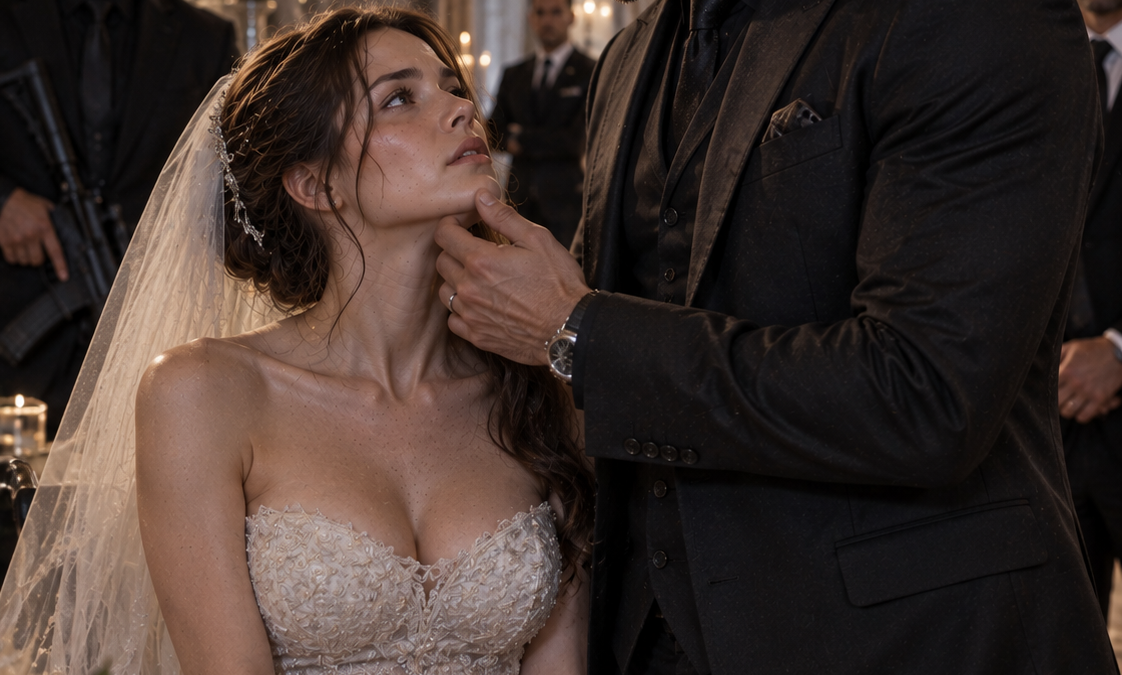
She Couldn’t SpeakForced to Marry Her Sisters Mafia BossThen He Discovered Her Power

Her father’s hand closed around Audrey’s wrist before she could take a single step backward.
“You’re going to walk down that aisle,” Richard Whitmore said, his voice barely above a whisper, but harder than anything she had ever heard come out of his mouth.
“And you’re going to do it quietly, which shouldn’t be difficult for you.
” He said it like it was a joke.
It wasn’t.
Audrey tried to pull away. Her mouth opened.
The reflex of someone who had spent 22 years learning that opening her mouth produced nothing useful. No sound, no words, only the awful strangled silence that her own father had spent most of her life pretending was something contagious. Her hands moved.
She gestured, frantic, desperate. Richard grabbed both her wrists.
“Stop it,” he said.
“Stop embarrassing yourself.
Vanessa left.
You’re what I have.
You’re going to fix this.”
He said, “You’re what I have.
The way someone says this is all that’s left in the refrigerator.”
The Whitmore estate sat on the northern edge of Blackidge, Massachusetts, separated from the rest of the city by a long private drive lined with oak trees that Richard had always considered a symbol of permanence. Old money, old roots. He talked about those trees at dinner parties.
He loved the way they made visitors feel like they were entering somewhere important. Audrey had never once looked at them and felt anything except the distance between the gate and the road. She had been trying to reach that road her entire life.
She was 22 years old and she had never made it. The night everything changed began the way most catastrophes begin inside wealthy families.
Not with shouting, but with a door that opened too quietly. Audrey had been in her room on the third floor, the room that faced the garden rather than the driveway, because her mother had decided years ago that Audrey, looking out at arriving guests, created an awkward impression. She had been sitting on the edge of her bed in her regular clothes, listening to the controlled chaos two floors below.
The caterers, the florists, the coordinator with the clipboard who had been in the house since 7 that morning, Vanessa’s wedding day.
Audrey had not been assigned a role in it. She was not a bridesmaid.
She was not seated in any particular place of honor. The plan, as far as Audrey could understand from the fragments of conversation she had caught over the previous weeks, was for her to appear briefly at the reception, stay near the back, and leave before the photographs. She was practiced at the back of rooms.
She was practiced at leaving before photographs.
She heard her mother’s heels on the stairs first, then her father’s heavier tread, then a third sound, or rather the absence of it.
No, Vanessa.
Vanessa’s room was at the end of the hall and it had been making the specific sounds of a woman getting ready for hours.
Hair tools. Music.
The coordinator going in and out. Now it was silent.
Audrey’s door opened without a knock.
Her mother entered first, which was unusual. Lorraine Whitmore generally led with her chin in a particular expression of refined disappointment.
Tonight, her face was doing something Audrey had almost never seen it do. It was afraid. Richard came in behind her and closed the door.
Audrey stood up from the bed automatically. Years of conditioning.
When her parents entered a room, you stood. Vanessa is gone.
Richard said, “He didn’t ease into it.
He didn’t sit down.
He didn’t look at Audrey’s face the way a father looks at a daughter when he’s about to tell her something that will change her life.
He looked slightly past her left ear, the way he always did when he was calculating something.
“What do you mean gone?”
Audrey mouthed.
She couldn’t produce the words, but she had learned long ago to shape them clearly enough that people who bothered to pay attention could read them.
Her father wasn’t looking at her mouth.
She took the car and the money from the safe, and she left with some man she’s been seeing.
His jaw tightened. The ceremony is in 40 minutes.
Damen Blackwell has 50 men outside this house. Do you understand what happens if we walk out there and tell him his bride ran away?
Audrey understood. Everyone in Blackidge understood who Damen Blackwell was.
You didn’t need to move in criminal circles to know the name.
You just needed to live in the city long enough to understand which names made business owners go quiet, which names the local news mentioned carefully, which names nobody said in anything above a moderate conversational tone, even when they were in their own homes.
Damian Blackwell controlled the East Coast’s most powerful criminal organization.
He was 35 years old.
He had built the kind of reputation that didn’t require maintenance because fear, once properly installed, runs on its own.
The marriage to Vanessa had been arranged to settle an enormous debt the Whitmore family owed to Blackwell’s organization and to formalize a political alliance that protected the Whites from enemies they had made through a decade of bad decisions and worse loyalty.
Without Vanessa, the deal collapsed.
Without the deal, Richard Whitmore’s life expectancy shortened considerably.
Audrey’s hands started moving.
Not words yet, just the instinct to communicate. The reflex that preceded language.
Your figures are similar, Richard said. He finally looked at her face.
His expression didn’t change.
The dress will fit well enough.
It’s dark in the chapel.
The veil is heavy. Audrey went completely still.
No, she mouthed clearly, unmistakably. Audrey, she stepped back. Her hand came up.
The gesture was universal and required no interpretation. He will kill me, her mother said from near the door, and her voice cracked on the last word in a way that might have been genuine fear or might have been a performance.
With Lorraine, Audrey had never been able to tell the difference with confidence. All of us.
If there’s no bride, he will kill all of us tonight and nobody in this city will say a word about it.
Audrey’s chest was doing something irregular.
She could feel her own heartbeat in places she didn’t normally feel it.
Her throat, her temples, her hands. She thought about running. She was 22 years old, standing in a room on the third floor of a house on a private drive, surrounded by 50 armed men who believed they were there for a wedding.
The road at the end of the drive had never felt farther away.
Her father crossed the room in four steps and picked up Vanessa’s wedding gown from where it had been laid across the chair near the vanity.
He held it out to her. The way you hand someone a tool.
The way you hand someone a problem you’ve already decided they’re going to solve.
Audrey looked at the dress.
Then at her father’s face, then at the door.
She had never understood before that moment how many options disappear when the person who is supposed to protect you is the one deciding your choices. She took the dress.
The veil was heavier than she expected. It was the kind of veil that turned the world into soft edges and muted outlines. Standing at the top of the chapel aisle, Audrey could see shapes and light and movement, but nothing specific.
She could hear music, something formal and measured, the notes dropping into the room like small formal announcements.
She could feel the grip of her father’s arm under her hand.
Her hand was shaking. She pressed it against her own side and tried to breathe through it. One of the things Audrey had developed over years of silence was an ability to control her external responses under pressure.
You learn that skill when you have no voice to release pressure through. You learn to keep things internal because there is nowhere else to put them.
But her hand wouldn’t stop shaking.
Smile,” her father said without moving his lips through his teeth, the way he had always delivered his most important instructions in a register that only she was meant to hear.
Audrey’s mouth did something in the direction of a smile.
She didn’t know if it reached her eyes.
She suspected not. They walked. The chapel was full.
The guests on both sides were quiet in the particular way that crowds go quiet when they sense something is expected of them. Audrey kept her eyes on the shape at the end of the aisle. A man, tall, standing with his hands clasped behind his back.
Not the posture of a nervous groom, but something more like a man observing an acquisition.
She couldn’t see his face clearly through the veil.
She was glad. Halfway down the aisle, something shifted.
Damen Blackwell’s head moved.
Not the small adjustment of a man tracking movement. Something more deliberate.
He tilted his head barely, just a few degrees, and the quality of his attention changed in a way Audrey felt through the veil, even though she couldn’t see his eyes.
He was looking at her differently than he had been a moment before. Not at the dress, not at the veil, at the way she walked.
Audrey had a very specific way of moving.
She had developed it over years of operating in rooms where she couldn’t announce herself with sound.
It was precise and deliberate and slightly too controlled to be entirely natural.
Vanessa walked the way beautiful women walk when they know they’re being watched with a consciousness of the watching that produces a particular rhythm.
Audrey walked the way someone walks when they’ve learned to take up as little space as possible without disappearing.
She reached the altar. Her father placed her hand in Damen Blackwells and stepped away.
Damian’s hand was larger than she expected and warmer, and it closed around hers with a steadiness that was neither gentle nor rough, but simply present, the way loadbearing walls are present, without calling attention to it.
The efficient began speaking. Audrey stared at the front of the chapel, and counted her own heartbeats, and tried not to calculate the distance to every exit.
When the moment came to speak her vows, the officient had been prepared, by whom she didn’t know, her father must have arranged it, to accept a nod in place of spoken words due to what had been described as a throat condition.
Audrey nodded. Damen said his vows in a flat, even voice, not romantic, not cold, simply words delivered by a man who was completing a transaction he had agreed to.
She felt his eyes on her face throughout. The rings were exchanged. Damen slid a ring onto her finger.
She felt the weight of it, the precision of it, clearly chosen for someone with the same measurements as her hand. The offician announced that they were married.
Audrey Whitmore did not cry. She was already thinking about what came next because that was the only thing she knew how to do. Think ahead.
Read the room. Figure out the next 10 seconds before they arrived.
And the next 10 seconds were going to be the most dangerous of her life. The estate was larger than the Whitmore house. Audrey had understood intellectually that Damen Blackwell had money, but intellectual understanding and lived reality are different things.
The mansion sat above the Atlantic with the kind of territorial confidence that old stone buildings possess when they have been in the same family for multiple generations. It was full of light and hard surfaces and men who moved quietly and watched everything.
She counted four on the main floor alone before they reached the corridor. Damian said almost nothing during the drive from the chapel. He sat across from her in the car with his hands resting on his knees and looked out the window.
Audrey sat with her hands folded in her lap and did not touch the veil. She had been trying to decide for the entire duration of the ceremony and the ride whether to remove it herself or wait.
Waiting had won.
Removing the veil on her own terms felt like something that required options she didn’t currently have.
Inside the mansion, Damian dismissed everyone from the room with a single motion of his hand. The efficiency of it, the way people simply left without question, without hesitation, told Audrey more about him in 3 seconds than the entire ceremony had. They were alone.
The room was a study of some kind. Dark furniture, one large window facing the ocean, bookshelves along one wall, a desk that had clearly been used seriously in recently. There were papers on it, a pen out of its holder, a glass with a small amount of amber liquid in it.
Damen stood near the desk and looked at her.
“Remove the veil,” he said.
His voice was the same in private as it had been at the altar. No performance, no softening, just words that expected to be answered.
Audrey’s hands went to the veil.
She lifted it. She set it aside.
She looked at Damen Blackwell for the first time without anything between them. He was looking at her the same way.
The silence that followed lasted exactly as long as it needed to last for both of them to understand that something had gone catastrophically and irreversibly wrong.
Damen’s expression didn’t transform.
That was the part she hadn’t expected.
No dramatic shift, no explosion of fury, just a slow and absolute stillness that moved into his face the way cold moves into a room when a window breaks. Something controlled and contained and far more frightening for being both.
You are not Vanessa Whitmore,” he said.
It was not a question. Audrey shook her head.
“Then who are you?”
Still not a question, a statement that required answering. She reached into the small concealed pocket she had sewn into the inside of the gown 2 hours ago.
in the 17 minutes she had been left alone before the ceremony because Audrey Whitmore did not go into any situation without a plan for the moment she needed to communicate and couldn’t.
She produced a folded piece of paper and a short pencil. She wrote quickly, steadily, because her hands had finally stopped shaking, not from bravery, but from the strange calm that sometimes arrives after the worst thing has already happened.
And you understand clearly that you are now simply dealing with consequences. She handed him the note.
My name is Audrey. Vanessa is the older daughter. She ran away tonight with another man and took money from the family safe.
My father forced me to take her place because he was afraid of what would happen when you found out she was gone. I cannot speak.
My vocal cords were damaged when I was a child. This was not my choice.
I am not your enemy.
Please don’t make a decision about killing my father in the next 5 minutes.
Damen read it. Read it.
He read it again. He said it on the desk.
The stillness in his face didn’t change, but something behind his eyes moved.
“Give me one reason,” he said quietly.
“Why I shouldn’t call your father in here right now.
” Audrey took the paper back.
She wrote on the other side fast and clear. Because if you kill him tonight, every organization on the East Coast will know that someone managed to put a substitute bride in your ceremony, and you responded by losing control.
You’ll spend the next 6 months managing the perception that you were publicly made a fool of.
Or you keep the marriage intact.
Blackidge keeps believing you married a Whitmore and you hold leverage over my father that’s worth more than his death.
Damen read it. This time the silence was different.
He picked up his glass, took a measured sip, set it back down, looked at her. You understand how this works, he said. It came out sounding less like an observation and more like something he was still deciding whether to believe.
Audrey met his eyes and nodded once.
“You’re 22 years old.”
She held up two fingers and tapped her temple, not correcting the age, confirming it. Damen set the glass down and moved to the window. He stood with his back to her for a long time, looking at the ocean, and Audrey stood completely still and waited because she had spent her entire life becoming very good at waiting.
When he turned back, his expression had settled into something new. Not warm, not friendly, but different from what it had been.
You’ll stay, he said.
The arrangement holds. Blackidge believes what it believes.
You don’t go anywhere without my knowledge.
You don’t contact your family without my permission.
Audrey held his gaze. She reached for the paper.
“And what do I get?”
Damen looked at the three words for a long moment.
“You get to leave this room alive,” he said.
“Audrey wrote one more line.
Then we have a deal.”
She held it up.
Damen Blackwell, the most feared man on the East Coast, looked at the piece of paper held by the silent woman his own staff was already calling the wrong name, and something crossed his face that he hadn’t planned for.
He almost smiled. Not quite, but almost.
The deal was struck in silence, the way the most permanent things in Audrey’s life had always been decided, without her voice, without her consent, and with the understanding that she was going to survive it anyway.
because survival was the one skill her family had accidentally given her when they spent 22 years underestimating everything about her. Outside the window, the Atlantic moved in the dark the way it always had, without asking permission, without explaining itself, carrying everything placed in it, whether it agreed to carry it or not. Audrey looked at the ring on her finger.
She thought about the road at the end of her father’s driveway, the one she had never reached.
She was somewhere else entirely now.
Whether that was better or worse, she hadn’t decided yet.
But she was still standing, and for the moment, that was enough. The ring was still on her finger when Audrey woke up the next morning. She lay still for a moment, the way she always did in unfamiliar places, cataloging sounds before she moved.
It was a habit formed in childhood, born from learning that the quality of silence in a house told you more about what was coming than any noise did.
Silence before her mother’s footsteps meant one thing.
Silence after her father’s door closed meant another.
Every house had its own silence, and each one required a different kind of reading. The Blackwell Estate silence was heavy and deliberate, not empty, the opposite of empty, the kind of quiet that existed because people had been trained to maintain it. She sat up slowly.
The room they had given her was on the second floor, east wing. It was larger than her room at the Whitmore estate and considerably less personal.
The furniture was expensive in the way that hotel furniture is expensive, chosen for quality and neutrality, betraying nothing about whoever had selected it. There was a window that faced the ocean.
There were no photographs on the walls. She dressed quickly, choosing the plainest thing from the small selection of clothes that had been placed in the wardrobe overnight.
She didn’t know how, didn’t know by whom, which meant someone had been inside this room while she slept, which meant she needed to add that fact to the list of things she was tracking.
The list was already long. She found the notepad on the desk, small, spiralbound, the kind sold at pharmacy checkout counters.
Someone had placed three of them there along with four pencils, sharpened. No pen.
Pens ran out of ink. Pencils could be resharpened.
Whoever had stocked this desk understood something practical about her situation that she hadn’t communicated yet.
She stood at the desk for a moment looking at the notepads. Then she put one in her pocket and went to find out what kind of house she was living in.
The kitchen was the largest room she had encountered so far, which told her something. In houses like this one, the size of the kitchen relative to the formal rooms revealed where the actual center of gravity was. Some houses were built around their dining rooms, their studies, their receiving parlors.
The Blackwell Estates kitchen was built for serious, constant, loadbearing use. It had three large preparation surfaces, a commercial range, and a walk-in refrigerator whose door she could hear humming from the hallway. There were four people in it when she entered.
They all stopped what they were doing.
Audrey had grown up in a house where her entrance into rooms produced either indifference or the particular kind of discomfort that people feel when they don’t know the correct social response to something they’ve been told is a problem.
She was familiar with both. This was different. These four people, a woman in her 50s stirring something on the range, a young man unloading a delivery crate, another woman arranging items in the refrigerator, and a man near the door who was not doing kitchen work and whose stillness identified him immediately as security, looked at her with the specific weariness of people who had been briefed but not told everything.
They knew she was the new wife.
They didn’t know what that meant yet.
Audrey crossed to the counter near the range, pulled out her notepad, and wrote quickly. She turned it toward the woman at the stove.
“Good morning.
I’m sorry to interrupt.
Is there coffee?”
The woman blinked, looked at the notepad, looked at Audrey’s face.
“Yes,” she said after a beat.
“I’ll get it.”
“I can get it myself if you show me where,” Audrey wrote.
Another beat.
Something shifted in the woman’s expression.
“Not warmth yet, but the small reccalibration that happens when an expectation doesn’t get confirmed.
She had been expecting something else from the new wife and hadn’t gotten it.
“Helen,” the woman said, pointing at herself.
Audrey pointed at herself and mouthed, “Audrey.”
Helen showed her where the coffee was. She spent the first 3 days learning the house the way she had learned every house she had ever lived in.
Not by being shown around, but by moving through it incrementally, paying attention to what changed and what didn’t, who moved freely and who stayed in designated areas, which doors were left open, and which were kept closed, and whether the closing was casual or deliberate.
The estate had four visible
security personnel on rotation at all times.
There were more she hadn’t placed yet.
She could sense them, the way you sense any presence that’s trying not to be sensed, through small inconsistencies in the expected pattern of a space.
Damian himself she saw three times in those first three days, and each encounter was brief and functional. The first time was in the corridor outside the study on the morning after the wedding.
He had been walking toward her and simply stopped when he noticed her, assessed her the way she was already learning was his default mode, rapidly, thoroughly, with very little visible processing, and said, “Break is at 7:00.
Dinner is at 8:00.
You’re not confined to any room except the east security office in the lower garage level.
Don’t go in those.
Then he walked past her. The second time was in the library. Audrey had found it on the afternoon of the second day and had made the decision that would have been in another life an obvious one.
She sat down with a book.
It was a biography, a long one about a woman who had reorganized an entire intelligence network during a period when women weren’t supposed to have opinions about intelligence networks.
She had been sitting with it for about 40 minutes when the library door opened. Damen stopped when he saw her.
She held up the cover slightly in a gesture she recognized was part explanation and part apology for existing in his space. He looked at the cover, looked at her, said nothing. Then he went to the section of shelves along the far wall, took a folder from between two books.
not a book, a folder stored with books, which meant this library was also used as secondary storage for things he didn’t want on his desk and left without speaking.
The third time was harder. It was the second night, past 11, and Audrey had been unable to sleep and had gone downstairs with the intention of finding water and returning to her room within the time it would take for a night security rotation to notice her absence from the floor.
She had calculated that interval at approximately 8 minutes based on what she’d observed.
She was in the main hallway when she heard voices from the study. She would have kept walking.
She was not looking for information. She was looking for water and a return to the arithmetic of a ceiling.
She hadn’t finished learning yet.
But one of the voices was raised, not shouting, but elevated with the controlled fury of a man who was accustomed to not shouting and was currently working very hard at it. And the word she caught through the closed door was her own name, not Audrey, the girl.
And you’re telling me she’s just walking around the house, in the kitchen, in the library?
The voice was male, older, with the rasp of someone who had smoked for a long time and then stopped but kept the voice anyway.
Damian, she’s a liability.
She was put here by Richard Whitmore.
She was put here by Richard Whitmore to save Richard Whitmore’s life.
Damian’s voice was flat and even and entirely unlike the raised one.
Those are different things.
You’re keeping her.
The alliance holds as long as the marriage holds. Then put her somewhere controlled, not wandering the estate like she belongs here.
A pause.
She’s not wandering, Damian.
She’s observing.
There’s a difference.
And the fact that you think she’s wandering tells me how carefully you’ve been watching her.
Silence. Audrey had pressed herself against the wall beside the study door without making the decision to do it. Her body had acted before her mind finished the instruction.
She’s an unknown, the older voice said.
In our position, unknowns are threats. Every person in this house was an unknown at some point, Walter. Not every person in this house was placed here by a family that owes us a debt.
No, Damen said, “Some of them were placed here by families that owed other people debts, and then I acquired those debts.
The principle is the same.”
Another silence.
“I don’t like it,” the older voice, Walter said.
“I’m not asking you to like it.”
Audrey moved away from the door carefully and went back upstairs without the water. She lay on the bed in the dark and thought about what she had heard.
Organizing it the way she organized everything, not emotionally first, but structurally, building the shape of it before she decided how to feel about any of it. Walter, older man, significant enough authority to speak to Damian in that register, which meant significant enough standing to have opinions about the household. He considered her a threat, not because of anything she had done, but because of what she represented, an unknown placed inside the perimeter by a family with compromised loyalties.
He wasn’t wrong.
The fact that he wasn’t wrong made him more dangerous, not less.
On the fourth day, she made her first real mistake. It happened in the conservatory, a long glasswalled room off the east corridor that held an impractical number of plants for a house that otherwise contained no softness.
Someone had loved this room once. The plants were old enough to suggest years of consistent tending.
Whoever had tended them wasn’t tending them anymore because a layer of neglect had settled over the space.
not abandonment, but the specific look of maintenance that had been deprioritized, done by someone who was following instructions rather than caring. Audrey had started watering them on the third day. Not grandly, just with the small can she found under the potting shelf quietly in the hour before dinner, when the corridor outside was usually empty.
On the fourth day, Helen found her there. The housekeeper stood in the doorway for a moment and Audrey turned and held up the can in a gesture that was half explanation and half offering of evidence.
This is what I’m doing.
You can see it.
I’m not doing anything else.
Helen crossed her arms, uncrossed them, looked at the plants. Those were Mrs.Blackwells, she said.
His mother’s.
Audrey sat down the can. She wrote quickly.
I didn’t know.
I can stop. Helen was quiet for a moment. She died 4 years ago.
Nobody’s touched this room properly since.
A pause.
He doesn’t come in here.
Audrey looked at the plants, looked at Helen, wrote. Should I stop?
No, Helen said, and her voice had changed in some way that was small and not dramatic, but real. No, I think she would have, she stopped herself, looked at the door, looked back.
Just don’t make a show of it.
Audrey nodded. Helen left. Audrey sat down her notepad and stood in the conservatory alone for a moment among the plants that had belonged to a dead woman in a house she had been put in against her will and tried to figure out if what she was feeling was grief for a stranger or something closer and less definable.
She picked up the watering can. She kept going.
The mistake hadn’t been the plants.
The mistake was that she had forgotten for 40 minutes to account for who else might use the east corridor. When she left the conservatory, Walter Grayson was standing in the hallway.
He was a large man, broad across the shoulders with the particular physical solidity of someone who had been formidable in youth and retained the structural memory of it into his mid60s. His hair was iron gray and cut short.
His face was the kind of face that had made a lot of decisions and not regretted very many of them.
He looked at her the way you look at a calculation that isn’t resolving correctly.
Audrey stopped. She reached for her notepad.
Don’t bother, Walter said.
I’m not interested in a conversation.
She stopped reaching.
You’re very comfortable for someone who arrived 4 days ago, he said.
That’s interesting to me.
He looked at the conservatory door back at her.
You’re playing a long game.
Smart women do that when they don’t have other options.
But smart women in the wrong house sometimes miscalculate how closely they’re being watched.
He walked past her.
She didn’t move until she couldn’t hear his footsteps anymore.
Her hand had the notepad out and was writing before she consciously decided to write.
She didn’t know who she was writing to.
Sometimes she wrote just to make the thought external to give it a form that wasn’t happening entirely inside her head.
He’s deciding what I am.
She wrote, “I need to decide first.”
What she was, she understood gradually over the following week.
Was useful in a way she hadn’t anticipated.
Because she didn’t speak, people forgot she was present.
Not all people. Damian never forgot.
She noticed that early.
The way his attention would tick briefly toward her whenever she entered a room, even if he didn’t turn his head.
Walter never forgot. The head of security, a man named Cole, with a scar along his jaw and the kind of eyes that were permanently scanning, never forgot. But the others did.
She was moving through the main corridor one afternoon when two of Damian’s men turned the corner from the opposite direction, engaged in a conversation they did not pause or lower their voices for, because they looked at her and assessed her as background, as furniture, as part of the house’s permanent quiet landscape.
She heard things. Not secrets yet, not anything specific or actionable, but patterns. The texture of who deferred to whom and why.
The names that produced tension when spoken and the names that produced relief. The specific quality of silence that existed around discussions of money versus the different quality that existed around discussions of violence. Because those were two different silences, and she had been reading silences her entire life.
She began writing it down in her room at night in the third notepad. Not the one she carried for communication, a different one kept in the false bottom of the toiletry kit she had brought from the Witmore estate. The one thing she had managed to keep when everything else was stripped from her life.
She wasn’t gathering intelligence.
She wasn’t planning anything.
She was doing what she always did, what she had done since she was small and silent and stuck in the back of every room in her parents’ house.
She was understanding the architecture of power around her so that she could move through it without being destroyed by it. It was the library that changed things between her and Damian.
She had been returning the biography and selecting something else when she heard him stop in the doorway. She turned.
He was carrying two folders this time, and he looked at the book in her hand the way he sometimes looked at things she touched, not with suspicion, with something that was closer to inventory.
You’ve been in here every afternoon,” he said.
She nodded.
Is there something specific you’re looking for?
She considered the question, then she wrote, “Stories about people who change things when nobody let them talk.”
Damen read it. He was quiet for a moment in a way that was different from his usual silence.
“That’s a specific interest,” he said.
She shrugged one shoulder, wrote.
“It’s a specific situation.”
Something crossed his face. She had been cataloging his expressions for 2 weeks, and this one was still new.
Not quite amusement, not quite something else, but occupying the space between them. He looked at the shelves.
Third row from the top, the blue one.
It’s about a woman who dismantled a financial network that six governments couldn’t touch.
She never testified in court. Everything she did was through other people because she understood that being invisible was more useful than being seen. He took the folder he had come for, paused at the door.
She’s not in any of the history books that are easy to find.
Most people who change things aren’t.
He left. Audrey stood in the library for a moment after he was gone.
Then she found the blue book. She took it back to her room and read it for 4 hours without stopping.
And somewhere around the second hour, she realized that Damen Blackwell had just told her something about the way he saw her. not as a liability, not as furniture, not as an inconvenience to be managed, as something else.
She wasn’t sure yet whether that was better or worse.
She suspected it was both in different ways on different days.
12 days after the wedding, the conservatory became relevant in a way she hadn’t anticipated.
She had developed a routine by then, not because anyone had assigned one to her, but because routine was how she maintained the thin margin of control that kept her functional.
the conservatory in the early afternoon, the library before dinner, a walk along the east-wing corridor at night when she couldn’t sleep, short enough to stay within the security rotation’s tolerance.
She was watering the plants near the far wall of the conservatory when the door opened.
She didn’t turn immediately.
People who didn’t know she was there usually announced themselves with the door.
She had learned to wait for the secondary signal. The footstep, the voice, the pause that told her whether the person had noticed her or not. No secondary signal.
She turned. Walter Grayson was inside the room, but not alone.
He was with another man she didn’t recognize, older, with the kind of deliberately unremarkable clothing that said professional and untraceable to anyone who knew how to read it.
They were standing at the far end of the conservatory near the glass wall that faced the garden, and they were speaking in the low register of people who believed themselves unobserved. Audrey did not move. She was behind a large arrangement of potted plants on a tiered rack.
The rack that had been her reason for entering the conservatory that day, because the highest tier needed water, and the step stool was stored nearby. She was partially obscured and completely still, which was a state she could maintain for very long periods because stillness was a skill she had spent 22 years developing. She focused.
Walter’s voice moved up.
I can’t wait until the end of the month.
The other man, the dock location hasn’t changed.
South loading area. He takes the same route every time. Four guards visible.
A pause.
Marchetti’s men will be there.
We get Blackwell in the open and that’s the end of it.
The other man said something she couldn’t hear completely.
What she caught was, “And you’re sure about the count?”
“I’ve been sure about this for 6 months,” Walter said.
The only thing that changed the timeline was her. A pause.
“The wife?
She’s not a wife.
She’s a plant.”
Walter’s voice had gone colder.
“And she’s been in this house long enough to start making herself comfortable, which means she’s also starting to pay attention.
We move before she figures out there’s something to find.”
The other man said something else. Walter nodded. They moved toward the door and Audrey pressed herself against the teiered rack and made her breathing shallow and slow, the way she had learned to breathe in rooms where making noise was dangerous.
And they passed through the door without looking toward her corner. The door closed. Audrey stood motionless for 30 seconds after it closed.
Then she set down the watering can. Her hands were not shaking.
That surprised her. Her hands were completely steady, which she understood was not courage, but rather the specific physical response to a threat so large that the body skips past fear directly into function.
She thought about what she had heard.
Walter Grayson, Damian’s underboss, his longtime mentor, the man who had spoken to Damian with the authority of someone who had been part of his life since before the organization existed in its current form, was planning to have Damian killed at the docks with a rival faction called Marchett’s People soon, possibly within days, given the shift in timeline.
She thought about what telling Damian meant. She thought about what not telling Damian meant.
She pulled out her notepad. She wrote it all down.
Every word she had heard, the name Marchetti, the south loading area, the phrase four guards visible, the detail about the timeline moving up because of her. And she looked at what she had written and understood with complete clarity that she was holding something that could get her killed regardless of which direction she moved. If she told Damen and he believed her, Walter would know she had been in the conservatory.
Walter had already marked her as a threat.
If she told Damen and he didn’t believe her.
If he believed Walter over the woman who had been in his house for 12 days, then she had just accused his closest adviser of planning murder, which was the kind of accusation that did not go unanswered. If she said nothing, Damen died at the docks, and she was left in this house with Walter Grayson, who already considered her a liability.
There was no path through this that didn’t require her to choose.
She had spent 22 years in situations where she wasn’t allowed to choose.
She folded the note.
She walked out of the conservatory and down the corridor and up the stairs and stopped in front of the door to Damen’s study with her knuckles an inch from the wood and she stood there for exactly 4 seconds.
She counted because 4 seconds was how long she allowed herself to be afraid before she did the thing she had already decided to do. She knocked from inside.
Come in. She opened the door.
Damen was at his desk with a phone pressed against his ear. He looked up when she entered and his expression shifted into the particular attentiveness he applied to unexpected things. Not alarm, just readiness.
He said something brief into the phone and set it down. Audrey walked directly to the desk. She put the folded note in front of him.
She stood back. She watched his face as he read it.
She watched the moment it registered. Not in a flinch, not in any dramatic display, but in the quality of stillness that settled over him, the same stillness she had seen in the hallway on the night she lifted her veil.
The stillness of a man whose mind had just made a very sharp and irreversible turn. He read it a second time.
He set it down. He looked at her.
“Walter,” he said.
“Just the name, not a question.”
She nodded.
Damian stood up from the desk slowly, the way large and careful things move when they’re deciding whether to commit to motion.
He went to the window. He stood with his back to her for a long time, and Audrey stood exactly where she was and waited, because the only thing she could do now was wait and watch and trust that she had read him correctly over 12 days of watching.
When he turned, his face was composed, but his eyes were doing something different.
“You understand,” he said carefully.
What happens if you’re wrong?
She reached for her notepad. I understand, she wrote.
I’m not wrong.
Walter has been with me since I was 19 years old. I know.
I’m sorry.
His jaw moved. He looked at the note she had given him back at her. If I go to the docks and it turns out you misheard something, misunderstood something.
Audrey took the notepad back. She wrote one more line and turned it so he could read it clearly.
then you lose nothing but time.
If you don’t go and I’m right, you lose everything.
The room was very quiet. Outside the window, the Atlantic was making its permanent indifferent noise.
And Damen Blackwell stood in his study, holding the piece of paper that the woman, who wasn’t supposed to be his wife, had just handed him, the piece of paper that named the man he trusted most in the world as the one who intended to end his life.
and he looked at Audrey
Whitmore with the expression of someone standing at the exact edge of a decision that cannot be undone once it’s made.
“Leave the room,” he said quietly.
“Lock your door tonight.
Don’t open it for anyone except me.”
Audrey held his gaze for one more second. Then she turned and walked out. She did not look back.
She locked her door and sat on the edge of the bed in the dark and pressed her hands flat against her thighs to keep them still. and she understood with perfect and terrible clarity that she had just passed the point where any version of neutral was available to her.
She had chosen a side whether that side won or lost. She had chosen it.
And not because she had been forced, not because her wrists were being held by a man who smelled like expensive whiskey and entitled fear, but because she had walked down a corridor and knocked on a door and put a piece of paper on a desk and stood there while a dangerous man decided what to do with it. For the first time in 22 years, the choice had been entirely hers. She sat in the dark and listened to the house breathe around her.
Somewhere below, a door opened and closed. Then another.
Then the house went silent in a new way. Not the controlled quiet of a household at rest, but the specific, taught, loaded silence of people moving with purpose through the dark toward something that had not yet happened, but absolutely would.
Audrey pressed her hands flat against her thighs and waited.
She didn’t sleep.
She had expected not to.
Sleep required a specific quality of surrender that wasn’t available to her on a night when she had set something irreversible in motion and couldn’t see where it was going to land.
So she sat on the bed in the dark with her back against the headboard and her knees drawn up. And she listened to the house the way she had listened to every house she had ever lived in. for the language underneath the silence, the information carried by sound and its absence.
The estate went quiet around midnight. Not the usual quiet, deeper, the kind of quiet that happens when the normal population of a space has been selectively reduced when certain people have left and the ones who remain are paying attention to different things. She heard a car at 12:40, then another at 1:15, both departing, neither returning within her listening range.
At 3:00 in the morning, she heard footsteps in the corridor outside her room. Even measured, not hurrying, they stopped outside her door.
A knock. Two deliberate.
“It’s done,” Damen said through the door.
“You can sleep.
” She sat still for the moment.
Then she got up and unlocked the door. He was standing in the corridor in a dark jacket, no tie, with the particular quality of stillness that she had come to associate with him in the aftermath of something that had required significant effort, not exhaustion, something denser and more interior than exhaustion.
His hands were at his sides, and his face was composed, and his eyes were doing the thing they did when he was processing something he hadn’t finished processing yet.
She looked at him. He looked at her.
She reached for the notepad she’d carried to bed.
Walter, she wrote and held it up as a question rather than a statement. Alive, Damen said, in a location that is not this house. He looked at the wall beside her door for a moment.
Marchetti’s men were there.
They’re not anymore.
She absorbed that. Are you hurt?
She wrote. Something crossed his face.
No. He looked at her directly then with a directness that was different from his usual assessment.
less inventory, more something she didn’t have a clean word for yet.
“You should sleep,” he said.
“Tomorrow will require you to be present.”
He turned and walked back down the corridor. She closed the door, locked it again, from habit more than necessity. She sat back on the bed.
“Tomorrow will require you to be present.”
She turned that sentence over a few times.
It wasn’t reassurance.
It wasn’t a threat.
It was something specific and practical. and it told her that whatever had happened at the docks tonight was not the end of anything.
It was a shift in the problem, a change in the shape of the danger, and Damian already knew what came next and was telling her in the most compressed and efficient way available to him to be ready for it. She lay down.
She did not sleep until nearly 5, and when she did, it was the light surface sleep of someone whose body had temporarily overridden their mind’s objections.
She was at the kitchen table at 7:00 with coffee in her notepad when Damen came down. He was dressed in what she had come to understand was his working clothes. Dark, fitted, nothing decorative, everything functional.
He poured coffee, sat across from her and placed a photograph on the table between them. The photograph showed two men in conversation outside what appeared to be a restaurant. One of them was Walter.
The other she didn’t recognize.
mid-50s, heavy set with the particular grooming of someone who had spent a lot of money trying to look like he hadn’t.
Marchetti, Damen said, tapping the second man. She looked at the photograph. Walter had been meeting with him for 8 months.
He picked up his coffee. Not once. Not a conversation that got out of hand.
8 months of planned meetings in four different cities. His voice was entirely flat. I have been sharing operational details with Walter for 8 months, which means Marchetti has had 8 months of information about our routes, our schedules, our internal communications.
Audrey looked up from the photograph.
She wrote, “How much damage that’s what today is for,” Damian said, figuring out what he gave away and to whom, and what those people are going to do with it now that last night didn’t go the way Marchetti expected.
She wrote, “Walter will talk.
Walter is talking, Damen said.
That’s being handled.
She looked at him. Not like that, he said.
Walter is being questioned by people I trust.
Whatever he tells them, I’ll know by this afternoon.
He paused. He asked about you. She went still.
His first question apparently before they even started. Damen set down his cup. He wanted to know how you found out.
She wrote, “What did they tell him?”
Nothing yet. He looked at her directly.
Eventually, he’ll know it was you.
I need you to understand what that means. She understood what it meant. She wrote it plainly.
It means if he ever gets out of wherever he is, I’m the first person he comes for.
Yes, Damen said. There was no softening of it. She appreciated that.
She wrote, “I understood that when I knocked on your door.”
Damen looked at the notepad, then at her face. He seemed to be making a decision about something or completing one he had been making since the night before. Cole will stay on your floor, he said.
You don’t go anywhere in the house without him knowing where you are.
Not because I think you’re a threat.
Because until we understand the full scope of what Walter disclosed, I don’t know which external parties might attempt something against this household, and you are.
He stopped, started again. You are not equipped for that kind of threat, she wrote.
I’m I’m aware of my limitations.
I’m not sure you are, he said.
And it wasn’t dismissive.
It was simply the assessment of someone who had been managing physical danger for a long time and could recognize when another person hadn’t.
Awareness of a gap isn’t the same as being able to close it.
She looked at him for a moment.
Then she wrote, “That’s the most useful thing anyone has said to me in years.”
He picked up his coffee, said nothing, but something in the line of his shoulders shifted almost imperceptibly.
It wasn’t much, but she had been reading imperceptible things her entire life.
The next four days were the most information dense of Audrey’s life, and she absorbed every fragment.
She stayed where Cole could see her, and she stayed quiet, and she watched the estate reorganize itself around the new reality of Walter’s absence.
She watched which men seemed relieved by that absence, and which seemed uncertain, because relief and uncertainty were different symptoms, and pointed in different directions. She watched Damen move through the house differently, not defensively, but with the heightened attentiveness of someone who had just discovered that his map of the territory was drawn by a person who was actively misleading him.
He started leaving documents on his desk when she was in the room. Not secretly, not carelessly, deliberately.
The way you test whether a set of eyes you’ve decided to trust will tell you if they see something wrong.
She looked at the documents. She read them because they were in front of her, and she was constitutionally incapable of not reading something placed in front of her. She noted what she noticed, and twice she put small marks in the margin beside figures that seemed inconsistent with other figures she had seen in different documents, not because she was an accountant, but because she had a memory for numerical patterns that had developed in the way that certain muscles develop in people who have lost the use of others.
The second time she marked something, Damen picked up the document and looked at her mark and said, “When did you see the other report?”
She wrote the date. He looked at it.
“You remember the specific figures?”
She tapped her temple, shrugged.
“Say yes or no?”
he said.
“When you read something, you retain it.”
She considered underplaying it. She had spent her whole life underplaying things. She nodded once fully without the qualifying shrug.
He looked at the document for a long moment. Then he put it back on the desk.
He didn’t say anything else.
But the next morning, there were three more documents on the desk.
On the fifth day after the docks, Walter’s full disclosure came through.
👉 [Tap here for the Next Part ] 👈