She Was Hired to Plan a Billionaire’s Wedding—Then He Asked Her to Be His Bride…
She Was Hired to Plan a Billionaire’s Wedding—Then He Asked Her to Be His Bride…
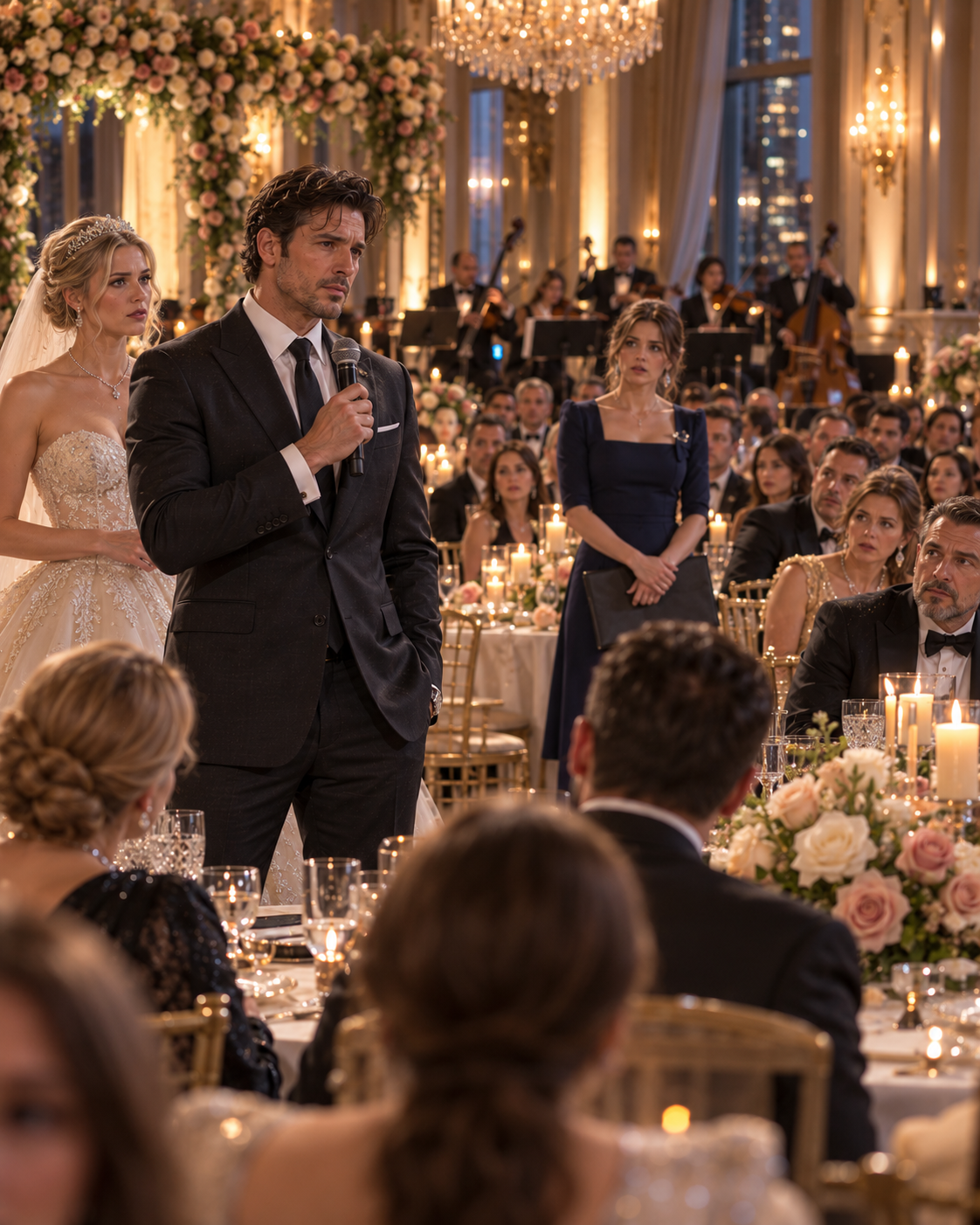
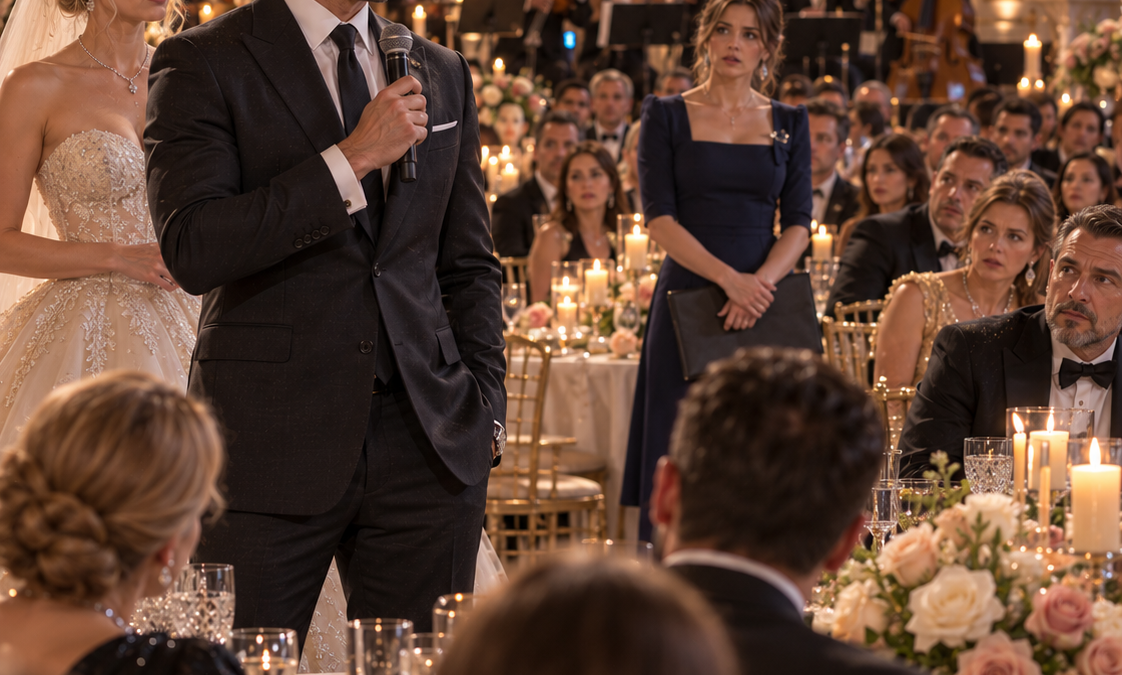
He was standing at the altar of the most expensive wedding of the decade, surrounded by 500 guests, 12,000 roses, and a woman he did not love.
The cameras were rolling, the champagne was chilled, the world was watching, and Grayson Hail, billionaire, widowerower, father, was about to make the biggest mistake of his life with a smile on his face because that was what men like him were supposed to do. What nobody in that gilded ballroom knew was that 3 weeks earlier, a woman named Emma Parker had walked through his front door with a clipboard, a broken heel, and absolutely no intention of turning his world upside down.
She did.
The morning everything started to fall apart began, like most disasters, with something small. It was a Tuesday.
Grayson Hail sat at the long mahogany table in the executive dining room on the 43rd floor of Hail Capital’s flagship tower in Manhattan, pretending to review a merger proposal while his assistant read him a list of wedding related emergencies that had accumulated since Sunday.
The ice sculptor is
threatening to walk unless he receives the second half of his payment by end of business today, said Marcus Webb, 26 years old, relentlessly efficient and visibly uncomfortable delivering news he knew would irritate his employer.
The florist says the peies Victoria requested aren’t available in the volume needed, so she wants to substitute garden roses.
But Victoria’s mother called the florist directly and told her that if she substitutes anything, she’ll have her blacklisted from every event on the eastern seabboard.
And Marcus paused, the way people paused before delivering the worst thing on the list. Julian Marsh quit this morning.
Grayson looked up from the proposal he hadn’t actually been reading.
Julian Marsh, he repeated. Your wedding planner.
I know who Julian Marsh is. He cited creative differences.
His exact words, per the email, were that he could no longer in good conscience facilitate an event where the primary clients had Marcus glanced at his phone screen. quote diametrically opposed visions for the emotional atmosphere of the occasion. Grayson was quiet for a moment.
Outside the floor to ceiling windows, Manhattan spread itself beneath a flat gray November sky, all glass and steel and purpose. He quit, Grayson said 3 weeks before the wedding. 22 days technically.
Cancel my 10:00.
It’s the Donovan acquisition call.
Resched it. Marcus typed something without asking further questions. That was one of the things Grayson valued about him.
The man understood when to stop talking. Grayson stood, buttoned his jacket with the automatic precision of a man who had performed that gesture 10,000 times, and walked to the window. Below, the city moved in its usual aggressive rhythm.
Taxis and pedestrians and delivery bikes all competing for the same square footage with the cheerful hostility New York specialized in. 22 days.
He thought about Victoria, her precise voice on the phone that morning, the way she’d said good morning like it was a business greeting rather than an endearment.
He thought about the seating chart they’d argued over for 40 minutes last week.
Not because either of them cared deeply about who sat next to whom, but because arguing about the seating chart was easier than talking about anything real. He pressed two fingers to the bridge of his nose and closed his eyes.
Find me a new planner, he said.
I’ve already started, said Marcus.
Chian.
What the financial press called Grayson Hail’s remarkable personal renaissance was from the inside something considerably less romantic.
He was 32 years old. He had built Hail Capital from a $40 million inheritance into a $3.
7 billion empire through a combination of genuine talent, the ability to function on 4 hours of sleep and a specific kind of ruthlessness that he preferred to think of as clarity. He had a daughter named Lily who was 6 years old and who, of the many things currently in his life, was the only one that felt entirely real.
His wife Clare had died four years ago. ovarian cancer diagnosed at stage 4, gone 11 months after the diagnosis in a way that was simultaneously devastating and by the end merciful.
Grayson had been 28.
He had sat by her hospital bed during her last night with his hand wrapped around hers, telling her things he wished he’d said earlier, and then he had walked out of that hospital room and spent the next four years building walls so efficiently that he sometimes forgot they were there.
He did not talk about Clare in interviews. He did not post about her on the rare occasions his PR team pressured him into social media.
When business journalists referred to him as the widowed billionaire, he answered whatever followed the phrase and ignored the phrase itself. He had learned how to be fine.
It was a different skill than actually being fine, but it served the same external purpose. Victoria Langford had entered his life 18 months ago at a charity dinner for pediatric research.
the one annual event Grayson attended, not because his PR team told him to, but because it had been Clare’s favorite cause.
Victoria was 30 years old, the daughter of William Langford of Langford Financial, educated at Oxford, elegantly composed, and genuinely intelligent. Their relationship had progressed the way a well-managed business partnership progresses, logically, efficiently, with clear milestones and mutual benefit. He respected her.
He admired her in the same way he admired a well- constructed building, appreciating the craftsmanship without feeling anything when he stood in front of it. His engagement to Victoria had been announced 7 months ago.
The press had received it with the enthusiasm reserved for celebrity mergers.
Two financial dynasties united, Manhattan’s most powerful couple.
The headlines practically wrote their own theme music. Grayson had read them on his phone in the back of a town car and felt approximately nothing.
Marcus came back an hour later with a folder. Emma Parker, he said, setting it on the desk. She runs a boutique event planning company out of Brooklyn.
Parker and company events.
She’s been operating for 5 years, primarily high-end private events, not at the level of Julian’s clientele, but her reviews are exceptional.
Two clients I spoke with described her as he checked his notes.
One said, “The most organized human being I’ve ever encountered.”
And another said, “She saved my wedding and possibly my marriage.”
She’s available immediately.
Grayson flipped open the folder. There was a professional photograph.
A woman with dark hair pulled back, intelligent brown eyes, wearing a blazer that was slightly too large for her shoulders in a way that suggested she’d bought it when she was trying to look more established than she felt.
She was not looking at the camera
the way people look at cameras when they want to appear impressive. She was looking at it like she was thinking about something else entirely.
He read her bio. Colombia graduate communications and business management.
5 years building her company without outside investment.
The list of events she’d coordinated showed genuine range.
A fundraising gala for a Brooklyn arts nonprofit. A corporate retreat for a tech startup.
three high-end private weddings with budgets in the six-figure range.
Not Julian Marsh’s world.
But Julian Marsh had quit, so Julian Marsh’s world was no longer relevant.
Set up a meeting, Grayson said.
This afternoon, if she’s available, Emma Parker was available.
She found out about the meeting approximately 40 minutes before it happened because that was when Marcus Webb called her cell phone and said in the polite but faintly commanding tone of someone who was used to the world rearranging itself around his employer’s schedule that Grayson Hail would like to meet with her at 4:00.
She was in the middle of a tasting at a catering company in Midtown trying a sixth variation of a fig and bree crustini for a client’s rehearsal dinner.
She set the Christini down, stepped away from the table, and told Marcus that 4:00 would be fine.
Then she walked to the bathroom, looked at herself in the mirror for approximately 3 seconds, and said quietly, but with feeling, “Okay, okay.
” Grayson Hail, she knew who he was.
Obviously, everyone knew who he was. His face had been on the cover of Forbes twice in the past 3 years. His engagement to Victoria Langford had generated the kind of press coverage normally reserved for royal families.
Emma had read the articles the way she read most things about the ultra wealthy with a combination of professional interest and personal detachment the way a marine biologist might read about deep sea creatures. She had also six months earlier been hired briefly by a colleague to assist with preliminary vendor coordination for what was at the time being build as the Hail Langford wedding.
That engagement had lasted 2 weeks before Julian Marsha’s team had taken over completely and Emma had been paid a consultation fee and thanked for her time.
She remembered thinking the budget was obscene and the flower selection was impractical and leaving it at that. Now Julian Marsh had apparently quit and Marcus Webb was calling her 40 minutes before a meeting.
She went back to the Christini table, made her selections with the decisiveness of someone who had learned years ago that hesitation was expensive, and took a cab to Hail Capital’s Tower.
Tip: The 43rd floor smelled like money, not metaphorically. There was something about the temperature-cont controlled air and the specific quality of the carpet and the way the lighting fell that communicated without words that an enormous amount of wealth had been spent on making the space feel like wealth was not something anyone here needed to think about. Emma had been in rooms like this before, not often, but enough to know that the correct response was not to be impressed by them.
She adjusted the strap of her bag, the good one, the leather tote she’d bought secondhand and had resold twice, and followed the receptionist to a conference room with a view that made her stomach briefly forget its usual concerns.
She was looking at the skyline when Grayson Hail walked in. She had seen photographs.
The photographs had not done him justice in either direction. He was not as polished as the magazine covers suggested, and not as formidable as the financial profiles implied. He was tall with dark hair that looked like it had been cut by someone expensive and then immediately ignored and he had the kind of eyes that registered information before his face decided how to respond to it.
He also looked exhausted in a way that had nothing to do with sleep.
“M Parker,” he said, and shook her hand with the grip of someone who had shaken a thousand hands and still hadn’t decided whether the ritual meant anything.
“Mr.Hail.”
She sat across from him, opened her portfolio, and set her phone to the side. 22 days, he blinked.
That’s what we’re working with, she said.
I looked at your original timeline on the way over.
Julian’s team sent me their coordination files 3 years ago when I was briefly consulting on preliminary vendor work, and I still have them.
The structure is solid.
What isn’t solid is the execution timeline now that it’s been left 2 and 1/2 weeks before the event.
He was looking at her with an expression she couldn’t immediately categorize.
“You have Julian’s files,” he said, “from the initial consultation phase, not the full planning documents, but enough to understand the vendor relationships and the event architecture.”
She turned the portfolio toward him, showing a preliminary assessment she’d put together during the cab ride, handwritten on three pages of her notepad because she hadn’t had time to type it.
I can make this work. I want to be transparent with you about what that means.
It means some elements will be adjusted, some vendors will need to be renegotiated, and I’ll need your direct access to decision-making authority rather than going through multiple layers of approval.
Every hour matters at this point. Grayson Hail was quiet for a moment. She could feel him evaluating her.
My assistant mentioned you primarily work private events, he said. Not at this scale.
That’s accurate.
This wedding is going to have 500 guests, a live orchestra, and enough press interest that there will be photographers stationed outside the venue for 3 days beforehand. I understand that.
So, tell me why I shouldn’t wait until tomorrow and find someone with more experience at this level.”
Emma looked at him steadily.
Because waiting until tomorrow cost you a day you don’t have.
And finding someone with this level experience on 22 days notice means finding someone desperate enough to take an impossible job. Which means finding someone whose judgment is already compromised.
I’m not desperate.
I’m hungry.
Which is different.
And I’ve spent the last 40 minutes reviewing the situation.
So I’m the only person in this city who’s currently thinking about your wedding.
Something shifted in his expression. Not quite a smile. something quieter than that.
The ice sculptor, he said, pay him today, full amount.
You’ll lose the negotiating leverage, but you’ll gain the goodwill, and goodwill from vendors in the final 3 weeks is worth more than the money.
Julian’s team was holding back the second payment as leverage.
Julian’s team is not working this wedding anymore.
He looked at her for another moment.
Then he said, “When can you start?”
“I already have,” Emma said.
The Hail residence was in the West Village, a townhouse on a treeline street that had probably cost somewhere in the 8 to10 million range and had been renovated by someone with excellent taste and no interest in showing off. The exterior was clean brick and iron railings.
The interior, the first time Emma visited to go through the wedding files, was warm in a way she hadn’t expected.
There were children’s drawings framed in the hallway, not the self-conscious kind of decoration where wealthy parents display their child’s artwork to signal that they are in touch with what matters.
These were hung the way you hang drawings when you actually like them at slightly irregular intervals in frames that matched because someone had thought about it but not obsessed over it.
She noticed them while a housekeeper named Mrs.Alvarez led her to the study and then she noticed them again on her way out and she filed them somewhere in the back of her mind under a category she didn’t examine too closely.
The work was immediate and unrelenting. She spent her first two days on the phone with the venue coordinator who was professional but barely concealing panic with the florist whom she managed to persuade that garden roses were not a defeat but a deliberate choice that would photograph better.
with the catering team who had 17 unresolved questions about the timeline of the dinner service. She worked from a folding table in the corner of the hail study while Marcus came and went with documents and coffees he placed at her elbow without being asked.
On the third day at approximately 7 in the evening, Grayson appeared in the doorway of the study and said, “Have you eaten anything today?”
Emma looked up from her laptop. I had a protein bar at noon.
That’s not eating.
I have a call with the entertainment coordinator in 20 minutes. He looked at her for a moment with that same unclassifiable expression.
There’s food in the kitchen.
Mrs.Alvarez left pasta. Eat something and then make your call.
She wanted to tell him that she didn’t need managing, but she also, now that she thought about it, genuinely needed pasta.
Fine, she said. She was standing at the kitchen counter with a bowl of pasta when she heard the sound of small feet on the stairs. And then a six-year-old appeared in the kitchen doorway wearing pajamas printed with cartoon foxes and squinting against the lights.
“You’re new,” said the child.
“I am,” Emma said.
“I’m Emma.
I’m helping your dad with a project.
” “What kind of project?”
“A party.
A really big one. The little girl processed this.
She had her father’s dark eyes and her own particular gravity.
the kind of seriousness that six-year-olds sometimes have when they’ve learned early that the world doesn’t always stay reliable.
“Is it a good party?”
she asked. Emma considered the question honestly.
“It’s going to be a beautiful party,” she said, because that much at least she could guarantee.
“Are you supposed to be in bed?”
“Probably.”
But the girl didn’t move.
“I’m Lily.”
“I know.
I’ve seen your drawings in the hallway.”
Something changed in Lily’s expression.
a small careful opening. Those are old ones.
I have better ones now.
I’d like to see them sometime.
Lily studied her with the focused attention of a child who has learned to evaluate adults carefully.
Then she said, “Okay.”
And disappeared back up the stairs.
Emma stood in the kitchen for a moment with her pasta cooling, and she felt something she didn’t know how to name.
She learned over the following days the architecture of Grayson Hail’s life, the way you learn it when you’re working inside someone’s space.
Not through what they tell you, but through what they’ve built around themselves.
There were always two coffee cups in the sink in the morning, one adult-sized, one small with a cartoon rabbit on it.
There was a reading chair in the corner of the living room that had clearly been used hard and long, surrounded by stacks of books that included both financial texts and children’s picture books with no distinction between them.
There was a photograph on the bookshelf.
A woman with lighter hair than Lily’s, laughing at something outside the frame that sat beside a photograph of Lily at maybe age two.
Both pictures equally present, neither hidden, neither given more prominence than the other. Emma did not look at the photograph of Clare Hail for long, but she noticed it every time she passed.
On day six, Victoria Langford arrived for a planning meeting.
Emma had spoken with her twice by phone, efficient, specific conversations in which Victoria communicated her preferences clearly and acknowledged Emma’s adjustments without complaint.
In person, Victoria was everything the press described. Tall, blonde, immaculately put together in the way that suggests the effort has been so consistent for so long, it no longer feels like effort. She was not unkind.
She was gracious, actually, in a precise and careful way.
She shook Emma’s hand and said, “I understand you’ve already stabilized the floor situation.
That was quick work.”
“Thank you,” Emma said.
I have a few items I’d like to go through with you both.
Grayson won’t be here, Victoria said.
She set her bag on the chair with a gesture that was not quite dismissive, but was certainly owned. He has a board call until 5.
I’ll convey his preferences.
Emma had learned in 6 days, something she didn’t think anyone in this household’s orbit spoke about directly.
The wedding was not a shared project between Grayson and Victoria.
It was two parallel projects, Victoria’s vision and Grayson’s checkbook.
running adjacent to each other without quite connecting.
“Of course,” Emma said and opened her portfolio.
Later that evening, after Victoria had left and Lily was in bed and the townhouse had settled into its quiet, Grayson came into the study where Emma was updating the vendor timeline, he poured himself a glass of water from the picture on the sideboard. She had noticed he drank a lot of water, that he chose water over the liquor cabinet with a consistency that suggested it was deliberate, and sat in the chair across from her desk.
“How did it go?”
he asked.
“Well,” Emma said.
“Victoria has clear preferences.
That makes my job easier.”
She paused, then added, “Because honesty was usually more efficient than discretion.
” She mentioned you weren’t going to be here.
I had a board call. You had a board call on the same afternoon as a planning meeting for your wedding.
He looked at her. Is that an observation or a criticism?
It’s a question, Emma said.
You don’t have to answer it.
He was quiet for a moment. The board call was scheduled first. Okay.
He turned the glass in his hands, looking at the water.
Victoria doesn’t need me in those meetings.
She knows what she wants.
That’s probably true, Emma said.
And then because she was tired and because the pasta from 3 days ago was apparently making her brave.
Is that a quality you’re looking for in a partnership?
Someone who doesn’t need you in the room.
The silence that followed was the kind that has weight.
I think Grayson said finally that you’re probably better at your job than I initially calculated.
I’m aware, Emma said and turned back to her laptop.
But she could feel him still looking at the water glass and the room had changed somehow. and she told herself it was just the particular quality of late evening light and not anything worth examining further. By the end of the first week, Emma had developed a system.
She arrived at the townhouse each morning at 8, having already reviewed the day’s vendor communications on her phone during the subway ride from Brooklyn.
She worked through the day with the focused efficiencies she’d spent 5 years cultivating.
the kind of concentration that had gotten her through the year.
Her company almost failed when her biggest client pulled out two months before their event, and she’d had to scramble to rebuild her booking list from scratch.
She took her calls in the study, walked the venue twice a week, and ate lunch at whatever point in the day she could manage it. She spoke to Victoria by phone every other day, and saw Grayson every evening when he returned from the office.
The evening conversations were the part she had not planned for. They started practically.
She would brief him on the day’s developments.
He would make decisions about the few items that required his specific authorization. But somewhere around the third or fourth evening, the briefings began to extend past their practical purpose, and Emma found herself still sitting in the study at 9:10, talking about things that had nothing to do with ice sculptures or seating charts.
He asked about her company one evening, not the professional courtesy version of asking, “So, how long have you been doing this?”
but the specific genuinely curious version that meant he’d actually been thinking about it.
“You built it yourself,” he said.
“No outside capital?”
“No.”
She kept her eyes on her laptop for a moment, then looked up. I had $12,000 in savings when I started. I maxed out one credit card in the first year.
I didn’t pay myself a real salary for two years.
Why not bring in investors? Because investors come with opinions.
When it’s your company, it’s your company.
That matters to me. He nodded slowly. I understand that, he said, and the way he said it suggested he actually did, not from experience of scarcity, but from the experience of having built something with his own hands and wanting to keep it that way.
Your father left you the capital base, Emma said.
It wasn’t a challenge, just a statement.
40 million. He said it without embarrassment, which she respected, which sounds like a lot.
It is a lot, but 40 million in private equity investment is not the same as 40 million in your pocket. I lost 30% of it in my first year on a deal that fell apart in ways I should have predicted. What did you learn?
That I was arrogant. He said it simply.
I thought the money meant I was smarter than I was.
I wasn’t.
I was just younger. Emma looked at him for a moment. In her experience, people with inherited wealth did one of three things with it.
They pretended they hadn’t inherited it.
They leaned into it as a personality trait, or they quietly forgot that most people would never have 40 million to lose and learn from.
Grayson didn’t fit neatly into any of those patterns.
How old were you? She asked. 23, he paused.
Clare thought I should slow down, take more time to evaluate the opportunity.
He said her name the way you say a name that’s become part of your daily furniture.
Not with weight exactly, but with a particular kind of care. She was right.
Emma didn’t say anything.
She had learned by this point that Grayson only mentioned Clare when he wasn’t thinking about the fact that he was mentioning her and that these were the moments when he was most himself.
Did she have a good eye for business? Emma asked. Something that was not quite a smile moved across his face.
She had a good eye for everything. She was a structural engineer. She looked at everything, deals, situations, people, and figured out where the weightbearing points were.
He paused. She would have had a list of 17 questions for you by the end of our first meeting.
What kind of questions?
The kind that make you realize the answer you plan to give isn’t actually what you think.
Emma nodded.
She looked back at her laptop, but she wasn’t really reading what was on the screen.
She sounds like someone worth knowing. She was, Grayson said, and the room held that for a while. Eat.
Lily found her way back to the kitchen on Emma’s eighth evening at the townhouse.
This time, she brought a folder.
“You said you wanted to see my new ones,” she said, setting the folder on the table with the careful seriousness of someone presenting important documents.
Emma pushed her laptop aside and opened the folder. Inside were maybe 20 drawings, animals mostly, a few buildings, one elaborate scene that appeared to depict some kind of underwater kingdom with a submarine and a family of seahorses.
“Tell me about this one,” Emma said, pointing to the submarine.
Lily climbed into the chair across from her.
“Not the one Emma was sitting in, the one beside it, close but independent.”
“That’s the family,” she said.
The big seahorse is the dad. The little one is me.
And that’s the friendly shark who keeps them safe.
Who’s the friendly shark?
Lily considered.
I haven’t decided yet.
Emma looked at the drawing. The little seahorse in the drawing had very large eyes and was positioned directly behind the big seahorse, close enough to be sheltered.
It’s really good, she said, and meant it.
My teacher says I have good spatial awareness, Lily said with the matter-of-act tone of someone reporting a diagnostic result. Your teacher is right.
Lily examined Emma with that focused child’s attention again.
Are you going to come to the wedding? Emma looked up.
I’ll be there.
I’m the one making sure everything goes right on the day.
But after that, Lily said, “After the wedding, will you still come here?”
Emma felt something move through her that she didn’t want to inspect too carefully.
My job is to coordinate the wedding, she said.
After the wedding, I’ll be working on other things.
Oh. Lily looked at the folder of drawings for a moment.
Okay.
She didn’t say it with disappointment.
Exactly.
She said it with the practiced acceptance of a child who has learned that adults don’t always stay, that circumstances change, that you take what you get and adjust.
That understanding should not exist in a six-year-old’s voice, and it absolutely did.
And Emma sat with that fact in silence while Lily gathered her drawings back into the folder with small, careful hands.
“I’m here for now,” Emma said.
“That’s real,” Lily looked at her.
Then she nodded once with that particular gravity and climbed down from the chair.
“Good night, Emma,” she said.
“Good night, Lily.”
Emma sat in the kitchen for a long time after, listening to the sound of small feet on the stairs, and told herself very firmly that she was tired and that tired people felt things more than they should, and that none of this was anything to think too hard about. 2 weeks before the wedding, the seating chart crisis arrived.
It came in the form of a 12-minute voice message from Victoria’s mother, Diane Langford, delivered to Emma’s phone at 7:30 in the morning in the tone of a woman who has spent her entire life operating under the assumption that her displeasure should be taken seriously by everyone within a half mile radius.
The substance of the message was that a family friend named Charles Whitmore had been seated at table 11, which was apparently an insult of such magnitude that it threatened to undo 70 years of social relationship between the Langfords and the Whitmore family. Emma listened to all 12 minutes of it while drinking coffee in the kitchen, made three notes, and then called Marcus.
“Who does the seating chart?”
she asked.
Currently, it’s divided between Victoria’s coordinator and Grayson’s assistant, meaning me, and they haven’t spoken directly in approximately 3 weeks.
I need everyone with authority over that chart on a call at noon. Grayson has a call he can move, Emma said.
Please. By noon, she had everyone on the line.
By 12:40, the seating chart had been restructured around a logic that had nothing to do with social politics and everything to do with the actual flow of the event, who needed to be near the dance floor, who had mobility considerations, which tables were photographed most frequently during dinners at this venue, who genuinely couldn’t sit next to each other without professional consequences.
Charles Whitmore ended up at table 7, which was better than table 11 by any reasonable metric. and Diane Langford sent a two-line email saying the arrangement was acceptable. Grayson found her afterward standing in the hallway of the townhouse with her phone pressed to her chest and her eyes closed.
“You okay?”
he asked.
“I’m deciding whether a 12-minute voice message from a mother of the bride constitutes a hostile work environment.
A sound came out of him that was unmistakably a laugh.
Not the polished public version, a real one surprised out of him.”
Emma opened her eyes. She had not heard him laugh before.
The sound rearranged something in the architecture of her understanding of him.
“Diane Langford,” he said, composing himself.
“Is she always?”
“Yes.”
“How does Victoria manage her?”
Something passed across his face.
“She’s been managing her for 30 years,” he said.
“She’s had practice.”
Emma looked at him.
“That’s not an answer.”
“No,” he said.
“It’s not.”
He was standing close enough that she could see the specific exhaustion in his eyes.
Not the surface tiredness of someone who works long hours, but the deeper kind, the kind that lives in a person’s bones and has been there long enough that they’ve stopped noticing it.
Grayson, she said, don’t.
He said, not unkindly, just steadily, like a person who knows exactly where a conversation is going and has made a decision about whether to walk down that road. We have work to do.
We do, Emma agreed. They both stood there for another moment, then they went back to work.
10 days before the wedding, Emma made a mistake. It was a small one in the overall scale of things.
She had confirmed with the string quartet that their setup time at the venue was between 2:00 and 3:00 in the afternoon on the wedding day when she had actually intended to say 1 to two. It was the kind of error that comes from managing 17 moving pieces simultaneously while operating on inadequate sleep, and it would have been entirely fixable if she had caught it before the venue coordinator had communicated it to the catering team, and a conflict had developed with the appetizer service timeline.
She caught it at 11 at night, reviewing the day’s communications before closing her laptop.
She sat for a moment and felt something cold and heavy settle in her stomach. 5 years of her own business. Every mistake was paid for in real currency.
A client who didn’t rebook.
A vendor who didn’t want to work with you again.
A reputation built on reliability that could crack if you weren’t careful.
She had been so careful for so long that the coldness in her stomach was familiar and immediate and completely unwelcome. She called the venue coordinator at 11:15, apologized directly, explained the situation, and worked through the adjustment for 45 minutes until the conflict was resolved.
Then she sat in the study in the quiet townhouse and stared at her laptop with the aftermath of the adrenaline still moving through her.
You’re still here.
She looked up.
Grayson was in the doorway in the clothes he’d had on at dinner, which meant he’d been working in his home office and hadn’t been to bed either.
I had a scheduling conflict I had to fix, she said. He came in, which was unusual. Usually, he stood in the doorway when he came to check on her at this hour.
He sat in the chair across from her and looked at her face, which she was pretty sure was doing a poor job of concealing the specific quality of the evening she’d had.
“What happened?”
he asked. She told him.
Precisely, clearly, without either minimizing it or building it up, just what happened and how she’d fixed it.
When she finished, he was quiet for a moment.
“It’s fixed,” he said.
“Yes, then it’s done.”
I know it doesn’t.
She stopped.
I don’t like making mistakes.
Nobody does. No, I mean, she looked at the laptop.
When I started my company, I was terrified every day for the first 2 years that I’d make a mistake that would cost me everything I’d built because there was no margin, no safety net.
If I lost a client because of an error, that was real money I couldn’t recover.
It made me, she paused, choosing the word. Vigilant, maybe too vigilant.
I don’t know anymore.
Grayson was looking at her in the way he had that way of listening that felt like he was actually receiving what was being said rather than waiting for his turn to speak. I made a mistake in 2017, he said that cost my fund approximately $38 million.
Emma looked at him. a single decision, one analysis I believed in despite evidence that should have given me pause.
He said it without drama. It took me eight months to recoup the losses. My major investors stayed, but two of them had conversations with me that I would classify as the most uncomfortable of my professional life.
A pause.
I still think about it, not obsessively, but it’s there.
What do you do with it? I try to figure out what I actually learned rather than just feeling bad about it. He looked at his hands.
Feeling bad about it doesn’t teach you anything.
Understanding it might. Emma looked at him for a long moment.
Did anyone ever tell you that you’re not what people expect?
What do people expect?
I don’t know.
More uh she tried to find the word. More finished, I think.
Like the version of you in the magazine profiles. Someone who has made all his decisions already.
Something in his expression shifted. careful and genuine at once.
“Nobody’s finished,” he said.
“No,” Emma agreed.
“They’re not.”
The quiet in the room was different from other quiets she’d sat in with him.
She became aware of it. At the same time, she became aware that it had been going on for a moment longer than was purely professional, and that neither of them had moved to end it. She looked at her laptop.
“I should Yeah,” he said.
He stood. He was halfway to the door when he stopped and she could see him from the back.
The particular set of his shoulders, the posture of a man carrying something he doesn’t put down.
Emma, he said, “Yeah, you’re good at this,” he said.
Not just the planning, all of it. He left before she could answer. She sat in the study for a long time with the laptop open and the document unread, and she told herself with absolute firmness that there were exactly 10 days until this wedding, that she had a list of 47 things that needed her attention before she could sleep, and that whatever was happening in this room in the quiet hours of the night was not something she
could afford to think about.
She believed herself mostly. 8 days before the wedding, Lily got sick.
It was nothing serious like a fever that the pediatrician diagnosed as a standard viral infection, the kind that sweeps through first grade classrooms with the efficient malice of something that knows exactly where to find a concentrated population of unimmunized bodies. She ran 101.
3 for 2 days, slept a lot, and wanted to watch animated films about ocean animals on repeat. Mrs.Alvarez had a family commitment.
The backup babysitter had a conflict. Marcus was in three meetings and physically at the office.
Victoria, when Grayson mentioned the situation in passing, said she hoped Lily felt better soon in the tone of a person who is expressing appropriate concern for a child who is not really in her orbit.
Emma found out when she arrived at the townhouse at 8:00 in the morning, and found Grayson in the kitchen with Lily on the couch in the adjacent sitting room, a thermometer on the coffee table, his laptop open, and the particular expression of a parent who has calculated the dimensions of their problem and doesn’t love the math.
She had 101. 2 this morning, he said, down from yesterday.
The doctor says she’s not contagious past 48 hours in, and she should be fine by the weekend, but she can’t go to school today.
and I have,” he stopped.
“I have three calls.
I cannot move.”
“I’ll be here,” Emma said.
He looked at her.
“That’s not your job.
” “No,” Emma agreed.
“But you can’t be in two places, and I can run my calls from here as easily as from the study, so I’ll be here.”
He started to say something, and she could see him assembling an objection based on professional boundaries or not wanting to impose or some other reasonable adult consideration.
And she said, “Gayson, it’s fine.
go take your calls.
He looked at her for a moment with an expression she couldn’t entirely read.
Then he said, “Thank you.”
in a voice that was quieter than his usual voice and went upstairs. Lily was awake, propped up on three pillows, watching a film about a blue tangfish with the focused attention of a child who has seen it before and is watching for specific moments.
“Hey,” Emma said, sitting on the edge of the couch.
“I’m sick,” Lily said.
“I know.
How do you feel? Tired, she considered. And my throat hurts.
And this is my favorite movie. Which part is your favorite?
The part where she remembers, Lily said simply. Emma looked at the screen.
Watched the animated fish find her way back to the family she’d lost her memory of.
That’s a good part, she said.
She stayed on the couch for most of the morning working on her laptop while Lily dozed and woke and asked questions about things that had nothing to do with what Emma was working on. Why are clouds different shapes?
What’s the biggest number?
Do fish dream? And Emma answered them as honestly as she could while maintaining her vendor communications with her other hand.
At some point around 11, Lily curled toward her on the couch and went to sleep with her head resting against Emma’s arm.
Emma sat very still. She looked at the small sleeping face, the fox pajam shoulder, the loose dark hair. She looked at the thermometer on the coffee table in the stack of picture books and the drawing Lily had apparently been working on before she got sick.
A new seahorse family, this time with three seahorses. She told herself she was being ridiculous.
She was a wedding planner. She was here for 22 days, now 14, to coordinate an event for a man she worked for.
She had no part in this family’s story past the wedding day.
She looked at the drawing. Three seahorses.
Grayson came down at noon to find them like that.
Lily asleep against Emma’s arm.
Emma’s laptop still open on her knees.
Her face doing the thing it did when she was trying very hard not to feel something. He stood in the doorway for a moment. He looked at his daughter sleeping at the way Emma was careful not to move.
And Emma looked up and found him watching. and she saw on his face something that frightened her a little because of how clear it was and how much it asked without asking anything and how completely she understood it.
Neither of them said anything. The film kept playing.
The fish kept looking for home. The fever broke on Thursday.
Emma knew because Lily came into the study at 7:15 in the morning with color back in her cheeks and a drawing she’d finished the night before.
And she set it on the edge of Emma’s table without preamble or ceremony.
The way children deliver things they’ve decided matter.
It was the seahorse family again. Three seahorses, the big one, the small one, and a new one that was roughly the same size as the small one, but had longer hair indicated by several enthusiastic brown lines radiating from the top of the figure.
Emma looked at the drawing for a moment. Then she looked at Lily.
“Is that one me?”
she asked.
Lily shrugged with the practice nonchalants of a six-year-old who has committed to a feeling but isn’t ready to be held accountable for it.
Maybe, she said, and left. Emma sat with the drawing in front of her and her coffee going cold and told herself again with slightly less conviction than the last several times that she was here for nine more days, and that was the complete and total extent of her involvement with this household and everything in it.
She took a photograph
of the drawing before she started work.
She didn’t examine why.
Grayson came through at 8:30 on his way out, already in his coat, already carrying the particular forward momentum of a man who has structured his mornings to leave no space for hesitation. He paused when he saw the drawing on her table.
Lily’s work, he said, delivered at 7:15.
I’ve been informed it may or may not represent me.
He looked at the drawing, and something happened in his face.
that quiet rearrangement that Emma had learned to recognize as him feeling something he hadn’t planned to feel.
He picked it up carefully, turned it over, set it back down.
How’s she doing?
No fever. She ate breakfast. She asked me if fish can get colds, which I could not answer with any confidence.
The almost smile again.
She’s been asking that for a week.
She’s worried about her fish at school.
She has a fish at school. class pet, a beta fish named Gerald. He paused.
She named him. The class voted.
Emma looked at him. Gerald. Gerald.
He picked up his bag. She argued that he looked like a Gerald. No one could disagree once she said it.
He left, and Emma sat in the study with the drawing and the image of a six-year-old successfully lobbying a first grade classroom for the name Gerald. And she understood with a clarity she found deeply inconvenient that she was in a significant amount of trouble. The trouble was not that she had feelings for Grayson Hail.
She was aware of the feelings, had been aware of them the way you’re aware of a sound in another room, present, but not yet requiring action.
The trouble was that she also had feelings for his life, for the drawings in the hallway and the coffee cup with the cartoon rabbit and the beta fish named Gerald.
And the way this household existed as a thing held together by the deliberate and ongoing effort of one person who refused to let it fall apart, even when he was exhausted, even when he was going through the motions of a future that didn’t fit him.
That was the trouble.
She hadn’t just gotten close to a man.
She’d gotten close to a family.
and families were not things you could walk away from in 9 days and file neatly in the completed projects folder.
She told herself she’d been through worse complications and opened her email.
There were 23 new messages, 14 of which required responses before noon. She was grateful for every one of them.
The crisis of the week arrived the following morning in the form of a phone call from the entertainment director at the venue, a man named Paul Reeves, who had the weary professionalism of someone who has seen every possible wedding disaster and
has stopped being shocked by any of them.
The orchestra’s first chair violinist broke his wrist at rehearsal yesterday.
He said, “Non-negotiable absence.
They’re looking for a replacement, but I want you to know before Victoria’s team does because the last time her team found out about a problem before you did, I spent 40 minutes on the phone with someone named Diane.
Emma closed her eyes briefly. How long do they have to find a replacement? 7 days.
Have they started looking? They say yes.
I say probably not urgently enough.
Give me the orchestra manager’s number.
She spent the next two hours managing the violinist situation, which required calling in a favor from a musician contact she’d worked with on a fundraising gala 2 years prior, who knew someone who knew someone else who turned out to be a session musician with orchestral experience who was available and willing and lived with the particular luck that sometimes shows up
in the final weeks of an impossible timeline 20 minutes from the venue.
By noon, the chair was filled.
By 1:00, she had confirmed the replacement’s availability for the two remaining rehearsals.
By 1:30, she had sent Paul Reeves a summary email with all the updated contact information. She sat back in her chair and let herself have 30 seconds of satisfaction, which was about as much as she could afford.
“You look like someone who just won a fight,” said a voice from the doorway.
Lily was standing there in her school clothes.
She’d gone back that morning, declared fit by the pediatrician and by her own assessment.
But it was 4:15, which meant Mrs.Alvarez must have picked her up.
“I kind of did,” Emma said.
“A small one.
” “Come in if you want.”
Lily came in and climbed into the chair across from Emma’s desk with the ease of a child who has decided a space is comfortable and therefore belongs partly to her.
She pulled a workbook from her backpack and set it on her knee.
“Homework?”
Emma asked.
“Subtraction?”
A pause.
“I don’t like subtraction.
” “Why not?
Because things go away in subtraction, Lily said with a directness that landed harder than a six-year-old probably intended. Emma looked at her for a moment.
That’s a pretty sophisticated way to think about math.
My teacher says it’s about taking things apart to understand them better.
Lily considered this with visible skepticism, but it still feels like things going away. Sometimes both things are true, Emma said. Lily looked at her with those dark, serious eyes.
Then she opened the workbook and started writing. They sat in comfortable silence for the better part of an hour.
Emma working through the remaining vendor communications.
Lily moving through her subtraction problems with the focused determination of someone who doesn’t like a thing but is going to do it anyway.
Emma found herself glancing at the girl’s profile every few minutes.
The way you glance at something you’re not quite allowing yourself to look at directly.
At 5:15, Lily said without looking up from her workbook, “Is the party going to change things?”
Emma paused.
“What do you mean?”
“After the party?”
Lily turned a page.
“When Victoria lives here, is it going to be different?”
Emma chose her words carefully, the way you do when you’re answering a child who is asking a real question and deserves a real answer.
“Things will be different,” she said.
“Probably.”
“Is that?”
She stopped.
“Are you worried about that?”
Lily was quiet for a moment, her pencil moving.
“She doesn’t watch movies with me,” she said finally.
“Victoria, she came for dinner once and I asked if she wanted to watch something and she said she had a call.”
A pause.
I don’t think she likes movies.
Some people don’t.
My dad likes movies. He falls asleep during them, but he likes them.
Lily’s pencil stopped.
He used to watch them with my mom, Mrs.as Alvarez told me. Emma said nothing. She held very still.
I don’t remember her watching movies, Lily said.
I was too little, but I remember she smelled like the yellow flowers, the ones in the backyard. She looked up from her workbook with an expression that was too old for her face and too honest for Emma to look at without feeling it somewhere deep. Do you think she would have liked you?
Emma felt the question land in her chest like something physical.
I don’t know, she said honestly.
I hope so. Lily nodded with this gravity of someone who has received an acceptable answer and went back to her subtraction. Emma stared at her laptop screen and did not read a single word on it for approximately 4 minutes.
The evening that followed was the first evening in 2 weeks when the work genuinely slowed down enough that Emma ran out of urgent tasks before Grayson ran out of waking hours. She had updated every document, confirmed every outstanding vendor, resolved every open question she could resolve without his direct input. At 9:15, she closed her laptop with the strange disorientation of a person who has been moving at high speed and suddenly stopped.
She was washing her coffee cup in the kitchen sink when Grayson came in. He was in the clothes of the end of a long day, jacket gone, the first button of his shirt undone, the slightly loosened look of a man who had finally stopped performing. executive.
He opened the refrigerator, stared into it with the focused blankness of someone who isn’t actually seeing what’s in front of them, and closed it again without taking anything.
There’s pasta from yesterday, Emma said.
Left shelf. He opened the refrigerator again.
Found it.
Put it in the microwave with the automatic motion of a man who has been feeding himself mechanically for years and doesn’t overthink it.
“How was the day?”
he asked, leaning against the counter while the microwave ran. She told him about the violinist.
He listened without interrupting, which was something she’d noticed about him.
He listened without filling in her sentences, without nodding preemptively, without doing any of the things people do when they’re waiting for a conversation to be over.
7 days, he said when she finished, and you solved it in 2 hours.
2 hours in a favor I’ve now spent.
I’ll owe you a favor.
You’re already paying me.
Those are different things. The microwave beeped. He got the pasta, got a fork, stood at the counter eating it in the unhurried way of someone who has eaten too many meals standing at counters to have opinions about it anymore.
“Lily, talked to me today,” Emma said.
He looked up. She asked about after the wedding, what things would be like.
Emma turned the coffee cup in her hands, not quite looking at him.
She said Victoria doesn’t watch movies with her.
The silence that followed was the kind that means the person you’re talking to already knew the thing you just said and has been not saying it.
She mentioned that. Grayson said not defensive, just quiet.
She’s perceptive.
She’s always been perceptive.
He set the fork down. Clare was like that.
She could read a room better than anyone I’ve ever known.
He paused. Lily got that.
Is that Emma? stopped, considered decided.
Is that part of why it’s complicated with Victoria?
Because Lily already knows?
He looked at her, not with surprise, with the expression of a man who recognizes that the conversation he’s been avoiding has arrived without his permission.
Victoria is a good person, he said.
I know that she’s not.
He stopped.
She doesn’t dislike Lily.
She’s just not.
He pushed the pasta container slightly to one side. the gesture of someone clearing space to say something.
She’s not in it.
Do you know what I mean?
She’s present, but she’s not engaged.
And Lily notices the difference between people who are in it and people who are just present. Yes, Emma said. She does.
The kitchen was quiet. The refrigerator hummed.
Somewhere upstairs, the house settled in the way old buildings settle at night with a creek that sounded almost deliberate.
“I know how this looks,” Grayson said.
He wasn’t looking at her anymore.
He was looking at the counter, at the pasta container, at the middle distance where people look when they’re talking about things that are difficult to look at directly.
From the outside, the wedding of the decade, the power couple, two financial dynasties.
I don’t care about that, Emma said.
I know you don’t.
That’s He stopped again.
That’s actually part of the problem.
She looked at him.
Emma, he said her name the way you say a name when you’re not sure you should be saying it.
when the saying of it acknowledges something you weren’t ready to acknowledge.
I don’t know how to do this without it being I’m 3 weeks from a wedding.
I have a daughter who has already lost one person who was supposed to be permanent.
I have He made a gesture that encompassed something she didn’t have a word for.
All of this and you’re here for nine more days.
Eight.
She said it’s after midnight.
His expression did something complicated.
I’m aware of what I am in this situation.
Emma said. She kept her voice even.
I’m the planner you hired.
I’m the person who showed up at the wrong moment and fit in spaces she wasn’t supposed to fit.
I’m not.
She set the coffee cup down.
I’m not confused about what’s real.
I don’t think you’re confused about anything.
He said that’s the problem.
You’re the least confused person in this house.
She met his eyes. What are you confused about? The question sat between them.
He looked at her and she looked at him and neither of them was pretending for maybe the first time that the thing in the room was something other than what it was. Everything, he said.
And then with honesty that she suspected cost him.
I haven’t felt like myself in so long.
I’m not sure I remember what that means.
And then you showed up with a clipboard and a broken heel and you just He shook his head. You just said what was true.
You keep saying what’s true.
I forgot that was something people did.
Emma didn’t say anything.
There wasn’t much to say.
Victoria and I made sense on paper, he said. And I told myself that was enough.
That after Clare, he stopped. That after everything, sense was what I had to offer.
That love was something I’d used up.
You haven’t used it up, Emma said quietly.
No, he said. I know that now. The kitchen was very quiet.
Emma picked up the coffee cup, set it in the drying rack, dried her hands on the dish towel that hung from the oven handle. These were normal gestures.
She made herself make them.
I’m going to go, she said.
It’s late.
Yeah.
There’s a venue walkthrough at 9 tomorrow.
I’ll need 20 minutes with you beforehand to go over the lighting decision.
I’ll be here.
Okay. She gathered her bag from the study, shut her laptop, put on her coat.
He was still in the kitchen when she came back through to the hallway and she paused. Grayson.
Yeah, for what it’s worth, she said, and she chose the words carefully because she was not a person who said things carelessly.
You’re a better father than you know and a better man than whatever version of yourself you’ve decided to settle for.
