“Have You Eaten?” She Asked—And the Former Navy SEAL Kept Finding Reasons to Return – Part 4
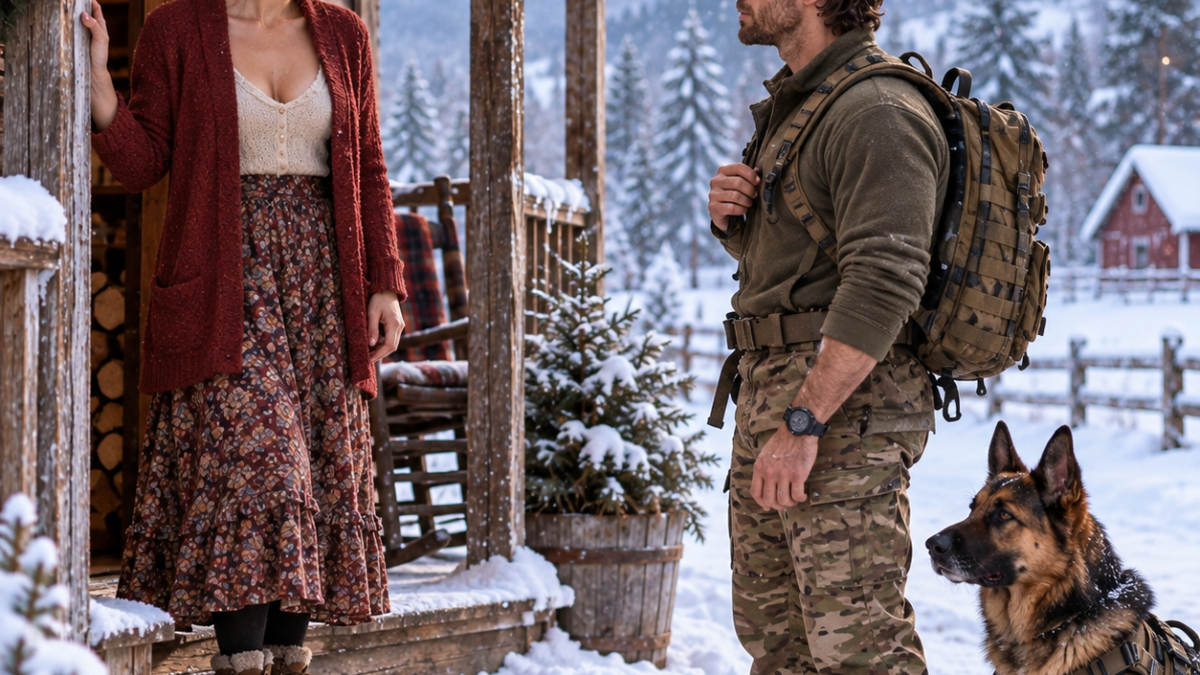
For a moment, she thought he might leave the question alone. Instead, he answered.
At first, he turned the mug between both hands. It felt good.
After more than two decades of schedules, orders, deployments, training blocks, and dates that belong to somebody else’s calendar, he had discovered a strange pleasure in putting his belongings in a truck and leaving whenever he wanted.
No briefing, no approval, no explanation. Virginia became California, then Nevada, Montana, Idaho, and places Mara had never heard him mention before. A few months here, a season there, Grant found work easily enough.
He never stayed long enough to become unhappy. Mara watched him. That sounds convenient.
It was. Grant considered the word maybe too convenient.
Hobbs shifted on the mat and placed his chin against one paw. Grant looked at him.
He made it easy. The dog had never cared whether the room outside the door was a motel hallway or a ranch porch.
Grant unpacked his food, laid down his bedding, and walked him before sunrise. That was enough. He never asked where we were going next.
Mara looked at Hobbs.
Maybe he knew asking wouldn’t help.
Grant laughed quietly. Then his expression settled. The first few years moving felt like freedom.
He looked back at her. After a while, I think I just got good at leaving before anybody expected me to show up the next day. Mara did not answer that.
She did not need to. The days continued.
Grant came back. Late February arrived with colder air after nearly a week of slush.
The sky cleared, the road dried, and nighttime temperatures dropped enough to harden the muddy shoulders again. One evening, Grant stayed after closing. There was no work left to finish.
Mara had turned off the sewing machine and the last customer had been gone nearly 40 minutes. She carried two mugs onto the porch.
Grant followed. Hobbs came out last and settled near the step, turning twice before lying down. The candle burned inside the old glass hurricane holder.
The air was still enough that the flame barely moved. For several minutes, Mara and Grant watched the occasional headlights pass along Route 6.
Then Mara spoke. My father started this when I was six.
Grant looked at the candle. She did too. Summer nights mostly.
He’d sit right about where you are and read to me.
Her chair made a small sound beneath her when she shifted.
When winter came, he’d put it in the east window.
Thomas had continued long after Mara learned to read for herself. When she was 12, she pretended to find the whole ritual childish and still appeared on the porch at the same time every night. When she was 16, she sometimes sat with her arms folded and claimed she was only there because Ruth had made Coco.
When she came home from community college on weekends, the candle still appeared.
Thomas’s stories changed as Mara grew older.
Children’s books gave way to novels, newspaper pieces, and memories from the army.
He rarely told stories about fighting. He remembered people. A sergeant who could fall asleep sitting upright on anything.
A young soldier who wrote letters home in handwriting so bad his wife sent them back with corrections in red ink. Men who shared gloves, coffee, socks, bad jokes, and the parts of themselves they could not easily carry alone. Ruth usually sat nearby with sewing in her lap.
She could listen to the same story 10 times, Mara said. Then tell him he got one part wrong.
Grant smiled. Did he?
Usually the smile left slowly. Mara drew her coat tighter.
5 years ago, they both got sick. She did not linger on hospitals or medical details. There had been several days of confusion, phone calls, tests, and family friends bringing things Mara never remembered asking for.
Thomas died first. Ruth died 6 days later. For the first time since she began speaking, Mara looked directly at Grant.
When I came home that first night, I sat inside for about an hour. Grant remained quiet. Then I came out here and lit it.
Her eyes returned to the flame. The next night, I did it again. A car moved down the road and disappeared around the bend.
I kept thinking there would be some day when it felt strange enough to stop. Grant rested his forearms on his knees.
Hasn’t come.
No. Mara stared at the candle.
I don’t think I’m waiting for them.
I know they’re gone.
Her voice remained level. I just never found a reason that felt better than keeping it.
Grant could have filled the silence. There were sentences people reached for in moments like that because silence made them nervous.
Your parents would want you to move on.
They’re still with you.
Everything happens for a reason.
He said, “None of them.”
Hobbs shifted closer to the step. Grant remained where he was. The candle burned lower.
Eventually, Mara tucked both hands beneath her coat sleeves. Grant looked at the time, but did not stand.
They stayed until the flame had shortened and the wax pulled near the bottom of the glass. Only then did Grant rise. Good night, Mara.
Good night, Grant. Hobbs stood reluctantly. Grant walked to the truck, opened the rear door, and waited while the dog climbed in.
Mara stayed in the doorway. The Ford started. Its headlights moved across the road, then disappeared beyond the bend toward Laurel Ridge.
Mara remained there after the sound of the engine had faded. She had stood in that doorway many evenings before. This time she caught herself listening for something different.
Not the sound of Grant leaving, the sound she already knew she would wait to hear again when he came back. The wet snow came late in the month and lasted less than 6 hours. By midnight, Wellsboro had gone quiet beneath a heavy layer that clung to roof lines, fence rails, and parked cars.
The storm moved east before dawn, leaving the alleys behind the storefronts almost untouched, their white surfaces broken only where delivery trucks had begun making morning rounds. Mara reached Whitfield Mending and Leather shortly after 7.
She knew something was wrong before she unlocked the front door. The porch light was still on. She had turned it off the night before.
Inside, one shelf leaned sideways against the wall. Several bolts of fabric lay across the floor. A box of brass buckles had spilled near the cutting table, and the rear hallway stood colder than the rest of the shop.
Mara walked toward it. The back door had been forced enough to splinter part of the frame. Above it, the small security camera hung at an odd angle.
She did not touch anything. Her eyes went first to the register.
Still there, the sewing machines were untouched. So were the boxed orders waiting for customers, several new leather hides, and a power tool Grant had left on the workbench after helping her repair a shelf two evenings earlier.
Then Mara turned. The wall behind the workbench was empty. For several seconds, the rest of the room seemed to disappear.
The Northstar quilt was gone. She crossed the shop slowly and stopped where it had hung. Two small hooks remained in the plaster.
That was all. Nora arrived 10 minutes later after Mara called her.
She took one look around, stopped asking questions, and made the next call herself. Grant was at Marsh Creek when his phone rang. Sam Dwire was helping another man load posts onto a trailer when Grant answered.
He listened for less than a minute. Then he put the phone away.
Problem.
At Mara’s shop, Sam looked at Grant’s face.
Go. Grant was already walking toward the truck. Hobbs came with him.
By the time Grant reached Whitfield Mending and Leather, a county deputy had already stopped outside, and Norah stood behind the counter holding two untouched cups of coffee. Mara was near the workbench.
Grant entered, took in the room, and said nothing at first. Broken rear frame, camera damaged, fabric disturbed, cash still present, equipment untouched, then the empty wall.
His eyes stayed there. Mara looked at him. They took the quilt.
Grant nodded slowly.
He remembered Dale Weller’s hand brushing its corner.
He remembered the way Mara’s voice had changed.
Don’t touch that.
He also remembered the white plow truck parked across Route 6 several evenings later.
Dale’s name came to mind quickly.
Grant did not say it yet. A deputy named Aaron Bell had been walking the rear hallway. He was in his early 40s, local enough that Mara knew him by first name and practical enough not to make the scene larger than it already was.
“Looks personal,” Belle said when he came back.
Grant glanced around.
“That’s what I was thinking.”
Belle followed his eyes toward the register.
“Whoever came in left easier money behind.”
Mara crossed her arms tightly.
“I don’t care about the money.”
Grant looked at her.
“I know.”
He went outside with Hobbs. The snow behind the shop had already softened around the edges, but the alley still held more information than the room did.
A truck had backed in close to the rear entrance. Grant could see the compressed snow where the tires had stopped, then shifted slightly before pulling out.
The tread was broad, aggressive enough for winter work. Hobbs lowered his nose near the damaged door. Grant gave him room.
The dog’s pace changed almost immediately.
He worked a short line from the threshold toward the alley. Paused near the tire marks and moved another few feet. Then he stopped.
The scent ended where the vehicle had been. Grant crouched.
That’s it.
Hobbs looked at him. Grant stood again.
Fair enough. He did not need the dog to perform a miracle. A vehicle had been there.
That was useful. Grant walked to the alley entrance and looked toward the neighboring businesses. Across the block, lights were already on at Rose Bakery.
He headed there. Clare row stood behind a stainless steel counter sliding trays onto a cooling rack.
She had flower on one sleeve and the exhausted focus of someone who had started work hours before the rest of town. Grant asked one question. Did you see any vehicles in the alley last night?
Clare stopped. Maybe. What time?
Late after 11, I think. She frowned, working through the memory.
I was starting the morning dough. There was an amber light through the back window. I thought it was a plow truck.
Color: white. That was enough to keep asking. A delivery driver who had unloaded milk before dawn remembered a white truck pulling onto Route 6 while he waited at the corner.
He had not seen the driver. Another business had a camera pointed partly toward the street. The footage was poor.
Grant watched it once. A white pickup crossed the edge of the frame.
Amber bar on the roof. Rear spreader mounted behind the bed. No plate, no face.
Grant did not need either to recognize the shape.
He had seen Dale Weller’s truck often enough.
When Grant returned to the shop, Aaron Bell was near the door. Grant told him what he had. Belle listened.
Could be Weller. Could be. Belle looked at him.
You think it is? Grant met his eyes.
I think I’m going to ask him.
Belle sighed through his nose.
I’ll come with you.
Grant nodded. That was the entire discussion.
Mara stayed behind. She did not ask to go. Grant did not suggest it.
Weller Snow and Property Service operated from a house and detached garage on several acres outside town with two plow trucks parked near a gravel turnaround and piles of salt covered under black tarps. Dale came out of the garage before Grant had fully closed his truck door. His eyes went first to Grant, then Aaron Bell.
What is this? Belle spoke first.
Mara Whitfield’s shop got broken into last night.
Dale spread his hands and Grant said, “Northstar quilt is missing.
Something crossed Dale’s face.
Gone almost at once.
That’s supposed to mean something to me.
You saw it. I saw a lot of junk in that shop.
” Grant watched him.
Dale’s anger came too easily.
But anger alone proved nothing. You had a truck in town late? I have trucks all over town late.
That’s my business.
Belle asked where. Dale listed two properties, then a third after a pause. The story might have held longer if Hobbes had stayed in the truck.
Grant opened the rear door. The German Shepherd jumped down.
Dale stiffened.
“Keep that dog away from me.”

