He Grabbed the Quiet Nurse — Then Her Hidden Rank Silenced the Entire Chow Hall – Part 1
He Grabbed the Quiet Nurse — Then Her Hidden Rank Silenced the Entire Chow Hall
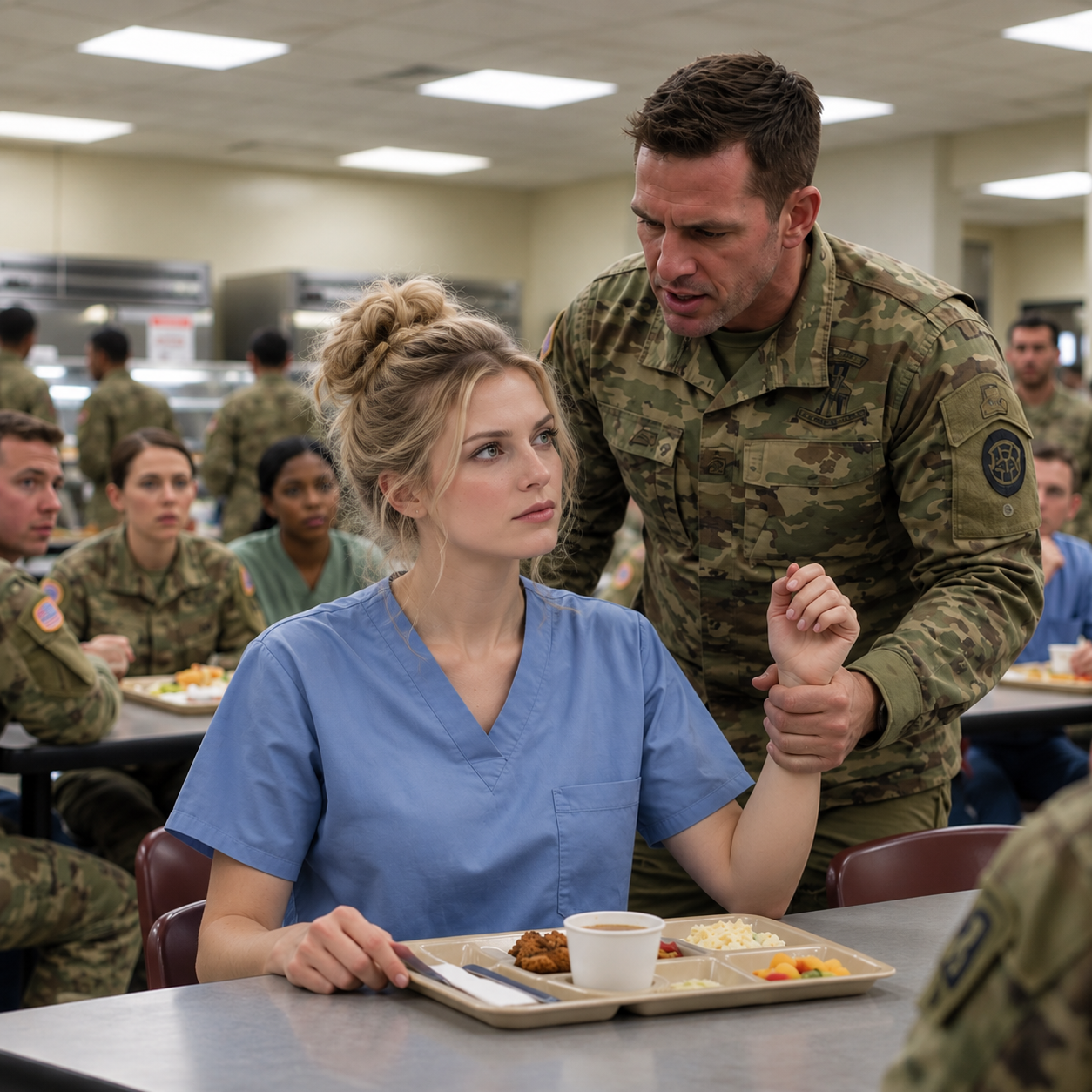
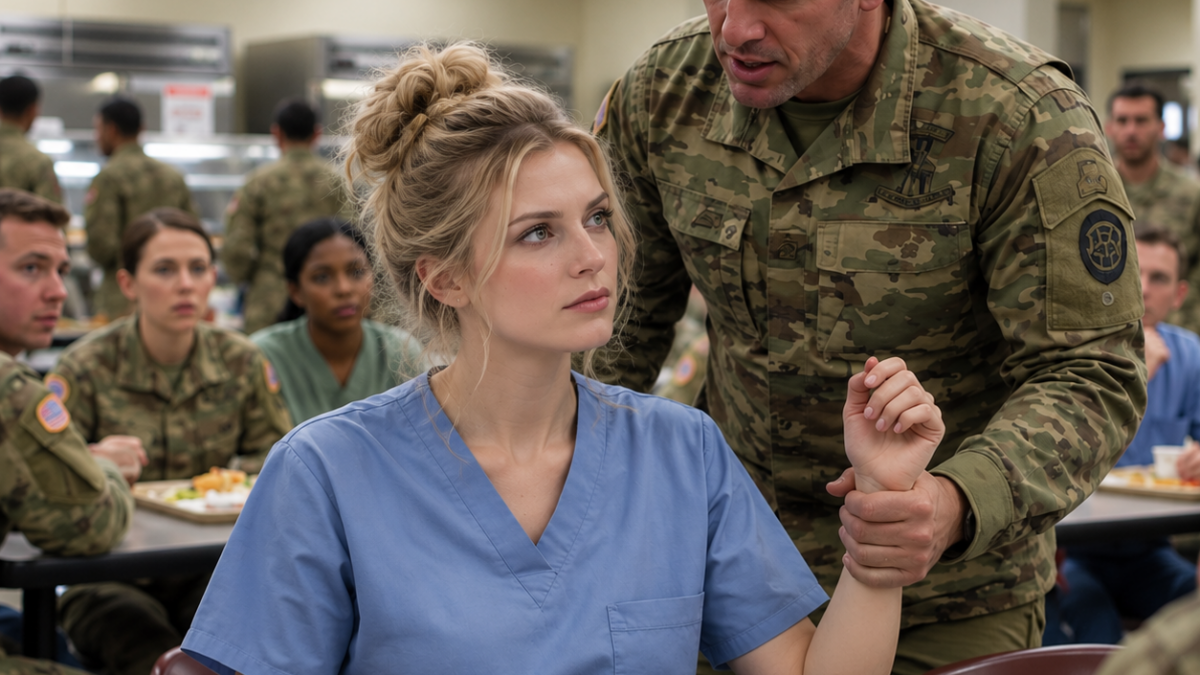
The ranger thought he was grabbing a tired nurse in a military hospital cafeteria. He had no idea he had just put his hand on a woman who once commanded Medevac under enemy fire. It was 6:38 in the morning at Fort Whittaker Joint Medical Center.
The coffee was burnt, the floor smelled like disinfectant, and every exhausted face in the room turned when the tray hit the tile like a gunshot. Nora Whitcomb stood there in navy scrubs, silent, steady with 19 hours of night shift behind her.
Then specialist Ethan Roark stepped close and wrapped his fingers around her wrist. What happened next was not just about rank, pride, or one ugly mistake.
It was about buried files, quiet witnesses, and a system that had learned how to make people disappear on paper.
Watch until the end, like the video, and comment where you’re watching from.
Nora did not look back when she left the cafeteria.
The sound of Ethan Roark’s voice stayed behind her, caught somewhere between the coffee station and the rows of metal tables where nobody had moved, nobody had spoken, and nobody had wanted to be the first person to admit they had seen it.
Her wrist still held the shape of his fingers in a faint red band, but she did not rub it. She had learned a long time ago that touching the place where someone hurt you could make it feel more real than it needed to be.
The corridor outside the cafeteria was cooler. Morning light came through the narrow windows in thin gray strips landing across the waxed floor like surgical tape. Somewhere down the hall a cart squeaked.
Somewhere else a patient coughed behind a closed door. Fort Whittaker Joint Medical Center was waking up the way military hospitals always did, not gently, not all at once, but in layers of footsteps, clipped voices, rolling wheels, and radios murmuring against shoulders. Nora shifted the patient folder under her arm and kept walking.
Her coffee had gone cold before she had taken a single sip. Ward C sat on the east side of the second floor where the windows faced the mountains outside Boise.
On clear mornings, the peaks looked close enough to touch. That morning rain clouds hung low over the ridge line turning the glass dark and making the fluorescent lights inside feel harsher.
The nurses station was already filling with the first signs of shift change. A young medic printed lab results with one hand while stirring oatmeal with the other. Two orderlies argued quietly over a missing transport form.
A night nurse leaned against the counter with the stunned expression of someone whose body had continued standing after her mind had gone home. Nora moved through all of it without disturbing the room.
That was one of the first things people noticed about her when they noticed her at all. She did not take up space loudly. She did not announce herself.
She did not laugh too hard in break rooms or tell stories about bad patients or remind younger staff how many years she had been doing the work. She arrived. She assessed.
She handled what needed handling. To some people that looked like weakness. To the patients it often felt like safety.
Room C4 belonged to Sergeant Caleb Ortiz, 36 years old, broad face, shaved head, tattoos on both forearms, and a fresh abdominal incision that had given everyone trouble through the night. His appendectomy should have been simple. It had not been.
A clotting condition in his chart had turned routine into risky and risky into the kind of night that made nurses count seconds between monitor sounds. He was asleep when Nora entered.
His mouth was open slightly. His breathing was shallow but steady. The monitor blinked green beside him.
Nora set her folder down without noise and checked his IV line first. The tubing had a slight twist near the clamp. Not enough to alarm, enough to slow the flow if nobody corrected it.
She fixed it with two fingers, then checked the site at his hand. No swelling. No redness.
Good. She looked at the monitor again.
Heart rate acceptable. Blood pressure low, but not falling. Oxygen steady.
She wrote the numbers down, but she kept looking at him after she finished writing. Machines told the truth, but never all of it.
His skin tone was better than it had been at 4:00 in the morning. His jaw was unclenched now. The muscles around his eyes had softened.
Pain was no longer dragging him toward panic. Nora adjusted the blanket over his shoulder. He stirred.
“Captain.”
He muttered. Nora froze for half a breath.
Then she leaned in slightly.
“Sergeant Ortiz, you’re at Fort Whittaker.
Surgery is over.
You’re safe.”
His eyes opened halfway. Clouded, confused, then clearer.
“Did I say something stupid?”
“No more than most people after anesthesia.
” He blinked at her.
“You military?”
Nora checked the drainage line and made a note.
“Not anymore.”
He seemed to want to ask more, but sleep pulled him back before he could get the words organized. Nora watched until his breathing settled again, then left the room as quietly as she had entered.
Room C7 was awake. Private First Class Lilly Carter was sitting up against her pillows, one leg elevated in a brace, hair in a messy blonde bun, eyes sharp with the restless frustration of someone who hated needing help. She was 22, though her file said she had already completed two deployments of emotional self-defense before breakfast.
Military family, four brothers, a father who probably thought silence was a parenting style. Lilly looked Nora over as soon as she came in.
You look awful. Good morning to you, too.
I mean it. Like medically awful.
That is a professional opinion.
I’ve been in a hospital for 2 days.
Basically qualified. Nora set the chart on the rolling table and scanned the pain log.
How is the leg? Still attached?
That was not one of the choices. Seven.
Nora looked up. Lilly sighed. Seven and a half.
Sharp, burning, throbbing, or pressure? Yes.
Nora waited. Lilly looked away first. Throbbing, mostly.
Sometimes burning near the ankle. The last dose helped for maybe an hour. Nora moved to the foot of the bed and checked the elevation.
The pillow had slipped too low, lifting the ankle instead of supporting behind the knee. That small mistake could turn pain into punishment. Who positioned this knee?
You were shown how to do it. Yes.
And then you decided to invent your own version. It looked easier.
That is how most bad ideas begin. Lilly almost smiled.
Nora lifted the leg gently. Lilly sucked in a breath through her teeth, but Nora moved with such measured control that the pain did not spike the way Lilly expected.
She adjusted the pillow, checked circulation, touched the skin around the brace, and watched Lilly’s face instead of the equipment.
Tell me if this changes. It already does.
Better or worse? Lilly paused, annoyed at her own answer.
Better. Nora made a note.
We’ll talk to Charge about reviewing your medication schedule.
The current timing is not holding. Lilly watched her write.
Her eyes dropped to Nora’s wrist.
The room changed by 1°. What happened there? Nora did not look down.
Nothing important. That looks like fingers. Nora closed the chart.
Private Carter.
That means I’m right.
It means I’m your nurse and I’m telling you to stop interrogating me.
Was it a patient? No. Staff?
Nora turned toward the door.
I’ll be back after I speak with Charge.
Nora. The use of her name made her stop.
Lilly’s voice had lost its sarcasm.
I know what it looks like when somebody grabs you and everybody acts like they didn’t see.
For a second, the room held both of them in the same silence. Nora looked back at her.
Keep the pillow where I put it. Lilly nodded once. Nora left before the question could become something heavier.
At the nurses’ station, Mara Delgado was fighting three problems at once and winning by refusing to show any sign of being outnumbered.
Mara was 48, compact, dark-haired, and built out of coffee pressure, and 20 years of watching hospital administrators discover emergencies later than nurses did. Her reading glasses sat low on her nose. Her scrub jacket was zipped halfway.
A pen was tucked behind one ear like a weapon. She was on the phone when Nora approached. No.
I am not sending an unstable patient to imaging because someone wants the schedule tidy. When his pressure stays up for more than 12 minutes, you can have him.
Until then, you can admire the empty hallway. She hung up and looked at Nora. Ortiz stable.
IV line had a twist near the clamp. Corrected.
Pressure still low, but holding. Carter pain is not controlled.
Seven and a half. Elevation was wrong.
I corrected positioning, but the current dosing interval is not enough. Mara typed as Nora spoke.
I’ll page Dr.
Sweeney. Nora placed the folder on the counter.
Mara’s eyes moved to her wrist.
She stopped typing. The station noise seemed to draw back. Who touched you?
Nora exhaled through her nose. Mara. Do not Mara me.
It was brief. That is not what I asked.
Nora looked toward the hallway where a respiratory therapist was pushing a cart past the station. She waited until he was gone. Specialist.
Ranger rotation. Cafeteria. He grabbed my wrist when I tried to leave.
Mara’s face did not soften.
It sharpened. Name Ethan Rourke. I saw the badge after.
Witnesses? Cafeteria was a third full.
Did he hurt you? No.
Mara stared at her. Nora.
He did not injure me. That is a different sentence.
Nora said nothing. Mara reached beneath the counter and pulled out an incident report form.
Nora’s voice lowered.
You do not have to make this into something. Mara looked up slowly. He made it into something when he put his hand on you.
I handled it. I know.
That has never been the problem with you. The words landed with more tenderness than Mara usually allowed into daylight. Nora looked away first.
Mara began filling out the report. Time 6:38 approximately.
Location cafeteria coffee station. Verbal exchange. Nora gave it to her cleanly.
No exaggeration. No emotion added for weight.
She repeated Ethan’s words as exactly as memory allowed.
Move up, civilian staff. Learn your place.
Mara wrote all of it down. When Nora finished, Mara sat back for one breath, then continued.
Any physical mark? Faint redness. Photograph?
No. Yes.
Nora looked at her. Mara held out her hand.
Phone. Mara. Phone.
Nora gave it to her.
Mara took two pictures of the wrist, one close, one wider with Nora’s badge and scrub sleeve in frame.
Then she handed the phone back. You should go home after handoff.
That was already the plan. You say that like your plan survived contact with the building.
Before Nora could answer, the overhead speakers cracked alive. Three tones.
Every head in the station lifted. The automated voice came flat and cold. Code red incoming.
Trauma Bay activation. Multiple casualties inbound from Fort Whittaker training range.
All available trauma personnel report to emergency wing B. Code red incoming.
The hospital changed instantly. Not into panic.
Into motion. The medic at the printer abandoned the lab sheets.
Mara stood so fast her chair rolled back and hit the cabinet. Down the hall, a patient called out startled by the alarm.
Somewhere below them, elevator doors opened and boots struck tile at a run. Nora stood still for exactly 1 second. 19 hours awake.
Two patients waiting for final notes. A cold coffee. A red mark on her wrist, a bus leaving in 37 minutes.
Then she picked up a fresh isolation gown from the supply cart. Mara saw it. You are off shift.
I am in the building. That is not the same thing. Nora tied the gown behind her neck.
It is close enough. Mara cursed softly and grabbed gloves. Emergency wing B looked like a storm had formed indoors.
Supply carts came out from walls. Trauma bays were cleared.
Sheets snapped open across beds. Blood warmers rolled into position. Nurses counted airway kits, chest tubes, fluids, burn dressings, suction lines.
A radiology tech arrived still chewing the last bite of a breakfast sandwich and threw it into the trash without slowing down. Dr. Priya Mehta stood in the center of it all, her black hair pulled into a tight gray trauma vest already on tablet in hand.
“How many?”
Nora asked. Mehta did not look surprised to see her.
“Seven inbound.
Training convoy rollover on the north range. Secondary fuel explosion.
Three critical, two serious, two walking wounded.”
“Mechanism?”
“Blunt trauma, burns, possible spinal, possible internal bleeding.”
“First ambulance, two minutes.”
Nora pulled gloves over tired hands.
“Where do you want me?”
“Bay one until I move you.
” The first ambulance backed in at 7:21.
The doors opened and the morning became blood, rainwater, diesel, and voices. The first patient was 19, maybe 20, burned across the left arm, shoulder, neck, and side of his face. He was conscious, which made it worse.
Conscious patients heard themselves scream. Conscious patients heard staff use words like airway and pressure and percent surface area.
Nora stepped beside the gurney as medics rolled him in. Name?
Private Mason Bell, one medic said. Fuel splash ignition, no loss of consciousness. Sats dropping en route.
Nora leaned over the patient. Mason, look at me. His eyes found hers wild and wet.
My arm is on fire. I know.
We’re cooling it now.
I need you to breathe the way I tell you.
I can’t.
You can. In through your nose if you can. Out slow.
His breathing hitched. Nora looked at the soot near his nostrils and the faint rasp under his inhale. Dr.
Meta. Meta was already turning.
Airway. Getting tight, soot present, voice is changing. Meta stepped in, assessed in seconds, and nodded.
Prepare for intubation. A younger nurse fumbled with the airway drawer. Nora reached past her not unkindly and placed the correct blade and tube on the tray.
7. 5, suction ready.
Capnography. The nurse swallowed and nodded.
Nora stayed by Mason’s head.
You are going to feel people moving around you. That means we are working. Keep your eyes on the ceiling tile above me.
He tried. His burned hand twitched toward her sleeve.
She let him hold the fabric. Not her wrist, never her wrist. The second critical patient arrived before Mason was fully stabilized.
Sergeant Daniel Pierce, 34. Pale beneath dirt and sweat pressure.
Low abdomen rigid. The kind of patient who looked almost calm until the numbers told the truth.
Meta called across the room. Whitcomb. I need eyes on Bay, too.
Nora moved. Pierce was trying to sit up.
I’m fine.
He said, then vomited blood onto the side of the gurney. Nora pressed him back with one hand on his shoulder. No, Sergeant.
You are not. His pulse was fast, thready. His pressure was falling, not crashing yet, but moving with purpose toward it.
A monitor cuff cycled.
Nora looked at the previous number on the medic’s strip, then the current reading, then the patient’s skin.
Pressure is dropping faster than the monitor trend. The resident beside her frowned. Alarm has not triggered.
It is behind him. Meta looked over.
Nora’s voice stayed even.
He needs blood ready and surgical consult now. If we wait for the alarm, we are behind the bleed. Meta did not ask how sure she was.
Activate massive transfusion protocol. Page surgery. Now.
The resident moved.
Pierce grabbed Nora’s sleeve.
My guys. Nora leaned closer. They are here.
You focus on breathing. Bell, in treatment.
Is he alive? Nora held his eyes. Yes.
It was true at that second. In trauma, sometimes that was all the truth anyone had.
The third critical came in shouting that he did not need a hospital while blood ran from his mouth. The jaw was wrong, not visibly enough for a civilian to know, but enough for Nora to see the asymmetry, the swelling, the way he avoided closing his teeth.
Possible mandibular fracture, she called. Keep him upright until airway cleared. Do not let him lie flat.
A medic tried to move him too quickly.
Nora’s hand caught the rail.
Stop. The medic froze. Her tone did not rise, but it cut clean through the room.
Spinal precautions until cleared. He was thrown from a vehicle. The medic adjusted immediately.
No one argued. That was the difference between authority and volume. In a trauma bay, the body recognized certainty before the mind named it.
For the next hour and a half, Nora moved through the room like a fixed point inside a spinning machine. She cut away uniforms.
She counted respirations. She held pressure over wounds. She cleaned soot from a mouth.
She corrected a dose before it was pushed. She caught a junior corpsman staring too long at an open fracture and gave him a task simple enough to bring him back into himself.
Gloves, gauze, tape. Start there. He did.
She did not think about Ethan Rourke. There was no space for him.
Above the trauma wing on the third floor, Ethan stood near the closed administrative office with his complaint folded in his hand. He had arrived 15 minutes after leaving the cafeteria, still angry, still rehearsing the words he planned to use. Disrespectful.
Confrontational. Interfering with military personnel. He had not been sure which phrase sounded most official, but he trusted that the right tone could turn irritation into a report.
Then the code red alarm sounded. The administrative assistant locked the office and ran downstairs.
Ethan stayed in the waiting area because he had nowhere else to put himself. Through the interior window, he could see part of the trauma corridor below.
Gurneys moved. Staff ran without looking like they were running. Doors opened and closed.
An ambulance bay flashed red through the rain. Then he saw her. The nurse from the cafeteria.
Nora. He did not know her name yet, but he knew the shape of her stillness. She was in the middle of the trauma bay, gloved hands red at the fingertips, leaning over a patient while a doctor listened to her.
Not tolerated her. Listened.
Ethan watched her turn to a young medic, say something, and the medic obeyed instantly. The complaint paper felt different in his hand.
He folded it once, then again. At 9:06, the last of the seven casualties had been stabilized, transferred, or cleared for observation. The trauma bay looked ruined.
Wrappers on the floor. Used gauze sealed in red bags.
A suction canister replaced. Boot prints tracked across tile. The air held the metallic smell of blood beneath antiseptic and burned fabric.
Nora peeled off her gloves and dropped them into the bin. Her hands began to tremble.
Only now. Never during. She placed both palms on the supply cart and pressed down until the shaking settled.
Her shoulders felt packed with wet sand. Behind her eyes, fatigue pulsed with every heartbeat.
Dr. Meta came to stand beside her. When did you clock in 6:00 last night?
Meta stared at her. You worked this on the back end of a full night shift.
I was here. That is not an answer.
It is the one I have. Meta looked toward bay two where Sergeant Pierce was being rolled toward surgery with blood running into him and color returning slowly to his face.
You caught Pierce before the monitor. Nora said nothing.
Another 12 minutes and we would have been chasing him instead of staying ahead. The numbers were there.
No, Meta said. You were. Nora did not know what to do with that, so she picked up a discarded roll of tape and placed it on the cart.
Meta softened only slightly. Go home.
I will have someone cover your notes.
I need to finish Carter’s medication update.
Mara already handled it. That made Nora pause.
Meta tilted her head toward the exit. Out.
Nora unclipped her disposable gown and tossed it. Her scrubs beneath were wrinkled, stained near one pocket, and damp at the collar. She washed her hands longer than necessary watching pink water fade to clear.
When she stepped into the corridor, Ethan Rourke was waiting 15 ft away. His uniform was still crisp. His boots were clean.
The folded paper was in his right hand. He looked at her then toward the trauma bay doors behind her. You were in there?
Nora stopped. Yes.
I thought that was the trauma team. When there is a code red, available personnel assist. He glanced at her wrist.
The redness had faded but not disappeared. For a second, the corridor held the remains of the cafeteria between them. Ethan lifted the folded paper slightly, then lowered it.
What happened to them? Training rollover. Secondary explosion.
Are they alive? Nora looked at him carefully.
All seven made it through the door alive. Four are still fighting. He absorbed that.
His jaw moved as if there were words behind it that could not find formation. Nora waited because silence often did more work than questions.
Finally, he said, “I was going to file something.
” I assumed.
His eyes flicked to hers. She did not sound angry.
That seemed to trouble him more. Are you going to He looked down at the paper. The hallway lights hummed overhead.
A transport team rolled an empty gurney past them. Somewhere behind the trauma doors, someone laughed once from pure exhaustion and then stopped.
Ethan folded the paper into a smaller square and put it in his pocket. No.
Nora nodded.
Then I’m going home.
She walked past him toward the staff exit. Outside, the rain had thinned to mist. The mountains were still hidden.
The hospital windows glowed behind her with a pale morning light that made everything look cleaner than it was. Nora reached the bus stop and sat on the metal bench.
Her coffee was gone. Her hands smelled faintly of soap no matter how many times she washed them. Her wrist ached only when she noticed it.
She closed her eyes. Inside Fort Whittaker, Mara Delgado finished the incident report, attached the photographs, added the witness locations she could confirm, and sent it through the staff safety system at 9:18 a.
m. The file moved out of Ward C. Then it moved somewhere Mara did not expect.
A name in the report triggered a flag. The flag appeared on a screen in a room with no windows. It was not dramatic.
No alarm sounded. No red light flashed over the doorway. At Fort Whittaker Joint Medical Center, the staff safety office was tucked behind records processing past two locked doors and a hallway where the vending machine had been broken since July.
Most people walked by without knowing the office existed. Inside a civilian safety officer named Allison Greer sat with a paper cup of tea cooling beside her keyboard.
She had processed three needle stick reports, one slip in the laundry corridor, and a complaint about expired gloves before Nora Whitcomb’s incident report arrived in the queue.
Allison opened it with the tired focus of someone who had learned that paperwork could be boring right up until it became dangerous. The first line gave the location. Cafeteria coffee station.
The second gave the time, approximately 06:38. The third gave the reported action.
Physical contact initiated by military personnel toward civilian nursing staff. Allison stopped chewing the inside of her cheek.
She read the name. Specialist Ethan Roark. For a moment, she did not move.
Then she typed his last name into the cross facility incident database. The system hesitated. 1 second.
2 Then a previous entry appeared from 18 months earlier. Redstone Military Hospital, Huntsville, Alabama.
Complainant Caroline Briggs, registered nurse. Subject specialist Ethan Roark. Allegation, unwanted physical contact, verbal intimidation, obstruction of movement during patient transport dispute.
Disposition, verbal counseling, no further action. Allison leaned back slowly.
The room seemed quieter than before. She opened the old report.
Most of it was thin, too thin. Basic summary, no witness attachments, no photographs, no expanded interview notes.
A report that should have had weight had been turned into administrative mist. There were phrases Allison hated because they meant someone had softened a hard thing until it could pass through a system without cutting anyone.
Communication breakdown, momentary escalation, no lasting harm documented, staff elected not to pursue further action. Allison had seen enough reports to know the difference between nothing happened and somebody made sure nothing happened on paper.
She looked back at Mara Delgado’s from Fort Whittaker.
This one was not thin.
Time, place, exact words, photographs of Nora’s wrist, cafeteria witness locations, charge nurse statement, nursing staff classification, military subject identification.
Mara Delgado had written it like a woman who expected someone to try to erase it. Allison copied both report numbers into a separate memo.
She marked the new report for secondary review. Then she paused with her hand over the keyboard.
Regular procedure would send the incident into the facility administrative track. That meant local review command notification and a timeline long enough for people to become unavailable, transferred, or suddenly unable to recall details.
She looked again at the old Redstone entry. No witness attachments, no follow-up, no further action.
Allison opened a secure contact list and found the name she had hoped not to need, Colonel Thomas Harlan, Army Medical Command Oversight Liaison. She did not know him well, but she knew his reputation.
Careful, unsentimental, the kind of officer who could make a room nervous without raising his voice. She attached both reports.
Then she added one sentence, “Possible repeated conduct involving same service member and nursing personnel.
Prior case appears under developed.”
She sent it 10:04 a. m.
In Colorado Springs, Colonel Thomas Harlan was reviewing surgical readiness numbers when the message arrived. His office at Fort Carson faced a gravel lot, a flagpole, and a line of winter bare trees bending in the wind.
The room was orderly in a way that came less from neatness and more from discipline. Files squared with the desk edge. Pens aligned.
Coffee untouched because he had forgotten about it an hour earlier. Harlan opened the attachment. He read the first report.
Then he saw the nurse’s name.
Nora Whitcomb. His hand stopped on the mouse. For a few seconds, he was no longer looking at the screen in Colorado.
He was back in Afghanistan on a black mountain road where the air smelled like dust cordite and burned rubber. He could hear rotor blades somewhere beyond the ridge too far away. He could hear men shouting for morphine, for pressure dressings, for their mothers.
And he could see Captain Nora Whitcomb kneeling in the gravel with blood up to her wrists. One hand clamped over a femoral bleed while the other held a radio together with tape and prayer.
She had been 26 then. Thin from deployment. Eyes too old for her face.
Calm in the way only terror and training could forge together. The radio had cracked in the blast.
The medic beside her had gone down. Two litter teams had frozen under incoming fire.
Nora had looked up once and said, clear as a bell, “Move when I move.
Not before.
Not after.”
And they had moved. Harlan had seen officers with higher rank command less from safer rooms. He blinked the memory away and read the report again.
Cafeteria coffee station. Grabbed wrist. Civilian staff are here because we allow it.
Learn your place.
Harlan’s jaw tightened.
He opened the Redstone report next. Caroline Briggs.
Unwanted physical contact. Verbal intimidation. Verbal counseling.
He read that one twice. Then he picked up his phone. Allison Greer answered on the first ring.
Staff safety Office. This is Colonel Harlan. I received your referral.
Yes, sir. Tell me what is not in the memo. A short pause followed.
He heard papers move on her end. The prior report is incomplete. No attached witness statements, but the summary mentions two staff members were present.
No photos, no supervisor interview.
The disposition was entered 16 days after the incident, which is late for that facility’s timeline.
Who handled Redstone? Captain Lydia Shaw signed the administrative closeout, but the supervising administrative officer listed was Captain Owen Slater. Harlan wrote the name down.
Where is Slater now? I do not have current assignment access for him, sir.
I will find it. Another pause.
Allison’s voice lowered slightly.
Sir, there is something else. Go ahead.
The new report was filed by charge nurse Mara Delgado. It is unusually complete.
She took photographs within 2 hours. She noted potential cafeteria witnesses by location even without names. It reads like she expected pushback.
Good, Harlan said. Allison did not respond to that.
He looked at Nora’s name again.
Does Whitcomb know this came to me? No, sir. Keep it that way for now.
Do not move the report through the standard facility track until I complete collateral review. The standard timeline requires initial routing by close of business. I am aware of the timeline.
If local command asks why it is held, you tell them oversight requested consolidation due to a prior related report. If they want my signature, they can have it.
Yes, sir. Harlan ended the call and sat still. He had not spoken to Nora in over a year.
The last conversation had been brief, professional, almost painfully clean. She had needed a service verification. He had provided it.
Neither of them had mentioned Afghanistan. Neither of them had asked how the other was sleeping.
Nora had always known how to survive without asking anyone to witness the cost. That was one of the reasons he worried about her.
He opened a secure search and entered Ethan Roark’s record.
Four years Army, Ranger qualified, strong physical evaluations, good tactical performance, two minor conduct notes sealed at unit level, no formal disciplinary action. Harlan read the unit recommendations.
Aggressive, confident, strong command presence, requires maturity in cross-functional environments. He stared at that last line.
Military language had a way of dressing warnings in clean uniforms. He searched Caroline Briggs next. Registered nurse, 17 years military healthcare experience, Redstone Military Hospital at time of incident.
Current employment, Cedar Valley Veterans Clinic, Knoxville, Tennessee. Still working.
Good.
He wrote her name beneath Slater’s.
Then he wrote Nora’s.
Not because he needed to remember it. Because putting names on paper made it harder for institutions to turn people into categories.
At 2:17 p. m.
, Nora woke to sunlight cutting across her apartment floor. For a moment, she did not know what day it was. Her small apartment sat on the third floor of an old brick building in downtown Boise above a bakery that made the stairwell smell like yeast and sugar every morning except Sunday.
Her curtains were half closed. Her scrub top lay over a chair. Her shoes were by the door still damp from the mist.
On the kitchen counter, the coffee she had brought home sat untouched and cold. Her phone buzzed again.
Three texts from Mara.
The first said, “You alive?”
The second said, “Carter’s pain is better.
” The third said, “Call me when you wake up.
Not urgent, but not nothing.”
Nora sat up slowly. Her body objected in parts. Shoulders first, then knees, then the old ache along her left ribs where a blast wave years ago had taught her weather was not the only thing that could live in bone.
She called Mara. Mara answered immediately.
“You slept.”
“That was the plan.”
“You never follow plans.”
“I am growing as a person.”
“Do not start now.
It will frighten the staff.”
Nora rubbed a hand over her face.
“What happened?”
“The report got flagged.”
Nora became fully awake.
“Flagged how?
Safety office held it. It did not go into the normal facility track.
” “Why?
I do not know.
But someone above local admin touched it.”
Nora walked to the window and pulled the curtain back. Traffic moved below in wet gray light.
A woman in a yellow raincoat carried groceries in one arm and a child’s backpack in the other.
Mara continued.
“Roark was asking about you after you left.
” Nora’s hand stilled on the curtain.
“Asking what?
Ward assignment? Whether you were senior staff, how long you had been at Fort Whittaker.
Someone told him you worked the code red after a full night shift.”
“Who I am still finding that out.”
Nora watched a bus hiss to a stop at the corner.
“He looking for information.
” “He is looking for ammunition.”
Nora said nothing.
Mara’s voice softened by one careful degree.
Nora. I know you can handle men like him. That is not the same as pretending they stop after one bad morning.
I know. Good.
Because I am not in the mood to drag common sense out of you with force. Nora almost smiled.
After she hung up, the apartment became too quiet. She showered. The hot water struck the red mark on her wrist, and for the first time she looked at it directly.
It had faded to a pale shadow. Nothing dramatic.
Nothing that would convince someone determined not to be convinced. That was the trouble with small acts of control. They knew how to disappear before anyone had to answer for them.
Her phone rang as she stepped out of the bathroom. Unknown number. She stared at it until the fourth ring, then answered.
Whitcomb. The voice on the other end was steady, low, familiar enough to reach through years. Nora.
She stood still. Sir.
The word came out before she decided to use it. Colonel Harlan did not comment on that. I heard you had an interesting morning.
Nora closed her eyes. Mara said the report was flagged. It was.
By you. By staff safety first.
Then by me. She wrapped a towel tighter around her shoulders and sat on the edge of the bed. This is about Roarke.
Yes. There was another incident.
A pause. Yes. The room seemed to narrow around her.
How similar? Similar enough that I am not treating them separately.
Nora looked toward the small bookshelf across from her bed. Medical texts. A cracked paperback novel she kept meaning to finish.
A framed photo from a hospital charity run, Mara scowling at the camera while Nora stood half out of frame. Who?
Caroline Briggs, Redstone Military Hospital, 18 months ago. Was it handled numb? The answer was so clean it hurt.
Nora leaned forward, elbows on knees. What are you planning to do? Review the full record.
Contact Briggs. Identify missing witnesses.
Freeze the current report outside the standard track until it cannot be quietly minimized. That sounds like you already decided. I have decided the reports deserve to be read as if the people who wrote them mattered.
Nora did not answer. Outside the bus pulled away from the curb. Water fanned beneath its tires.
Harlan let the silence sit.
Then he said, “There is something else.”
Of course there is. If this moves to formal review, your background may become relevant. Her body went still in a different way.
No. Nora. No, sir.
You do not know what I’m going to say.
I know enough. His voice remained even.
Roark’s conduct included dismissing you as civilian staff with no standing in the facility.
Your prior rank and service record may be used to establish the scale of his assumption. That is exactly the problem.
She stood and crossed to the window. He was not wrong because I used to be a captain.
He was wrong because he grabbed a nurse in a cafeteria. He was wrong because he thought my silence meant permission.
He was wrong before anyone opened my record. I agree. Then do not make this about medals.
I said relevant. I did not say central. Nora pressed her fingers against the window frame.
I left that life. I know. I left it on purpose.
I know that, too. For a moment, neither spoke.
Then Harland said softer, but not gentle, “You spent years making sure soldiers survived long enough for other people to call it a successful operation.
You are allowed to let the record speak when someone tries to reduce you to an inconvenience at a coffee station.”
Nora looked at her reflection in the glass.
Damp hair, tired eyes, a face older than the years written on her driver’s license.
“What about Caroline Briggs?
I’m contacting her today.
If she says no, then I do not use her voice without permission.”
That mattered. Nora inhaled slowly.
“Keep my record narrow.”
“I will.”
“Only what is necessary.”
“Yes.”
“And make clear that it would have been wrong if I had never worn a uniform.”
“You have my word.”
She believed him. That was not comfort.
Not exactly. Believing someone meant there was one less direction from which to expect a knife.
After the call ended, Nora dressed in clean clothes and stood in her kitchen without turning on the light. She thought about Caroline Briggs, a woman she did not know, a nurse who had filed a report and watched it become nothing.
Nora had seen wounds like that before. Not the kind that bled, the kind that taught people to stop expecting the truth to have weight. Across town, Ethan Rourke sat on the edge of his bunk in temporary quarters with his phone face down beside him.
The room was narrow, clean, and impersonal. Two beds, two lockers, one metal desk, a framed safety notice on the wall.
His roommate was at afternoon briefing which left Ethan alone with the kind of silence he usually filled with motion. He had changed out of his jacket but not his boots.
The complaint paper lay in the trash can folded into a tight square. He kept looking at it.
Not because he regretted throwing it away, because he had not thrown away the anger. His phone buzzed.
A text from specialist Ray Dorman, a ranger from his unit who had been at Fort Whittaker 2 weeks longer. Heard admin is talking about an incident report from this morning.
Cafeteria maybe. Just a heads-up. Ethan picked up the phone.
Who filed it? Three dots appeared. Disappeared.
Appeared again. No idea. Ethan typed.
Find out what ward the nurse works. A longer pause while Ethan stared at the question. Because he had a right to know.
Because people exaggerated. Because she had made him look like a fool without raising her voice. Because he had touched her wrist and for half a second after she told him to let go he had felt like the room belonged to her.
He typed. Just find out. He set the phone down.
A minute later the door opened without a knock. Ethan stood.
Captain David Kincaid entered and closed the door behind him. Kincaid was 39, compact, clean-shaven with the controlled expression of a man who had learned early that anger was more useful when kept on a leash. He did not sit.
He did not tell Ethan to sit either. Specialist Roark.
Sir. Tell me about this morning in the cafeteria. Ethan kept his face neutral.
There was a minor disagreement with a civilian nurse. Kincaid waited. She was blocking the coffee station.
I asked her to move. She became confrontational.
How she made a comment about nurses running the hospital. That offended you? It was disrespectful.
To whom? Ethan hesitated. To military personnel, sir.
Kincaid’s eyes did not move.
And then I made brief physical contact to redirect the conversation. Physical contact? Yes, sir.
You grabbed her wrist. Ethan swallowed. Yes, sir.
Briefly. Did she ask you to release her? Yes, sir.
Did you release her immediately? The room held still.
Ethan said, Not immediately. Kincaid nodded once as if confirming something he had already known. This is the second report with your name on it involving unwanted physical contact with nursing staff.
Ethan felt heat climb his neck. Sir, Redstone was a misunderstanding.
The nurse at Redstone was Carolyn Briggs. 17 years in military health care.
Her name is in the file. The fact that you call it Redstone and not Nurse Briggs tells me part of the issue. Ethan looked at the floor, then back up.
She did not pursue it.
Kincaid’s expression hardened.
No. The institution failed to pursue it.
That sentence landed differently than Ethan expected. Kincaid took one step closer.
You are suspended from the Fort Whittaker medical rotation effective immediately. You will report to me tomorrow at 0800 for formal review. You will not contact Nurse Whitcomb.
You will not contact witnesses. You will not seek information about her ward schedule, background, or personnel file. You will not file a counter complaint without counsel and command review.
Do you understand?
Ethan’s jaw tightened.
Sir, I have a right to defend myself. You have a right to answer questions inside the process.
You do not have a right to intimidate people outside it.”
“I was not going to intimidate anyone.”
Kincaid glanced at Ethan’s phone on the desk.
Ethan said nothing. The silence answered enough.
Kincaid turned toward the door, then stopped.
“One more thing.”
Ethan looked up.
“The nurse from this morning, her name is Nora Whitcomb.
” The name meant nothing to Ethan.
Kincaid watched that lack of recognition cross his face.
“You do not know who she is.”
“No, sir.”
“That is the point.”
Ethan’s brow tightened.
Kincaid opened the door.
“Tomorrow, listen more than you speak.”
He left. The door closed with a soft click. Ethan stood alone in the narrow room, boots planted on the tile, hands curled at his sides.
For the first time all day, the problem no longer felt like a nurse who had embarrassed him. It felt like a file opening somewhere beyond his reach.
The next evening, Nora Whitcomb returned to Fort Whittaker with 9 hours of sleep in her body, and none of it showing on her face. The rain had passed during the afternoon. Boise held that washed clean brightness that came after a storm, the streets still dark at the edges, the mountains sharp against a pale sky.
At the main gate, a young military police officer checked her badge and waved her through without looking up long enough to recognize her. That was fine with Nora. Recognition had never been something she trusted to arrive gently.
The hospital rose ahead of her in blocks of glass and concrete, its windows already lit for the night shift. Fort Whittaker Joint Medical Center did not sleep. It only changed voices every 12 hours.
Inside the lobby smelled like floor polish, coffee, and wet wool. Soldiers in physical therapy gear moved past family members carrying plastic bags from the gift shop.
A child slept against a woman’s shoulder near the pharmacy window.
Two medics laughed too loudly by the elevators the way people laughed when they were trying not to feel the weight of the building around them. Nora stepped through all of it and took the stairs. On Ward C, the air shifted when she entered.
Not dramatically. Hospital staff were too practiced for that.
No one turned and stared. No one stopped talking all at once.
But a conversation near the medication room became thinner. A day nurse looked up, held eye contact 1 second too long, then looked back at a chart. One of the orderlies gave her a small nod that carried more knowledge than it should have.








