No One Dared to Go Back for the Dog — Until a Former Navy SEAL Walked Into the Blizzard – Part 1
No One Dared to Go Back for the Dog — Until a Former Navy SEAL Walked Into the Blizzard
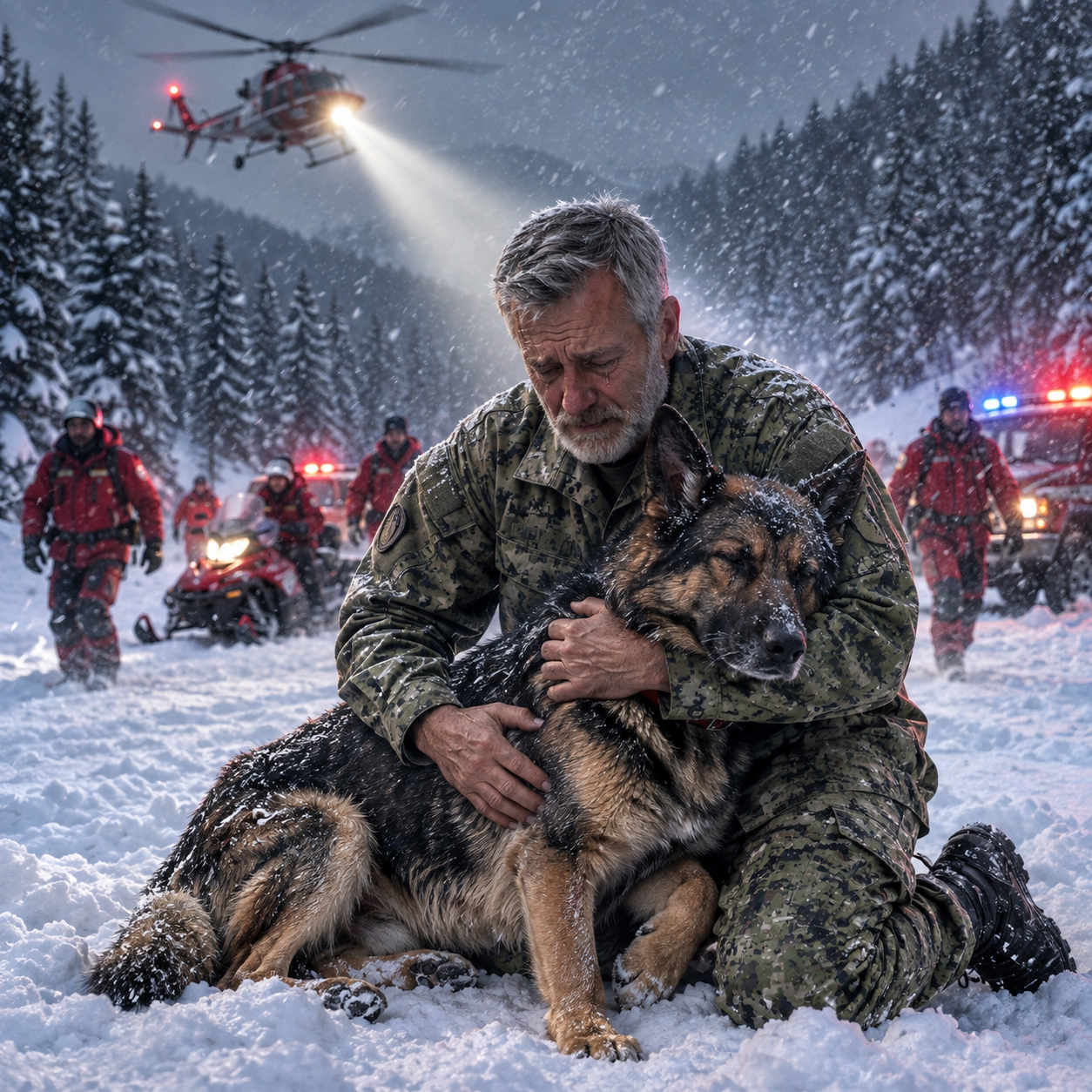
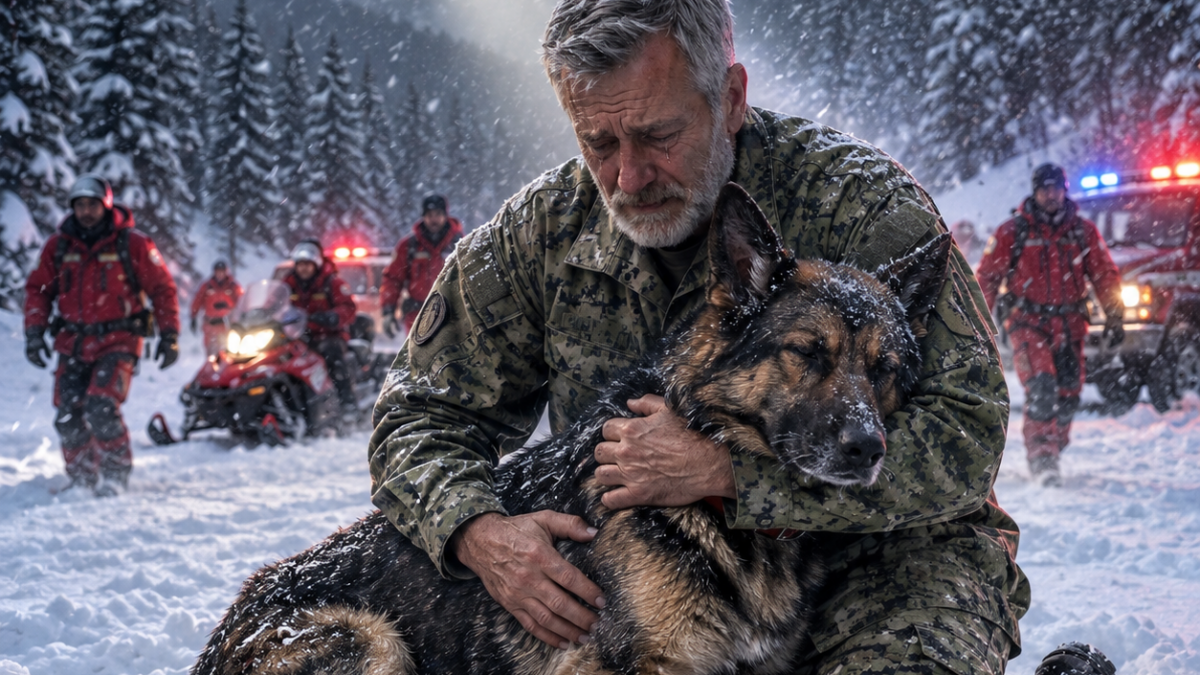
She could barely stand, but she still went back. Those were the words Curtis Langden spoke after a German Shepherd named Kea saved his life in a brutal Colorado snowstorm. Ka had already reached safety.
But instead of climbing into the rescue truck, she turned around and disappeared back into the mountains. Former Navy Seal Ronan Bellows heard everything. He had spent years calling himself a coward and wanted nothing to do with another rescue.
But that night, when an emergency beacon began transmitting from the mountain, Ronin stopped running. He loaded his survival gear and went after Ka alone. And when he finally found her trail, each paw print was weaker than the last.
Would Ronin find Ka before she gave everything she had left? Enjoy the story.
At 4:47 on a bitter January afternoon, snow was already sweeping across Pitkin, Colorado, and the mountain roads were beginning to disappear beneath it. Ronan Bellowos, 61, a former US Navy Seal who now lived alone outside town, loaded two diesel cans into the back of his truck. He had come for fuel before the storm closed the road to his cabin.
The wind was growing stronger. Darkness was less than an hour away, and Ronin had no reason to stay in Pitkin.
He pulled his coat tighter, reached for the driver’s door, and was about to climb inside when a county rescue truck emerged through the blowing snow.
It stopped near the roadside station. Two volunteers opened the rear door and helped a man down. Curtis Langden was 47, an electrical contractor who had been working in the mountains that afternoon.
He looked exhausted. His jacket was crusted with snow, his hands trembled badly, and his legs nearly gave way when his boots touched the ground. One rescuer immediately wrapped a heavy blanket around him, but Curtis turned away from the warmth and stared back toward the mountain road.
“The dog,” he said.
The volunteer thought he had misheard him. Curtis pointed into the white distance.
There was a German Shepherd with me. Did you see her?
Ronin stopped beside his truck. Curtis explained only what mattered. His vehicle had become trapped farther up the mountain.
He had tried to walk down before visibility vanished completely, but the storm swallowed the road. He became lost, exhausted, and finally too weak to keep moving.
Then the German Shepherd appeared. Curtis did not know where she came from. She wore an old collar and a torn piece of red leash dragged from it.
The dog stayed close when he could not stand, then kept moving several yards ahead and looking back until he followed. Whenever Curtis fell, she returned for him.
“She wouldn’t leave me there,” he said.
The dog eventually led him far enough downhill for the county rescue lights to become visible through the storm. That should have been the end of it.
One of the volunteers handed Curtis a small packet of biscuits. Curtis took one, stared at it, then closed his hand around it.
I was going to give this to her. Ronan stepped away from his truck.
What happened? Curtis looked at him for the first time.
She saw the rescue truck and she stopped. Snow swept between the buildings in thin, fastmoving sheets. Curtis swallowed.
She was done. I could see it. Her legs were shaking.
Ronin glanced toward the mountain. I thought she was coming with me, Curtis continued. Then she looked back.
The biscuit trembled slightly in his hand. She turned around and went straight back up.
Ronin frowned. Back into the storm. Curtis nodded.
A woman approached from beside the rescue vehicle.
Vivien Carver was 56 and coordinated Pitkin’s volunteer search and rescue teams.
She had spent enough winters in the mountains to know that animals sometimes ran from strangers or returned to familiar places. But the look on her face suggested she did not believe this was that simple. If the dog went back, Viven said, there may still be somebody up there.
Ronin looked at her. Viven knew him.
That alone was enough to make him uncomfortable. We have crews tied up on the southern road, she continued.
Upper access is getting worse. Ronin understood what she was asking before she said it. No.
Viven paused.
I didn’t ask yet.
You were going to.
Snow collected along Ronin’s shoulders.
He brushed it away and opened his truck door. Viven did not argue. You know that country.
So do your teams.
They’re already out.
Then wait for what? For the storm to break. Viven looked toward the mountains.
That could be tomorrow.
Ronan’s hand tightened around the door handle.
Find somebody else. He expected Vivien to push harder. She did not.
Instead, she turned back toward Curtis. That should have made leaving easy. It did not.
Curtis was staring at the biscuit again.
“She came back every time I fell,” he said quietly.
Ronan remained beside the open truck door. Curtis looked toward the mountain, almost as though the dog might suddenly appear through the blowing snow. She could barely stand, but she still went back.
Ronan climbed into his truck. He left Pitkin without saying anything else.
By the time he reached his cabin, darkness had settled over the forest. Wind moved through the pines with a deep, steady sound, and snow covered the porch almost as quickly as it landed. Ronan brought the fuel inside, added wood to the stove, and removed his wet coat.
For a while, he kept himself busy. He checked the generator, closed the shutters, put away his groceries. Then, he stood in the kitchen with nothing left to do.
Curtis’s words returned.
She still went back. Ronan turned on the weather radio.
The voice from the speaker warned drivers to stay off the upper roads. Visibility above Pitkin had fallen sharply.
Snowfall was expected to continue through the night. Ronin lowered the volume. Viven had trained people.
The dog might have returned to a shelter. Maybe somebody had already found her.
Maybe there had never been anyone else on the mountain. All reasonable thoughts. None of them helped.
Ronan crossed the room and stared through the window. Beyond the glass, there was only snow, black trees, and darkness. The radio crackled behind him.
A dispatcher’s voice broke through.
An emergency beacon had just transmitted from an old relay station in the mountains above Pitkin. Ronin turned around.
The message repeated. The signal had been brief, weak. The station was believed to be empty.
Ronan walked to the radio and switched it off. Silence returned to the cabin. 5 seconds passed, maybe six.
Ronan switched it back on. Another burst of static. Then confirmation that the beacon had transmitted again.
He stood there with one hand resting on the radio. For years, Ronin had built his life around knowing when to step away. He had stopped volunteering, stopped answering certain calls, stopped allowing anyone to expect much from him.
It had become easier that way. Tonight should have been no different.
He looked toward a narrow storage cabinet at the far wall, then toward the window, then back at the cabinet. Ronin opened it. Inside were an old survival pack, rope, a headlamp, thermal blankets, a compass, gloves, and equipment he had not carried into the mountains in years.
He began packing. No speech, no sudden courage.
He simply stopped finding reasons not to go. Outside, beside a small shed, sat an aging tracked snowcat Ronin used during heavy winters.
He loaded the survival gear into the rear compartment, checked the fuel, then pulled out his phone. There was one person who needed to know.
Chester Van was 69, a retired mechanic and one of the few old friends Ronan had not completely pushed away. Ronan typed a short message. Going toward the relay station alone.
If I misscheck, call Viven. He sent it before he could reconsider.
The snowcat engine turned over. Ronin sat behind the controls while the machine warmed.
The cabin lights glowed behind him. Warm.
safe, close enough that he could still shut the engine down and walk back inside. Instead, he shifted into gear. The tracks began turning.
Ronin drove away from the cabin and onto the snow-covered mountain road. Ahead, the storm swallowed everything beyond the reach of his headlights. Somewhere inside that darkness was a German Shepherd he had never met.
A dog that had already escaped once. A dog that had chosen to go back. And now Ronin Bellows was following her.
The snowat climbed slowly above Pitkin as darkness closed over the mountains. Ronin could still see a few scattered lights behind him during the first mile, but they soon disappeared beneath the trees and falling snow ahead. The road existed only inside the two pale beams of the headlights.
Everything beyond them was white, black, or moving. Ronin kept both hands steady on the controls. The snowcat was old but dependable, and its tracks held well on the packed lower road.
The storm was the greater problem. Wind swept fresh snow across the route almost as quickly as the machine pushed through it, softening the edges of the road and hiding familiar landmarks. Every few minutes, Ronin checked the compass clipped near the dashboard, then looked at the handdrawn route he had placed beside him.
The relay station was not far in ordinary weather. Tonight, every mile felt longer.
He had already considered turning around three times. The first time came when a gust struck the snowat hard enough to shake snow from the roof. The second came when visibility dropped until Ronan could barely see beyond the hood.
The third came at a bend where the road disappeared beneath a wide drift, leaving him uncertain whether the slope ahead was road or open ground. He stopped there.
The engine idled beneath him while snow hissed against the windshield. Ronin stared into the white.
Nobody knew exactly where KA was. The beacon might have failed. Arthur Vale might not even be at the station.
Ronin had no team behind him, no second vehicle, and no reason to pretend the mountain cared what he was trying to prove. He could reverse, drive back to the cabin, call Viven, let trained crews handle it when conditions improved. His hand moved toward the reverse control.
Then Curtis’s voice returned.
“She could barely stand, but she still went back.”
Ronin lowered his hand.
“Not helpful,” he murmured.
He studied the edge of the trees until he found an old roadside marker almost buried in snow. The road continued slightly left.
Ronin eased the snowcat forward again. The higher he climbed, the more the storm began pulling old memories loose.
Ronin did not fear snow. Snow was predictable compared with memory. It covered tracks, changed distances, silenced familiar places, but it did not lie about what it was.
The thing Ronin feared was reaching a point where somebody’s life depended on a decision that belonged to him.
He had stood at such a point before.
Years earlier, Shane Barrett, 58 at the time, Ronan’s former Navy teammate and later volunteer rescue partner, had gone into another Colorado storm beside him.
Two people had been reported missing near a high basin after weather closed in unexpectedly. Ronan and Shane joined the search because both men knew winter terrain, and neither had completely learned how to ignore a call for help. The search began safely enough.
Then the snowpack changed. Small slabs started breaking beneath the upper ridges.
Wind loaded fresh snow onto an already unstable slope. Ronin saw the warning signs and made the decision he had been trained to make.
Turn back. Shane disagreed. The missing people were believed to be farther ahead, and Shane thought they still had enough time.
Ronin remembered standing in Falling Snow while Shane argued that another 30 minutes might make the difference. Ronin said no. not because he wanted to leave because the mountain was becoming too dangerous.
The rest of that memory never changed. No matter how many times he replayed it, Ronan turned back towards safer ground. Shane continued, he never came home.
The official review later supported Ronan’s decision.
Weather records confirmed the avalanche danger. Nobody accused him of abandoning Shane. Ronin did that himself.
For years, he reduced everything that happened that day to two simple images. Shane going forward, Ronin going back. One man had kept searching.
The other had survived. The snowat slipped slightly beneath him.
Ronin immediately returned to the present and corrected the machine before it moved too close to the road edge. His heart was beating faster than the small mistake deserved.
“This is why you stayed home,” he said quietly.
The words disappeared into the engine noise. He drove another half mile. Visibility worsened.
At one point, Ronan stopped again and actually turned the snowcat several degrees downhill. He sat there with the machine pointed toward Pitkin, breathing slowly.
There was no shame in turning around before conditions became impossible. That was what he told himself. Then another thought came.
Maybe there never had been shame in it. Ronin tightened his jaw and pushed the thought away. He was not ready to examine it.
Not tonight. He was about to continue downhill when something near the right side of the road caught the headlights.
A small flash of color. Red.
Ronan stopped the snowcat. He took a flashlight, stepped outside, and immediately felt the full force of the wind.
Snow struck his coat and face while he moved toward a cluster of low bushes beside the road. A strip of red nylon was tangled around one frozen branch. Ronin pulled it free.
A leash or part of one. The end was torn, not unclipped.
He remembered Curtis describing the broken red leash hanging from the German Shepherd’s collar.
“Ka,” Ronan said.
It was the first time he had spoken her name aloud. He aimed the flashlight toward the ground.
Fresh snow had erased almost everything, but beneath the shelter of the trees, he found a depression. Then another paw prints, large, the right size for a German Shepherd. Ronin followed them several yards downhill.
The tracks were uneven, but clear enough beneath the branches. Kea had come this way toward the lower road, toward Pitkin, toward safety.
Then Ronan reached the place where the tracks changed direction. He stopped.
The paw prints turned uphill. He swept the flashlight across the snow twice to be certain.
There was no confusion. Kea had come down this far.
She had reached the lower route. Then she had turned around and headed back toward the relay station. Ronan stood alone in the storm with the torn red leash in his hand.
The dog had been exhausted. Curtis had seen her legs trembling.
She had already spent what little strength she had leading one stranger out of a white out, and still she had gone back. Ronin looked downhill toward the road he had almost taken home. For years he had believed one thing about himself so completely that it had become easier than questioning it.
Shane had gone forward. Ronin had turned back. Therefore, Shane had been brave and Ronin had not.
But now a tired dog had reached safety and willingly left it. Not because she wanted to prove anything, not because anyone was watching, because something or someone still mattered enough for her to return.
Ronan folded the torn leash and slipped it carefully into his coat pocket. He went back to the snowcat. This time he did not turn it downhill.
He drove higher. The tracks remained visible where trees protected them from the wind. After another few hundred yards, Ronin noticed something that made him slow the machine.
Kea’s stride was changing.
The paw prints were closer together now. One track occasionally dragged through the snow instead of lifting cleanly.
Farther ahead, the trail disappeared around a bend leading toward the old relay station. Ronin stared at those weakening prince through the windshield.
Whatever Ka had gone back for, she was running out of strength before she reached it. And now there was no part of him willing to turn around.
The higher Ronin climbed, the less the mountain resembled the road he remembered.
Snow filled the shallow ditches, softened the edges of the service route, and erased almost every marker beyond the reach of the snowcat’s headlights.
The storm had settled into a steady violence now. Wind came in long bursts that struck the machine from the side, then faded just enough to make the silence afterward feel unnatural.
Ronin kept his speed low and followed Ka’s tracks whenever the trees protected them from fresh snow.
The paw prints were becoming harder to look at.
Earlier, Ka’s steps had been clear and evenly spaced.
Now they were shorter. One print sometimes dragged into the next, leaving a thin groove across the snow. Ronan stopped twice to make sure he had not mistaken the marks for something else.
He had not. Ka was still moving uphill, but she was getting weaker.
Ronin leaned closer to the windshield, searching beyond the headlights. Every few yards, the tracks disappeared beneath windb blown powder, then returned under another line of spruce.
The dog had chosen the trees whenever possible. That alone told him she still knew exactly where she was going. A few hundred yards farther, the trail moved away from the road.
Ronin stopped the snowcat and stepped outside. The wind immediately pushed against him. He pulled his hood tighter and followed the paw prints toward a cluster of trees.
Beneath the lowest branches, he found a shallow hollow in the snow.
It was almost the length of Ka’s body.
Ronin crouched. Snow had filled part of the depression, but the shape remained clear.
Ka had lain there, not for a few seconds, long enough to leave the snow packed beneath her. Ronin looked around the small sheltered space.
There was no food, no sign of another animal, nothing that would have made her stop except exhaustion. He touched the edge of the hollow with one glove. For a moment, he pictured a tired German Shepherd curling into the snow while the storm passed over her body telling her to stay down while something else kept pulling her back to her feet.
The next paw print was several feet away, then another. Kea had rested, and then she had gotten up again. Ronin returned to the snowcat without speaking.
He no longer wondered whether the dog was wandering. Whatever waited ahead had been important enough to make her leave shelter, even after her strength had begun to fail.
The road narrowed as it climbed between two wooded slopes. Ronin rounded a bend and immediately hit the brakes.
A large spruce lay across the service road. Its trunk had fallen from the uphill side and stretched completely across the route. Branches covered the road from one snowbank to the other.
Ronin shut down the engine, stepped outside, and examined the tree with his flashlight. There was no quick way around it.
The drop on one side of the road was too steep for the snowcat. On the other, closely packed trees left no space to turn. Ronin checked the map inside his coat.
The relay station was less than half a mile away. In good weather, it would have been a short walk.
Tonight, half a mile was enough to become a problem. Ronin stood beside the snowcat while snow gathered across its hood.
He could stay with the machine, wait for better visibility, let the storm settle. Then he looked at the trail.
Kea’s tracks passed beneath the fallen branches and continued uphill.
The dog had not been able to wait. Ronin opened the rear compartment. He packed only what he could carry without slowing himself too much.
Flashlight, rope, thermal blanket, water, compact first aid kit, radio, and emergency food. He secured the pack, checked his compass, and left the snowcat behind. Walking changed everything.
Inside the vehicle, the storm had been noise against glass. Outside, it pressed against every step.
Snow reached above Ronan’s boots in places, and gusts forced him to stop and brace himself.
He kept the road edge on his left and followed Kea’s trail whenever it remained visible.
The prints were worse now. One section showed a clear drag from her rear paw.
Then the marks vanished for nearly 20 yards where wind had crossed the open road. Ronan stopped.
For several seconds, he could find nothing. He widened his search toward the treeine. There, one print beneath a branch, then two more.
“Come on, Kea,” he said quietly.
He did not know whether he was speaking to the dog or himself. The first maintenance cabin appeared through the storm as a dark rectangle between the trees.
Ronin approached slowly and tested the door, unlocked, he opened it. The room inside was empty except for an old table, two metal shelves, and several abandoned containers.
No footprints crossed the thin layer of snow that had blown inside around the door. Ronin moved on. The second cabin had one broken window boarded from the inside.
Its door was partly blocked by a drift. Ronin checked through the gap, but saw no recent sign of occupation.
The third cabin stood farther uphill, partially sheltered by the remains of an equipment wall.
Kea’s tracks led directly toward it.
Ronin’s pace increased.
The door resisted when he pushed it, then opened with a scrape against the floor. His flashlight moved through the small room. A narrow cot, a wooden chair, several storage shelves.
Then something on the floor made him stop. A metal water bowl sat near one wall.
The water inside had frozen solid. Beside it was another bowl with a few pieces of old dry dog food still scattered around the bottom. A folded blanket lay near the cot.
Ronan knelt and ran one glove lightly across it. Dog hair, dark and coarse.