They Called the Nurse a Liability—Then Her Secret Navy Past Exposed a Deadly Chemical Cover-Up – Part 4
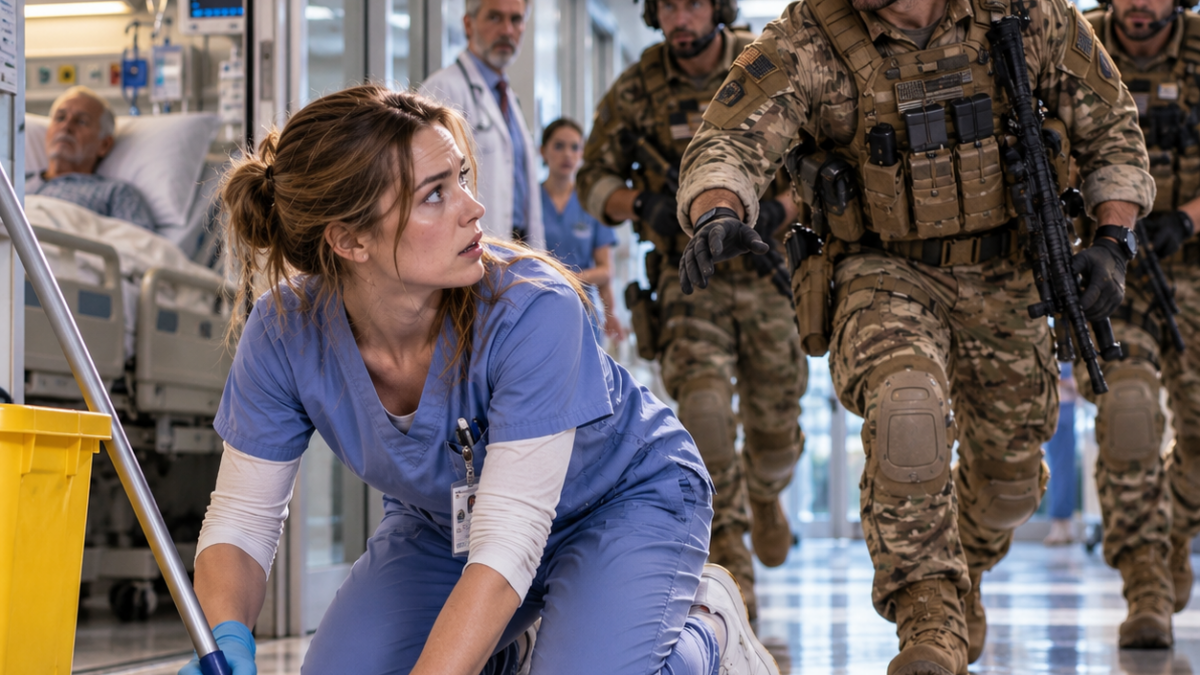
Lena set her pen down again. She looked at the wall across from the medication station.
And Theo asleep in the family room. His aunt arrived an hour ago. He fell asleep in the middle of telling her something.
Ruth’s voice had the particular warmth she reserved for information she found genuinely satisfying.
He hasn’t let go of the blanket.
Lena said nothing. Ruth waited a moment. Then the 10 patients from the critical hour, all of them holding.
Foresight is almost at space. Sandro Choa is asking for food, which Voss says is an excellent sign.
It is. Rodriguez, the paramedic, his wife, was here from 3:00.
He’s coherent and aggravated, which Voss also says is an excellent sign.
It is. Ruth was quiet for a beat.
Then you should know that four of the nurses on shift today went to admin independently and gave statements about the intake assessment, the timeline, the decontamination corridor recommendation, and the rejection.
Ruth’s voice was even before the review board was even announced.
Lena looked at her.
I didn’t ask them to do that, Ruth said simply.
They were there. There were things Lena could have said.
She didn’t say any of them.
She picked up her pen and finished the last notation on the handoff documentation. Then she looked at her hands on the paper. Still, both of them.
The tremor had been absent for the last hour, and she hadn’t noticed when it stopped.
At 6:22 p. m.
, Aldrich knocked on the open door of the small breakroom where Lena had gone to change out of her scrubs and found her sitting at the table with a cup of coffee she hadn’t drunk yet.
He sat across from her.
He didn’t lead with the case or with Ellis or with what happened next.
He said, “I’m sorry I didn’t tell you about the parallel operation.
Did you know Ellis was going to be admitted here? I knew there was an embedded asset in the regional response corridor.
I didn’t know the specific mechanism or the timeline.
He held her gaze. I would not have withheld that from you.
She believed him.
She wasn’t entirely sure the distinction mattered.
The proceeding she said how long formally? Months. The contractor network is extensive and the amended incident report opens up a separate chain of documentary evidence that the review will need to follow.
He paused. The names on the corridor authorization. That piece moves faster.
The amendment was made by someone still in an active command position. She absorbed this.
And my record, she said, restored formally and completely. He said it simply without decoration.
The compliance record you released doesn’t change the restoration.
It adds to it.
A witness who testifies against their own interests carries more weight than one who doesn’t.
She looked at her coffee cup. The two people who died, she said. Their official files will be amended.
Amended correctly this time. His voice was careful. It will take time.
The proceedings have to complete, but it will happen. She nodded.
He said, “There’s an offer on the table.
I mentioned it before. The civilian training role, naval disaster medicine curriculum, hospital partnership framework.
It would let you stay clinically active while I know what it would let me do.”
She said, “I’ll think about it.
That’s all I’m asking.”
He stood to leave. At the door, he stopped.
“You know,” he said, said, “For about 6 months after nightlass, I had your file on my desk.
I kept thinking there was something I’d missed.
Some way you could have managed both the warning and the compliance that I hadn’t found yet.
She looked at him.
I never found it, he said, because it wasn’t there.
He paused. You were given an order by someone with authority over you, and you followed it. And you were also right about the contamination.
Both things were true simultaneously, and neither one cancels the other. He held her gaze.
I should have said that to you 3 years ago if I’d been able to find you.
He left. Lena sat with her coffee until it was cold and then she drank it anyway because cold coffee was still coffee and the last 6 hours had required a great deal of her and she had not stopped moving long enough to notice how much until now. The proceedings when they came were not swift.
That was the first thing that that surprised people who had been expecting otherwise. the journalists who picked up the story from the Caldwell explosions public chemical incident report, the medical oversight bodies that began requesting documentation in the first week, the hospital administration review board that convened 11 days after the event and produced a preliminary report in 3 weeks. None of it moved quickly.
institutional accountability rarely does.
And Lena had known this since the first time she’d watched a command structure process, its own failure, which was not at night glass, but earlier before that in a context she didn’t think about very often anymore.
What moved faster was the specific piece Aldrich had predicted.
The name on the corridor Halddrich Trinidadicted in the authorization in the original nightclass incident report was attached to a command position and the amended report had removed it and the person who had ordered the amendment of procurement offer named Hart Hull who had been managing the Savar contractor relationship since the night glass operation had left documentation trail that two separate investigators found independently and converged on within In the same 72hour window, Hartwell’s suspension from active command was
announced 17 days after the Caldwell event.
Puit’s office was placed under review 22 days after the Savar Contractor Network’s supply chain documentation cross referenced between Talvat’s files, Lena’s field records, and the evidence that Ellis’s unnamed office had been quietly assembling for 18 months generated three simultaneous federal investigations across two countries.
None of this happened in a single announcement. It came in pieces in the way that accountability tends to come when the underlying structure is large.
A notice here, a a filing there, a a report that appeared in a regulatory record that nobody reads until somebody does. Lena followed it the way she followed patient lab results attentively, methodically, without investing in any particular outcome before the numbers came back. She had learned at some personal cost that investing in outcomes before they arrived was a practice, a practice that mostly produced disappointment and occasionally produced something worse.
At Harrove Valley, the formal review board released its findings 25 days after the mass casualty event.
The board’s conclusions were precise, and in Lena’s assessment, largely honest, the initial rejection of her decontamination corridor recommendation had created a delay that measurably worsened the secondary exposure situation.
The
chemical disaster cart had been inadequately stocked for a period traceable to a scheduling failure in supply management that no individual staff member had caught because the verification responsibility had not been clearly assigned. The in intake assessment procedures for industrial casualty events required revision.
Holt’s section of the report was the one she read twice.
He had given as he had said he would an accurate account. The timeline, the rejection, his own decision with the reasoning behind it.
The board found that his initial response reflected a clinical judgment, a clinical judgment made in context that was not unreasonable given the information available to him at the moment and the information he had chosen not to receive from her in the preceding 3 weeks.
That last part was the board’s language, and it was careful without being dishonest.
Holt’s response to the findings was announced the following week.
He would step back from direct oversight of nurse orientation and probationary evaluation by his own request while the department implemented a new rapid escalation protocol that nurses at all levels could use to formally flag safety concerns without routing them through the attending’s immediate assessment.
He had proposed the protocol himself. He had also proposed that his name appear on it as the author of record, which the board accepted with a recommendation that it be anonymized in training materials for clarity. He declined the anonymization.
Lena learned this from Ruth, who had been in the meeting where it was discussed. She said nothing to Halt about it directly. She was not certain she needed to, but she noticed across the following weeks the specific way he corrected new staff list publicly, more procedurally, with a quality of attention that was different from what she had seen in the first 3 weeks.
It wasn’t warmth exactly.
It was the deliberate calibration of someone who has started paying the cost of a long-standing habit and has found that the payment is possible.
People don’t change completely.
She had stopped expecting them to. They sometimes change the specific thing that did the most damage. That was rarer and worth noticing when it happened.
Talbet spent 18 days at Harrove Valley. Voss oversaw his full treatment course, including the extended protocol, and his exposure markers were at acceptable levels by day 14.
He spent the remaining four days in a legal consultation process that Lena had no direct visibility into, but what which Aldrich told her briefly was proceeding correctly. She visited him twice before his discharge. The first time they talked about the Savvar facility, the specific production wing, the layout production she remembered and the layout he remembered from from his own investigation, the gap between the two accounts that helped identify which part of the facility had been modified in the two years between her last knowledge of it and his.
The second time they didn’t
talk about any of it.
She brought him a decent cup of coffee from the staff machine that nobody outside the department knew produced better results than the public one. She sat in the chair beside his bed for 20 minutes while he read something on his tablet and she watched the window and neither of them said very much. When he was discharged, he shook her hand with both of his carefully around the remaining band dodging.
the amended names on the official night glass record.
He said, “When the proceeding finalizes them, I’ll make sure you’re notified before it goes public.”
“Thank you,” she said.
He nodded. He left. The hardest thing in the days after was not the paperwork or the review board or the slowmoving machinery of institutional consequence.
It was the morning she came in to start her shift and found that her probationary status had been formally reviewed and resolved. Her badge now read in the line below her name a single word change.
Not probationary, not the addition of some commendation or title, just staff. She looked at it for a moment in the locker room. The word was so ordinary that she had to read it twice.
Ruth appeared behind her in the mirror, tying back her hair with the efficiency of someone who has been doing this for 30 years. Administration signed off this morning, Ruth said.
I see that you don’t look happy about it.
I look, she stopped, looked at her own face in the mirror.
I look like someone who doesn’t know what to do with ordinary things.
Ruth met her eyes in the mirror.
That might be the most honest thing you’ve said since you got here.
Lena laughed. A short real sound that surprised her slightly. She put her badge on and went to start her shift.
41 days after the Caldwell event, James Barker walked out of Hard Grove Valley Medical Center under his own power with his son on one side and his sister on the other.
Lena happened to be at the nurse’s station when it happened.
She was not supposed to be her SAS shift had ended 20 minutes earlier, but she had been finishing documentation which was something that happened at the end of approximately every shift in which she had accepted as an occupational constant. Theo Barker saw her from across the lobby. He stopped walking.
His father stopped with him. The boy crossed the lobby in the slightly too large sneakers new ones Lena noticed bought to fit rather than to to grow into and stopped in front of her.
He said, “You told me the truth when everyone else was giving me the other thing.”
She looked at him. What other thing?
The thing where they say it’ll be fine.
He considered this. It might not have been fine.
No, she said it might not have been. But you stayed.
She didn’t say anything.
I just wanted to say,” he said, and then seemed to run out of the specific words he had prepared for this in the way that 12-year-olds sometimes do when the reality of a moment exceeds the rehearsed version of it.
He looked at the floor for a second. Then he looked up.
“Thank you.”
James Barker from across the lobby lifted one hand. She lifted one back.
They left.
She stood at the nurse’s station for a moment longer than necessary.
Ruth was charting 3 ft away and did not make anything of it, which was one of the things Lena had come to understand was a form of skill. She picked up her bag.
She was almost at the staff exit when her phone buzzed. Aldrich. She stopped in the corridor and read the message.
It was four lines. Brief characteristic.
He had been four lines or fewer since the day she met him.
Hartwell’s formal review completed this morning.
The corridor authorization has been officially attributed. Both amended and original incident reports are now part of the active proceeding record.
One more thing, the two members of your team, Vasquez and Okafer files have been updated. The characterization has been corrected.
She read the last two lines again. Vasquez and Okafor.
She had not said their names out loud since she’d left the facility where they died.
She had thought them regularly at specific times in the particular involuntary way that people return to things that are not finished. She had thought them during every shift here during the medication verification that took longer than 6 minutes during every intake assessment she had made while a physician looked at her like she was wasting their time.
Their deaths had been listed officially as unavoidable. Now they were not. She stood in the staff corridor with her bag on her shoulder and her phone in her hand and her eyes on the institutional gray of the wall in front of her and she was very still for a moment that had no particular duration of moment that she did not time or count or try to manage that she simply let be what it was.
Then she put her phone in her pocket and kept walking. The staff exit opened into the parking structure.
The ramp leading up from the lower level had a long gradual incline and a right angle at the top that always delivered a sudden quantity of late afternoon light regardless of the cloud cover. And today the light was low and slightly reddish and came through the ramp opening at an angle that made the ordinary concrete of the structure look briefly like something that had been lit for purpose.
She walked through it. She had parked on the second level and she was almost to her car when she heard footsteps on the ramp behind behind her. Not a hospital worker.
The footfall pattern was wrong, deliberate, paced with the specific rhythm of someone who was maintaining distance and closing it at the same rate regardless of how fast she walked. She turned around. The parking structure was mostly empty at this level.
Two other cars, a support column 20 ft behind her. The ramp she had just come up. Nothing.
She stood still and listened. The footsteps had stopped when she stopped. She waited 10 seconds.
She took three steps toward her car. The footsteps resumed.
Her hand went to her phone. She unlocked it.
She had Aldrich’s number on the screen in two seconds, and she held the phone ready without dialing, and she turned around again.
A man stepped out from behind the support column. Not Puit, not anyone she recognized from the events of 41 days ago. He was younger than she expected, late30s, maybe with the kind of face that is aggressively average by design rather than accident.
The face of someone whose job requires them not to be memorable. His He was holding something, not a weapon, a folder.
Manila standard, the kind that exists in every bureaucratic institution in the country. He held it out toward her.
This is for you, he said. His voice was neutral, unhurried, the voice of a courier, not an operative, which was either reassuring or its opposite. And she had long since learned that the difference between those two things was not always detectable at the moment of contact.
She looked at the folder. She looked at him.
She didn’t take it.
Who sent you? She said.
He said a name she didn’t recognize.
He said it attached to a designation she did recognize.
The same design had used to describe the office that didn’t appear on any organizational chart accessible to Puit.
The same office that had spent 18 months building a case and had decided apparently that engineering a controlled crisis in a regional ER was a proportionate investigative method. her jaw tightened.
“What’s in it?”
she said.
“An offer,” he said.
“And some information we believe you don’t currently have.”
“What information?”
He glanced at the folder.
“The Savar facility was decommissioned 6 months after the night glass incident.
The official record shows a controlled shutdown due to safety violations.”
He paused. The facility was reactivated 14 months ago under a different name, a different country of registration, same contractor network. She stared at him.
The compound that was released at Caldwell, he said, the modified formulation, it wasn’t in production at Savar.
It was in production at the reactivated facility. He held the folder out again, and 3 weeks ago, a shipment left that facility.
destination unconfirmed. She took the folder. She opened it.
The first page was a compound specification she recognized, the same metabolic profile she had documented, the same modified formulation that had been absorbed by 10 of her patients and one covert operative with chemical burns and a talent for playing sick. The second page was a shipping manifest with four destinations listed and two of them redacted. The third page was a map.
She recognized the port of origin. She recognized two of the transit points. And on the fourth page of photograph, grainy and timestamped, the kind that comes from a surveillance feed, a 40 meter focal length, she recognized a face, not from the night glass incident, not from Caldwell, from earlier, from a procurement briefing she had attended 3 years before the night glass operation, sitting in the back of a room in a
building that no longer officially existed, listening to a logistics chain presentation she had found unremarkable at the time.
The face in the photograph was the face of the person who had authorized the Savar contractor network’s initial operating agreement.
He was currently standing at a cargo terminal in a country. The map labeled in six point font and the timestamp on the photograph was 3 days ago. She closed the folder.
She looked at the man with the average face. The offer, she said, is inside, he said.
page seven.
She didn’t open it again.
Not here.
Tell whoever sent you, she said that I’ll read it tonight.
He nodded. He walked back toward the ramp and descended without looking back.
She stood in the parking structure with the folder under her arm and the late afternoon light coming through the ramp opening and her hands at her sides, and she noticed that they were not shaking. She noticed this the way she had been learning to notice things about herself without conclusion, without deciding immediately what it meant, just as a fact that existed and could be looked at and then said alongside other facts until the full picture had enough pieces to be read accurately.
Her hands were not shaking. She got in her car.
She set the folder on the passenger seat. She looked at it for a moment and then she looked at the concrete ceiling of the parking structure and then she looked at the ramp that led back down to the hospital entrance where in approximately 14 hours she was scheduled to begin another shift.
She started the car.
She read page seven that night at her kitchen table with a cup of tea she hadn’t intended to make and a lamp that needed a higher wattage bulb and the specific quality of silence that exists in an apartment where one person lives and has arranged everything exactly as they prefer and has not yet decided whether that is a form of freedom or a form of hiding.
The offer was not what she expected.
It wasn’t a recruitment.
It wasn’t a request for operational involvement, for fieldwork, for anything that would require her to stop being Lena Marsh and start being something with a code designation and a cover identity.
It was a request for testimony, formal, documented, delivered in front of a multinational oversight panel that had been convened specifically to address the reactivated SAR contractor network. a panel that had jurisdiction.
The individual federal proceedings did not. And that had been waiting for 18 months for a witness with both the technical knowledge and the documented history to make the contractor chain visible in a way that was legally unassailable.
They needed her to speak in person, on record, under her own name. She read it twice.
She set it face down on the table. She drank her tea, which had gone lukewarm while she read, and she looked at the window across the kitchen, where the street light outside made a rectangle of amber on the wall that moved slightly whenever a car went past.
She thought about the two redacted destinations on the shipping manifest. She thought about the face in the photograph at the cargo terminal. She thought about a procurement briefing she had sat in the back of seven years ago and found unremarkable.
Then she thought about Bay 3, about a triage clipboard being taken from her hands in front of a department full of people. About a boy with sneakers slightly too large for his feet sitting on the floor in a hospital corridor because she had told him to stay there and he had trusted her enough to do it.
She was not those things in opposition to tuther. She had spent three years trying to build a life where the second set of things could exist without the first and the last 41 days had demonstrated with considerable thoroughess that the attempt had been structurally un unsound from the beginning.
She wasn’t two people.
She had never been two people. She picked up her phone and sent Aldrich a message. set up the call with the panel.
I’ll testify.
His response came 4 minutes later, which told her he had been awake and waiting.
I’ll confirm the date tomorrow.
Get some sleep. She did not get much sleep, but she got some. The panel convened 49 days after the Caldwell event in a city three time zones away in a building that had the deliberately uninspiring exterior of an institution that did not want to be photographed.
Lena flew out on a Tuesday
morning and arrived with a carry-on bag and the folder from the parking structure and a new badge in her wallet that said staff instead of probationary and which she had brought for no particular reason she could name. The testimony took 2 days. On the first day, she gave the technical account, the compound profile, the metabolic cascade, the modified treatment protocol, the field documentation from the night glass operation in the sequence it had occurred.
She was questioned by four members of the panel and two independent technical consultants and the questions were precise and sometimes adversarial in the particular way people who need to test the integrity of evidence rather than the integrity of the witness. She answered all of them. On the second day she gave the personal account.
She described the evacuation corridor, the contamination warning she had filed, the order that had been issued after it, her own voice on the recorder saying she would comply, the four people who walked through a corridor she had flagged, and the two who did not walk out the other side. She did not allied any of it.
She did not present the parts that reflected well on her in isolation from the parts that didn’t.
She gave the panel the complete sequence and let it stand as what it was. A record of an imperfect person doing an imper imperfect thing under pressure in a system that had failed to protect the people inside it and then spending 3 years deciding whether to tell the truth about her own share of the failure. The panel chair, a woman in her 60s with silver hair and the particular stillness of someone who has heard a great many testimonies, asked her one question at the end of the second day that was not on the official list.
Why now?
She said, you’ve had this documentation for 3 years.
Lena thought about how to answer this honestly.
because 10 people nearly died in front of me,” she said, and I had to decide in real time whether the information I was holding was mine to keep.
The chair studied her for a moment.
“And your conclusion, that it was never mine,” she said.
“Not any of it.
The warning I filed, the order that overrode it, what I did afterward, those things involved other people’s lives.
The documentation of them belongs to those pe people to the people who died to the oversight process. She paused.
I kept it because I believed I was protecting classified information. Then I kept it because I was frightened of what releasing it would mean for me.

