Three Weeks Before Our Wedding, His Ex Sent Me a Deposit Receipt—For My Venue, My Date, and Her Name – Part 2
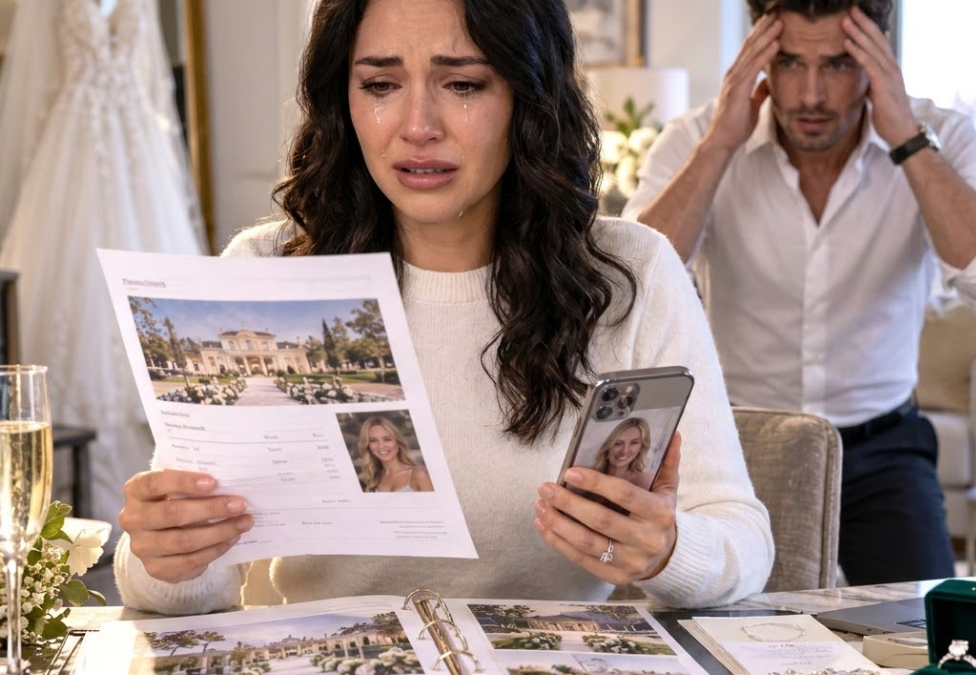
I needed 11 seconds. The wedding is cancelled.
Natalie reached for my hand.
Ethan whispered, “And us?”
I answered, “You already built a relationship where us has had two definitions.
I’m done using yours.”
The next morning, I called Blackwood Estate at 8 Sharp. Melissa answered personally.
The Garden Pavilion wedding is cancelled, I said. She was quiet for a beat.
I’m sorry.
I’m not.
That was partly true. I was shattered, but I was not sorry about the cancellation.
Those are different emotions. She explained the refund structure because we were inside 30 days.
Most deposits were non-refundable. Some vendors would return partial amounts.
Blackwood could credit a future event within 18 months, but I had no interest in holding my 36th birthday party in the room where I nearly married a man with a second bride. Then Melissa asked the question that became the headline in my mind for weeks.
Do you know which contract Ethan intends to cancel? I closed my eyes.
No, Amelia’s event remains active.
I know. She hesitated. Do you want me to prevent transfer of any credits from your contract to hers?
Yes, absolutely. The word felt like a door locking. I called my lawyer before 9.
I had never needed a lawyer for a relationship. We were not married, which simplified some things and complicated others. The joint account contained $36,000, mostly wedding savings from both of us.
The apartment lease had 8 months remaining.
A car loan was in Ethan’s name, not mine.
We had no joint property yet. Thank God. Our planned house closing was five weeks after the wedding.
We had already submitted a mortgage pre-approval package. My attorney told me to notify the lender immediately that the purchase was cancelled and to freeze any outgoing transfer from my personal accounts.
I called the bank, then the lender, then the realtor. Every call sounded absurd.
Hi, yes, the wedding and house are both cancelled because my fiance is also engaged to someone else. There is no professional tone designed for that sentence.
By lunchtime, my wedding had transformed into a cancellation project. Venue, photographer, florist, JJ, transportation, hotel block, efficient, caterer, hair stylist, makeup artist, rental company, rehearsal restaurant, stationer. Each conversation hurt differently.
Some vendors were warm, some purely contractual. One coordinator cried.
The photographer said, “Honestly, this is the first time I’ve heard this one.”
I said, “I’m delighted to innovate.”
Humor kept me upright. At 2, my mother called. Natalie had held the secret as long as physically possible.
My mother said, “Baby, that was all.
” I cried so hard I could not speak.
I was 35 years old, director level at work, financially independent, capable of managing teams across three time zones, and suddenly my mother calling me baby reduced me to a child who had dropped something precious. She drove up with my father that evening. Dad did not ask for details at first.
He hugged me, then walked into the kitchen and began fixing the cabinet hinge he had complained about for 6 months. Men from his generation sometimes love through hardware.
Eventually, he said, “I liked him.”
“So did I.”
Dad tightened a screw.
“That makes me feel stupid.”
I looked at him.
“Why?”
“Because I didn’t see it.
Neither did I.”
He nodded, still focused on the hinge.
Then he said, “That doesn’t mean there was nothing to see.
Just means he was practiced.”
“Practiced.”
That word helped because shame was beginning to creep in. How did I not know? Why had I trusted him?
What signs had I missed? But deception is not an exam.
The betrayed person fails. If someone is deliberately giving you false information, believing them is not stupidity.
It is the expected result. Amelia called that evening.
I confronted him. I sat on the floor beside my bed.
What happened? He came over after leaving here.
Yes, of course. He moved from bride to bride like a candidate visiting undecided districts. What did he say?
That he loves me? That you cancelled?
I laughed bitterly. So, I made the decision for him.
That’s what it sounded like.
There was a silence. Then she said, he asked if we should keep the wedding.
I closed my eyes. What did you say? No.
Relief moved through me so unexpectedly, I felt guilty. Good.
I almost said yes. I appreciated her honesty.
Why? Because there was a part of me that wanted to win. There it was.
The thing women are rarely supposed to admit, she continued. I wanted proof he came back because I mattered more.
I wanted to believe you were just the wrong detour, I swallowed.
And then, and then I realized if I married him after learning all this, I wouldn’t be winning you.
I’d be inheriting him.
I laughed. A real laugh.
The first in two days.
That’s a good line.
It’s also true.
We sat in silence, strangers tied together by one man’s indecision.
Amelia said, “I’m cancing tomorrow.”
“Do you want help?”
The question surprised both of us.
She said, “Maybe with the venue.”
I can tell you what Melissa said. And that was how the ex-girlfriend who was supposed to be my rival became the only person on earth who fully understood the absurdity of cancing a wedding scheduled for the same day as mine.
For the next week, Ethan tried everything except accepting reality. Apologies, flowers, emails, voice messages, a letter left under my door, a message to Natalie, a call to my father, which my father ended in under 30 seconds. He alternated between remorse and explanation.
He said reconnecting with Amelia had happened during a vulnerable period. He said the engagement to her had spiraled. He said wedding planning became difficult to stop once money was committed.
He said he never intended for both events to remain active this close to the date. He said he thought he would feel certainty.
I saved every message, not for emotional reasons, for legal ones, because my lawyer wanted documentation regarding the joint funds. Ethan eventually admitted in writing that he had used $11,240 from the joint wedding account for expenses associated with Amelia.
That email became very useful.
The bank could not simply reverse authorized payments, but my attorney sent a formal demand letter for reimbursement from Ethan’s separate funds.
He paid within 4 days. That told me something, too. He had the money.
This had never been desperation. It had been entitlement.
At work, I told my boss only that the wedding was cancelled because of serious dishonesty. She did not ask for gossip. She moved two presentations off my calendar and told me to take Friday.
My colleagues had already contributed to a wedding gift. Someone quietly returned it.
That kindness nearly undid me. What surprised me most was not the embarrassment.
It was the administrative violence of losing a future. I had dozens of calendar entries that now meant nothing.
Dress fitting, marriage license appointment, hair trial, welcome dinner, airport pickup for Aunt Grace, final floral meeting, honeymoon departure, house inspection. My phone kept reminding me about a life that no longer existed. Cancelelling digital reminders became a ritual.
Delete. Delete. Delete.
Each notification was proof that the future can leave traces before it ever happens. One evening, I found our honeymoon packing checklist, sunscreen, adapter, white linen dress, Athens motion sickness bands, passport copies. I sat on the bathroom floor and cried over motion sickness bands.
Grief is humiliating in its specificity.
Not because I wanted Ethan back, because I wanted the version of myself who had been excited about airport snacks and hotel balconies and becoming someone’s wife.
Losing a person is one grief. Losing the self you were becoming beside them is another.
Amelia and I texted more often than I expected. Not constantly, not like friends, more like survivors comparing maps.
She discovered Ethan had told her I was obsessed with having a baby before 37 and that our relationship became controlling around timelines. I discovered he had told me Amelia cheated during their first relationship. She had not.
She told me Ethan said I had pressured him to buy a suburban house he hated. He had been the one sending me listings. I told her he said she cared more about career status than people.
She laughed. I work in brand strategy. Of course, he made that sound evil.
The lies had purpose. He had designed each of us to justify the other.
To me, Amelia was glamorous, but unreliable. To her, I was stable, but suffocating.
He kept both stories believable enough that if either woman appeared, the other already came pre-labeled. That was one of the darkest discoveries. Ethan had not only hidden us, he had prepared us to distrust each other.
I began rereading old conversations with new eyes.
Two years earlier, he once said, “I could never be with someone who treats relationships like networking.”
At the time, I assumed he meant a coworker. Now, I knew he meant Amelia.
The previous winter, after I mentioned wanting to try for a baby the year after marriage, Ethan said, “Some people think children are the only proof of life mattered.
” I thought he was philosophizing.
Now, I wondered if he was repeating an argument from Amelia. We had been in the same room emotionally long before we knew each other existed.
10 days before what would have been the wedding, I collected my dress. The bridal salon had offered to store it while I decided whether to sell, donate, or alter it. I went alone.
The stylist, Tessa, carried the garment bag out carefully.
You don’t have to look at it, she said.
I want to. She unzipped the bag.
There it was. Ivory silk, square neckline, long clean skirt, no lace, no glitter. Exactly what I wanted.
I had expected to hate it. I did not.
The dress had done nothing wrong. I touched the fabric.
Tessa said, “You could sell it unworn.
You’d probably recover 70%.”
“Maybe, or we can alter it into something else later.”
I looked at her like what? She shrugged.
“Shorten it.
Die it. Turn it into an evening dress.
I’ve had women do Stranger Things, the idea lodged somewhere, not because I wanted symbolism, because I suddenly resented how much of the wedding industry assumes every object belongs permanently to the marriage it was purchased for.
The dress was mine. I paid for it. I liked it.
Why should Ethan own its meaning? I took it home. Natalie helped me hang it in the back of my closet.
She said, “You know, you don’t have to turn everything into a lesson.
I know you’re doing the face.
What face? The face where you are trying to emotionally optimize disaster.
I laughed. She was right.
Not every betrayal needs to become wisdom immediately. Sometimes it is allowed to simply hurt.
5 days before the canceled wedding, my landlord called. Ethan wanted off the lease.
I agreed, but only after his share of the remaining rent was settled according to the lease transfer. He had already moved most of his things while I was at work one afternoon. The apartment looked larger, too large.
The framed photograph from our trip to Maine was gone from the hallway. His expensive espresso grinder was gone. Half the coats in the closet disappeared.
The bathroom counter had opened space where his shaving bag used to sit. I walked from room to room touching evidence of absence.
The strange thing was how quickly a shared home becomes singular. His side of the bed was simply a side of the bed again. His shelf was a shelf.
The hook near the door where he hung his keys became empty hardware. I expected freedom to feel triumphant. Mostly it felt quiet.
That night he sent one message. Can I see you before Saturday?
I knew which Saturday he meant. The wedding day that no longer belonged to either bride. I typed why?
He replied. I need to apologize in person. I considered refusing.
Then I asked my therapist whom I had started seeing within the week because I knew enough about myself to recognize that spreadsheets alone were not going to solve this.
She asked, “What do you want from the meeting?”
Nothing. Then why go to see whether that is true? So I agreed to meet Ethan at a public cafe Friday afternoon.
He arrived early.
Of course, the irony would have been funny if Amelia’s ring engraving had not already ruined the concept of punctuality.
He looked terrible. Not movie terrible, real terrible.
Unshaven, tired, shirt wrinkled, eyes red. I felt a moment of instinctive concern. Four years does not vanish because someone behaves cruy.
Then I remembered that compassion does not require access. I sat.
He said, “Thank you for coming.”
I nodded. For several seconds, neither of us spoke.
Then he said, “I’m sorry.
I know. No.
I mean, I know I’ve said it, but I need you to understand.
I see how insane this was. Do you? Yes.
What was the plan? He looked down.
I didn’t have one.
That’s not true.
I had possibilities. Then tell me, he exhaled.
This was the first time he described it without euphemism. After reconnecting with Amelia at a conference 11 months earlier, he felt pulled toward the life they once planned. She had changed.
He had changed. Their old relationship had ended partly because he wanted domestic stability and she wanted mobility.
Now, ironically, he felt the opposite. He was 37 and terrified that buying a house, having children, and settling near my family would permanently close other versions of himself.
Amelia represented mobility, London, travel, no children, risk. I represented home, family, predictability, children, continuity.
He loved both pictures, so he kept both. At first, he told himself he was only talking to Amelia, then only sleeping with her, then only seeing whether old feelings remained, then only considering what a different future might look like.
Every boundary became temporary. When Amelia pushed for commitment, he proposed because he was afraid she would leave. When I pushed forward with wedding planning, he continued because he was afraid I would discover his doubt.
Two fears, two rings, two contracts, one cowardice. Why the same date?
I asked. He looked embarrassed.
I thought it would force me to choose. I stared at him. That was the most ethan answer possible.
He had turned a moral decision into a deadline system. You scheduled your conscience. He winced.
Yes.
Did you imagine what happened to the woman you didn’t choose?
I told myself I’d end it before it got that far.
It got that far. I know. 3 weeks.
I know. Were you going to let one of us keep planning until 6 days before her wedding? His eyes filled.
I don’t know.
That is the answer. He wiped his face. I hate myself for this.
I’m not interested in you hating yourself.
He looked surprised. That would still make you the center.
He leaned back. I continued. What you do with this after me is your responsibility.
Therapy, honesty, celibacy, a monastery. I do not care. But I am not going to become the woman who spends the next 5 years checking whether your remorse is sufficient.
He nodded slowly. I understand.
Do you? I think so, I asked.
If I had not found out, who would you have chosen? He looked at me. This question had haunted me.
Not because I wanted him to say me, because I wanted to know if some ranking existed that could explain the cruelty.
Finally, he said, “I don’t know.”
And something inside me relaxed. It sounds strange, but uncertainty freed me. If he had said me, I might have been tempted to measure myself against Amelia.
If he had said her, I might have carried rejection like a verdict.
I don’t know meant the decision had never really been about our worth.
It had been about his inability to live one life. Honestly, I stood.
He said, “Laura.”
I looked at him. I did love you. I know that surprised him.
I added, “That’s why this is worse, not better.”
Then I left. The next day was October 17th. I woke at 5:41 on the morning.
I was supposed to get married. My alarm had been scheduled for 5:45, hair at 7:00, makeup at 8:00, photographs at 10:00, ceremony at 4:00. I turned off the alarm and lay in bed.
For months, I had imagined that morning in detail, Natalie sleeping in the other room, my mother knocking too early, coffee arriving in cardboard trays, someone steaming dresses, music, flowers, chaos. Instead, the apartment was silent.
At 6:30, my mother texted, “I love you.”
No plans unless you want them.
At 7, Natalie texted, “I have coffee and zero emotional agenda.”
At 7:05, Amelia texted, “Still breathing?”
I laughed. I typed back annoyingly, she replied.
“Same.
Neither of us had left town. That had felt important. We were not fleeing the date.
We were surviving it in our own cities.”
I showered, put on jeans, made toast. At 10, I opened social media and immediately regretted it.
The algorithm remembered the wedding better than some relatives did. Advertisements for honeymoon luggage, personalized napkins, bridal skin care, name change services. I deleted the apps for the day.
At noon, Natalie arrived. She held up two garment bags. I frowned.
What is that? Option A and option B? She unzipped the first.
My wedding dress. The second contained a black leather jacket. I stared at her.
No. Yes.
What are you proposing? Nothing symbolic unless you want it.
But you paid for the dress. It fits and you look incredible in it.
We can take photographs somewhere ridiculous. Or we can put it back.
Your call. I laughed.
You are insane. Correct.
At 1:30. I put on the dress.
Not the veil. Not the shoes. Just the dress and the leather jacket.
My mother cried when she arrived. then apologized.
Dad said, “You look expensive.”
That was apparently his compliment. We went to a small botanical garden near the river. Not Blackwood.
Anywhere but Blackwood. Natalie took photographs on her phone.
My parents walked ahead. I held coffee in one hand and the skirt in the other.
At some point, I stopped feeling like a bride abandoned before marriage. I simply felt like a woman wearing an impractical dress in October. We ate burgers afterward.
I got ketchup on the hem. I did not care.
That stain became one of my favorite things about the dress. Later, Tessa shortened it professionally, removed some of the train, and dyed the silk a deep midnight blue. I wore it to a charity gala the next spring.
When someone complimented it, I said, “Thank you.”
I did not tell the story. That mattered. Not every object needed to remain evidence.
Amelia spent October 17th with two friends in a cabin outside the city. We did not meet. I was glad.
Our bond was real, but fragile. Too much closeness too quickly could have turned shared betrayal into a different kind of dependency.
We spoke occasionally, exchanged information when lawyers needed documentation, sent each other screenshots when one of Ethan’s explanations contradicted another, then gradually less.
By December, weeks could pass without contact. That was healthy. We were not destined to become best friends because one man lied to both of us.

