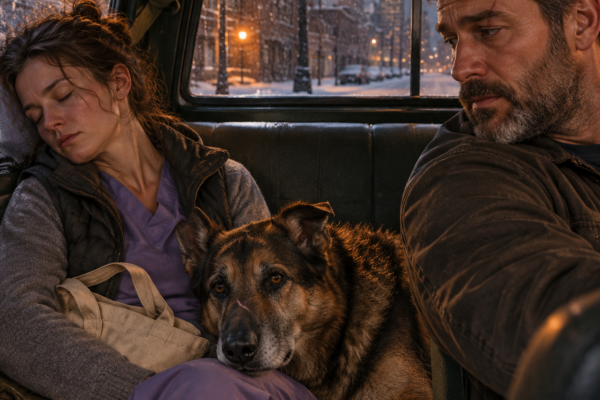
I Threw Out My Back Carrying My Neighbor’s Couch. She Knelt Over Me: “Tell Me Where It Hurts.”
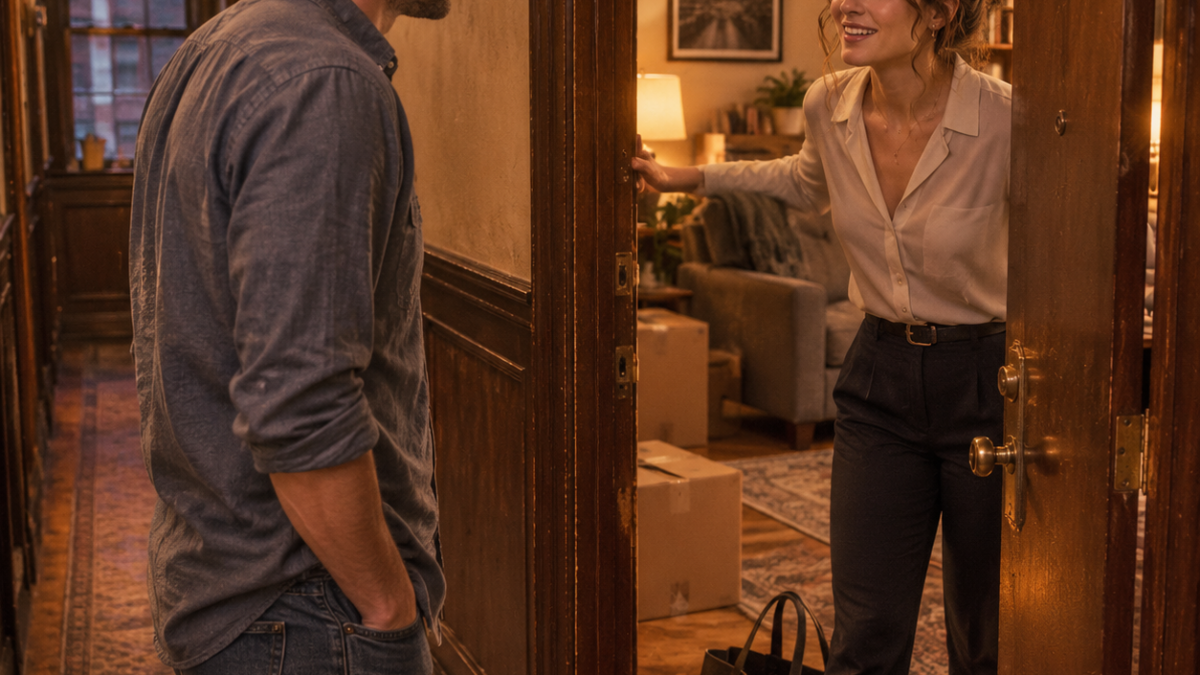
I Threw Out My Back Carrying My Neighbor’s Couch. She Knelt Over Me: “Tell Me Where It Hurts.”
The couch had barely touched the floor of Claudia Russo’s living room when my lower back clenched like a fist, and I folded down onto the bare boards beside it. I managed to land on my side instead of falling flat, which felt like the only dignified part of the afternoon. Claudia dropped her end, crossed the room in two steps, and knelt over me with both hands hovering in the air as if she were afraid to choose a spot.
– Tell me where it hurts, she said in the flat, steady voice of someone who had decided to be calm on purpose.
My name is Peter Sorenson, and I write technical documentation from my kitchen table. Until that afternoon, Claudia had been the new woman across the hall with a great many boxes and a very good laugh. She had knocked on my door an hour earlier, apologetic and already holding a roll of packing tape, as though it might help persuade me.
The delivery crew had refused to carry the couch past the street door of our old Chicago walk-up, and the stairwell turned so sharply on the way to the third floor that I understood their reluctance by the first landing. I took the heavy end because I am taller, and because I said in a tone I would later regret that I had done this before. We tilted, pivoted, and muttered our way up three flights, and everything went perfectly until the last lift over her threshold, where my back made a decision without consulting me.
– Low back, right side, I told the floor. And it isn’t subtle.
She asked whether I could feel both legs, so I wiggled my toes and flexed my feet to prove it, and her shoulders dropped about an inch. She asked about numbness or tingling, and I said the only strange sensation I had was a deep resentment of her furniture.
– It’s a very nice couch, I said, and I want that on the record before the paramedics arrive.
Claudia said nobody was calling paramedics, but her mouth twitched, and the laugh that got out of her sounded relieved and slightly furious at itself. She pulled out her phone anyway and read the warning signs aloud: numbness in a leg, real weakness, trouble with the bladder, pain that kept climbing. If any of those appeared, she said, we were going to the emergency room and I was not allowed to argue, and I agreed on the condition that she stopped looking at me like a dropped vase.
She said I looked more like a dropped bookshelf, and her hand stayed near my shoulder all the same. After a few minutes of lying still, she proposed a plan for getting me upright, and it was ambitious in the way I would come to recognize as pure Claudia. First she suggested calling a neighbor with a car, then she suggested carrying me herself, and I pointed out that the last thing the two of us had carried was currently sitting crooked in her living room and had already won.
She conceded the point with a grudging nod and settled on the version that worked, which was rolling me carefully to my side, letting me push up with my arms, and bracing my shoulder while I found my feet. I came up bent over like a question mark, breathing through my teeth, and she slid under my arm with a competence that surprised me. Neither of us said anything about how close that put her, though I noticed that she smelled like cardboard dust and orange peel and that she did not hurry.
The trip across the hall was perhaps 12 steps, and it took us the better part of five minutes. She opened my door because I had left it unlatched, and I watched her take in my apartment the way people do when they have only ever seen the outside of a neighbor’s life. She saw the desk with the two monitors, the shelves where the paperbacks outnumbered everything else, and a fern that was clearly in the middle of a long argument with the window.
She eased me onto my own couch, which has never done anything to my spine, and I said I would like to apologize to it for the comparison. When I mentioned that I had pulled my back once before in college and that it had sorted itself out in a week, she asked whether I had a doctor or a nurse line I could call tonight. I found the number on the back of my insurance card, and she waited by the window while I explained myself to a patient stranger on the phone.
The nurse told me what Claudia had already read off her screen, plus a few sensible additions: gentle movement was better than a long stretch in bed, over-the-counter pain relief was fine if I followed the label, heat could help after the first stretch of time, and I should call back or get seen quickly if anything on that list of warning signs appeared. I repeated all of it to Claudia the way a man repeats instructions he has no intention of improvising, and she nodded as though she were taking notes in her head. Then she announced that she owned a heating pad, that she knew which box it was in because she had labeled it “bathroom, probably,” and that she would be right back.
I said she did not have to do that, and she said she knew, in a voice that made it clear the sentence had no bearing on what she was about to do. She returned in six minutes with the heating pad, a bottle of water, and a pillow from her own bed that she claimed was the firmest one she had. She plugged the pad in, set it against my lower back with a care that made me stare at the ceiling, and put the water on the shelf where I could reach it without bending.
By then, the job was clearly done, and she could have gone home with a perfectly respectable conscience. Instead, she stood in the middle of my living room reading the spines on my bookshelf, then asked whether I had eaten, then asked whether I could manage the bathroom on my own. I told her I could, and that I would prefer she stop planning my evening around me, and she held up both hands in surrender.
We bargained for a minute like two people haggling over a used car, and in the end the offer was small and specific: she would knock once in the morning to see how I was doing, and I would not be required to entertain her.
– Once, I said.
– Once, she agreed, but loudly.
She picked her keys off my coffee table, crossed to the door, and stopped there with her hand on the frame for a moment longer than the conversation called for. I heard her cross the hall and I heard her door open, and then I lay there listening to what sounded like nothing until her lock finally clicked a good half minute later than the distance required. The heating pad warmed the knot in my back into something almost bearable, and the apartment filled up with the particular quiet of a place someone has just left.
I told myself the whole thing was guilt, because guilt was a neat, respectable explanation that did not require me to hope for anything. She had asked me to carry her couch and I had broken myself on it, and any decent person would feel obliged to show up the next morning with a heating pad and a worried face. But I kept replaying the way she had lingered in my doorway long after there was anything left to fix, and I could not decide whether a woman who feels responsible for a man stays like that, or a woman who wants to know him does.
At 9:30 the next morning, I would find out which of those two women was going to knock. Claudia knocked at 9:30 exactly, and she kept her word about the volume. I was already standing at the kitchen counter with my laptop propped on a stack of cookbooks because sitting had turned out to be a worse idea than lying down.
She looked me over from the doorway the way a mechanic looks at a car that has come back after a repair, and she asked me to walk to the window and back. I did, with a stiffness I hoped read as dignity, and she nodded and left after about four minutes. That evening she knocked again with a container of soup, and when I pointed out that she had said once, she explained that the morning visit and the dinner visit were obviously different categories.
I accepted the soup and the ruling because the alternative was arguing with a woman who was holding something hot. By the third day, I could cross my apartment without planning the route, though bending and stairs still felt like negotiations I kept losing. Claudia came by after work each evening in the clothes of someone who spent her days reconciling other people’s paychecks, with her badge still clipped to her bag and a dish covered in foil.
She also arrived with ideas. On Thursday she announced that she could come at lunch as well, do my grocery run on Saturday, and rearrange my kitchen so that nothing I needed sat below waist height. She had measured my cabinets in her head, I could tell, and she was already halfway to a spreadsheet.
I told her plainly what I could handle, because I had been working out the list all afternoon: I could shower, dress, and make toast, and I could type standing up, which my back preferred to the chair anyway. What I could not do was carry the trash down three flights or lift a full grocery bag, and those were the only two things I would take help with. I also did not want her giving up her lunch break to stand in my kitchen, and I said so with more force than I intended because I had quietly decided her time was worth more than my inconvenience.
Claudia went still for a moment, and I watched her swallow the entire rest of her plan.
– Okay, she said, and I think she meant it, which is what made me feel briefly like a fool.
She came back an hour later with a smaller offer, delivered like a contract she had trimmed down: she would take my trash on her way out, and she would cook a little too much when she cooked, which I was free to eat or waste. I ate it, of course, and the dish that night was her grandmother’s baked ziti, brought over in a pan that still carried a strip of masking tape reading “Russo — Return.” She set the table in my kitchen without asking where anything was and found every item on the second try.
We ate with the radio low and the fern watching us from the windowsill, and somewhere between the first plate and the second, the conversation stopped being about the couch. I asked why she had bought one so large for an apartment with a staircase like ours, and she said it was the first thing she had ever chosen for a place that belonged only to her. She had lived with roommates, then with a boyfriend who liked a very gray sort of furniture, and for this apartment she wanted everything to feel picked on purpose.
Then she looked at me and said that her first purchase had put me flat on the floor, and that she could not decide whether the couch deserved a medal or a lawsuit. I told her the couch deserved a promotion because it had at least gotten her to knock on my door. She laughed, and then she looked around my kitchen with an interest she did not bother to hide.
She asked about the shelves, and I admitted that I owned the paperbacks in the order I had panicked while buying them. She asked about the fern, and I told her its name was Gerald and that it had been dying elegantly since last spring. She asked what a technical writer actually does all day, and I said I wrote the instructions nobody read until something was on fire.
– So you’re basically the person who warns people, she said.
I said I was the person who warned them in section four after the screenshots, and that this was why my job took a certain amount of faith. When the pan was nearly empty, she stood and began gathering plates, which was the natural end of the evening and also the end of any reason she had to be there. I heard myself ask whether she knew if ziti could be reheated the next day, as though I were preparing to do a great deal with a quarter pan of leftovers.
She answered with real seriousness about foil and low temperatures and a splash of water, and I let her finish before I put my fork down.
– Stay and finish this with me, I said. There’s nothing I need carried, and I just don’t want to eat the last piece alone.
Claudia stood there holding two plates for a second, and then she set them back on the table and sat down with the look of someone who had decided not to make a speech about it. We split the last of the ziti and the end of a loaf of bread I had been guarding, and we talked about nothing that required either of us to be useful. She told me about a coworker who labeled every item in the office fridge with the date of its birth, and I told her about the fire marshal who once read my manual aloud at a conference in a voice that made it sound like a threat.
Neither of us mentioned that the heating pad sat unplugged on the couch, or that I had stopped wincing when I laughed. When the dishes were finally in the sink, she stood and found her keys, and I noticed that she did what she had done the night before, stopping at my door with her hand on the frame. This time she turned around instead of pretending to listen for something in the hallway.
– Tomorrow at 6:30, she said. I’ll knock twice, so you’ll know it’s me and not the building inspector.
I said 6:30 was fine, and that I would be vertical, and that she should bring nothing except her opinion about Gerald. She smiled and told me she had a lot of opinions about Gerald, and then she crossed the hall, and I heard her lock click much sooner than it had the night before. I stayed where I was with my hand still resting on the door, which was when I understood that I had spent half the evening waiting for her to name a time, and that I had not once thought of naming one myself.
My back, meanwhile, was getting better faster than anyone had promised, and that made it harder to explain why I was standing there so quietly, hoping she would knock again. Over the next five days, my back improved the way a bad Wi-Fi signal improves, in stubborn bars that came and went. I did what the nurse had told me to do, which meant short walks around the block, gentle stretches on the kitchen floor, and pain pills only by the label.
By the sixth day, I could carry my own trash down three flights if I kept the bag light and treated the landings as rest stops. Claudia caught me on the second flight and took the bag anyway, but she did it with a shrug instead of an argument. Her offers had changed too: she no longer proposed lunch visits and rearranged cabinets, and when she asked whether I needed anything from the store, the question trailed off at the end as if she were checking whether the offer was still welcome.
I kept answering no, and I noticed that every no sounded a little worse than the last one. On Friday afternoon, I worked out the arithmetic of the evening ahead: she would knock twice at 6:30, I would have nothing left to want from her except her company, and I would let her leave without saying so. That seemed like a stupid way to spend a good week, so I decided to stop waiting for her to bring a reason.
I listened for the street door at the usual hour, and when I heard her on the stairs, I opened mine before she reached the landing. She stopped with her bag on one shoulder and her badge still clipped to the strap, looking me over for signs of a relapse.
– Tomorrow, dinner, my place, seven, I said. Bring nothing. No soup, no heating pad, no plan.
Claudia asked whether this was a medical thing, and I told her it was a cooking thing and that I needed a second opinion from someone who would not just be polite. She said she was not sure she could promise that, and I said that was exactly why I was asking her. I spent Saturday preparing for dinner the way I prepare for a product launch.
I chose chicken thighs, potatoes, and green beans because the whole thing could go on one sheet pan and require almost no bending. I read the recipe three times, rewrote it in the order I would actually do things, and taped the revision to a cabinet door at eye level. I put the heating pad in the hall closet because I wanted the apartment to look like a place where a man lived, not a recovery ward.
I cleared the paperbacks off the table, moved Gerald to a spot with better light, and noticed with some embarrassment that I had also shaved. Gerald did not seem to appreciate any of it, but the kitchen smelled like lemon and rosemary by half past six, and I carried the pan out of the oven with my knees bent and my spine upright, like a man who had learned something. She knocked twice at seven and stood in my doorway with both hands held out in front of her, palms up, as if I had asked for proof.
She had taken off the badge and changed into jeans and a green sweater, and her hair looked like she had put it up and then taken it down again. I told her she looked very empty-handed, and she said it had been harder than she expected. She was already heading toward my cabinets for glasses by the time I finished the sentence, and when I told her to sit down, she stopped with her fingers on the handle.
– I can at least set the table, she said.
– You can at least tell me if I should be allowed to cook for anyone else, I said.
She looked at me for a second before she took the stool at the counter and folded her hands like a student waiting for an exam. She watched me lift the pan and bend to set it on the stovetop, and she said I was bending like a professional now. I said I had a very good teacher in the form of an extremely expensive couch.
She tasted the chicken with the deliberate face of an auditor, chewed for what felt like a full minute, and delivered the verdict that the dinner was worth the invitation. She added that the potatoes were slightly undercooked in the middle, and that she was only saying so because I had asked for an honest opinion. I said I had known the potatoes were suspect since the second turn, and that I had hoped she would not notice.
We ate at the table—the real one this time—and she told me about her first week in the building, including the neighbor downstairs who had been keeping a spreadsheet of recycling violations. I told her about the man in my last office who had printed his own name on his sandwich bags, and she laughed hard enough to put down her fork. Somewhere between the second helping and the end of the beans, she mentioned that she figured she owed me about a dinner for every flight of stairs.
She counted the visits on her fingers, said I had earned at least three more, and declared the evening a fair start toward settling the account. I laughed along, but the word “owe” landed somewhere low and stayed there. After dinner, she dried while I washed, and standing shoulder to shoulder at the sink, we kept bumping elbows and apologizing for it.
She told me about her grandmother’s ziti pan and how it would turn up again in her life when she least expected it, and she tucked her hair behind her ear while I explained why Gerald deserved a better window. I could feel the sentence building in my chest—the plain one about how I had cooked for her because I wanted her at my table, not because of anything that had happened on the stairs. I turned toward her with the damp dish towel still in my hand, and what came out of my mouth was an offer of coffee.
She said yes, and I understood how easily I had traded the true sentence for the safe one. If she said yes to anything bigger tonight, I would never know whether it was a woman choosing me or a conscientious neighbor settling a debt with a ribbon on it. We took the coffee to the living room, and she sat at one end of my couch while I took the other with a careful cushion of space between us.
We talked about nothing that needed a plan—her commute, my worst client, and whether a person could reasonably keep a plant alive out of spite. At some point she curled one leg underneath her and stopped glancing at the door, and when I looked at the clock it said 10:11 and the coffee had gone cold in both our mugs. She followed my glance, looked startled, and said she had meant to stay for an hour—then she stayed another 10 minutes anyway, finishing the story about the recycling spreadsheet that she had already told me twice.
I walked her to the door without touching the wall, the back of a chair, or the edge of a single piece of furniture. She watched me cross the room with the same expression she had worn when she measured my recovery on the first morning, though this time it had something less clinical in it.
– You didn’t hold on to anything, she said.
I told her I was cured, and she told me not to say that near the couch because it might hear me and file a complaint. She stood in the doorway with her hand on the frame again, and she asked whether I would be fine on my own tomorrow. I said I thought I could manage, and she nodded and said good a half beat after it should have come.
She crossed the hall, and her lock clicked, quick and clean, with nothing left over for me to interpret. I stood with my hand on my own door and understood the situation exactly: with my back nearly healed, Claudia no longer had any reason to propose a visit, and I no longer had any reason to wait for her to do it. Sunday morning passed without a knock, and I told myself that was the arrangement working exactly as designed.
I spent Monday the way I had spent most Mondays before the couch, at my own desk and in my own chair, writing an installation guide for software that I privately suspected nobody would install. Around noon, I walked down three flights, bought groceries three blocks away, and carried two bags up again, resting at the landings only because the nurse’s voice was still lodged in my head. My back complained in a low, dignified way, like a witness who has already given the full statement.
By 4:00 the refrigerator was full, I had made a sandwich without bending my knees at any dramatic angle, and the apartment felt larger and quieter than it had in a week. I noticed that I had been listening for the street door since lunch, and I did not much enjoy noticing it. She knocked twice at 6:30 on Monday evening—out of habit, I think—because her hands were empty, and she looked slightly surprised to find herself in my doorway.
She asked whether I had eaten, and I said I had made a sandwich, and she said a sandwich was not dinner. I could see her mind starting to assemble a plan, something about leftovers and a Tuesday and possibly a second pan of ziti, and I decided I was not going to let her build it.
– I’m doing better, Claudia, I said. I went to the store today and carried everything up myself, and I stood through an entire workday. I don’t want you planning your week around a back that’s mostly fixed.
She stood very still, and I watched her take the information the way a person takes a receipt, folding it neatly and putting it away.
– Okay, she said. That’s good. That’s really good.
She asked whether I still wanted her to take my trash, and I said I could manage that too, and she nodded several times in a row. Then she stayed in the doorway for another few seconds, said she would see me around, and went back across the hall, and the lock clicked slowly enough that I heard every part of it. I had meant it as good news, and it had landed more like a discharge notice.
For the rest of the week, we passed each other in the building with a new kind of politeness, the sort people use when they have shared something and cannot find its name. On Wednesday, I met her on the second-floor landing as she was heading out for work, and the stairs felt narrower than they had when we carried the couch. I told her that once I was fully back to normal, I would happily help her finish settling in—I could hang shelves, assemble whatever was still in flat boxes, and shove the couch six inches to the left if it had been bothering her.
I had said it lightly, but she heard something in it, and her face changed.
– I don’t want to keep an account, Peter, she said. I’m not going to hand you a list of boxes and call us even.
I started to answer, and she lifted a hand, though not unkindly. She said that when she picked her apartment, she had wanted a home, not a place where everyone who helped her was owed something later, and that the same went for the person who had helped her most. I said I had not meant it as repayment, and she said she believed that, and then she checked her phone and said she was going to be late.
I stood on the landing with my bag over my shoulder and the distinct feeling that I had said the right thing in the wrong order. She was right, though, and it irritated me how right she was: I had offered her a way to square things between us, and it was the one offer she was never going to accept. I went down to the lobby, picked up a package that was not mine from the mailroom floor, and carried it back up to the correct door without feeling any better.
On Thursday evening, there was a knock at 7:15—one knock, with no second one after it. Claudia stood in the hallway holding a folded gray dish towel, the one she had taken home the night she spilled ziti sauce on it and insisted on washing it herself. She held it out with both hands as if returning a library book to a particularly strict librarian.
– I kept meaning to bring this back, she said. It’s been in my laundry basket for a week, and I’ve decided I’m not that kind of person.
I took it, and it smelled like her detergent, which was not a smell I had ever noticed on my own towels. I said thank you, and she said it was just a towel, and neither of us had anything to add to that. We stood there longer than a towel exchange warranted, her in the doorway of her own side of the hall and me in the doorway of mine.
Earlier in the week, we would have turned the towel into a bit—something about interest rates or late fees or Gerald taking a personal interest in the laundry. Now there were no jokes available because jokes need a next move, and neither of us had one ready. The stairwell light buzzed overhead, and somewhere below us, the downstairs neighbor’s television went on and off.
She shifted her weight, looked at the floor, then looked at the door of my apartment as though it had said something. I had the sudden, unpleasant understanding that the arrangement had ended quietly and correctly in a hallway, and that both of us were being very careful not to say so.
– I liked having you over, I said.
It came out plainer than I had planned, with no joke attached and no recovery to blame.
– I don’t mean the soup or the heating pad or any of the help. I mean the part where you stayed after the help was done.
Claudia did not laugh it off, and she did not look away either. She held the folded edge of her sleeve between two fingers for a moment, then let it go.
– I know, she said, and I was not sure whether that was an answer or a pause. Thank you for telling me.
She did not follow it with an invitation, and she did not ask what I wanted to do about it. She only stood on her side of the hall looking at me with the same careful attention she had given my back on the first morning, and I understood that she was not going to make it easy for me by guessing.
– Good night, Peter, she said.
I said good night, and we both stepped back across our thresholds at nearly the same moment. Her door closed with a soft, ordinary sound and mine did the same, and the hallway belonged to the buzzing light again. I stood in my kitchen holding a dish towel that had no further business with anyone and put it away in the drawer where it lived.
When I opened the hall closet to put away my coat, the heating pad was sitting on the shelf where I had hidden it before dinner, with her firm pillow beside it, both of them folded neatly. They were hers, and I could knock on her door tomorrow with either one and have a perfectly respectable reason to be standing there. I closed the closet and stayed in the hall for a while because I could see exactly what that knock would be, and I could see just as clearly what it would not say.
By Friday morning, I had stopped pretending the heating pad was a plan. It sat in the hall closet beside her firm pillow, and every version of the evening that began with me carrying them across the hall ended with Claudia thanking me politely for returning her things. I did not lack an excuse, and that was exactly the problem.
I had spent two weeks waiting for her to find one, and the waiting was my original assumption in a nicer shirt—the one where she only came over because something was broken. If she had stopped knocking because she believed I no longer wanted her there, then my silence was doing the same job I had been afraid her guilt was doing. I worked until five, shut the laptop, and stood in my kitchen with nothing in my hands, which felt stranger than it should have.
I heard the street door at ten to seven and her steps on the stairs, and when her lock turned over, I counted to 60 before I crossed the hall. I knocked once, as loudly as I could without alerting the man downstairs with the recycling spreadsheet. She opened the door with one shoe off and her badge still clipped to her bag, and her eyes went straight to my hands before they came up to my face.
– You’re empty-handed, she said, sounding like a woman who had expected a pan, a towel, or a medical update.
– Nothing needs carrying, cooking, or returning, I said. My back is fine, and I’m not here about the couch.
I had rehearsed a longer speech in the kitchen, but it fell apart the moment she tilted her head, so I used the short version instead.
– I’d like to take you to dinner tomorrow at the Greek place on the corner at 7:00. I mean as a date, in case that needs saying. The last time I asked you for anything I was lying on your floor, so I want to be clear that this isn’t about that. I like you, and I’d like to find out what happens when nothing hurts.
Claudia did not answer right away, and for a few seconds I stood in her doorway with a bad feeling that the careful answer was coming. Instead, she stepped back and pulled the door all the way open.
– Come in and sit on the couch, she said.
I crossed her threshold and noticed that the couch still sat slightly crooked against the wall, looking pleased with itself. I told her I was not sure it was safe since its complaint against me was still pending, and she laughed in a way that sounded like pressure leaving a pipe. She did not sit down herself; she stood a few feet away with her arms crossed loosely and said she wanted to say something before she answered, because I had earned that much from her.
– I kept coming across the hall after the heating pad stopped being necessary because I wanted to, she said. I called it soup and I called it checking on you, and I’m very good at making a plan sound like a favor.
She admitted that when I told her I was doing better, she took it as a polite way of asking her to stop—she had gone home, labeled that conclusion sensible, and then spent four days carrying a dish towel around her apartment looking for a reason to return it. I said I had spent those same days staring at her pillow in my closet and finding it a deeply unconvincing prop. She smiled at that, but she kept going because she was not finished.
– So yes, I’ll have dinner with you tomorrow, and I’m saying it because I want to. I don’t owe you for the couch, and you don’t owe me for the soup, and I’d like us to stop doing that math.
She uncrossed her arms and came the rest of the way across the room, stopping close enough that I could smell the cardboard and orange peel scent that had apparently never fully left her. She asked whether my back minded if she kept coming closer, and I told her it had a very positive opinion on the subject. She kissed me with one hand resting flat on my chest, slowly and carefully, like a person who had read the warning signs and decided this one was acceptable.
I put my hand at her waist because I was entirely sure of where it belonged, and for a moment neither of us had a single practical suggestion. When she stepped back, she looked at me with her usual directness and said that after dinner tomorrow I would walk her to her door and come in unless I had other plans. I told her I had no other plans and no props, and she said she would hold me to both.
The Greek place had a crooked sign and a lamb dish that she ordered after a long, serious interrogation of the waiter. We walked home along a street that smelled like rain on warm pavement, and I did not hold the railing on any of the three flights. She stopped at her door and turned around with the key in her hand, and I understood that the next move belonged to whichever of us made it first.
– Come in, she said.
I did, with nothing in my hands and no reason except her, while the crooked couch watched us with the patience of a piece of furniture that has already won. Three weeks later, she knocked on my door on a Sunday morning—twice—to ask whether I wanted to help her move the couch six inches to the left. I reminded her that the last time we had touched it, I had spent a week in recovery, and she said she was fully aware and only wanted my opinion on the angle.
She promised that she would lift nothing and I would lift nothing, and that we would be two people looking at furniture and disagreeing about the light from the window. I stood in her living room 40 minutes giving her advice she mostly ignored until the couch finally ended up exactly where it had been when I started, and we both agreed it looked better. Afterward, I brought Gerald over for an afternoon of sun at her window, and she said the two of them looked like they were getting along.
My apartment and hers still share a hallway with a buzzing light, and the doors are where they have always been. The difference is that now when one of us knocks, the other already knows it has nothing to do with a back, a towel, or a debt. I think about the couch more than a man should, since it really did put me on the floor, and it also put a woman in my doorway who stayed.
What I learned is that my back healed quickly, and the harder repair was admitting that I wanted her company with nothing hurting. I still keep her pillow in my closet, and it sits there now as a joke between us, not an excuse.
Have you ever had to ask someone for their company without any reason to hide behind, and what finally made you knock? Tell me in the comments, and if this story made your evening a little warmer, please like the video and subscribe so you don’t miss the next one.