Part 2| Single Dad Took a Bullet for a Billionaire’s Daughter—Then His Navy SEAL Past Changed Everything
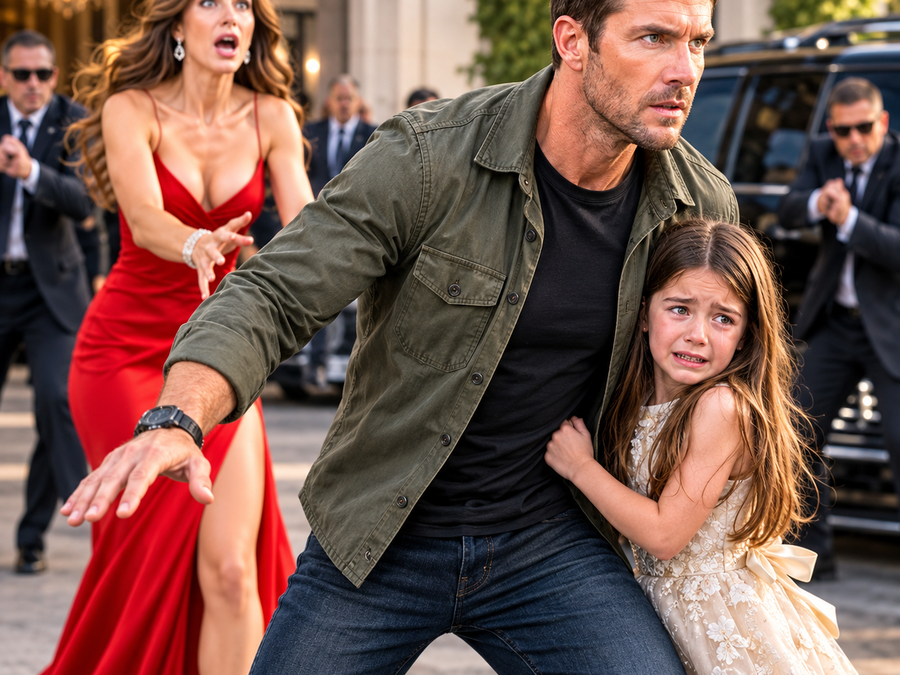
Part 2| Single Dad Took a Bullet for a Billionaire’s Daughter—Then His Navy SEAL Past Changed Everything
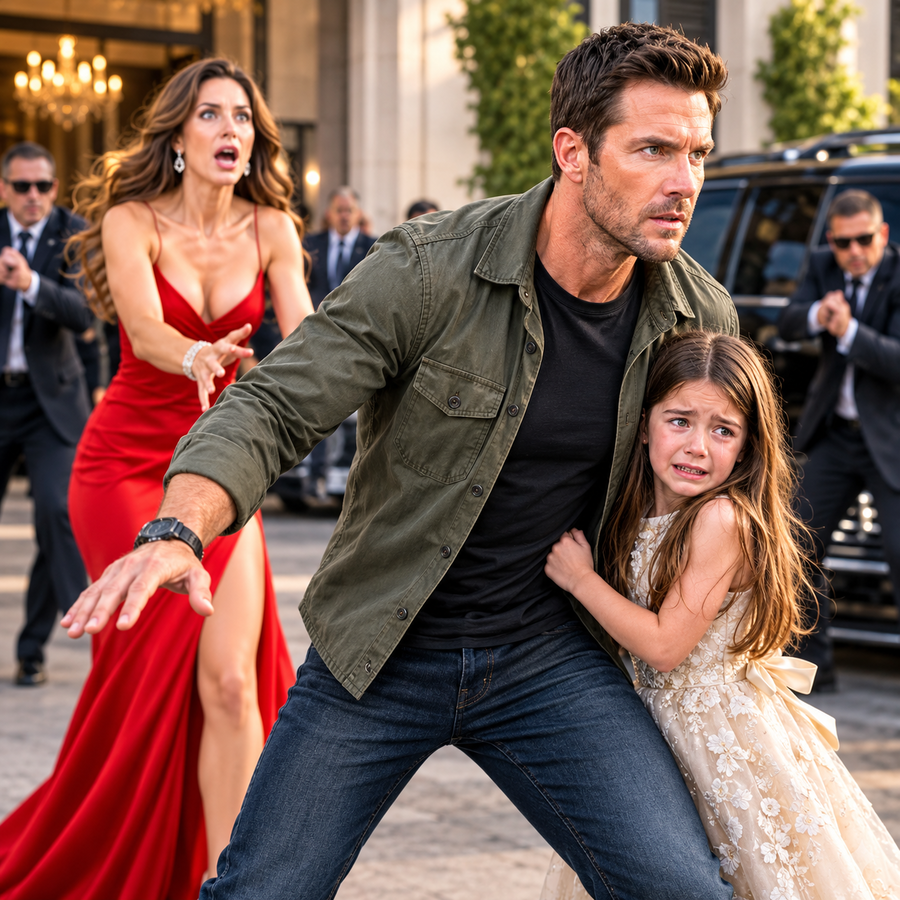
PART 2
Then he added a separate line from Preston’s name and ran it to the park, to the shooter, to Calder.
He showed her.
called her,” she said, and something in her voice shifted in a way that wasn’t just about the name.
“You know him.”
“He’s Preston’s younger brother,” she said it quietly.
“He’s not stable.
He never has been.
Preston used to manage him, keep him calm, keep him focused on small things, pay his rent, make sure he took his medication.”
She stopped.
“Well, that’s what Preston said he was doing.”
But but I always thought Preston enjoyed it having someone that depended on him, someone he could direct.
She looked at Gavin’s diagram.
If Preston stopped managing him or if he started managing him differently, pointing him, Gavin said, “Yes.”
The word sat between them like something physical.
Gavin closed his laptop.
He needed to move, needed to think on his feet rather than sitting still, which had never suited him.
He walked to the window and looked down at the construction site below where the morning crew was arriving. Men in hard hats carrying tools, the ordinary machinery of a project that had been built on a foundation of deliberate theft and calculated danger.
Preston’s goal, he said without turning around.
Walk me through what you think he actually wants.
Camille was quiet for a moment.
Control, she said, of the company.
He thinks if he can destabilize the finances enough, undermine the board’s confidence in my leadership, demonstrate that the company is in crisis under my management, he can push for a hostile takeover.
He has enough investor contacts from our marriage.
He’s been cultivating them.
And if the company collapses instead of being taken over, then he gets nothing.
But Preston doesn’t plan for failure.
He never has. Gavin turned back from the window.
He planned for the park. That means he was willing to put Maisie at risk.
Her face did something complicated and briefly uncontrolled before settling again.
I know that tells you something about how far he’ll go.
I know that, too. Okay.
He pulled out his phone and called Priya Son, who picked up on the second ring.
The structural engineer had already reviewed his photographs and had a preliminary assessment ready.
She’d been up since 4 in the morning working through them, which was exactly the kind of thing Priya did that made her worth every dollar she charged.
The cuts were deliberate, she confirmed.
Progressive failure timeline was 6 to 18 months under full load. She would have a formal written assessment within 48 hours.
After he hung up, he called Detective Marsh. Marsh had been running the investigation into the Park shooting with the particular methodical patience of a detective who had learned to distrust quick conclusions.
and Gavin had developed a cautious respect for him over the past weeks. He laid out what they had.
The shell companies, the Bran connection, the sabotage, and most importantly, the link between Preston Vale and Calder.
Marsh was quiet on the other end for a long moment.
You understand that if we move on this before we have enough documentation, Vale’s lawyers will bury it.
I understand, Gavin said.
We need financials. We need paper.
The shell companies aren’t enough on their own.
Branick’s assistant, Gavin said, she’s been here 6 months.
She’s not the one who set this up.
She’s too new, but she has access to everything Branic touches.
If she’s been paying attention, she’s seen things.
You think she’d talk?
I think she looks uncomfortable every time Branick is in the room.
That’s not proof of anything, but it’s a place to start.
He glanced at Camille. Handle it carefully.
She’s not the target.
Marsh agreed to approach her quietly through proper channels within the next 48 hours. The next two weeks moved in two distinct registers simultaneously.
On the surface, Voss Meridian’s construction project appeared to normalize.
Gavin worked with the crew, actually worked, not just observed.
And there was a period of adjustment where the experienced contractors weren’t sure what to make of him.
He was too young for the authority he’d been given and too practically capable for the consultant title he’d been assigned.
He knew how to read structural drawings and he knew how to use a level. And he knew the difference between a contractor who was cutting corners because he was lazy and one who was doing it because someone had told him to.
Within a week, the crew had settled into a workable arrangement.
It wasn’t their supervisor technically.
But he asked the right questions and he fixed things without making it about authority and the men who were good at their jobs and most of them were.
Most of them had nothing to do with Branick’s corruption responded to that.
Branick watched all of this from his glasswalled office and said nothing, which was, Gavin noted, more disciplined than he’d expected.
Beneath the surface, the investigation was building.
Priya’s formal report landed on a Wednesday.
40 pages of engineering analysis with photographs and load calculations that documented the sabotage in clinical, irrefutable detail.
Marsha’s conversation with Branick’s assistant, a 26-year-old woman named Elena Torres, had taken three careful meetings to produce results.
But Elena Torres had indeed been paying attention.
she had kept on her personal laptop at home because something had made her uneasy enough to document it.
A record of irregular instructions Branick had given her.
Change orders to approve without standard review. Contractor invoices to process through specific accounts.
A phone number she’d been told to call if she ever received questions from anyone in legal or finance.
A number she’d looked up once out of curiosity and traced to a personal cell phone registered in Nevada.
She was scared, but she was also, as Marsh put it when he called Gavin, very angry.
The private investigator found the financial trail connecting Branick’s compensation to one of the Shell companies, a consulting fee arrangement paid quarterly, routed through two intermediary accounts.
It wasn’t subtle once you knew where to look.
It was the kind of financial arrangement that worked only as long as nobody was looking directly at it. Through all of this, Gavin and Camille talked, more than either of them had planned to, more than was strictly necessary for the operational purpose of building a case.
It started as briefings, morning updates in the glasswalled room, efficient and focused.
But efficiency isn’t the only thing that happens when two people spend significant time in the same contained situation, working toward the same serious goal.
Owen and Maisie had been spending time together, too.
Camille’s house, a substantial place in the hills west of downtown, appropriately secured with a garden that Maisie occupied the way children occupy spaces that feel genuinely safe, had become a regular stop after school.
Gavin had resisted this at first, partly from habit, and partly from something he hadn’t fully examined yet, an instinct to keep the professional and the personal in separate rooms.
But Owen had started laughing again, and Gavin couldn’t argue with that.
Not the polite, careful laugh of a kid who had learned to perform normaly.
Owen’s actual laugh, the one that went a little too loud and snorted slightly at the end.
The one Laura had loved because it was completely unmanageable.
He heard it one afternoon coming from Maisy’s playroom while Gavin and Camille were going over documents in the kitchen, and he stopped talking mid-sentence.
Camille heard it, too. She looked toward the sound and then looked at Gavin, and the look on her face was something he recognized because he felt the same thing.
the particular complicated relief of watching a child come back to themselves.
“She hasn’t laughed like that since before the park,” Camille said quietly.
“Owen hasn’t laughed like that since before his mother died,” Gavin said.
Neither of them said anything else for a moment.
The document sat between them on the kitchen table, unread.
It was during one of these evenings at Camille’s house that the thing Gavin had been carefully not examining finally made itself impossible to ignore.
They were in the kitchen after dinner. Camille at the counter, Gavin at the table, the kids in the next room with a movie.
And Camille was telling him about a board meeting she’d navigated that afternoon, a difficult one, a board member who had been Preston’s ally, making pointed questions about the construction delays.
She was telling it as an operational update, the way she usually did.
But somewhere in the middle of it, the operational framing slipped and she was just talking, tired and frustrated and human in a way she didn’t usually let herself be when anyone was watching.
She stopped herself mid-sentence.
Sorry.
You don’t need the full debrief.
I don’t mind, Gavin said.
She looked at him.
He looked back.
It was a brief moment, the kind that doesn’t announce itself as significant until later.
I haven’t had She started and then stopped again.
I haven’t been able to just talk to someone in a long time.
Everyone in my life either reports to me or has an agenda or both.
I don’t report to you, Gavin said.
Technically, I’m a consultant.
She almost laughed.
You absolutely do not work for me and I don’t have an agenda.
I know, she said, and then more quietly.
That’s the strange part.
He understood what she meant. Not because he was good at this.
He wasn’t, not particularly, but because he’d spent three years being surrounded by people who wanted something from the version of him they thought they knew.
The quiet construction worker, the grieving widowerower, the good neighbor, and Camille Voss in her glasswalled boardroom had somehow managed to locate the version of him that existed before all of those definitions.
He didn’t say any of that.
He wasn’t built for that kind of declaration.
But he also didn’t look away, and neither did she.
And sometimes that’s enough.
It was the following Thursday that everything broke.
Gavin was on site reviewing the corrected framing specifications with the structural crew when his phone rang.
Not Marcus, not Marsh Owen School.
The secretary’s voice was the careful, controlled voice of someone who had been trained to deliver bad news without triggering panic.
And she was doing her best.
Mr.Holt, I need to let you know Owen left school at lunch hour.
We believed he had permission because there was an adult who we’re trying to understand what happened.
We can’t locate Owen on campus.
The world went very still.
Describe the adult, Gavin said. His voice was completely flat.
A man well-dressed, dark hair.
He signed Owen out.
The signature, a pause, the sound of paper.
The signature was a name we didn’t recognize, but the release form was filled out correctly, and we Gavin was already moving.
He was down the stairs and through the site exit before the secretary finished her sentence, his phone to his ear, the other hand pulling up his texts.
He called Marcus.
He called Marsh. He sent Camille a single text.
Owen school.
Someone took him.
I’m going.
Because he needed her to know.
And he couldn’t put more words together than that right now.
The drive to Owen school took 4 minutes. He made it in three.
The secretary and the principal were in the front office with the security footage already pulled up on a laptop and Gavin stood in front of the screen and watched a man he didn’t recognize.
Dark suit, confident walk, the particular ease of someone accustomed to being allowed entry into places sign his son out of school and lead him toward the parking lot.
Owen had gone with him, which meant either Owen had been told something reassuring enough that he’d complied, or he’d been given no choice.
The footage cut before he could tell which.
“Is that Preston Veil?”
Marsh asked from beside him.
“The detective had made it there in under 8 minutes.
” “No,” Gavin studied the screen.
“Hired.
The walk is wrong for someone with a personal stake.
He’s calm because it’s a job.”
Then Vale is somewhere else.
Gavin’s phone buzzed.
Unknown number.
He answered it. Mr.Holt.
Preston Vale’s voice was measured and pleasant in the way of someone who had rehearsed this.
I imagine you’re with that detective right now.
I want you to know that Owen is fine.
He’s comfortable.
He’s been fed, and he will remain perfectly safe as long as you don’t do anything that complicates the next few hours.
Gavin said nothing.
He was aware of Marsh watching him, of the school principal hovering in the background, of the particular mechanical quality his own breathing had taken on.
Slow, controlled, the kind that didn’t come naturally and had to be chosen.
Here’s what I need, Preston continued.
Camille needs to sign the management transfer documents that my attorneys have prepared.
She needs to withdraw the investigation she’s been running.
Yes, I know about it.
I’ve known for 2 weeks.
and she needs to step back from operational control of Voss Meridian. If she does that by 8:00 tonight, Owen comes home.
If she doesn’t, he’s 7 years old, Gavin said, a small pause.
I understand that. You understand that?
He kept his voice very level.
Then you understand that whatever you think this achieves for you, you’ve made a decision tonight that has no good ending for you.
I want you to think carefully about that. Is that a threat, Mr.Holt?
It’s information, Gavin said.
Use it however you want. He hung up.
Marsh was already on his radio.
The call had been long enough for a partial trace, not a location, but a cell tower sector on the northeast edge of the city, an industrial area. Marsh had three units moving toward it within 90 seconds.
Camille arrived at the school 11 minutes after Gavin’s text.
She came fast, one SUV, Marcus driving, and she was out of the vehicle before it fully stopped. Her face was controlled in a way that Gavin recognized as costing her everything she had.
“Tell me,” she said.
He told her all of it, including Preston’s demands.
She listened without interrupting. When he finished, she was quiet for 3 seconds.
He counted and then said, “I’m not signing anything.”
“I know.”
He thought I would.
She said it with something that wasn’t quite contempt, but was close to it.
After everything he’s done, he thought I would fold because she stopped.
He doesn’t know you.
No, Gavin said, “He doesn’t.”
Marsh came back across the room with an update.
The cell tower data pointed to a cluster of warehouses near the railard off North Cutler Road. Abandoned facilities mostly.
A private investigator working for the legal team had pulled city records on one of them. a former equipment storage facility registered to a company that dissolved eight months ago, but whose lease had been renewed quietly through a third party.
Preston Veil’s third party, one of the Nevada Shell companies.
Gavin looked at Marsh. Covert approach.
If he sees a police column coming, he panics and that’s bad for Owen.
I know how to run this, Marsh said not unkindly.
I know you do.
I’m going with you.
Marsh started to object.
He has my son, Gavin said simply. A pause.
You stay behind the perimeter until we’ve secured the location.
Agreed.
It wasn’t a comfortable agreement, and both of them knew it wasn’t a promise, but it was enough to move forward.
The drive to North Cutler Road took 12 minutes with two unmarked units running quiet.
No lights, no sirens, nothing that would announce their approach to anyone watching the access road. Camille came.
Gavin didn’t argue about it.
He would have done the same.
The warehouse district off North Cutler was the kind of place that accumulated in post-industrial cities like sediment. Buildings that had served purposes that no longer existed.
Concrete and corrugated steel slowly returning to the landscape. Most of them were dark.
One of them had a thin line of light visible through the gap at the bottom of a side door.
Marsha’s teams positioned quietly, efficiently.
the way people move when the stakes are high enough to make speed secondary to precision.
Gavin stayed at the designated perimeter point with Camille and Marcus.
He knew the layout from the building records.
Single floor, high ceiling, two access points, a row of old storage units along the eastern wall that would provide cover for anyone inside. He stood at the perimeter and felt the particular excruciating discipline of staying still when everything in him wanted to move.
Then from inside, muffled by the corrugated walls, “Dad!”
Owen’s voice, Gavin was moving before the sound finished.
Not running, not a flat charge. The controlled direct movement of someone who had done this in places where doing it wrong meant not coming back.
He covered the distance to the side entrance in seconds, hit the door with his shoulder at the same moment that one of Marshia’s units hit the main entrance, and was inside before anyone had time to process the breach.
The interior was lit by two portable work lights set up near the middle of the space. Preston Vale was there, thinner than his photographs, with the slightly overgroomed quality of a man who managed his appearance precisely because it was one of the things he could control.
He was standing 10 ft from Owen, who had been seated on an upturned plastic crate with his hands zip tied in front of him.
The man from the school footage was near the far wall. Preston turned when the door came open.
His composure held for approximately 1 second, which was impressive given the circumstances.
“This isn’t,” he started.
Gavin crossed to Owen in four steps, got between the boy and Preston, and with the calm deliberateness of someone who had performed this motion in his muscle memory for 12 years, pulled Owen behind him, and checked the zip tie. Plastic, standard, front tied, hands visible, not dangerous restraint, more theatrical than functional.
He snapped it with the twist that Owen didn’t even feel.
“Dad.”
Owen’s voice was smaller than usual and then less small.
And then he grabbed the back of Gavin’s jacket with both hands and held on.
“I’ve got you,” Gavin said.
“Stay behind me.”
Preston was talking, demanding something. The words coming faster now as the police units poured through the main entrance, and the man from the school footage made the extremely poor decision to step toward the action rather than away from it, and was immediately tackled by two officers.
Preston kept talking, even as Marsha’s people surrounded him, the practiced lawyerly reflex of a man who had always managed situations through the authority of his own voice and couldn’t immediately locate the switch to turn it
off.
You have no right. This is a private facility.
I want my attorney.
Preston.
Camille’s voice came from behind Gavin.
She had come through the main entrance with Marcus, and she stood in the middle of the warehouse with her hands at her sides and looked at the man she had once married with an expression Gavin couldn’t fully read from where he stood.
It wasn’t hatred.
It wasn’t fear.
It was something more tired and more final than either of those things.
“It’s done,” she said.
“Stop talking.”
Preston looked at her.
The momentum of his words ran out.
The police handcuffed him while he stood there, and he didn’t resist, and Gavin thought that was perhaps the most honest thing Preston Vale had done in years.
Recognizing finally that the room had shifted in a way he couldn’t manage or negotiate.
Gavin turned to Owen. The boy was 7 years old and had zip ties on his wrist 20 minutes ago and was now standing in a warehouse surrounded by police officers and portable work lights.
and his face was doing several things simultaneously, processing shock, refusing tears, trying to determine whether it was safe to be scared now that the immediate thing was over.
“Hey,” Gavin said quietly, crouching down.
“You okay?”
Owen looked at him carefully, the way he looked at things when he was deciding something.
“Were you scared?”
he asked.
“Yes,” Gavin said.
“Owen, me, too.”
He looked around the warehouse, then back at his father.
I didn’t tell him anything.
He kept asking me questions about you, and I said I didn’t know.
What kind of questions?
Like, what you did before construction, whether you talked about Camille at home?
He frowned slightly.
I said you didn’t talk much at all about anything, which is mostly true.
Gavin looked at his son for a long moment.
That’s exactly right.
I know. Owen glanced toward Preston, who was being walked toward the main entrance by two officers.
His expression was unreadable for a 7-year-old. He kept saying everything was going to be fine.
He had the same voice as the people at school when they’re telling you something bad and trying to make it not sound bad.
You didn’t believe him.
No. Owen looked back at his father.
He didn’t sound like someone telling the truth.
He sounded like someone who needed you to believe him.
He paused.
There’s a difference.
Gavin said nothing for a moment.
He was thinking about the fact that his 7-year-old son had just articulated something that took most adults decades to learn, and that he had learned it in the worst possible classroom.
“Yeah,” he said.
“There is.”
He pulled Owen into him and held on. Owen let himself be held, which at 7 years old he sometimes did and sometimes refused on principle.
And tonight he did it without protest, without embarrassment, with the straightforward need of a kid who had needed his father close for several hours and was finally getting that. Across the warehouse, Camille stood watching them.
Gavin didn’t see her face clearly from where he was, but Maisie, who had somehow also appeared, Marcus had been with her at the car, and she had apparently been extraordinarily persuasive about coming inside, stood beside her mother and slipped her hand into Camille’s.
Camille looked down at
her daughter.
She looked back at Gavin and Owen, and the expression on her face was one that had nothing to do with control or composure or the management of difficult situations.
It was something much simpler and much harder than any of those things.
Gavin saw it.
He didn’t say anything about it, but he saw it and he held his son.
And outside the warehouse, the sirens were starting up and the night was cold and clear.
And the stars over West Brbridge were the same stars they’d always been, indifferent and bright, doing what stars do regardless of what happens beneath them.
Preston Vale was put into the back of a police vehicle, still in his expensive suit, and the door closed on him with a sound that was entirely ordinary, just a car door, just a latch, but that contained in it the end of something that had been building for a long time. Gavin heard it from inside
the warehouse.
He didn’t look up.
He already knew what it meant. The arraignment happened on a Friday morning, and by Friday afternoon, the story had moved beyond the local news cycle and into the kind of coverage that required a media strategy.
Camille had one.
She’d been preparing it for 2 weeks, not because she’d known the arrest was coming on that particular Friday, but because she was the kind of person who prepared for contingencies before they became necessities.
her communications director, a compact, fast-talking woman named Diane Chu, who had been with Voss Meridian for four years and had the particular metabolism of someone who ran on urgency and strong coffee, had a statement ready within 2 hours of Preston’s booking.
It was measured, factual, and said precisely enough to establish the company’s position without saying anything that could complicate the prosecution.
Gavin read it over Camille’s shoulder in her office while Diane hovered near the door, waiting for approval.
He didn’t have suggestions.
It was good.
Camille approved it.
Diane disappeared to send it.
And then the office was quiet in the way offices get quiet when the immediate crisis has passed and the longer, slower work of consequence begins. How are you?
Gavin asked.
Camille was standing at the window looking at the construction site below.
She’d been at the window a lot lately.
He’d noticed it over the past weeks, the way she oriented herself toward the site when she needed to think, as though watching people build things was a form of studying.
I don’t know yet, she said honestly.
Ask me in a week.
Fair, she turned from the window.
Owen, how is he? He went to school this morning, Gavin said.
He asked for the diagonal sandwich again, which I’m taking as a good sign.
Something softened in her face.
Did he sleep better than I did?
She looked at him carefully.
What about you? He considered deflecting, which was his default, and then decided against it.
I keep running the warehouse in my head.
The timeline from the school call to when we got there, trying to find where it could have gone differently.
It didn’t go differently.
He was fine. I know that.
I’m telling you what my brain does with it anyway.
He pulled out a chair at her conference table and sat down.
It’s a habit.
After an operation, you run the debrief even when it went right.
Especially when it went right, because right doesn’t mean it couldn’t have gone wrong.
She sat across from him. Does it help?
Not really, but it’s harder to stop than to keep going.
She nodded slowly. I do the same thing with board meetings.
I’ll be lying awake at midnight going through every exchange, every facial expression, trying to find the thing I missed or said wrong.
She paused.
My therapist calls it catastrophizing in reverse, like you’re preparing for a disaster that already didn’t happen.
You have a therapist.
You say that like it’s surprising.
It is a little, she raised an eyebrow.
Why?
You’re very contained.
Contained people are exactly the ones who need therapists, she said.
Because all that containment has to go somewhere. He thought about that for a moment.
Yeah, fair point.
The week that followed was the kind of week that existed entirely in documentation and legal process.
The grinding, unglamorous machinery of accountability that looks nothing like the dramatic moments that preceded.
Preston’s attorneys moved immediately and aggressively, filing motions to suppress the evidence from Elena Torres on the grounds that her personal documentation of Branick’s instructions constituted improper recordkeeping, a position that the prosecuting attorney’s office dismantled methodically and without apparent effort.
Dale Brick lasted 11 days before he called the prosecutor’s office directly without going through his own attorney, which his attorney later described as the worst decision of the entire case and possibly of Branick’s life.
He wanted a deal.
He wanted it badly enough that he was willing to provide detailed financial records, internal communications, and a complete accounting of every fraudulent contract, every staged insurance claim, and every construction substitution that he and Preston had engineered over 3 years. Gavin heard about the call from Marsh, who relayed it with the careful neutrality of a detective who had learned not to express satisfaction in outcomes until they were fully secured.
“He gave up everything,” Marsh said.
names, dates, amounts, the shell company structure, the Nevada holding company.
He even identified the contractor who cut the framing on the east wing, a sub that Branick had brought in specifically for that job.
Someone with a prior fraud conviction in another state that should have disqualified him from the site entirely.
“What does Branick want in return?”
Gavin asked.
“Reduce charges.
He’s looking at fraud, conspiracy, and construction sabotage.
With full cooperation, he’s probably looking at 8 to 12 rather than 15 to 20.
And Preston?
Preston’s position just got significantly worse.
Marsh paused.
There’s something else.
Calder.
Preston’s brother.
His courtappointed psychiatrist has been working with him for 3 weeks.
He’s been stabilized on medication and he’s been communicative.
Gavin waited.
He recorded phone calls.
Marsh said.
Apparently, he was paranoid enough about Preston’s instructions to keep records of them.
Voice memos on his phone going back 14 months.
Preston directing him, building on whatever was already unstable in his thinking, feeding him specific information about Camille’s schedule, Maisy’s routine, her security patterns.
The silence on Gavin’s end lasted several seconds.
He recorded them. 47 separate recordings.
Preston’s voice clearly identified, giving his brother operational details about Camille Voss while simultaneously presenting himself publicly as the concerned sibling managing a difficult family member.
Gavin exhaled slowly.
That’s everything.
That’s everything.
Marsh confirmed.
Veil’s attorneys are going to have a very unpleasant week.
They did.
Preston’s lead attorney, a silver-haired man named Kaufman, who had a reputation built on making complicated financial crimes seem abstract enough to confuse juries, held a press conference on Tuesday in which he described his client as a concerned former spouse who had taken misguided actions out of genuine worry for his daughter’s well-being.
The statement was precisely crafted and would have been effective in a different case with different evidence. It was not effective in this case.
The recordings made it untenable within 48 hours, and Kaufman pivoted to a strategy of attacking the witnesses rather than defending the facts, which told Gavin everything he needed to know about how Kaufman assessed his own client’s position.
The attack on Gavin came during a preliminary hearing in the fourth week.
He’d been called to provide a statement about his observations at the construction site, the sabotage, the structural analysis, the chain of evidence leading to Branick.
It was straightforward testimony.
He’d given more complicated accounts and military afteraction reviews with significantly higher stakes, and he wasn’t nervous.
Kaufman cross-examined him for 40 minutes.
The attorney’s approach was methodical and had clearly been prepared with access to Gavin’s background check, which meant Preston’s people had been thorough, had found the military records, had assembled a narrative.
The narrative Kaufman presented was this.
Gavin Hol was a former special operations soldier who had inserted himself into a billionaire’s life under the guise of heroism, leveraged that access to obtain a powerful position within her company, and had then
conducted what amounted to a private intelligence operation against her former husband while developing a personal relationship with the woman whose decisions controlled the investigation.
It was not an incompetent argument.
Stripped of context and specificity, it had a shape that could be made to look plausible to someone who didn’t know the actual sequence of events.
Kaufman stood at the lectern and made it with the smooth, unhurried confidence of a man who had delivered uncomfortable arguments in comfortable shoes for 30 years.
Isn’t it true, Mr.Hol, that you accepted a position of significant authority within Voss Meridian Technologies within weeks of meeting Ms.Voss?
Yes, Gavin said.
And isn’t it true that this position gave you access to confidential financial records, contractor agreements, and internal communications?
Yes.
And that you used this access to conduct your own investigation parallel to but separate from the official police investigation.
I shared everything I found with Detective Marsh in real time.
Gavin said, “The investigation was not parallel.
It was coordinated. But you gathered the initial evidence.
You made the initial assessments.
You decided what was relevant. I have 15 years of construction experience and a background in reconnaissance operations.
Ms.Voss hired me because that combination was relevant to understanding what was happening on the site. Everything I found was documented and turned over.
Kaufman paused for a moment.
The practiced pause of a cross-examiner who wants the previous answer to sit in the air long enough to seem like an admission. You were also during this period developing a personal relationship with Miss Voss.
We worked together, Gavin said.
We were in contact regularly because the situation required it.
A personal relationship, Kaufman repeated as though Gavin hadn’t spoken.
I heard the question.
Then I’ll ask it plainly.
Are you and Camille Voss romantically involved?
The courtroom was quiet.
Gavin looked at Kaufman directly.
That’s not relevant to the structural integrity of the East Wing framing or to Dale Branick’s signed change orders.
I’ll determine what’s relevant, Kaufman said.
Please answer the question.
We work together, Gavin said.
What that may or may not become in the future is not something I’ll discuss in this room.
Kaufman let that sit for a moment, then shifted direction.
Mr.Holt, you initially rejected Ms.Voss’s offer of $100,000 after the incident at the park.
Yes. But you subsequently accepted a position that provides you significant compensation and career advancement.
I accepted a job I’m qualified for and that needed to be done.
The compensation is appropriate to the role.
You went from construction worker to senior executive within a billion dollar company in under 6 weeks. The title is senior project consultant.
I oversee construction operations.
Gavin kept his voice level.
I didn’t write the title.
I do the work.
And why did you take a bullet for a child you’d never met?
Kaufman asked.
And the sudden shift in tone from lawyer’s precision to something almost conversational was deliberate.
It was a technique. Make the witness adjust.
Look for the unguarded moment. Gavin looked at him.
Then he looked across the room to where Maisie was seated in the gallery beside Owen. Both of them watching with the particular concentrated attention of children who understand they are witnessing something important without fully understanding what.
He looked back at Kaufman. She was 6 years old.
Gavin said, “That’s why.”
The answer arrived in the courtroom without elaboration, without performance, without anything attached to it except the plain fact of it.
Kaufman waited for more.
There wasn’t more.
Gavin had said the thing, and the thing was complete, and no follow-up question Kaufman constructed in the next 20 seconds improved his position enough to ask it. He moved on.
Gavin left the stand 40 minutes later.
He sat in the gallery beside Owen, who immediately and without apparent self-consciousness put his hand into Gavin’s, which Owen only did now when something had mattered to him, and he wanted to mark it without saying so.
Gavin held his son’s hand and watched the proceedings, and didn’t think about Kaufman’s questions or his own answers, or the way the narrative had been assembled against him.
He thought instead about the morning he’d walked Owen to the bus stop.
And Owen had said unprompted that he thought Maisie was probably the best friend he’d ever had and the careful way he’d said it, like he was testing whether it was okay to say something that meant that much.
Gavin had said it sounded right to him. Owen had nodded and gotten on the bus.
That was 3 weeks ago. It felt like something that had always been true.
The trial itself, when it came, lasted 11 days.
Preston Vale sat at the defense table in a suit that probably cost more than Gavin’s truck and maintained throughout the proceedings the particular expression of a man who was still at some level convinced that the situation was manageable.
It was the expression of someone who had never been truly cornered and couldn’t fully accept that the walls were real.
His composure was impressive in a technical sense. He never lost his temper, never made a visible mistake, never gave the prosecution the emotional reaction they might have used.
He was, Gavin thought, watching him from the gallery on the fourth day, genuinely convinced of his own rightness in a way that no amount of evidence was going to reach.
That was ultimately Preston’s problem.
Not the evidence against him, though it was overwhelming.
Not Branick’s cooperation, though it was comprehensive.
Not even Calder’s recordings, though they were devastating.
His problem was that he had organized his entire understanding of the situation around a version of reality in which he was the central figure making justified decisions and the trial required him to sit in a room and watch that version dismantled piece by piece without being able to rearrange it. Elena Torres testified on the sixth day.
She was 26 years old and visibly nervous and told the truth in a straightforward, unmbellished way that juries respond to because it sounds like someone telling the truth rather than performing it.
She described Branick’s instructions with specific dates and specific language, read from the notes she’d kept on her personal laptop, and answered Kaufman’s cross-examination in monoyllables that consistently refused to give him anything to work with.
Priaone testified on the eighth day.
40 pages of structural engineering analysis condensed into 60 minutes of testimony delivered with the calm authority of someone whose opinion was grounded in physics rather than interpretation.
She explained in terms accessible enough for a lay jury without being condescending what the deliberate cuts to the east wing framing would have produced.
She used visual aids, photographs, load diagrams, failure progression models. When Kaufman challenged her methodology, she answered each challenge with the patience of someone who had been challenged by smarter people in higher stake settings and had always had the same answer.
The math was the math.
The recordings came in on day nine.
Preston’s attorneys made three motions to exclude them and lost all three.
The jury heard 47 recordings in edited summary. Key excerpts played in sequence.
Preston’s voice, calm, deliberate, the same measured tone he used at the defense table, feeding his unstable brother precise operational details about Camille’s security arrangements.
And then in the later recordings, something darker encouragement, not explicit instruction, but the kind of encouragement that someone in Calder’s mental state would receive as instruction.
The careful architecture of a man who wanted something done and wanted the distance to claim he hadn’t done it.
The jury was out for 6 hours.
Gavin didn’t wait at the courthouse.
He took Owen home, made dinner, pasta, which Owen had declared his preference over everything else during what he called the warehouse week, and which had become a Thursday tradition by some logic Gavin hadn’t tracked.
And they ate at the kitchen table and talked about Owen’s soccer season, which was going well enough that the coach had moved him to a different position that suited him better.
The cut to the left had finally come together. Not perfectly, but reliably, which was better.
The verdict came through on Marsha’s call at 7:43 p.m.Gavin was washing dishes.
Owen was doing homework at the table.
Guilty on all primary counts. Kidnapping, financial conspiracy, construction sabotage, and child endangerment.
Branick, pursuant to his cooperation agreement, pleaded to reduce charges.
The contractor who had cut the east-wing framing was convicted separately. Calder was remanded to a long-term psychiatric facility under court supervision, a proceeding handled in a separate hearing that the press covered less intensively, but that Camille attended in full because she had asked to because she had wanted to see it concluded.
Gavin thanked Marsh and hung up.
He finished the dishes, put the last plate in the rack, dried his hands on the kitchen towel. Owen looked up from his homework.
Was that about the trial? Yes.
What happened?
He’s going to prison, Gavin said simply.
For a long time.
Owen looked at him steadily for a moment. He was processing it.
Gavin could see running it through whatever system a 7-year-old uses to integrate significant information.
“Is it done?”
he asked finally.
“Like all of it?”
“Yeah,” Gavin said.
“All of it?”
Owen nodded slowly, looked back at his homework, wrote something.
Then, “Can we call Maisie and tell her?”
Gavin looked at his son.
“She was scared, too,” Owen said without looking up.
“She should know.”
He called Camille’s number.
She answered on the second ring, and he could hear in the half second before she spoke that she’d been waiting, not impatiently, but the way you wait for something when you’ve been holding your breath for so long, you’ve stopped noticing.
Marsh called you, she said just now. Owen wanted Maisie to know.
A brief pause, then Camille’s voice directed away from the phone.
Maisie, come here.
And then the small sound of Maisy’s footsteps and Camille saying quietly that it was over, that the bad man was going away for a very long time and wasn’t coming back.
And then Maisy’s voice muffled, asking something.
and then Owen leaning across the table toward Gavin’s phone.
Maisie, it’s okay.
My dad says it’s really done.
Gavin held the phone between them and let the kids talk.
Camille’s voice came through again after a minute, directed at him this time.
Thank you, she said.
Owen’s idea, he said.
I know.
A pause. That kid.
Yeah. The silence that followed was comfortable in a way that silences between two people only become after a lot of uncomfortable ones.
Camille broke it first. Gavin.
Yeah.
Can I say something without you deflecting it?
He considered the question seriously because she deserved that.
Probably not, but you can try. He heard her exhale.
Not quite a laugh, but close. You rebuilt this.
Not just the building.
All of it.
When you walked onto that site and started pulling change order logs, you didn’t have any stake in it except that I asked.
You didn’t have to.
I had a stake in it, he said.
What stake?
He was quiet for a moment.
Owen and Maisie were still talking.
Owen explaining soccer positions with the particular earnestness of a seven-year-old who has recently discovered he is good at something and wants to share the discovery in full. Outside the kitchen window, the street was ordinary and quiet, the same street it had always been.
Someone had already tried to kill your daughter, Gavin said.
That made it mine.
She didn’t respond immediately.
He wasn’t sure what he expected her to say.
He wasn’t sure what he’d meant by it entirely, whether it was a professional statement or a personal one or something that didn’t fit neatly into either category because it had started as one thing and become another while he wasn’t watching.
Okay. she said finally quietly.
“Okay,” he agreed.
They stayed on the phone for another few minutes while the kids talked themselves to a natural stopping point, which happened when Maisie announced she was going to draw a picture to celebrate. And Owen said he wanted to see it.
And Maisie said she would bring it on Saturday, and Owen said, “Okay.
” After they hung up, Owen put his pencil down and sat back in his chair and looked at the ceiling with the expression of someone who has reached a decision.
Dad,” he said.
“What?”
“I think we should move to a bigger place.”
Gavin looked at him.
“We’re fine here.”
“We’re fine,” Owen agreed in the tone of someone who has accepted fine but considers it an intermediate state.
“But Maisy’s house has a garden.”
“Maisy’s house is Maisy’s house.”
“I know.”
Owen looked at the ceiling again.
“I’m just saying hypothetically.”
Gavin was quiet for a moment.
“Hypothetically?”
Yeah, go finish your homework.
Owen picked his pencil back up, but he was almost smiling, which he did when he’d said the thing he meant to say, and it had landed the way he’d intended.
He was 7 years old, and he had apparently opinions about housing arrangements and the importance of gardens.
Gavin went back to the dishes and thought about the fact that his son was smarter than him in ways that were only going to become more obvious over time.
The following Monday, Gavin walked the east wing with the structural repair team.
A new crew, properly vetted, brought in to correct the damage Branick’s contractor had done.
Priason was on site to supervise the engineering side. The repair work would take 6 weeks, add legitimate cost to the project, and push the completion timeline by approximately 2 months.
Under the circumstances, Camille had described this as a small miracle of project management.
She wasn’t wrong.
Given what the building had been used for, as a vehicle for fraud, as an instrument of sabotage, as a mechanism designed to destroy the company from within, the fact that it was going to be completed at all was a kind of victory that didn’t announce itself with drama.
It just proceeded one corrected beam at a time toward the thing it had always been supposed to become.
Gavin liked that.
the work, the precision of it, the way a building didn’t care about the drama surrounding its construction and simply required correct materials installed at correct angles with sufficient structural integrity to stand.
It was honest in a way that the previous months had rarely been, and he was glad to be back in it.
He was reviewing the upper floor framing specs with the lead contractor, a methodical man named Greg Tanner, who had been in commercial construction for 25 years and had an allergy to shortcuts that Gavin found professionally refreshing.
When Camille appeared on the floor, hard hat on, which she wore with the slightly self-conscious air of someone who was aware it didn’t suit her, but had decided that safety requirements applied to everyone, including CEOs.
She stood beside him and looked at the repaired framing, the new steel bright against the older structure.
“Better?”
she asked.
“Much,” Gavin said.
Tanner moved discreetly to the other end of the floor to give them space, which Gavin noted with mild amusement. Construction workers had their own social intelligence, and the situation between himself and Camille Voss was apparently legible to people who worked with both of them, even if neither of them had formally acknowledged it.
I had a call with the board this morning.
Camille said, “The membership oversight subcommittee.
They wanted a full briefing on the investigation and the trial outcome.
How did it go?”
“Better than any board meeting I’ve had in 2 years,” she said, which isn’t as high a bar as it sounds, given what the last two years involved.
She pulled off the hard hat and pushed her hair back. The board member who recommended Brick has resigned.
The other two who were adjacent to Preston’s investor circle are distancing themselves as fast as institutional dignity allows.
And the ones who aren’t, the ones who aren’t are relieved, I think genuinely.
She looked at the framing again.
The company was in real trouble.
Not collapsing, but genuinely stressed in ways that were going to matter if they continued.
I think the board had been aware something was wrong for longer than they admitted, and not knowing the source was making them nervous.
Now they know and it’s been removed and I think they’re ready to work.
Good.
I’m also promoting Marcus Webb to chief security officer, she said, which I should have done a year ago.
He managed this entire situation with a level of professionalism that I didn’t fully appreciate until I was watching it from inside it.
He’s good, Gavin agreed.
He is. She was quiet for a moment looking at the construction floor.
And I want to talk to you about your role officially, not the consulting arrangement. You want to make it permanent.
I want to offer you a permanent position.
Yes.
Director of facilities and construction operations.
It’s a real title with a real scope.
Oversight of the headquarters, future projects, vendor relationships, the infrastructure portfolio.
She said it straightforwardly without the persuasive framing she’d used when she first recruited him.
more like she was stating a thing that was already obvious and simply needed to be said.
You’ve earned it.
Not because of the park, because of the work.
Gavin looked at the steel, thought about Tanner at the other end of the floor, about Priya’s 40page report, about the 3 mo
nths of 6:00 a.m.mornings and late nights, and the particular satisfaction of watching a project get corrected from the inside out.
I need to think about it, he said. I know.
I’m not being difficult.
I know that, too.
She put the hard hat back on.
Think about it as long as you need. He did think about it.
He thought about it for 4 days, which was longer than he usually needed to make decisions because the question wasn’t really about the job.
He was good at the job. He wanted the job.
The job was right for him in the way that some things are right in a way that doesn’t require extensive deliberation.
The real question was the one underneath the job offer.
the one neither of them had said in the courtroom or on the phone the night of the verdict or in any of the dozens of conversations they’d had in the past 3 months.
The question of what was building between them alongside the building they were repairing and whether he was ready for it and whether readiness was even the right framework because he hadn’t been ready for Owen to start laughing again either and Owen had started laughing anyway.
He called Camille on the fourth evening.
I’ll take the job, he said.
Good, she said.
And then that’s not the only thing you’re saying yes to, is it?
It wasn’t a question exactly.
No, he said. Probably not.
Another pause, the kind she let sit when she was choosing her words carefully.
I don’t know what this looks like, she said.
The two of us, the kids, all of it.
I don’t have a plan for it.
Neither do I.
I’m usually the one with a plan.
I know.
He thought about the park, about the way she’d stood in the park and looked at Maisie after it was over.
About the plastic chair in the hospital waiting room that she’d occupied for 4 hours because Owen needed someone there.
I think this one we figure out as we go. She was quiet for a moment.
I’m not very good at figuring out as I go.
I know, he said.
You’re better at it than you think.
She said nothing for a beat. Then Maisie drew that picture, the celebration picture she told Owen about.
What did she draw?
Four people, Camille said.
Two tall and two short standing in a garden.
A pause.
She labeled them. He waited.
She wrote our names.
Camille said, “All four of us.”
And then she wrote underneath. She spelled it wrong, but you can tell what it is.
She wrote the word family. Gavin stood in the kitchen of the house on Alder Street in the silence that followed.
Outside, the street was the same street it had always been.
Inside, the refrigerator hummed, and the screen door spring was still broken, and Owen’s soccer cleat were by the door, precisely parallel.
Nothing looked different.
Everything was.
She’ll be mortified about the spelling when she’s older, Gavin said.
He heard Camille laugh, a real one, not the careful almost laugh she sometimes used as a placeholder for the real thing. This was the real thing with the ragged edge of someone who had been holding a lot for a long time and had finally found a moment to put some of it down.
She will, Camille agreed, absolutely mortified. He held his phone and listened to her laugh and thought about a six-year-old girl with her hands pressed against his wound in a park and a seven-year-old boy doing his homework at a kitchen table.
And the particular stubbornness it took to keep going when going required more than you thought you had, and the fact that sometimes the thing that saves you looks like the last thing you expected.
Maisie had spelled family wrong, but she’d known exactly what she was drawing.
The guest house sat at the back of Camille’s property, separated from the main house by a stone path and a row of Japanese maples that had turned deep red by November.
Gavin and Owen had moved in 6 weeks after the verdict, which was Camille’s suggestion, and Gavin’s reluctant agreement and Owen’s complete and immediate enthusiasm, expressed through the kind of energetic opinion having that seven-year-olds apply to arrangements they consider obviously correct.
Owen had strong views about which room he wanted. Views that aligned perfectly with the room Maisie had already mentally assigned him.
A coincidence that neither child found surprising. The guest house was smaller than the Alder Street rental by about 400 square ft, which meant Gavin had put half his furniture in storage and simplified in ways that turned out not to bother him.
A man who had lived out of a pack in environments considerably less hospitable than a well-appointed guest house in the hills west of Westbridge could manage a smaller living room.
Owen had not inherited this particular adaptability and had opinions about closet space that were disproportionate to his wardrobe, but these were resolved through the discovery that the guest house had a second storage closet that nobody had mentioned during the walkthrough and the matter was considered closed. The first month had a learning curve that nobody talked about explicitly, but everyone navigated in real time.
Gavin was not a person accustomed to proximity.
3 years of deliberate isolation had made him careful about space, his own and others, in ways that were largely invisible until they weren’t.
He liked mornings quiet.
He cooked by himself.
He had a particular way of organizing the kitchen that was not objectively better than any other way, but was his.
And it had been his alone for long enough that finding Camille in the guest house kitchen on a Saturday morning making coffee in a pot she’d brought from the main house because she’d run out of her preferred brand, and could she just had required a specific internal adjustment?
He made the adjustment. These things take practice.
Camille, for her part, was accustomed to running things.
Not in a doineering way.
She’d worked hard enough at her own edges to know that tendency and manage it.
But in the practical sense of someone who had been making every significant decision about her life and her daughter’s life alone for long enough that collaboration required a kind of deliberate gear shift, she sometimes forgot to make.
She scheduled things. She had opinions about how the stone path between the houses should be maintained.
She sent Gavin articles about structural engineering innovations at 6:00 in the morning with brief notes that said things like interesting application for the new project, which was either professional communication or companionable habit or both.
And after a while, it didn’t matter which category it belonged to because it had simply become part of how mornings worked.
They were imperfect at it. They argued twice in the first month.
once about a decision Gavin made regarding the headquarters project without looping her in, which he’d considered operational, and she’d considered something that warranted a conversation, and once about a conversation she’d had with Owen’s school counselor without telling Gavin first, which she’d considered supportive, and he’d considered an
overreach.
Both arguments were uncomfortable. Both arguments were resolved and both left behind a thin residue of useful information about the other person that they filed away and drew on going forward.
Maisie adapted to the new arrangement with the radical pragmatism of a six-year-old who had decided that something was good and had no patience for excessive deliberation about it. Owen was there.
Owen’s dad made better pancakes than anyone she had ever met, which she announced at breakfast one Sunday with the gravity of an official judgment.
The garden was now used by people she liked. These were improvements, and she cataloged them with satisfaction and moved on.
Owen, for his part, had a few weeks of quiet adjustment that Gavin watched carefully without commenting on. The boy processed things slowly and internally.
Always had, even before Laura died, and even more so after.
He went about the new arrangement observantly, noting things, testing the texture of daily life against some internal calibration that Gavin didn’t have access to and had learned not to push.
About 5 weeks in, on a Wednesday evening, after dinner, Owen sat at the kitchen table in the guest house doing homework while Gavin reviewed project documents, and without looking up from his worksheet, Owen said, “I think this is good.”
Gavin
looked at him.
“Which part?”
“All of it,” Owen said, still not looking up.
being here. Maisie, Camille, he wrote something.
I thought it would feel weird.
It doesn’t.
Gavin set down his pen.
How does it feel?
Owen considered this with the seriousness he brought to questions that mattered.
Like when something fits right, he said finally.
Like the shoes that don’t hurt.
Gavin looked at his son for a long moment.
Yeah, he said.
That’s a good way to put it.
Owen nodded once, satisfied, and went back to his worksheet.
The headquarters expansion completed in the third week of March, 4 months behind the original schedule and 11% under the revised budget that Gavin had set when he’d taken over the project.
It was not a perfect number.
The delays were real, and the cost of correcting Branick’s sabotage had been substantial, but it was honest.
and honest numbers after years of falsified ones had their own kind of value that was difficult to put in a spreadsheet.
The building was good. Gavin knew it was good the way he knew a wall was plum.
Not from looking at it once, but from the accumulated certainty of having been inside every floor, reviewed every joint, approved every major installation. The structure was sound.
The materials were what they were supposed to be. when people moved in and went about their work and stopped thinking about the building as a building and started thinking about it as the place where they spent their days, it would hold them properly.
He stood on the 12th floor on the day of the final inspection was signed off. A clear morning in late March, snow still on the ridge lines north of the city, but the valley warming, and looked out through the completed glass curtain wall at West Bridge below.
The park was visible from this angle.
Meadow crest with the soccer field on the far side and the playground equipment near the eastern boundary.
From 12 floors up, the distance he’d covered that September afternoon looked different than it had from ground level, shorter somehow, which he understood intellectually, the brain collapses retrospective distances, but which still struck him.
Greg Tanner came to stand beside him.
The contractor had been on this project for 3 months, had put in the kind of work that doesn’t call attention to itself because it’s simply correct, and had the quiet satisfaction of a craftsman who knows the thing he built will last.
Good building, Tanner said.
Good building, Gavin agreed.
They looked at it for a moment.
You know, Tanner said, “When they first brought me in, I thought this was going to be one of those jobs, the kind where everything’s already too broken to fix, right?”
It was close.
Yeah.
Tanner rubbed the back of his neck, but you can usually tell whether something’s too far gone or whether it just needs someone to start from the actual problem instead of the symptom.
He looked at the floor. Most people want to fix the symptom.
It’s faster.
Gavin thought about that.
It’s always faster, he said.
Until it isn’t.
Tanner nodded. They shook hands and Tanner left.
And Gavin stayed on the 12th floor a while longer with the city spread below him and the scar on his left side and the particular knowledge that some things break and can still be made right and some things break and make room for something better. And the difference between those two outcomes is almost never visible from the outside and almost always comes down to whether somebody was willing to stand in the broken place long enough to understand it.
The children’s presentation happened on a Saturday afternoon in early April, which was by any measure the strangest and most effective piece of negotiation Gavin had encountered in his adult life.
He and Camille had been in the main house kitchen.
Gavin reading Camille working through email on her laptop, the companionable coccupation of two people who had become comfortable with each other’s silences.
when Owen appeared in the doorway with a very specific expression.
It was his prepared expression, the one he deployed when he’d thought carefully about something and was ready to present it, which Gavin had seen most recently when Owen had lobbied successfully for a later weekn nighttime on the basis of a written
argument that had included inexplicably but somehow effectively a chart.
There was a chart this time, too.
Maisie stood behind him, slightly to his left, with the posture of someone who has agreed to let the other person lead, but is prepared to take over if necessary.
“We need to talk to you both,” Owen said.
Gavin and Camille exchanged a look.
“Okay,” Camille said carefully.
“Should we be worried?”
“No,” Owen said.
“Sit down, though.”
They sat.
Owen produced from behind his back several sheets of paper that had been stapled together with the particular conviction of someone who believed in proper document management.
The cover page read, “In Owen’s best handwriting, why you should get married, a report by Owen Hol and Maisie Voss.”
Maisie had contributed illustrations on several pages which were detailed and enthusiastic and featured four stick figures in a garden. Gavin opened his mouth.
Owen held up a hand.
Let us finish first.
The report was 11 pages long.
It contained three sections.
The first section was titled evidence, and it documented in the combined logic of a 7-year-old and a six-year-old working in collaboration the ways in which Gavin and Camille’s daily behavior indicated romantic attachment.
The evidence included the fact that Camille saved Gavin, the last of the good coffee, without being asked, and the fact that Gavin had fixed the broken hinge on Camille’s office door without being asked, and the fact that they both laughed at the same things during movies
and then tried to pretend they hadn’t.
It also included a section that Owen labeled body language, which Maisie had apparently explained to him from a book she’d found in Camille’s study, and which Gavin could not get through without his face doing something he couldn’t fully control.
The second section was titled benefits.
It contained a bulletointed list.
Owen had inherited Gavin’s organizational tendencies that included items such as the garden would be used more.
There would be two people to drive carpool.
Maisie would stop pretending to be asleep when she was actually eavesdropping on adult conversations.
And this last item in Maisy’s handwriting written in purple crayon.
Owen and I already act like siblings, so it would just be correct. The third section was a graph.
It was titled family happiness forecast and it showed a line that went up.
The methodology was unclear, but the conclusion was unambiguous.
Owen delivered the presentation with the seriousness of someone reading a board report.
Maisie added commentary at key points, not because it had been planned, but because she had opinions and considered it her right to share them. When they finished, Owen set the report on the table between the two adults and folded his hands.
“We’re open to questions,” he said.
Camille looked at Gavin.
Her face was doing the thing it did when she was fighting the real laugh, pressing her lips together, which never actually worked.
Gavin looked back at her and felt the laugh in his own chest and let it happen because the alternative was holding it in, and that seemed beside the point.
They both laughed, the real kind. Maisie looked at Owen with satisfaction.
Owen looked at the table with the composure of someone who has deployed a strategy and is waiting for the outcome without wanting to appear to be waiting.
Camille reached across the table and put her hand over Maisy’s.
This is a very thorough report, she said when she’d recovered enough.
Owen helped me with the graph, Maisie said.
I helped him with the illustrations.
I can see that. Camille looked at the purple crayon family in the garden.
Maisie, did you actually want to draw four people?
Or did you want to draw what you actually want? Maisie looked at her mother seriously.
I drew what I want, she said.
That’s what it looks like.
Camille looked at the drawing for a long moment.
Then she looked at Gavin.
He was already looking at her.
They had been circling something for months, both of them aware of it, both of them moving toward it at the particular pace of people who have been hurt before and who have more than themselves to consider.
It wasn’t cowardice.
It was the opposite of cowardice, actually.
The discipline of caring enough about something fragile not to rush it. But the children had built a graph.
The children had called it a forecast.
And sitting in the kitchen of the main house on a Saturday afternoon in April, with the garden visible through the window, and Owen’s folded hands and Maisy’s purple crayon, Gavin found that he had run out of reasons to keep circling.
“I’ll be right back,” Camille said.
She stood up and left the kitchen.
Her footsteps went down the hallway, then up the stairs, then back down. She was gone for approximately 3 minutes.
When she came back, she was holding something small, and her composure was operating at near its limits, which Gavin recognized, and which meant something important was happening. She stopped in the kitchen doorway.
Then she walked to where Gavin was sitting and went down on one knee on the kitchen floor, which was not what he had expected, and which produced identical expressions of wideeyed shock on both children. She was holding a ring, simple platinum band, a single diamond that caught the afternoon light through the window.
It was not a ring she’d run out to buy in the last 3 minutes.
She’d had it, which meant she’d been carrying this for some time, which meant she’d been moving toward this from farther back than he’d known.
“I had a plan,” she said.
It was a much better setting.
There was a restaurant involved.
She looked up at him.
“But your kid did a graph.
” Gavin looked at her.
Gavin Holt,” she said.
And her voice was steady in the way his was steady during things that mattered.
Not because she wasn’t feeling it, but because she was feeling it completely and had chosen steady anyway.
I was not looking for this. I was not looking for you.
I had very successfully convinced myself that I didn’t need any of it.
And then you ran across a soccer field and took a bullet for my daughter.
And then you refused my money and took the harder thing instead.
And then you sat across from me in a room full of evidence of the worst year of my life and you just worked the problem with me.
Not for me.
She paused.
I have never in my life had someone be in it with me like that.
He said nothing.
He was listening.
So she said, “Here’s the plan.
Marry me.
Move into the main house.
Help Owen and Maisie grow up in the same place. Build things that last.
argue with me when I’m wrong, which I will need and not always appreciate, and be here.
That’s the plan.”
Gavin looked at her for a moment.
Then he reached into the pocket of his jeans.
He put a ring box on the table.
Camille stared at it. He opened it.
A ring, simple band, rose gold, a small diamond, and two flanking stones.
Nothing extravagant, chosen carefully.
He’d had it for 3 weeks, which was approximately 2 and 1/2 weeks longer than he’d been willing to acknowledge to himself that he had it.
I was also going to pick a better moment, he said.
I had a plan, too. She looked at the ring, then at him.
Then the laugh came again, the real one, undone, and she was on the kitchen floor, and he was at the kitchen table, and both children were watching with expressions that oscillated between triumph and the specific delight of having been right about something adults had been slow to understand.
So Gavin said, “Yes, yes,” she said.
“Yes to your plan.
Yes to the house and the garden and the argument and the work.”
He picked up the ring from the box.
“Yes.”
She was still laughing when he put the ring on her finger, and her hand was not entirely steady, and neither was his, and it was nothing like the clean romantic moments from movies, but it was entirely, specifically real, and that was better. Maisie threw herself at both of them simultaneously, which given the geometry of the situation, created a brief complicated pile on the kitchen floor that Gavin ended up at the bottom of.
Owen stood at the table for a moment longer, 3 seconds, four, and then he stepped over and sat down on the floor next to his father and leaned into him, and Gavin put his arm around his son and held on.
“I knew it,” Owen said very quietly to nobody in particular.
You always know everything, Gavin said.
Not everything, Owen said.
Just this.
They married in June in the garden. It was not a large wedding.
Camille had been briefly tempted towards something formal, old professional habit, the reflex to organize significant events at appropriate scale, and had talked herself out of it over two conversations with Gavin and one honest conversation with herself.
What she wanted was the garden and the people who mattered and a day that belonged entirely to the four of them rather than to anyone’s expectations.
That was what they had. Owen stood beside Gavin.
Maisie stood beside Camille.
Both children took their roles with great seriousness, which in Maisy’s case included a dress she had specific opinions about, and in Owen’s case included a tie that he wore without complaint, which Gavin privately considered more significant than anything else in the entire ceremony.
Marcus Webb attended with his wife and cried which he would have denied if asked and which everyone pretended not to notice.
Detective Marsh came.
Greg Tanner came.
Priaone sent flowers from Denver because she couldn’t make it.
With a note that said, “Congratulations on the structural integrity.”
Ray Delicost, Gavin’s old foreman, drove up from West Bridg’s Southside and shook Gavin’s hand and said, “You’ve done all right for yourself.
” which was the highest compliment Ry gave anyone and which Gavin received accordingly.
Diane Chu came and kept checking her phone because there was a media cycle she was managing and a press release about Voss Meridian’s fourth quarter performance that was dropping that afternoon and she had to be reminded twice by Camille to put the phone away and she put it away and then checked it once more and was caught and looked genuinely apologetic.
Camille’s general counsel came and wept openly during the vows, which was surprising to everyone who knew him professionally and surprising to no one who knew him personally.
The vows themselves were not elaborate.
They discussed writing their own and had both independently reached the conclusion that the traditional form would serve better, not from lack of things to say, but because there were children listening, and what they wanted the children to understand was not romantic eloquence, but plain commitment to have
and to hold in sickness and in health. That was the actual thing.
The rest was commentary. Gavin said his vows looking at Camille, and she said hers looking at him, and both of them meant every word in the particular way that people mean things when they have earned the right to say them.
Not through suffering, though there had been that, but through the harder discipline of choosing to try again, when trying again was not a certainty, and was not comfortable, and required more of them than the first time had because they were older and knew more about what could go wrong.
Maisie cried during the vows, which she had not been planning to do, and which she was briefly embarrassed about.
Owen handed her a tissue from his jacket pocket, which he had put there specifically for her, which he had known she might need. She took it without comment.
He looked at the garden.
After in the photographs that Camille’s assistant took, a woman who had been enlisted as photographer on the basis of her excellent eye and moderate skill, a combination that produced results that were genuine rather than polished.
There is one photograph in particular that is not the most technically accomplished, but is the truest of the set.
It shows all four of them standing in the garden in the late afternoon light.
Gavin with his arm around Camille, Maisie holding Owen’s hand, and every face in the photograph is mid-sentence or mid laugh or turned slightly towards someone else, and nobody is looking at the camera, and the garden is very green behind them, and it looks like a family because it is one.
6 months after the wedding, the Alder Street rental was fully vacated, and the guest house stood empty.
All four of them were in the main house, which had been adjusted for the new configuration in the particular negotiated way of four people with their own habits and requirements learning to occupy a shared space.
Owen’s cleats remained precisely parallel by the door, which was now the main house door.
Maisy’s drawings covered the refrigerator in a dense exhibition that spilled onto the wall beside it.
Gavin had reorganized the kitchen and Camille had pushed back on two elements of the reorganization and they had reached a compromise that neither of them was fully satisfied with and that they both found entirely acceptable. There was a morning in October about a year after the park when Gavin was in the garden early.
He’d started drinking his first coffee outside when the weather permitted, a habit he hadn’t had before, and that had somehow arrived along with the garden and the house, and the particular texture of the life he was currently living.
The air was cold, and the maples were going red again, and the city below the hills was just beginning to generate its morning sound. Maisie came out in pajamas and rain boots, which she had put on in that order, and had not swapped when she noticed the air, and sat on the garden bench beside him without asking permission.
You’re up early,” Gavin said.
Couldn’t sleep.
She studied the garden with the evaluative eye of someone who had strong opinions about it.
“Dad,” he looked at her.
She called him Dad.
She’d started around the second month and hadn’t made an announcement about it, and neither had he.
And Owen called Camille mom now, and nobody had established a policy or a timeline for any of it. It had simply happened the way things happen when they are true, which is without fanfare and without ceremony and in the ordinary early morning light.
Yeah, he said, if you hadn’t come to the park that day, she said with the directness of a child who had been turning something over for a while and had decided to just ask it, what would have happened?
He considered the question seriously because she was asking it seriously.
I don’t know, he said.
Something different.
bad different maybe. He looked at his coffee.
But here’s the thing about that question.
I did come to the park. What happened after?
That’s real.
The other version isn’t.
Maisie thought about this.
Owen says you’re good at being where you are.
She said, “He says you don’t think about the bad thing that could have happened.
You just fix what’s there.”
Gavin looked at the garden.
He thought about Owen saying that, about the version of himself his son was describing, about whether it was accurate and whether he’d earned it.
He thought about the hospital ceiling and the way the cottonwood tree had been dropping its leaves unhurried. He thought about running across a soccer field toward danger with nothing in his mind except the simple arithmetic of a child in the path of a raised gun.
He didn’t think of himself as a hero.
Heroes in his experience were mostly a story.
people told to make sense of something they couldn’t otherwise explain.
What he knew about himself was this.
He had been broken in a particular way and had carried the breakage carefully for long enough that he’d started to mistake the carrying for living.
And then one afternoon in a park he’d stopped carrying it, not because of a decision, but because something mattered more than the careful maintenance of his own distance.
That was the thing nobody told you about the walls you built around yourself. They kept things out.
Yes, that was the point of them.
But they didn’t care what they kept out, and they kept out the things you needed as efficiently as they kept out the things you feared.
He had dismantled his walls one afternoon without meaning to, running across a field, and had stood in the rubble of them bleeding on the ground with a small girl’s hands on his wound and his son across the field and the sirens coming and the world had flooded back in.
all
of it. The grief and the love and the terrifying availability of caring about people who could be taken.
He hadn’t chosen any of it.
He’d just been standing there when it happened.
Maybe that was the only way it worked.
Maybe readiness wasn’t real and you didn’t walk into the important things prepared.
You were just in the park one afternoon and then you weren’t the same person you’d been an hour before.
Your mom knew the same thing.
He told Maisie.
She was in the park. She stayed.
Maisie leaned into his arm. Not dramatically, just slightly, the way she sometimes did without appearing to notice she was doing it.
She was 6 years old, and she had placed her hands on a stranger’s wound and held steady.
She was seven now, and she drew purple crayon families and corrected her mother’s scheduling habits and had opinions about the garden and called Gavin dad without making it a thing.
“I think the park was good,” Maisie said, even though it was bad.
He didn’t answer right away.
He thought about a scar below his left ribs, and a bullet that had taken something from him and given something back in the same instant, and how those two things, the taking and the giving, were not separate events, but the same one, looked at from different angles.
“Yeah,” he said finally, “I think so, too.”
They sat in the garden until the coffee was cold and the maples were bright red in the early light, and the city below them was fully awake and going about its business, indifferent and continuous, the way cities go.
And then Maisie announced she was hungry, using the specific intonation that communicated this was now a matter of some urgency, and Gavin went inside to make breakfast. Owen was already at the table, hair damp, school bag on the chair beside him.
Camille was pouring coffee with one hand and reading something on her tablet with the other, which was a habit she was allegedly working on.
The kitchen smelled like toast. Someone had already fed the cat.
They’d gotten a cat in February, a gray and deeply opinionated animal that Owen had named correctly on the first try by calling it Seven because it had seven toes on one foot, a fact Gavin had discovered only after the name stuck.
Seven was on the counter, which it was not supposed to be, watching Camille’s coffee with the focused attention of an animal who had no intention of touching the coffee, but wanted everyone to understand it was a possibility.
Seven, Gavin said.
Seven looked at him. No.
Seven stepped deliberately to the edge of the counter, considered the coffee, and stepped back.
Back.
Not off the counter, just back. The distinction felt important to Seven.
Owen was watching this with the quiet amusement of someone who found the cat’s negotiations genuinely interesting.
Maisie came in from the garden and put both hands on the table and said she was extremely hungry and also the maples needed raking in that order as though the two things were connected.
Camille looked up from her tablet.
Good morning to you, too.
Good morning, Maisie said correctly.
Then the maples. I know about the maples.
They need raking this weekend.
Gavin said, getting eggs from the refrigerator.
Both of you. Owen looked up from his toast.
I have soccer. After soccer.
Maisie doesn’t play soccer.
Maisie can rake.
Maisie sat down and considered whether raking was acceptable. Can I keep the leaves?
What would you do with the leaves?
Camille asked.
Jump in them?
Maisie said as if this were obvious, because it was. Then yes, Gavin said.
You can keep the leaves.
Camille caught his eye across the kitchen.
She was almost smiling the way she did in the mornings before the day had fully assembled itself around her. A slightly unguarded version, quieter than the version the world saw.
He’d come to consider it one of the better things about mornings.
He cracked eggs into the pan. This was the shape of it.
Not the park, not the warehouse, not the courtroom, not the proposal on the kitchen floor. Those were the things that had happened to get here.
This was the actual thing. the breakfast and the cat on the counter and the argument about leaves and the tablet that Camille was now under light social pressure putting face down on the table.
This was what it meant to be in someone’s life rather than adjacent to it.
Gavin had thought for a long time that the life he was living before the park was a kind of discipline, self-protective, responsible.
He’d raised Owen carefully, worked honestly, kept the walls in order.
He hadn’t understood until those walls were gone that discipline in the service of absence is just a more organized form of giving up.
The things worth having don’t let you stay safe.
They ask more of you than safety asks, and they give more back than safety gives, and the accounting only makes sense from the inside.
He had taken a bullet for a child he’d never met.
He had gotten in return more than he’d had any right to expect.
Not because the universe was arranged fairly.
It wasn’t, and he knew that better than most.
But because one afternoon in a park, the version of him he’d been trying to bury had proved more durable than the life he’d built on top of it.
The seal and the father, and the grieving husband, and the man who’d run toward danger, because there was a six-year-old in its path.
Those weren’t separate people.
They were the same person, and he had spent 3 years pretending otherwise, and the pretending had cost him 3 years.
He wasn’t getting those years back.
But the morning was very good.
Edy put eggs on four plates and called everyone to the table.
And Seven jumped off the counter and went to sit near Owen, who was its preferred person. And Maisie was explaining the projected leaf pile to Camille with architectural specificity.
And Owen was eating with the focused efficiency of someone with a schedule to keep.
And outside the kitchen window, the red maples stood in the October light, very bright, very alive, burning with the ordinary beauty of things that change every year and come back anyway. Gavin sat down at the table.
He was where he was. That was enough.
That was in the end everything.