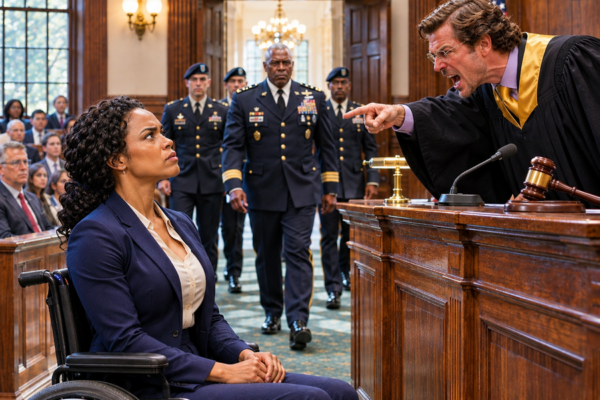
Part 1| Single Dad Took a Bullet for a Billionaire’s Daughter—Then His Navy SEAL Past Changed Everything
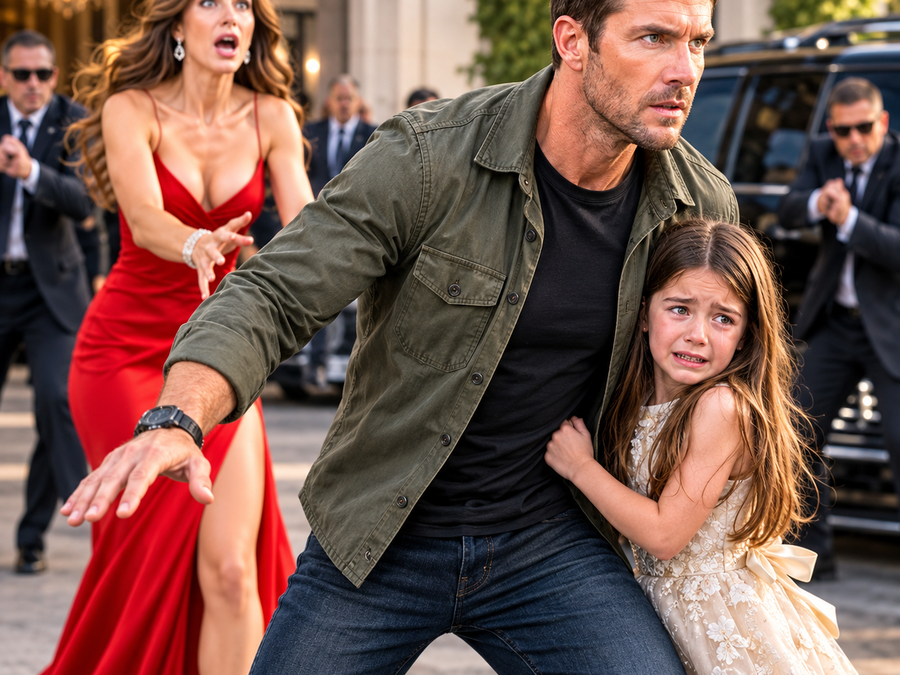
Part 1| Single Dad Took a Bullet for a Billionaire’s Daughter—Then His Navy SEAL Past Changed Everything
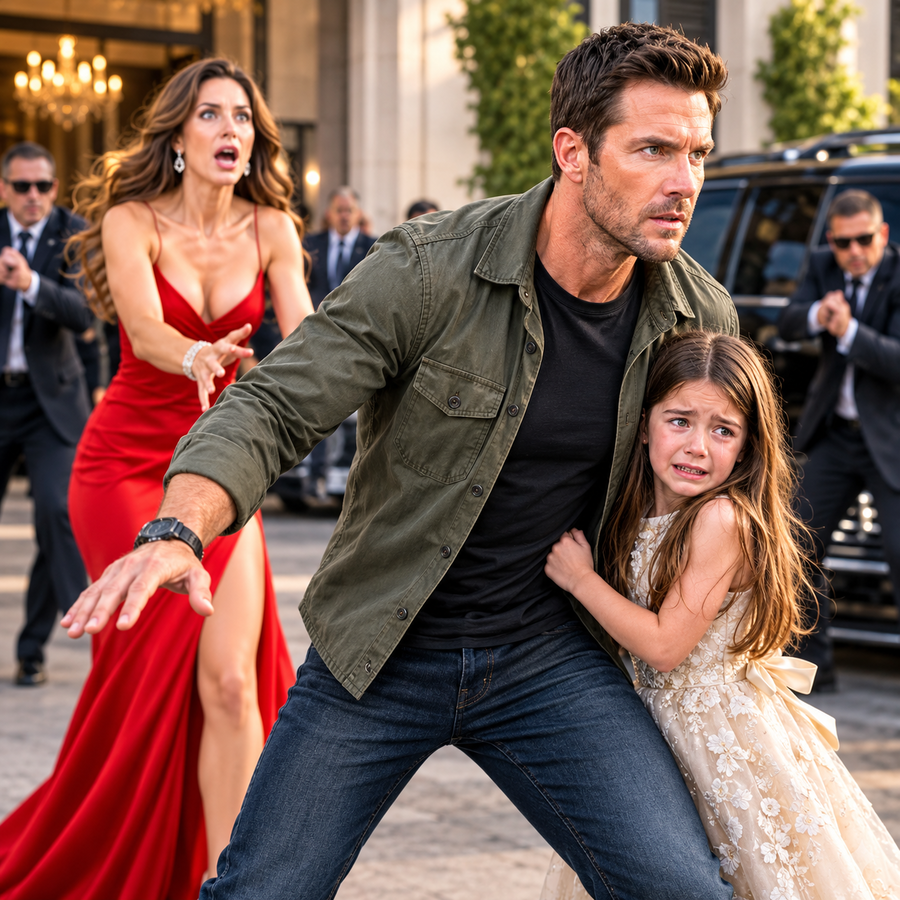
I wasn’t supposed to be there that afternoon.
He wasn’t supposed to care.
He had spent three years building walls around himself and his son, keeping the world at arms length, and it had been working just fine until he saw the man in the hoodie reach beneath his jacket. One second.
That’s all it took.
The former Navy Seal, who had buried that version of himself in a quiet Colorado town, made a decision that would cost him a bullet, expose a billion-dollar conspiracy, and drag four broken people towards something none of them had been
looking for. Some If this is your first time here, welcome.
Hit that subscribe button right now and turn on notifications so you never miss a story like this one.
Drop a like and tell me in the comments what city or country you’re watching from.
I want to see exactly how far this story travels.
Now, let’s get into it.
The park was ordinary in the way that Tuesday afternoons in late September always are.
Kids shouting over each other.
Dogs pulling their leashes towards the water fountain. A father somewhere yelling at his son to stop climbing the wrong side of the slide.
West Brbridge, Colorado wasn’t a remarkable place.
It sat in the valley between two ridge lines that turned purple in the evenings. And it had exactly one coffee shop that everyone agreed was mediocre, but nobody ever stopped going to.
People moved here to disappear from something.
Most of them managed it.
Gavin Holt had managed it for 3 years.
He stood near the far end of Meadowrest Park’s soccer field with his arms crossed, watching Owen dribble badly toward a goal that had been set up with two orange cones.
The boy was 7 years old and not particularly gifted at soccer, which didn’t bother Gavin at all.
Owen had inherited his mother’s stubbornness and his father’s refusal to quit a thing just because he wasn’t naturally good at it.
Every Tuesday, they came to this field.
Every Tuesday, Owen worked on the same move, a sharp cut to the left that he almost never landed cleanly.
And every Tuesday, Gavin told him the same thing.
Sell it before you make it.
Make him think you’re going right.
I know, Dad. Then do it.
Owen tried again, caught his own feet, and stumbled into the grass.
He sat there for a moment, breathing hard through his nose.
I did it, he said flatly.
You fell down.
I fell down after I did it.
Gavin almost smiled. Almost.
Get up again. The late afternoon light was flattening out across the field, turning everything golden and a little hazy.
Gavin had been on a job site since 5 in the morning.
a commercial build in the warehouse district east of town, and his shoulders carried the particular kind of tiredness that concrete work produced deep in the bones rather than the muscles.
He’d grabbed sandwiches from the deli on Crenshaw before picking Owen up from school.
The boy had eaten his in the truck without asking what kind it was, which meant the grieving had eased a little more since last month.
That was how Gavin measured time now. Not in weeks or months, in small things.
whether Owen asked for his mother during dinner, whether he wanted the closet light left on, whether he ate a sandwich without checking.
Laura had been gone for 2 years and 4 months.
She’d had an aggressive form of leukemia that moved faster than any of them were prepared for.
The diagnosis came in October. She died in February.
There was a stretch somewhere in those four months that Gavin couldn’t account for now.
weeks that existed only as a gray smear in his memory, a period when he had gone through every motion of being a husband and a father.
While something essential inside him had quietly switched off, he didn’t talk about it.
That wasn’t his way.
He found a construction crew, worked longer hours than anyone thought reasonable, took on projects that required him to study blueprints until midnight. He kept Owen in his routine.
school, dinner, homework, Tuesday soccer, Saturday breakfast at the diner on 5th. Structure was the only thing he trusted anymore.
The SEALs had taught him that much.
At least when you can’t control the outcome, control the process.
He’d left the Navy 8 years ago, long enough that the life felt like it had belonged to someone else.
He never mentioned it to anyone on his crew.
The other workers knew him as a guy who showed up early, never complained, and had an unsettling ability to look at a half-built wall and tell you exactly why it was going to fail in 6 months.
His foreman, Ray Delicost, had once called him the quietest man I’ve ever met, who still managed to make everyone feel slightly nervous.
Gavin had taken that as a compliment.
He wasn’t nervous now.
He was watching Owen try the cut again, better this time, left foot finding the ground properly.
When something in his peripheral vision shifted, not a loud thing, not a dramatic thing, just a change in the texture of the afternoon, the way a sound or a shape fails to fit its surroundings.
Gavin’s attention moved before his brain fully understood why.
The playground equipment sat maybe 60 yards to his left. A cluster of kids ranging from four to maybe 10 years old occupied the swings, the climbing structure, the low platform near the slide.
Among them, a small girl in a yellow jacket was perched on top of the climbing frame, legs dangling, watching the bigger kids below her with serious eyes. She looked maybe six.
She was alone up there, which struck Gavin only later as slightly odd, not abandoned, just apart in the way that some kids are, comfortable in their own observation.
Near the playground’s edge, seated on a bench with a phone in her hands, was a woman in her early 30s, dark hair pulled back.
Good coat, not cheap. She was glancing up regularly at the girl in the yellow jacket with the particular attention of a parent who trusted the space without fully relaxing into it.
A professional habit, monitoring without hovering.
None of that was what had pulled Gavin’s attention.
What had pulled his attention was the man near the maintenance shed at the park’s eastern boundary.
He was wearing a gray hoodie hood up despite the mild temperature.
Standing just at the edge of the treeine, not moving.
That alone wasn’t unusual.
People stopped all the time. But people who stopped near parks usually face the park.
This man’s body language was off.
Weight forward, right shoulder dropped slightly lower than the left, one hand already tucked beneath the front of his jacket. Gavin had seen that posture before.
He’d seen it in places where seeing it meant someone was about to die.
His body processed the situation approximately 2 seconds before his conscious mind caught up.
The man’s eyes were tracking the girl in the yellow jacket.
Steady, deliberate.
Not the kind of looking people do when they’re watching kids play.
The kind of looking that had a purpose attached to it.
Gavin was already moving. Owen, stay here.
He said it without inflection, without alarm, because a panicked voice carried and a panicked voice made people look.
And right now, the last thing he wanted was for that man near the treeine to realize he’d been spotted.
Owen looked up.
Dad, don’t move.
Right here.
I’ll be back.
He crossed the field at an angle, keeping his path diagonal rather than direct.
Not running, not rushing, walking with the particular purposefulness of a man who knows exactly what he’s doing and doesn’t need to announce it.
His eyes stayed on the man in the hoodie.
The man hadn’t moved yet.
The girl in the yellow jacket had climbed down from the frame and was now closer to the ground, walking toward the slide.
The man’s hand began to come out from under his jacket.
Gavin ran.
He covered the distance between the soccer field and the playground in a way that startled everyone who later tried to describe it because they couldn’t reconcile it with what they expected from a man who looked like a tired construction worker.
He didn’t shout.
He didn’t flail.
He moved in a direct line. His entire focus narrowed to two points.
The girl and the angle between her and the man’s hand.
Down.
His voice cracked across the playground like a physical thing.
Parents jerked upright.
Kids froze.
The woman on the bench spun to her feet.
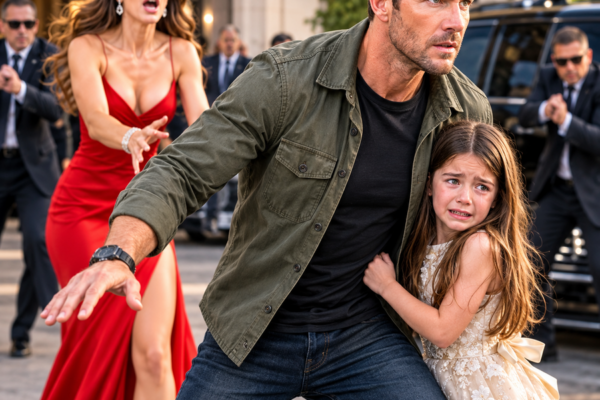
The man in the hoodie raised a handgun.
Gavin hit the girl with his shoulder and both arms simultaneously, wrapping himself around her, rotating his own body to take the angle.
The gun fired. He felt the impact before he heard it properly.
A sharp tearing pressure high on his left side that punched the air out of him and dropped his leg out from under him.
He went down hard, one knee, then the other. The girl pressed to his chest and his arms locked around her.
She was screaming.
He couldn’t blame her.
Hey. His voice came out ragged.
The pain was arriving in full now.
A deep burning that told him something had gone through rather than just a cross. Hey, look at me right here.
The girl, Maisie, he would learn her name later, stopped screaming and looked at him with enormous, terrified eyes.
“Put your hands here.
” He moved her small hands to his side, pressing them flat against the wound.
“Press hard.
Don’t stop.”
“It’s wet,” she whispered.
“I know.
Keep pressing.”
He looked up.
The man in the hoodie was gone. Had run the moment the shot drew attention.
Was already past the treeine and into whatever came after.
Gavin scanned the crowd, which was moving in the chaotic, uncertain way that crowds move when something violent has happened, and no one is sure whether it’s over.
He needed Owen.
That was the only other calculation his mind was running. Is he yours?
He looked up.
The woman from the bench was kneeling beside him now.
Up close, she was younger than he had initially placed her. sharp features composed in the way of someone who was not composed at all, but had decided composure was currently more useful than falling apart.
Her eyes were moving between him and Maisie with a fast professional assessment.
Small boy, soccer clothes over there.
Gavin nodded toward the field.
7 years old, Owen, he won’t come when you call unless you tell him I asked.
She was already standing, already calling over a security detail Gavin hadn’t even noticed.
Two men in civilian clothing who materialized from positions around the park with the practiced efficiency of people who took their jobs seriously.
That registered dimly. Security detail.
He filed it away and focused on staying upright.
The pain was bad now.
Not the worst he’d ever experienced.
That was a different time, a different country, and a story that belonged to someone younger. But bad enough that his vision was narrowing at the edges.
and he knew if he let himself go down the rest of the way, he wasn’t going to stay conscious.
He kept one hand over Maisy’s, pressing against his own side, and used the other arm to brace himself.
The man, he stopped a bystander, a heavy set guy in a running jacket who had his phone out but hadn’t dialed anything yet.
Did anyone get him?
Which direction did he go?
The man pointed vaguely east.
He just He just ran.
Just ran.
I don’t call 911.
Give them east from Meadow Crest Park, gray hoodie.
Gavin looked at the runner’s shoes.
New good traction.
He’s fast.
Tell them he’s armed.
The man fumbled with his phone.
Gavin turned back to Maisie, who had not moved her hands and was still pressing, her small face tight with concentration and shock.
“You’re doing great,” he told her and meant it.
“What’s your name?”
“Maisie.”
“I’m Gavin.
I need you to keep doing exactly that until someone with a first aid bag gets here.
Can you do that? She nodded without speaking, her jaw set.
He was losing more blood than he’d like.
He could feel it, the wet warmth spreading down his side, soaking through his flannel shirt and into his jeans.
The bullet had entered high on the left below the ribs.
And he’d caught enough anatomy over the years to know the range of possibilities that presented.
Most of them were survivable with prompt attention.
A couple weren’t.
He had no way to know which category he was in, so he stopped trying to calculate it and focused on the ground directly in front of him. Owen appeared at the edge of the crowd, pushing through, his face white, and his soccer cleat still on his feet.
The woman was with him, one hand on his shoulder, steering him carefully.
“Dad.”
Owen’s voice was very small.
“Here, I’m here.”
Gavin reached out with his free hand, and Owen grabbed it with both of his.
Hey, I’m okay.
Listen to me.
I’m okay.
You’re bleeding.
I know.
Doctors are coming.
You see those lights? He could hear sirens already, distant, but closing fast.
They’re fast.
Look at me. He waited until Owen met his eyes.
I need you to be steady right now, just for a few minutes. Can you be steady?
Owen’s throat worked.
He was fighting it. the fear, the tears, whatever was rising up behind his eyes.
He pressed his lips together the way his mother used to do when she was deciding something.
“Yeah,” he said finally.
“I I can do that.”
“Good.”
Gavin held his hand and kept his other hand over Maisy’s.
“Good.”
The woman crouched beside him again.
Her composure had cracked slightly at the edges now, not breaking, just visible.
She looked at Maisie and touched the girl’s hair briefly, a quick confirming gesture, then looked at Gavin.
“I’m Camille Voss,” she said as though the name should mean something to him.
Gavin looked at her at her.
“Is that your daughter?”
“Yes, she’s brave,” he said.
She kept her hands on the wound.
“Not a lot of adults would do that.
” Something shifted in Camille Voss’s face.
Not the composure breaking, but something underneath it.
something that didn’t have a name yet, but would eventually change the direction of four people’s lives.
“Who are you?”
she asked.
He was going to answer.
But the paramedics arrived then, and Maisie was finally gently moved aside, and the afternoon swallowed everything else in a rush of voices and equipment and bright light. The paramedic who reached him first was young, efficient, and had the particular tone of someone who had seen worse, but still wanted to communicate urgency without panic.
Sir, I need you to lie back.
My son, Gavin said.
He’s right there, sir.
We’ve got him.
You need to tell him I’m okay.
Say it where he can hear you.
The paramedic glanced at Owen, then back at Gavin, then raised his voice slightly.
Your dad’s going to be okay.
We’re going to take good care of him.
Owen made a sound that wasn’t quite crying and wasn’t quite not crying.
Gavin let himself go down. The sky above Meadow Crest Park was enormous and turning orange at the edges.
And somewhere behind the paramedic’s shoulder, he could see one of the cottonwood trees dropping its last leaves in the still air, slow and unhurried.
The way things fall when there’s no wind to rush them.
He had a thought, brief and clear before the dark edge of unconsciousness took over.
That felt less like a thought and more like something settling.
He’d saved the girl.
Owen was safe.
Everything else could wait.
The surgery took 3 hours and 40 minutes.
Gavin didn’t know that at the time.
Obviously, he was under for all of it.
The kind of deep, dreamless unconsciousness that his body had earned through blood loss and shock rather than any genuine rest. The bullet had entered below his left rib cage at an angle, nicked the edge of his spleen, and lodged itself against a lower rib without punching through.
The trauma surgeon who worked on him, a compact woman named Dr.Reyes, who had trained at Denver Health and had the particular economy of movement that comes from years of not wasting a single motion, told the nurse afterward that whoever had applied pressure to the wound in the field had bought the patient a meaningful amount of time.
The whoever in question had been a six-year-old girl. Gavin found that out 3 days later when he was finally lucid enough to piece together a coherent sequence of events.
I was sitting upright in his hospital bed, the left side of his torso wrapped and tender, an IV line still running into his right arm, when the nurse, a heavy set man named Derek, who had the gentle authority of someone who’d spent decades managing patients who didn’t want to be managed, told him that his son had been asking for him every 4 hours since they’d brought him
in.
“Where is he?”
Gavin asked immediately.
“He’s fine.
He’s been staying with a Ms.Voss.
She arranged a room nearby.
She’s been with him since yesterday morning.
Gavin was quiet for a moment.
She didn’t have to do that.
Dererick gave him the look of a man who had heard stranger things. No, she did not.
Owen came in an hour later, still in the same soccer clothes from the park, because apparently the bag Gavin had packed for him was still sitting in the truck in the hospital parking lot, which Owen had pointed out to Camille Voss three separate times, and she had three separate times said she would take care of it and then gotten distracted by a phone call. Owen was not annoyed about this exactly, but he mentioned it.
She’s on her phone a lot, Owen said, climbing carefully into the chair beside the bed rather than the bed itself because he had assessed the tubes and the bandaging and reached the quiet conclusion that jumping on his father was probably a bad idea right now.
She runs a company, Gavin said.
She told me she said it’s a technology company.
Owen considered this.
Maisie says her mom builds things that help cities figure out where to put power lines.
I don’t really get it.
Neither do I.
How’s Maisie?
Owen picked at a loose thread on the arm of the chair. She was really scared at first.
She cried a lot the first night, but she’s okay now.
We watched three movies. He paused.
She picks good movies. Yeah.
She picked the one about the sled dogs. And then she picked the one about the guy who fixes the lighthouse.
And then she wanted to watch a cartoon, but I said we’d already watched two movies.
And she said that didn’t count because the lighthouse one was boring.
Owen seemed to find this deeply reasonable, so we compromised. We watched the first half of the cartoon and then stopped.
That’s not a compromise.
That’s just stopping a cartoon in the middle.
She was asleep by then, anyway.
Gavin looked at his son for a long moment.
Owen’s face had more color than it had the last time Gavin had seen it clearly.
In the park, white as paper, fighting to hold himself together because his father had asked him to. He was holding together now, too, in a different way.
the particular steadiness of a kid who has decided that being upset is a luxury that can wait until the immediate situation is resolved. He looked like his mother when he did that.
“Come here,” Gavin said.
Owen climbed onto the bed very carefully, avoiding the left side entirely and settled into the crook of Gavin’s right arm.
He didn’t say anything.
Neither did Gavin.
They stayed like that for several minutes while the IV dripped and the monitor beeped its dull steady rhythm and the afternoon light shifted across the floor.
I was scared, Owen said finally into Gavin’s shoulder.
I know the lady Camille, she stayed with me the whole time.
She didn’t leave until she knew you were out of surgery.
Gavin absorbed that.
She stayed the whole time.
She sat in those plastic chairs for like 4 hours.
I fell asleep and when I woke up, she was still there.
Owen was quiet for a beat.
She was reading something on her laptop, but she kept checking whether I was okay.
Gavin didn’t respond to that right away.
He was thinking about something.
The brief exchange in the park, the composure in her face, the way she’d moved when she understood what was happening.
He’d filed it away under things to examine later.
Later had apparently arrived.
“She wasn’t what I expected,” he said, mostly to himself.
Owen looked up at him at him. What did you expect?
I don’t know.
Someone who called her assistant to handle it.
Owen seemed to consider whether this was a fair assessment of anyone. She does have a lot of assistance, he said finally, but she handles a lot herself.
Camille Voss came to the room that evening.
She knocked, which surprised Gavin because in his experience, people with her level of money and position didn’t usually knock.
They entered and assumed the entry was welcome.
She knocked and then waited until he said, “Come in.”
And then she opened the door and stood in the threshold for a moment as though checking that she wasn’t interrupting something.
She looked different than she had in the park. Less assembled somehow, still put together, still composed, but with the edges of something real showing through.
She’d changed clothes at some point, but her hair wasn’t as precisely managed, and there were the faint shadows under her eyes of someone who hadn’t slept properly in two nights.
You look better, she said. I look terrible, Gavin said.
But I feel better. Those are different things.
She almost smiled.
Not quite. Fair.
She moved into the room and sat in the chair Owen had vacated.
And for a moment, she looked at the floor in a way that told him she had prepared something to say and was now reconsidering how to say it.
“I want to thank you,” she began.
“You don’t have to.
I know I don’t have to.
I want to.”
She looked up at him directly.
You took a bullet for my daughter.
You didn’t know her.
You didn’t know me.
You just you ran toward her.
She stopped, cleared her throat. I have security people whose entire job is to protect Maisie and I, and not one of them got there before you did.
Gavin thought about saying something neutral and deflecting, which was his usual approach to situations where someone was grateful in a way that made him uncomfortable.
Instead, he said, “Your security wasn’t positioned for a threat from the maintenance perimeter.
They were watching the access points.
Whoever planned that approach knew your security layout.
Camille went very still.
That’s She started and stopped.
That’s not a construction worker observation.
No, he agreed.
It’s not.
The silence that followed was careful on both sides.
Who are you?
She asked.
And it wasn’t the panicked, blood soaked question from the park.
This was different.
This was someone who had spent two days turning a question over in her mind and had finally decided to ask it directly.
Gavin looked at the ceiling for a moment.
Gavin Holt, I’m a construction worker.
I’ve been working in West Brbridge for 3 years.
Before that, Before that, I was in the Navy. Specifically, he looked at her.
She met his eyes without flinching, which he noted. Navy Seals, he said, 12 years.
I got out when my wife was pregnant with Owen.
I didn’t want that life anymore.
And you became a construction worker.
I was already good at it.
I’d been doing it summers since I was 16.
It’s honest work and it doesn’t follow you home.
He paused.
Usually, she nodded slowly.
The way someone nods when information is landing in the place where a theory used to be.
That’s why you moved the way you did in the park.
That’s why you had Maisie applying pressure before the paramedics arrived.
She did it well. Gavin said and meant it.
She kept her hand steady.
A lot of people can’t manage that.
She told me.
Something crossed Camille’s face.
A complicated emotion that involved pride and terror in roughly equal measure.
She said the man told her she was doing great and she believed him, so she didn’t move.
Gavin didn’t say anything to that.
Camille straightened in the chair and shifted into a different register.
the one he suspected that she used when she had made a decision and was presenting it as though it were simply the next logical step. I want to cover all of your medical expenses.
I’ve already spoken with the hospital administrator and I’d like to give you $100,000.
The number sat between them. No, Gavin said.
Camille blinked.
Just once, but genuinely.
I’m sorry.
I don’t want the money.
Mr.Holt.
Gavin.
Gavin.
She adjusted.
You were seriously injured protecting my daughter. You have a son to take care of.
You won’t be able to work for I have savings and I have sick leave.
I appreciate the offer.
I don’t want it.
She studied him the way people study things they don’t immediately understand.
Not suspiciously, more like she was genuinely trying to locate the variable she’d miscalculated.
In her world, Gavin suspected, everyone wanted something, and the ones who claimed they didn’t were usually building toward a larger ask.
“What do you want then?”
she asked, and the directness of it was almost refreshing.
“For Owen to be able to finish his soccer season,” Gavin said.
“And for you to let me know if anyone comes after Maisie again.”
“You think someone will?”
“I think what happened in the park wasn’t random,” he said.
the approach angle, the timing, the knowledge of your security positioning.
That’s planned.
And planned things don’t usually stop after the first attempt unless someone decides to stop planning them.
Camille was quiet for a long moment.
Something was working behind her eyes, rapid and controlled, the way someone thinks when they’re already three steps into a problem and trying to decide whether to admit they’ve been there for a while.
I’ll look into it, she said finally.
Good. He shifted against the pillow.
How’s Maisie today?
Actually, the formality dropped slightly.
She had nightmares the first night. She woke up screaming twice.
Last night, she only woke up once. She exhaled.
She asked this morning if the man was going to come back. I told her no.
Was that the truth?
I don’t know, Camille said, and the honesty of it seemed to cost her something.
I told her it was. Gavin nodded.
He understood the calculation.
He’d made versions of it himself with Owen in the weeks after Laura died.
The small necessary lies that kept a child’s world intact long enough for the adult to figure out how to protect it.
She asked about you, too, Camille added.
She wants to know if you’re going to be okay.
Tell her yes. Is that the truth?
He almost smiled. Tell her yes.
The medical expenses were handled regardless of his objection.
He found that out from Derek the nurse 2 days later who told him with some amusement that the bill had been settled and there was nothing Gavin could do about it now because the transaction was complete. Gavin was annoyed about this.
He was also not surprised because Camille Voss had the particular energy of someone who respected other people’s wishes up to the precise point where she’d decided the wish was impractical.
He was discharged after 8 days. He went home to the small rental house on Alder Street that he and Owen had occupied for 3 years.
And for the first two weeks, he sat on the couch and worked on not going crazy.
Owen was in school. Gavin had been told explicitly by Dr.Reyes that he was not to lift anything heavier than a gallon of milk for 6 weeks, which meant the job site was out of the question, which meant he had a great deal of time to sit with the particular restlessness of a man who has never been good at stillness.
He read the police reports that a detective named Marsh had sent over. The shooter had been identified.
A man named Calder, late30s, with a history of mental instability and two prior restraining orders. No criminal record beyond minor incidents.
He’d been caught 2 days after the park tried to run made it about four blocks.
The investigation into his motive was ongoing, but the preliminary read was that it was personal, connected to Camille Voss in some way that the detective hadn’t fully traced yet.
Personal. Gavin turned that over.
He thought about what he told Camille in the hospital planned. Knowing the security layout, the angle of approach.
None of that was consistent with a mentally unstable man acting alone on personal obsession.
that was consistent with someone who had access to information about Camille Voss’s security setup and had used that information to point an unstable person at a target.
He was still thinking about it when Camille called.
She called his personal cell, which she’d gotten from somewhere.
The hospital probably, or possibly from Owen, who had apparently exchanged numbers with Maisie while they were watching the Sled Dog movie.
“I need to ask you something,” she said without preamble.
“And I’d prefer to ask in person.”
I’m not going anywhere, he said.
I’m on my couch.
She came to Alder Street the next afternoon, which was not what he’d expected.
He’d assumed she would suggest a restaurant or her office somewhere that was her territory.
But she showed up in a dark SUV with one of her security detail and knocked on his front door. And when he opened it, she was holding a paper bag from the deli on Crenshaw.
“Your son told me you like the turkey on rye,” she said.
Gavin looked at the bag.
“He talks too much.
He’s seven.
It’s appropriate.
She held up the bag.
Can I come in?
The house was clean in the functional way of a single father who had given up on aesthetics and committed entirely to order. No dishes in the sink.
A clear path through the living room.
Owen’s soccer cleat by the door, precisely parallel because Gavin had asked him 400 times to leave them like that.
A construction industry trade magazine on the coffee table next to a half-finish cup of coffee that had been there since morning.
Camille sat at the kitchen table and didn’t visibly assess the house, which he appreciated.
She’d been having her company investigated, she told him.
Not officially, not in a way that would alert anyone internally.
She’d used an outside firm, a private investigative group she trusted, and she’d asked them to look specifically at the construction division.
“Why construction?”
Gavin asked.
because we’re 18 months into a headquarters expansion that should have been done in 12 and the cost overruns have been significant.
My CFO keeps finding budget anomalies he can’t explain.
I kept being told it was material costs, contractor delays, the usual, but the numbers were wrong in a way I couldn’t pin down.
What kind of wrong?
The kind where the project manager’s explanation almost makes sense, but not quite.
She pulled the folder from her bag.
actual paper, not a tablet, which surprised him and slid it across the table. The investigator found three contracts that were awarded to subcontractors with no prior work history in Colorado, incorporated within the last 18 months.
All three registered to Shell Companies that trace back to the same parent entity in Nevada.
Gavin opened the folder and looked at the first page.
He wasn’t an accountant and he wasn’t a lawyer, but he understood construction contracts the way a former Navy Seal understands operational logistics.
Not from theory, but from years of watching things that should work fail because someone cut the wrong corner or falsified the wrong number.
He turned pages slowly. Your executive construction supervisor, he said, Dale Brick.
He’s been with the company how long?
7 years. And he signed all three of these contracts.
Yes.
Did he also approve the change orders?
Gavin turned to the third page and pointed these material substitutions. Someone signed off on switching from the specified structural steel to a lower grade.
Same signature. Camille leaned over and looked.
Something went through her expression.
I didn’t catch that.
It’s buried in the change order documentation.
Easy to miss if you’re not reading every page.
He closed the folder. You have a problem.
I know I have a problem. The question is, she stopped, pressed her lips together.
The question is how deep it goes and who else is involved. Have you told anyone about this investigation?
My general counsel.
That’s it.
Good. Keep it that way.
He pushed the folder back toward her. What do you need from me?
She looked at him steadily.
I want to offer you a position overseeing construction operations, specifically the headquarters expansion.
Officially, you’d be coming in as a senior project consultant, someone I brought in because the overruns concerned me, and I wanted an outside perspective.
That gives you access to everything without tipping off whoever’s involved.
Gavin was quiet.
You have the background, she continued.
12 years of SEAL operations, which means you understand how to gather information without showing your hand.
And you have 15 years of actual construction experience.
I know because I had you looked into after the hospital, which I should probably mention.
You investigated me? Yes.
He wasn’t angry exactly.
He was noting it the way he noted most things. What did you find?
That you’re exactly who you said you were.
Navy Seal, 12 years, honorable discharge, 3 years with Kelso Construction in Westbridge, reputation as the most technically accurate site supervisor they’ve had.
And she paused that you never spoke about your military background to anyone at work. Not once.
Your foreman said he didn’t know until he read it in the news story about the park.
Ray talks too much.
Gavin said he also said you caught a foundation error on the Millerton warehouse project that would have resulted in partial collapse within 2 years.
You found it because you reread the original soil report and noticed the test core samples had been taken in the wrong locations. Someone had to read them.
Mr.Halt.
She stopped.
Gavin, I’m not doing this out of charity.
I’m doing this because my company is being robbed from the inside and I need someone I can trust.
And the fact that you took a bullet for my daughter without knowing my name tells me something about your character that a background check can’t.
It was a good argument. He turned it over looking for the angle that bothered him because something always bothered him.
Owen, he said, what about him?
He can’t know the real reason I’m there.
As far as he’s concerned, it’s a job.
I don’t bring work home, of course.
And if this goes where I think it’s going, if Branic has partners, if the shell companies connect back to someone with real leverage, it gets dangerous.
Not construction site dangerous, the other kind.
Camille met his eyes. I know.
You’re sure you want to do this?
Someone tried to shoot my daughter in a public park, she said.
And for the first time, the composure showed its real texture. Not a wall, but a decision.
Something she’d chosen rather than something she’d been born with.
Yes, I’m sure.
The day before Gavin was supposed to start at Voss Meridian, an anonymous text arrived on his cell phone.
He was in the kitchen when it came through making Owen’s lunch for school.
Peanut butter and honey cut on the diagonal because Owen had gone through a phase about diagonal cuts two years ago and the phase had apparently never ended. He picked up his phone.
Unknown number, seven words. Stay away from Camille.
She belongs to us.
He read it twice, put the phone face down on the counter, finished making the sandwich.
Owen came in from the bathroom, backpack already on, hair damp from where he’d apparently attempted to fix it with water and given up.
Is there an apple?
He asked.
Bag on the counter. Owen grabbed an apple and studied it with the deep suspicion of someone who had received me apples in the past.
Apparently, it passed inspection because he put it in his backpack. You start that new job tomorrow.
Yeah. Is it far?
Other side of town 20 minutes.
Owen seemed to do some internal calculation.
So, pickup’s still the same.
I’ll be there.
Gavin picked up his phone, photographed the message, sent it to a number he had for the detective, Marsh, with a brief note.
Then he deleted the original and set the phone back down. Bus in the morning, same as usual.
Okay. Owen paused in the kitchen doorway.
Dad, that lady, Camille.
What about her?
Owen was quiet for a sec.
Second in the careful way of a kid who is deciding whether to say the thing he’s actually thinking.
She’s nice, he said finally.
Not like not fake nice.
She didn’t treat me like a little kid.
Gavin looked at his son.
She asked me what scared me most that day, Owen continued.
Not like she was trying to make me feel better, like she actually wanted to know. What did you tell her?
I said I was scared you weren’t going to come back.
He said it matterof factly, the way kids sometimes say the most devastating things. And she said she understood that.
She said when she was little, her dad traveled a lot for work and there was always this thing in her stomach when he left. He shrugged.
I don’t know.
It made me feel less I don’t know, less alone with it, Gavin said.
Yeah. Owen pulled his backpack straps tighter.
She’s not what I thought a billionaire would be like.
What did you think a billionaire would be like?
Owen considered more loud about it, I guess. Gavin picked up his coffee cup.
Go catch the bus. Owen went, the screen door banging behind him in the way it always did because Gavin had fixed the spring four times and it kept going wrong again.
The kitchen was quiet.
Gavin stood at the counter and thought about the anonymous text. She belongs to us.
Not a threat against Camille directly, not a threat against him.
A statement of ownership, which was a different and in many ways uglier thing.
People who use that language, she belongs to us, were operating from a logic that didn’t include Camille Voss as a person with her own choices.
They were operating from a position of control they believed they were entitled to.
He thought about the shooter in the park, the approach angle, the knowledge of the security layout.
He thought about Dale Brick’s signature on the fraudulent contracts.
Then his phone rang.
Not a text, a call from a number he’d started recognizing over the past 2 weeks.
It was Marcus Webb, one of Camille’s senior security staff.
His voice was tight and measured in the way of someone delivering information they know is bad.
“We have a situation at the headquarters site,” Marcus said.
“You need to hear this before tomorrow.”
Gavin sat down his coffee.
“Tell me.”
Someone accessed the construction site last night. We had a guard.
He was he was hit.
He’s okay.
Concussion, but he didn’t see much.
They got inside the east wing, the section that was reported last week. Gavin felt the particular cold clarity that used to come over him before an operation.
How bad?
The structural steel framing on floors 3 through 5. Cut systematically cut with what?
That’s the thing, Marcus paused.
Not a grinder, not a torch. Calculated cuts.
Specific loadbearing points.
Whoever did this knew exactly where to cut to maximize long-term structural failure without triggering immediate collapse.
Gavin was already moving toward the table where he’d left his notes from the contract files.
They knew the original engineering specs. Yes, which means they had internal access.
He flipped open the folder.
This isn’t vandalism.
No, Marcus said it’s an operation.
He said it quietly, almost to himself. The anonymous text from this morning was still sitting in the forwarded message on his phone.
She belongs to us. And now this, not random destruction, but targeted engineered sabotage.
The kind of damage that would reveal itself slowly weeks or months after the fact when a floor shifted wrong or a joint failed under load. The kind of damage designed to look like construction error rather than deliberate attack.
designed to destroy the project from within and designed to be blamed on someone else.
Get me the guard’s description of anyone he saw before he was hit, Gavin said, and pull every access log for the last 72 hours.
Every badge, every contractor ID, every delivery record.
You’re not officially starting until tomorrow.
Then consider this unofficial.
He closed the folder.
And tell Camille tonight.
Not tomorrow. Tonight.
There was a brief pause on the line.
She’s not going to like hearing this at 10 p.m.She’s not going to like hearing it at all, Gavin said.
The time doesn’t matter.
He hung up.
Stood in the kitchen for a moment in the silence that Owen’s departure had left behind.
Outside, through the small window above the sink, the street was ordinary, a dog walker, a car reversing out of a driveway, the particular mundane motion of a neighborhood going about its Tuesday. The construction worker version of Gavin Hol would have looked at that street and felt something close to peace.
The version of him that had read those access logs and heard Marcus Webb’s careful controlled voice was running a different calculation entirely.
Whoever was behind this Branick, the shell companies, the anonymous text, the shooter in the park, they had just made a significant operational error. They had assumed that what happened at Meadowrest Park was a setback.
They hadn’t understood what it actually was.
It was an introduction. And Gavin Hol, who had spent 3 years being quietly, deliberately invisible, had just become very visible to exactly the wrong people.
He refilled his coffee, sat down at the kitchen table, opened his notebook, and went to work.
The first thing Gavin did on his official first morning at Voss Meridian was walk the entire construction site alone. Not with a clipboard, not with an escort.
He told Marcus Webb he needed an hour before the crew arrived.
And Marcus, who had spent enough time around people who knew what they were doing to recognize when someone did, handed him a sight badge and a hard hat and got out of the way.
The headquarters expansion occupied a full city block on the east side of West Bridg’s downtown corridor.
The original building was a 9-story glass and steel structure from the early 2000s that Camille had purchased and renovated 3 years into running Voss Meridian. The expansion was supposed to add a connected 12-story wing, modern, energyefficient, designed by an architecture firm out of Denver that had won awards for this kind of work.
On paper, it was a clean project, the kind that gets written up in trade publications with words like seamless integration and innovative approach. In reality, it was a mess.
Gavin could see it within the first 20 minutes. Not the sabotage specifically that required documentation and engineering analysis, but the accumulated evidence of a project that had been systematically mismanaged for long enough that the mismanagement had become structural.
Wrong grade concrete in sections that should have used higher spec mix.
Rebar spacing that was technically within code but on the absolute minimum edge of it.
The kind of tolerance that passed inspection only if the inspector wasn’t looking too hard.
change orders taped to sightboards with handwritten amendments that should have triggered formal engineering review and hadn’t.
He stood on the third floor of the east wing, the section Marcus had described on the phone, the one with the calculated cuts to the loadbearing steel, and looked at the framing. The cuts were subtle.
If you didn’t know where to look or what you were looking for, they could be mistaken for stress fractures or even imperfections in the original fabrication.
But Gavin had spent 12 years in environments where the difference between a structural failure and a solid foundation was sometimes the difference between coming home and not coming home. And he knew what he was looking at.
This wasn’t accidental.
Each cut was placed at a point of maximum load transfer.
The exact locations where vertical stress from the floors above would concentrate.
Left alone, the structure would hold for months, possibly longer. But under full occupancy load, under the weight of furniture and equipment and people going about their workdays, the failure would eventually come.
Gradually at first, a crack here, a settling there, and then if they were unlucky and the timing was wrong, something much worse.
He photographed everything with his phone, measurements, angles, locations relative to the building’s grid.
He sent everything to an engineering contact he trusted, a woman named Pria Son, who had done structural forensics for insurance companies and occasionally for federal investigations and who owed him a favor from a job 3 years ago when he’d found a foundation problem she’d missed on a report.
Then he went to find Dale Brick. Branick had an office on the construction management level, a glassedin space with a view of the site that was clearly designed to project authority.
He was a large man, somewhere in his mid-50s, with the particular build of someone who had once been physically imposing, and had let it go soft in the middle without losing the habit of taking up space.
He had the handshake of a man who thought handshakes were about dominance, which Gavin noted and filed away.
“Gavin Hol,” Branick said, leaning back in his chair in a way that was supposed to communicate relaxed confidence.
“I’ve been hearing about you.”
“Good things, I hope.
Depends on who you ask. He smiled.
It didn’t reach anything.
I’ll be straight with you.
I’ve been running this project for 2 years.
I know every contractor, every sub, every delivery schedule.
I don’t really see what a What’s your official title again?
Senior project consultant.
Right.
I don’t see what a consultant brings to a job this far along that I can’t handle myself.
Gavin looked at him evenly. Ms.Voss wants fresh eyes on the overruns.
That’s all.
The overruns are a materials market issue. Steel costs, concrete supply chain.
You know how it’s been since I read the change order logs, Gavin said.
All of them going back 18 months.
A small pause. Barely noticeable.
And and I have some questions about the material substitutions on floors 3 through 7. The structural steel specification changes.
specifically.
I’d like to see the original engineering approval documentation for those changes.
Branick’s expression didn’t shift in any dramatic way.
He was too experienced for that, but something recalibrated behind his eyes. A reassessment, a small, careful adjustment.
Those are all code compliant, fully inspected.
I’m sure they are.
I’d still like the documentation.
I’ll have my assistant pull the files.
Today would be good. Branick smiled again, the same non-smile.
Sure, today.
Gavin thanked him and left the office and walked back to the temporary workspace Camille had set up for him on the fourth floor of the main building, a glasswalled room with a long table and access to the project management server. He sat down, opened his laptop, and began building a timeline.
He was 3 hours into it when Camille appeared in the doorway.
She had meetings all morning.
He could tell from the particular tension she carried in her shoulders when she’d been in a room full of people performing careful versions of themselves.
She had a coffee in each hand, which was unexpected, and she set one on his table without asking whether he wanted it.
“Branic called me,” she said, sitting across from him.
“That was fast.
He said you were looking at the change order documentation.
He made it sound routine, but Branick doesn’t make routine calls.
” She wrapped both hands around her own cup.
What did you find this morning?
Gavin turned his laptop so she could see the photographs from the east wing framing. He walked her through it without jargon.
What the cuts meant, where they were, what would happen over time if they weren’t corrected.
He watched her face as he talked.
She didn’t look away from the screen.
She didn’t interrupt.
When he finished, she was quiet for a moment.
“How long have we had people working on those floors?”
she asked.
“The subcontractors have been up there daily for 6 weeks.
If anyone had been up there when Yes, he said because she didn’t need to finish the sentence.
She sat down her coffee.
This goes beyond fraud. It was always beyond fraud.
The park was beyond fraud. This is someone trying to destroy you systematically.
Your company’s finances, your physical safety, the safety of the people in this building.
He paused.
The question is, who’s directing it?
Branick is executing. Someone is directing.
Camille’s jaw tightened.
She was doing that thing he’d noticed over the past 2 weeks, holding the composure in place through will rather than genuine calm.
The way you hold a door shut against wind. It worked mostly, but he was starting to recognize the moments when the wind picked up.
“I have a name,” she said.
“I’ve had it for 3 days, and I didn’t want to say it until I was sure.
” Gavin waited.
“Preston Vale,” she said.
“My former husband.”
The name landed in the room and stayed there.
Tell me, Gavin said.
She told him.
It took 20 minutes and she did it without sentimentality, which he suspected cost her something. Preston Vale had been her business partner before he was her husband.
They’d met when Voss Meridian was still a startup, and he’d come in as a strategic adviser with connections and capital and a particular talent for making himself seem indispensable.
They’d married when the company was 3 years old.
Maisie was born the following year.
The marriage had lasted 5 years and disintegrated badly.
Gavin didn’t push for details on the personal side of it.
He could read enough in the controlled flatness of her voice when she described the end of it. What she did tell him was that Preston had believed with the particular conviction of someone who had spent years arranging things to his advantage that he would retain significant influence over Voss Meridian regardless of the divorce.
That Camille would need him.
that she would eventually understand the company worked better with him than without him.
She had not needed him.
The company had grown faster without him. He had found this.
She paused here, searching for the right word.
Difficult.
Difficult.
Gavin said, “He doesn’t take being wrong well,” she said.
“And he had never been wrong about anything this significant in his life.
When did you start suspecting him?”
The investigator found the Shell Companies 2 weeks ago. The parent entity in Nevada traces back to a holding company that Preston used during our marriage for personal investments.
It’s been restructured and renamed, but the registered agent is the same.
She exhaled. I had the investigator confirm it three times before I was willing to believe it.
And Bran Bran came to Voss Meridian 4 months after Preston left.
I hired him on the recommendation of a board member who I later found out played golf with Preston regularly.
She said this with the particular tone of someone cataloging their own errors precisely because it’s the only way to stop making them.
I didn’t connect it at the time.
Was the board member aware of what Branick was doing?
I don’t think so.
I think Preston used him as a reference without explaining why he needed Branic inside the company. She looked at her coffee.
Preston is very good at using people without their knowledge.
Gavin turned back to his laptop. The timeline was open with dates and contracts and names arranged in a sequence that was starting to form a coherent picture.
He added Preston Vale’s name at the top and ran a line down through Branick, through the three shell companies, through the fraudulent contracts, through the sabotage at the east wing.