She Chose Nursing After Her Military Past — But Special Forces Never Forgot Her
She Chose Nursing After Her Military Past — But Special Forces Never Forgot Her
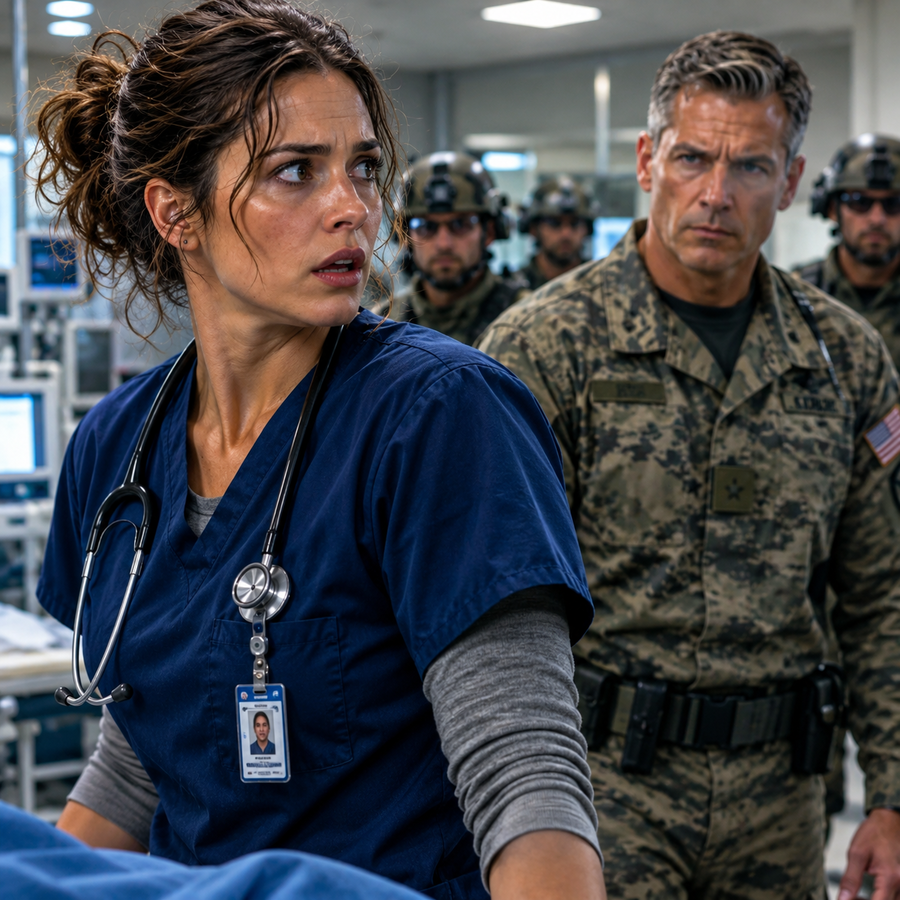
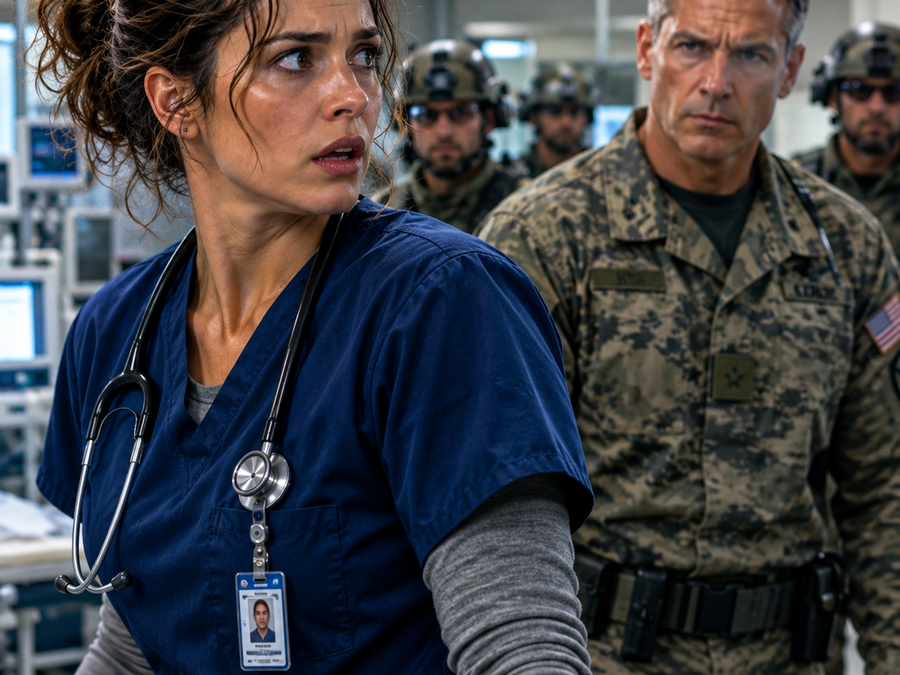
At 9:32 on a rainy Tuesday morning, a man in a military uniform walked into a small town emergency room, looked straight past the doctors, past the nurses, past the bleeding soldier on the stretcher, and said a name that nobody in that hospital had ever heard. Kestrel.
A quiet nursing student holding a tray of saline froze where she stood because that name belonged to a woman who had walked away from a helicopter crash in the mountains two years earlier, changed her identity and vanished.
Before that day was over, she would answer a phone call from a man she had watched die. And before the sun came up again, she would discover that the crash was never an accident, that her own memory had been rewritten, and that the one person who could prove it had been saying good morning to her every single day.
Before we begin, tell me in the comments where you are watching from. And if you love stories like this, subscribe so you never miss what happens next.
Now let’s go back to the beginning of that morning.
Nora Whitaker arrived at Pine Hollow Regional Hospital at 5:40 every morning, a full 20 minutes before anyone expected her.
She was 34 years old, older than most of the nursing students who rotated through the building, and she was in her third and final year of school. On weekends, she worked at the pharmacy downtown to cover rent.
She drank black coffee from a dented steel thermos, and she had a habit of checking every supply room before anyone asked her to.
The staff liked her.
Linda Morales, the charge nurse who had run the emergency department for 16 years, called her the steadiest pair of hands she had seen in a decade.
Dr.Raymond Pierce, the attending physician, let her organize his charts because she always knew exactly where everything was. The paramedics brought her donuts on Fridays, and yet nobody really knew her.
That was not their fault.
It was by design.
Nora answered every personal question with a warm smile and half an answer.
Where are you from? A little bit of everywhere.
What did you do before nursing school?
Mostly worked. Any family nearby?
Not really. She wore navy scrubs one size too big.
She kept her dark hair pulled back tight.
She never posted photos, never joined the staff group chat, and always found a polite reason to skip drinks after the holiday party. She was kind, helpful, and almost impossible to describe when she left the room.
She knew which medication cart stuck. She knew the monitor in room seven lost its signal during storms, and she knew that the best way to keep a secret was to become so ordinary that nobody ever thought to look for one.
The only person she might have called a friend was Hannah Cole, the soft-spoken medical records clerk with pale blonde hair who worked down the hall.
Every Monday, Hannah left a sticky note on Nora’s locker with a terrible joke written on it.
Nora never asked about Hannah’s past.
Hannah never asked about hers.
Maybe that was exactly why they got along, because before Pine Hollow, Nora Whitaker had been someone else.
She had been Nora Vance, a flight paramedic with the 417th Rescue Squadron.
For six years, she had flown into storms that grounded everyone else, dropping onto mountain ridges and frozen lakes to pull strangers out of places nobody else could reach. Her crew had a name for her, kestrel, small, fast, and impossible to shake loose once she locked onto a target.
Then came the night the helicopter went down. After that, Nora Vance simply stopped existing.
She took her mother’s maiden name.
She stopped wearing the silver squadron ring she used to keep on a chain around her neck. She changed her phone number twice.
She never went to reunions, never answered unknown calls, and never ever spoke about the mountains or about Eli Sutton.
As far as Pine Hollow was concerned, Nora Whitaker had always been a nursing student. That was the story, and she intended to keep it that way.
That Tuesday began like any other.
Rain had fallen all night, leaving the road slick and black beneath a heavy November sky. The hospital had 14 beds, one operating room, a small emergency department, and a single helipad behind the parking lot that was used maybe twice a month.
There was no trauma team waiting behind glass doors.
When something serious happened in Pine Hollow, everyone felt it.
Linda leaned into the supply room just after 7:00.
We’re short on saline again, honey.
Mind checking central storage? On my way, Nora said.
She found three boxes stacked behind a shipment of dressings in the basement, loaded one onto a cart, and rode the elevator back up.
By 8:00, the ER was filling a farmer with a cut palm, a teenager with a fever, a man convinced he was having a heart attack who had simply eaten too much chili.
Nothing unusual.
Dr.Pierce caught her near the nurses’ station.
Nora, room four could use another warm blanket.
And thank you for restocking the trauma cart last night, I noticed. Anytime, doctor.
It was a good, quiet morning, exactly the kind of morning she had spent two years building. At 9:32, the room changed.
The paramedic at the front desk turned toward the entrance.
Linda straightened.
Dr.Pierce stopped writing mid-sentence. Through the rain-streaked glass doors, Nora saw a dark military truck swing into the ambulance lane.
Then a second, then a third.
The doors burst open and cold air rushed in.
Two soldiers came first, then a medic, then a stretcher.
The young man lying on it could not have been older than 24. His uniform was torn and dark with blood.
A tourniquet was cinched high on his right thigh. His face had that pale grey color Nora had seen only a handful of times in her life, and every one of those times she remembered.
Blast injury on the range, the medic shouted. Training accident, Corporal Ryan Tate, possible chest trauma, pressures dropping.
In less than 10 seconds, the quiet emergency department turned into a storm.
Room one, trauma cart, call the blood bank, get the family in the waiting room moved back.
Dr.Pierce went straight for the leg, the bleeding, the obvious threat.
And behind the soldiers, almost unnoticed, a man in a grey civilian rain jacket stepped inside and stopped by the wall. He had pale grey eyes and a thin white scar just below his left ear.
He did not look at the patient.
He looked around the room and then he looked at Nora.
She barely registered him because as the stretcher rolled past, her eyes went to the soldier’s chest once, twice.
The right side rose and fell.
The left side barely moved.
The veins in his neck were swelling, his lips were turning blue, and his trachea had shifted off center. Her body recognized the pattern before her mind finished naming it.
Tension pneumothorax, air trapped in his chest, crushing his lung and squeezing his heart with every breath.
Dr.Pierce, she said, stepping forward.
His left side isn’t rising.
Look at his trachea. Pierce glanced up, frowned, and looked closer.
His expression changed.
You’re right.
Let’s get a chest X-ray in here fast.
Nora hesitated for half a second, then she spoke again, calm and clear.
Doctor, I don’t think he has time for imaging.
His pressure’s falling every minute.
For one heartbeat, the whole room went still.
Pierce looked at her, then at the monitor, then at the medic.
The medic, Sergeant Luis Ortega, studied Nora’s face for a long moment, and something in his expression shifted.
She’s right, doc, he said.
I’ve seen this before.
Pierce didn’t argue.
He nodded once. Needle decompression.
Nora, sit up and stay with me. And that was when a voice behind her spoke.
A voice that had not said her name in more than two years. Kestrel.
Nora’s fingers tightened around the edge of the supply cart.
Nobody in Pine Hollow knew that name.
Nobody was supposed to.
Slowly, she turned. The man standing behind the stretcher wore the uniform of a United States Air Force major.
He was in his early forties, dark hair going gray at the temples, his face perfectly controlled, but his eyes had changed completely. He was not looking at a nursing student.
He was looking at someone he had once trusted with his life. Nora Vance, he said quietly.
For a moment, she could not breathe.
Then the old instinct took over. Calm.
Assess.
Act.
We can talk later, Major Brooks.
You disappeared. Later.
You changed your name. She met his eyes.
He’s dying.
Major Daniel Brooks followed her gaze to the soldier on the stretcher, and the conversation ended right there.
He stepped aside.
Then do what you do, Kestrel.
That name meant years of darkness and freezing rain. It meant rotor blades screaming over mountain ridges, searchlights cutting through snow, a radio crackling in her helmet.
It meant a crew, a team, a family.
And it meant the one person she had spent two years trying not to remember.
Eli Sutton, her crewmate, her best friend, the man who once told her that nobody can disappear forever.
Standing in that emergency room, she began to wonder if he was right.
The monitor shrieked.
He’s crashing.
Nora moved.
There was no hesitation now.
The quiet student was gone.
She had the kit open before anyone asked, the site cleaned, the needle in Pierce’s hand, her voice steady as she called out the landmarks.
Second intercostal space, midclavicular line. Pierce worked fast and clean.
There was a sharp hiss of escaping air, and the entire room seemed to exhale with it.
Ryan Tate’s chest began to rise on both sides.
His oxygen climbed. His heart rate was still dangerously fast, but the monitor was no longer screaming.
Ortega put a hand on his shoulder.
Stay with us, corporal.
Ryan’s eyes fluttered open.
Nora leaned in close.
You’re at Pine Hollow Regional.
You’re safe.
Keep breathing for me. Am I okay?
He whispered.
You’re alive, she said.
We’ll take it from there.
His eyes closed again. Nora watched his chest rise once, twice, three times.
He was still here. The rescue helicopter landed on the little helipad 18 minutes later.
By then, Ryan was stable enough to move. As the flight crew wheeled him out, Dr.Pierce pulled off his gloves and stood beside her.
22 years I’ve been doing this, he said.
I’ve never seen anyone read a chest that fast.
I got lucky.
He shook his head with a tired smile.
No, you didn’t.
Major Brooks waited by the ambulance doors until the stretcher was gone. Then he walked over.
I didn’t come here looking for you, he said before she could ask.
Tate’s evacuation route brought us here.
That ‘s all.
And you just happened to recognize me.
I would recognize you anywhere, Nora. He reached into his jacket and handed her a folded piece of paper.
There was no name on it, no explanation, just a phone number.
What is this? Nothing you have to deal with today.
Then why give it to me?
Because one day you might want to.
She hesitated, then slid it into her pocket. He turned to leave, then stopped.
You don’t have to be Kestrel anymore.
You know that, right?
I know.
Then why do you still look like you’re waiting for someone to call you back to the aircraft?
She looked toward the empty ambulance bay.
I have an exam on Thursday.
Brooks laughed, a short surprise sound. It was such a painfully ordinary answer, but that had always been her way.
After the worst nights, she went right back to normal, as if normal were a door she could close behind her. Then Nora remembered something.
Major, the man in the gray rain jacket, the one with the scar by his ear.
Is he with your unit?
Brooks frowned.
What man? She turned toward the wall where he had been standing.
The spot was empty. Nobody had seen him leave.
By mid-afternoon, the trucks were gone. The floor had been scrubbed, and the trauma cart was restocked.
But something was different.
Linda found her at the nurses’ station and stood there for a moment before speaking.
Honey, I had no idea.
You weren’t supposed to.
Are you still my student?
Nora almost smiled.
Until May.
Linda pulled her into a quick, fierce hug. Good.
Because I’m not done teaching you how to chart.
And that was all.
No interrogation, no gossip.
Nora was more grateful for that than she could explain.
Dr.Pierce stopped by 20 minutes later.
Whenever you want a letter of recommendation, he said, it’s already written.
On her break, Nora sat alone in the small staff room, turning the folded paper over in her hands.
The door creaked open, and Walter Dunn shuffled in behind his walker. He was 81, admitted three days earlier after falling off a ladder while cleaning his gutters.
His hip was fractured, his pride even more so.
You’re hiding in here, Walter said.
I’m taking a break.
Same thing. He lowered himself into the chair across from her.
Quite a morning.
You weren’t supposed to be watching.
I’m 81.
Watching is all I do. He studied her for a while.
That officer called you Kestrel. He did.
Is that your name? No.
Was it?
She looked out the window and didn’t answer.
Walter nodded as if that settled it.
Military?
I didn’t say that.
You didn’t have to.
You look at the exits every time you walk into a room. You sit where you can see the door.
You walk like you don’t want anybody behind you.
He shrugged.
My older brother came home from Korea the same way.
Couldn’t sleep unless his back was against a wall.
Then Nora’s fingers tightened around the paper.
Did it get better?
Walter thought about it. Not exactly.
He learned how to live with it.
Sometimes that’s all you get.
Sometimes it’s enough.
He was quiet for a moment. Then, gently, did someone die?
Her eyes lifted.
The way your face looked when he said that name, Walter said, I’ve seen that look before.
Someone I knew, she whispered, I think. You think?
I haven’t spoken to anyone from that life in two years.
That sounds lonely. It was supposed to be.
Walter pushed himself back up onto his walker and paused at the door.
Being alone and free are not the same thing, young lady. Then he was gone, and those words stayed in the room long after he left.
Nora finished her shift at 6:00. The rain had not stopped.
She walked out to the covered parking structure beside the hospital and stood beneath the concrete roof, watching water pour off the edge in a silver curtain.
Somewhere beyond the hills, thunder rolled. Her phone vibrated.
Unknown number. She stared at it.
She never answered unknown numbers. She answered, Hello?
Silence. Then a voice came through, low and tired and achingly familiar.
Hey, Kestrel. The rain, the hospital, the road, everything around her seemed to disappear because she knew that voice.
She had heard it over a headset on the worst night of her life, and then she had heard it stop.
Eli?
Her voice cracked.
You’re dead.
Not as dead as everyone thinks. Listen to me.
I don’t have much time.
There’s a red notebook.
You need to find it before they do. Then go to the old Mill Brook Rail Depot before sunrise.
Don’t trust anyone who tells you they already found it, and don’t The line went dead.
Nora stood frozen.
Then she pulled out the folded paper and dialed the number with shaking fingers.
Brooks answered on the first ring as if he had been waiting.
Eli is alive, she said. A long silence.
Who told you that? He did.
2 minutes ago. He told me to find a red notebook.
Brooks exhaled slowly.
Then he’s in more trouble than I thought.
You knew about the notebook?
I knew it existed.
I didn’t know he survived.
Talk to me, Daniel.
I wasn’t on your aircraft that night, he said.
I was on the recovery team. We reached the wreckage 3 days after crash.
The ridge had been declared unstable, so we couldn’t search properly.
I found the notebook under the pilot’s seat.
I locked it in my footlocker. Two days later, it was gone.
What’s in it?
Names, military officers, contractors, a few people in government, and dates for operations that were never supposed to exist.
The rain seemed louder.
Nora suddenly felt exposed under that concrete roof. Why would Eli want me to find it?
Because he trusted you.
He shouldn’t.
I left him up there.
You didn’t leave him.
You were ordered to evacuate. You had a head injury and you were bleeding through your helmet.
If you had gone back, you would have died on that ridge.
Maybe I should have. Nora, his voice turned firm, stop punishing yourself for surviving.
She closed her eyes. For a moment, she could see Eli again, the crooked grin, the two cups of terrible hangar coffee he always brought her, the night he laughed over the headset because she had forgotten her gloves, the night he said that someday they would both retire and become completely boring.
She had told him he was incapable of being boring.
Then you’ll just have to be boring for both of us, he said.
She had promised she would.
What do I do now? she asked.
Exactly what he told you.
Go tonight.
If someone is watching you, they’ll expect you to wait until morning.
And don’t let me text you the address.
Your phone might be compromised. Then say it.
He gave her the address slowly. She repeated it twice and burned it into memory.
One more thing, Brooke said, if you find the notebook, don’t open it.
You just told me to find it. I told you to find it.
I didn’t tell you to trust what you find.
And the call ended. Nora walked to her car without hurrying, watching every reflection and every dark window.
When she reached her car, she stopped. Tucked under the windshield wiper was a small white envelope.
It was perfectly dry despite the rain.
That meant it had been placed there only minutes ago. She pulled a pair of gloves from her bag before she touched it.
Inside was a single photograph, three people standing in the snow beside a rescue helicopter, a mountain rising behind them.
Eli on the left, Brooks in the middle, Nora on the right. All three younger, all three smiling.
She had never seen this picture before. On the back, someone had written one sentence, you left before the fourth one arrived.
She looked again, and there, half hidden behind the tail of the helicopter, was a fourth figure, a man standing alone watching them. The photo was old and worn, but his face was clear, pale gray eyes, a thin scar below his left ear.
The man from the emergency room. And he was not watching Eli.
He was not watching Brooks. He was looking straight at her.
Her phone buzzed again, unknown number. She answered without a word.
On the other end, only breathing.
Then a whisper, you should have stayed gone. Click.
Nora got into her car, locked the doors, and sat with the engine running, her hands trembling on the wheel.
Every instinct told her to drive somewhere crowded and bright, but she knew there was no safe place anymore. Not until she understood what was happening.
So she drove to the one place nobody would think to look for her, the nursing school library.
It was closed for the night, but her student key card still opened the side door.
She switched on a single desk lamp and laid the photograph on the table.
The helicopter’s tail number was visible in the corner of the frame.
She remembered that number.
She opened her laptop and searched an old military archive through the school’s research portal.
Nothing.
She searched the date of the crash.
Nothing.
She searched the mission code. Nothing.
Then she remembered something Eli used to say.
If the system doesn’t remember something, find out who made it forget.
She searched the deleted records index instead.
A single file appeared.
Access restricted.
Password required. She tried the mission code.
Denied.
Eli’s service number.
Denied.
Her own. Denied.
She leaned back and studied the photograph again.
On the scarred man’s jacket was a small patch.
A gray circle split by a single white line.
She had seen that symbol before. Not on a uniform.
On a folder. A folder Eli had once hidden beneath the mattress of his bunk.
She had asked him about it and he had told her it was nothing.
She had believed him. She typed a description of the symbol into the archives image index.
One result appeared.
Project Lantern.
Her heart stopped.
She clicked it. Access denied.
Then a small notification blinked in the corner of the screen.
User activity logged.
She slammed the laptop shut. A second later, every light in the library went out.
Nora stood very still. Somewhere down the hall, a door clicked shut.
Then footsteps.
Slow. Unhurried.
She reached into her bag out of habit, but there was nothing there. She had not carried a weapon since the day she left the service.
She slid toward the emergency exit. The footsteps stopped.
A voice came out of the darkness. You were always hard to find.
She knew it before she saw him.
He stepped into the faint red glow of the exit sign. Gray eyes.
The scar. A face that showed no emotion at all.
Who are you?
She asked. Someone who used to be on the same side as you.
What do you want? The same thing everyone wants, the truth.
And then why are you following me? Because you have something nobody else has, his trust.
Eli never trusted anyone except you. Is he alive?
Yes.
Where is he?
I don’t know.
You’re lying.
He almost smiled. Maybe.
Either way, you need to leave town.
By morning, people will start looking for you.
Who?
Everyone with something to lose.
Eli made a mistake tonight, Nora.
He called you. Who is the fourth person in that photograph?
You’re looking at him, he said.
My name is Simon Kessler.
The question you should be asking is why you don’t remember me.
The lights flickered back on.
Nora blinked against the glare. Kessler was gone.
She ran into the hallway, no footsteps, no doors swinging, nothing. When she came back to the table, the envelope was still there, but the photograph had vanished.
And lying beneath the envelope was a small notebook with a worn red cover. Her hands went cold.
Eli had told her to find it.
Brooks had warned her not to open it, and a stranger had just placed it directly in her hands.
She opened the cover anyway. The first page held a single line in handwriting she knew better than her own.
If you’re reading this, Kestrel, then I failed to keep you safe.
Her eyes filled with tears. She turned the page.
The second line was worse.
Eli Sutton is not the man you think he is. Behind her, the library door locked with a heavy click.
And from somewhere in the darkness outside the glass, someone whispered her old name, Kestrel. She tried the emergency exit, locked.
The side door, locked.
Someone had sealed the building from the outside. Then her phone rang again.
This time she answered on the first ring.
You found it, Eli said.
I’m locked inside the nursing school.
Go down to the basement, not upstairs.
Why? Because whoever locked you in wants you to go upstairs.
I know how they think.
Eli, I’m not moving until you tell me what’s going on.
You’ve had two years.
You don’t get half answers anymore.
A long breath on the line. Fair.
The mission that night wasn’t a rescue, not the kind you thought.
It was called Lantern. A private contractor had been running off the books operations using military aircraft and military crews.
People who saw too much started disappearing. Our job was to recover evidence from a cabin on that ridge.
And you were part of it? I was trying to expose it.
They found out. After the crash, they gave me a choice.
Disappear or watch every person I cared about disappear one by one. You were first on that list.
You could have told me.
I tried. I left messages.
I never got them.
I know. They were never meant to reach you.
They were bait. If you had answered even one, they would have known you were still connected to me and they would have come for you.
So I went silent to keep you alive.
Then why call now?
Because they already found you.
The man you met tonight, his name is Simon Kessler.
Be careful what you say out loud.
He listens.
Nora swallowed.
Eli, why does the notebook say you’re not who I think you are?
Silence.
Then quietly, because I lied to you about my name. What is your real name?
I’ll tell you when you reach the basement.
That’s where they kept the original Lantern files.
You expect me to just believe that?
No, he said. I expect you to survive.
And the line went dead.
She had never been angrier with him. She had never trusted him more.
And she had never been more afraid.
She flipped through the notebook, pages of dates, locations, and names, some crossed out, some circled, officers who had been praised on the evening news, executives whose names were carved over the doors of buildings. Then she saw one that made her stomach drop, Daniel Brooks.
Beside it, a single word in Eli’s handwriting, cleared.
On the next page, another note, Kestrel must never know.
And beneath that, one last line, she’s the only one who doesn’t know.
A door slammed somewhere above her, footsteps on the upper floor, two voices, low and impatient. Check the library again.
She’s not there.
Then check again. Nora pressed herself into the stairwell shadows until the voices faded.
Then she went down. The basement smelled of dust and old paper.
Shelves lined the walls, broken chairs, boxes of forgotten records.
Against the far wall stood a metal cabinet with a faded label, Lantern. Every drawer was empty.
Every drawer was But scratched into the inside of the top drawer was a tiny symbol, a gray circle split by a white line. She pressed it with her thumb, and the wall behind the cabinet shifted.
A narrow hidden compartment slid open.
Inside was a small steel case with a four-digit combination lock. She thought of Eli.
She entered the date of the crash, 11/14. The lock clicked open.
Inside were three things, a flash drive, a photograph, and a military identification card with Eli’s face on it.
But the name on the card was not Eli Sutton.
It read Thomas Garrett. The identification number belonged to a unit Nora had only ever heard about in whispers, a unit that officially did not exist.
The photograph showed the same snowy ridge. Four people this time.
She turned it over. Four names were written on the back.
Thomas Garrett, Daniel Brooks, Nora Vance, Simon Kessler. The fourth person had always been Kessler.
He had been there. He had known them.
And somehow she had forgotten him completely or someone had made her forget.
The basement door creaked open. Nora grabbed the drive, the card, and the photograph and slipped behind the shelves.
Footsteps.
Kessler walked slowly between the rows. You always were good at hiding, he said.
You know what I remember most about Kestrel? You never panicked, even when everyone else did.
His footsteps came closer.
But there’s one thing you never understood.
People like us don’t get to leave.
He stopped directly in front of her shelf. You can come out.
You found the case.
Good.
Now maybe you understand why he had to disappear.
Nora stepped out and faced him. You knew he was alive.
Yes.
Why didn’t you tell me?
Because I wanted to see what you would do. You were always the variable, Nora.
Lantern was built around four people.
Three of us knew exactly what was happening on that mountain.
You were the only one who didn’t know what you were carrying.
What was I carrying? For the first time, something flickered across his face.
It looked almost like fear.
A memory. I remember the crash.
You remember the version they gave you. Why are you helping me?
He looked at the red notebook in her hand.
I’m not.
The lights died.
Metal clicked.
A door slammed. When the emergency lights flickered on, Kessler was gone.
And at her feet sat a small black voice recorder. The moment she picked it up, it began to play.
Eli’s voice filled the room.
If you’re hearing this, Nora, then you’ve met Simon.
I need you to listen carefully. There was no accident.
That helicopter was brought down on purpose.
We’d been ordered to grab a hard drive from that cabin and leave, but there was a woman inside, a witness.
Command told us to leave her behind. You said no.
You told the pilot to hold the aircraft and you went back into that cabin and carried her out on your shoulders. Someone on the other end of that radio decided that if the witness was getting off that mountain, nobody was.
You saved her life, Kestrel, and they made sure you would never remember doing it. Sedation, endless debriefs, the same story told to you again and again until it was the only one you had.
The person you’ve been grieving for two years was never me.
And the woman you carried down that mountain is closer than you think. The recording stopped.
The Nora sank to her knees on the cold concrete floor and for the first time in two years the memory came back. Not all at once, in pieces.
Rotor wash and snow, gunfire from the tree line, Eli shouting her name, Kestrel screaming into a radio to abort, and someone else inside the aircraft, someone she had never once remembered.
A young woman with pale blonde hair, blood on her sleeve, gripping Nora’s hand as the helicopter shook, and one sentence whispered over the roar of the engine.
Please don’t let them erase me.
Nora knew that voice, not from the military, from the hallway outside the records office, from every Monday morning sticky note with a terrible joke. Hannah, she whispered.
Footsteps thundered down the basement stairs. Three people, maybe more.
Nora shoved the notebook and the drive into her jacket, raced back to the cabinet and squeezed through the hidden compartment just as the basement door burst open. Flashlights swept the room.
Search everything.
She’s not here.
She has to Someone dragged the cabinet aside. Metal scraped concrete.
The case is empty.
Then she has it.
Nora held her breath in the narrow passage, her shoulder pressed against cold stone. Seconds stretched into a minute.
Then the footsteps retreated and the door slammed shut.
The passage ended at a rusted steel door. She shoved it open and stumbled into an alley behind the school.
Rain hammered the pavement.
She did not go back for her car.
She did not go home. She ran.
It took her 40 minutes to reach the old Millbrook rail depot on foot. The station had been closed for years.
A single light buzzed above the empty platform.
The tracks gleamed wet in the dark.
For a long moment nothing moved.
Then a figure stepped out from beneath the awning. Pale blonde hair soaked by the rain.
A small nervous smile. Hi Nora.
Hannah said softly. Or should I say kestrel?
Nora couldn’t speak.
Hannah’s eyes were full of tears.
I came to Pine Hollow six months after you did.
I spent a long time looking for the woman who carried me off that mountain.
When I finally found you, you looked right at me and didn’t know who I was.
Eli told me that was the only reason you were still alive.
So I waited.
And I left you bad jokes every Monday because it was the only way I could say thank you without saying anything at all. Nora pulled her into her arms and the two women held onto each other on that empty platform as if letting go might erase them both.
You always did forget your gloves. Said a voice behind them.
Nora turned.
He was thinner than she remembered.
His hair touched with gray, a scar running across his jaw that hadn’t been there before.
In each hand he held a paper cup of coffee.
It’s terrible, he said.
I made sure.
Thomas Garrett, she said.
Just Eli, if you’ll still have it.
Thomas was the man they built for Lantern.
Eli is the one who flew with you. She walked up and hit him hard in the shoulder.
Then she hugged him so tightly he spilled both coffees. Headlights swept the platform.
A car pulled in and Major Brooks stepped out. Cleared, Nora said, holding up the notebook.
It means I passed his test, Brooks said.
For the past year, I’ve been quietly working with the Inspector General’s Office.
Eli needed to know I wasn’t one of them before he trusted me with anything.
Eli held up the flash drive.
This has the flight data, the contracts, and the money trail.
Hannah’s testimony connects all of it.
At sunrise, we send everything to the Inspector General, the Senate Oversight Committee, and three reporters at the same time.
Once the truth is in enough hands, there’s no reason left to erase anyone.
A second set of headlights cut through the rain. Everyone went still.
A lone figure walked across the platform, gray rain jacket, scar beneath the ear.
You’re all very predictable, Simon Kessler said.
Eli stepped in front of Hannah. You here to stop us?
I’m here to make sure you finish.
Kessler pulled a second flash drive from his pocket.
The people who ran Lantern have decided I’m the one who takes the fall.
If the truth comes out, it comes out with every name, not just mine. This is the radio log from that night.
It shows exactly who gave the order to fire.
He placed the drive in Nora’s hand and held her eyes for a moment.
You never panicked, Kessler.
Don’t start now.
Then he walked back into the rain and was gone. At 6:51 in the morning, as the first gray light broke over the mountains, Nora Vance pressed send.
The story broke within days.
Then came the hearings. Two contractor executives were arrested.
A retired colonel resigned.
Corporal Ryan Tate made a full recovery and sent a handwritten letter to the emergency department at Pine Hollow Regional, addressed to the nursing student who noticed what everyone else missed.
Linda pinned it to the break room wall.
In May, Nora walked across the stage at her nursing school pinning ceremony.
When the dean asked how she wanted her name read, she didn’t hesitate.
Nora Vance.
Linda sat in the front row, crying openly.
Dr.Pierce clapped loud enough to embarrass her. Walter was there on his walker, complaining about his tie.
Hannah sat beside Major Brooks, and in the back row stood a man holding two paper cups of truly terrible coffee. After the ceremony, Walter caught her arm.
Well, young lady, how does it feel?
Nora looked at the people waiting for her, the ones who had known her as a quiet student, the ones who had known her as Kestrel, the ones who had loved her as both.
Different, she said.
I spent two years thinking that being invisible was the same as being safe. Walter smiled.
And now? Now I know you were right.
Being alone and being free are not the same thing.
She took the coffee from Eli, made a face at the first sip, and laughed.
For the first time in a very long time, Nora Vance wasn’t waiting for anyone to call her back to the aircraft.
She was finally home. If this story moved you, tell me in the comments, would you have gone back into that cabin for a stranger, knowing what it might cost you?