My Boss Kissed Me After Our Big Win. Pulling Back, She Said, “I’m Just Happy, That’s All.”

My Boss Kissed Me After Our Big Win. Pulling Back, She Said, “I’m Just Happy, That’s All.”
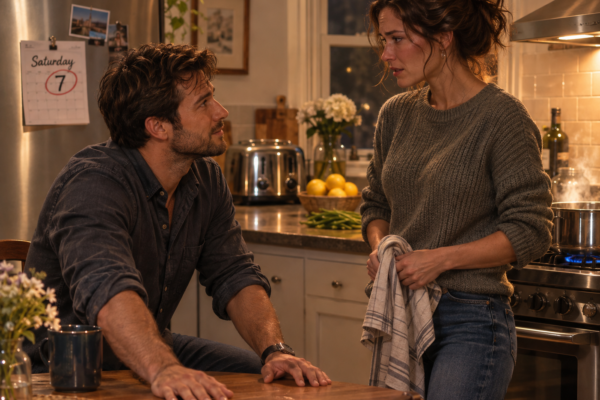
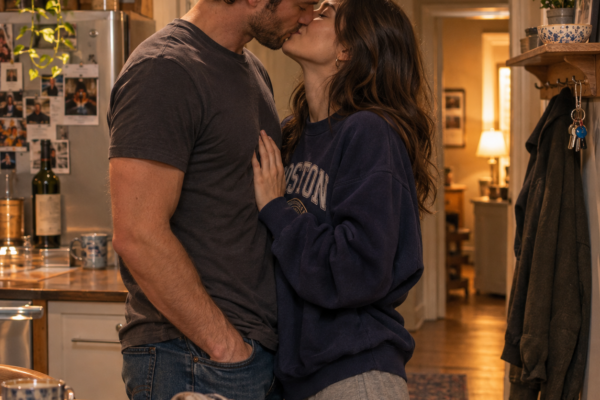
Ranata Balandi kissed me the moment the conference room door clicked shut behind the last of our co-workers, and she did it like a woman who had finally stopped arguing with herself. The signed agreement from Dunore Outfitters was still open on the laptop beside us—the biggest account our small Chicago studio had landed in years—and I was holding a paper cup of coffee I had forgotten about an hour earlier.
For about three seconds, I kissed her back, my free hand on her elbow, her fingers closing around the front of my jacket. Then she stepped away, pressed her knuckles to her mouth, and laughed once—a short, breathless sound that did not match the look in her eyes.
— “I’m just happy, that’s all,” she said.
My name is Malcolm Fischer, and as the studio’s senior account manager, I knew a rehearsed sentence when I heard one. This one had been assembled in the half second after her mouth left mine, and she delivered it the way she delivered a budget correction to a client—quickly, and with no room for follow-up.
I set the coffee on the table because my hand needed something to do, and I heard myself say that it was a good day to be happy. Ranata gave me a smile that was a little too grateful, and I understood that she had handed me an exit and was waiting to see whether I would take it.
Every instinct I had told me to ask what she actually meant, since asking was how I had survived four years of her sharp edits. But she was also the person who signed off on my assignments and my reviews. And any answer she gave me in that room would have to come from the wrong side of that fact.
The trouble was that I knew her too well to believe in a burst of adrenaline. Ranata had hired me away from a bigger agency and then spent four years letting me tell her when she was wrong—which I did in front of clients and occasionally in front of her own boss. She once cut a slide she loved because I said the number on it was a guest dressed up as a fact. And the following week, she told the whole team.
The catch was mine. I had learned to hear what she skipped over, and she had learned that when I joked, there was usually a serious point folded inside it. That habit of catching each other made us the best team in the building, and it was the reason the kiss could not have come out of nowhere. I had been carrying my own feelings quietly for a long time, and the way she kissed me made me doubt I was the only one.
She gathered her laptop and her coat with the brisk efficiency she used when a meeting ran long, and I caught her glancing at the door as if she were counting the steps to the elevator. At the threshold, she said we would hold the kickoff at nine, that Dunore’s marketing director wanted a timeline by Friday, and that she would send a draft agenda tonight.
I told her nine was fine, and that she would have the timeline Thursday—a day early—because the work was the one language we could still speak without stumbling. She nodded, started to say something else, and settled for telling me to go home and enjoy the win.
I stayed in the conference room for several minutes after she left, looking at the cold coffee and the open laptop, and my pulse had nothing to do with the contract.
By nine the next morning, we stood in front of the team at the long table, and for forty minutes, we were exactly what everyone expected. Ranata laid out the launch calendar. I walked through staffing and the first round of deliverables. And when she called a week-three deadline comfortable, I told her it was not, because Dunore’s legal review always ran long.
She looked at me half a second longer than the correction required, then said, “Malcolm’s right. Move it up.” And changed the date herself.
Nobody in the room noticed anything, which was a relief and also a strange kind of loneliness. In the hallway afterward, we both reached for the same door handle, pulled our hands back at the same instant, and said, “After you,” at the same time. The old banter that would have turned it into a joke never arrived. She went through first with a small nod, and I followed her, aware that in four years we had never needed a script to walk through a door together.
At lunch, I looked at the calendar and saw what lay ahead: two strategy sessions a week, a client workshop every Wednesday, and long evenings with the two of us finishing decks in the same room. That meant six weeks of her signature on my assignments and her voice in every meeting, with one sentence she had needed me to accept sitting between us like a third chair.
I could give Ranata the quiet she had offered without a word of complaint, because she was my boss, and her reasons were real, and I meant to. What I could not do was tell myself nothing had happened. And I had already begun to wonder how long a man could let “just happy” stand before it stopped being a courtesy and became a lie.
The first Dunore workshop landed on Wednesday, and Ranata and I sat on the same side of the table, as we always did, with the client’s marketing director across from us and a deck I had rebuilt twice the night before. Dunore wanted to open the campaign with a famous outdoor personality and a splashy paid partnership, and the director described it with the confidence of someone who had already mentally spent the budget.
I said I would steer them away from it, because their own customer survey showed that most buyers distrusted paid endorsements and trusted the people who repaired their gear. Ranata asked me how many was “most,” in the mild voice she used when she suspected I was rounding up. I told her sixty-one percent, gave her the page number, and watched the corner of her mouth move before she turned back to the client.
She said my recommendation was the stronger one, that she would stake the launch on it, and the director agreed to let us build a first concept around Dunore’s own repair technicians. I had expected a stiffer version of her after the kiss—a boss who kept her praise short to prove nothing had changed. Instead, she backed me the way she always had, plainly and in front of the people who mattered. And I realized that was the most honest thing she could have done.
It also made the problem worse, because her trust in my judgment had never been in question—only what we were supposed to do with the rest of it. After the call, she lingered in the doorway of the glass room and told me I had been right about the endorsements. I said I knew, and she said the ego was not attractive, and for a second we were back to our old rhythm. Then a colleague walked past with a laptop under her arm, and both of us became very interested in our notes.
The trouble arrived on Thursday evening when we sat side by side at my desk to finish the timeline. The office had emptied. The cleaning crew was still two floors away, and Ranata leaned in to read the revised schedule from my screen with her shoulder almost against mine. I answered her question about the vendor lead times, then waited because she was supposed to move on to the next line of the timeline.
She did not move on. She kept her eyes on the side of my face with an expression I had seen only once before—in a conference room, on the day we signed the account. The cursor blinked on the screen like a pulse. I felt every sensible part of me recognize what that look might be. And I also felt the other part of me, the one that remembered whose signature went on my annual review.
A look was not an invitation, and I was not going to treat it as one when she held all the power in the room. I asked whether she wanted the vendor deposit moved into the second budget line. She blinked as if I had woken her up, said yes, and straightened in her chair.
On Monday, she asked me to come to her office and close the door, which she had never done for an ordinary schedule conversation. She had a legal pad in front of her filled with her small, tidy handwriting, and she spoke with the calm of a decision already made.
She thought the Tuesday and Thursday working sessions could move to the senior strategist and the project lead, she said, since both were fully capable, and it would spread the account across more of the team. She would still present at the client meetings, she added, and she would stay out of the day-to-day.
It was a reasonable plan on paper, and if anyone else had proposed it, I would have nodded and asked for a start date. Instead, I asked her as gently as I could whether she was protecting my work or avoiding me.
Ranata looked at the legal pad for a long moment. She started a sentence, abandoned it, and started a second one that she also did not finish.
— “I would like it to be the first one,” she said at last—and I could hear in the way she said it that she was not sure which answer was true.
I had asked directly because directness was the way we had always worked. But this time the question cost her something, and I watched it land. She did not defend herself, and she did not hand me the neat line she had managed in the conference room. What she gave me was the truth that she did not know—and I found that harder to push against than any excuse.
I told her I understood why the plan looked responsible, and that I was not angry. Then I said the part I had carried since Wednesday: that I had built this account from the first pitch, and I did not want it reassigned around me because of something that had happened in a conference room.
If the way we worked had become a problem, she should say so to my face and let me weigh in, because I was not willing to be moved off my own work and told it was for my benefit. I said I would rather keep the sessions exactly as they were and be held to the same standards as before.
She flinched slightly at the word “benefit,” and I saw her work out what she had nearly done—make a decision about my career without asking me, in the name of keeping my career safe.
— “That is exactly the thing I was afraid of doing to you,” she said quietly, and laid her pen down on the legal pad.
After a moment, she tore the page off, folded it in half, and told me the schedule would stay as it was for now. I walked back to my desk with the strange lightness of a man who had won an argument he never wanted to have.
Ranata had agreed to leave the sessions in my hands, but nothing about the arrangement had gotten simpler. She still wrote my reviews. She still chose my assignments. And we still had five more weeks of working elbow-to-elbow on Dunore’s launch. The kiss had changed what we wanted, and my own question in her office had shown me that the real difficulty was somewhere else. Neither of us could answer who was entitled to decide what happened between us while she was the one directing my work. And sooner or later, the two of us would have to ask it out loud.
Nine days after that conversation, the studio had settled into a kind of rhythm that looked healthy from the outside. Ranata had kept her word about the sessions, and the Tuesday and Thursday work stayed with me. But she had started managing the space around it with a care that I found harder to bear than the kiss.
Her agendas arrived as tight bullet lists with no jokes in the margins. She sat a full chair away from my screen. And she began every private exchange by asking whether it could be an email.
On a Thursday evening, after the first concept round for Dunore’s repair technician campaign had gone better than either of us had hoped, the floor emptied, and the two of us were left in the glass room with a stack of mock-ups. I was squaring the pages when I asked her what “for now” had meant since she had used it in her office with the folded legal page in her hand. I did not ask about the kiss, because I had decided I would not make her hand me reassurance on demand. The question about the schedule was the honest one anyway.
Ranata did not answer right away. She reached into the inside pocket of her blazer and took out the same page, still folded in half, soft at the creases from being carried around for more than a week. She set it on the table between the mock-ups and kept two fingers on it as if it might slide away.
— “I’ve been telling myself the distance was a favor to you,” she said. “It’s the same decision with better manners, and I made it without asking you again.”
I recognized the habit she was describing, because I had watched her do it to clients for years—containing a problem before anyone else got a vote. And I had not enjoyed being on the receiving end.
She added that she had also been avoiding a sentence she owed me, and that she was tired of walking around it. She looked directly at me and said the explanation she gave in the conference room had not been true. She had not been just happy, she said, and she had known it before the words were out of her mouth, because she had been thinking about kissing me for most of a year.
There was no polish in how she said it, and I noticed that her thumbnail was pressing white into the edge of the folded page. She said the rest as plainly as she could manage: that she had kissed me with the same hand that signed my reviews and my raises, and that it had put me in a position where I could not answer her freely, even if I wanted to. That was hers to carry, she told me, and she did not want me to carry any of it for her.
I let a moment pass before I trusted my voice, because I had expected to feel vindicated. And what I felt instead was a pulse in my throat that had nothing to do with winning.
— “I wanted it,” I said. “I want it now, in case that’s unclear. And I’ve wanted it longer than you’ve been working up to the elevator.”
She let out a breath that was almost a laugh and put her hand over her mouth. And I kept going before I lost my nerve.
I told her that I was not going to do this quietly in the gaps between meetings, with a story ready for anyone who asked why we were staying late. If Dunore turned into the biggest win of my career and my review mentioned it, I wanted to know the praise belonged to my numbers and not to whoever was sleeping with the person who wrote it.
I tried to sound light as I said it, because that is my habit when I am scared, and I saw her catch the tone.
— “You’re doing the voice,” she said.
I asked which voice, and she said it was the one I used when a joke was holding a door shut. So I stopped holding it.
What I said next was the serious part. I told her that if she wanted something with me, I needed it to be something I could say out loud to my own mother and to the director of the studio, without either conversation going sideways. A secret arrangement would only make my standing dependent on her good intentions, and I had too much respect for her to ask her to be the only thing standing between me and a bad review.
Ranata listened with her eyes on the folded page. When she looked up, her expression had gone steady in a way I recognized from the best client meetings—when she decided to stop defending a weak slide and start fixing it.
— “Then we don’t kiss again,” she said. “And I don’t ask you to dinner. And nobody gets a private version of this while I’m the one deciding what your year looks like.”
It should have felt like a loss. Instead, as we both sat there agreeing to the exact thing that kept us apart, it felt like the first honest piece of footing we had found since the signing.
I said that I would probably make her pick the restaurant anyway if we ever got to dinner, and then correct her math on the tip. And she told me she would order the most expensive thing on the menu out of spite. That got a real laugh out of both of us—the first in nine days—and I felt something in the room loosen that had been tight since the conference room.
Then she turned serious again and said there was one more thing she had to stop doing. She had been using professional distance as a substitute for telling me what she wanted, and she was done with it, since I should not have to read it off the edges of her agendas.
— “So here it is,” she said, and her voice was not quite steady. “I want you, Malcolm. I’m telling you because you asked a straight question in my office and I handed you a legal pad. I’m not telling you so you’ll make me any promises.”
I told her I would take the sentence and not the promises, and that I understood the difference.
She nodded, picked up the folded page, and slid it back into her blazer pocket as if it were something she planned to keep. We cleaned up the mock-ups without talking much, and for the first time since the kiss, the silence between us did not feel like something we were each managing alone.
At the glass door, she paused with her laptop under one arm and her coat over the other.
— “Saying it out loud doesn’t change who signs your review,” she said—not apologizing so much as laying the problem back on the table where we could both see it.
I told her it did not, and that it was not supposed to. Then I watched her go down the hall toward the elevator at her usual quick pace, and I stayed behind long enough to turn off the lamp over the mock-ups.
Everything had become clearer and more difficult in the same hour, because there was nothing left to guess about what we wanted. And the only thing standing between us was a decision that could not be made in a conference room with the door closed. Whatever we did next would have to change something outside the two of us—in the way the studio itself was built.
Dunore’s marketing director called on a Monday in the fourth week and asked for a senior voice to walk their regional operations head through the new concept. The man ran forty service shops, had never trusted an agency, and wanted the pitch from whoever actually understood the technicians.
Ranata took the call on speaker in the glass room, thanked the director, and then followed me back to my desk, already sketching the meeting in the air with one hand. She would open with the strategy, she said, and I could cover the numbers in the back half, since that was the safest split.
I recognized the instinct, because it was the same one that had produced the legal pad weeks earlier. She seemed to hear it as well, because she stopped with one hand on the edge of my cubicle wall and asked in a different voice what I wanted to do.
I told her I wanted the whole conversation, from the first slide to the last question. The concept had come out of the breakroom interviews I had spent two weeks collecting, and I knew which technicians had said what, and which of them would back me up if the operations head pushed.
Ranata nodded slowly and said that was fair, and that she would only ask to read the outline on Wednesday, the way she would for anyone presenting to a client that size.
It was a small exchange—maybe forty seconds—but I could see what it had cost her to ask the question first. She had stood in my doorway a month earlier, unable to say a straight sentence. And now she was practicing the habit in public, one ordinary request at a time.
The meeting was Thursday morning, and I opened with the pilot idea I had held back even from her outline. I proposed running the campaign in three Dunore shops for the first month, letting the technicians’ own repair stories carry it, and expanding to the full region only after the operations head had watched it work in his own parking lots. It meant trimming the launch budget we had already penciled in, and Ranata’s expression changed as I said so.
She asked whether a pilot might read as hedging on a win we had just landed, and she asked it in front of the client in the cool tone she used when she wanted a weak point tested before the other side found it. I answered that the operations head would never sign a roll-out he could not inspect, and that a pilot handed him something to defend instead of something to resist.
She turned to look at him, and he was nodding slowly with his arms crossed.
— “I had the timeline wrong,” she said. “Malcolm’s plan is the stronger one.”
And she walked to the screen and moved the schedule herself.
When the meeting broke up, the operations head shook my hand first and hers second, and Ranata let him do it without a flicker. I noticed that, and I suspected she had noticed me noticing.
The pilot turned the following weeks into long ones, with mock-ups to revise for three shops, field photographs to approve, and the conference room occupied until after dark most nights. Ranata and I ended up on opposite sides of the table, working through the evenings with takeout containers between us, and the effort of not touching each other turned into a sort of third collaborator.
She slid a coffee across to me without letting her fingers reach mine, and I thanked her in the same careful tone I used with clients. Around ten-thirty, she would tell me to go home. I would tell her the same thing, and we would leave through separate stairwells. Neither of us ever suggested staying later, and I think each of us knew exactly why the other did not.
The work got better under that pressure, which made it harder. She challenged my copy and I challenged her cuts, and twice we each changed our minds in the middle of a sentence—the way we had for four years. Those were the moments when I wanted her most, and also the moments when I trusted the boundary most. Nothing about how well we worked together had been lessened by what we had said to each other. And I could feel the account tightening around us like a rope that was very strong and very short.
On Friday of that week, I knocked on her open door after everyone else had gone and asked whether I could say something about the account. She told me to close the door—and then, after a second, told me to leave it open. I understood that was her way of keeping the offer honest.
I said I intended to stay on Dunore through launch and for as long as they stayed a client. I said I had been thinking about the line I gave her in the conference room about being able to say this out loud to the studio director, and that being discreet did not get me there. If she wanted something personal with me, I told her, someone other than Ranata would need to assign my work and write my reviews, so that my record would hold up whether we were together or not. A promise that she would be fair was not enough for me, and I did not want her to feel she had to offer one.
She did not argue, and she did not try to repair my sentence into something more comfortable. She took a fresh legal pad from her drawer, wrote three words at the top of it, and turned it so I could see: “Assignments, reviews, raises.”
Then she told me she had been turning over exactly what she could give up and what had to be decided without her at all—including whether I wanted any of it, and how. She did not know yet whether the studio had a structure for what I was describing, and she would not guess in front of me and call it an answer.
I told her I would not ask her to risk her position for my sake, and that whether to start any of it was her decision alone. Ranata capped her pen and sat looking at the pad for a long moment.
— “There’s a way I can ask,” she said. “But it starts with explaining to the people above me why I’m asking. And once I do that, I can’t take it back or keep it ours.”
I said I knew that. She looked up and told me she wanted to be certain I knew before she did anything. And I said I did, and that I would still be on the account Monday morning either way.
She nodded and wrote one more word under the first three—and I could not read it from where I stood. I only knew that whatever she was about to do, she could no longer keep the kiss a matter between the two of us.
Ranata walked into the partner’s office at 8:30 on Wednesday morning carrying the legal pad, and she stayed there for nearly an hour. I watched her go from my desk without pretending otherwise, and I watched her come back with the pad closed against her chest and her face arranged into the expression she wore before a hard client call. She did not look at me on the way past.
I spent the rest of the morning on field photographs for the three pilot shops, and I did not walk down the hall to ask—because she had told me on Friday that once she did this, it would no longer be mine to manage. That included my curiosity.
By noon, the whole floor had gone back to its normal noise, which told me she had said nothing to anyone else. She found me at six, after the team had thinned out, and asked whether I had ten minutes.
We went to the glass room, and I noticed that she left the door standing open behind us. She did not sit down.
— “I went to the partners this morning,” she said. “I asked them to take me out of your assignments and your evaluations—Dunore included—and to find someone else to hold that authority going forward.”
I asked whether she had told them why. She said she had—plainly. That she had kissed me, that she wanted to find out whether there was something real between us, and that she should not be the person deciding my year if there was.
Her voice stayed even through all of it, though she was gripping the back of a chair hard enough that her knuckles had gone pale.
I did not say anything right away, mostly because I had prepared for a lot of versions of this conversation, and none of them had started with her already having done it. Ranata seemed to understand that, because she kept going before the silence could turn into pressure.
She said the partners had not agreed to anything yet. They had listened, asked her to put the request in writing, and told her they would need a few days to work out who could take over my reporting line and what the structure would look like. She did not know the answer, and she had not asked for a promise about it, and she had told them she did not want one.
Then she said the part I understood she had been rehearsing in the elevator. I owed her no answer to any of it, she told me. And if I wanted to stay entirely out of this, she would go back and ask them to leave things as they were—though she could not unsay what she had already said to them.
It was the second time in a month that she had stood in front of me and refused to decide something on my behalf. I found it was a lot easier to respect than to answer.
I asked what happened to my role on the account, since that was the question I had been holding since the conference room. She answered it in the order she had apparently asked it herself. The partners had said the account role belonged to whoever held the client relationship, which was me. The pilot proposal and the breakroom interviews sat in the project file under my name with dates on them, and the record would be read by whoever took over my reviews—not summarized from her memory.
She said she did not know yet whether the quarter I had already worked under her would be evaluated by someone new, or by her with a second reader, and that she had asked them to settle that in writing as well. She did not tell me it would be fine, and she did not ask me to trust her. She gave me what she had, including the gaps, and then she stopped talking.
I took longer than I expected to say anything. I had spent weeks insisting that I would not be moved around, and now that someone was offering me the thing I had asked for, I felt the weight of it land on my side of the table where it belonged.
I told her I was not going to put on the voice—which made her mouth twitch—and I told her my answer had three parts. I wanted to stay on Dunore, since I had built the account and meant to finish it. I wanted my work judged by someone who was not her, with the terms confirmed to me by the partners directly instead of passed along through her. And I wanted that in writing—not because I doubted her, but because I would not be able to live with a version of this that lasted only as long as everyone’s goodwill.
Ranata nodded slowly.
— “I would think less of you if you took it from me,” she said.
She finally pulled out the chair and sat, and I sat across from her with the open door at my back and the empty floor beyond it.
I told her the last part carefully, because I did not want it to sound like a trade. If those things turned out to be real—with the reporting line changed, the account in my hands, and the terms in front of me—then I wanted to see her outside this building. I said I wanted to take her to dinner, that she could pick the restaurant, and that I would still check the tip.
She laughed—short and surprised—and wiped under one eye with the heel of her hand before I could decide whether to pretend not to see it.
— “That is an ‘if’ with a lot of weight on it,” she said.
I told her it was the only kind I would trust.
Neither of us reached across the table, and I think that was the point. She picked up the legal pad, opened it to the last page, and turned it toward me. Under the three words she had written on Friday, there was a fourth that I had not been able to read from my side of the desk: “Ask,” underlined twice.
She said she had written it so she would not forget, and that she had asked the partners to hear it from her instead of from anyone else. Then she stood, tucked the pad under her arm, and said good night with an ordinary nod—the one she gave anyone—leaving a long day behind.
I stayed long enough to look out through the glass at the dark city, and to understand that neither of us had promised anything beyond what we had actually done. The partners had not answered yet, and until the arrangement existed in our working lives—with a new name on my reviews and a document I could read myself—the future we had just named would remain an if.
The partners took eight days, and the answer reached me on a Thursday afternoon in an email addressed to me alone, not forwarded by Ranata or summarized by anyone. My reporting line would move to the partner who ran client services, effective the following Monday. She would write my reviews and approve my assignments and raises, and Ranata would have no input into any of them. My role on Dunore stayed in writing, and the pilot proposal and the breakroom interviews were recorded under my name with their dates.
I read the whole thing twice at my desk, then walked down the hall and asked the partner three questions of my own. I wanted to know who would evaluate the quarter I had already worked, whether anyone could revise the account credit later, and what would happen to the arrangement if Ranata and I ever stopped seeing each other. She answered each question from the document and gave me a printed copy, and I went back to my desk, knowing the terms were mine instead of something Ranata had vouched for.
Ranata never came near my desk that day, which I understood as a promise she was keeping.
The first real test came on Monday when Dunore’s operations head called with the pilot numbers. The repair stories had brought more appointments into the three test shops than he had expected, and he wanted the campaign in eleven shops by spring. He also wanted me on the road for two weeks, which meant pushing deadlines on two other accounts.
Ranata took the call with me in the glass room, and I watched the old reflex cross her face—the one that wanted to rearrange my calendar before he finished his sentence. She kept her hands flat on the table and said that staffing was a question for me and for the partner I reported to now, and that she was not the person who could answer it.
The operations head grunted and said he would wait for my answer, which told me how little he had noticed and how much had changed.
I took the question to the partner that afternoon, and she approved the expansion with one change to my travel dates—a change I would have fought Ranata over, and was glad to argue about with someone else.
On Wednesday evening, I stopped at Ranata’s open door while the floor emptied, because I had decided the question did not need to be hidden—only asked in the right place. She was packing her laptop, and she looked up with the guarded patience she had worn for weeks.
I told her the paperwork was real, that I had read it myself, and that I would like to take her to dinner on Saturday if she was willing to pick the restaurant.
She set the laptop down and let a moment pass. And I could see her holding back the answer she had been practicing alone.
— “Yes,” she said. “I am happy, Malcolm. But that is not the reason, and it’s not all of it. I’m saying yes because I want to have dinner with you.”
I told her I would take that over any explanation she had ever given me, and she smiled in a way that nothing in the conference room had allowed.
Before she left, she raised the practical part, the way she raised every problem now—by laying it on the table where I could see it. The studio required disclosure when two people shared a reporting chain or a decision about pay, and we no longer did. But she had already told the partners the truth and would tell anyone else with a real work reason to know.
I said that suited me, and that nobody needed a briefing about Saturday. We agreed to be straightforward wherever the job required it, and otherwise to keep our lives our own—with no announcement and no hiding.
It sounded almost boring, and I realized that was what I had wanted from the start. An arrangement that did not depend on anyone’s silence.
She picked up her coat and told me she would send the restaurant by noon on Friday. And she did—a small Italian place in Pilsen with no website and a handwritten menu.
At dinner, she ordered the most expensive thing on the menu out of spite, exactly as she had promised, and I corrected her math on the tip before the check had even settled on the table. She laughed hard enough that the couple at the next table glanced over, and for once neither of us minded who saw.
We talked about everything except Dunore for nearly three hours. And when we stepped out onto the sidewalk, the night had gone cold and clear. I asked whether I could kiss her, because the question was the whole point of how we had gotten there. She said I should have asked weeks ago, and that she would have said yes then and been wrong about the reasons.
Nobody had won anything, and nobody was pulling back, and this time the kiss meant exactly what it was.
Monday morning, I walked into the building as the account manager who had earned the role, with a reviewer who was not the woman I had kissed. The weeks that followed tested the arrangement in ordinary ways, which is how I knew it had held.
In the first campaign review after the eleven-shop expansion, Ranata and I disagreed in front of the partner about whether to cut a photo series. She argued with me as a peer. I argued back. And when the partner ruled in my favor, Ranata only said, “Fine, but you’re buying the coffee.”
She never touched my schedule, my staffing, or my credit again, and I never asked her to. The only private thing about us stayed private, and everything that touched the work stayed in the open where it belonged.
I have thought a lot about the sentence she gave me in the conference room, and I think she was half right. She was happy, and I was too. But neither of us could trust that happiness until it stopped depending on who held the pen.
A kiss does not become honest because two people mean it. It gets there when they are both free to answer it.
So here is my question for you: Could Ranata and I have chosen each other fairly before the reporting line changed? Or did one of us have to give something up first? Tell me in the comments. And if this story kept you listening, a like and a subscribe will bring you the next one.