Bullies Slap Wrong Freshman’s Cheek, Unaware She Is A Deadly Martial Artist
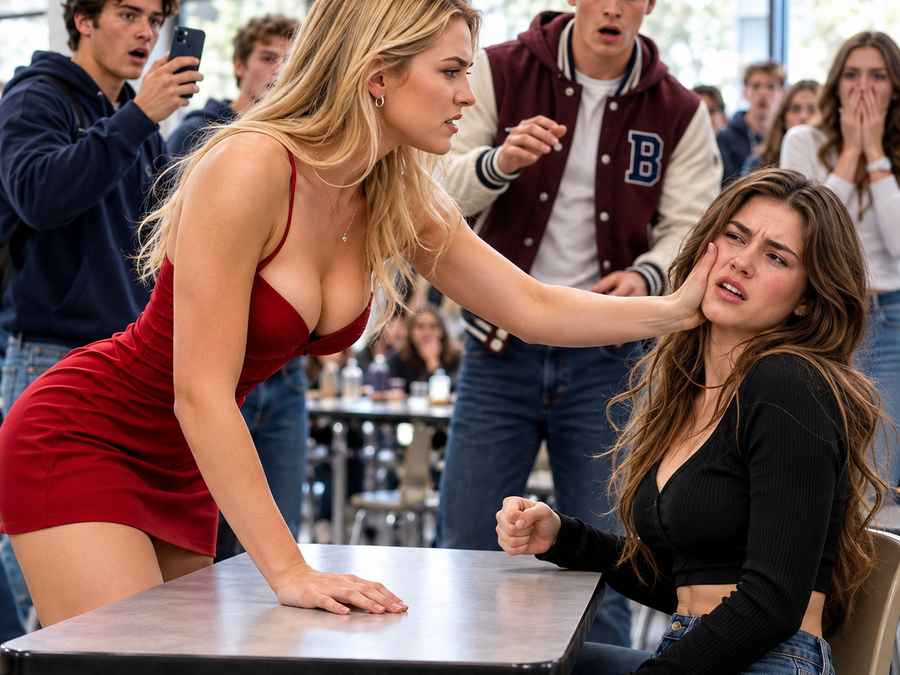
Bullies Slap Wrong Freshman’s Cheek, Unaware She Is A Deadly Martial Artist
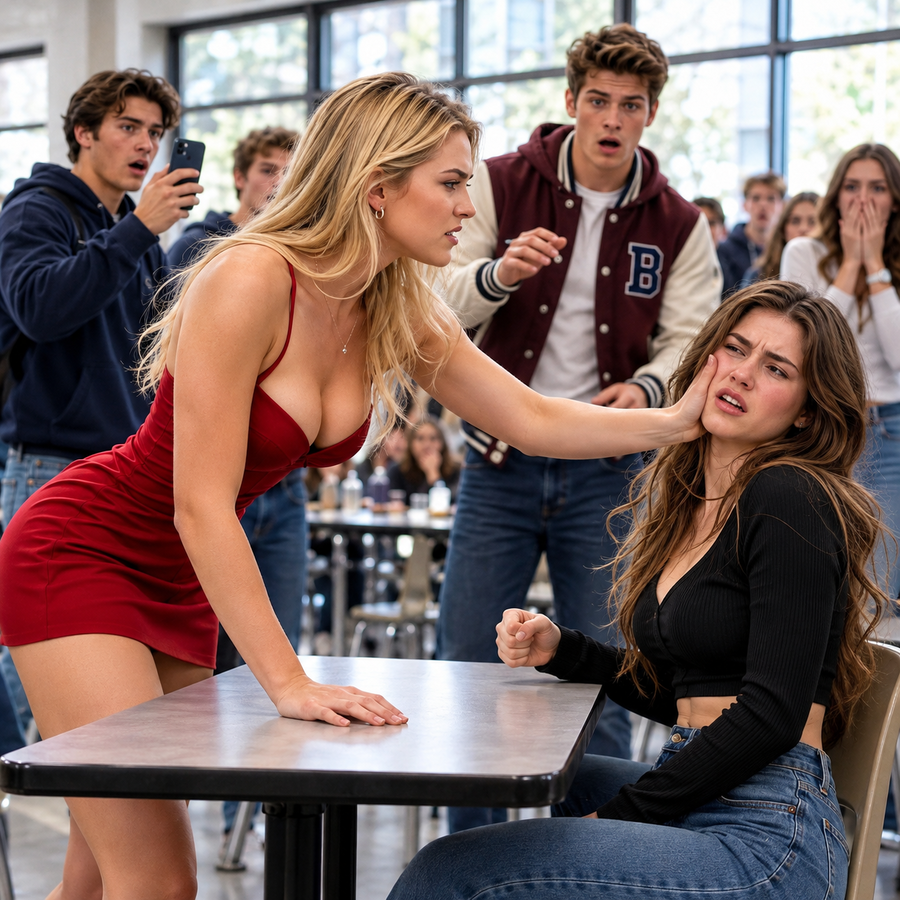
High school bullies prey on fear.
They look for trembling hands, averted eyes, the scent of fresh meat. Colette found her fresh meat in a quiet freshman wearing an oversized faded hoodie.
She cornered the girl in the crowded cafeteria, raised her hand, and slapped her hard across the cheek. The sound echoed off the lenolium.
What Colette didn’t know was that the freshman’s father was a decorated Navy Seal.
He hadn’t just taught his daughter how to read.
He taught her how to break bones. The coffee in the travel mug tasted like burnt copper.
Jack Sullivan took a sip anyway, keeping his eyes on the road.
The windshield of his F-150 was frosted at the edges, fighting a losing battle against the late October Ohio morning. Beside him sat Riley.
She was 14, swimming in a gray hooded sweatshirt that belonged to him. She had her knees pulled up to her chest, earbuds shoved in, staring out the window at the passing suburban sprawl.
Strip malls, manicured lawns, a world that felt aggressively, almost offensively safe.
Jack shifted gears, the transmission grinding slightly.
He checked the rearview mirror out of habit.
Clear, no tail, no threats. He had to remind himself again that he was in Oak Haven, Ohio, not the Coringal Valley.
He was a retired chief petty officer, a single father, a ghost trying to learn how to be a civilian.
“You got everything?”
Jack asked.
His voice was a low rumble ruined by years of shouting over rotor wash and gunfire. Riley popped out one earbud.
“Your gear, math book, lunch.”
“Yeah, Dad, it’s in the bag.”
She tapped the faded canvas backpack sitting at her feet. It was an old tactical bag stripped of its patches.
Heavy.
Jack nodded, gripping the steering wheel a little tighter.
He didn’t know how to do this.
When Sarah died, a sudden, quiet aneurysm when Riley was just four.
Jack had been deployed.
He came home to a silent house and a little girl who looked too much like her mother. The Navy offered him a desk job.
He took it for a while, then finally took his papers.
But you don’t just turn off two decades of tier 1 operating.
You don’t just switch from hunting men in the dark to navigating PTA meetings.
So he raised Riley the only way he knew how.
He taught her discipline.
He taught her situational awareness.
And down in the garage on a heavy canvas bag stuffed with sand and duct tape, he taught her how to fight.
Not sport karate, not point sparring. Jack taught her the ugly brutal mechanics of survival.
Krav Maga, Brazilian jiu-jitsu, the anatomy of the human knee, the fragility of the collarbone, the exact amount of pressure required to compress a windpipe.
He taught her how to turn a pen, a textbook, or a jacket into a weapon.
He wanted her safe. But looking at her now, small and quiet, he wondered if he had just isolated her.
He pulled the truck up to the curb outside Oak Haven High School.
The brick building looked like a prison designed by an architect who liked large windows.
Teenagers swarmed the front steps. To Jack, it was a chaotic mass of unpredictable variables.
“Rule one,” Jack said, putting the truck in park.
Riley rolled her eyes, but a tiny affectionate smile broke through her stoic expression. Maintain situational awareness.
Watch the hands, not the eyes.
Rule two, deescalate.
Walk away.
Pride is for people who don’t mind bleeding.
Rule three, Jack finished, his voice dropping an octave, losing the casual fatherly tone. Riley looked at him, her eyes were sharp, cold almost.
If they take away the option to walk away, make sure they can’t walk after you.
Jack held her gaze for a second, then softened.
He reached over and tapped her shoulder. Just try to have a normal day, kid.
Go to algebra. Eat your sandwich.
Blend in.
Blending in.
Riley muttered, opening the door. Copy that.
Jack watched her walk up the concrete stairs.
She didn’t walk like the other kids.
The other kids slouched, dragged their feet, or bounced with nervous, unearned energy.
Riley moved with an economy of motion, shoulders relaxed, weight balanced on the balls of her feet, head on a swivel, masked by the hood of her sweatshirt. He waited until she disappeared through the double glass doors before he pulled away from the curb.
He felt a knot in his stomach.
He wasn’t worried about the world breaking his daughter.
He was terrified that his daughter was going to break someone else.
High school is an ecosystem built entirely on perceived weakness. Riley recognized the structure the moment she stepped through the doors.
The smell hit her first, a suffocating mix of cheap vanilla body spray, floor wax, and hormonal anxiety. The noise was a physical pressure.
Lockers slamming like mortar fire, screeching laughter. Riley kept to the edge of the hallway.
She didn’t look at the floor, looking down, invited ambushes, but she didn’t make eye contact either.
She let her gaze unfocused slightly, taking in the peripheral movement.
She identified the threats within 3 minutes. Every pack has an alpha.
Here it was a blonde girl holding court by the water fountain. She wore a tight cropped sweater and designer jeans.
Her name Riley would soon learn was Colette Harper.
Colette didn’t just stand.
She posed, she took up space. And the students walking past her subconsciously adjusted their trajectories to avoid her orbit like asteroids skirting a black hole.
Behind Colette stood her deterrent, a boy named Trent.
He wore a varsity jacket that strained across his broad shoulders.
He was at least 6’2, heavily muscled, but topheavy.
Riley evaluated him clinically as she walked by. Bad center of gravity, locks his knees when he stands.
Overconfident, slow. Riley found her locker, spun the combination lock, and swapped her history textbook for biology.
Hey, move. The voice was nasal, dripping with practiced condescension.
Riley didn’t flinch.
She closed her locker slowly and turned. Colette was standing less than two feet away.
She had a manicured hand planted on her hip.
Two girls flanked her holding identical iced coffees, looking at Riley with identical expressions of bored disgust.
Riley hadn’t bumped into Colette.
She hadn’t even looked at her.
But Riley’s locker was adjacent to Colette’s friends.
and Riley’s baggy sweatshirt and cheap canvas bag offended the aesthetic of the hallway.
More importantly, Colette was bored.
“I said move!
You’re blocking my friend’s locker, freshman,” Colette snapped.
Riley looked at the locker numbers.
She was standing exactly in front of her own. She had a clear 12 in of clearance on either side.
“I’m at my locker,” Riley said.
Her voice was flat.
No tremor, no rising inflection seeking approval, just a statement of fact.
Colette’s eyes narrowed.
Bullying relied on a script. The victim was supposed to stammer, apologize, and scurry away, granting Colette a micro dose of power to start her morning.
Riley’s flat refusal broke the script.
“Are you deaf?”
Colette took a half step forward, invading Riley’s personal space.
The scent of vanilla turned nauseating.
I don’t care whose locker it is.
When I tell you to move, you move.
Riley looked at Colette’s chest, specifically the sternum.
It was a habit Jack had drilled into her.
“Watch the center mass.
Shoulders telegraph a punch. Hips telegraph a kick.
The eyes just lie.”
“I’m done anyway,” Riley said, turning away and slinging her heavy bag over one shoulder.
“She didn’t retreat.
She simply bypassed Colette, stepping smoothly around the blonde girl’s aggressive posture.
As she passed, Colette reached out and shoved Riley’s shoulder.
It wasn’t a hard push, just a sudden sharp jolt meant to offbalance her.
Most people would stumble.
Riley’s front foot immediately planted, her knees, bending a fraction of an inch to lower her center of gravity.
Her back foot sliding back to form a perfect base.
She absorbed the kinetic energy without moving an inch.
She didn’t stumble.
She didn’t fall.
She just stopped.
Colette blinked, looking at her hand as if she had just pushed a brick wall. Riley turned her head slowly.
Her eyes were devoid of anger.
They were analyzing a threat.
“Don’t touch me again,” she said.
The volume was low, but it cut through the noise of the hallway perfectly. Before Colette could recover her voice, Riley walked away, disappearing into the stream of students heading to first period.
Colette stood there, her face flushing red.
Trent, who had been leaning against a wall a few feet away, chuckled.
“Shut up, Trent.”
Colette hissed, glaring at the spot where Riley had been standing.
Nobody walked away from her.
“Nobody.”
She looked at her two friends.
“Who the hell is that?”
“Some new girl.”
One of them offered timidly.
“Sullivan, I think.”
Colette touched her own shoulder, still feeling the jarring sensation of shoving something that refused to give way.
“She’s dead meat,” Colette muttered.
“I’m going to ruin her.”
By fourth period, the tension was a tangible thing. High schools operated on a hyperfast rumor mill.
The incident by the lockers had been observed, exaggerated, and transmitted across dozens of group chats.
The new girl stood up to Colette. The new girl pushed Colette.
Colette is going to end her at lunch.
Riley sat at a table in the back corner of the cafeteria.
She had her back to the cinder block wall.
She never sat with her back to a door or an open room.
She unwrapped a turkey sandwich, chewed slowly, and watched the room.
She saw them coming before they were halfway across the lenolium. Colette led the vanguard.
Trent was right behind her, his chest puffed out, enjoying the parting of the sea as students scrambled out of their way. A trail of sycophants followed.
Riley took another bite of her sandwich, chewed and swallowed. She reached into her bag, pulled out her water bottle, and unscrewed the cap.
She placed it carefully on the table.
She calculated the distance.
20 ft. 15 10.
The cafeteria noise died down. Conversations faded into a collective expectant hush.
Hundreds of eyes turned toward the back corner.
Colette slammed her palms flat onto Riley’s table.
The plastic rattled, Colette demanded.
Riley looked at the manicured fingers pressing into the table.
Then she looked up at Colette.
I’m eating.
I don’t give a damn what you’re doing.
Colette spat, her voice shrill, playing to the massive audience. You disrespected me this morning.
You think because you’re new, you can just act like trash?
Stand up and apologize.
I was at my locker, Riley said evenly. You shoved me.
I told you not to touch me.
There is nothing to apologize for. Walk away.
Rule two, Riley thought.
Deescalate. Walk away.
She was giving Colette the out.
Colette laughed a harsh, ugly sound.
She looked back at Trent, who smirked, crossing his massive arms.
“She told me to walk away,” Colette mocked to the crowd.
She turned her attention back to Riley.
The rage in Colette’s eyes was real now.
Her authority was being publicly dismantled by a girl in a baggy dad sweater.
“You little freak.
You think you’re tough?”
Colette reached across the table, grabbed Riley’s water bottle, and upended it.
The cold water spilled over Riley’s turkey sandwich, soaking into her jeans.
Riley looked at the ruined sandwich.
Her dad had made that. He had woken up at 5:30 a.m., poured his terrible coffee, and made that sandwich.
A cold, heavy stillness settled over Riley.
The suburban teenager facade evaporated.
The girl sitting in the chair was suddenly gone, replaced by the product of a tier 1 operator’s relentless drilling.
Riley stood up.
She didn’t scramble backward to avoid the water.
She stood straight up, stepping smoothly out from behind the table.
She was 6 in shorter than Colette and maybe 50 lb lighter than Trent.
“You ruined my lunch,” Riley said quietly.
“I’ll ruin your life,” Colette shrieked, stepping forward.
“Walk away,” Riley said, her voice dropping to that dangerous low register she inherited from Jack.
“Rule three.
If they take away the option,” Colette completely lost whatever fragile control she had.
She raised her right hand high, rearing back, and swung her open palm as hard as she could at Riley’s face.
Smack. The sound cracked like a bullhip through the silent cafeteria.
Riley hadn’t dodged.
She had deliberately taken the hit. She needed the crowd and the cameras she knew were recording to see that she did not strike first.
She absorbed the slap, her head turning slightly with the impact, her cheek instantly blooming red.
Colette smiled a triumphant cruel sneer.
There, now you know you’re PL.
Colette didn’t finish the sentence.
Riley’s head snapped back to center.
Her eyes were utterly dead.
The mechanical switch had been flipped.
In a fraction of a second, Riley’s left hand shot up, her fingers gripping Colette’s right wrist, the hand that had just slapped her.
Riley dug her thumb violently into the median nerve bundle on the inside of Colette’s forearm.
Colette shrieked, her knees buckling instantly as a shock wave of electrical pain shot up her arm. Trent saw his girlfriend drop.
The big linebacker roared, lunging forward with massive hands outstretched to grab Riley by the throat.
Riley didn’t retreat.
She stepped into his attack.
As Trent’s heavy hands reached for her, Riley dropped her weight, sliding perfectly under his center of gravity.
She pivoted on her left foot, bringing her hips directly in front of Tren.
She grabbed his extended right arm by the sleeve of his Letterman jacket, clamped it tightly to her chest, and violently popped her hips upward while pulling his arm down.
Physics took over.
Trent’s massive momentum worked against him.
The 220-lb teenager launched into the air, flipping entirely over Riley’s hip.
He slammed onto the hard lenolium floor with a concussive thud that shook the tables.
All the air exploded from his lungs in a wet gasp. Before Trent could even process the impact, Riley maintained her grip on his right wrist.
She dropped her left shin brutally across his rib cage, pinning him to the floor. She pulled his arm straight back, hyperextending his elbow joint over her thigh.
She didn’t snap it.
She stopped exactly 1 millm short of breaking the joint.
She applied just enough pressure to let him feel the tendons tearing. Trent screamed, a raw, high-pitched whale of absolute agony.
He thrashed, trying to use his left arm to punch her, but the searing pain in his right elbow paralyzed him.
“Tap!”
Riley whispered, leaning over him.
Trent couldn’t breathe.
He just squealled, slapping his free hand frantically against the floor. Riley released his arm instantly.
She stood up, her breathing completely even. Not a single beat of sweat on her forehead.
The entire sequence, grabbing Colette, throwing Trent, and pinning him had taken less than 3 seconds. The cafeteria was graveyard silent.
Nobody moved. Nobody breathed.
Riley turned slowly back to Colette, who was kneeling on the floor, cradling her numbed wrist, her face pale with terror.
Riley stepped closer.
Colette scrambled backward on her hands and knees, slipping in the spilled water.
“Look at me,” Riley commanded.
Colette looked up, trembling violently.
“The alpha predator was gone.
She was just a terrified girl looking into the eyes of someone who didn’t play by high school rules.”
“My dad,” Riley said quietly.
So only Colette and the whimpering Trent could hear.
Taught me that you only put your hands on someone if you are fully prepared to die. Are you prepared to die for a locker?
Colette.
Colette shook her head frantically, tears spilling down her cheeks, ruining her mascara. Riley reached down.
Colette flinched, curling into a ball, but Riley just picked up her canvas backpack from the floor. She slung it over her shoulder.
“Don’t ever touch me again,” Riley said.
She looked down at Trent, who was curled in a fetal position, holding his elbow and sobbing.
“Put some ice on that.
Your ulner nerve is compressed.
It’ll throb for a week.”
Riley turned and walked toward the cafeteria exit.
The crowd parted for her, scrambling out of her way much faster than they ever had for Colette.
No one said a word.
The only sound was the squeak of her sneakers on the lenolium and Trent’s ragged breathing.
Riley pushed through the double doors, stepping into the cool, empty hallway.
She reached into her pocket, pulled out her phone, and stared at the screen for a long moment.
Her hand was shaking just a little bit. She dialed a number.
It rang once.
“Sullivan,” Jack’s voice answered, crisp and alert.
“Dad,” Riley said, her voice finally trembling, sounding like a 14-year-old girl again.
“You better come pick me up.
I broke rule two.”
The administrative office of Oak Haven High School smelled like stale coffee grounds and laminated paper.
Riley sat in a rigid plastic chair against the wall.
Her hands were folded neatly in her lap. Her breathing was slow, measured, inhaling for a count of four, holding for two, exhaling for four.
It was a combat breathing technique. It kept the adrenaline from shaking her apart.
Across the room, Principal Miller paced behind his heavy oak desk.
He was a balding man in a poorly fitted suit, currently sweating through his collar.
He kept picking up his desk phone and putting it down and wiping his forehead with a crumpled tissue.
He didn’t look at Riley.
It was as if he believed making eye contact with the 14-year-old girl would result in his immediate physical destruction. The door to the outer office violently clicked open.
Riley didn’t flinch, but her eyes tracked the movement.
Jack walked in.
He didn’t burst through the door like a frantic parent.
He opened it smoothly, stepped through, and let it shut silently behind him. He wore faded denim, a dark thermal shirt, and heavy work boots.
He stopped just inside the threshold.
His eyes did a rapid invisible sweep of the room, checking the windows, the sightelines, the heavy glass paper weight on Miller’s desk, and finally Riley.
He crossed the room and crouched in front of her chair.
He didn’t crowd her.
He kept his hands visible.
Reportly returned.
Assaulted in the cafeteria, Riley replied, keeping her voice low, mirroring his calm.
spilled liquid.
Verbal threats.
Physical strike to my face.
Escaped the initial strike.
Neutralized the primary and secondary threats. Minimal force.
No permanent damage.
I tapped out the secondary. Jack reached out.
His callous thumb gently tilting her chin upward.
The left side of her face was swollen.
The pale skin marred by a stark angry red handprint.
The outline of Colette’s fingers was perfectly bruised into his daughter’s cheek.
Jack stared at the mark for three seconds. The civilian dad vanished entirely, the skin around his eyes tightened and his jaw locked.
He stood up slowly.
“Mr.Sullivan,” Principal Miller started, his voice cracking slightly.
“I cannot express the severity of what has occurred.”
“Your daughter, are the police here?”
Jack interrupted.
His voice was a flat, heavy timber.
“No, not yet.
I wanted to wait for the parents to Good.”
Jack turned to face the door just as it swung open again. The hallway dumped a wave of furious suburban entitlement into the small office.
Four adults stormed in, bringing a chaotic storm of shouting and pointing fingers. Leading the charge was Richard Harper, a man who wore his expensive golf polo-like armor.
Behind him was his wife, clutching a designer handbag like a shield.
Flanking them were Tren’s parents.
Trent’s father was a massive thickneck man bursting out of a tight button-down shirt carrying the lingering ghost of high school athletic glory.
I want her arrested, Richard Harper bellowed, pointing a manicured finger directly at Riley.
I want her in handcuffs right now, Miller.
Do you hear me? This little psycho attacked my daughter.
My boy is in the nurse’s office with an ice pack the size of a football.
Trent’s father roared, stepping aggressively toward the center of the room.
He can’t even bend his arm.
He’s got a baseball scholarship on the line.
You hear me? If that joint is torn, I will sue this school and this family into the dirt.
Miller held up his hands, retreating behind his desk. Please, everyone, lower your voices.
We need to handle this calmly.
Calmly, Mrs.Harper shrieked.
That animal, she gestured wildly at Riley. Grabbed Colette, threw Trent to the floor, and and tortured him right in front of the whole school.
Jack didn’t move.
He stood between Riley and the four screaming adults.
He let them yell. He let them burn off their initial spike of adrenaline.
He watched their body language. Richard Harper was a screamer, not a fighter.
Trent’s dad was a chest bumper, relying on his size to intimidate.
They were loud, soft people who had never experienced genuine violence in their lives. They thought noise equaled power.
Jack waited until they paused to draw a breath.
Are you done?
Jack asked.
The quiet nature of the question threw them off.
Richard Harper blinked, his face flushed purple. Who the hell are you?
I’m Riley’s father, Jack said.
He didn’t cross his arms.
He let them hang loose at his sides. And you are currently screaming in a confined space where my daughter is sitting.
Lower your volume.
Trent’s dad scoffed, taking a heavy step toward Jack.
He was 2 in taller and 40 lb heavier.
Listen to me, buddy.
I don’t care who you are.
Your kid is a menace.
She belongs in juvie. She crippled my son.
If my daughter wanted to your son, Jack said, his tone utterly conversational, devoid of any anger or malice. Your son would currently be in the back of an ambulance learning how to breathe through a tube.
Instead, he’s in the nurse’s office crying about a hyperextended elbow.
The room went dead silent.
The sheer terrifying conviction in Jack’s voice sucked the oxygen out of the air.
It wasn’t a boast.
It was an empirical statement of fact delivered by a man who knew the exact breaking point of human anatomy.
“Are you threatening us?”
Richard Harper sputtered, taking a subconscious half-step backward.
“I am stating facts,” Jack replied, his gaze shifting to Principal Miller.
“I want to see the tape.”
Miller wet his brow again.
Mr.Sullivan, the testimonies of the students are quite consistent.
Riley threw Trent.
I don’t care about the gossip of teenagers.
Jack cut him off.
You have overhead security cameras in the cafeteria. I saw the domes when I did the walkthrough during orientation.
Boot up the footage now.
I I don’t think that’s necessary.
Mrs.Harper stammered, her confidence suddenly wavering against Jack’s icy absolute certainty.
Colette told us everything.
She was just trying to eat her lunch and this girl snapped.
Jack slowly turned his head to look at Mrs.Harper.
Ma’am, look at my daughter’s face.
He didn’t yell, but the command was absolute.
The four parents reflexively looked past Jack’s broad shoulders to where Riley sat silently against the wall.
In the harsh fluorescent light of the office, the brutal raised red handprint on Riley’s cheek was impossible to ignore.
It covered half her face.
“My daughter did not strike first,” Jack said, his voice dropping into a deadly quiet register.
“I know this because I raised her.
I trained her. I taught her the rules of engagement.
Rule number two is deescalate and walk away. Rule number three dictates the response if retreat is denied.
Jack leaned forward slightly, resting his knuckles on Miller’s desk.
Play the tape, Principal Miller, before I call the police myself and file assault and battery charges against a minor. Miller swallowed hard.
He nodded frantically, his hands shaking as he clicked his mouse and turned his computer monitor around to face the room. Okay, okay, here it is.
Camera 4, southeast corner.
The parents crowded around the monitor, their earlier bluster replaced by a sudden nervous tension.
Jack didn’t crowd them.
He stood back, his arms still loose, his eyes fixed on the screen.
He already knew what he was going to see. The screen showed a high-angle view of the cafeteria.
The footage was grainy, the colors washed out, and there was no audio, but the choreography of the scene was unmistakable. Jack watched the screen.
He didn’t see high school drama.
He saw a tactical engagement unfolding.
“Stop,” Jack commanded.
Miller hit the space bar. The video froze.
“Time stamp 12:04,” Jack said, his voice echoing in the quiet office like a drill instructor debriefing a botched raid.
“Observe the positioning.
Riley is seated back to the wall.
Non-threatening posture. She is consuming her lunch.
Now look at the entrance.
” He pointed a finger at the screen.
Four individuals enter the frame.
They’re moving in a unified formation.
They bypass three empty tables to walk directly toward Riley’s position.
This is not a random encounter.
This is a targeted approach. Richard Harper shifted uncomfortably.
They were just walking over to talk. Play, Jack said, ignoring it.
The video resumed. Colette slammed her hands on the table.
The water bottle was grabbed.
The liquid poured over Riley’s food.
Stop.
Jack ordered.
The frame froze on Colette, holding the empty bottle over the soaked sandwich.
Destruction of property, provocation, escalation, Jack analyzed aloud. Look at my daughter.
She stands up. She does not reach across the table.
She does not clench her fists. She steps out from the trap of the chair to maintain mobility.
“She was intimidating my daughter,” Mrs.Harper argued, though her voice lacked its previous venom.
She was creating a buffer zone. Jack corrected sharply.
Play it. The video rolled.
The tension in the silent footage was palpable, even without sound.
Colette stepped forward, invading Riley’s personal space.
Colette raised her arm.
“Watch closely,” Jack said softly.
The screen showed Colette rearing back and slapping Riley across the face with tremendous force.
Riley’s head turned with the impact.
“Stop,” Jack commanded.
The video paused just after the slap connected. Jack looked away from the monitor and locked eyes with Richard Harper.
The silence in the room was crushing.
“Your daughter,” Jack said.
Every syllable a precise cold cut.
“Just committed a textbook unprovoked physical assault.
She struck a stationary non-aggressive target.
If my daughter were an adult, your kid would be looking at jail time.”
Richard Harper opened his mouth, then closed it.
He looked at his wife, who had gone pale.
“Keep playing,” Jack instructed Miller.
This was the part the parents had been waiting for, the part they thought would vindicate them.
They watched as Riley’s head snapped back to center.
They watched the lightning fast sequence, Riley grabbing Colette’s wrist, the nerve pinch, Colette collapsing.
“She attacked her,” Mrs.Harper cried out, grasping at a straw.
She neutralized an active attacker who had just struck her face and was still within striking distance.
Jack countered instantly.
She targeted a median nerve bundle. It causes immense temporary pain and immediate loss of motor function in the offending limb.
It leaves no bruising, no broken bones, and no permanent tissue damage.
It is the definition of proportional non-lethal restraint.
Trent’s father pushed closer to the screen.
Yeah, what about my boy?
Watch this.
This is where she goes crazy. on the screen.
Trent lunged.
He reached out with both hands, his massive frame hurtling toward Riley’s much smaller one.
“Stop,” Jack said.
The video paused with Trent in mid-lunge.
Jack turned his gaze to Trent’s father.
The big man suddenly looked very small under the weight of Jack’s stare.
“Look at your son’s hands,” Jack instructed.
“Look at the trajectory.”
Trent’s father squinted at the screen.
Trent’s hands were open, reaching not for Riley’s shoulders, but directly for her throat.
He is attempting a two-handed choke hold on a target 100 pounds lighter than him.
Jack stated clinically, “In any jurisdiction in this country, a two-handed choke is classified as a lethal threat.
It is an attempt to restrict the airway.
It warrants an immediate maximum force response to preserve life.”
Jack didn’t yell.
The terrifying part was how calm he remained while discussing lethal threats.
“Play the rest,” Jack said.
The video showed Riley stepping inside Trent’s reach, grabbing his arm, dropping her hips, and launching the massive boy over her shoulder.
Trent slammed into the floor. Riley immediately pinned him, hyperextending the elbow.
The video ended as she released him and walked away. Miller stopped the tape.
No one spoke.
The undeniable reality of the footage hung heavy in the air. The narrative of the poor victimized bullies had been systematically dismantled and incinerated by cold, hard visual evidence.
Jack stepped away from the desk and walked slowly over to where Riley was sitting. He stood beside her, a solid, immovable wall of protection.
He looked at the four parents.
His eyes were devoid of empathy.
“My daughter was eating her lunch,” Jack said.
His voice filled the room, quiet but absolute.
“She was harassed.
her property was destroyed and she was physically struck in the face. When a second much larger attacker attempted to grab her throat, she used his own momentum against him.
She executed a standard hip throw and applied a joint lock to ensure he could not pursue her.
As soon as he submitted, she released the hold and retreated from the engagement zone.
Jack paused, letting the silence stretch until it was agonizing.
She didn’t punch him in the face when he was down, Jack continued.
She didn’t break the joint, which she easily could have done with three lbs of additional pressure.
She showed restraint. Restraint that your children apparently lack.
Trent’s father rubbed his jaw, staring at the floor.
He He shouldn’t have jumped in like that.
I’ll admit that.
He shouldn’t have tried to choke a 14-year-old girl, Jack corrected coldly.
Richard Harper cleared his throat, trying to salvage some scrap of dignity.
Well, look, the slap was out of line.
But the way your daughter reacted, it’s not normal.
It’s dangerous.
She shouldn’t be in a regular school if she’s a trained fighter.
Jack took a step toward Richard Harper.
Just one step. But the sheer predatory intent radiating from him made Harper flinch backwards so hard his shoulder hit the door frame.
“She’s a trained fighter,” Jack said, his voice dropping to a terrifying whisper.
Because the world is full of predators who think they can do whatever they want to soft targets.
Today, your daughter thought she found a soft target.
She was wrong. Jack turned to Principal Miller.
The principal looked like he wanted to sink through the floorboards.
“Here’s how this concludes,” Jack said, dictating the terms.
“You will not suspend my daughter.
You will not put this on her permanent record. If you attempt to punish her in any way for defending herself against a coordinated physical assault, I will hire a lawyer who will own this school district by Christmas.
Furthermore, I will take this footage to the police station right now and press aggravated assault charges against both of these students. Jack looked back at the parents.
They looked thoroughly beaten. The threat of legal action, police involvement, and the sheer undeniable humiliation of the tape had broken their resolve.
or Jack offered the word hanging in the air like a lifeline.
We can agree that valuable lessons were learned today. Your children will stay completely away from my daughter.
They will not speak to her. They will not look at her.
They will not exist in the same airspace as her.
And we leave this office right now and never speak of this again.
The parents exchanged nervous, defeated glances.
Agreed, Richard Harper muttered, looking at his shoes.
Fine, Trent’s dad grunted, his face flushed with shame.
Jack nodded once. He turned to Riley.
Grab your bag.
We’re going home.
Riley stood up smoothly.
She hoisted the heavy canvas bag onto her unbredis shoulder.
She didn’t look at the parents or the principal.
She just followed her father out the door. The walk to the truck was silent.
The crisp October air felt clean after the stifling atmosphere of the office. Jack unlocked the F-150 and they both climbed in.
Jack didn’t start the engine immediately.
He sat behind the wheel, staring out through the windshield at the brick facade of the school. His hands gripped the steering wheel tightly, his knuckles turning white.
The adrenaline was finally hitting him.
The delayed, sickening realization of what could have happened if Riley hadn’t been ready.
Riley sat in the passenger seat, staring straight ahead.
Slowly, Jack reached out.
He gently brushed his thumb just below the red welt on her cheek.
“Does it hurt?”
he asked softly. The cold operator was gone again.
He was just a dad, terrified and exhausted. Riley looked at him, her eyes softened, losing that dead analytical stare.
She leaned into his hand for a fraction of a second.
“It hurts,” she admitted quietly.
“But I’m okay.”
Jack swallowed hard. He nodded, pulling his hand back and reaching for the ignition.
“You did good today, kid,” Jack said, his voice thick with emotion.
“You maintained control.
You followed the rules.
” Riley looked down at her hands.
I broke rule two, Dad.
I didn’t walk away.
Jack started the truck, the engine roaring to life. He shifted it into drive and looked at his daughter.
Sometimes, Jack said, glancing back at the school as they pulled away from the curb.
They don’t let you walk away, and when that happens, you make damn sure they remember why they shouldn’t have stopped you.
The Sullivan House was practically a fortress of silence.
It sat at the end of a culde-sac flanked by tall pine trees that blocked the neighbors view. Inside, the walls were bare.
The furniture was functional, heavy, and devoid of decorative throw pillows or soft blankets.
It was a house organized by a man who viewed clutter as a tactical disadvantage. Jack stood at the stove.
He flipped a thick ribeye in a cast iron skillet.
The hiss of melting butter and searing meat was the only sound in the kitchen. In the living room, Riley lay flat on her back on the leather sofa.
A bag of frozen peas rested over the left side of her face.
Her breathing was shallow.
Her hands resting on her stomach carried a microscopic tremor.
Jack watched her from the kitchen.
He knew that tremor. He recognized the pale, waxy quality of her skin.
It was the adrenaline crash.
During a violent encounter, the human body floods the system with cortisol and epinephrine.
It turns off the digestive tract.
It dilates the pupils. It turns a person into a machine built entirely for survival.
But the human body isn’t meant to run at that RPM for long.
When the threat vanishes, the chemicals recede, leaving a brutal, hollow exhaustion in their wake. Jack pulled the steak from the pan, letting it rest on a wooden cutting board.
He grabbed a glass from the cupboard, filled it with water, and carried it into the living room.
He set the glass on the coffee table. Sit up slowly.
Riley groaned, shifting her weight.
The bag of peas slid off her face.
The bruise had darkened from angry red to a deep ugly violet. It covered her cheekbone and stretched down toward her jaw.
She sat up.
Her hands shook harder as she reached for the glass. She gripped it with both hands and took a slow sip.
“You did the right thing,” Jack said.
He sat down heavily in the armchair across from her. Riley stared at the water in her glass.
“Then why do I feel like I’m going to throw up?”
Because your brain caught up to your body,” Jack replied.
He leaned forward, resting his elbows on his knees.
“People think winning a fight feels good, like the movies.
It doesn’t.
Violence is toxic.
Even when it’s necessary, even when it’s justified, it leaves a residue on you.
What you’re feeling right now is your nervous system realizing it didn’t die today.”
Riley didn’t say anything.
She just took another sip of water. Jack watched her a crushing weight pressing down on his chest.
He had spent his career operating in the dark corners of the world, doing terrible things to terrible people so the folks back in places like Oak Haven could sleep soundly. But sitting here looking at his 14-year-old daughter nursing a bruised face, he felt an agonizing wave of doubt.
Did I ruin her? He thought.
I taught her how to break a man’s arm, but I never taught her how to be a teenager.
Dad.
Jack blinked, pulling himself out of the spiral.
Yeah, I could have broken his elbow, Riley said. Her voice was quiet, analytical, devoid of boasting.
When I had him pinned, the pressure was right there. I felt the ligament strain against my thigh, one twitch of my hip, and it would have snapped.
I know, Jack said softly.
I wanted to.
She looked up at him, her eyes wide, searching for a reprimand.
When he grabbed from my neck, I wanted to break his arm.
Is that wrong?
Jack didn’t flinch.
He didn’t offer a gentle civilian platitude about forgiveness.
He gave her the truth.
No, it’s not wrong.
Jack said he presented a lethal threat.
Your brain categorized him as an enemy combatant.
The desire to neutralize that threat completely is a biological imperative.
It’s the training taking over.
But I didn’t, she whispered.
And that, Jack said, pointing a thick finger at her.
Is what separates you from the animals.
That is what separates you from the people who start fights.
Capability without control is just violence.
You had the capability to destroy him.
You had the control not to.
You showed him mercy he didn’t earn.
Jack stood up. Go wash your hands.
We’re eating.
They ate in silence.
The steak was rare.
The potatoes were heavy with salt. Food in the Sullivan house was fuel, not an event.
Riley ate slowly, chewing on the unbrewed side of her mouth.
When the plates were cleared, Jack didn’t tell her to do her homework.
He walked to the door leading to the garage and unlocked it.
“Wrap up,” he commanded.
Riley followed him.
The garage didn’t hold cars.
It held heavy black mats. It held a wooden rack lined with kettle bells.
In the center hung 150 lb heavy bag wrapped in duct tape.
The air smelled of stale sweat leather and iron. Riley went to a small wooden bench in the corner.
She grabbed a roll of yellow hand wraps.
She looped the fabric around her wrists over her knuckles, threading it meticulously between her fingers.
She didn’t rush.
The wrapping process was a grounding ritual. It was putting on the armor.
Jack stood by the heavy bag, holding it steady.
Riley stepped onto the mats.
She was wearing socks. She settled into a fighter stance, her chin tucked behind her left shoulder.
“You still got cortisol in your blood,” Jack said.
“It’s making your hands shake.
You need to burn it out. Go.
Riley threw a left jab. It smacked against the heavy leather again.
Snap it. She threw a one-two combination.
Jab, cross. The bag rocked slightly.
For the next 20 minutes, the only sound in the garage was the harsh exhale of Riley’s breath and the percussive, rhythmic cracking of her fists and shins hitting the heavy bag.
She didn’t fight with rage.
She fought with terrifying mechanical precision.
Jack didn’t offer praise.
He just held the bag, absorbing the kinetic force of his daughter’s strikes, watching the residual anxiety leave her body with every punch.
He watched the frightened teenager fade away, replaced by the weapon he had forged.
When she finally stopped, her sweatshirt was soaked. She was breathing hard, her hands resting on her knees, the tremor in her fingers was completely gone.
“Better?”
Jack asked.
Riley nodded, wiping a bead of sweat from her forehead.
Jack tossed her a towel.
Hit the showers.
You’ve got algebra on Monday.
Monday morning arrived with a biting frost.
The drive to Oak Haven High School was identical to the previous week, but the atmosphere inside the cab of the F-150 was fundamentally altered.
The bruise on Riley’s face had settled into a vivid modeled canvas of yellow and purple.
It was impossible to hide, even with the hood of her sweatshirt pulled low.
She didn’t try to hide it.
She stared out the window at the passing neighborhoods. her face an unreadable mask.
Jack pulled up to the curb. The front steps were swarming with students, a chaotic hive of backpacks and winter coats.
Jack shifted the truck into park.
He didn’t give her the usual rundown of the rules.
The rules had been tested and validated.
“Listen to me,” Jack said.
Riley turned her head.
“Nature abhores a vacuum,” Jack stated.
“You took out the apex predator on Friday.
That leaves a void in the food chain. People are going to expect you to fill it.
They’re going to treat you like you’re the new boss.
I don’t want to be the boss, Riley said flatly.
I just want to pass biology.
I know, but they don’t know that, Jack warned.
Fear looks a lot like respect in a place like this.
Don’t let it go to your head.
You are not their punisher. You are not their savior.
You are a ghost.
You go in, you do your job, you come out. Understood?
Copy that. Riley opened the door and stepped out into the cold air.
Jack watched her walk up the concrete stairs.
The shift in the ecosystem was instantaneous.
As Riley approached the main doors, the loud, chaotic chatter in her immediate vicinity died entirely. A group of juniors loitering by the entrance took one look at the bruised girl in the gray hoodie and instinctively parted.
They didn’t just move out of her way.
They actively shrank back, pulling their backpacks tight against their chests.
Riley didn’t acknowledge them.
She didn’t swagger.
She maintained her standard pace, her eyes scanning the periphery, her hands loose at her sides.
The hallway inside was a gauntlet.
The rumor mill over the weekend had mutated the cafeteria incident into modern mythology. Depending on who was telling the story, Riley was an underground cage fighter, an emancipated minor with a criminal record, or a psychopath who enjoyed breaking bones.
The reality was far simpler, which made it far more terrifying to the student body. Riley walked to her locker.
The usual crowd that hovered in that corridor evaporated. Students shut their lockers early and scured to class.
Eyes tracked her every movement, darting away the second she glanced in their direction. She spun her combination lock.
It popped open.
Excuse me. The voice was tiny, terrified.
Riley didn’t spin around.
She closed her locker slowly and turned her head. Standing a few feet away was a girl named Sarah.
She was a sophomore, perpetually anxious, clutching a massive binder to her chest.
She was standing exactly where Colette used to stand.
I’m My locker’s right there, Sarah stammered, pointing a trembling finger at the metal door next to Riley’s.
She looked at Riley’s bruised cheek, swallowed hard, and braced herself as if expecting to be thrown through the cinder block wall.
Riley looked at the girl.
She looked at the locker.
She took a deliberate step backward, clearing the space completely. Go voice was quiet, lacking any trace of the icy command she had used on Colette.
Sarah blinked, stunned, she scured forward, quickly dialed her combination, grabbed a textbook, and slammed the metal door shut. In her panic, a loose pen slipped from her binder and clattered onto the lenolium floor.
Sarah froze, staring at the pen.
She looked too scared to bend down and retrieve it in front of Riley. Riley leaned down smoothly, picking up the cheap blue ballpoint pen.
She held it out. Sarah took it with a shaking hand.
“Thank you.”
“You’re welcome,” Riley said.
She turned and walked down the hall toward first period.
She left Sarah staring after her, the high school’s collective narrative quietly cracking.
She wasn’t a monster.
She was just a girl who demanded to be left alone. By fourth period, the real test arrived.
Lunch.
Riley bought a cardboard tray of baked ziti and a carton of milk. She navigated the crowded tables.
The sea of students once again parting effortlessly before her.
She headed for her usual spot, the table in the back corner facing the room.
She sat down. She put her back against the cinder block wall.
She opened her milk.
The doors to the cafeteria swung open. Colette Harper walked in.
The entire cafeteria collectively held its breath. Colette was a shadow of the girl she had been on Friday.
The designer clothes were replaced by a baggy sweater. Her posture was ruined.
Her shoulders were hunched.
Her head ducked down. She walked close to the wall, avoiding eye contact with everyone.
Behind her walked Trent. He was wearing a heavy black orthopedic brace that locked his right arm at a 90° angle.
He looked pale, stripped of all his athletic arrogance.
They didn’t walk to the center of the room.
They didn’t command a table.
Colette’s eyes flicked nervously across the room, inevitably finding the back corner.
She saw Riley sitting there calmly eating her ziti.
For a fraction of a second, the two girls locked eyes.
Riley didn’t sneer.
She didn’t flex.
She just stared her face a blank, unreadable wall of calm. Colette broke eye contact instantly, her face flushing crimson.
She hurried past the lunch line and practically hid at a small isolated table near the garbage cans.
Trent sat beside her, silently, picking at his food with his left hand.
The cafeteria exhaled.
The tension dissipated, replaced by a low, buzzing murmur of gossip.
The hierarchy hadn’t just shifted.
It had been entirely demolished. Riley took a bite of her pasta.
It was bland, overcooked, and barely warm.
She chewed slowly, scanning the room.
Nobody was looking at her anymore.
They were eating, laughing, surviving another day of high school. The threat was neutralized.
The perimeter was secure. For the first time since she had walked through the doors of Oakaven High, Riley felt her shoulders drop a fraction of an inch.
She didn’t belong here.
She probably never would. But as she watched Colette and Trent sitting quietly in the corner, she realized one profound truth.
She didn’t have to blend in anymore.
By November, the frost had turned to ice. The ecosystem of Oak Haven High School had settled into a new equilibrium.
Riley sat at the kitchen island.
A battered copy of To Kill a Mockingbird opened flat next to a notebook. She was outlining a character analysis essay.
She tapped the end of her pencil against her teeth, her brow furrowed in frustration. It was a completely ordinary, painfully mundane teenage problem.
Jack stood leaning against the door frame holding a mug of black coffee. He watched her.
The yellow and purple bruising had entirely faded from her cheek, leaving behind the pale, unblenmished skin of a 14-year-old girl.
She didn’t look like a weapon.
She looked like her mother. The phone on the counter buzzed.
Jack glanced at it.
It was an email notification from the school.
Another weekly bulletin. No phone calls from Principal Miller.
No angry parents. No police reports.
Since the Friday in the cafeteria, Riley had become exactly what Jack had told her to be, a ghost.
But she wasn’t a ghost born of fear.
She was a ghost born of absolute undeniable boundaries.
She didn’t sit with the popular crowd.
She didn’t join clubs.
She still ate her lunch at the back table with her back to the wall. But sometimes a quiet kid like Sarah would sit a few chairs down.
They wouldn’t talk much.
They just existed in the safe harbor Riley naturally projected.
Colette and Trent stayed entirely out of her orbit, shadows of their former selves, having learned the hardest lesson Oak Haven had to teach.
“Dad,” Riley said without looking up from her book.
“What’s a good synonym for hypocritical?”
Jack took a sip of his coffee.
“Inconsistent, duplicitus, two-faced.”
“Duplicitus,” Riley muttered, writing it down.
“I like that.
Sounds heavy.”
Jack walked over and set his mug on the island.
He looked at the neatly structured essay taking shape on the lined paper.
“You’re doing okay, kid,” Jack asked.
It wasn’t a question about her homework.
Riley stopped writing.
She looked at him. The sharp tactical edge in her eyes was still there.
It would always be there, but it was sheathed.
“I’m good, Dad,” Riley said quietly.
“Nobody bothers me.
Nobody bothers the people sitting near me.” She offered a small, rare smile.
It’s just biology in English now, just normal stuff.
Jack nodded slowly.
The heavy, crushing weight that had sat on his chest for weeks finally began to lift.
He hadn’t turned his daughter into a monster.
He had given her the armor she needed to walk through a vicious world and come out the other side with her humanity intact.
He tapped his knuckles twice on the counter. Finish up.
We’ve got bag work in 20 minutes.
I want to check your footwork on the heavy bag.
Riley sighed, dramatically rolling her eyes in a perfect imitation of a normal, annoyed teenager. But she closed her book.
If you felt every ounce of that justice in the cafeteria, hit that like button and share this story with someone who needs to hear it.
Riley showed us that true strength isn’t about throwing your weight around.
It’s about having the power to destroy your enemies and the discipline to walk away.
What did you think of Jack’s parenting style?
Let’s get a debate going down in the comments.