Undercover Freshman Twins Threatened By Cops At Bar, Unaware They Are Both FBI Agents
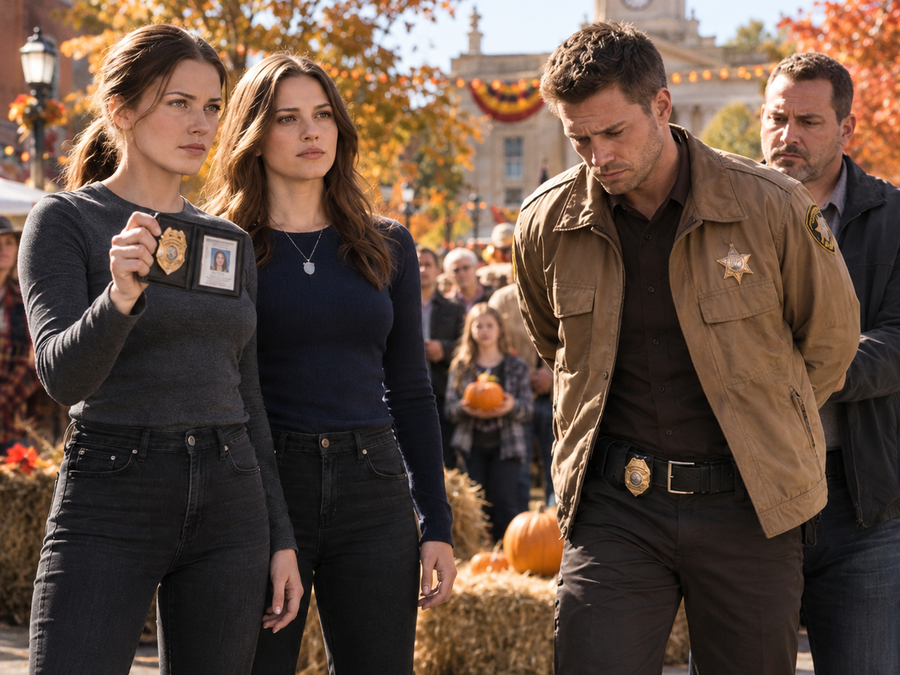
Undercover Freshman Twins Threatened By Cops At Bar, Unaware They Are Both FBI Agents
Well, well.
Didn’t expect this from one of our new college girls.
The deputy held the bag of white powder high so the whole diner could see it.
30 neighbors went silent. Handcuffs came out.
And Margo Whitfield said nothing.
She let him lock the cuffs around her wrists.
She let him walk her past every staring face out the door into his cruiser.
She could have stopped him with four words.
She didn’t say them.
Because those four words would have blown everything.
The badge hidden under her sister’s collar.
The recording device beneath the booth. 15 years of a truth this town buried alive.
What Deputy Wade Colton didn’t know, what nobody in Millbrook Falls knew, was that the two quiet freshmen he’d been bullying for weeks weren’t freshmen at all.
They were both federal agents and they had come to this town for a reason.
His reason.
His father’s reason.
He just made the worst mistake of his life. Every small town has a place where everybody ends up sooner or later.
In Millbrook Falls, that place was a diner called The Iron Kettle.
It sat on the corner of Main and Birch, right across from the old courthouse.
The courthouse clock hadn’t kept correct time in 11 years.
Nobody minded much.
Folks didn’t come to The Iron Kettle for the time.
They came for the coffee. For the company.
For the feeling that somebody was watching out for them. That feeling matters more than people think.
Especially when you’re young.
Especially when you’re new in town.
And especially when the ones meant to protect you decide instead to test you.
This is a story about two young women who came to Millbrook Falls one fall. They kept to themselves at first.
Nobody in town knew who they really were. Not the waitress who poured their coffee.
Not the boys who thought they’d found easy prey.
Not even the sheriff’s son wearing a badge he hadn’t yet earned the maturity to carry.
This is the story of Margo and Louisa Whitfield.
And it begins the way a lot of trouble does. Two sisters just trying to have a quiet evening out.
It begins small. It always does.
A diner.
A bell above a door. Two sisters nobody thought twice about.
That’s usually how the biggest stories start.
The twins arrived on a Tuesday in a car that had seen better decades. It was the last week of August.
The kind of week where the heat still clings to the afternoon, though the mornings had started whispering about fall.
Margo drove.
Louisa navigated, though there wasn’t much navigating required.
Millbrook Falls held about 4,000 people. Most every road led back to the same square.
They found their dorm without much trouble. Three flights of stairs, boxes carried up without complaint.
Neither one asked for help.
Neither one needed it. That detail alone might have told somebody something if anybody had been paying close attention.
Nobody was.
Not yet.
Millbrook State wasn’t a big school.
Brick buildings, old oak trees, students who still said hello to strangers on the sidewalk.
By Thursday, the sisters had unpacked.
By Friday, they’d already heard about the best pie in three counties.
A girl down the hall mentioned the Iron Kettle the way people mention the one good diner in a small town like a secret everyone already knew.
Best pie around, she said.
You’ll see.
Margo smiled at that.
We’ll be the judge of it.
So, on a Friday evening in late August, the twins walked through the diner door for the first time. The bell above it gave a small tired ring.
Inside smelled like coffee, bacon grease, and something sweet baking in back. Red vinyl booths lined the walls.
A long counter ran down the middle, stools bolted to the floor, the kind that spun if you weren’t careful.
Behind that counter stood a woman in her 60s, silver hair pulled back, reading glasses pushed up on her head.
Her name was Dotty Marsh.
She’d owned the place 31 years.
She’d buried a husband, raised two sons, poured coffee for nearly everyone in this town, at least once.
She looked up when the bell rang the way she always did.
Evening, girls.
Sit anywhere you like.
The twins chose a booth by the window.
Coffee, pie. The girl down the hall had been right to recommend it.
For a while it was just an ordinary evening. Quiet talk, a jukebox humming something older than either of them.
Two booths down, an old man read a newspaper.
Slowly, unhurried, the way a person reads when there’s nowhere else he’d rather be.
His name was Harlan Voss.
74 years old. He came most evenings because his house had gotten too quiet since his wife passed.
He didn’t look up right away.
But something eventually would catch his eye.
Not yet, though. For now, the sisters were just two new girls in a small-town diner laughing quietly over pie.
With no idea their evening was about to take a turn. The door opened again a little after 8:00.
This time the bells’ ring seemed to carry farther.
Three young men walked in laughing louder than the room called for.
Boots, jeans.
One wore a jacket with a sheriff’s department logo stitched on the shoulder.
Though he wasn’t in uniform.
That was Wade Colton.
29 years old.
Deputy Sheriff of Millbrook Falls.
Son of Sheriff Roy Colton, who’d run the department 20 years, whose name sat on half the plaques in town.
Wade had grown up believing certain things about himself.
That doors opened easier for him than for most. That rules were something other people followed.
That a badge, even one he hadn’t fully earned, made him untouchable.
He’d been drinking else before he got here.
Loose enough to feel bold. His friends trailed him laughing at whatever joke got them through the door.
Dottie smiled tightened just slightly when she saw who it was.
She didn’t say anything.
She topped off a coffee cup at the counter and kept her eyes low.
Small towns run on a kind of quiet math nobody writes down. Everybody knows everybody and everybody knows what it costs to say the wrong thing to the wrong family.
When the sheriff’s own son walks in loud looking for trouble, most people find something else to look at.
Wade’s eyes swept the room.
They landed on the booth by the window.
Two faces he didn’t recognize.
New in a town where new faces stood out. He nudged his friend.
Well, look at that.
Fresh meat. His friends laughed.
Louisa heard it.
Margo heard it, too.
Neither one looked up right away.
They kept talking, kept eating pie the way you do when you’re hoping trouble might just pass you by.
It didn’t pass by.
Wade crossed the floor with the swagger of a man who’d never once been told no and meant it.
He slid uninvited into the booth beside Louisa boxing her against the window.
Don’t think I’ve seen you two around, he said.
You new?
Louisa gave a small polite nod.
We just moved here. Freshman at the university.
Freshman.
Wade grinned at his friends like the word amused him.
Well, isn’t that something?
He leaned in closer than was comfortable. You girls know whose town this is?
Margo’s jaw tightened just slightly.
Her voice stayed level.
We’re just having dinner.
That’s all.
Didn’t ask what you were doing.
He tapped the table between them. Asked if you knew whose town this is.
One friend, a heavy-set young man everyone called Dutch slapped the table and laughed.
Tell them Wade.
Wade tapped the badge on his belt, the one he technically shouldn’t have been wearing off duty in a bar setting over civilian clothes.
This town belongs to my family, has for 20 years.
You want to live here, easy learn that quick.
Louisa didn’t move.
She sat still the way a person sits when they’ve decided on purpose not to react.
That stillness is a skill.
Most people don’t have it.
Most people cornered either freeze completely or lash out. Louisa did neither.
She watched him calm as still water and said nothing at all. That calm seemed to bother him more than anything.
He wasn’t used to silence that didn’t feel like fear.
What, nothing to say? He pushed.
Nothing worth saying. She answered.
A few tables away, Harlan Voss lowered his newspaper an inch.
He was watching now.
Not obviously. Just the way an old man watches a room out of habit.
Something about the girl’s stillness caught him.
He couldn’t have told you what.
Just a flicker. A shape he half remembered.
He raised the paper again, but his eyes stayed above the fold.
Wade reached across the table then, and that’s when the evening turned worse.
Louisa wore a thin silver chain around her neck, mostly hidden beneath her collar.
Just the edge of a small pendant caught the window light.
His fingers closed around it before she could pull back.
What’s this, some kind of good luck charm?
He tugged. The chain snapped.
It hit the linoleum, skittered under the table.
For half a second, something changed in Louisa’s eyes.
Something sharp.
Something less like a scared freshman and more like a person who’d trained herself for years not to let her face show what she was thinking.
She caught it.
Pulled it back in. But Margo saw that flicker.
So did Harlan Boss from across the room.
Though he couldn’t have said exactly what he’d seen.
Wade never noticed at all.
He was already laughing, nudging Dutch, pointing at the fallen chain like a trophy.
Guess it wasn’t so lucky.
He set his boot down near where the pendant landed, grinding it slightly against the floor as he shifted his weight.
He had no idea where that small piece of metal meant.
No idea it was a badge.
Federal. Old.
Worn smooth at the edges from years carried and years more worn close to someone’s heart instead.
Engraved on the back faded, but never gone two words. D.
Whitfield.
Wade Colton didn’t know that name.
Not yet.
But before this story was over, he was going to learn it very well. Louisa slid out of the booth calmly.
Crouched.
Retrieved the necklace without a word. No rush.
No scene. Just picked it up, closed her hand around it, stood back up straight.
You can have your seat back, Wade said, sliding out to let her stand.
Didn’t mean to knock your little trinket loose.
She looked at him then.
Really looked.
For a long moment, nothing. Then quietly, evenly, the only words she offered him all night.
You still have a chance to walk away.
I’d take it if I were you.
Not loud.
Not quite a threat. Not the way people usually mean that word.
Closer to a warning given out of habit.
The kind of thing you say more for the other person’s sake than your own.
Wade laughed because that’s what young men like Wade do with something they don’t understand.
Is that right, you threatening an officer of the law, sweetheart?
Margo stood then moving beside her sister.
Not aggressive. Just present.
A quiet wall between her sister and a man who thought loud was the same thing as strong.
“Nobody’s threatening anybody,” Margo said.
“We’re finishing our dinner.”
Wade looked between them. Their calm, the way neither flinched, neither apologized or begged, finally seemed to needle at him.
“Bullies rely on fear.
When they don’t get it, they don’t know what to do with themselves.”
“You two ought to learn some manners,” he said, straightening his jacket.
“New girls ought to know their place.”
“We’ll keep that in mind,” Louisa said.
Dutch and the other friend had already lost interest the way men like that do once the joke stops landing.
“Come on, man,” Dutch muttered.
“Let’s go.”
Wade held her gaze one more second searching for fear and finding none. Then he turned, laughed once more for his friends, and walked out.
The bell rang again as they left.
The diner exhaled the whole room, letting go of a breath it had been holding since the moment he walked in.
Dotty came around the counter, a rag in her hand, though there was nothing to wipe.
Just something to do with her hands.
“You girls all right?”
“We’re fine,” Margo said.
“Thank you.
” Dotty glanced toward the door, then back, voice dropping lower.
“That’s Wade Colton.
His daddy’s the sheriff.
Been sheriff 20 years now.”
“We gathered that,” Louisa said, a faint dry note in her voice.
Dotty hesitated like there was more she wanted to say.
She didn’t say it.
Some things get carried quietly in a town this size, tucked away, rather than spoken the way people fold up a worry and put it in a drawer instead of dealing with it. She topped off their coffee without being asked.
Patted the table once the way you comfort somebody without making a fuss.
Then she went back behind the counter. Two booths away, Harlan Voss folded his newspaper all the way, now setting it aside.
He didn’t say anything, either.
Not that night.
But he watched the twins a moment longer than politeness required.
Something in the shape of Louisa’s jaw.
The particular way she’d gone still instead of scared.
It reminded him of somebody.
He couldn’t place it.
Not yet. Memory works strange that way sometimes.
It taps you on the shoulder before it’s ready to explain why.
He thought about it on the drive home.
Thought about it again staring at the ceiling of a house that had been too quiet for 3 years now.
He wouldn’t place it for a while yet.
But the seed was planted.
Back at their apartment, two bedrooms a few blocks from campus, the sisters didn’t speak until the door was locked.
Blinds drawn.
Margo checked the window latch out of habit. Old habits.
Trained habits.
The kind you stop thinking about because they’ve become part of how you move through a room.
Louisa set the broken necklace on the kitchen table gently. Like something fragile that mattered more than its size suggested.
Because it did.
She sat across from Margo.
For a moment neither spoke.
Then Margo, her voice different now, steadier, older somehow than it had sounded in the diner.
That went about how we expected. Better, actually, Louisa said.
We wanted to know what kind of man he is. Now we know.
Careless.
Cocky.
Doesn’t think anyone in this town would ever push back.
That’s useful.
Careless men make mistakes.
They didn’t sound like college freshmen anymore.
If you’d been listening from the next room, you might have thought you were overhearing two colleagues weighing a project the way professionals weigh risk and advantage, because that’s exactly what they were.
Margo and Louisa Whitfield were not, in fact, ordinary freshmen.
Both women had been recruited into a federal training program years earlier while they were still teenagers noticed for reasons that had nothing to do with luck. Sharp minds, steady hands, and unusual gift for reading rooms and reading people.
They’d spent years since training for work most people never see and never suspect exists.
This was their first solo assignment in the field.
Millbrook Falls wasn’t chosen at random.
There was a reason they were here, one that ran deeper than either had spoken aloud, yet even to each other, not fully.
We’ll get to that.
For now, understand only this.
Two young women appearing to the whole town as harmless college freshmen had just been humiliated in a public diner by the sheriff’s son, and they’d let it happen.
On purpose. Because sometimes the strongest thing a person can do is let somebody underestimate them.
Louisa’s phone buzzed once.
Plain and black, nothing decorative, nothing that would draw a second glance. She glanced at the screen, set it face down.
Michael’s wants an update.
“Tell him it’s confirmed,” Margo said.
“Wade Colton matches the profile.
Um impulsive, feels untouchable, likely to talk when he shouldn’t.”
Louisa typed a short reply. Fingers quick and practiced.
She didn’t mention the necklace.
Some things, even in a report to her own handler, she kept to herself.
Margo noticed her sister’s hand drift briefly to where the pendant would normally rest.
It wasn’t there.
It sat on the table between them, dull metal catching the kitchen light.
“You all right?”
Margo asked gently. Louisa nodded, though it took a second longer than usual to answer.
“I’m fine.
It’s just a piece of metal.
It’s not just a piece of metal.
Not to us.
Louisa reached out, turned it over once in her fingers.
The engraving had worn soft with the years, but you could still read it if you knew to look, if you ran your thumb along it the way she sometimes did without noticing. D.
Whitfield.
Their father’s initials.
Their father’s badge.
He’d carried it for years doing work not unlike what his daughters did now though in a different chapter of the same long story about people who try quietly to keep other people safe.
He wasn’t around anymore to explain the details.
Not fully.
There was a story there, an unfinished one.
Neither sister had said their father’s name plainly.
Yet not even to each other.
But some part of both of them already understood this town and this assignment connected to that unfinished story in a way well beyond coincidence.
We’ll get there.
For now Louisa simply looped the broken chain twice around her wrist tying a small knot to hold it closed.
Sliding her sleeve down over it.
There.
Safe enough for now. Margo watched her a moment, then let it go.
Some things you don’t push.
You just stay close and wait for your sister to be ready to talk.
That’s a kind of love, too.
Maybe the quietest kind.
It hadn’t happened overnight becoming who they were.
Their father had noticed it first back when they were still girls, the way both his daughters could walk into a crowded room and within a few seconds know exactly who was watching whom.
He never pushed them toward the work.
If anything, he’d tried gently to steer them elsewhere hoping they might choose something simpler.
But some things run in a family the way eye color does, quiet and stubborn showing up whether anyone plans for it or not. At 17 both sisters were invited into a specialized honors program for young people with an unusual aptitude for languages, behavioral analysis, and quick, careful judgment under pressure.
It wasn’t glamorous.
Mostly classrooms, mostly books.
Long hours of case studies in psychology and law mixed with physical training that left them sore in muscles they hadn’t known they owned.
PART 2
One lesson from their instructors stuck harder than the rest, repeated so often it eventually stopped sounding like advice and started sounding like breathing.
Restraint isn’t the same thing as giving up.
It’s choosing your moment instead of letting the moment choose you.
Margot had taken to the physical side of the training first disciplined and precise, the kind of student instructors quietly hoped would specialize in field work someday.
Louisa had leaned toward the quieter side.
Interviews, reading people.
The careful architecture of a conversation that gets somebody talking without them noticing they’ve started.
Different strengths, same spine underneath them both.
By 19 they’d finished more training than most people twice their age and had exactly one thing they hadn’t done yet.
Work a case of their own in the real world without an instructor standing somewhere nearby to catch them if they stumbled. Millbrook Falls was going to be that first case.
Neither sister had said out loud how much it meant that their first true assignment led them back to a story that had shaped their family long before either of them understood why. Some assignments feel like coincidence.
This one felt like something closer to a debt finally coming due.
The next several days moved the way the first days of college always do.
Classes, syllabi, learning which professors gave extra time and which didn’t care for excuses.
Louisa had chosen criminal justice and constitutional law subjects that made perfect sense for a curious freshman and also happened to be subjects she already understood better than most graduate students. Her professor noticed within the first week.
Ruth Alden’s sharp, silver-haired 30 years in that lecture hall.
It was small at first.
A question during a lesson on search and seizure phrased with a precision a first-year student had no business having. Ruth paused, glanced up from her notes, studied the young woman in the third row a moment too long.
That’s a very specific question.
Have you studied this before?
A little.
Louisa smiled easily. My father used to talk about this kind of thing.
Not exactly a lie.
Not the whole truth either.
Ruth let it go that day.
But she made a small note to herself the way careful people do, filing the moment away without quite knowing why it mattered.
Teachers notice more than students think. Especially the good ones.
Wade didn’t think about the twins again for almost two full days.
Then on a Sunday afternoon, driving his patrol vehicle along the county road past campus, he spotted a familiar pair walking near the edge of it.
Margo and Louisa were heading back from the bookstore, arms full of textbooks, when Wade’s cruiser rolled up slow beside them, tires crunching gravel.
He rolled down his window.
Well, if it isn’t the new girls.
Where are you two headed?
Home, Margo said simply.
You know your car’s got an expired inspection sticker, he said, nodding toward their parked vehicle across the lot.
Though from this distance he couldn’t have read a sticker at all.
Noticed it the other day.
It wasn’t expired.
Both of them knew that. But he already had a ticket book out, scribbling with theatrical slowness, clearly enjoying the small performance of power.
You girls need to learn how things work around here, he said, tearing off the ticket, holding it out through the window.
Everything’s easier if you just show a little respect.
Margo took it without argument.
Thank you, officer.
Her voice stayed smooth, almost pleasant. Wade seemed almost disappointed by how calmly she took it.
He’d wanted a reaction, a flinch, an argument he could win.
Instead, polite, quiet compliance leaving him nothing to push against.
He drove off a moment later, tires kicking up more gravel than the road required.
Once the cruiser disappeared around the bend, Margo looked down at the ticket and something in her expression sharpened.
He wrote this for a vehicle code that doesn’t even apply to our plates, she murmured.
This isn’t just about us anymore.
Louisa glanced over her shoulder.
You think there’s a pattern?
Not a question. I think Margo said slowly, a man who writes fake tickets for fun probably does more than write fake tickets.
She folded the paper carefully, slipped it into her bag, not to pay it, to keep it. Evidence, even small evidence, has a way of mattering later.
Both sisters knew that better than most people ever would. That evening, back at the apartment, Margo photographed a delivery truck parked behind a private clinic on the edge of town.
No visible company markings, license plates that according to a quick and quiet database search didn’t match any registered business in the state.
Not much. A photograph, a timestamp, a location.
But it was a threat. And threads pulled patiently eventually unravel something bigger.
Louisa watched her sister work at the small kitchen table, laptop glowing in the dim apartment.
You think that’s connected to the Coltons?
I think everything in this town seems to run back to that family one way or another, Margo said. We just have to find out how far the rope goes.
She closed the laptop.
Outside somewhere down the street a dog barked twice and went quiet. The town settled into its ordinary evening rhythm unaware that two of its newest residents had quietly begun mapping something dangerous hiding beneath its polite familiar surface.
Back at the Iron Kettle two evenings later the twins returned for dinner again.
Some habits are worth keeping even undercover ones.
Especially when a diner happens to be the best place in town to watch and listen without ever looking like you’re doing either.
Harlan Voss was there again in his usual booth newspaper folded beside his coffee this time instead of held up in front of his face.
He watched them come in settle into the same window booth and found himself studying Louise’s face again.
The line of her jaw. The particular calm in the way she scanned the room before sitting down.
That habit. Scanning a room before settling into it.
He knew that habit.
He’d trained men to do exactly that once a long time ago back when he wore a badge himself carried more weight on his shoulders than most of this town ever knew.
Dottie brought their coffee lingered a moment longer than usual.
No trouble tonight I hope half joking half not.
No trouble?
Margo said smiling.
Just pie. Dottie chuckled and moved on though something in her chest eased seeing them walk back in like nothing had happened.
Like they weren’t the type to be chased off by a loud young man with a badge he hadn’t earned the maturity to carry yet.
Small towns respect people who don’t scare easy.
Even if it takes a while for that respect to show itself out loud. Harlan waited until the twins had nearly finished their meal before standing slowly the way a man in his 70s stands after sitting a while.
He didn’t sit down uninvited.
Just stopped beside their table hat in hand, polite as an old church usher. Mind if an old man says something?
Not at all, Louisa said. He studied her a moment, searching for the right words.
You handled yourself well the other night. With Wade Colton.
You saw that?
Margot asked.
Not much happens in this diner I don’t see.
Old habit.
He paused, eyes settling on Louisa a moment longer.
You’ve got eyes like somebody I used to know a long time ago.
Fellow I worked with.
Good man.
Louisa’s expression didn’t change much, but something behind her eyes sharpened.
Is that right?
She said carefully.
Mhm. He nodded slowly.
Been a long time now. 15 years, give or take.
He tipped his hat.
Anyway.
Didn’t mean to intrude.
Just wanted to say, don’t let that Colton boy make you think you have to shrink yourself to fit in this town.
This town’s better than he is.
Most of it anyway.
He turned and walked back to his booth before either sister could respond.
Louisa sat very still a long moment after he’d gone.
Margot watched her carefully. 15 years.
Louisa said almost to herself.
That’s not a coincidence.
No.
I don’t think it is.
Neither said their father’s name out loud.
Not yet.
But something shifted in that diner quiet and unspoken.
The way important things often do.
A thread had appeared. An old one.
Waiting patiently for someone to pull it.
Later that night, while the town slept, Margot slipped out to the diner one last time, just before closing on the pretense of grabbing coffee to go. While Dottie busied herself in back, Margot moved quickly and quietly to the booth where Wade and his friends had sat two nights before.
She crouched, reached beneath the wood, pressed a small flat device against its underside.
No larger than a coin.
Matte black. Practically invisible unless you knew where to look.
She straightened just as Dottie came back around the counter.
Everything all right, hon? Just dropped my earring.
Margo held one up as proof, a small prop she’d had ready in her pocket the whole time.
Dottie waved her off with a dish towel smiling.
Margo walked out into the cool night air a moment later, the bell ringing softly behind her.
She didn’t look back.
She didn’t need to.
That small device would sit quietly beneath the table for days, weeks.
Maybe listening to every careless word Wade Colton and his friends said when they thought nobody who mattered was paying attention. Men like Wade talk big in front of people they think are beneath them.
They forget sometimes that the quietest person in the room might be the one keeping every word. Walking home under a sky full of late summer stars, Margo thought about her sister.
About the necklace tied carefully around her wrist.
About an old man in a diner who remembered eyes he hadn’t seen in 15 years.
She thought about their father, though she didn’t let herself think too long, not yet.
Not until they had more answers than questions.
Some griefs you ration out a little at a time or they’ll swallow you whole before the work is done.
She thought about Millbrook Falls itself.
This quiet little town, tired courthouse clock, good pie, and a long complicated history of looking away when the wrong family asked it to.
Somewhere in this town answers waited.
Somewhere a truth 15 years buried waited to be dug back up into the light. And somewhere close by, a small black device sat silently beneath a diner table already beginning to listen.
The sisters hadn’t come to Millbrook Falls by accident.
Not even close.
But the deeper part of that story, the part about a father, a badge, and a promise made long before either twin was born, would have to wait. For now, it was enough to know this.
Two young women the town mistook for easy targets had just quietly, patiently begun to close a circle around it.
And Wade Colton, though he didn’t know it yet, had already started talking his way toward his own undoing.
September moved slowly, the way early fall always does in a small town.
Leaves turned at the edges.
The football field behind the high school got mowed twice a week.
Farmers talked about the harvest the way they talked about it every year like new information. For the twins, those weeks were quiet work, not the kind of quiet that means nothing is happening.
The kind that means everything is happening underneath where nobody thinks to look.
Louisa kept going to class, turning in assignments on time, sitting in the back of Ruth Alden’s lecture hall, asking just enough questions to seem curious, never so many she seemed suspicious.
Margo picked up a part-time job at the campus library shelving books three afternoons a week.
A good cover.
Libraries see everyone eventually. Students, faculty, townsfolk looking up old property records or newspaper archives.
It also happened to put her within easy reach of the records room where old town documents sat on microfilm nobody had touched in years.
One afternoon, reshelving a returned cart, she noticed a folder of old newspaper clippings donated years back by a local historical society and never properly filed.
She didn’t dig through it that day, but she noted where it sat tucked at the bottom of a cart marked for the archive room, and filed that thought away the same careful way she filed everything else these days.
A town holds onto its own history the way a person holds onto an old grudge close and quiet even when it would rather not.
Dottie Marsh found herself thinking about the twins more than she expected to.
She’d run that diner long enough to develop instincts about people.
Who was passing through? Who was settling in?
Who carried something heavy they hadn’t set down yet?
The Whitfield girls carried themselves like the last kind. Steady.
Careful.
A little too composed for two 19-year-olds fresh off their first month of college.
She didn’t ask questions.
Not her way.
But she started saving them the corner booth without being asked the one with the best view of the door, the one regulars fought over during lunch rush.
She started refilling their coffee before they had to wave her down.
Small kindnesses.
The kind that don’t ask anything in return.
If you’d asked her why she might have said she just liked the girls.
But some part of her, the part that had lived through its own share of hard years, recognized something else in them, too.
The look of people who’d learned early that the world doesn’t hand you safety.
You build it yourself brick by brick.
And you don’t trust it easily once somebody’s tried to knock it down.
Dottie had learned that lesson herself decades earlier after her husband passed and she’d had to decide almost overnight whether she was capable of running a business alone.
She’d been plenty scared back then.
Scared didn’t stop her from opening the doors every morning at 6:00 anyway.
Maybe that was why she recognized it so easily in the twins.
Not the fear itself, but the choice to keep moving through it quietly one ordinary day at a time.
Wade kept doing exactly what men like Wade do when nobody stops them the first time.
He came back to the Iron Kettle three more times that month same two friends always a little louder than the room wanted him.
He didn’t bother the twins directly again, not at first.
But he talked, loudly, carelessly.
The way men talk when they’ve never had to consider somebody might be listening.
He talked about overtime pay that didn’t match his hours.
He talked about a delivery schedule at the clinic that needed to stay quiet until after the Founders Day Festival. He talked more than once about his father handling things the way the family always handled them.
None of it made sense on its own.
All of it recorded and stitched together later would make a great deal of sense indeed.
The little black device beneath the booth did exactly what it was built to do.
It listened. It waited.
It never once complained about the wait.
Ruth Alden kept a small notebook at home separate from her grading where she jotted down things that struck her as odd during the week. Not suspicion exactly.
Just the habit of a careful mind, one that had spent 30 years teaching constitutional law and learned that details mattered more than most people gave them credit for.
Louisa’s name appeared in that notebook twice that month.
Once after the chain of custody question, a first-year student had no business knowing so precisely.
Once again after Ruth happened to see her from a distance walking with unusual purpose toward the county records building on a Saturday morning when campus itself sat mostly empty.
She didn’t draw conclusions.
Not yet.
She simply closed the notebook, made a cup of tea, told herself curious students were after all the whole point of teaching.
Still, she didn’t forget it.
Teachers rarely do.
Near the end of September, Harlan Voss did something he hadn’t done in a long while.
He went up to his attic.
Took the better part of an hour climbing the narrow pull-down stairs slower than he used to, knees protesting every step.
He made it up all the same, flashlight in hand, into a space thick with dust and old memory. He was looking for a box.
He knew roughly where it sat, tucked behind a stack of his late wife’s quilting fabric, plain cardboard, unopened over a decade.
He found it eventually.
Sat down on an old step stool, opened it slowly, the way a man handles something that might still be capable of hurting him.
Inside were photographs, old case files he shouldn’t have kept technically, but never quite made himself destroy.
A few letters, and near the bottom, a photograph of two men standing outside the old courthouse, both younger, both smiling the easy smile of men who trusted each other completely. Harlan stood on the left.
On the right stood a man he hadn’t spoken of out loud in 15 years.
He sat there a long while in the dim light, looking at that photograph, thinking about a young woman with steady eyes and a habit of scanning a room before she sat down in it.
He didn’t say anything to anyone that night, but he put the photograph in his coat pocket before coming back downstairs, and carried it with him every day after that, the way a man carries something he isn’t ready to let go of, but isn’t ready to explain either.
Some truths need time to come up for air. This one had been underwater a long time.
It was starting slowly, patiently, to rise.
By early October, where the twins had built a quiet, careful picture of Millbrook Falls, one small piece at a time. A delivery truck with no proper registration.
A deputy who talked too freely about things that should have stayed quiet.
An old man who remembered eyes he hadn’t seen in 15 years.
A professor who noticed more than she let on.
A diner owner who protected people without ever being asked to. None of it was proof yet.
Not the kind you take to a courtroom, but it was a shape. A pattern emerging slowly from the fog, the way a shoreline appears out of morning mist, indistinct at first, and then all at once, unmistakably there.
Beneath a booth table at the Iron Kettle, a small device kept listening.
In an attic, an old photograph sat folded in a coat pocket waiting for its moment.
In a modest apartment a few blocks from campus, two sisters sat up most nights piecing together a story that started 15 years before either had the strength to carry it.
PART 3
They didn’t know yet how deep it went.
Didn’t know how close it would bring them to the truth about their father, or how much this town would have to reckon with before the story was through, but they were patient, trained to be.
And that patience, more than any weapon either of them carried, was about to become the most powerful thing either sister owned.
Somewhere out there, a man who mistook silence for weakness was about to learn just how wrong he’d been.
On the first Friday of October, the twins walked back into the Iron Kettle one more time, the same booth waiting, the same bell ringing softly overhead.
Dotty poured their coffee without asking. Harlan nodded once from his booth, the photograph still folded in his coat pocket, though neither sister knew that yet.
Outside the courthouse clock still read the wrong time, same as it had for 11 years, same as it probably would for 11 more.
Some things in Millbrook Falls never changed.
Other things, quieter things, things nobody could see from the street had already begun shifting underground, the way roots shift before a tree finally falls. A recording device kept listening beneath a nearby table.
An old man kept a photograph close to his heart, waiting for courage to catch up with memory. A professor kept a notebook of small curious details, unaware how large they would someday become.
And two sisters sat quietly by the window drinking coffee, watching over the town they’d come to save, though nobody had asked them to.
They had chosen patience.
Chosen silence for now over anger. Not because they were weak, but because they understood something most people never learn in time.
The loudest person in a room is rarely the strongest one in it. Real strength waits.
Real strength watches. And when it finally moves, it moves with the whole weight of the truth behind it.
Millbrook Falls didn’t know it yet, but the ground beneath its polite quiet streets had already begun to shift.
Somewhere 15 years buried the truth about a good man waited to rise again.
And two young women mistaken for nothing more than a couple of freshmen looking for pie were the ones who had come to bring it home.
Whatever came next, they would meet it the same way they’d met everything so far.
Calm on the outside. Patient underneath.
Ready when the moment finally called for it to stand up straight and let the truth do the rest.
That moment was still weeks away. But it was coming the way October always comes to a town like Millbrook Falls, quietly, steadily.
Whether anyone is ready for it or not.
If you had stopped any resident of Millbrook Falls that October and asked them how they thought this story would end, not one of them would have guessed correctly.
Most would have said nothing was going to change at all.
That the Coltons had run this town for 20 years and would likely run it 20 more.
A few of the ones who remembered an older sheriff, a quieter kind of justice, might have allowed themselves a small private hope that things could someday look different.
None of them, not even the most hopeful, would have guessed the change was already sitting two booths over, ordering pie, asking for extra coffee, and taking notes nobody could see.
Real change in a town this size rarely arrives with sirens or speeches. It arrives with patience.
With two people willing to be underestimated for exactly as long as it took to be right. Millbrook Falls would spend the next several weeks going about its business the way it always had.
Unaware that somewhere close by the quiet architecture of its own reckoning was already being built one small kindness, one careful photograph, one overheard sentence at a time.
The town didn’t know it yet.
But the story it told about itself, the one about a family that ran things, and the community that simply endured, was about to be rewritten by two sisters who had learned a long time ago that the truth is patient enough to wait for exactly the right moment to finally stand up and speak. October moved fast in Millbrook Falls the way it always does once the leaves really start to turn.
The courthouse square filled up with hay bales and pumpkins.
Somebody strung orange lights along Main Street early the way somebody always did a few weeks before anyone thought it was time. Posters went up in the diner window, the hardware store window, the little bakery two doors down.
Millbrook Falls Founder’s Day.
Same words, same tradition every single year. The whole town looked forward to it.
Music in the square, a parade down Birch Street, the mayor giving the same speech he gave every October about roots and heritage and taking care of your own.
Nobody in that crowd would ever have guessed this year’s festival was going to end differently than any other.
Not yet, anyway.
For now, it was just decorations going up, coffee getting a little stronger each morning, and two sisters watching the calendar with a kind of quiet attention nobody else in town would have noticed.
Because for Margo and Louisa, Whitfield Founder’s Day wasn’t just a festival.
It was a deadline.
The message came in late one night through the same plain black phone that never buzzed unless it mattered. Michaels, their handler.
A voice neither sister had ever seen in person, but trusted the way you trust someone who has never once given you a reason not to.
“We’re running out of runway,” he said.
“Whatever’s moving through that clinic, our intel says the last shipment goes out during the festival.
Cover of crowds, cover of noise.
After that, it’s gone and so is our case.”
“How much time?”
Margo asked.
“72 hours, maybe less.”
72 hours to turn a folder of scattered threads into something solid enough to stand up in a courtroom.
72 hours to bring down a department that had run this town quietly, comfortably, for 20 years.
It wasn’t much, but it was what they had.
And both sisters had learned a long time ago that time was rarely the thing you needed most. Patience was.
The recording device beneath the diner booth had been doing its work for weeks.
Most of what it caught was nothing. Small talk.
Complaints about the football team. The kind of noise that fills any small town diner on any small town evening.
But threaded through the noise, every so often, came something worth keeping.
Wade Colton three beers into an ordinary night laughing about overtime that didn’t match his actual hours.
Wade a week later grumbling about a delivery schedule that needed to stay quiet till after the festival. Wade more recently leaning across the table and telling Dutch in a voice he thought was too low to carry that his father had handled bigger messes than this before and would handle this one, too.
Margo listened to every recording twice, sometimes three times, headphones on at the kitchen table while Louisa slept in the next room.
She wrote it all down. Times, dates, phrases worth remembering.
Not proof yet, but a map. And a map, even an incomplete one, is worth more than wandering blind.
What none of them knew yet was that somebody else had started paying attention, too.
Somebody higher up than Wade.
A quiet call had gone out from Michael’s office to a contact inside the state’s regional oversight board.
The kind of contact who could ask uncomfortable questions about a department’s finances without anyone tracing the questions back to a couple of freshmen in a college town.
Those questions landed on Sheriff Roy Colton’s desk a few days before Founder’s Day.
Roy didn’t like questions he couldn’t control.
He liked them even less when they touched his son.
He called Wade into his office one morning, door shut, voice low enough the dispatcher two rooms away couldn’t make out the words.
Only the tone.
The tone was not a kind one.
Wade came out of that office rattled in a way nobody in town had ever seen before.
He didn’t know where the questions had come from.
He only knew somebody somewhere was starting to look too closely.
And men like Wade, when they feel cornered, don’t usually get careful.
They get reckless instead. That recklessness landed on Dottie Marsh a few days later, right in the middle of the lunch rush.
Wade walked into the Iron Kettle alone that afternoon, no friends trailing behind him, which somehow made it worse.
He didn’t sit down.
He crossed straight to the counter where Dottie was pouring coffee for a table of retirees and waited arms crossed until she noticed him.
Something I can get you, Wade? She kept her voice light.
The way you do with a customer you’d rather not have in your diner at all.
You can start by explaining why the county’s asking about noise complaints filed against this place, he said.
Somebody’s stirring up trouble, filing reports.
You wouldn’t know anything about that, would you, Dottie?
She set the coffee pot down carefully.
I don’t know what you’re talking about.
It was the truth.
She didn’t.
Funny, he said.
Because my father’s desk is suddenly full of paperwork nobody asked for, and it all seems to trace back to this side of town.
He leaned against the counter, dropping his voice just enough to make it private and threatening at once.
You’ve had this place a long time, Dotty.
31 years, is it?
Be a real shame if the county decided your kitchen wasn’t up to code anymore.
Things like that happen, you know, especially to folks who don’t know how to stay out of other people’s business.
The diner had gone quiet around them.
A few regulars pretended not to listen the way people do when they’re scared but don’t want to admit it.
Dotty’s hands trembled just slightly picking the coffee pot back up.
She was 68 years old.
She’d built this diner from nothing with her late husband back when Main Street had half as many storefronts as it did now.
In 31 years, she’d never once let a customer see her cry.
She didn’t let Wade see it, either.
But her voice, when it finally came, sounded smaller than she meant it to. I run a clean kitchen.
Always have.
See that it stays that way, he said straightening up, satisfied with whatever he thought he’d accomplished.
Wouldn’t want anything happening to this place, not with how much this town depends on it.
He turned and walked out. The bell rang behind him.
The whole diner seemed to exhale at once, the same way it had the night he first cornered the twins.
Except this time it wasn’t the twins in the booth by the window.
Louisa was there.
And she’d watched every second of it.
Something moved in her chest watching Dotty’s hands shake around that coffee pot.
Something that had nothing to do with training or missions or careful patience.
Something older than all of that. Louisa had grown up watching her own mother work double shifts after their father was gone, watching good tired women get talked down to by men who thought a badge or a name gave them the right.
She knew exactly what it looked like, someone being threatened by a person who was supposed to protect them instead.
She was on her feet before she’d fully decided to move.
Margo’s hand caught her wrist gently.
A silent question. Are you sure?
Louisa nodded once and walked out the door catching up to Wade on the sidewalk. Wade.
He turned surprised, a half smirk already forming, the same one he’d worn the first night they met.
Well, look who’s found her voice.
She didn’t smile back.
You can laugh at me all you want.
I don’t much care what you think of me.
She stepped closer.
But when you go after someone who can’t fight back the way you can, someone who spent 30 years taking care of this town without asking for a thing in return, that’s not strength, Wade.
That’s cruelty wearing a badge.
His smirk faltered.
You don’t know what you’re talking about.
I know exactly what I’m talking about.
And I think somewhere under all that swagger, you know it, too. A long moment passed.
A few pedestrians slowed, sensing something in the air the way people do when a small town’s usual quiet gets disturbed.
Wade recovered first, forcing the smirk back onto his face, though it didn’t sit quite as easy as before.
Careful. Big words for a freshman.
Careful yourself.
Big consequences for a man who thinks nobody’s keeping score.
She turned and walked back inside before he could answer. He stood alone on the sidewalk, jaw tight, watching her go.
He didn’t know it yet, but that was the moment Wade Colton decided he needed to do something about the Whitfield twins.
Something bigger than a fake parking ticket.
Something that would put one of them somewhere she couldn’t talk her way out of.
News in a small town travels faster than any highway. By the next morning half of Millbrook Falls had heard some version of what happened on that sidewalk.
Some versions had Louisa shouting. Some had her nearly in tears.
Neither was true.
But truth rarely survives its first retelling in a place this size. What mattered more than the details was the shift it caused.
For years people here had learned to keep their heads down around the Coltons. Not because they agreed with how things were run.
But because disagreeing had a cost and most folks had families to think about, mortgages to pay, small businesses that depended on staying on the right side of whoever held the badge. But something about watching a 19-year-old girl stand her ground on a public sidewalk cracked something loose that morning.
Ruth Alden heard about it in the faculty lounge and found herself against her better judgment smiling into her coffee cup.
She thought of Louisa’s precise questions in class.
The chain of custody question.
The Saturday walk toward the records building.
She still didn’t know what it meant.
But she found herself more and more rooting for the girl in the back row to be exactly as capable as she seemed.
Dottie, for her part, couldn’t stop thinking about the way her own hands had shaken.
She’d built her whole life around the idea that keeping your head down kept you safe.
That idea had cracked just slightly the way a windshield cracks after too many miles.
Somewhere around 2:00 in the morning lying awake, she made a quiet decision.
She didn’t know yet what shape it would take.
But if the moment ever came, she wasn’t staying silent again.
Ruth Alden wasn’t the only one in town keeping a quiet record of small curious things.
At the county library where Margo had spent her afternoons shelving returned books, a part-time co-worker named Beth had started noticing how carefully the new girl handled certain materials. Old newspaper archives, property records nobody under 60 ever asked to see.
Beth hadn’t thought much of it at first.
College kids did strange research projects all the time.
But after Margo’s arrest made its way through the break room grapevine, Beth found herself replaying those afternoons differently.
A girl who handled 15-year-old county records like she understood exactly what she was looking for didn’t strike her as the kind of person careless enough to carry drugs around in a backpack in plain sight.
She didn’t say anything to anyone about it, not yet.
But she kept the thought close the way people do with something that doesn’t fit the story they’ve been told.
Stories that don’t fit have a way of unraveling eventually, especially in a town small enough that everyone eventually compares notes.
Margo wasn’t entirely alone in that jail, as it turned out.
Two cells down sat a woman named Corrine, mid-40s, picked up the week before on a minor charge that had more to do with an unpaid fine than any real wrongdoing.
She’d heard the commotion when Margo was brought in, and she’d heard too the way the deputies talked about it once they thought nobody worth mentioning was listening.
“Don’t look right to me, either.”
Corrine said quietly through the bars separating their cells sometime around midnight.
“Whole town knows how that family operates.
You’re not the first person round here to get handed something you didn’t put in your own pocket.”
Margo turned toward the sound of her voice.
“You’ve seen it before?”
“More times than I care to count.
” Corrine said.
“Folks who can’t afford a lawyer good enough to fight it.
Folks who just take the charge because fighting costs more than it’s worth to people with nothing left to lose.”
“Last I saw you mouthed that.”
She was quiet a moment.
“You don’t seem like the type to just take it though, she added.
Something in the way you’re sitting there, real still, real patient.
Like you’re waiting on something, not just waiting it out.
Margo allowed herself the smallest smile in the dark. Something like that, she said.
Corrine didn’t ask more.
Small kindness offered without needing anything back, the same kind Dottie had been offering all along without either sister fully noticing how much it mattered. Margo filed the exchange away quietly, the way she filed everything else.
Proof in its own small way that this town held more decent people than its worst moments ever let on. Ruth Alden spent the day after the arrest grading essays.
She couldn’t quite concentrate on her mind circling back again and again to a simple nagging thought.
Something about this didn’t add up.
Not the arrest itself and not the girl accused of it. She taught her morning class on something close to autopilot, then found herself during her office hours staring at the notebook she kept at home instead of the papers in front of her.
She thought about walking down to the county jail herself, offering some kind of character reference, though she wasn’t entirely sure what good that would do or whether it was even her place.
In the end, she did something smaller.
She wrote a short, careful note in her notebook, the kind of note she rarely allowed herself, one that wasn’t just an observation, but something closer to a conviction.
I don’t believe this girl is who they’re saying she is.
She closed the notebook, told herself she’d decide what to do with that feeling later once she understood more.
Later, it would turn out mattered more than she expected.
It happened a few days later in the evening rush at the Iron Kettle.
PART 4
The diner was fuller than usual, families in for an early dinner before the festival crews was stringing the last of the lights outside. Margo had come in alone that evening, Louisa held up at the library finishing a shift planning to meet her sister there in 20 minutes.
Wade arrived not long after with Dutch and another deputy trailing him, all three a little too loud for the crowded room. He spotted Margo in the corner booth alone and something shifted in his expression.
Opportunity.
He crossed the room and slid into the booth across from her uninvited the way he always did.
Where’s your shadow tonight?
Not here yet, Margo said evenly.
Good.
Gives us a chance to talk, just the two of us.
She didn’t answer, only watched him waiting the way she’d been trained to wait, giving nothing away.
What she didn’t see because it happened behind her in the crowded chaos of the dinner rush was Dutch brushing past her bag on the coat hook just long enough to slip something small and plastic into the front pocket, less than 3 seconds.
Nobody in that crowded room noticed a thing.
Wade stood a moment later muttering something about needing air and walked toward the door.
Then he stopped, turned around.
In a voice pitched just loud enough to carry, he said the words that would end that quiet evening in chaos.
Actually, something about your bag caught my eye.
Mind if I take a look? What happened next took less than 4 minutes, though it felt to everyone in that diner like it stretched on for an hour.
Wade reached into Margo’s bag before she could stop him without blowing everything they’d work to build and pulled out a small plastic bag of white powder holding it up for the room to see.
Gasps rippled through the diner. Well, well.
Didn’t expect this from one of our new college girls.
That’s not mine.
And it was for once completely, entirely true.
Sure, it’s not.
He was already reaching for the handcuffs on his belt.
Dottie stepped forward from behind the counter, alarmed.
Wade, now hold on a minute.
That doesn’t seem right at all.
Stay out of it, Dottie.
This is police business.
He pulled Margo’s hands behind her back, the cuffs clicking shut with a sound that seemed to echo through the sudden silence of the diner.
Margo didn’t fight him.
She couldn’t.
Not without revealing everything.
Not without risking the entire operation. Everything their father had started 15 years before.
She stood there calm on the outside, her mind racing underneath as Wade led her past the tables of shocked, whispering neighbors, past Dottie’s horrified face, past the window where just outside Louisa was walking up the sidewalk 3 minutes too late to stop any of it.
Their eyes met through the glass. Margo gave the smallest shake of her head.
Don’t.
Not here. Not yet.
Louisa froze, every instinct screaming to move, to do something, anything, while her sister was walked past her in handcuffs by a man who had just planted evidence in broad daylight.
She didn’t move.
It was without question the hardest thing she had ever done. Inside the diner, once the door swung shut and the patrol car pulled away, a strange quiet settled over the room.
Nobody quite knew what to say.
An elderly man near the counter, someone who’d known the Coltons for decades, finally broke the silence.
That didn’t look right to me.
Girl didn’t even flinch.
Guilty people flinch.
A few heads nodded slowly around the room, though nobody said much more than that. Dottie stood behind her counter, gripping its edge with both hands, replaying the last 4 minutes over and over.
She had seen Dutch near that bag. Almost certain of it now, turning the memory over, sharpening it with every pass.
Almost certain wasn’t the same as certain.
But it was enough to keep her awake again that night, wondering what she owed the truth and what it might cost her to go find out. The patrol car pulled away from the curb, Margo in the backseat, staring straight ahead, jaw tight, saying nothing.
Louisa stood on the sidewalk long after the tail lights disappeared, the cold October air doing nothing to cool the fury building in her chest.
Her phone buzzed.
The plain black one.
Don’t.
Michael said before she could speak.
I know what you’re thinking.
Don’t do it.
He planted evidence on her in front of 30 witnesses. I know.
And if you reveal yourselves right now, tonight, we lose everything. The clinic shipment?
The financial records?
15 years of work trying to get back to this exact town, this exact case. It all disappears the moment either of you steps forward as anything other than a freshman.
She closed her eyes, leaning her head against the cold brick wall of the alley she ducked into.
She’s my sister.
I know.
For the first time, his voice softened.
And I promise you we are not leaving her in that cell one second longer than we have to. But we do this smart.
Not fast.
Smart.
A pause.
Whatever your father built toward all those years ago, it wasn’t for nothing.
Don’t let tonight undo it.
Louisa stood there a long moment after he hung up. Staring up at a sky just beginning to darken.
Feeling for the first time since arriving in Millbrook Falls, truly and completely alone. In a small holding cell with a metal bench and a narrow window near the ceiling, Margo sat quietly and waited.
She wasn’t frightened.
Fear wasn’t the feeling sitting in her chest.
It was something closer to grief, strange as that sounds.
Grief for a father she barely remembered laughing, a man who had walked into a town very much like this one 15 years earlier and paid a price nobody had ever properly explained to his daughters. She thought about the training that had brought her here.
Years of it.
Physical drills before dawn, long nights of case law until the words blurred together.
Instructors pushing her past what she thought she could endure, always saying the same thing when she wanted to quit.
Patience isn’t the absence of anger.
It’s what you do with the anger instead of letting it burn you down.
She held onto that now, sitting on a cold metal bench in a cell that smelled like old paint and stronger disinfectant, and let herself feel every bit of what had happened without letting it control a single thing she did next. Somewhere out there, her sister was working.
Somewhere out there an old man was finally ready to tell the truth he’d carried alone for 15 years.
Margo closed her eyes, steadied her breathing, and waited the way she’d been trained to wait for patience to finally turn into action.
She didn’t go home that night.
Louisa walked instead without any particular destination until she found herself outside a small tidy house on the edge of town, porch light glowing warm against the growing dark.
Harlan Voss answered before she’d even finished knocking as though he’d been waiting.
Maybe in some way he had.
Figured you might come by tonight. Heard what happened at the diner.
Whole town’s talking about it already.
He stepped aside, holding the door open.
Come in out of the cold.
I think it’s time we had a proper conversation.
His living room smelled like coffee and old books, a fire crackling low in the hearth, photographs lining the mantle of a life fully lived.
A wife long gone.
Children grown and scattered. He gestured for her to sit, lowering himself slowly into the armchair across from her, wincing slightly at his knees.
Then he reached into his coat pocket, the same one he’d carried the photograph in for weeks now, and set it gently on the table between them.
Louisa looked down at it. Two men younger standing outside the old courthouse, smiling the easy smile of men who trusted each other completely.
She recognized one of them instantly. Her throat tightened.
“That’s my father.”
“I know.”
“Recognized you the very first night.”
“You know?”
“Something in the way you carry yourself.”
“The way you scan a room before you sit down in it.
He used to do the exact same thing.”
Her hand trembled slightly tracing the edge of the photograph the way her sister sometimes traced the engraving on their father’s badge.
“You knew him.”
She said.
Not a question.
“Worked alongside him.”
“Back when I still wore a badge myself.”
“Sheriff of this county matter of fact before Roy Colton ever took the job.
” He leaned forward, voice growing quieter, more serious.
“Your father came to this town 15 years ago.”
“Federal investigation.”
“Same kind of thing you two have been quietly working on, unless I miss my guess.”
Louisa said nothing.
Her silence was answer enough.
He nodded slowly as though confirming something to himself.
“He found something.”
“A private clinic on the edge of town, a scheme running fake prescriptions through it, money flowing places it shouldn’t have flowed.”
“He was close, real close, just weeks from filing his final report.”
“What happened?”
She asked, though some part of her already dreaded the answer.
His expression darkened.
“Roy Colton happened.”
“Your father had evidence pointing straight at him.”
“Before he could file it, somebody broke into his motel room, stole every file he had.
Then within a week, rumors started. Ugly ones.
Said he’d been taking bribes himself.
Said he’d falsified reports before back in an earlier posting.
None of it was true. Not one word of it.
“But people believed it.”
She said quietly.
“People believe what they’re told, especially loud enough by people with enough power behind them.”
Your father was investigated by his own agency.
Cleared eventually of any real wrongdoing.
But the damage was already done.
His name was ruined in every circle that mattered.
He resigned before they could force him out.
Left in disgrace though he never did a single thing to deserve it.
Louisa sat very still absorbing every word.
“He never told us.”
“Not the whole story.”
“Just pieces.
He always said there was a case he never got to finish.”
“He didn’t get to finish it because a corrupt sheriff destroyed his reputation to protect himself.
” “I tried to help him fight it best I could.”
“But I was retiring myself around then and Roy had already built himself an empire of loyalty in this town.”
“Folks who owed him favors.
Folks too scared to cross him.”
“I watched a good man get buried alive by lies.”
“And I never forgave myself for not doing more.
” He reached out and gently placed his weathered hand over hers.
“When I saw you and your sister walk into that diner and saw the way you carried yourselves, I thought for just a moment that maybe the world was giving an old man a second chance to make something right.”
Louisa felt her eyes burn, blinked hard against it, unwilling to let the tears fall.
Not yet. Not with so much work still ahead.
“He’s still alive.
Our father.”
“Just not the man he used to be.
Not since that year.
It broke something in him that never fully healed.
Harlan’s face softened with a grief so old and familiar, it looked almost peaceful.
Then this isn’t just about a case anymore.
This is about giving him his name back. Louisa sat with that thought a long while staring into the fire.
All this time she and Margo had they were simply closing a case their agency had left open for 15 years gathering evidence against a corrupt department because that’s what they’d been trained to do.
They hadn’t fully understood not until this exact moment that the case and the wound were the same thing.
That somewhere in a quiet house two states away their father still carried the weight of a truth nobody had ever let him prove.
That every calm patient choice they’d made since arriving in Millbrook Falls every ticket accepted without argument, every insult swallowed without a fight had been leading toward exactly this, not revenge.
Something better than revenge.
Restoration.
“There’s more.”
Harlan said reaching into a drawer beside his chair.
He pulled out a thin folder held together with an old rubber band gone brittle with age.
“Your father gave me this right before he left town.
Told me to keep it safe.
Said someday somebody might come looking for the truth and when they did I should be ready.”
He held it out.
“I think that somebody’s you.”
She took it with both hands feeling its weight far heavier than its thin stack of papers should have allowed.
“15 years.”
She said softly.
“15 years waiting for exactly this moment.”
She stayed another hour reading page by page Harlan quietly refilling her coffee letting her take her time.
Her father’s original case notes.
Names, dates.
A rough map of the clinic’s operation drawn by hand ink faded but still legible.
Near the bottom, one line underlined twice written the night before everything fell apart.
If anything happens to me, remember this.
The truth doesn’t disappear.
It just waits for someone patient enough to find it again.
She read that line three times, then folded the paper, carefully slid it back into the folder, and looked up at Harlan with something new in her eyes.
Not grief anymore. Resolve.
I need to see my sister tonight if I can manage it.
They’ll let you visit.
Standard for family even in a case like this.
Just remember what your handler told you.
Smart, not fast.
At the door, Harlan stopped her with a gentle hand on her shoulder. Your father was the finest man I ever worked beside.
Whatever happens from here, know that.
He didn’t fail this town.
This town failed him.
Louisa held that sentence close the entire walk to the county jail, the cold October wind biting her cheeks, the folder heavy against her side, heavier still with everything it now meant. The county jail sat behind the courthouse, a squat brick building that looked more like a library than anything else from the outside.
Louisa signed in, gave her name, waited while a tired deputy checked a clipboard, and led her back to a small visitation room.
Glass separating two metal stools bolted to the floor.
Margo was already seated on the other side wearing an orange jumpsuit that looked wrong on her, wrong the way anything looks wrong on someone who doesn’t belong there.
Tired, but not broken.
Not close. They picked up the phones on either side of the glass at the same moment in old habit built from years of understanding each other without needing many words.
You look terrible.
Margo said, the corner of her mouth twitching toward a smile. You should see the other guy.
For a moment in that cold little room, they were simply sisters again, finding a sliver of humor in an impossible situation, the way people who love each other always manage to.
Then Louisa’s expression shifted softer, heavier.
I found out about Dad, the real story. All of it.
Margo went still. Tell me.
So, with a pane of scratched glass between them and a bored deputy standing by the door, Louisa told her sister everything Harlan had shared that evening.
The investigation, the stolen files, the rumors deliberately spread to destroy a good man’s name before he could finish his report.
Margo listened without interrupting, her hands tightening slowly around the phone as the story unfolded, her eyes glistening but never quite spilling over. When Louisa finished, neither spoke for a long moment.
“He never told us how bad it really was,” Margo finally said.
“All those years watching him struggle, thinking it was just some case that got away from him.
It wasn’t just some case.
It was this case, this exact town.
Founders Day.
That’s when the last shipment moves.
That’s when we finish what he started.”
Margo opened her eyes, something steady and fierce settling into them, the same look their father used to get, according to old family stories, right before he refused to back down from something that mattered.
“Get me out of here.
However you have to do it.
Smart, like Michael said, but get me out.
I want to be standing in that square when it all comes apart.”
“You will be.
I promise you that.”
Outside the jail night had turned properly cold, the kind that meant Founders Day only two days away now would arrive under a clear autumn sky. Louisa stood on the courthouse steps a long moment.
Looking up at the same broken clock that had never told the correct time in 11 years, and thought for the first time since arriving that perhaps some things were finally quietly about to be set right.
That evening she met Michael’s local contact for the first time in person, a quiet, careful woman named Agent Priya Reyes, driven in under the cover of visiting family for the festival weekend.
They met in the back room of a small print shop two towns over, chosen precisely because nobody in Millbrook Falls would recognize either face there. Reyes laid a folder of her own across the table.
Financial records painstakingly pulled together over the preceding weeks.
Wire transfers routed through shell accounts. Invoices for medical supplies that never seemed to arrive at any actual pharmacy.
“This confirms the shipment timeline,” Reyes said.
“Whatever’s moving through that clinic is scheduled to leave town during the festival, hidden inside a van marked for the volunteer ambulance service.
Nobody stops an ambulance during a parade.”
“And the money trail?”
Louisa asked.
“Where does it lead?”
Reyes hesitated just slightly.
“All the way to the sheriff’s personal accounts.
Careful sourcing moved through layers, took us months to trace properly.
But it’s him, Louisa.
Roy Colton has been running this since before you and your sister were even recruited.”
Louisa absorbed that slowly, the pieces of the last 15 years finally locking into place with a clarity that felt almost physically heavy.
He didn’t just discredit my father to protect a shipment.
He did it to protect an entire operation his whole department was built around.
“That’s our read, too.
Which means the day after tomorrow isn’t just about proving a case.
It’s about finally closing a door that should have shut 15 years ago.
Louisa nodded, tucking her father’s folder and Reyes’s financial records together into the same bag.
Old evidence and new evidence finally united after 15 long years apart.
Then let’s close it.
Reyes didn’t only bring financial records to that meeting.
She brought context, too. The kind that only comes from months of quiet, careful work most people never see.
We’ve had eyes on this operation longer than you two have been in town.
She admitted sliding a second folder across the table.
PART 5
Your father’s case got reopened 3 years ago under a different name.
A different lead agent after a routine audit flagged inconsistencies nobody could quite explain at the time. Louisa looked up sharply.
3 years?
Nobody told us that. Compartmentalized deliberately, Reyes said.
Standard practice on a case this sensitive, especially one involving a decorated agent’s own family history.
Michaels fought hard to get you two assigned once you finish training. He believed, and I happen to agree, that nobody would understand the stakes of this case or notice what needed noticing in this particular town quite like the two of you would.
Because it’s personal.
Margo’s absence at the table didn’t stop Louisa from speaking for both of them.
Because we’d care more than anyone else assigned to it.
Because you’d care correctly, Reyes said.
There’s a difference.
Plenty of agents care about doing their jobs well. Fewer understand the way you two understand exactly what it costs a family when the truth gets buried this deep for this long.
Louisa sat with that a moment, turning it over.
Does my father know?
She finally asked. That the case reopened 3 years ago?
He was informed in general terms that new information had come to light, Reyes said gently.
He wasn’t given many details.
Michaels felt it was kinder not to raise his hopes until we had something solid enough to matter. And now we do.
Now we do?
Reyes agreed. Which is exactly why the next 48 hours matter so much.
We finally have enough to finish what he started. We just need to finish it clean in front of enough witnesses that nobody in this town can quietly explain it away afterward.
Before Louisa left the print shop that night, Reyes asked her one more question quieter than the rest, almost hesitant.
Can I ask you something off the record?
Of course. 15 years is a long time to carry something like this, Reyes said.
Your sister sitting in a cell right now, your father two states away, still living with what happened to him. Does it ever feel like too much?
Like more than the job should have asked of you?
Louisa considered the question honestly, the way she’d learned to consider most things.
Some nights, she admitted. Tonight a little.
But I keep thinking about something my father used to say back before all of this really made sense to me.
What’s that?
He said the truth doesn’t disappear.
It just waits for someone patient enough to find it again. She looked down at the folder in her hands.
I think some way I couldn’t have explained a few months ago, we were always going to be the ones patient enough to go looking.
Reyes studied her a moment, something like respect settling into her expression.
Your father would be proud of both of you, she said.
Whatever happens the day after tomorrow. I hope so, Louisa said quietly.
I really do.
She gathered both folders, thanked Reyes, and stepped back out into the cold October night, the print shop’s bell chiming softly behind her.
Not unlike the one above the diner door that had started this whole story 2 months earlier.
Walking back to her car under a sky scattered with early stars, Louisa allowed herself just for a moment to think about what came next after the festival. After the arrests, if everything went the way it needed to go.
After the truth finally publicly undeniably came to light. She thought about calling her father, imagining the sound of his voice when she told him finally that the case was closed, that his name would be clean again.
That the town which had buried him alive with lies was about to watch those lies come undone in the town square in front of everyone.
She didn’t know exactly what he would say.
But she imagined for the first time in a long while that it might be something close to relief.
That thought carried her the rest of the way home through the quiet decorated streets of Milwaukee Falls, past the storefronts strung with orange lights, past a courthouse clock still telling the wrong time, past a town that had no idea not yet how much was about to change beneath its familiar comfortable surface. Back in her apartment, Louisa laid both folders side by side on the kitchen table.
Her father’s handwriting beside Reyes’s careful printouts.
Two versions of the same truth separated by 15 years finally brought back together in one quiet room.
She thought about Margo alone in a cold cell across town and about the promise she’d made to get her out however she could.
Smart not fast, exactly the way they’d both been trained.
She thought about Harland sitting by his fire with an old photograph finally out of his coat pocket, free of a secret he’d carried far too long alone.
She thought about Dottie and the way her hands had trembled around that coffee pot and wondered quietly whether tomorrow might finally give her the courage to stop trembling.
Most of all she thought about her father. Not the tired, quiet man she remembered from childhood dinners, the one who never quite laughed the way other fathers seemed to laugh, who carried something heavy behind his eyes that neither daughter had ever fully understood until now.
She thought instead about the young man in Harlan’s photograph standing outside the courthouse, smiling easily, trusting completely, before this town took that trust and used it to break him.
Tomorrow, she promised herself she would give some part of that man back to him.
Not the years.
Nobody could give him those back. But the truth.
The truth at least still belonged to him.
And soon, under strings of orange festival light and the sound of a marching band tuning up in the square, that truth was finally coming home.
Louisa turned off the kitchen light a while later, though she didn’t sleep, not really.
She simply sat in the dark folder in her lap, waiting for morning the way her father had once waited 15 years ago for a report he never got the chance to file.
This time, the report would be filed.
This time, the waiting was almost over.
Somewhere out past the edge of town, past the quiet houses and the courthouse with its broken clock, Founders’ Day waited, too, the way it waited every year, patient and unaware of the reckoning it was about to carry into the square alongside its music and its lights.
Louisa closed her eyes at the kitchen table sometime near dawn, not quite sleeping, not quite awake, holding onto the last quiet hour before everything the last 2 months had built finally came due. Tomorrow, the town would learn who its new girls really were.
Tomorrow, a father two states away would finally get his name back. And tomorrow, a truth 15 years buried would rise in front of the whole town, exactly the way her father once promised her it eventually would.
She just had to make it through one more quiet night first. Outside, somewhere down the street, a dog barked once and went quiet again.
The same small sound the town made every night, unaware of anything about to change.
Founders Day morning came in clear and gold over Millbrook Falls, the kind of October sky that makes a small town look like a postcard of itself.
Main Street had transformed overnight. Hay bales lined the sidewalks.
A banner stretched between two lamp posts, the same banner that had hung there every October for as long as anyone could remember. By 9:00, the smell of kettle corn drifted from the square.
By 10:00, the high school marching band was warming up behind the courthouse, brass instruments catching the morning light.
Nobody walking those streets that morning had any idea what was about to happen before the sun went down. Nobody except a small handful of people moving quietly through the crowd, each carrying a piece of a truth 15 years in the making.
Margo Whitfield walked out of the county jail a little after 8:00.
Blinking against the sunlight, a thin jacket pulled tight against the crisp autumn air.
It hadn’t been easy getting her released.
Reyes had spent half the night before sitting across from the county prosecutor, laying out the recordings pulled from beneath the diner booth, the timeline that didn’t match Wade’s report, and one more piece nobody had expected.
Dottie Marsh.
Somewhere around midnight, Dottie had driven herself to the small print shop two towns over, the same quiet meeting place Louisa had used the night before, and told Reyes everything.
She’d seen Dutch’s hand brush against Margo’s bag.
She hadn’t understood what she was watching at first, but two sleepless nights had sharpened the memory until she couldn’t pretend it away any longer.
“I should have said something that night.”
Dottie told Reyes, her voice steady despite the hour.
“I let fear talk me into staying quiet a long time in this town.
I’m done listening to it.
That statement paired with the recordings was enough.
By 7:00 the next morning, the prosecutor had quietly agreed to drop the charges pending further investigation into how the evidence had actually come to be in Margo’s bag in the first place.
Nobody announced it publicly.
Not yet.
That part the sisters had decided together deserved a bigger stage than a quiet release form signed before breakfast.
It deserved Founder’s Day.
The two sisters met at their apartment just after 9:00. Margo showering off 2 days of jail cell grime while Louisa laid out everything on the kitchen table one final time.
Their father’s original case file, Ray’s his financial records, the recordings, and resting gently on top of all of it, a thin silver chain with a small pendant, the metal worn soft with age.
D. Whitfield.
Margo came out toweling her hair and stopped in the doorway looking at the pendant.
“You kept it safe,” she said.
“Always.”
Margo crossed the room, picked it up, and without a word fastened it back around her sister’s neck the way she used to when they were girls and their father would ask one of them to help the other with a stubborn clasp.
“Today it goes where it belongs,” she said.
“Out in the open?”
“No more hiding it under a collar.”
Louisa touched the pendant once feeling the familiar weight settle against her collarbone and nodded.
“No more hiding anything.
Not today.”
Michael called just before 10:00, his voice all business, the way it always got right before something important.
“Shipment’s confirmed moving at 4:00 this afternoon,” he said.
“Ambulance marked for the volunteer service parked behind the clinic since last night.
Driver’s a clinic employee, not law enforcement, so he’s likely just following orders.
Doesn’t know the full picture.
And Roy? Louise asked.
Coordinating personally. Our intel says he wants eyes on the shipment himself.
Too much money on the line to trust anyone else with it.
He’ll likely have Wade running interference keeping curious onlookers away from that side of the square.
So we intercept it during the parade, Margo said.
Right when the whole town’s watching.
That’s the plan Amadou Diallo Bason, Michael said.
Reyes and two federal agents will be positioned near the clinic exit route out of uniform blending with the crowd. The moment that vehicle moves, they close in.
Your job is simpler. But it matters more than you know.
What’s that?
Be visible, both of you.
In that square in the open the moment this breaks. Roy Caulton has run this town on fear and reputation for 20 years.
When his own deputy and his own operation come apart in front of everyone he’s ever tried to control, the story needs faces people trust standing behind it.
Behind.
Not federal badges nobody in that crowd has ever seen before. Faces this town already knows.
Margo looked at her sister. Us?
You two and whoever else has the courage to stand up alongside you, Michael said.
Because Roy built his power on the idea nobody in this town would ever dare stand against him.
Today we prove him wrong.
Publicly.
All at once.
At noon Louisa walked back to the Iron Kettle one final time before the parade began finding Dottie behind the counter tired but resolute wiping down a counter top that didn’t need wiping.
Heard the charges got dropped, Dottie said before Louisa could speak. Heard it was on account of somebody finally deciding to tell the truth.
We owe you more than we can ever repay. Dottie set down her rag, came around the counter and in a gesture that surprised them both, pulled Louisa into a brief, fierce hug.
“You girls remind me of myself 30 years ago,” she said, pulling back, eyes glassy.
“Before I let this town teach me to keep my head down.
I’m not doing that anymore.
Whatever’s coming this afternoon, I want to be standing right there when it happens.”
“It’s going to happen fast,” Louisa warned gently.
“And it might get tense before it settles.
” “Honey,” Dottie said, straightening her apron with a small, determined nod.
“I’ve been tense for 31 years, wondering if anybody in this town was ever going to do something about that family.
I think I can handle one more afternoon of it.”
Across town in his quiet house on the edge of Millbrook Falls, Harlan Voss dressed with more care than he had in years.
He pulled out a jacket he hadn’t worn since his wife’s funeral, brushed the dust from its shoulders, and stood a long moment in front of the bathroom mirror, studying the tired, familiar face looking back at him.
He thought about Douglas Whitfield.
About the easy trust in that old photograph. About 20 years of watching Roy Colton run this town like a private kingdom, while good men either left in disgrace or learned to stay quiet.
He thought about the two young women who had walked into a diner one Friday evening in late August carrying a badge and a burden they hadn’t fully understood yet themselves.
He opened his closet, reached to the very back, pulled down a small metal lockbox he hadn’t opened in 15 years.
Inside, beneath a stack of old letters, sat a cassette tape, the kind nobody used anymore, labeled in his own careful handwriting.
R.
Colton meeting, October 14th.
He had recorded that meeting himself 15 years ago, back when he still wore the badge, back when Roy, in a moment of arrogant carelessness, had said things directly to Harlan he never should have said out loud, confident the outgoing sheriff wouldn’t have the nerve or the standing to ever use them against him.
Harlan had kept that tape for 15 years, waiting for a moment he wasn’t certain would ever come.
He slipped it into his jacket pocket alongside the photograph he’d been carrying for weeks now and closed the lockbox.
Today’s the day, old friend.
He said quietly to nobody but the empty room.
Today, we finally finish this. By 2:00 in the afternoon, Main Street had filled with nearly every resident of Millbrook Falls.
Children sat on their fathers’ shoulders.
Grandparents claimed folding chairs along the parade route hours in advance, the way they did every single year. The high school band assembled at the top of the street, instruments gleaming in the afternoon sun.
Somewhere in that crowd, Reyes and two federal agents moved quietly dressed in ordinary festival clothes, earpieces hidden beneath jacket collars, watching the alley behind the clinic with practiced patience.
Somewhere near the courthouse steps, Ruth Alden stood with a cup of cider, unaware of exactly what was coming, but carrying still the small nagging feeling that had followed her for weeks.
And near the center of the square, close enough to the parade route to see everything but far enough back to move quickly if needed, stood Margo and Louisa Whitfield side by side, watching the crowd, watching the clock, waiting for 4:00, the way their father had once waited 15 years earlier for a moment that never came for him. This time, it was coming.
Roy Colton had slept poorly the night before, though nobody watching him direct festival setup crews that morning would have guessed it.
He’d built a career on looking calm when things weren’t calm at all.
20 years of practice had made it second nature.
But the questions from the state oversight board hadn’t gone away.
If anything, they’d multiplied over the past week.
Small inquiries about department finances arriving with an increasing frequency that unsettled him more than he let on even to Wade.
He told himself it was nothing.
Bureaucratic noise.
The kind of thing that always eventually blew over in a town this size where his family’s name still meant something to the people who mattered.
He didn’t know standing in the square that morning coffee in hand watching vendors set up their booths along Main Street that every quiet phone call his department had fielded that week had been carefully engineered from two states away.
Each one designed to keep his attention split. His instincts dulled right up until the moment it mattered most.
He checked his watch.
4:00.
That’s when the shipment would move same as always same as it had moved a dozen times before without incident.
He had no reason to believe today would be any different.
That belief more than anything else was about to cost him everything. At the print shop where Reyes had met Louisa two nights before the morning briefing ran quick and quiet.
Three federal agents gathered around a folding table covered in photographs, timelines, and a single detailed map of the alley behind the clinic.
“Twin stay visible in the square until the moment we move.”
Reyes said tapping the map.
“Once the van’s in motion that’s our signal.
We box it in here, here, and here cutting off every possible exit before the driver even realizes what’s happening.
“And Colton himself?”
asked one of the younger agents.
“We expect him on site.
Our intel says he wants eyes on the shipment personally.”
Reyes said.
“Too much money moving to trust it to anyone else even his own son.
He’ll likely be standing right there when we close in.
“And if he resists?”
Her expression didn’t change though her voice carried a quiet weight.
“He’s a sheriff who’s run this county for 20 years believing nobody would ever hold him accountable,” she said.
“Men like that don’t usually go quietly.
Not at first.
But we have overwhelming evidence, overwhelming presence, and a whole town about to watch it happen in real time.
That’s not a fight he can win, whether he understands that yet or not.
” She looked around the table.
“Today isn’t just an arrest.
It’s the end of something that should have ended 15 years ago.
Let’s make sure it ends clean.”
PART 6
The parade began exactly on schedule, the band striking up a familiar march, the mayor waving from the back of a convertible borrowed for the occasion. Founders Day unfolding exactly the way it had unfolded every October for as long as anyone in town could remember.
Behind the clinic three blocks off the parade route, a white van marked with volunteer ambulance decals pulled slowly out of a back alley, engine idling low.
Waiting for the crowd’s attention to be fully occupied elsewhere, Wade Colton stood near the mouth of that alley, positioned there deliberately watching the street for anyone who might wander too close.
He had no idea standing there in the afternoon sun that three federal agents had already clocked his position from a rooftop across the street. He had no idea his father standing near the van, itself clipboard in hand, was about to become the center of the biggest story Millbrook Falls had told about itself in 20 years.
At exactly 4:00 as the parade reached its midpoint, the van’s engine revved, ready to pull onto a side street that would carry it clear of town before anyone thought to look twice.
It made it exactly 11 ft.
Reyes’ voice crackled quietly through three hidden earpieces at once.
“Move.”
Two unmarked vehicles blocked the alley’s exit within seconds.
Federal agents stepping out with practiced calm, badges raised, voices firm but controlled.
Federal agents, turn off the engine and step out of the vehicle.
Roy Colton froze where he stood, clipboard still in hand, the color draining slowly from his face as he understood all at once exactly what was happening.
Wade turned toward the commotion too late, hand instinctively reaching for his sidearm before Reyes’ sharp voice cut through the alley.
Don’t.
Think very carefully about your next move, Deputy Colton.
His hand froze halfway to his belt.
For the first time in his life, he understood with total clarity that the badge on his chest was not going to protect him from what came next.
The two federal agents moved with a calm efficiency that seemed almost gentle against the tension in the alley, guiding the shipment’s driver, a young clinic employee named Petey Alcott, out of the van and away from the scene without incident.
Petey looked as though he might be sick, hands trembling as an agent read him his rights. His eyes darting toward Roy Colton with something close to betrayal.
You told me this was medical supplies, he said quietly. You told me it was a favor for the department.
Roy didn’t answer him.
His attention, along with everyone else’s, had shifted entirely toward the growing crowd gathering at the mouth of the alley.
A crowd that moment by moment was beginning to understand exactly what it was witnessing. Word of the commotion behind the clinic spread through the crowd faster than the parade itself could move.
By the time Margo and Louisa reached the alley, moving quickly but calmly through the parting crowd, a small circle of onlookers had already gathered at its edge, drawn by instinct toward whatever was happening. Roy Colton stood with his hands raised, jaw tight, eyes scanning the growing crowd with something between fury and disbelief.
This is a mistake, he said loudly, his voice carrying the practiced authority of a man used to being believed instantly.
I don’t know what’s in that van.
Somebody’s setting me up.
Are they?
Came a steady voice from the edge of the crowd.
Every head turned. Harlan Voss stepped forward, jacket buttoned properly.
For the first time in years, the old photograph and the cassette tape both tucked safely in his pocket. Harlan.
Royce said, forcing something like a smile onto his face.
This doesn’t concern you anymore.
You’re retired.
Long retired. I was sheriff of this county for 18 years.
Harlan set his voice steady, carrying easily across the now silent alley. Long enough to recognize a man protecting himself when I see one.
And long enough to remember exactly what you said to me in this very town 15 years ago.
The crowd’s murmuring stopped entirely.
Harlan reached into his jacket pocket and pulled out the cassette tape, holding it up for everyone to see.
You told me right to my face that you’d handle Douglas Whitfield the way you handled anyone who threatened this operation, he continued.
You didn’t know I was recording that conversation.
Kept it 15 years hoping I’d never have to use it.
Hoping somebody would come along one day and prove I didn’t need to.
He looked toward the twins standing now at the front of the crowd.
Somebody finally did.
Margo stepped forward, and for the first time since arriving in Millbrook Falls, she spoke without any trace of the freshman disguise she’d worn for 2 months.
My name is Margo Whitfield. This is my sister Louisa.
Our father is Douglas Whitfield.
15 years ago, he came to this town to investigate exactly what’s sitting inside that van right now.
A collective gasp moved through the crowd.
He never got to finish that investigation. Louisa continued stepping up beside her sister.
Because Sheriff Colton destroyed his reputation, stole his evidence, and drove a good man out of a career he loved, all to protect exactly the kind of operation you’re all standing in front of right now.
Roy’s composure cracked for the first time.
That’s not what happened, he said, though his voice had lost most of its earlier authority.
Whitfield was dirty.
Everybody knows that. It was in the reports.
The reports you wrote, Harland said quietly. The rumors you spread.
I watched you do it, Roy.
I was too much a coward to stop you back then.
I’m not making that mistake twice.
From near the courthouse steps, Dotty Marsh pushed her way through the gathering crowd, apron still tied around her waist, having run the three blocks from the diner the moment she heard the commotion.
I’ve got something to say, too.
She called out breathless, stepping into the circle beside Harland.
Roy’s eyes flicked toward her, something close to panic finally breaking through his carefully maintained composure.
Dotty, this isn’t the time.
It’s exactly the time.
Her voice gained strength with every word.
I watched your deputy’s friend plant evidence in that girl’s bag two nights ago, plain as day, right there in my own diner.
I was scared to say anything then.
I’m not scared anymore.
She turned to face the crowd.
31 years I’ve run that diner, she said.
31 years I’ve watched this family run this town like it belonged to them.
And I let myself believe there was nothing any of us could do about it.
I was wrong.
We just needed somebody brave enough to remind us what standing up actually looks like.
She looked toward Margo and Louisa, something like pride shining in her tired eyes.
These two girls reminded me The crowd which had spent 20 years learning to stay quiet around the Colton name began slowly to shift.
An elderly man near the front, the same man who’d remarked two nights earlier that guilty people flinch, stepped forward now nodding firmly.
“I saw that arrest.”
he said.
“Something about it never sat right with me.
Girl didn’t even blink.
” A young mother near the back spoke up next, recalling a ticket Wade had written her the previous spring for a violation she’d later learned didn’t even exist under state law.
One voice became two, became five, became a dozen. Each one small on its own, each one carrying together the weight of 20 quiet years finally finding words.
Roy Colton looked around the alley, slowly watching the town he had ruled for two decades turn piece by piece away from him.
For a long moment he said nothing at all.
Then quietly, almost to himself, he spoke.
“I only ever wanted to protect this town.”
he said.
“You protected yourself.”
Harlan said.
“There’s a difference, Roy.
” “A man like Douglas Whitfield could have taught you that if you’d let him.”
But as Roy’s eyes moved once more across the crowd, searching perhaps for a familiar face still willing to stand with him, a favor owed to loyalty he could still call in.
He found none. 20 years of quiet fear had built him an empire that looked from the inside like respect.
Standing in that alley, watching neighbor after neighbor turn their eyes away, he understood finally that it had never been respect at all. It had only ever been fear.
And fear, once it finds its courage, does not stay loyal to the man who caused it.
His shoulders sank the posture of a man too tired to keep performing a strength he no longer possessed.
“It got out of hand.”
He said quietly, almost to himself. Somewhere along the way, it just got out of hand.
It got out of hand the day you decided a good man’s career was worth less than your own comfort, Harlan said.
Everything after that was just the slow arithmetic of consequences catching up. Federal agents moved in a few moments later, calm and procedural reading Roy Colton his rights beneath the same October sky that had watched Founders Day unfold peacefully for two decades running.
Wade stood a few feet away,
already handcuffed.
Staring at the ground, the weight of everything he’d done over the past two months finally settling onto his shoulders in a way no badge could soften.
As agents led him past the twins, he stopped just for a moment and looked at Louisa. You really an FBI agent?
He said.
It wasn’t a challenge anymore.
It was closer to disbelief. I really am.
And you really did threaten, humiliate, and frame two federal agents you mistook for a couple of easy targets.
That’s going to be a difficult thing to explain in front of a judge, Wade.
He had nothing to say to that. The agent beside him gently guided him forward, and the crowd parted to let them through, the same crowd that had once laughed along with him in that diner now watching in a silence that carried its own kind of judgment.
The van itself, once opened, revealed exactly what Reyes’s financial records had predicted.
Boxes of counterfeit prescription medication packaged to look legitimate, worth more on the street than most people in Millbrook Falls made in a year.
Evidence enough, combined with the recordings, the financial trail, and Harlan’s 15-year-old cassette tape to end not just Roy Colton’s career, but very likely his freedom for a long while to come.
The parade somewhere up the street had come to a confused, uncertain halt, band members lowering their instruments, unsure whether to continue playing music for a celebration that had just cracked open into something far more serious.
The mayor, still standing in the back of his convertible, looked toward the commotion with an expression of pure bewilderment, entirely unprepared to give a speech for an occasion like this one.
Nobody minded that the parade never finished that day. Some stories matter more than a marching band.
As the sun began to lower over Millbrook Falls, painting the square in soft gold light, the crowd that had gathered around the clinic alley slowly made its way back toward Main Street, drawn by an instinct to be together, to talk, to make sense of what they’d just witnessed.
Margo and Louisa stood near the courthouse steps, finally alone for a moment amid the settling chaos, watching the town they had come to save begin quietly to heal itself.
Ruth Alden approached them first, cider still in hand, an expression somewhere between astonishment and admiration on her face.
“I suppose that explains the question about chain of custody,” she said to Louisa.
A small, warm smile finally breaking through.
“I suppose it does.
For what it’s worth, I’m glad it was you asking it.”
Dottie found them a few minutes later, pulling both girls into another fierce hug, this one lasting considerably longer than the first.
“Corner booth’s yours anytime you want it,” she said, wiping her eyes with the corner of her apron.
“For the rest of your lives, if you ever come back through this town.”
“We’ll hold you to that,” Margo said, laughing softly despite everything.
Harlan approached last, moving slower now that the adrenaline of the afternoon had begun to fade, the weight of his 74 years settling back into his knees and shoulders.
He held out the old photograph, the one of himself and Douglas Whitfield standing outside the courthouse, young and trusting and unaware of everything still to come.
“I think your father should have this back,” he said.
“Been mine long enough.”
Louisa took it gently, looking down at her father’s young, easy smile.
“Would you like to give it to him yourself?”
“He’d want to thank you in person, I think.”
“He’s always wondered what became of the friend who tried to help him.”
Harlan’s eyes glistened.
“I’d like that very much,” he said quietly.
That evening, once the square had quieted and the last of the festival lights had been switched off, Margo placed a phone call to a small house two states away, a house where a tired gentleman had spent 15 years believing the truth about him would never fully surface.
Louisa sat beside her sister, listening as their father’s voice came through the line, hesitant at first, then slowly, disbelievingly, filling with something neither daughter had heard in his voice for a very long time, hope.
They told him everything, the clinic, the recordings, Harlan’s tape, Roy Caulton’s arrest, Dottie’s courage, the whole town standing together in a courthouse square finally learning the truth his own agency had once failed to properly defend.
There was a long silence on the other end of the line when they finished.
“15 years?”
Their father finally said, his voice thick.
“I stopped believing anybody would ever care enough to finish it.”
“We cared,” Margo said softly.
“We always cared, Dad.”
“I know that now,” he said.
“I think some part of me always knew.
I just needed the two of you to show me.”
In the days that followed, the story of what happened in that alley spread well beyond Millbrook Falls, picked up first by the regional paper, then by a larger outlet two counties over, drawn by the rare, satisfying shape of the whole thing.
A corrupt sheriff, a courageous old lawman, a diner owner who found her voice, and two young sisters who turned out to be exactly the kind of quiet strength this country still produces generation after generation whether anyone notices at the time or not.
Reporters called wanting interviews. Margo and Louisa declined most of them choosing instead to let the case speak through the evidence itself, through the courtroom proceedings that would unfold in the months ahead.
But they did agree to one thing.
A short statement released through the federal field office that read in part “This case was never about punishing one man.
It was about remembering that the people we trust with power owe an obligation of honesty in return, and that when they break that trust, the truth deserves the chance to come home no matter how long it takes.
” Their father reading that statement from his porch two states away cut it carefully from the newspaper and placed it inside the same frame as the old photograph Harlan had returned to him.
Two men, young and trusting, standing outside a courthouse. And beneath it, a single sentence written by the daughters who finally finished what he started.
Roy Colton’s trial when it came the following spring moved quickly compared to most, the weight of evidence leaving little room for delay.
Charges of corruption, evidence tampering obstruction and conspiracy stacked steadily against him.
Each one confirmed by records Reyes’ team had spent months quietly assembling.
He was convicted on nearly every count. The judge reading the sentence aloud in a courtroom packed with Millbrook Falls residents who had driven two hours to witness it themselves spoke briefly about the particular weight of a public servant who betrays the very trust his position depends on.
Roy Colton sat through that sentencing without much expression at all, the fight long gone out of him.
By then, a far cry from the confident man who had once stood in an alley insisting the whole thing was somebody else’s mistake.
Wade Colton, facing his own separate charges for evidence tampering and abuse of authority, accepted a plea agreement rather than risk trial losing his badge permanently along with any hope of ever again holding a position of public trust in the state. Neither man would set foot in Millbrook Falls as a free citizen again for a very long time.
The town, for its part, did what small towns often do after a storm like that passes through.
It talked about it for months, turned the story over at diner counters and church socials, and slowly, carefully began rebuilding its trust in the people meant to protect it.
The following spring, once the trial had concluded and the town had settled fully into its new rhythm, Margo and Louisa made the drive to see their father in person for the first time since Founder’s Day.
He met them on the porch, moving a little slower than they remembered, but standing straighter than either of them had seen him stand in years.
He didn’t say much at first.
He simply pulled both daughters into a long, quiet embrace, the kind that says more than any speech could manage.
“I read every page of the trial coverage,” he finally said, stepping back to look at them both.
“Every single word.
I never thought I’d live to see that man’s name printed next to the word convicted.
” “You didn’t just live to see it,” Margo said.
“You lived to see your own name cleared right alongside it.
Officially. On the record.
For good.”
Their father’s eyes glistened, and for a moment none of them said anything at all.
Then he reached into his shirt pocket and pulled out a small, worn photograph, the very same one Harlan had once carried in his own coat for 15 years now, carefully preserved behind a thin sheet of plastic.
“Harlan called me last week,” he said.
“We talked for nearly 2 hours.
Man apologized more times than I could count for not doing more back then.”
“What did you tell him?”
Louisa asked.
“I told him the same thing I’m about to tell both of you, their father said.
Nobody owes an apology for the courage it takes time to find.
What matters is that he found it.
What matters is that all three of you found it together when it counted most.
He looked out over his quiet yard, the afternoon light settling gently across the grass, and let out a long, slow breath. The kind of breath that comes only after carrying something heavy for far too long.
PART 7
15 years, he said softly. I used to wonder some nights whether it even mattered anymore.
Whether the truth was worth chasing after so much time had passed.
He looked at his daughters, pride and gratitude mixing plainly across his face.
You two answered that question for me. The truth is always worth chasing.
No matter how long the wait.
That evening, the three of them sat together on the porch long after the sun went down, sharing coffee and quiet conversation.
Beneath a sky full of early stars, the way families do when they finally have nothing left to hide from one another.
Their father told them stories they had never heard before.
Stories about the early years of his career.
About the case that first taught him patience mattered more than speed. About a young sheriff named Harlan Voss, who had once been the only person in an unfamiliar town willing to trust him without question.
Margo and Louisa listened closely, filling in 15 years of missing context, watching their father for the first time in their memory tell those stories without the familiar weight of grief pulling down every word. Somewhere around midnight, he finally stood, stretching stiffly, and paused at the porch door.
You know, he said, looking back at them.
I always hoped you two would end up doing something that mattered. I just never imagined it would end up being this.
Neither did we, honestly. Louisa said, smiling.
I’m glad it did.
I’m glad it was the two of you who came looking.
And back in Millbrook Falls, life continued its steady familiar rhythm.
The Iron Kettle stayed busy through the following autumn.
Dotty Marsh, a little louder now, a little quicker to speak her mind, the town having grown in its own quiet way to admire that change in her, rather than fear it. Sheriff Alan Foster, a steady well-respected former deputy nobody had ever needed to question, ran the department with the kind of honesty the town had nearly forgotten was possible.
On his first morning behind the sheriff’s desk, Margo and Louisa had stopped by his office, the small silver pendant resting in Louisa’s palm.
“This belonged to a good man who once tried to do exactly what you’re about to do.”
she’d said, setting it gently on the corner of his desk.
“We thought it belonged here now.
Somewhere it could remind whoever sits in this chair what the job is actually supposed to mean.”
And Foster picked it up carefully, reading the worn engraving.
D.
Whitfield.
“I’ll keep it right here.”
he’d said, setting it beside a framed photograph of his own family.
“Every single day.
I promise you that.”
The Emerit Samta Zanda Mason, a year later, it still sat there. Harlan Voss visited that office often, the two men sharing coffee some mornings, talking about the old days and the new ones.
Both an easy friendship built on the kind of mutual respect that takes most people a lifetime to earn.
At the library, Beth mentioned once, almost in passing, that she’d always known there was something different about the way Margo handled those old records.
Margo only smiled and told her she had good instincts, better than most people ever bothered to trust.
And every October, without fail, when Founders Day rolled back around, the whole town gathered once more in the square hay bales and kettle corn and a marching band tuning up beneath strings of orange light.
The parade finishing properly, this time all the way to its end.
They still talked about that one particular Founder’s Day, the year everything changed, the year two quiet freshmen turned out to be exactly the kind of strength this town had needed all along.
Nobody in Millbrook Falls ever forgot it.
And somewhere two states away, a man who once believed his name would never be clean again, sat on his porch each evening, coffee in hand, finally fully at peace.
There was one more small story that came out of that Founder’s Day, one that never made the regional paper, though it mattered plenty to the person it happened to.
Corrine, the woman who had spent a few quiet hours in the cell down the hall from Margo, was released not long after the charges against Margo were dropped.
Her own minor fine finally settled by a fund the twins quietly arranged through Reyes’s office, meant for exactly this kind of situation.
Nobody attached their names to it.
That wasn’t the point.
Corrine never learned exactly who had settled her fine.
She only knew that a woman who’d sat two cells down, real still and real patient, the way Corrine herself had said, had somehow ended up connected to all of it.
She came by the Iron Kettle one afternoon that winter, ordered a slice of pie, and left a note with Dotty, just in case the sisters ever passed through again.
“Tell them I said thank you, whoever they turned out to be.
Tell them somebody in this town noticed.”
Dotty kept that note taped inside a kitchen cabinet for years afterward, a small reminder that kindness, even quiet anonymous kindness, has a way of finding its way back to the people who offered it first.
Ruth Alden’s notebook, the one she’d kept at home for years, eventually filled its final page not long after the trial concluded.
On that last page, beneath years of small careful observations about students who’d caught her attention, she wrote one final entry longer than the rest.
I taught constitutional law for 30 years, believing I understood better than most what justice was supposed to look like on paper. It took a quiet freshman with an unusually precise question about chain of custody to remind me what it actually looks like when it happens in front of you.
I don’t believe I’ll teach that course quite the same way again.
She retired the notebook after that, tucking it into a desk drawer where it stayed a small private record of the year. Millbrook Falls learned something it had nearly forgotten about itself.
She still told the story to her incoming freshman every fall, careful never to use the twins’ real names.
Though most of the older folks in town could have filled in the blanks without much trouble at all.
There’s a lesson in this story.
The kind small towns like Millbrook Falls have always understood, even when they forget it for a while. The loudest person in a room rarely turns out to be the strongest one in it.
Patience isn’t weakness.
It’s the quiet work of waiting for the right moment to matter more than the wrong one.
And sometimes the people we underestimate the most, the new girl at the diner, the old man reading his paper in the corner booth, the tired woman pouring coffee behind the counter, turn out to be exactly the ones a town needs when the truth finally comes looking for somewhere to land. Millbrook Falls learned that lesson on a golden October afternoon during a parade that never finished in a story that started with two sisters being underestimated and ended with an entire town remembering how to stand up straight again.
And somewhere on a quiet porch two states away, a father learned it, too.
That the truth, no matter how long it waits, never really disappears.
It just waits patiently for someone brave enough to bring it home.
And in a small town called Millbrook Falls on one golden afternoon in October, that’s exactly what finally happened.
Two sisters once mistaken for nothing more than a couple of easy targets had walked quietly into a wounded town, carried a father’s unfinished promise on their shoulders, and walked back out again having given that promise finally a proper ending.
Not the ending anyone expected.
The ending the truth had been waiting 15 patient years to earn.
If you ever find yourself passing through a small town, any small town on some ordinary afternoon, it’s worth remembering the shape of this particular story.
The quiet ones are rarely as simple as they look.
The old man in the corner booth might be carrying more history than anyone around him realizes.
The woman pouring coffee might have more courage in her than 30 years of silence ever let her show.
And the two new girls laughing over pie by the window might be exactly the kind of strength the town doesn’t know it’s about to need.
Millbrook Falls didn’t know that first Friday in August what had just walked through its door.
By the time it found out, the town had already been changed for the better. Quietly, patiently, the way real change nearly always arrives.
Not with sirens, not with speeches, with two sisters willing to be underestimated for exactly as long as it took to finally be right, and a whole town in the end grateful they were.
Some stories end with a victory. This one ends with something quieter and maybe better than that.
It ends with a family made whole again, a town that remembered its own courage, and a truth that finally got to rest after 15 long years of waiting for someone patient enough to carry it home.
And somewhere on quiet afternoons for years to come, that’s exactly how the people of Millbrook Falls chose to tell it whenever a new face walked through the door of the Iron Kettle and asked almost always whether the pie really was as
good as everyone kept saying it was.
It still is.
And so as it turned out, was everything else that quiet little town had been hiding, waiting patiently all along for someone brave enough to finally come looking.
That’s the whole story really told, the only way stories like this one deserve to be told.
Slowly, patiently, and in the end, completely.
Just the way the truth always meant for it to be from the very first evening all those months ago.