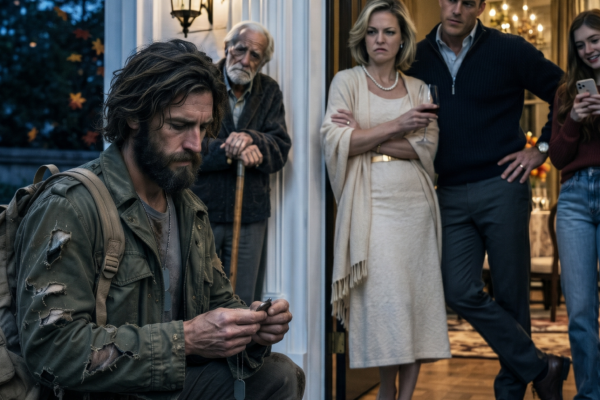
“That Can’t Be True,” Mafia Boss Whispered When His Contract Wife Revealed She Was Pregnant

“That Can’t Be True,” Mafia Boss Whispered When His Contract Wife Revealed She Was Pregnant

Celia Navaro crossed out the third rule before the mafia boss finished explaining it.
One year, separate bedrooms, no attachments.
Those were the terms Matio Bellini had placed between them beside an offer large enough to save her flower business and pay for her mother’s care.
He watched the line disappear beneath her pen.
Men had begged him to change a price.
Nobody had altered his rules while sitting across his desk.
You can hire me to attend dinners, Celia said.
You can’t tell me what I’m allowed to feel.
Matio looked at the ink, then at her. Feelings complicate arrangements.
Then don’t confuse having an arrangement with owning a woman.
Beyond the glass wall of his Philadelphia office, two men waited for an answer about a waterfront debt.
Neither would have spoken to him that way. Celia closed the folder.
She was 31, curvy, tired, and holding herself together with more determination than her calm voice suggested.
She wasn’t offering to fall in love.
She was refusing to be bought out of being herself.
Mateo should have ended the meeting.
Instead, he slid the folder back toward her and said, “What else?”
It was the first rule he changed for her.
He didn’t know how many would follow.
At 39, Matio had two convictions he rarely examined.
Love gave other people leverage, and fatherhood was something he would never experience.
7 years earlier, a specialist had reviewed two troubling fertility tests with him.
Matio remembered the numbers, the doctors measured tone, and the difficulty of swallowing. Afterward, he did not remember the conversation accurately enough to build a life around it, but that was what he had done.
By the time he walked out of the office, a poor chance had become no chance.
He buried the report, stopped attending follow-up appointments, and decided that any woman who wanted a family would eventually leave him. Better to keep the door closed than wait for the departure.
He built Bellaini freight into a legitimate business that moved machinery, food, and construction materials through the port. Beneath that business ran another one.
Men paid for permission to work certain routes.
Debts were collected by people whose visits carried more weight than a legal notice. Matio had inherited part of that power and expanded the rest himself.
He could not blame every choice on the family name. People admired the shipping company, feared the man behind it, and knew better than to ask which side paid for his house.
He slept little, worked late, and trusted arrangements he could enforce.
Celia had come because she needed one she could survive.
The introduction came through Alice Grant, an attorney who handled her business lease and occasional estate work for Bellan Freight. Alice had asked whether Celia would consider an unusual paid position involving public appearances and illegal marriage.
She explained who Matio was before making the introduction.
Celia spent three nights saying no in her head. On the fourth, she studied the overdue notices again.
Her mother was recovering from a stroke and needed daily assistance that neither of them could provide alone.
Their small greenhouse had lost its heating system during a cold snap. Celia had saved most of the plants by carrying them into the shop, but replacing the system meant choosing which other bill to leave unpaid.
Her late father had built the greenhouse behind a row of storefronts in South Philadelphia.
Selling it would erase his work and the only reliable income Celia still had.
She wasn’t searching for a rich man.
She was searching for a year in which a single setback would not undo every careful decision she made.
Matio’s offer was $180,000 60,000 at the start, followed by monthly payments for the appearances and time required.
Her existing business remained hers.
Separate attorneys would review everything.
Either person could end the arrangement without being punished for refusing intimacy, and the marriage itself would require proper legal steps if they chose to divorce.
No document could make it disappear when a calendar date arrived. Alice had insisted on those protections before she would let Celia walk into the office.
Celia insisted on more.
She would keep working.
Her mother would not become part of the performance. Security at her shop required her permission.
And she would not surrender her phone, her friendships, or the right to disagree in private. Matio accepted each condition with the expression of a man, discovering that a convenient solution came with inconvenient life attached.
Finally, Celia asked the question that mattered most.
Why marriage?
You’ve got employees who can go to dinners.
Matio stood and looked through the window toward the river.
Maurice Keen.
Celia knew the name.
Keen owned the old waterfront terminal Bellani freight had been trying to lease for 2 years.
The terminal had rail access, deep births, and warehouses close enough to make a costly expansion possible. Morris was 74, widowed, and still personally deciding who would operate the business his family had built.
He didn’t owe Matio the lease.
He also didn’t pretend his reasons were entirely financial.
At their last meeting, Morris had asked what happened when Matio went home.
Matio said he worked. Morris asked who could tell him when he was wrong.
Mateo had answered that his managers were well paid for that responsibility.
The old man looked unimpressed.
People who need your signature aren’t the same as people you allow to matter.
Morris said.
You’re asking me to entrust you with families who work here.
I’d like to know you’ve learned to consider somebody besides yourself.
Mateo understood the criticism as a condition to satisfy. He had told Morris too quickly that his private life was changing.
There was a woman.
They were planning a small wedding. Morris congratulated him and asked to meet her.
Now the lie sat across the desk in a purple wool coat, reading the terms instead of admiring the view.
So I’m proof that you’re human, Celia said.
You’re a practical answer to a personal objection.
That sounds worse when you put effort into it.
Matio almost smiled. She caught the movement and noticed that he suppressed it as though amusement might cost him authority.
Does Mister Keen know you’re paying me?
No.
Celia set down the pen.
Then we’re deceiving him.
We’re getting married legally.
That wasn’t my question.
Matio turned back from the window.
He was accustomed to people helping him make an uncomfortable fact sound reasonable.
Celia seemed determined to keep it uncomfortable. The lease will be negotiated on its financial terms.
He said he isn’t receiving a guarantee about our personal feelings.
He’s receiving an impression you intend to benefit from.
He couldn’t argue with that.
For the first time since their meeting began, he looked less certain than controlled. You can walk away, he said.
Celia looked at the figure on the first page.
She thought of her mother’s tired face when the home care worker left.
She thought of the plants crowding every window sill, waiting for heat she couldn’t afford.
Then she looked at Matio again.
I know what I’m agreeing to.
I don’t need you to make it prettier, but don’t ask me to lie about things I haven’t agreed to.
She would appear as his wife. She would attend reasonable events and maintain the privacy they both needed.
She would not invent children, old memories, or a family history for convenience. If someone asked how they met, she would say Alice introduced them.
That was true.
Matio sat down and took back the pen.
He removed the rule Celia had crossed out entirely. Separate bedrooms, he said.
No expectations beyond the written arrangement, and neither of us gets to rewrite it alone. Agreed.
Celia didn’t sign that day.
Alice reviewed the changes, and Celia took the papers home.
She told her mother she had been offered work that included a complicated personal arrangement.
She didn’t dress Mateo up as a harmless businessman.
Her mother listened then asked whether Celia could say no after she accepted.
Celia showed her the exit terms.
Make sure that stays true.
Her mother said. 3 days later Celia signed.
The wedding was set for December 7th.
12 months later they would decide how to end what they had begun.
Matio put the agreement into a drawer and returned to the men waiting outside.
Celia left with her own copy.
Neither of them thought the blank space where the third rule had been removed would become the most dangerous part of the page.
The wedding had 48 guests, and half of them knew better than to take photographs without permission.
Matio’s cousin, Vincent, stood near the doors in a gray suit, watching arrivals as if they were delivery schedules.
He managed the company’s finances and some of the arrangements that never reached its public books.
He had helped raise money for the terminal expansion.
He also knew why Celia was there.
When she arrived with Alice, Vincent looked from her pale rose dress to the simple bouquet she had made herself.
“You clean up well,” he said.
Celia stopped beside him.
“So does the room.
Somebody worked hard.”
Alice covered a small smile with her hand.
Vincent didn’t offer another compliment.
Celia’s mother sat near the aisle.
her cane resting against the chair. Before the ceremony, Celia noticed that the narrow space beside her would make standing difficult.
She started to ask an attendant for help, but Matio was already moving the neighboring chair.
He did it himself without calling attention to the adjustment. Her mother thanked him.
He nodded and returned to the front.
Celia watched him for a second longer than she intended.
She knew helpful acts could belong to a performance. She also knew an audience would have missed this one.
Morris Keen arrived alone.
His late wife’s absence seemed to occupy the place beside him.
He shook Mateo<unk’s hand, greeted Celia respectfully, and asked about the bouquet.
She explained that she’d used flowers from her shop and greenery from the repaired greenhouse.
“Your own business?”
Morris asked.
“My father’s originally, mine now.”
“Good.
Keep something that belongs to you.”
Matio heard the advice and wondered whether the old man intended it as a warning.
The ceremony was legally real.
However practical its beginning, Celia listened to the vows more carefully than she expected.
When Matio slid the ring onto her finger, he paused over her hand. She looked up.
His expression had changed slightly, stripped of the office certainty she remembered.
The pause lasted only a moment. Then he released her, and the efficient continued.
Celia told herself he had remembered the importance of convincing Morris.
Yet his hand was warm against hers, and she could still feel it after they sat down. At the small reception, a guest joked that marriage would finally teach Matio obedience.
Vincent laughed too loudly.
Matio didn’t.
“My wife isn’t an improvement program,” he said.
Celia looked at him.
He said the words without reaching for her or waiting to see whether Morris approved. She had expected to be protected from questions that threatened the arrangement.
She hadn’t expected him to defend her from being treated as a tool.
Later, while the guests ate, Matio stepped outside to take a call.
Celia went looking for him because her mother was ready to leave.
Through a halfopen service door, she heard his voice. Quiet, precise.
A man at the other end had refused a demand connected to one of the roots.
Mateo asked whether anyone had entered the man’s house.
Whatever the answer was, his face hardened.
“No houses,” he said.
“No families.
You’ll discuss this where he works with his attorney present if he wants one.
He ended the call and saw Celia in the doorway.
The wedding ring felt heavier on her finger.
Was that company business?
She asked. Not the part Alice represents.
I understood who you were when I agreed.
I still need to know what comes into my life. He looked toward the reception room.
Nothing comes to your mother. Nothing happens at your shop.
If my circumstances change that, I tell you before I find out another way.
before.
She didn’t thank him for promising the minimum she needed.
They returned to the guests together.
It was their first conversation as husband and wife that neither wanted to rehearse. His house stood on a quiet street above the river, large enough for footsteps to disappear into other rooms.
The driver carried Celia’s bags inside, and she took off her shoes before Matio could show her upstairs.
“Is there a rule about bare feet?”
she asked.
“No.”
“Good, I was prepared to negotiate.
He carried the smaller bag himself.
Upstairs, the bedrooms faced each other across a broad landing. Her room had a bathroom, a desk, and windows looking toward the garden.
Nobody had filled its drawers with gifts or chosen clothes for her. The empty space pleased her more than expensive decorations would have.
Matio handed her a key for the desk. Your documents stay wherever you want them.
Celia put her copy of the agreement inside.
Then she turned toward him.
Do you knock before coming in?
Yes, even if we’re arguing.
Especially then, for the first time that day, she smiled without checking who might see it. Mateo stood in the doorway a little too long, watching her remove the pins from her dark curls.
One fell onto the floor. He picked it up and placed it on the dresser rather than giving it directly to her.
The small caution made her curious. He had moved through the wedding without difficulty.
here where there was no audience. He seemed to be measuring the distance between them.
You can say good night, she told him. He looked relieved by the instruction and irritated that she had noticed.
Good night, Celia. Good night, Mateo.
She closed the door gently. Across the landing, he remained awake long after midnight, listening to an unfamiliar sound.
Someone was moving around in a room that usually stood empty.
The next morning, Celia met Grace, the housekeeper, over a coffee machine she couldn’t make behave.
Grace was in her late 50s and had worked for Matio for 11 years. She watched Celia press a button, wait, and receive a teaspoon of coffee in a large mug.
It makes better coffee when you stop arguing with it, Grace said. Does that work on the owner, too?
Grace laughed before she could stop herself.
Matio entered the kitchen in time to hear the sound. Both women looked at him.
He paused, then reached past Celia to show her the correct setting. Their shoulders almost touched.
She thanked him as casually as she could and made another cup.
By the end of the week, the room had changed in ways that didn’t require his permission.
A small speaker played music while Celia prepared breakfast.
A chipped vase held white flowers she couldn’t sell because their stems were too short.
Her mother’s repaired heating system was working.
The home care schedule was stable, and Celia could visit without arriving exhausted from another argument about money. She remained busy at the shop.
The arrangement hadn’t removed work from her life.
It had removed the fear that every day of work might fail to matter. Matio noticed the flowers first.
He asked whether they were meant for Morris’s visit the following Sunday.
“They’re meant for today,” Celia replied.
He studied the uneven stems.
“These aren’t your best.
They’re still flowers,” he said nothing more.
That evening, he came home at 6:40 instead of 9:00 and found Celia at the table repairing a torn order book. He asked whether she needed a new one.
She said the old one contained notes from her father.
Matio sat across from her and held the pages flat while she worked. Neither mentioned the contract.
Outside, the city grew dark.
Inside, for 20 quiet minutes, he was useful to someone who wasn’t afraid to correct how he held the paper.
When Celia finally looked up, he was watching her hands.
What?
She asked.
Matio glanced at the clock. Nothing.
But he had missed a call from Vincent.
And for the first time in years, missing it didn’t feel like a mistake.
By January, Mateo knew which nights Celia visited her mother, which supplier always arrived late, and why she saved bruised plants other growers discarded.
He learned these things without asking for a report. She spoke while they ate, and he found himself remembering.
One evening, she mentioned that her mother’s care worker had called out sick.
Mateo offered to send Grace. Celia declined.
Grace was tired and visiting her mother belonged to Celia’s own life.
He accepted the answer, then asked whether she wanted dinner saved.
She did. When she returned at 10:00, a plate waited in the kitchen, covered rather than left drying under a warming lamp.
A note said he had guessed wrong about the portions, and she could blame him if she was still hungry. She read it twice.
The next morning, she teased him about writing a note when he was upstairs. Matio said she might not want a conversation after a long day.
It was such an ordinary consideration that Celia had trouble answering.
Her former fianceé had called any need he didn’t share an inconvenience.
Mateo, who frightened half the waterfront, had considered whether she might want to eat in peace.
That didn’t make him an easy man.
It made him harder to dismiss as only the man in the office.
He began coming home earlier. At first, Vincent attributed it to the terminal negotiations.
Morris liked meeting a married couple, and Matio was keeping the picture consistent.
Then, Matio declined an unnecessary late meeting on a night Morris wasn’t expected.
Vincent stood beside the conference room door, frowning.
You’re getting paid for the hours you spend thinking, he said.
I know, Mateo replied.
Tonight, I can think somewhere else.
At home, Celia was on the sofa with a plant catalog open on her lap.
She had fallen asleep after covering an employese’s shift.
Her feet were cold and the room was set to Matio’s preferred temperature.
He turned the thermostat up before finding a blanket.
He took the catalog from her hands, placed a bookmark at the page, and covered her without waking her.
In the morning, Celia found the blanket and the changed thermostat.
Grace hadn’t stayed overnight.
Celia brought Matio a piece of cake left from her mother’s birthday and said it was thanks for making the house less like a refrigerator.
He said he hadn’t done anything worth thanking him for.
She put the cake beside his coffee anyway.
That afternoon, an invitation arrived for Morris’s annual charity dinner.
Celia was expected to attend with Matio, but she had a large wedding order due the following morning. She told him she could stay only until 9.
Matio’s first instinct was to say the dinner mattered more.
He stopped when she looked at him.
“The hours are in our agreement,” she said.
“Reasonable notice, reasonable demands.
My customers don’t become less real because yours have more money.
He had signed that provision himself.
Nine. He agreed.
They left the house together beneath a pale winter sky.
Celia wore a burgundy dress with a fitted waist and soft sleeves. It suited her curves, and she had chosen it without asking what rich women were supposed to wear.
Matio looked at her long enough for her to notice.
“Something wrong?”
she asked.
“No, then you can stop inspecting me like a shipment.”
He offered his arm and she took it, enjoying his discomfort more than she should have.
The dinner was held in a restored Riverside hotel. Celia recognized some of the flower arrangements as work she had once done for another supplier.
She also recognized that people noticed her ring before they listened to her name. Morris greeted them warmly.
His eyes moved between their faces while he asked about the greenhouse.
Celia explained a problem with an old drainage line. He suggested a contractor he trusted.
She asked for the man’s number rather than accepting an offer to have the work arranged for her.
Morris looked pleased. How did you two meet?
A woman at the table asked. Celia rested her hand beside Matios.
Through Alice.
I had a problem to solve.
So did he.
That doesn’t sound romantic.
It wasn’t at first.
Matio looked at her.
The last two words had come without rehearsal.
Celia continued talking to the woman before he could decide what they meant.
Over dinner, Maurice described his late wife’s habit of inviting people home after business meetings.
Matio listened quietly.
When another guest joked that the house would soon be crowded with children, his hands stopped beside his glass.
Celia saw him turn inward.
“A marriage can matter without that,” she said.
The guest apologized, surprised by her directness.
Celia changed the subject to Morris’s restoration project, giving Matio room without pretending nothing had happened.
He didn’t thank her at the table.
Later, he guided her away from a group that had begun asking how often he was home.
On the terrace, she checked her watch.
8:45.
He had remembered her limit. The river lay black beyond the hotel lights.
For a while, they stood together without speaking.
Then, Matio asked whether she had meant what she said about marriage.
“Yes, or were you protecting the performance?”
Celia turned toward him.
“People get to want different lives.
They shouldn’t have to explain themselves over dessert.
He looked at her hand resting on the rail. The ring caught the light.
It had been chosen to convince strangers, but it was now attached to a woman who had noticed his discomfort and refused to make it useful to herself. You never ask questions just because somebody wants you to.
He said that sounded almost like a compliment.
It was.
She smiled and the careful distance between them shortened.
Matio could hear the music through the glass doors. He could also see that no one was watching them.
“May I kiss you?”
he asked.
Celia’s smile faded into something quieter.
“Is it part of tonight?”
“No,” she had asked for boundaries because she knew how easily money made an answer difficult.
Now she felt the weight of being allowed to choose.
“Yes,” she said.
He approached slowly enough for her to change her mind.
His hand touched her cheek, and the kiss was gentle, almost uncertain.
Celia caught the front of his jacket, not to hold him in place, but to steady herself against the unexpected tenderness. When they separated, Matio remained close.
He looked as startled as she felt.
“We should go,” she whispered.
He glanced at her watch 9 minutes before 9.
“Yes,” he didn’t ask her to stay for another round of introductions.
In the car, their hands found each other on the seat.
Neither pretended it was necessary.
At the shop, Matio carried a box of ribbon from her trunk and stopped outside the workroom. Her assistant needed to finish an order, and Celia needed to be Celia Navaro for a while.
He left her there without complaint.
On the drive home, Vincent called. Morris wanted a revised operating proposal by Monday.
Matio agreed to review it in the morning.
“How did the wife do?”
Vincent asked.
Mateo looked at the empty seat beside him.
“Her name is Celia.
There was a pause at the other end.
I know. Then use it.
He ended the call and waited in the parked car before going inside.
The house was still warm. The blanket lay folded on the sofa.
He had kissed a woman whose name appeared on a contract, and the contract had nothing useful to say about what happened next.
The morning after the dinner, Matio found Celia labeling deliveries at the kitchen table. He paused beside her, uncertain whether another kiss would be welcome.
She looked up from the cards. You can ask again.
He did. She said yes.
And the second kiss was easier than the first.
Afterward, she handed him a stack of envelopes and asked him to match them to the addresses on the orders.
He made one mistake. She corrected it.
For a man who spent his mornings directing other people, being trusted with a small task he could do imperfectly was a strange relief. Through February, they became companions before either of them knew what to call the change.
Celia brought work home when the shop closed late. Matio moved from his study to the kitchen with the invoices he could legitimately discuss.
They didn’t pretend her eye for flowers made her an expert on freight.
She didn’t pretend his money made him an expert on everything.
When he complained about a supplier delaying a payment, she asked whether he’d given the man a deadline he could meet, or only one Matio wanted.
He stared at her, then checked the correspondence.
He had sent the revised terms after the supplers’s office closed.
“That isn’t why he’s late,” Mateo said.
It might be why you’re both angry.
He called the supplier in the morning and solved the problem without another threatening message. Celia never heard the call.
She noticed that he stopped bringing that complaint to dinner.
In March, a larger problem arrived at her shop wearing a black coat. The man stood outside for an hour watching customers enter.
When Celia asked whether he needed flowers, he said he was there for her security.
Mateo had approved it. Nobody had told her.
By noon, two customers had turned away.
One was the wife of a driver whose route had been affected by Bellany’s demands.
She knew what the presence of a Bellan man might mean, even if his purpose was protection. Celia called Matio and asked him to remove the man.
There was trouble at a neighboring property. He said Vincent wanted to be careful.
Then Vincent could have called me.
I approved the precaution. You approved something that changed my business without asking.
His voice hardened.
I won’t apologize for keeping you safe.
You can apologize for treating me like cargo.
He went silent.
Celia wasn’t shaking because she thought he would hurt her.
She was shaking because she recognized the beginning of a pattern she had promised herself not to accept again. Her former fianceé had made decisions that supposedly saved her trouble.
After her mother’s stroke, he decided their wedding should be delayed, her work should be reduced, and her mother’s care should be someone else’s responsibility.
When Celia disagreed, he called her unreasonable. She ended the engagement herself.
She wouldn’t discover another year later that her choices had been slowly removed by a kinder voice.
Matio came to the shop that evening. The guard was gone before he arrived.
Celia let him in, but kept working. He waited until she put down the shears.
“Tell me what should have happened,” he said.
“You call.
You tell me the concern. We decide what makes sense.
I don’t learn your decision from a stranger at my door.
If it’s immediate, then you act to address the danger and explain as soon as you can.
Today wasn’t immediate.
Today was you preferring an answer that didn’t require a conversation.
He looked around the shop.
A week’s worth of her work filled the coolers.
Order cards waited above a bench her father had built.
He had thought of the shop as the place she went when she wasn’t at his house.
Standing inside, he understood that his house was the place she went when she wasn’t here.
You’re right, he said.
Celia didn’t reward the admission by making the problem disappear.
She asked for a clear contact procedure and an explanation of the concern that prompted the guard. He supplied both through Alice so Celia could evaluate them with someone outside his authority.
He also offered to pay for the demonstrable business she lost that day.
She accepted compensation for the mistake and declined a new van he suggested afterward. Those are two different things, she said.
Matio was learning how often generosity could become another way to avoid listening. In April, he visited her mother without bringing Celia a reason to stay grateful.
He brought a newspaper her mother requested and spent 40 minutes discussing baseball while Celia finished a delivery. Her mother disliked being spoken to slowly merely because she used a cane.
Matio didn’t.
When she struggled to reach a cup, he moved it closer without finishing her sentence for her. Celia watched from the hall before entering.
She loved her mother’s stubbornness and worried about it.
Matio appeared to see both the woman and the difficulty without reducing one to the other. Later, her mother asked whether the arrangement still had the same ending.
December, Celia said, “Have you spoken about what happens before then?
We’re living it.”
Her mother looked at her gently.
“That isn’t always the same as speaking,” Celia knew.
Matio<unk’s kisses had become familiar.
His presence at dinner mattered. They had begun taking short walks after meals where he left his phone in his pocket and listened to stories that contained no request for action.
Yet every night they still chose separate bedrooms. Partly because the legal arrangement made intimacy complicated, partly because each understood that crossing another line would make pretending harder.
In May, Maurice toured the greenhouse with them. Celia had grown new plants from cutings saved during the heating failure.
Maurice admired the patients involved.
Most people would have replaced the whole lot, he said.
Then they’d have missed what survived, Celia replied.
Matio looked at her. He had spent years discarding possibilities that looked too damaged to trust.
The comparison unsettled him.
Morris asked whether they planned to travel when the business negotiations were finished.
Matio said they hadn’t decided.
Celia answered that she’d like to see the ocean without delivering flowers to a wedding beside it.
“You should take her,” Morris told him.
Matio replied that Celia could decide whether she wanted him along. The old man raised an eyebrow, approving without saying so.
That evening, Celia found an invitation from her cousin to a summer baby shower. She mentioned it while Matio sliced bread.
The knife stopped.
He asked whether she expected him to attend. She said he was invited, not required.
He set the knife down and stepped away from the counter.
The reaction was too strong for a simple dislike of parties.
Celia didn’t follow him immediately.
She finished wrapping the bread, cleaned the knife, and went onto the terrace. He stood near the railing, staring into the garden.
“That question at Morris’s dinner,” she said.
“About children, it hurt you.”
Matio held the rail with both hands.
He could deny it. Offer a convenient work reason or speak about the one part of his life he had never been able to command.
Celia waited without reaching for him.
After a long silence, he said, “There are things you should know about me that have nothing to do with the men outside my office.”
She sat down beside the empty chair.
Matio remained standing, gathering the words he had buried with the medical report 7 years earlier. Matio told her about the tests without giving her the report to read.
At 32, a medical problem had led to an evaluation that found very few viable sperm. A second test was also poor.
The specialist discussed further evaluation and possible treatment. Matio remembered being told that natural conception would be very unlikely.
By the time he described it to his father, he said he couldn’t have children.
His father replied that the family had other sons to carry its name.
The sentence was practical, almost kind by the older man’s standards.
Matio remembered it more clearly than anything the doctor said.
He stopped imagining a child who might look like him.
He stopped letting relationships reach the stage where someone would ask.
“So when you said separate rooms,” Celia said.
“You weren’t only keeping the arrangement simple.”
Matio looked down.
“Simple was the part I could explain.”
Celia didn’t promise that a woman could love the problem away.
She didn’t tell him that destiny owed him a miracle.
She asked whether he still wanted children.
He answered honestly for the first time in years.
I don’t know how to want something after I’ve spent this long teaching myself not to.
She reached for his hand and he let her.
The quiet contact did more for him than a speech about hope would have.
“You don’t have to decide tonight,” she said, “and you don’t have to make yourself less important because you can’t give somebody a particular future.
” He looked at her as if he had expected a calculation and received something he didn’t have a category for.
That night, they sat on the sofa until the house grew dark, her head resting against his shoulder.
She slept there briefly before he woke her gently and walked her upstairs.
At her door, he kissed her forehead instead of asking her into his room.
Celia understood that tenderness didn’t always need to keep moving.
Through the summer, their relationship grew around work that still belonged to each of them. She attended the baby shower without him.
He didn’t invent a meeting to justify staying home.
He told her he wasn’t ready for the room, and she accepted the answer.
When she returned, he asked whether her cousin liked the flowers. She said yes, then told him a funny story about three people giving the same blanket.
He listened.
The topic no longer required either of them to pretend it didn’t exist.
Something else had begun to change, too.
The driver, whose wife avoided Celia’s shop, came to Bellin Freight about a payment he couldn’t make.
Matio met him without Vincent.
The man had a damaged truck, a legitimate insurance claim pending, and a demand from Bellini’s collectors that would leave him unable to pay his workers.
Matio had allowed those demands to operate beneath him for years.
He couldn’t solve that history by being gentle with Celia at breakfast.
He stopped the demand, required that the man’s own attorney review any lawful repayment, and ended the root fees imposed by intimidation in that part of the business.
Vincent objected.
The payments represented money they had counted on for the terminal expansion.
“Then we’ve counted on the wrong money,” Matio said.
Vincent looked at him as if the practical agreement upstairs had infected the office with sentiment.
Keen won’t give you a discount because you’ve developed feelings.
Keen hasn’t agreed to give us anything.
Matio revised the expansion budget using earnings he could document. It delayed a purchase and cost him the comfort of pretending every profitable habit was necessary.
Celia learned about the decision when the driver’s wife returned to the shop.
She didn’t rush home to thank him.
At dinner, she asked whether he had ended the demand because of her.
“You made me look at it,” he said.
“That doesn’t make fixing it your responsibility.”
She could live with that answer.
In August, Alice sent them a routine reminder that the appearance agreement would end in December.
They had payments, tax records, and practical details to review before then.
Celia put the email into a folder.
Matio read it three times and replied only that he had received it.
Neither asked the question both were hearing.
What did a year mean when the life inside it no longer felt temporary?
Celia tried once during a walk. Mateo said the lease negotiations should be finished before winter.
She asked whether that was what he thought she meant.
He stopped beneath a street lamp. No.
Then you can answer the other question when you’re ready.
She didn’t want to force a declaration because his face told her he cared.
She also didn’t want to become a woman who accepted gestures instead of the answer she needed.
He felt the pressure of December differently. An ending gave him protection from being left unexpectedly.
He could tell himself a departure was only the arrangement working as planned. Admitting he wanted Celia to stay would remove that shelter.
She would be able to leave him personally and he would have no paper to make the loss impersonal.
He knew this wasn’t a good reason to keep silent.
Knowing did not make speaking easy.
On September 18th, Matio came home with ingredients and a recipe printed so large Celia could read it from across the kitchen.
Grace had left early at his request.
Celia asked whether she should be worried. Probably, he said.
I’ve never made this.
Did you choose something complicated?
It looked straightforward on the screen.
The bread burned at the edges and the pasta finished before the source. Celia helped him rescue both without taking over.
They ate on the terrace beneath lights she had hung in spring.
There was no guest to impress, no dress to choose, and no event requiring her time.
Matio asked about the greenhouse next year.
Celia said she wanted to hire another full-time worker and create a small training program.
He asked good questions, none of which assumed he would own the answer. Then she looked at him over the table.
What happens to us in December? He had prepared several ways to discuss business.
None belonged in this conversation.
I can’t picture this house without you, he said.
Celia set down her fork.
That’s different from telling me you want me here.
I do. The answer came quickly enough to surprise them both.
He reached for her hand.
I want the evenings that don’t need a reason.
I want you correcting the way I hold an order book. I want to know why a plant survived when everyone else gave up on it.
Celia’s eyes filled.
He had remembered things she never thought to protect as evidence. I want you too, she said.
But if we do this, it can’t be another service I’m providing.
Matio nodded. They discussed the money and the contract directly.
Her compensation remained hers for the agreed work. Nothing she declined in private would change it.
Alice could clarify that separately if Celia wanted. Celia wanted Matio to understand it himself first.
He did.
When he kissed her, there was no audience and no possibility of calling it practice. She touched his face and chose to follow him upstairs.
The two doors remained across from each other on the landing. This time they went through his together.
The night was tender and unhurried with laughter when he struggled with a button and pauses that let either of them speak. They used protection.
Neither an old diagnosis nor a method of contraception made the future as certain as Matio had taught himself to believe.
Afterward, Celia lay against him and listened to the rain start beyond the windows.
He held her without trying to decide what the moment obligated her to give next.
She fell asleep before he did. Matio remained awake, looking toward the empty doorway, realizing that the life he feared losing had already become the life he wanted.
In the morning, he asked for five more minutes before they left the bed.
Celia gave him 10. Neither of them knew that the one night they had finally stopped treating each other as temporary would ask a question no agreement had prepared them to answer.
Matio spent the next 12 days closing a freight acquisition in Pittsburgh.
He called Celia every evening, sometimes from a hotel room, sometimes from a car outside a warehouse. The conversations had no obligation attached.
She told him when the greenhouse roof leaked again and when her mother managed the stairs without stopping.
He told her about a man who insisted on using a calculator older than the building they were meeting in. Celia laughed and Matio wished he could hear the sound from across the table instead of a phone.
When he returned, they were tender and awkward in a way neither expected. The first night together had made their feelings clearer.
It had not answered December.
Celia refused to let another kiss cover every difficult question, and Matio didn’t push past that limit.
They slept separately while continuing the conversations they should have started earlier.
In the second week of October, Celia began falling asleep over her order book.
The shop was busy, and she blamed long days.
Then the smell of coffee turned her stomach.
She had never disliked it before. She checked her calendar, counted, and checked again.
Her last period began September 4th.
The delay was now too large to dismiss as a changed routine.
Matio was in the study when she went upstairs and she stood on the landing looking toward his door.
He had spent 7 years believing he couldn’t become a father.
What would this news mean to him?
Not only joy, perhaps fear, suspicion, or a fresh reminder of something he had trusted that wasn’t true.
Celia hated that the possibility of happiness immediately required imagining how she might lose it.
She bought a pregnancy test the next morning. At home, she followed the instructions, put it on the bathroom counter, and waited beside the tub.
Two lines appeared.
She sat down because her knees had begun to shake.
The old arrangement was in the drawer across the room, untouched.
The test was in her hand.
Neither seemed able to explain the other.
Celia didn’t spend a week hiding it.
She called a clinic and took the first available appointment 2 days later.
Until then, she wanted facts she could understand rather than a dozen frightened interpretations.
On October 16th, the clinician confirmed the pregnancy and performed an early ultrasound. The image was small and unfamiliar.
Celia could see a flicker on the screen, and the clinician explained what it meant without turning the moment into a guarantee about everything ahead.
The estimated age was 6 weeks. Celia asked how that could match a night only 4 weeks earlier.
Pregnancy dating began with the last menstrual period.
the clinician explained.
Usually about 2 weeks before conception, the timing fit midepptember.
No scan could name one precise night.
Celia didn’t need it to.
There had been only one night together in that way.
Contraception had reduced the risk, not removed it, and Matio’s old test results had never been a promise about the future.
Celia took the printed image and the next appointment date. Outside, she sat in her parked car until the shaking passed, then called Matio.
“Can you be home this evening?”
she asked. He heard something in her voice and said yes without asking her to justify the request.
At 6, he waited in the kitchen while she set down her bag. He looked at her carefully.
Is your mother all right? Yes.
You Celia placed the ultrasound image on the table.
I’m pregnant.
Matio didn’t reach for it.
His hand remained against the back of the chair. For a moment, the quiet frightened her more than any question could have.
The clinic confirmed it.
She said, “I’m about 6 weeks.
That means conception about 4 weeks ago.
I know how it sounds after what you told me.”
He looked from the image to her face.
I thought it couldn’t happen.
I did too.
His breath caught.
She could see the old certainty trying to survive inside him, even while something new pressed against it.
“I don’t know how to understand this yet,” he said.
Celia swallowed.
“Are you questioning me?”
The question brought him back to her.
He pulled out the chair and sat so she wouldn’t have to stand beneath his confusion.
No, Celia. No.
He reached for her hand.
I’m trying to understand what I believed about myself.
That isn’t doubt about you.
She closed her eyes, feeling the distinction settle where fear had been. Matio picked up the image with his other hand.
He turned it the wrong way, corrected himself, and gave an unsteady laugh that broke before it became one. You saw something?
A flicker? The clinician explained it.
and you’re all right?
I’m tired.
I’m frightened.
I’m happy, too.”
He nodded slowly, as though each feeling needed room of its own.
Then he asked whether he could hold her.
Celia moved into his arms.
He didn’t kneel for an audience or promise a world without problems.
He held her while the chair creaked beneath them and admitted that he was frightened, too. The next morning, Matio called the specialist who had seen him 7 years earlier.
He didn’t ask the doctor to prove the baby was his.
He asked to understand the report he had spent years avoiding.
At the appointment, the doctor reviewed the two old tests and the recommendations Matio had declined. The results were very poor, but they were not a finding that no viable sperm existed.
Natural conception had been described as unlikely. Matio had converted that word into impossible, then used the certainty to stop exposing himself to disappointment.
The doctor recommended a current evaluation for Matio’s own health.
A new test still showed low numbers.
It explained why conception might have been difficult, not whether he deserved the child or whether Celia had told the truth.
Matio drove home without trying to make up 7 years in one journey. He found Celia at the greenhouse showing an employee how to save a root damaged plant.
He waited until she finished. Then he told her what he had learned.
It was never zero, he said. I just lived as if it was.
Celia put down the watering can.
You didn’t have to know what to feel the minute I told you.
He looked toward the benches filled with living things she had refused to discard.
I didn’t think I’d ever get to learn this part of myself.
She hugged him and he held her carefully without treating her as fragile.
For several days, the joy stayed simple. He asked to attend the next appointment.
She said yes.
They read the clinic information together.
He bought crackers when she mentioned nausea and didn’t argue when she preferred another brand.
Then the habits he knew better began returning. He suggested that Celia cut her shop hours.
He asked Grace to report whether she had eaten.
He ordered furniture for a nursery before asking which room Celia wanted to use. Each decision seemed sensible when he made it alone.
Together, they began to surround her.
Celia canled the furniture delivery herself and told Grace she wasn’t required to report on another adult.
Matio apologized, but his mind had already moved toward a larger solution.
A child changed their future. Their private arrangement should reflect that.
On the last Monday in October, Celia opened an envelope addressed to both of them.
Inside was a draft prepared at Matio’s request with Vincent coordinating the business details.
The first page removed the December end date.
Celia should have felt relief.
Instead, she noticed the explanation beneath it.
Continuation of the household arrangement in light of the pregnancy.
The paper didn’t say he wanted his wife.
It said a circumstance had made keeping her practical.
Celia read the draft twice before speaking to Mateo.
She didn’t want to mistake careless wording for the whole of his intention.
The proposal mentioned housing, support, private security, and her availability at future family events.
Several practical provisions belonged in a discussion.
Others assumed she would reduce work and remain in his house indefinitely.
Vincent had added suggestions about maintaining a consistent public image while the terminal lease closed. Celia put those pages aside and called Alice.
The attorney confirmed that the proposal was only a draft.
Celia had signed nothing.
The existing agreement remained in place. Any decisions about their child would be separate from an appearance arrangement and would require proper advice, not convenient language on a company document.
Celia thanked her, then waited for Matio to come home. She set the draft on the table between two cups of tea.
Did you read this before sending it? Yes, all of it.
He looked down at the pages and saw that she had marked several lines.
I asked for a starting point.
You asked for a way to keep the household together because I’m pregnant.
Because everything has changed.
Celia remained seated. She would give him time to answer properly.
If I weren’t pregnant, would you still want me to stay?
Mateo looked at her then at the paper.
The answer existed inside him, saying it would require admitting that the future he wanted no longer depended on circumstances he could name without embarrassment.
Instead, he began with the safer truth. Our child needs stability.
You shouldn’t have to worry about a home.
Celia shook her head slowly.
That isn’t what I asked.
I know.
Then answer the question I did ask. Matio leaned forward.
I want to take care of both of you.
She could hear his sincerity. That was why it hurt.
He was offering the part of love he understood while avoiding the part that would leave him dependent on her answer.
Taking care of me isn’t the same as choosing a life with me, she said.
I love you.
I have for months.
That doesn’t mean I’ll accept any place you decide is safest for me.
He stared at her.
He had imagined hearing those words, but not beside a document that made them sound like evidence against him.
Celia, I don’t see you as an obligation.
Then why does every sentence about our future begin with the baby?
He didn’t dismiss the question.
He tried to explain the fear beneath his plans, the years without hope, and how badly he wanted not to lose this chance. Celia listened.
She understood the fear. She refused to let it become the reason she lost her own voice.
“You’ll be this child’s father whether we remain married or not,” she said.
“I’m not threatening to take that from you, but I won’t teach our child that a woman stays because she’s useful, comfortable, or difficult to let go.”
“That isn’t how I think of you.
Then stop arranging my life before asking what I want.”
Matio reached toward the draft, then stopped.
His own words had become a trap because he had chosen them to avoid saying the simpler ones. Celia stood.
I’m sleeping in my room tonight.
Tomorrow we can talk about practical things.
The love can’t be hidden inside them forever.
He didn’t block her way.
That restraint mattered.
It also didn’t answer her question.
The next morning, they spoke over breakfast.
Celia said she would finish the appearances already agreed upon, but she would not perform a happy permanence for Morris while their real future remained unsettled. She wanted the remaining compensation separated from any private decision about staying.
Alice would handle the details.
Matio agreed to consult his attorney. He did not yet agree to every proposed change.
It was a small hesitation with a large meaning. He still wanted an arrangement that made her departure difficult.
The draft had shown Celia what tenderness had sometimes concealed. Matio could ask permission for a kiss and still assume authority over an entire future.
Through early November, they continued talking. There were no slammed doors and no week of refusing to listen.
Celia asked direct questions. Matio gave some direct answers and avoided others.
He accepted that she would keep the shop.
He stopped asking Grace for updates.
He apologized for sending a family proposal through Vincent without first discussing it with her. Yet, whenever Celia asked what remained between them without the baby, he described the house, the dinners, and the habits he wanted to preserve.
He couldn’t say how deeply losing her herself frightened him.
Celia had learned to hear the difference.
She looked for an apartment close to the greenhouse where her mother could visit without struggling through a large house. She used her own money for the deposit.
Matio knew about the search.
She refused to make leaving a surprise or a test he could fail by not guessing.
I won’t move before the term ends unless I need to, she told him.
But I’m preparing for the possibility that we want different kinds of marriage.
He asked whether she would still invite him to appointments.
Yes, that’s about our child.
Don’t make it proof that everything else is settled.
The answer was generous and precise.
Matio found precision much less comforting when it protected someone from him.
Vincent saw the distance at once.
He advised Matio to reassure Celia with a larger settlement. People relax when the number improves, he said.
Matio looked at him.
She isn’t asking for more money.
Everyone asks for something.
She’s asking me not to confuse money with the answer.
Vincent shrugged.
He had enjoyed the advantages of Mateo’s colder habits and did not welcome losing them.
A few days later, Celia received an invitation from Morris for a private dinner celebrating the impending lease, and in his words, their growing family. Celia had not told Morris about the pregnancy.
She asked Mateo whether he had.
He hadn’t.
Vincent had mentioned it while discussing the closing arrangements.
Matio called him immediately. Vincent admitted it without apology.
He was delighted.
After a year of trying to convince him you’re invested in people, you’re giving him the strongest proof possible.
Matio felt something in himself recoil.
He had begun the marriage for precisely that kind of proof.
Hearing the same calculation applied to Celia’s pregnancy made the ugliness impossible to rename.
Our child isn’t supporting evidence, he said.
Neither is my wife.
Vincent’s voice cooled.
Your wife was supporting evidence when you hired her. Matio stood with the phone against his ear and no reply ready.
The accusation was true.
Celia watched from the other side of the kitchen.
She didn’t need to hear Vincent’s words to see where they landed.
Matio ended the call, told her exactly what had been said, and apologized for the disclosure.
She accepted that he hadn’t authorized it.
She also refused the celebration.
“If you want me to stop feeling like part of a transaction,” she said.
“Start by finishing the truth you built this one around.”
Morris still believed they had married because they were in love. The operating lease was scheduled to close in late November.
Mateo could say nothing, secure the expansion, and try to repair his marriage afterward.
That was the order in which he had solved problems his whole life. This time, the order itself was the problem.
Celia left the unsigned household draft on the table and went upstairs.
Matio called Morris’s office.
He asked for a meeting before the closing.
Then he called his attorney and asked what Bellini freight would owe if the old man withdrew.
The answer was large enough to make Vincent furious. Matio listened without negotiating it smaller.
Maurice met him at the terminal office rather than a restaurant. The windows overlooked cranes, trucks, and men whose work depended on decisions made above them.
Matio came without Celia and without Vincent. He brought his attorney, who remained outside while the two men spoke.
Maurice asked whether the pregnancy was proceeding well. Matio said the information belonged to Celia and they would share what they both agreed to share.
The old man accepted the boundary.
Then Matio told him why he had asked for the meeting.
Alice introduced them for a paid arrangement. The wedding was legal.
The affection Maurice witnessed at first was not the reason they married. Matio wanted to answer the personal doubts Maurice expressed without exposing anything real about himself.
Celia knew about the arrangement and negotiated protections.
She had not known him long enough to marry him for love. Maurice listened without interrupting.
When Matio finished, he looked toward the workers beyond the window. You thought a wife would improve the photograph?
He said, “Yes, and you let me believe the photograph proved something.”
“Yes, did she ask you to tell me?”
She asked me to stop benefiting from a lie while asking her to trust me. Morris turned back.
That’s not an answer about who decided to come.
Matio understood.
“I decided there was no useful place to put the responsibility now.
He couldn’t hide it in Celia’s principles or Vincent’s suggestions.
He had lied because he could. He was admitting it because continuing would cost him a kind of life he could no longer dismiss as impractical.
Maurice folded his hands. I liked her.
I still do.
That doesn’t make your conduct acceptable.
I know.
You don’t get to bring me an honest sentence at the end and call the beginning harmless.
Matio nodded.
He hadn’t expected forgiveness, but part of him had expected the old man to recognize what telling the truth cost and reward it.
Morris gave him something harder. He accepted the truth and kept the consequence.
The closing would be postponed.
The proposed exclusive lease would be reconsidered and Morris’s council would review the asurances given during negotiations.
Bellini Freight might still operate a limited service under separate commercial terms, but it would not receive the terminal expansion as planned. Mateo agreed to a review of expenses incurred in reliance on his representations and offered reimbursement where the records supported it.
The attorneys would handle the details.
He didn’t ask Maurice to consider the baby as a reason for leniency.
Before he left, Maurice said one thing quietly.
Don’t make telling me the truth into another performance she has to applaud.
Mateo held his gaze.
I won’t.
Outside, his attorney explained the immediate business consequences. Deposits were tied up.
Financing would need revisions.
Several planned hires could not go ahead on the same schedule. Mateo instructed the managers to protect existing wages and report the changes to people affected before rumors did.
He would absorb the loss through the company reserves and his own reduced distributions rather than demanding that drivers cover it through the old route fees. Vincent was waiting when he returned to the office.
He had already heard about the postponed closing.
You gave away 2 years of work, he said.
I gave Morris information he should have had for a woman who may still leave you.
Matio looked at him.
Yes, it was the first time he said that part without trying to make the risk smaller. Vincent stared.
He had expected anger or a promise that Celia would stay.
Matio offered neither.
You no longer handle any matter involving my wife or our household, he said. Your company authority will be reviewed separately.
Don’t contact Morris about her again.
Vincent began to argue that he had only advanced their shared interests.
Matio ended the discussion.
It wasn’t a scene Celia needed to witness to believe she mattered.
It was a boundary his own life required whether she remained in it or not. At home, he told her what happened at the terminal.
She asked questions about the workers and the expense review.
He answered.
She didn’t tell him that losing the lease proved love.
She said she respected the decision to stop concealing how they began.
Thank you for telling me directly, she added. Mateo sat across from her and felt the absence of a reward he had learned to expect from doing difficult things.
trust would have to grow without a guaranteed result. Over the following weeks, he changed the practical arrangement Celia had challenged.
One afternoon, a contractor called Matio to approve repairs at Celia’s greenhouse.
The man assumed her husband would make the decision.
Matio gave him Celia’s number and asked him to speak with the owner.
Later, he told her about the call without presenting it as a favor.
Celia returned it herself, chose the repair, and paid from her own business account. The remaining appearance fees were protected in a revised agreement Alice could review.
Celia would be paid for the work already promised, and choosing to live elsewhere would not reduce what she had earned. The future of their child would not be negotiated through Vincent or tied to a decision about the marriage.
Matio requested a separate discussion with Celia and both attorneys about estate planning and support, making clear that no proposed provision required her to remain his wife. She accepted that conversation.
At the next prenatal appointment, he sat beside her rather than answering the clinician’s questions.
When she asked about work, he let her explain the lifting, the long hours, and the breaks she could arrange.
They left with guidance suited to her actual tasks instead of Matio’s imagination of fragility.
In the car, he apologized for trying to reduce her whole business to a hazard he could remove.
“I was frightened,” he said.
“I know.
That doesn’t excuse it.”
“No.
” Celia looked at him and something softened without surrendering.
“You can tell me you’re frightened before you make the decision,” he nodded.
He had asked men for difficult things in rooms where refusal carried a price.
Asking Celia for a life together would require the opposite.
Her refusal had to remain possible. Otherwise, any answer he received would always contain doubt.
He began writing what he wanted to say, then stopped because it sounded like a statement prepared for investors.
He tried speaking to Alice about the final paperwork and caught himself asking whether a proposed phrase would reassure Celia.
Alice said reassurance wasn’t a drafting problem.
He needed to talk to his wife. Matio accepted the correction.
By the beginning of December, the financial revisions were complete.
The final payment was due as scheduled and the agreement about appearances would end on December 7th.
That date did not divorce them. It only removed the job that had first required them to remain beside each other.
Celia’s apartment was ready.
She hadn’t cancelled it.
She wasn’t using the key to threaten him.
She needed to know she could choose a home without losing a father for her child or being made to apologize for failing to stay grateful. Matio had begun doing the difficult work she asked of him.
She could see it.
She also needed to hear whether the woman who ran the greenhouse mattered beyond the family he had suddenly become able to imagine. 3 days before the term ended, Matio left the office early.
He told his assistant when he would return and asked that only genuine emergencies reach him.
On the way home, he stopped outside Celia’s shop.
She wasn’t there.
Her assistant said she had gone to collect a few things from the house.
Mateo drove the last streets without speeding.
He knew where she was going.
The uncertainty was whether he could finally speak before she got there.
Upstairs, Celia’s door stood open.
The suitcase lay on the bed beside her books, a folded purple coat, and the small kitchen speaker. She was packing carefully, making room for the life she could carry.
Matio stood at the threshold and knocked. Celia looked up.
“Come in,” she said.
He entered without reaching for the suitcase. Whatever happened next, he would not turn her ability to leave into something she had to defend.
Mateo placed a folder on the desk, then moved his hand away from it.
Celia didn’t approach.
“Alice has the signed revisions,” he said.
“The final payment is arranged.
None of it depends on your staying here. I know, she called me.
He nodded.
That knowledge relieved him.
She didn’t have to take his word for the practical freedom he owed her.
He opened the folder and took out an old working copy of their first agreement.
The third rule was still crossed out in Celia’s handwriting.
No attachments. Beneath it was the date they had once expected to make everything simple.
Matio tore that page across the date and laid the pieces beside the completed documents.
He didn’t destroy the records that protected her.
He destroyed the version of the future he had kept treating as a shelter from being rejected.
Celia looked at the torn paper, then at him.
“That isn’t what I’ve been asking for,” she said.
“I know.
Then tell me what you’re asking.”
Matio had prepared words during the drive.
They left him when he saw her standing beside the open suitcase.
He could have reached for a rehearsed speech.
Instead, he looked at the coat she had worn to their first meeting.
You asked whether I’d want you if you weren’t pregnant, he said.
Yes, I should have answered you the first time.
I should have answered before you had to ask, Celia held still, he continued, choosing words slowly enough to know he meant them. I wanted you before September, before you saw the clinician.
Before there was anything in this house I could describe as a responsibility, I wanted to come home when you were here. I wanted to hear what you thought, even when it meant admitting I was wrong.
I wanted the person who could look at something damaged and decide it was worth more patience.
His voice roughened, but he didn’t stop.
I love you, Celia. Not the arrangement.
Not the family picture Morris liked.
Not the convenience of having our child’s mother under my roof.
You, Celia, put the folded scarf in her hand onto the bed.
The word hadn’t solved everything.
It had finally named the thing they were trying to decide.
“Why was that so hard?”
she asked. Matio looked down at the ring on his hand.
Because when I say it, you can say it isn’t enough.
You can decide you don’t want the life that comes with me.
I couldn’t tell myself your leaving was only a date working as planned.
I could always leave.
I know that now in a way I didn’t.
When I wrote the agreement, he looked at her again.
I was trying to be the man who could take care of every problem.
I didn’t understand that you needed me to admit you weren’t a problem to take care of.
Celia’s eyes filled.
She didn’t move toward him yet.
I asked you to say it because I needed to know where I stood.
I asked you to change things because the words couldn’t make a controlled life into a chosen one.
You were right about both.
And a baby can’t become the reason every disagreement ends your way.
It won’t.
She studied his face.
You can’t promise you’ll never make that mistake.
Matio accepted the correction.
Then I can promise I’ll listen when you tell me I’ve made it.
And I won’t make you pay for saying no.
The answer sounded less grand than the first one. Celia trusted it more.
He glanced toward the suitcase without touching it. You can take the apartment.
You can decide you need more time.
I’ll keep showing up for the child and I’ll respect what you decide about us.
I’m asking you to stay because I want to build a marriage with you.
I’m not asking you to prove you believe me by giving up the door you can use to leave.
Celia sat on the edge of the bed.
Matio remained standing until she gestured toward the chair.
He sat across from her, leaving the suitcase between them. They had spent their first meeting negotiating what the arrangement could require.
Now she wanted to know what the marriage could allow. She asked whether he could accept her needing time at the shop while he wanted her home.
He said yes and acknowledged that wanting wasn’t authority.
She asked what he would do if she refused a public event because it felt false.
He said they would talk before anyone else received an answer. She asked whether he intended to make the terminal loss into something she owed him for.
Matio shook his head.
I lied to Morris.
I corrected my own conduct.
“That bill isn’t yours,” Celia exhaled.
She had been waiting for that distinction without knowing how much room it occupied inside her.
“I love you,” she said.
“That’s why I couldn’t keep accepting half an answer,” Matio leaned forward, his hands resting open on his knees.
“I know.
I was never waiting for a bigger house.
I wanted to know you’d want the woman who brings work home and argues about flowers and sometimes needs an evening that has nothing to do with you.”
A small smile moved across his face. I already know her.
Do you want her very much? Celia laughed through a breath that almost became a sobb for the first time in weeks.
The laugh wasn’t an attempt to make a difficult room easier for him.
It belonged to her own relief. Matio waited.
She reached out and he took her hand. The ring from their wedding lay warm between his fingers.
He had held it too long that day because something about letting go felt wrong.
Now he understood that holding somebody was not the same as keeping them from leaving.
I want to stay, Celia said. Because I love you.
Because I can see you trying. Not because the apartment is smaller or the baby makes it sensible.
Matio closed his eyes briefly.
When he opened them, he didn’t ask whether she was sure in a way that demanded reassurance.
He asked what she wanted to do next.
Celia looked at the suitcase.
Finished deciding what belongs where. He smiled and she stood.
She put the folded clothes back into her own drawer. She kept the apartment key on the desk until she could speak to the landlord properly.
There would be notice, costs, and practical decisions.
Choosing him didn’t require pretending another choice had never been real.
When she lifted the kitchen speaker from the suitcase, Mateo offered to carry it downstairs. She handed it to him.
A minute later, music rose from the kitchen.
Celia followed the sound and found him standing beside the counter, waiting without a speech or an expensive gift. She crossed the room and put her arms around him.
The kiss was familiar and new at once.
Nothing in it had to reassure an investor or complete an appearance.
Matio touched her cheek, and she leaned into the hand that had finally learned not to direct every movement. They ate the leftovers Grace had put in the refrigerator.
Celia was hungry earlier than usual. Matio warmed the food and asked how much she wanted instead of deciding what she should eat.
She noticed. He noticed her noticing and laughed softly.
Ordinary changes would have to keep proving what the larger words had promised.
On December 7th, the appearance agreement ended.
They remained legally married now by a decision no business arrangement could require.
There was no second ballroom and no audience invited to admire the improvement. After breakfast, they went upstairs to put away the documents.
Alice told them to keep.
The ultrasound image stayed on the bedside table.
Celia’s bedroom remained hers to use, its desk holding her work, and the window crowded with plants.
Matio’s door stood open across the landing.
That evening, Celia returned from visiting her mother and found him kneeling beside a pot she had marked as struggling.
“Don’t water it again,” she said.
“It needs time.”
He sat down the can and looked up at her.
Then he moved over, making room for her beside him.
Celia sat, their shoulders touching, and together they studied the small green shoot beginning to unfold.