Retired Pilot Received a Boarding Pass for a Flight Cancelled 25 Years Ago — His Name Was Listed
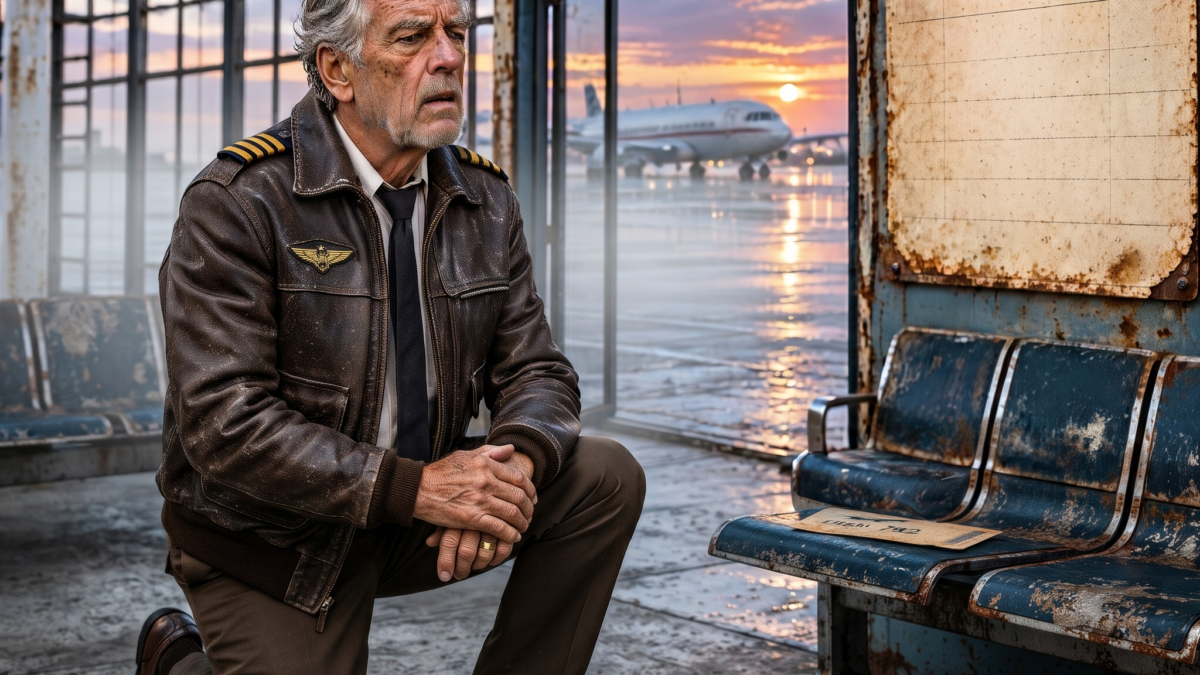
The envelope arrived on a Tuesday.
There was no return address, no stamp from a recognizable city, and no name on the back. It had been slipped beneath the front door sometime during the night, where it lay unnoticed until Maggie found it on her way to the kitchen.
She carried it into the living room.
“Robert? This is for you.”
I was sitting beside the window, reading an old aviation magazine I’d already read twice. The television was on, but I hadn’t been listening.
“Who sent it?”
“There’s no address.”
I took the envelope from her.
It was old-fashioned, the kind made from heavy cream-colored paper. My name had been written in neat black lettering.
ROBERT HAYES.
I turned it over, expecting to find a return address hidden beneath the flap.
Nothing.
“You know someone who writes letters like this?” Maggie asked.
“Not anymore.”
I opened it.
Inside was a single piece of paper and an old boarding pass.
I recognized the flight number before I recognized anything else.
FLIGHT 782.
November 12, 2001.
Seat 12A.
My fingers tightened around the card.
“What’s wrong?” Maggie asked.
I didn’t answer.
The boarding pass carried the airline’s old blue logo, the one they had retired years ago. The paper had yellowed around the edges, but the passenger name was still readable.
ROBERT HAYES.
I read it again.
Then I turned over the separate note.
You were never the one who walked away.
Come to Gate 7 before Friday.
The list is still there.
For a long time, I heard nothing except the clock.
Maggie sat beside me.
“Robert?”
I showed her the boarding pass.
She read the date.
Then she looked at me.
“That’s impossible.”
“Yes.”
“You were the captain of Flight 782.”
“I was.”
“Why does this say you were a passenger?”
I stared at the seat number.
“Because someone wanted the world to believe I had abandoned the cockpit.”
She put the paper down.
“Please don’t start this again.”
I looked at her.
“Maggie, somebody kept this for twenty-five years.”
“Someone could have found it in an archive.”
“Maybe.”
“Or it’s a cruel joke.”
“Maybe.”
She reached for my hand.
“After the hearing, after we lost the house on Lynen Street, you promised me you’d stop digging. You promised we could have a life that wasn’t built around that night.”
I looked at the boarding pass again.
“I know what I promised.”
“Then keep it.”
I folded the note carefully.
“There’s one problem.”
“What?”
“Friday, Victor Ashford is reopening Harlo Field as Ashford International. The old terminal is coming down at dawn. Gate 7 goes with it.”
Maggie closed her eyes.
“Robert…”
“If that list is still there, it’ll be destroyed.”
“And what if it isn’t?”
“Then I lose nothing by looking.”
She held my hand more tightly.
“You’re seventy years old. You lost your license, your pension, our house, and twenty-five years of your life over this. Do you really want to give them another chance to take something from you?”
I looked out the window.
Beyond the garden, the evening sky was turning dark.
“For twenty-five years,” I said, “I’ve been the man who walked away from his airplane. I want to know who decided that.”
Harlo Field had been closed for twenty years.
Once, it had been one of the busiest regional airports in the state. Its departure hall had been filled with families, businessmen, soldiers returning home, and people who stood at the windows to watch the aircraft climb into the sky.
Now weeds grew through the cracks in the tarmac. The terminal windows were boarded up, and a rusting fence surrounded the property. The old control tower stood above the empty runways like a monument to something the world had decided to forget.
I parked outside the main gate shortly after ten.
A security light swept across the road.
I stepped out of the car and walked toward the fence.
“Robert!”
I turned.
A woman stood near a dark sedan. She had been watching me.
For a moment, I thought she might be a reporter. Then she stepped into the light.
“Wait!”
The sedan’s door opened.
She hesitated, then got out.
“Are you Captain Hayes?”
I studied her.
“Nobody has called me that in years.”
She looked at the boarding pass in my hand.
“Then you really came.”
“Who sent this?”
She didn’t answer immediately.
Instead, she looked toward Gate 7.
“Not here. There’s a road behind the maintenance hangar. We can talk there.”
“Who are you?”
“Someone who has waited a long time to meet you.”
I took a step toward her.
She looked frightened.
“I know. I should have introduced myself.”
“Then do it.”
“Emily Carter.”
The name brought back a faint memory.
A little girl.
A red backpack.
A seat near the window.
I looked at her more carefully.
“Emily?”
Her eyes filled.
“You remember?”
I nodded slowly.
“The little girl with the red backpack.”
She smiled.
“I was eight.”
I looked at her for a moment, then shook my head.
“Look at you. You’re grown up.”
“Twenty-five years will do that.”
She reached into her coat and pulled out a small envelope.
“I sent the boarding pass.”
“Why?”
“Because I found something that proves what happened to Flight 782.”
I stared at her.
“Then you’ve been carrying it for a long time.”
“Not nearly as long as you have.”
She glanced toward the terminal.
“Come on, Captain. We have two days.”
November 12, 2001, began like any other working day.
I had been flying commercial aircraft for almost eleven years. Before that, I’d served as a Staff Sergeant with the 82nd Airborne. The Army taught me discipline, but it was the cockpit that taught me how to trust people with my life.
I loved flying.
Not the salary, the hotels, or the attention. I loved the quiet precision of a good flight. I loved the way a cockpit demanded that everyone think clearly, communicate honestly, and respect the limits of the machine.
My first officer that evening was Graham Mercer.
Graham was a good pilot. He was younger than me, quick with numbers, and a little too eager to please the people who signed his performance reviews. He had a wife and two children on the way. He talked about them constantly.
I didn’t mind.
The aircraft was a large passenger jet carrying 140 people. Flight 782 was scheduled to leave Harlo Field shortly after six in the evening.
A group of potential investors were among the passengers.
The airline was preparing for a major sale, and its chairman, Victor Ashford, was determined to show the buyers that his company could deliver a flawless operation.
Victor had a reputation for impatience.
He liked schedules, polished speeches, and people who agreed with him.
He did not like pilots who told him his aircraft was unsafe.
At 4:15 p.m., the passenger manifest was printed.
I didn’t know that at the time.
I was in the operations office reviewing weather conditions and the aircraft’s maintenance records. The flight appeared routine. There were no major weather concerns, no unusual mechanical reports, and no outstanding maintenance restrictions.
Graham joined me carrying two coffees.
“Weather looks clean.”
“Good.”
“Wind’s shifting a little, but nothing serious.”
I glanced at the forecast.
“We’ll be fine.”
He put one cup beside me.
“How are the kids?”
“Growing faster than the bills.”
He laughed.
“That’s what I keep hearing.”
I took a drink and looked toward the terminal.
The aircraft was waiting at the gate.
“Let’s get the walk-around done.”
We headed outside.
The evening air was cold, and the concrete reflected the lights from the terminal. We worked our way around the aircraft, checking the visible surfaces, wheels, landing gear, and access panels.
Everything looked normal until we reached the left main gear.
I stopped.
A dark streak ran down the metal housing.
I crouched.
“Graham.”
He came over.
“What is it?”
I touched the wet surface.
Hydraulic fluid.
A thin drop gathered at the bottom of a fitting and fell onto the concrete.
I shone my flashlight across the assembly.
There it was.
A hairline crack near the hydraulic connection.
It was small enough to escape a casual inspection but serious enough to make the aircraft unsafe.
I looked at Graham.
“Do you see it?”
He crouched beside me.
“That’s a crack.”
“Yes.”
“Maintenance signed it off.”
“Then maintenance missed it.”
He ran a finger near the damaged area.
“That’s not much of a leak.”
I looked at him.
“It’s enough.”
I stood.
“If that line fails under pressure during landing, we could lose braking and steering control.”
Graham’s expression changed.
“You’re sure?”
“Yes.”
I took out my inspection form.
“We’re grounding the aircraft.”
He glanced toward the terminal.
“Rob, we’re already twenty minutes behind.”
“Then we’ll be twenty minutes later.”
“There’s a buyer delegation in first class. Ashford’s been calling the gate.”
“Let him call again.”
I wrote the defect on the report.
At 5:40 p.m., I signed the aircraft out of service.
My name went on the report.
I expected maintenance to inspect the line, replace the damaged component, and arrange another aircraft if necessary.
Instead, I received a call from Victor Ashford.
“Captain Hayes, my office. Now.”
Victor was waiting beside the conference table.
Two executives sat with him. An airline attorney stood near the window.
Victor didn’t offer me a seat.
“Do you understand what you’ve done?”
“I grounded an aircraft with a damaged hydraulic line.”
“Maintenance signed it off.”
“They missed the crack.”
“Do you realize who is sitting in the front of that plane?”
“Passengers.”
Victor’s expression tightened.
“The people evaluating our company.”
“Then they should be pleased we’re taking their safety seriously.”
He stared at me.
“Don’t be clever.”
“I’m not. The aircraft is unsafe.”
He pushed a document across the table.
“Captain Puit will fly the aircraft.”
I looked at it.
“What?”
“You’re being relieved of command.”
“On what grounds?”
“Your judgment.”
“My judgment is that the aircraft needs repair.”
“Your judgment is not the only consideration.”
I looked toward the attorney.
“Are you recording this?”
Victor ignored the question.
“You will be traveling as a passenger tonight. Seat 12A.”
I stared at him.
“You’re assigning me a passenger seat on my own flight?”
“That’s correct.”
“Why?”
“Because I’m the chairman, and I have decided that you’re not fit to command this aircraft.”
I looked at Graham.
He stood near the door, avoiding my eyes.
I turned back to Victor.
“You know that line is cracked.”
He smiled.
“Maintenance says otherwise.”
“Then call them. Have them inspect it again.”
“I won’t be told how to run my airline by a captain who can’t follow instructions.”
I looked down at the document.
The decision was already written.
The replacement captain had been assigned. My crew access had been removed. My passenger seat was listed.
I didn’t sign anything.
Victor leaned closer.
“Do you know what happens to pilots who refuse orders?”
“I know what happens to passengers when pilots ignore defects.”
He said nothing.
I picked up my jacket.
“Captain Puit can sit in the left seat. But the airplane stays grounded until maintenance clears it.”
Victor’s smile disappeared.
“Get out.”
I walked toward the door.
As I passed Graham, he whispered, “I’m sorry.”
I stopped.
“For what?”
He didn’t answer.
I left.
The terminal was crowded.
Passengers were being told about a delay. Some complained; others sat quietly, looking at their watches. The investor delegation stood near the front counter, speaking with airline staff.
I carried my small flight bag.
A little girl sat alone near the window. She had a red backpack and a stuffed rabbit tucked beneath one arm.
She was staring at the aircraft.
I stopped beside her.
“What’s your name?”
“Emily.”
“Are you traveling alone?”
She nodded.
“Where are you going?”
“To see my aunt.”
“That’s a long trip.”
She looked toward the aircraft.
“Is the plane broken?”
I paused.
“There’s a problem we’re checking.”
Her fingers tightened around the rabbit.
“Is it going to fall?”
I crouched beside her.
“No. Not tonight.”
“Are you sure?”
I gave her a smile.
“Pilots get scared, too.”
She looked surprised.
“They do?”
“Of course. The brave ones listen to that feeling. They pay attention, ask questions, and make sure everyone is safe.”
She considered that.
“Are you scared?”
I glanced toward the aircraft.
“Sometimes.”
“Then how do you know what to do?”
“Because being brave doesn’t mean pretending you’re not afraid. It means doing the right thing anyway.”
I took a small pair of pilot wings from my jacket and placed them in her hand.
“Hold on to these for me.”
She smiled.
“Are they yours?”
“They are.”
“Will you come back for them?”
I nodded.
“Yes.”
That was a promise I intended to keep.
I was walking toward the gate when an attendant called my name.
“Captain Hayes?”
I turned.
She handed me a boarding pass.
“Your passenger assignment, sir.”
I looked down.
Seat 12A.
I stared at it for several seconds.
Something about the timing felt wrong, but I was too busy trying to understand Victor’s decision to see the full significance.
I boarded.
I sat by the window.
And I waited.
The flight never took off.
The aircraft remained at the gate while a replacement inspection was arranged. The hydraulic line was eventually declared defective, and maintenance had to replace the damaged section.
The passengers were transferred to another aircraft.
Everyone went home safely.
That should have been the end of the story.
It wasn’t.
The official account appeared within days.
Captain Robert Hayes was removed from command after displaying signs of intoxication and abandoning the flight deck.
The report claimed I had slurred my words, behaved erratically, and left the aircraft without authorization. It said the company had canceled the flight after concerns about my condition.
I had been sober for eleven years.
Nobody cared.
The airline’s internal investigation repeated the accusation. My union representative told me the company had already built its case. The maintenance records showed no defect had been found during the first inspection. Graham signed a statement saying he had observed me behaving strangely.
I tried to appeal.
I submitted my inspection notes, described the hydraulic leak, and demanded that the aircraft be examined independently.
The airline said my report was unreliable.
My hearing lasted less than a day.
My license was suspended pending review.
Within months, it was revoked.
The airline terminated my contract, and my pension was frozen while the company disputed my employment record.
Maggie stood by me through the hearing.
She sat beside me in the courtroom, holding my hand so tightly that I could feel her fingers trembling.
When the decision came down, she didn’t cry.
I did.
The house on Lynen Street was sold to pay our debts.
We moved twice.
My savings disappeared into legal fees.
I tried to find work as a flight instructor, but the record followed me. No airline wanted a captain who had been publicly branded unreliable.
After a while, I stopped applying.
I had spent my entire adult life telling people how to stay safe in the sky.
Now I couldn’t get an interview at a flying school.
Maggie did her best to keep us together.
But there were nights when she sat in the kitchen long after I had gone to bed, staring at the bills.
There were Sundays when I couldn’t bring myself to answer the telephone.
There were years when I believed the world had already decided who I was.
And the world, I learned, has little interest in correcting a story once it has become convenient.
Emily listened without interrupting.
We were sitting in the old maintenance building near Gate 7.
The air smelled of dust and damp concrete. A single flashlight illuminated the table between us.
“You were removed from the cockpit before you found the defect,” she said.
“That’s what I thought.”
“But the official report says you left the cockpit because you were intoxicated.”
“Yes.”
She opened her folder.
“Here’s the original incident review.”
I took the document.
The wording was familiar.
Captain Robert Hayes abandoned the flight deck before departure, displaying signs of intoxication.
Vice President Victor Ashford canceled the flight in the interest of passenger safety.
I read it again.
Then I looked at the signature.
Victor’s.
“That’s the version I’ve lived with for twenty-five years.”
Emily placed another paper on the table.
“Maintenance log. Same date.”
I scanned the page.
“Left main gear hydraulic line inspected. No defect found.”
I tapped the entry.
“That is false. I had fluid on my glove. Graham saw the crack with his own eyes.”
Emily nodded.
“There’s something else.”
She opened a sealed envelope.
“A sworn witness statement. It was never included in the public hearing.”
I read the first line.
I observed Captain Hayes slurring his words and smelling of alcohol. He left the aircraft without explanation.
The signature beneath it belonged to Graham Mercer.
I stared at the name.
“He signed it.”
“Yes.”
“After seeing the crack.”
“Yes.”
I leaned back.
For twenty-five years, I had defended Graham.
He had been young, with children on the way. I remembered the pressure he was under. I remembered the way he avoided my eyes in the corridor after the hearing.
I had told myself he had been frightened.
I had told myself he hadn’t known what to do.
But he had signed a lie that destroyed my life.
“He’s chief pilot now,” Emily said. “He’s been promoted three times in five years.”
I looked at the statement.
“What a career.”
“Robert…”
I folded the paper carefully.
“He named one of his sons after me. Did you know that?”
Emily shook her head.
“His son’s name is Robert.”
I looked toward the dark doorway.
“And Graham stood beside that landing gear.”
She waited.
“He saw the crack with his own eyes.”
Emily’s story began when she was eight.
She had been traveling alone to visit her aunt. Her mother had been delayed by work, and the airline had arranged for her to fly with an escort service.
She was frightened.
She had never flown before.
When I sat with her at Gate 7, she had been shaking so badly she couldn’t fasten her seat belt.
I had shown her how to do it.
Then I gave her my wings.
When the flight was canceled, she had waited for me to come back.
I never did.
She had asked the airline about me, but nobody would tell her anything. Months later, she saw a short article saying the captain had been removed for misconduct.
She didn’t believe it.
“Why?” I asked.
She looked at me.
“Because you didn’t behave like a man who would abandon people.”
I said nothing.
“I remembered what you told me about fear. I remembered you refusing to let the flight leave while something was wrong. I thought if you were the kind of man they described, you wouldn’t have stopped to talk to a frightened child.”
She opened her bag.
Inside was a little plastic case.
The wings were still there.
I picked them up.
“They’re scratched.”
“I kept them in my school bag for years. When I became a lawyer, I put them in a frame.”
She smiled faintly.
“I became an aviation safety attorney because of that night.”
I looked at her.
“Then you came a long way.”
“So did you.”
I placed the wings back in the case.
“Why send the boarding pass now?”
“Because the airline is reopening Harlo Field on Friday. The terminal is scheduled for demolition. I found the document in a storage archive when I was reviewing records related to the redevelopment.”
“You found it in an archive?”
“I found a copy of the passenger manifest first. Then I found a note indicating that the original crew assignment board was stored in the old terminal.”
I looked toward Gate 7.
“The board is still there.”
“Yes.”
“And you think it proves I was reassigned before the defect was discovered.”
“I think it could prove that the company changed your status before the official report says you left the cockpit.”
I looked down at the boarding pass.
“Then we need the original.”
Emily nodded.
“And we need to move fast.”
We went to the regional aviation safety office the following morning.
The director, Diana Collins, had been briefed by Emily. She was a practical woman who didn’t seem impressed by the story until she saw the documents.
She read the incident report, then the boarding pass.
“Seat 12A,” she said.
“Yes.”
“Captain Hayes, were you ever scheduled as a passenger on Flight 782?”
“No.”
“Did you receive a boarding pass?”
“After I was removed from command.”
“At what time?”
“After the defect was reported.”
She turned to Emily.
“Do we know when the manifest was printed?”
“4:15 p.m.”
Diana looked at me.
“You found the crack at 5:40?”
“Correct.”
She set the papers down.
“Then the original manifest could be important.”
“That’s why we need it.”
She folded her hands.
“Photographs won’t be enough to halt a licensed demolition. The company will argue they can be altered. We need the physical document, with the original timestamps and markings.”
I nodded.
“And the original board?”
“If it’s still there, it could establish the sequence of crew assignments.”
She paused.
“Mr. Hayes, I need you to understand something. If we reopen this case, the company will fight hard. There may be consequences for people who helped cover it up.”
“I’m not asking anyone to protect me.”
“What are you asking?”
“To find out whether 140 people were put at risk because a chairman wanted to sell an airline.”
Diana looked at me for a long time.
Then she picked up her telephone.
“I’ll request the demolition permit and the associated records. But you need to bring me that board.”
Emily nodded.
“We’ll get it.”
The first attempt to obtain the evidence ended badly.
We returned to Harlo Field that night.
Security patrols passed the terminal every forty minutes, according to the schedule Emily had found in the demolition paperwork. We had a narrow window to reach Gate 7, locate the board, and photograph its contents.
The old terminal was quiet.
A chain hung from the main entrance, but the rear maintenance door had been damaged by years of weather.
Emily held a flashlight.
“Stay close.”
“I’ve been in worse places.”
“That’s what worries me.”
We moved through the corridor.
Old signs hung above the gates. The departure boards had been removed, and the seats were stacked along the walls.
Gate 7 stood at the far end.
A large glass panel had been boarded over.
I recognized the faded blue line painted across the wall.
This was where I’d sat twenty-five years earlier.
I walked closer.
The memories came back in fragments.
The sound of the boarding call.
The smell of coffee.
Emily’s red backpack.
My own name printed beneath seat 12A.
“Robert.”
Emily pointed toward a storage cabinet.
“Is that it?”
I crossed the room and opened the cabinet.
Inside was an old assignment board covered with paper slips. Most had yellowed and curled at the edges.
I found the flight number.
My name appeared beside the left-seat position.
Then, beneath it, someone had written a reassignment.
I leaned closer.
“There’s more.”
Emily moved the light.
The bottom edge of the document had been folded over.
I carefully lifted it.
A second line appeared.
Crew: reassign Hayes to passenger. Seat 12A.
Manifest printed 16:15.
I stared.
“Four fifteen.”
Emily looked at me.
“You hadn’t found the crack yet.”
“No.”
I ran my finger over the entry.
“He moved me out of the cockpit before I had even begun the final walk-around.”
“That means he planned it.”
I shook my head.
“Not necessarily. But it means the official story is impossible.”
“Why?”
“Because they said I abandoned the cockpit at 5:40. This says I was reassigned at 4:15.”
Emily looked at the board.
“And if Victor ordered it before the defect was reported…”
“He knew there was something wrong before I found it.”
A sound came from the hallway.
“Who’s in there?”
A flashlight beam swept across the wall.
We froze.
“Security! Hands where I can see them!”
Emily grabbed my sleeve.
“Run.”
We moved toward the rear door.
A guard shouted again.
I pushed Emily through the opening and followed.
We reached the fence before the patrol caught up.
She was breathing hard.
“Did you get it?”
I looked at the camera in her hand.
“Yes.”
She opened the screen.
The images were clear.
The original board was still there, and the reassignment entry could be read.
For the first time in twenty-five years, I had proof that the official timeline didn’t make sense.
Victor Ashford heard about the break-in before midnight.
He was in his penthouse office, reviewing the preparations for Friday’s reopening ceremony when his assistant entered.
“Sir, we’ve had an incident at Harlo Field.”
Victor looked up.
“What happened?”
“Security found two people inside the terminal. They escaped, but the cameras captured images.”
He opened the file.
The first image showed me.
The second showed Emily.
Victor leaned back.
“Hayes.”
His assistant remained silent.
“That place has been closed for twenty years. Why is he back?”
“We believe he was looking for the original assignment board.”
Victor turned toward the window.
“That’s impossible.”
“The security team says the board may still be inside.”
He picked up the telephone.
“Get Graham Mercer.”
Graham answered on the third ring.
“Victor?”
“The demolition is being moved.”
“When?”
“Tomorrow night. Thursday. Not Friday morning.”
Graham hesitated.
“That’s two days early. The crews won’t be ready.”
“Pay them double.”
“What about the permits?”
“I’ll handle them.”
Victor paused.
“And if Hayes appears again, arrest him for trespassing. I want the cameras to capture him. Make sure the footage reaches the press.”
Graham’s voice was low.
“You’re certain?”
“Yes.”
Victor ended the call.
He looked at the image of me again.
Twenty-five years had passed.
He had built a business empire on the story that I had been a drunken captain who abandoned his passengers.
Now the old man was back.
Victor smiled faintly.
“Some people simply never learn when they’re beaten.”
The following morning, Maggie found me sitting at the kitchen table.
She placed a cup of coffee in front of me.
Black.
Three sugars.
I looked up.
“Thank you.”
She sat opposite.
“You went to Harlo.”
“Yes.”
“You found something.”
I slid the photographs across the table.
She examined them.
Then she read the line showing the reassignment time.
“Four fifteen.”
“I found the board.”
She looked at me.
“Does this prove it?”
“It proves I was assigned to seat 12A before I found the defect. That contradicts the official report.”
She looked at the photographs again.
“Robert, this could be enough to reopen the case.”
“It will be enough if we find the original.”
Maggie put the photographs down.
“Then go and get it.”
I looked at her.
“You told me to let it go.”
“I did.”
She took my hand.
“Then I remembered how much it cost you to let everyone else tell your story.”
I smiled faintly.
She leaned closer.
“Go finish it.”
We returned to the diner that afternoon.
Henry was sitting near the window.
He had grown older since the first time I spoke to him, but his hands remained steady. He always ordered the same meal and never complained about the service.
The waitress brought two cups.
Black coffee, three sugars for me.
Tea for him.
Henry watched me take the first sip.
“You look tired.”
“Long night.”
“Found something?”
I nodded.
“The original assignment board. It shows I was moved to passenger 12A at 4:15. I didn’t find the hydraulic fault until 5:40.”
He considered that.
“That’s important.”
“Yes.”
He stirred his tea.
“Will it prove who did it?”
“Maybe.”
He looked toward the window.
“Then make sure you do it right.”
I smiled.
“That’s the plan.”
Henry leaned closer.
“There’s something else.”
“What?”
“I’ve been thinking about the house.”
I waited.
“I don’t know whether I can live there alone anymore. The stairs are getting harder. The doctor says I need someone nearby.”
“Have you thought about moving?”
“Not to some warehouse for old people.”
I laughed.
He smiled.
“Maybe a small place near the shop. Somewhere I can still watch the road.”
“I’ll help you find it.”
“Good.”
He took another sip.
“One more thing. When you come home, don’t bring the airport with you.”
I stared at him.
“What do you mean?”
“Your whole life has been spent looking for the next emergency. You don’t have to do that forever.”
I looked down.
“I know.”
“Do you?”
I didn’t answer.
Henry reached across the table.
“Some men are brave in the air. Some are brave in a courtroom. But it takes a different kind of courage to come home and live with the people who saw you fail.”
I smiled.
“You’re getting philosophical.”
“I’m getting old. We have to do something with the extra time.”
That evening, Maggie called me while I was examining the demolition schedule.
“Robert?”
“Yes?”
“I need to tell you something.”
Her voice sounded uncertain.
“What is it?”
“For years, every Christmas, an envelope came to the diner. No name. Five hundred dollars in cash. Postmarked from Harlo Lake.”
I stopped moving.
“Harlo Lake?”
“Yes.”
I looked at the photograph of Graham Mercer.
He kept a boat there.
“How long?”
“Since 2002. Every year.”
“Did you know who sent it?”
“I suspected.”
I leaned back.
“Why didn’t you tell me?”
“I didn’t want you to hate him more.”
I stared at the table.
A man didn’t send money every Christmas for twenty-four years without knowing he owed someone something.
“Did you ever speak to him?”
“No.”
“Did you keep the envelopes?”
“Yes.”
I closed my eyes.
“Maggie, a man doesn’t pay a debt like that unless he knows exactly what he owes.”
She was silent.
Then she said, “I love you, Robert.”
I looked at the empty window.
“I love you, too.”
“Please come home tonight.”
“I will.”
“Keep the porch light on?”
“Always.”
Graham Mercer arrived at my hotel shortly after one in the morning.
I was sitting at a desk with Emily, reviewing the photographs, when the receptionist called.
“There’s a gentleman here to see you. He says his name is Graham Mercer.”
I stood.
“Send him up.”
Emily looked at me.
“Are you sure?”
“No.”
I opened the door.
Graham stood in the corridor.
He looked older than I remembered. His hair had thinned, his shoulders were rounded, and the confidence he’d once worn like a uniform had disappeared.
For a moment, neither of us spoke.
Then he said, “Rob.”
I stepped aside.
“Come in.”
He entered and looked at Emily.
“Ms. Carter.”
She nodded.
“Mr. Mercer.”
Graham sat down.
I remained standing.
“Why are you here?”
He looked at his hands.
“I couldn’t say it in a police station.”
“Then say it here.”
He swallowed.
“I signed the statement.”
I looked at him.
“I know.”
“Victor dictated it.”
“That’s not what I asked.”
Graham lifted his eyes.
“I saw the crack. I was standing beside you. I saw the fluid. I knew the aircraft wasn’t safe.”
I said nothing.
“He told me that if I didn’t sign, I’d lose my job. He said my wife was expecting twins. I had two babies coming, Rob. I was terrified.”
I stared at him.
“You had a choice.”
“I know.”
“You could have told the truth.”
“I know.”
“You could have refused.”
He nodded.
“I know.”
I walked toward the window.
“Did you ever think about the people on that flight?”
“Every day.”
“Did you think about the little girl?”
He looked at Emily.
“Yes.”
“Did you think about me?”
His voice broke.
“Every day.”
I turned.
“Then why did you wait twenty-five years?”
He looked down.
“Because I was a coward.”
The words hung between us.
He reached into his coat and took out a small cloth bag.
“This came off the hydraulic line.”
He opened it.
Inside was a metal tag, bent near one corner, with a faded inspection number.
I recognized it immediately.
The maintenance component number matched the damaged line.
“Victor told me to burn it,” Graham said. “I kept it.”
He placed another item on the table.
A folded sheet of paper.
“The gate printer made carbon duplicates of the passenger manifests. This is the copy of the assignment record.”
I took it.
The time stamp read 16:15.
The reassignment was written beneath it.
Crew reassignment authorized.
Hayes to passenger 12A.
And at the bottom, in blue ink, were Victor Ashford’s initials.
I looked up.
“Where did you get this?”
“I kept it.”
“Why?”
He swallowed.
“Because I knew one day I’d have to tell the truth.”
I studied the document.
“Why now?”
Graham looked at Emily, then at me.
“Last night I watched Victor put you on your knees in the rain. I saw the way he smiled. And I finally understood that I had spent twenty-five years standing beside a man who could destroy someone else’s life without losing a night’s sleep.”
He rubbed his eyes.
“I don’t want to be that man anymore.”
Emily examined the carbon.
“This is admissible if we can authenticate it.”
Graham nodded.
“I can identify the printer. I can testify to the assignment. I can tell the FAA what happened.”
I looked at him.
“You’ll have to say it publicly.”
“I know.”
“Victor will destroy your career.”
“I know.”
“You may lose everything.”
He met my eyes.
“I’ve already lost the only thing that mattered.”
I sat down.
For twenty-five years, I had imagined this conversation.
I had imagined shouting at him. I had imagined demanding that he apologize. I had imagined telling him he had no right to ask for forgiveness.
Now that he was sitting in front of me, I felt only tired.
“Then tell the truth, Graham.”
He nodded.
“I will.”
By morning, Victor knew.
His assistant had received a message from Graham’s office. The chief pilot had canceled his scheduled briefing and left the company grounds.
Victor called him three times.
No answer.
Then he called his security director.
“Find Mercer.”
“Yes, sir.”
“And Hayes?”
“Released on bail at four this morning, sir. The arrest photos from the demolition site are already appearing on local news websites.”
Victor smiled.
“Good. If he comes anywhere near the terminal today, arrest him. He’s violating his bail.”
He looked at the schedule.
The reopening ceremony was set for noon.
The aircraft would be staged outside the terminal. The mayor, press, investors, and representatives from the Federal Aviation Administration would attend.
Victor had prepared a speech.
It was about safety.
About responsibility.
About the difficult decisions that had made his company successful.
He had even included a reference to Flight 782.
“Twenty-five years ago,” he told his assistant, “I saved this company with one signature.”
His assistant nodded.
“Yes, sir.”
“Nobody remembers a cracked hydraulic line. They remember who cuts the ribbon.”
We arrived at Harlo Field shortly before eleven.
Emily had sent the carbon duplicate to Diana Collins, the FAA regional director. She had also delivered the maintenance tag and the photographs.
Diana had confirmed that she would attend.
But there was a problem.
Victor’s security team had been instructed to detain me the moment I entered the grounds.
Emily looked at the entrance.
“We need another way in.”
Graham checked his uniform.
“There is one.”
He was wearing his chief pilot’s dress uniform.
“Chief pilot’s honor guard,” he said. “I’m expected to lead the ceremony.”
He looked at me.
“And I can bring a guest.”
I glanced at the uniform.
“I haven’t worn one in twenty-five years.”
“Then it’s time.”
He handed me a clean airline jacket.
The wings on the chest were old, but polished.
I looked at them.
“I don’t know if I can wear these.”
Graham’s expression tightened.
“You earned them twice.”
I put on the jacket.
We walked toward the entrance.
The security guards checked Graham’s identification and opened the gate.
Nobody stopped me.
For the first time in twenty-five years, I walked into Harlo Field wearing a captain’s uniform.
Victor stood on the stage beneath a large banner.
The words ASHFORD INTERNATIONAL—A NEW ERA OF AVIATION stretched across the backdrop.
He welcomed the guests and praised the redevelopment.
Then he began talking about Flight 782.
“Twenty-five years ago, an incident occurred at this airport that tested our company’s commitment to passenger safety. A captain made an unacceptable decision, and our organization responded with caution.”
I stood at the rear of the crowd.
“That decision shaped our future,” Victor continued. “We canceled the flight, protected the passengers, and created a standard that has guided our operations ever since.”
He paused for applause.
Then he said my name.
“Captain Robert Hayes was involved in that incident. His actions were unfortunate, but they reminded us of the importance of responsibility.”
I stepped forward.
“That’s not what happened, Victor.”
The crowd turned.
Victor’s expression hardened.
I walked toward the stage.
“My name is Robert Hayes. I was the captain of Flight 782. And I never abandoned anything.”
A murmur spread across the audience.
Victor forced a smile.
“Ladies and gentlemen, this is Robert Hayes, the former captain I mentioned. He’s had a difficult time since the incident.”
He leaned toward the security staff.
“Remove him. Quietly.”
Graham stepped beside me.
“He’s on my crew list. He stays.”
Victor stared.
“What are you doing?”
Graham turned toward the audience.
“You want to know what Victor Ashford stands for? Look at the aircraft parked outside on the tarmac.”
The crowd began to move.
Victor raised his voice.
“Everyone, please remain seated. This is a personal matter.”
Diana Collins stood.
“Mr. Ashford, I would like to hear what Captain Hayes has to say.”
Victor stopped.
Graham took the microphone.
“My name is Graham Mercer. I was first officer on Flight 782. In 2001, I signed a statement saying Captain Hayes was drunk and had abandoned his post.”
He paused.
“That statement was a lie.”
The crowd went silent.
“Victor Ashford dictated it. I saw the damaged hydraulic line. I knew the aircraft was unsafe. And I helped him bury the truth.”
Graham held up the metal tag.
“This came from the landing gear assembly. Victor knew the line was cracked nearly two hours before Captain Hayes discovered it.”
He placed the carbon duplicate on the table.
“At 4:15 p.m., the manifest was printed with Captain Hayes reassigned to passenger seat 12A. He did not find the hydraulic fault until 5:40. The official report says he abandoned the cockpit after the defect was reported. This document proves he had already been removed before he ever discovered it.”
Diana took the document.
She examined the time stamp, the initials, and the printer markings.
Then she turned toward Victor.
“Mr. Ashford, these initials appear to be yours.”
Victor laughed.
“It’s a forgery.”
Graham shook his head.
“No. I watched you write them.”
Victor pointed at him.
“He’s a bitter former employee. He’s lying because he’s angry.”
Graham stood straighter.
“Then let the investigation prove it.”
Diana turned toward the press.
“This evidence will be referred to the Department of Justice. We will also reopen the 2001 investigation into the safety records, witness statements, and actions taken by airline management.”
Victor’s face changed.
The crowd began speaking all at once.
I looked at him.
“Twenty-five years, Victor.”
He glared at me.
“What do you want?”
“The truth.”
“You destroyed your own career.”
“No. You did that.”
He moved closer.
“It was one flight, Hayes. One night. Nobody even got hurt.”
I stared at him.
“Nobody got hurt because I refused to sit down.”
The ceremony was suspended.
The press followed us toward the aircraft.
Diana ordered the relevant records preserved and initiated an emergency safety review of the redevelopment site.
I remained on the tarmac while Graham spoke with investigators.
The old terminal stood behind us.
For twenty-five years, I had imagined seeing it again. I had pictured walking through Gate 7 and finding someone waiting to apologize.
Instead, I had found a paper trail.
A metal tag.
A carbon copy.
And a man finally willing to admit what he had done.
Diana approached me.
“Captain Hayes.”
I turned.
“Yes?”
“Every adverse finding against you from 2001 is being vacated pending the reopened investigation. The airline’s new board has been notified. Your license status will be reviewed.”
I nodded.
“Thank you.”
She hesitated.
“There is something else. The company has approved a settlement covering your lost pension and back benefits, subject to the final findings.”
I looked away.
She continued.
“It’s substantial.”
I didn’t ask how much.
“For twenty-five years, I’ve been told that money was the problem.”
“I understand.”
“I spent six years sending money home. I lost the house. I lost my career. I lost people I thought would stand by me.”
Diana nodded.
“Then I hope this helps.”
“It will help.”
I looked toward Maggie.
She stood near the fence, watching me.
“But it can’t give me back the years.”
Diana lowered her head.
“No. It can’t.”
Graham came over later that afternoon.
The investigators had finished taking his initial statement.
He looked exhausted.
“I’ll surrender my license,” he said.
I frowned.
“Why?”
“Because I lied under oath. I was the reason the jury believed the report. Whatever happens next, I deserve to face it.”
I studied him.
“That’s between you and the board.”
“I know.”
He hesitated.
“There’s one more thing.”
“Go on.”
“My son Robert wants to meet you.”
I looked at him.
“Why?”
“He knows I named him after you. He found out about the case when he started studying aviation. He asked why I had never told him.”
I said nothing.
Graham took a breath.
“He wanted to apologize for his father.”
I shook my head.
“Don’t make your son carry your guilt.”
“I won’t.”
“Teach him what you failed to teach yourself.”
Graham nodded.
“What’s that?”
“That a good pilot doesn’t save a schedule. He saves the people on the plane.”
Graham looked down.
Then he extended his hand.
I shook it.
It was not forgiveness.
Not yet.
But it was a beginning.
That evening, Maggie and I drove toward Lynen Street.
The house was gone. Another family lived in the property now, and the old porch had been rebuilt. But I could still remember where the light had hung above the door and the small garden Maggie used to tend.
She rested her hand on my arm.
“The airline’s new board called.”
I looked at her.
“What did they say?”
“They want to meet with you. They’re considering reinstating your license, with a formal public correction.”
I looked toward the road.
“After twenty-five years.”
“Better late than never.”
I smiled faintly.
“You’re starting to sound like Henry.”
She laughed.
“Maybe I learned from the best.”
We drove in silence for a while.
Then she said, “We could buy the house back.”
I turned.
“The one on Lynen Street?”
She nodded.
“The porch. The garden. The kitchen with the awful cabinets.”
I smiled.
“You hated those cabinets.”
“I still do.”
“Then why buy the place?”
“Because we lost it. And because I want somewhere that feels like home again.”
I looked at her.
“Let’s think about it.”
She leaned against the seat.
“That’s all I wanted.”
The next week, I visited the hospital to see my father.
Henry was sitting beside the window, drinking coffee from the old thermos.
He looked up when I entered.
“There’s my captain.”
I smiled.
“Nobody calls me that anymore.”
“Then they’re wrong.”
I sat beside him.
He studied the uniform jacket.
“Looks good.”
“Thank you.”
“Did you get your wings back?”
I glanced down.
“Not officially.”
“Well, they’re on your chest.”
He reached into his coat and handed me a small box.
“What’s this?”
“Open it.”
Inside was a photograph of me at the old shop, taken when I was about seventeen. My father stood beside me with one hand on my shoulder. I was holding a wrench and smiling at the camera.
I stared at it.
“I haven’t seen this in years.”
“Your mother took it.”
He looked toward the window.
“You want to know something?”
“What?”
“I knew it was you on Thanksgiving.”
I smiled.
“I know.”
“I knew from your voice. And the way you held the coffee cup.”
He leaned back.
“Your mother would have known, too.”
I looked down.
“Why didn’t you say anything?”
He smiled faintly.
“Because you were trying to find out who still loved you when you had nothing.”
I took his hand.
“And what did you find?”
He looked at me.
“Your father.”
I laughed softly.
Then I bent and kissed his forehead.
Emily called me a month later.
The aviation inquiry had been reopened, and the company had begun correcting its public statements.
The original report was now formally disputed.
The maintenance records were under federal review. Victor Ashford had resigned as chairman and was facing investigation for falsifying safety documents, obstruction, and the destruction of evidence.
Graham had surrendered his license pending disciplinary proceedings.
The new airline board issued a public statement acknowledging that the earlier findings against me had been unsupported by the evidence now recovered.
My name was cleared.
The settlement came through shortly afterward.
Maggie stared at the figures.
“We can buy the house back.”
I smiled.
“And the shop?”
“Henry wants it open again.”
I shook my head.
“That old man is never going to retire.”
She laughed.
“Would you?”
I looked at the framed pilot wings on the wall.
“I might fly again.”
She reached for my hand.
“Would you want to?”
I considered it.
For years, I had thought I wanted the cockpit back.
Now I wasn’t so sure.
“I’d like the choice.”
“Then that’s what we’ll fight for.”
The airline held a small ceremony at Harlo Field after the investigation was completed.
The old terminal had been preserved while the legal proceedings continued. Gate 7 remained standing, and a plaque had been placed beside the entrance.
It did not mention Victor.
It did not mention the company’s sale.
It carried the words:
For the passengers and crew of Flight 782, and for the captain who refused to compromise their safety.
I stood before it with Maggie beside me.
Emily was there, holding the little case that contained the pilot wings I had given her when she was eight.
Graham stood several feet away.
Diana Collins approached the microphone.
“Captain Robert Hayes, the Federal Aviation Administration has concluded its review of the 2001 incident. The official findings against you have been vacated. Your actions on November 12, 2001, are recognized as an appropriate safety decision under the circumstances.”
She handed me a document.
I took it.
For a moment, I could not speak.
Then I nodded.
“Thank you.”
The crowd applauded.
Maggie squeezed my hand.
Emily stepped forward.
“Captain.”
I turned.
She opened the small case.
“You asked me to hold on to these.”
The pilot wings lay inside.
“That was twenty-five years ago,” she said. “I think you’ve come back for them.”
I looked at the wings.
Then at her.
“You kept your promise.”
She smiled.
“And you kept yours. You came back.”
I picked up the wings and pinned them to my jacket.
Graham approached.
“Looks right.”
I looked at him.
“Thank you.”
He nodded.
His son stood beside him.
A young man with dark hair and bright eyes.
“This is Robert,” Graham said. “My son.”
The boy extended his hand.
“Captain Hayes. It’s an honor.”
I shook it.
“Good to meet you.”
He glanced at the wings.
“My father told me about you.”
“Did he?”
“He said you were the best pilot he’d ever flown with.”
I looked at Graham.
He lowered his eyes.
I smiled at the boy.
“Then make sure you become a better one.”
He laughed.
“I’ll try.”
That evening, Maggie and I walked toward the old terminal.
The sun was setting behind the runway. The airport lights were beginning to glow, and somewhere in the distance an aircraft climbed into the sky.
She took my hand.
“Do you regret coming back?”
I looked toward Gate 7.
“No.”
“Even after everything?”
“Especially after everything.”
She rested her head against my shoulder.
“For twenty-five years, I thought honesty cost you everything.”
I looked down at her.
“It cost us a lot.”
She nodded.
“But it didn’t cost us each other.”
I smiled.
“No. It didn’t.”
I looked toward the runway.
For twenty-five years, I had believed my life had ended in that airport. I’d thought I had lost my wings, my reputation, and the future I had spent decades building.
But the truth was different.
The airplane had never left the ground.
The passengers had all gone home.
A little girl had kept a pair of wings.
A first officer had carried a guilty secret.
And a captain who had been told he abandoned his post had never stopped standing by it.
I squeezed Maggie’s hand.
“Fly safe,” she whispered.
I smiled.
“Always.”
“Then come home.”
I kissed her forehead.
“Every time.”
For the first time in twenty-five years, I looked at Gate 7 without seeing the night I lost everything.
I saw the beginning of the truth.
And I finally understood something I should have known all along:
A good captain never leaves the people entrusted to him.
Not in the cockpit.
Not in the storm.
And not when the world decides to call him a coward.
I had come home.
And this time, I wasn’t leaving.