Part 3: Alone at a Frozen Motel, She Found Something Behind the Closet Wall
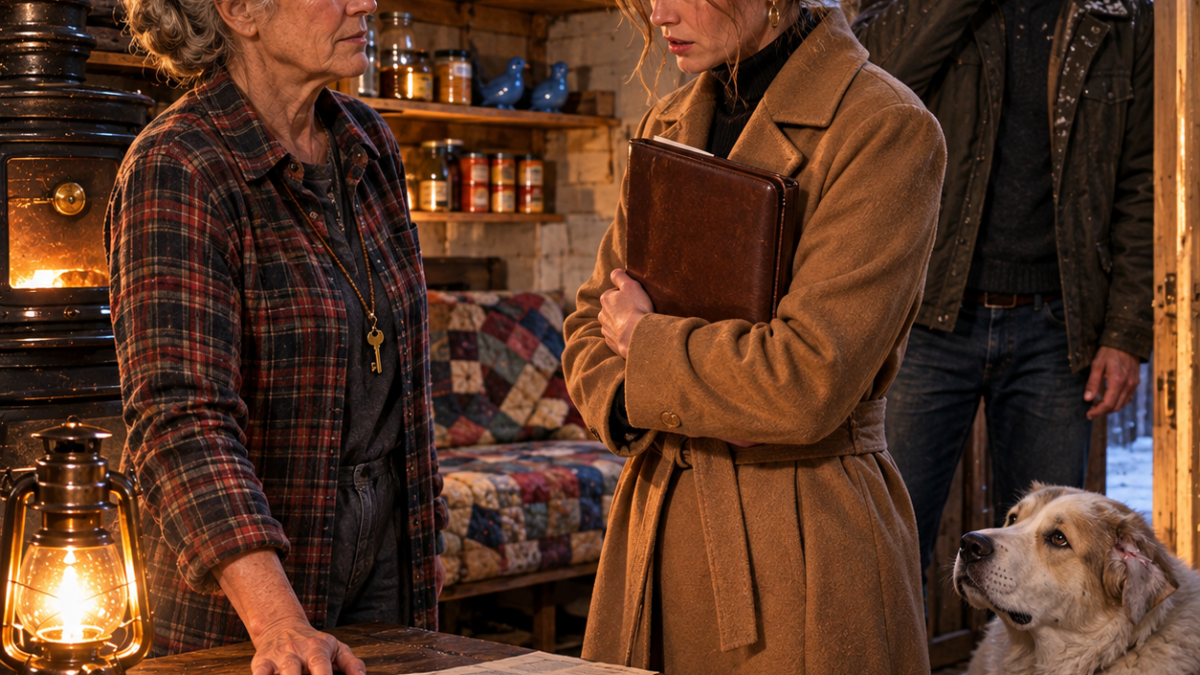
You put a paper on my counter, she said to Shelby. That would have handed this motel to those people with all its contents.
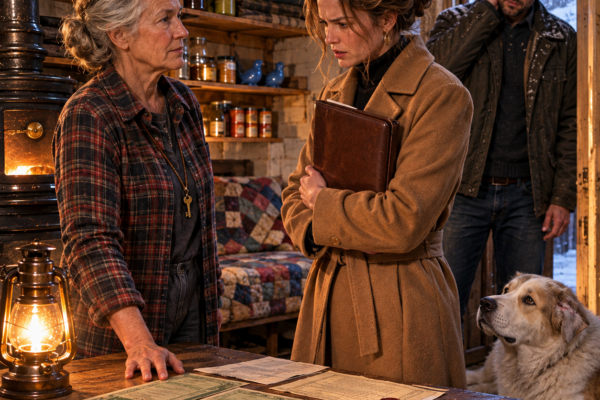
Id like you to see what you were about to give away. She unlocked the padlock and swung the plywood panel open and switched on the battery lantern, and the light went down the long corridor and along the racks.
38 pale shapes standing in a row in the dark. She unwrapped the first one, the neon bird over the snow, and held the lantern so they could see it.
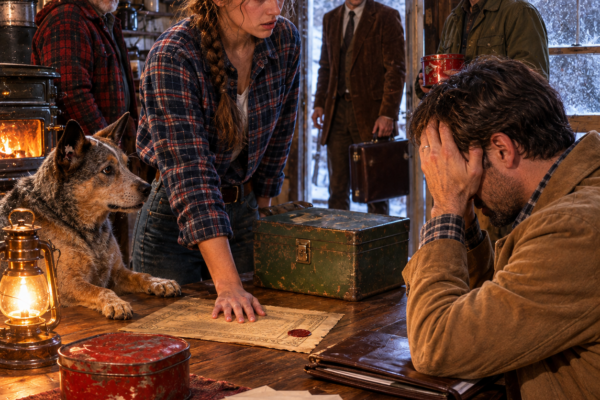
Then she put the black ledger in Shelbys hands, open to February 11th, 1966. A curator from the state museum walked this corridor yesterday.
Lorna said she had a number for it.
I wont say it out loud. I dont think any of us needs to hear it.
That book is 212 nights my aunt took in strangers off this road and never charged a dollar. The man who painted these was the fourth name in it.
Shelby sat down on the edge of the cot with the ledger open on her knees. She turned one page and then another slowly reading the names.
Her hands had begun to shake again, though the room was warm.
When she spoke, she spoke to the book and not to Lorna. My father left when I was nine, she said.
We lived in a trailer out past the county line where the power company cut us off every January, regular as the calendar, and my mother sat up nights in her winter coat at the kitchen table doing sums on the backs of envelopes. I swore I would never be the poor one in any room again.
The shop was supposed to prove it.
When it started going under, I couldnt tell Travis. And then Id already taken your money.
And then I took their deposit.
and every lie needed a bigger one standing under it to hold it up.
I told myself you were tough. I told myself youd be fine up here for a few weeks.
I knew exactly what I was doing, Lorna. I just couldnt stand the other thing.
The stove ticked. Pilot lifted her head from her paws and looked at Shelby and put it down again.
I believe you, Lorna said.
That doesnt make it all right.
I know it doesnt.
Then we understand each other, Lorna said. And that was all she said because it was all that was true yet.
Travis had not sat down.
He was standing by the shelf with the lamp on it, looking at the blue bird with the whole beak, and after a while he reached into the inside pocket of his coat and brought out something wrapped in a faded dish towel and held it out to his mother without a word. Lorna knew it by the weight before she unwrapped it.
the size of a hens egg, three tiny holes in its head, a chipped beak. I took it out of the yard sale box, Travis said.
His voice was low and rough.
Twice it kept going back in.
The second time I put it in the glove box, and its been there since Christmas.
Dads letters are in the trunk of the car, under the spare, the whole shoe box. I didnt let them go to the dump.
He rubbed the back of his neck.
I should have said something in that doorway.
I knew not all of it. Enough.
I keep thinking about you standing on that step.
Lorna looked at her son for a long moment.
Then she stood up and set her bird on the shelf beside Winnies, the chipped one and the whole one side by side for the first time in 48 years. Im glad you kept it, she said.
Im still waiting on the rest of you. He nodded slowly, as if that was the most he had hoped for, and it was more than he had expected.
The storm blew all night. They slept the way people sleep in a shelter, in pieces, in their coats, under every blanket Winnie had stacked.
Lorna took the cot. Travis lay on the floor by the stove and got up every 2 hours to feed it without being asked.
Shelby sat up against the chimney with the black ledger on her knees and the lamp turned low reading. And sometime in the small hours, when the wind was at its worst, and the whole motel groaned around them, the big white dog got up from beside the door and walked over and lay down across Shelbys feet.
Shelby looked down at her. Then she put one hand slowly into the thick fur and left it there until morning.
The wind dropped before dawn.
By 10, the sky was hard and blue, and the cold was so deep the snow squeaked. A little before noon, Lorna heard the scrape of a plow blade coming up the pass, and then a horn, three long blasts, and when she went out through room six into the blinding white, there was Odell Fisk in his red cap, climbing down from his truck with a shovel in his hands and his face wet, saying, I said backroomed hold, I said it.
It took him an hour to dig out the car. What came after came slowly, the way true things usually do.
Shelby paid back what she could of the resorts deposit by selling every last thing in the shop, the linen and the candles and the painted signs. And when the resorts lawyers began writing about fraud and about three green cards with her signature on them, she signed over her car and the last of her savings to settle it before it ever reached a courtroom.
In March, the shop closed for good.
She and Travis moved into a small apartment over a bakery in the valley.
Travis came up the pass alone on a Saturday in February and sat at the office counter and signed a promisory note that Priscilla Vin had drawn for $186,000 to be repaid to his mother a little every month for as long as it took. Lorna accepted it.
She did not tear it up and he did not ask her to. In April, a letter came from Shelby.
It was not a defense.
Lorna read it twice and put it in the drawer under the counter, and she did not answer it that spring, and she did not throw it away.
Harriet Lindquist came back in March with a truck and two men in white gloves. The state museum bought two of the paintings, a large one and a small one, for enough to put a new roof on Whipperwill Court, and new wiring, and a furnace in every unit, and new glass tubes in the bird on the pole.
35 of the others went to the museum on a long loan to hang together in one room, with Emils letters in a glass case, and the black ledger open beside them to February 11th, 1966.
Lorna kept one, the first one. The neon bird over the snow, hung above the oak counter in the office, where anyone who checked in could see it.
Whipperwill Court opened again in the second week of October, 22 years after it had closed, with a small handlettered card taped beside the register. Storm nights, no charge.
Odell sent up a pie every Thursday, whether anyone had ordered one or not.
Pilot filled out over the summer into a great white cloud of a dog with an opinion about every car that came up the pass, and she still slept every night across the door of the hidden room, which Lorna kept stalked to the ceiling the way it had been stocked for her. A year went by.
On the 9th of January, at a little after 4:00, with the light going blue at the edges of the snow and the thermometer by the office door reading 4° above zero, Lorna Beckett walked out to the base of the sign the way she did every evening, and opened the gray metal box on the pole and threw the heavy switch.
The bird buzzed and stuttered, and then bloomed pink and blue against the dark spruce.
She was still standing there with her hand on the switch when pilot came to her feet on the step, every muscle gone still, looking down the road.
Somebody was walking up out of the last switchback. A young woman, thin, in a green rain jacket far too light for the mountain, with soaked canvas sneakers and a cardboard box held against her chest, tied with twine.
Behind her, far down the grade, the headlights of a small car pointed crooked into a ditch.
She stopped at the edge of the lot under the light and stood there with the snow coming down on her hair, the way a person stands when she has used up the last of what she had, and is not sure the next door will open.
Lorna knew that face.
She had worn it on this same step one year before to the day.
She went down across the lot through the snow and took the cardboard box out of the girls arms.
Im Lorna, she said. Youve had a long day.
Theres a fire in the office and soup on the stove, and you dont have to tell me one thing about any of it until you want to. Im Callie, the young woman said.
Her teeth were chattering. My car went off the road.
I dont have much money.
I saw the light.
Thats what its for, Lorna said. She took her inside and sat her in the rose armchair by the stove, which had held a great many people by then, and put a bowl of soup in her hands and a quilt over her knees.
Pilot lay down across her soaked sneakers without being asked.
Callie looked up at the painting over the counter, the neon bird blazing through the falling snow, and then out the window at the real one, and back again.
Lorna took a key off the board of brass hooks and set it on the arm of the chair. It had a paper tag on it in her own hand now.
Six. That rooms been kept, she said.
Its yours tonight and tomorrow night and as long as you need it. In the morning, a man named Odell will come up with a plow and a pie, and hell get your car out of the ditch, and you can trust him with anything except a secret about pie.
Callie laughed.
a small surprised sound and then put her face down over the soup for a moment. And Lorna looked away to give her the moment, the way someone had once looked away for her.
Why do you do this? Callie asked finally.
You dont even know me.
Lorna looked out the window at the bird on its pole, pink and blue over the white lot and the dark road going down.
A long time ago, somebody kept a light on up here for me, she said.
every night for years without knowing if Id ever come.
So, we leave it on. Theres always somebody still out on the road.
Tonight, it happened to be you. Outside, the snow kept falling through the colored light.
On the windowsill above the counter, the two bluebirds sat side by side, one chipped and one hole.
Pilot sighed and settled her head on her paws by the door, and the light at the top of the pass stayed on all night