Alone on a Freezing Farm With Nothing Left. Then She Opened the Grain Bin Floor
Alone on a Freezing Farm With Nothing Left. Then She Opened the Grain Bin Floor
At 19, Josie Carver had learned to stop asking for things back. When her older brother drove her onto the frozen plains in January and called their grandfathers farm a fresh start, she only nodded.
Then Dale held out his hand for her phone.
He took the keys to their mothers car, the $2,300 she had saved from two years of waiting tables, and the tin of recipe cards in their dead mothers handwriting, and he drove away without once looking back. The nearest town was 14 miles of snow away.
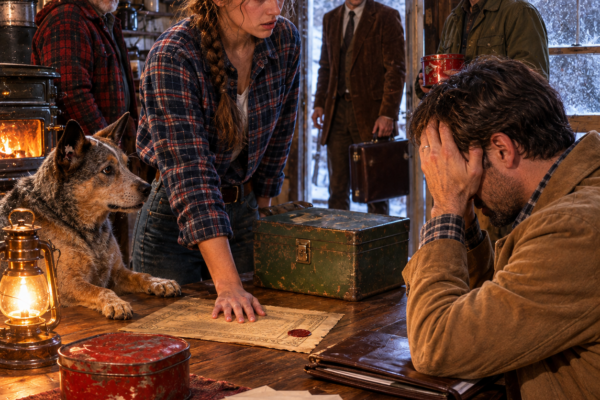
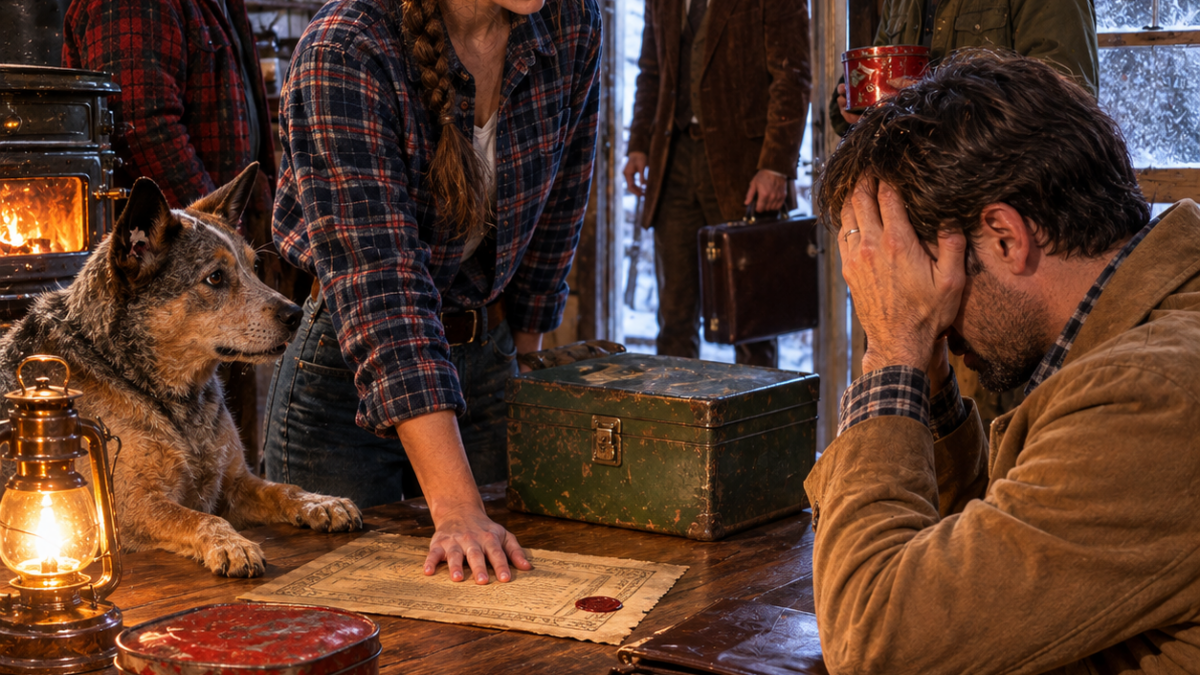
On the second evening, a starving dog led her into an empty grain bin, and the floor rang hollow under her shovel.
Beneath the old corn was a door, and beneath the door was a room her grandfather had built for the hard year, a room her brother had spent three months hoping she would never find.
The drive out took most of a gray Thursday. Josie rode in the backseat of a small gray sedan that belonged to Dales wife, her two duffel bags beside her.
For 11 years, Dale had driven a white work truck with his name painted on both doors, and he had loved it the way some men love a dog. When she asked where it was, he said he was between trucks.
He said it fast, and he did not look at her.
The highway gave way to a county road, and the county road gave way to gravel running straight west through country so flat and white that the sky seemed to begin at the ditches.
Its a real chance for you, Dale said somewhere past the second hour. He drove with one hand and held his coffee with the other, and every so often he glanced at the gold watch on his wrist.
A place of your own, no rent.
You can get your head straight out here. Its grandpas place, Josie said.
Its moms estates place now, which makes it partly yours. Somebody ought to keep it from going to ruin.
Its what mom would have wanted.
He used the voice he had for eight months since the funeral, since he had become the executor and the one who knew what the papers said.
It was a patient voice, the voice a man uses on a horse he has already decided to sell. Nobody could argue with that voice because it never quite said anything you could take hold of.
Travis said nothing.
He sat up front with his green knit cap pulled low and his hands deep in the pockets of his olive jacket, watching the fence posts. He was 29, five years younger than Dale and 10 years older than Josie.
And in eight months she could count on one hand the sentences he had spoken to her.
The farm came up out of the white slowly. First the windmill, a thin steel cross against the clouds.
Then the bare cottonwood.
Then the house. Two stories of white clapboard gone gray where the paint had peeled, with a sagging porch, five wooden steps and a tin roof dusted with snow.
Beyond it stood three round steel grain bins and a weathered machine shed.
And beyond those was nothing. 320 acres of snow running flat to the edge of the sky.
Josie had spent six summers here, from the year she was five until the year she was 10.
Then her mother had stopped bringing her.
Grandpa doesnt want the bother of you anymore, her mother had said once, folding towels, not looking up. That was the whole explanation.
Josie had carried it for nine years like a small flat stone in her pocket. They carried her bags up the steps.
The front door stuck and Dale put his shoulder to it and it opened on a smell of cold dust and old wood smoke. The kitchen was the way she half remembered it.
The cream enamel cook stove, the oak table and two chairs that did not match, the faded yellow wallpaper.
Frost had grown in feathers across the inside of the window.
The power had been shut off after their grandfather died 22 months ago. Theres wood in the shed, Dale said.
Grandpa always kept a years worth.
You know how he was. I dont actually, Josie said.
Nobody let me. Dale let that go past him.
He held out his hand. Ill need the phone.
The plans on my account and Im canceling it Monday. Theres no signal out here anyway.
Well hold it for you.
She gave it to him. She did not know what else to do with the moment.
And the car keys? The cars in moms name, so it belongs to the estate and the estate has to sell it.
Im not doing this to you.
Its the law. She gave him the keys.
Then he reached into the side pocket of her duffel bag and came up with the brown envelope. She had not known he knew where it was.
It held $2,300 in small bills, tips from two years of carrying plates at the truck stop on the interstate, and she had counted it every Sunday night since she was 17. Thats mine, she said.
I earned that. And youll get every dollar back.
But youre not keeping that much cash in an empty farmhouse. Ill put it in the bank for you.
Its the responsible thing. The responsible thing.
She would hear that phrase for a long time afterward, the careful weight he put on it, as though responsibility were a coat he had been kind enough to lend her.
Last he picked up the tin. It was a square red cookie tin dented at one corner, and inside it were 90 some recipe cards in their mothers round, slanted hand, pie crust and chicken and dumplings and the lemon bars she made every Easter with notes in the margins.
Josie likes this one.
Dale, we divide moms things fair, all three of us, when the estate closes. Travis and I have a claim too.
Well keep it safe.
She looked at Travis. Travis was looking at the floor.
He opened his mouth once and closed it again, and he turned and went out to the car.
That was the part she would turn over in the nights to come, not Dale.
She had known what Dale was for a long time. It was Travis, walking out without a word while their mothers handwriting went out under their brothers arm.
She followed them onto the porch.
The cold struck her like water. It was 9° and falling.
Ill come check on you, Dale called. Couple of weeks, well get the estate papers sorted out.
The little gray car backed around and went down the lane with its exhaust hanging white in the still air.
Josie watched the red tail lights shrink along the mile and a half to the county road and turn east and go.
It did not stop. Neither of them looked back.
Then there was only the wind in the dead cottonwood and the creek of the windmill against its break.
She did not cry. There was no heat in her to spare for it.
She went inside and made herself think because feeling was not going to light a stove. The woodshed was full, split oak and ash stacked chest high and bone dry with a hatchet sunk in the chopping block.
On a nail by the door hung a coffee can of kitchen matches. She counted them with the wind at her back.
22. She carried in kindling and splits.
She twisted old newspaper the way she remembered her grandfather twisting it, tight in the middle and loose at the ends. The first match went out in the draft.
The second died on the kindling. She sat back on her heels and made herself slow down.
She opened the damper all the way and built the kindling into a small tent with room underneath for air.
The third match caught. The fourth she held to the far side and the flame climbed and a split of ash took and the stove began to tick.
She put 18 matches back in the can and set it on the warming shelf where she could see it.
By dark she had the kitchen above freezing and a kerosene lamp burning, lit from a splinter so she would not spend a match. The pantry held a sack of flour gone to weevils, salt, a tin of coffee, and six jars of home-canned peaches and beans, dated in pencil in her grandfathers square capitals.
She had a sleeve and a half of crackers in her bag.
She ate six of them and dragged a mattress down beside the stove and slept in her jacket and boots under two quilts that smelled of cedar.
The thermometer outside the window read six below zero. In the morning, the sky was scrubbed hard and blue to the edge of everything.
The stock tank by the windmill had frozen 4 in deep. She broke through it with the back of the hatchet and carried the black water to the house to boil.
On her way back from the woodshed, she heard the sound from the machine shed, a thin whimper cut off short. Inside, it was dim and smelled of old grease and hay.
A red tractor sat on flat tires.
In the gap between a stack of feed sacks and the back wall, curled tight against the cold, was a dog. He was young, not much more than grown, a red heeler mixed with a speckled copper coat and a white blaze on his chest.
The tip of his left ear was torn.
His ribs showed in long, hard lines.
He lifted his head and looked at her with bright amber eyes, and he did not growl, and he did not run. Hey, Josie said softly.
Hey there. She had eight crackers left.
She knelt and set four on the concrete and waited.
The dog unfolded himself stiffly and came forward and took them one at a a time, gently. She set down the other four.
They were the last food she had that did not come from her grandfathers shelves. She did it anyway, without really deciding to.
When they were gone, the dog sat down against her knee and leaned his thin weight into her and let out a long, shaking breath.
That was that.
They had decided about each other.
He followed her to the house and lay down in front of the stove as though he had done it a thousand times.
named him Scout that afternoon because he went ahead of her everywhere she walked, checking the ground.
She opened a jar of peaches, half for him and half for her, and felt the arithmetic settle into her stomach. Five jars left, 18 matches, 14 miles.
In the late afternoon, when she went for wood, Scout went the other way.
He crossed the yard to the oldest grain bin, the one nearest the house, and began to dig at the snow along its base. Then he ran to its small, square side door and scratched and looked back at her.
She went because the light was going and there was nothing else to do.
The door was held by a bent nail through a hasp. It groaned open on a dim, round room 18 ft across, ribbed steel walls streaked with rust, a thin shaft of late sun falling from the roof vent.
The floor was covered with a shallow layer of old yellow corn, dry as paper.
A scoop shovel leaned against the wall.
Scout went straight to the center and dug.
Theres nothing there, Josie said, and she brought the shovel down to push him gently aside.
The sound it made was wrong. It was not the flat crack of steel on concrete.
It was a deep, hollow boom that rolled around the curved walls and came back to her, the sound of a floor with nothing under it. She struck a foot to the left, hollow.
A foot to the right, hollow.
Near the wall, only the short, hard knock of concrete. She shoveled the corn back toward the walls while Scout danced around her feet, and the dust rose gold in the last light.
Under the corn was a floor of heavy dark planks, and in the center of them, cut so clean the line was almost invisible, was a square seam, three feet on a side, packed with dirt to hide it. Set flush into one edge, lying in a notch so no boot would ever catch it, was a black iron ring.
People did not cut a door into the floor of a grain bin for nothing, and they did not bury it under corn and walk away. Josie knelt and hooked two fingers through the ring.
The iron was so cold it burned. She braced her other hand and pulled, and the dirt cracked along the seams, and the square of wood lifted with a long, low groan.
Air rose past her face, dry and still, smelling of earth and old paper and faintly of kerosene.
Below her, a wooden ladder went straight down into the dark.
Scout went first. He did not wait for her.
He put his front paws on the top rung, thought better of it, and scrambled down the ladder in a clatter of claws the way a dog goes down a steep bank, and she heard him land and sneeze and then go quiet, the particular quiet of a dog with his nose to the ground. Josie ran to the house for the lamp and carried it back cupped against the wind, and when she knelt at the hatch again, her hands were shaking so badly the flame shook with them.
Nine rungs.
She counted them because counting was something to hold on to.
At the bottom, her boots touched concrete, swept clean. She lifted the lamp.
It was a room, a real room, 10 feet one way and 12 the other, with walls of poured concrete and a ceiling of heavy timbers that held up the floor of the bin above. It was dry.
It was dry the way a closet in a good house is dry, and it was not warm, but it was not the knife-edged cold of the world upstairs either.
It was the still, steady cold of the ground itself, the cold of a place the wind had never touched.
Plank shelves ran along three walls from the floor to height of her shoulder, and every shelf was full.
There were glass jars, dozens and dozens of them, green beans and tomatoes and peaches and pickled beets and corn. Each lid wiped clean and dated in pencil in the same square capitals she had seen in the pantry.
There were tins of coffee and lard, cans of beef and soup stacked in pyramids.
A sack of rice hung out of reach of mice, candles, four boxes of matches still sealed in paper.
Wool blankets lay folded in a cedar chest. Against the far wall stood an old round kerosene heater and beside it three red five-gallon cans.
Josie stood in the middle of it with the lamp in her hand and did not move for a long time.
An hour ago she had been counting peaches.
Now she stood in a room that could keep a family through a winter and her eyes were stinging and she did not understand any of it. Scout came and leaned against her leg.
She put her free hand on his head. Okay, she said.
Her voice came out strange in the small room.
Okay. It was Scout who found the beam.
He had gone to sniff along the base of the shelves and then sat down in the middle of the floor and looked up the way dogs sometimes look up at nothing. Josie followed his look.
The main timber overhead, the one that ran the length of the room and carried the weight of the bin, had been planed smooth on its underside. Painted on it in white letters a hand high, faded but perfectly clear, were five words.
Save back seed for the hard year.
And below them, smaller, his initials and a year.
AB 1985 August Brant.
Her grandfather had painted that on the beam of a hidden room when her mother was 11 years old and he had stood where she was standing and looked up at it and then he had closed the door on it and covered it with corn.
She had not heard his voice in nine years, and still she knew the words were his, plain and hard as a fence post. On the lowest shelf, at the end nearest the ladder, was a shoebox.
It sat apart from everything else on a square of oilcloth, as though it had been set there last. On the lid in black marker it said Josie, her name in his hand.
She sat down on the concrete with the box in her lap. Inside were eight cassette tapes in plastic cases, lined up in a row, and a small gray tape player with a handle, and a glass jar with a screw lid packed with new batteries.
Each tape was labeled on a strip of masking tape.
Josie 11, Josie 12, Josie 13, on up to Josie 17, and one more at the front of the row, set a little apart, whose label said only Josie, when you come.
Her fingers were stiff with cold, and she dropped two batteries before she got the player loaded.
She put in the tape that said when you come, because it seemed to be asking to go first, and she pressed the button.
There was a hiss, then a cough, then a voice she had not heard since she was 10 years old, deep and slow and a little rough, the voice of a man who had never in his life said more than he had to.
Well, August Brant said, if youre hearing this, you found it.
I figured it would be the dog or the cold, one or the other.
Josie put her hand over her mouth.
I dont know how old you are now, or how you got here, or who brought you. I dont know if youre warm.
So first things first. The heater on the east wall takes kerosene out of the red cans.
Theres a pump.
Fill it to the line, not past.
Theres a vent pipe up through the bin wall behind the heater, and its open, but you crack that hatch an inch anyway when its burning. You hear me?
An inch. The matches in the paper boxes are dry.
The jars with the green tape on the lids are the newest.
The ones in the back row are old.
If a can bulges or a lids popped, it goes out in the snow, no matter how hungry you are. A pause.
The tape hissed. She heard him breathe.
All right.
Now the other thing. Another pause, longer.
Somebody told you I didnt want you around.
I dont know who said it or how they said it.
Ive got some guesses. Im not going to spend this tape calling people liars because some of them are my own blood and I love them even when I cant stand them.
So Ill just tell you whats so and you can sort it out yourself.
Youre smart enough.
You always were.
Nobody sent you away from me, Josie. I never asked for that, not once.
Every Sunday supper for seven years, I set your plate on this table, the blue one with the chip, and I ate across from it. I know how that sounds, an old man and an empty plate, but I wanted you to know there was a place.
There was always a place.
The tape ran on in silence for a few seconds, then he cleared his throat hard, the way a man does when he is not going to let his voice go where it wants to go.
Theres a green box on the bottom shelf.
Its locked. The key is where you hid your treasure the summer you were seven.
Youll remember.
And you open that box before you sign anything for anybody.
I mean that, anybody.
Thats all for now.
Light the heater, feed the dog if theres a dog.
Ill talk to you again on the next one.
Click.
Josie cried then. She had not cried on the porch or at her mothers funeral eight months ago because Dale had been watching her across the aisle as though waiting to see if she would.
But there was nobody here except the dog and the dog did not count. She cried with her face against Scouts copper shoulder and he stood and let her.
Then she got up and lit the heater because she had told her to.
Some people leave money behind and some leave a light on.
The storm came in after dark. It started as a low sound in the northwest like a train a long way off while she was banking the kitchen stove.
By the time she crossed back to the bin with the quilts over her shoulder, she could not see the house behind her. She found the bin door by walking with one hand stretched out until it struck steel.
She slept in the hidden room that night on a bed of wool blankets with the heater ticking and glowing orange and the hatch cracked one inch as he had said and Scout curled in the hollow behind her knees. Above her, the wind screamed across the roof of the bin and shook the steel walls until they boomed like a drum.
Below, nothing moved.
She had never in her life felt so safe in a place so far from anyone. The thermometer at the top of the ladder read 14 below at dawn.
The storm did not stop.
It blew all that Saturday, white and blind, and there was nothing to do but stay put and keep the heater filled. So Josie sat on the blankets with the tape player and listened to her grandfathers voice.
She played them in order. Josie, 11 was short and awkward.
The Wheat and the Windmill and then Happy Birthday Any how.
Josie, 12 was about a meadowlark nest in the ditch by the mailbox. She had asked him once, when she was six, whether birds remembered where they were born, he said, and he had been reading about it since.
The answer seemed to be yes. It was the 13th tape that brought the rest of it back.
Youd be 13, he said.
Thats three years since that last summer. Ive thought about that last day more than Id like to admit.
And she remembered it then, all at once, the way the smell of something can open a door. She had been ten.
It was August and hot, and she was supposed to stay two more weeks.
Her mother had driven out on a Tuesday without warning, and Dale had come with her, 25 years old then, already wearing a watch he checked too often. Josie had been sent out to the porch with a glass of lemonade and told to stay there, but the kitchen window was open, and a ten-year-old on a porch in August can hear everything.
She had heard Dales voice first, reasonable and smooth, talking about a loan, about equipment, about how the ground wasnt doing anybody any good just sitting there. She heard him say the word collateral.
She did not know what it meant.
Then she heard her grandfather say one sentence, not loud, and the whole house went still. Not while Im breathing, then her mothers voice, high and upset.
Then Dales again, not smooth anymore.
A chair scraped, and a few minutes later, her mother came out onto the porch with Josies suitcase already packed, and her face was red and set, and she said they were leaving. Josie had looked past her through the screen door.
Her grandfather was standing at the kitchen table with both hands flat on it, and he was looking at her, and he did not say goodbye. She had thought for nine years that he did not say goodbye because he did not care to.
In the car, somewhere on the county road, her mother had said it.
Grandpa doesnt want the bother of you anymore, honey.
Its better this way.
And Dale, in the front seat, had said nothing at all.
On the tape, her grandfather was still talking.
Your mother asked me to leave you be after that day.
She said it would only make things harder, you being pulled between. I didnt agree with her, but she was my daughter, and she was hurting, and Id already said no to her boy about something that mattered.
I I Id lost the right to say no to her twice.
So I did what she asked. He stopped.
That was maybe the wrong thing. I dont know.
Im not a man who knows much about this kind of thing.
I only know I kept every one of these for you because I couldnt send them and I couldnt not make them. Josie turned the player off.
She sat in the lamplight with her arms around her knees and let it settle into her.
The flat stone she had carried for nine years was not a stone.
It had never been a stone. It had been a lie told in a car on a hot day by a woman who was hurting in front of a brother who knew better and said nothing.
She did not know yet what to do with that.
She only knew it was heavier than the stone had been and truer. Late in the afternoon, she lifted the green box from the bottom shelf, a dented metal document box the size of a family Bible with a brass lock.
Something shifted inside, papers and something harder.
The summer you were seven. She shut her eyes and tried.
Only the smell of cut hay came and a feeling of having a secret that was all hers, not where. Beside the box, wrapped in oilcloth, was something else she had not noticed the night before, a ledger, a tall, narrow account book bound in brown cloth, the kind a man uses to keep track of bushels and prices.
She opened it on her knees under the lamp.
The first page said Winter 1985 across the top in the same white capitals as the beam. Below it ran columns in pencil, a name, a date, and a quantity.
Halverson, December 3rd, 40 bushels corn, one ham. Keel, December 9th, 25 bushels oats, flour, coffee.
Pike, December 15th, 30 bushels corn, two hams, one can kerosene.
The list ran on for four pages, 63 names.
Some of them had a small check mark beside them and some had nothing and beside a few, in different ink, a later hand had written paid back with a year.
Nowhere did it say what the list was. Nowhere did it say why a man would hide a room full of food under a grain bin and then write down the names of half the county beside bushels of corn.
She was turning the last page when the tape player, which she had set on the shelf to save her lap, slid off the edge and hit the concrete. It clicked on.
It was still loaded with Josie, 13, and it had stopped near the end. And now the last few seconds played into the room.
One more thing, her grandfather said, somebodys going to come asking about whats under this ground.
Maybe not this year, but theyll come.
When they do, you dont sign a thing.
Not for a stranger and not for family, especially not for the batteries died. The tape slowed to a groan and stopped.
She had her hands in the battery jar before the tape had fully stopped turning. She loaded two new ones, rewound a few seconds and pressed play.
And she held the little gray machine against her chest as if it might get away from her.
Not for a stranger and not for family, especially not for Dale. A pause.
I love that boy.
I held him the day he was born, but hes been looking at this ground like a bank since he was 20 years old.
And a man who looks at a thing that way will say anything to get it.
You remember that. Thats all.
The tape ran out into hiss. Josie sat very still.
The heater ticked.
Above her, the wind went on beating the bin.
She thought about Dales hand held out in the kitchen, patient and open, and the way he had said the responsible thing, and the little gray car that was not his work truck. She thought about the word collateral, which she had not understood at 10 and understood now.
And she thought about a question she had not let herself ask on Thursday because it had seemed too ugly to ask about your own brother. Why here?
Why this farm?
Of all the places on earth he could have left her. She did not have an answer.
She only knew her grandfather had seen it coming years before she had. The storm blew itself out sometime after midnight.
She woke to a silence so complete it rang.
Sunday she dug.
The drift against the bin door was taller than she was and the path to the house was gone and the porch had disappeared under a smooth white slope that ran up to the second floor windows on the north side.
She dug a trench to the kitchen door with the scoop shovel from the bin and got the cook stove going again from the coals of her own patience and one match.
17 left in the coffee can and four sealed boxes underground. She laughed out loud when she counted them, the first time she had laughed since the funeral and Scout barked at the sound as if it surprised him too.
She played three more tapes that day, 14 and 15 and 16, one after supper and two before bed. They were about small things, a calf born backward in a March snow.
The price of wheat.
The meadowlarks again.
In the 15th he said he had started buying new batteries every spring and putting them in the jar in case. She did not play the 17th.
It sat on the shelf in its case with the others and she looked at it more than once and she left it there. It was the last one he would ever make and she found she was not ready for there to be no more.
On Monday morning, the fifth day, she put the ledger inside her jacket and walked to the road.
It was a mile and a half down the lane to the mailbox and the lane was drifted to her knees in places and scoured to bare gravel in others and it took her most of an hour.
The air was so cold it hurt her teeth. Scout went ahead of her the whole way, breaking the drifts with his chest and bounding back to check on her and going ahead again.
She did not know what she meant to do when she got to the road. Flag down a car, maybe.
There had been one car in four days, far off on Friday. The mailbox stood on a cedar post at the corner where the lane met the county road.
A big rural box with Brant still painted on the side. At the foot of the post, half buried, was a white plastic bucket with a snap-down lid.
Scout went straight to it and began to dig and whine and dig.
Josie pried the lid off. The bucket was half full of dry dog food.
She was still standing there holding the lid, trying to make sense of it, when she heard the engine.
It came from the east, a small boxy white car with its steering wheel on the right side. The kind rural mail carriers drive so they can reach the boxes without getting out.
It slowed when the driver saw her and stopped with its window level with the mailbox.
The woman behind the wheel was somewhere past 60, short and solid in a red plaid wool jacket with cropped silver hair and a pair of reading glasses hanging on a beaded chain around her neck.
She looked at Josie.
She looked at Scout, who had abandoned the bucket and gone to put his front paws on her door and wag his entire back half.
Then she looked at Josie again, harder. Well, Ill be, the woman said.
Youd be Augusts girl, the granddaughter. How do you know that?
Because youve got his jaw and your mothers eyes, and because nobody else on Gods earth would be standing at this box in January.
She held out a hand through the window. Loretta Pike.
Ive carried the mail on this route 28 years. You look about half frozen.
Get in. Ive got the dog.
The dogs been in this car more than you have.
Get in, both of you.
The car was warm and smelled of coffee and paper.
Loretta drove on the right side of the seat with the mail trays stacked in the back, and Josie sat on the left with Scout wedged against her legs, and for the first mile, neither of them said anything. Loretta stopped at two more boxes, reached out, and slid the mail in without looking, the way a person does a thing she has done a hundred thousand times.
Whos been feeding him? Josie asked finally.
The bucket. I have.
Loretta did not take her eyes off the road.
Thats Birdies last pup. Birdie was your grandpas old healer.
She had one litter, late the spring he passed, out in the machine shed that April. The others I found homes for.
That one wouldnt be found a home for. I took him to my place twice, 14 miles.
Both times he was back on that porch inside of three days. She glanced down at Scout.
I figured he was waiting on August.
I figured wrong, I guess.
He was waiting on somebody.
Josie put her hand on the dogs copper back and kept it there. The route took them another hour and a half across the white country, farm to farm, and then Loretta turned onto the highway and drove the 14 miles into Harlow Crossing.
It was a short main street of low brick storefronts with a grain elevator standing at the far end like a church steeple and snowbanks along the curbs and pickups parked at an angle in front of a cafe with fogged windows. Loretta parked behind the post office, carried in her trays, and came back out and took Josie across the street to the cafe without asking.
She ordered two plates of eggs and hash browns and a side of bacon, and she set the bacon on a napkin on the floor for Scout, and the woman behind the counter pretended not to see. Now, Loretta said, tell me how you come to be on that farm with no car in the middle of January.
Josie told her. She had not meant to tell all of it, but Loretta listened the way the ground takes rain without interrupting, and it all came out, The sedan, the phone, the envelope, the tin of recipe cards, Travis looking at the floor.
When she got to the part about the bin, she stopped because she was not sure she should say it. Then she unzipped her jacket and took out the ledger and set it on the table between the plates.
Loretta looked at it for a long moment. She did not touch it right away.
Whered you find this? Under the old bin.
Theres a room.
Loretta put on her reading glasses. She opened the ledger slowly and she read the first page and she turned to the second and then she stopped with one finger resting on a line near the top.
Josie did not have to look to know which one.
Pike, December 15th, 30 bushels corn, two hams, one can kerosene.
That was my daddy, Loretta said.
Her voice had gone quiet.
Ed Pike, winter of 85.
 [Tap here for the Next Part ]