At 19, She Climbed a Locked Mountain Gate Into Her Father’s Hidden Valley
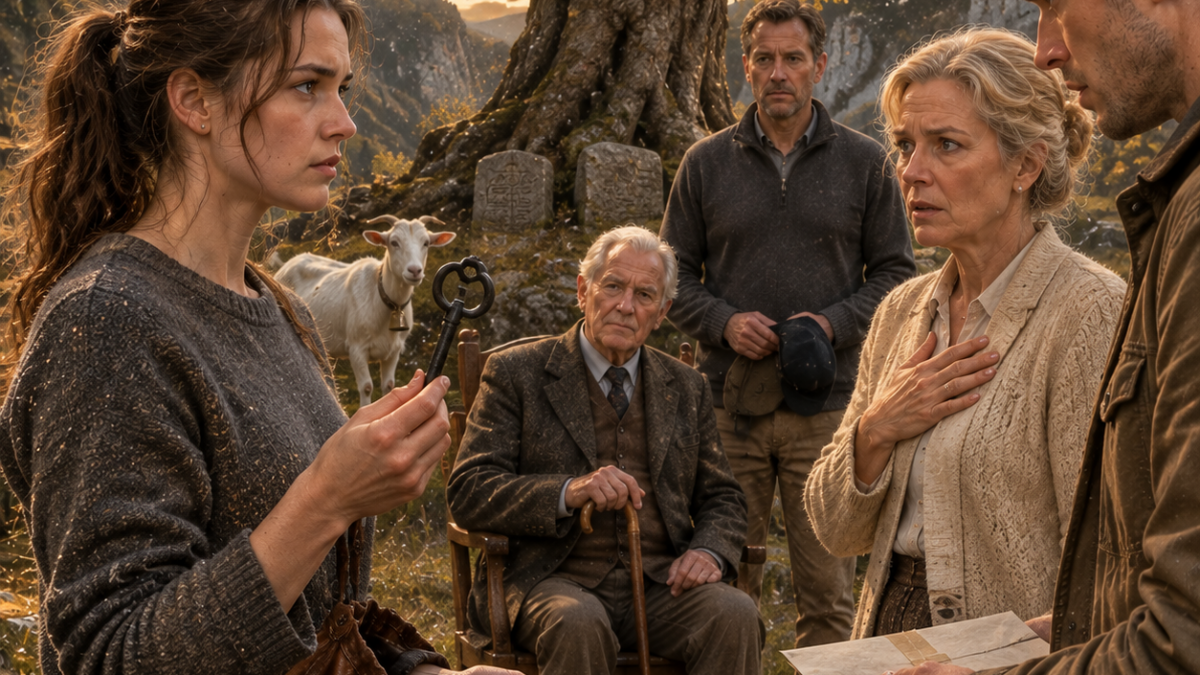
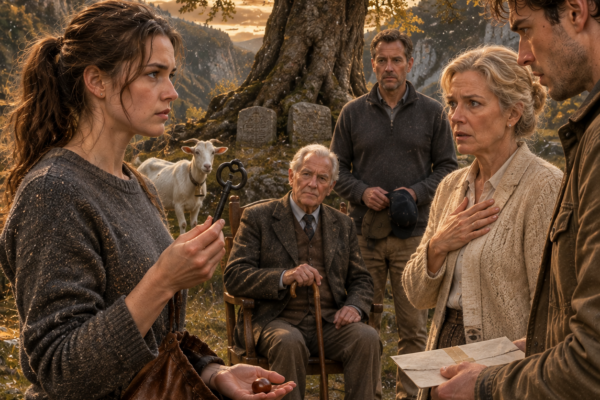
At 19, Linnea Hallett had never once climbed over anything she had been told to leave alone. And on the last Monday of September, she ran out of reasons not to.
By noon, her stepmother had taken her phone, her truck keys, her college money, and her dead mothers letters, and called it all keeping it safe. What she left Linnea was a mountain the county called 40 acres of rock, 11 miles from town, the last three on a washed-out logging road.
At dusk, a bell began to ring inside a solid cliff, and warm air smelling of roasted chestnuts breathed out through the stone. By morning, Linnea was looking down from a rusted gate into a green valley her father had hidden for 19 years, one her stepmother had signed papers about and never thought to look for.
To understand it, start with the kitchen on Alder Lane.
It was a quarter past 10:00, and the house smelled of burnt toast.
Linnea came down the stairs in her fathers old gray sweater with her hair still wet. Her stepmother sat at the head of the table with a Manila folder squared in front of her and a cup of coffee she had not touched.
Delphine Roark was 47, handsome and tidy with ash blonde hair she set every morning and a voice that always seemed to be handing you a blanket. Her son Reese leaned against the sink in his lumberyard boots with his arms folded and his eyes on the floor.
Sit down, sweetheart, Delphine said.
We have a few things to settle, and I would like it to be gentle.
Linnea sat. Through the window, the maple in the yard had turned the color of a lit match, and a single leaf came off it and went down.
Your fathers will says the trust ends when you turn 19, Delphine said, and the county finally finished its paperwork on Friday. I recorded the deed this morning.
She slid a stapled sheet across.
The mountain is yours, all of it.
Larch Mountain, the old camp and the land around it. It isnt much, Ill be honest.
The county says 40 acres of rock and a shed. She smiled with her whole face, but its yours free and clear, and that matters to me.
Linnea had been up that road twice in her life, both times in the cab of her fathers truck, and both times he had said only, Someday.
And put the truck in gear. And this is the other half, a thicker packet with yellow flags.
Its just to tidy up, a few things your father left unfinished. You sign where the flags are, and then its all behind us.
The title on the first page said, Ratification and release. Linnea read it slowly, because her father had taught her to read every page of anything with her name on it, even the ones that looked like nothing.
The words went past her. The trustee, the beneficiary, all acts heretofore taken.
She did not understand half of it, but she understood that she did not understand it, and that was enough.
I would like to take this to a lawyer first.
She said. The kitchen went very still.
Reese looked up once and down again.
A lawyer?
Delphine said gently.
Honey, who?
Your fathers man retired, and it would cost you, and you have no money of your own.
Its the sensible thing to sign.
Ill sign anything. Linnea said, after I understand it.
She said it in her ordinary voice, with her hands flat on the table.
It was the first time in her life she had said no to anyone in that house, and it took everything she had.
Delphine sat back.
Something went out of her face, the way light goes out of a window when someone walks away from the lamp. Then it came back, patient and warm, and she patted Linneas wrist.
Of course you can.
Youre a grown woman now, and a grown woman can manage on her own.
She stood. Which means we can stop pretending, cant we?
What followed took 20 minutes, and every part of it was said in the same soft voice.
The phone was on Delphines family plan, and a phone nobody paid for was only a trap, so it would be turned off at 5:00, and she held out her hand, and Linnea put the phone in it. The truck was titled to the estate, which was to say to her, and she would be selling it.
The college fund, $19,300, had been moved on Friday to the household account, where it would be safe from temptation, and she would release it when Linnea was settled.
The cash in the dresser, $1,140 from two summers of carrying plates at the Switchback Diner, she had already put with the rest.
Linneas mothers cedar box, with its bundle of letters tied in blue ribbon, belonged with the house. Let me be the grown-up for one more day, Delphine said.
Thats all Im asking. The last thing was on a hook by the back door.
It was a small pouch of cracked brown leather with a drawstring, dark with handling, that had hung on her fathers belt every day she could remember.
He had never told her what was in it. He had only touched it sometimes, the way another man touches a wedding ring.
Linnea reached for it, and Delphine got there first.
Thats just an old tobacco bag, she said.
Your father didnt even smoke. She dropped it into a paper sack by the door, the one she had filled for the church sale.
It made a small flat sound. Reese picked up the sack without being asked and carried it out to the car.
They left at half past one in Delphines white SUV with one green duffel and a child-sized sleeping bag in the back.
On the way out of town, they passed the Roark Event Barn, a big red building where Delphine held other peoples weddings, and Linnea saw that the banner on the fence was gone and a smaller sign stood in its place with a telephone number.
She noticed there was no truck beside the house, only a long dry rectangle in the grass where one had stood until that morning.
She did not say a word about either.
Delphines phone buzzed on the console.
She answered and her voice dropped.
Yes, Mr.Doll.
Today. I said today.
So, she glanced at Linnea in the mirror and ended the call.
And for the next 10 miles, she hummed.
The county pavement gave out at 8 miles and the logging road began, a ribbon of gray washboard and mud through hemlock and white pine with a rusted sign that said Larch Mount and a rust hole through the L. On the seat lay a plastic grocery sack and through the thin plastic, Linnea could see a loaf of bread, a wedge of cheddar, a jar of peanut butter, two apples, and a canister of the cheapest instant coffee.
I put in a few things, said Delphine, because I do care what happens to you. The camp stood at the very end of the road, a tin roofed shed of weathered boards no bigger than a one-car garage with a stone chimney pipe, one window, and a door hung on rope hinges.
Behind it, the land went up in a long wall of gray rock hemmed with hemlock, and the creek ran out from under the trees in a bright narrow line.
Delphine stopped the car and did not turn off the engine. Its a roof, she said.
Its more than people get.
Linnea took the duffel, the sleeping bag, and the sack. She stood on the stones and looked at her stepmother through the open window, and it came to her very clearly that the woman had not looked at her once since the yard.
Its 11 miles to town, Linnea said.
Theres no signal up here. Youre a capable girl, said Delphine.
Your father always said so. The window slid up.
The SUV backed around in three careful turns and went away down the road, and at the first bend, the brake lights flickered once, as if she had thought of something.
Then they went on, and the trees closed behind them, and there was no sound but the creek. Linnea carried everything inside and did the next small thing, as she always did.
The shed held a cot with a mouse-nibbled mattress, a stove made from an oil drum, a shelf with a kerosene lantern, and a dented pan, and a stack of split pine as old as she was. There was a hole in the tin roof the size of a dinner plate.
She patched it with a feed sack and a flat creek stone, standing on the cot with her tongue between her teeth.
There were no matches.
She went through the shelf twice, and in the very back, behind a can of rusted nails, she found a flat tin with a faded red lid. Inside lay a cake of black flint, a steel striker worn bright, and a wad of cedar bark shredded fine as hair.
She knew this.
Her father had sat her on the porch step when she was 10 with the same little tin and said, Wrist, not arm.
Strike down toward the nest. The first six sparks died in the air.
The seventh fell into the cedar and glowed like a pinhead, and she bent to it and breathed once, the way he had shown her, and a thread of smoke curled up and then a small living flame. When the stove began to throw heat against her face, she sat back on her heels and discovered that she was crying and had been for some time and that it was all right because the work was done.
The goat came at 10 minutes to 5. Linnea saw her through the glass standing quite still at the edge of the clearing a small white goat with a single brown ear.
She was old. Her back sagged behind the shoulders.
Her beard was gray and a leather strap around her neck held a dented brass bell no bigger than a teacup which she was holding so quiet it made no sound.
She looked at the shed the way a person looks at a house where someone used to live. Hello.
said Linnea opening the door.
Are you lost? The goat took two steps and stopped.
Linnea held out a heel of bread and the goat took it delicately and chewed.
Then she cut one of the two apples into quarters with her fathers paring knife and gave the goat three. She ate the fourth herself.
They could not spare it either of them and neither seemed to mind.
The goat leaned into Linneas knee with her whole weight as if Linnea were a post she had been looking for.
She did not leave.
She lay down across the threshold through the whole of the red sunset warm and smelling of hay and wood smoke and when Linnea turned the strap she found a name burned into the leather in her fathers squared handwriting Bramble.
It was 20 minutes to 7 when the light went out of the sky and the first stars came and Linnea heard the bell. Not Brambles.
Bramble lay quietly with her chin on her knees.
This one was thin and high and far off a single bright note and then another a little lower as if two small bells were answering each other across a great distance.
It did not come from the woods. It came from the rock.
The air on Linneas face, which had been cold, turned warm, and it carried a smell she knew, though she could not at first place it. Something roasting, sweet and brown and faintly smoky, the smell of a fall afternoon at the farmers market.
Roasted chestnuts.
Bramble was already on her feet. Her own bell spoke once, and she began to walk.
Linnea lit the lantern from the stove and followed.
The path was a thread through the bracken, a deer path or a goat path, running up along the creek into the dark under the hemlocks, with the rock wall rising on her left like the side of a ship. The warm air grew thicker.
She could hear water running somewhere behind the stone, and the bells nearer.
At a curtain of rhododendron where the path seemed to end, the goat pushed her nose through the leaves, and Linnea held up the lantern and parted them with her arm. The cliff was split by a narrow cleft, wide enough for a wagon, and in the cleft stood a gate.
It was steel, rust red and taller than a man, with a heavy chain and a padlock the size of her fist hung with great care by someone who did not want it noticed.
Behind the bars there was only blackness and the warm breath coming out.
Hello, she said. Her voice went into the dark and did not come back.
The bell rang, close now, on the other side. She put her hand on the padlock.
It was cold and old and oiled. That last thing she noticed without knowing she had noticed it.
She pulled until her palms burned and looked about for a stone and found one and put it down again because her father had never in his life broken anything he could mend. She went back to the shed with the goat at her heels, banked the stove, and rolled herself in the sleeping bag.
The night was 39° by the old thermometer nailed beside the door.
Linnea thought of her stepmother putting a little leather pouch in a sack, and of her father saying someday and putting the truck in gear.
Somewhere behind the rock a bell rang once more and was still. At first light, she took the coil of rope hanging by the door and walked back along the creek with her breath going before her.
The rhododendron was beaded with frost. The gate looked bigger in the morning, 8 ft to the top rail with a crossbar halfway and a post of hemlock on either side.
She had climbed the nursery fence at 12 every Saturday to fetch a ball or a seedling or a hat. Toe in the crossbar, hand on the post.
Her father at the bottom saying, Dont look down, Lynn.
Look where youre going.
She put her toe in the crossbar.
The steel was freezing and flaked rust into her palms.
She went up slowly with the rope over one shoulder and the goats bell ringing steady and anxious below her. The top rail was sharp at the edges.
She got an arm over it and then a knee and then she was kneeling on the gate with her heart in her mouth and the whole of the dawn pouring up the cleft behind her and she looked down as he had told her not to and could not look away.
Below her the cliffs opened like a hand and in the palm of the hand lay a valley. It was green.
After the gray wall and the black hemlock, after a week of brown September, that was the only thing she could think, that it was green, a deep gold green washed with the first sun.
A A bowl of land lay inside a ring of stone, so wide she could not see its far side for the mist, and in the bowl stood trees.
They were enormous, broad and old and round-headed with leaves like long yellow-green knives, and hanging all through the leaves were thousands of small spiny green globes like sea creatures caught in a net.
A pond lay in the middle, giving up a slow white steam.
Beyond it a house of fitted gray stone sat with a slate roof, and from its chimney rose one thin thread of pale smoke. The smell came up to her warm and thick, sweet and brown.
She had followed it in the dark, and it was not roasting. It was the smell of ripe chestnuts, thousands of them lying in the grass.
She looped the rope over the post and let herself down the inside of the gate, hand over hand, with rust in her teeth.
When her boots touched earth, something small and white shoved past her knees. Bramble had come through a gap in the rocks where the creek ran out under the bars, a goats gap, too narrow for anyone larger, and she trotted ahead with her bells speaking at every step as though she had been waiting a long time to be followed.
The path was swept. Linnea noticed that first, and then the stone edging, and then the benches, a small gray bench at every bend with a flat rock for a footstool.
Someone loved this place and had loved it for a long while. She walked under the trees with her neck tipped back.
The ground was alive with fallen nuts, glossy brown, tucked in their open burs, and the light came down through the leaves in coins. She was a nurserymans daughter, and she knew a great deal about trees, and she knew, with the whole of her body, that there should not be any chestnuts like these in the world.
They had died. A blight had come to the mountains a hundred years ago and taken everyone, four billion of them, her father used to say with something in his voice she had never understood.
The stone house had a heavy oak door and a slate step worn into a shallow dish. Above the lintel, cut deep into the stone with a chisel in letters she knew as well as her own handwriting, were six words.
Nobody plants a chestnut for themselves. She stood in front of it for a long time.
Then she put her palm on the door and it opened.
Inside it was warm and dry and it smelled of cedar and wood smoke and wool. A single long room held a cot made up with gray blankets, a table, a hearth where a few coals glowed under ash, and a squat brick kiln against the far wall with a pan of drying nuts racked on its shelves, the source of the smell hissing faintly in the heat.
Along the north wall ran shelves of canned peaches and beans and jars of honey and dried apple rings, bags of oats and cornmeal, a stack of folded quilts. On the lowest shelf, tied to a jar with kitchen string, a card said in her fathers block capitals, Eat what you need.
Leave what you can.
On the table, squared to the edge, lay a black oilcloth notebook the size of a hymnal and on top of it an envelope.
It said, Lynn. She sat.
Her knees did not give her much choice. She broke the flap with her thumb and the paper inside was lined, written in pencil in the square hand she had last seen on a get-well card.
Lynn, if you are reading this, you climbed the gate.
I am sorry you had to.
I meant to open it for you myself on your nineteenth spring with a hand on your shoulder and I am sorry I ran out of springs. I did not hide this from you.
I hid it for you, and I know that is a thin difference.
My father found six chestnut trees on this mountain in 1957, standing alive in a place the blight never reached, and he spent his life guarding them, and I spent mine finishing his work.
I never told your stepmother because she never asked, and I never told you because the things we love most are the ones we are afraid to hand over. Dont blame her for what she could not see, but do not give her the key.
You are not what was left over. You are the one thing I made on this earth that I am proudest of, and I waited for you to be old enough to carry it.
The key to the gate is in my seed pouch, the one I wore. A chestnut from the first tree is in there with it.
Plant it when you have decided to stay. Odalisque Greer keeps the gate.
Trust her.
Feed the kiln a handful of oak each evening in the fall. Be warm.
Dad.
She read it twice.
The second time she could not see the end of it.
Bramble came and leaned her whole warm weight against Linneas leg, and the coals ticked under the ash, and for a long while there was nothing in the house but the sound of a girl who had held her breath for a year and a half letting it go.
The key was in the pouch.
She thought of the paper sack by the kitchen door, and of the small flat sound it had made. She thought of Reese carrying it out to the car.
Then, because the work was not done, she wiped her face on her sleeve and fed the kiln a handful of oak from the box beside the hearth, as the letter said, and watched the coals brighten. Some people leave behind a fortune, and some leave a gate for someone to climb.
She turned the first page.
It was a planting book. Her father had kept it for 36 years in the same square pencil, a few lines a week.
Rows of numbers, soil temperatures, the dates of frosts, the weights of nuts, crosses made and crosses failed.
A line from 1991, the year his own father died.
Dad gone Tuesday. Planted the new row anyway.
And on the page for the 14th of March, 2008, in handwriting that slanted as if written in a hurry, born at 12 minutes past 4:00 this morning, 7 lb 2 oz. Maren says she has my chin.
God help her.
Planted number one at noon on the south bench with my hand on the trowel and Marens on mine. Linnea put her hand over her mouth.
She turned the pages. There was an entry for every March 14th, 19 of them, and on each one a number and a sentence, as if he had been writing to her all along in the margin of his work.
2009, number two. She grabbed my finger and would not let go.
2012, number five. She asked why trees take so long.
I told her, so someone can sit under them. 2014, number seven.
Marens year.
Planted it anyway.
Maren would have. And on the last page that was written, dated the 14th of March, 2026, number 19.
She asked today why I plant on her birthday. I said I would tell her when she was 19.
I hope I will be the one to do it. I have not been feeling right.
Told no one.
Beneath it, in a different pencil, in a hand much more cramped and tired, a last line had been added after.
Tree one stands at the head of the row. Go and sit under it.
She found the row in the late morning with the goat trotting beside her. It ran along the south bench in a line of 19 trees, each with a numbered aluminum tag.
The oldest, tall and broad as a barn, with a trunk as thick as a rain barrel and a bench built around its foot. The youngest was a whip no thicker than her thumb, staked and wrapped with a tag that said 19.
She sat down under tree one with her back against the bark and a green burr split in the sun and dropped a nut into her lap, glossy and warm, and she closed her hand around it and did not move for a long time. At noon, she did what her father would have done.
She gathered a hatful of nuts from the grass, cut a small cross in each shell with the paring knife, and roasted them in the dented pan at the edge of the hearth until the shells curled and split and the kitchen filled with the smell that had called her through the rock.
They were sweet and floury and almost too hot to hold. She ate them standing at the window and shared the burnt ones with Bramble, who took them from her palm with great dignity and ground them to powder.
When she had eaten, the questions came.
She had been told that the mountain was worthless. That had been Delphines word, said at the funeral in a black dress with a casserole dish in her hands.
Your father kept that camp for hunting and nothing else, sweetheart.
He never took me. He never wanted to.
Its rock and a shed and I wouldnt spend a dollar on it.
She had said it so kindly that Linnea had believed it for a year and a half.
And it was true, in a way, that her father had never taken Delphine because Delphine had never asked. She had asked what the mountain was worth once at the kitchen table in the winter.
And her father had said, Its worth what you put in it. And she had laughed and said nobody paid for that.
The county map said 40 acres. The valley was bigger than 40 acres.
Linnea did not know much about land, but she knew it was bigger than that because she was looking at it and it went on until the mist took it. She climbed to her feet and turned in a slow circle and saw the other thing.
At the back of the bowl, where the cliff came down in a wall of gray stone, the grove stopped and a clearing began. And in the clearing, the rock had been cut into a doorway.
A second gate stood in it, smaller than the first and older, black iron set into the stone itself with a brass padlock gone green. Across the top, in the same chiseled cut letters as the house, someone had carved two words, the six.
She walked to it. The lock was solid and clean and no one had picked it.
Through the bars, she could see only a dark archway of rock and far back a glimmer of green light that did not seem to come from the sun.
The goats bell rang once and went silent. Bramble stood very still beside the gate with her ears forward like a person at the door of a church.
In the back of the planting book, on the very last leaf before the blank ones, a pencil sketch showed the valley from above, the ring of cliffs and the pond and the row and at the back, drawn small and with great care, a keyhole and an arrow. Under it, her father had written, Odalis has the second key.
Ask her about the six. They are not mine to give, Lin.
They are only mine to keep. She read it standing with the notebook against her chest.
The sun was high now and the mist had gone off the pond and the whole bowl had turned the color of honey. She had a place to sleep and a stove and a goat and a hundred jars of peaches and a letter.
She had a hundred questions and no key and nobody in the world who knew where she was.
Behind her, a long way off at the main gate, there was a sound she had not heard in all her days on that mountain.
The grind and click of a key turning in a lock. The woman who came through the gate did not look surprised.
She looked at the rope still hanging over the top rail and at the rust on the hinges where it had been scraped and at the girl standing under the first chestnut tree with a goat against her knee and she let out a breath that was almost a laugh. Well, she said, he said youd climb it.
She was 68, tall and lean as a fence rail with a long gray braid down the back of a faded green forest service jacket and a face so weathered and brown it looked cut from the same wood as the benches.
A pair of binoculars hung on her chest.
She carried a bucket of water in one hand and in the other a ring with two heavy keys and she set the bucket down on the path with great care before she came any nearer.
Odalis Greer, she said, I keep the gate.
Youd be Linnea. How did you know?
You have his chin.
She did not offer a hand. She stood with her own hands loose at her sides as if Linnea were something that might startle and the goat, who startled at everything, walked over and pushed her head into the womans hip.
Hello Bramble.
Yes, I know. You did well.
They sat on the bench by tree one with the bucket between them. Odalis talked as if she had rehearsed it for a year and a half and was glad to be done.
When Anders Hallett died, she had promised his son she would keep the gate and so every first Sunday of the month for 36 years and every Sunday once the nuts began to fall, she had come up the logging road to oil the lock, check the burrs and bank the kiln. I wrote to you, she said.
In May and in June and in August, care of the house on Alder Lane.
She said the next part without any weight at all.
When I never heard back, I drove down in July.
Your stepmother came to the door and said youd gone away to a friends for the summer and that you did not want to be disturbed.
Linnea sat very still.
I was in my room. I thought you might have been.
The old woman folded her hands.
Your father asked me for two things, to keep the gate and to wait until you came to me. He did not want me to knock on your door like a stranger and drag you into a mountain.
He wanted you to choose it.
So I waited and I wrote and I did exactly as I was told and I have not slept a full night since April of last year. She looked at Linnea.
I would not do it the same way again.
What about the bells? Linnea said.
It came out smaller than she meant. Last night something rang inside the cliff.
Odalis smiled for the first time.
Thistle and Pip, theyre Brambles daughters and they sleep up by the pond and every evening at dusk they call her home and every evening she answers. The cliff carries it.
Its a bowl, you see, and the sound goes round the rim and comes out through the cleft like water down a drain. She tilted her head.
Half the children in Tarn Fork will tell you the singing rock is haunted, a drowned miner, a bride, depends whos talking. Its a goat and her daughters and the warm air.
The smell? The cliff holds the days heat like a stove and the cleft draws it out at night.
And that, she nodded toward the stone house where its thread of smoke wavered, is your fathers kiln, which has to be kept low in September for curing. I lit it Sunday.
Her mouth twisted.
It would have smelled like supper to anyone with a nose. It was the oddest thing.
Linnea felt a weight she had not known she carried come off her, simply because every strange thing had a plain reason and the plain reasons were all kind. Why does Bramble wait at the shed?
she said.
Because he took her there every Saturday for 12 years in the back of the truck and sat on the step with a thermos while she stood by his boot. Since he died, she has walked out through the goat gap every dusk and waited at that door until dark.
Odalis wiped her eyes with the back of her wrist roughly as if she were angry with them. Yesterday she bawled at my gate at noon.
I think she knew youd be there.
Bramble leaned harder into Linneas leg and made a low sound in her throat. Why?
Linnea said.
Why did you do all this?
For a strangers valley. It isnt a strangers.
The words were gentle, but they had a floor under them.
In the summer of 1988, the Larch Ridge fire burned 40,000 acres in 5 days. I was 29 on a crew of eight, cut off at the top of the old road with fire coming up both sides.
Your grandfather Anders came up in a flatbed through the smoke, took all eight of us through that gate and kept us in the stone house with wet wool on the sills for 14 hours.
The fire went around both sides of this cliff, and the valley did not burn.
People in town call it the green pocket for that. He never asked our names.
He said, Nobody plants a chestnut for themselves. And he gave us soup.
For a while, the only sound was the bell and the water in the pond.
Dont thank me. Odalie said.
Your father paid me in advance. Im only finishing what the Hallets started with me a long time ago.
She reached into her jacket and took out the ring with two keys.
I have the second key to the gate and the only key to the one at the back, the six. I will open the six when you tell me youve decided to stay, not before.
Not because Im afraid of you, but because he asked and because its the sort of thing a person ought to choose with her eyes open. She put the keys away.
In the meantime, come to town with me. You need to eat a hot meal and you need to see a man.
What man? A lawyer.
He hates nonsense.
Youll like him.
They drove down in her tan pickup with Bramble left in the grove to scold the leaves.
At 11 mi, Tarn Fork lay in its valley, two streets and a river and a white steeple, and Linneas stomach turned over as if she were coming home to a house with a new owner.
The Switchback Diner sat at the corner of Main and Third with a neon cup in the window and six round stools. Barb Tuttle, who owned it, was 58 and wide and slow-moving with reading glasses on a chain and an apron over a flannel shirt.
She took one look at Linnea in the doorway in the same gray sweater with her hair tied back with a piece of kitchen string and put down the coffee pot.
Sit.
She said. Both of you.
She put a plate of eggs, hash browns, and two thick slices of buttered toast in front of the girl without asking. Linnea reached for her wallet and remembered, with a small dull shock, that she had none.
Not a penny, said Barb. You carried plates here two summers for what I paid you, and that wasnt enough.
She nodded across the street. And look there, honey.
Linnea looked where she pointed.
In the window of the Tarne Fork Savings Bank, a woman in a navy blazer sat across a desk from a man in a tie. She had ash blonde hair set in neat waves and a manila folder on her lap, and her hands were pressed together very tightly.
Linnea could not hear anything, but she could see the way the man shook his head slowly and the way Delphines smile stayed on her face a half second too long.
Shes been in that bank four times this month, said Barb quietly.
The barns gone on the market. I heard she sold her mothers diamond to a man in Hallsbridge.
She paid for her sandwich last Tuesday with a roll of quarters.
She shook her head. I dont say it to be ugly.
I say it because something is wrong over there, and you ought to know the weather before you walk into it.
Linnea ate the whole plate. It was the best meal of her life.
Colm Reardons office was up a narrow stair over Farrells Hardware, between a window with a cracked blind and a door with his name on it in gold paint that had half worn away.
 [Tap here for the Next Part ]