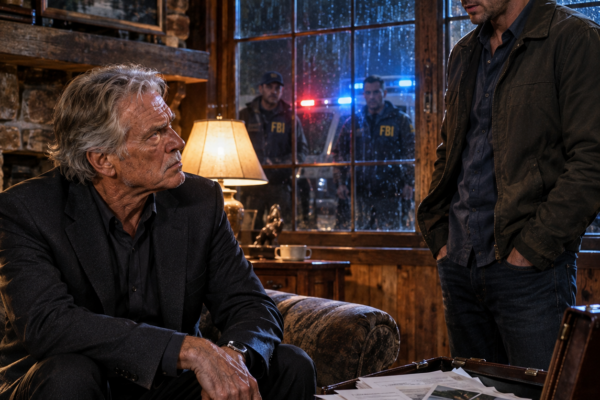
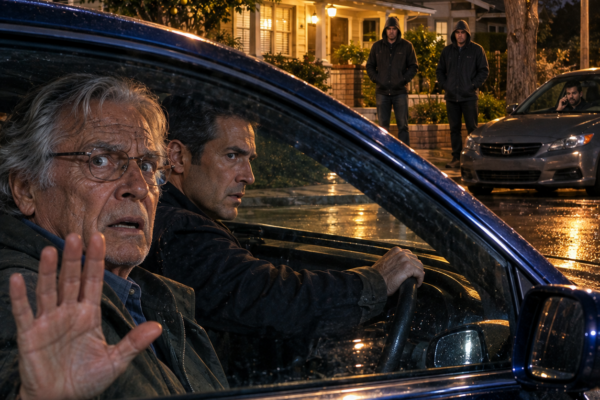
The Rich Boss’s Black Belt Son Challenged a Single Dad—Unaware He Once Commanded a Navy SEAL Team.

The Rich Boss’s Black Belt Son Challenged a Single Dad—Unaware He Once Commanded a Navy SEAL Team.

Ladies and gentlemen, I want to settle something.
Driver, get over here.
I’m on duty.
60 seconds on the mat. On the mat.
That’s all I’m asking.
Tyler, the man drives my car. Exactly my point. $5,000, Dad.
One round. Call it entertainment. 5,000.
Consider it done. Breathe easy, old man.
I won’t break anything important.
Tyler Cole had spent months convincing himself the black belt made him dangerous. So, when he spotted Jack Hayes standing near the service entrance quiet and still while the party moved around him, Tyler did what came naturally. He made it public.
He announced the challenge loud enough for every investor on that terrace to hear, offered the money, and left Jack no exit.
What Tyler failed to notice was the way Jack’s eyes moved when the crowd closed in, not startled, not searching, just calm in a way that had nothing to do with fear.
Tyler had just handed an open challenge to a man he assumed was harmless. How badly he had miscalculated was still ahead of him.
If you’ve ever seen someone underestimate the quietest person in the room, you already know how this ends, but the way it gets there is something else entirely.
Hit subscribe and turn on notifications so you don’t miss the rest of this story.
It’s worth staying for.
The morning always started the same way. Jack Hayes would be up before 5:00 moving quietly through the narrow kitchen of their apartment in Queens, measuring out the exact amount of coffee that would last him through a 12-hour shift.
He would set a glass of water and Sarah’s medication on the nightstand before she woke because if he left it for later, he risked forgetting.
And forgetting was not something he allowed himself anymore. The apart was not much.
Two bedrooms, thin walls, a radiator that rattled in winter. But it was theirs, and it was stable. And stability was the only thing Jack had decided mattered after everything else had stopped mattering.
Sarah was 9 years old and had her mother’s eyes and her father’s stubbornness.
And she had been living with a congenital heart defect since the day she was born. The cardiologist used phrases like manageable with monitoring and functional limitations and long-term outlook depends on intervention.
Which Jack had learned to translate into plain language over the years. She could live a good life, but only if everything went right. And everything going right required money he did not yet have.
The surgery, a valve replacement specialized, not covered in full by the insurance his job provided, carried a price that Jack had written on a piece of paper and folded into his wallet. He looked at it sometimes when the shift felt long. It helped him remember why he was doing this.
He had been driving and providing personal security for Richard Cole for going on 3 years. The job paid well better than anything else he could find that did not require him to disclose the parts of his service record that were still classified.
And Richard Cole did not ask many questions about the past so long as the car arrived on time and the man behind the wheel stayed quiet. Jack was good at staying quiet. He had spent 12 of years in the Navy learning that silence was not weakness.
It was information management. And information was the only thing that kept people alive in the field.
He brought that principle into civilian life and applied it to everything the Cole’s made at the Cole estate.
The casual cruelty that passed for humor among the guests, the way Tyler looked at him sometimes like he was furniture that had been arranged incorrectly. Richard Cole was not a cruel man exactly. He was simply a man who had accumulated so much distance between himself and consequence that he had stopped being able to imagine how his decisions landed on other people.
He ran a real estate empire worth several billion dollars, spent his summers in the Hamptons, and treated his employees with the particular brand of detached courtesy that the very wealthy reserve for people they consider well-functioning parts of a larger system. Jack was a part. A reliable one.
Richard appreciated reliability the way he appreciated a good watch, not with warmth, but with the recognition that it served its purpose. Tyler was something else entirely.
Richard’s only son had grown up with every available advantage and had used most of them poorly.
Not catastrophically.
There had been no arrests, no genuine scandals, but in the smaller, more corrosive ways that the children of very wealthy men sometimes fail by never being asked to face the weight of their own choices, by having consequences absorbed by a father’s lawyers and money, and willingness to look the other way.
Tyler was 22 now, lean and athletic, and genuinely skilled at the martial art. He had spent 3 years studying at a high-end training facility in Manhattan.
He had earned his black belt 6 weeks before the summer party, and in the since it had reorganized his entire understanding of himself. He walked differently. He shook hands differently.
He had begun treating every social interaction like a dominance assessment, looking for the moment when the other person would step back. Most people stepped back. Jack did not.
This was the thing that had lodged in Tyler’s mind like a splinter.
He had started small, way people like him always do. A shoulder check in the hallway.
A comment about Jack’s age.
A pointed use of driver instead of his name as though the job title were the whole of the man. Jack responded to none of it.
Not with anger, not with submission, not with the particular stiffness that told Tyler he’d found a nerve.
Just a steady level attention that felt infuriatingly like Jack was measuring something and finding it small. Tyler told himself the man was simply not smart enough to understand what was being communicated.
He told himself that until he almost believed it. The moment that changed things came on a Tuesday afternoon in the garage of the Cole estate. Tyler had come down to get something from the car and found Jack leaning against the hood looking at his phone.
The screen showed a text thread, a few words visible before Jack turned it face down and a photograph of a girl with a bright smile sitting up in what looked like a hospital bed holding a small stuffed rabbit. Tyler had looked at it for only a second before his mouth started moving.
He said he hoped the kid didn’t think her old man was some kind of hero.
The words landed in the space between them and stayed there. Jack looked at Tyler for a long moment, not the flat non-reaction he usually offered, but something more deliberate, more considered, as though he were making a decision about how much of himself to spend on this.
Then he put the phone in his pocket and walked back toward the service entrance without a word. Tyler watched him go and told himself he had won something. He had found the soft spot, the thing that would make Jack flinch.
He did not understand that he had done nothing of the kind. He had simply been seen clearly, and Jack had decided he was not worth the trouble, not yet.
The summer party was Richard’s annual tradition, a Saturday event at the Hampton’s estate that brought in 200 guests across the afternoon and into the evening.
Business contacts, investors, politicians who found it useful to be photographed near money, and a rotating cast of Tyler’s friends who filled the corners of every social space with noise and movement, and the specific energy of young people who had never been told no in a way that stuck.
Richard hired additional staff for these events, but Jack was always present, managing security coordination, watching the perimeter, keeping the kind of low-key oversight that large private gatherings required. Tyler had arranged for a
training mat to be laid out near the pool. It was white and rolled flat and completely out of place at a cocktail party, which was precisely the point.
He wanted an audience, and an audience was what he got. Through the early hours of the afternoon, he worked through a series of demonstrations with his friends, taking them down with the practiced ease of someone who had genuinely trained hard and was good at what he did.
The crowd responded each time, laughter, applause, a few people filming on their phones. Tyler grew larger with each round.
He was performing, and the performance was working and the pleasure of it made him reckless. He had been watching Jack move along the edge of the terrace for the better part of an hour.
The man was doing his job scanning sight lines, positioning himself near the main entrance, saying almost nothing to anyone.
He was wearing the same dark he always wore slightly too warm for the weather and he looked exactly like what he appeared to be, a middle-aged man in a service role at man’s party.
Tyler thought about the garage. He thought about about how Jack had looked at him. And then he did what the afternoon had been building toward all along.
He called out across the terrace loudly enough that the nearest 30 people all turned at once and announced that he wanted to go around with the driver. The crowd treated it the way crowds at events like this always treat a spectacle with the particular forward lean of people who sense something is about to happen and want to be close enough to describe it later. Richard, who was standing near the bar with two investors, heard it and registered it as Tyler being Tyler, performative, attention-seeking, probably harmless.
He gestured for one of his staff to bring Jack over. Jack crossed the terrace at an unhurried pace and stopped a few feet from Tyler, who was standing on the mat with his arms loose and his posture already arranged for the cameras. Jack said he was on duty.
Tyler said the only thing he was guarding was his pride. Someone near the pool laughed.
Richard decided to let it play out. He offered $5,000, one round, a few minutes entertainment for the guests. He said it the way wealthy people say things that involve money to people who work for them casually, as though the number were trivial, as though the offer were a gift rather than a pressure.
Jack stood very still for a moment. $5,000 was 4 months of physical therapy for Sarah or 2 months of the supplemental medication the cardiologist had added in the spring or a meaningful fraction bought of the surgery fund that Jack had been building dollar by dollar for the past 2 years. He did the math in the time it took Richard to finish his sentence.
He told Richard quietly with his eyes on Tyler rather than his employer that Richard genuinely did not want him to do this. Richard heard the words and interpreted them as nerves. Tyler heard them and grinned.
He added that he would try not to put Jack in a condition that would require his daughter to visit him in a hospital. He said it lightly as though it were a joke and the lightness was the worst part of it.
The ease with which he reached for the one thing that was not a joke at all and used it as a punchline for a crowd of strangers. Jack turned to Richard and asked if the offer still stood. Richard said yes.
Jack removed his jacket and folded it over a nearby chair. He rolled his sleeves to the elbow. A movement that was deliberate without being theatrical and stepped onto the mat.
He was not warming up, not bouncing on his feet, not doing any of the things that Tyler was doing. He just stood there and waited. And something about the quality of that waiting made the nearest guests stop talking.
Tyler came in fast with a takedown, a double leg entry textbook, the kind of move that had worked on everyone he had practiced it with for the past 3 years. Jack moved laterally, barely a half step, just enough to redirect the momentum.
Tyler’s shoulder connected with the mat instead of with Jack’s hips and his face followed a fraction of a second later.
The sound was not loud, but it carried and the crowd went quiet in the way crowds do when they realize what they’re watching is not what they were promised.
Tyler got up. His jaw was set and his eyes had changed.
He came in again this time higher trying to clinch.
Jack let him get close enough that Tyler thought he had it and then used Tyler’s own grip to turn him a small controlled motion that put Tyler on his back again with no apparent effort.
From where the guests were standing, it might have looked like a mistake on Tyler’s part.
It was not a mistake. It was the difference between someone who had learned to fight in a gym and someone who had spent years in situations where the cost of a mistake was not embarrassment.
The crowd had fully stopped talking now.
Tyler’s friends who had been filming and laughing throughout the afternoon’s earlier demonstrations had their phones at their sides.
Tyler stood up the second time with his chest heaving and the particular expression of someone who is losing something they cannot afford to lose in front of exactly the wrong people. He said something sharp and hard. It was lost in the ambient noise of the party and then he swung.
An actual punch closed fist aimed at Jack’s jaw, nothing that resembled controlled sparring.
What happened in the next few seconds was difficult to track because it happened so quickly and so quietly. There was no dramatic technique, no visible technique at all, just a series of small adjustments that resulted in Tyler being face down on the mat with his right arm secured behind him at an angle that made movement genuinely
impossible. Jack was crouched beside him with no apparent exertion, the way a man sits when he is waiting for something routine to be finished.
He leaned close and spoke so that only Tyler could hear him. He said Tyler had spent years learning how to win on a mat with rules and referees and the option to stop.
Then he said that he had spent his career learning to bring men home alive from places where none of those things existed. No rules, no referees, no option to stop.
He said six of them and they all came back. Jack released the hold and stood. He picked his jacket off the chair, walked to where Richard was standing with his drink halfway to his mouth and said he would need the $5,000 transferred by the end of the week.
Then he went back to watching the perimeter. The party resumed.
The conversations restarted. People found things to look at other than the mat and the young man still sitting on it working out what had just happened to him.
Tyler’s friends drifted back toward the bar.
Richard stood very still for a moment looking at the man who had just said something about six people and coming home and for the first time in 3 years of employment began to wonder if he actually knew anything about who he had hired to drive his car. Jack for his
part had already moved on from it.
He circled the east perimeter, checked in with the gate staff, monitored the exit flow as the late afternoon guests began to leave. He did not feel like he had won anything because he understood something Tyler did not, that what had just happened on that mat would have consequences and consequences had a way of moving in directions that were difficult to predict.
He had shown something he’d spent 3 years keeping invisible, and he had shown it to a young man with too much pride and too little sense in front of an audience large enough to make the humiliation permanent.
He looked at his phone before putting it back in his pocket.
Sarah had sent a voice message from her grandmother’s house where she was staying for the weekend, just a few seconds of her talking about a movie she had watched, her voice unhurried and bright in the way that still surprised him sometimes given everything.
He listened to it once, put the phone away, and went back to work. The evening was still young, and he had four more hours on the clock.
He did not think about Tyler again that night. He should have. The weeks after the party were quiet in the way that certain kinds of trouble are quiet, not resolved, just underground.
Tyler stopped coming to the garage when Jack was there. He stopped the shoulder checks, the comments, the deliberate use of driver as though it were an insult. He ate dinner in his room when Jack was on evening duty at the estate.
His friends, the ones who had been filming on their phones that Saturday afternoon, stopped appearing at the house entirely. Richard noticed none of this, or noticed it and chose not to investigate, which amounted to the same thing. What Tyler was actually doing during those weeks was something Richard would not discover until it was too late to matter.
He had found his way into a private card game, the kind that operated out of a back room in a restaurant in Midtown that officially served Italian food and unofficially provided three tables of high-stakes poker to men who wanted to gamble without the oversight of a licensed casino. Tyler went the first time because a friend of a friend had mentioned it, and because he needed somewhere to be where no one had seen what happened on that mat. He won the first night, which was the worst possible outcome.
He came back the following week and won again. And the winning did something specific to his sense of himself.
It rebuilt, brick by brick, the architecture of confidence that Jack Hayes had knocked flat in about 45 seconds on a Saturday afternoon in the Hamptons. Then he started losing. Not dramatically at first, a bad night here, a disappointing session there, the normal variance that every gambler experiences and every gambler believes they are temporarily subject to rather than structurally vulnerable to.
Tyler covered his early losses from his personal accounts without telling anyone. He was not worried.
He had always been able to sustain losses because there had always been more money behind them.
But this game he had found was not structured the way he assumed it was and the men running it were not the kind of men who lost sleep over a young customer’s financial comfort.
The debt moved through its stages with the particular logic of compound disaster. $50,000 became $150,000 became $400,000 over the course of 11 weeks. And by the time the number crossed that threshold, Tyler had long since stopped thinking of it as money and started thinking of it as a problem that future Tyler would solve.
He borrowed against future winnings he did not have. He leveraged the implicit weight of his last name in conversations with men who smiled when they heard it. When the people running the game sent someone to have a direct conversation about the timeline for repayment.
Tyler made the mistake that would define the next chapter of his life. He told them his father was Richard Cole and implied that this information should function as a guarantee.
The men he said this to looked at each other across a table and said very little. They were polite. They said they understood and that they appreciated the context.
What they were actually doing in the hours and days that followed was recalculating. A young man with a wealthy father and a gambling debt was not a risk.
He was a mechanism. It was a rainy Thursday night in October when Richard came to find Jack.
Jack was in the security office off the main entrance reviewing the camera feeds and writing up the week’s maintenance report for the gate system when Richard appeared in the doorway.
He was not wearing his usual evening jacket. His hair, which was always precisely arranged, was not.
He was holding a burner phone, the disposable kind bought from a drugstore, the kind that people use when they do not want a call traced back to a registered number, and the way he was holding it with both hands and no particular awareness that he was doing so told Jack everything about the man’s current state before a single word was spoken.
Richard set the phone on the desk between them and pressed play on a video file. The footage was dim shot in what looked like an industrial space, concrete floor, metal shelving visible at the edge of the frame, a single work light hanging overhead. Tyler was in the center of it seated in a metal chair, his wrists bound behind him with what appeared to be zip ties.
His face was in poor condition. One eye was swollen shut.
His lower lip had been split and had bled down his chin and dried there.
He was wearing the same clothes he’d had on two days ago, which was how Jack knew this had not just happened.
Tyler was talking, begging, really, the words indistinct in the recording, but the register unmistakable. And then a voice from off camera cut across him and said clearly that if the money was not received before the deadline, they would begin with the fingers.
$2 million dollars. That was the number the voice named.
It said it without inflection, the way someone states a figure they have already decided is non-negotiable. Richard had not gone to the police. Jack understood immediately why, without being told, a kidnapping involving the son of a public figure connected to illegal gambling would create a paper trail that touched the merger.
Richard was in the final stages of negotiating a deal worth considerably more than $2 million and considerably more fragile than it appeared from the outside. The board would ask questions. The investors would ask questions.
The other party in the merger would ask questions. Richard could absorb the ransom financially without difficulty, but paying it directly would establish him as a target for every similar operation in the city. And Richard Cole had not built what he built by signaling that his money was accessible through the right kind of pressure.
He needed someone who could solve this without existing on paper. Richard looked at Jack across the desk and asked what he had actually done in the Navy.
Jack said it wasn’t relevant to his current job.
Richard said Tyler had described what happened at the end of the fight, what Jack had said quietly before he stood up. He asked if the part about six men was true.
Jack did not answer the question directly. He asked instead what Richard was prepared to offer.
The number Richard named was $500,000 cash untraceable for Tyler returned alive and uninjured. He said it with the directness of a man who had spent his career putting prices on outcomes and knew that equivocation wasted time. Jack sat with the number for a moment.
He was not calculating whether it was worth the risk to himself. He was calculating what it would mean for Sarah, the surgery fully funded with enough remaining to cover the recovery period and the follow-up interventions the cardiologist had outlined in the last appointment. He was calculating whether he could bring himself to re-enter a version of himself he had spent 3 years carefully folding away.
He laid out two conditions.
The first was that Richard would initiate the wire transfer to the hospital’s billing account.
The full amount for Sarah’s surgery and all associated costs before Jack left the room and showed Jack the confirmation on screen.
The second was that if Jack did not come back, Richard would establish a care fund for Sarah maintained until she turned 18.
Richard opened his banking application without discussion, keyed in the hospital’s account details that Jack recited from memory, entered the figure, and turned the screen to face Jack so he could read the confirmation number himself.
The transfer would clear when the banks opened in the morning. Jack read it, nodded once, and handed the phone back.
Then he asked for the audio of the ransom call, the original recording not a copy, and Richard handed him a second phone that contained it. Jack listened to the call six times that night.
The voice of the man making the demand was controlled and gave away very little. The location of Tyler was not stated.
But audio was never just voice and Jack had spent years in environments where the information you needed was almost never the information being offered directly. Under the primary voice present throughout the entire call was the rhythmic percussion of a train running on elevated track, not subway, which had a different acoustic profile.
But elevated line close enough that it registered clearly in the background even through a phone recording. And beneath that intermittent but consistent was the sound of industrial machinery.
Not construction, the rhythm was too regular, too sustained. A lathe possibly or a metal fabrication tool of some kind. The sort that ran in cycles and belonged to a working shop.
Jack spent the following day cross-referencing elevated rail lines in the boroughs with the locations of active industrial operations, auto shops, fabrication yards, machine shops that sat in close proximity to the tracks. He was working from the audio timing. The interval between train sounds and the particular frequency of the machinery, which gave him a rough sense of the building size and ceiling height.
It was the kind of problem solving that looked like intuition from the outside and was actually the accumulated result of years of pre-mission intelligence work in conditions where being wrong meant people died. He narrowed it to three possible locations by evening. By the following morning after a second pass through the audio, he had one.
A former auto repair facility in Astoria, Queens sitting directly beneath the elevated N train line. The building had been registered as inactive for 2 years, but showed recent utility activity on records that took Jack the better part of an afternoon to locate through channels he would not have been able to explain to Richard Cole. He drove out that evening and parked two blocks north on the far side of the tracks and watched the building for an hour from a position that offered a clean sight line to both the main entrance and the secondary loading door on the east side.
Three vehicles he could not account for were parked in a configuration that made no sense for a legitimate business. Two men were visible through the gaps in the roll-up door moving with the particular patterned movement of people whose job is to remain present and alert rather than to accomplish any specific task. There was no evidence of actual repair work.
The lights inside were wrong for a garage too concentrated in one area toward the rear. The kind of lighting arrangement that focused on a specific point rather than illuminating a work space.
Tyler was in there. Jack was as certain of it as he was of anything. He sat in the car for a moment before getting out.
His right knee ached in the particular way it had ached since a hard landing in a place he was not allowed to name 7 years ago. There was a faint sound in his left ear that had been there for so long he sometimes forgot.
It existed until the surrounding environment went quiet enough that it became the loudest thing in the room. These were the reliable annotations of a body that had been asked to do serious work for a long time and Jack registered them with the same neutrality he registered the temperature or the wind direction as data, not as objection. What gave him slightly more difficulty was something that did not belong to his body at all.
He took out his phone and looked at the photograph Sarah had sent that afternoon, taken at her grandmother’s kitchen table.
The small stuffed rabbit she’d had since she was four, propped up against a glass of juice.
A caption beneath it that read, “Bunny says hi.
” The image was so thoroughly ordinary, so located in the specific unremarkable texture of childhood, that looking at it in a dark car, two blocks from a building where a man was being held at gunpoint, produced a dissonance that Jack had to sit with for a moment.
This was the version of himself he had built in the three years since leaving the service.
The one who knew where the pediatric cardiologist’s office was, who could name every medication in Sarah’s regimen, and explain why each one mattered, who had learned to make the particular scrambled eggs she liked without being asked.
That version of himself and the one currently assessing entry points into a building full of armed men were not in conflict exactly, but they were not the same person either. And Jack was honest enough with himself to know that the line between them once crossed was not always easy to find again afterward.
He turned the phone face down on the seat and got out of the car. I went over the perimeter fence on the north side where the shadow from the elevated track above was deepest.
He moved along the building’s east wall to the loading door, which was secured with a padlock that took him under a minute to address.
Inside the space smelled like old oil and concrete dust. He let his eyes adjust. The concentrated light was at the far end, past three rows of empty shelving, behind a partial wall that had once divided the shop floor from the office.
He could hear voices now, two distinct ones, male, speaking in low registers. And beneath them, the thin, exhausted sound of someone trying to hold themselves together and not quite managing it. Jack moved through the shelving without sound, which required a specific kind of attention to weight distribution and spatial awareness that his body still carried as muscle memory.
The way a language learned young will surface without effort even after years of disuse. He came around the edge of the partial wall and saw Tyler.
The photograph on the ransom video had been accurate, but photographs flatten things. In person, Tyler Cole looked genuinely young in a way Jack had never registered before, younger than 22.
Younger than the person who had stood on a mat in the Hamptons and performed confidence for a crowd of wealthy strangers. He was still in the metal chair, wrists bound, listing slightly to one side because of the swelling around his ribs.
His good eye was open and fixed on the man standing a few feet in front of him, who was speaking with the calm of someone narrating rather than threatening, which was its own kind of frightening. The man said that the deadline had been moved up. He said they would start with the left hand because most people were right-handed and he liked to leave people with something to be grateful for.
Tyler said something that was close to a prayer and close to an apology and close to nothing comprehensible at all. Jack waited. Above him, through the industrial ceiling, the N train was coming.
He had timed the intervals during his hour of observation outside, and the train was 40 seconds out. He could feel the change in vibration through the floor before he could hear it. When the sound built to the point where it would cover everything beneath it, he moved.
What happened in the next 90 seconds was not a fight in any sense that the word usually implies. There was no exchange of technique, no escalation of engagement. Jack moved through the space with the efficiency of someone who had made peace a long time ago with the fact that controlled violence existed in the world, and that sometimes it was the only language available.
The two men who had been guarding Tyler did not have the opportunity to make a decision about what to do because the situation resolved before that option presented itself. The man who had been narrating the deadline sat down on the concrete floor against his will and did not get back up.
The sound of the train faded. The building was quiet.
Tyler was staring at Jack with his one functioning eye, and the expression on his face had no name that Jack could immediately identify. It was too many things at once, too much relief and too much confusion, and something that looked almost like shame. His voice, when it came, was barely above a whisper.
He asked who Jack was. Jack crouched in front of him and went to work on the zip ties with a blade from his jacket pocket.
He said he was a father and told Tyler to stand up. Tyler stood. He was unsteady, and Jack put a hand on his arm to keep him upright, and they walked out through the loading door and along the east wall and over the fence and into the car without another word spoken between them.
Jack started the engine and pulled out from the curb and drove back toward Manhattan through streets that were mostly empty at that hour. The lights of the bridge ahead of them reflecting off the river below.
Jack’s hands were steady on the wheel.
He was focused on the road, on the route, on the logistics of the next hour. But somewhere behind all of that in the part of his mind that was not currently occupied with the practical demands of the moment, something had shifted. He had carried a version of himself for 3 years that he believed he had chosen the quiet man, the careful man, the man who drove the car and made the eggs and sat beside the hospital bed.
He had believed that version was complete. What the last 90 seconds had made undeniably clear was that it was not complete.
It was partial. The rest of him was still there, had always been there, and had just proven it in a building in Astoria without breaking a sweat.
He did not know yet whether that was something to be afraid of. He suspected it was.
They drove for nearly 20 minutes before Tyler said anything. The bridge was behind them and Manhattan was opening up on either side of the highway.
The city doing what it always did at that hour, running parallel to itself, indifferent to whatever had just happened in a garage in Queens. Tyler was in the passenger seat with a folded jacket pressed against his ribs and his good eye tracking the road ahead. He had stopped shaking somewhere around the middle of the bridge.
His breathing had steadied. Jack had said nothing during the drive, had not asked about the debt or the gambling or the chain of decisions that had produced the zip-ties and the metal chair because none of that was relevant to the current task, which was simply to get Tyler Cole back to his father in one functional piece.
Then Tyler spoke. His voice was rough and low, stripped of everything that usually lived in it, the performance, the edge, the particular register of a young man who had spent years using his voice as an instrument of social positioning.
What was left sounded considerably younger than 22. He asked if Jack could have done that to him at the party, at the Hamptons, during the match. Jack kept his eyes on the road and said he had been trying not to hurt Tyler.
Tyler absorbed this. He looked down at his hands, which were marked with the indentations the zip-ties had left, and then out the passenger window at the lights passing in the dark.
He said he had thought Jack was holding back because he was afraid of losing his job. Jack said nothing, which was its own answer.
Tyler said he had thought a lot of things about Jack that he was now fairly certain were wrong, and that he wasn’t sure what to do with that information.
Jack told him he didn’t have to do anything with it tonight, but Tyler was not finished.
He said the people in that building had not been afraid of anything he said.
He had told them his father’s name, had said it the way he had always said it when he needed a door to open, and the door had not opened, and no one had stepped back, and he had understood, sitting in that chair, that the name only worked in rooms where the people in them had something to lose by ignoring it.
He had spent his whole life in those rooms and had never thought about what existed outside of them. Jack, he said, moved like someone who had spent a long time outside of them. Jack said that was one way to put it.
Tyler looked at his hands again.
He asked after a moment about the girl in the photograph, the one on Jack’s phone in the garage, the day he had said what he said about heroes.
He asked if that was who Jack had meant when he said he was a father. Jack said yes.
Tyler was quiet for a while after that, long enough that the lights of the bridge were fully behind them and the estate was less than 10 minutes away. Then he said he was sorry about what he had said that day. He said it plainly without construction around it, which was probably the most honest thing Jack had ever heard him say.
Jack acknowledged it and kept driving. They pulled into the Cole estate at just past 2:00 in the morning. The gate staff opened without being asked.
Richard was standing on the front steps in the same clothes he had been wearing when he had played the video in the security office, which told Jack he had not slept, which meant he had been standing there for some portion of the last several hours, waiting for headlights to appear at the end of the driveway. When the car stopped and Tyler got out, Richard came down the steps at a pace that Jack had never seen from him, not measured, not composed, just a man moving toward his son. He put his arms around Tyler and held on, and Tyler, after a moment of the particular stiffness of someone who has been trying for several hours to hold themselves together, stopped trying.
Jack gave them a few minutes. He stayed by the car and looked at the tree line at the edge of the property, which was just visible against the sky. The estate was quiet except for the sound of wind moving through the oaks along the north fence.
He could hear Tyler’s voice low and unsteady saying something to his father and then a few words he could make out clearly, a girl, a photograph, the garage, Jack’s daughter.
He’s doing all of this for her.
Richard said nothing audible in response. He just held on to his son a little longer.
When Richard came to find Jack, he was composed again or nearly composed, which was as close as Jack imagined he got. He stood a few feet away and looked at Jack with the expression of a man attempting to recalibrate something he thought he understood and is discovering he did not. He said Tyler had just told him about the girl in the photograph.
He said he had been employing Jack for 3 years and had treated him as one moving part in a system and he had just spent several hours sitting in a house wondering if that part was going to come back. And the combination of those things had clarified certain things for him that he wished had been clearer earlier.
Jack said the wire transfer was what he needed to confirm. Richard said the hospital had sent an automated confirmation to his email the moment the transfer was queued and that the funds would clear when the banks opened in a few hours.
He turned his phone screen toward Jack so he could read the confirmation number which matched the one he had seen in the security office earlier that evening. Then Richard said he was also establishing a separate medical account, ongoing costs, follow-up care, whatever the cardiologist outlined going forward, separate from the $500,000.
Jack said he hadn’t asked for that.
Richard said he knew. He said that was the point. There was a long moment between them that was not uncomfortable exactly, but that carried the particular weight of two people standing on the near side of an understanding that neither of them was fully equipped to articulate.
Richard was not a sentimental man, and Jack was not a man who required sentiment. And so what passed between them in that moment on the driveway did not need to be named. Richard nodded once and went back inside.
Jack got in his car, drove it into the garage, and sat there for a while in the dark before going home. In the days that followed, Tyler disappeared from his own life in a smaller and more deliberate way than the disappearance that had preceded it.
He canceled the gym membership at the training facility in Manhattan. The equipment he had accumulated over 3 years, the protective gear, the training aids, the framed photograph of himself at the black belt ceremony that had been hanging in his room, was quietly relocated. Not thrown away because this was not a dramatic gesture, not something he was performing for an audience.
It was something else closer to a correction. He had built an identity around a capability and had mistaken the capability for the whole of what a person could be, and the mistake had become apparent in a concrete and very cold way. And Tyler was 22 years old and still in the range of ages where such lessons, when they arrive with sufficient force, have somewhere to go.
He spent a week dealing with the legal aftermath of the gambling debt, which Richard handled through attorneys, and with the involvement of people who communicated with the organization that had taken Tyler without leaving the kind of footprints that showed up in depositions. Tyler was present for none of these conversations by design.
Richard’s decision, not Tyler’s, but Tyler understood from the margin of what he was told that the resolution involved money and the kind of quiet influence that his father had spent decades accumulating for exactly these purposes.
Tyler felt the texture of that differently than he would have a month ago.
He had grown up believing his father’s power was something he had partial access to by virtue of proximity.
He understood now that he had been borrowing against it without knowing the interest rate. He started working.
Not in the way that wealthy young men sometimes announce they are working dramatically with a publicized role at the family company and a corner office and a narrative about responsibility, but quietly at a desk in one of Richard’s regional offices in Midtown doing actual operational work that no
one had cleared for him and that he had to ask to be given.
The asking was the part he had never done before. He was not certain he was doing it correctly, but he was doing it and that seemed like the correct place to start. Jack sat in a chair outside the surgical suite on a Wednesday morning in November and did not bring anything to read because he could not have read it.
Sarah had gone in at 7:15. The surgeon had spoken with Jack the previous afternoon for 40 minutes walking him through every stage of the procedure with the thorough patience of someone who understood that a parent sitting across from them needed the information not because they could act on it, but because not having it was worse. Jack had asked the right questions and received answers he could understand and had thanked the surgeon by name and driven home and made dinner and sat with Sarah while she watched a movie and told himself with more success than he expected that he was not afraid.
I was afraid. He understood the difference between the absence of panic and the absence of fear, and he had learned over the years that the distinction was worth maintaining.
Fear was information. Panic was noise.
He had been afraid before operations in the field, genuinely, physically afraid in the way the body communicates risk before the mind has finished processing it. And he had learned to use that state rather than suppress it, to let it sharpen his attention rather than narrow it. This was different from that.
This was the kind of fear that had no application. There was nothing for him to do, no perimeter to assess, no entry point to calculate. He could only sit in a chair outside a room where someone else was doing the work and trust that the work would go well and wait.
I thought about the building in Astoria. He had thought about it often in the three weeks since not with regret, exactly, but with the particular attention he gave to things that had revealed something true about himself. He he had walked back in and found it still there.
The capability, the instinct, the specific quality of attention that his 12 years of service had built into the structure of how he moved through the world. He had wondered in the time since whether the discovery should frighten him, whether the ease of it was something he should be troubled by. He had decided after some consideration that it was not.
The capability was not the problem. The capability had brought Tyler Cole home alive and had funded the surgery that his daughter was currently having on the other side of a set of double doors. A tool was not dangerous because it existed.
It was dangerous when it was the only thing a person knew how to be. Jack knew how to be other things.
He knew how to make scrambled eggs the specific way Sarah liked them with the heat low and the pan barely moving.
He knew the pediatric cardiologist’s direct line by memory and had called it enough times that the receptionist recognized his voice.
He knew the small stuffed rabbit’s name Gerald named for reasons Sarah had explained to him once with great seriousness and that he had not fully understood but had accepted completely.
And he knew that Gerald had been washed and was waiting at home on Sarah’s pillow for her return.
He knew these things the way he knew the dimensions of a room he had spent years living in. They were not less real than anything that had happened in Astoria.
They were more real. They were the point.
The surgeon came through the double doors at 11:40 in the morning. He was still in his scrubs and his expression was the careful composed expression of someone who has practiced delivering news of both kinds and has learned to wait until he is standing in front of the person before letting the expression resolve into one or the other. Jack stood.
He was aware of standing. He was aware of the chair behind him and the fluorescent light above and the sound of the hallway continuing its ordinary activity around this moment that was not ordinary at all. The surgeon looked at him and let the expression become what it was which was good news and said that the procedure had gone exactly as planned.
Sarah was in recovery. She would need time, weeks of careful monitoring, a graduated return to activity, follow-up appointments spaced through the next year, but the structural problem had been corrected, and the long-term outlook, which had always depended on this intervention, had changed substantially. She would be able to live, the surgeon said, without the restrictions that had defined her life until now.
Not without all restrictions, not without ongoing care, but without the ceiling that the defect had placed over everything she might want to do and be. Jack sat back down because his legs made that decision without consulting him.
He put his hands over his face and stayed that way for a while. The hallway continued around him, footsteps, the distant sound of a cart moving over linoleum.
Someone speaking quietly into a phone near the elevator. None of it required anything from him. He was simply a man sitting in a chair outside a surgical suite, doing what people do when the thing they have been holding their breath for finally resolves in the right direction.
Three weeks later, Jack was back at the wheel of the Maybach. The morning was cold and clear. The kind of November morning that made the coal estate look like something from a different century.
The oaks bare now, frost on the gravel, the sky a hard pale blue that suggested no interest in sentiment. Jack had the engine running and was standing beside the rear door in the usual position when Tyler came out first.
Tyler was wearing a coat Jack hadn’t seen before, less conspicuous than his usual choices, no particular branding, and he was looking at his phone as he came down the front steps, then put it in his pocket when he reached the bottom.
He looked at Jack. There was nothing performative in it, no residue of the person who had stood on that mat with his arms loose and his posture arranged for the cameras.
Tyler looked at Jack the way a person looks at someone they have stopped trying to categorize and started trying simply to see.
He said, “Good morning.”
and called him Mr.Hayes and the formality of it was not stiff. It was careful, which was something else.
Something that required more from a person than the casual use of a name.
Jack said, “Good morning.”
and called him Tyler. Tyler nodded once, said he would be in the car in a few minutes, and walked around the side of the house toward the garage. Jack watched him go and then looked back at the front entrance and waited.
Richard came out 10 minutes later, dressed for the city moving with his usual contained purpose. He came down the steps and stopped in front of Jack who had the door open and ready. Richard did not get in immediately.
He stood there for a moment in the cold morning air and looked at Jack with the same recalibrated attention he had been using since the night on the driveway. The attention of a man who has updated his understanding of someone and is still adjusting to the new version. He asked how Sarah was doing.
Jack said she was doing well. He said she had gone back to school the previous week for the first time in 6 weeks and that she had come home complaining about a math test and that this was the best possible complaint she could have brought home. Richard made a sound that was almost a laugh.
Brief, genuine, the kind that gets out before a person thinks to contain it. He nodded.
Then he got in the car and Jack closed the door and walked around to the driver’s side and settled behind the wheel and the Maybach moved down the driveway and through the gate and out into the street.
From the outside, it looked exactly as it had always looked. A man in a dark suit driving a car through the city doing the job he had been hired to do.
Nothing about him announced what he had been or what he had done 3 weeks ago or what the number transferred to a hospital billing department in his daughter’s name had cost him in ways that had nothing to do with money.
He was not trying to disappear. He was not hiding anymore. He was simply someone who had made a decision a long time ago about what he was fighting for and had never once changed his mind about it.
Sarah was at school. Gerald was on her pillow. The cardiologist had used the phrase substantially improved long-term outlook and Jack had written it down in the same handwriting he used to write everything and folded it and put it in his wallet next to the number he no longer needed to look at.
He drove. The city moved past the windows. The morning continued.
That was enough. The strongest people in the room are rarely the loudest ones. Jack never needed anyone to know what he was capable of.
He just needed his daughter to be okay. If this story stayed with you, share it with someone who needs a reminder that quiet strength is still strength.
And if you haven’t subscribed yet, now’s a good time.
There are more stories like this one coming.
THE END.