I Brought My Rideshare Driver Coffee Every Night — One Night He Said, “Don’t Go Home.”
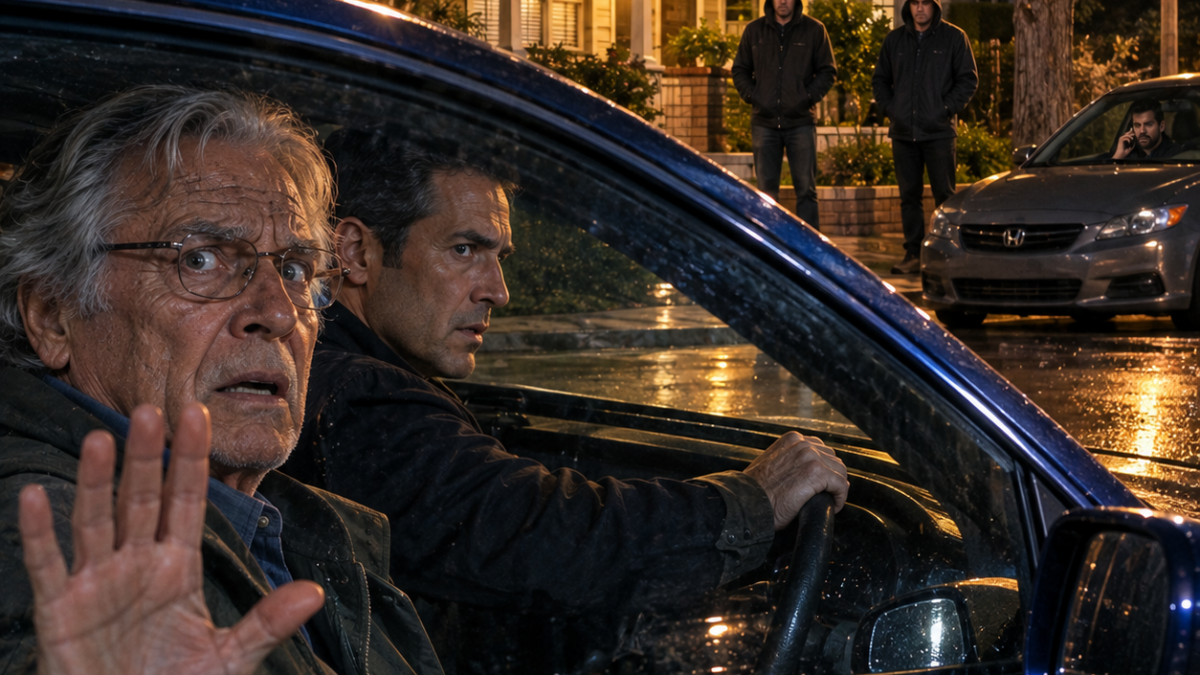
I Brought My Rideshare Driver Coffee Every Night — One Night He Said, “Don’t Go Home.”
After my wife died, the nights were the hardest, so I filled them by volunteering at the VA medical center.
Every shift ended the same way, the same ride share driver, the same quiet drive home, and the same cup of coffee, I brought him black and hot as a small thank you.
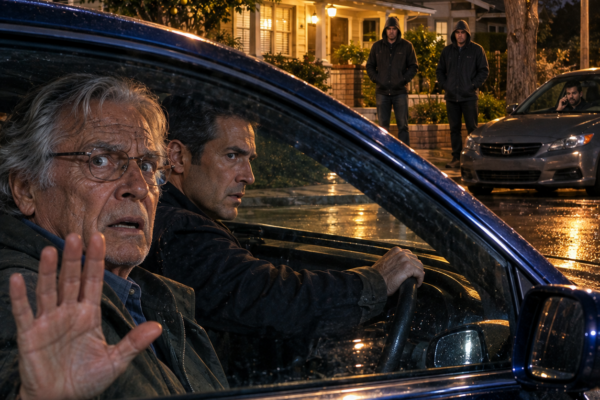
Then one night, just before we reached my street, he didnt slow down. Dont go home tonight, he said, his voice tight.
Ill explain in a minute. He drove past my house.
What I saw next drained every drop of color from my face. I appreciate you being here today.
Before we dive in, tell me where youre watching from.
Drop your city in the comments. I genuinely enjoy seeing how far these stories reach.
A quick note before we begin. This story includes dramatized elements crafted for narrative impact.
Any resemblance to actual people or places is purely coincidental, but the message behind it carries weight.
Lets begin. If my Uber driver had turned onto Cedar Street that night the way he always did, I would have stepped out of his car, walked up my driveway, unlocked my front door, and walked straight into something I would not have survived.
My name is Calvin Mercer. I am 68 years old and this is the story of how I almost died in the same house where I had built my entire life.
It was a Tuesday night in late January.
The kind of Southern California night that feels deceptively calm, cool air, quiet streets, the city lights glowing softly against a cloudless sky. I was sitting in the backseat of Darius Vaughns navy blue Honda Accord, the heater humming gently against the chill.
The faint smell of coffee lingered in the car, drifting from the thermos Darius kept wedged in his cup holder during his night shifts. We were driving west on Colorado Boulevard, retracing the same route we had followed dozens of times over the past few months.
My volunteer shift at the VA medical center had ended at 10:30 as usual. Darius had been waiting at the curb right on time as usual.
Routine has a way of making you feel invincible.
Safe, I had come to rely on it. Outside the window, Pasadena slid by in familiar fragments.
Storefronts I had known for decades.
Intersections I could navigate blindfolded.
Restaurants Margaret and I had once visited on slow Saturday afternoons. I saw the ice cream shop where we used to stop on summer evenings after dinner.
I saw the corner where she once slipped her hand into mine and told me she was proud of the life wed built. Everything looked exactly the same.
And then Darius drove past Cedar Street. At first, I assumed he hadnt noticed.
I leaned forward slightly.
Darius, you just missed the turn. No response.
His hands were fixed on the steering wheel. Not loosely, not casually the way they usually were, but tight.
His knuckles were pale under the dashboard light.
His jaw was rigid. His eyes never left the road.
Darius I said again louder. That was my street.
He inhaled slowly as if steadying himself. When he finally spoke, his voice was calm, but too calm.
Mr.Mercer, I need you to stay calm, and I need you to trust me.
A cold sensation spread through my stomach.
I had known Darius for months.
He was punctual to the minute, polite, thoughtful.
He waited until I unlocked my front door before driving away.
He never rushed, never missed a turn, never looked like this.
Whats going on? I asked.
Ill explain, he said quietly. But not yet.
Not until were somewhere safe.
Safe? The word hit me harder than it should have.
Safe.
It pulled something loose inside my chest. Something I had buried eight months ago.
Suddenly, I was no longer in the back seat of a Honda Accord.
I was standing in the sterile hallway of Huntington Memorial Hospital in Glendale. The lights were too bright.
The air smelled like disinfectant. My shoes squeaked against the polished floor.
A doctor in green scrubs approached me.
His expression was controlled professional. Too careful.
Mr.Mercer, he said gently. Im very sorry.
We did everything we could.
I dont remember answering him. I dont remember if I nodded or if I just stared.
I only remember the sound of my breathing too loud in the silence and the strange sensation that the walls were tilting inward. Margaret was gone.
The police had called 3 hours earlier.
A semi-truck had rearended her car on the 2110 freeway near the Lakinata Flintidge exit. The driver had been texting.
He hadnt seen her brake lights.
He hadnt slowed down.
Her car had spun across two lanes and slammed into the center divider. Catastrophic impact.
They let me see her one last time. She was lying in a hospital bed, her face impossibly peaceful.
Her hands were folded neatly across her chest.
I sat beside her and took one of those hands in mine.
It was still warm.
42 years, I whispered. We were supposed to have more time.
We had met in 1982 at a recruitment fair at the jet propulsion laboratory.
She had been a graduate student in material science. I had just finished my degree at Caltech.
She asked me a question about thermal shielding systems.
I gave an answer so awkward and incomplete that she laughed an unguarded genuine laugh that hooked me immediately. We were married 6 months later, 42 years, two sons, a daughter, a craftsman house in Pasadena with a lemon tree in the backyard.
Sunday mornings with coffee and crossword puzzles. Nights on the porch watching the stars and pretending we could name every constellation.
And then in one violent moment on a freeway, all of it was reduced to silence.
I buried her on a gray afternoon in February.
The sky matched the mood flat and heavy. Our sons flew in from Phoenix in Denver.
Lillian stood beside me at the graveside, her hand resting on my shoulder.
Tristan, her husband, stood a few steps away, hands shoved into his pockets, staring at the ground. I remember thinking how quiet the world felt, how final.
I remember thinking that losing Margaret was the worst thing that could ever happen to me.
I was wrong.
Darius turned onto a side street I didnt recognize. Street lights flickered across the windshield, casting shifting shadows across his face.
My hands had begun to tremble.
I pressed them flat against my knees to steady them. Darius I said softly.
Please tell me whats happening. He glanced at me through the rear view mirror and I saw it.
Fear.
Real fear. Mr.Mercer, he said carefully.
There were two men standing outside your house tonight. My breath stalled in my throat.
They were waiting for you.
The words didnt make sense at first.
They hung in the air, disconnected from reality. Two men waiting for me who I managed.
Darius didnt answer immediately.
He turned into the empty parking lot behind a Vons grocery store and pulled into a dark corner.
The engine idled softly.
He shifted the car into park, then turned fully in his seat to face me. I dont know who they are, he said, but I know who sent them.
The weight of that sentence landed like a physical blow.
My mind scrambled for explanations. Mistaken identity.
Wrong house.
a coincidence, but something in Dariuss expression told me this was not a misunderstanding.
Sent them, I repeated.
He nodded once. I felt the world tilt again, but this time there were no hospital walls to steady me.
I thought of my porch light, of the lemon tree in the yard, of Margarets windchimes hanging near the front door. I imagined myself stepping out of the car, walking up the driveway, fishing my keys from my pocket, and two men stepping out of the shadows.
I swallowed hard. Darius.
My voice sounded smaller than I intended.
What are you saying?
He held my gaze.
Im saying if I had turned onto Cedar Street like I usually do, you would have walked straight into them. The heater hummed quietly.
Somewhere in the distance, a car passed on the main road.
Everything else felt suspended.
I had believed the worst pain of my life was already behind me.
I had believed grief was the deepest darkness I would ever face. But sitting in that dim parking lot staring at the man who had just refused to take me home.
I realized something else entirely. Grief had broken my heart.
This was different.
This was someone planning to break my life. And in that moment, I understood that losing Margaret had not been the worst thing that could happen to me.
Not even close.
The house did not just feel quiet after Margaret died. It felt hollow.
Every morning began the same way. Pale California sunlight filtered through the blinds in thin golden lines.
The refrigerator hummed steadily in the kitchen. The old floorboards creaked under my weight as I made my way down the hallway.
But there was no coffee brewing, no folded newspaper waiting on the table, no crossword puzzle half-finish in Margarets neat handwriting, no soft humming drifting in from the backyard as she watered the lemon tree we had planted 20 years earlier. Just silence.
Not the peaceful kind, the heavy kind. The kind that presses against your ears until you realize it is not the absence of sound.
It is the absence of someone. Margaret and I had lived in that house for nearly three decades.
We bought it in the mid 90s back when old Pasadena was still affordable, or at least affordable by Southern California standards.
It was a craftsman bungalow with a wide porch that caught the afternoon light just right, a detached garage I had converted into a workshop, and a backyard shaded by a single jackaranda tree that bloomed purple every spring. The realtor had told us it was worth around $400,000 at the time.
That felt like an enormous sum back then. Now, according to the latest county assessment, it was valued at just over 2.
3 million.
Margaret used to joke that we should sell it and buy a small cottage near the coast.
Less to clean, she would say.
More sunsets.
We never did. Over the course of 32 years at the Jet Propulsion Laboratory, I had accumulated just over $600,000 in retirement savings.
I had retired at 65 after spending most of my career designing thermal management systems for deep space missions, systems that had to survive brutal temperature swings minus 100° in the dark, blistering heat in direct solar exposure.
It had been a good career.
Stable, predictable, structured.
My life had been structured until it wasnt.
Now sitting alone in that large house every evening, I felt like an intruder in my own life.
The rooms were too big, the ceilings too high. The spaces between furniture seemed wider somehow.
The house echoed. Lillian came the day after the funeral.
She stood on the porch. Her dark hair pulled back her eyes red from crying.
She was 38, slender, composed in the careful way her mother had always been.
When she stepped forward and wrapped her arms around me, her shoulders shook.
Im so sorry, Dad, she whispered. Im so, so sorry.
I held her tightly, but I said nothing. What words could possibly matter in a moment like that?
Tristan had driven her. He remained outside near the car, tall, broad-shouldered, clean shaven.
He leaned against the hood with his arms folded, staring at his phone as if checking stock prices.
He did not come inside. He did not hug me.
He did not say he was sorry. Lillian pulled back and wiped her eyes.
Dad, if you need anything, anything at all, just call me. Im here for you.
I mean it.
And I believed her. I truly did.
She came by twice more in the following weeks. Each time she brought food, casserles, soups, things that were easy to reheat.
Most of it went untouched in the refrigerator. She asked gentle questions.
Are you sleeping? Are you eating enough?
Do you need help with paperwork? I told her I was fine.
I told her I was managing. I was not fine.
But I did not know how to say that without breaking.
The nights were the worst. The house seemed to expand after sunset.
The quiet became suffocating. I tried leaving the television on for background noise.
I tried reading technical journals.
I tried reorganizing the garage.
Nothing worked. I started going to bed later and later hoping exhaustion would overpower the memories before they had a chance to surface.
It didnt.
That was when I remembered Harolds advice. Harold was 82, a former Air Force cargo pilot who had flown missions in Vietnam.
I met him at the VA Medical Center in downtown Los Angeles, where I had begun volunteering three nights a week, Tuesdays, Thursdays, and Saturdays from 6:00 in the evening until 10:30. The center ran a technical training program for veterans transitioning into civilian careers.
They needed someone who could teach basic engineering concepts, circuit design, troubleshooting systems, translating military technical skills into civilian language. I had never considered myself a teacher, but I needed somewhere to go.
Harold had lost his wife 6 years earlier. He had the kind of face that looked permanently weathered by both sun and experience.
White beard, sharp blue eyes. Every time he saw me sitting alone in the break room after a shift, staring into a paper cup of burnt coffee, he said the same thing.
Listen, kid, he would mutter.
You got to keep moving. The second you stop, the pain catches up.
Trust me, I always nodded.
I never told him the truth that the pain had already caught up, that it had taken the passenger seat of my life and refused to leave. One Thursday night in late October, I almost caused a serious accident on the drive home.
I had been staring at the road, but not seeing it. The white lines blurred together.
My thoughts drifted somewhere between memory and regret. I did not notice the red light at a Royo in California until I was already halfway through the intersection.
A horn blared.
Tires screeched.
I jerked the wheel and slammed on the brakes.
My heart pounded so violently I thought I might faint. I pulled over and sat there for 10 full minutes, hands gripping the steering wheel, trying to steady my breathing.
The next morning, my older son called from Arizona.
He worked in finance. We had not spoken much since the funeral.
Conversations felt awkward now, like neither of us knew what role to play.
He asked how I was doing. I told him about the near miss.
Dad, he said carefully.
Maybe you should consider using a ride share service at night. Just until things settle, I bristled at the suggestion.
I had driven safely for 50 years. I had designed systems that traveled millions of miles through space.
And now I needed someone to drive me home from work. But I knew he was right.
So the following Tuesday, I downloaded the Uber app.
I felt ridiculous.
I spent 15 minutes entering my credit card information.
I stared at the interface as if it were a foreign language.
I had spent decades designing precision systems for NASA missions, and I struggled to request a car on my own phone. At 10:30 that night, after my shift ended, I stood outside the VA building and pressed the button.
5 minutes later, a navy blue Honda Accord pulled up to the curb.
The driver rolled down the window.
Mr.Mercer, he asked. He was a black man in his mid-40s with closecropped hair and a calm, grounded presence.
His voice was steady, controlled. I nodded and climbed into the back seat.
The car was immaculate, upholstery, spotless.
A faint lemon scent drifted from an air freshener hanging from the mirror. A small thermos sat in the cup holder.
A folded jacket rested neatly on the passenger seat. Good evening, he said.
Im Darius.
Ill get you home safe. Something about the way he said it felt intentional.
Safe?
I nodded, feeling awkward.
I was not used to sitting in the backseat of someone elses car.
Not used to being the passenger in my own life. Darius did not force conversation.
He merged smoothly into traffic. His hands rested confidently on the wheel.
He did not speed.
He did not weave. He drove with deliberate care like someone who understood that responsibility did not end with the steering wheel.
When we pulled up to my house on Cedar Street, I instinctively reached for my wallet. Darius shook his head.
Its already charged to your card, Mr.Mercer.
Youre all set. I thanked him and stepped out.
As I walked up the driveway, I noticed something.
The headlights remained on.
The engine continued idling.
Darius didnt leave. He waited.
He stayed parked at the curb until I unlocked my front door, stepped inside, and turned on the porch light.
Only then did his car pull away. At the time, I thought it was simple courtesy, professionalism, maybe standard practice.
But looking back now, I understand something I didnt see then.
That was the first sign, the first indication that Darius Vaughn paid attention to details other people ignored. That he noticed vulnerabilities.
That he understood danger before it announced itself. And that long before I realized I needed protecting, he had already started watching.
Over the next 3 weeks, Darius stopped being a ride share driver in my phone app and became part of the architecture of my life. Every Tuesday, Thursday, and Saturday night at precisely 10:30, I would step out of the VA medical center with my jacket buttoned against the cold, open the Uber app, and request a ride.
And every single time, without fail, a navy blue Honda Accord would glide to the curb within minutes.
At first, I told myself it was coincidence.
Pasadena wasnt a small town, but it wasnt Los Angeles either.
Maybe he just worked the same hours.
Maybe the algorithm favored consistency. But by the fifth or sixth ride, I began to notice the pattern felt too precise to be random.
One Thursday evening, as I slid into the back seat, I decided to ask. Do you work this area a lot?
I said, closing the door gently behind me, Darius caught my eye in the rear view mirror. Mostly nights, he replied.
Downtown to Pasadena. Thats my route.
Quieter traffic, fewer problems, safer for folks heading home late.
Makes sense, I said.
He nodded once.
After a while, you get to know the rhythm of the streets.
Dont even need the GPS half the time. As if to demonstrate, he pulled away from the curb and merged into traffic without glancing at his phone.
No robotic voice directing him. No hesitation.
He turned onto Alamita with the ease of someone who had memorized the city by heart.
There was something reassuring about that. By the second week, I stopped sitting in the back seat.
It had begun to feel overly formal, like I was being chauffeurred rather than transported.
One evening, I opened the front passenger door instead.
Darius didnt question it.
He simply reached over, adjusted the seat back a few inches to give me more room, and said with a small grin, Welcome aboard. From that point on, the rides felt less transactional and more conversational.
We didnt dive into heavy subjects.
Not at first.
We talked about ordinary things.
the unpredictable weather in Southern California, the Lakers disappointing defense, the endless construction on the 110 freeway that seemed destined to outlive us both.
Darius had a way of listening that felt intentional.
He didnt interrupt. He didnt offer unnecessary advice.
He didnt pry. He would nod occasionally add a brief comment, then let silence sit comfortably between us.
One night about halfway through November, he asked about my volunteer work. You teach at the VA, right?
He said, Technical stuff, basic engineering, I answered.
Circuitry, systems, troubleshooting.
A lot of the veterans already have hands-on experience.
They just dont know how to translate it into civilian language, certifications, resumes, interview answers.
Darius considered that. Thats important work, he said.
A lot of vets dont get much support when they come back. Theyre expected to just adjust.
Most of them do, I said.
But they shouldnt have to do it alone.
He was quiet for a few seconds, eyes steady on the road. My uncle was a Marine, he said finally.
Two tours in Iraq. When he came home, he couldnt hold a job.
Not because he wasnt capable.
He just couldnt sleep. couldnt sit still.
Too many people in one room would set him off. Im sorry, I said softly.
Darius gave a slight shrug. He found carpentry.
Works mostly by himself now, says the quiet helps.
I nodded. I understood more than I said.
Grief and trauma do not always announce themselves loudly. Sometimes they show up in restlessness, in insomnia, in the inability to sit still.
By mid- November, the temperature at night had dropped just enough to bite. I began noticing that Darius kept his jacket zipped, even when the heater ran warm.
The following Thursday, I stopped at the VA vending machine before leaving.
The coffee was terrible, thin, overbrewwed, vaguely bitter, but it was hot. I bought two cups and carried them carefully outside.
When the accord pulled up, I opened the passenger door and held one out.
I thought you might want this, I said. Its getting colder.
Darius looked at the cup as if Id handed him something fragile. You didnt have to do that, Mr.Mercer.
Call me Calvin, I replied.
And yes, I did.
Youve been reliable.
That matters.
He accepted it slowly, almost cautiously, and took a sip.
A small smile crept across his face.
black.
No sugar. Howd you know?
I buckled my seat belt. I pay attention.
He let out a quiet laugh, genuine, unforced, and placed the cup carefully in the holder. Fair enough, he said.
That night, something shifted. The conversation moved more easily like a door that had finally opened.
Darius told me about his daughter Kesha, 16 years old, a junior in high school, bright, focused, already thinking beyond her neighborhood.
She wants to study aerospace engineering, he said, pride woven into every syllable.
Like you, I turned toward him, surprised. Aerospace?
Yeah. Shes been obsessed with space since she was little.
used to drag me to Griffith Observatory every other weekend. Shed stand in front of those planetarium displays for hours, reading every plaque like it was scripture.
I couldnt help but smile. Thats a good obsession to have.
Shes taking AP calculus now, Darius continued.
I try to help her with homework, but Im out of my depth. If she ever wants to talk to someone whos been in the field, I said Id be happy to answer questions.
I spent 32 years at JPL.
I still know people there.
He glanced at me. Something softer in his expression.
Thats kind of you, Calvin. Really, its nothing I said.
Someone helped me when I was her age.
We drove in silence for a few minutes after that not awkward silence, but shared quiet.
The street lights flickered across the windshield. The engine hummed steadily.
Outside, Pasadena rolled by in dim storefronts and sleeping neighborhoods. For the first time since Margarets death, the ride home did not feel like a descent into emptiness.
It felt accompanied.
Darius was not flashy. He was not dramatic, but he noticed things.
The way I winced when the road was too bright.
The way I hesitated before stepping out of the car, the way my shoulders tightened when we passed certain intersections. He always waited until I unlocked my door.
Always. He never said he was watching out for me.
He didnt need to.
It showed in the details. In the way he adjusted the seat without being asked.
In the way he chose smoother roots at night.
In the way he kept his voice steady when conversation drifted too close to grief.
Looking back now, I understand something I did not understand then.
Those small gestures were not random acts of politeness.
They were habits of awareness, and awareness I would soon learn is the difference between routine and survival.
At the time, though, I simply thought I had found a dependable driver. I had no idea I had found something much more important.
I had no idea how much those quiet rides, those small conversations about basketball and engineering, and a teenage girl dreaming about the stars would matter in the weeks ahead. And I certainly had no idea that the man who waited for my porch light to turn on would soon be the only reason I was still alive.
The week after the coffee, Darius told me why he drove nights.
It was a Thursday and we were trapped on the 110 freeway beneath a sky the color of tarnished steel. A jacknifed semi near the Exposition Boulevard exit had swallowed two lanes and traffic had hardened into something immovable.
Red brake lights stretched ahead of us in an endless ribbon shimmering in the cold air. After 10 minutes of inching forward, Darius shifted the car into park and turned off the engine.
The sudden quiet felt heavier than the traffic, so I said, Studying the unmoving sea of lights. Have you always been a driver?
Darius rested his hands loosely on the steering wheel. He didnt answer immediately.
He stared through the windshield as if replaying a memory he wasnt sure he wanted to revisit.
No, he said finally.
I used to work for an insurance company, Liberty Mutual, claims investigator, fraud detection. I turned toward him.
Fraud detection. He nodded once.
Ma, mostly car accidents, workplace injuries, people exaggerate. Sometimes they fabricate entirely.
My job was to figure out which stories held together and which didnt. How long?
12 years, he replied.
Started right after college.
I was good at it.
Not because I didnt trust people, because I noticed patterns, inconsistencies, the small details that change when someone tells the same story twice.
There was no pride in his voice, just fact.
What made you leave? Traffic nudged forward a few feet.
Darius restarted the engine but kept his foot on the brake.
He took a slow breath before answering.
Three years ago, I got assigned to a case, a physician in Glendale.
On paper, he was respected.
Clean office, clean record.
But his billing numbers didnt add up.
He was charging Medicare for treatments that never happened. physical therapy sessions, procedures, prescriptions targeting who I asked quietly.
Elderly patients, Darius said. People who didnt understand the paperwork.
People who trusted their doctor.
The word elderly hung between us like an accusation. What did you do?
What I was hired to do, he said. I investigated.
Six months of digging. I found falsified records, forged signatures, payments funneled through shell companies.
It was organized, intentional, and you reported it.
I did. His jaw tightened.
I submitted the case. Thought Id done something worthwhile.
And Darius gave a short, humorless breath.
The doctor played golf with one of the vice presidents. Two weeks later, I was in an HR meeting being told the evidence was inconclusive.
They suggested I close the file and you refused. He glanced at me a flicker of something sharp in his eyes.
I refused. What happened?
I went above them, he said. Filed a complaint with the state insurance board.
Thought someone higher up would care. Did they?
Eventually, but not before the company fired me. For what?
He looked back at the traffic.
For not being a cultural fit, for not understanding team alignment.
I shook my head slowly. Thats legal, he finished.
At will employment.
They didnt need to justify it.
The freeway began to crawl again.
Darius eased the car forward, merging carefully into the right lane.
His driving remained steady, controlled, but I could see the tension in the set of his shoulders.
What about your family? I asked gently.
He didnt hesitate this time. My wife couldnt handle the instability, he said.
The lost income, the uncertainty, the legal costs. We argued constantly.
6 months after I lost the job, she filed for divorce.
Im sorry. She moved to San Diego, he continued.
left Kesha with me.
He said it without bitterness, just fact. And Uber, I tried other things first, Darius said.
Private investigations, contract security. Nothing steady.
Uber gave me flexibility. I can get Kesha to school, pick her up, be home when she needs help with homework.
Then I drive nights.
He paused. I couldnt protect those patients 3 years ago, he said quietly.
I wont make that mistake again.
The words lingered in the car long after he said them.
I didnt realize it at the time, but that was not just a confession. It was a promise.
Around that same week, Lillian began appearing more often. It was subtle at first.
Lillian had always been busy, her career, her marriage, her own schedule.
After the funeral, her visits had been sporadic, but suddenly she was at my house three Sundays in a row.
That hadnt happened since before she got married.
She arrived with food, cleaned dishes I hadnt noticed piling up, straightened the throw pillows Margaret used to arrange just so.
She moved through the house with an attentiveness that felt almost rehearsed.
Dad, are you eating enough?
she asked one afternoon, wiping down the kitchen counter.
Im fine, I told her. Are you sleeping?
Mostly.
Taking your vitamins? I smiled faintly.
Yes, Mom. She didnt laugh.
Instead, she crossed her arms and studied me. You look tired.
I am tired, I said. Thats different from being unwell, she nodded slowly.
Then her voice shifted. Have you thought about updating your will?
The question felt oddly sharp in the quiet kitchen.
Not yet, I said.
Why?
Well, after mom, things change.
Its just good to have everything organized. Organized for what I asked.
She offered a quick smile.
Too quick. Just in case, Dad.
Just in case of what?
Her smile widened slightly, but her eyes didnt follow. You never know.
The following Sunday, the questions continued. Whos listed as the beneficiary on your 401k?
The tone was casual, almost careless.
You are, I replied.
Youre my only daughter. She tilted her head slightly, processing that.
And the house?
What about it?
Is it fully in your name? Yes.
She nodded again. Tristan never came inside.
He remained in the driveway engine, idling hands on the steering wheel, watching. At the time, I told myself Lillian was being responsible, protective, maybe even worried about me living alone.
Grief makes you interpret concern as comfort. But there was something different in the rhythm of her questions.
They werent about my health.
They werent about my loneliness. They were about documentation, beneficiaries, ownership, access.
She began asking if I needed help managing my accounts, if I wanted someone to sit with me while reviewing statements, if I had considered consolidating assets.
Each question sounded reasonable on its own.
Together, they formed a pattern. I thought about Dariuss words on the freeway.
Inconsistencies, details that dont add up.
I didnt see it then.
I didnt want to. I saw a daughter stepping up.
But warmth can be a mask.
Concern can be strategy. And the more often Lillian visited, the more I began to sense that the conversations were not about love.
They were about positioning, about proximity to something measurable. At the time, I dismissed the unease in my chest as grief.
I told myself I was being paranoid. But the truth was simpler.
The tone had shifted, and I didnt yet understand.
that the shift had nothing to do with my well-being. It had everything to do with my worth, not as a father, but as an asset.
On the fourth Sunday, Lillian planted a seed that should have unsettled me more than it did. She was standing at my stove, stirring a pot of soup, as if she had always belonged there.
The late afternoon light streamed through the kitchen window, catching in her dark hair the same shade Margaret had been when we were young.
I sat at the table with the newspaper spread in front of me, pretending to read. It felt almost ordinary.
Dangerous things often do.
Dad, she said casually without turning around.
Youve been forgetting things lately. I lowered the paper.
Forgetting what?
She continued stirring methodical controlled.
Last week you called me Jennifer. I frowned.
Jennifer?
Thats not my name. She said lightly.
I blinked, searching my memory.
I did that. You did, she replied, finally turning toward me.
Her expression was carefully arranged, not accusatory, not alarmed, concerned, measured.
And you asked me about moms book club. What about it, Dad?
She said gently.
Mom stopped going to book club 3 years ago. The words settled heavily between us.
I tried to replay the conversation in my mind. tried to picture myself saying Jennifer.
Tried to hear myself asking about a book club that had dissolved long before Margaret died.
I dont remember that I admitted.
I know, Lillian said softly.
Thats what worries me.
Something flickered inside me.
Small, sharp, uncomfortable. Not fear exactly.
Doubt.
I folded the newspaper slowly. I might have been distracted.
Grief does strange things.
Maybe she ag Vaughn, but its happening more often. More often?
She crossed her arms.
Not defensive, not aggressive. Protective.
Have you considered seeing a doctor for what I asked? Memory issues.
Dad, at your age, those things can escalate quickly.
Im 68, I said, trying to keep irritation out of my voice. Not 90.
I know, she said quickly. But early signs can start subtle.
Mom would want me to make sure youre okay. The mention of Margaret disarmed me.
I looked down at the table.
Maybe youre right, I said quietly. Ill schedule an appointment.
Lillians smile returned. But it felt fragile, brittle around the edges.
Good, she said. I just want you safe.
After she left, the house felt even quieter than usual.
I sat at the kitchen table long after the soup had cooled. I tried to reconstruct the moment she described.
Tried to remember the slip of the tongue.
Tried to decide whether it had actually happened or whether grief had blurred something in my mind.
The harder I tried to recall it, the less certain I became. Doubt is powerful when planted carefully.
What I didnt know, what I couldnt have known was that while Lillian was introducing uncertainty into my home, something else was unfolding across the city.
Two nights later, just after 11:15 on a Tuesday, Darius had dropped me off on Cedar Street and was driving back toward downtown Los Angeles.
When his phone chimed with a new ride request, Pick up the Edison, Spring Street, he accepted. The Edison was a dimly lit underground bar dressed up like a speak easy exposed brick vintage lighting businessman, unwinding too loudly.
Darius pulled to the curb and waited.
A few minutes later, a man staggered out. He was tall and broad-shouldered, dressed in an expensive suit that had lost its discipline.
Tie loosened, collar open.
His movements had the loose sway of someone deep into a bottle of whiskey. Darius unlocked the doors.
The man climbed into the back seat without greeting him. Glendale, he muttered.
Ill put the address in.
Darius nodded and eased into traffic. He had transported enough intoxicated passengers to recognize the spectrum.
Sleepy, chatty, combative.
This one radiated something sharper.
Anger.
Goddamn old man.
The passenger muttered barely above a whisper. Sitting on all that money.
Darius kept his gaze fixed forward.
No reaction.
The mans phone lit up. He dialed without hesitation and didnt bother lowering his voice.
Yeah, he said louder now. Im handling it.
Dariuss fingers tightened slightly on the wheel.
Shes got him wrapped around her finger, the man continued.
Just need a few more weeks. The words hung in the air.
Darius glanced briefly at the rear view mirror.
The mans jaw was clenched, eyes unfocused. The house alone is worth over 2 million, the man said.
Pasadena plus the retirement accounts. Were talking 3 million easy.
Pasadena, old man.
3 million.
A cold sensation slid down Dariuss spine.
He remained silent, calm, invisible.
Just get the paperwork signed.
The passenger continued. Once hes declared incompetent, we move him into a facility.
Sell the house.
Liquidate the accounts. Done.
Declared incompetent. Dariuss pulse slowed.
Not from calm, but from focus.
 [Tap here for the Next Part ]