CEO Was Surrounded by Thugs —Then the Single Dad Janitor Saved Her From The Thugs (Part 2)
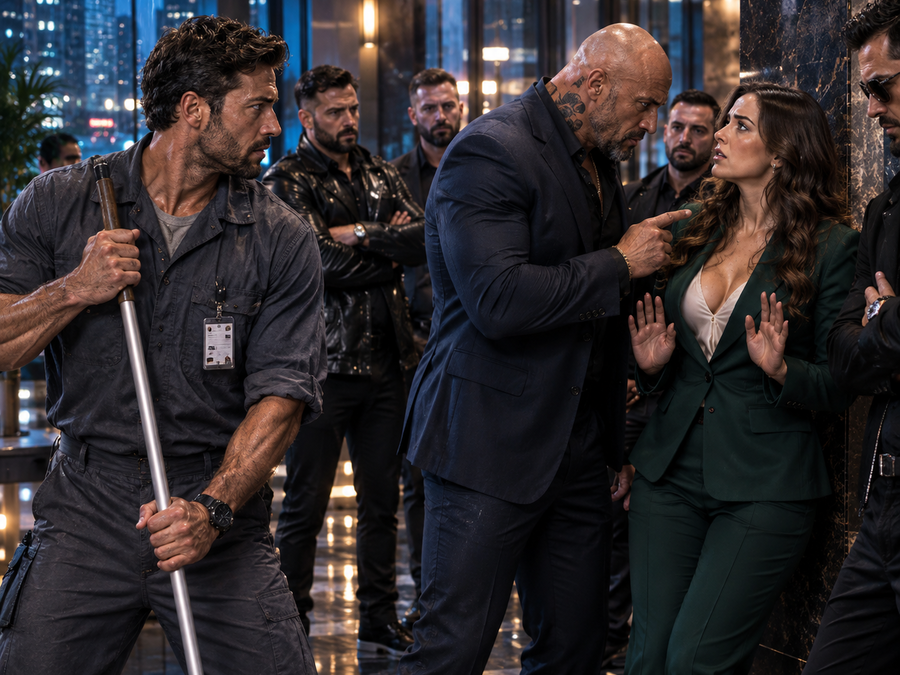
CEO Was Surrounded by Thugs —Then the Single Dad Janitor Saved Her From The Thugs (Part 2)
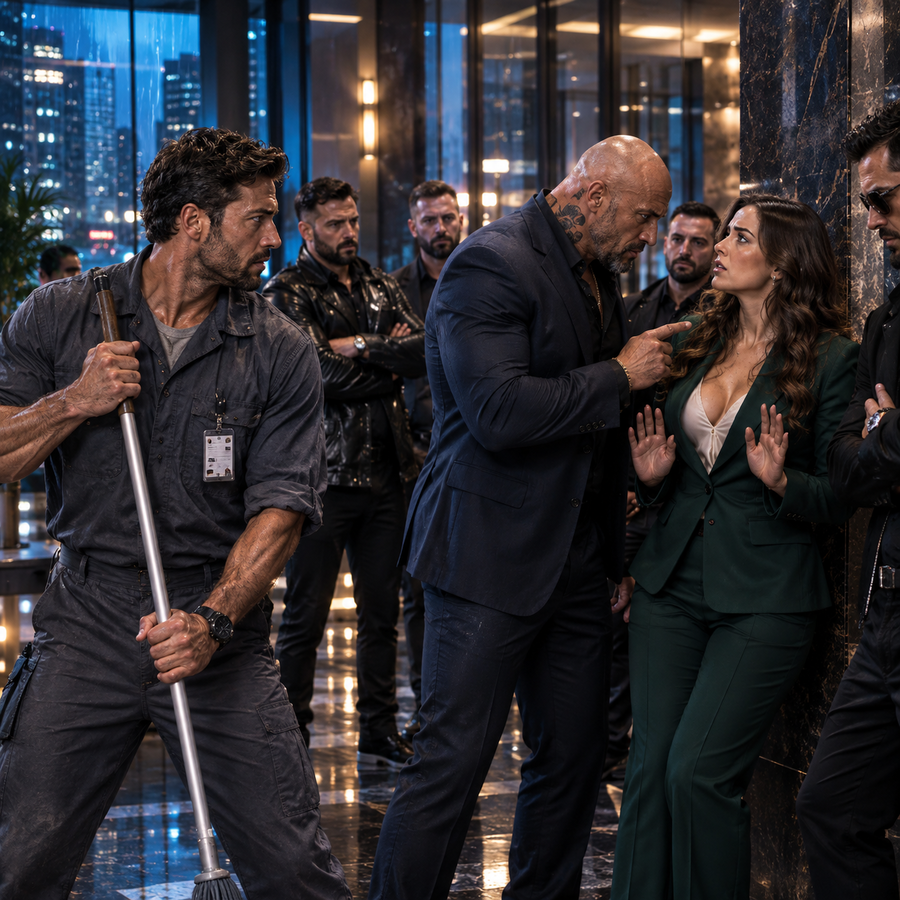
PART 2
At 1:15 in the morning, Michael finally got in his car. He sat in the parking structure for a few minutes before he started the engine. Not because he needed to, but because his body required a transition period between the intensity of what the night had been and the ordinary reality of driving home in the dark.
He flexed his bandaged hand against the steering wheel, feeling the pull of the butterfly closures, and he breathed in. Out. The building was still lit above him. Ruiz’s people were still on thirty-one. The black SUV had been found two blocks away, abandoned. Harlo and the others had gone—which meant they were either in custody already from a parallel action Ruiz had coordinated, or they were moving, and either way it was no longer Michael’s problem.
Tonight he’d done what needed doing. He started the car. The drive home took twenty minutes through streets that were wet and empty and reflected the city lights back at him in long orange streaks. He drove the speed limit and stopped at every yellow light and let his mind decompress from the operational posture it had been running on all night, releasing it the way you release a breath you’ve been holding.
He thought about Richard Callaway in an interrogation room somewhere, talking fast while his lawyer took notes. He thought about the document Clare had been holding when he walked off the elevator and the specific set of legal mechanisms it was designed to trigger and how close it had come to working. He thought about Vincent Harlo saying his name—Michael Hayes—with that expression on his face. That recalibration. That moment of recognition that had changed the air in the room.
He thought about the fact that he’d told himself for three years that who he used to be was irrelevant to who he was now, and tonight had proved him wrong in the most direct way possible. That version of him was not gone. He’d just been waiting behind a cleaning cart for a night when it was the only thing that mattered.
He didn’t know exactly what to do with that. He pulled into his parking space at 1:38, went upstairs quietly, and opened Emma’s door without turning on the light. She was asleep on her side. Her hair spread across the pillow, one arm around the stuffed rabbit she’d had since she was three and still refused to retire. Her breathing was even and deep and entirely unaware of what the night had been.
He stood in the doorway for a moment. Then he pulled her door to its usual angle—open two inches, not more, not less, because that was how she liked it—and went to the kitchen and sat down at the table and poured himself a glass of water.
He sat with it for a while. He was going to have to decide some things. Not tonight. Tonight was for sitting still and being grateful that Emma was asleep in the next room and his hand was bandaged and the people who’d started the night by putting their hands on Clare Whitmore were either in custody or running.
But soon. He’d told Clare the rest was something they’d get to. He was starting to understand that he’d meant it. The city outside was quiet. His apartment was quiet. He sat in the kitchen until two in the morning, until the adrenaline had finished its long, slow exit and he was just tired. And then he went to bed and was asleep before his head finished settling into the pillow.
In the morning, Emma would be at the counter kicking her feet. In the morning, everything would be ordinary again for about thirty minutes, and he intended to be completely present for every second of it. The rest could wait until after breakfast.
Emma found out on Thursday morning. Not from Michael. He’d planned to tell her himself, carefully, in the version that was true but didn’t include the parts that would keep a nine-year-old awake at night. He was going to sit her down after school, let her have her snack first, and explain that something had happened at work, and that he was fine and that everything was handled. That was the plan.
The plan lasted until 7:12 in the morning when Emma came into the kitchen already dressed for school, dropped her backpack on the chair, looked directly at his bandaged hand on the table, and said, “Dad, what happened to your hand?”
Not a question. A statement that required an answer. He looked at his hand. He’d forgotten—in the particular way you forget things that are attached to your body and therefore invisible—that it was visible to other people.
“I got a small cut at work,” he said. Emma sat down across from him and looked at him with her mother’s eyes, the ones that had never once accepted a partial answer without pulling the rest out of him by sheer force of patient attention.
“How small?” she said. “Small enough that I’m sitting here making your breakfast.” “You’re not making my breakfast. You’re sitting there with coffee looking at your hand.” He looked at his coffee. She was right. He hadn’t started breakfast yet. “The toast is coming,” he said.
“Dad.” “Emma.” She held the look for three full seconds. He made it to two and a half. “Something happened at work,” he said. “I’m fine. Nobody got seriously hurt. The people responsible are being dealt with by the police.”
Emma processed this in the specific way she processed information that alarmed her. Very still. Very focused. No visible emotion on the surface while a significant amount of it moved underneath. “Did you protect someone?” she said. He thought about how to answer that. “Yes,” he said.
She nodded slowly. Her jaw had gone slightly tight the way it did when she was working to keep her face from showing something. “Were you scared?” she said. “No,” he said. Then, because she deserved honesty: “Not in the moment. A little bit after.” “Why after?”
“Because after is when you have time to think about what could have happened.” She looked at his hand again. “Does it hurt?” “A little.” “Okay,” she said.
She stood up, went to the cabinet, and got the bread out herself and put it in the toaster. She did this without saying anything else for a moment. Her back to him, and he watched her and understood that she was giving herself the same transition time he’d given himself in the parking structure the night before.
Then she said, without turning around, “You’re the best, Dad. You know that, right?” He had to look out the window for a second. “I know,” he said. “Good.” The toast popped. “Because you are. Even when you scare me.” She turned around and looked at him directly. “Sometimes. But then you always come home, so it evens out.”
He didn’t have an answer for that. He took the toast when she handed it to him, and they ate breakfast together at the kitchen table, and he watched her talk about a project she had due in science class, and the morning was completely ordinary in the way that only mornings after extraordinary nights could be. Fragile and precious and absolutely necessary.
At 9:15, after Emma’s bus had pulled away and he’d cleaned up the kitchen, his phone rang. The number was Clare’s direct line. He knew it because she’d given it to him the previous night before he left, writing it on the back of one of the business cards from her jacket pocket with the same focused efficiency she brought to everything.
“Michael,” she said when he answered. Her voice was different from last night. Still controlled, but with something brittle underneath it that told him she hadn’t slept. “You should be resting,” he said. “I’ve been on calls since six,” she said.
“My board chair called at 5:50. Someone leaked. I don’t know who yet—it might have been one of Ruiz’s people, might have been one of mine—but the story is out. Not the full story. Just that there was an incident at Apex Horizon last night and that a senior executive is under investigation.”
Michael was quiet for a moment. “The stock is down four percent at opening,” she said. “It’ll correct when the full story comes out, but right now the market is reading this as instability. Three board members have called me in the last hour asking questions that are really one question, which is whether they should be worried.”
“Should they be?” “No,” she said. “The Stratus deal is intact. The documentation is secure. Ruiz’s people confirmed last night that nothing from the deal room was accessed externally.” She paused. “But here’s the problem. Three of those board members are going to vote on whether to continue the acquisition at next week’s meeting. And right now, two of them are spooked.”
“What do they need?” “They need to understand that Apex Horizon is not a company in crisis. They need to see leadership that’s stable and confident and not running from what happened.” She paused again, and this time the pause was longer. “They also need to understand what actually happened. Not the leaked version, not the rumor. The real version. And the real version involves you.”
Michael held the phone and looked at the kitchen wall. “I figured it would come to that,” he said. “I’m not asking you to do anything you’re not comfortable with,” she said quickly. “I want to be clear about that. What you did last night—you didn’t do it to get a spotlight. I understand that. But the story is already out there in pieces. And if I don’t control the narrative, someone else will. And the version they tell won’t be accurate about what you are or what you did.”
“What I am,” he repeated. “A father who chose his daughter. A man who walked away from a career that paid extremely well because he decided being present mattered more than being important.” She paused. “That’s a story that doesn’t make anyone look bad except the people who deserve to look bad. And it’s true.”
He was quiet for a moment. “What exactly are you asking?” he said. “I’m asking if you’d be willing to be in the room when I address the board,” she said. “Not to perform. Not to be displayed. Just to be there so that the people asking questions can put a face to what happened and understand who they’re actually dealing with.”
He thought about Emma at the kitchen counter. He thought about the decision he’d known last night was coming. “When?” “Tomorrow morning. Nine o’clock. I’ll need to arrange someone for Emma.” “I’ll arrange it,” he said. “Of course. I’ll be there,” he said.
The board meeting was in the forty-second floor executive suite—the one Michael had cleaned several hundred times and never once sat down in. He arrived at 8:55 in clothes that were not his uniform. Dark slacks, a gray button-down, the good shoes he wore to parent-teacher conferences. He’d looked at himself in the mirror that morning for longer than usual, not because he was vain, but because he was checking something.
He wanted to make sure the person looking back at him was the person he actually was and not a version performing something for someone else’s benefit. He looked fine. He looked like Emma’s dad dressed for a meeting. That was enough.
Clare met him at the elevator. She was in full professional mode. Suit. Composure. The specific kind of authority she wore when she needed a room to follow her without question. But when the elevator opened and she saw him, something in her face shifted briefly, and she said, “Thank you for coming,” and meant it in a way that wasn’t corporate courtesy.
“Let’s get this done,” he said. There were nine board members in the room—seven in person, two on screen. They ranged in age from mid-forties to late sixties, and they had the collective energy of people who were accustomed to being the most powerful presence in any room they entered. Three of them looked at Michael when he walked in with the expression of people who had been told something that didn’t match what they were seeing.
He sat in the chair Clare indicated to her right, and he put his bandaged hand on the table where it was visible, and he looked at the board. Clare started talking. She told them everything. Not the managed version. Not the strategic narrative. Everything.
Richard’s betrayal. Vestara Capital’s operation. The specific legal mechanism. The transfer document was designed to trigger the financial play that had been positioned to profit from Apex Horizon’s stock collapse. She laid it out with the clarity of someone who had spent the early morning hours turning grief and anger into understanding.
And when she was done, the room was very quiet. Then a board member named Gerald Hoy—sixty-three, white-haired, with the reputation of being the most analytically rigorous person in the room—leaned forward and said, “And this man is your night janitor.”
“He’s Michael Hayes,” Clare said. “He’s a father. He’s also the most capable person who was in this building last night.” Gerald Hoy looked at Michael. “Mr. Hayes, can you explain to me your background?”
“Yes,” Michael said. He did. Shorter than he’d told it to Clare, because boards needed the architecture of a thing rather than the texture. He gave them eleven years of operational security work in factual language, the kind that made the shape of it clear without requiring anyone to ask follow-up questions. He told them why he’d stopped. He told them what the last three years had looked like and why.
When he finished, Gerald Hoy looked at him for a moment. “You left a six-figure career to push a cleaning cart,” he said. “I left it to be home for my daughter,” Michael said. “And last night—last night I was in the building and someone needed help.” He said, “That’s the whole of it.”
Gerald Hoy looked at Clare. “The Stratus deal,” he said. “You’re confident it proceeds.” “I’m confident,” she said. “The documentation is intact. The timeline is on track. And the people who tried to stop it are in the process of being charged with criminal conspiracy, securities fraud, and a federal violation that Ruiz’s team has been very quiet about but has described as significant.”
The two board members on screen exchanged a glance. A woman named Patricia So, who’d been silent to that point and had the reputation of being the most decisive vote on the board, said, “Clare. What do you need from us?”
“I need a unified message from the board that Apex Horizon is stable, that the Stratus acquisition proceeds as scheduled, and that the investigation into Callaway is being handled appropriately.” She paused. “And I need it public before the market closes today.”
Patricia So looked at Gerald Hoy. Something passed between them that was the compressed language of two people who had made decisions together many times and had developed the shorthand for it. “Done,” Patricia said. Gerald nodded.
The room moved forward. Afterward, when the board members had filed out in their various directions, phones already appearing, calls already being made, Clare and Michael stood at the window on the forty-second floor and looked out at the city.
“I owe you an honest conversation,” she said. “You don’t owe me anything,” he said. “I’ve been thinking since last night about what I actually know about you,” she said. “And what I realized is that I’ve been having conversations with you for over two years, and I only knew the outline.”
“You knew not to push it.” “It wasn’t mine to push,” he said. “You were the CEO. I was the janitor.” “You were never just the janitor.” “I was exactly the janitor,” he said. “That’s not a diminishment. It was a choice I made deliberately, and I’d make it again.”
She turned to look at him. “Is that still true today?” He understood what she was really asking. “I don’t know,” he said. “I told you last night there were things to figure out. I meant that.”
“Then let me put something on the table,” she said. “Not because you performed well in the boardroom and not because I feel like I owe you after last night. Because I’ve been watching how you move through this building for two years, and I know what I’m looking at.”
“What are you looking at?” “A man who’s been operating at about thirty percent of his actual capability,” she said. “Not because he can’t do more. Because he chose to do less for a reason that was completely legitimate. But circumstances change and his daughter is getting older. And I’m standing here wondering whether the trade he made three years ago still needs to be exactly the same trade today.”
Michael looked at her. “What are you offering?” he said. “I’m not offering anything yet,” she said. “I’m asking whether you’re open to a conversation.” He thought about Emma. He thought about the morning. He thought about what Emma had said to him. You always come home, so it evens out. And what that meant from a nine-year-old who understood more than most adults gave her credit for.
“I’m open to a conversation,” he said.The conversation happened three days later because those three days were consumed by things that required both of them elsewhere. Richard Callaway was formally charged on Friday. The charges came from three directions simultaneously. The Chicago PD filing coordinated with a federal indictment that Ruiz’s quiet references to a significant federal violation had been previewing.
The federal piece was securities fraud. Vestara Capital had, as Michael had theorized in the hallway on Wednesday night, taken significant short positions against Apex Horizon stock in the days before the incident. The paper trail connecting those positions to the coordinated action against Clare had been assembled with a speed that suggested the FBI had been watching Vestara Capital before this particular operation gave them the predicate they needed.
Richard Callaway, faced with federal securities fraud charges, had retained the most expensive defense attorney in Chicago and said nothing further through the attorney’s carefully managed public statement. Vincent Harlo and two of his four associates were in custody by Friday afternoon. The other two had made it out of the city and were the subject of federal warrants that Ruiz described without apparent concern as a matter of time.
The Apex Horizon stock, after its Wednesday morning dip, had recovered completely by Thursday close. By Friday, it was trading three percent above its pre-incident price on the back of a unified board statement and a precise corporate communication that Clare had drafted herself at four in the morning on Thursday and delivered to the market communications team with the instruction that not a word was to be changed.
Not a word was changed. The Stratus acquisition remained on track. And somewhere in the middle of all this, the story of what had actually happened in the thirty-first floor conference room began to spread. Not from a press release and not from any official source. From the employees of Apex Horizon who had been in the building that night, who had been watching from behind locked doors and glass walls, who had seen Michael Hayes step out from behind his cleaning cart and walk into the middle of five men without hesitation.
People talked. People always talked. By Friday morning, there were three different versions of the story circulating in the company’s internal message channels, each one slightly more dramatic than the last. By Friday afternoon, the story had jumped the internal channels and was appearing on professional networking platforms, still unnamed, still imprecise, but with the essential truth intact. A janitor at a Chicago tech company. Five men. A CEO. One man who stepped forward when everyone else stayed behind the glass.
Michael found this out from his daughter. Emma came home from school on Friday with a look on her face that was somewhere between excitement and worry and the particular expression children get when they’ve overheard something they weren’t sure they were supposed to hear.
She put her backpack down, got her after-school snack—crackers and peanut butter, always crackers and peanut butter—and sat at the kitchen table across from him and said, “People at school are talking about something.” He looked up from the papers he’d been reviewing. “What people?”
“Jalen’s mom works at a company downtown. She was telling Jalen about something that happened at a tech company, and Jalen told Marcus, and Marcus told—” She stopped. “Is it about you?”
He put the papers down. “What exactly did they say?” he said. “That a janitor protected someone from bad men,” she said. “And that he used to be—” she paused, picking the words carefully, “—someone important before.”
Michael looked at his daughter. She was watching him with that complete attention of hers. Crackers untouched, peanut butter knife still in her hand. “Are you the janitor?” she said.
He held her gaze. “Yes,” he said. She put the knife down. She looked at the crackers for a moment. “Were you scared?” she said. And then she added, very quietly, “You can say yes this time.”
He thought about it honestly. “When I walked up to that elevator,” he said, “I wasn’t scared. When I got in that room and saw how many of them there were and where they were standing, there was a second—one second—where I thought about you. And that second was the closest thing to scared I felt.”
Emma’s jaw tightened slightly. “But you still did it.” “Yes.” “Why?” “Because she needed someone too,” he said. “And I was the one who was there.”
Emma was quiet for a moment. “Is she nice?” she said. “The lady you helped?” “Yes,” he said. “She’s good at her job and she’s decent to people. She always asked about you.”
Emma looked up at that. “She knows about me?” “She knew you existed. I told her about you years ago.” He paused. “I might have mentioned you once or twice.”
Emma almost smiled. Then the smile faded and she looked at him with the serious face again. “Dad,” she said, “are you going to have to do that kind of thing again? Like, is this your job now?”
He had been thinking about this for three days. “I don’t know yet,” he said. “There are some conversations happening. But nothing changes unless you and I agree it should. That’s not a negotiation. That’s how it works.”
She considered this. “If it means you’d be away more—” she started. “It won’t,” he said. “That’s the one thing I can tell you right now for certain. Whatever happens, I’m home. I’m always home.”
She picked up her knife and applied peanut butter to a cracker with the focused energy of a person who had processed something important and was now ready to move forward. “Okay,” she said. “I trust you.” She said it simply. So okay.
He looked at her across the kitchen table for a moment. This nine-year-old person who had decided that trusting him was straightforward, and he felt the weight of that trust. The way he felt the weight of everything that mattered. Not as a burden, but as ballast. The thing that kept him oriented when everything else was moving.
“Thank you,” he said. She pointed a cracker at him. “Don’t make it weird.” “Right,” he said. “Sorry.”
The conversation with Clare happened on Saturday morning at a coffee shop two blocks from Michael’s apartment, because Michael had suggested it and Clare had said yes without hesitation, which told him something about how she understood what they were doing. She came in five minutes early and ordered before he arrived, which also told him something.
He sat down across from her, and they were quiet for a moment in the comfortable way of two people who had been through something together and didn’t need to perform ease. “How’s Emma?” she said.
“She knows,” he said. “The story got out to the schools by Friday.” “I’m sorry about that.” “Don’t be. She handled it better than most adults would.” He wrapped his hands around his coffee cup. “She wanted to know if you were nice.”
Clare looked at him. “What did you tell her?” “I told her you always asked about her.” Something moved across Clare’s face. “What did she say?” “She said okay and ate her crackers.” Michael said, “She’s practical. She got it from her mother.”
Clare smiled. A real one. Unmanaged. “She sounds like someone I’d like to meet.” “Maybe someday,” he said. And then, because they were both there for a reason: “Tell me what you’re thinking.”
Clare set her cup down. “I want to create a new role,” she said. “Not security. Not operations. Something that doesn’t exist yet, because what I need doesn’t fit a category that already exists.”
She looked at him steadily. “I need someone who understands threat from the inside. Who can look at how the company operates and identify where we’re exposed. Not just physically, but operationally, culturally. Someone who understands that the biggest risks usually come from inside, and that the people who see it coming are usually the ones nobody’s paying attention to.”
Michael was quiet. “What I’m describing,” she said, “is a director-level position. Reasonable hours. Home for Emma every night. Benefits that include full educational support—college, whatever she needs. And a salary that reflects what you’re actually worth rather than the category you’ve been placed in.”
He looked at her across the table. “You’ve thought about this for a while,” he said. “Since Thursday at three in the morning,” she said, “which is when I stopped trying to figure out how to thank you and started trying to figure out how to make a case that this was useful to both of us.”
“What’s the case?” “The case is that you’ve been in my building for three years and you’ve seen everything. You know which executives cut corners and which ones are meticulous. You know which departments run honest and which ones have the kind of internal culture that produces a Richard Callaway. You know the building the way someone knows it when they’ve been paid not to be seen, which means you’ve seen things that people never showed you on purpose.”
She paused. “That’s not a janitor’s knowledge. That’s an intelligence asset.” He held the look for a long moment. “You’re not wrong,” he said. “I know I’m not wrong,” she said. “The question is whether you want it.”
He thought about what Emma had said. I trust you. So okay. He thought about standing in that hallway at midnight, telling Ruiz that the coerced signature was never the primary play. Thinking clearly. Acting precisely. Understanding the architecture of something complex in real time. The part of him that had been running at thirty percent, as Clare had put it, rising naturally to fill the space the situation required.
He thought about whether thirty percent was still what Emma needed now that she was nine and not six and could put her own toast in the toaster and was already asking questions about what had happened in that conference room. He thought about Diane. What she would say. He was pretty sure he knew.
She would say he’d done his time in the corner of the painting. She would say the whole picture needed him now.
“I want to think about it until Monday,” he said. “Take the week.” “Monday’s enough,” he said. “I’ll have an answer by Monday.” She nodded. She understood that Monday meant he’d already decided and just needed to run it through the appropriate checks, which was how he operated, and she was smart enough not to push.
They drank their coffee and talked for another hour about the Stratus deal, about the board, about the mundane operational reality of what the last week had cost the company in management bandwidth and what it would take to recover. Normal conversation. Professional conversation. The kind that two people have when they’re building something and have decided to trust each other with the blueprints.
At the end of it, when they stood up to leave and Michael put on his jacket, Clare said, “Whatever you decide, I want you to know that what you did Wednesday night is something I won’t forget. Not because you were useful. Because you chose to step forward when you didn’t have to. That matters to me.”
Michael looked at her. “I had to,” he said. “You would have done the same.” She thought about it honestly. “I hope so,” she said. “You would have,” he said. “I’ve watched you for three years.”
She looked at him for a moment. Then she nodded, and they walked out of the coffee shop into a Saturday morning that was cold and bright and entirely ordinary. The city moved around them. People with dogs, kids on bikes, a food cart on the corner already doing business despite the temperature. Normal life proceeding normally, indifferent to the week that had just concluded.
Michael walked home with his hands in his pockets and his breath making small clouds in the cold air. And he thought about Monday and what he was going to say, and he was almost certain about it before he’d made it half a block. He was completely certain about it by the time he reached his door.
Mrs. Petraus was in the hallway with her small dog. And she looked at him and said, “You look like a man who made a decision.” “Working on it,” he said. “Work faster,” she said. “You’ve been deciding things your whole life. At some point, you’re allowed to just do them.”
He looked at her. “You’ve been talking to Emma.” “Emma is nine years old and wiser than most adults I know,” Mrs. Petraus said. “And she told me, you always come home, so the rest of it is fine.” He smiled. He couldn’t help it.
He went inside. Emma was at the kitchen table with a book, her feet up on the chair rung, completely absorbed. She looked up when he came in. “Good coffee,” she said. “Good conversation,” he said.
She looked at him with those eyes. One second of full attention. “You’re going to say yes, aren’t you?” she said. He hung up his jacket. “Monday,” he said. She went back to her book. “Okay,” she said. And then, without looking up: “Good.”
He stood in the kitchen doorway for a moment. Then he went in and started making lunch.
He called Clare at 8:03 on Monday morning. Not because he’d forgotten his promise to wait until Monday, but because he’d been awake since 5:30, and there was no useful reason to make her wait another hour for something he’d already decided on Saturday afternoon.
She picked up on the second ring. “Yes,” he said. A pause. Then: “Good.” That was the whole conversation. Two words. The right two words. And they both understood that the details were secondary to the decision itself, and the details would get sorted in a room with paperwork and HR people and whatever administrative machinery Clare had already set in motion because she’d known what his answer was going to be before he did.
He made Emma’s lunch. He got her on the bus. He stood at the kitchen window with his coffee and watched the bus pull away down the street. And then he went to take a shower and get dressed for the first Monday in three years that wasn’t the end of his work week.
The HR conversation happened at ten in an office on the twenty-eighth floor with a woman named Sandra Key, who had the organized precision of someone who treated every document like it was going to be audited and the warmth of someone who understood that documents were about people. She walked him through the offer letter line by line without condescension, explaining each section in plain language and stopping to answer questions at a pace that respected his intelligence without assuming his familiarity with corporate compensation structures.
The salary made him sit still for a moment—not because it was excessive, because it was calibrated clearly and deliberately to what the work was actually worth. And seeing a number on paper that reflected his actual value rather than the category he’d been placed in was a more affecting experience than he’d expected.
Sandra Key watched him read it. “Is there anything you’d like adjusted?” she said. “No,” he said. “It’s fair.” “Clare wanted to make sure it was more than fair,” Sandra said. “Her word.” He signed where indicated, and Sandra gave him copies and shook his hand and told him that his new office was on the thirty-first floor, which struck him as the kind of detail that Clare had decided deliberately and hadn’t mentioned, and which he filed away with the other things he was still getting used to about the way she operated.
He took the elevator up. The thirty-first floor was where the conference room was—the one with the dent in the table that facilities had been asked to repair but hadn’t gotten to yet. He walked past it on the way to his new office without stopping, but he looked through the glass as he passed at the table and the repaired chair and the window where the rain had been moving sideways nine days ago.
The office itself was reasonable, not large. A desk, two chairs, a window that faced east. Someone had put a plant on the windowsill that looked like it required minimal attention, which suggested Clare or Sandra had thought about who was going to be in this room. He sat down at the desk. He put both hands flat on the surface. He looked at the plant.
“Okay,” he said to no one. Then he got to work.
The first thing Michael did in his new role was the thing that he was most qualified to do and that no one at Apex Horizon had thought to do systematically before. He walked the building—not as a janitor, not with a cart or a uniform or the invisible quality that came with the job. He walked it as himself, in his dark slacks and his gray button-down, the same clothes he’d worn to the board meeting. And he paid attention to everything in exactly the way he’d been paying attention for three years, but now without the pretense of not doing it.
He started on the lobby level and worked his way up. He looked at physical security—camera positions, coverage gaps, access control points, the specific blind spots that Vincent Harlo and his men had exploited nine days earlier. He mapped them all in a notebook he carried—the kind of lined composition notebook he’d used since he was in the field and had never stopped preferring to digital alternatives because a paper notebook couldn’t be remotely accessed.
He looked at behavioral patterns. Which employees badged in during off hours and how frequently. Which departments had the kind of internal culture that ran loose on procedure. Which managers were trusted and which were simply tenured. He already knew most of this from three years of being the person in the room that everyone forgot to perform for.
He finished his initial walkthrough on Wednesday afternoon and sat down in his office and wrote twelve pages of notes. Then he went back to the lobby and said hello to Pete at the security desk, because Pete had been the security supervisor the night of the incident and had gone home before it happened and had been carrying a specific weight about that ever since.
“Pete,” he said. Pete looked up. His eyes moved from Michael’s face to his clothes to the badge clipped to his belt that said Director instead of Maintenance, and back to his face.
“Heard you moved up,” Pete said. His voice was careful. “I did,” Michael said. “I need your help.” Pete’s expression shifted. “My help?” “I’m going to be overhauling security protocols,” Michael said. “I can do it with your cooperation or around it. I’d strongly prefer the first option, because you know things about this building’s operational reality that aren’t in any document, and I need that knowledge.”
Pete looked at him for a long moment. “You knew about the camera being down,” Pete said. “That night. You noticed it before anything happened.” “Yes.” “I should have noticed,” Pete said. “I walk past that camera every shift. You see it every shift.”
Michael said, “There’s a difference between seeing something and noticing it. I’ve been trained to notice for a long time. That’s not a judgment. That’s just what I’m bringing to this.” Pete was quiet. “What do you need from me?” he said.
“Start with the overnight coverage gaps,” Michael said. “Walk me through the shift schedule and tell me everywhere it doesn’t actually work the way it looks on paper.” Pete pulled out his chair and sat down and started talking. They were there for ninety minutes.
On Thursday of his first week, something happened that Michael hadn’t anticipated. Word had fully spread through the company. Not the imprecise version that had been circulating on professional networking sites, but the internal version with names and specifics. The kind of story that travels through an organization by coffee machine and elevator conversation and survives because it’s true.
Michael Hayes, who had been cleaning their floors for three years, had been something else entirely the whole time. He had stepped between Clare Whitmore and five men. He had known exactly what he was doing. He had not hesitated.
The result was a phenomenon he found genuinely uncomfortable. People kept stopping him in the hallway—not to interrogate him or to satisfy curiosity. He could have handled that. They stopped him to say thank you.
A junior developer on the eighteenth floor who had been in the building that night, hiding in a locked conference room on twelve with four co-workers, stopped him near the elevator and said, “I saw you on the security footage replay. I just—I wanted to say thank you.” She was maybe twenty-four and her voice had the particular unsteadiness of someone saying something they’d been working up to for days.
“I didn’t know what to do with that. I’m glad everyone was safe,” he said, and meant it, and moved on, because standing still while people thanked him was harder than most things he’d done in that building.
It happened four more times that day. A facilities manager. Two people from the legal team. A guy from IT who shook his hand too hard and said, “Legend,” with the conviction of someone who’d already told the story fourteen times and wasn’t slowing down.
He mentioned it to Clare at their Thursday check-in—a brief daily meeting she’d instituted to stay across his initial assessment findings—and she looked at him with the expression of someone who had expected this and hadn’t warned him on purpose.
“You could have told me,” he said. “I could have,” she said. “But I wanted you to experience it directly rather than brace for it. There’s a difference.” “It’s uncomfortable,” he said. “I know,” she said. “But it matters. Those people were in the building that night and they were scared and they felt helpless, and what you did gave them something they needed. Not just practically. Psychologically.”
She looked at him steadily. “Let them have it. You don’t have to enjoy it. Just don’t take it away from them.” He thought about that. “Okay,” he said.
“Also,” she said, “I want to talk about something else. Something that came out of Ruiz’s investigation that he shared with me this morning.” Her tone had changed. The directness was still there, but there was something careful underneath it.
“What is it?” he said. She put a folder on the desk between them. “Vestara Capital’s operation at Apex Horizon was not the first time they’ve done something like this,” she said. “Ruiz’s team, working with the FBI, has identified three prior operations with structurally identical patterns.”
Michael looked at the folder. He didn’t open it yet. “Three companies in the data infrastructure space. Three COO or CFO-level insiders turned. Three coordinated pressure events. Each one escalating from the last.”
“And the other three?” he said. “The first one worked,” Clare said. “The CEO signed. The company sold at distressed valuation eighteen months later. The insider walked away with approximately eleven million dollars. The second—the CEO refused to sign. The men involved were not Vincent Harlo’s caliber. It became violent.” She paused. “The CEO survived. She’s in Houston now. Different industry. Won’t discuss it publicly.”
Michael absorbed this. “The third one,” he said. “That’s the one Ruiz is being careful about.” Clare said, “The third attempt was eighteen months ago in Seattle. The target company was a cyber security firm. Their CEO was a former military officer who had—let’s say—a background not entirely dissimilar to yours. He refused to sign. There was a confrontation, and three of Vestara’s contractors ended up hospitalized.”
Michael looked at her. “The CEO,” he said. “What happened to him?” “That’s what Ruiz is being careful about,” Clare said. “Six weeks after the incident, the CEO of that Seattle firm withdrew from his position. The company was sold eight months later under circumstances that nobody can prove were forced but that the FBI found suspicious. He has not spoken publicly about any of it.”
The room was very quiet. “They went back for him,” Michael said. “The FBI believes so,” Clare said. “They can’t prove it, but the pattern suggests that Vestara Capital’s response to a failed first attempt is not to retreat. It’s to wait. And to return with something different.”
Michael sat with this for a moment. “You’re telling me this because you think they’ll come back,” he said. “I’m telling you this because you have a right to know,” she said. “And yes. I think we need to proceed on the assumption that Vestara Capital is not finished with Apex Horizon simply because their first operation failed.”
He looked at the folder. He opened it. The first page was a summary of Vestara Capital’s organizational structure—the kind of document that came from federal financial surveillance and read like a map of intentional obscuration. Holding companies nested inside holding companies. Management layers designed to insulate the principles from the operations they directed.
He read it the way he read everything—fast and with retention, building the picture. He turned pages. On page four, there was a name that made him stop. He looked at it for a moment.
“Clare,” he said. “I saw it,” she said. The name on page four was listed as a senior adviser to Vestara Capital’s acquisition strategy division. It was not a name Michael knew, but the professional background attached to it was the background of someone who had spent twelve years in exactly the kind of operational security work that Michael had done and who had retired from that work three years ago and who had, according to the FBI’s financial tracking, received a payment from Vestara Capital’s offshore structure six months before the Seattle incident.
Someone like Michael had been running their operational side. Someone with the same training, the same instincts, the same ability to read situations and people and threats. Someone who had looked at the failed operation in Chicago and was right now in a position to understand exactly what had stopped it and why and what it would take to succeed next time.
“How long has the FBI known about this person?” Michael said. “They flagged the name to Ruiz yesterday,” Clare said. “His background is confirmed. His current location is not.”
Michael closed the folder. He sat back in his chair and looked at the ceiling for a moment, doing the calculation. The same kind he’d done in the conference room on the thirty-first floor. Exits, positions, variables. What the other side was thinking.
If Vestara Capital’s operational adviser had the background the FBI said he had, then he’d looked at what happened in that conference room and understood it. He’d understood that someone with operational training had been present. He’d understood that the operation failed not because of chance, but because of a specific capability that had been invisible to their intelligence. Which meant the next approach would account for Michael.
“They’ll move on something I care about,” Michael said. He said it quietly and without emotion, the way you state a tactical fact. “Not the building. Not Clare directly. Not a second boardroom confrontation. They’ll move on something that makes me compromise my position.”
Clare looked at him. She understood what he was saying. “Emma,” she said. “Or they’ll try to make it look like she’s at risk,” he said. “It doesn’t have to be real. It just has to be credible enough to distract me at a critical moment.” He paused. “Which means the first thing I need to do is make sure she’s actually safe. And the second thing is to make sure I don’t let the appearance of a threat move me before I’ve verified it’s real.”
“What do you need?” Clare said. “I need Ruiz to expand the scope of the criminal investigation to include this name formally,” he said. “I need the FBI to accelerate their Vestara Capital timeline, because every week they take to build their case is a week Vestara has to prepare a second approach. And I need you to trust me on something that’s going to feel counterintuitive.”
“Tell me.” “Don’t change anything visible,” he said. “Don’t increase the security footprint that anyone outside this building can observe. Don’t change Clare Whitmore’s public schedule. Don’t give them any signal that we know about their advisor or that we’re repositioning in response.”
He looked at her. “If they think we’re running scared, they’ll wait. If they think we haven’t connected the dots, they’ll move on their timeline, which means we can influence when and where they move.”

