“Don’t Call Unless Someone’s Dying,” the Mafia Boss Told His Wife—Two Nights Later, She Called
“Don’t Call Unless Someone’s Dying,” the Mafia Boss Told His Wife—Two Nights Later, She Called
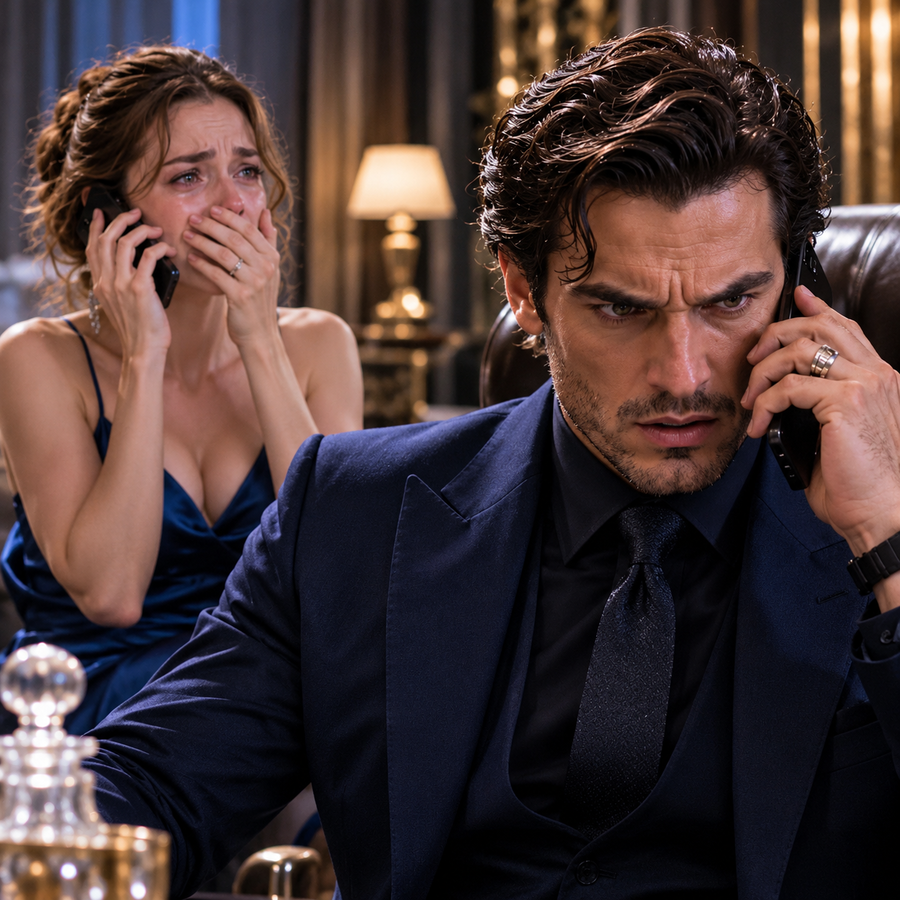
Don’t call me unless someone is dying.
That was the last thing Raphael Costa said to his wife before he left for six days with another woman. Their son was three weeks old.
On the second night, someone almost was.
She called him three times. He never picked up.
And when he finally came home, the nursery was empty.
Her wedding ring was lying in the crib, and there was one voicemail on his phone he had never bothered to play.
The first thing Raphael noticed was the silence.
Not the ordinary silence of the Costa house on the hill above Providence, where 30 people worked, and every one of them had learned that noise could cost them their job.
This was a different kind of silence. It was the silence that comes after something terrible has happened, when everyone knows and no one wants to be the first to say it.
He stood in the marble entrance hall with his travel bag still in his hand.
The crystal chandelier was lit.
The housekeeper, Mrs.Doyle, was standing at the foot of the stairs, and she would not look at him.
On the round table in the middle of the hall, where his wife always put fresh white roses on Friday, there were no roses.
There was only a plain white envelope with his name on it.
Where is my wife? Raphael asked.
Nobody answered. Tom Barrett, his head of security, stepped out of the shadow by the door.
Tom was 52. He had worked for Raphael for 14 years.
He had once taken a bullet in the shoulder that had been meant for Raphael’s head, and he had walked into a dozen rooms full of armed men without blinking.
Tonight, he looked afraid.
Mr.Costa, Tom said quietly, you should read the letter.
Raphael didn’t touch the envelope.
Where is my son?
Tom was silent one second too long. Raphael dropped the bag and took the stairs two at a time.
The door of the nursery at the end of was standing open. He walked in and stopped.
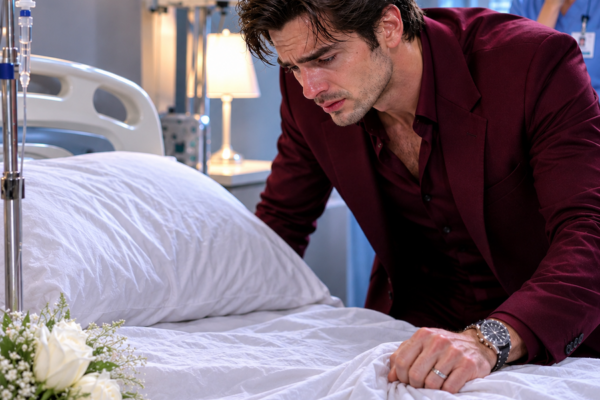
The white crib was empty.
The little blue blankets that Anna had folded so carefully were gone. The changing table had been cleared.
The bottles, the tiny socks, the soft hat with the bear ears, all gone.
The rocking chair by the window where she had sat every night feeding the baby while he was at work was bare. On the dresser lay the diamond bracelet he had given her the day Leo was born.
Next to it, the keys to the white Mercedes he had bought her.
And in the middle of the crib mattress, on the clean white sheet, lay her wedding ring. For the first time in 20 years, the most feared man in Rhode Island could not make his body move.
“When?”
he said.
His voice came out strange.
Tom stood in the doorway.
“Four days ago, sir.”
Raphael turned his head slowly.
“Four days?”
“She left on the third morning of your trip.”
“Four days?”
While he was drinking champagne on a terrace above the ocean, his wife and his three-week-old son had walked out of his house, and nobody had told him.
“Why didn’t anyone call me?”
“We did, sir.
Your phone was off. The resort said you had left instructions.
No calls, no visitors for anyone.”
Tom paused.
Then he said the sentence that Raphael would hear in his sleep for a long time afterward.
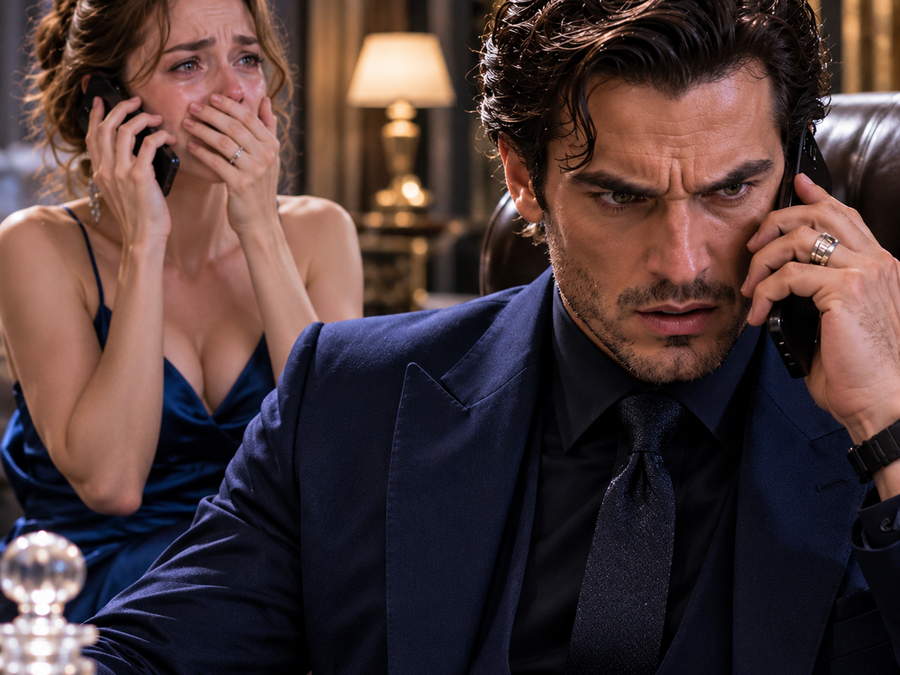
“And she called you too, Mr.Costa, on the second night, three times.
” Raphael remembered.
He remembered his phone lighting up on the white tablecloth at midnight, her name on the screen, and Vanessa laughing beside him and turning the phone face down. He remembered thinking, she always worries.
She’ll be fine.
He remembered the second call and the third, and how he had switched the phone off so the night wouldn’t be ruined.
He reached into his pocket now with fingers that did not feel like his own.
He turned the phone on.
It buzzed and buzzed with messages from people who didn’t matter.
And at the very bottom there was one voicemail from Anna. The time on it was 2:14 in the morning, six nights ago.
He pressed play.
At first there was only noise, a loudspeaker, a baby crying, high and thin.
Then his wife’s voice, very calm, the way people sound when they are holding themselves together with both hands.
Rafe, it’s me.
We’re at Hasbro Children’s.
Leo has a fever.
It’s 100.
6.
The doctor says that in a baby this small they have to treat it like an emergency until they know it isn’t.
They want to do a spinal tap. A breath.
I’m not asking you for anything.
I just thought you would want to know. If you can come, please come.
The message ended.
Raphael stood in the empty nursery and listened to the silence again. Then he went downstairs and opened the envelope.
Six days earlier, Anna Costa had been standing in the same marble hall in a cardigan with milk stains on the shoulder, holding their son against her chest.
She was 34.
Before she married Raphael she had taught piano at a school for children in Pawtucket, and she still had a teacher’s way of watching people, patiently, as if she were waiting for them to find the right note on their own.
Leo had been born by emergency C-section three weeks before. The scar still pulled when she lifted him.
She hadn’t slept more than two hours in a row since he was born.
Raphael was coming down the stairs with his bag.
He was 42, tall and broad in the shoulders, with black hair that was starting to go silver at the temples, and the kind of face people stepped out of the way of on the street.
You’re going now?
she asked. Newport, the shipping people.
I told you.
For six days.
It’s business, Anna.
She shifted the baby to her other shoulder. He had a little cough this morning.
The pediatrician said to watch him.
I just I’d feel better if you were here, even for two days.
He didn’t stop walking.
He was already checking his phone.
At the door, he turned and he looked at her the way a man looks at a delivery he didn’t order.
I have 300 men who depend on me, he said.
I can’t stay home because a baby coughed.
Don’t call me unless someone is dying.
Then he left. Anna stood in the hall until she heard the car go down the hill.
Leo made a small sound against her neck.
She kissed his head.
It’s all right, she whispered.
It’s all right.
Daddy is busy. She had been saying that for months.
She had said it when he missed the ultrasound where they learned the baby was a boy.
She had said it when he missed their anniversary dinner and came home at 3:00 in the morning smelling of a perfume she didn’t own.
She had said it when she went into labor at night and called him four times and he arrived at the hospital 40 minutes after Leo was born, still in his evening suit with his phone in his hand.
She had told herself the same things every wife tells herself.
He’s under pressure.
His world isn’t like other people’s worlds.
When the baby comes, he’ll change.
The baby came.
He didn’t change.
The second night, at 10 minutes to midnight, Leo stopped eating.
He was hot, not warm, hot. His little face was red and his cry was wrong, too high and too weak at the same time.
Anna took his temperature with shaking hands.
100.
6 She knew what that meant. The pediatrician had told her on the first day in the calm voice doctors use for the most important things.
In the first month, any fever is an emergency.
Don’t wait.
Don’t call in morning.
Go. She called Raphael.
It rang and rang and went to voicemail.
She called again.
She called a third time.
This time it didn’t even ring.
Somebody had turned the phone off. She called the front desk of the resort in Newport.
A polite young man told her that Mr.Costa had left very clear instructions. No calls tonight.
He was sorry. Would she like to leave a message?
Anna put the phone down.
She looked at her son.
Then she put on her coat over her pajamas and went downstairs.
The night driver was asleep in the security room.
Tom Barrett was in Newport with Raphael.
She could have woken someone. She could have made a scene.
Instead, she called a taxi because she didn’t want anyone in that house to see her cry.
At Hasbro Children’s Hospital, a nurse with gray braids took one look at the baby and took him out of her arms.
Then everything happened very fast.
A small room with bright lights, blood tests, a tiny needle in a vein so small that two nurses had to try.
And then the young doctor sat down beside her kindly and explained that they needed to check the fluid around Leo’s spine to make sure it wasn’t meningitis.
They would start antibiotics now, just in case, and keep him for at least two days. Anna nodded.
She signed the papers. She asked the right questions.
Then she went out into the hallway, sat in a plastic chair under a buzzing light and called her husband one more time.
And when it went to voicemail, she left a message very calmly, the way people do when they are holding themselves together with both hands.
Then she sat there.
At 3:00 in the morning, waiting for news, she did something she had never let herself do before.
She opened the resort’s public page on her phone.
The photo had been posted an hour earlier.
A terrace above the ocean, candles, a table for two, Raphael in an open white shirt, laughing, really laughing, the way he hadn’t laughed with her in a year.
His hand was resting on the lower back of a beautiful, dark-haired woman in a champagne dress.
Anna knew her, Vanessa Hale.
She had sat two seats away from Anna at a charity dinner in the spring.
She had touched Anna’s pregnant belly and said, What a lucky little boy.
She had sent white flowers when Leo was born.
Anna looked at the photo for a long time.
She didn’t cry.
She was surprised by that later.
She simply felt something inside her go very quiet, the way a house goes quiet after the last guest has left. At 6 in the morning, the doctor came back and sat down beside her again.
The tests looked good. The fluid was clear.
It looked like a common virus.
They would keep him on antibiotics until the cultures were back, but she could breathe now.
Anna breathed. She went into the little room and she sat beside her sleeping son and she held his hand, which was no bigger than her thumb.
I’m sorry, she whispered to him.
I kept telling you Daddy was busy.
That wasn’t fair to you.
Then she took out a small notebook from her bag.
She had kept it all through the pregnancy. In it, she had written down every promise Raphael had made.
I’ll be there for the birth.
I’ll do the night feedings when you need to sleep.
Nothing in this world matters more than you and our son. She read the last line three times.
Then she closed the notebook and she made a phone call, not to Raphael, to a lawyer.
Two days later, Leo came home from the hospital healthy.
The next morning, while the house was still asleep, Anna packed one suitcase and the baby’s things.
She took her documents.
She took her grandmother’s old piano music.
She took the stroller. She did not take the jewelry.
She did not take the car.
She did not take the necklace from their fifth anniversary or the fur coat from last Christmas or a single dollar from the joint account.
She left the bracelet on the dresser and the keys beside it. And then she stood over the empty crib for a moment and she took off her wedding ring and laid it on the white sheet exactly where her son used to sleep.
Mrs.Costa, said Mrs.Doyle, who had come upstairs and was standing in the doorway with her hand over her mouth. Mrs.Costa, please, where will you go?
Anna touched the old woman’s hand.
Somewhere he has to knock. Back in the hall, six days later, Raphael read the letter.
It wasn’t from Anna.
It was from her attorney, a woman named Helen Marsh, whose office was in a small brick building downtown. The letter was short and polite and it went through him like a blade.
Mrs.Costa had filed for legal separation.
She was asking for temporary custody of their son, child support, and that all communication go through counsel until further notice.
Her new address would not be shared. Mr.Costa would be given supervised visits with his son, if he wished, through the Family Services Office on Broad Street.
If he wished.
Raphael read it twice.
Then he laughed once without any humor in it at all.
She’s angry, he said.
That’s what this is.
She wants me to come after her.
Tom said nothing.
She’ll calm down in a week.
Tom looked up the staircase toward the nursery.
With respect, sir, I don’t think she’s coming back.
Raphael turned.
In 14 years, Tom Barrett had never once told him he was wrong.
Find her, Raphael said. Her lawyer has asked us to respect her privacy.
Did I ask what her lawyer wants? No, sir.
Tom didn’t move.
But I’ll tell you anyway.
She took a baby who just came out of the hospital and she walked out of a house worth $11 million with one suitcase.
She left the jewelry, she left the car, she didn’t take a scent.
Tom’s voice was very quiet.
That’s not a woman trying to punish you, Mr.Costa.
That’s a woman who has already decided.
Raphael looked at him, and for the first time in his life, under the anger, he felt something that he did not have a name for. Later, he would understand that it was fear.
Anna’s new apartment was on the third floor of an old brick building in Westerly, 40 minutes down the coast, near the house where her grandmother had once taught her to play scales.
The kitchen was small. The radiator knocked at night.
The bedroom was just big enough for a bed and a white bassinet she had bought second hand for $30. But it was hers.
No armed men stood at the door. Nobody reported where she went.
Nobody told her that her husband was too busy to come home. Her old friend Rachel, a nurse she had known since high school, helped her carry the boxes upstairs.
He’s going to find you, Rachel said, folding tiny clothes into a drawer.
You know that. Men like him always find people.
I know. Are you scared of him?
Anna thought about it honestly.
Not of what he’d do to me.
I’m scared of what I’d do if he looked at me the way he used to.
I’m scared I’d say yes.
She tucked the blanket around her sleeping son.
And I don’t want Leo to grow up thinking that this is what love looks like, a woman waiting by a phone.
Raphael found the address in two days. Of course he did.
He sat in his car across the street from the brick building for an hour, watching the light in the third floor window. Twice he opened the car door.
Twice he closed it again. Then he drove to the family services office and signed the papers for a supervised visit.
The first visit was on a Thursday at 11:00 in the morning in a small room with a box of toys in the corner, a plastic couch, and a social worker named Mrs.Pratt, who sat by the window with a clipboard and pretended not to listen. Raphael arrived in a charcoal suit and a face that had made judges and senators lower their eyes.
Anna was already there, sitting by the window, holding Leo.
She was wearing jeans and an old cream sweater, her hair tied back, no makeup, and no ring. She looked exhausted.
There were dark shadows under her eyes, but she looked straight at him, and that unsettled him more than tears would have. Anna.
Rafe.
He looked at the baby. Leo was awake, staring at the ceiling light with serious dark eyes.
He had gotten bigger. How had he gotten bigger in 10 days?
Can I hold him?
Anna studied him for a moment.
Wash your hands first.
Nobody had spoken to Raphael Costa that way in 20 years. He opened his mouth, then he closed it and went to the little sink in the corner and washed his hands.
When he came back, she stood and placed their son in his arms.
Raphael had held the baby perhaps five times in his life. He held him now like something that might explode.
His big hand didn’t know where to go.
Support his head, Anna said quietly.
There, like that.
Leo looked up at his father’s face.
Then, unexpectedly, he yawned.
Something happened in Raphael’s chest that he did not have words for.
I want you both to come home, he said, still looking at the baby.
That isn’t going to happen.
I made a mistake. You made a lot of choices, Anna said, one after another.
That’s different from a mistake.
Vanessa meant nothing to me.
Anna’s eyes filled, but her voice stayed perfectly steady.
Do you know that’s the cruelest thing you could have said?
If she meant nothing, then you broke our family for nothing.
He had no answer.
You missed the night he was born, she said.
You missed the night they put a needle in his spine.
You missed the morning I cried in the kitchen because I was so tired I couldn’t remember if I’d eaten.
She drew a slow breath.
I called you from the hospital, Rafe. I was alone in a hallway at 3:00 in the morning and I called you.
And you told me before you left, don’t call unless someone is dying.
Mrs.Pratt stopped pretending to write.
I didn’t know, Raphael said.
I didn’t listen to the message until I know you didn’t.
She looked at him.
That’s the whole problem.
I was strong for a year, Rafe.
I was strong every single day and you never once noticed because strong women don’t make noise.
He stepped toward her. She moved back.
Only one step, but between them it felt like a river. I can fix this, he said.
You can decide whether to be his father, Anna said.
That’s up to you.
Our marriage is a different question and that one is up to me. That night Raphael sat in his study until 2:00 in the morning without turning on a light.
Then he called Vanessa Hale and asked her to come to the house.
She arrived in a red coat expecting an apology, perhaps a diamond.
Instead, she found him standing by the cold fireplace.
It’s over, he said.
Vanessa folded her arms. Because your wife threw a tantrum and left?
Don’t talk about her like that.
You weren’t thinking about her on that terrace.
Raphael didn’t deny it.
No, he said.
I wasn’t.
That’s my shame, not yours, but it’s over.
You think she’ll take you back?
I don’t know.
Then what are you getting out of this? He looked at the dark window.
Nothing, he said.
That’s not why I am doing it.
When she was gone, he sent for Carmine Sabatino. Carmine was 68, silver-haired, soft-spoken, always in a gray suit, and always with a peppermint in his pocket for the children of the men he worked with.
He had been the right hand of Raphael’s father for 30 years.
When the old man died, it was Carmine who stood behind the young Raphael at the funeral and said, I’ll take care of you, son.
It was Carmine who had said back in the summer that a man with Raphael’s responsibilities needed some relief from domestic pressure.
And it was Carmine who had personally arranged the Newport trip.
Who told the resort not to put my wife’s calls through?
Raphael asked. Carmine spread his hands.
You said no disturbances, Raphael. I protected your privacy like always.
My son was in the hospital.
And he’s fine.
Thank God.
Carmine smiled gently.
Young mothers get emotional after a birth.
It’s the hormones.
It passes.
In a month, she’ll be Raphael crossed the room so fast that Carmine took a step back.
Finish that sentence, Raphael said softly, and you’ll regret it for the rest of your life.
Carmine didn’t finish it.
But for the first time, as the old man left the study, Raphael found himself wondering how many decisions in his life he had allowed other people to make while he believed that he controlled everything.
The weeks that followed were the hardest work Raphael had ever done. The first time he tried to feed Leo a bottle, at the second visit, he poured formula all down the front of an $800 shirt.
Anna watched from the couch.
You’re holding it too high.
Like this?
Lower.
Let him breathe. Leo squirmed and turned red.
Raphael looked up in alarm.
What’s wrong with him?
He needs to burp. In the middle of eating?
Yes, Rafe.
He stared at his son. This is harder than negotiating with the Albanians.
Anna almost smiled.
Almost.
He saw it, and something hopeful moved across his face, and then she looked away, and he understood.
One good afternoon did not erase a year.
He came to every visit.
He was never late. He learned how Leo liked to be held, upright against his shoulder, with his face turned toward the window.
He learned the difference between the hungry cry and the tired cry. He learned to pack a diaper bag without calling anyone.
After two months, Mrs.Pratt wrote in her report that supervision was no longer necessary, and Anna agreed to let him take Leo for a few hours on Saturday mornings.
He also learned that Anna had started teaching piano again, three afternoons a week to children in the church hall down the street.
You don’t need to work, he told her.
I can give you everything. I know you can.
Then why?
She looked at him. Because I need something in my life that belongs only to me.
He wanted to argue.
Instead, he nodded. It was a small thing, but it was the first time in their marriage that he had listened to a no without trying to turn it into a yes.
In November, the first threat came.
Anna found it in the morning, slipped under her door.
A photograph of her pushing Leo’s stroller into the pharmacy on Main Street.
On the back, in black marker, someone had written, the Costa heir belongs to the family. She called her lawyer.
Then, after a long moment, she called Raphael. He answered before the first ring had finished.
Anna?
Someone has been watching us.
He went completely still.
Are you inside? Is the door locked?
Yes. Rafe, listen to me.
I’m calling because I need help.
That doesn’t mean you get to take over my life.
Every instinct he had was screaming at him. Send 20 men, move her into the house on the hill, find whoever did this and make them disappear.
He closed his eyes.
then he said something he had never said to anyone in his life. Tell me what you need.
She let out a long breath.
Someone outside the building. Quietly.
And I want to know who did this. You have my word.
20 minutes later, two plain cars parked across the street. An hour later, Raphael knocked on her door, and when she opened it, he did not walk in.
He waited. May I come in?
She stepped aside. It was the first time he had been inside her new home.
He saw the second-hand bookshelf, the cheap couch with a blanket over it, the little kitchen table where baby bottles stood next to sheet music and lesson plans.
There was no marble, there was no crystal, but the coffee smelled good, and a lamp glowed in the corner by an old upright piano, and the baby’s blanket lay within easy reach of every chair.
Raphael understood, standing there, that she had built a home without him. And it was a good one.
Tom Barrett traced the photograph in four days. The man who had taken it worked for a private investigator.
The investigator had been paid by a company, and the company, after three layers of paper, belonged to Carmine Sabatino. At first, Raphael refused to believe it.
Then Tom put a folder on his desk, and he could not refuse anymore.
Inside the folder was something worse than a photograph. In the spring, when Anna was eight months pregnant and Raphael was hardly ever home, Carmine had brought him a stack of papers to sign during a long night of meetings.
Family trust documents.
Raphael had signed them without reading.
One of those pages made Leo, at birth, the to the controlling share of the Costa family businesses.
Another page said that if Raphael were ever unable to act, the boy’s share would be managed by a temporary guardian until he turned 25.
The temporary guardian was Carmine Sabatino.
He made my son the most valuable thing in this family, Raphael said slowly. And then he made himself the man who holds him.
And now he knows where the boy sleeps, Tom said.
I signed this.
Yes, sir.
I put the gun in his hand.
Tom didn’t answer.
He didn’t need to.
Raphael drove to Westerly that night and asked to see Anna and her lawyer together.
He sat at her little kitchen table and told her everything, the trust, Carmine, the calls that were blocked, the photograph.
He didn’t make himself look better.
He didn’t make any of it smaller.
When he finished, Anna was silent for a long time. Were you ever going to tell me about the trust?
She asked at last. No.
Why not?
Because I thought protecting you meant keeping you away from my business. She looked at the papers.
You made our son part of your business and you didn’t tell his mother.
Yes.
And now a dangerous man knows exactly how much our son is worth.
He didn’t look away.
Yes.
She got up and went to the window. For a terrible moment, he thought she would ask him to leave and never come back.
I’ll undo the trust, he said.
Tomorrow I’ll take every bit of power that man has.
She turned around. Stop it, Rafe.
Stop handing me the right thing like it’s a present.
Do it because it’s right.
Do it even if I never come back to you. The words went through him.
I will, he said.
And for the first time in years, he meant it completely.
He did not shoot anyone.
That was the part that the old men in the family would talk about for years. Instead, he gathered every captain of the Costa family in the long room above the harbor office on a Sunday at noon, in daylight.
He put the trust papers on the table.
He put the bank records beside them, the company that paid for the photograph and the phone logs from the resort in Newport with a note in Carmine’s handwriting.
Mrs.C’s calls do not go through.
Doctor’s orders.
Carmine read the papers.
Then he looked up with his soft, sad smile.
Raphael, son, everything I’ve done, I’ve done to protect this family from your weakness.
My wife and my son are not a weakness. Then why did you leave them for six days?
The words landed with terrible precision.
The room was silent.
You’re right, Raphael said.
I left them.
That’s my sin.
I’ll carry it.
But it never gave you the right to touch them.
Carmine’s hand moved toward his jacket.
Tom Barrett was already behind him.
There was a short struggle, a chair falling over, and then the old man was sitting very still with Tom’s hand on his shoulder and a small pistol lying on the table among the papers.
Two days later, the bank records were in the hands of the state police.
So was the old pistol. Carmine Sabatino went out of the front door of the harbor office in handcuffs, in daylight, in front of the men he had commanded for 30 years.
When Raphael called Anna that evening to tell her it was over, she was quiet for a long time. Are you hurt?
She asked. No.
Don’t lie to me.
I’m not lying.
Nobody was hurt.
He leaned his head against the window.
I didn’t do it the old way, Anna.
I didn’t want our son to grow up with that in his name.
On the other end of the line, very softly, she began to cry.
Not because he had found the perfect words, because for the first time he wasn’t asking her for anything.
Christmas Eve, Leo had a cough and a fever again.
This time it was RSV and at 4 months old that meant a night at the hospital with oxygen in his nose and a monitor beeping over his crib.
Anna called Raphael at 9 at night. He was there in 22 minutes.
He didn’t take over.
He didn’t shout at the doctors.
He sat beside her on the plastic chairs in the hallway under the same buzzing light. And when her hands shook, he brought her water.
And when the baby cried, he held him so she could rest her arms.
Near dawn, Anna fell asleep sitting up and her head slowly tilted toward his shoulder.
Raphael didn’t move.
He wanted more than anything to put his arm around her.
He didn’t.
He let her sleep.
When she woke up, his jacket was over her knees and he was standing beside the crib watching their son breathe.
The months after that were not a miracle. They were work.
He separated the legitimate shipping business from everything else his father had built piece by piece with lawyers and accountants and long dangerous meetings.
He gave up the Saturday card games and the Friday dinners.
He went to every pediatric appointment and sat in the waiting room reading whatever the nurse gave him.
When Anna told him she needed a weekend alone, he didn’t ask where she was going.
He just said, I’ll take Leo.
Sometimes Anna watched him with their son and she felt the old love moving in her and it frightened her because she knew how easily hope can become a reason to stop looking at the truth. In September, on a warm Sunday, Leo was almost 1 year old.
Anna invited Raphael to meet them at the little park by the river in Westerly. They sat on a blanket under a maple tree that was just beginning to turn gold.
Raphael wore a plain white shirt with the sleeves rolled up.
He held Leo by both hands, and the baby stood, wobbling, and took one step and then another, and fell forward straight into his father’s chest.
Raphael laughed, a real laugh, the kind Anna had last seen in a photograph on a terrace in Newport at 3:00 in the morning in a hospital hallway. But this time he was laughing at their son.
Rafe, she said.
He looked up.
I’ve been thinking about us.
He went very careful. All right.
I don’t want the house on the hill.
Then you won’t have it.
I don’t want the old marriage.
Neither do I. She looked at the river.
I want something honest, where I can disagree with you without being afraid that you’ll disappear, where our son grows up seeing his parents as equals, and where I know that if it gets hard again, you won’t go looking for someone easier to love.
He swallowed. You should have had that from the beginning.
Yes.
I can’t change what I did.
No, you can’t.
But I can keep choosing differently every day.
That’s why I’m here, she said.
Then she reached into her bag and took out a small velvet box.
He stopped breathing. Inside was her wedding ring.
I didn’t bring this because everything is forgiven, she said.
It isn’t.
Some days I still see that photo.
I brought it because I think I might be ready to begin again, slowly, on my terms.
He didn’t reach for the ring.
He took her hand instead.
Slowly, he said, on your terms. She smiled through her tears.
For once in your life, Raphael Costa, you understand.
That winter, the first snow came early. Anna still lived in the little apartment in Westerly.
Raphael had never asked her to give it up.
Some evenings he came to cook dinner, badly, and wash bottles and read stories to Leo in a terrible deep voice that made the boy shriek with laughter.
One night, as he stood at the window watching the snow fall on Main Street, his phone vibrated.
A message from one of his captains.
A meeting.
Urgent. Once he would have grabbed his coat.
He typed back, tomorrow. Then he turned the phone off and put it face down on the table.
Anna was standing in the doorway of the bedroom.
Business?
It can wait.
Are you sure? He crossed the room and brushed a strand of hair from her cheek.
There’s nowhere else I need to be.
A year earlier he had walked out of his house and told his wife not to call him unless someone was dying.
She had called anyway from a hospital hallway at 2:00 in the morning.
He had turned her face down on a table.
Now she didn’t have to call.
He was already there.
What would you have done in Anna’s place?
Would you have given Raphael that second chance or would you have kept the ring in the box?