Part 2| Single Dad Saved a CEO From Six Hijackers—They Had No Idea He Was a Former Navy SEAL!
Part 2| Single Dad Saved a CEO From Six Hijackers—They Had No Idea He Was a Former Navy SEAL!
PART 2
This place was rarely used and the people who used it believed the empty land around it was all the security it needed. He opened the lock in about 45 seconds with a tension tool from the bag.
The patience it took made Frank’s question, are you good?
seem almost funny now.
Inside, the air smelled of dust and old machine oil. A folding table stood against the far wall.
A laptop sat on it, cables running to a portable satellite relay.
A single camp lantern gave off cold light.
Taped above the table was a printed map of the airstrip and the roads around it. Someone had drawn a red circle around a crossroads 4 miles east.
Nathan looked at the map for 3 seconds, then he looked at the screen. Encrypted channel was open.
In the corner, a countdown read 41 minutes. He sat down and read it took 90 seconds to understand the shape of it.
The man who would receive the stolen project Aegis data was not coming to the airstrip.
He was waiting at the crossroads. The data would go out through the relay.
The jet and everyone aboard would be left on the runway to be found only after the receiver had vanished. The last message was timestamped 11 minutes ago from a sender marked only J.
D. Transfer delayed.
Subject not cooperating.
Increase pressure. You have 30 minutes from this message.
19 minutes then. Minutes before Victor decided what pressure meant, Nathan stood.
He pulled the cables, tucked the relay under his arm, and left the laptop dark behind the door. Without the relay, nothing could leave this place, not even if Victor got everything he wanted.
He took a photo of the map and the screen and sent it to Hank with one line. JD is the contact.
Crossroads circled 4 miles east.
Then he went back into the night. He had the layout now.
two men at the vehicles to the south. Victor and whoever else aboard the jet mills out cold on the western edge.
The runway lights were barely there, four low markers on each side, enough to define the surface and not enough to light the tarmac.
The Falcon sat 300 yd south, engines cold, door sealed. He moved down the east side outside the markers in the dark.
The cigarette was finished.
Both men stood between the two SUVs with their arms crossed, the posture of people who were cold and bored and wanted it over. They were shielded from the aircraft.
They were open to the east.
Nathan came from the east.
He took the nearer man first, one quick controlled strike to a place the nervous system does not argue with.
The sound of the man hitting the side panel covered the last few steps.
The second man was quick.
He got his arm up faster than Nathan expected, and there was a short ugly scramble.
A hit landed on Nathan’s left forearm, and he accepted it.
He was 38 years old and had not done this in four years. Perfect was not on the menu.
He finished it anyway.
For a moment he stood there, breathing through his nose, his forearm throbbing with a dull insistent ache that would be worse by morning. He checked that both men were breathing.
He secured them with zip ties from the bag, looped through a door handle.
Elegant, functional. Three down, at least three more inside the jet.
He would not knock, waiting for Victor’s clock, so he needed someone to come out.
The keys were still in the nearest SUV.
Nathan almost smiled. A perimeter built on belief, and the belief had left the keys in the ignition.
He started the engine, set the vehicle in drive, aimed it along the runway edge toward the jet, and wedged the gas pedal down with a water bottle from the back seat.
Then he stepped out. The SUV rolled south at a walking pace, headlights on, nobody at the wheel.
And slipped around to the far side of the aircraft, the starboard side, away from any window that would be watching.
He waited. 40 seconds, muffled voices, then footsteps toward the forward door, the hiss of the seal, the air stair folding down.
A man came out fast, took three steps down and stared at the drifting Suv. He took four more steps toward it.
Nathan came around the nose and made the decision for him. Four down.
He went up the stair.
The cabin was dim, overhead lights low, the reading light above Victoria’s seat still burning.
He came through the door low and slid right against the forward bulkhead, taking inventory. Victoria sat with her hands flat on the table and her jaw set.
She had been holding herself together through stubbornness for more than 40 minutes, and it showed. A young woman sat further back, wrists tied to an armrest.
He guessed. A man in a dark jacket stood in the middle of the cabin facing Victoria.
Victor, a second man, waited near the galley. Victor heard him and turned.
He was fast, not just a planner. He had been trained, and the weapon was rising before the turn was done.
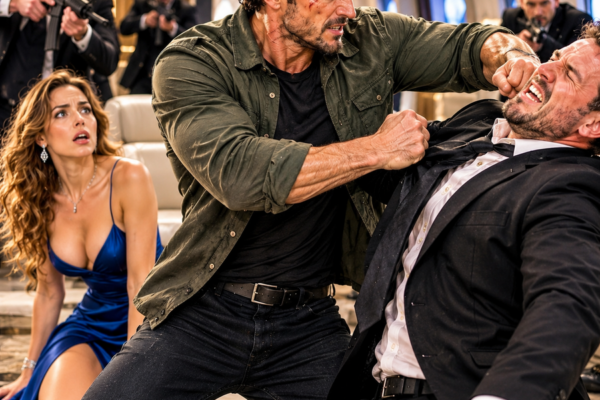
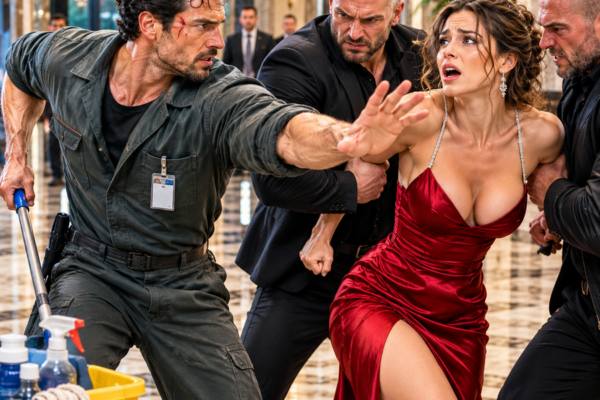
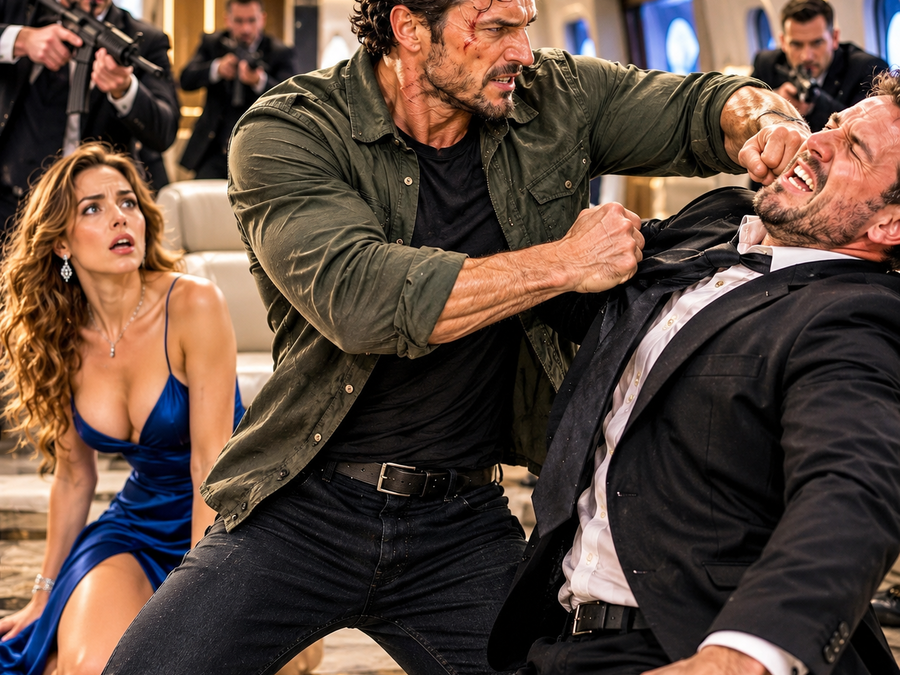
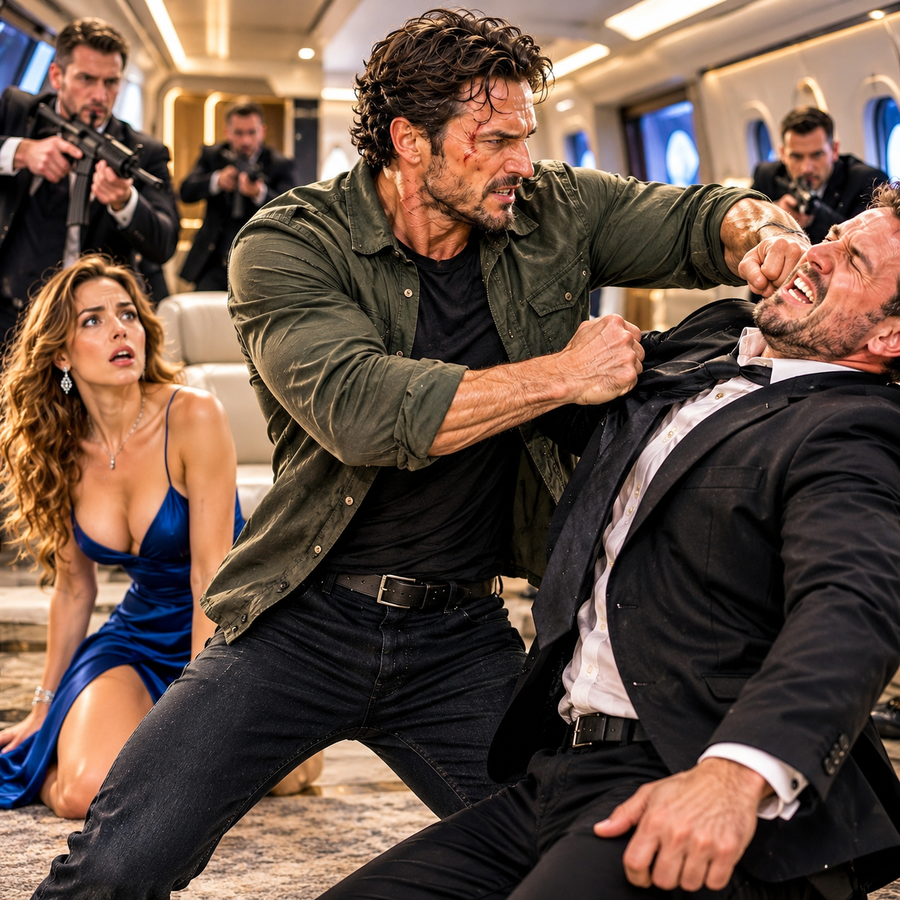
Nathan was already inside the distance where the weapon mattered. The next 11 seconds were not graceful.
The cabin was all hard surfaces and no room, and both men fought the geometry as much as each other. Victor was strong, and he fought like a man who expected to win.
When he felt Nathan absorb the first exchange, he pushed too hard. That was the mistake Nathan had been waiting for.
Victor hit the bulkhead. The weapon went off once into the ceiling panel.
Small space, the shot was enormous.
Victoria flinched, screamed.
Nathan put Victor down, one arm locked, his face against the carpet.
He came up to meet the second man with the momentum already built.
The second man was bigger. He led with size, a fair choice against most people.
Nathan was not most people.
It took longer than the others.
He ended up against the seat row, a bruising blow across his shoulders and fought from a bad position for four or five seconds that felt much longer.
The cabin rang with grunts and impacts, two large men with no room for anyone’s favorite technique.
Then it stopped. Nathan stood, his shoulders hurt, his forearm was worse.
He was breathing harder than he liked. Victoria was staring at him from across the cabin.
He knew the look. Quite fear, not quite relief.
The face a mind makes when it catches up to the fact that the dreaded thing did not happen and something it was never prepared for did.
You’re the mechanic, she said, Nathan Brooks.
He moved past her and checked the galley.
Empty, he came back, crouched by Victor and cuffed his wrists with a zip tie.
Then the second man, are you hurt?
She took a moment like she was doing an honest inventory. Megan?
I’m okay, Megan called from the back.
Her voice shook, but it worked.
I’m okay.
Nathan cut her restraints with the utility knife from his pocket.
She rubbed her wrists and kept her breathing steady.
She was handling this better than most would. Working for Victoria Hale, he supposed, kept a person on her toes.
He went back to Victor and searched his pockets. A phone now secured.
A small encrypted drive he had not expected.
He pocketed it.
A folded printout and he set that on the table in front of Victoria without a word. She read it.
Something crossed her face, a flash of anger that settled into something colder.
This is everything, she said, not just the flight, my calendar, my security protocols, the names of my personal detail. She turned the page over.
Someone printed this inside inside the company. This is our internal format.
Contact on the channel signed as JD, Nathan said. She looked up.
The name came out of her like something she had already known and had not been ready to say aloud.
Julian Drake, my co-founder.
She set the paper down.
He left 14 months ago to pursue other ventures.
He never really left. Nathan did not answer right away.
Her security detail, the printed names, the brushed off warning at the terminal.
A thought was forming and he did not like its shape. He filed it away for later.
He stepped to the forward door and looked out. The runway lights burned on.
The abandoned SUV sat at an angle 40 yd south, headlights glaring, engine running, nobody in it.
Everything was quiet.
He came back in six men.
I’ve accounted for five.
One may still be aboard.
There was a man in the cockpit, Victoria said.
He went in about 20 minutes ago and hasn’t come out.
Nathan walked to the cockpit door and knocked twice with his knuckles.
Not hard, just announcing himself. Captain Whytaker, this is Nathan Brooks, maintenance, from the private terminal.
The threat in the cabin is down. I need you to open this door.
Pause, a muffled voice.
What’s the tail number?
Good instinct. November 41 Kilo, the door opened.
Captain Ron Whittaker looked like he had aged seven years in two hours.
Behind him, the co-pilot and flight attendant stood in various stages of shaky composure, wrists freshly freed.
Cornered tied to the co-pilot seat rail sat the sixth man, the one in the borrowed pilot’s uniform.
He looked far less commanding than he had when he first walked in at altitude.
Whittaker looked at Nathan, then passed him at the two men on the cabin floor.
How many were there?
Six, all accounted for. Whittaker let out a long breath.
It was the breath of a man who had spent hours believing he would not see tomorrow and was now recalibrating. He had brushed off a warning at the terminal.
He seemed to remember that now, and he did not look away from it.
I need the radio backup, he said. Air traffic control.
Do it.
Tell them you need law enforcement at Harland County Airstrip.
Federal, if possible.
There’s a second element 4 miles east at a crossroads.
They should already be moving on it, but confirm. Then handed over the encrypted drive.
Give this to the FBI when they arrive.
Nobody else touches it. Whittaker took it and nodded.
Back in the cabin, Victoria stood by the window with her arms crossed, her phone in one hand, the printed schedule in the other.
She had switched off the reading light. The overheads were low around her.
She turned when she heard him.
You found the device on the avionics panel?
Yes. When nobody listened, you she stopped.
How did you even know where we were?
He told her briefly. The tracking app, the flight path veering off.
The list of airstrips close enough to matter. Hank the drive out on unlit county roads.
She listened without interrupting.
When he finished, she was quiet.
You drove out here alone to a place you weren’t certain about without backup.
Backup was 55 to 70 minutes out.
That isn’t an answer to what I said.
He considered it. No, I drove out here alone.
She studied him the way she probably studied everything with the focus of a woman who had learned that the thing others glossed over was usually the thing that mattered. Why?
It was simple, direct, and honestly curious, not a challenge.
Nathan had been asked harder questions in his life, but rarely any he found harder to answer shortly.
I found the device, he said. I told the people who were supposed to handle it.
They didn’t.
There was a woman in the air who was going to get hurt, he paused.
I don’t have a more complicated answer.
Most people would have watched the plane take off and decided they’d done their part.
You know you have a daughter.
He looked at her.
Something must have moved in his face because she went on quickly.
The airport manager told me before we boarded. I asked who did the preflight and he mentioned you.
He said your daughter sometimes comes along on late shifts.
Lily, Nathan said, she’s seven.
Victoria held his gaze and you still came out here.
Yeah. She said nothing to that.
She turned back to the window.
Outside, the edge lights kept their patient watch over the empty tarmac. Somewhere in the distance, the abandoned Saab idled on.
The farmland beyond the strip was utterly still, the way land goes still at 2:00 in the morning when nothing human is happening in it.
Nathan sat in the nearest seat and let himself be still too.
His forearm was sending clear, steady signals that it wanted attention.
His shoulders were making the same case. He had taken the bulkhead harder than he had noticed in the moment, and the moment was catching up now, the way the body always presents its bill after the fact.
Somewhere across town, a little girl was asleep with a stuffed rabbit.
He thought of her and the ache eased just slightly. He became aware of Victoria watching him.
Are you hurt?
Nothing that won’t sort itself out.
She made a small, skeptical sound and opened the overhead compartment above her seat. She took the first aid kit down from the overhead compartment.
It was a soft case, aircraft standard, the kind serious private operators stocked properly. She set it on the table and sat down across from him without asking.
Which arm?
It’s fine.
You’re holding it differently than the other one.
He looked at her.
She was already unzipping the case with the efficient, unceremonious movements of someone who wasn’t going to turn this into a debate.
He rolled up his sleeve. A dark contusion was spreading below the elbow, the colors already ugly and well developed.
A second man’s block had had plenty of time to make its statement under the skin.
Victoria looked at it without making a face.
That’s going to be very unhappy tomorrow.
It already is. She cracked an instant cold pack in the middle, shook it once and handed it to him.
He pressed it to the bruise.
The cold was immediate and clarifying. Thank you.
She nodded.
She didn’t close the kit.
She sat with it open in front of her, not quite looking at it, and Nathan recognized the stillness.
It belonged to someone who had spent two hours in controlled fear and was now meeting the crash that always came after.
Her hands were not entirely steady.
We’re going to be fine, he said.
He said it as a fact, not as comfort.
She looked at him sharply as if the directness had surprised her. Something in her face eased, not completely, but enough to see.
I know. I just need a minute.
Take it.
Nobody’s going anywhere.
She almost laughed.
It came out short and slightly undone, and it was more honest than anything calculated.
Nathan thought this was probably what Victoria Hale looked like when she wasn’t performing for a room that needed her to be the steadiest person in it.
Just a 31-year-old woman at 2:00 in the morning, holding the edge of her composure with both hands.
From the cockpit, Captain Whitetaker’s voice filtered through, calm and procedural, making contact with air traffic control.
The radio crackled back. It was an ordinary sound, the machinery of the aviation world setting itself upright again.
Something in the cabin changed with it, hard to name and unmistakable. Nathan looked out the window.
Far to the east, lights were moving along a road. More than one vehicle moving fast he counted in his head.
By the time the first headlights turned onto the access road to the Harlan County airstrip, he had counted four.
It matched a federal response that had been spinning up since Hank made his calls, and it had pulled the arrival from 55 minutes down to nearer 40.
Company’s coming.
Victoria turned and watched the lights. Then she looked down at the open kit and closed it with both hands.
The clasp clicked shut with a small definitive sound. She said nothing.
She didn’t need to.
Outside the first vehicle reached the perimeter and its emergency lights came on.
Red and blue strobed across the flat land, washing over the runway, the Falcon, the quiet fields. A second set, a third, a fourth.
The radio in the cockpit grew louder as the proper authorities began the proper choreography of arrival. Nathan stood and rolled his sleeve down over the cold pack, holding it in place with his arm against his side.
He picked up the canvas bag from beside the door and checked the contents out of old habit. He thought of Lily, asleep on the cot in the back office with biscuit under her arm.
Frank was probably nearby, doing his best impression of a man who wasn’t worried.
Nathan would have to explain all this.
He didn’t yet know how.
The first agents came up the air stair two at a time, badges out, voices sharp and controlled. Set the bag down, raised both hands slightly, and gave his name, his employer, and the address of the private terminal before they could ask.
He had been in enough rooms like this to know that when authority arrived, clarity and patience were worth more than anything else. They separated him from Victoria almost at once.
Standard procedure.
Witnesses were isolated before they could coordinate stories. He sat in the back of a federal vehicle with a young agent named Tran, who asked good questions and wrote every answer in a small notebook with a mechanical pencil.
Nathan thought that was a detail worth appreciating.
Through the window he could see Victoria near the aircraft at stairs with two agents.
She was talking clearly and steadily the way she did everything.
She wasn’t crying or gesturing.
She still held the printed security schedule in her hand.
She hadn’t let go of it since she picked it up.
He watched her a moment longer, then he turned back to Tran and answered the next question. They kept him at the air strip until 4:17 in the morning.
Tran was thorough without being adversarial.
He walked through the night three times.
The transmitter on the avionics panel, the warning to Whitaker, the tracking app, the drive down the county roads, the approach to the perimeter.
Each step was logged in the small notebook. Nathan answered completely without embellishing and without minimizing.
When Tran asked about his background, he said Navy SEAL, 12 years, honorable discharge four years ago.
Tran wrote it down without visible reaction, which was the right reaction.
The second hour, a senior agent named Carver slid into the front seat.
He was in his early 50s with the kind of tired that wasn’t about the hour, but about years of accumulated hours.
He listened with his eyes forward and his hands in his lap. His questions told Nathan he had already been briefed on the shape of it and was filling in the gaps.
The crossroads, Carver said at one point, you identified the secondary location from the channel traffic in the relay station.
Correct, and passed it to Hank Tolliver. Yes.
Tolliver isn’t exactly a civilian consultant, Nathan said.
He was my commanding officer. We talk now and then.
He’s not my handler.
He’s someone I trust.
Carver turned in the seat to look at him. The man at the crossroads was taken with a portable server array and $200,000 in untraceable cash.
Correspondence on the array ties the operation to Julian Drake, former co-founder of Arealis Dynamics.
He’s been working through shell companies in three countries.
Nathan said nothing, named him in the first five minutes of her debrief.
She’d suspected irregularities for weeks and couldn’t find the source.
Carver paused.
The drive you took from the man called Victor holds a partial extraction of the project Aegis documentation. Partial because she refused to give them the authentication keys.
She told me that while she was still on the aircraft in an active hostage situation. Yes.
We also have Bryce Kessler in custody, Carver said, and his voice flattened on the name. Her own security chief, Gordon Pierce, is being picked up this morning.
Between the two of them, Drake had a door held open from the inside. I figured, Nathan said quietly.
He looked at that transmitter and walked away.
Carver nodded slowly. His men also went to your terminal tonight, looking for the mechanic who saw too much.
Your supervisor held them in the lobby until local deputies arrived.
Nobody got past him.
The girl never woke up.
Something in Nathan’s chest unclenched that he had been holding for hours.
Hank had already told him as much by phone. Hearing it from an agent with a badge and a notebook made it solid.
You could have caused a significant loss of life tonight, Carver went on.
It wasn’t quite an accusation.
It was the sentence of a man who needed it said for the record.
I made the best call I had with the information and time I had.
Silence settled. Outside, the airstrip hummed with forensics teams and agents processing the scene.
Ambulance had come and gone after assessing the men Nathan had put down.
They’d found bruises and wounded pride, nothing more.
Someone from counter intelligence will want to talk to you in the next few days, Carver said.
About Drake, about how big this was.
I’ll talk to whoever needs talking to.
Carver nodded once.
You’re free to go, Mr.Brooks.
Don’t leave the state without telling Agent Tran.
Nathan stepped out into the cold, flat air.
It smelled of dry grass and aviation fuel. He stood beside the vehicle and looked at the scene.
The lights, the Falcon tail number N41K still where it had stopped, ringed now by people documenting everything.
Captain Whitaker stood near the nose, gray-faced but upright, speaking with a cluster of agents.
He had finally found his spine, and Nathan thought it was late but not too late. Egan sat in the back of another vehicle with a blanket on her shoulders and a hot cup between her hands.
He found Victoria 30 ft away on her phone. She had been on it as far as he could tell for the better part of an hour.
Even at 4:00 in the morning, there was a list of people who needed to hear her voice before they’d believe she was alive.
She paced slowly, four steps one way, four steps back, one hand shaping things that existed only in the conversation. She saw him and held up one finger.
He nodded and moved to the edge of the tarmac to wait.
She finished two minutes later and walked over. She stopped a few feet away.
A short, awkward pause followed, holding about 14 things neither of them knew how to say.
They’re letting you go for now.
Someone will want to talk again. Same she looked out over the strip.
They told me they have Julian.
mentioned it. She absorbed that.
14 months.
He’s been building this for 14 months, maybe longer.
He resigned, cashed out his shares, sent the whole company a warm farewell email.
Then he spent a year and a half constructing a network to take what he helped create. She breathed out.
I hosted his going away dinner at my house.
Nathan had no useful answer, so he let the silence carry it.
I think I knew something was wrong, she said. Not this exactly, but something.
There were signs. I told myself I was stressed and reading too much into things.
She glanced at him.
I’m usually good at reading situations.
Betrayal by someone close is different.
The mind works against you.
It keeps hunting for the version that lets the relationship still make sense. She studied him with that attentive directness he was beginning to know.
She wasn’t waiting for her turn to speak.
She was listening.
That sounds like experience.
It is.
She didn’t press.
She knew when to stop pulling the thread.
I want to ask you something, she said.
Tell me if it’s out of line.
Ask. Why did you really come out here?
I’m not asking about logistics.
I heard what you told the agents.
I’m asking about the choice.
There was a moment where you could have waited and you didn’t.
I don’t think it was tactics.
Nathan looked at the runway lights and searched for a way to say an honest thing simply.
I have a daughter.
She’s why I left the service.
She’s why I live the way I do now.
Careful, close to home, no unnecessary risk.
Paused.
I walked out of that terminal tonight knowing I was choosing a risk she would have strong opinions about if she were old enough to have them. Chose it anyway.
Why?
Because I’m still someone who can’t watch another person get hurt when there’s something I can do.
I’ve tried being someone else.
It doesn’t stick.
He met her eyes.
That’s all it was, not heroism.
I found the device.
Nobody listened. The jet was in the air.
I couldn’t go back to the break room and drink my coffee and wait.
Victoria looked at him for a long moment.
In the strobing light, her face was unreadable, the way faces get when something is being processed that has no quick answer. Thank you, she said.
It came out plain and unperformed.
It wasn’t the pressed gratitude people use when they know they’re watched.
It was the flat direct kind that comes when you mean it too much to dress it up. He nodded.
You held up well in there.
She made a short sound.
I didn’t give them what they wanted.
It’s about the only thing I did right.
You stalled for 40 minutes.
That’s not nothing.
I kept thinking about the mechanic, she said, the one who found the device. I kept thinking that someone saw this coming and tried to stop it.
And if I could just hold on long enough, that would matter.
She stopped. Her eyes narrowed on him.
That was you. Yeah.
She looked away back toward the strip.
Beyond the fence, a night bird had started up.
Some creature convinced that 4:30 was a fine hour for noise.
The sky over the flat land was still dark, but at the eastern edge there was a faint gradient. Dawn yet.
The memory of it.
I should call a car.
The agents will arrange something.
Okay.
She didn’t move.
What happens to you now with the job?
I’ll be back at the terminal by shift change, sign some reports.
Someone will have questions.
I’ll probably get written up for leaving my shift without authorization.
He said it without bitterness.
It was just the shape of the world. Victoria stared.
You’ll get written up.
It’s a process.
The forms exist for a reason.
Nathan. She said his name for the first time and there was something startled in it.
You took down six armed men.
You saved my aircraft.
You exposed the person who has been running an espionage operation against my company for over a year.
You’re going to get a write-up.
I did leave without authorization.
She laughed, short and genuine and slightly helpless, nothing like the controlled laugh he imagined she used at corporate dinners.
That is the most insane thing I’ve heard tonight.
Tonight has had stiff competition.
He almost smiled. The forms exist for a reason.
She shook her head slowly.
I’m calling your terminal manager.
You don’t need to.
I know I don’t.
I’m going to anyway.
Her gaze held steady. Is there anything you do need right now?
He considered it honestly. A ride to my car.
It’s on a county road about 3 miles from here.
She flagged down Tran and spoke to him briefly. 12 minutes later, Nathan was in the back of a federal vehicle heading east.
Tran in front making small talk about nothing.
The easy companionable kind that follows a long night.
Watched the flat land slide by and thought about Lily.
He reached the terminal at 5:41.
The sky above the runway lights had gone from black to a deep bruised blue. He parked and went in through the maintenance bay.
Frank sat at the break table with a paper cup and a magazine he had clearly been staring at without reading for hours.
A fresh scrape ran along his jaw and he wore it like a medal he wasn’t going to mention.
Frank looked at Nathan’s face, then his arm, then his face again.
You okay?
Yeah. Lily?
Still out.
Never woke once.
Good.
Nathan poured coffee from the communal pot.
It was old and overextracted and it tasted like the bottom of someone’s good intentions.
He sat down across from his friend.
Thank you for staying. Frank nodded a pause.
You going to tell me what happened? Nathan drank.
Tonight. Frank accepted that with the calm of a man who had worked nights for 25 years and knew that not tonight was a complete sentence.
Nathan finished the coffee.
He walked to the back office and stood in the doorway.
Lily lay exactly as he’d left her, curled on her side on the cot, biscuit under one arm.
Her headphones pushed up onto her forehead where they had wandered in the night.
Her breathing was slow and even.
She was somewhere deep in the place between dreams where the mind does its quiet maintenance.
He stood there a long while.
He thought of Victoria’s question on the tarmac and the answer he’d given.
It was true as far as it went. But watching Lily breathe, he understood the fuller version even if it was hard to put into words.
He had gone out there because he couldn’t not.
Victoria called him three nights later after Lily was asleep and the apartment had gone quiet.
I keep trying to separate the real Julian from one I built in my head, she said.
Years of working side by side, I can’t find the seam.
I don’t know which memories are real and which ones I was projecting.
Nathan sat at the kitchen table with the old thermos in front of him.
Probably some of both, he said.
People are rarely entirely one thing.
He could have been the man you worked well with and also capable of what he did.
Those things don’t cancel each other out.
They just both exist.
That’s not comforting, I know.
She was quiet for a moment.
Do you ever feel that way about people you served with? The ones who turned out wrong.
He had thought about that question before. Not in the abstract, but in specific faces, specific rooms.
12 years of places where character got pressure tested and showed things a man never knew about himself.
Yes, he said, it doesn’t get easier to make sense of.
You just get better at carrying it without letting it change how you see everyone else. She said nothing for a while.
It was the silence of someone sitting with something she had needed to hear.
She said at last, I’d like to take Lily to a baseball game sometime, if she’s interested and if that would be okay with you.
He recognized the careful phrasing.
She was asking a layered question and dressing it in its simplest clothes. He appreciated that.
She’s never been to a game, he said.
She’d spend the whole time asking about the physics of the pitching.
That sounds like a wonderful afternoon. Yeah, Nathan said.
Does to me, too. Hail Future Foundation was announced 14 months after the night at Harland County Airstrip.
Victoria had been building it in parallel with everything else. The company restructuring, the trial preparations, the rebuilding of Project Aegis from the ground up.
It was how she had always built things, all at once, with more happening under the surface than anyone could see.
Its focus was specific and unflashy. Support for veterans leaving military service, resources for single-parent families on shaky financial ground, education programs for children from underserved neighborhoods with a gift for science and engineering.
Victoria funded most of it herself with a handful of institutional partners she had gathered quietly. The board included two veterans advocates, a child development specialist, and a woman who ran community schools in four states and had opinions she never kept to herself.
Nathan learned about the veterans piece three weeks before the announcement.
Victoria mentioned it on the phone as though it were incidental. She had been in touch with Hank Tolliver about a consulting arrangement, a resource navigation system for veterans falling through the gaps.
The gaps were large, she said, and Hank knew where every one of them was.
Nathan went quiet. You called Hank?
He was surprisingly easy to talk to. He told me you were the best he ever worked with.
He also said you’d be annoyed.
He told me.
He was right.
He said that too.
Nathan shook his head slowly.
Outside his window, the evening was doing its usual work, light going sideways and orange across the rooftops.
It was a slightly bigger apartment than the last one with a second bedroom Lily liked because the window framed a stretch of trees.
You didn’t have to do the veterans part because of me.
I didn’t do it because of you, Victoria said.
I did it because when I actually looked at the numbers, the situation was unacceptable and I had the means to act.
You didn’t create that problem.
You just made it impossible for me to keep not seeing it.
A pause.
There’s a difference, is there?
Yes, one is you saving me on an airplane and me feeling obligated. The other is an adult looking at something real and deciding to act.
The first would be charity.
The second is just what you do when you’re paying attention.
He turned it over. It was a real distinction and he had no good argument against it.
Okay, he said.
Thank you for not arguing.
I reserve the right to argue later.
Noted, she said, and he could hear her smiling. The opening was held on a Saturday in October at a community center Orealis Dynamics had renovated with the city council.
It was not a gala, no assigned seats, no rigid program, just tables of food, clusters of people talking, and children running in directions no one was tracking.
Hank was there. That surprised Nathan.
He stood near the back with a paper cup of coffee and the look of a man who had come to observe, not to join. You look uncomfortable, Nathan said.
I am uncomfortable.
I don’t like events.
Then why come? Hank looked at him as if the answer were obvious.
Because you’re here.
I like knowing how things turn out. He sipped his coffee.
Across the room, Victoria stood talking with three veterans from the first cohort of the transition program.
She’s something, he added.
Yeah, she is. You doing okay?
Hank asked it the way he always had, not as small talk, but as a real question, the kind where the answer mattered.
Nathan looked at the room.
He looked at Hank.
Better than okay, he said, which I don’t think I expected.
Hank nodded with the quiet satisfaction of a man who had kept a long eye on something and watched it settle the right way. He did not say more.
He did not need to.
Lily appeared at Nathan’s side half a minute later, a plate in her hands and a look of focus on her face.
Dad, they have the little cheese things.
I see that. I had three.
Was it three or four? She reconsidered.
Possibly four. But three is a defensible number.
She turned to Hank and gave him the direct assessment she gave all strangers. Are you the one who helped my dad?
Something shifted in Hank’s face, not sentiment exactly, but something near it.
The look of a man reminded why the things he had spent his life doing had mattered.
I made some calls, he said. Your dad did the work.
He does that, Lily said, accepting it as accurate.
She studied her plate.
The cheese things have a green herb on them.
Do you know what it is?
Probably chive. She considered the small round morsel.
It’s good, she decided and ate it.
Nathan watched her wander back toward the food table and felt something he could not name, not happiness in the simple sense, not relief.
It was the feeling of a life that had found its shape after a long time of having none.
For four years, he had built a quiet existence meant to be nothing like his old one. What he had learned, slowly and with some resistance, was that the parts himself he had tried to leave behind were not the dangerous parts.
They were the useful ones. The parts that saw a problem and moved toward it, you did not leave those behind.
You found them a place to live inside the life you were building.
Victoria found him 20 minutes the way she found him at most gatherings without a production.
She simply appeared beside him with her own plate and looked out at the room.
How’s it going?
He asked. Talked to 60 people in 3 hours.
My face hurts from smiling and I’m genuinely happy.
It’s an unusual combination.
You could stop smiling. Tried it.
Keeps coming back.
She glanced at him sideways. Priya texted Lily.
They traded numbers. Priya says Lily asked three questions no 7-year-old has ever asked her and she wants to send her some resources.
I think you’re going to have a structural engineer on your hands.
This week, Nathan said.
We’ll see about next week.
Victoria smiled. Then she went quiet, the particular quiet of someone who has decided to say something and is choosing the approach.
Can I tell you something honestly always? She turned toward him.
6 months ago I wouldn’t have been in this room.
I would have written a check, sent a representative, made sure it was photographed correctly and moved on. That was how I handled things I cared about from a distance efficiently with good intentions that never required me to show up.
Nathan listened.
I thought showing up was a liability, she said.
You put yourself somewhere and things get complicated and you can’t manage the outcome.
She looked at the veterans talking, the children chasing each other around a table, Lily back at the cheese. It does get complicated.
You were right about that. I never said that, only implied it.
I think you implied it was worth it. Same thing.
Yes, she said and it is. She looked at him directly.
I’m glad I know you, Nathan.
There were things he could say, careful things, measured things, the words of a man who had spent 4 years keeping his world small, now watching it widen again in ways he had not planned. He had been defined for those years by what he gave up and what he protected and what he protected was Lily.
That was right and necessary, but it was not the whole of it. There was more than he had let himself believe.
Yeah, he said.
Too.
It was not enough words for what he meant.
It was the right number.
Lily’s bridge held its load and then some.
Priya documented it on a return visit 2 weeks later with the grave seriousness of a professional taking measurements.
By any engineering standard, it was overbuilt. Lily had reinforced three points that did not strictly need it.
she needed more.
called it an excellent design philosophy. Nathan felt he had heard it somewhere before.
Julian Drake went to trial 16 months after his extradition.
The proceedings ran four weeks, and Nathan followed them the way you follow things that shaped you without being central, with attention, but without letting it take up too much room. Victoria testified on the second day.
She was exactly what he would have predicted, clear, specific, and wholly without drama, as though the facts were not enough on their own.
They were more than enough. Julian was convicted on every primary count.
The verdict came on a Wednesday afternoon.
Victoria sent a single word, done.
He wrote back, how are you feeling? This time the answer came fast, like someone who can stop looking over her shoulder.
Like someone who wants to have breakfast with you and Lily this Sunday, if you’re free.
Like someone who’s figured out that done doesn’t mean over.
It means the part about surviving is finished, and the part about everything else can begin.
Nathan read it on his break in the terminal break room with Anna’s old thermos beside him.
The paint was worn down to bare metal, and the seal leaked unless you tightened it just right. He had bought a new one twice.
He had given both away. Sunday works, he typed.
Lily’s been planning the menu.
Of course she has.
I’ll bring something.
You don’t have to bring anything.
Just calm a pause.
I’m still learning that.
You’re doing fine.
He set the phone down and looked through the window at the tarmac. A mid-sized jet was rolling slowly toward the maintenance bay, guided by a lineman with orange wands.
The whole scene was unremarkable and essential and perfectly itself. In 20 minutes he would do the walk around.
He would go through every item at the pace it deserved.
Not because anyone watched, and not because anything hung on this one inspection. Because people would board that aircraft, that was the thing underneath, and it was still the thing that mattered.
Some people spent their lives chasing significance, sure that a life was measured by the size of the stage and the brightness of the light. Nathan had stood on the brightest stages there were.
The light had not done what he expected. The significance when he finally found it lived in a cot in a back office, a leaking thermos, and a walk around done right when no one asked.
Victoria had almost made the other mistake, the one she was still correcting every day. The belief that strength required distance, that caring too much, being too present was a weakness.
She had built walls and called them focus and efficiency and the demands of leadership.
Every one of them had been a way of not being in the room. The room was where it happened, not the boardroom, not the hanger, not the airstrip in the dark.
The room where a child asked honest questions and expected honest answers.
The room where you sat across a table from someone and let them see the undefended version of you. Nathan had learned it by becoming a father.
Victoria was learning it by learning to show up.
Neither had done it gracefully.
Both had reached the same place through different disasters because the comfortable road never led here.
It led back to the person you had already outgrown. On Sunday morning, sunlight lay across the kitchen table in long, pale stripes.
Nathan stood at the stove with a spatula, and Lily stood on a chair beside him, supervising with the confidence of a chef who had done her research.
She had insisted on the shapes, round ones for the first batch.
With great seriousness, rabbit ears.
They have to look like biscuit, she said.
Otherwise, it’s just a pancake with a problem.
Understood. Victoria arrived at 9:00 with a paper bag of strawberries and the faintly uncertain look of a woman who had never had a Sunday with nowhere to be.
She stopped in the kitchen doorway.
Lily held up a plate.
The pancake on it had two crooked ears and a single blueberry for an eye.
That’s biscuit, Lily said.
It’s perfect, Victoria said, and she meant it.
They sat, Lily explained between bites, the load distribution of a syrup puddle.
Victoria asked follow-up questions and got the answers she deserved. Said little, which was no longer absence, only presence in its quietest form.
He poured coffee from the old thermos into three mugs, one of them a small one for Lily, mostly milk. The seal leaked a little onto the table.
He wiped it up without comment. The world still had its dark edges.
It always would.
There would be other nights, other devices on other panels, other moments when the easy choice was to look away and the right one was to stay. Nathan knew that about himself now, not with resignation, but with something closer to peace.
He was a man who moved toward the dark rather than away. That did not have to cost him everything he loved.
He could live beside Sunday mornings and school pickups and a thermos that leaked.
Lily stole the last rabbit pancake off Victoria’s plate.
Nobody argued it was in its entirely unremarkable way.
Exactly right. Lily carried her plate to the sink without being asked, which was how Nathan knew she wanted something.
She rinsed it badly, left a trail of syrup on the counter, and vanished down the hall to find biscuit.
The kitchen went quiet.
Only the refrigerator hummed, and the coffee in the old thermos had gone lukewarm between them. Victoria turned her mug in slow circles on the table.
Can I ask you something that has nothing to do with pancakes? You can ask.
Julian, she said, I keep trying to separate the real man from the one I built in my head.
11 years of working beside him, I can’t find the seam, Nathan.
Don’t know which memories were real and which ones I just painted over.
Nathan thought about it. He did not rush.
He had learned that a quick answer to a slow question was a kind of lie.
Probably some of both, he said.
People are rarely only one thing.
He could have been the partner you built a company with and also the man who did this.
Those two didn’t cancel each other out.
They just both exist. That is not comforting.
No, I know. She was silent a moment.
Do you ever feel that way about people you served with?
The ones who turned out wrong?
He had asked himself that before, not in the abstract, but in the Faces, rooms, 12 years of places where character got pressed until it showed what it was made of.
And now Bryce Kessler, who had stood at the foot of a jet stairway and looked straight past a transmitter.
Yes, he said.
It doesn’t get easier to make sense of.
You just get better at carrying it without letting it change how you see everyone else.
Victoria nodded slowly, the kind of nod that meant she had needed to hear exactly that and was not going to say so. Yeah, I would like to take Lily to a baseball game sometime if she wants to, if that would be okay with you.
He recognized the careful phrasing.
She was asking a big question and dressing it in its simplest clothes. It was considerate and he appreciated it.
She has never been to a game, he said.
She will spend the whole time asking about the physics of the pitch.
That sounds like a wonderful afternoon.
Yeah, Nathan said.
Does to me, too. Down the hall, a small voice announced to a stuffed rabbit that the pancakes had been a success.
The Orella Future Foundation was announced 14 months after the night at Harland County Airstrip.
Victoria had built it the way she built everything, in parallel and in quiet, with far more happening underneath than anyone could see from outside. Its focus was specific and unflashy, support for veterans leaving the service, help for single parent families on the edge of money trouble, science and engineering programs for children from schools that never got a second look.
Nathan learned about the veterans piece three weeks before the public launch. Victoria mentioned it on the phone as if it were nothing, that she had been talking with Hank Tolliver about a consulting role, a resource system for veterans slipping through the cracks.
Hank knew where the cracks were. Nathan was quiet.
You called Hank. He was surprisingly easy to talk to.
He told me you were the best he ever worked with. He also said you would be annoyed that he told me he was right.
He said that, too.
Nathan shook his head. Outside the window of his apartment, the one with the second bedroom and the stretch of trees Lily liked, the evening light was going sideways and orange across the rooftops.
You did not have to do the veteran’s part because of me.
I did not do it because of you, Victoria said.
I did it because when I finally looked at the numbers, they were unacceptable and I had the means to act.
You did not create that problem. You just made it impossible for me to keep not seeing it.
There is a difference, is there? Yes, one is you saving me on an airplane and me feeling obligated.
The other is me being an adult who looked at something real and decided to act. The first would be charity.
The second is just what you do when you are paying attention. It was a good distinction.
He had no argument against it.
Thank you for not arguing.
I reserve the right to argue later, noted, she said, and he could hear her smiling. The foundation opened on a Saturday in October in a community center Aurelius had renovated with the city council.
It was not a gala, no assigned seats, no rigid program, just tables of food, clusters of conversation, and children running in directions nobody was fully tracking.
Hank was there, which surprised Nathan. He stood near the back with a paper cup of coffee and the face of a man who had come to observe, not participate.
You look uncomfortable, Nathan said. I am uncomfortable.
I do not like events.
Then why are you here? Hank looked at him as if the answer were obvious.
Because you are here. Like knowing how things turn out.
He sipped across the room.
Victoria was talking with three veterans from the first cohort. She is something.
Yeah, she is. You doing okay, Nate?
Hank asked it the way he always had.
Not small talk, a real question, the kind where the answer mattered. Nathan looked at the room, then at Hank, better than okay, which I did not expect.
Hank nodded slowly with the quiet satisfaction of a man who had kept an eye on something for a long time and watched it land the right way. He said nothing more.
He did not need to.
Lily arrived at her father’s side half a minute later, holding a plate and wearing her focused face.
Dad, they have the little cheese things. I see that.
I had three. Was it three or four?
Lily reconsidered, possibly four, but three is a defensible number. She turned the direct assessment she gave all strangers on Hank.
Are you the one who helped my dad?
Something shifted in Hank’s face.
Not sentiment exactly, but it’s close neighbor.
The look of a man reminded why the things he had spent his life doing had mattered.
Some calls, he said, your dad did the work. He does that, Lily said, accepting it as accurate.
She studied her plate. There is a green herb on these.
You know what it is? Probably chive.
She considered the small round thing, ate it, and decided it was good. Nathan watched her wander back toward the food and felt something he could not name.
Not happiness in the simple sense, not relief. It was the feeling of a life that had found its shape after a long stretch of being shapeless.
For years, he had built a quiet existence designed to be nothing like his old one. What he had learned, slowly and with resistance, was that the parts he had tried to leave behind were not the dangerous ones.
They were the useful ones, the parts that saw a problem and moved toward it. You did not abandon those.
You found them a place to live inside the life you were building. Victoria found him near the back 20 minutes later, the way she found him at most gatherings.
No production, she simply appeared with her own plate and stood beside him, looking at the room. How is it going?
I have talked to 60 people in 3 hours.
My face hurts from smiling. I am genuinely happy.
It is an unusual combination. You could stop smiling.
Try it keeps coming back.
She glanced sideways.
Lily wants to visit the engineering floor again.
My lead engineer Priya texted her.
They traded numbers.
Priya says Lily asked three questions no 7-year-old has ever asked her.
This week she wants to be an engineer.
Next week we will see. Victoria smiled.
Then she went quiet, the specific quiet of someone who has decided to say something and is choosing the approach. Can I tell you something honestly?
Always. Six months ago, I would not have been in this room.
I would have written a check, sent a representative, made sure the photograph was framed correctly, and moved on.
That was how I handled things I cared about, from a distance, efficiently, with good intentions that never required me to actually show up. She looked at the veterans, the children, Lily back at the cheese.
I thought showing up was a liability. You put yourself somewhere and things get complicated.
You cannot manage the outcome. Does get complicated.
You were right about that. I did not say it, only implied it.
I think you implied it was worth it. Same thing.
She looked at him directly. I am glad I know you, Nathan.
There were careful things he could have said, measured things.
A kind of man says when the world he kept small for years has started growing again in ways he did not plan.
For so long he had been defined by what he gave up and what he guarded.
And what he guarded was Lily, which was right and necessary and not the whole of it.
There was more than he had let himself believe. Yeah, he said, me too.
It was not enough words for what he meant. It was the right number.
Lily’s bridge held its load and then some, which Priya confirmed two weeks later with the grave seriousness of a professional taking measurements.
By any engineering standard it was overbuilt. Lily had reinforced three points that did not strictly need it.
When asked, she explained that she would rather have more support than necessary than find out too late she needed more. Priya called this an excellent design philosophy.
Nathan thought he recognized it from somewhere. Julian Drake went to trial 16 months after his extradition, ran four weeks.
Nathan followed it the way you follow things that shaped you without being central to you, with attention, but not letting the attention take up too much room. Victoria testified on the second day, clear, specific, without the drama people sometimes bring to moments like that as if facts were not enough.
The facts were more than enough.
Kessler and Gordon Pierce had already taken their pleas and their names sat in the record like stones. The verdict came on a Wednesday afternoon.
Julian was convicted on every primary count.
Victoria texted a single word. Done, he wrote back.
How are you feeling?
This time the answer came fast, like someone who can stop looking over her shoulder, like someone who wants dinner with you and Lily this weekend, like someone who has figured out that done does not mean over.
It only means the part about
surviving is finished and the part about everything else can begin. Read it on his break in the terminal break room with the old thermos.
The paint was worn to bare metal and the seal leaked unless you tightened it just right. He had bought a new one twice.
Both times he had given it away. Saturday works, he typed.
Lily has been asking about the lasagna place near the park. Perfect.
I will make a reservation. You do not need one there.
Just show up a pause.
I am still learning that I know.
You are doing fine.
He set the phone down and looked out at the tarmac where a mid-sized jet turned slowly into the maintenance bay under a lineman’s orange wands.
Unremarkable and essential and perfectly itself.
In 20 minutes he would do his walk around. He would work the checklist at the pace every item deserved.
Not because anyone watched and not because anything dramatic hung on this one inspection. Because people were going to climb aboard that aircraft.
That was the thing underneath and it was still the thing that mattered.
Some people spend their lives chasing significance.
They believe a life is measured by the size of the stage and the brightness of the light and had stood on the brightest stages there were and found the light did not do what he expected.
The significance when he finally found it lived in a cot in the back office, a leaking thermos and a walk around done right when nobody asked. Victoria had almost made the mistake of thinking strength required distance.
That caring too much, being too present was a weakness.
She had built walls and called them focus, called them efficiency, called them the price of leadership. Everyone had been away of not being in the room and the room was where it happened.
Not the boardroom, not the hanger, not an airstrip in the dark.
The room where a seven-year-old asked honest questions and expected honest answers. The room where you let someone see the undefended version of you.
Nathan had learned that by becoming a father, Victoria was learning it by becoming someone who showed up. Neither had done it gracefully, neither had done it on the first try.
They had reached the same place through very different disasters because the comfortable path never here.
On Saturday they took a corner booth at the restaurant by the park, red vinyl seats, a laminated menu unchanged in 12 years.
Lily ordered the lasagna with the certainty of someone who had done her research. Victoria ordered the same because Lily recommended it in a tone that left little room.
The lasagna was exactly what it was, thick, a little overcooked at the edges, completely satisfying, food that did not apologize for being plain. Lily told a story about Theorem, the office dog, tumbling off a chair at Arellis and landing on all four feet with great dignity as though he had meant to.
Victoria laughed until she had to set down her fork.
Nathan watched and let himself have the feeling that came with it.
It was simple. It did not reduce to one word and it did not need to.
Will Priya be there next month?
Lily asked when the foundation kids visit. And Theorem?
He is there every day. I am not sure anyone can stop him.
Lily nodded satisfied.
Okay, I will come.
Nathan looked at his daughter, then at the woman across the table, then out the window at the park where autumn light turned the grass golden and exact, making everything look like itself and a little more.
He thought of the airstrip, of the man he had been before Lily and the one he had become and the one still becoming in the middle of all this ordinary life. He thought about what it cost to walk toward things instead of away and what it gave back.
The accounting never balanced on paper, but it balanced completely in a corner booth on a Saturday with a child who stole bites of his garlic bread and a woman who had finally stopped building walls. Lily slid a forkful across the table without asking.
Nobody argued. Outside the light kept falling soft and unhurried over a town that had no idea how close it had come to a very different morning.
That is where we leave Nathan Brooks, a mechanic, a father, a man with a leaking thermos and a bag he no longer feared, a man who found out that the quiet life and the brave one were never enemies.