“I’m not between careers. I’m between deployments. That’s different.”
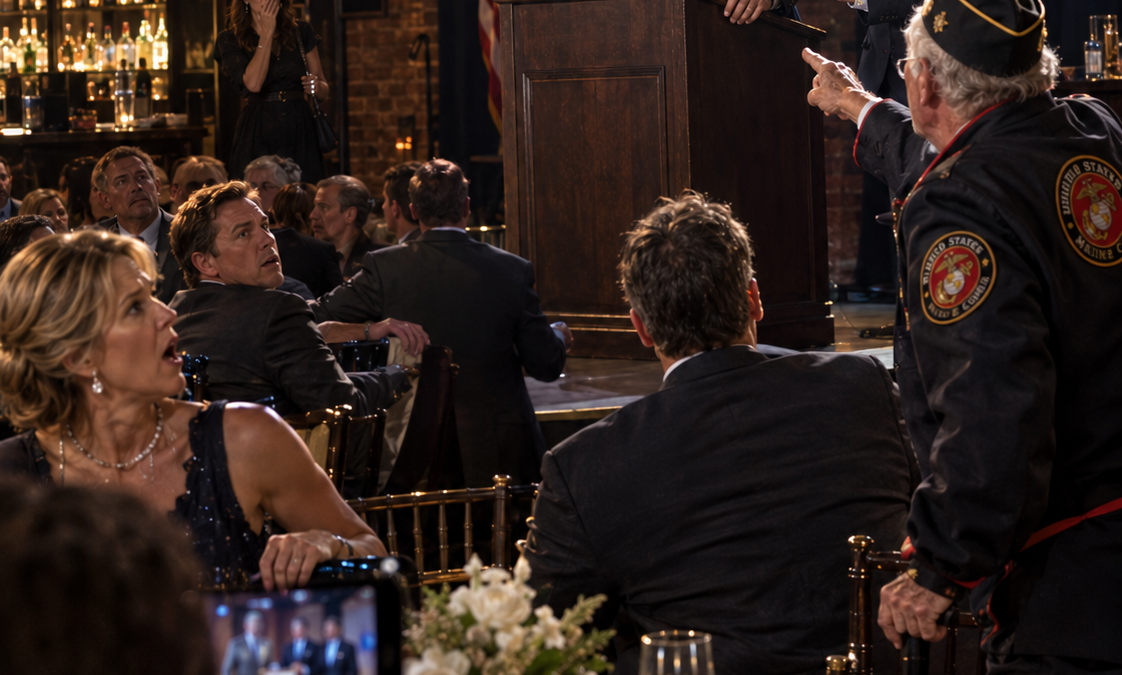
“I’m not between careers. I’m between deployments. That’s different.”
She told her book club her husband was “between careers,” never imagining his Silver Star would one day be pinned to his chest in front of the same friends who’d pitied her.
My wife told her book club I was between careers.
I was standing eight feet away when she said it. Holding a tray of bruschetta I’d made myself. Watching her mouth move around the words like they were something she had to get out of her system.
“David’s in transition right now,” she said. “Exploring options.”
That’s what she called it. Transition. Exploring options. A woman named Patricia with pearl earrings and a laugh like breaking glass nodded along. Another woman, Helen, whose husband owned three car dealerships, patted my wife’s arm and said, “That’s so brave of him. To start over at his age.”
My wife smiled. It was her hostess smile. The one she practiced in the bathroom mirror before parties.
I set the tray down and went back to the kitchen. My hands were steady. They’re always steady.
What none of them knew—what my wife had spent four years making sure none of them would ever know—was that I hadn’t been “between careers” since I was nineteen years old. I’d been something else entirely. Something my wife had decided was better left in a box in the garage, next to my old footlocker and the flag they’d given me at Camp Lejeune.
My name is David Cole. I’m forty-six years old. I spent twenty-three years in the United States Marine Corps, twelve of them in Force Recon, the rest in MARSOC. I’ve been shot twice, stabbed once, and blown out of a building in Fallujah that I walked away from because I refused to die in a country I couldn’t pronounce. I’ve trained some of the hardest men on the planet. I’ve buried eight of them.
And my wife told her book club I was “between careers.”
I should explain how we got here. How a man who spent two decades doing things that would make most people’s hands shake ends up holding a tray of appetizers while his wife erases his entire life with four words.
I met Karen at a Whole Foods in Virginia Beach. This was 2019. I’d just retired. Twenty-three years, multiple deployments, a Silver Star I keep in a safety deposit box because I don’t know what else to do with it.
She was a real estate agent. Pretty in that polished way that costs money—blonde highlights, straight white teeth, the kind of handbag that costs more than my first car. She’d grown up in Richmond. Old money, or what passes for it these days. Her father was a lawyer. Her mother hadn’t worked a day in her life.
I told her I’d been in the military. She didn’t ask for details. I think that’s what drew me to her, actually. She didn’t want to know. Most women either wanted the war stories or they wanted to fix me. Karen just wanted to go to dinner.
We got married eleven months later. Small ceremony. Her family’s church. Her mother cried. Her father shook my hand and said he respected my service, which is what people say when they don’t know what else to say.
For the first two years, things were good. I took a job as a security consultant. Government contracts, mostly. Nothing I could talk about at dinner parties. Karen didn’t mind. She had her open houses and her closing paperwork and her group of friends from college who’d all married money or made it themselves.
Then she started getting promoted at her brokerage. Started moving in different circles. Started going to charity galas and networking events where the women wore designer dresses and the men talked about their stock portfolios.
And somewhere along the way, she started telling people I was “in security.”
Not that it was a lie, exactly. I was in security. But she said it the way you’d say you work at a bank. Like it was boring. Like it was nothing.
I didn’t think much about it. Not at first.
The book club started two years ago. It wasn’t really a book club. It was an excuse for Karen’s friends to drink wine in each other’s houses and judge each other’s furniture. They rotated between six or seven homes. Patricia’s house had a wine cellar. Helen’s had a pool. Karen’s had the renovated kitchen she’d insisted on, even though we couldn’t really afford it.
I was always in the kitchen during those nights. Making appetizers. Refilling wine glasses. Karen’s friends would say things like “He’s so helpful” and “You’re lucky, most husbands won’t lift a finger.” Karen would smile and say something modest and then change the subject.
She never mentioned the Corps.
I noticed. Of course I noticed. You don’t spend twelve years in Recon without learning to read a room. But I told myself it didn’t matter. She wasn’t ashamed. She just didn’t want to make people uncomfortable. War was heavy. Dinner parties were light. I got it.
Then I found the book.
It was on her nightstand. A memoir by some embedded journalist who’d spent time with a SEAL team in Afghanistan. The bookmark was about halfway through. I flipped through it. Dog-eared pages. Notes in the margins. Karen’s handwriting.
Next to a passage about a firefight, she’d written: “Is this what he did?”
Next to a passage about a soldier’s funeral, she’d written: “He never talks about this.”
Next to a passage about operators coming home and struggling to adjust, she’d written: “Is this who I married?”
I put the book back exactly where I found it. I didn’t say anything. I just went to the garage and stood in front of my footlocker for a long time. Then I went inside and made dinner.
That was three months ago.
The party was for Karen’s promotion.
Not a promotion, exactly. She was opening her own brokerage. Karen Whitfield Properties. She’d been planning it for a year—saving money, lining up investors, poaching clients from her old firm. It was a big deal. The biggest thing she’d ever done.
The party was at the Richmond Country Club. Black tie. Two hundred guests. Most of them Karen’s investors and potential clients, people with last names that meant something in Virginia. There was going to be a photographer. A string quartet. A champagne tower that cost more than my first deployment paycheck.
“You need a suit,” Karen told me two weeks before. “A good one.”
“I have a suit.”
“The one you wear to funerals doesn’t count.”
So we went to a tailor in Charlottesville. Bespoke. Italian wool. Seven hundred dollars. Karen paid.
While I was standing on the pedestal, getting measured, she was on her phone. Making calls. Confirming caterers. Checking the guest list. She looked up at me once and said, “Try to look happy at the party. People notice these things.”
“Happy about what?”
“About us. About the business. About everything.” She went back to her phone. “Image is everything, David. You know that.”
I didn’t say anything. I just stood there while a man with a tape measure wrapped fabric around my shoulders.
The night of the party was clear and cold. November in Virginia. The kind of night where your breath fogs in front of your face and the stars look close enough to touch.
Karen wore a floor-length red gown. I wore the seven-hundred-dollar suit. We looked like a photograph. That’s what she wanted. A photograph of the perfect couple at the perfect party for the perfect new business.
The country club was lit up like a wedding. Chandeliers in the ballroom. White tablecloths. Military flags in the corner—because the club had a veterans’ committee, and someone had decided that would be a nice touch. Large screens showed a slideshow of Karen’s career: awards, open houses, charity work. Her face, smiling, over and over.
I stood by the bar and watched. That’s what I did at these things. Watched. Kept my back to the wall. Noticed exits. Old habits.
The guests arrived in waves. Patricia with her pearl earrings and her husband, Gerald, who worked in private equity. Helen and her car-dealer husband, Richard. A dozen other couples whose names I recognized from Karen’s Christmas card list.
And then there was a woman I didn’t know.
She came in alone. Late fifties, maybe sixty. Sharp gray suit. Silver hair cut short. She moved through the crowd like she owned it—not aggressively, just confidently. Like she’d spent her life in rooms like this and knew exactly how to navigate them.
I noticed her because she noticed me.
She was across the room, near the champagne tower, and she looked at me like she recognized me. Not like she was trying to place me. Like she knew me. Like she’d been looking for me.
I turned away. I’d spent twenty-three years learning not to stare. But I felt her eyes on my back for the rest of the evening.
The speeches started at eight.
Karen’s business partner, a woman named Diane, gave the first one. Then a client. Then Patricia, who’d known Karen since college. Each speech was some variation of the same theme: Karen Whitfield, the woman who built something from nothing, who never gave up, who was going to take Richmond real estate by storm.
Then Karen took the microphone.
She was good at this. She always was. She knew how to work a room. How to make people laugh, make them feel included, make them think they were part of something bigger than themselves.
“Thank you all for coming,” she said. “This has been a dream of mine for a long time. And I couldn’t have done it without the people in this room.”
She thanked her investors. Her clients. Her friends.
“And of course,” she said, “my husband, David. Who’s been so supportive of this whole journey. He’s in transition right now—between careers—but he’s always been my rock.”
The room applauded. Polite. Brief.
Between careers.
I stood by the bar and watched her smile and thought about the footlocker in the garage. About the Silver Star in the safety deposit box. About the eight men I’d buried and the two I’d carried out of harm’s way and the countless others whose faces I still saw when I closed my eyes.
Between careers.
I was between careers.
After the speech, I was making my way toward the exit. I needed air. I needed to not be in that room for a minute.
That’s when the woman in the gray suit stepped in front of me.
“David Cole,” she said.
It wasn’t a question.
“Do I know you?” I said.
She smiled. It was a knowing smile. The kind you’d give someone you’d been waiting a long time to meet.
“My name is Catherine Marsh. My son is Jason Marsh.”
The name hit me like a punch to the chest. Jason Marsh. Lance Corporal Jason Marsh. Third Recon Battalion. I’d trained him in 2015. He’d been young, scared, desperate to prove himself. I’d pushed him harder than any recruit I’d ever trained. Made him run hills until he puked. Made him do pushups until his arms shook. Made him cry, once, and then made him get up and do it again.
And I’d recommended him for Force Recon when his superiors wanted to wash him out.
“Jason Marsh,” I repeated.
“He served under you in Afghanistan. 2016, 2017. He talks about you all the time.” She paused. “He says you saved his life.”
I didn’t say anything. I was thinking about the mission. September 2016. A compound outside Sangin. Jason had been point man. He’d frozen when the shooting started. Just froze. I’d grabbed him by the collar and dragged him behind cover. Then I’d gone back out and brought in two other Marines who’d been hit.
“Mrs. Marsh,” I said. “It’s good to meet you.”
“You don’t remember me.”
“I remember your son.”
She nodded slowly. “He wanted to be here tonight. He couldn’t make it. But he asked me to come and—well. He wanted me to meet you. To tell you something.”
“What’s that?”
She looked around the room. At the chandeliers, the champagne, the two hundred guests in their black ties and evening gowns.
“He wanted me to tell you that you were the best leader he ever had. That you taught him what it meant to be a Marine. That when he was at his worst—when he was thinking about ending his own life after he came home—he thought about you. He thought about what you would say. And he got help.”
I felt something in my chest. Something I hadn’t felt in a long time.
“Mrs. Marsh—”
“He wanted me to tell you that you’re not forgotten. No matter what anyone in this room says.”
I looked at her. Then I looked past her.
Karen was across the room, laughing at something Patricia had said. Her hand on a man’s arm. A man I didn’t recognize. Young. Handsome. Rich, probably.
“Who told you I was here?” I asked.
“Your wife’s partner. Diane. She’s an old friend of mine. I asked if David Cole would be here tonight. She said she’d never heard of you.”
I nodded. Of course. Karen had been careful. She’d been so careful.
“Mrs. Marsh, I—”
“Call me Catherine.”
“Catherine. I don’t know what to say.”
“You don’t have to say anything.” She reached into her purse and pulled out a card. “Jason wants to see you. He lives in D.C. now. He works for a veterans’ organization. He wants to thank you in person.”
I took the card. It was simple. Just a name and a phone number.
“I’ll think about it,” I said.
“You do that.” She smiled again. “And David? For what it’s worth—I know who you are. And so does Jason. And so do a lot of other people. Whatever your wife tells her friends, you’re not between careers. You’re between missions. There’s a difference.”
She walked away. I stood there with her card in my hand and watched her disappear into the crowd.
I found Karen twenty minutes later. She was with a group of investors near the champagne tower. Laughing. Touching one man’s arm again. The young one.
“Karen,” I said. “Can I talk to you for a minute?”
She looked at me the way she looked at clients who showed up late. “Not now, David. I’m networking.”
“It’s important.”
“It can wait.”
“No. It can’t.”
She sighed. Rolled her eyes. Followed me to a corner near the exit.
“What?” she said.
“Who did you tell these people I was?”
“What are you talking about?”
“Patricia. Helen. The other women at book club. What did you tell them about me?”
Her face changed. Just slightly. A flicker of something—fear, maybe, or guilt. Then it was gone.
“I told them you were in security. Which is true.”
“You told them I was between careers.”
“Because you are.” She crossed her arms. “You’re a consultant, David. You don’t have a real job. You don’t have a career. You have—odd jobs. I don’t know how else to explain it to people.”
“So you lie.”
“I don’t lie. I simplify.” She looked around, making sure no one was listening. “These people, David—they don’t understand military. They don’t understand war. If I told them what you really did, they’d think you were—I don’t know. Damaged. Dangerous. That’s not good for business.”
I stared at her.
“Damaged,” I repeated.
“That’s not what I meant.”
“That’s exactly what you meant.”
“David, don’t do this tonight. This is my night. I’ve been planning this for a year. Please don’t ruin it.”
I looked at her. At her perfect hair and her perfect dress and her perfect smile that had been trained to say the right things at the right times. I thought about the woman I’d married. The one who’d said she didn’t need to know about the war. The one who’d promised to love me no matter what.
I thought about the Silver Star in the safety deposit box. The footlocker in the garage. The eight men I’d buried.
“Karen,” I said, “do you know what I did before we met?”
She hesitated. “You were in the military.”
“That’s not what I asked.”
“I don’t—I know you were in the Marines. I know you were overseas. I know you don’t like to talk about it.”
“Do you know what Force Recon is?”
She blinked. “Is that—is that like a branch or something?”
I almost laughed. Almost.
“Force Recon is the Marine Corps’ special operations unit,” I said. “It’s the equivalent of the Navy SEALs. Except we work in smaller teams, with less support, on missions that most people will never know about. I spent twelve years in Force Recon. I’ve been shot twice. Stabbed once. I’ve been in firefights that lasted six hours. I’ve killed people with my bare hands. I’ve watched friends die. And you told your book club I was between careers.”
Karen’s face went pale. “David—”
“Do you know what a Silver Star is?”
“No.”
“It’s the third-highest medal you can receive in the United States military. I have one. It’s in a safety deposit box at Wells Fargo. I don’t keep it on the wall because I don’t want to think about what I did to earn it.”
She was silent.
“Mrs. Marsh—Catherine—her son served under me. She came tonight to tell me that I saved his life. That I’m the reason he didn’t kill himself when he came home. And when she asked Diane if I was here, Diane had never heard of me. Because you never told her. Because you never told anyone.”
Karen’s eyes were wet. “I didn’t know—”
“You didn’t want to know. That’s different.”
“David, please. Not tonight. We can talk about this at home.”
“There’s nothing to talk about.”
I turned and walked out of the ballroom. Through the lobby. Out the front doors. Into the cold November night.
Behind me, I heard Karen call my name. Once. Twice. Then she stopped.
I kept walking.
I sat in my truck in the parking lot for a long time. The country club lights were behind me. The stars were above me. The card in my hand was warm from my grip.
Jason Marsh. 2016. The compound outside Sangin.
I’d thought about him over the years. Wondered if he’d made it. Wondered if he’d found peace. Wondered if the training I’d put him through—the yelling, the pushing, the running—had broken him or saved him.
Now I knew.
I pulled out my phone. Dialed the number on the card.
A man’s voice answered. “Hello?”
“Jason? This is David Cole.”
Silence. Then: “Sergeant Major Cole?”
I laughed. Actually laughed. “I’m not a Sergeant Major, Jason. I was a Gunnery Sergeant.”
“You’ll always be Sergeant Major to me, sir.”
There was something in his voice. Respect. Gratitude. Love, almost.
“Your mother came to the party tonight,” I said.
“I know. I sent her.”
“She told me what you wanted to say.”
“I meant every word, sir. I wouldn’t be here without you. I wouldn’t have my wife, my kids, my job. I wouldn’t have anything. You saved my life.”
“I just did my job, Jason.”
“No, sir. You did more than that. You did—” He stopped. His voice cracked. “You did everything, Gunny. Everything.”
I sat there in the truck and listened to a man I’d trained eight years ago cry on the phone. And I thought about the party. The champagne tower. The seven-hundred-dollar suit. The words “between careers.”
“I’m glad you’re okay,” I said. “That’s all I ever wanted.”
“I want to see you, sir. Can I see you?”
“Name a time and a place.”
“Tomorrow. Lunch. There’s a place in Fredericksburg. It’s a veterans’ bar. Quiet. I’ll text you the address.”
“I’ll be there.”
“Gunny?”
“Yeah?”
“Are you okay? I mean—I’ve been watching from a distance. The Facebook posts. The stuff your wife says. I didn’t want to say anything, but—”
“I’m fine, Jason. I’ll see you tomorrow.”
I hung up. I put the truck in gear and drove home.
The house was empty when I got there. Karen was still at the party. Probably telling her friends I’d had a headache. Probably telling them I was tired. Probably telling them I was between careers.
I went to the garage. Opened the footlocker. Looked at the folded uniform inside. The boots. The photographs.
Then I closed it and went inside and made myself a cup of coffee.
Tomorrow was going to be an interesting day.
PART 2 — THE VETERANS’ BAR
The bar was called The Broken Arrow.
It was in a strip mall in Fredericksburg, between a nail salon and a vape shop. If you didn’t know what you were looking for, you’d drive right past it. No sign on the roof. Just a small plaque by the door, barely visible from the road. It said: PRIVATE CLUB. MEMBERS ONLY.
Jason was waiting for me outside.
He looked older than I remembered. He’d been a kid when I trained him—barely twenty, all elbows and anxiety, trying to prove something to himself. Now he was in his thirties. Broad shoulders. Short beard. A wedding ring and a watch that looked practical, not expensive. He was wearing a plain gray henley and jeans. No uniform. No medals. Just a man.
He saw me get out of the truck and his face changed. Something crumpled. Something tightened. He walked toward me and stopped a few feet away.
“Gunny,” he said.
“Jason.”
He hugged me. It was awkward—two grown men in a parking lot, arms around each other, neither sure where to put their hands. But he held on. Longer than I expected.
“I’m sorry,” he said. “I should have reached out years ago.”
“You’re here now.”
“I know. But I should have—”
“Jason. You’re here now.”
He stepped back. Wiped his face with the back of his hand. “Come on. They’ve got a back room. Quiet.”
The bar was dark and warm. Wood paneling. Old photographs on the walls—Marines in Vietnam, soldiers in Korea, a framed flag that had been flown over Fallujah. A few men sat at the bar. Older guys. Gray hair. They looked up when we walked in, nodded at Jason, glanced at me. One of them—a thick-necked man with a cane—stared for a second longer than the others. Then he looked away.
Jason led me to a corner booth. A waitress came by. We both ordered burgers. He ordered a beer. I ordered coffee.
“You don’t drink?” he asked.
“Not anymore.”
He nodded. Didn’t ask why. That was the thing about men who’d been there. They didn’t ask. They already knew.
“I found this place five years ago,” Jason said. “When I first moved back. It’s a veterans’ bar. Owned by a retired Master Sergeant. Quiet. No one bothers you. No one asks for your story.”
“Sounds like a good place.”
“It is.” He looked down at his hands. “I almost didn’t make it, Gunny. After I got out. The first year was—” He shook his head. “I don’t know how to explain it. I was in a fog. I couldn’t sleep. Couldn’t eat. Couldn’t talk to my wife. I’d wake up in the middle of the night thinking I was back in Sangin. Reaching for my rifle. Screaming.”
I knew the feeling. I’d lived it. Still did, sometimes.
“But then I thought about you,” Jason said. “I thought about what you told me in the desert. After the first firefight. After I froze.”
I remembered. We’d been in a wadi. The sun had been going down. Jason was sitting on a rock, shaking, trying to hold back tears. The other guys were watching. Waiting to see if he’d break.
I’d knelt in front of him. Grabbed his helmet. Forced him to look at me.
“You’re not dead,” I’d said. “You’re here. That’s all that matters. You froze. Next time you won’t. That’s not failure. That’s training.”
“Yes, Gunny.”
“Say it back to me.”
“I’m not dead. I’m here.”
“Good. Now get up. We’re not done.”
“I remembered that,” Jason said. “I remembered you telling me I wasn’t dead. That I was here. And I thought—if I’m not dead, I need to act like it. I need to get up. So I got help. I found a therapist who worked with vets. I started going to a group. I started—I don’t know. Living.”
I nodded. “Good.”
“It was you, Gunny. You saved me twice. Once over there. Once over here. And I never got to thank you.”
“You just did.”
“I want to do more than thank you.” He leaned forward. “I work for a nonprofit now. We help veterans transition to civilian life. Job training. Counseling. Housing. It’s a big operation. We’ve got connections all over the state. If you’re looking for work—”
“I have work.”
“I know. But—I don’t know what your situation is. Your wife’s friends. What she says about you. I’ve heard some of it.”
I set down my coffee. “What have you heard?”
He hesitated. “Patricia Connelly. Her husband Gerald is on the board of my nonprofit. He mentioned a charity golf tournament. I saw your wife’s name on the guest list. I asked Patricia if she knew you. She said—” He stopped. Looked away.
“She said what, Jason.”
“She said you were nice. But you weren’t really doing much. She said your wife was the one with the career. She said you were—I think the phrase was ‘finding yourself.'”
I almost laughed again. Almost.
“Yeah,” I said. “That sounds about right.”
“It’s not right. That’s not who you are.”
“It’s who she wants me to be.”
Jason was quiet for a long moment. Then he said, “Can I show you something?”
“Sure.”
He pulled out his phone. Scrolled through it. Turned the screen toward me.
It was a photograph. I was in it. Standing in a dusty courtyard, holding a rifle, surrounded by eight Marines. I was younger. Thinner. My face was smeared with dirt and sweat. I was smiling, barely. The Marines around me were smiling too. All of them.
“That’s from 2016,” Jason said. “The day we finished the deployment. You remember?”
I remembered. That was the day we’d lost Corporal Benitez. The last mission. The one that went wrong. We’d brought him home but he hadn’t made it. Afterward, I’d gathered the survivors and taken a picture. I don’t know why. Maybe to prove we’d been there. Maybe to prove we were still alive.
“I’ve had this picture for eight years,” Jason said. “I look at it every day. Every single day. Because these are the men who taught me what it means to be a Marine. And you’re in the middle. You’re the reason we all came home.”
I stared at the photograph. At the faces of men I hadn’t seen in years. At Benitez, standing behind me, alive and whole.
“You should have this,” Jason said.
“It’s your picture.”
“It’s our picture. I’ll send it to you.”
I nodded. My throat was tight. I didn’t trust myself to speak.
The food came. We ate in silence for a while. The older men at the bar finished their drinks and left. The waitress wiped down a table. The television above the bar played a football game with the sound off.
“You want to tell me what’s really going on?” Jason said.
“What do you mean?”
“With your wife. I’ve been watching from a distance. Social media. The way she talks about you. She never mentions the Corps. She never mentions what you did. She acts like—”
“Like I’m between careers.”
“Yeah. Like that.”
I took a bite of my burger. Chewed. Swallowed. Then I told him.
Not everything. Not the details of the missions, the things I’d done that I couldn’t say out loud. But the rest. How Karen had started out not wanting to know, and then had started not wanting to talk about it, and then had started actively erasing it. How she’d built her career on a version of our life that didn’t include the truth. How she’d told her friends I was “in security,” then “between jobs,” then “between careers.”
How I’d found the book on her nightstand with the notes in the margins.
Jason listened. Didn’t interrupt. Didn’t judge. Just ate his burger and waited for me to finish.
“She’s ashamed,” he said when I was done.
“I know.”
“She’s ashamed of the best thing about you.”
“She doesn’t see it that way.”
“She sees it as baggage. As something that doesn’t fit her image.” He shook his head. “I’ve seen it before. Guys who come home and their wives can’t handle it. The trauma. The memories. The way you change. They want you to be the person they married. But that person doesn’t exist anymore.”
“I’m still me.”
“Are you? Or are you the version of you she decided she could live with?”
I didn’t have an answer for that.
Jason drove me back to my truck. We stood in the parking lot for a while. The sun was going down. The strip mall lights were coming on. A few cars passed on the highway.
“Gunny,” Jason said. “I want you to meet some people. The guys at the bar. The veterans’ group. Men who know who you are.”
“What do you mean?”
“I mean—there are people in this state who know your name. Not because of your wife. Because of what you did. There’s a Marine Corps League chapter in Richmond. The Gunny who runs it—Master Sergeant Alverez—he mentioned you once. Said you were one of the best Recon Marines he’d ever served with. I didn’t make the connection until your wife’s name came up.”
“Alverez. Frank Alverez?”
“You know him?”
“He was my first team leader. Twenty years ago. He taught me everything I know.”
Jason smiled. “He asked about you. At a meeting last month. Wanted to know where you’d ended up. I told him I didn’t know.”
I looked at the strip mall. At the vape shop. At the nail salon. At the small plaque on the door that said MEMBERS ONLY.
“I should have called him,” I said. “I meant to. I just—”
“You got busy. You got lost. It happens.”
I nodded.
“There’s a memorial ceremony next weekend,” Jason said. “For the Fallujah anniversary. The Marine Corps League is hosting it. It’s small. Quiet. A lot of old guys like you. Alverez will be there. I’ll be there.” He paused. “You should come.”
“I don’t know.”
“You don’t have to decide now. Just think about it.”
“I will.”
He reached out and shook my hand. Firm grip. Direct eye contact. The way I’d taught him.
“Thank you, Gunny,” he said. “For everything.”
“Thank you, Jason.”
He got in his car and drove away. I stood in the parking lot for a long time.
When I got home, Karen was in the living room.
She was sitting on the couch with a glass of wine. The party dress was gone. She was in sweatpants and a t-shirt. No makeup. Her hair was pulled back. She looked tired.
“Where were you?” she said.
“Seeing a friend.”
“What friend?”
“A Marine I used to serve with.”
She set down her wine. “David, we need to talk.”
“Okay.”
“About tonight. About what you said.”
I sat down in the chair across from her. Kept my back straight. Didn’t lean forward. Didn’t raise my voice. Old training.
“I didn’t know,” she said. “I didn’t know that woman was going to be there. I didn’t know her son served with you.”
“You didn’t know because you never asked.”
“I know. And I’m sorry. But you have to understand—these people, David, they’re not like us. They don’t understand military life. They don’t understand sacrifice. If I told them what you did, they’d look at you differently. They’d—”
“They’d respect me.”
“No. They’d be scared of you.”
I let that sit.
“Karen,” I said. “Do you respect me?”
She blinked. “What kind of question is that?”
“It’s a simple question. Do you respect me?”
“Of course I do. You’re my husband.”
“That’s not an answer.”
She looked away. Took a sip of her wine. “I don’t know what you want me to say.”
“I want you to say you’re proud of me. I want you to say that when you look at me, you see a man who served his country for twenty-three years. A man who earned a Silver Star. A man who trained some of the best warriors in the world. I want you to say that you’re not ashamed of me.”
“I’m not ashamed of you.”
“You told your book club I was between careers.”
“Because you are between careers.”
“I’m not between careers, Karen. I’m between deployments. That’s different. I’m a Marine. I will always be a Marine. It’s not a job. It’s not a career. It’s who I am.”
She was quiet for a long time. Then she said, “Is that why you married me? Because you thought I would—what? Validate you?”
“No. I married you because I loved you.”
“And now?”
I looked at her. At the woman I’d married. At the life we’d built. At the lies she’d told and the truth she’d buried.
“I don’t know,” I said.
She stood up. Walked to the kitchen. Refilled her wine glass. Stood with her back to me.
“There’s something else,” she said.
“What?”
“The party. The investors. There’s one—the one I was talking to. The young one.”
“I saw him.”
“His name is Mark. Mark Davidson. He’s—he’s interested in investing in the new brokerage. A lot of money. More than we’ve ever had.”
“And?”
“And he wants to meet you. Properly. He’s hosting a dinner next weekend. For the investors. For the new business. He specifically asked if you’d come.”
“Why would he want to meet me?”
She turned around. Her face was unreadable. “Because he’s interested in how the business works. In the people behind it. He wants to understand—what makes us tick.”
“You mean he wants to understand what makes me tick.”
“Something like that.”
I thought about Jason. About the memorial ceremony. About Master Sergeant Alverez and the men at The Broken Arrow.
“Karen,” I said. “What did you tell Mark about me?”
She took a long sip of wine. “I told him the truth.”
“Which is?”
“That you’re a veteran. That you served in the Marine Corps. That you’re transitioning to civilian life.”
“That’s not the truth. That’s the same lie with different words.”
She slammed the wine glass down on the counter. “What do you want from me, David? Do you want me to apologize? Do you want me to get down on my knees and beg for forgiveness? Because I’m not going to do that. I’ve worked too hard to get where I am. I’m not going to let you ruin it.”
“Ruin it? By existing? By being who I am?”
“By refusing to move on! By holding on to the past! By acting like the war is the only thing that matters!”
“The war saved my life, Karen. It gave me purpose. It gave me brothers. It gave me a reason to be. You don’t get to tell me to move on from that.”
“I’m not telling you to move on. I’m telling you to be realistic. This is a new chapter. A new business. A new life. You can’t keep living in the past.”
“I’m not living in the past. I’m living in the present. But the past is part of me. It’s part of who I am. And if you can’t accept that—” I stopped.
“If I can’t accept that, what?”
I looked at her. At the woman who’d told her friends I was between careers. At the woman who’d buried my service like it was something to be ashamed of.
“I don’t know,” I said. “I guess that’s the question.”
She stared at me. Then she turned and walked out of the kitchen. A few seconds later, I heard the bedroom door close.
I sat in the living room for a long time. The house was quiet. Outside, the wind blew through the trees. Inside, I was surrounded by the life we’d built together—the furniture, the photographs, the renovated kitchen she’d insisted on. None of it felt like mine.
I pulled out my phone. Opened the text from Jason. The address of The Broken Arrow. The photo from 2016. The faces of men who knew who I really was.
Then I texted him back.
“I’ll be at the ceremony. Send me the details.”
The next morning, I woke up early. Karen was still asleep. I made coffee, checked my email, scrolled through the news. The usual.
Then I went to the garage. Opened the footlocker. Took out the uniform. The boots. The photographs. I laid them on the workbench and looked at them for a long time.
The uniform was a Marine Corps Combat Utility Uniform. Digital woodland camo. Faded and soft. The name tape said COLE. The rank insignia—Gunnery Sergeant. Three chevrons up, three rockers down. I’d worn that uniform for over a decade. I’d bled in it. I’d buried friends in it. I’d come home in it.
The boots were scuffed and worn. I’d had them resoled twice. They’d walked hundreds of miles in Afghanistan and Iraq. They’d carried me through firefights and sandstorms and the worst days of my life.
The photographs were old. Fading. In one of them, I was standing with my first Recon team. We were young. Stupid. Invincible. Half of those men were dead now. The rest were scattered across the country, living quiet lives, carrying the same memories I carried.
I picked up a photo of me and Frank Alverez. 2004. Iraq. We were in a Humvee, grinning at the camera. Frank had his arm around my shoulder. He’d been my team leader then. He’d taught me how to survive.
I hadn’t talked to Frank in years. I’d meant to. I’d just—gotten lost.
I put the photo in my pocket.
Then I closed the footlocker and went inside to make breakfast.
The week passed slowly.
Karen and I didn’t talk much. We moved around each other like ghosts. She went to work. I went to my consulting job. We ate dinner in silence. We slept on opposite sides of the bed.
She didn’t mention the party again. Neither did I.
But I noticed things. The way she checked her phone constantly. The way she smiled at texts she didn’t show me. The way she said “Mark Davidson” like it was a name she’d been practicing.
I didn’t ask. I’d learned a long time ago not to ask questions I didn’t want the answers to.
Instead, I did what I’d been trained to do. I watched. I listened. I waited.
On Wednesday, I got a text from Jason. The memorial ceremony was Saturday at 10 a.m. At a park in Richmond. Small. Quiet. “Wear something nice,” he said. “But not too nice.”
On Thursday, Karen told me about the dinner with Mark Davidson. “It’s Saturday night,” she said. “At his house. In the Fan District. It’s important, David. Please be there.”
“I’ll be there.”
She looked surprised. “You will?”
“I said I would.”
She nodded slowly. “Okay. Good. Thank you.”
“Karen?”
“What?”
“Who is Mark Davidson?”
She hesitated. “I told you. He’s an investor.”
“That’s not what I asked.”
“He’s—he’s a businessman. He’s successful. He’s interested in the brokerage. That’s all.”
“You sure about that?”
She met my eyes. For a second, I saw something there. Fear. Or guilt. Or maybe just the exhaustion of maintaining a lie for too long.
“I’m sure,” she said.
She walked away. I watched her go.
Saturday was going to be a busy day.
PART 3 — THE MEMORIAL
The ceremony was at a park on the James River.
It wasn’t much. A circle of folding chairs. A small stage with a podium. A color guard from the Marine Corps League, old men in dress blues that didn’t quite fit anymore, holding rifles they hadn’t fired in decades. An American flag and a Marine Corps flag, snapping in the wind.
Maybe forty people. Most of them veterans. A few spouses. A few kids.
I parked my truck and sat for a minute. Watched the men gather. Watched them shake hands, clasp shoulders, tell jokes that only they understood. I knew that language. I’d spoken it for twenty-three years.
Jason was near the front. He saw me and waved. I got out and walked toward him.
“You came,” he said.
“I said I would.”
He handed me a program. It was simple. A list of names. Marines from Virginia who’d been killed in Fallujah. Eleven names. I didn’t recognize all of them. I recognized three.
One of them was Corporal Luis Benitez.
I looked at the name for a long time. Jason didn’t say anything. He just stood next to me and waited.
“You okay, Gunny?”
“Yeah.” I folded the program and put it in my pocket. “Let’s find a seat.”
The ceremony started at ten.
A chaplain gave an invocation. A retired colonel gave a speech about sacrifice and service and the bond between Marines. A woman sang the national anthem. A bugler played taps.
I sat in the back row and listened. I didn’t cry. I hadn’t cried in years. But something in my chest felt tight. Something that had been locked away for a long time was pressing against the door.
After the speeches, they read the names. One by one. Eleven Marines. Each name followed by a moment of silence.
“Corporal Luis Benitez.”
I closed my eyes. Saw his face. Twenty-two years old. From El Paso. He’d wanted to be a teacher. He’d had a girlfriend back home named Maria. He’d shown me her picture once, on a deployment, and I’d told him she was pretty and he’d blushed and looked away.
He’d died in my arms. I’d held him while he bled out. I’d told him he was going to be okay. I’d lied.
When I opened my eyes, Jason was watching me.
“You knew him,” he said. It wasn’t a question.
“He was my point man. Before you.”
“I’m sorry, Gunny.”
“It was a long time ago.”
“That doesn’t mean it doesn’t hurt.”
I nodded. He was right. It didn’t.
After the ceremony, there was a reception. Coffee and sandwiches in a pavilion by the river. People stood in small groups and talked quietly. I stood by myself near the water, watching the current.
I heard footsteps behind me. Heavy. Slow. A man with a cane.
“Gunny Cole,” he said.
I turned around.
Frank Alverez was older than I remembered. Gray hair, close-cropped. A thick mustache. A face like cracked leather. He walked with a cane—shrapnel, I guessed, from one of the old deployments. He was wearing a Marine Corps League jacket with patches on the sleeves.
“Master Sergeant,” I said.
“Don’t call me that. I’m retired.”
“So am I.”
He laughed. It was a dry, rasping sound. “You’ll always be a Gunny, Cole. That’s not something you retire from.”
He stuck out his hand. I shook it. His grip was still strong.
“I heard you were in Virginia,” he said. “Jason told me. I’ve been meaning to reach out.”
“I should have reached out first.”
“Yeah. You should have.” He looked at me. “Why didn’t you?”
I didn’t have a good answer. So I told him the truth.
“I got lost,” I said. “I got married. I got a job. I put the past in a box and tried to move on.”
“And how’s that working for you?”
I looked at the river. At the men in the pavilion. At the flag still snapping in the wind.
“Not great,” I said.
He nodded. “It never does. You can’t put it in a box, Cole. It doesn’t fit. It’s too big. It’s too much. You have to live with it. You have to carry it.”
“I know.”
“Do you? Because it sounds like you’ve been trying to pretend it didn’t happen.”
“Not pretend. Just—not talk about it.”
“Same thing.”
He leaned on his cane and looked at me. His eyes were sharp. Old. Wise.
“Jason tells me your wife doesn’t know,” he said.
“She knows I was in the Corps. She doesn’t know what I did.”
“Why not?”
“Because she doesn’t want to know. She’s—” I stopped. Tried to find the right words. “She’s built a life that doesn’t have room for it. For me. For the person I was.”
“And you’re okay with that?”
“No.”
“Then why are you still there?”
I didn’t have an answer. Not one I wanted to say out loud.
Frank was quiet for a moment. Then he said, “I was married once. To a woman who didn’t understand. She wanted me to be someone else. A version of me that didn’t exist. I tried. For ten years, I tried. And then one day I realized—I was killing myself to make her happy. And she still wasn’t happy. So I left.”
“Just like that?”
“Not just like that. It was the hardest thing I ever did. Harder than Fallujah. Harder than losing men. Because when you leave a marriage, you’re not just leaving a person. You’re leaving a life. A future. A version of yourself that you thought you wanted to be.”
“And you don’t regret it?”
“Every day.” He smiled. “But I regret staying more.”
He reached into his pocket and pulled out a card. Handed it to me.
“That’s my number. Call me. Not tomorrow. Not next week. Today. I want to know what’s going on with you. I want to help.”
“Help with what?”
“Whatever you need.” He looked at me. “You’re not alone, Cole. You never were. You just forgot.”
He walked away. I stood by the river and watched him go.
I drove home with the window down. The wind felt good on my face. The radio was off. I thought about Benitez. About Frank. About Jason and his wife and kids and the life he’d built after coming home.
I thought about Karen. About the party. About Mark Davidson.
I didn’t know what was going to happen Saturday night. But I knew something was going to happen. I could feel it. The way I used to feel it before a mission. The quiet certainty that things were about to change.
When I got home, Karen was in the kitchen.
She was making lunch. Salad and sandwiches. She looked up when I came in.
“Where were you?” she asked.
“I told you. A memorial.”
“For what?”
“Fallujah. Marines who died.”
She paused. Knife in mid-air over a tomato. “I didn’t know there was a memorial.”
“You didn’t ask.”
She set the knife down. “David, I—”
“It’s fine.”
“No, it’s not. I should have asked. I should have known.”
I looked at her. At the woman who’d been my wife for five years. At the woman who’d told her friends I was between careers.
“It’s fine,” I said again.
She turned back to the salad. “Are you ready for tonight?”
“What’s tonight?”
“The dinner. With Mark Davidson. At his house.”
Right. The dinner.
“What time?”
“Seven. It’s black tie. Wear the suit.”
“The seven-hundred-dollar suit?”
“Yes.” She hesitated. “David, can I ask you something?”
“Sure.”
“Please don’t—” She stopped. Started again. “Please don’t talk about the military tonight. These are business people. They don’t understand. Just—be normal.”
I stood in the doorway and looked at her.
“Be normal,” I repeated.
“Yes.”
“Normal like what? Normal like a guy who works in an office? Normal like a guy who plays golf on the weekends? Normal like a guy who’s between careers?”
She turned around. Her face was flushed. “That’s not what I meant.”
“That’s exactly what you meant.”
“I just want tonight to go well. This is important for the business. For our future. For—”
“For you.”
“For us.”
“There is no us, Karen. Not really. There’s you and your career. And there’s me and—” I stopped.
“And what?”
“And a footlocker in the garage.”
She stared at me. Then she turned back to the salad and started chopping. Fast. Angry.
“Be ready by six-thirty,” she said.
“I’ll be ready.”
I spent the afternoon in the garage.
I opened the footlocker. Took everything out. Laid it on the workbench. The uniform. The boots. The photographs. The medals I never wore.
The Silver Star was in the bottom of the locker. In a small box. I opened the box and looked at it.
It was a simple thing. A gold star on a blue ribbon. The citation was folded underneath. I didn’t read it. I didn’t need to. I knew what it said.
I picked up the medal and held it in my palm. It was heavy. Heavier than it looked.
I thought about the day I earned it. April 2004. Fallujah. A house full of insurgents. A Marine fireteam pinned down. I’d gone in alone. Killed four men. Carried out two wounded Marines. One of them died on the way back.
The citation said I acted “above and beyond the call of duty.” It said I displayed “extraordinary heroism.” It said I was “an inspiration to all who served with him.”
I didn’t feel like an inspiration. I felt like a man who’d done what needed to be done. Nothing more. Nothing less.
I put the medal back in the box. Closed the footlocker. Went inside to shower.
Six-thirty came fast.
I put on the suit. The seven-hundred-dollar suit. I looked at myself in the mirror. A man in a suit. A man with gray at his temples and lines around his eyes. A man who’d seen things no one should see.
“Be normal,” I said to the mirror.
The man in the mirror didn’t answer.
Karen was waiting in the living room. She was wearing a black dress. Diamonds in her ears. Her hair was perfect. Her smile was perfect. Everything was perfect.
“You look nice,” she said.
“So do you.”
“Ready?”
“Ready.”
We walked out to the car. Karen drove. I sat in the passenger seat and watched the houses go by. Big houses. Old houses. Houses with columns and iron gates and driveways that cost more than my truck.
Mark Davidson lived in the Fan District. It was a neighborhood in Richmond where the streets were lined with trees and the houses were a hundred years old and everyone who lived there had money they didn’t talk about.
His house was on a corner. Three stories. Brick. A wrought-iron fence. A garden that looked like it had been designed by someone who charged by the hour.
Karen parked on the street. We got out. She smoothed her dress. Adjusted her hair. Took a deep breath.
“David,” she said.
“What?”
“Just—be nice. Okay?”
“I’m always nice.”
She looked at me. Then she turned and walked toward the house.
I followed.
The front door opened before we knocked.
A man stood in the doorway. Young. Handsome. Dark hair, dark eyes. A smile that was too wide, too white, too practiced. He was wearing a suit that made my seven-hundred-dollar suit look like something from a thrift store.
“Karen,” he said. “You made it.”
He kissed her on the cheek. Let it linger a second longer than it should have.
Then he turned to me.
“And you must be David. I’ve heard so much about you.”
He stuck out his hand. I shook it.
“Mark Davidson,” he said. “Welcome to my home.”
His grip was firm. His eyes were cold. He was sizing me up. I’d seen that look before. On the faces of insurgents. On the faces of men who were about to try to kill me.
“Thanks for having us,” I said.
“Of course. Come in. Everyone’s in the dining room.”
We walked inside. The house was beautiful. Old wood. High ceilings. Art on the walls that looked expensive and probably was. A staircase that curved up to the second floor.
And in the dining room, around a table that seated twelve, sat the investors. Patricia and Gerald. Helen and Richard. A few others I recognized from the party. And one man I didn’t expect to see.
A man in a Marine Corps League jacket. With a cane.
Frank Alverez.
He looked up when I walked in. His eyes met mine. He didn’t smile. He didn’t wave. He just nodded. Once.
The way a man nods when he knows something you don’t.
 [Tap here for the Next Part ]


