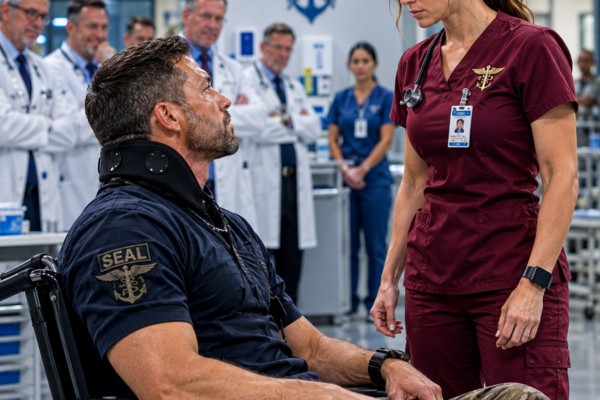
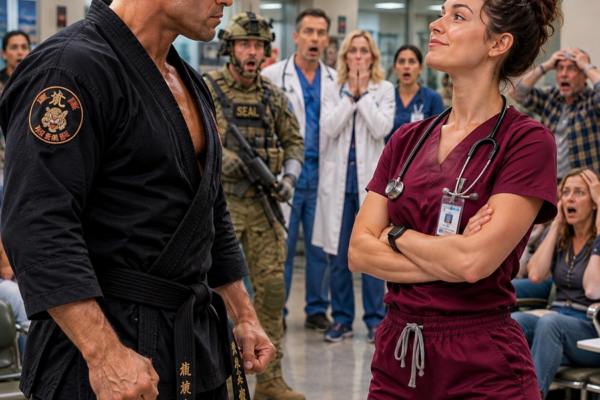
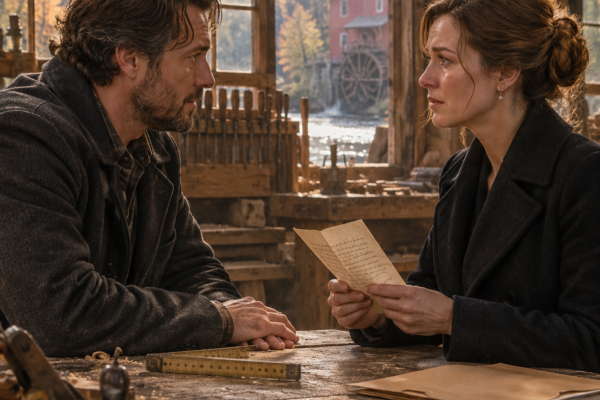
Part 2: “Twenty years of service, and what did it get him? Nothing.”
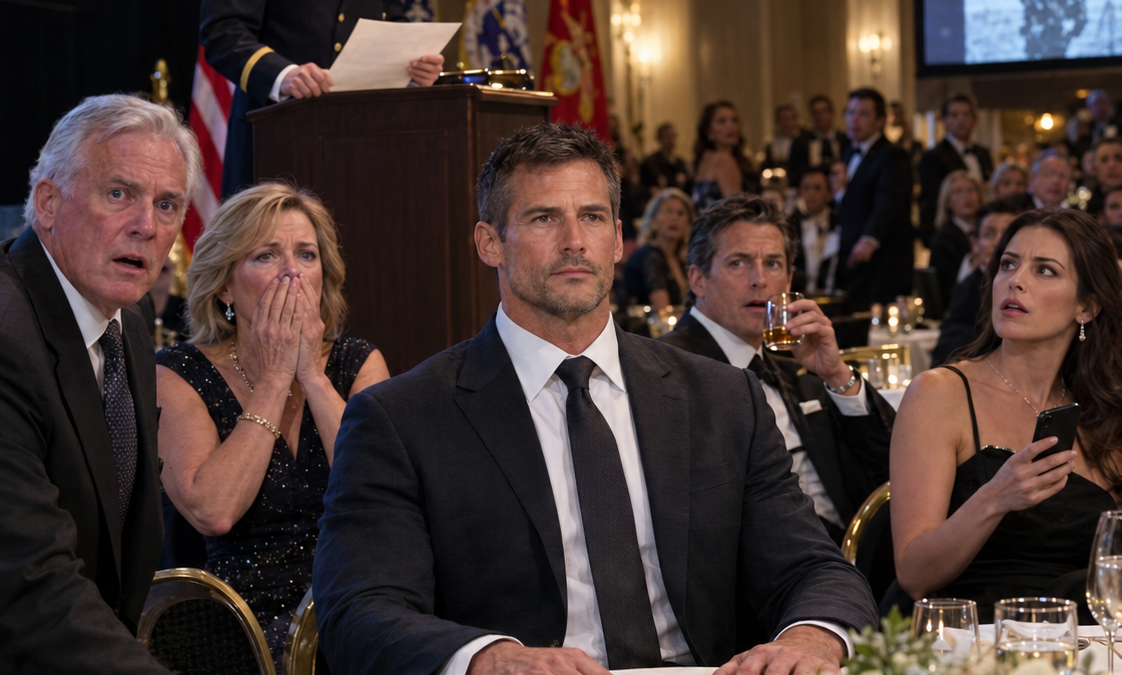
PART 3 — THE VIDEO
The video went up on a Friday.
I didn’t post it. I didn’t know it existed. Someone at the party had recorded my father’s toast on their phone — the whole thing, all four minutes of it — and someone else had recorded Admiral Cole’s response. By Saturday morning, both clips were on YouTube. By Sunday, they had a hundred thousand views.
By Monday, they had a million.
Luis showed me first. He came into the hangar with his phone held out like it was radioactive.
“Have you seen this?”
“Seen what?”
He played the video. My father’s voice, tinny through the phone speaker. “Twenty years of service, and what did it get him? Nothing.”
Then the laughter.
Then Admiral Cole.
I watched the whole thing without moving. When it was over, Luis put the phone down.
“That’s you,” he said.
“That’s me.”
“You’re famous.”
“I’m not famous.”
“You’re on the internet. That’s the same thing.”
I didn’t check the views. I didn’t read the comments. I went to work and flew my missions and came home and ate dinner alone. But the phone kept ringing. Old teammates. Distant cousins. A reporter from a local news station. A producer from a national morning show.
I didn’t answer any of them.
By Wednesday, the story had a name. The internet called it “The Toast.” Hashtag and all. People were sharing it on Facebook and Twitter and Reddit. Veterans were posting their own stories. Sons and daughters of veterans were posting theirs.
“My father said the same thing.”
“My mother threw away my uniform.”
“My family never asked. Not once.”
I read some of them. Not many. It hurt too much.
Michael called on Thursday.
“Have you seen the news?”
“I’ve seen it.”
“This is a disaster.”
“For who?”
“For the family. For Dad. He’s been getting calls from everyone. Old colleagues. Clients. People he hasn’t talked to in years.”
“What are they saying?”
“They’re asking if it’s true. They’re asking why he said it. They’re asking—” He stopped.
“They’re asking if he’s an asshole.”
“Daniel—”
“I’m just guessing.”
Michael was quiet for a moment.
“Mom wants you to make a statement. Something to calm things down.”
“A statement.”
“Something that says the family is fine. That it was a misunderstanding. That you love each other.”
“I’m not going to lie for him.”
“It’s not lying. It’s—”
“It’s lying.”
“It’s protecting the family.”
“The family that laughed when he called my life a waste?”
Michael didn’t answer.
I hung up. I made dinner. I watched the rain.
At 9:00 PM, my phone buzzed. A text from Elena.
“Dad. Are you okay?”
I stared at the screen for a long time. Then I typed back.
“I’m okay. How are you?”
“People at school are talking about it. Someone showed me the video.”
“I’m sorry.”
“Don’t be sorry. Grandpa’s the one who should be sorry.”
“He is.”
“Good.”
A pause. Then another text.
“I’m proud of you.”
I put the phone down. I sat in the dark for a while.
The next morning, I got a call from a number I didn’t recognize. Area code 202. Washington, D.C.
I answered.
“Daniel Kessler?”
“Speaking.”
“This is Lieutenant Commander Sarah Chen. I’m with the Navy Office of Information. I’m calling on behalf of Vice Admiral Cole.”
“What does he want?”
“He wants to know if you’re okay. He’s been getting calls from the press. He wanted to make sure you weren’t being harassed.”
“I’m fine.”
“He also wanted me to tell you something.”
“What?”
“He said, and I quote, ‘Tell him I’d do it again.'”
I almost smiled.
“Tell him I said thank you.”
“I will.”
She paused.
“One more thing. The Admiral wanted me to ask if you’d be willing to attend a ceremony. It’s a private event. No press. Just some people who want to say thank you.”
“What kind of ceremony?”
“A dedication. At the National Museum of the Pacific War. They’re opening a new exhibit on special operations. The Admiral wants you there.”
I didn’t answer right away.
“Mr. Kessler?”
“I’m here.”
“Will you come?”
“I’ll think about it.”
I thought about it for two days. I went to work. I flew missions. I saved a man with a collapsed lung and a woman with a broken pelvis. I did my job.
On the third day, I got a package in the mail. A small box, wrapped in brown paper. No return address.
I opened it.
Inside was a medal. A Silver Star. The same one I’d been awarded in 2011. I’d left it in a box in my closet when I got out. I hadn’t looked at it in years.
There was a note inside.
“You earned this. You should wear it. — T.C.”
I held the medal in my hand for a long time. It was heavier than I remembered.
The ceremony was in two weeks. I didn’t RSVP. I didn’t say yes. I didn’t say no. I just went to work and came home and stared at the medal on my kitchen counter.
On the Friday before the ceremony, my mother showed up at my apartment again. She didn’t call first. She just knocked on the door and stood there in the rain.
“Daniel.”
“Mom.”
“Can I come in?”
I let her in. She sat at the kitchen table. I made tea. She looked at the medal on the counter.
“You’re going to the ceremony.”
“I didn’t say that.”
“You’re thinking about it.”
“I’m always thinking about something.”
She picked up the medal. She turned it over in her hands.
“I never saw this before.”
“You never asked.”
She set it down.
“I know.”
She was quiet for a long time. Then she said something I didn’t expect.
“I was jealous too.”
I looked at her.
“Not like your father. Not the same way. But I was jealous.”
“Why?”
“Because you left. You went away. You did something. And I stayed here. I stayed in this house with your father and his moods and his silence. I stayed and I waited and I never did anything.”
“You raised two children.”
“I raised Michael. You raised yourself.”
I didn’t argue.
“I used to think you were selfish,” she said. “For leaving. For going off to war. For not calling. For not coming home.”
“I came home.”
“Not to us.”
She looked at me.
“You came home to a different life. A life we weren’t part of.”
“That wasn’t my choice.”
“I know.”
She wiped her eyes.
“Your father is a hard man. He’s always been hard. He doesn’t know how to love people. He only knows how to judge them.”
“I know.”
“But he’s trying. He’s trying now.”
“Two letters isn’t trying.”
“It’s more than he’s ever done.”
I didn’t have an answer for that.
She left after an hour. She hugged me again. It was less awkward this time.
After she was gone, I sat in my kitchen and looked at the medal. I thought about the desert. I thought about the boy in the burning vehicle. I thought about the forty-seven people I’d saved and the ones I hadn’t.
I thought about my father.
I didn’t know what I felt. I didn’t know if I forgave him. I didn’t know if I ever would.
But I knew I couldn’t keep sitting in my apartment, staring at a wall.
The next morning, I called the number on the card. Lieutenant Commander Chen answered on the second ring.
“Mr. Kessler.”
“I’ll come to the ceremony.”
“Wonderful. I’ll let the Admiral know.”
“What’s the dress code?”
“Formal. Dress blues if you have them.”
“I have them.”
I did. They were in a garment bag in the back of my closet. I hadn’t worn them since my retirement ceremony in 2016.
I took them out and looked at them. The ribbons. The medals. The name tag.
I hadn’t touched them in six years.
I hung them on the door and stared at them for a long time.
The ceremony was on a Saturday. I drove to the museum alone. The building was large and white and overlooked the water. Flags lined the entrance. A sign said, “Special Operations Exhibit — Grand Opening.”
I parked and got out. I was in my dress blues. The medals were on my chest. The Silver Star was in the center.
I walked to the entrance. A young sailor in a crisp uniform opened the door for me.
“Sir. Welcome.”
“Thank you.”
I walked inside.
The room was full of people. Navy. Army. Marines. Air Force. Veterans and active duty and civilians. Men in suits and women in dresses and old men in caps with unit insignia.
I saw Admiral Cole first. He was standing near the front, talking to a man in a general’s uniform. He saw me and smiled.
“Daniel.”
“Admiral.”
He extended his hand. I shook it.
“You came.”
“I came.”
“You’re wearing the medal.”
“I’m wearing the medal.”
He looked at my chest. At the Silver Star. At the Purple Heart. At the Bronze Stars and the Distinguished Flying Cross and the Air Medal with valor device.
“Good,” he said. “Good.”
A woman walked to the podium. She was in a Navy uniform with two stars on her collar. A rear admiral.
“Ladies and gentlemen. Thank you for coming. We’re here today to open a new exhibit. But before we do, we have a few words from someone who helped make it possible.”
She looked at Admiral Cole.
“Admiral.”
He walked to the podium. The room quieted.
“Thank you,” he said. “I’ll be brief.”
He looked out at the crowd.
“Twenty years ago, I was a captain. I had a son. He was a Marine. He went to Afghanistan. And he almost didn’t come home.”
The room was silent.
“There was a young man who saved him. A pararescueman. He was twenty-six years old. He ran into a burning vehicle while under fire and pulled my son out. He carried him two hundred meters. He kept him alive.”
Admiral Cole paused.
“That young man is here today. His name is Daniel Kessler. He served twelve years in the Air Force. He was awarded the Silver Star, the Purple Heart, three Bronze Stars, and the Distinguished Flying Cross. He saved forty-seven lives in combat.”
He looked at me.
“He is the reason my son is alive. He is the reason my grandchildren exist. And he is the reason I am standing here today.”
The room turned to look at me.
“Daniel. Please come up here.”
I walked to the front. My boots were loud on the floor. My face was still. My hands were steady.
I stood next to Admiral Cole. He put his hand on my shoulder.
“This man,” he said, “is what service looks like.”
The room applauded.
After the ceremony, people came up to me. Old veterans. Active duty sailors. Men and women I’d never met. They shook my hand and thanked me. Some of them cried. Some of them just nodded and walked away.
I stood there for an hour. I shook every hand. I said thank you to every person. I didn’t smile much. I didn’t have to.
At the end, a woman approached me. She was in her sixties. Gray hair. A simple dress. She looked at my medals and then at my face.
“Thank you,” she said.
“For what?”
“For my son.”
I didn’t know what to say.
“He was in Afghanistan. He came home because of people like you.”
She squeezed my hand and walked away.
I drove home that night with the radio off. The rain had stopped. The sky was clear. The stars were out.
I thought about my father. I thought about the letters. I thought about the party.
I thought about the medal on my chest.
When I got home, I put the medal on my kitchen counter. Then I picked up my phone and called my father.
He answered on the first ring.
“Daniel?”
“Dad.”
A pause.
“Are you okay?”
“I’m fine. I just wanted to tell you something.”
“What?”
I looked at the medal.
“I went to a ceremony today. They dedicated an exhibit. Special operations.”
“I heard.”
“It was good. People said nice things.”
“That’s good.”
“I wore my dress blues.”
Another pause.
“You did?”
“I did.”
I could hear him breathing. It was uneven.
“I’m glad,” he said.
“I know.”
We didn’t talk long. Five minutes. Maybe ten. He asked about work. I asked about his health. He said he was feeling better. I said that was good.
At the end, he said, “Thank you for calling.”
I said, “You’re welcome.”
Then I hung up.
I don’t know if that was forgiveness. I don’t know if it was anything. But it was something.
The next morning, I got a text from Michael.
“Dad told me you called. He’s been crying all night. Thank you.”
I didn’t answer.
I put the phone down and went to work.
PART 4 — THE HEADLINE
The story didn’t die.
I thought it would. Most viral stories do. A week of attention, then nothing. But this one kept going. The video was shared by a veterans’ group with two million followers. Then a senator tweeted about it. Then a morning show did a segment.
By the second week, reporters were calling my station. They wanted interviews. They wanted photos. They wanted to know about the Silver Star and the burning vehicle and the forty-seven lives.
I told the station manager to say no to all of them.
He didn’t.
The station put out a statement. “We are proud to employ Daniel Kessler, a decorated veteran and valued member of our team.” They posted it on Facebook with a photo of me standing next to the helicopter.
I didn’t know about it until Luis showed me.
“You’re on the company page.”
“Great.”
“It’s good publicity. The boss loves it.”
“I don’t.”
“Too late.”
The comments under the post were mostly kind. People thanking me for my service. People sharing their own stories. But there were others too. The kind that always show up.
“Why didn’t he say anything at the party?”
“He just sat there while his father humiliated him. What kind of man does that?”
“Maybe the father was right.”
I read those. I shouldn’t have. But I did.
Michael called on a Tuesday.
“Have you seen the news?”
“Which news?”
“The Post. They ran a story about Dad.”
I pulled up the article on my phone. The headline said: “Retired Pentagon Official Called Son’s Military Service ‘A Waste’ at Retirement Party.”
The article was long. It quoted the video. It quoted Admiral Cole. It quoted anonymous guests who described the room going silent.
And it quoted Michael.
“My brother’s service is a point of pride for our family,” Michael said. “My father’s remarks were taken out of context. He was making a joke. The family is united and we stand behind Daniel.”
I read that paragraph three times.
“Michael.”
“Don’t start.”
“You told them the family was united.”
“We are.”
“Did you tell them about the letters? Did you tell them he never asked? Did you tell them he called my life a waste in front of two hundred people?”
Silence.
“Michael.”
“I’m trying to protect the family.”
“From what? From the truth?”
“From the press. From the gossip. From people who don’t know us.”
“People who don’t know us are the only ones telling the truth.”
He hung up. I sat in my kitchen and stared at the wall.
The article was everywhere by the next morning. My father’s name was in the headline. His firm issued a statement. His golf club issued a statement. His church issued a statement.
Everyone was talking about him. Nobody was talking to him.
I didn’t call him. I didn’t know what to say.
But I did call Aunt Carol.
She answered on the second ring.
“Danny. I was wondering when you’d call.”
“How are you, Aunt Carol?”
“Deaf in one ear and mean as ever. How are you?”
“I’m okay.”
“You’re not okay. You’re famous.”
“I’m not famous.”
“You’re on the television. That’s famous.”
We talked for an hour. She told me about the party. About how she’d wanted to stand up and slap my father but her hip was acting up. About how she’d told my mother that she’d raised a fool. About how she’d been praying for me every night.
“You don’t have to pray for me, Aunt Carol.”
“I’ll pray for whoever I want.”
I laughed. It was the first time I’d laughed in weeks.
She got quiet after a while.
“Danny.”
“Yeah.”
“Your father called me. After the party. He was crying.”
I didn’t say anything.
“He asked me what he should do. I told him he should get on his knees and beg. He said he didn’t know how.”
“He doesn’t.”
“I know.”
She paused.
“He’s a small man. He’s always been small. He wanted to be big, but he was small. And you were big. And he couldn’t stand it.”
“He’s my father.”
“He is. But that doesn’t make him right.”
I thought about that for a long time after we hung up.
My father was small. He’d spent his whole career in procurement. Pushing paper. Signing contracts. He’d never been in a firefight. He’d never carried a wounded man on his shoulders. He’d never watched someone die in his arms.
He’d never done anything that required him to be brave.
And I had. Over and over. For twelve years.
That was the thing he couldn’t forgive. Not that I’d wasted my life. That I’d lived it in a way he never could.
The next week, things got worse.
A reporter from the Post called the station again. This time she wanted to talk to my ex-wife.
I called Sarah that night. We hadn’t spoken in three months. She answered on the fourth ring.
“Daniel.”
“Sarah. I need to tell you something.”
“I already know. I saw the video.”
“Someone from the Post might call you.”
“They already did.”
My stomach dropped.
“What did you say?”
“I said no comment. But Daniel—” She paused. “Elena is upset. She’s been getting questions at school. Kids are showing her the video.”
“I know. She texted me.”
“She’s twelve years old. She shouldn’t have to deal with this.”
“I know.”
“She’s proud of you. But she’s also confused. She doesn’t understand why Grandpa said those things. She doesn’t understand why you didn’t say anything back.”
“I didn’t say anything because I was trained not to.”
“That’s not an answer a twelve-year-old can understand.”
“I know.”
She was quiet for a moment.
“Maybe you should talk to her. Really talk to her. Not just texts.”
“I will.”
“Good.”
She hung up.
I called Elena that night. She answered on the first ring.
“Dad?”
“Hey, kiddo.”
“Are you okay?”
“I’m okay. Are you?”
“I guess.”
“Your mom said kids at school are asking you questions.”
“Yeah.”
“What are they asking?”
“They’re asking if it’s true. If Grandpa really said that.”
“It’s true.”
“Why didn’t you stop him?”
I sat down on the couch. This was the conversation I’d been avoiding.
“I couldn’t.”
“Why not?”
“Because I’ve spent my whole life learning not to react. Not to fight back. Not to show what I’m feeling. That’s what I was trained to do.”
“That’s stupid.”
I laughed. “Yeah. It kind of is.”
“Grandpa’s a jerk.”
“He’s not a jerk. He’s just… small.”
“What does that mean?”
“It means he’s scared. He’s scared of things he doesn’t understand. And he takes that fear out on other people.”
“That’s still a jerk.”
I laughed again.
“Yeah. It kind of is.”
She was quiet for a moment.
“Dad.”
“Yeah.”
“Are you a hero?”
I didn’t answer right away.
“I don’t know.”
“Grandpa said you saved people.”
“I did.”
“How many?”
“Forty-seven.”
“Forty-seven people?”
“Yes.”
“That’s a lot.”
“It is.”
She paused.
“I’m proud of you.”
“Thanks, kiddo.”
“I love you.”
“I love you too.”
I hung up and sat in the dark for a long time. The apartment was quiet. The rain had stopped. Outside, the streetlights were on.
I thought about Elena. I thought about the kind of man I wanted to be for her. Not a hero. Not a legend. Just a father.
I hadn’t been that in a long time.
The next morning, I got a call from a lawyer.
“Mr. Kessler?”
“Speaking.”
“My name is Harold Finch. I represent Kessler and Associates.”
“Kessler and Associates?”
“Your father’s firm.”
My stomach tightened.
“What do you want?”
“Your father is stepping down as managing partner. Effective immediately.”
“Why?”
“The press. The negative attention. The board voted this morning.”
I didn’t say anything.
“He wanted me to tell you it’s not your fault.”
“Did he?”
“He did. He said to tell you he doesn’t blame you.”
I hung up and sat in my kitchen. My father had spent thirty-eight years building that firm. It was his life. His identity. And now it was gone.
Because of a joke.
Because of a video.
Because of me.
I called him.
He answered on the first ring.
“Daniel.”
“Dad.”
“I’m sorry.”
“You didn’t do anything.”
“I said the thing at the party. I made the joke. I—”
“It wasn’t just the joke. It was everything before. It was everything after.”
He was quiet.
“I lost the firm,” he said.
“I heard.”
“Thirty-eight years. Gone.”
“I’m sorry.”
“Don’t be. I deserved it.”
I sat down on the couch.
“You didn’t deserve that. You deserved a lot of things. But not that.”
He was crying. I could hear it.
“I don’t know what to do,” he said. “I don’t know who I am without it.”
“You’re my father.”
“That’s not—” He stopped.
“I know it’s not enough. But it’s something.”
He didn’t answer.
I stayed on the phone with him for an hour. We didn’t talk much. Mostly we just sat there. Two men on opposite ends of a phone line, both of us broken in different ways.
At the end, he said, “Thank you.”
I said, “You’re welcome.”
Then I hung up.
That was two weeks ago.
My father is still living in the house. He’s still reading the letters. He’s still going to the veteran’s center. He’s still trying.
I don’t know if I forgive him. I don’t know if I ever will.
But I know he’s trying. And that’s more than he’s ever done.
I got another letter yesterday.
“Daniel,
I lost the firm. I lost my reputation. I lost my friends.
But I didn’t lose you.
That’s the only thing that matters.
Dad”
I read it twice.
Then I put it in the drawer with the others.
I still don’t know what to say to him. I still don’t know how to feel. But I called him last night. We talked for thirty minutes. It was awkward. It was hard.
But I called.
That’s something.
PART 5 — THE VISIT
Elena came to stay with me for a week in April.
It was the first time she’d visited since the divorce. Usually I went to Portland. But Sarah had a conference in Chicago, and her stepfather was traveling for work, and there was nobody else to watch her.
So she came to me.
I picked her up at the airport on a Friday afternoon. She walked out of the terminal in jeans and a hoodie with her backpack slung over one shoulder. She was taller than the last time I’d seen her. Twelve going on sixteen.
“Dad.”
“Hey, kiddo.”
She hugged me. It was quick, but it was real.
“You look different,” she said.
“Different how?”
“Older.”
“Thanks.”
She laughed.
We drove home in my truck. She stared out the window at the gray sky and the wet streets.
“It rains a lot here.”
“It does.”
“I like it.”
“You do?”
“It’s quiet.”
I glanced at her. She was watching the raindrops race down the glass.
“How’s school?”
“Fine.”
“Just fine?”
“It’s school.”
I nodded. I didn’t push.
We stopped at the grocery store on the way home. She wanted to pick out food.
“You have anything in your apartment?” she asked.
“Coffee. Eggs. Some rice.”
“That’s not food.”
“It’s food.”
She rolled her eyes.
We walked through the aisles together. She filled the cart with pasta and sauce and vegetables and a box of cereal that cost more than my dinner usually did. She picked out strawberries and yogurt and a bag of pretzels.
“You eat like a college student,” she said.
“I was a college student once.”
“Did you graduate?”
“No.”
She looked at me.
“Why not?”
“I got deployed.”
She was quiet for a moment.
“Oh.”
We cooked dinner together. She chopped vegetables while I boiled water for pasta. She was careful with the knife. Precise. She got that from her mother.
“Dad.”
“Yeah.”
“Can I ask you something?”
“Anything.”
“Why did you do it?”
“Do what?”
“The military. The PJ thing. Why did you do it?”
I stirred the pasta. Steam rose from the pot.
“I wanted to help people.”
“That’s it?”
“That’s it.”
She set down the knife.
“But you could have helped people here. You could have been a doctor or a firefighter or something.”
“I could have.”
“So why didn’t you?”
I turned off the burner. I looked at her.
“Because when I was eighteen, I met a man who told me I could save lives. Real lives. People who needed saving more than anyone else. And I believed him.”
“Was he right?”
I thought about the desert. I thought about the burning vehicle. I thought about the forty-seven people who got to go home because of me.
“He was right.”
We ate dinner at the small table by the window. The rain had stopped. The sun was setting behind the clouds, turning everything pink and gray.
She asked about my work. I told her about the helicopter. The missions. The people I’d saved. She listened without saying much.
At the end, she said, “Grandpa called me.”
I set down my fork.
“When?”
“Last week. He wanted to say he was sorry.”
“What did you say?”
“I told him he should apologize to you. Not to me.”
I didn’t know what to say.
“He said he was trying. He said you weren’t ready to forgive him yet.”
“That’s true.”
“Do you think you’ll ever forgive him?”
I looked at her.
“I don’t know.”
That night, I lay in bed and listened to the rain. Elena was asleep on the pull-out couch in the living room. I could hear her breathing through the thin wall.
I thought about my father. I thought about the letters. I thought about the party.
I thought about what Elena had said. He said he was trying.
He was. I knew he was. He was going to the veteran’s center. He was reading the letters. He was going to church. He was writing me every week.
But it didn’t feel like enough. It felt like a man who’d broken a window and was now sweeping up the glass. The window was still broken. The glass was still on the floor.
The next morning, Elena asked if we could go to the museum.
“Which museum?”
“The one with the exhibit. The one you went to.”
I looked at her.
“Why do you want to go?”
“I want to see it.”
“It’s just a room with some old equipment.”
“I want to see it anyway.”
We drove to the museum. It was an hour away. Elena played music on her phone the whole way. Music I didn’t recognize. Loud. Fast.
“You don’t like it?” she asked.
“I don’t understand it.”
“You’re old.”
“Thanks.”
She laughed.
The museum was quiet on a Saturday morning. Only a few people were there. We walked through the main hall and stopped at the special operations exhibit.
It was a small room. Glass cases with old equipment. A night vision scope. A combat knife. A folded flag. Photographs on the walls.
Elena walked slowly through the room. She looked at everything. She didn’t say anything.
At the end of the exhibit, there was a wall of names. Men and women who had died in service. I recognized some of them.
Elena stood in front of the wall.
“Did you know any of them?”
“A few.”
She looked at me.
“Were they your friends?”
“Some of them.”
“I’m sorry.”
“Thanks.”
She reached out and touched one of the names. A young man from Montana. He’d been twenty-four when he died. I’d been there.
“Dad.”
“Yeah.”
“Grandpa was wrong.”
“I know.”
“Not just about you. About everything. About what it means to serve.”
I looked at her.
“Where’d you learn that?”
“School. Books. The internet.”
“Fair enough.”
She turned away from the wall.
“I’m proud of you. But not because you saved people. Because you’re my dad. And you’re here.”
I didn’t say anything. I couldn’t.
We drove home in silence. She held my hand on the console. We didn’t need to talk.
That night, we watched a movie together. Something funny. Something light. She laughed and I laughed and for two hours we were just a father and a daughter on a couch.
At the end, she fell asleep with her head on my shoulder. I let her stay there. I didn’t move.
I thought about my father. I thought about what he’d missed. Not the medals. Not the Silver Star. Not the forty-seven lives. Just this. A quiet night. A daughter asleep on his shoulder.
He’d never had that with me. Not once.
Elena left on Sunday. I drove her to the airport and walked her to security.
“Thanks for coming,” I said.
“Thanks for having me.”
“Come back anytime.”
“I will.”
She hugged me. Longer than usual.
“I love you, Dad.”
“I love you too, kiddo.”
She walked through security and turned to wave. I waved back. Then she was gone.
I drove home and sat in my truck for a long time. The engine was off. The rain was coming down.
I thought about my father. I thought about the letter in my drawer. I thought about the way he’d sounded on the phone.
I took out my phone and called him.
He answered on the first ring.
“Daniel.”
“Dad.”
“Are you okay?”
“I’m fine. Elena was here.”
“How is she?”
“Good. She’s good.”
“That’s good.”
We were quiet for a moment.
“She said you called her.”
“I did.”
“She said you apologized.”
“I did.”
“She told me to forgive you.”
He didn’t say anything.
“I’m not there yet,” I said. “But I’m trying.”
“That’s all I can ask.”
We talked for a while. Not about anything important. The weather. His health. Elena’s visit. The museum.
At the end, he said, “Thank you for calling.”
I said, “You’re welcome.”
Then I hung up and sat in the rain.
 [Tap here for the Next Part ]