Part 3: Homeless at 20, He Slept in a Rusted School Bus — Under the Floor Lay a Hidden Fortune
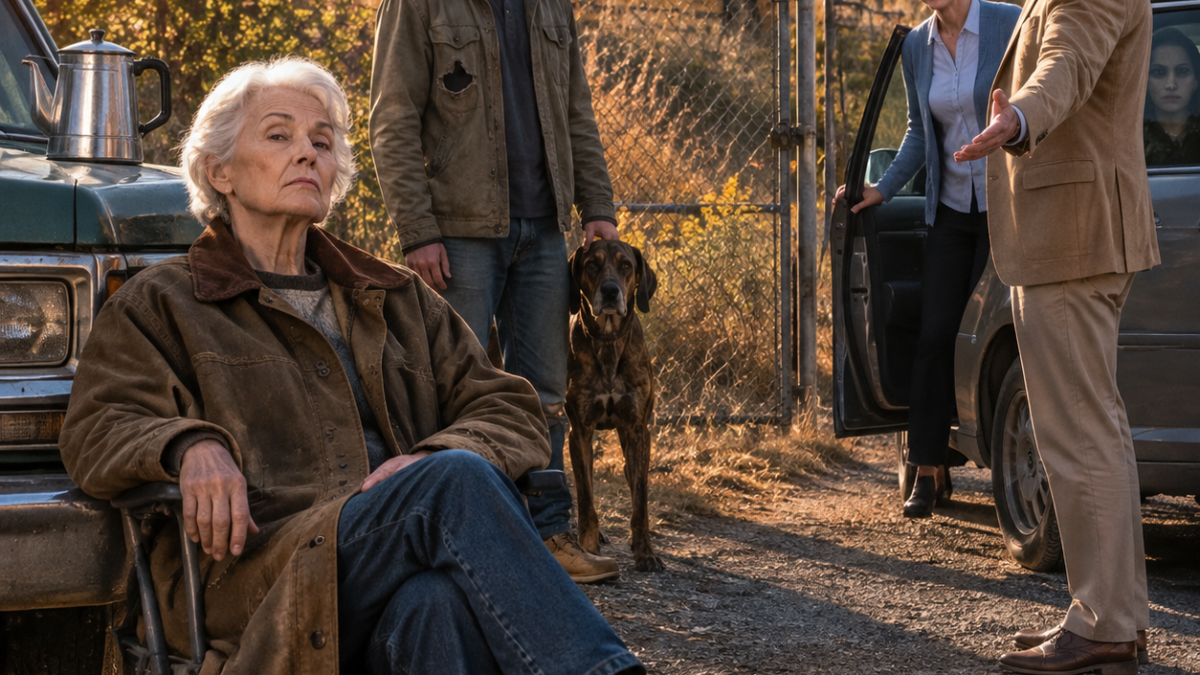
Then it was only the people who were left. Delia sat very straight, her hands clasped around the clasp of her handbag.
Her voice, when it came, was the old one, soft and level and reasonable, and Jonah was surprised to find how little it frightened him now.
Jonah, honey, let us not do this in front of strangers. Whatever else, I took you in.
I fed you for 6 years.
You are being unreasonable.
I am being exactly reasonable, Jonah said. That is why I am not signing.
He had not planned the sentence.
It came out in his fathers voice, plain and patient, and it sat on the tablecloth between them like a fifth paper. I want four things, he went on.
I want my mothers box from the attic.
I want the envelope with my wages in it.
I want my fathers tools back, if Mr.Tillery still has them. And I want the green lunch pail.
He stopped and added, because it was true, I do not want anything else from you.
The first hailstones struck the folding table with a crack, like a dropped plate.
It was as large as a walnut, and it bounced across the tablecloth and stopped against the leg of the chair. Another struck the roof of the bus.
Then a dozen, and then a hundred, drumming on the steel in a rising clatter, and a gust came out of the west, so cold and sudden that it snatched the tablecloth from the table and sent Quills papers flying.
Jonah caught the last of them flat against his chest with the hail stinging his shoulders. The front had come 4 hours ahead of its forecast.
Underground!
Midge shouted. Everybody, now!
Dorothea Quill had her papers in her briefcase and was across the yard before the sentence ended. Midge got the mat peeled away and the four bolts out in under a minute because Jonah had left them loose that morning.
Penny went down the ladder as though she had always known how. Jonah turned to look for the rest and what he saw made him stop.
Tory was running, her heavy bag banging against her hip, her chin down against the hail, but Delia had not moved.
She stood by the empty table in the open with her handbag clutched in front of her, small and gray in the swirling green light, staring up at a sky that had become all at once much larger than she was.
I am not going into a hole in the ground, she said, though no one could have heard it.
Jonah ran.
He took her by the elbow and she looked down at his hand as though she had never seen one.
Delia, he said, nobody gets left. He did not say it for her sake or for his own.
He said it because it was the one thing he knew for certain and because the sky was breaking open above them.
They went down the ladder one at a time in the roaring dark. Tory first, then Delia with her shoes slipping on the rungs, then Jonah who drew the heavy plate down behind him and shot the inside bolts.
The sound above them changed at once.
It became a muffled thunder, the whole bus drumming like the inside of a great tin drum and the wind went past overhead with a long unbroken scream.
Midge had the lantern lit. The air in the room smelled of cedar and lamp oil, and the old exhaust pipe in the corner whistled softly as it breathed for them.
Nobody spoke. Penny went to Jonah and leaned.
Quill took the chair by the table with her briefcase on her knees, and Tory sat on the floor with her back against the cot. Delia stood in the middle of the room and turned in a slow circle.
She looked at the cedar walls, the sealed blankets, the shelves of canned food with their neat dates.
Her gaze reached the wall above the cot and stopped. Nobody gets left at the last stop.
Who made this? She said at last.
Her voice was a husk.
A man who lost nothing, said Midge, because he built a place to lose it in.
Above them, the storm went on for an hour, and then another.
Midge heated soup on the iron stove, and Quill took out a pad and began drafting something.
Somewhere in the second hour, Delia sat down on the end of the cot with her handbag in her lap, and when she spoke, it was not to anyone in particular.
My mother used to count out coins at the grocery store while people stood behind us in line.
I decided at 16 that nobody would ever watch me count. I opened that shop because I could not stand needing anyone, and when it began to fail, I borrowed to hide it and borrowed again to hide the borrowing.
When the letter from Mrs.Quill came, I did not think of you at all.
I thought of the 15th of October.
I knew whose yard it was, and I knew there was no lien, and I said what I said because I could not bear to be poor again.
That is not an excuse. It is only what is true.
Jonah turned the words over. They were smaller than he had expected and sadder and no less hers.
Thank you for telling me, he said. I do not know yet what to say after that.
From the floor by the cot, Tory said, I have something.
She had been sitting with the canvas bag between her feet and now she opened it and lifted out a green steel lunch pail with a dent in the lid. She held it for a moment in both hands.
Then she stood and crossed the room and set it in front of Jonah on the plank table beside the lantern.
It was never in the donation bag, she said.
Her voice shook, but she kept going. I took it out of the bag that night after you left.
I put it on the top shelf in my closet.
I know that is not enough.
Tory, Delia said sharply.
I clerk at the recorders office, Mother.
You know I do. Tory did not turn around.
In June, you asked me to pull the record on the Dunning yard and I did.
It said no liens.
It said the owner was the grandson. I gave you a copy and you put it in the stove.
I made a second one. I did not know what for.
She touched the dented lid with one finger.
I put it under the tape in here with the card.
On the morning she told me to put the pail in the bag, I could not put either of them in the bag. Jonah lifted the lid.
The index card was there in his fathers block capitals, Route 9.
Beneath the yellowed tape, folded small and soft with handling, lay a printed page from the county record with a stamp in the corner and a date in June.
He held it for a long moment.
Then he looked at Tory, who stood with her arms wrapped around herself, a tall, tired young woman who had spent six years saying nothing and four months carrying it. And he understood that silence can be a wall and also a door held shut by a very small hand.
Thank you, he said. I mean it.
I should have said it in the kitchen.
Yes, said Jonah.
You should have.
He turned the dent in the lid under his thumb as she had, But you kept it. It was not forgiveness and neither of them pretended that it was.
It was a door left standing open an inch in a house that had only ever had closed ones.
At 20 minutes to 2:00, the roar overhead thinned to a patter and then to a drip. When Jonah drew the bolts and lifted the plate, daylight fell down the shaft, pale and washed and clean.
The hail lay in white drifts against the buses like an early snow. The great cottonwood had lost its largest limb.
Delias sedan stood with its windshield starred and its hood dented in a dozen places. And bus nine had not moved an inch, rusted yellow and solid as it had stood for 40 years.
Delia stood in the gravel with her handbag at her side and looked at all of it.
And then she walked to Dorothea Quill who was brushing hail from her briefcase and said in a small, clear voice, I will need the name of a good lawyer. One who is not Mr.Haynes.
I will give you three, said Quill, and I would call the first one today.
The judge admitted the will on the 25th of October. On the 29th, Pinnacle Business Capital won its judgment and in January, the house on Marlowe Street was sold to satisfy it.
Delia took a small apartment above the shoe repair shop and a job at the feed store.
Jonah did not pay her debt and he did not ask her to pay his.
The cedar box came back from the attic within the week, carried up the yard by Tory herself with the cash envelope tucked beside it and the exact sum written on a slip in her own hand, $1,860.
In November, Frank Tillery left Mark Whittakers tool chest at the gate and went away before anyone could thank him. Jonah thanked him anyway the next time he saw him on Main Street.
Frank looked at his boots.
Olden Voat sold the coins slowly over the following year to buyers who knew what they were holding.
Jonah paid Dorothea Quill twice what she asked. He paid the property taxes on Midges farm for 10 years and a carpenter to rebuild her porch roof.
And when she told him sharply that she would not take charity, he said, It is not charity, Mrs.Oakley.
It is credit. You kept a light on for me before I knew I needed one.
She blew her nose and went to check on the biscuits.
He did not move into a new house.
In the spring, he bought a sturdy used van and painted Route 9 on the side and it began carrying people from Harbin Springs to the clinic in Fairly and to the grocery store and to church on Sundays and nobody was ever asked to pay or to explain.
Bus 9 itself, he restored rivet by rivet until the yellow paint shown like a dry lemon in the sun and the number gleaned clean and black on its side.
He kept the seat with the brass plate exactly as it was. Above the yard gate, he hung a lamp and kept it lit from dusk to dawn.
On the 7th of October the following year at dusk, the temperature fell to 41°. Jonah was 21.
He stood by the gate in his fathers old canvas jacket with Penny sitting at his knee. Her torn ear flicked toward the road and he watched the last of the light go out of the goldenrod.
A woman was coming up Calvert Road on foot. She was perhaps 23, thin in a jacket meant for milder weather with a duffel bag on one shoulder.
She walked the way people walk when they have been walking for longer than they meant to with her eyes on the gravel and no expectation of anything. She stopped at the edge of the lamplight.
Penny whined once and stepped forward and the woman put out a hand for the dog and then drew it back as though afraid to ask for even that. I am sorry.
She said, I saw the light. Im Nora.
I dont want to be a trouble. Jonah looked at her.
He did not ask where she had come from or what she had done or what had been taken.
He did not need to. He knew by how she stood.
There is soup on the stove.
He said, and a fire and a seat on the bus that has been waiting a good while for somebody to sit in it. She stood very still.
Why?
Because somebody did it for me.
He held the gate open.
Nobody gets left at the last stop. Nora went through.
Penny walked beside her and Jonah followed them up the path toward the light of the door of bus nine where over the windshield a clean canvas roll had been set at a single word. It glowed faintly gold in the dusk.
Behind them the porch light burned steady and warm against the dark coming down over the hills.
At the top of the steps Nora turned.
Her eyes were wet. Thank you.
She said. Say it later.
said Jonah Whittaker. Eat first.