“You should have thought about that before you embarrassed this family.”
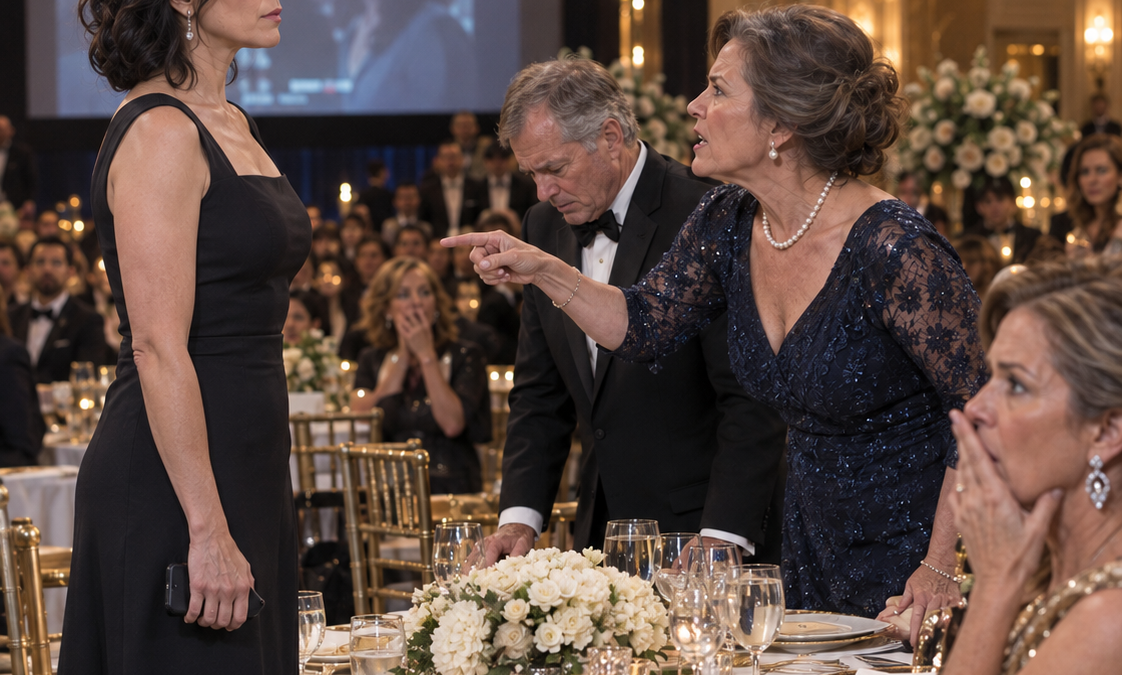
“My mother pushed my son into my arms and told me to get out of the car. It was 2:13 in the morning. We were on a stretch of Nevada highway between Tonopah and Ely.”
My parents thought they had left me with nothing — no car, no money, no way home. They didn’t know I had forty-three contacts in my phone and one of them lived twenty minutes away.
My mother pushed my son into my arms and told me to get out of the car.
It was 2:13 in the morning. We were on a stretch of Nevada highway between Tonopah and Ely. Nothing but sagebrush and darkness in every direction. The nearest town was forty miles behind us. The nearest gas station was God knew how far ahead.
“Mom,” I said. “It’s the middle of the night.”
“You should have thought about that before you embarrassed this family.”
My son Mateo was seven years old. He was half-asleep in the back seat, his head against the window. He didn’t understand what was happening. I barely did.
My father kept both hands on the steering wheel. He didn’t look at me. He hadn’t looked at me in hours.
“Dad,” I said. “Please.”
He said nothing.
What they didn’t know was that I had a phone in my pocket with forty-three contacts I could call at any hour. What they didn’t know was that one of those contacts was twenty minutes away, asleep in a ranch house outside a town they’d never heard of, and that he owed me his life three times over.
My name is Elena Vasquez. I was forty-one years old when my parents left me and my son on the shoulder of Highway 6 in the high desert, because I had refused to lie about who I was.
The thing about my parents is that they had spent thirty years building a version of themselves that didn’t include the parts they didn’t like.
They came from nothing. My father pumped gas in Fresno until he saved enough for community college. My mother cleaned houses. They worked, they scraped, they climbed. By the time I was in high school, my father owned three car dealerships and my mother sat on the board of the local hospital foundation. They had a house in the hills with a view of the valley. They had a vacation home in Scottsdale. They had a story.
The story was that they were self-made. The story was that they had done it all alone, through grit and discipline and the kind of values that modern people had forgotten.
The story left out a lot.
It left out my grandmother, who raised me for the first six years of my life while my parents worked eighteen-hour days. It left out the uncle who cosigned my father’s first business loan when no bank would touch him. It left out the neighbor who watched me after school every day until I was old enough to stay home alone.
I learned early that my parents’ story was flexible. Facts could be edited. People could be cut out. What mattered was the image.
I was part of the image for a long time. I was the good daughter. I got straight A’s. I went to church on Sundays. I didn’t date in high school. I went to a respectable college and got a respectable degree. I came home for holidays and smiled for the family Christmas card.
Then I did something that didn’t fit the story, and everything changed.
I was twenty-three when I joined the Army.
My parents were horrified. Not because they were pacifists. Because it was beneath them. My father had spent two decades climbing out of his blue-collar past, and now his daughter was going to put on a uniform and get dirty.
“You’ll embarrass us,” my mother said. “What will people think?”
“That I’m serving my country?”
“That you couldn’t do better.”
I went anyway. I went to basic training in Georgia, then to advanced individual training, then to my first duty station. I learned things I never expected to learn. I met people I never expected to meet. I found out that I was good at something my parents couldn’t see the value in.
I served eight years. I did two deployments. I came home with a spine that my parents had never seen before, and they didn’t like it.
The spine was the problem. The good daughter would have come home, married a doctor, and spent the rest of her life pretending. The woman who came home from those deployments asked questions. She pushed back. She said no when she meant no.
My parents didn’t know what to do with me.
So they did what they always did when something didn’t fit their story. They minimized it.
They told their friends I had done “some administrative work” in the military. They described my service as a phase. They introduced me to people as “our daughter, who’s figuring things out.”
I stopped fighting it after a while. I moved out. I built my own life. I got a job that I loved and a circle of people I trusted. I had a son. I didn’t need my parents to understand me. I just needed them to leave me alone.
For a few years, they did.
Then Mateo was born, and everything changed again.
I won’t go into all the details of how I became a single mother. That’s a different story, and not one I’m ready to tell in full. What matters is that by the time Mateo was seven, it was just the two of us. We had an apartment in Reno. We had our routines. We had a life that worked.
My parents tolerated Mateo. They didn’t love him, exactly. They treated him the way they treated anything that didn’t fit their image: with polite distance and occasional, performative affection.
He was brown. My ex-husband was Mexican-American, and Mateo came out looking like his father’s side of the family. My parents had opinions about that. They never said them directly. They didn’t have to. I could hear it in the way they introduced him as “Elena’s little boy” instead of “our grandson.” I could hear it in the way they corrected his Spanish, even though they didn’t speak a word of it themselves.
I kept my distance. I brought Mateo to Christmas and Easter and the occasional birthday. I smiled. I let things slide. I told myself it was easier that way.
It was easier. Right up until it wasn’t.
The trip that ended everything started as a favor.
My parents had a house in Scottsdale, and they wanted to spend a month there. They asked if I could drive down with them and keep them company. They were getting older. My father had heart problems. My mother’s hip was bothering her. They didn’t want to drive alone.
I said yes because I always said yes. Because I still believed, somewhere deep down, that if I was helpful enough and patient enough, they might finally see me.
Mateo was excited. He loved road trips. He had a backpack full of books and a bag of snacks he’d been hoarding for a week. He sat in the back seat and read to me for the first four hours. He told me about the video game he was designing in his head. He asked me questions about the desert.
“It’s so big,” he said. “How come nobody lives out here?”
“Some people do,” I said. “They just like it quiet.”
“I like it quiet too,” he said. “Except when I’m playing music.”
I laughed. That was the last time I laughed for a while.
The argument started at a rest stop outside of Beatty.
We had stopped for gas, and my mother had gone into the convenience store to buy snacks. Mateo had stayed in the car with my father. I had walked around the back to stretch my legs.
When I came back, my mother was standing by the car with a bag of chips in her hand. Her face was tight.
“What?” I said.
“Your son,” she said, “has been telling your father stories.”
I looked at Mateo through the window. He was still reading his book. He looked fine.
“What stories?”
“He told your father that you have a tattoo.”
I did have a tattoo. It was small, on my shoulder blade. I had gotten it with two of my closest friends from the service, on the day we all got our discharge papers. It was a private thing. A memorial. Not something I advertised.
“So?”
“So it’s inappropriate,” my mother said. “What kind of example does that set?”
“It’s a tattoo, Mom. Millions of people have them.”
“Not respectable people.”
I didn’t say anything. I learned a long time ago that arguing with my mother was like arguing with a wall. The wall was convinced it was right, and no amount of evidence would change its mind.
I got back in the car. We drove on.
I should have known it wasn’t over. My mother never let things go. She just found different angles.
The second argument was about Mateo’s school.
We were an hour past Tonopah, driving through the dark. My mother had been quiet for a while, which was always dangerous. Then she said, “You should put him in a better school.”
“He’s in a good school.”
“It’s a public school.”
“It’s a good public school.”
“Good is not the same as appropriate. The children there—”
“The children there are fine.”
She made a sound. A small, disapproving sound that I had heard a thousand times.
“I’m just saying,” she said, “that if you had made better choices, you could afford better.”
“Better choices like what?”
“Like finishing your education. Like getting a real job. Like not getting a divorce.”
There it was.
“Mom.”
“I’m just trying to help.”
“You’re not helping. You’re criticizing.”
“I’m your mother. I’m allowed to criticize.”
“Not when it’s not true.”
She turned in her seat. I could see her face in the mirror. It was hard. It was the face she used when she was about to say something she would later deny ever saying.
“Your father and I have spent thirty years building something,” she said. “A reputation. A name. People respect us. But you—”
“I what?”
“You embarrass us. You always have. Every choice you’ve made since you were twenty years old has been a slap in our face. The military. The divorce. The—” She gestured vaguely toward the back seat. “Everything.”
My son was in the back seat. My seven-year-old son.
I pulled the car onto the shoulder. I don’t know why. I just needed to stop. I needed to not be moving while she said these things.
“Get back on the road,” my father said.
“Not until she takes that back.”
“She won’t take it back. Get on the road.”
I turned around. I looked at my son. He was awake now. He was looking at me with wide eyes.
“Are you okay?” I asked him.
“I don’t know,” he said.
That was fair.
“Get back on the road,” my father said again.
I didn’t move.
“Fine,” my mother said. “Fine. If you want to have your little tantrum, you can have it on the side of the road.”
She got out of the car.
I watched her walk around to the back. She opened the trunk. She pulled out my bag. She pulled out Mateo’s bag. She set them on the ground.
“Get out,” she said.
“Mom.”
“Get out.”
My father was still in the driver’s seat. He was looking straight ahead. He had not said a word to defend me. He had not said a word to defend his grandson.
I realized, with a clarity that felt almost calm, that he was never going to.
I got out of the car.
I helped Mateo out of the back seat. He was confused. He was scared. He was holding his book like it was a stuffed animal.
“What’s happening?” he asked.
“We’re going on a little adventure,” I said.
I don’t know why I said that. It wasn’t true. But I didn’t know what else to say.
My mother got back in the car. She didn’t look at me. She didn’t look at Mateo. She closed the door and rolled up the window.
My father pulled back onto the highway. The taillights got smaller and smaller until they disappeared into the dark.
We were alone.
I sat down on the edge of the shoulder with Mateo in my lap.
The desert at night is not quiet. There is wind. There are insects. There are sounds you can’t identify that might be animals and might be nothing. The air was cold. I hadn’t grabbed my jacket. I hadn’t grabbed anything except my phone and my purse.
Mateo was crying. He was trying not to, but he was seven, and he was tired, and he was scared.
“It’s okay,” I said. “It’s okay. We’re going to be okay.”
“How?”
“I have people,” I said. “I have people who will help us.”
“Who?”
I pulled out my phone. I looked at the screen. One bar of signal. It flickered, then steadied.
I scrolled through my contacts. I didn’t have to scroll far. I had put his number under J, because that’s how I remembered him. Not as a rank. Not as a job title. Just as Jim.
Jim was a retired Army Ranger who had spent thirty years in special operations and then retired to a ranch outside a town called Eureka. He had been my squad leader in Iraq. He had been the one who pulled me out of an ambush when I was twenty-five and stupid and sure I was going to die. He had been the one who stayed with me when I got the news that my best friend had been killed in Kandahar. He had been the one who walked me through the worst year of my life, step by step, without ever once telling me what to do.
I had returned the favor. Twice.
The first time was when his wife got sick. She had cancer, and the treatment was in Reno, and Jim didn’t have a place to stay. I gave him my spare room for three months. I drove her to appointments when he couldn’t. I sat with her on the days when she was too tired to talk.
The second time was when his son got into trouble. Drugs. A bad crowd. Jim didn’t know how to reach him. I did. I had been that kid once, in a different way. I talked to him for hours. I told him things I had never told anyone. He listened. He got clean. He went back to school.
Jim and I didn’t talk every week. We didn’t need to. We had the kind of friendship that didn’t require maintenance. We just knew that if one of us needed something, the other would be there.
I needed something now.
I hit call.
It rang four times.
Then: “Elena?”
His voice was rough with sleep. I felt bad for waking him. I felt worse for what I was about to say.
“Jim. I need help.”
There was a pause. I could hear him sitting up. I could hear the creak of a bed.
“Where are you?”
“Highway 6. Somewhere between Tonopah and Ely. I don’t know the mile marker.”
“How did you get there?”
“My parents.”
Another pause.
“Are you hurt?”
“No. But my son is with me. He’s seven. It’s cold.”
“I’m coming.”
“Jim—”
“I’m twenty minutes out. Maybe less. Stay on the phone. Do you have water?”
“No.”
“Stay on the phone anyway. I’ll be there.”
I stayed on the phone.
He arrived in nineteen minutes.
I heard the truck before I saw it. The engine was loud in the silence. The headlights cut through the dark like something solid.
Mateo had fallen asleep against my shoulder. He was exhausted. He had cried himself out.
The truck pulled up behind us. Jim got out. He was wearing a flannel shirt and jeans and boots that had seen better days. His hair was gray. His face was weathered. He looked like exactly what he was: a man who had spent his life in hard places and had come out the other side.
He walked over to us. He looked at Mateo. He looked at me.
Then he sat down on the ground next to me and put his jacket around my shoulders.
“You want to tell me what happened?”
“Not really.”
“That’s fine. You can tell me later.”
He sat with us for a while. He didn’t ask any more questions. He just sat there, a solid presence in the dark, until I was ready to move.
We drove to his ranch.
It was a small place. A house, a barn, a few acres of scrubland. He had bought it after he retired, because he wanted to be somewhere quiet. He had a dog named Duke who was old and blind and spent most of his time sleeping on the porch.
Jim made coffee. He made Mateo a bed on the couch. He gave me a blanket and a chair and a cup of coffee that was strong enough to wake the dead.
“Tell me,” he said.
I told him.
I told him about the drive. About the arguments. About the things my mother had said. About the way my father had just sat there, silent, while his wife threw his daughter and grandson out of the car.
Jim listened. He didn’t interrupt. He didn’t react. He just listened.
When I was done, he said, “You’re going to stay here as long as you need.”
“Jim, I can’t—”
“You can. You will. And when you’re ready, we’re going to figure out what comes next.”
“What comes next?”
He took a sip of his coffee.
“That depends on you,” he said. “But I know a few things about your parents that they might not want the rest of the world to know.”
I looked at him.
“What things?”
He didn’t answer right away. He looked at the window. The sky was starting to lighten. Dawn was coming.
“Get some sleep,” he said. “We’ll talk in the morning.”
I didn’t want to sleep. I wanted to know what he meant. But I was exhausted, and my son was safe, and for the first time in hours, I felt like I could breathe.
I slept.
In the morning, I woke up to the smell of eggs and bacon.
Mateo was already at the table, eating like he hadn’t eaten in days. Duke was at his feet, waiting for scraps. Jim was at the stove, flipping eggs.
“Morning,” he said.
“Morning.”
I sat down. He put a plate in front of me. I ate.
Mateo was talking. He was telling Jim about the video game he was designing. Jim was asking questions. Real questions. The kind that showed he was actually listening.
I watched them for a minute. My son, who had been abandoned by his grandparents, laughing at the breakfast table of a man he had just met. My friend, who had driven twenty minutes in the middle of the night because I called.
I felt something I hadn’t felt in a long time.
I felt like I was home.
After breakfast, Jim took Mateo out to see the horses. I stayed inside and made another pot of coffee. When Jim came back, he sat down across from me and folded his hands on the table.
“Here’s what I know,” he said. “Your father’s dealerships have been in trouble for three years. He’s been hiding it. There’s a lot of debt. A lot of creative accounting.”
I stared at him.
“How do you know that?”
“I keep in touch with people. Some of them work in finance. Some of them work in law enforcement. Your father’s name came up a few months ago in a conversation I had with a friend. I didn’t think much of it at the time. But now…”
“You think he’s in trouble?”
“I think he’s desperate. And desperate people do stupid things.”
I thought about the past few months. The way my father had been distracted. The way he had snapped at me over small things. The way my mother had been pushing me harder and harder, as if she was looking for a reason to be angry.
They weren’t just embarrassed by me. They were scared. And they were taking it out on me.
“What do you want to do?” Jim asked.
“I don’t know.”
“You don’t have to decide now. But you should know your options.”
“What options?”
“You can go back to Reno. You can try to rebuild. You can pretend this never happened, and maybe in a few years, you’ll get a Christmas card.”
“I don’t want a Christmas card.”
“I know. That’s not what I’m saying. I’m saying you have a choice. You can let them win. Or you can fight.”
“Fight how?”
He leaned back in his chair.
“Your parents have spent thirty years building a reputation. What happens if that reputation gets tested?”
“It depends on the test.”
“Exactly.”
He stood up.
“Think about it,” he said. “I’m going to go help your son with the horses.”
He walked out. I sat at the table and thought.
My parents had left me on the side of the road. They had left my son on the side of the road. They had done it because I embarrassed them, because I didn’t fit their story, because I was a problem they didn’t want to deal with.
But I had people. I had resources. I had a network of men and women who had served with me, worked with me, trusted me. I had spent twenty years building relationships that my parents knew nothing about.
They thought they had left me with nothing.
They were wrong.
I picked up my phone.
That was three months ago.
A lot has happened since then.
I’m going to tell you the whole story. The parts I haven’t told anyone. The things my parents did, and the things I did. The way it all came apart, and the way it all came together.
Because here’s the thing about being underestimated: it gives you an advantage.
My parents thought they knew who I was. They thought they knew what I was capable of.
They were wrong about that too.
PART 2 — THE NETWORK
The first call I made was to a woman named Sarah Chen.
Sarah and I had served together in Iraq. She had been a medic, and I had been her security on more convoys than I could count. After we got out, she went to law school. Now she worked for a firm in Sacramento that specialized in family law and estate disputes.
She picked up on the second ring.
“Elena. It’s been a while.”
“I know. I’m sorry.”
“Don’t be sorry. What’s going on?”
I told her. The short version. The highway. The abandonment. The fact that my parents had essentially dumped us in the desert with no transportation, no money, and no way to get home.
Sarah was quiet for a moment.
“That’s illegal,” she said.
“Is it?”
“Abandonment is a crime in most states. In Nevada, it’s a felony if there’s a minor involved and the circumstances are dangerous. Which this was.”
“I don’t want to press charges.”
“I’m not saying you should. I’m saying you have leverage. What do you want?”
“I don’t know yet.”
“Okay. Let me think about this. Can you send me everything you have? Texts, voicemails, anything that documents what happened.”
“I don’t have much. It was mostly verbal.”
“Did they text you at any point? Before or after?”
I scrolled through my phone. There was one message from my mother, sent about an hour after they left us.
You should have thought about your choices. Don’t call us until you’re ready to apologize.
I forwarded it to Sarah.
“This is good,” she said. “This is really good. Keep it. Don’t delete anything. And Elena?”
“Yeah?”
“Are you okay? Like, really okay?”
I thought about it.
“I’m getting there,” I said.
“Good. Because I owe you. You remember that night in Fallujah?”
“I remember.”
“You saved my life. You carried me two miles with a bullet in your shoulder. I have never forgotten that.”
“You would have done the same.”
“I would have tried. You actually did it.”
She paused.
“I’m here,” she said. “Whatever you need. I’m here.”
The second call I made was to a man named Marcus Webb.
Marcus had been my first sergeant. He was retired now, living in Arizona, running a small security consulting firm. He had been the one who taught me how to shoot, how to move, how to think. He had also been the one who told me, when I was twenty-six and thinking about getting out, that I was making a mistake.
“You’re not a quitter,” he had said. “Don’t start now.”
I hadn’t quit. I had served four more years. And when I finally did get out, Marcus had been the first person I called.
He answered on the first ring.
“Vasquez. What’s wrong?”
“Why do you assume something’s wrong?”
“Because you don’t call me just to chat. What’s going on?”
I told him.
When I got to the part about my parents leaving us on the highway, he swore. Loudly. Creatively.
“Where are you now?”
“A friend’s ranch. Outside Eureka.”
“Which friend?”
“Jim Halloran.”
Another pause.
“Halloran? The Ranger?”
“Yeah.”
“I know him. Good man. You’re in good hands.”
“I know.”
“What do you need?”
“I don’t know yet. Maybe nothing. Maybe everything.”
“Alright. Here’s what I’m going to do. I’m going to make some calls. I know people in Nevada. I know people who know people. If your parents have been up to something, I’ll find out.”
“Marcus—”
“Don’t. You saved my ass in Ramadi. You think I forgot?”
“I didn’t save your ass.”
“You pulled me out of a burning Humvee while people were shooting at us. You don’t get to argue about whether that counts.”
I didn’t argue.
The third call was harder.
His name was David Okafor. He was a lawyer, a former JAG officer, and one of the smartest people I had ever met. He had also been my ex-husband’s attorney during our divorce.
It hadn’t been a contentious divorce. Mateo’s father and I had parted as friends, or something close to it. But David had been on the other side, and I hadn’t talked to him since.
I called anyway.
“Elena,” he said. “This is a surprise.”
“I know. I’m sorry to call out of the blue.”
“Don’t apologize. What’s going on?”
I told him.
He listened without interrupting. When I was done, he let out a long breath.
“That’s a lot,” he said.
“Yeah.”
“What can I do?”
“I don’t know yet. I just… I need to understand my options.”
“Okay. Let me ask you a question. What do you want?”
“I want my parents to face consequences. I want them to understand that they can’t just… discard people. I want them to know that I’m not nothing.”
“Those are emotional goals. Those are valid. But they’re not legal goals. Let me ask again: what do you want?”
I thought about it.
“I want to be safe,” I said. “I want my son to be safe. I want to make sure they can never do this to us again.”
“That’s better. That’s something I can work with.”
“What does that look like?”
“It looks like documentation. It looks like witnesses. It looks like building a case that if they ever try to hurt you again, you can hurt them back.”
“I don’t want to hurt them.”
“You don’t have to. You just have to be able to. That’s the difference.”
I understood.
Over the next few weeks, I started to build a picture of my parents’ life that I had never seen before.
It started with a conversation with my cousin Rosa.
Rosa was the black sheep of the family, or so my mother liked to say. She had never married. She had never had children. She had spent her life traveling and working odd jobs and generally refusing to conform to the family’s expectations.
I had always liked her.
I called her one evening while Mateo was doing his homework. She picked up on the third ring.
“Elena? Is that you?”
“Hi, Rosa.”
“Well, well. The prodigal daughter. What’s going on?”
I told her.
She was quiet for a long time.
“I always knew they would do something like this,” she said finally. “I just didn’t know when.”
“You knew?”
“I knew they were capable of it. Your mother has always been… I don’t know how to say it. She has always needed to be right. She has always needed to be seen as the one who made the right choices. Anyone who challenges that becomes a threat.”
“I never challenged her.”
“You existed. That was enough.”
I didn’t know what to say to that.
“Listen,” Rosa said. “There are things you don’t know about your parents. Things I’ve kept to myself for a long time because I didn’t want to cause trouble.”
“What things?”
“Your father has been in financial trouble for years. The dealerships aren’t doing well. He’s been borrowing from everyone. He owes money to some people who are not nice.”
“Who?”
“I don’t know the details. But I know he’s scared. I’ve seen it. He’s been losing weight. He’s been snapping at everyone. Your mother has been covering for him, telling everyone everything is fine, but it’s not fine.”
I thought about what Jim had said. The debt. The creative accounting.
“Rosa, why didn’t you tell me?”
“Because you were already gone. You had your own life. I didn’t want to drag you into it.”
“I’m dragged in now.”
“I know. And I’m sorry. But if you’re going to fight them, you need to know what you’re fighting.”
The picture got clearer over the next few weeks.
I talked to more people. Old family friends. Distant relatives. People who had known my parents for decades.
The story that emerged was not the story my parents had told.
They had not built their business alone. They had been helped by dozens of people over the years. People who had given them loans. People who had vouched for them. People who had looked the other way when they cut corners.
And they had repaid almost none of it.
There was a man named Harold Chen—no relation to Sarah—who had lent my father fifty thousand dollars in the nineties to keep his first dealership afloat. He had never been repaid. He had never even been mentioned in the family story.
There was a woman named Patricia O’Brien who had been my mother’s best friend for twenty years. She had helped my mother through a miscarriage, through a depression, through the early years of the business. She had been cut off when she asked for help with her own problems.
There was a business partner named Frank Delgado who had been pushed out of the dealership when it started to succeed. He had been given a small settlement and told to sign a non-disclosure agreement. He had never spoken about it publicly. But he remembered.
I started making a list.
Names. Dates. Amounts. Stories.
I didn’t know what I was going to do with it. I just knew I needed to understand.
The health crisis came in February.
I got a call from my mother. I hadn’t talked to her since the highway. I had blocked her number, then unblocked it, then blocked it again. I had gone back and forth a dozen times. I had written texts I never sent. I had practiced speeches in the shower.
When her name flashed on my screen, I almost didn’t answer.
But I did.
“Elena.”
Her voice was different. It was small. It was scared.
“What’s wrong?”
“It’s your father. He had a heart attack. He’s in the hospital.”
I felt a strange mix of emotions. Anger. Relief. Something that might have been grief.
“Where?”
“Reno. Saint Mary’s.”
“I’ll be there.”
I hung up.
I sat on the couch for a long time. Mateo was at school. Jim was out with the horses. I was alone.
I thought about my father. About the way he had sat in the driver’s seat and said nothing while my mother threw us out of the car. About the way he had never once, in my entire life, stood up for me.
I thought about the fact that he might die.
I thought about the fact that I didn’t know how I felt about that.
Then I got up, put on my coat, and drove to the hospital.
My father was in the ICU.
He looked small. Smaller than I remembered. His face was gray. There were tubes in his nose and his arm. A machine beeped next to his bed.
My mother was sitting in a chair by the window. She looked up when I came in. Her face was puffy. She had been crying.
“Elena.”
“Hi, Mom.”
We looked at each other. Neither of us moved.
“He’s stable,” she said. “They think he’ll recover. But he needs surgery.”
“Okay.”
“The doctors say it’s stress. The business. Everything.”
“Okay.”
She looked at me.
“Are you going to say anything?”
“What do you want me to say?”
“I don’t know. Something. Anything.”
I walked over to the bed. I looked at my father. His eyes were closed. His chest rose and fell.
“I’m here,” I said. “That’s all I can do right now.”
My mother started to cry.
I stood there. I didn’t comfort her. I didn’t reach out. I just stood there and watched her cry.
It felt cruel. It felt necessary.
The surgery was scheduled for the next morning.
I stayed at the hospital. Not for my parents. For myself. I needed to see this through.
Jim drove down with Mateo. He brought me coffee and a sandwich. He sat with me in the waiting room without saying a word.
“You don’t have to be here,” I said.
“I know.”
“You could go back to the ranch.”
“I know.”
“You’re not going to, are you?”
“Nope.”
I smiled. It was the first time I had smiled in days.
The surgery took four hours.
It went well. My father was moved to recovery. The doctors said he would be fine. He would need to take it easy. He would need to change his lifestyle.
My mother came out of the recovery room. She looked exhausted.
“He’s asking for you,” she said.
I went in.
My father was awake. He looked at me. His eyes were wet.
“Elena.”
“Hi, Dad.”
“I’m sorry.”
I didn’t say anything.
“I should have said something. In the car. I should have stopped her.”
“You didn’t.”
“I know.”
We sat in silence for a while.
“I’ve made a lot of mistakes,” he said. “I know that. I’ve been… I’ve been scared. For a long time. Scared of losing everything. Scared of being nothing.”
“You had a daughter who loved you. You had a grandson who looked up to you. That’s not nothing.”
He looked away.
“I know.”
“Do you?”
“I don’t know. I don’t know anything anymore.”
I stood up.
“I have to go,” I said. “Mateo is waiting.”
“Elena—”
I stopped at the door.
“I’m not going to pretend this didn’t happen,” I said. “I’m not going to pretend we’re okay. But I’m here. That’s what I can give you right now.”
I left.
I drove back to the ranch that night.
Mateo was asleep in the back seat. Jim was driving. Duke was snoring in the back.
“Are you okay?” Jim asked.
“No.”
“Do you want to talk about it?”
“Not yet.”
“That’s fine.”
We drove in silence for a while.
“I’m going to do it,” I said. “I’m going to fight them.”
“Okay.”
“I’m going to expose everything. The debts. The lies. The way they’ve treated people. All of it.”
“Okay.”
“You’re not going to try to talk me out of it?”
“No.”
“Why not?”
He glanced at me.
“Because they earned it,” he said. “And because you’re not doing it for revenge. You’re doing it for justice. There’s a difference.”
I looked out the window. The desert was dark. The stars were bright.
“Thank you,” I said.
“You don’t have to thank me.”
“I do. For everything.”
He didn’t say anything. He just drove.
The next few weeks were a blur of activity.
I talked to Sarah. I talked to Marcus. I talked to David. I talked to every person who had ever been wronged by my parents.
Some of them were hesitant. They didn’t want to get involved. They had moved on. They had made peace.
But others were ready. They had been waiting for years for someone to ask.
Patricia O’Brien. Harold Chen. Frank Delgado. A dozen others.
I collected statements. I collected documents. I collected everything I could find.
I didn’t know exactly what I was going to do with it. But I knew I was building something.
I was building a case.
 [Tap here for the Next Part ]


