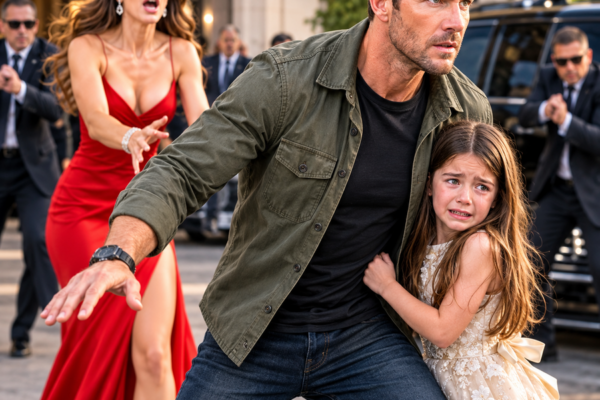
CEO Looked Down on Her Single-Dad Driver—Until Kidnappers Targeted Her and His SEAL Past Surfaced
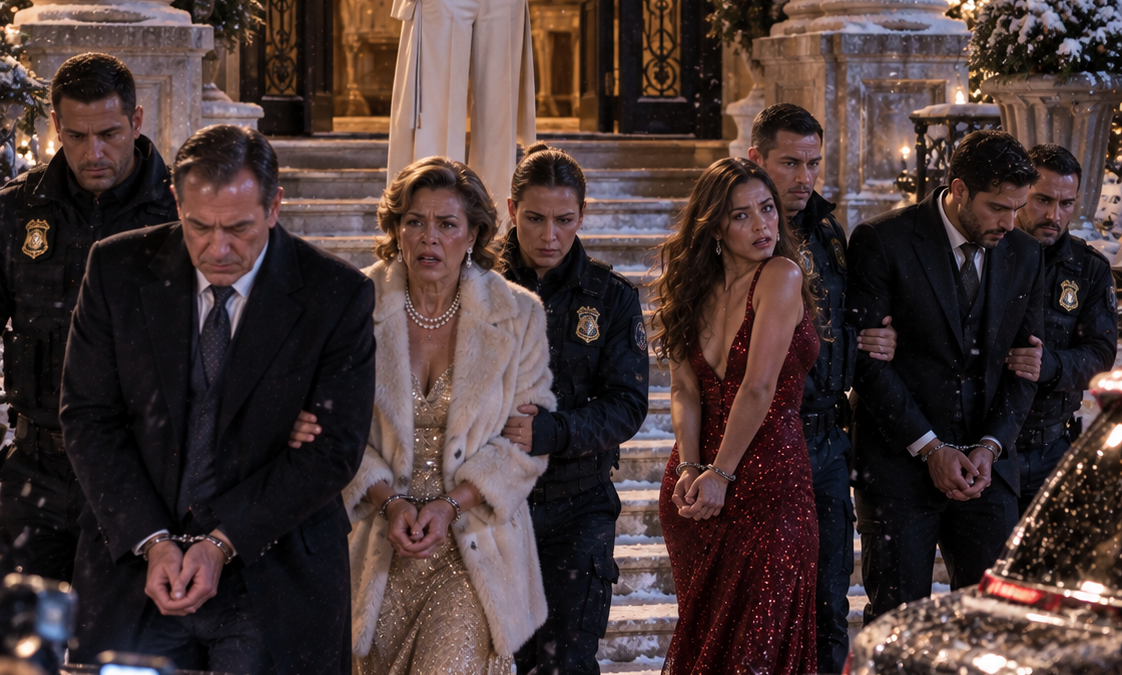
CEO Looked Down on Her Single-Dad Driver—Until Kidnappers Targeted Her and His SEAL Past Surfaced
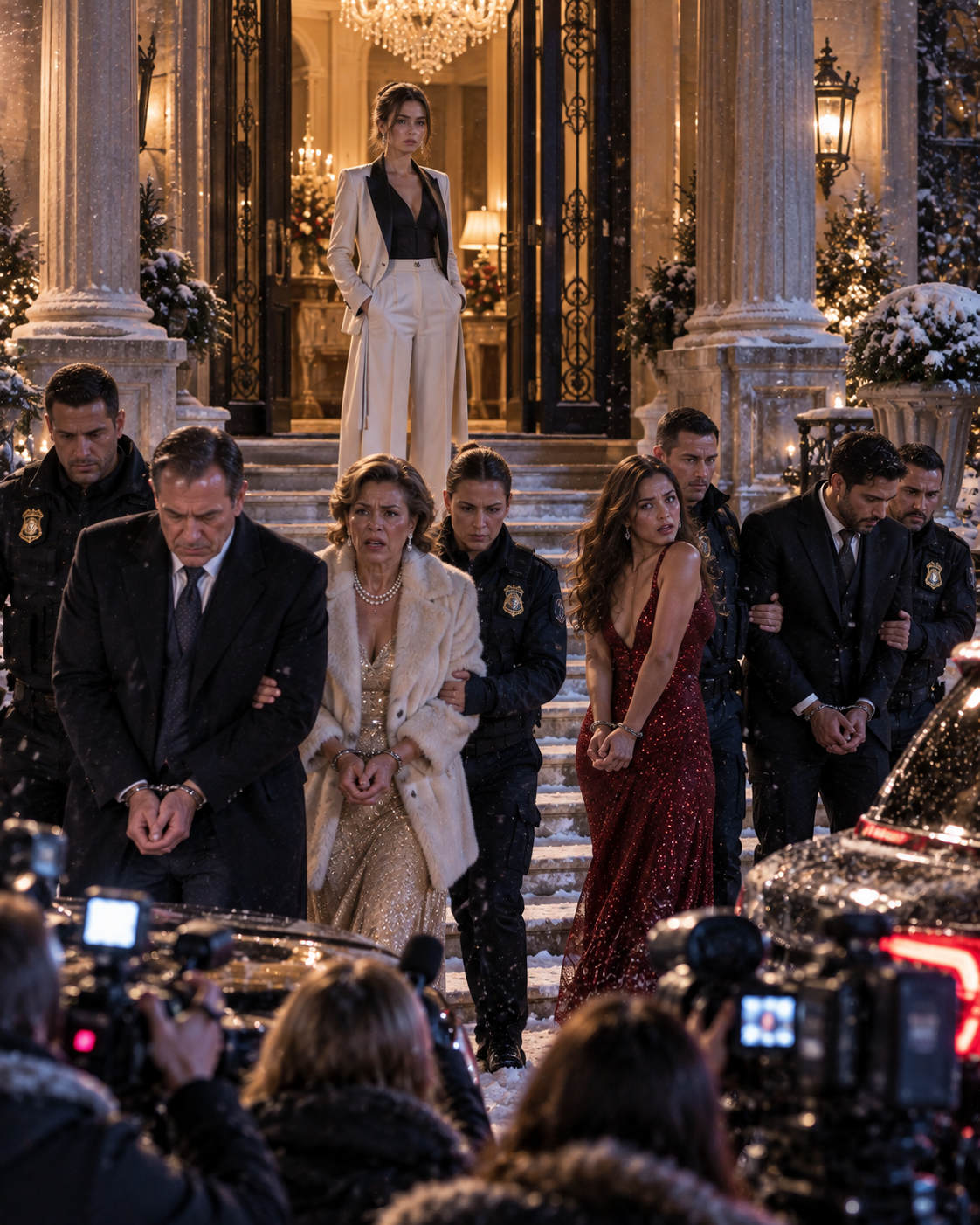
She ran a billion-dollar empire and couldn’t name her driver’s last name.
He drove her to board meetings, charity gallas, and private dinners for 11 months. And she spoke to him maybe a dozen times, mostly to criticize.
She thought she knew exactly who he was, a middle-aged man in a cheap gray jacket, good enough to hold a steering wheel, nothing more. She was wrong. And on the night three masked men forced her into a van, and the world she controlled collapsed in 60 seconds flat, the only person she called was the man she fired that morning.
The rain started around 7. Not the gentle kind that makes the city look clean and cinematic.
The ugly kind fat cold drops that hit the pavement in dirty splashes and turned every headlight into a smear. Belle Carrington stood under the awning of the Hartwell Grand, waiting, her black coat pulled tight around her shoulders and her phone already out, already scrolling through emails that had arrived during the 3-hour gala she had been required to attend, and had spent the entire time wanting to leave.
The black SUV pulled up exactly on time. It always did. She got in without looking at the driver.
She never really did. There was a seat. There was a window.
There was a route. Those things she registered. The man behind the wheel was just part of the arrangement.
Back to the apartment, she said, already focused on her phone.
Yes, ma’am.
Callum Reeve pulled away from the curb.
He’d been driving Belle Carrington for 11 months.
In those 11 months, she had learned his name eventually, but not much else. He was the guy the agency sent when her previous driver had a family emergency and never came back. Callum had shown up on a Tuesday morning in a pressed but clearly inexpensive gray jacket and driven her across the city without incident.
The agency called the next day to confirm. She told her assistant to keep him on.
That was the extent of the hiring process. Callum was 37. He was a widowerower.
He had an 8-year-old daughter named Piper who went to Waverly Elementary, liked drawing horses, and was mildly obsessed with a book series about a girl detective.
He drove Bel, sometimes six, picked up Piper from her after school program when his schedule allowed, and on the evenings when it didn’t, relied on his neighbor, Mrs.Ferrante, who charged $20 an hour and always sent Piper home with some kind of baked good.
Bel knew none of this. She knew he was punctual. She knew his vehicle inspections took longer than she thought they should.
She knew he wore the same jacket more than she liked, which she had mentioned twice through her assistant rather than directly to him.
She knew he had once in month four subtly altered her route to avoid a backup on the bridge, and she hadn’t noticed until her assistant mentioned the different arrival time.
She had not thanked him for saving her 20 minutes.
She had asked why he hadn’t informed her of the change in advance.
Callum noticed the van on the Garfield Street overpass. White, mediumsiz, no markings, sitting in the left lane a few car lengths back, matching speed.
He didn’t say anything yet.
One sighting meant nothing.
He’d been trained a long time ago in a different life to distinguish between pattern and coincidence.
One data point was just noise. He turned south on Meridian Avenue. The van turned south on Meridian Avenue.
Belle was typing something on her phone. Her heels were off.
She always took them off in the back seat, a fact she would probably not want discussed, and she had her reading glasses on, frowning at whatever she was reviewing. Callum reached the light at Kelner and let it cycle through once before moving.
An old driver’s trick for creating distance.
The van held back, then it closed the gap again. He said nothing for another four blocks.
Watched, calculated. Then he saw something that made his stomach go quiet in the particular way it used to go quiet right before things got serious the way it went quiet in places whose names he was not allowed to say out loud in the dark when the mission had changed.
The usual route to Bel’s apartment building ran east on Fletcher which would take them past the Dunore parking structure and down a ramp that emptied into a quieter residential block.
He had driven it hundreds of times. He knew it.
Tonight there was a roadwork diversion sign at the Fletcher turn. Cones angled them toward an alternate route down Callaway under the rail bridge past the old textile warehouse district.
The problem was that there had been no road work on Fletcher when he’ driven that route two nights ago and he hadn’t seen any city maintenance alerts this week.
He made a habit of checking them. The diversion was new and the white van was waiting for him to take it. Callum turned right on teller instead from the back seat.
That’s not the right direction.
Taking an alternate route tonight, Belle looked up from her phone. Why? The usual route is faster.
There’s a diversion on Fletcher.
Want to avoid getting caught behind equipment silence. Then she went back to her phone.
He watched the van in his mirror. It hesitated at the teller turn.
Then it followed. Callum took two more unexpected turns in the next six blocks.
Not dramatic, gradual civilian style. The kind of changes a driver makes when they know the streets. not the kind that alert a passenger that something is wrong.
The van stayed with him. His hands were relaxed on the wheel.
His face gave nothing away. But in his chest, in the very specific place where old training lived quietly until it was needed, something had started ticking. Mr.Reev, he heard her but kept his eyes on the mirror.
Mr.Reev, are you listening to me?
Yes, ma’am.
You just passed Alderton.
That’s another wrong turn.
I’m aware.
Belle put her phone in her lap. This was the equivalent of a full stop for her.
The phone went down only when she was about to say something she considered important. Is there a problem with the route? He waited.
He had maybe 40 seconds to explain something that would either sound rational or paranoid to a woman who had in 11 months demonstrated a precise and consistent ability to dismiss anything he said that went beyond logistics.
There’s a white delivery van that’s been behind us since the heartwell.
He said it followed us through three turns. The diversion on Fletcher appeared this week with no maintenance alert on record.
Someone may be studying your movement patterns. A beat.
Then Belle Carrington, CEO of Oramont Technologies, a company worth $4. 3 billion on a slow quarter, looked at her driver for a long moment and laughed.
Not a sharp laugh, not a cruel one.
Something almost worse the automatic laugh of a person who has already decided they don’t need to take something seriously.
Mr.grieve.
She said, “I have an entire security department whose job is to worry about things like that.
That’s not your job.
I understand.
But your job is to drive the car.”
Her voice was not unkind. Exactly.
It was the voice of someone explaining something simple to someone they expected, not to fully grasp it.
I don’t need you running surveillance analysis from the front seat.
Callum said nothing. The white van had dropped back.
Maybe it got spooked by the pattern breaking. Maybe it was nothing.
He’d know more if he could confirm the plate, but he couldn’t.
Not from here, not without drawing Belle’s attention to something she had already decided wasn’t worth her attention.
He drove the rest of the way to her building without another word.
When she got out, she didn’t say good night.
She rarely did. He waited until the lobby doors closed behind her. Then he sat in the parked SUV for a long moment, the rain still coming down, and looked at the street behind him.
The van was gone, but he had seen it.
The next morning was a Tuesday, which meant Belle had a 9:00 with the board’s external consultant and a noon lunch that she would probably reschedule.
Callum arrived at 7:30, inspected the vehicle, a habit, so ingrained it was practically involuntary, and had it ready at the curb by 7:50.
He didn’t make it past the lobby.
Damon Kesler was already waiting for him near the security desk.
Kesler was Bel’s head of executive security.
45. Ex law enforcement, square shouldered.
the kind of man who gave the impression that his suits were uncomfortable because they were designed for someone with slightly less to prove.
He ran Belle’s security operation with the authority of someone who considered themselves the last word on every decision that touched her safety.
He looked at Callum the way he usually looked at Callum as though he were mildly disappointed by the existence of him. Miss Carrington would like a word before you head out, Kesler said.
All right. She also asked me to outline some concerns about your performance.
Callum looked at him steadily. She can outline them herself.
Something flickered across Kesler’s face.
The concerns include unauthorized route changes, failure to coordinate with the security team before altering protocols and passenger communication that falls outside your designated role.
I’m her driver, which means you drive where she tells you to drive on the routes her security team has approved without freelancing based on whatever you think you noticed.
Callum didn’t argue.
There was no point arguing with Damon Kesler. The man had already reached his conclusion before the conversation started.
That was a recognizable type. Callum had known plenty of them in a different context in rooms where the wrong conclusion had actual consequences.
He went upstairs.
Belle’s office had a particular kind of quiet high floor, glasswalled, the city spread out below in a way that was probably designed to remind anyone sitting across the desk exactly where they stood in the order of things.
She
was at for the window when he came in, coffee in hand, dressed for the board meeting in a dark blazer that meant she was expecting the morning to require authority. She turned when she heard him.
Mr.Reeve, Miss Carrington. She studied him for a moment with the focused expression she used in meetings when she was already five moves ahead of the conversation.
Then she said, “Last night wasn’t the first time you’ve made unauthorized route changes.”
No. Or commented on things outside your role. No.
She set her coffee down. I want to be clear.
I don’t have any problem with you as a driver.
You’re punctual.
You’re professional.
And the vehicle is always properly maintained. What I have a problem with is this pattern of she paused, searching for the right word of overreaching. Callum had been quiet for most of his adult life.
It was not shyness. It was just that he had learned early and in difficult circumstances that saying things clearly the first time was more efficient than repeating them. He had said something clearly last night.
It had been dismissed. He tried one more time.
Someone has been running surveillance on your movement patterns, he said. The diversion on Fletcher was placed deliberately. The van that followed us last night did not belong to anyone doing ordinary business on that route at that hour.
I believe your usual security protocols may be compromised. Bel looked at him for a long moment.
Then Damon has reviewed all current security arrangements. There are no vulnerabilities in our protocols.
Damon’s review may be the problem.
The room shifted. Not dramatically.
She didn’t raise her voice, didn’t react visibly.
But the quality of her attention changed.
That’s a serious accusation, she said quietly.
It’s an observation.
It’s an accusation against the head of my security division.
Based on what exactly? A van you saw for a few minutes in the rain last night.
He didn’t answer that directly because the honest answer, no, based on 12 years of reading situations that ended badly when people chose comfort over caution was an answer he was not prepared to give.
Not here. Not to her.
Not yet.
So he said only, “Change your schedule tonight.
Don’t take the usual route to the clarement.”
Belle looked at him. Something moved behind her eyes.
Not dismissal. Exactly. Not this time.
More like the expression of someone who was genuinely unsure whether they were looking at a man with insight or a man with too much imagination. It lasted about 3 seconds. Then she picked up her coffee again.
Thank you for your service, Mr.Reev. The agency will be notified this morning.
Please leave the vehicle keys with reception on your way out. He had expected it.
He had said what he needed to say. There was nothing left to do.
He reached into his jacket pocket, pulled out the key fob, and set it on the edge of her desk.
“Change your schedule tonight,” he said again.
Then he left. He picked up Piper at 3:15.
She climbed into the passenger seat of his old pickup. With her backpack half falling off one shoulder and a drawing, she wanted to show him a horse.
this time wearing what appeared to be a detective hat, which she explained at length was because the detective girl in her book rode horses.
Now that’s a very serious hat.
Callum said it’s her thinking hat.
She puts it on when she’s figuring stuff out.
He drove her home. They had dinner pasta, the easy kind. The kind Piper could help stir, and she spread her homework out on the kitchen table while he cleaned up.
Normal sounds, water running, a pencil scratching, the refrigerator humming. Outside the window, the city was doing its evening thing.
Callum sat down across from her and helped her with a fractions worksheet. He did not check his phone.
He did not sit by the window. Whatever had been ticking inside him since the night before had quieted down to something manageable it always did when Piper was in the room.
She had that effect.
Not because she was unaware of things, but because she had an 8-year-old’s absolute confidence that the world was basically going to cooperate with her.
and being around that was in a way he couldn’t fully explain steadying.
They were halfway through the worksheet when his phone rang. Unknown number. He almost let it go.
Then some part of him, the ticking part, decided not to. He answered. For a moment there was nothing.
Traffic noise. The low hum of an engine.
Then barely audible, the sound of a woman trying to speak quietly enough that the people around her wouldn’t hear.
You were right, her voice. Then the line went dead.
Callum stared at the phone for one second. Then he looked across the table at Piper, who was frowning at a fraction involving sevenths and had not looked up.
He stood, “Hey, Bug.
I need to go out for a little while.”
She looked up.
Her eyes moved to his face, then to the phone still in his hand, and her 8-year-old face did the thing it’s sometimes did the thing that reminded him she wasn’t entirely unaware of the world after all.
“Is it work?”
she asked.
“Kind of.”
“Are you going to be careful?”
“Always am.”
She looked at him for another moment. Then she went back to the sevenths.
Mrs.Ferrant’s home, she said.
I saw her light on. He called Mrs.Ferrante. He got his jacket.
He checked out of old habit that his backup phone was charged. At the door, he turned back.
Piper was still bent over the worksheet, pencil moving. He stood there for just a moment. This ordinary kitchen, this ordinary daughter, this ordinary evening that was no longer ordinary, and then he walked out the door.
The drive to the Claremont Hotel took Belle’s new driver exactly 22 minutes.
She knew this because she had looked at her watch when they left the underground garage at Oramont Tower, and she looked at it again when the hotel’s canopied entrance came into view on West Bridge Avenue.
22 minutes. Her usual time with Callum was 18. The difference was minor.
She told herself it didn’t matter.
The new driver’s name was Garrett.
He had been sent over by the same agency that had originally placed Callum. same company, different man.
He was younger, maybe late 20s, with an eager, slightly overformal manner that suggested he was aware he’d been called in on short notice and was working hard to compensate.
He confirmed each direction before taking it. He asked twice if the temperature in the back was comfortable. When they reached a yellow light, he break harder than necessary.
Belle said nothing about any of this. She was on a call with her CFO about figures for the Clarement dinner, and the car was a container she moved through, not a place she paid attention to. She did notice once that Garrett did not check the rearview mirror the way Callum used to.
Callum had a habit she’d registered it without ever thinking about it of scanning the mirror at intervals that had nothing to do with lane changes.
Regular, deliberate, the kind of checking you did when you were watching for something specific. She had always found it slightly excessive.
Now without it, the mirror was just a mirror. The thought lasted about 4 seconds before her CFO said something that required her full attention, and it was gone.
The Claremont dinner was what it was supposed to be.
43 floors up, a private dining room with Florida sailing windows and a view of the harbor that the hotel’s event coordinator had probably described to someone as breathtaking at least eight times that week.
Belle sat at the head of a long table with seven other people, her lead acquisition attorney, two representatives from the target company, their legal team, and the investment banker who had spent the better part of 6 months engineering the terms of a deal that would, if signed tonight, give Oramont controlling interest in a midsized aerospace navigation firm called Parallax Systems. Parallax had something Oramont needed, a proprietary guidance algorithm called Vantage.
The encrypted access key to Vantage’s core architecture was worth, depending on the application, somewhere between 2 to $400 million in licensing alone.
The full acquisition placed that figure considerably higher. Belle had been working toward this for 14 months. She was good at the table.
She had learned in the years since she’d inherited a failing division from a father who’d assumed she’d sell it quietly and go live somewhere comfortable that the dinner itself was rarely where deals were won.
Deals were won in the weeks and months before in the unglamorous accumulation of preparation. By the time you sat down to eat, the outcome was usually already settled.
Tonight was confirmation, not negotiation. She signed at 9:47.
The parallax representative shook hands and looked relieved in the particular way of people who had been prepared for a harder fight and didn’t quite know what to do with the absence of one.
The attorney gathered documents. The banker ordered a second glass of wine. By 10:15, most of the table had filtered out.
Belle stayed for another 20 minutes, finishing a conversation with Oramont’s lead attorney about the transition timeline.
Then she retrieved her coat, declined the elevator the event coordinator offered to hold, and took it herself down to the lobby level. The underground garage was one floor below.
Garrett was supposed to be waiting at bay 7. She heard it before she saw it.
The elevator doors opened to the garage level, and the sound hit her immediately.
A particular quality of silence that wasn’t quite silence.
Concrete and fluorescent lights and the smell of exhaust. All of it normal. But some something underneath the normal sounds was missing.
She couldn’t have named what exactly.
The garage had maybe a dozen cars in it at this hour, which was typical for a hotel this size on a week night. She could see the row of executive bays along the far wall.
Bay 5 was empty.
Bay 6 had a sedan she didn’t recognize.
Bay 7.
There was a black SUV in bay 7 and a man in a driver’s uniform standing beside it.
The uniform was right. The build was roughly right.
He was turned slightly away from her, which was why it took her another three steps before something in her head said, “That’s not Garrett.”
She stopped. The man turned around. She had never seen him before in her life.
She took one step back toward the elevator, and that was when the other two came from her left from behind the concrete pillar near bay 4, moving fast and direct, not running, but not slowing down either.
The kind of movement that said, “We’ve done this before, and we don’t need to rush because there’s nowhere for you to go.
” They were wearing plain dark clothes, balaclavas, no visible weapons, which was somehow worse than if there had been.
The first one reached her before she could get back to the elevator button. He put one hand on her arm, not rough, not gentle, just firm, and said quietly.
Don’t make noise.
We’re not going to hurt you.
She opened her mouth anyway. Your security team upstairs has been redirected to a disturbance on the 42nd floor, said the second one, coming around her left.
This will be over faster if you walk. Bel Carrington had run a billion-dollar company for eight years.
She had fired executives, faced down hostile board members, survived two separate attempts by her father’s partners to push her out of her own company.
She was not a person who panicked easily. But her legs were not entirely steady as they walked her to the vehicle in bay 7.
And when the door closed behind her and the engine started and the garage began to move past the window, she sat in the back of a car that was not hers, driven by a man whose face she couldn’t see.
And the steadiness she had spent her entire professional life constructing, cracked somewhere below the surface, quiet and fast, like ice underweight. They drove for 40 minutes. Nobody spoke to her.
One of the men sat in the back with her, not touching her, not threatening, just present, which was its own kind of threat. The windows were darkened.
She tried to track the route from sounds and movement. Left turn, right turn. A long straight stretch that felt like a highway, then a series of slower, rougher roads, but she lost the thread somewhere around the 20 minute mark.
She thought about her phone. She had two phones.
Her regular device was in her coat pocket, and they had taken that within the first 5 minutes, done it smoothly while she was still processing what was happening. But the second phone was her emergency line, a compact device her security team had insisted she carry, registered under a different name, kept in the interior pocket of every coat she owned. It was protocol she had always considered excessive.
The man beside her had taken her regular phone.
He had not checked her coat’s interior pocket.
Her hands were not restrained. She sat very still and worked on controlling her breathing because the only advantage she had right now was that they did not know about the second phone.
and the only way to protect that advantage was to do nothing that made them look at her too closely. The vehicle stopped.
When they opened the door, the air that came in was cold and carried the smell of water and rust and old industrial concrete. She could hear somewhere in the middle distance the low moan of a freight train moving through the dark. Below her feet, when they walked her inside, the flooring was corrugated metal.
Far off, she couldn’t tell the direction a ship’s horn sounded once.
long and flat. The building was enormous and mostly dark. What light there was came from portable work lamps positioned at intervals, throwing hard yellow pools across a space that had once been, she guessed, some kind of receiving warehouse.
The ceiling was maybe 40 ft up. Rusted chain hoists hung from cross beams. Along one wall, a row of steel shipping containers sat end to end like enormous gray dominoes.
They put her in a chair near the center of the space. She looked at the containers.
She looked at the exits. She could see a large freight door to her left, sealed, a personnel door to her right, closed, what appeared to be an elevated catwalk running along the back wall.
She looked at the three men in the room and tried to count shadows beyond the light’s reach.
Then she heard footsteps on the metal catwalk above her, and Damon Kesler came down the stairs. He was wearing a jacket she recognized charcoal gray, the one he wore on days when he worked long hours and had stopped bothering to look formal.
He wasn’t wearing a balaclava.
He wasn’t hiding his face.
That told her something. And what it told her settled in her stomach like a stone. Damon, she said.
Belle, he said it the way he always said it professionally with that slight flatness that she had always interpreted as competence. Now it sounded like something else entirely.
I’m sorry about the theater.
I would have preferred something cleaner. She looked at him for a long moment.
How long? She asked.
He seemed to appreciate that she’d skipped past the denial phase, 14 months, roughly since before the parallax negotiations before.
Yes. He walked down the last two stairs and crossed the floor toward her, hands in his pockets, unhurried.
Vantage is worth more than Oramont’s entire aerospace division, and the people I’m working with have the distribution infrastructure to make it worth considerably more than anything you were going to do with it.
The acquisition was always going to be a problem. So kidnap me and steal the access key. Steal the key, deliver it, and arrange for the acquisition documents to be voided on the grounds that the signing CEO was unavailable to confirm the deal.
He stopped about 6 ft from her.
It’s not complicated.
Most things that look complicated aren’t if you reduce them to their actual components.
Belle kept her voice steady. She was working very hard at that.
You’ve been inside our security protocols for 14 months, she said.
You know my roots, my meeting schedule, the location of my emergency phone. A pause. Both of them.
Something in Kesler’s expression flickered.
We found records of two devices registered to the executive security account, he said. I assumed my team collected both tonight.
She let nothing show on her face. Tell me something, she said.
Because she needed him talking, needed time. Callum, your people were watching me for 14 months, and he noticed it in one rainy evening. How does that happen?
Damon’s jaw tightened barely perceptibly.
“Rev was a problem,” he said.
“He should have been reassigned months ago.
Every time we established a clean surveillance window, he changed a route.”
He noticed a vehicle that had been in position for 4 days. He flagged two separate team members to building security for loitering, neither of which stuck, but both of which required us to pull back and reset. He paused.
He was the single most disruptive element in 14 months of planning and he was the building’s driver.
So you used me to fire him. You were already irritated with him.
I provided the framing. The stone in her stomach got heavier.
She thought about the keys on her desk that morning.
She thought about the way he’d said change your schedule tonight.
Not please.
Not I’m asking you.
just the flat direct statement of someone who had already calculated that she wouldn’t listen and was doing it anyway because it was the right thing to do.
She thought about the fact that Callum Reeve had spent 11 months driving her around a city that someone was using to build a trap, had seen the trap being built, had told her about it, and had been fired for his trouble.
The access key, Brielle, Damon said, I’m not going to do anything theatrical about this.
You’re a rational person.
Give me the key. And this is over quickly.
And then what? And then you have a story to tell.
He spread his hands in a gesture that might have been meant to look reasonable. Nobody gets hurt.
You’re found eventually.
I’m long gone.
The key is transferred. Ormont survives. Minus one acquisition.
You rebuild.
It’s not the ending you wanted, but it’s an ending.
She looked at him.
You’re not going to leave a witness.
Who can identify you, Damon?
He didn’t answer that, which was its own answer.
She waited until the men on either side of her were watching Kesler, not her. Then she shifted her coat slightly, felt the interior pocket, and pressed two buttons on the small device insides in the sequence her security team had made her memorized 18 months ago, and which she had always privately considered melodramatic. The call connected.
She had maybe 3 seconds before someone noticed.
She pressed the phone to her caller and said, barely above whisper, “You were right.”
Then she felt a hand on her shoulder and the phone was taken. The man who took it looked at it, then at her, then at Kesler.
Kesler stared at the device. Then he looked at her with an expression she had never seen on his face in 3 years of working together. Not anger exactly, but something harder.
The expression of someone who had just been forced to revise their plan.
“Who did you call?”
he asked. She looked back at him and said nothing. 23 mi away, Callum Reeves stood in his kitchen and stared at his phone.
The call had lasted 4 seconds. Three words, then disconnection. Unknown number that his instinct told him would trace to a burner or an unregistered device.
“You were right,” her voice.
Those two words contained everything. They were not the words of a person having a business problem or a scheduling issue or even a standard security concern. They were the words of a person who had already understood that the thing they dismissed was real and that the dismissal had cost them.
He stood very still for a moment and ran through what he knew. He knew she had a dinner at the Claremont tonight.
She’d had it on her calendar for 2 weeks, the parallax signing.
He knew the Clareman’s underground garage layout because he’d driven it a dozen times.
He knew that Garrett, whoever Garrett was, did not have 12 years of muscle memory telling him when a route felt wrong. He knew that whoever had been watching Belle for the past weeks, months probably had enough inside access to disable her security response.
He knew the van. He knew the diversion on Fletcher.
He knew Kesler’s reaction when Callum had raised concerns, not dismissive in the way of someone who thought the concerns was foolish, but dismissive in the very specific way of someone who needed the concern to go away.
He had not been certain about Kesler that morning. He was certain now.
He pulled on his jacket, already thinking in the tight, practical way.
He hadn’t thought in years, not since he’d traded one kind of life for another, and moved to this city, and applied to a driver’s agency, because the hours were flexible, and the work was straightforward, and nobody needed to know anything about who he had been before.
He picked up the second phone, not his regular number. The backup he kept charged out of habit, and had never expected to use, and dialed a number he knew without looking it up.
It rang twice.
This is Donovan, a woman’s voice, flat and professional.
The voice of someone who received late night calls as a matter of routine.
Ria, it’s Callum.
A short pause.
It’s almost 11.
I know. I need your help.
Another pause. Longer. Talk to me, she said.
Detective Ria Donovan had worked organized crime for 9 years before transferring to a specialized investigations unit that operated in the gap between local police authority and federal jurisdiction. She was 51, twice divorced, and had known Callum Reeve for going on 15 years, which meant she had known him during the years he would not talk about, and during the transition years after, and she had learned to distinguish between
the calls he made because he needed someone to think out loud with and the calls he made because something was actually happening. This was the second kind.
She listened without interrupting while he told her what he knew.
The van, the diversion on Fletcher, Kesler’s behavior, the call, 4 seconds, three words, deadline.
When he finished, she said, “You don’t know she’s in danger.”
You know she called you and the line dropped.
I know that’s a significant gap between the thing, you know, and the response you’re considering.
Yes, but you called me instead of sitting down. Yes.
She was quiet for a moment. He could hear her moving in whatever space she was in the sound of keys. A drawer.
Clarement Hotel on West Bridge.
She said if the garage is the extraction point, they’d want a secondary route that avoids the highway cameras.
That means either the Kelner underpass or south along the river access road. A pause. The river access road ends at the old Dunore Rail Terminal or at the shipping facility on Port Side.
Portide’s been decommissioned for 2 years.
Callum said it’s got multiple structures, private land, limited lighting, and it’s accessible from the water.
I’ll run it.
How long to get units in position? How long, Ria?
She exhaled short and controlled.
If I’m calling in a potential kidnapping based on a 4-second phone call from a fired driver, I need something.
Give me something I can take to my lieutenant.
Kesler’s been running surveillance on Belle Carrington’s movement patterns for at least 2 months.
He engineered her firing me this morning after I flagged the surveillance. Tonight she attended the parallax signing which involved an encrypted access key worth hundreds of millions.
She called me in what sounded like a constrained environment, said three words, and the line died. Her head of security is the inside man.
Silence, then give me 20 minutes.
I’m heading to port side.
Callum, do not go there before I have units. 20 minutes, Ria.
He was already moving toward the door.
I’ll wait.
He did not specify what he would wait for. He drove his old pickup through the city with the kind of calm that had nothing to do with not caring and everything to do with having learned a long time ago that urgency and panic were different things. Panic narrowed your options.
Urgency just meant you moved. He knew the portside shipping facility.
He had driven past it dozens of times on routes that skirted the industrial waterfront. He knew it was large, that it had multiple entry points, that the main freight gate was on the east side, and the personnel access was through a smaller door on the north perimeter.
He also knew, because he had spent years learning how to think about buildings and what happened inside them, that a large empty structure at night gave significant advantages to whoever knew the layout and significant disadvantages to whoever was relying on light and numbers. He parked the truck four blocks away on a side street that backed up against the perimeter fence.
His phone buzzed. Ria units in position on eastern approach in 15.
Do not move until I confirm. I mean it, Callum, he read it. He thought about Piper at the kitchen table with her fractions and misses.
Ferrante’s light in the window next door and the detective book series and the horse with the thinking hat.
He thought about Belle’s voice on the phone.
three words that had cost her something to say. Not the words themselves, but the admission underneath them.
He got out of the truck. He did not go to the main freight gate.
He did not go to the north personnel door. He went to a section of perimeter fence on the west side where two support post had settled unevenly over years of disuse and left a gap at the base that you would only notice if you were looking for it.
He had noticed it 6 months ago on an afternoon drive.
He didn’t know why he’d registered it.
He just did. He went through the gap and into the dark.
Inside, the facility was exactly what it sounded like on the phone.
He moved through the outer building, a former maintenance and loading structure, and found the interior passage to the main’s warehouse without using any light.
His eyes adjusted.
The portable lamps Kesler’s TM’s team had set up in the main space were visible from 100 ft away, leaking yellow light under a corrugated interior door.
He stopped outside that door and listened. voices, three distinct ones that he could separate, a fourth quieter, which he identified as Belle. She was talking controlled, measured the professional voice she used when she was managing a room.
Whatever was happening in there, she had not been broken down. That was information, useful information. He counted the shadows under the door, four sets of feet that he could see.
There were almost certainly more that he couldn’t.
stepped back from the door and moved along the outer wall, looking for the structural layout he’d been building in his head since the parking lot.
The building had a catwalk.
He’d seen it briefly through a dirty exterior window on the way in.
The catwalk ran along the back wall and accessed from the upper level, a series of mechanical rooms that would have been used for crane operation back when this facility was active. He found the ladder on the south exterior wall behind a rusted equipment cage.
He went up.
The upper level was thick with old machinery and bad light, but it gave him an angle on the floor below that the people down there didn’t know about.
He moved along the catwalk carefully, not just slowly, but economically, placing each foot where the old metal was least likely to shift or settle. He looked down. Belle was in a chair near the center of the space.
She was upright, her coat still on, her posture doing the thing it always did, the thing he’d watched in the rearview mirror for 11 months.
The way she sat like she was in a meeting even when she wasn’t.
She had her hands in her lap. She was listening to Kesler talk. Four men in the room that he could see.
Kesler in front of Belle, two positioned to her left and right, close enough to react far enough not to be obvious about it. A fourth near the freight door. He looked at the freight door man.
Then he looked at the room’s geography, the lamp positions, the blind spots, the distance between Bel and the nearest wall.
And then, because the people down there had spent the last hour being focused on the woman in the chair and had not once looked up, he started moving. The first guard was near a stack of old pallets on the east side, positioned to cover the personnel door. He was watching the door.
He stopped watching it about 30 seconds after Callum dropped silently from the catwalk access ladder. Callum was not violent by preference.
He had been at certain points in his life by necessity in places and circumstances that were part of the self he had packed away when Piper was born. And he understood that coming home was not something he could keep treating as a bonus. What he had kept because it was not possible to simply stop knowing what you knew was the mechanics, the physics of bodies in space, the geometry of leverage, how to be efficient in situations where efficiency was the only currency that mattered.
The guard near
the pallets went down without making a sound that anyone in the main room could have distinguished from the settling of old metal. Callum moved to the second position.
Down on the warehouse floor, Belle said, “What exactly happens when you just discover that the access key changes encryption status when it’s transferred outside an authorized network?”
Kesler paused. In the dark of the upper structure, Callum almost smiled.
She was buying time.
She’d figured out enough of the situation to know that the only resource she had left was the conversation itself, and she was using it.
The second guard was at the far end of the catwalk.
He was looking down at the floor, which meant he was looking at Belle, which meant he wasn’t looking at the person moving toward him from the machine room behind him.
40 seconds later, there were two guards below. Kesler had stopped answering questions.
The men on the catwalk, he said to nobody in particular, “Give me a status.”
No answer. He said it again, louder. The main room had gone quiet in the way.
Rooms went quiet when the people inside them had started to understand that something was wrong, but had not yet identified what. Lights, Kesler said sharply. Get the secondary lights on.
Someone moved toward a junction box on the east wall. And then the portable lamps went out.
Not the secondary lights, the main lights, the ones Kesler’s team had set up.
They went out all at once, which meant it wasn’t an accident.
in the sudden total dark. Bel sat very still and heard from somewhere above her movement.
Then from somewhere to her left, then nothing for a moment that felt longer than it probably was.
Then a hand touched her arm, not from the direction of either guard, but from directly behind the chair, and a voice said quietly right next to her ear, “Don’t make any noise.
Can you walk?”
She knew the voice.
“Yes,” she breathed.
“Then get up slowly and stay close to me.”
She got up. In the dark, Damon Kesler was shouting something.
Footsteps scraped across the concrete in multiple directions. One of the portable lamps came back on someone had managed to find it and reset it, throwing a single cone of light across the center of the space. The chair was empty.
Kesler looked at the empty chair. Then he looked up at the catwalk where two of his guards were no longer at their positions.
“The container,” he said to the one man still visible at his side.
His voice had gone flat, which was more frightening than if he’d raised it.
Lock it down. Load sequence.
The man moved. Somewhere in the dark at the edge of the warehouse floor, Callum heard those two words, load sequence, and understood what was about to happen.
Before he had time to think about whether he was right, he grabbed Bel’s arm and ran, not toward the personnel door, not toward the freight gate, but toward the row of shipping containers along the north wall.
Because whatever load sequence meant in the context of this facility, the containers were the thing Kesler had moved to protect. And moving toward the things someone wanted to protect was the fastest way to find out what they were actually afraid of.
Behind them, the freight door ground open.
Outside, through the gap in the door, Callum could see the dock and the automated transfer rail that connected the container row to the loading barge sitting in the dark water at the terminal’s edge.
The rail was already
moving. Three containers down from the end, a lock mechanism had been triggered.
The container was already beginning its slow automated slide toward the barge transfer point. Belle saw it and understood. They were going to put me in there.
She said, “Yeah,” Callum said.
He was already moving down the container row, running the numbers, how fast the rail moved, how far the target container was, whether there was a manual override, and if so, where it would be positioned on a facility this age and this design. Stay here.
No. He
glanced back. She was two steps behind him, heels off, coat abandoned somewhere in the dark.
Then keep up, he said. They ran.
The container had cleared its anchor point and was 12 ft into its journey down the rail.
When Callum reached the manual release panel, a yellow painted box bolted to the rail support, the kind of emergency stop required by the same industrial safety code that had been mandatory on facilities like this since 1987 and which Kesler’s team had either not known about or had not thought to disable.
He
hit the release. The rail stopped with a mechanical jolt that echoed through the dock structure behind them.
Inside the warehouse, Ria Donovan’s units had come through the eastern freight door with lights and enough presence to turn Kesler’s careful operation into a situation with no clean exits.
Callum stood on the dock in the cold river air. The stopped container at his back and looked at Belle Carrington. She was breathing hard.
Her hair had come down on one side.
There was a scrape on her right hand that she probably hadn’t noticed yet.
She looked like a person who had been through something real and had not fully processed the fact that it was over. She looked at him for a long moment.
Then she said, “You came.
He didn’t dress it up.
You called,” he said.
From inside the warehouse, through the open freight door, they could hear Ria’s team moving through the space voices, commands, the particular organized noise of an operation that had arrived in time.
Kesler was already shouting that he wanted a lawyer. Out here on the dock, none of that had reached them yet, just the river and the cold, and the two of them standing in the dark.
Belle looked at the container that had almost carried her out to deep water. Then she looked back at Callum, and something in her face did something it almost never did in his experience of watching it. It came apart slightly around the edges, the way faces did when a person had been holding something very tightly for too long and had finally been given permission to let go.
She didn’t cry.
She wasn’t that kind of let go, but her jaw worked for a moment, and she looked away toward the water.
And when she looked back, her voice was steady, but smaller than her regular voice.
I don’t know what I would have done if you hadn’t answered.
Callum looked at her. He had spent 11 months in the front seat of her car, invisible, watching her manage a world that operated on the premise that the person behind the wheel was furniture. He had watched her be brilliant and cold, and occasionally, in unguarded moments, genuinely funny.
He had watched her treat him like a utility and watched himself let it happen because the job was the job and Piper needed the stability and none of it was personal.
He understood now that some of it had been personal, even if that wasn’t the right word for it.
You couldn’t spend 11 months noticing someone without it becoming something.
He didn’t say any of that.
He said, “Go find Donovan.
She’s going to need a statement.”
Belle looked at him. Then she nodded once, straightened, and walked back toward the freight door with the posture of someone who had already begun on some level the work of putting herself back together.
Callum stayed on the dock for another moment. The river moved past, dark and indifferent, and the lights of the city sat on the far bank, doing what city lights always did, which was exist without caring what happened underneath them. His phone buzzed.
He looked at it. Piper, Dad, are you okay?
Mrs.F said you would text. He stood on the dock at the edge of a decommissioned shipping terminal at close to midnight with the cold river smell around him and the adrenaline starting to drain from the back of his skull in that particular slow ache it always left behind.
And he typed back, “Yeah, I’m okay.
Go to sleep.”
Three dots appeared. Mrs.F made you a thing.
She says it’s apology cookies, but she won’t say what she’s apologizing for.
He stared at the message for a moment.
Tell her she doesn’t need to apologize for anything.
She says she knows, but she made them anyway. He put the phone in his pocket.
He had not been in a building like this, in a situation like this in 7 years. He had told himself when he left that life that he was leaving it entirely. That the skills and the instincts and the particular kind of cold clarity that came with them were things he was setting down permanently, not storing on a shelf somewhere in case he needed them later.
He had been wrong about that. But he had also been right about the important part.
The life he’d built since was worth protecting.
Piper and the pasta dinners and the fractions worksheets and misses.
Ferrante’s apology cookies and the ordinary Tuesday evenings that asked nothing from him except to be present.
He had protected it. He turned and walked back toward the freight door, toward the light and the voices and everything that came next. The statement took 2 hours.
Ria Donovan ran it herself, sitting across from Belle in a portable command unit that her team had set up in the facility’s former security office, a small room with a cracked window, a metal desk bolted to the floor, and a fluorescent light that buzzed at a frequency that made extended conversation feel like an endurance event.
Ria was the kind of interviewer who never looked like she was working hard, which was probably why she was good at it. She asked questions in a flat conversational tone, and she wrote things down in a small notebook with a pen that had clearly been chewed on. And she did not react visibly to anything Belle told her, including the part about Damon Kesler being the architect of the entire operation.