They Set Up a Rookie Nurse With a Deaf Mafia Boss—Then Her Hidden Skill Saved His Life
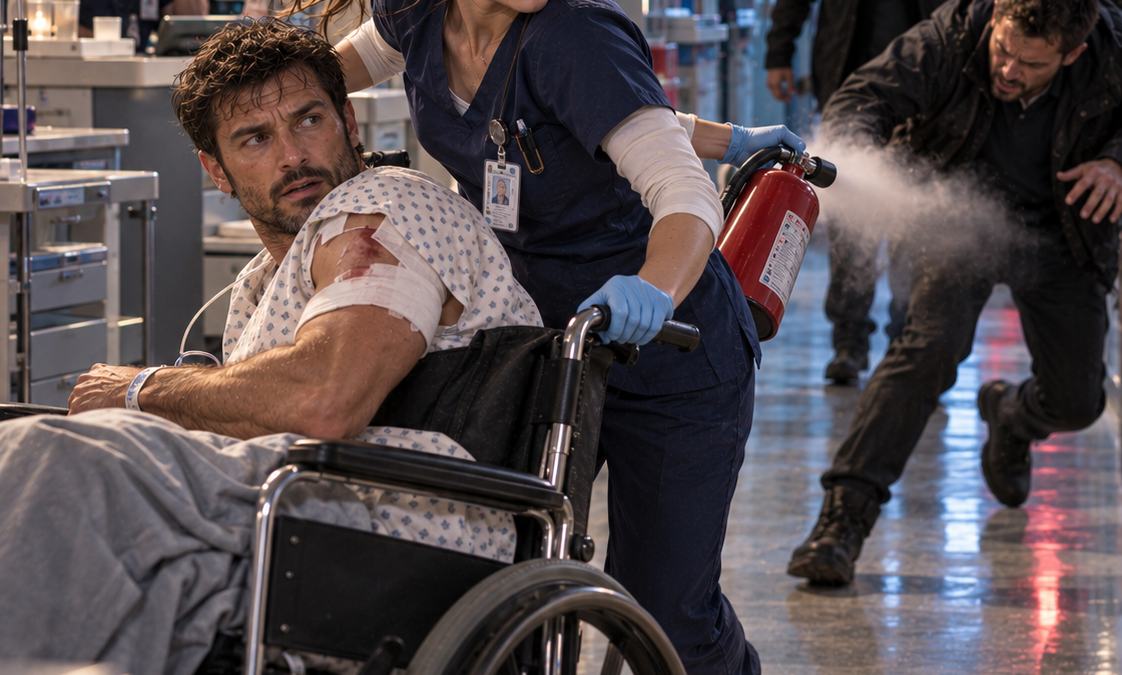
They Set Up a Rookie Nurse With a Deaf Mafia Boss—Then Her Hidden Skill Saved His Life
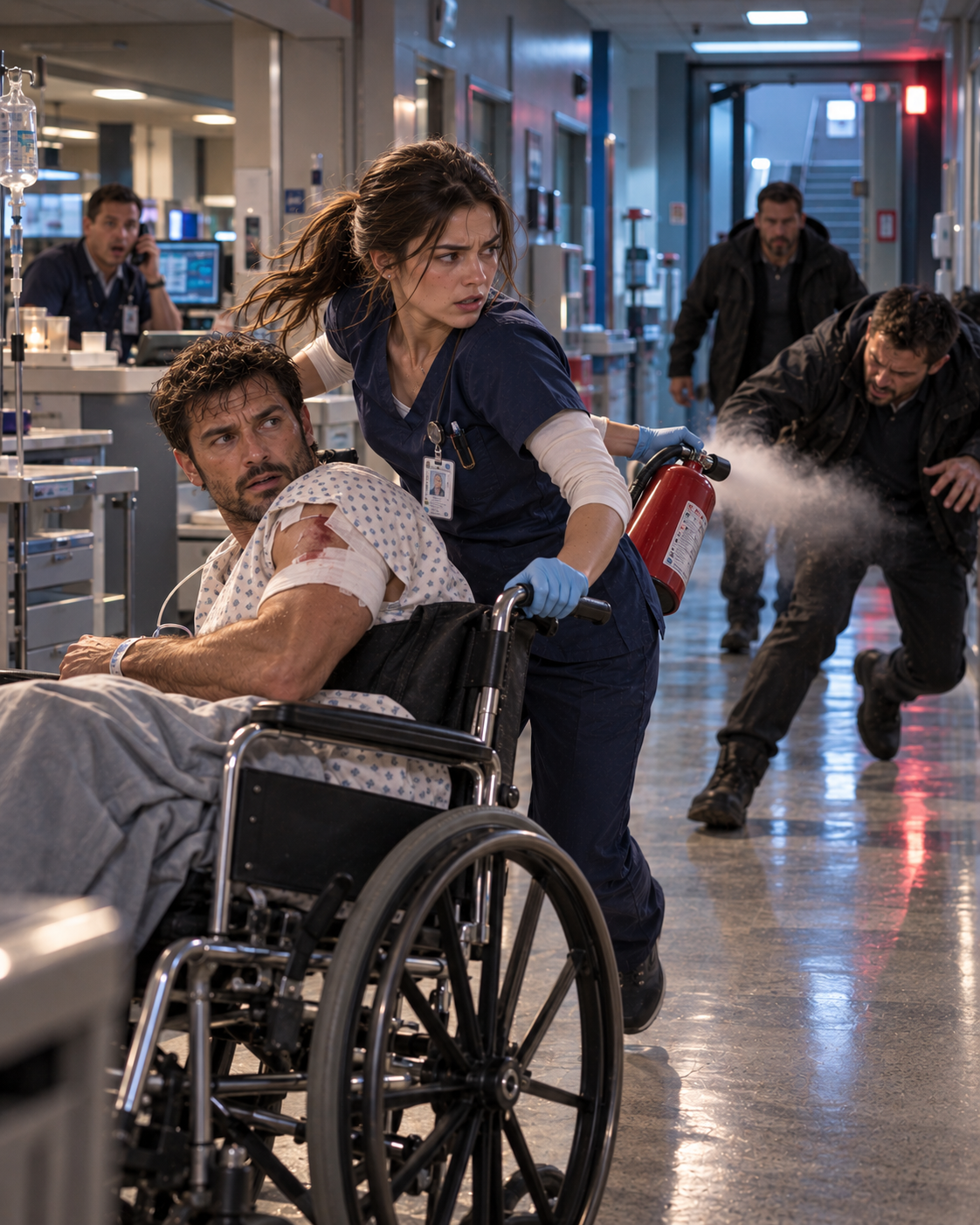
Mallerie Crane had been a nurse for 19 years, and in all that time, she had never once passed up the chance to make someone else feel small. It was 11:52 p.m.on a Tuesday when she saw her opening. The trauma bay had just swallowed a gunshot victim, big man, dark hair, bleeding through two entry wounds, and not saying a single word about it.
Not to the paramedics, not to the attending physician, not to anyone. The man just lay there on the gurnie with his jaw locked tight and his eyes moving across the room like he was memorizing exits and Mallerie stood at the nursing station watching all of it with her arms crossed and a slow smile building at the corner of her mouth.
She leaned toward Dean Huxley who was charting beside her with a coffee going cold at his elbow. You know who that is?
She said. Dean looked up.
Should I? Ronan Whitlock. She let the name sit there a second.
the Ronin Whitlock. Dean set his pen down.
Mallerie’s smile widened.
And you know what the funniest part is?
He doesn’t talk.
Guy controls half the waterfront in this city.
And he can’t say a word to save his life.
She paused, watching the trauma team swarm around the gurnie. Literally, that was when her eyes found Elodie Mercer standing near the supply cart, pulling on a fresh pair of gloves, completely unaware of what was being arranged for her. Mallerie felt the whole thing click into place.
The rookie, the terrifying mob boss who didn’t speak and a setup so perfect she almost felt proud of herself for thinking of it.
She pushed off the station counter and started walking.
If you’ve ever walked into a room and known, really known in your gut that something was about to go badly wrong, then you already understand the first thing about Elodie Mercer.
She felt it the moment Mallerie Crane crossed the floor toward her with that particular expression that wasn’t quite a smile.
She had learned over four months at Blackstone Memorial to read that expression, “The way you read weather.”
It didn’t mean anything good was coming.
But Elodie was 24 years old and 8 months into her first nursing position, and she had not yet learned how to make that feeling matter.
“Lucky you,” Mallerie said.
“Bed seven needs a primary nurse.”
Elodie looked toward the trauma bay.
What’s the situation?
GSW, shoulder and thigh. Stable enough.
He’s going to recovery shortly.
Mallerie tilted her head just slightly.
He’s nonverbal.
Might be a communication challenge.
There was something in the way she said challenge that Elodie didn’t like.
The word sat wrong, slightly too flat, like a lid pressed down over something that was still moving underneath it. I can handle non-verbal patience, Elodie said. I know you can, sweetheart.
Mallerie patted her arm once lightly.
The way you pat something you don’t actually care about.
That’s why I thought of you.
She walked away. Dean was still at the station.
When Mallerie returned, he said quietly, “You really putting her in with Whitlock?”
She said she could handle it. Mallerie picked up her coffee.
Let’s see.
Elodie had heard the name by the time she reached the room. It moved through the floor the way information always moved through hospital floors in pieces.
Half whispered growing louder with each hand it passed through. By the time she pushed open the door to the recovery room where they had moved him, she knew three things. His his name was Ronan Whitlock.
He had been shot twice and had apparently not reacted to either wound the way a normal person would. and half the nursing staff believed he was connected to organized crime in a way that made the word connected sound deeply inadequate. She also knew that none of that was relevant to the next 8 hours of her shift.
She stepped inside. The man in the bed was larger than she had expected, even horizontal and post anesthesia. this.
There was a quality to the stillness of him that had nothing to do with sedation, a deliberateness, like stillness was something he had practiced and chosen rather than something that had simply happened to him. His eyes were open, dark brown, very steady. They moved to her the moment she cleared the door, and they stayed there while she approached, and they did not look like the eyes of a man coming out of anesthesia.
They looked like the eyes of a man who had never fully gone under. He had already assessed the room. She could tell the particular way his gaze had settled.
Still moving slight settled Durham slightly at the peripheral, tracking the door, the window, her hands.
It wasn’t the unfocused halfawareness of someone recovering.
He had cataloged this room and everyone in it before she had finished walking across the threshold. Elodie set her supply tray on the rolling table beside the bed and reached for his chart.
Standard posttop checks. BP reading IV line.
wound sight. She moved through it the way she had been trained to move through it, methodical, and when she was halfway through checking the dressing on his shoulder, she glanced up and found him watching her with an expressions that was difficult to name. Not hostile, not warm, something between evaluation and exhaustion.
Hi, she said, I’m Elodie.
I’ll be your nurse through the shift.
I know you’ve had a rough few hours.
She kept her tone even, professional without being stiff. If you need anything, you can. She stopped.
His right hand had moved. Not randomly, not the restless, involuntary motion of someone waking from medication.
It was deliberate, specific, three distinct shapes, one following the other, his fingers moving with the kind of muscle memory that doesn’t come from effort, that comes from years.
Elodie felt the floor shift under her slightly. She looked at his hand, then at his face, then back at his hand.
pain. He had signed pain. American sign language.
Clean, clear, unambiguous. She had been reading it since she was 7 years old, sitting across the kitchen table from her brother Silas, who had lost most of his hearing by the time he was four, and had never once in his life let that slow him down.
She had grown up in the language. It was as natural to her as breathing, as automatic as ducking when something came at your face.
She signed back without thinking about it. Where Ronan Whitlock went completely still. It lasted maybe two seconds, that stillness, and in those two seconds something shifted in his face.
Not dramatically, not the way it would shift in a movie, with wide eyes and a trembling jaw. Just a fractional loosening, like something that had been braced against expected impact, had finally, after a very long time, been allowed to stand down. He lifted his hand, shoulder manageable.
“Okay,” Elodie said aloud, and then signed simultaneously.
“I can get you something for pain.”
“You don’t have to tough it out.”
A pause.
“I know.
Do you want it?”
Another pause. Longer.
“Yes.”
She turned to the medication cart, and behind her, she did not see his expression, but if she had, she would have seen something that the people who worked for Ronan Whitlock had not seen in years, possibly longer. She would have seen the specific look of a man who had just been genuinely surprised.
The medication helped, but not as much as the conversation.
She’d stayed longer than the check required.
She wasn’t sure exactly when it stopped being a professional visit and started being something else, but by the time she was reaching for the door again.
They had been signing for almost 25 minutes and she had learned that he took his coffee without sugar that he had a strong and apparently deeply personal objection to hospital gels jello and that he read actual book not screens and had been in the middle of a biography of Nicola
Tesla when the evening had taken its current direction. That seems like a significant interruption, she signed. Everything tonight was a significant interruption, he replied.
Do you want me to leave you alone? He held her gaze. No.
She sat back down.
By the time her break ended, and she had to return to the floors, something had settled between them that she couldn’t fully account for.
It wasn’t romantic.
She was cleareyed enough to know that was something simpler and stranger than that. It was something simple. The particular ease that happens when two people who are both accustomed being slightly alone in a crowd discover without planning to that they are not alone in this particular room.
She told herself that was all it was. She was almost right.
Mallerie was waiting near the station when Elodie came back out. Still alive.
She said he’s fine.
Elo said BP’s good dressing is clean.
Pain is managed. Mallerie glanced past her toward the closed door.
He actually let you near him.
He’s a patient.
Why wouldn’t he?
Something moved across Mallerie’s face, a flicker of something that might have been surprise, quickly rearranged into its default setting of mild contempt.
He threw a cup at the last nurse.
He didn’t throw anything at me.
Hm. Mallerie looked at her for a moment.
What did you do? Just stand there and smile at him.
We talked.
He doesn’t talk.
We communicated, Elodie said, and left it at that. and went to finish her other rounds.
She missed the look Mallerie gave Dean across the station. Dean shrugged. Mallerie did not say anything else, but her expression had moved from entertainment to something that was harder to read, and if Elodie had seen it, might have worried her more than the previous version.
By the following evening, the whispers had become something louder.
Blackstone Memorial was not a small hospital, but it was not so large that information didn’t travel fast.
A sound like green wood splitting and the information traveling on this particular Tuesday night was moving with the specific velocity of something people found both frightening and thrilling in the way that frightening things can be thrilling when they are happening to someone else. Ronan Whitlock, not merely wealthy, not merely connected.
The kind of man whose name the administrative staff referenced in low voices with the door closed. the kind of man whose presence on the floor had apparently generated three separate phone calls to hospital security and one to the legal department.
Though nobody could quite explain what the legal department was expected to do about it. Elodie heard all of it in pieces in the breakroom in the corridor near the elevators in the halfs sentences that stopped when she walked into them.
She thought about the man who had signed where when she’d asked him about his pain, who had said manageable when she suspected it was considerably less than that, and who had eventually admitted after she pushed back that it was worse than and had let her adjust his medic without further argument.
She thought about the dry, precise humor that had emerged slowly over the course of the conversation, like something that had been kept in a room and wasn’t used to the light.
She thought about the way he had watched her when she moved around the room. Not predatory, not threatening, just watchful, not threatening, just in the particular way of someone who trusted almost nothing and was trying to decide whether to begin trusting one thing.
She filed the whispers somewhere and went to do her job.
The night went wrong at 11:14 p.m.She was returning from a supply run when she saw the door to Ronan’s room open and a man she didn’t recognize step out tall, expensive gray suit, the kind of haircut that cost more than Elod’s car payment, and an expression that said everything in his life was a problem he was managing rather than experiencing.
He paused when he saw her.
His nurse, he said, “Yes, he’s asking for you.”
Something in the man’s tone was careful in a way that felt less like courtesy and more like precision.
He was choosing exactly what to reveal and what to keep back. He seems to find your company helpful.
He walked past her without introducing himself. She stood in the corridor for a moment. Then she went inside.
Ronan was sitting up further than he should have been given his shoulder wound, and the relaxed version of him she had spent the the previous hour with had been put away completely. In its in its place was something older and much more controlled.
And when his eyes met hers, there was a brief flash of something that she thought might have been relief before that too was contained. Who was that? She signed.
Someone who works for me. Is everything okay?
A pause. No.
He signed it without decoration, without preamble. Simply no. Elodie closed the door behind her and sat down.
Do you want to tell me? He looked at her for a long time. long enough that she almost repeated the question.
Then his hand moved. There are people who believe that because I am in this room, it is a good time to take things from me. What kind of things?
The kind I built. The kind my father built before me. A pause.
Territorians. Loyalties.
He stopped. Then my organization.
Elod was quiet for a moment. And the man in the gray suit came to tell you this. He came to tell me how bad it is.
I already knew it was happening. She thought about the exits he had studied through the trauma bay doors, about the way he had tracked every person who entered his room in the first hours after surgery, about the warning he had signed before going under a warning.
She had not fully understood until now. Nobody here can be trusted.
He had not been speaking generally. He had known, even bleeding through two gunshot wounds, that his enemies were already moving.
What happens now? She signed.
He looked at her steadily. I figure out how to fight a war from inside a hospital room. He did not say it as though it were remarkable.
He said it the way someone reports the weather as fact. Unpleasant but manageable, requiring a specific set of preparations. Elod thought, this man has been surviving things other people would not survive for a very long time.
She thought that is not something to admire, she thought. And yet here I am not leaving. Is there anything you actually need right now?
She signed. Medically, I am your nurse.
That’s a thing I can actually help with.
The controlled version of his face did something small. Not a smile.
Something that had once been close to a smile and was remembering it distantly. My shoulder hurts. I know.
I said I’d get ahead of the pain.
And you argued with me.
I don’t argue.
You absolutely argue. I express form disagreement.
That is a very long way of saying argue, his handstilled. He looked at her with that long measuring quality she was beginning to recognize.
You’re not frightened, he signed.
I work trauma, she said.
I’ve watched people die.
I’ve watched people fight to live in ways that would break you.
I’m not easy to scare.
Most people are frightened of what I am.
I’m sure they have their reasons.
She stood and moved to adjust his IV drip.
But I’m looking at a man with two gunshot wounds who needs to lie back before he tears that shoulder open.
What you are outside this room is your business. A long pause.
That’s the first time anyone has said that to me since I was about 12.
He signed. What?
That what I am is my business. He paused again.
Usually people are either afraid of it or they want something from it. She finished adjusting the line and looked at him.
What did the man in the gray suit want?
Guidance, answers, “Instruction, a beat.
He wanted me to still be the person who could give those things, even in here.
” “And are you?”
He held her gaze.
“For now.”
“Graham Straoud.”
She learned the name later.
“Uh would have guessed something like it.”
The man looked like Graham Straoud in the way that certain people inhabit their own names completely returned twice more before morning. Each time she was the one who translated.
It happened the second time because Ronan was signing faster than he might have under normal circumstances and Graham standing at the foot of the bed with his jaw set and his phone vibrating silently in his jacket pocket was not reading it correctly. He thought he was following.
He wasn’t.
Was catching one word in three and filling in the rest with what he expected to hear. And Elodie watched him misunderstand an instruction that she could see was important. And she said without entirely planning to.
He said, “Withdraw the men from the warehouse, not warn them.
There’s a difference.”
Both men looked at her. Graham looked at Ronan. Ronan looked at Elodie.
Then he signed something to her.
“How much of this do you want to know?”
She thought about it honestly.
“Probably less than I already do,” she signed back.
“But I’m already in the room.”
He held her gaze for three full seconds. Then he turned to Graham and signed again, and this time Elodie translated cleanly, a sound like woodplitting, and Graham listened with a different quality of attention than he had brought to the previous instructions. The quality of a man who has realized he has been given the wrong map and has just been handed the right one.
After Graham left the second time, the room was quiet for a while.
Then Ronan signed, “You didn’t have to do that.
No, it cost you something. Being visible as someone who knows me. He paused.
People notice who I talk to. I noticed that you were being misunderstood about something that mattered.
Why does that concern you? She thought about Silas at at the kitchen table, age nine, trying to explain something with his hands while their mother nodded in the specific way that meant she had understood 30% of it and was guessing at the rest. She thought about how much a person can be diminished by being only partially heard.
Because being misunderstood is its own kind of injury, she signed. And I work in a hospital.
Something changed in his face.
It was subtle enough that she almost didn’t catch it.
Not emotion exactly, or not only emotion, but the particular look of of a man who has spent years anticipating the particular way people see him and has just been seen a different way by accident. He looked away.
When he looked back, he signed something she hadn’t expected.
My mother was deaf. From birth, he stopped.
ASL was the first language I understood anything real in. She waited.
She died when I was 17. Another pause.
It wasn’t an accident.
Elodie was quiet.
She was killed because of my father’s enemies.
Because they knew he loved her. His hand movements were precise controlled. the way a person is controlled when they are discussing something that would otherwise be uncontrollable.
I learned then that loving someone is giving someone a weapon to use against you. Is that why you stopped?
He looked at her sharply. Stopped what? Letting people close.
A very long pause. Yes. Elod thought about that.
About the gray suit retreating down the corridor. About the men positioned outside the room whom she had noticed and not commented on. about the particular aloneeness of a man who has decided at 17 that connection is danger and has spent 21 years getting very good at living inside that decision.
That must have been lonely, she signed.
He didn’t answer right away.
When he did, it was one sign. Yes, just that. No modification, no deflection.
Yes. She did not say anything sentimental. She was not a sentimental person by nature, and she sensed that sentiment would land badly with him, that it would feel like pity, and that pity was something he had trained himself to not need and to not want.
So instead, she said nothing and adjusted his blanket because the room had gotten cold and sat back down in the chair beside the bed.
After a moment, he signed, “You’re still here.
That appears to be the case,” she replied.
A pause.
“Why, she thought about it.
probably the same reason you haven’t asked me to go.
” He looked at her for a long time.
His expression was not warm. Exactly. It was more complicated than warm.
It was the expression of a man standing at the edge of something he had been walking away from for over two decades and looking at it directly for the first time in a while. Not with eagerness, not with dread, with the specific uncertain quality of genuine consideration. Then a knock at the door.
He went somewhere else. The shutters came down, and when the door opened, and two of his men entered with the tight-faced energy of people carrying information that was not good, Ronan Whitlock was entirely present and entirely in command, and the man who had just signed yes to the word lonely was somewhere else entirely.
Elodie stood, moved to the wall to give them room, and watched him work.
She thought, “There are two of him.”
She thought both of them are real.
She thought, “That is going to be the most complicated part of all of this.”
The men spoke in low voices.
Ronan’s face gave nothing away.
Outside the window, Philadelphia was doing what cities do at night, holding its breath, and continuing anyway, and somewhere in it, Elodie understood without anyone having said it plainly, someone was already deciding what to do about the man in
this room, and beginning to notice the young nurse, who refused to leave it. The men left at 1:47 a.m.Elodie knew the time because she checked the clock on the wall the moment the door closed behind them.
A reflex, the way you reach for your phone when something has just happened. And you want to establish exactly when it happened. As if the timestamp would explain it.
As if knowing it was 1 47 would make any of what she had just witnessed make more sense.
It wouldn’t.
She knew that the two men who had come in, she hadn’t been introduced, hadn’t expected to be, had stood at the foot of Ronan’s bed for 11 minutes, and delivered information that she she could not hear and could not fully read from where she was standing against the wall.
She had caught pieces.
Ronan’s hands had not moved while he listened.
He had sat completely still in the way she was coming to recognize as his most dangerous version of stillness the kind that meant he was absorbing something and deciding simultaneously how to respond to it. And by the time the men finished speaking, whatever he had decided was already made and locked.
He had given instructions, three separate things, rapid and precise. She had caught the shape of two of them, but not the words.
The men had left without looking at her. And now Ronan was staring at the window, not at anything through it, at the dark glass itself, and the room had the specific quality of silence that follows information nobody wanted to receive. Elodie stayed where she was.
After a moment, she crossed to the bed and checked his IV line, her hands moving through the routine because the routine was real and solid, and she could do it without thinking. While she waited for whatever was going to happen next, his hand came up. Not to stop her, to sign.
Conrad Bellamy has already started. She kept working the line. Started what?
Moving on my territory.
Telling my people I’m finished.
A pause.
That I won’t be leaving this hospital.
She looked at him then. Are they listening to him? He held her gaze, some of them.
She didn’t ask which ones.
She understood enough to know that was the specific kind of information that became dangerous the moment it existed in a in a room outside his organization. She finished checking the line and stepped back. What does that mean for you?
It means I have less time than I thought. He looked back at the window. Conrad has wanted what I built for 6 years.
He’s not a patient man.
He’s been patient because I gave him no opening.
His hand paused mid-sentence. I gave him one tonight. You got shot, Elodie said.
That’s not the same as giving someone an opening.
He looked at her with something that was almost irritation.
In my world, the distinction doesn’t exist.
She sat down in the chair. The floor was quiet outside.
It was the deadest hour of the night shift, that stretch between 1:30 and 3, zero, where the building seemed to hold its breath.
She could hear distantly the particular beeping of a monitor two rooms down that hadn’t been silenced properly and was going off at irregular intervals.
She said, “Are you going to be safe here?”
The question came out more plainly than she intended. Not as a medical question, as a human one.
He heard the difference.
“No,” he signed.
Then after a beat, “Probably not.”
“Then why are we?”
Because the alternative is movement. He cut in, and movement right now costs more than staying still. His expression was flat and very tired around the edges.
I’ve survived worse positioning than this.
The problem isn’t Conrad.
What’s the problem?
He didn’t answer right away.
He looked at his hands in the particular way of a person, finding exactly the right words in a language that is theirs completely, choosing with precision.
The problem he finally signed is that one of the men who just left this room has been talking to Conrad’s people for at least 3 weeks.
The room felt colder suddenly. How do you know? Because Conrad knew which hospital.
Not the general vicinity, not the district, this hospital, this floor within an hour of me arriving. He paused.
That is not guesswork. That is someone with access to information that should not have been available. Elodie thought about that, about the men who had stood at the foot of his bed, careful, professional, differential, while one of them was possibly probably reporting his location to someone who wanted him dead.
“Which one?”
she signed. He looked at her.
“I don’t know yet.”
“What do you do when you find out?”
A very long pause. Long enough that she almost regretted asking.
“What I’ve always done,” he signed.
And the simplicity of it was the most frightening thing he had said to her.
She didn’t ask him to elaborate.
She should have left at 2:15. Her break had technically ended.
She had three other patients on the floor, and the professional version of herself was aware that she had spent more time in this room tonight than any clinical justification could reasonably support. She left at 2:47.
On her way back to the nursing station, Mallalerie Crane was leaning against the counter with a cup of coffee and an expression that was doing several things at once. None of them friendly.
Long visit, Mallerie said. He needed his dressing checked.
Twice. Elodie picked up her chart. His shoulder wound was seeping.
I wanted to make sure the red address held. M.
Mallerie stirred her coffee. You know, the staff in the East Wing are calling you his private nurse.
They can call me whatever they like. Elod.
Something shifted in Mallerie’s voice.
Not softer exactly, but quieter. The way things get quiet when someone decides to stop performing something and say the actual thing underneath it.
That man is not a patient who needs extra attention. He is a problem that landed in our hospital and is going to leave a mess when it goes.
He’s a patient with two gunshot wounds.
Elod said.
The rest of it isn’t my department.
The rest of it is going to become your department if you keep walking in and out of that room like you belong in it. Mallerie set her coffee down.
I’ve been doing this for 19 years.
I have seen nurses get attached to patients. It never goes the way they think it will.
I appreciate the concern.
It’s not concern.
Mallerie said, it’s a warning.
There’s a difference.
Elod looked at her for a moment at the 19 years behind the eyes and the tiredness there, and underneath the tiredness, something that might once have been genuine and had since been buried under too many shifts and too much contempt. Noted, Elodie said, and went back to work.
She did not let herself think about the fact that Mallerie wasn’t entirely wrong.
The third day brought a complication that nobody had planned for, which was the particular way complications tended to arrive.
Ellie’s shift started at 7:0 p.m.She came in through the staff entrance, changed, checked the board, and learned within 12 minutes of arriving that Ronin Whitlock had refused his morning medication, refused breakfast, refused a wound assessment from the dayshift
nurse, and had apparently communicated this refusal by the mechanism of simply not responding to anything anyone said to him until they left the room.
The day nurse, a practical woman named Sasha, who had approximately zero tolerance for any situation she considered above her pay grade, had documented all of this very clinically and had added a note at the bottom of the chart that said, “Verbatim, patient appears selectively non-responsive.
Recommend evening staff attempt contact.
Elod was evening staff.”
She took the chart. She went to the room.
He was sitting up in the bed with his arms crossed and the shuttered version fully installed. And when she came in, he tracked her across the room with his eyes, but his expression was the specific one.
She had not yet learned how to read, not the dry amusement from three nights ago. Not the careful openness of the late hours, but something older and harder that had been up for a while.
She sat down.
She didn’t say anything.
She set the chart on the rolling table and let the silent do what? silence does, which is expand to fill available space until someone says something to stop it. He said nothing for almost a full minute.
Then his hand moved. Graham came back this morning. I know.
I saw the visitor log. He brought someone with him.
A man named Voss. Deals with problems.
He paused at the word in a way that made its meaning extremely clear. Voss told me Conrad has been in contact with three of my senior people. Not junior, not foot soldiers, three men who have been with me for more than a decade.
Elodie kept her expression level. What does he want you to do about it?
He has suggestions.
Ronin’s face was completely still, preemptive ones.
And what do you want to do? What I want, he signed. And what I need to do are not the same thing.
They haven’t been the same thing in approximately 20 years.
He stopped. Then I refused the medication because Voss suggested I needed to be fully alert.
I refused the assessment because I didn’t want anyone touching the wound in daylight hours when the floor is busy.
That’s a bad reason to skip a wound check.
I know your shoulder could be getting infected right now and you wouldn’t know it.
I know, Ronin. He looked at her sharply. It was the first time she had used his name.
She hadn’t planned it.
It came out of its own momentum. Something moved across his face. I need to check your shoulder, she said.
Not signed, said aloud plainly.
Right now, and then you’re taking your medication.
And I don’t actually care what Voss told you.
A pause.
You don’t?
He signed. Not a question. Not even slightly.
He held her gaze for 3 seconds. Then he unfolded his arms.
She checked the wound. It was not infected, but it was angrier than it should have been.
And when she redressed it, she felt the tension in his shoulder, not from pain, though the pain was there from the sustained hoursl long effort of holding his body at combat readiness while his body was actively trying to recover from significant trauma. She had seen this before athletes, accident survivors, people whose baseline was a level of physical alertness that their injuries could not accommodate, but their instincts refused to relinquish.
she said without looking up from the dressing. You need to actually rest.
I know that’s probably not something you have a lot of experience with.
His hand moved in her peripheral vision.
No, I’m not telling you to stop thinking.
I’m telling you that your shoulder is working against you because your body is spending all its energy maintaining a threat response.
She smoothed the tape down. You can be alert and horizontal.
They’re not mutually exclusive.
You talk to all your patients like this? Only the ones who are being obstinate about their own recovery. Obstinate.
It was the polite version of what I was thinking. He made a sound, not a word.
Something low and involuntary that she realized after a half second was the beginning of a laugh. Cut off before it fully arrived. The way a person cuts off a laugh when they are out of the habit of laughing and the impulse catches them off guard.
She finished the dressing and stepped back. He took the medication without being asked a second time.
The conversation that night ran longer than any before it. She had stopped pretending to herself that she was staying for clinical reasons.
She was staying because the hours between 110 P stem and 2 0 a.m.in that room had become the most honest hours of her day and she was beginning to understand that they had become that for him too which was a more complicated realization and one she was not entirely sure what to do with. They talked signed about his mother.
He didn’t offer it easily.
It came out in pieces. The way things come out when a person has kept something compressed for a long time and it begins to find the seams.
His mother’s name had been Clara.
She had taught him ASL before he could read. She had been a reader herself history mostly the thick kind with footnotes that most people never open and she had maintained a specific fierce opinion that people who claimed not to like reading had simply not found the right book yet.
She sounds stubborn. Elod signed.
She was completely unreasonable, he replied, and the sus he signed it made it clear. This was the highest compliment he had ever given anyone.
What happened? His hands slowed.
My father had enemies. Real ones, not the ordinary business variety, the kind that plan.
He paused.
They couldn’t get to him directly.
So, they found what he loved, and they used it as the message. Another pause longer.
My mother went to a meeting she was not supposed to attend. Someone told her my father needed her.
She went, he stopped. She was found 3 hours later. Elodie was quiet.
My father died 8 months after that, Ronin continued. Not from violence, from the kind of ending that happens when a person decides they are finished. His expression was unreadable in the specific way of someone who has processed something so completely.
It has gone past grief into something more like geological fact. I inherited everything at 17. The business, the debts, the enemies, a pause.
I had about 4 days to decide who I was going to be. What did you decide that I was going to be the person no one could use love against again?
He signed because there was no love to use. She thought about 17.
about who she had been at 17, still in school, still complaining about curfew, her biggest problem, a history project she had left too late, and a boy in her chemistry class who hadn’t noticed her.
And she thought about the version of 17 that looked at what had been done to his mother and made a cold total survivalist decision and then spent 21 years enforcing it. Did it work? She signed.
Yes, he replied.
Then until recently, she didn’t look away from him.
He didn’t look away from her.