No Executive Could Save the CEO’s $80M Deal — Until a Black Single Dad Spoke Up
No Executive Could Save the CEO’s $80M Deal — Until a Black Single Dad Spoke Up
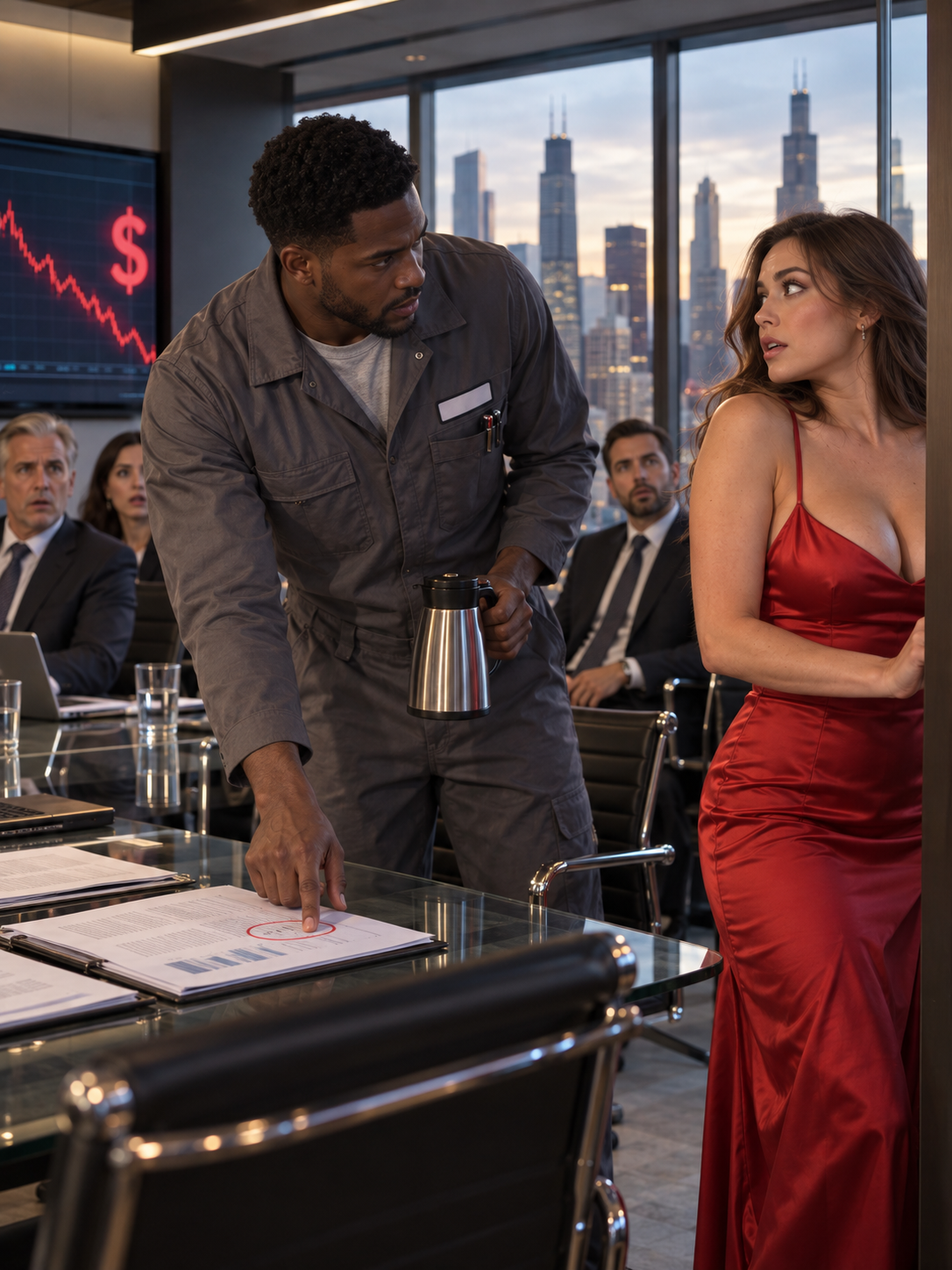
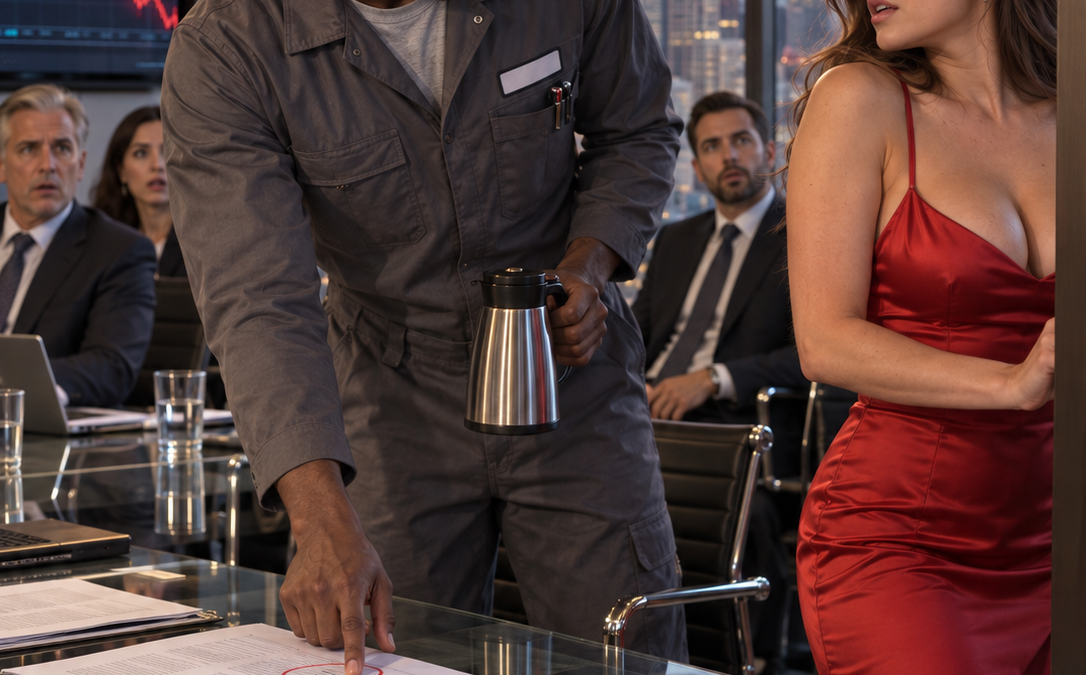
I think we’re done here.
Tell me the number. Tell me the term.
We’ll fix it right now.
It’s not a number.
The number on the screen was $80 million. And in the biggest conference room on the 40th floor of the Hail Group Tower in Chicago, six of the most expensive people in the company were about to watch it die.
They didn’t know that yet.
They thought they were winning. Gretavos stood up.
She didn’t slam anything.
She didn’t raise her voice.
She just pushed her chair back with a quiet scrape that somehow cut through the room louder than a shout, gathered the leather folder in front of her and said, “I think we’re done here.”
Six executives froze. Eleanor Hail, the CEO, felt her stomach drop through the floor. Her head of M and A opened his mouth and closed it.
The lawyers looked at each other.
Somebody’s pen clicked.
On the far wall, the projected slide still glowed. Voss manufacturing acquisition final terms. And under it, that number 80 million sitting there like it was already spent.
Greta, Eleanor said, standing too fast. Whatever the issue is, we can fix it. Tell me the number.
Tell me the term.
We’ll fix it right now.
It’s not a number, she said.
And that was the terrifying part because everyone in that room only knew how to fix numbers. She walked toward the door and the only person who understood why she was leaving was the man in the corner refilling the coffee. His name was Marcus Bell.
He wore a gray facilities uniform.
He’d been in and out of that room four times that morning carrying a steel carff.
And not one of the six people at that table could have told you his name because to them he wasn’t a person.
He was part of the room. Like the chairs, like the light switch, he was the help.
He’d heard every word of the last two hours, and 40 minutes ago, he’d seen the one line on page 11 that none of them had bothered to read out loud.
The line that had just cost them $80 million. Marcus set the carff down.
His heart was pounding, and he thought about his son, Elijah, 9 years old, waiting for him after school. and he thought about what would happen to him if he opened his mouth in a room he was invisible in.
That morning, Elijah had asked him a question at the breakfast table. A small question in that flat, honest way kids have.
Dad, he’d said, not looking up from his cereal.
Why do you let them talk to you like that?
Marcus hadn’t had an answer.
He looked at Greta Voss, three steps from the door, about to walk away from the last thing her dead father ever built. He looked at the projected number and he made a decision that was going to cost him more than he knew.
“Miss Voss,” he said.
Every head in the room turned, not toward Greta, toward the man with the coffee. 6 hours earlier, it had still been an ordinary day.
Marcus Bell woke at 5:10, the way he always did before the alarm, because his body had stopped trusting alarms 3 years ago. He lay in the dark for a minute, listening to the apartment. two rooms and a kitchenet on the west side, radiator that knocked like it owed somebody money, and down the short hall, the soft, steady breathing of his son.
He got up quietly.
He made two lunches, one for Elijah, one for himself, the same as Elijah’s because buying lunch downtown was $11 he didn’t have.
He wrote a note on the whiteboard by the door, reading log signed, field trip form on the counter. I love you. Be brave.
He’d been writing be brave for 3 years, ever since the funeral.
Some mornings he thought it was more for him than for the boy.
On the counter under the field trip form sat a red envelope he’d turned face down so Elijah wouldn’t ask about it.
Final notice, rent and the late fees and a date 11 days out that the landlord had underlined twice.
Marcus slid it a little further from the cereal bowl and didn’t let himself run the numbers again.
He’d already run them.
They didn’t move.
At 6:40, he walked Elijah to the bus. It was March and Chicago in March is a gray argument between winter and everything else.
Elijah had his hood up and his backpack straps pulled tight in his mother’s eyes.
And every time Marcus looked at those eyes, something in his chest turned over.
“You got your inhaler?”
Marcus asked.
“Yeah.”
“You got your reading log,” Dodd.
“All right.”
The bus hissed up to the curb. Elijah started toward it, then stopped and turned around and said the thing that had been sitting in him all morning. Dad, why do you let them talk to you like that?
Marcus went still. Who? Those men when you picked me up from the office that time.
The one with the shiny watch.
He said, “Get the door.”
Like you weren’t even Elijah shrugged.
The way kids shrug when they don’t have the word for a thing, but they can feel it like you weren’t even there.
The bus doors were open. The driver was waiting.
We’ll talk tonight, Marcus said.
Go.
You’ll miss it.
Elijah looked at him one more second, then ran for the bus. Marcus watched it pull away and stood on the corner in the cold long after it was gone. Why do you let them talk to you like that?
Because I have to, was the answer. Because three years ago, I had a house and a business and a wife. And then a hospital took all three, one at a time.
And now there’s a red final notice on the counter with a number I can’t cover because a job with flexible hours lets me stand on this corner every morning and watch you get on that bus.
He didn’t say any of that.
You don’t put that on a 9-year-old.
He caught his own bus downtown. The Hail Group occupied 12 floors of a glass tower on Wacker Drive.
Marcus worked facilities and event logistics, which was a polite way of saying he set up rooms, broke down rooms, fixed what broke, and moved whatever needed moving, and did it all in the narrow margins where nobody was looking. He was good at it.
He’d been good at a lot of things.
Once his supervisor, a decent, harried woman named Rosa, caught him by the freight elevator. Big day, 40, she said.
The Voss thing.
Hail’s been living up there for a week.
They want the main conference room dialed in coffee service all day. The good cars refill on the hour. No interruptions.
And Marcus, she lowered her voice. Lang is running point.
So, so Marcus agreed, but the name had already done something to him. Voss Elcart Falls.
He hadn’t heard it spoken out loud in 10 years.
and hearing it now in a service corridor from a woman handing him a coffee assignment hit him somewhere he wasn’t ready for.
He knew that plant.
He’d walked its floor in a different life in a different suit.
He’d spent 5 weeks in Elcart Falls keeping 400 people from losing their jobs.
And he’d done it.
And the old man who owned it, Henry Voss, had shaken his hand at the end and called him the quiet one because he’d never once gotten Marcus’ name right.
Henry Voss was dead now. Marcus had seen it in a headline months back and felt something close in his chest.
And today, the old man’s daughter was upstairs on the 40th floor about to sell the thing her father built with his hands.
And the only person in the building who knew what that shop actually meant was the man they’d sent to pour the water.
Nobody up there knew that. Marcus intended to keep it that way. He needed the paycheck, not the attention.
Trevor Lang, the one with the shiny watch, the one Elijah had never forgotten.
VP of strategy, 41, the kind of man who’d learned that if you spoke to people below you like furniture, some of the people above you mistook it for confidence.
Trevor snapped his fingers at weight staff.
Trevor called Marcus chief and big guy and twice, “Hey, you.”
Trevor had never once used his name, and Marcus had stopped expecting him to. I got it, Marcus said. He rode up to 40.
He set the room. He knew how to make a room feel expensive without anyone noticing the work.
The cariff squared to the table edge, the water glasses at 10, and two, the light warmed a half step, so the numbers on the screen looked less like a threat.
He’d learned that a long time ago in a different life in rooms where he sat at the table instead of circling it.
At 8, the players filed in Ellanar Hail, first 60s, silver, tired in a way that money doesn’t fix.
Marcus had watched her all week and had come to a quiet conclusion her own executives hadn’t reached.
Eleanor Hail didn’t want to win this deal.
She needed it, which is different. There was fear under the confidence.
Marcus knew fear when he saw it. Fear made people do the fast thing instead of the right thing.
Then the M&A team. Then the lawyers. Then Trevor Lang.
Last. The way people who want to be noticed always come in.
Last. Cuffs.
Shot. Watch. Catching the light.
And then Greta Voss.
She was maybe 50 in a dark suit that hadn’t been chosen to impress anyone.
She carried herself like a person who’d rather be somewhere else.
Marcus standing at the credenza with the carffe watched her scan the room once and he understood her before she said a word because he’d sat where she was sitting.
She wasn’t here to sell.
She was here because she’d run out of ways not to “Nanor said warmly, thank you for coming in.
I know the last few months have been difficult. Your father built something remarkable.
I want you to know we intend to honor that.”
Greta nodded.
It was the nod you give when you’ve heard the word honor from a lot of people who meant acquire.
Marcus poured the coffee and made himself into furniture and listened. For the first hour, it went the way these things go. The M&A team walked the terms.
Voss manufacturing a family company out of Elcart Falls, Ohio. Founded 1,971 by a man named Henry Voss. 410 employees, three facilities, a specialty machining reputation that had somehow survived four decades and two recessions.
Henry Voss had died in November.
Greta, his daughter, had inherited a company she loved and debts she couldn’t carry and a rival circling the water.
The Hail Group wanted it. 80 million cash and equity. On paper, it was generous.
Marcus refilled the coffee at 9.
He noticed things you notice when nobody’s watching you.
He noticed that Greta’s hands stayed flat on the table, very still, the stillness of someone holding themselves together.
He noticed that when the M and A lead said synergy, she flinched just slightly. He noticed that Trevor Lang kept checking his phone under the lip of the table, and once when a text came in, the corner of his mouth moved. Not a smile.
Exactly. Something more private than that. Marcus filed it away.
He didn’t know why.
Old habits.
Old habits from the decade he’d spent reading rooms for a living.
The fear under the anger, the grief under the number, the one sentence a person couldn’t say out loud.
That was the only sentence that mattered.
He read this room the way he’d read a hundred others.
The difference was that this time he was the only one in it who already knew whose daughter was sitting at that table. At 9:40, the M and A lead put up slide 11, asset schedule line items, and Marcus standing at the credenza, scanning the screen the way he scanned everything, saw it. Line three, facility A1, Elcart Falls, original site 1,971.
status, legacy, asset, recommendation, decommission, Q3, decommission. The word sat there, clean and technical, and Marcus watched Greta Voss read it, watched her eyes find that line, watched the stillness in her hands, go from holding together to something else, something worse. Because Marcus knew what none of the six people at that table knew or had cared to find out.
facility.
A one wasn’t a facility.
It was the shop. The first one, the one Henry Voss had built with his own hands in 1971 with a second mortgage and two employees. Every person in Elcart Falls knew the story.
It was where the company started. It was in every way that a place can be, the man himself. And the Hail Group had just put a slide up in front of his grieving daughter that recommended they knock it down in the third quarter.
Nobody at the table noticed. They were talking about the equity structure now.
Trevor Lang checked his phone again. Greta Voss went very quiet. And 40 minutes later, she stood up.
I think we’re done here.
Greta said, and the room stopped breathing. Eleanor Hail was on her feet. Greta, tell me the number.
Tell me the term.
We’ll fix it right now.
It’s not a number.
The M and A lead jumped in.
Miss Voss, if it’s the equity split, we have room to move on that we can restructure the earnout.
It’s not the earnout, Trevor Lang leaned back, watch catching the light, and said in a tone that was trying very hard to sound reasonable, Greta, with respect, this is the best offer you’re going to see.
Your company has real problems and real debt, and frankly, there isn’t another buyer at this price.
I’d hate to see emotion get in the way of the right decision for your people.
your people.
Marcus saw Greta’s jaw tighten.
Whatever crack had been open in her, Trevor had just sealed it shut.
She reached for the door, and that’s when Marcus Bell set down the carffe.
“Miss Voss,” he said.
Every head turned toward the coffee. Eleanor Hail blinked like someone being spoken to by a lamp.
Trevor<unk’s face did something ugly and fast.
“You,” Trevor said, “we’re in a meeting.
You can clear the cups after.”
Page 11. Marcus said he kept his voice low and level.
The voice he used to use in rooms like this.
A voice he hadn’t heard come out of himself in 3 years.
Line three, facility A1.
You’ve got it flagged to decommission in Q3.
Eleanor Hail frowned. The what?
Yes, it’s an obsolete site.
What’s your It’s not an obsolete site, Marcus said.
It’s where the company started.
It’s the shop Henry Voss built in 1971.
Everybody in Elcart Falls knows it.
It’s got his name on the original loading dock in his own handwriting.
He looked at Greta and something passed between them.
And he said quietly, “You’ve been in this room 2 hours listening to six people tell you what your father’s life is worth, and then you turned a page and found out they want to bulldoze his grave in the third quarter.
That’s why you’re leaving, isn’t it?”
The room was absolutely silent.
Greta Voss’s eyes filled.
She didn’t let it fall, but she stopped with her hand on the door, and she looked at the man in the gray uniform like she was seeing him for the first time, and Marcus would realize later, like she was almost seeing him for the second time.
Yes, she said.
That’s why I’m leaving.
Eleanor Hail turned slowly and looked at slide 11 at line three at the word decommission, which she had approved, which her whole team had approved, which not one of the six most expensive people in the building had thought to read out loud
because to them it was just a line on a schedule. Take it off, Hail said.
Her voice had changed. Take that line off right now, Eleanor, Trevor started.
We can’t just take it off the slide, Trevor.
The M&A lead scrambled at the laptop. The line vanished.
But the damage a slide does isn’t undone by deleting the slide, and everyone in the room knew it.
Greta Voss still had her hand on the door. Marcus took one step forward.
“Miss Voss,” he said, “I’m nobody in this room, but if you’ll give it 20 more minutes, I don’t think this deal is dead.
I think this deal just found out what it’s actually about.”
And that’s the first honest thing that’s happened at this table all morning.
Greta looked at him for a long moment. Then she let go of the door.
20 minutes, she said, and she sat back down. Eleanor Hail called a recess.
The executive spilled into the hallway in a low, urgent murmur, the way people do when the ground has moved and they’re checking whether they’re still standing.
Trevor Lang got Marcus by the elbow near the freight elevator, out of earshot, and his reasonable voice was gone.
“That was a mistake,” Trevor said quietly.
Close, almost pleasant.
“I want to be fair, so I’ll say it plainly.
You interrupted an $80 million negotiation to hand a client a feeling. When this deal comes apart, and it will, someone in this building has to be the reason it did.
It won’t be me, and it won’t be Hail.
” He straightened Marcus’ collar with two fingers, unhurried.
It’ll be the temp who spoke out of turn.
I’d start thinking about your references now while you still have one.
Marcus looked at the hand at his collar until Trevor lowered it. You checked your phone 11 times in there.
Marcus said, “You smiled once.
” When she stood up, he let that sit.
Funny thing to smile at. A deal dying.
Something flickered across Trevor’s face there and gone.
But Marcus had spent a decade reading faces and he caught it.
It wasn’t guilt.
It was calculation.
The look of a man deciding how much you’d seen.
“Watch yourself,” Trevor said and walked away.
Marcus stood by the freight elevator and thought he wants this deal to die.
He didn’t know why yet, but he knew a man protecting a secret when he saw one, and now he’d made himself the man who could see it.
Rosa found him a minute later, wideeyed. Marcus, what did you do up there?
Hail’s assistant just came down asking your name.
Your name? By name?
I’ll probably get fired, Marcus said.
By the CEO or by Lang, racing to see who gets there first.
But when the recess ended, it wasn’t Marcus who got called in first.
It was Greta Voss and Eleanor Hail.
And at Greta’s specific and quietly immovable request, the man who’ poured the coffee.
They put him in a chair. At the table, Marcus Bell in a facilities uniform.
At the table, he couldn’t remember the last time he’d sat at one of these tables.
His body remembered before his mind did the old posture came back. Spine straight, hands folded, ready.
Mr.Bell, Ellaner Hail said she’d gotten the name.
Miss Voss would like you to stay in the room.
I confess I’m I’d like to understand how a member of our facilities staff knew the founding history of an Ohio machine shop better than my entire M&A team.
Marcus glanced at Greta. She was watching him with an intensity that had a question buried in it.
A question that hadn’t surfaced yet.
I know Elcart Falls, Marcus said carefully. I did some work there a long time ago.
What kind of work? And there it was.
the thing he’d walked into that building this morning determined to keep to himself.
Marcus considered deflecting. It would have been easier.
But Greta was looking at him and something in her face was reaching for a memory and he’d spent 3 years being invisible and he was tired suddenly in a way that went all the way down.
I was a labor mediator, Marcus said, certified for about 10 years. I did contract disputes, plant negotiations, strike prevention. He looked at the table.
In 2014, I spent 5 weeks in Elcart Falls. Voss Manufacturing was 3 days from a strike that would have closed it.
The union and management had stopped talking. I was the one who got them back in a room. Greta Voss made a small sound.
You?
She said, “Oh my god, you’re you were younger.
You had a beard.
” Then her hand went to her mouth.
You saved the plant. In 2014, my father talked about you for years.
He never got your name right. He called you the quiet one, he said.
Her voice caught, he said. The quiet one was the only person in the whole mess who was listening to the actual words people were saying. Eleanor Hail looked between them.
Lost.
I don’t understand, Hail said.
If you were a certified mediator, a good one.
Evidently, “How are you setting up your coffee?”
Marcus finished. He kept his voice even. My wife got sick.
Cancer.
In 2021, I stopped traveling for work to be with her and then to take care of our son and then she died and the medical debt didn’t.
Mediation is contract work.
It dried up while I wasn’t looking.
And I’ve got a 9-year-old who needs me home at a specific time every single day, and your facility’s job has flexible hours.
He shrugged once. So, here I am. Uh uh.
The room was quiet. And Greta Voss, who 20 minutes ago had been walking out the door on $80 million, leaned forward and said the thing that changed the shape of the whole day.
Eleanor, I’ll keep talking, but I want him in the room, not your M and A team.
Him. because in 10 years he is the only person from your side of any table who has ever told me the truth. They talked for 3 hours and it turned out Marcus had been right in the hallway.
The deal wasn’t dead.
It had just for the first time become honest once the founder’s shop was off the demolition list.
Once someone said out loud that facility A1 stayed standing, that it became a company museum and training center.
that Henry Voss’s name on the loading dock was written into the terms in permanent ink.
Greta started talking about what she actually wanted, which was never the money. What she wanted was for the 410 people in Elcart Falls to still have jobs in 3 years. What she wanted was for the thing her father built to keep being the thing her father built instead of getting stripped for parts.
And here’s where the second engine turned over.
Because when Marcus sitting in that room actually looked at the terms with the eyes of a man who used to negotiate for a living, not the coffee, the terms something didn’t fit.
The offer was 80 million generous, they kept saying, but the way it was structured, the integration clauses, the efficiency targets buried in the operational appendix. Marcus read them the way he used to read a management proposal that was hiding its real intent in the boring pages nobody read. At the first break, he pulled Eleanor Hail aside.
Can I ask you something? Marcus said straight.
After today, Mr.Bell, I think you’ve earned straight this deal.
80 million for a company with real assets, real reputation, 400 workers, and a specialty machining niche nobody else can do. Marcus paused.
Why does your own operational appendix read like you’re planning to close two of the three plants inside 18 months?
because that’s what it reads like.
That’s not a plan to grow Voss.
That’s a plan to gut it.
Eleanor Hail stared at him.
That’s not We’re not planning to close anything.
The integration plan was built by He stopped.
His face changed slowly like a man doing a sum he doesn’t want the answer to.
The integration plan was built by Trevor’s team, who checks his phone 11 times when a deal is about to die, Marcus said, and smiles when it does.
For a moment, neither of them said anything.
“You’re accusing a vice president of this company,” Hail said slowly.
“Of what exactly?”
“I’m not accusing anybody of anything,” Marcus said.
“I spent 10 years in rooms where people lied for a living.
I’m telling you what the pages say when you read them the way I read them.
Somebody wrote this integration plan to make the deal look generous on the front page and make Voss worthless on page 40.
” And when a person builds a deal to fail, it’s usually because they’ve already got a buyer lined up for the wreckage.
Eleanor Hail went to the window. Outside, 40 floors down, Chicago went about its business, gray and enormous.
There’s a rival, Hail said quietly.
Croft Partners, Private Equity, Diane Croft.
She’s wanted Voss for a year to break it up.
Sell the machining division. Sell the land.
Walk away with three times what she paid.
Greta’s father hated her.
That’s why he came to us instead.
Croft can’t outbid us.
She turned.
But if our deal collapses, if Greta walks away from us thinking every buyer is the same, Croft is standing right there at a fire sale price because there’s no one left.
And whoever inside your company handed Croft that outcome, Marcus said, would probably find a board seat waiting for them at the merged company, wouldn’t they?
Eleanor Hail looked like she’d aged 5 years in 5 minutes.
Get me proof, she said.
If you’re right, get me proof because I’m not burning a 15-year vice president on a coffee cart hunch.
I’m not a coffee cart, Marcus said, standing.
But I’ll get you your proof.
Here is what the executives never understood about a man they treated like furniture. Furniture is in every room.
Marcus had set up every meeting in that building for 8 months. He knew which conference rooms Trevor Lang booked and when.
He knew Trevor took his private calls in the small room on 39, the one with the bad soundproofing that Trevor thought was private because he’d never once considered that the man resetting the chairs next door could hear him.
He knew
because he’d heard fragments for weeks and filed them away without knowing what they were the same way he’d filed away.
The flinch, the phone, the smile, a word here, Croft. A phrase there after it collapses.
Nothing that meant anything alone. Everything that meant something now.
He didn’t need to break a law.
He didn’t need to steal a file.
He needed to do the thing he’d done for 10 years and the thing he’d done for 8 months.
be in the room nobody thinks about and listen to the actual words people are saying. At 4:15, Trevor Lang booked room 39C for a private call at 4:30.
At 4:25, Marcus Bell went into 39B to reset the chairs.
And through the wall, he heard Trevor Lang, relaxed, confident, alone, or so he thought, say, “No, it’s fine.
It’s handled.”
Hail brought in some maintenance guy to hold the client’s hand.
And it bought them a day.
That’s all.
The integration plan is still in the deck. Nobody reads the appendix, Diane.
That’s the whole point, right?
It falls apart by end of month. Voss goes to you for 40, maybe 45. And the machining division alone is worth 90 on breakup.
My piece. We talked about my piece.
The board seat and two points of the breakup in writing. That was the deal.
Marcus stood on the other side of a thin wall with his heart going like a hammer and his phone in his hand recording every word. Nobody reads the appendix.
That’s the whole point.
He’d been that appendix his whole life at this company.
The part nobody reads.
The part they assume can’t understand what it’s looking at.
Trevor Lang had built his entire scheme on the assumption that the invisible people were also deaf. He was wrong.
Marcus brought the recording to Eleanor Hail at 6:00 that evening in Hail’s office, door closed.
Hail listened to all four minutes of it without moving. When it ended, she set the phone down very gently on her desk as if it might go off.
That’s Diane Croft’s voice on the other end.
Hail said, “I’ve been in a hundred rooms with that voice.
” She rubbed her face with both hands.
15 years. I brought Trevor in as an analyst.
I promoted him four times. She looked up. You understand what this recording is worth to me?
Right now, this deal is $80 million. And there are people who would pay a great deal to make this recording disappear and people who would pay a great deal to make it appear at the right moment.
I understand, Marcus said. Why did you bring it to me instead of selling it to one of them? Marcus thought about that.
because I’ve got a kid at home who asked me this morning why I let people talk to me the way they do and I didn’t have a good answer and I’ve spent all day figuring out that the answer I want to have is because it doesn’t change who I am.
He shrugged.
You can’t sell that and keep it.
Eleanor Hale looked at him for a long moment. Mr.Bell, she said be here tomorrow morning, 8:00, same room.
There’s a signing scheduled.
Trevor thinks it’s going to fall apart and I want him to keep thinking that until the moment it doesn’t.
I want Greta there and I want you there. She paused.
I want you at the table. That night Marcus made dinner.
Spaghetti because it was Tuesday and Tuesday was spaghetti and some rituals you keep because they’re the ropes that hold the boat to the dock.
Elijah did his reading log. Marcus signed it. And when the boy was almost asleep, curled small under the blanket with the street light coming orange through the blinds, Marcus sat on the edge of the bed.
“Hey,” Marcus said.
“This morning, you asked me a question.”
Elijah’s eyes came half open about the men about why I let them talk to me like that.
Marcus was quiet for a second, choosing the words the way he chose every important word carefully because his son would keep them.
I’ve been thinking about it all day and here’s the answer.
Okay, listen. Sometimes you let people underestimate you because you need something. A job, a paycheck, a roof.
Me being here to make you spaghetti on Tuesday.
That’s not weak.
That’s a man doing what he’s got to do for the people he loves.
You hear me? Elijah nodded sleepy.
But Marcus said, “There’s a difference between letting somebody underestimate you and forgetting who you are.
Don’t ever let them make you forget who you are.
Because one day, maybe when you least expect it, you’re going to be the only person in the room who knows the thing that matters.
And on that day, you speak. No matter who they think you are, you speak. Understand?
Did that happen today? Elijah murmured.
Were you the only one who knew?
Marcus smoothed the blanket over his son’s shoulder.
Go to sleep, buddy, he said.
Tomorrow, I’ll tell you all about it.
He turned off the light.
In the dark from the edge of sleep, Elijah said, “Be brave, Dad.”
Marcus stood in the doorway a long time. 8:00, 40th floor. The room was set.
Marcus had set it himself out of habit, out of pride. Cariff squared to the table edge.
But this morning, he wasn’t standing at the credenza.
He was sitting at the table in a jacket he’d pressed the night before next to Greta Voss.
Trevor Lang walked in last, cuffs shot, watch catching the light, and stopped when he saw Marcus in a chair.
“What is this?”
Trevor said.
“Sit down, Trevor.”
Eleanor Hail said pleasantly.
“We’re signing today.”
Trevor’s face did a quick private calculation.
Marcus watched it happen. The flicker of surprise, then the recovery, then the smooth confidence sliding back into place.
Because Trevor thought he still held the cards.
Trevor thought the integration plan was still buried on page 40, still ticking, still set to blow the deal apart by month’s end, no matter what happened in this room today.
Let them sign. The bomb was already planted.
Great, Trevor said, sitting. Glad we came to our senses. They went through the terms.
Eleanor Hail, calm, unhurried, walked the whole room through the deal, and one by one she read out the changes. Facility A, one preserved in writing. Job guarantees for Elcart Falls, 3 years minimum in writing.
And then casually near the end.
And we’ve revised the integration plan.
Hail said the operational appendix.
Turns out the version Trevor’s team built had some interesting features.
Efficiency targets that would have required closing two of the three plants inside 18 months, which would have made the whole company worthless, which is a strange thing to build into a deal you’re trying to close.
And a spass. She looked up mild as milk, almost like somebody wanted it to fail. The temperature in the room dropped 10°.
Eleanor, Trevor said, and his voice had a new edge in it.
I don’t know what you’re implying, but that appendix was a standard.
Diane Croft says hello, Hail said. Trevor Lang went white.
Marcus watched it happen.
Watched the confidence drain out of the man’s face like water out of a cracked glass.
Watched him reach fast for the exits, a denial, a bluff, an attack. watched him look at Marcus and understand all at once that the invisible man, the coffee, the appendix nobody reads had heard every word through a thin wall on 39.
You Trevor started two points of the breakup and a board seat. Marcus said quietly in writing.
That was the deal, wasn’t it?
The exact words.
His own exact words coming back at him out of the mouth of the man he’d called big guy.
Trevor Lang had nothing left to say. Eleanor Hail asked Trevor to wait in her office.
Security walked him there. The lawyers followed to begin what would be a very long, very quiet process.
Because companies don’t announce this kind of thing.
They manage it. The deal, the real deal, the honest one, was signed by 10:15.
Gretavos put her father’s company in the hands of someone who’d finally at the very last hour decided to be worth trusting.
And then Eleanor Hail did something Marcus didn’t expect.
She asked everyone else to leave the room. And when it was just the two of them, the CEO and the man who used to pour the coffee, Hail slid a single folder across the table.
“Before I tell you what’s in there,” Hail said, “I want to give you something first, and I want you to understand it’s not a reward, and it’s not a bribe, and it’s not me buying anything.
It’s a choice, and it’s yours.”
He tapped the folder. Trevor Lang has a wife and two kids.
He also just tried to defraud this company out of $40 million and sell a family’s legacy to a woman who would have fed 400 people in Ohio into a wood chipper.
I have the recording you gave me. With it, I can do more than fire him. I can end him.
Criminal referral, civil suit, his name in every trade publication in the country. He will never work again.
And I mean never. and his family will go down with the ship.
Hail sat back.
The board will follow my recommendation on how hard we come down and I’ve decided that my recommendation is going to follow yours.
Marcus looked at him. Why mine?
Because he treated you like nothing. Hail said simply for 8 months.
Called you big guy. Snapped his fingers.
Your own son watched him do it.
If any man on this earth has earned the right to decide how far Trevor Lang falls, it’s you.
So she folded her hands. How far does he fall, Mr.Bell?
Say the word and I’ll break him to the studs.
And there it was.
Marcus Bell sat in a conference room 40 floors above Chicago and held in a folder he hadn’t opened.
The power to destroy the man who’d made him feel like furniture in front of his own child.
Every reason in the world was sitting right there.
Get the door like you weren’t even there.
Grease traps in Gary by Friday. Nobody reads the appendix.
The finger snap. The watch catching the light.
Elijah’s voice at the bus stop.
Why do you let them talk to you like that? Say the word.
Break him to the studs. Marcus thought about it.
He let himself think about it honestly.
Because a choice you don’t feel the weight of isn’t a choice.
It’s just a pose.
Then he thought about a 9-year-old asleep under an orange street light.
Don’t ever let them make you forget who you are.
Can I ask you something? Marcus said. Straight.
straight.
If I say break him and you break him, does that fix anything?”
Marcus leaned forward.
“You’ve got a company where a vice president spent months building a fraud in plain sight in the boring pages because he was betting that nobody with real power ever reads the boring pages and nobody without a title ever gets listened to.
You break Trevor Lang. You
feel good for a week and then the next Trevor Lang builds the next fraud in the next appendix because the thing that let him do it is still there. The thing that let him do it is that this company decided a long time ago that some people at the table matter and some people are furniture.
He tapped the table once. You want to fix something?
Don’t fix Trevor.
Fix that. Eleanor Hail was very still.
What are you asking me for, Mr.Bell?
I’m asking you to fire him cleanly.
He committed fraud.
He’s gone.
No severance, no reference.
That’s justice.
A man who tried to hurt 400 people doesn’t get to keep his corner office.
But you don’t need to salt the earth and burn his kids down with him because his kids didn’t do anything.
And neither did your last 8 months of interns and mail clerks and facilities temps who are going to work here after him. Marcus pushed the unopened folder back across the table.
Take the money you’d spend on lawyers ruining one man and spend it on a rule instead.
Every deal this company does over a certain size, somebody reads the whole thing out loud. Every page, including the boring ones, including the appendix, and anybody in the building, anybody, the analysts, the assistants, the guy setting up your coffee, can flag a line and get a hearing.
You do that and Trevor Langga’s whole scheme becomes impossible forever for everybody who comes after him.
The room was quiet for a long time. You could have destroyed him.
Hail said finally. Most people would have.
He earned it. He did earn it.
Marcus said that’s exactly why I’m not going to be the one who hands it out.
The day I destroy a man because I can because I finally got the power to is the day I become the thing I spent all day proving I’m not.
He stood up. My son asked me why I let people talk to me a certain way.
I don’t want the answer to be because I was waiting for my turn to do it back.
Eleanor Hail stood too. And for the first time, the CEO of the Hail Group extended her hand to the man who used to pour her coffee and shook it like an equal.
Mr.Bell, he said, I’d like to offer you a job.
The job was this, director of integration standards, a madeup title for a real thing. the person who made sure the rule Marcus had just invented actually happened on every deal for good.
The person who sat at the table specifically to read the pages nobody reads and to make sure the people nobody listens to got heard. It came with a salary that made the eviction math stop being math.
It came with an office that had Marcus’s name on the door spelled correctly, which he was aware was a low bar, and was also aware had taken him 3 years to clear.
He took it, not for the office, for the whiteboard math at home that finally finally balanced.
Gretavos found him by the elevator afterward, and she took both his hands in hers, and she couldn’t quite talk for a second.
“My father would have wanted to meet you again,” she said.
the quiet one.
He’d have wanted to shake your hand and know your name this time.
She squeezed.
It’s Marcus.
I want to say it right. Marcus Bell.
It’s good to meet you again, Miss Voss.
Greta. She smiled through the wet in her eyes. The training center at facility A1.
The one we’re keeping.
The one my dad built. She took a breath. I want to name a scholarship out of it for his workers kids and for people trying to get back on their feet after a hard few years.
People the world stopped seeing. She looked at him.
I’d like to name it after the first person who saw us.
Would you let me name it after you?
Marcus, who had been invisible for 3 years, who had walked into that building that morning as furniture, stood by the elevator and found that he couldn’t speak.
No, he managed finally. Not after me.
He thought about it. Name it after your dad.
Henry Voss. He built the place and then put a rule on it.
Anybody who gets that scholarship, when they make it, they’ve got to come back and see the person everybody else is walking past.
That’s the whole scholarship.
That’s the only rule.
Greta laughed and wiped her eyes and said he would have loved that. That afternoon, Marcus Bell left work early for the first time in 8 months.
on purpose and nobody stopped him because it turned out that when you have your name on the door, you’re allowed to go pick up your kid.
He was standing at the corner when Elijah’s bus pulled up.
The boy came down the steps with his hood up and his backpack tight and his mother’s eyes and he stopped surprised because his dad was never here this early.
Dad, what are you doing here? Is everything okay?
Everything’s okay, Marcus said.
I left work early. You never leave work early.
Things are different now.
Marcus crouched down to the boy’s level on a gray Chicago corner in March.
You remember what you asked me yesterday? Why I let those men talk to me like that?
Elijah nodded wary.
I told you I’d tell you what happened today, so here it is.
Marcus put his hands on his son’s shoulders.
Yesterday, I was the only person in the room who knew the thing that mattered. And I was scared because everybody in that room thought I was nobody.
and I almost stayed quiet. He looked his son dead in the eye. But I remembered somebody told me to be brave, so I spoke.
And it turned out that the quiet man everybody walked past was the only one who could save the whole thing.
Elijah’s eyes were wide.
The man with the shiny watch.
Marcus said, “He doesn’t work there anymore.
Not because I got him back, because he did something wrong. And doing something wrong has a cost.
And that’s just fair.
But I didn’t grind him into the ground when I had the chance.
Even though a part of me really wanted to. You want to know why?
Why?
Because I didn’t want you to grow up thinking that’s what winning looks like.
Marcus stood and took his son’s hand.
You want to know what I did? Instead of burying him, I got them to write a new rule.
So the next person nobody looks at, the next guy pouring the coffee gets to raise his hand and be heard.
that’s going to help people I’ll never meet long after everyone’s forgotten the man with the shiny watch.
You keep who you are in your pocket where nobody can take it. And one day you take it out and you save 400 people and you walk to the bus stop and pick up your kid. They started walking.
Elijah was quiet for half a block working something out the way kids do. Dad, he said finally. So tomorrow when you go to work, are they going to talk to you like that?
like you’re not even there.
Marcus thought about the office with his name on the door, about the folder he’d pushed back across the table, about Greta Voss saying his name three times to be sure she had it right.
No, buddy, he said.
I don’t think they are, but it wouldn’t matter if they did.
Why not?
Marcus squeezed his son’s hand.
Because I’d still know who I am.
6 months later, there’s a new rule at the Hail Group that everyone just calls reading the whole thing.
Every deal over 10 million, somebody reads every page out loud and anyone in the building can raise a hand and flag a line and they get a hearing. It has already killed two bad deals.
Nobody calls it Marcus’ rule to his face, but everybody knows Trevor Lang was fired the same week cleanly for cause.
No severance, no reference.
He didn’t go to prison and he didn’t go to the trade papers and some people thought he got off easy.
Marcus, when he heard the grumbling, said only this. He has to explain to his kids why he lost his job every day for as long as it takes.
There’s nothing easy about carrying that.
And he went back to work in Elcart Falls, Ohio.
The original shop that Henry Voss built in 1971 is still standing with his name in his own handwriting on the loading dock, and it’s a training center now.
And there’s a scholarship run out of it.
The scholarship has an unusual rule attached. Something about coming back to see the people everyone else walks past.
And the first recipients think it’s strange.
And then a few years in, they understand.
And in a two- room apartment on the west side of Chicago on Tuesdays, a man makes spaghetti for his son and signs a reading log and writes on the whiteboard by the door the same two words he’s written every morning for 3 years.
Be brave. except now some mornings he finds his son has gotten there first and written it back to him.
Marcus Bell walked out of the Hailgroup Tower that first evening with a job offer, a folder he’d refused to open and his son’s hand in his.
And by the next morning, the eviction notice on his counter was gone. The medical debt was on a schedule he could carry.
And a company that had treated 400 people like line items had a new rule about who gets to be heard. Nobody in that building ever quite figured out how a man with a coffee carff saw what a room full of executives missed. But the people who work there now have learned to look twice at the quiet ones.
THE END.