She Said—But Her Blind Date With a Single Dad Turned Into a Shocking Moment
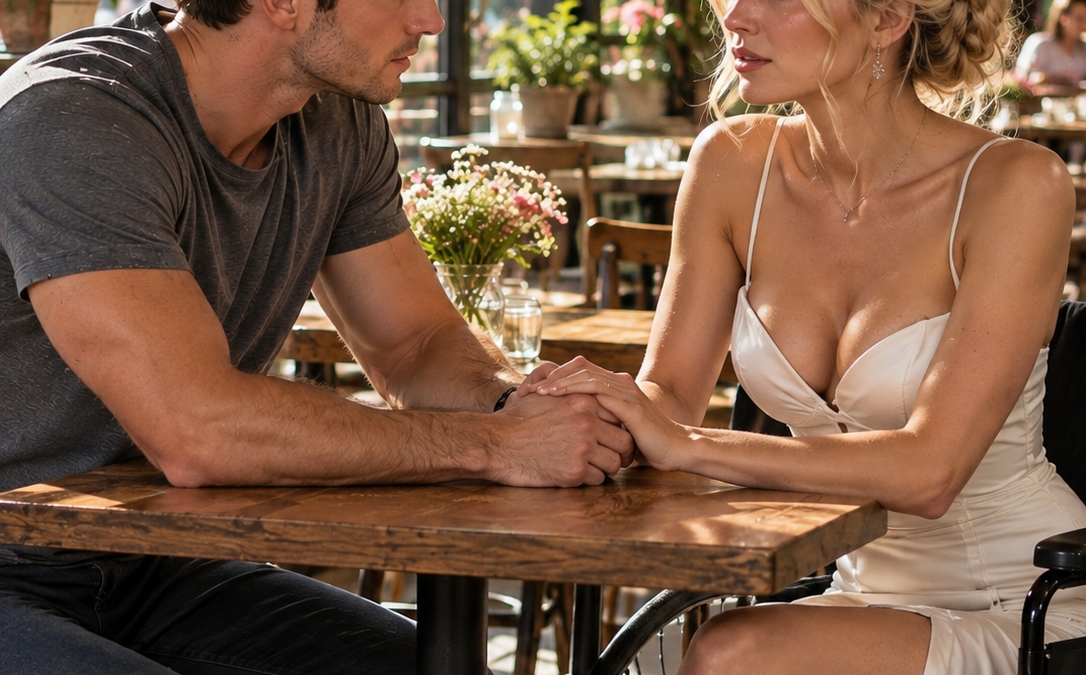
She Said—But Her Blind Date With a Single Dad Turned Into a Shocking Moment
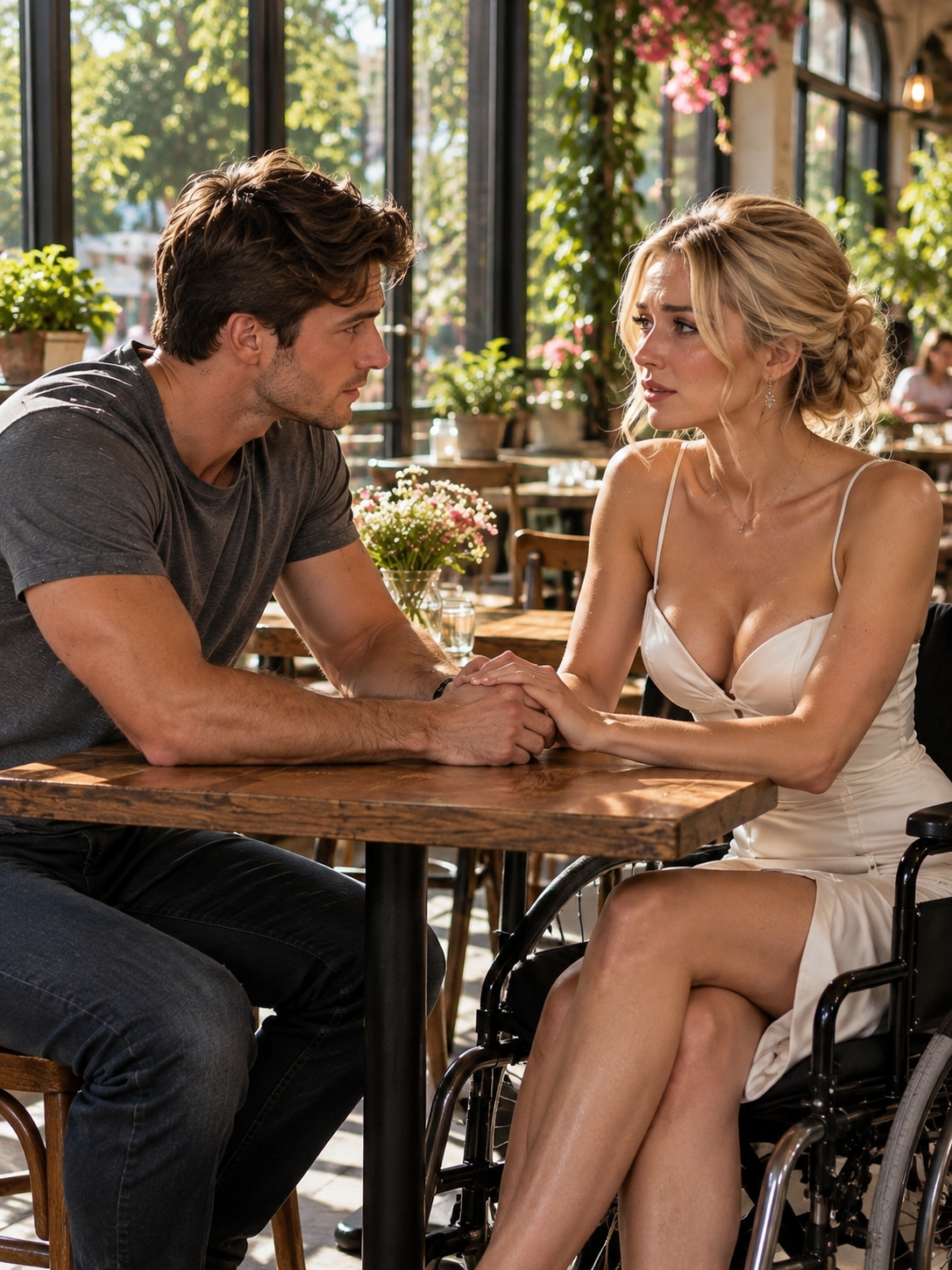
========== PART 1 ==========
“I’m in a Wheelchair…”
And the whole restaurant went quiet the moment the man stood up, knocked his own chair backward, and pointed straight at the investor who just laughed at the woman in the wheelchair.
“Say that again,” he said, “and I promise you’ll remember tonight for the rest of your life.”
Nobody breathed because 10 seconds earlier that same woman had told him she expected him to walk out on her like every man before had done. Instead, he did this.
What made a grieving single dad risk everything for a woman he’d known only 2 hours?
Stay till the end.
You won’t believe what she confesses in part five.
And drop your city in the comments so I can see how far this story travels tonight.
Hit subscribe, folks.
You’ll want to be here for all of it.
Ethan Walker almost didn’t get out of the truck.
He sat in the parking lot of Marchetti’s for a full 6 minutes with the engine off, both hands still locked on the wheel like he was bracing for a crash that had already happened.
His phone buzzed against the cup holder.
He knew who it was without looking.
He looked anyway.
Rachel.
Are you inside yet?
Don’t you dare bail on me, Ethan.
He typed back with one thumb.
Sitting in the parking lot debating my life choices. Rachel.
That’s a no.
Go in.
Ethan.
You do realize I’m 41 years old and you’re bossing me around like I’m still stealing your Halloween candy.
Rachel.
And you’re still scared of me.
Go. In.
She’s already there.
Why?
That last part landed like a stone in his gut.
She was already there.
Which meant if he backed out now, some woman was sitting alone at a table checking her watch learning the hard way that Ethan Walker didn’t show.
He’d been stood up once years ago before Sarah.
He remembered exactly how it felt to be the person left waiting.
He couldn’t do that to a stranger.
“Damn Rachel, he thought, and got out of the truck.
The truth was, he hadn’t wanted any of this.
Three weeks ago, his sister had cornered him in his own kitchen while Lily was upstairs doing homework, and she’d said the sentence he’d been dreading for 2 years.
Sarah would not want you to live like this.
He’d wanted to throw her out of the house.
Instead, he’d stood there with a dish towel over his shoulder because she was right, and the worst part about Rachel was that she was almost always right.
He was living like a man serving a sentence.
Wake up, make Lily’s lunch, drive her to school, go to the job site, pick her up, dinner, homework, bed, repeat.
A gray loop of survival with all the color scrubbed out of it.
He’d told himself that was fine.
That was what a good father did.
He’d told himself a lot of things.
One date, Rachel had said.
One.
If it’s terrible, you can blame me for the rest of your life, and I’ll never set you up again.
But you have to actually go. So here he was, going.
The hostess took his name, and something flickered across her face, a small hesitation, the kind people didn’t think you noticed.
Right this way, sir.
Your, um, your table’s already seated.
Your table’s already seated.
Odd way to phrase it. Bah.
He followed her past the bar, past couples leaning into candlelight, and he was already rehearsing the polite version of himself in his head.
Hi, I’m Ethan.
Sorry I’m late.
Traffic was a nightmare.
He’d be pleasant.
He’d get through the appetizers.
He’d shake her hand at the end, tell her it was lovely, and drive home to the only person on Earth who actually needed him.
Then the hostess stepped aside, and Ethan saw the woman waiting for him, and his rehearsed sentence dissolved on his tongue. Bente.
She was, and this was the plain truth of it, one of the most striking women he’d ever seen.
Dark hair pinned back with a kind of severe elegance, a charcoal blazer that probably cost more than his monthly truck payment, posture like she’d never once slouched in her life.
She was looking right at him, and her eyes were the kind that took inventory of a man in half a second and filed the results away. And she was sitting in a wheelchair.
It was pulled up to the head of the table where a regular chair had been removed.
Sleek, low profile, clearly custom. He registered all of this in about the time it took to blink, and he would be ashamed of this later, and honest about it, too.
His very first involuntary thought was, “Rachel didn’t tell me.
” His second thought, arriving a half second behind the first and stepping on its throat, was, “And why the hell would she have to?”
“You must be Ethan.”
the woman said. Her voice was cool, controlled, precise, a boardroom voice.
“I’m Olivia.”
“Olivia Carter.”
“Ethan Walker.”
He put out his hand, and she shook it one firm pump and let go fast. Businesslike.
He pulled out the chair across from her and sat.
There was a silence.
Not a warm one.
“You’re late.”
she said.
“I know.
I’m sorry.”
He decided in that instant not to lie about the traffic.
“I was sitting in the parking lot trying to talk myself into coming in.”
One of her eyebrows lifted a fraction.
“Honest.
Interesting.”
“My sister set this up.”
“I fought her on it for about 3 weeks.”
“And she won.
She always wins.”
He unfolded his napkin and set it on his lap, mostly to have something to do with his hands.
“You should know I’m not I don’t do this.”
“Dates.
I haven’t done this in a long time.
Neither do I.
Olivia said, and something in the way she said it made him look up.
There was an edge under it. Not nervousness.
Armor. The waiter came and went.
Water was poured.
She ordered a glass of red without looking at the menu.
He asked for the same because he couldn’t concentrate on the words on the page.
And in the small dead space after the waiter left, before he could reach for some safe topic like the weather or the parking.
Olivia set her hands flat on the table and looked at him with a directness that was almost aggressive.
“Let’s not waste each other’s evening.”
She said.
“So, I’m going to say the thing that’s going to happen anyway, and we can skip the part where you spend an hour figuring out how to leave politely.”
“Okay.”
Ethan said slowly.
“I’m in a wheelchair.”
She said it flat, like reading a line item off a report.
“Spinal cord injury T10 incomplete.
I’ve been in this chair for 8 years.
I run a company with 400 employees, and I built it from nothing. But, that is not the thing most men see when they sit down across from me.
The thing they see is the chair. And once they see the chair, they start doing math.
They start calculating what I am and am not going to be able to give them, and they start figuring out how soon they can end the evening without looking like a bad person.”
Yeah, she paused. Her chin was up.
Her eyes never left his.
“So, I’m giving you the exit early.
” She said.
“No hard feelings.
You can tell your sister I was lovely, and it just wasn’t a fit.
That’s the script.
It usually happens around the 40-minute mark.
We can do it now instead.”
Ethan Walker sat very still.
He understood in that moment several things at once.
He understood that she’d said this before many times from the practiced smoothness of it.
He understood that she expected him to take the offer.
He understood that the whole armored posture, the boardroom voice, the head held high like a queen daring anyone to pity her, all of it was a wall built one disappointment at a time by a woman who had decided it was safer to reject first than to be rejected.
And he understood something else, something that came up from a place in him he’d sealed shut 2 years ago.
He knew exactly what it felt like to sit across from the world and wait for it to leave.
He didn’t say anything for a moment.
And Olivia watching his silence felt the old familiar cold settle in her chest. There it is, she thought.
He’s figuring out how to go.
She’d learned to read that silence like weather.
She braced for it the way you brace for a slap you’ve felt a hundred times before.
Then Ethan did something she did not have a script for.
He stood up. Of course, she thought, and the disappointment was so old and so worn smooth that it barely even hurt anymore, which was its own kind of terrible.
Of course, he’s leaving.
He didn’t even make it to the appetizers.
But he didn’t walk toward the door.
He picked up his own chair, the whole chair water glass be damned, and carried it around the table. He set it down beside her, not across from her.
Beside her.
On the same side, angled in so close their shoulders were nearly level.
And then he sat back down so that now the two of them were both facing out at the same room side by side, like two people sitting on a porch instead of two people conducting a negotiation.
There, Ethan said, “Now I don’t have to shout across the table.”
Olivia stared at him.
For a woman who always always had the next thing to say, she found she had nothing.
“I don’t understand,” she said finally, and it came out quieter than she meant it to.
The armor slipped for exactly 1 second, and he saw it slip, and he had the grace to look at the wine list and not at her face while it happened.
There’s nothing to understand, Ethan said.
You told me a fact about yourself.
You didn’t tell me anything about whether I want to be sitting here.
He turned his head toward her.
I want to be sitting here.
That’s all.
Men say things, Olivia said.
The wall was already going back up.
He could practically watch her rebuild it.
They say the noble thing at dinner.
It’s easy at dinner.
You’re right, he agreed.
Dinner’s easy.
I’m not going to sit here and make you a bunch of promises about things I can’t know yet.
I just met you.
He shrugged.
But I can tell you why I moved the chair if you want. Fine.
Because you set that whole speech up to give me a door out.
He said it plainly without accusation.
And I figured the fastest way to tell you I’m not looking for the door was to come sit next to you so we could both stop staring at it.
Olivia Carter had been in rooms with hostile investors, ruthless competitors, and men who wanted to buy her company for parts and put her on the letterhead as a mascot. She had never once been thrown off her stride the way this quiet man in a slightly wrinkled button-down had just thrown her off it.
She looked at him for a long moment. And then to her own astonishment, she laughed.
It was short, surprised, almost against her will, a real laugh, not the polished one she used at fundraisers.
You’re strange, she said.
I’ve been told.
He picked up his water. By my sister, constantly.
Tell me about the sister, the one who won. Rachel.
He smiled, and it changed his whole face. She noticed that and made a note of noticing it.
She’s 2 years younger, and she’s convinced she’s my mother.
She showed up at my house 3 weeks ago and told me I was {quote} living like a man waiting to die {unquote} and that I needed to {quote} rejoin the human race.
Harsh.
Accurate, Ethan said.
That’s the thing about Rachel.
She’s a bulldozer, but she usually bulldozes in the right direction.
Why were you living like a man waiting to die? Olivia asked.
She didn’t soften it.
He appreciated that oddly the directness.
She wasn’t tiptoeing.
Ethan turned his water glass a slow quarter turn on the tablecloth.
He hadn’t planned to say any of this.
He’d planned to be present and vague and gone by 9:00.
But the woman beside him had opened her worst card face up on the table before the wine even arrived and something about that made his own hidden cards feel heavy and cowardly in his hand. My wife died, he said.
2 years ago, Sarah. Cancer.
He kept his eyes on the glass. It was fast, which everybody kept telling me was a mercy and I kept wanting to hit them because there is nothing merciful about watching it happen in 11 weeks.
11 weeks from we found something to a funeral. The table beside them laughed at something.
A fork scraped a plate. The ordinary noise of the restaurant went on around the two of them like water around a stone.
I’m sorry, Olivia said and she meant it.
He could hear that she meant it, which was different from the thousand hollow I’m sorry’s he’d collected at the funeral.
That’s I’m sorry.
We have a daughter.
Ethan went on because now that he’d started the pressure of 2 years wanted the rest out.
Lilly, she’s nine.
She was seven when it happened. He shook his head slowly.
You want to know why I was living like a man waiting to die?
Because for 2 years the only thing I’ve let myself feel is responsible.
Get her to school, get her to bed, keep the house standing, keep her fed.
Somewhere in there I decided that a man who lost his wife doesn’t get to want anything else ever again.
Wanting things is how you get destroyed. So I stopped.
Drawer, my medicine And then Rachel bulldozed you into a restaurant, Olivia said quietly. And then Rachel bulldozed me into a restaurant.
Olivia was silent for a moment.
When she spoke, her boardroom voice was gone.
What replaced it was lower, more real. The accident that put me in this chair, she said, was 8 years ago.
I was 26. I was driving home from the office at 11:00 at night because I was building something and I thought sleep was for people without ambition.
A dry, humorless breath.
A truck ran a red light.
I don’t remember the impact.
I remember waking up and a doctor telling me I would not walk again. And I remember thinking, this is the shameful part.
I remember thinking, good. At least I still have my mind.
I can still work. My first coherent thought was about work.
That’s not shameful, Ethan said.
That’s what you had.
That’s what got you through it.
She looked at him sharply like she was checking whether he actually meant it or was just being kind. Whatever she saw in his face made her look away.
Everyone left, she said.
Not all at once.
That would have been cleaner.
It was slow.
The man I was seeing at the time lasted 4 months.
He was very sorry about it.
He kept saying he wasn’t strong enough as though I’d asked him to carry me up a mountain instead of just stay.
Her jaw tightened. Friends drifted.
It’s amazing how busy people suddenly become.
So I did what I do.
I built a wall and I built a company and I decided I’d rather be respected than pitied and I’d rather be alone than watch one more person work up the courage to leave.
“And now you say the speech first,” Ethan said.
“So you’re the one who ends it.”
She turned and looked at him, and there was something raw in her face that she clearly hated letting him see.
“Yes,” she said.
“Now I say the speech first.”
“How’s that working out?”
he asked, not cruel, almost gentle.
“Until about 11 minutes ago,” Olivia said flawlessly.
And Ethan Walker laughed a real one, surprised out of him, the first honest laugh that had come out of his body in longer than he could remember.
It startled him.
He actually put a hand to his own chest, like he’d felt something move there that he’d assumed was permanently jammed.
Olivia watched him laugh, and something in her rearranged itself quietly without permission. Then the wine arrived.
The waiter, sensing correctly that he’d walked into the middle of something, set the glasses down and vanished.
Ethan lifted his.
“I’m not going to toast to anything big,” he said.
“I don’t want to jinx it, and I’m bad at big.”
He tilted the glass toward her.
“So to Rachel.
Who won?”
Olivia lifted her own glass.
“To Rachel.”
She agreed.
“Who won?”
They drank.
And then, because the wall had a crack in it now, and she couldn’t quite seal it back up in time, Olivia said the thing she never said, the thing she’d promised herself she’d never say to a man across a dinner table again.
“Most people,” she said, looking at the room and not at him, “when they find out about the chair, even the kind ones, even the polite ones, they get careful.
Their voice changes.
They start talking to me like I’m made of glass or like I’m a little slow or like I’m a very sad story they’ve wandered into and now have to be respectful about.
She turned to him, “You didn’t do that.”
“No.”
Ethan said.
“Why not?”
Olivia thought about it. He was a man who thought before he answered.
It was one of the things Sarah used to love and occasionally find maddening about him.
“Because I spent two years being a very sad story.”
He said finally.
“Everybody in my town knows I’m the guy whose wife died.
I walk into the hardware store and people get that look. That careful voice.
Like I might shatter by the paint aisle.”
He shook his head.
“It’s exhausting being handled.
It made me feel like I was already half gone.
Like I was more dead than the living.”
He looked at her and his voice was steady and certain.
“You don’t strike me as a sad story, Olivia.
You strike me as the most impressive person I’ve talked to in about 10 years.
I’m not going to insult you by handling you.”
For one terrible, wonderful second, Olivia Carter, CEO, self-made, armored, untouchable thought she might cry in the middle of Marchetti’s over a basket of bread.
She did not. She was better than that.
She’d had eight years of practice but it was close.