“I’m Sorry Santa Couldn’t Come This Year”—What a Former Navy SEAL Did Next Changed Their Lives
THE CHRISTMAS GIFT THAT BROUGHT US HOME
The hardest part of Christmas wasn’t the empty cupboard.
It wasn’t the unpaid electricity bill, the secondhand decorations, or the fact that I had started cutting our groceries into smaller portions so my seven-year-old daughter wouldn’t notice how little we had left.
It was looking into Chloe’s eyes and trying to convince her that everything was all right.
“I’m sorry Santa couldn’t come this year, sweetheart.”
I held her close, hoping she wouldn’t notice the tears gathering in my eyes.
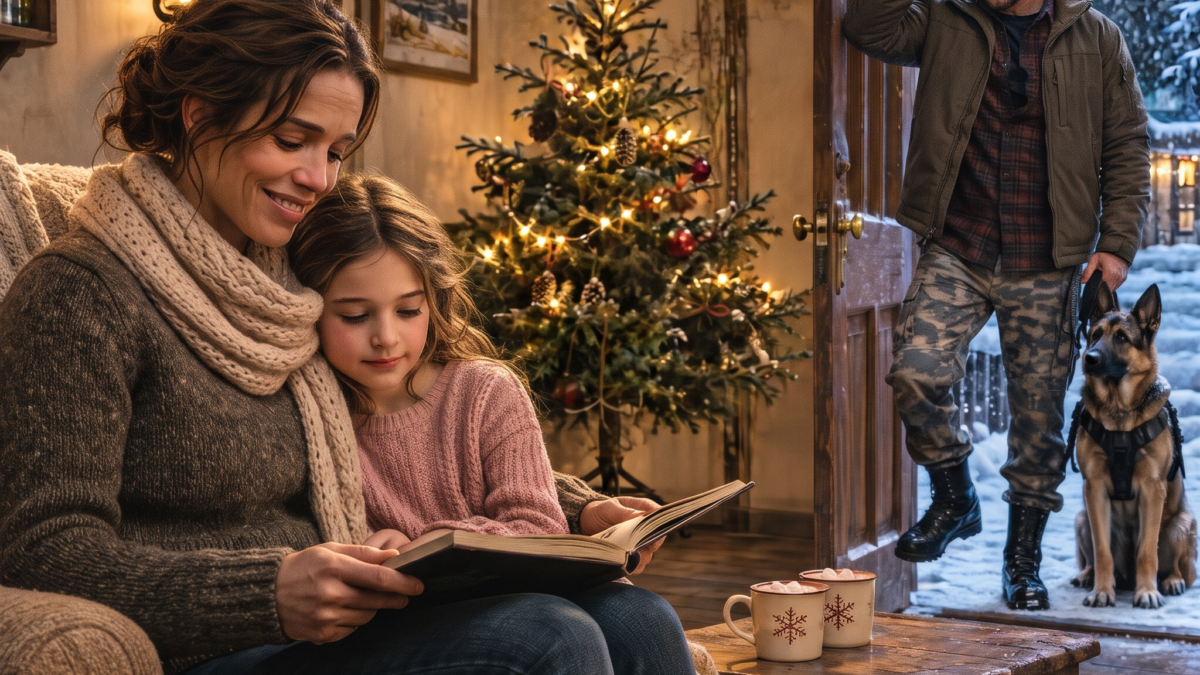
Outside, snow covered the streets of Kirkburg. Warm lights glowed behind the windows of the neighboring houses, and wreaths hung from nearly every front door. Families were gathering for Christmas Eve dinners. Somewhere down the street, children were singing carols.
Our apartment was quiet.
Beneath our little secondhand Christmas tree sat three cardboard presents Chloe had made herself. One contained a drawing for me. Another was supposedly for Santa. The third was a folded piece of paper with a picture of a house on it.
There were no real gifts.
Chloe looked at the tree, then at me.
“It’s okay, Mama,” she whispered. “I already have you.”
I closed my eyes.
Somehow, those words hurt more than any complaint could have.
Three years earlier, my older sister, Abigail, had died when her car slid off an icy road. She had been driving home after visiting a friend, and the weather had turned unexpectedly dangerous. By the time rescuers reached the vehicle, there was nothing they could do.
Her daughter, Chloe, had been three years old.
I still remembered the hospital corridor, the cold plastic chair, and the social worker asking me whether I could take the little girl home.
I hadn’t hesitated.
Abigail had been my sister, my best friend, and the person who had stood beside me through every difficult moment of my life. I had promised her, long before the accident, that I would never let Chloe feel alone.
I kept that promise.
I learned how to braid a little girl’s hair, how to recognize the difference between a hungry cry and a tired one, and how to answer questions about heaven without making promises I couldn’t understand myself.
I became her mother in every way that mattered.
The legal paperwork still described me as her aunt and guardian, but Chloe had called me Mama for three years.
And I had never corrected her.
Until recently, I had managed to keep our little world together through my job at Keller’s Bakery.
I arrived before sunrise, mixed dough, baked fresh bread, and prepared special Christmas cookies for families with food allergies. I was meticulous about ingredients. Every container was labeled, every recipe checked, and every surface cleaned before I began another batch.
I understood that a mistake could hurt someone.
Then, four days before Christmas, seven-year-old Oliver Dawson suffered a severe allergic reaction after eating one of my cookies.
His mother rushed him to the hospital.
The doctors saved him, but the incident changed everything.
Raymond Keller, the bakery owner, called me into his office the following morning.
“You’re telling me you checked the ingredients?” he asked.
“Every single one.”
“Then how did this happen?”
“I don’t know. I followed the recipe exactly.”
“That’s not good enough, Natalie.”
I stared at him.
“You know how careful I am.”
He shook his head.
“Oliver nearly died.”
“I know. I’ve been thinking about him all night.”
“Then perhaps you should have thought about him before you made those cookies.”
I looked at him in disbelief.
“Raymond, I didn’t use the wrong ingredients.”
He pushed a sheet of paper across the desk.
“You’re suspended without pay until the matter is resolved.”
I wanted to argue, but his mind was already made up.
Within hours, the story had spread through town.
People who had once greeted me warmly stopped making eye contact. A customer who used to order bread every Friday crossed the street rather than pass me outside the bakery. Neighbors began whispering whenever Chloe and I walked by.
I understood their fear.
If Chloe had nearly died because of something someone baked, I might have struggled to forgive that person, too.
But I knew what I had done.
I also knew what I had not done.
And on Christmas Eve, with only $112 left after rent and groceries, I was beginning to understand how expensive the truth could be.
Lucas Harrington lived three streets away.
He was a quiet man who rarely spoke to anyone beyond what courtesy required. I knew he had once served in the Navy, although I didn’t know exactly what he had done. He lived alone with a large brown dog named Bruno and spent most of his time in a workshop behind his house.
Every Saturday, he came into Keller’s Bakery to buy a loaf of rye bread.
He never asked for anything special.
But I always slipped an extra slice into his bag.
It wasn’t much. Just a little gesture for a man who looked as though he had become accustomed to eating alone.
He always thanked me.
“That’s generous of you, Natalie.”
“It’s only a slice.”
“Sometimes a slice is exactly what someone needs.”
I had stopped seeing him after my suspension.
I assumed he had simply started buying bread elsewhere.
I didn’t know he had noticed my absence.
That Christmas Eve, Lucas was walking Bruno home when he heard a familiar voice coming from my apartment.
He stopped outside the building.
Through the poorly closed entrance, he heard Chloe asking me whether we could sing Christmas songs.
I said yes.
We began singing “Silent Night,” sitting together beneath our little tree. Halfway through, my voice broke.
I tried to continue, but I couldn’t.
Chloe rested her head against my chest.
“It’s okay, Mama.”
Lucas stood in the snow for a long time.
Bruno sat beside him, looking toward the door.
“Come on, buddy,” Lucas whispered.
He continued home.
Later, he told me that the sound of our voices had reminded him of a Christmas many years earlier.
He had been nine years old, moving between foster homes. Every December, he hoped someone would choose him permanently.
Nobody did.
But one Christmas morning, he had found a small box of colored pencils outside the door of the place where he was staying.
There was no name attached.
No note.
Just a box of twenty-four colors.
He had kept those pencils for years.
They hadn’t changed his life, but they had made him feel remembered.
That night, Lucas decided Chloe deserved something like that.
In his workshop, he selected a piece of pear wood and began carving a traditional springerle cookie mold. He shaped it like a little house with one window, simple enough for a child to use and detailed enough to make each cookie look special.
He worked until two in the morning.
His hands stiffened, and Bruno fell asleep beneath the workbench.
When the carving was finished, Lucas wrapped it in a clean towel. He added a new box of colored pencils and a handwritten note.
Then he walked through the snow and left the gifts outside our door.
He didn’t knock.
He didn’t wait for thanks.
He simply went home.
Chloe found the package on Christmas morning.
She was carrying her cocoa when she noticed it.
“Mama!”
I hurried out of the kitchen.
“What is it?”
“There’s something here!”
She nearly dropped her cup as she pulled the package inside.
We opened it together.
The wooden mold was beautifully carved. Its tiny windows and roof were smooth beneath my fingers, and the little door had been shaped so carefully that I could almost imagine someone living inside.
The pencils were bright and new.
Chloe stared at them as though they were made of jewels.
“Mama, look! There’s so many colors!”
I unfolded the note.
For the little artist in apartment three. I hope these help make your Christmas brighter. For the grown-up, too: one difficult season does not define a person’s worth.
—Lucas
I sat down.
He had heard us singing.
He had known we didn’t have much.
And rather than make me feel pitied, he had given Chloe something that belonged to her imagination.
I looked at her.
“Would you like to make cookies?”
She nodded so enthusiastically that some of her cocoa spilled onto the table.
We mixed dough together. I checked every ingredient twice, using a fresh package from a sealed container I had kept at home.
Chloe rolled the dough while I guided the wooden mold.
“Press gently.”
She leaned over it.
The shape emerged.
A little house.
She lifted it carefully.
“It’s like our house!”
“It is.”
“Can we make six?”
“Why six?”
“So we can share them.”
I smiled.
“That’s a good idea.”
We baked the cookies and carried six of them to Lucas’s house.
He opened the door wearing an old sweater, his hair slightly untidy. Bruno appeared behind him, wagging his tail.
“Morning,” Lucas said.
“Merry Christmas.”
He glanced at the plate.
“You didn’t have to do that.”
“I know.”
Chloe held up one of the cookies.
“We made houses.”
Lucas examined it.
“That’s excellent work.”
“I made it.”
“I can tell. The roof is a little crooked.”
Chloe frowned.
“It’s supposed to be like that.”
He laughed.
“Then it’s perfect.”
Bruno approached and lowered his head toward her mitten.
Chloe offered it for him to sniff.
The dog promptly sat on her boots.
She burst into laughter.
I hadn’t heard her laugh like that in days.
Lucas watched us from the doorway.
For a few minutes, Christmas felt like Christmas again.
That afternoon, an email from Raymond Keller changed everything.
He demanded that I return every cardboard box and packaging container I had taken from the bakery before the upcoming inspection.
I frowned at the screen.
Raymond had always allowed me to take home spare cardboard for Chloe’s school projects. He knew she liked making stars, houses, and little paper animals.
Now he was suddenly demanding everything back.
I looked toward the Christmas tree.
A crooked cardboard star hung from one of the lower branches. Chloe had made it several weeks earlier, using a box from the bakery.
I reached up and turned it around.
A shipping label had been left on the back.
DALTON SURPLUS — LOT 4471.
Below it was a warning:
Processed in a facility that also handles tree nuts.
I stared at the words.
I had never ordered ingredients from Dalton Surplus.
Our bakery supplies came through established distributors. Every allergy-sensitive ingredient was separately packaged and delivered with certification.
I took the cardboard star down and examined it under the kitchen light.
The label was crooked, as though it had been attached after the original packaging was opened.
My fingers tightened around the cardboard.
Then I remembered the cookies.
The ingredients had come from a container clearly marked NF-2. I remembered checking the label before opening it. I remembered how carefully I had cleaned the mixing bowl.
The label on the star didn’t prove anything.
But Raymond’s sudden demand made me uneasy.
I barely slept that night.
At the kitchen table, I reviewed every step of my baking process from memory. The packages. The labels. The delivery dates. The special ingredients.
Someone had substituted something.
And if that had happened at the bakery, it meant Oliver’s reaction might not have been an accident.
The following morning, I asked Chloe for her cardboard star.
“Will I get it back, Mama?”
“I hope so, sweetheart. It might help me fix something important.”
She considered that.
Then she carefully removed it from the tree and handed it to me.
I photographed both sides and took it to the county health office.
Inspector Diane Fletcher met me in a small office lined with shelves of food-safety manuals.
She examined the label, then placed the star in a protective sleeve.
“Where did you get this?”
“From a box at Keller’s Bakery.”
“Are you certain?”
“Yes. Chloe used the box for a school project. I never thought much about the label until Raymond demanded that I return all the packaging.”
Diane studied it.
“This gives us a reason to investigate, but we need more evidence before we can make a conclusion.”
“I understand.”
She looked at me.
“Natalie, I know you’ve worked at Keller’s for several years. I’ve reviewed your training records. You have no previous safety violations.”
“Then why would he blame me?”
“Because a child was hospitalized, and someone needs to be held accountable. That doesn’t mean it was you.”
I nodded.
It was the first time in days someone had said those words.
Diane asked me to describe the Christmas cookie process in detail. I told her about the separate utensils, the sealed ingredients, and the containers marked for allergy-sensitive baking.
She wrote everything down.
“Do you know how many families received those cookies?”
“Six.”
“Do you have their names?”
I gave her the list I had kept for the pantry orders.
She checked it.
“Oliver Dawson’s family is one of them.”
“Yes.”
“Did they receive more than one tin?”
“Every family received two.”
Diane looked up.
“Then we need to account for the other tins as well.”
I felt my stomach tighten.
“Why?”
“Because if one batch was contaminated, we need to know whether anyone else might be at risk.”
I left the office with a copy of the case number.
It wasn’t enough to clear my name.
But it was a beginning.
Patricia Lawson managed the local food pantry.
She had worked there for almost twenty years and knew most of the families who collected food before Christmas.
I found her in the back office, sorting donation slips.
“Natalie.”
She looked up, then hesitated.
I noticed.
“Have you heard something?”
She sighed.
“Six families received the special cookies, correct?”
“Yes.”
“Oliver’s opened tin tested positive for tree nuts. His mother brought the remaining cookies to the hospital.”
I gripped the edge of the desk.
“Then we know there was contamination.”
“We know the tin was contaminated.”
“But I checked the ingredients.”
Patricia lowered her eyes.
“I’m sorry. I believed Raymond.”
I didn’t know what to say.
She continued.
“Some families haven’t opened their second tins. I’ve asked them to keep everything sealed until the health department gives us instructions.”
“That’s good.”
“Do you know what happened?”
“No. But I intend to find out.”
Patricia nodded.
“I hope you do.”
I left her office feeling more determined than before.
The cookies weren’t just a job.
They were part of a promise I had made to families who couldn’t always trust the food available to them. If someone had deliberately introduced an allergen into a supposedly safe product, the consequences could be far worse than a lost job.
I couldn’t walk away.
Diane inspected Keller’s Bakery the following day.
I wasn’t allowed inside during the inspection, but she called me afterward.
“Everything is properly labeled now,” she said.
“Now?”
“All containers are sealed, all ingredient records are present, and we found no trace of the Dalton Surplus shipment.”
I closed my eyes.
“Someone cleaned up.”
“We can’t conclude that yet.”
“But it’s what happened.”
Diane paused.
“Do you have any other evidence?”
I told her about the cardboard star.
“Keep it safe. Don’t alter it. We’ll continue investigating.”
I thanked her and hung up.
That evening, I went to the laundromat to wash Chloe’s winter clothes. Eleanor Fisher, my elderly neighbor, had offered to watch Chloe for an hour.
A man approached while I was folding sweaters.
He wore an expensive wool coat and polished leather shoes. His expression was friendly, but his eyes moved quickly around the room.
“You’re Natalie Brooks?”
I looked at him.
“Yes.”
“The baker from Keller’s.”
“Who are you?”
“I know someone hiring in Jefferson City. A good position. Better pay than your old job.”
“Thank you, but I’m staying here.”
He smiled.
“Your daughter would like the schools there.”
I froze.
I had never mentioned Chloe.
The man’s expression didn’t change.
“New town, fresh start. Sometimes that’s exactly what a family needs.”
He buttoned his coat and walked outside.
Through the window, I watched him climb into a pickup truck.
The company name on its door had been scraped away, but the outline was still visible.
Dalton Surplus.
I stood motionless.
The man knew who I was.
He knew I had a daughter.
And he knew enough about my situation to suggest that I leave town.
The following morning, my phone rang.
“Ms. Brooks? This is Megan Wallace from Child Services.”
I gripped the telephone.
“Yes?”
“We’ve received an anonymous report concerning your household. I’d like to arrange a visit.”
“What kind of report?”
“Concerns about your financial stability and Chloe’s living conditions.”
I looked toward my daughter’s bedroom.
Someone was no longer trying merely to frighten me.
They were threatening my family.
Megan arrived two days before New Year’s Eve.
She was professional, polite, and careful with her questions.
She checked the kitchen, the refrigerator, Chloe’s bedroom, and the bathroom. She asked about my employment, the rent, my relationship with Lucas, and the arrangements I had made for childcare.
I answered honestly.
“Are you currently employed?” she asked.
“I was suspended from Keller’s Bakery. I’m looking for work, and I’ve started baking at home for a few neighbors.”
“Is that income reliable?”
“Not yet.”
“How are you meeting your expenses?”
“I have savings, some temporary assistance, and help from my neighbor.”
She looked toward the living room.
“Who is the man named Lucas Harrington?”
“A neighbor.”
“How often does he visit?”
“He has helped me with a few things.”
“Has he spent time alone with Chloe?”
“No.”
“Does he stay overnight?”
“No.”
Megan wrote something in her notebook.
I knew she was doing her job. I also knew the anonymous report could make every answer look suspicious.
“Chloe seems well cared for,” she said at last. “Your home is clean, and she appears comfortable with you. But unemployment and the recent allegations will have to be considered during the guardianship review.”
I nodded.
“Understood.”
After she left, I sat beside Abigail’s photograph.
For three years, I had raised Chloe with everything I had. I had been there for every fever, school meeting, birthday, and nightmare.
Yet legally, I was still only her aunt and guardian.
One anonymous report could force me to prove that I deserved to keep the child I had been raising as my own.
I looked at the photograph.
“Abigail,” I whispered, “I’m trying.”
The following afternoon, Mr. Crawford slipped a notice beneath my door.
My lease would not be renewed after January.
I read it twice.
The landlord had never complained about my payments. I had always paid on time, even when it meant going without something myself.
I remembered seeing him with Raymond at several community gatherings.
I folded the notice and placed it on the table.
Chloe came out of her bedroom.
“Mama, are we moving?”
I forced a smile.
“Not right now, sweetheart.”
“Is it because we don’t have enough presents?”
“No.”
“Did I do something wrong?”
I knelt.
“Never. Nothing you did could ever make me love you less.”
She hugged me.
I held her longer than usual.
Later that evening, we went to the grocery store for milk.
Amanda Dawson was standing near the checkout counter.
She recognized me immediately.
“You shouldn’t be allowed anywhere near children,” she said loudly.
The people nearby turned.
I felt Chloe’s hand tighten around mine.
Amanda’s face was pale with anger.
“My son nearly died.”
“I know.”
“Do you?”
“Yes.”
“Then why are you still walking around as if nothing happened?”
I lowered my eyes.
“I didn’t do this deliberately.”
“You expect me to believe that?”
“No. I expect the investigation to establish what happened.”
Amanda shook her head.
“People like you shouldn’t be working with food.”
I paid for the milk.
Then I took Chloe’s hand and walked away.
She didn’t speak until we were outside.
“Mama, Oliver’s mom is angry.”
“I know.”
“Does she think you’re bad?”
I looked at her.
“Sometimes people become angry because they’re frightened. That doesn’t mean they’re always right.”
Chloe thought about that.
“Are you frightened?”
I smiled gently.
“Sometimes.”
She hugged my arm.
“Then I’ll be brave with you.”
I kissed her forehead.
And I decided that whatever happened next, I would not let anyone teach my daughter that kindness was something to be ashamed of.
That evening, I visited Lucas.
He was in his workshop, sanding a wooden bowl. Bruno lay beside the workbench.
I told him about the Child Services report.
He put down the sandpaper.
“Someone is targeting you.”
“Yes.”
“Do you know who?”
“I suspect Raymond.”
Lucas looked at the bowl.
“I can speak to him.”
“Please don’t.”
He turned.
“Natalie, he’s lying about you. He’s putting Chloe at risk.”
“And if you threaten him, he’ll tell Megan that you’re an aggressive man interfering with my family. I could lose Chloe.”
Lucas was silent.
Then he nodded.
“You’re right. I’m sorry.”
I hadn’t expected that response.
Most people tried to convince me that they knew what was best. Lucas listened.
He leaned back against the workbench.
“I don’t want my presence to make your life harder.”
“I know.”
He looked toward Bruno.
“I can keep my distance if that’s what you need.”
I shook my head.
“I don’t want you to disappear. I just need us to be careful.”
He nodded.
“Then we’ll be careful.”
I looked around the workshop.
There were wooden bowls, small toys, carved ornaments, and several unfinished cookie molds.
“You make all these yourself?”
“Most of them.”
“They’re beautiful.”
“Thank you.”
I picked up a little wooden house.
“How much do you sell this for?”
“Twenty dollars.”
I looked at him.
“That’s too little.”
He smiled.
“Is it?”
“How long does it take you to make one?”
“A few hours.”
“Then you’re charging less than the materials and your time are worth.”
He shrugged.
“I don’t do it for the money.”
“That doesn’t mean your work isn’t valuable.”
He studied me.
“You’re right.”
I put the little house down.
“Good work deserves a fair price, Lucas.”
He smiled.
“Maybe I should listen to you more often.”
Lucas had been a Navy SEAL.
I learned that properly one evening when Chloe was sleeping and he was showing me a photograph from his military years.
He stood beside three other men in uniform. He looked younger, thinner, and much less comfortable in front of the camera.
I pointed at the photograph.
“That’s you?”
He nodded.
“Hard to believe, isn’t it?”
“What happened?”
He was quiet for a moment.
“I left the service years ago. I still have friends from those days, but I don’t talk about much of it.”
I didn’t press.
Instead, I noticed an old canvas bag beneath his workbench.
It looked as though it had been packed and unpacked many times.
“Do you travel a lot?”
He followed my eyes.
“No. I just never got used to unpacking.”
He sat down.
“Four foster homes before I turned fourteen. I learned to keep everything in one bag. It hurt less when someone told me I had to leave.”
I looked at him.
“That must have been hard.”
“It was.”
He picked up the small wooden house I’d examined earlier.
“I remember one Christmas. I was nine. Nobody had adopted me. Nobody was coming to get me. I woke up and found a box of colored pencils outside the door.”
“Who left them?”
“I never found out.”
He smiled.
“I still have them.”
I looked at the gifts he had given Chloe.
“That’s why you left those at my door.”
He nodded.
“I heard you singing. I knew you didn’t have much. I didn’t want to embarrass you, so I left them without knocking.”
I felt my eyes sting.
“Thank you.”
He shook his head.
“You don’t have to thank me.”
“I know. But I want to.”
I sat beside him.
After a moment, I told him about Abigail.
I described the accident, the hospital, and the day I brought Chloe home. I told him how I had promised to raise her, and how terrified I was that a judge might decide I wasn’t good enough.
Lucas listened without interruption.
When I finished, he looked directly at me.
“Chloe already knows who her mother is.”
I lowered my head.
“Legally, she isn’t mine.”
“She knows who makes her breakfast. Who sits beside her when she’s sick. Who listens when she’s afraid.”
He paused.
“Children know who stays.”
I looked at him.
He reached toward my hand, then stopped.
I closed the distance myself.
Our fingers touched.
For a few seconds, neither of us spoke.
Then Bruno stood, bumped against the workbench, and knocked a broom over.
The handle hit the floor with a loud bang.
We both jumped.
Lucas looked at the dog.
“Good work, buddy.”
I laughed.
It was the first time in weeks that I had forgotten to be afraid of something.
Raymond called the following morning.
“Natalie, I think we should put this whole thing behind us.”
I looked at the phone.
“What’s that supposed to mean?”
“I’ve been thinking about your situation. You’re a good baker. You’ve been here a long time. Perhaps we can reach an agreement.”
“What kind of agreement?”
“You sign a statement acknowledging that you may have used the wrong ingredients. I pay your January wages, give you a good reference, and speak to Child Services.”
My stomach tightened.
I stared at the kitchen table.
The rent notice was beside my coffee cup.
A bill lay beneath it.
Chloe’s colored pencils were scattered near the window.
“Why would you offer to speak to Child Services?” I asked.
There was a brief silence.
“Because I want to help.”
“You know about the review?”
“Everyone knows.”
I knew he was lying.
I had told almost nobody.
“Think about Chloe,” Raymond said.
The call ended.
I sat motionless.
One signature could pay the rent.
It could restore my reference, give me a chance to find another job, and perhaps convince Megan that I was financially stable enough to continue caring for Chloe.
But it would also mean accepting responsibility for something I knew I hadn’t done.
I picked up the statement he had emailed me.
It read:
I acknowledge that an error in my handling of ingredients may have contributed to the contamination of the Christmas cookies supplied by Keller’s Bakery.
I read it again.
Then I printed it.
The next morning, I took the agreement to Eleanor Fisher’s apartment.
Eleanor was a retired schoolteacher who had lived in the building longer than anyone else. She had become a kind of grandmother to Chloe, helping with homework and occasionally bringing over homemade soup.
She adjusted her glasses and read the statement.
When she finished, she looked up.
“Did you use the wrong ingredients?”
“No.”
“Did you knowingly ignore a food-safety rule?”
“No.”
“Then why are you considering signing this?”
I looked down.
“Because I need the money. Because I could lose Chloe. Because I’m tired.”
Eleanor folded the paper.
“My dear, being tired doesn’t make a lie true.”
I sat quietly.
She handed the agreement back.
“Don’t sign away your truth just because someone offers you an easier tomorrow.”
I folded the paper and put it in my bag.
That afternoon, I refused Raymond’s offer in writing.
I also contacted Diane Fletcher and told her about the call.
“How does he know about the Child Services report?” I asked.
Diane was silent for a moment.
“That’s concerning.”
“I never told him.”
“Keep the email and the call record. Don’t delete anything.”
I thanked her.
Before hanging up, she said, “Natalie, I want you to know we’re taking this seriously.”
I looked toward Chloe.
“Thank you.”
Two days later, Diane called again.
“Dalton Surplus has a history of purchasing damaged or water-exposed ingredients from facilities that also process allergens.”
My stomach tightened.
“What does that mean?”
“We’re checking whether any of those products reached Keller’s Bakery.”
“Did they?”
“Not through the normal supplier records.”
I looked at the cardboard star still sitting inside its protective sleeve on my table.
“Then someone brought them in separately.”
“That’s possible.”
“Can you inspect the other families’ tins?”
“We’re contacting them, but there is a problem. Some of the tins have already been collected.”
“Collected by whom?”
“We’re investigating.”
I thought about the man at the laundromat.
The pickup truck.
The scraped lettering.
The expensive coat.
“Someone is taking them.”
Diane paused.
“Do you know who?”
“I think I do.”
She warned me not to confront anyone.
I promised I wouldn’t.
But I knew this was no longer just about clearing my name.
Other families might still have unopened tins at home.
Another child could be in danger.
I couldn’t walk away knowing that.
I went to Lucas’s workshop that evening.
He was working on a new set of cookie molds.
I sat beside the workbench and told him about the collected tins.
He listened.
Then he put down his tools.
“You’re planning to visit the families.”
“Yes.”
“Then you shouldn’t go alone.”
I looked at him.
“I don’t want anyone saying you pressured them.”
“Then I’ll stay in the truck.”
I hesitated.
He added, “You can speak. I’ll only be there if you need help.”
I nodded.
“All right.”
He called Eleanor and asked whether she could watch Chloe for a few hours.
She agreed.
Before we left, I noticed a photograph lying on the shelf.
Lucas stood beside a group of Navy personnel. His face was serious, and a small scar ran along his jaw.
“That’s from a training accident?” I asked.
He touched the scar.
“Something like that.”
I looked at him.
“Do you ever miss it?”
He was quiet.
“Some parts.”
“Which parts?”
“Knowing exactly what my job was. Being part of a team. Having people who trusted me to do mine.”
He picked up his jacket.
“I don’t miss the rest.”
We left.
The first family lived outside town.
A woman named Mrs. Barlow opened the door, recognized me, and immediately looked uncomfortable.
“I thought you weren’t working anymore.”
“I’m not.”
“Then why are you here?”
I explained the investigation.
She let us inside.
Her tin was gone.
“Someone came yesterday,” she said. “He said he worked for the bakery’s insurance company and needed to collect the cookies.”
“Did you see identification?”
“No. He showed me a business card.”
I asked what he looked like.
“Expensive coat. Dark hair. He drove a truck.”
My stomach tightened.
The second family had received the same visit.
The third had been told the cookies were being recalled.
By the time we reached the fourth address, daylight was fading.
Lucas waited in the truck while I spoke to an elderly woman who had not opened her tin.
She was uncertain whether she should hand it over.
I showed her Diane’s contact information.
“Please call the health department directly. Don’t give it to anyone who hasn’t been identified.”
She nodded.
I took a photograph of the label and returned to the truck.
Lucas handed me a thermos.
“Coffee.”
“Thank you.”
“You’re cold.”
I took a sip.
“Black, three sugars?”
He grinned.
“One of your old customers taught me.”
I laughed.
We crossed another address off Patricia’s list.
Only the Dawson family remained.
Patricia confirmed that Amanda still had her second tin.
She was keeping it in the kitchen as evidence against me.
“Raymond called her this morning,” Patricia said. “He told her someone from the bakery’s insurance company might visit.”
I gripped the phone.
“Do you know when?”
“Tomorrow, I think.”
I looked toward Lucas.
He was standing beside the truck, studying the street.
We needed to get there first.
The Dawson farmhouse stood near a frozen stretch of water behind the barn.
Snow covered the fields. A thin line of smoke rose from the chimney.
As we approached, I saw the pickup truck.
It was the same one I had seen outside the laundromat.
The name had been scraped from the door, but the outline remained.
“He’s already here,” I whispered.
Lucas glanced toward the house.
“Stay here for a second.”
“No. I’ll speak to Amanda.”
“I’ll remain nearby.”
I nodded.
He didn’t argue.
I knocked.
Amanda opened the door.
Her expression hardened immediately.
“What do you want?”
“I need to speak with you.”
“About what?”
“The second tin.”
She glanced over her shoulder.
A man sat at the kitchen table. He wore the same expensive coat.
On the table was a stack of money.
And beside it sat the unopened cookie tin.
I stepped into the doorway.
“Amanda, please don’t give it to him.”
She looked at the money.
Then at me.
“You’ve caused enough trouble for my family.”
“I know you’re angry. I understand why.”
“Oliver nearly died.”
“I know.”
“Then leave us alone.”
I looked at the man.
“Who are you?”
He smiled.
“Insurance representative.”
“What’s your name?”
“That’s not important.”
“It is to me.”
He opened a briefcase.
“Two thousand dollars. The insurance company wants to compensate you for your trouble. All you need to do is hand over the tin.”
I stared at the money.
“Why would an insurance company pay cash for evidence?”
Amanda’s expression changed.
The man leaned toward her.
“Mrs. Dawson, we don’t want this becoming difficult.”
She slowly pushed the money away.
“I think I’d rather speak to my lawyer.”
The man’s friendly expression disappeared.
He stood and grabbed the tin.
I reached for it.
“Don’t touch that.”
He shoved me aside.
The tin slipped from his hand.
Oliver appeared in the doorway.
He had been listening.
He grabbed the container and ran toward the back door.
“Oliver!” Amanda shouted.
The man turned.
“Stop him!”
Oliver raced outside, clutching the tin against his chest.
The man followed.
I rushed after them.
Behind the barn, the frozen water stretched across the field.
Oliver ran toward the neighboring property.
A sharp cracking sound broke the afternoon silence.
Then the ice gave way.
Oliver disappeared beneath the surface.
Amanda screamed.
“Oliver!”
The man stopped.
He looked at the water.
Then he looked toward his truck.
And he ran.
I saw Lucas move before I understood what was happening.
He had already crossed the yard.
“Lucas!”
He handed me Bruno’s leash.
“Keep him back!”
The dog barked furiously.
Lucas dropped flat onto the ice and moved forward carefully.
Oliver’s small hands appeared above the surface.
He was struggling.
“I can’t feel my legs!” he cried.
“Look at me, Oliver!” Lucas shouted. “I’m right here.”
The boy slipped beneath the water again.
Amanda fell to her knees.
“Please! Someone help my baby!”
Lucas moved closer.
The ice cracked beneath him.
He stopped, adjusted his position, and reached forward.
I held Bruno back with both hands.
The dog strained against the leash.
“Easy, Bruno!”
Lucas caught Oliver’s coat.
For a second, neither of them moved.
Then Lucas pulled.
The boy came free.
Lucas dragged him across the ice and onto the bank, where he immediately wrapped his own jacket around him.
Oliver was shivering violently.
Amanda dropped beside them.
“My baby. Oh, my God.”
Lucas checked that Oliver was breathing and responsive.
“Call 911!”
I was already reaching for my phone.
The man had reached his truck.
I raised my camera and photographed the license plate.
He started the engine.
For a moment, our eyes met through the windshield.
Then he drove away.
I turned back toward Oliver.
He was clutching the cookie tin.
His lips were pale, and he was trembling beneath Lucas’s jacket.
“I didn’t let him take it,” he whispered.
I knelt beside him.
“You can let go now, sweetheart.”
He looked at me.
“I kept it safe.”
I brushed the wet hair from his forehead.
“You did a very brave thing. But you never have to put yourself in danger to protect a box of cookies.”
He slowly released it.
Amanda began crying.
Lucas looked up at me.
“He’s breathing. We need the ambulance.”
I nodded.
The sirens arrived a few minutes later.
Oliver spent the night in hospital.
The doctors diagnosed mild hypothermia, but they expected him to recover fully. Amanda stayed beside his bed while the nurses warmed him and monitored his condition.
Lucas had changed into a dry shirt borrowed from the farmhouse.
I sat in the corridor.
He came over and lowered himself into the chair beside me.
“How are you?”
I looked at him.
“How am I?”
“You’ve been sitting here for three hours.”
I glanced at his hands.
They were red from the cold, and one knuckle was bleeding.
“You’re hurt.”
“It’s nothing.”
“Lucas.”
He smiled faintly.
“All right. I’ll have it checked.”
I shook my head.
“You could have fallen through.”
“So could Oliver.”
I looked away.
For a moment, I couldn’t speak.
Then I reached for his hand.
“Thank you.”
He squeezed my fingers.
“He’s going to be all right.”
I nodded.
“Thank goodness.”
Amanda emerged from Oliver’s room.
She looked exhausted.
When she saw us, she stopped.
“Natalie.”
I stood.
“How is he?”
“Stable. The doctors say he’s going to be fine.”
I exhaled.
She looked toward the floor.
“I owe you an apology.”
“You don’t have to do that now.”
“I do.”
She took a breath.
“I blamed you because I needed someone to blame. I didn’t listen when you said you had checked the ingredients. I let Raymond convince me you were careless.”
She began to cry.
“I nearly handed over the evidence.”
I looked at her.
“You’re frightened for your son. I understand.”
She shook her head.
“That doesn’t excuse what I did.”
“No. But it doesn’t mean we can’t put it right.”
She nodded.
“Thank you.”
The license plate led the investigators to a second warehouse near the river.
It wasn’t the facility Diane had searched earlier.
This one was rented through a company connected to Dalton Surplus.
Officers found damaged ingredient shipments, collected cookie tins, and invoices addressed to Keller’s Bakery.
The man in the pickup was identified as Curtis Dalton.
Phone records showed that Raymond had provided him with the addresses of all six families who received the Christmas cookies.
They had planned to collect the remaining tins before the health department could examine them.
There was more.
The anonymous report to Child Services had originated from Raymond’s phone.
The landlord’s communication with Raymond was also under review.
The pieces were finally coming together.
Helen Bauer had worked at Keller’s Bakery for thirty years.
She had trained me when I first started and taught me to treat every recipe as a responsibility rather than a list of instructions.
When Diane questioned her, Helen initially refused to speak.
Then she called me.
“Natalie, there’s something you should know.”
I held the phone tightly.
“What is it?”
“I saw Raymond.”
“When?”
“After closing. He was pouring ingredients from unmarked bags into the containers used for allergy-sensitive baking.”
I closed my eyes.
“Are you sure?”
“Yes.”
“Did you know they contained tree nuts?”
“I didn’t know exactly what was in them. But I saw the Dalton labels. I asked him about it.”
“What did he say?”
“He told me not to worry. He said the bags were temporary stock and that everything would be tested.”
“And you believed him?”
Helen was silent.
“I wanted to.”
I understood.
“Why didn’t you tell Diane?”
“I was afraid I’d lose my job. Raymond has known my family for years. I thought I could ask again when things settled down.”
I looked at the wall.
“An innocent child went to the hospital.”
“I know. I’ve thought about it every day.”
“Then tell Diane everything.”
Helen took a breath.
“I will.”
The following day, she gave a formal statement.
The investigation moved quickly after that.
Diane ordered Keller’s Bakery closed pending a full safety review. Raymond was charged with mislabeling food, endangering customers, and filing a false report. Curtis faced charges related to selling unsafe ingredients and attempting to destroy evidence.
His records also helped authorities trace other shipments.
Several bakeries across three counties were contacted.
Families who had received products from the same supplier were warned.
For the first time since Oliver’s reaction, I felt as though someone was listening.
The food pantry held a community gathering on Saturday.
Patricia arranged it in the church basement, where folding tables were set with coffee, sandwiches, and a few homemade cakes.
Diane attended to explain the investigation.
Amanda stood beside Oliver, who was feeling much better.
When it was her turn to speak, she looked around the room.
“I owe Natalie an apology.”
The room became quiet.
“I blamed her for what happened to my son. I spoke about her in public and made people believe she was careless. I didn’t give her a chance to explain.”
She looked at me.
“I was wrong.”
I stepped forward.
“Amanda, you were terrified.”
“I was.”
“Then perhaps we can start again.”
She nodded.
Oliver approached.
“Miss Natalie?”
I smiled.
“Hello, sweetheart.”
He looked at the floor.
“I’m sorry I ran outside with the tin.”
I knelt.
“You don’t need to apologize for wanting to help.”
“But you told me not to put myself in danger.”
“That’s right.”
He nodded seriously.
“I won’t do it again.”
I laughed softly.
“Good.”
He looked toward Lucas.
“Thank you for saving me.”
Lucas crouched beside him.
“You did the hard part by holding on. Next time, though, let the grown-ups handle the running.”
Oliver smiled.
“I will.”
The gathering continued.
People who had avoided me approached to apologize. Some were embarrassed. Others admitted they had believed the rumors because Raymond had been a familiar and respected businessman.
I didn’t demand explanations.
I was simply relieved that the story had changed.
On Monday, Mr. Crawford came to my apartment.
He had the non-renewal notice in his hand.
“I’d like to withdraw this,” he said.
I looked at him.
“Why?”
He cleared his throat.
“I shouldn’t have made a decision based on what Raymond told me. You have always paid your rent, and there have been no complaints about your apartment.”
I nodded.
“All right.”
He handed me a new lease.
“Your home is yours, Natalie.”
I signed it.
When he left, I stood in the kitchen for a long time.
Our home was safe.
Chloe was safe.
The investigation was moving forward.
And I could finally start thinking about tomorrow without imagining another disaster waiting around the corner.
Then my phone rang.
It was Megan Wallace.
“Natalie, I wanted to update you.”
I sat down.
“All right.”
“The review is officially closed. We’ve found no concerns regarding your care of Chloe. Your financial situation is being addressed, and there is no evidence that she is at risk.”
I covered my mouth.
“Thank you.”
“You’ve been very cooperative throughout the process.”
I felt tears gather.
“Can I continue the guardianship?”
“Yes. We’ll send the formal notice shortly.”
I looked toward Chloe’s room.
She was singing softly to herself.
“Thank you, Megan.”
After I hung up, I went to her bedroom.
She was drawing a little house with colored pencils.
“Guess what, sweetheart?”
She looked up.
“What?”
“We get to stay here.”
She smiled.
“Really?”
“Really.”
She ran into my arms.
I held her close.
For months, I had been afraid that somebody could take her away.
Now I could breathe.
That evening, I went to Lucas’s workshop.
He was sitting at his workbench, polishing a small wooden bowl. Bruno lay on the floor.
I told him the review was closed.
He smiled.
“That’s wonderful.”
“And Mr. Crawford withdrew the notice.”
“Good.”
“Raymond’s been charged.”
“I heard.”
I looked around.
The workshop seemed warmer than before. A small lamp illuminated the shelves, and a framed photograph stood near the window.
It showed Lucas when he was nine, holding a box of colored pencils.
“Is that the original?” I asked.
He nodded.
“One of the only things I kept from those years.”
I sat beside him.
“Do you ever wonder who left them?”
“All the time.”
“Perhaps it was Eleanor.”
He looked up.
“Why?”
I smiled.
“I have a feeling.”
He considered that.
Then he put down the cloth.
“Natalie, there’s something I’ve been meaning to ask.”
I looked at him.
“What?”
“Would you like to have dinner with me sometime? Not because you need help. Not because I need an excuse to bring you something. Just dinner.”
I smiled.
“Yes.”
He looked almost surprised.
“Yes?”
“Yes, Lucas.”
He laughed quietly.
“Good.”
I leaned closer.
“One condition.”
“What’s that?”
“You have to stop undercharging for your woodwork.”
He groaned.
“You’re never going to let that go, are you?”
“No.”
We laughed.
As I stood to leave, he reached toward my hand.
I took it.
He kissed my knuckles gently.
It was a small gesture.
But it stayed with me all the way home.
February brought another beginning.
With the help of a small business support program, I registered a home bakery. I started with bread, simple cakes, and a limited selection of allergy-conscious cookies.
I kept the recipes modest.
Every ingredient came from certified suppliers. I maintained separate utensils, sealed storage, and detailed records. Diane reviewed my safety procedures before I began taking larger orders.
I wanted people to trust my work.
Not because I was asking them to forgive what had happened.
Because I was determined to do things properly.
Lucas built shelves for the kitchen and a rack for cooling bread.
He refused to let me pay him.
I insisted on buying the materials.
Then I started helping him price his wooden molds.
The first Saturday he took them to the market, he sold every one before noon.
He came home grinning.
“Apparently people like little houses.”
“They always have.”
He looked at me.
“You were right.”
I smiled.
“Remember that.”
Our first order from Amanda came in March.
She wanted a birthday cake for Oliver.
He had chosen a train.
I spent two evenings making it, carefully decorating each carriage with bright colors. The cake was nut-free, and I included a complete ingredient list with the packaging.
When Amanda came to collect it, she brought a small box.
“For you.”
I opened it.
Inside was a little wooden train.
Lucas had made it.
I looked at him.
He shrugged.
“Oliver mentioned he liked trains.”
Amanda smiled.
“I thought he’d like to have one of his own.”
I felt my eyes sting.
“Thank you.”
She looked around the kitchen.
“Your bakery is doing well.”
“It’s getting there.”
“Patricia says you’re helping at the pantry again.”
“I am.”
She nodded.
“I’d like to volunteer, if they’ll have me.”
I smiled.
“I think Patricia would be happy.”
Amanda took the cake.
“Take care, Natalie.”
“You too.”
After she left, I looked at Lucas.
“You made that train for Oliver?”
“Yes.”
“How long did it take?”
“About two hours.”
I shook my head.
“You’re becoming a very generous businessman.”
He laughed.
“Don’t tell anyone. It will ruin my reputation.”
In May, Chloe and I went to court.
The adoption hearing was held in a small room with a wooden table and a flag in the corner.
Lucas sat behind us.
He had worn a clean suit and polished shoes. Bruno was waiting outside with Eleanor.
The judge looked over the paperwork.
“Natalie Brooks, do you understand that adoption is a permanent legal commitment?”
“Yes.”
“Do you understand that it carries all the rights and responsibilities of a parent?”
“Yes.”
The judge turned toward Chloe.
“Do you know what adoption means?”
Chloe nodded.
“It means Mama is my mama even on paper.”
The judge smiled.
“That’s a good answer.”
I felt Lucas shift behind me.
The judge reviewed the final documents, then signed the order.
“Your petition is approved.”
I looked at Chloe.
She was smiling.
I began to cry.
She hugged me.
“Now you’re really my mom.”
I held her tightly.
“I always was.”
Lucas wiped his eyes.
I looked back at him.
He smiled.
And I understood something.
He had once been a little boy waiting for someone to choose him. Now he was watching another child receive the family he had always wanted.
He didn’t need to be her father to be part of her life.
He only needed to stay.
Eleanor hosted a small celebration dinner that evening.
She prepared roast chicken, potatoes, and a large chocolate cake. Chloe brought out her drawings, and Lucas helped set the table.
After dinner, Eleanor noticed the colored pencils.
She picked up the box.
“I’ve bought these every Christmas for twenty years.”
Lucas turned.
“What?”
Eleanor smiled.
“I used to leave them outside the Whitmore foster home. There was a little boy there who loved drawing. I never put my name on them because I didn’t want him to feel he owed me anything.”
Lucas stared at her.
“That was you?”
Eleanor looked at him carefully.
“Was it you?”
He nodded.
“I was nine.”
Her eyes filled.
“Oh, my dear.”
Lucas reached for the box.
“Those pencils were the only Christmas present I received that year.”
Eleanor covered her mouth.
“I didn’t know.”
He shook his head.
“You didn’t need to.”
Then he stood and wrapped his arms around her.
Eleanor held him tightly.
I watched from across the room.
A kindness offered twenty years earlier had found its way into our lives in the most unexpected way.
Chloe looked up from her drawing.
“Grandma Eleanor, did you know Uncle Lucas when he was little?”
Eleanor laughed through her tears.
“Not properly, sweetheart. But I think I knew him a little.”
Lucas sat down.
Chloe picked up a yellow pencil.
“Then we should use these for something important.”
“What?” I asked.
She smiled.
“Our Christmas cards.”
Summer came, and then autumn.
The bakery grew steadily. I began supplying the food pantry regularly and accepted special orders for school events. I never forgot how easily trust could be damaged, so I kept every record and checked every delivery.
Lucas’s woodworking business also expanded.
He began selling his molds online and at local craft fairs. His little houses became popular, especially the ones with tiny windows and detailed doors.
Sometimes he worked late.
Sometimes I helped with packaging.
Sometimes Chloe sat beside him and drew patterns for new designs.
Bruno slept beneath the workbench.
Life became ordinary.
And ordinary, I learned, could be a wonderful thing.
On December fifth, Kirkburg prepared for Saint Nicholas Eve.
The town placed lights along the main street, and children decorated their shoes to leave beside their doors.
Chloe insisted that we follow the tradition.
“Mama, put your shoes there.”
I laughed.
“All right.”
She placed hers beside the entrance.
Then she looked at Lucas.
“Yours too.”
He raised an eyebrow.
“Mine?”
“Everyone gets something.”
Bruno wagged his tail.
“And Bruno?”
Chloe placed his water bowl beside the line of shoes.
“He doesn’t wear shoes.”
“That’s true.”
Lucas looked at me.
“She’s very organized.”
“She gets it from you.”
“That’s worrying.”
He borrowed an old pair of rubber boots from Eleanor so he could leave his own shoes beside ours.
The following morning, Chloe woke before sunrise.
“Mama!”
I hurried into the hallway.
She was kneeling beside the shoes, holding a small wrapped package.
“Look!”
Inside was another cookie mold carved from pear wood.
It showed the same little house Lucas had made the previous Christmas.
But this one was more detailed.
Every window seemed to glow. A tiny chimney rose from the roof, and the door had been carved with a delicate pattern.
In the center lay a ring.
I covered my mouth.
Behind me, the door opened.
Lucas stepped inside.
He was holding a small box of colored pencils.
“Good morning.”
I stared at him.
“Lucas…”
He smiled.
“Chloe helped me choose the shoe.”
“The left one!” Chloe announced proudly.
Lucas laughed.
Then he stepped closer.
“Natalie, there’s something I’ve been wanting to ask you for a while.”
I looked at him.
He took a breath.
“When I first left those gifts outside your door, I thought I was helping a little girl have a better Christmas.”
He glanced at Chloe.
“I didn’t expect to find a family.”
Then he looked into my eyes.
“I don’t want to spend another Christmas wondering where I belong. I want to be here. With you. With Chloe. With all the ordinary, wonderful days that come after.”
He lowered himself onto one knee.
“Natalie Brooks, will you marry me?”
I began to cry.
“Yes.”
He smiled.
“Yes?”
I laughed through my tears.
“Yes, Lucas.”
He placed the ring on my finger.
Chloe clapped excitedly.
“Now we’re really a family!”
I knelt and hugged her.
“We always were, sweetheart.”
Lucas wrapped his arms around both of us.
Bruno barked, then pushed his head between our shoulders as though he had been waiting for his turn.
We all laughed.
Later that morning, Chloe pressed the new wooden mold into cookie dough.
She placed the little houses on a baking tray and watched them rise in the oven.
“These are for Santa,” she announced.
I smiled.
“All of them?”
“Yes.”
Lucas looked at the tray.
“That’s a lot of cookies.”
“Santa has a lot of houses to visit.”
I laughed.
She placed the finished cookies beside the window, then added a small glass of milk.
“He’s definitely coming this year.”
I looked at her.
“Why are you so sure?”
She smiled.
“Because we have a family now.”
I knelt beside her.
“Yes, we do.”
Outside, snow began falling over Kirkburg. Lights appeared in the neighboring windows, and the town was preparing for another Christmas.
A year earlier, I had sat beneath a secondhand tree, trying to hide how frightened I was. I had believed that losing my job meant losing my future. I had thought one terrible accusation could take away everything I had built.
But I had learned that the people who truly mattered were not always the ones who stood beside us when life was easy.
Sometimes they were the ones who arrived quietly with a box of colored pencils.
Sometimes they were the ones who listened instead of taking control.
Sometimes they were the ones who stayed when we had almost nothing to offer.
Lucas had once been a little boy who thought nobody would ever choose him.
I had been a woman afraid that a stranger’s accusation could take my daughter away.
And Chloe had simply wanted someone to make Christmas feel special.
We had all been searching for something different.
Somehow, we had found it together.
That evening, I watched Lucas light the candles beside our little tree. Chloe placed the cardboard star back on its branch, right where it had been the year before.
The wooden house mold rested on the shelf.
The colored pencils were scattered across the table.
Bruno lay beside the fireplace.
Lucas reached for my hand.
I looked at the family around me and felt something settle quietly in my heart.
Christmas hadn’t come because we had money.
It hadn’t come because everything in our lives had finally become easy.
It had come because kindness had found us when we needed it most.
And this time, nobody was leaving.
Sometimes the greatest gift is not something wrapped beneath a tree. It’s the person who notices when you’re hurting, the person who believes you when others turn away, and the person who chooses to stay.
And sometimes, a single small kindness can become the beginning of an entirely new family.