Part 2: Homeless at 20, He Slept in a Rusted School Bus — Under the Floor Lay a Hidden Fortune
A person who has been kept for, carefully, by someone with a key, learns to keep his own cellar locked, even from kind people, until he knows whose hand is on the latch. If Midge noticed the silence in the middle of his account, she gave no sign.
She sat looking at the window with her coffee going cold. There is a company called Crestline, she said at last.
They have been up and down Calvert Road since June, with pink ribbons on stakes, running a line from the highway to the gravel pit, and across the Dunning yard. I thought it was the county.
It was not the county.
She shook her head slowly.
Dorothea has been trying to find you since last September.
She wrote to your father. She wrote to the house on Marlowe Street three times.
No one answered. Someone signed for them, Jonas said.
Yes, said Midge Oakley. I believe someone did.
She opened the yard gate with a key, Jonas said.
Marks.
Cyrus gave him a copy the winter before Ann passed. Midges mouth tightened.
I wondered where it had gone.
They drove into Harbin Springs at half past nine in the green pickup with Penny wedged between them on the bench seat, her head out the window.
It was a town of 2,100 people with a red brick courthouse, a grain elevator, and a single main street where everybody knew who your father was. Jonah had never before felt every window of it turn.
On Main Street, they passed Strouds Gifts where a white paper had been taped inside the glass of the door. The gray sedan stood at the curb and Delia was in the doorway with a cardboard box in her arms.
Through the windshield, her eyes met Jonahs. She lifted one hand in a small, friendly wave and the smile arrived a moment late.
Midge parked in front of Tillery Hardware.
You will want to ask for work, she said. You need the money and he knows you can do the job.
Go on.
I will be in the truck. The bell over the door rang as it had rung on every Saturday morning of Jonahs last 2 years.
The smell was the same. Cut keys, machine oil, bird seed, rope.
Frank Tillery stood behind the counter in his canvas apron with a paper cup of coffee. 6 ft and 3 in of him.
66 years old with a red face and a laugh he used on people. Two men Jonah knew from the feed store stood at the key machine pretending not to listen.
Well, look here, said Frank. The bus drivers boy.
Morning, Mr.Tillery. I was hoping you might have some hours.
Same pay as before or less.
Hours?
Frank set the cup down. Son, I heard it from Delia herself on Monday.
Said youd gone off to sulk in your granddads old junkyard. One of the men made a sound in his nose.
She said you would come around asking and that I wasnt to coddle you.
For your own good, she said. Says you need to stand on your own feet.
I have been standing on them for 2 years, Jonah said, in this store.
Have you?
Frank looked around as if he were addressing the room, living in a rusted bus 11 miles from town.
I reckon thats standing on your own feet, all right.
The men laughed.
It was not a cruel laugh, which made it worse.
It was the easy laugh of people who had never gone hungry for a whole day. Jonah felt his face go hot and then, strangely, cool.
He thought of a lantern burning in a room that nobody in this store could see.
He said, Thank you for telling me, Mr.Tillery. And he turned to go.
The bell rang behind him and the door opened and Midge Oakley stood on the threshold with Penny at her knee.
Frank, she said pleasantly, how is your mothers porch?
Franks face changed. Midge?
What?
Your mothers porch on Fenwick Street. She kept the light on for 11 winters so that Cyrus Dunnings bus would let you off at your own front door because you were a shy little boy who got off at the wrong stop twice.
Cyrus waited both times. She smiled with a great deal of calm.
Be careful what you laugh at, Frank. We have long memories and short roads.
Nobody said a thing. One of the men studied the key machine as if he had never seen it.
Frank cleared his throat. I only meant, he said, that it aint me who put the boy out.
Its Delia.
I was only passing it along. Passing along what she told you.
She sold me Marks whole tool chest Monday, Frank said, too quickly, cash and she cried over it so I paid more than I should have.
The shops in trouble, you know, Strouds gifts, 3 months behind on the rent, and the landlords put a paper in the window. Shes selling off what she can.
He stopped, plainly wishing he had not said it, and picked up his coffee.
Midge looked at Jonah, and Jonah looked at the floor.
His fathers tool chest sold on Monday, 3 days before the kitchen, and the folder with the single sheet of paper.
Im obliged, Frank.
Midge said. Come along, Jonah.
Outside, the morning had turned bright and thin and blue. She walked him two blocks down Main Street without speaking, past the courthouse and the drugstore with its striped awning to a narrow brick building at the corner of 3rd Street with a shoe repair shop on the ground floor and a flight of wooden stairs along the side.
On the second landing was a frosted glass door, and on the glass, in plain black letters, a name: Dorothea Quill, attorney at law. Midge stopped on the step.
I will wait with the dog.
She said.
This part is yours. He climbed the stairs.
His hand was on the knob before he realized he did not know what he meant to say. He had rehearsed nothing.
He had only a letter in his coat and a name on a ledger and a feeling like the moment before a sneeze. The door opened before he turned the knob.
A tall woman in her 60s stood there in a gray cardigan with half-moon glasses pushed up into iron gray hair and a pen still in her hand. She looked at him for 3 seconds, and he watched her face do something he had not expected.
It crumpled with relief. Mr.Whittaker.
Said Dorothea Quill. I have been looking for you for 13 months.
Come in and sit down. I will put the kettle on.
But before I say one word to you, I need to ask you something, and I need you to be honest. She closed the door behind him.
Has anyone asked you to sign anything? Jonah took the single page from the torn pocket of his fathers jacket and laid it on her desk.
Dorothea Quill read it standing up with her mouth gone thin. When she reached the bottom, she sat slowly and read the fourth paragraph a second time.
Do not sign this, she said.
Not today and not ever.
It gives her the right to sign deeds in your name and keep the money in what it politely calls a holding account. She pulled a thin folder from a drawer and opened it.
Cyrus Dunning had me write his will in 2009. He left everything to his daughter Ann, and if Ann did not survive him, to her children.
Ann passed in 2016 and Cyrus on the 19th of August last year. There is a law in this state which lawyers call an anti-lapse statute, and in plain words, it says that when a child named in a will dies first, the gift does not fall to the floor.
It passes to that childs children.
You are Anns only child. At the moment Cyrus died, that yard, every bus on it, and everything in or under any of it became yours.
Jonah heard the words and could not make them stand up.
Delia said there was a lien. There is no lien.
I searched the record myself, twice.
Here is what else I have. A company called Crestline Aggregate wants a whole road across those 40 acres to the gravel pit beyond them.
Their man, a Mr.Aldous, sent an offer in June of $1,400,000.
It expires on the 15th of this month and a buyer like that will not close without one signature.
Yours. Why would Delia care?
A lender called Pinnacle Business Capital recorded a notice in August against her shop, Strouds Gifts.
Your stepmother guaranteed that loan with her own name for two hundred and sixty thousand dollars and there is a hearing on the 29th.
Quill took off her glasses.
She did not put you in that bus to be kind, Mr.Whittaker. She put you there because a hungry boy with nowhere to go will sign what is put in front of him.
There is one more thing, Jonah said and he turned the letter over and put it in her hands because Cyrus Dunning had told him to trust this woman and because there was no one else left to hand it to.
She read it twice. Then she opened the folder to the last page and turned it toward him.
Below her own notes in a shaky hand was a single line. The key to the black box is at the end of Route 9.
Do not ask me where.
A key told is a key lost. I did not know there was a box, Quill said quietly.
Or a room. He said anyone who knew could be asked.
She slid the folder across to him.
I will file the petition Monday.
Until then, say nothing about that room to anyone but Mrs.Oakley whom he trusted with the gate.
Do not sign and on Sunday when your stepmother arrives, make sure you are not alone. Jonah told Midge everything on the drive back.
The ladder and the lantern, the ledger and the box and she gripped the wheel and said nothing at all until the gate. He used to disappear for hours, she said.
I thought he was doing the books.
A little afternoon, Midge followed him down the ladder, one careful hand on each rung, and at the bottom she stopped and read the white line over the cot with her lips moving. Then she sat on the edge of the cot, very straight, and put her hand over her mouth.
Before Jonah goes looking for that key, tell me something in the comments. What did someone in your family leave you that was worth more than money?
Then stay with him because the key was about to turn up in the one place Cyrus Dunnings route had always ended.
Midge made him sit first.
She had brought a thermos of soup and two bags of groceries, and she unpacked them on the plank table as though setting a place for someone she had been expecting for a long time.
The soup was hot with barley in it, and Penny ate hers from a tin lid and watched them both.
That Aldous came to my door, too, the week after the funeral, she said.
Very pleasant, very clean shoes.
He asked who the heirs were and whether the old man had left anything behind, and I told him I was only the dispatcher and had never been told a thing.
It was the only lie I told that year, and I enjoyed every word of it. She turned her spoon over.
Cyrus was not a man who gave a thing without a reason.
When he put a lock on something, it meant the thing was worth keeping, and when he hid the key, it meant he trusted the one who would find it more than he trusted himself. She looked at the box on its shelf.
I think he built all this for a day he would not be here to see.
Did he ever speak of my father?
Jonah asked. Once.
Midge was quiet for a moment. The day your parents married, Cyrus drove to the courthouse and sat in his truck across the street with the engine running.
He never got out.
When the ceremony was over, your father walked out onto the steps with your mother on his arm, and he saw that truck, and he crossed the street, and he stood at the window and said, Thank you for coming, sir. Cyrus stared straight ahead.
Your father said it again, and went back to your mother. I was standing on the steps.
I have never forgotten it.
Jonah put down his spoon.
He heard his fathers voice in his own, saying the thing he had said a hundred times, and he thought, It is the one thing nobody can take. He was looking at the white letters over the cot, and thinking that for 41 years a man had waited at the end of every route for a porch light to come on, and that nobody had ever waited like that for him.
They went back up because the answer was not down there. It had to be at the end of the route, and for the next hour they hunted for it the way people hunt for a lost ring, which is to say badly, and with a growing certainty that it was in the first place they had already looked.
Jonah went through the ledger page by page for a map or a number or a mark in the margin, and found only weather and children. Midge walked the length of the bus, tapping each seat back with her knuckle, and stopped at the one directly behind the drivers.
It was the only seat on the bus whose green vinyl was whole. On its rail, screwed down and polished by hands that had not wanted anyone to notice, was a small brass plate with three letters stamped into it, JDW.
Neither of them said a word.
Jonah laid his palm on the seat back, and it was cool and smooth, and he understood what the letter had meant by a seat. They pulled up the other half of the rubber mat.
They felt along the underside of the drivers seat, and went through the steel box where the tire iron had lain, and found a coil of rope, a tin of cotter pins, and a childs red mitten, stiff as a board, that Cyrus had evidently kept for 30 years. Penny followed them everywhere with her ears up, and at every empty-handed turn, she looked from one face to the other as if she were waiting for the humans to catch up.
At 1:00, Jonah sat down on the bottom step and put his head in his hands.
He thought of Delias careful voice saying, Be reasonable. And of how reasonable it would be to give up.
Then he thought of the card in the lid of the green pail, Route 9. His father had carried that card to work every day for 22 years in the countys lunch pail, and he had never once said where his road began.
The end of the route.
Jonah said slowly, where every child I ever carried was safe.
A route has a last stop. said Midge.
Where did Route 9 end?
At the yard. No, at the last porch light.
She stood up, one hand on the rail, and looked at the steel box that ran across the top of the windshield. Penny had already gone to the drivers seat and sat down beneath it, nose pointed up at the sign.
He put a sign in this one himself, years ago, a roll sign, like a city bus. Folks thought it was foolishness for a school bus.
He cranked it at the end of every run, and he never told me what it said. A hand crank, no bigger than a doorknob, was set into the dash beside the wheel, black with grease.
Jonah took hold of it.
It was stiff, and then it was not.
Above the windshield, behind a pane of gray scratched glass, a long canvas roll began to turn, and the names of stops came creaking into view one after another in thick white paint on black.
Pruitt Gate, Marsh Lane, Henning Hill, Calvert Road.
The crank went around and the names went by and Jonah realized he was holding his breath.
The crank stopped.
It did not jam.
It simply reached the end of what it had to say. Over the windshield in the same square capitals as the box and the ledger and the card in the lunch pail was one word, home.
Thats where he took them.
Midge whispered. Everyone.
The pane was held shut by two brass thumb latches.
Jonah climbed onto the bare springs of the drivers seat and flipped them and the glass swung down on its hinge and a smell of old canvas and lamp black rolled out.
He reached into the dark of the housing past the spindle along the cold edge of the roller.
His fingers closed on something small and hard taped to the underside of the roll with a strip of cloth tape gone brown with age. He peeled it loose and held it out in his palm in the gray light from the windshield.
It was a brass key no longer than his thumb on a loop of green twine and wrapped around it was a slip of paper on which someone had written two words in a shaking hand. Porch light.
Neither of them spoke.
Penny sat at the foot of the steps and watched them with her head tilted the way she had watched Jonah the night before as if she had known all along where the thing was and had only been waiting for the right person to ask.
Midge wiped her eyes with the heel of her hand and said in a voice that was nearly steady, Well, go on. On the way to the ladder, Jonah stopped.
Mrs.Oakley, on Sunday when she comes, I will be at the gate before she is, said Midge. I will have a pot of coffee on the hood of my truck and a thermos of patience and I will not be moving.
She almost smiled.
I have outlasted worse than Delia Stroud in a dispatch office and I never once raised my voice. They went down to the room together.
She held the lantern. The black box sat on the middle shelf between the tomatoes and the rope, squat and patient with its brass tag turned out to the light and Jonah lifted it onto the plank table with both arms.
It was so heavy the whole table gave a small groan and the lantern flame leaned and righted itself. He wiped the dust from the lock plate with his sleeve.
His hands were not quite steady and he waited until they were because his father had taught him that you did not hurry what had waited this long. Penny pressed against his leg and whined once, low.
Midge put a hand on his shoulder and said nothing and in the lantern light the three of them stood perfectly still like people at a door they had all been standing outside of for a very long time. He fitted the key.
It slid in as though the lock had been listening for it and it turned with a soft oiled click and he lifted the lid.
For a moment nobody breathed. The lantern light fell into the box and came back at them, warm and thick and yellow as butter.
And it took Jonahs mind a long moment to understand what his eyes were telling it. Canvas bags lay packed in rows, tied at the neck with waxed string.
Each one small and fat and heavy as a sack of wet sand. Where the string had worked loose on one of them coins had slid out in a soft, shining heap across the black lining.
They were larger than a half dollar, and on each was a standing woman with a torch in one hand, and the light moved over them as if they were something alive.
Lord, whispered Midge Oakley.
Lord have mercy on that old man. Jonah picked up one coin.
It was cool and surprisingly heavy, and on the face of it, under the standing womans feet, was a date, 1924.
He turned it over and read the words around the rim, $20, and laid it back down as carefully as if it might bruise.
Neither of them said the word.
He counted the bags first because counting was something his hands could do while the rest of him caught up.
18 bags, each marked with a cloth tag in Cyruss square capitals reading 50, one small bag tagged 10.
He worked it out on the plank table with a stub of pencil. 910 coins.
Jonah, said Midge, that is a great deal of money.
I know.
I mean, it is more than a great deal.
I do not think you know.
He did not. He knew only that it had lain under his feet while he ate cold beans, and that the woman who had put him there had parked him directly on top of it.
He sat down because his legs had made the decision for him.
Under the bags lay a thick brown envelope, and in the lid, on a hook, a folded sheet of the same lined paper.
He read the sheet first. Jonah, if you have turned this key, you have done what I asked, and I thank you.
These are not for a rainy day. I have had enough rain.
In 1987, Harbin Savings and Loan shut its doors on on Tuesday morning with half the towns money behind them, and I stood outside in my work boots with 40 other men and saw what a promise is worth when it sits in somebody elses drawer. I bought my first one of these the next spring.
I bought the last in 1999.
Every purchase is in the envelope with the date and the price.
A man named Alden Voight in Fairly sold me most of them.
He is honest.
Take them to him and no one else. Here is what I want and then I will stop.
First, pay the people who were kind to you and pay them more than they ask. Second, keep a light on for whoever comes next.
There will always be someone coming down that road with nothing in their hands.
You will know them by how they stand.
Do not ask what they did to deserve it. I did not ask the boy at the Pruitt gate what he had done to deserve a ride.
Nobody gets left at the last stop. I have said it so many times it has worn smooth in my mouth.
I want to hear it come out of yours. Cyrus.
Midge turned to the wall and stood there with her shoulders square.
Jonah folded the letter along its creases and put it with the other and Penny got up from the floor and laid her whole warm weight against his shins. When he could trust his voice, he said, What do I do?
You do what the man told you, said Midge, still facing the wall. You pay the kind ones and first you put that lid down and you put that key in your boot and tomorrow you let a lawyer tell you what the law has to say.
Nobody but the two of us and a dog knows this is here and we are going to keep it that way. He closed the lid.
He turned the key. He put the box back on the middle shelf between the tomatoes and the rope, where it looked once more like exactly what it had always looked like to anyone who had not read the tag, and the three of them climbed out of the hole into a late afternoon so bright and ordinary that it hurt.
That night, he slept in the room with the plate bolted down above him and a hound across his feet. Dorothea Quill arrived on Saturday at 10:00 in a small blue sedan with a briefcase on the seat beside her, and with her came a lean, silver-haired man in a bow tie who carried a leather satchel and an instrument case.
Alden Vote had been buying and selling gold in the town of Fairly for 51 years.
He took the ladder with an agility Jonah envied and lifted the lid of the black box with the tenderness of a man who had waited 30 years to see it.
He stood very still.
Then he laughed, once, softly, and took off his glasses. Cyrus Dunning, he said, you old scoundrel.
He used to come into my shop with an envelope of cash and buy two or three at a time and never say a word about what for. I thought he was building a pension.
He lifted a coin and turned it in the light. He was building a mountain.
It took them 3 hours.
Vote weighed and tested every bag, and Quill wrote down each figure in a ledger of her own, and Midge sat on the cot as an official witness with her hands folded and the face of a woman at a christening. At the end of it, Vote sat back and read the totals aloud.
910 $20 gold pieces in remarkable condition. By weight, a little over 880 oz of pure gold.
At todays price, that is about 3 and 1/2 million dollars, and a few of these dates, to the right collector, are worth a good deal more than their weight.
He put his glasses back on. I would not tell that to a soul who does not need to know it, Mr.Whittaker, and I would not sell them in a hurry.
Is it mine?
Jonah heard himself ask. Truly, Quill answered with the unhurried calm of a woman reading a recipe.
The coins were Cyruss property, and they lay inside a structure on land he owned. When he died, they passed under his will to your mother, and when your mother turned out to have died first, to you.
You do not need your stepmothers permission, or mine, or Crestlines. I will file the petition on Monday morning, and when the judge signs it, the court will merely write down what has already happened.
Inheriting it costs you nothing in taxes.
We can go through the rest at my desk. She looked at him over her glasses.
You are a rich young man, Jonah.
I would like you to go on being a careful one. He thought of the word she had used, rich.
It felt like a coat belonging to someone taller.
They did not move the box.
Vote argued for a vault that very afternoon. Quill argued that it was safest where nobody on earth knew to look, and Midge pointed out that nobody had ever yet stolen anything from a place everybody thought was empty.
In the end, they agreed to leave it until Monday, when Vote would return with a bonded carrier.
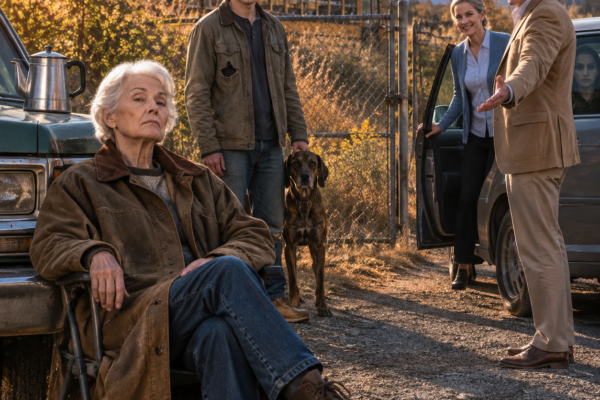
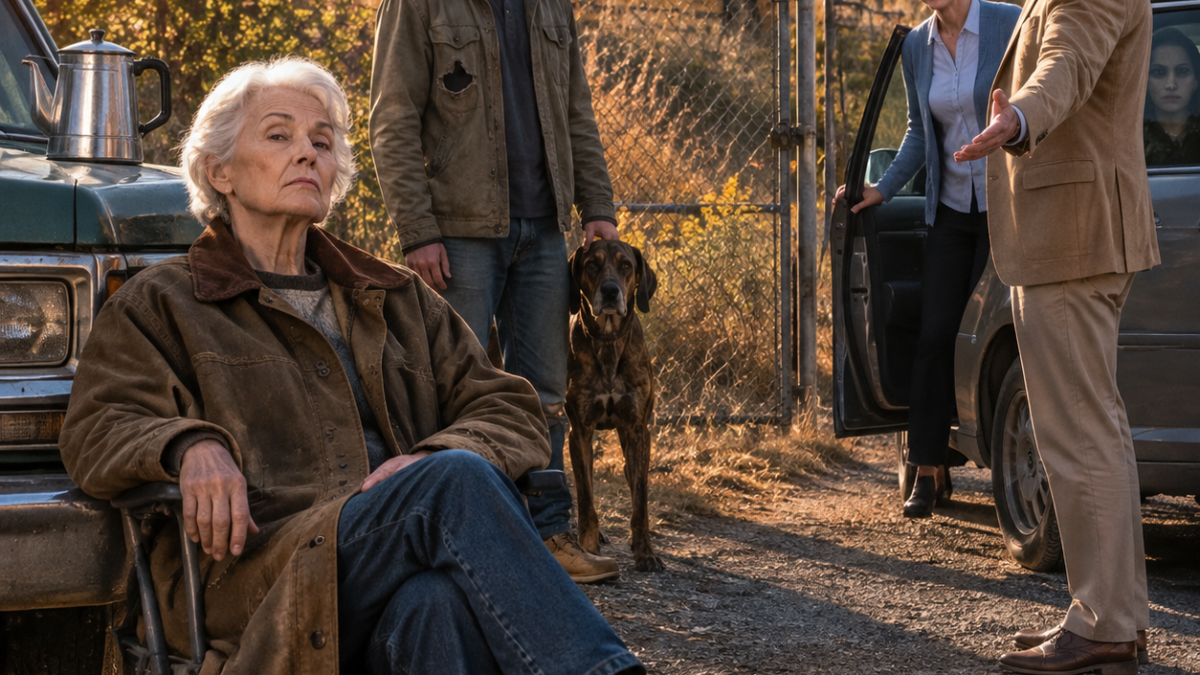
On Sunday morning, a few minutes before 11:00, the gray sedan came up Calvert Road. Midge was waiting at the gate, as she had promised.
She had set a folding chair in the road, and a tin pot of coffee on the hood of her pickup, and she sat with her boots crossed at the ankle, as if she were waiting for a parade. Jonah stood a few yards behind her with Penny at his knee.
The sedan stopped a yard from the chair.
Delia got out first. She was wearing her good blue cardigan and her smile came on like a porch light, bright and ready and without any warmth in it.
A man climbed out of the passenger side, 50 or so, tall in a clean tan jacket and shoes that had never seen gravel.
And in the back seat, behind glass with her hands in her lap, sat Tory.
Jonah, honey, said Delia, you look rested.
I told Mr.Aldous you were a resilient boy.
Good morning, Delia.
Midge Oakley.
Delias gaze slid to the chair. I did not realize you were looking after the yard.
Since August last year, said Midge pleasantly. Have some coffee.
Kent Aldous stepped forward with his hand out and a smile that made all his teeth visible. Mr.Whittaker, Kent Aldous with Crestline.
Ill be brief. Weve been trying to reach the heirs to this property for some time and your stepmother has been kind enough to help.
Im authorized to offer $1,400,000 cash at closing if we can complete it by Friday. He lowered his voice confidentially.
That is more than anyone has ever offered for a piece of ground like this.
I would call it life-changing. I know the number, Jonah said.
Aldous blinked. Jonah, Delia said with the first thin edge of impatience.
Let us not be difficult.
Have you read the form?
I read it twice. He took it out of his pocket and unfolded it and held it in front of her without offering it.
The fourth paragraph says I would have no say in any sale of the property or its contents.
I could not understand why you would write that about a yard with nothing in it.
Delias smile did not move.
Something behind it did.
It is a standard clause. Then you will not mind if I keep it, Jonah said, for Mrs.Quill.
The word landed in the road like a dropped plate.
Aldouss smile went still.
Delia said, very softly, Dorothea Quill.
She files the petition in the morning, said Midge, sipping her coffee. I thought you would want to know.
For the first time in all the years Jonah had known her, he saw Delia Stroud without her voice.
It was only a woman in a cardigan, 51 years old, standing in the dust with her hands closed. You have no idea what you are doing, she said.
You are 20.
You are going to throw away a fortune on a heap of rusted junk because some old woman and a lawyer told you stories about your grandfather.
I have been trying to protect you from this since March.
Thank you, Delia, Jonah said, for the ride. It was said in exactly the voice he had used in the gravel on Thursday, and it was a courtesy, and it landed like a door being closed softly so as not to wake anyone.
Aldous glanced from one face to the other and took a step back toward the sedan.
Delia stood a moment longer.
Then she turned and walked to the car without another word, and as she passed the rear window, Tory lifted her head. She looked at Jonah through the glass.
She looked at Penny, who pressed against his leg with her ears up. And she looked for one long second at the rusted yellow bus in the grass behind them, and something in her face moved and went still.
The sedan backed, turned, and went away down Calvert Road, and the dust was a long time settling.
Well, said Midge, setting down her cup, that went splendidly. On Monday morning, Dorothea Quill filed the petition.
On Tuesday afternoon, she called at Midges farmhouse, where Jonah had begun taking his supper with a Manila folder under her arm.
Pinnacles lawsuit against your stepmother is a public file, she said, spreading the pages on the kitchen table.
On the 16th of September, Delia filed a sworn statement in that case to keep the court from acting. It says, and I quote, that she expects to satisfy the debt in full from the sale of real property inherited by a member of her household, presently under contract.
In September, Jonah, three weeks before she took you to that yard, she told a judge under oath the property was going to be sold.
She had known since May whose it was, and that there was no lien, and that you were the only one who could sell it.
Then she knew everything, Jonah said.
She knew everything but one thing. Quill closed the folder.
She did not know what was under it.
Wednesday evening, the radio on Midges windowsill, which she kept tuned low to the county weather every night of her life, began to repeat itself.
A cold front coming down out of the northwest, the voice said, a line of severe storms, Thursday afternoon, straight-line winds near 70 miles an hour, hail the size of walnuts, and a warning to stay off the roads after 2:00. Midge stood at the window with her arms folded, looking west, where the sky lay clear and green and perfectly still.
Cyrus said there was one thing worse than being left, she remarked, and that was being caught in the open. She glanced at Jonah.
That is why he dug where he dug.
That same night, Quill telephoned.
Mrs.Stroud had asked, through Mr.Aldous, for a meeting at the yard at 10:00 Thursday morning with a lawyer present. She would bring, she said, certain papers.
Shall I say yes? Quill asked.
Jonah looked at the dog asleep under the kitchen table, at the old woman at the window, at his own hands, and said, Yes. Tell her I will be there.
At 20 minutes to 10:00 on Thursday, the 14th of October, with a high thin cloud already sliding across the sun, and the goldenrod lying flat in a rising wind, a gray sedan turned onto Calvert Road. A second vehicle followed it close behind, and in the far west, low along the edge of the world, a long dark bank of cloud the color of a bruise had begun, very slowly, to climb.
The second vehicle was a white pickup, and out of it climbed Kent Aldous in his clean tan jacket and a stooped gray-faced man in a raincoat who carried a briefcase against his chest like a shield.
This was Gregory Haines, attorney for Delia Stroud. He shook hands with Dorothea Quill and did not meet her eye.
Midge had set up a folding table beside bus nine in the lee of its rusted yellow side with a tablecloth she had brought from home.
Delia took the chair across from Jonah with her handbag in her lap. Tory stayed beside the sedan with one hand on the car door, and Jonah noticed that she carried a canvas bag over her shoulder, heavy at the bottom, as though she had packed for a longer day than anyone had told her.
We can keep this simple, Haynes said, clearing his throat. My clients position is that Mr.Whittakers welfare was the chief concern, and that an arrangement can be reached that serves everyone.
Mr.Aldous is prepared to renew. Mr.Haynes, said Quill, I have a few papers.
She laid them on the tablecloth one at a time, in a row, and smoothed each with the flat of her hand. The first was the will.
The second was the petition, stamped by the clerk on Monday at 9:14.
The third was a certified copy of the county record for the Dunning yard, showing 40 acres, owner of record Cyrus Dunning, and on the line where encumbrances would appear, nothing.
The fourth was a page from the court file of Pinnacle Business Capital against Strouds Gifts.
This is the sworn statement your client filed on the 16th of September, Quill said.
Paragraph four. Would you like to read it aloud, Mr.Haynes, or shall I?
Haynes took the page. He read it silently, and Jonah watched his gray face go grayer.
He turned to Delia.
You told me there was a lien on the yard. I told you what I understood.
You told me, said Haynes very quietly, that the property was encumbered and that the boy had agreed in principle. You told me nothing about a will.
Aldous had been listening with his head tilted. I was given to understand, he said, that the heirs had consented to the sale.
Mr.Aldous, said Midge from her folding chair, you were given to understand a great many things. He looked at the papers, and at Quill, and at the sky, which had begun to take on the flat yellow gray of an old bruise.
Crestline does not buy contested title, he said, and walked to the white pickup without shaking anybodys hand.
Haynes closed his briefcase, said, Mrs.Stroud, I cannot continue, and went after him.
The pickups tail lights shrank down Calvert Road, and the wind carried the dust sideways across the yard.
 [Tap here for the Next Part ]