Part 2: Grandpa Left Him a $1 Ghost Town, With Something Locked Inside
Dalton borrowed $400,000 against the ranch two years ago to put in a feedlot. Wanted to finish his own cattle instead of selling them to the big outfits.
Built the pens, bought the feed, and the market went to pieces the next spring. Hes behind, way behind.
The bank gave him till the end of February. She turned her cup around on the table.
Crystals car got picked up last month, right out of the grocery store lot, in front of everybody. She told folks it went back for a recall.
Cody thought of the markdown stickers on the cans, of the phone call on the windy street and Silverload. Thirty more days, Ron.
Thats all Im asking. Go look at the board at the feed store, June said.
Then go see Miriam Coldiron. Shes expecting you.
Shes been expecting you for four months.
The feed store bulletin board was by the front door under a calendar from a seed company. Cody stood in front of it with snow melting off his shoulders.
Hay for sale, border collie pups, a church supper, and a printed sheet tacked up square in the middle with Hale Ranch across the top in bold letters. Equipment dispersal sale, February 10th.
Two tractors, a swather, a baler, four stock trailers, a hydraulic shoot, feedlot panels and bunks, one 1990 pickup truck, grandpas truck.
And at the bottom, in smaller type, one handmade saddle, Hale brand, Gus Hales own. He read it twice.
Then he went back outside where the grey dog was waiting on the sidewalk with his breath smoking and stood a while with his hand on the dogs head, looking down the long white street at nothing. Miriam Coldirons office was on the second floor of a log building across from the cafe, up a steep outside staircase that somebody had salted.
Her name was on the door in plain black letters. When Cody knocked, a voice inside said, its open, and he went in, and the dog came in with him, and nobody objected.
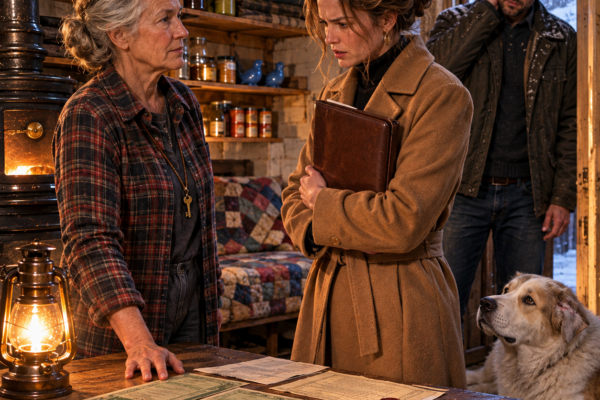
She was a tall, thin woman of about 65 with silver hair pulled back hard, black rectangular glasses, and a grey wool jacket buttoned to the throat. She sat behind a scarred oak desk with a single file folder in front of her, squared to the edge, and she looked at Cody over her glasses for a long, level moment, exactly the way she had looked at him across the room at the reading of the will.
Mr.Hale, she said, sit down.
You took your time.
I didnt know I was supposed to come.
No, you werent supposed to know. That was your grandfathers idea, not mine.
I told him it was theatrical. She opened the folder.
He told me that if you came to see me on your own before anyone sent you, then youd found the room.
And if youd found the room, you were ready for the rest.
Have you found the room?
Yes, maam. Have you opened the vault?
No, maam.
I dont know the combination. Miriam Coldiron took off her glasses and set them on the folder.
Neither do I, she said. He never told me.
He never told anyone. He said there was only one person alive who could work it out, and it wasnt me.
She folded her hands, but I can tell you whats in it, more or less. And I can tell you why your brother wants it so badly.
And I can tell you that Dalton Hale sat in that same chair two weeks ago.
Mr.Hale, with a deed already typed up for you to sign.
Miriam Coldiron turned the file around on the desk so he could read it. Your grandfathers will is short because he was a short-spoken man, she said.
The ranch, the house, the cattle, and the bank accounts to your two brothers.
To you, the town of Silver Load and all its contents.
Those four words, all its contents, were his.
He insisted on them.
I asked him why, and he said, Miriam, youll understand when the boy does. She laid a second paper beside the first.
It was old, typed on a manual machine, the letters slightly uneven. In 1962, two young ski instructors came to your grandfather with a crazy idea.
They wanted to put a rope tow on the north face of Baldy Peak, which was Hale summer range.
They had no money. He leased them the slope for In place of rent, he took stock in their company, 4% of a business that owned one rope tow, a warming hut, and a used snowcat.
Miriam tapped the old paper.
That company is Powder Ridge Resorts. Cody stared at her.
Powder Ridge has three mountains now, two lodges, and a gondola, she said. Your grandfather never sold a single share.
He never told anyone, and he kept the certificates somewhere he wouldnt say.
When I asked him what they were worth, he said, more than a man needs and less than a man ought to brag about.
She took off her glasses.
At last springs price, Mr.Hale, a 4% stake in Powder Ridge Resorts is worth a little over $3 million. Cody could not say anything.
Theres more, Miriam said. She laid down a third paper, a letter on heavy cream stock with a blue mountain logo at the top.
Last April, Powder Ridge wrote your grandfather. They want to expand down the south side of the range into the valley under Silver Load.
They offered $650,000 for the town and its land.
Your grandfather wrote back two words.
I have the copy. It says, no thanks.
Dalton reads the ranch mail, Cody said slowly.
He always has.
He handled the bills when Grandpa got sick.
Yes. So hes seen these letters, the shareholder ones.
And this one?
I would assume so.
And he knows the shares werent anywhere at the ranch because hed have found them by now.
So theyre in Silver Load.
Cody looked down at the old typed paper.
He was putting it together the way Gus had taught him to fix a baler, one part at a time.
Thats why he dug out the bank front in October. He thought theyd be in the vault.
He couldnt get in.
So now he needs Silver Load and everything in it to be his on paper. Then he can take his time.
Then he can sell the town to Powder Ridge for 650,000 to cover his loan, and whatevers in that vault comes to him with it. He looked up.
Thats what the deed was for, Silver Load and all its contents. Miriam Coldiron did not say anything.
She did not have to.
He took my phone and my money and the truck, Cody said. He dropped me up there in January with three cans of markdown beans.
He figured a couple of weeks at 20 below, Id sign anything just to get warm. Yes, Miriam said quietly.
I think he did.
What did you tell him when he came in with the deed? I told him I would not notarize a deed for a man who wasnt in the room, and I told him what Ill tell you now, in plain words, so youll have them when he comes back.
She put her glasses on again. Silver Load is yours.
It was recorded in your name at the county courthouse in October. Anything inside it is yours.
You dont need your brothers permission to live there or keep it or sell it or give it away.
Nobody can make you sign anything.
And if anybody ever does get you to sign something while youre cold and hungry and scared, you come straight back to me because a judge in this county will take a very dim view of how that signature was got.
She closed the folder.
Now, do you want a ride back up or do you want to sleep on Junes couch? He slept on Junes couch with nickel on the floor beside it, and in the morning she drove him back up to Silver Load on the snowmobile with two weeks of groceries in the sled and an old handheld radio, the kind the ranch hands used.
Channel nine, she said. Itll reach my clinic from the top of the street if you hold it up high.
Call me every night at eight or Ill come up there and find out why.
He spent the next day splitting wood and walking the street with Nickel, thinking about his grandfather walking it twice a month for 50 years, keeping a room ready that nobody knew existed.
At 8:00 that night, he walked to the top of the street with the radio held over his head like a torch, and June Pettybones voice came crackling out of it on the second try. Your brother was in the cafe at noon, she said, asking Earl at the counter if anybodyd seen you come down off the mountain.
Earl told him youd been up the stairs at Miriams.
Dalton left his lunch on the plate, Cody.
Earl says he sat in his truck for an hour. He knows I know, Cody said.
He knows something, June said.
Keep the shelf shut. Back in the warm room, under the words his grandfather had cut into the brick, a town isnt the buildings, its who you let in from the cold.
He sat at his grandfathers roll top desk in the lamplight with the notebook open to the third page, reading the same three lines over and over until the words stopped meaning anything. The combination is the three days you saved me.
He had tried everything he could think of, his birthday, Guss birthday, the date of the funeral, the day Gus bought the town. He had sat on the floor for an hour that afternoon, turning the brass dial, right, left, right, listening for something to catch, and nothing had.
He looked up at the photograph tacked to the wall with the horseshoe nail, the old man and the skinny boy in front of the barn. He had no memory of anyone taking it.
He reached up and pulled the horseshoe nail out of the wall and took the photograph down and turned it over.
On the back, in pencil, in his grandfathers hand, it said, The morning the plow came, January 17th, alive because of this boy. Cody sat very still.
The plow had come on the 17th, three days and three nights in the tack room before that. The The the 15th, the 16th.
His grandfather had remembered seven years, and the old man had remembered the exact days and written them on the back of the only picture of the two of them and nailed it over the desk where he would see it every time he sat down.
And Cody had not remembered at all. He had been 13 and he had thought of it afterward as the time Grandpa fell on the ice, a bad thing that had happened to Gus.
He had never once thought of it as something he had done, but Gus had.
Gus had thought of it for seven years. Gus had built a vault door around it.
He held the photograph against his chest.
Before Cody turns that dial, tell me something in the comments.
Who in your family saw something in you that nobody else did? Maybe before you could see it yourself.
Then stay with Cody because the vault his brother dug for was about to open.
He stood up.
He crossed the little room to the great black door with Nickel getting up off the rug to follow him, and he put his hand on the cold brass dial. Right, four full turns to clear it, then right again slowly to 14, left past 14 once to 15, right to 16.
He took hold of the brass wheel beneath the dial with both hands and turned it. For a moment, it did not move.
Then, deep inside the steel, something heavy slid and something heavier fell and there was a sound like a church bell struck once underwater. The wheel spun free in his hands.
The vault door swung toward him, slow and silent on hinges that had been oiled by an old man who knew this night would come. And out of the dark behind it, for the first time, came a smell of cedar and paper and cherry pipe tobacco.
And with the smell came a memory he had not known he still had. The tack room, the third night, the wind in the barn eaves, and the little stove ticking and his grandfather lying on the saddle blankets with his legs stiff out in front of him and his face gray in the firelight.
Cody had been so tired the walls were moving and Gus had started talking low and rough to keep the boy awake or maybe to keep himself awake.
Theres a room up in the mountains, Cody, way up. Its always 50° in there, winter and summer, and nobody in the world knows its there but me.
Ill take you someday.
When youre grown, Ill show you the whole thing. Cody had thought it was a story, a sick old mans story, like the ones he told about the silver in the creek beds and the bear hed met on Baldy.
He had forgotten it by spring.
Gus had not been telling a story. He had been making a promise and this was the room and here was the boy, grown, and the old man had kept his word the only way he had left.
Cody stood in the doorway with the lamp held up and did not go in.
The vault was smaller than he had imagined.
A steel room maybe 8 ft square, lined floor to ceiling with cedar shelving that his grandfather must have fitted himself.
Every board planed smooth and oiled gold.
The old banks iron safe deposit drawers still ran along one wall, rows of little brass handled doors with numbers on them, all standing open and empty. The silver they had once held had gone down the mountain a hundred years ago.
But the cedar shelves were not empty. On the top shelf sat a row of coffee cans, the old 3-lb kind, each one labeled in pencil on a strip of masking tape with a year, 1962, 1963.
All the way along the shelf and down onto the next, 60 odd of them. Cody took down the first and pried off the lid.
Inside, folded neatly, was a single sheet of heavy paper, a statement printed in faded blue ink.
Powder Ridge Ski Company, annual report to shareholders.
And a note in Guss pencil across the bottom.
First year, one rope tow, lost money, good. Sixty odd years of reports, read and folded and kept by a man who wore the same coat for 30 winters and never once mentioned owning any part of anything.
He put the lid back on with hands that were not quite steady.
On the middle shelf alone lay a long flat box of dark polished wood with a brass clasp. It was the kind of box a man keeps a good rifle in or a flag.
Cody did not open it, not yet.
He was afraid to, the way a man is afraid to open a letter he has waited for all his life.
He could feel what was in it the way you feel the weight of a loaded wagon before you try to pull it.
And on the bottom shelf sat three smaller boxes made of the same pale cedar as the shelving side by side, each with a name burned into the lid with a hot iron in his grandfathers square capitals. Cody, Reed.
And the third one set a little apart from the other two at the end of the shelf where the lamplight barely reached it. Dalton.
Cody stood looking at that name for a long time without moving.
Behind him in the warm room the mountain breathed slowly through the open door and Nickel came and sat down at his heel and leaned against his leg and waited.
His grandfather had left Dalton something too, something he had locked away behind three days of January where Dalton could dig for a lifetime and never reach it. He did not touch the box with his brothers name on it.
He did not touch Reeds either. They were not his to open and Gus had raised him to know the difference.
He knelt and took down the one that said Cody.
It was light. He set it on the cot in the warm room under the lamp and lifted the lid.
Inside, on a bed of folded flannel lay a single envelope, thick and cream-colored, sealed with a strip of masking tape.
And under the envelope, wrapped in an oilcloth, was a pair of work gloves, old ones, elk skin, worn soft as cloth at the palms and dark with years of oil and sweat, with the fingers still curled in the shape of a big mans hands. Cody knew them.
Gus had worn those gloves every winter of Codys life.
He had worn them in the tack room.
He opened the envelope.
Cody, if you are reading this, you remembered. I knew you would once you saw the picture.
You never could remember a thing youd done, only things that were done to you. I have tried for seven years to fix that in you and I never managed it.
So I am going to say it plain here where you cant argue with me. You saved my life, not the doctor, not the plow driver.
You, a 13-year-old boy with a calf sled and a stove and no sleep, three days. I was not going to make it through the second night and I knew it and I told you to go back to the house and you said, no sir, and put another stick on.
I have thought about that no sir every day since. That was the week I changed my will.
Your brothers will tell you I played favorites. They are right.
I did.
I am an old man and I am allowed.
But understand why.
Dalton was always going to get the ranch. He wanted it from the time he could walk and he works it hard and that is his.
Reed is a good man and he will stand by his brother, which is his strength and his weakness both. But you were the one who asked me if there was anything you could do to help.
The others asked what there was for them.
That is the whole difference and it is everything.
The long box on the middle shelf is yours. Miriam Coldiron knows what to do with whats in it.
Take it to her.
The other two boxes are for your brothers. Dont open them.
Give them when the time is right. Youll know when.
One more thing. Dalton came to me last spring and asked for money.
A lot of it.
He told me about the feed lot. I told him I would help him, but not with a check.
I told him I would sell some of whats in the long box and pay his note off clean if he would shut the feed lot down and go back to running cattle the way his father did. The way that works.
He said I was an old fool who didnt understand modern business.
He said a great many other things. He did not come back.
I believe he has been reading my mail since.
I am leaving him something anyway.
A man doesnt stop being your grandson because hes a fool for a season. The gloves are because your hands were cold in the tack room and I had nothing to give you then.
I have something now.
Grandpa. Cody put the letter down on the blanket and put on the gloves.
They were too big for him. His fingers did not reach the ends.
He sat on his grandfathers cot in his grandfathers gloves with his hands open on his knees looking at them until Nickel put his long nose under one of them and pushed and Cody laughed once out loud and it echoed off the brick and it was the first time he had heard himself laugh since September. Then he went back into the vault and took down the long walnut box from the middle shelf and opened the brass clasp.
They lay on blue velvet under a sheet of tissue paper gone brown at the edges. Stock certificates.
He had never seen one before except in old movies. They were bigger than he expected.
Heavy cream paper with a deep green border engraved as fine as money and at the top of each one a picture of a mountain with a little rope toe running up its side and two tiny skiers and beneath it in tall formal letters Powder Ridge Ski Company, incorporated in this state.
1962, this certifies that Augustus Hale is the owner of. was a number in a box and a gold seal and two signatures in faded fountain pen ink.
There were 11 of them. Some from the very beginning when the company was one rope tow and a warming hut.
Some from later years after splits and new issues with a bigger mountain on them and a lodge. All of them in his grandfathers name.
All of them flat and clean and perfect as if they had been printed yesterday. Cody did not count them twice.
He closed the lid and set his grandfathers gloved hand on top of it and sat there.
In the morning he called June on the radio from the top of the street at first light.
She came up on the snowmobile by 10:00. He did not explain.
He showed her the long box.
June Pettibone looked into it for a full minute without saying a word, which Cody would later learn was a record.
And then she said, well, get your coat. And they went down the mountain with the walnut box strapped inside a feed sack between Codys knees and Nickel riding upright in the sled behind.
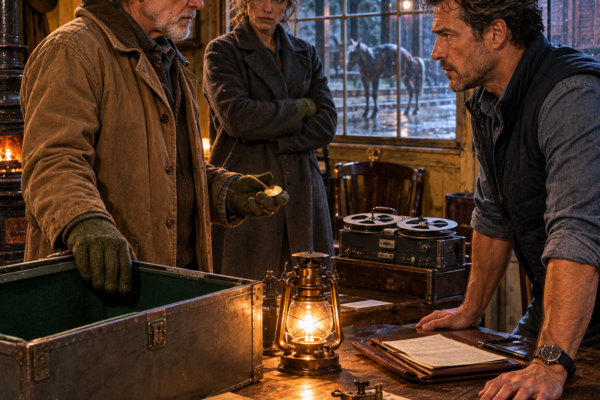
Miriam Coldiron examined the certificates one at a time at her desk with a magnifying glass on a brass stand.
She did not hurry.
When she was done, she made two telephone calls with her office door closed.
Then she came out and sat down across from him and folded her hands. Theyre genuine, she said.
Everyone, the companys transfer agent has your grandfather on their books as a holder of record.
The shares pass under his will as part of the contents of Silver Load and Im the executor.
So the agent will re-register them in your name once I send the paperwork.
Its a few weeks of forms. Nothing anyone can stop.
She took her glasses off. Powder Ridge closed yesterday at a price that puts the stake at three million one hundred and forty thousand dollars, give or take.
Cody heard the number.
It did not go in.
It was too big to go in. It was like being told how far away a star was.
Theres something else, Miriam said. When I called Powder Ridges general counsel, he was very surprised to hear from me because two weeks ago their land office received a signed letter of intent from Dalton Hale offering to sell them the town of Silver Load with all its contents for six hundred and fifty thousand dollars.
Closing date, the first of March. She laid a photocopy on the desk.
He signed it as owner. He listed the vault and its contents in the schedule of property.
He is not the owner.
That letter isnt worth the paper its printed on, but it tells you exactly what he knew and when he knew it. Cody looked at his brothers signature on the page.
Dalton A. Hale, the big, confident, looping hand he signed everything with.
Did Read know?
He said.
Read Hale witnessed it. Miriam turned the page so he could see.
Under Daltons signature, smaller and cramped, was his middle brothers name.
Read had sat in the lawyers office and turned his wedding ring and said nothing. Read had known about the vault and the deed and the plan.
Read had let them drive Cody up the mountain in January with a sack of markdown beans and had stood in the ranch yard and watched the plow truck go.
Somehow that was worse than Dalton. Dalton at least wanted something.
Cody could not think what Read had wanted except not to be the one who said no.
June drove him back up that afternoon under a sky that had gone a strange, flat, yellowish white, the color of old piano keys. The wind had dropped to nothing.
The pines along the switchbacks stood absolutely still and the snow on their branches did not move, and the only sound in all the mountains was the snowmobile engine.
Halfway up, June stopped the machine on a turnout and cut the engine and sat listening.
You hear that?
she said.
Cody heard nothing at all. Thats the problem, June said.
She switched on the little weather radio she kept clipped inside her coat.
A flat, careful voice was reading a warning from the county. A ground blizzard building in from the northwest, winds to 60 mph on the ridges, visibility near zero, temperatures falling to 30 below by the second night.
All mountain roads to be closed by the sheriff beginning tomorrow at noon. Residents advised not to travel for any reason.
Three days, June said.
Maybe four. That old mercantile roofs carrying a lot of snow already, Cody.
When the wind loads it up, I dont trust it.
You stay in the bank. You hear me?
You stay behind that shelf where the mountain keeps you warm, and you leave the door open a hands width, and you call me every night at 8:00, even if all you say is that youre alive. Yes, maam.
And if your brothers come up here before noon tomorrow, she said, you send them back down.
Before dark, I dont care what they want. They came at 11:00 the next morning.
He heard the plow truck from inside the vault where he had been sitting with the three cedar boxes, and he went through the passage and out onto the mercantile porch with Nickel at his knee.
The sky had gone from white to a dirty gray, and a thin wind had begun to move across the street, lifting the snow off the drifts in long, low streamers like smoke. The truck came around the last switchback faster than it should have and stopped hard in front of him, sliding a little.
Dalton got out first with a leather folder under his arm, Crystal in the white parka with her hood up, and then, last, slow, from the backseat, Reed, with his hands in his jacket pockets and his eyes on the snow.
Little brother, Dalton said.
His voice was warm again. He had found it somewhere on the drive.
Storms coming.
We came to bring you down before the road closes.
Get your things.
Im not going anywhere, Cody said.
Cody, Dalton came up the steps.
Be reasonable. You cant ride out three days of whiteout in a ghost town.
Get in the truck. Well go back to the ranch, sit down at grandpas table, and talk this through like family.
And while were at it, he held up the folder almost apologetically. Theres just one paper I need you to look at.
Is it the one you sent to Powder Ridge? Cody said with Reeds name on it as a witness.
The wind gusted.
Snow hissed across the porch boards between them. Behind Dalton, Reed looked up for the first time.
Miriam Coldiron showed me, Cody said, Silver Load and all its contents signed as owner, first of March. He did not raise his voice.
He did not need to. I opened the vault, Dalton, day before yesterday.
I know whats in it.
So does Miriam. So does Powder Ridge.
Daltons face did something Cody had never seen it do.
It came apart, not all at once, but slowly, the way a snowbank lets go of a roof edge in one long, silent slide. The warmth went out of it and then the confidence, and what was left underneath was a gray, frightened man of 34 who looked suddenly very much like their father in the last photograph anyone had of him.
You dont understand, Dalton said.
His voice had gone small.
You dont know what its like to carry that ranch.
No, Cody said.
I just had to carry grandpa for three days while you were at a stock show.
Nobody said anything. The wind came down the street then, all at once, out of the northwest, a solid gray wall of it, and the far end of Silver Load simply disappeared.
The saloon went, and the livery, and the church swallowed one after another into blowing white.
And then the wind hit the mercantile porch, and the truck, and all four of them. And Cody could not see the end of the porch rail three feet from his hand.
The road, Crystal said, high and thin. Dalton, the road.
Dalton turned and stumbled down the steps toward the truck.
He got the door open. He got the engine started.
Cody heard it roar and saw the headlights come on, two blurred yellow smears in the white, and then heard the wheels spin and spin, and the engine scream, and then a heavy sliding crunch as the truck slid sideways off the buried street into the drift in front of the assay office and settled, nose down, with its lights pointing at nothing. Above Codys head, the mercantile roof gave a long, deep wooden groan, the sound of an old building taking a weight it was not sure it could carry.
Cody went down the steps into the white with one hand on the porch rail and the other on Nichols collar, because the dog could see where he could not. He found the truck by walking into its tailgate.
Dalton was already out of it, standing in the drift up to his thighs, with the useless folder still under his arm.
Crystal was climbing out after him with her hood blown back and her platinum hair whipping across her face. Reed came around the back of the truck with his arm over his eyes.
Nobody was hurt. Cody saw that first and let himself breathe.
Hold on to each other, he shouted over the wind.
Hold on to my coat. Dont let go.
They came up out of the drift in a chain, Cody and the dog at the front, then Dalton, then Crystal, then Reed, bent double into the wind, and it took them five minutes to cross 30 feet of street.
When they fell through the mercantile door, the cold inside was nearly as bad as the cold outside.
little pot-bellied stove was dead.
The frost on the shelves had grown thick as fur, and over their heads the whole ceiling was groaning, a long, slow, wooden complaint that rose and fell with every gust.
Crystal looked up at it with her mouth open.
We cant stay in here, Dalton said. His voice was shaking.
That roofs going to come down. I know, Cody said.
He walked to the back of the store, behind the counter, to the tall storeroom shelf of canned peas that his brother had walked past three times in October on his way to dig at the bank. He took hold of its edge, and in front of all three of them he swung it open on its oiled hinges, and the warm breath of the mountain came rolling out of the dark and across their faces.
Dalton stood absolutely still.
Come on, Cody said. Mind your heads.
Its low.
He led them through. He lit the green-shaded lamp in the back office, and then the stove, and the room came up out of the dark around them in warm amber light.
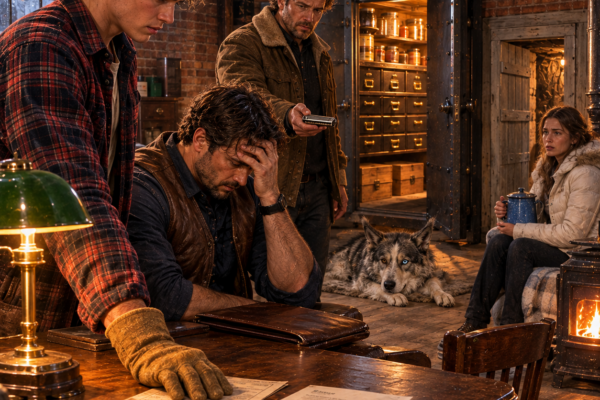
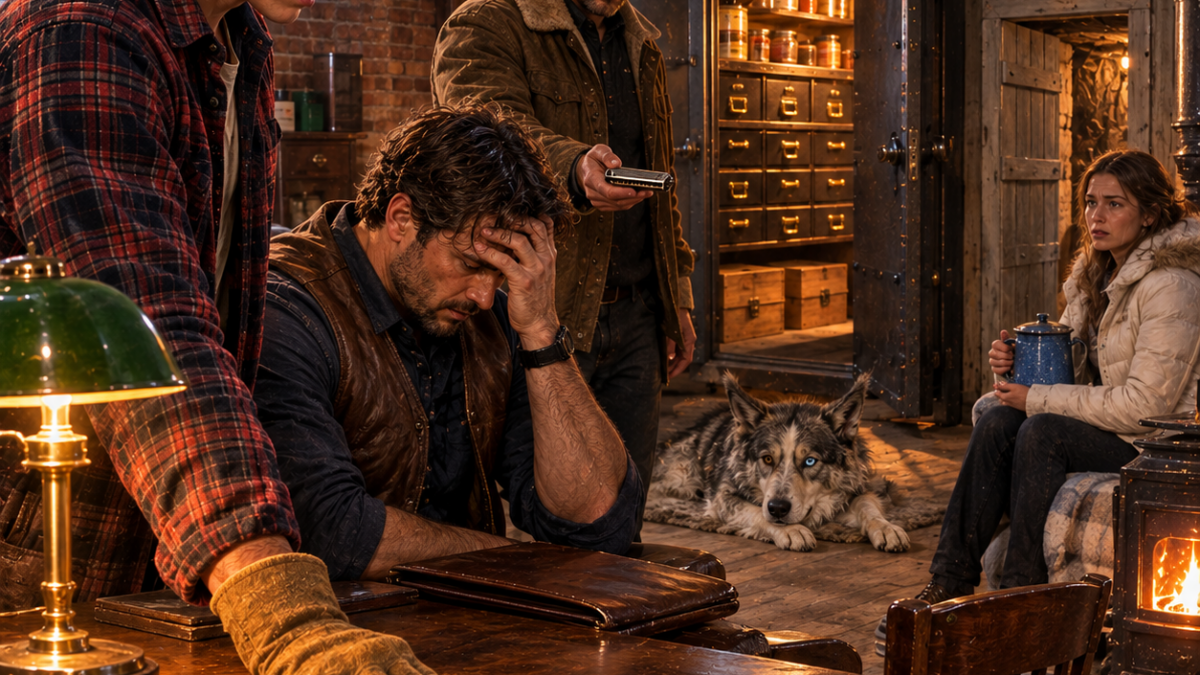
The red brick, the two cots made up tight with gray blankets, the shelves of peaches and beef and coffee, the little mine door standing open a hands width, breathing 50° into the room as steady as a sleeping animal, and across the far end, standing open, the great black vault door with its brass dial and gold lettering, and beyond it the cedar shelves glowing gold in the lamplight. Crystal sat down on the nearest cot as if her legs had been cut out from under her.
Reed looked at the carved words beside the vault door and closed his eyes. Dalton walked slowly across the little room and stood in the vault doorway.
He looked at the empty brass-handled drawers along the wall where he had imagined silver. He looked at the long row of coffee cans with their penciled years.
He looked at the empty middle shelf where the walnut box had been.
And then he looked down at the bottom shelf and saw the two small cedar boxes and the name burned into the lid of the one at the end. He did not touch it.
He stood there for a long time with the storm screaming somewhere far above them through stone and brick and his big shoulders came down and down until he looked smaller than Cody had ever seen him.
He knew, Dalton said, didnt he? He knew Id come up here.
He knew youd dig at the front, Cody said. He wrote it down.
Dalton gave a short laugh that had nothing in it. He turned around.
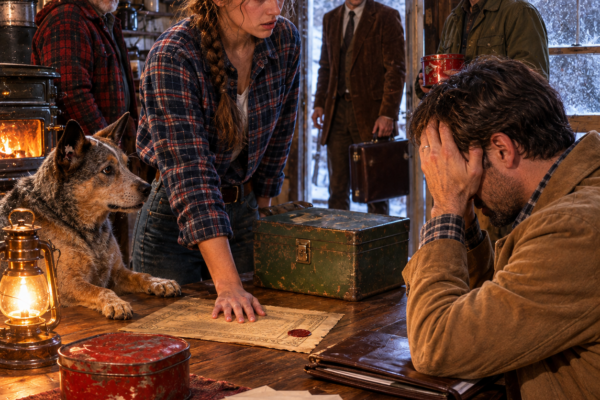
Cody took the folded photocopy out of his coat, the letter of intent with Daltons signature on it and reads under it and laid it on the roll top desk beside the lamp.
Then he laid beside it the copy of the will and the county recording slip with his own name on it and Miriam Coldirons letter on her letterhead to the General Council of Powder Ridge Resorts.
The towns mine, he said.
It was recorded in October. The shares are mine.
Miriams re-registering them now.
Powder Ridge knows your letter isnt worth anything. Nobodys going to sign Silver Load over to anybody, Dalton.
Not today, not ever. That parts done.
The stove ticked. The mountain breathed.
Dalton sat down heavily in Guss desk chair and put his face in his hands. When he spoke, it was through his fingers and his voice was not the warm, reasonable voice anymore.
It was a voice Cody had not heard since the day of their parents funeral when Dalton had been 26 and had stood up in front of the whole church to say a few words and could not.
I was 26, Dalton said.
Dad was gone and mom and grandpa was already old, and everybody in that church looked at me like I was supposed to know what to do.
I swore Id never lose a single acre of that ranch, one.
I built the feedlot to prove I could be more than the hired man on my own grandfathers place.
And then the market went, and the bank called, and I was going to lose all of it, the whole thing, and I couldnt breathe for three months. I told myself youd never miss what you never knew about.
I told myself grandpa didnt mean it, that he was old, that you were a kid. He took his hands down.
His eyes were red. Thats not a reason.
I know that.
Its just the why.
Cody looked at his oldest brother for a long time. Its a why, he said.
Its not enough of one. Dalton nodded.
He did not argue. It was Reed who moved then.
He had been standing by the vault door all this time with his hands jammed in his jacket pockets, turning and turning the wedding ring.
Now he took his right hand out of his pocket, and in it was something small and silver that caught the lamplight. He held it out to Cody.
It was Guss harmonica, the one Cody had bought for $62 and lied about winning in a raffle.
Dalton pawned it in Sheridan Falls, Reed said.
His voice was very quiet. With the saddle and his own watch.
The week after the funeral, I saw the ticket on the dash.
I went back on my own the next Saturday and bought it out with my own money. Ive been carrying it in my pocket ever since.
He swallowed.
I didnt know how to give it to you without telling you Id known about all of it, the deed, the letter, driving you up here.
I knew, and I signed, and I stood in the yard and watched you go.
Im sorry, Cody. I dont expect that to count for much.
Cody took the harmonica.
It was warm from his brother s pocket. He turned it over, and there were his grandfathers tooth on the edge of the cover plate, where Gus had held it in his teeth while he fixed fence.
It counts for something, Cody said. Well see how much.
Above them, very far away, there was a long cracking roar, like a tree coming down in a forest, and then a deep, soft, final thump that they felt through the floor.
Plaster dust drifted down from the tin ceiling in the lamplight. Nickel stood up with his hackles raised, and then lay down again.
The mercantile, Crystal whispered. The roof, Cody said.
Not the walls.
The shelf will hold. Grandpa built it.
It held. They stayed in the back office for two days and two nights while the storm blew itself out over the mountains.
It was 31 below outside on the second night.
By the thermometer, Cody checked through the crack of the passage.
Inside, with the stove and the mountain and four peoples warmth and one big dog, it never fell below 54.
They ate Guss peaches and Guss canned beef. Crystal, who had not said 10 words since the truck slid, turned out to know how to make coffee on a wood stove better than anyone in the room, and did it without being asked, over and over, and seemed grateful to have something to do with her hands.
Reed fed Nickel and walked him through the passage to the mine seep for water.
At 8:00 both nights, Cody went up the passage as far as the storeroom and held the radio over his head, and both nights, through a wall of static, June Pettibones voice said, Alive?
And he said, All of us.
On the first night, after the others were asleep, Cody went into the vault and took down the cedar box with Reed on the lid and gave it to his brother. Reed opened it, sitting on the floor with his back against the brick.
Inside was a brass pocket watch with a cracked crystal and an engraving on the back in Guss square capitals. Say it out loud.
Reed looked at it for a long time, and then he put his face in his arm, and Cody went back to his cot and let him alone. On the second night, Cody gave Dalton his.
Dalton did not open it right away. He sat holding it on his knees for nearly an hour while the storm moaned.
When he finally lifted the lid, there was only a single folded sheet of ruled paper inside, torn out of a calving ledger. Dalton read it in the lamplight, and then he handed it to Cody without a word.
Dalton, if you are reading this, you are in the bank, and your brother let you in. Good.
Then you already know where the money is, and you already know it isnt yours. I offered to help you last spring, and you told me I didnt understand modern business.
Maybe I dont, but I understand this. Your brother has the box now.
Ask him, not for the money.
Ask him for help out loud, the way he asked me at 12 years old if there was anything he could do. If you can do that, youll have learned the one thing I couldnt teach you.
If you cant, no amount of money was ever going to save that ranch. Grandpa.
Cody folded the paper and gave it back.
Dalton sat a long while, turning it over in his big hands.
The lamp hissed.
Nichols sighed in his sleep by the stove.
Cody, Dalton said at last, his voice cracked on the name. I need help with the ranch.
I dont know how to fix it.
Will you help me?
It was the first time in Codys life that his oldest brother had asked him for anything. On Grandpas terms, Cody said, same ones he offered you.
The feedlot shuts down.
You go back to running cattle the way Dad did. You cancel the auction.
The saddle comes home, and the truck and my money and my phone, and you call Powder Ridge yourself and tell them your letter was a mistake.
He paused. Then Ill sell enough of the shares to pay off your note clean, once, not a penny more.
Dalton closed his eyes. Thats fair, he said.
Thats more than fair. On the third morning, the wind stopped, all at once, the way it does in the high country, and the world outside was silent and blinding white.
By noon, they heard the county plow grinding up the switchbacks and behind it the whine of a snowmobile.
June Pettibone came through the collapsed front of the mercantile on foot over the heap of fallen roof and frost-furred shelves and stuck her head through the storeroom gap and looked at the four of them and the dog, all sitting around the little stove in the warm brick room drinking Crystals coffee. Well, she said, Ill be.
The rest took most of a year.
Miriam Coldiron re-registered the shares in Codys name in February. He sold exactly enough of them to pay off the feedlot note in March and not a share more.
The auction was canceled. The feedlot panels were sold for scrap.
Dalton went back to running cattle on grass and found, to his own surprise, that he was good at it and that he slept again.
Reed came up to Silver Load most weekends that spring with a toolbox in his truck. He said things out loud now, more often than he used to, and sometimes it was hard to hear, and Cody listened anyway.
Powder Ridge Resorts built its new lifts on the other side of the valley. At the spring shareholders meeting, a 20-year-old in a clean flannel shirt and his grandfathers elk skin gloves stood up in a hotel ballroom full of men in suits and voted his 4% against putting anything at all in the valley under Silver Load.
The motion was withdrawn. That summer, with Reed and two men from Pine Notch, Cody rebuilt the mercantile roof with new timber and tin.
He put four bunks in the store and a big wood stove and a sign over the door that said, Silver Load, warm inside, no charge.
He set up a welding shop in the old livery barn because he had always wanted one.
And by fall, ranchers from three counties were bringing him their broken gates and trailer hitches.
Every two weeks he drove down to Pine Notch and mucked Junes kennels, though she told him every time that hed paid that off long ago. He kept the shelf.
He kept it oiled.
He kept the back office stocked the way Gus had, with peaches and beef and kerosene and dog food, in case anybody ever needed a place in the world where they could always be found. In January, a year almost to the day after Dalton had driven him up the mountain, June called him on the radio at noon.
Theres a man at the bus depot, she said. 71 give or take.
His son put him on a bus with a suitcase and a one-way ticket and didnt get on with him. Hes been sitting on the bench since 6:00 this morning.
He asked Earl at the cafe if there was any place a man could work for his keep.
A pause. I told him I knew a place.
She brought him up that afternoon in the snowmobile sled. He was small and stooped with a deeply creased brown face and tired dark eyes under a frayed navy watch cap, in a corduroy jacket much too thin for the mountains, and dress shoes cracked across the toes.
He held a battered black suitcase tied shut with rope against his knees. When the snowmobile stopped in front of the mercantile, he looked up at the false fronts and the snow and the empty street and his face did the thing Cody remembered his own face doing a year before.
It braced. Cody came down the porch steps with Nickel at his side.
The dog went straight to the sled and put his nose in the old mans hand.
Hector Lusk, the old man said, as if he were giving his name to a judge. Im sorry to put you out.
I can sweep. I can cook some.
I was a short-order cook for 30 years.
I wont be any trouble. Cody did not ask him where his son was.
He did not ask him anything.
He picked up the black suitcase himself. Cody Hale, he said, theres chili on the stove and a bunk by the fire, and the stove draws good.
Youll eat first, then well see about the sweeping.
Hector Lusk looked at him for a long moment.
Then he looked past him at the old mercantile, at the light in its windows, and the smoke rising straight up into the still, cold air.
What is this place? He said.
Cody thought about it.
He thought about an old man driving up this mountain twice a month for 50 years with a truckload of peaches and kerosene and a boy in a back room who had said, no sir, and put another stick on. Its a town, he said.
Not much of one if you count the buildings, but my grandpa used to say, a town isnt the buildings, its who you let in from the cold. He held the door.
Come on in, Mr.Lusk. The old man went in.
Cody heard him stop just inside the door and heard him say very quietly to nobody at all, oh. Cody stood a moment longer on the porch in his grandfathers gloves, on the same boards where a year before he had stood with a paper sack of markdown cans and watched his brothers taillights go.
The street lay white and silent under the pewter sky. Smoke rose from the mercantile chimney and from the livery barn and from the little church with no steeple where Reed had put in a stove that fall.
Nickel sat down against his leg, one blue eye and one brown turned up toward him.
Cody took the harmonica out of his breast pocket and played four bars of the song his grandfather used to play on the porch at the ranch, the one he had never learned the name of. He played it badly.
It did not matter. The notes went out the snow and down the empty street and came back off the mountain, soft and slow.
Then he went inside and pulled the door shut, and the town of Silverload, population two and one gray dog, settled into the evening with every window lit.