Part 2: Her Parents Sold Her Home and Left Her a $1 Barn — They Never Read the Deed Hidden Inside It
I only know a man doesnt sell the boat he loves for half its price.
Unless somebody is standing behind him with a clock.
Ren sat very still.
She thought of her mothers phone calls taken out on the porch with the door pulled shut. She had told herself it was ordinary grown-up business.
She had told herself a great many things. Im telling you nothing at all.
Bernice said gently. Im a male carrier.
But hold on to something for me.
The people who love you loudly do not always love you well. And the ones who say nothing sometimes are saying it with their hands.
She paid the bill before Ren could see the number, loaded a paper sack of groceries from Lornas into the truck, and turned the key. Tomorrow morning, Ill come for you at 9, she said.
Theres a man in this town you need to see.
Hes been waiting 4 months to see you.
His name is Tobias Reyes. He did, said Bernice.
Ive wondered who remembered it.
They drove back with moss asleep across Rens feet. At the crossroads, a quarter mile short of the lane, a gray car sat on the shoulder with its engine running.
A man in a shiny jacket sat at the wheel with a phone to his ear.
He did not look at the mail truck, which is how Ren knew he had seen it.
Bernices hands tightened on the wheel, and she said nothing until the car was a speck in the mirror. When she let Ren out at the end of the lane, she leaned across the seat and spoke through the window.
Theres a front coming Saturday. The radio says rain and maybe worse.
Dont be out on the lane after dark.
I wont. And Ren, the brown eyes were very steady.
Whatever you find in that barn, you take it to Tobias before you take it to anyone else.
Not to your father, not to the bank, not to me.
She drove away.
Ren stood at the end of the lane with the sack in her arms and the dog leaning on her leg and felt for the first time since Monday that someone had been holding the other end of the world all along. Friday morning was gray and soft, and the truck came at 9 on the dot.
The law office of Tobias Reyes stood above the hardware store on Main Street, up a flight of narrow wooden stairs, behind a frosted glass door with gold letters peeling at the corners. Inside the room smelled of tea and old paper.
A small trim man with a gray goatee and round wire glasses rose from behind the desk as she came in. And then, without quite seeming to decide to, he took off the glasses and wiped them on his tie.
Miss Doyle, said Tobias Reyes, I have been rehearsing this meeting since February.
I find I have forgotten every word. Mr.raise.
You said at the funeral that there was a second page.
I did.
He put the glasses back on and gave her a smile that was half apology. And I stood in a room and let a man sign his name without reading it because your grandfather had asked me to let the man do exactly that.
I have been uneasy about it ever since.
Sit down. Please bring the dog.
There is a biscuit tin in the second drawer.
She sat. Moss lay down on the rug at once, as if she had been there before.
Mr.Reyes took a long envelope from his satchel and set it on the blotter between them and laid his hand flat on top of it. Im going to tell you three things plainly, he said.
First, the deed is valid. Your grandfather signed it in September of 2013 with two witnesses and a notary, and I recorded it myself at the courthouse the following Monday.
The barn and its lot belong to you and have since that day subject only to your grandfathers right to live there as long as he lived.
That right ended in February.
You do not need anyones permission to be where you are. Not your fathers, not mine.
And second, second, I drafted only one page of that deed. He turned the envelope over.
Page two was written by your grandfather in his own hand on the night before he signed. He asked me to attach it and record it as he gave it to me.
I did and I have a copy for you now.
It describes a second parcel by meats and bounds in the old manner beginning at an iron pin at the foot of a sycamore tree and running by courses and distances. I confess I never plotted on a map.
He told me that the survey, which showed where it lay, would be in a box, and that the box was for you alone, and that the lawyer who read page two aloud before its time would be doing him a great unkindness.
He took off his glasses again. I was curious, but I am also an old mans friend, and I kept my word.
Ren held out her hand.
He laid the envelope in it, and the paper inside was thick and cool and faintly yellow. And the third thing, she said.
Tobias Reyes looked at the dog on his rug and at the girl in her yellow jacket and for a moment his face was very old.
Third, he said, your grandfather asked me to put one question to you.
If you came, he said I was to ask it with no more expression than I would use to ask the time.
He folded his hands.
Miss Doyle, have you found the key?
No, said Ren, but I know where it sleeps.
The faintest smile crossed the lawyers face and was put away at once. Then I will not ask where.
He opened a folder. Now I will tell you only what is public record.
On Wednesday, a title company in the capital telephoned my office.
They are preparing a closing for a sale of the Doyle farm, 220 acres, on the 1st of June, and they asked for the chain of title. They asked about your barn lot because it sits at the mouth of the only lane that reaches the lake, and a buyer cannot reach the water without crossing it.
Mr.Veils company, said Ren, the buyer of record is called Lake Haven Partners. Who works for it?
I cannot say. he turned a page, but a lenders notice was filed at the courthouse in March.
A floor plan loan against the dealership, $310,000, due in full on the 1st of June.
The contract on the farm is for 2,400,000, and a deposit of $200,000 has already been paid to the seller.
He looked up.
That is a great deal of arithmetic for a quiet man in a tweed jacket. She said it aloud slowly.
coin by coin, the way she counted change at the ice cream window. My father owes $310,000 on the 1st of June.
He took a deposit on a sale he cant close without my barn lot, and hes already spent it.
So, he sold the house and the boat and took my phone and my car and my savings and left me a week of food.
She heard her own voice go very level.
Hes coming Sunday with groceries and a paper. He thinks that if Im hungry enough and alone enough, Ill sign away the lot for a ride into town and a few thousand.
Mr.Reyes said nothing for a moment. Your father telephoned my office at 8 this morning.
Someone at the diner had told him you were in town with the mail carrier.
He asked very pleasantly whether you had come to see me and whether I had given you any papers. He closed the folder.
I told him that my door is open to every client I have. Did he say anything else?
Only that he and your mother were worried and would come out tomorrow rather than Sunday. I would go home, Miss Doyle, and find your key.
Bernice drove her back without asking a single question. At the end of the lane, she said, Only rain by supper time tomorrow.
Radio doesnt like the look of it.
Ren walked the three miles home with the second page in her jacket. She saw the tracks before she saw the barn.
Fresh tire marks, wide and deep, had cut the mud of the barnyard in a long curve and stopped at the milkhouse door. The door stood a hands width open.
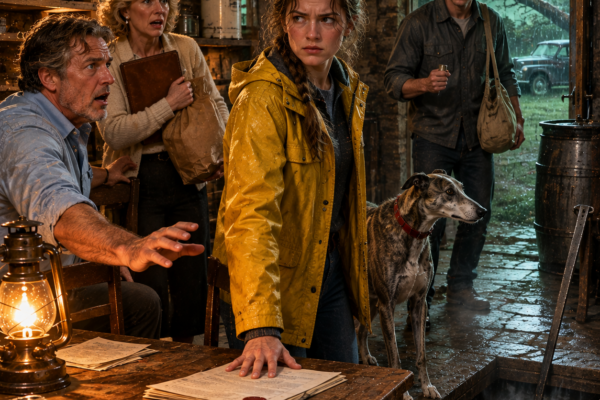
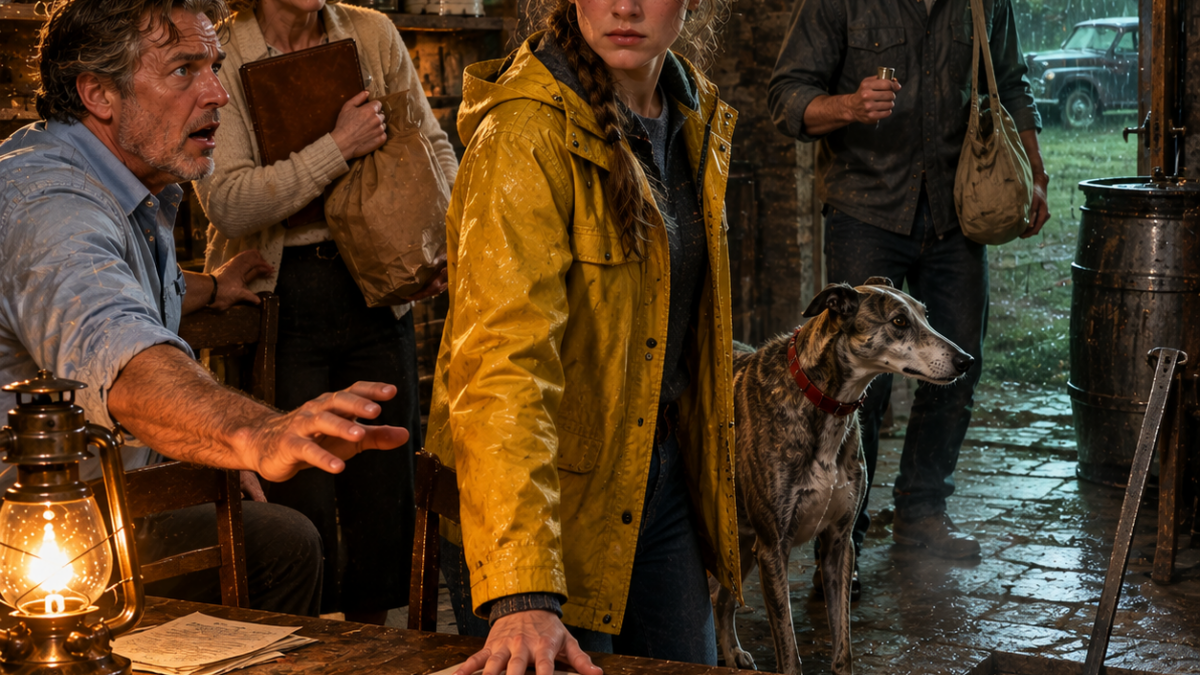
Moss stopped dead at the edge of the yard, and the hair rose along her narrow back, and a low sound came out of her that Ren had never heard her make.
Nothing inside was missing.
The pump, the lantern, the stove, and the iron ring in the floor were all where she had left them, and the slab lay shut and silent over its secret. But on the stone sill, held down by a pebble, lay a white business card.
Preston Veil, it said, Lake Haven Partners, and on the back, in a smooth blue hand, a generous offer for your barn lot.
Lets talk before the weekend, PV. She stood very still with the card in her fingers, understanding that a man had walked through her milkhouse while she was gone, and had stood over the very stone she had pried up.
Then she tucked the card in her pocket, and knew where to begin.
The cream separator was a squat iron machine on three legs with a crank on the side and a tall bowl on top like a hat brown with rust. She took a rag and a can of oil from the shelf knelt beside it and began carefully to take it apart.
The bowl lifted off. Underneath lay a brass spindle capped with a plug the size of a thimble.
She oiled it and waited and worked it until it turned.
Inside the hollow spindle, wrapped in a scrap of oil cloth and tied with a blue ribbon, lay a small brass key. The key is where the cream is made.
She closed her hand around it and found that she was shaking. She carried it down the eight stone steps and lit the lamp and stood before the black strong box in its niche.
Moss came down after her, one step at a time, and lay on the bricks. Before she turns that key, tell me something in the comments.
Who in your life ever looked out for you without telling you? And when did you find out?
Then stay with Ren because that little box held more than paper, and her father was already on his way. The key slid in as if it had been oiled yesterday.
It turned with a short round click, and the lid rose on its hinge with a breath of cold air. And there, laid flat on a folded gray cloth, lay four things.
The first was a long envelope sealed with her name across the front in her grandfathers hand.
The second was a bundle of paper receipts bound with a rubber band gone brittle with age. The third was a deed folded in thirds with a notarys raised seal on the corner.
And when she opened it, she saw that it was an exact copy of the one Mr.Reyes had given her that morning, but with the original signatures in blue ink, hers on no line, Everetts firm, and two witnesses, and a notarys name she did not know.
The fourth was a long roll of stiff paper tied with the same blue ribbon. She took the receipts first because they were the smallest.
Each one was a county tax bill for a parcel with a long number she did not recognize, made out to Ren Doyle in care of Everett Doyle, and each one was stamped paid.
There were 14 of them, one for every year since she was 5 years old. The first was for $210.
The last from the autumn just passed was for 4,800.
In 14 years, a man who sold milk by the can and apples by the bushell had never once missed a payment on land that he had told no one he owned. She sat down hard on the stool.
The long envelope with her name on it lay under her hand, and she turned it over once and set it down again, unopened.
Her grandfather had told her to read to the last page, and the last page of the diary was still under its red wax, and she would not break one seal before she was told to break the other.
It was not obedience. It was the first time anyone had ever asked her to take her time, and she meant to do it properly.
Then she unrolled the survey across the plank table, waiting the corners with four jars of apple butter and bent over it in the lamplight. It was drawn on linen in black ink by a hand that had loved straight lines and across the top it said in careful capitals survey for Everett Doyle.
Orenig surveyor June 1968.
In the center was a long curving blue shape with a name along it, Heron Lake.
And on the near shore of the lake, jutting out into the blue like a thumb, was a green shaded peninsula, its boundary marked by small circles at every corner.
The longest side running along the water for 1,800 ft. In the middle of the green, in the same careful capitals, was printed a name.
Heron Point, 140 acres, and at the lane end of the point where the boundary met the road was a small drawn tree with a note beside it in pencil in a different hand in a different year. Sycamore iron pin at foot.
Mind the roots, kid. Ren did not move.
She did not breathe. She put one finger on the tree.
She remembered the sycamore.
She had ridden past it a hundred times in the backseat of her fathers car, going to the lake for the 4th of July, and had always thought it was only a tree. There had been a rusty chain across a gravel drive beside it, and a sign that said, No trespassing, which no one had ever read, and a long overgrown track that disappeared into the woods toward the water.
Her father had always sped up there. She had thought as a child it was because the road curved.
She did not think so now. She went up the stairs two at a time and out across the barnyard, and the dog came after her at an astonished lope.
The sun was low and gold. She climbed the loft ladder, rung by rung, across the barns dusty floor, to the high window at the lake end of the roof, where the boards were gone, and the whole country lay open to the west, and she put her elbows on the sill.
A mile off, between two long arms of woods lay a sheet of silver water that took the light, and gave it back doubled.
A green point of land ran out into it, bristling with old trees, with a single white sycamore at its root, as bright as a bone.
No house stood on it, no dock, nothing had ever been built on that shore, but quiet.
And beyond the point, where the lake broadened, a long line of cottage roofs ran up the far side, new and bright, with a marina at the bottom of the bay, Heron Point.
140 acres of the last undeveloped lakefront in the valley, held in her name for 14 years by a man who paid its taxes in cash and told no one, and who had sat in a kitchen on a gray morning in February and told her father to read both pages. Oh, Grandpa, Ren whispered, what did you do?
below her. Moss had put her front paws on the ladder and was looking up with an expression of such solemn, patient pride that Ren laughed out loud wetly into the wind.
Then the laugh went out of her all at once. She was seeing plainly a gray car on a porch and a man in a shiny jacket and her father nodding nodding as the two of them looked out toward the lakeside, not at the house.
The deed had been recorded for 14 years in book 212, page 88, in a courthouse any stranger could walk into on a Monday morning.
The title company in the capital had already asked for it.
By the time they read page two, the whole valley would know what the Doyless had never read. She could not stay at the window.
She came down the ladder with her heart going hard, and she took the dog and walked out the lane in the last gold light, a mile and a half, to the place where the sycamore stood at the root of the point.
It was larger than she remembered, pale and mottled like a great white hand, with roots that gripped the bank in knuckles. The rusty chain still hung across the gravel drive, and the board that said no trespassing, had gone silver and soft.
Beyond it, a track no wider than a wagon ran away under the trees toward the water, and between the trunks she could see the lake lying open and still. She knelt at the foot of the tree, and parted the grass with her hands.
There, a hands breath out of the ground, stood an iron pin, rusted red as a nail, with a small cross cut in its head.
She laid her palm on it. It was exactly where a pencil note on a linen map said it would be.
Then she saw the carving low on the trunk where the bark had grown thick and healed around it.
E plus A, it said, and a year 1968. and beneath those, in cuts that were whiter and newer, a single letter W, and the year of her fth birthday.
Ren put her forehead against the cool bark.
The tree smelled of rain that had not yet fallen.
Somewhere out on the water, a great blue heron lifted off the shallows with a sound like a sheet being shaken and flew a long, slow curve across the light, and the lake took its reflection and carried it away.
She did not know how long she stayed there. It was Moss who stood first with her ears forward and her whole long body gone still.
A car was coming along the county road from the south slowly with its lights not yet on. It was a gray car.
It slowed at the sycamore and almost stopped and the drivers window came down and a man in a shiny jacket leaned out and looked at the tree and the chain and the sign for a long, long moment.
Ren did not breathe behind the trunk.
She saw him take a small notebook from his pocket.
She saw him write something down. Then the window rose, and the gray car moved on into the dusk, and Ren was left alone on the shore with the dog and the tree, understanding at last that the one person who had read page two, to the last word, had not been her father.
She slept in the cellar again, with the lamp turned low and the strong box shut, and woke before dawn to a sound she could not place.
It was the barn itself.
The whole old frame was creaking in a warm wind that had come up out of the south in the night, and when she climbed the stairs and pushed open the milkhouse door, the air stood thick and soft against her face, like breath. The sky in the east was the color of a pale bruise.
She made tea on the camp stove, fed moss, the last of Lornas ham, and sat on the milkhouse stool, with the long envelope on her knee.
Then she slid her thumb under the flap.
The letter inside was written on three sheets of lined paper in her grandfathers square hand, and it did not begin with her name.
I am going to say this plain because I never learned to say it any other way.
In 1968, I bought 140 acres of lakeshore from the Marlo estate for $11,000, which was every dime I had, and a good part of what your grandmother had put by from her eggs. Everybody told me I was a fool.
A point of land with no road, no soil worth plowing, and a swamp on the north side.
I bought it because in the evening a heron stood on it, and I had never in my life owned a thing that was only beautiful.
Your father wanted to sell it the day he could write a check, not out of wickedness. He is afraid, Ren, and has been since he was a boy in a house where we never had enough.
And he thinks that a man who owns enough will never be afraid again. I know what the lakes in this country turn into when a man like that gets hold of them.
Cottages and a marina and a gate with a name on it. So in the autumn of your fifth year, I put the point in your name and kept the right to live out my days at the barn and told nobody but Tobias.
You were five and you sat on the milkhouse stool and ask me what the heron was thinking. Nobody had ever asked me that.
I have thought about your question for 14 years. The deed is good.
Tobias will tell you so.
Do not let anyone talk you into selling it. Not for a h 100,000 and not for 2 million until you have stood under the sycamore and decided for yourself what a place like that is for.
If you decide to sell it, I will not mind. A gift with a leash on it is only a trade.
Be kind to your father if you can. But do not let him carry one more thing of yours out of a door.
There was nothing more, only the three letters at the bottom the way he signed every receipt. Ed.
Ren read it twice, and then she folded it and held it against her chest for a while.
The wind rattled the tin overhead.
Then she took the diary from her jacket and turned to the last page, folded in half, and sealed in red wax, and slid her grandfathers pocket knife under the edge of the seal.
The wax came away in one piece.
The page was written in pencil, and not in the square hand, but a slower, looser one, the writing of a man who has already said what he had to say, and is only adding the kind part.
Youve read to the last page.
That is more than most.
The blue lids are the jars I never sold. 312 in this cellar, and the blue ones are for whoever comes up that lane with nothing.
Open the barn. Feed them.
Do not ask them anything. Theyll tell you in their own time, or they wont, and either is all right.
A door that is open is worth more than a vault.
Ada and I learned that in the winter we had nothing.
your friend and always yours, Grandpa. She sat there a long time.
Moss came and put a gray head on her knee.
Bernices white truck came up the lane at half 10. Bumping through the ruts with the wipers going, though it was not yet raining, and behind it came a gray sedan she knew, and out of the sedan stepped Mr.Reyes in his tweed jacket with his satchel under his arm.
They stood in the yard looking up at a sky that had gone the color of old brass. Bernice had a radio in her hand, a small one with a hand crank, and she held it out.
Tornado watch for the whole county until 10 tonight, she said.
78° in the first week of May and cold air coming down on top of it. I dont like the color of it, and Ive lived under that color before.
She looked at the barn.
Is there a place on this property deeper than a bathtub?
Come and see, said Ren.
She led them down the eight stone steps, and Bernice, who had kept her face composed through the whole of Thursday, stopped dead on the fourth step, with her hand over her mouth.
The lamp lit the long brick vault, the CS, the jars in their hundreds.
Mr.Reyes took off his glasses and put them back on.
Well, he said at last softly. He told me it was snug.
It was built after the flood, said Bernice.
My grandmother used to say it was the one seller in the valley that could carry the whole valley.
I thought it was a story. She laid a hand against the cold brick.
Its a better shelter than the counties, and Id stake my pension on it. Ren told them everything, sitting at the plank table, and put the deed and the survey and the 14 tax bills in front of Mr.Reyes, and he read them in his careful way, one by one, for almost 20 minutes without a word.
Then he folded his hands.
I will say this in plain words, he said.
The point is yours.
It was yours the day the deed was recorded.
And your grandfathers right to live here ended in February, and it passed to you with no court and no will. It was never part of his estate, and so your father never inherited a single foot of it.
The barn lot is yours for the same reason. What your father has sold to Lake Haven, he has sold without owning it, and a man who sells what he does not own owes back what he was paid.
He looked at her over his glasses.
You owe your father nothing, Miss Doyle.
Nothing he asks you to sign today will bind anyone but you. Then Ill just not sign it.
You will not sign it, Mr.Reyes agreed. But I cannot be here when they come.
A lawyer in the yard turns a family into a lawsuit, and you may yet want to have a family.
Bernice and I will wait in town. You are their daughter.
Let it be a conversation if they will have one.
He rose and put his hand briefly, lightly on her shoulder. You are not a doormat, Miss Doyle.
You never were.
It is only that nobody had given you anything to stand on. Bernice put the radio into her hands.
Turn the crank when it goes quiet, she said. Ill drive past at 4.
If you hear a sound like a train, dont look for it.
Go down.
They left at noon. Bernices truck passed the end of the lane at 4, a white speck, and did not turn in, and Ren lifted a hand she was sure no one saw.
By 5 the sky had turned the green of an old bottle, and the wind had dropped to nothing, and the swallows were flying low and fast over the barnyard in tight, worried circles. Ren carried the lamp and a gallon of water down to the cellar, and set out the quilts.
At 20 minutes to 7, with the light going, she heard tires on the lane. There were two vehicles, her fathers sedan and Lukes truck behind it, coming up out of the green gloom with their headlights on.
Glenn got out first in a clean pressed shirt and stood a moment looking at the barn as a man looks at a business that has not yet made up its mind.
He was smiling.
Carol stepped out of the other side with a paper grocery bag in one arm, a folder under the other, and her pearl earrings catching what little light there was. Luke stayed in the truck with both hands on the wheel, looking straight ahead.
There she is, said Glenn warmly. Theres our girl.
Look at you, Ren.
You look wonderful.
A little country heir. Hello, Dad.
We brought groceries, sweetheart, said Carol.
She touched her arm.
Eggs and soup and those oatmeal cookies you like.
Weve been so worried. You took the phone, said Ren.
Because it was costing us a fortune, darling. Carol laughed lightly.
Lets get out of this wind and sit down, and well sort everything out like grown-ups. They sat at the plank table in the milkhouse because it was the only table with the groceries between them and the lamp lit against the gloom.
Carol opened the folder and laid a single stapled document in front of her.
It was four pages long, headed release and quit claim, and across the bottom of the last page was a line with a small yellow flag beside it and a cashiers check for $12,000 clipped to the corner.
Its a formality, said Glenn, nodding slowly. Theres a little tangle on the title for the farm, and the buyers want a clean paper from every Doyle that ever had a hand in it.
It says you release any claim you might have to the home place and the barn lot and anything else around here. $12,000, Ren.
Thats more than youve ever had in your hand. You could get an apartment and a car and a fresh start.
and you could come stay with us till then, said Carol. Wouldnt that be better than all this?
She glanced around the dimstone room with an expression of fond distress. We only want whats best for you.
Sign this and we can all stop being tired.
Ren looked at the paper.
She looked at the pen her mother had laid across it. She looked at her father, who was nodding still, and at the way his eyes slid for one half second to the window.
I went to see Mr.Reyes yesterday, she said. The nod stopped.
It was not much. It was only a pause, the length of one breath, and in it, Ren could hear the wind rising outside and the tin roof beginning to talk.
Carols hand tightened on the folder.
Glenn recovered first.
Tobias is a good man, he said, but hes old-fashioned. He doesnt understand how modern real estate works.
I have the deed, Dad. She reached into her jacket and laid her copy on the table and flattened it with both hands.
Both pages. I thought Id read them to you.
Mr.Rehea says its what a person ought to do.
Ren, honey. She read page two aloud.
She read it slowly in the voice she had used at the ice cream window to read back an order, and she did not skip a word.
She read, Beginning at an iron pin at the foot of a sycamore tree on the east side of the Fenwick Corners and Heron Lake Road, and running thence by courses and distances along the water, 1,800 ft more or less, to the place of beginning, containing 140 acres. When she reached the end, she set the paper down.
Nobody spoke.
Her mothers face had gone the color of the wall. Her fathers hands had come apart on the table, and they lay there open, palm upward, like the hands of a man who has dropped something and is waiting to see where it lands.
Where? said Glenn very quietly.
Did you get that? Book 212, page 88.
Rens voice was steady. She was a little astonished by it.
Its been recorded for 14 years.
You signed for the first page at the funeral lunch, and you said it would be the legal description. It was.
Thats a mistake, said Carol sharply.
Thats some old mans scribble. It means nothing.
It means that the point is mine, said Ren. And the barn is mine, and you cant sell either one to Lake Haven.
She put her hand flat on the stapled release and slid it back across the table toward her mother.
Im not going to sign this, Mom. Id like my phone and my keys and my passbook and Grandmas tin box.
I would like them today. Her mother opened her mouth.
And then, out in the yard, in the green hush under the sky, the little radio on the milkhouse shelf crackled, and a flat, calm voice began to read a list of county names, and the third one was theirs. Somewhere far off to the southwest, thin and rising and growing, a siren began to wail.
For a moment, nobody in the milkhouse moved. It was the dog who moved first.
Moss rose from the stone beside the table, with her ears flat and her whole long body trembling, and went to the square slab in the floor and pressed her chest against it and looked back at Ren.
We need to go down, said Ren. Down where?
said Carol Glenn. I want to go home.
Its only a siren.
They go off all the time. Theres no home to go to, Mom.
Its 40 minutes by the road, and the lane will be a river in 10.
Ren was already on her knees with the pry bar under the iron ring.
Dad, help me with the slab.
Glenn Doyle stared at her for a long moment.
Then he took one side of the heavy stone in his big salesmans hands and heaved. It rose on its hidden hinge with a long dry crack, and the cool apple air poured up over all of them.
Out in the yard, the first hailstones began to fall on the tin roof like gravel thrown by a child. Luke, Ren shouted into the wind.
Luke, come. He was already running, bent over, a canvas bag swinging from his shoulder, and he crashed through the milkhouse door just as the sky behind him went the color of slate.
I heard it on the truck radio, he said, gasping.
Its on the ground at the river bridge, 8 mi. Then go, said Ren.
All of you take the lamp. They went down in single file.
her father first, then her mother, then Luke, and last of all, Ren with the dog, who took the eight stone steps faster than she had ever moved in her life. Ren pulled the slab shut over their heads by its iron ring, and the world went suddenly, entirely quiet, lit by one low flame.
Then the storm came over the barn.
It began as a pressure in her ears, the way a train begins before you hear it.
Then it was a sound, and then it was nothing but sound, a huge flat roar that went on and on and had no edges, and the brick vault hummed like a struck bell, and dust sifted down from the mortar in a fine, pale rain. Somewhere above them, an enormous weight of tin tore loose and went screaming away across the fields.
Carol had her arms around her husbands neck, and in the lamplight, his face was as bare and young as a boys. Ren sat on the bricks with moss in her lap and counted.
By the time she reached 140, the roaring was moving away to the northeast like a great wheel going over a bridge. And what was left behind it was the sound of rain.
Is it over? Carol whispered.
The first one, said Luke.
His voice shook.
The radio said a line, Mom.
Theres another behind it near 11.
He was right.
And the little crank radio said so a minute later.
the lane would be underwater by morning. Stay where you are.
They stayed.
Ren lit the second lamp and gave a quilt from the cs to each of them. She laid the last one around her mothers shoulders without a word, and Carol looked up at her with her mascara run and her pearls crooked and said, Thank you.
in a voice that was not the voice she used on the telephone.
The cellar held its 52°. up on the earth.
The temperature was falling like a stone.
It was Luke who spoke first.
He had been sitting on the lowest step, picking at his thumbnail, and now he stopped. He took something from the pocket of his gray work shirt, held it in his closed fist for a long moment, and then leaned across the lamplight and set it in his sisters palm.
It was small and cold and worn smooth along the rim. a silver thimble with an A on one side and a W on the other.
I took it out of the tin before Dad could put the box in the truck, Luke said, not looking up. In the driveway, I told myself Id mail it to you.
I I told myself that for 4 days, and every time I picked it up, I thought, thats the only thing in this house she asked for.
He swallowed.
I carried your box out of that kitchen, Ren. I want you to know I knew what I was carrying.
Ren closed her fingers over the thimble.
It warmed in her hand almost at once.
And this, Luke said, and opened the canvas bag.
Inside were stapled papers in a clear plastic sleeve. These are the contract with Lake Haven, the loan notice, the paper with the deposit, and the dates.
Dad asked me to hold them at the dealership.
I read all of it.
I read all of it twice. He glanced at their father who had not moved.
I should have said something in the kitchen.
I should have said it in March.
Im saying it now. In a hole in the ground.
Im sorry. Ren laid the papers and the thimble side by side on the plank table.
Thank you, Luke, she said.
She did not say that it was all right because it was not.
But she put out her hand and he took it and they sat holding on like two children at the edge of a pond.
The second storm came through a little before 11, shorter and farther off, and then it too moved on. The quiet in the cellar was so deep that they could hear the lamp flame breathing.
It was her father who broke it. Glenn Doyle was sitting with his big hands hanging between his knees, looking at the floor.
He had not nodded in an hour. When he spoke, his voice was low and flat and unhurried, and for the first time in her life, it did not sound like a man selling something.
When I was 12, he said, the winter your grandfather bought the point. We burned the porch railing for heat.
Hed spent the cream money on a piece of lake nobody could walk on. Your grandmother counted the coins for bread at the kitchen table, and I watched her do it.
I decided that night that no child of mine would ever watch his mother count coins. Then I had you and I went on deciding it every day.
When the dealership started sliding, I told myself it was one loan. Then it was the next loan.
I never told your mother how far down it was because I couldnt bear to see her face.
His mouth worked. I took your phone because I was ashamed youd call someone and I would have to hear what I had done spoken aloud.
I took your money and left you in a barn and I called it giving you a place. I was so afraid of being that boy again that I turned into a man who could do that to his own daughter.
That isnt a reason, Ren. Its what happened.
The lamp flame stood perfectly still.
Carol was weeping quietly into the quilt.
Ren looked at her father for a long time.
She thought of the nodding and the umbrella held over her head in the rain. She thought of the stairs of his fear going down and down and the child at the top of them, 12 years old, watching a woman count coins.
I understand it, she said. I do, Dad.
I think thats the worst part.
She turned the thimble over in her fingers.
Im not going to say its all right tonight. I cant, but Im not going to shut the door on you either.
Grandpa wrote me a line about that, and I think he knew you better than anyone. He said to be kind.
He didnt say to be quick.
Glenn put his face in his hands.
Luke put an arm across his fathers shoulders, awkwardly, the way a young man does it, who has never had to before, and the three of them sat in the lamplight under the quilts and said nothing at all for a long while. Moss limped over and lay down across Rens boots and slept.
When the hatch was lifted at dawn, the sky was washed and blue and perfectly still. The barn was standing.
A long stretch of the roof on the lakeside had gone.
The sliding doors lay flat in the barnyard like fallen cards, and a maple had come down across the lane.
But the old frame stood in the early light, as it had stood through a hundred years of weather, and Ren stood in the doorway, with the thimble in her fist, and the dog at her knee, and a light feeling in her chest, like a window opened in a house shut for years. Bernices white truck came across the washed out lane at 8, bumping over branches, with Mr.Reyes beside her, holding his satchel on his knees.
They got out and stood in the barnyard in silence looking at the four of them and the dog and the torn roof. I said Id drive past at 4, said Bernice at last.
I saw that sky and went home like a coward, and I have not slept since. Her eyes went over each of them and rested on Rens face.
Youre all right. Were all right, said Ren.
We were in the cellar. It held.
I told you, said Bernice, and then she had to turn away to look at the sky. It took the rest of that week to settle.
Mr.Reyes sat at the plank table in the cellar and wrote a long letter to a man in the capital.
And on Wednesday, at 10:00 in the morning, a gray car came grinding up the ruined lane and stopped in the mud.
Preston Vale climbed out in his shiny jacket and picked his way across the barnyard, smiling the smile of a man who has never once been told to leave.
He took in the torn roof and the girl in the yellow jacket sitting on an overturned bucket with her father standing beside her and said warmly that he had heard about the storm and thought he might make her an offer. $1,200,000.
He said for the point and the barn lot together in cash on Friday you could rebuild this whole place and never worry again. Mr.Vale, said Mr.Reyes from the doorway, your contract with Mr.Doyle is void for want of title.
He did not own the land he sold you. I have written to your companys council, and I believe the letter reaches him this morning.
The smile stayed where it was. The eyes behind it did the arithmetic.
Then Ill deal with the owner, said Vale.
You are, said Ren.
She did not raise her voice. Thank you for coming out, Mr.Veil.
It isnt for sale.
Theres a footpath going in, and youre welcome to walk it any day you like. She stood up from the bucket.
But you were in my milk house last Friday, and Id ask that you not do it again.
Vale looked at Glenn, who for the first time in his life did not nod. He only said, You heard her.
in a low, plain voice.
The gray car backed down the lane a good deal faster than it had come.
Glenn returned the deposit in full with money from the sale of the dealership and the last of his trucks, and a long walk with his hat in his hand through the office of a lender in the capital. Carol brought the white leather handbag out to the barn on Thursday and set it on the table with the passbook inside, every dollar in it, and the phone and the hatchback keys and the tin box with the blue roses.
She did not say a word. She put her cool hand once against her daughters cheek and went back to the car.
Ren put the point in trust. She and Mr.Reyes wrote it in plain words over three evenings.
140 acres of lake shore, never to be built upon, held for the valley forever, with a footpath from the sycamore to the water that anyone could walk on any day of the year, and a bench at the end of it.
It was worth, Mr.Reyes calculated, about $1,900,000. She did not sell a foot, and she set aside a small fund to pay its taxes forever.
Then she and Luke and a borrowed hired man went up on the barn roof and put it back.
A year went by.
It was May again and rain.
The barn stood new roofed on its rise painted red for the first time in 60 years with a handlettered sign over the milkhouse door that read the larder and under it smaller come in. The CS had been doubled, and each week the seller fed whoever walked up the lane.
Her father came out on Sundays now.
He did not talk much.
He stacked wood and sat on the milkhouse stool for an hour in the evening with a pan of scraps on the step and a gray greyhound lying 6 ft away, and he did not reach out his hand because it was her business to decide. It was 5 in the afternoon on the 3rd of May when Ren, 20 years old, standing in the barn door with a dish towel over her shoulder, saw a figure at the end of the lane.
It was a man walking slowly in the soft gray rain past 65 with a stoop in his shoulders and a thin gray cap pulled low, a battered suitcase in one hand and a paper sack in the other.
He had come three miles on foot. He stopped at the barns edge with the rain running off his cap, looking at the red walls.
Ren put down the dish towel.
She walked out to him with moss limping at her heels, and she did not ask who he was or where he had come from or what had happened.
Theres soup, she said, and a cot with a quilt and a stove, and nobody here who will ask you anything.
Come in out of the wet. His name was Frank Dutton.
He was 68.
And he told her over the second bowl that hed had a hardware store and a brother and a story that was none of her business.
She nodded and refilled his cup.
My grandfather had a saying, she said when he had finished.
He carved it over the seller stairs. Read to the last page.
I think he meant that nobodys story is over before the kind part.
You dont have to say anything. You only have to stay until you get there.
Frank Dutton looked at her for a long moment, and the old hands around the cup began very slightly to shake. Outside, the rain came down gray and soft on the porch roof.
In the cellar, on a shelf between a blue lid and a gold lid, a small silver thimble caught the lamplight, engraved with an A on one side and a W on the other, set there in its place.
And on the barnstep, in the doorway, in the last of the light, the old gray greyhound lay down with her chin on her paws and watched the lane and waited, as she had always waited for whoever came Next.