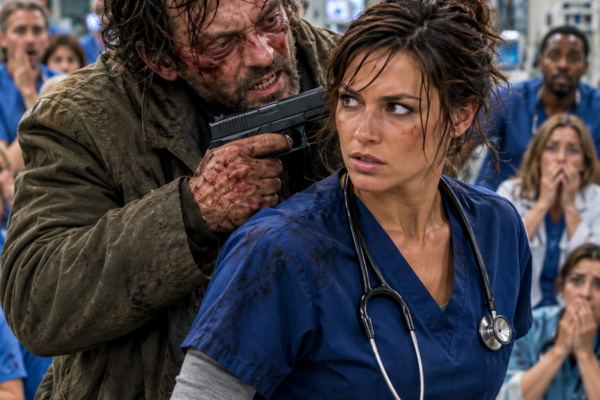
“I Only Accept Operator PHANTOM,” Said the Wounded Admiral, Pointing at the Nurse Entering the Room
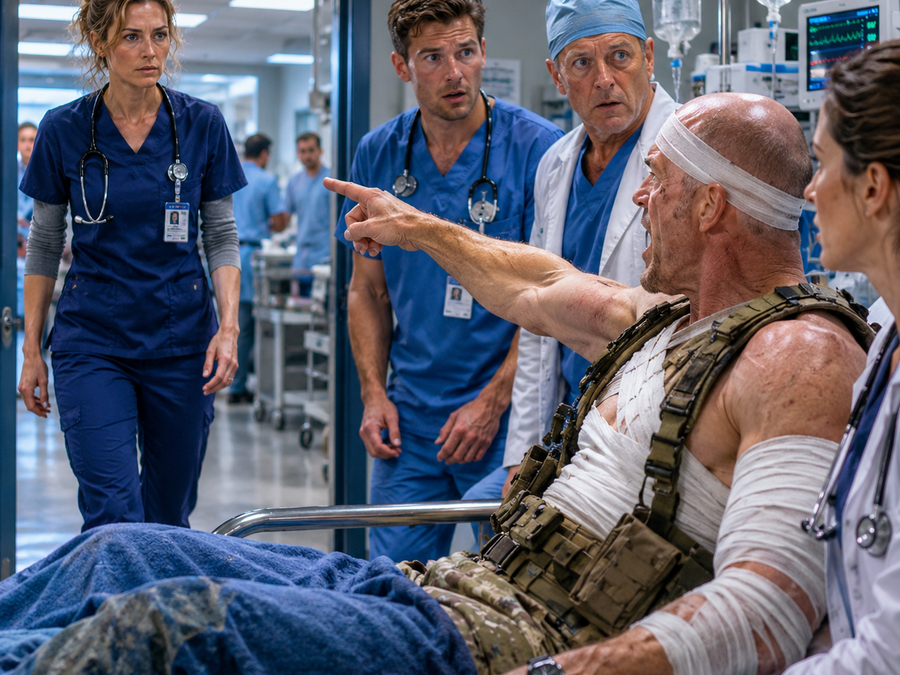
“I Only Accept Operator PHANTOM,” Said the Wounded Admiral, Pointing at the Nurse Entering the Room
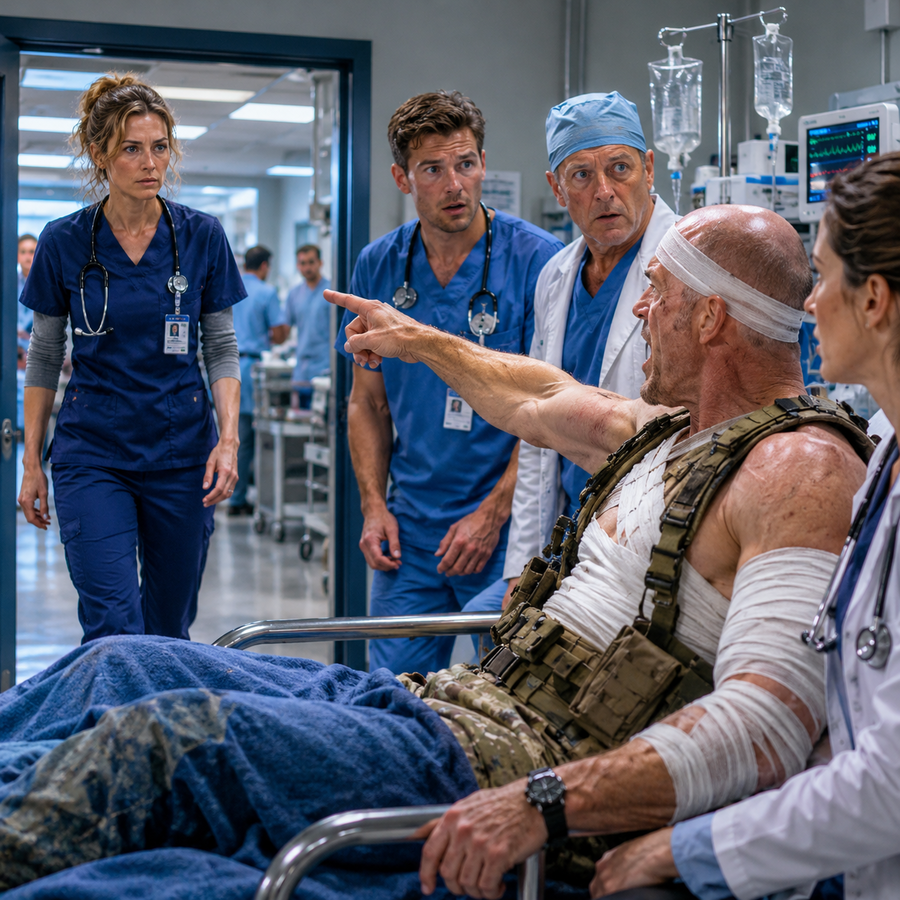
She never raised her voice in that hospital.
She never fought for space in the hallways where every doctor treated her like she was invisible. That silence ended the night a wounded admiral was wheeled into the trauma bay and pointed straight at her, gasping out a single word that froze the entire room.
A name she had buried years ago, a name nobody in that building was supposed to know.
While the doctors argued over protocol, his body was collapsing in a way only someone who had lived through war could recognize before it was too late.
Her hands, which had been trembling seconds earlier, began to move in a way nobody there had ever seen.
What she does next is not only medicine. It is memory.
It is war. And it is the beginning of a truth she swore she would never let surface again.
If this story pulled you in already, hit like, subscribe to Silent Badges Stories, and tell us in the comments who you think Ava really is, because the truth is coming, and it changes everything.
Charleston never looked like a city hiding secrets. Its harbor glowed gold in the evening light, its streets lined with palmettos and old brick facades that made tourists forget the weight history had left behind in every corner of it.
Liberty Cross Trauma Institute sat a few blocks from the water. A modern glass building wrapped around a much older structure, busy enough to matter, quiet enough that most nights passed without anything more dramatic than a broken wrist or a bad reaction to shellfish.
Ava Sinclair had learned a long time ago that the fastest way to survive Liberty Cross Trauma Institute was to make herself small. She kept her eyes on the floor tiles during rounds.
Her voice stayed low whenever she spoke to attending physicians. She let Dr.Marcus Reed finish his sentences even when he interrupted hers.
Because in this hospital, interrupting a nurse was considered normal and correcting a doctor was considered career suicide. For three years, she had worn the same expression, patient, quiet, harmless.
Nobody in Charleston knew that underneath the oversized teal scrub she wore, her body still moved the way it had been trained to move, fast, precise, economical.
Nobody noticed the thin scar above her left eyebrow or the small marks across her knuckles, because nobody looked at her long enough to notice anything at all. She had picked Charleston on purpose.
a midsized trauma center busy enough to disappear into. Small enough that nobody expected a decorated operator to be scrubbing bedpans on the night shift.
She had picked the name Sinclair from a list of common family names that raised no flags, no questions, no curiosity. She had picked teal scrubs two sizes too large because oversized fabric hid the shape of a body that still carried muscle memory of things civilians were never meant to see.
Every choice she made in this hospital was a small act of camouflage. And for three years, the camouflage had worked perfectly.
The hardest part had never been the physical training. It had been learning to let people underestimate her without reacting.
It had been standing in a supply closet at 2:00 in the morning. Breathing through the urge to correct a resident who had just misread a chest film.
Because correcting him would have meant explaining how she knew, and explaining how she knew would have meant unraveling everything she had spent 3 years burying.
Dr.Reed liked to make examples out of people in front of others.
That morning, the example was her.
Ava, a patient in Bay 4 needs his dressing changed, and I found it done incorrectly again, he said loud enough for the entire nurses station to hear.
I keep wondering if they actually taught you anything before they let you touch real patients. Reed had built his entire identity around being the smartest person in any room he walked into.
A habit that had served him well during residency, when charm and confidence were often mistaken for competence. He collected compliments the way other men collected watches, careful, deliberate, and always displayed for an audience.
Nurses who challenged him found their schedules quietly rearranged.
Nurses who agreed with him found themselves praised in front of administration.
Ava had learned within her first month exactly which category kept her safest, and she had stayed in it ever since. She did not argue.
Arguing meant attention, and attention meant questions, and questions were the one thing Ava Sinclair could not survive.
She apologized, corrected the dressing that had actually been done correctly, and walked away with her jaw tight and her hands steady, because steady hands were the only thing about her that never lied. In the supply room, alone for the first time all shift, she allowed herself 30 seconds to close her eyes and breathe.
The fluorescent lights buzzed overhead, a sound she had learned to tune out the way soldiers learn to tune out distant gunfire.
Present, constant, ultimately irrelevant if it was not aimed at you directly. She thought about the life she used to have, the weight of a pack on her back, the particular quiet of a night operation, the trust of men who would follow her into places most people could not imagine.
None of that mattered here. here.
She was simply Ava, a name chosen for how forgettable it sounded, attached to a woman nobody bothered to really see.
She opened her eyes, straightened her badge, and walked back onto the floor before anyone noticed she had been gone.
Around her, nurses exchanged glances.
Some pied her. Some assumed she simply lacked confidence.
None of them knew that the woman being humiliated in the hallway had once carried wounded men twice her size across open ground under enemy fire and had never once let her hands shake while she did it. Later that afternoon, Reed found a second reason to raise his voice, this time over a supply order he had misplaced himself.
He blamed Ava in front of two visiting residents, calling her disorganized, calling her the kind of hire that made him question the hospital’s screening process.
She apologized again, filed the paperwork correctly a second time, and returned to her station without a single word in her own defense, because defending herself would have meant raising her voice, and raising her voice was not a risk she could afford to take in a building full of people who had no idea who she really was.
By the time her shift crossed into the evening hours, the emergency department had settled into its usual rhythm.
minor fractures, a chest cold mistaken for cardiac distress, an elderly man confused about his medication schedule.
Ava moved through it all with practice patients, refilling supply carts, checking vitals, absorbing the quiet disrespect that had become as familiar to her as her own heartbeat. The trauma bay radio crackled to life at 11:42 that night.
A call coming in hot.
Gunshot wound and blunt force trauma. ETA 4 minutes.
Patient identified only as a high-v valueue government transport casualty.
The charge nurse barked out assignments. Reed puffed his chest and positioned himself at the head of the incoming bay, already rehearsing the version of the story where he was the hero.
Ava took her position at the side without being told, the way she always did, quiet, ready, unnoticed.
Outside, rain had begun falling in thin sheets against the ambulance bay windows, blurring the red and blue lights strobing off the wet pavement.
The doors of the rig slammed open before the vehicle had fully stopped. A sign that whatever was inside had already gone from bad to worse during transport.
The ambulance doors burst open and the noise hit first, shouting, wheels screeching wheels.
Monitors already alarming before the gurnie cleared the doorway.
A man in his 60s lay strapped down, silver hair matted with blood, a militaryissue jacket cut open across his chest, oxygen mask fogging with every ragged breath.
Two armed men in tactical vests flanked the gurnie, eyes scanning the room like predators checking for threats, not doctors checking for help.
Reed stepped forward immediately, calling out orders that sounded confident and meant almost nothing. because Reed had built his reputation on sounding right, not on being right.
Then the patients eyes opened.
They were pale blue, sharp despite the blood loss, despite the mask, despite everything his body was fighting through.
His gaze swept the room in a single practiced motion, cataloging exits, cataloging threats, cataloging faces, the exact way a man who had spent decades in combat zones cataloged everything before he trusted anything.
His eyes landed on Ava.
For one full second, nobody in the trauma bay moved. Then his hand shot up, weak, but urgent.
One finger extended directly at her, and his voice cracked through the oxygen mask with a force that should not have been possible from a man losing this much blood.
Phantom, he said.
“I only accept phantom.
” The word hit the room like a detonation.
Reed froze mid-sentence. The armed escorts turned their heads toward her with a speed that had nothing to do with hospital protocol and everything to do with recognition.
Monitors kept beeping.
Somebody’s pager kept buzzing.
And in the middle of all that noise, Ava Sinclair stood completely still, feeling 3 years of careful invisibility collapse in the space of a single word.
She knew that voice. She had heard it once years ago in a place that did not exist on any map handed to civilians.
in a moment she had promised herself she would never think about again. Vice Admiral Holloway, the man who had once looked at her, bleeding and 18 years old, and told her she had the steadiest hands he had ever seen on a battlefield.
You never looked at me.
You only looked down, she thought, staring at Reed for one brief burning second before her training took back control of her body. The memory arrived uninvited, sharp and unwelcome.
a dust choked compound, the air thick with smoke, a young operator barely out of training bleeding out on a stretcher, while more senior men argued about extraction routes instead of treatment.
She had been the one who ignored the argument entirely, packing the wound herself with hands that had never done it before, but somehow already knew how, because someone had trained her well enough that instinct filled in where experience had not yet arrived.
Holloway had been the ranking officer on that mission, watching her from across the compound with an expression she had never forgotten.
Not doubt, not concern, but recognition.
The look of a man realizing he had found something rare.
He had never once treated her like she was too small for the work in front of her.
He had simply nodded once and let her save the man’s life.
That single nod had meant more to her than any medal she was ever given afterward.
Reed opened his mouth to demand an explanation, but there was no time left for explanations.
Holloway’s oxygen saturation began dropping on the monitor, plummeting in a way that had nothing to do with the gunshot wound in his shoulder and everything to do with something far more dangerous building silently inside his chest.
His breathing turned shallow, then labored, then desperate. His lips beginning to shade toward blue, despite the mask forcing oxygen into his lungs.
Ava’s eyes moved from the monitor to his chest, to the subtle asymmetry in how it rose, to the veins beginning to bulge in his neck, and every instinct she had spent three years burying rose to the surface at once, sharp, certain, and impossible to ignore.
This was not simple blood loss.
This was a man’s lung collapsing, and the pressure building around it was about to stop his heart if nobody acted in the next 60 seconds.
What was happening inside Vice Admiral Holloway was one of the most dangerous complications in trauma medicine. Attention pneumothorax.
When a chest injury allows air to leak into the space between the lung and the chest wall, that air can become trapped, building pressure with every breath the patient takes.
Instead of staying contained, the pressure begins pushing against the heart and the major blood vessels, squeezing them, cutting off the body’s ability to circulate blood at all.
The classic warning signs are the ones now appearing on Holloway.
A rapid drop in oxygen levels, bulging neck veins, tracheal shift, and skin turning pale or blue from lack of oxygen.
Without immediate intervention, the heart can stop within minutes.
Not from the original wound, but from the pressure crushing it from the outside. The emergency treatment is called needle decompression.
A large bore needle is inserted into a specific location on the chest wall, typically the second intercostal space along the mid-clavicular line just above the third rib to avoid nerve and blood vessel damage running beneath each rib.
Once the needle enters the trapped air pocket, trapped gas releases with an audible hiss instantly relieving the crushing pressure on the heart and lungs.
It is considered one of the fastest life-saving interventions in trauma care.
A bridge that buys precious minutes until a formal chest tube can be placed. It requires calm hands, precise anatomical knowledge, and the willingness to act immediately because hesitation in this situation can cost a life within moments.
This procedure is taught in advanced trauma courses and combat medic training around the world.
And while it is not something to attempt without proper certification, understanding how and why it works helps explain why the next 60 seconds mattered more than anything else in that room. Reed shouted for a crash cart, his voice climbing with panic instead of authority.
The kind of panic that came from a man who had spent his career giving orders in situations he had never actually faced.
He reached for a stethoscope, wasting seconds listening to something he already should have understood from the monitor alone.
Behind him, a resident fumbled with the defibrillator pads, uncertain whether the situation called for them, while a second nurse scrambled to page the on call surgeon, her voice rising over the growing chaos filling the trauma bay. None of it would matter in time.
Cardiac arrest from tension.
Pumothorax did not wait for pages to be answered or surgeons to arrive.
It waited for nothing at all.
And every second spent deliberating brought Holloway closer to a heart that would simply stop trying. Ava did not wait for permission.
She moved past him with a calm efficiency of someone who had done this a hundred times before. Her hands already reaching for the equipment tray.
her voice cutting through the chaos with a tone nobody in that trauma bay had ever heard from her.
Tension pneumthorax right side. He needs decompression now or his heart stops, she said.
And there was no question in her voice, no apology, no hesitation, only certainty.
Reed opened his mouth to object, to reassert control, to remind everyone that he was the physician in the room.
But one of the armed men, the taller one with a scar cutting through his eyebrow, and the calm, watchful stillness of someone who had survived things most people in that hospital could not imagine, stepped forward and said one word that stopped every argument before it started.
Letter, his name was Graves, though nobody in that room knew it yet. And something in the way he said those two words carried more weight than every command Reed had barked out that entire shift combined.
Beside him stood a younger operator, quieter, watching the room with the same unreadable focus.
A man the team called Dutch, whose hand had drifted instinctively toward his sidearm the moment Holloway’s condition worsened, only relaxing when Graves gave a small shake of his head.
A second nurse near the doorway froze midstep, unsure whether to call for security or simply stay out of the way. Nobody in that trauma bay had ever seen two armed operators defer to a floor nurse over an attending physician.
And for a moment, the entire room seemed to hold its breath along with the patient.
Ava located the landmark on Holloway’s chest with fingers that moved fast but never rushed, prepping the sight, positioning the needle at the exact angle drilled into her body long before she ever wore a nurse’s badge.
She did not think about
the eyes watching her.
She did not think about Reed’s stunned expression or the monitors screaming behind her.
There was only Holloway, his failing breath, and the 60 seconds separating him from either surviving or not. The needle went in clean, precise, controlled.
A sharp hiss of trapped air escaped the moment it breached the pocket of pressure crushing his lung.
And almost instantly, his oxygen saturation began climbing on the monitor, his color returning, his labored breathing easing into something the room could finally call stable.
The monitor’s alarm finally quieted, replaced by the steady, rhythmic beeping of a heart no longer fighting against crushing pressure.
A respiratory therapist who had rushed in moments earlier stood frozen near the doorway, watching numbers climb back toward normal with visible disbelief. Even the resident who had been fumbling with the defibrillator pads lowered his hands slowly as if unsure whether he had just witnessed something miraculous or something that should never have been allowed to happen outside a combat zone.
For three full seconds, nobody spoke.
Then Graves stepped closer, studying her hands with an intensity that made Reed visibly shrink backward and said the words that would follow Ava for the rest of that night and every night after it.
Those are not a nurse’s hands, he said quietly.
That is battlefield training.
Ava’s finger stilled over Holloway’s chest, her pulse loud in her own ears because there was no version of tonight where she walked back into invisibility after this.
Reed stared at her like he was seeing a stranger wearing a familiar face. His earlier arrogance replaced by something closer to confusion, maybe even fear.
Admiral Holloway’s eyes fluttered open again, weaker now, but locked onto her with a clarity that cut straight through the sedation beginning to take hold.
I told them, he whispered. I told them only phantom touches me.
The name landed in the room like a second explosion, quieter than the first, but somehow heavier.
Graves and his partner exchanged a look loaded with history. Neither of them had spoken aloud yet.
Reed took a step back, his authority evaporating in real time, his mouth opening and closing without finding words strong enough for the situation collapsing around him. Ava kept working, stabilizing the chest tube setup that would need to follow, adjusting the flow of oxygen, monitoring vitals with hands that had stopped shaking the moment the needle went in and had not shaken since.
Whatever door she had spent 3 years keeping locked, it was open now, and there was no closing it again.
Somewhere behind her, she heard Reed murmur to another nurse, asking who exactly Ava Sinclair really was. And for the first time in 3 years, Ava did not feel afraid of the question.
She felt something closer to relief.
Dutch moved to the far side of the gurnie, helping the respiratory therapist secure the tubing while keeping his eyes on the door, scanning the hallway beyond it with the same restless awareness Ava recognized in her own body whenever she forgot to suppress it. A traumatic wheeled in the imaging cart, and for a few minutes, the room fell into the ordinary choreography of stabilizing a patient.
vitals called out, lines checked, oxygen adjusted, the machinery of medicine finally catching up to what her hands had already accomplished. Reed lingered near the doorway, his clipboard forgotten at his side, watching Ava work with an expression that had shifted somewhere between disbelief and something closer to shame.
He did not apologize. Men like Reed rarely did, but he also did not interrupt again.
And for Ava, the silence from him felt louder than any insult he had thrown at her that entire week. By the time Holloway was stabilized enough to be moved toward imaging, hospital administration had already caught wind of the incident, and word moved through Liberty Cross faster than any code call ever had.
The chief of trauma surgery, a stiff, image conscious man named Dr.Whitfield, arrived within the hour, flanked by a hospital attorney and a look on his face that suggested he had already decided someone needed to be blamed for tonight.
He found Ava in the hallway outside imaging. Her scrubs stained, her hands finally still, her expression unreadable.
“Nurse Sinclair,” he said, his tone clipped and formal.
“I am told you performed an unauthorized invasive procedure on a patient tonight without physician order, without documented certification on file, and without following the chain of command established in this facility.”
Ava met his eyes without flinching, something she had not allowed herself to do with any authority figure in 3 years.
I performed a needle decompression on a patient in tension pneumthorax, she said evenly.
Without it, he would have gone into cardiac arrest before Dr.Reed finished reading the monitor.
Whitfield’s jaw tightened.
That is not your call to make.
It was the only call available, she answered.
Nobody else in that room made it. Whitfield glanced at the attorney beside him.
The kind of glance that was meant to look professional, but only revealed how uncertain he actually was.
“Liability aside,” he said, his voice dropping into something closer to genuine confusion.
“Where exactly does a trauma nurse learn a procedure like that?
It is not part of any curriculum I have ever reviewed for this hospital.
” Ava held his gaze without offering an answer because there was no version of the truth she was ready to hand him in a fluorescent hallway outside imaging.
Not yet.
Maybe not ever. The silence stretched long enough that Whitfield shifted his weight, uncomfortable in a way hospital administrators rarely allowed themselves to be.
Before Whitfield could press further, Graves stepped into the hallway, his presence immediately changing the temperature of the conversation.
He was tall, quiet in a way that suggested restrained power rather than absence of it, and his eyes carried the particular exhaustion of a man who had spent most of his adult life protecting people who never knew his name.
“With respect, sir,” he said, addressing Whitfield without a trace of difference.
“That woman just saved the life of a man whose survival tonight matters a great deal more than your paperwork.
I would suggest your hospital worry less about her certification and more about who put a bullet in Vice Admiral Holloway in the first place and why two of my men are currently standing outside his door instead of trusting your own hospital security.
Whitfield’s confidence faltered the way confidence always did when it meant something with real weight behind it.
He excused himself with a stiff comment about following up later, retreating down the hallway with his attorney trailing behind him like a shadow that had lost its purpose. Ava watched him go, aware that this conversation was only postponed, not finished.
Hospitals like Liberty Cross ran on protocol and liability, and men like Whitfield rarely let a threat to either one disappear quietly. Whatever came next, paperwork, review boards, quiet threats of termination, none of it would matter as much as the two words still echoing in her mind from the trauma bay.
Let her.
two words that had cracked open a door she had spent three years welding shut.
Graves turned to Ava once they were alone, studying her with an expression that had shifted from suspicion to something quieter, more careful. You disappeared, he said 3 years ago.
No transfer record, no separation paperwork anyone could find. Nothing.
People still ask about Phantom. Some of them assumed you were dead.
I needed to be, she said quietly.
for reasons that have nothing to do with tonight.”
Graves nodded slowly. The way a man nods when he understands there is more beneath a sentence than the words themselves.
He did not push.
He simply studied the hospital hallway around them.
The fluorescent lights, the tired nurses, the ordinary chaos of a Tuesday night in an ER that had no idea what had just walked through its doors.
“You could have let him die tonight,” Grave said quietly.
Nobody in that room would have known the difference.
You could have stayed invisible.
I know, she answered. Why did not you stay quiet?
Ava considered the question longer than she expected to. Because invisible was never the same thing as gone, she finally said.
I buried Phantom.
I never buried what Phantom knew how to do. Grave studied her for a long moment.
Something unreadable passing behind his eyes. respect maybe or the particular recognition one operator reserves for another.
The admiral talks about you sometimes, he said.
Not often, not by name. But there is a story he tells young operators about the steadiest hands he ever saw in the field.
And I am starting to understand exactly who he was talking about.
Whoever put a bullet in him was not random, he said finally.
and whoever it was may already know exactly where he ended up tonight, which means they may already know you are standing next to him.
As if summoned by the thought itself, a man in a plain gray jacket approached the front registration desk at the far end of the corridor, asking the intake clerk in a calm, practiced voice whether a transport patient had been admitted that evening under a federal escort.
He carried no visible weapon and wore no obvious identification.
But Dutch, still positioned near Holloway’s door, straightened almost imperceptibly, his attention locking onto the stranger with the stillness of a man who had learned long ago that danger rarely announced itself loudly.
The clerk, unaware of anything unusual, began pulling up records on her terminal, her fingers moving toward information that should never leave that desk. Dutch crossed the distance without appearing to hurry.
The kind of walk that covered ground faster than it looked and placed himself casually between the registration desk and the hallway leading to Holloway’s room, blocking the sighteline without ever seeming to block anything at all.
He asked the man in the gray jacket a simple question about visiting hours.
Friendly, unremarkable, the kind of question hospital security guards asked a hundred times a night.
The man answered smoothly. Too smoothly, his eyes flicking once toward the hallway behind Dutch before he offered a polite excuse and turned to leave, disappearing back through the sliding doors into the rain soaked parking lot before anyone could stop him or ask for identification.
Dutch watched him go, then turned back toward the registration desk, quietly instructing the clerk to flag any further inquiries about transport patients and to notify security immediately if the same man returned. The clerk nodded, unsettled, unaware of how close she had come to handing sensitive information to someone who had no business asking for it.
Ava felt the old instinct rise before fear even had the chance to.
The instinct that had once kept her alive in places with no exits and no backup.
She glanced toward Holloway’s room down the hallway, toward the two armed men still stationed outside it, toward the quiet, watchful weight of a threat that had not yet shown its face, but was undeniably already moving.
closer now than any of them had expected it to come this soon.
Before returning to her post, Ava stepped into Holloway’s room for a brief moment.
Drawn there by something she could not fully name.
The admiral lay still beneath the monitors, sedated but breathing evenly now, his color restored, his chest rising and falling in the steady rhythm she had fought to give back to him.
She stood at the foot of his bed, the way she had once stood at the edge of countless cotss in countless forgotten places, watching, guarding, refusing to let exhaustion win before the mission was finished.
“You found me anyway,” she whispered so quietly that even the machines around her seemed to lean in to hear it.
After everything I did to disappear, you still found me. Holloway did not stir, but for a moment his fingers twitched against the sheet, as if some part of him deep beneath the sedation already knew she was standing there.
She stepped back into the hallway, closing the door softly behind her, and allowed one long breath before squaring her shoulders and walking back toward the trauma bay, back toward a shift that was far from finished, and a night that had only just begun revealing what it truly wanted from her.
3 years of invisibility had just ended in a single trauma bay. And whatever was coming next, Ava Sinclair understood one thing with absolute clarity.
She was not hiding from her past anymore.
She was standing directly inside it. By 6:00 in the morning, the story of what had happened in the trauma bay had traveled through every department in Liberty Cross, whispered between shift changes, exaggerated in some versions, understated in others, but always circling back to the same undeniable fact.
A nurse nobody had ever taken
seriously had saved the life of a decorated admiral using a skill no hospital curriculum had ever taught her.
Housekeeping staff mentioned it in the breakroom. Residents mentioned it during handoff.
Even the hospital chaplain making his usual rounds paused at the nurses station long enough to ask quietly whether the rumors were true, whether the small, quiet woman from Bayour had really done what everyone claimed. Ava answered none of the questions directed at her that morning.
She kept her head down, finished her charting, and moved through the department with the same practiced invisibility she had relied on for 3 years, though it no longer worked the way it once had. People looked at her now.
They actually looked.
A young resident she barely knew, the same nervous woman named Priya, who would later become something close to a protege, offered her a cup of coffee without being asked. an unremarkable gesture that nonetheless felt like the first genuine kindness extended to Ava in longer than she cared to admit.
Ava accepted it quietly, grateful in a way that surprised her, and allowed herself 30 seconds of something resembling peace, before the rest of the morning demanded her attention again.
Dr.Whitfield called Ava into his office before her shift technically began, the kind of summons designed to feel casual while carrying the full weight of a disciplinary hearing.
He sat behind a desk too large for the size of his actual authority, flanked again by the same attorney from the hallway, papers arranged in front of him with the precision of a man who wanted witnesses to believe he was simply following procedure.
Nurse Sinclair, he began, we have reviewed the incident report from last night.
And while the outcome was fortunate, the hospital cannot condone unauthorized invasive procedures performed without physician order. Effective immediately, you are suspended from clinical duties pending a full review by the credentiing board.
The attorney slid a printed form across the desk toward her, a formality meant to make the decision feel final, unappealable, already decided long before she had walked through the door.
Ava glanced at the paper without reaching for it, her mind already moving past the immediate consequence towards something Whitfield could not yet see coming.
Ava absorbed the words without reaction, the way she had absorbed every insult Reed had thrown at her for 3 years. Quiet, controlled, giving nothing away.
Understood, she said. Whitfield seemed almost disappointed by how little resistance he received, as if he had prepared himself for an argument that never arrived.
He shuffled his papers again, uncertain what to do with the silence she had handed him instead.
“I want you to understand,” he added.
his tone softening slightly. That this is not personal.
The hospital has liability standards that exist for a reason.
I understand liability, she said evenly.
I also understand that a man would be dead right now if those standards had been followed to the letter last night. Whitfield had no answer for that.
And the silence that followed lasted long enough to feel uncomfortable for everyone in the room except Ava herself. Before he could continue, the door opened without a knock.
Graves stepped inside, his presence immediately reducing the office to something smaller than it had felt a moment earlier.
Behind him, Dutch remained in the hallway, radio pressed to his ear, his expression tightening with something that had nothing to do with hospital politics.
“Doctor,” Graves said, his voice level, but carrying an edge that made the attorney sit up straighter.
“I understand you are concerned about paperwork.
I would suggest redirecting that concern because we have just confirmed that at least two individuals connected to the attempted assassination of Vice Admiral Holloway are currently within a fiveb block radius of this building and one of them attempted to access his patient information at your front desk less than 8 hours ago.
The color drained from Whitfield’s face.
That is he started then stopped unsure how to finish a sentence that suddenly had nothing to do with liability or procedure.
This hospital is not equipped for what may be coming, Graves continued.
Local police have been notified. Federal security is inbound.
But until they arrive, I need every advantage available to keep him alive. And right now, the person in this building with the most relevant experience is the nurse you just suspended.
The attorney shifted in his seat, clearly recalculating whatever legal strategy he had walked in prepared to defend. Whitfield looked between Graves and Ava, his authority crumbling in real time.
the careful architecture of hospital hierarchy collapsing under the weight of something far more serious than credentiing violations.
“I am reinstating her,” Whitfield said finally, his voice tight.
“Temporarily, pending further review.”
Graves did not thank him. He simply nodded once, the gesture of a man who had gotten what he needed and had no further use for pleasantries, and turned toward the door, expecting Ava to follow.
In the hallway, Dutch relayed what intelligence had come through so far. Two men matching the description of the individual from the front desk had been spotted near the parking structure, along with a third unidentified vehicle that had circled the block twice in the last hour.
Local law enforcement was stretched thin across a separate incident downtown, and federal backup remained at least 40 minutes out.
“40 minutes is a long time to hold a hospital,” Dutch said quietly.
not to anyone in particular, but the words landed heavy in the corridor.
Nurses passing through the hallway slowed their pace, sensing the shift in atmosphere without understanding its cause. A code team paged overhead for an unrelated emergency on the third floor.
An ordinary sound that suddenly felt strange against the weight of what Dutch had just said.
Somewhere down the corridor, a housekeeping cart rattled past, oblivious to the fact that the building around it had quietly become a target.
Graves turned to Ava, his expression unreadable.
“There is no real chain of command left in this situation,” he said quietly.
“There is only, however many of us are willing to stand between him and whoever wants him dead.”
Ava’s mind, the one she had spent 3 years forcing into silence, finally woke up completely.
She began cataloging the hospital layout the way she once cataloged terrain before an operation.
exits, choke points, elevators, stairwells, the vulnerable glass doors of the main entrance.
The underused service corridor behind radiology that connected almost every wing of the building without passing through a single public hallway. 3 years of walking these halls unnoticed had given her something no map or blueprint ever could.
A working, breathing understanding of every seam in the building’s defenses.
“We need to move him,” she said, her voice carrying an authority that startled even herself.
Not to a different room, to a position we can actually defend.
One entrance, no windows facing the street, close enough to the O that we can escalate quickly if something goes wrong medically during all of this. Graves studied her for a long moment.
There was something in his eyes that looked almost like relief, that he was no longer the only person in the building thinking in these terms. Where?
He asked.
The old records room behind radiology, she said.
single door, reinforced walls from back when it stored physical charts, no exterior windows, and it connects to the service corridor that runs the length of the building.
I have walked past it a thousand times without anyone noticing I was mapping every square foot of this hospital since the day I started here.
Dutch exchanged a glance with Graves, the kind of glance that passed silent agreement between men who trusted each other’s judgment completely. Lead the way,” Graves said to Ava.
And for the first time since she had walked into Liberty Cross Trauma Institute 3 years earlier, someone was following her instead of the other way around.
Dutch, quiet since the meeting in Whitfield’s office, fell into step beside Ava as they moved toward the records room, studying her with the careful assessment of someone deciding how much weight to place on a person he had known for less than a day.
“You move like someone who has done this before,” he said.
“Not quite a question.
A long time ago, she answered. Good, he said simply.
Because right now, a long time ago is worth more than every security guard in this building combined.
Hospital administration authorized a quiet, partial lockdown minutes later, framed publicly as a routine security drill to avoid alarming patients.
Visitors quietly redirected away from the affected wing.
Elevators to the third floor restricted.
Non-essential staff reassigned to other departments without explanation. Reed, still processing the events of the previous night, found Ava near the nurses station as the lockdown procedures unfolded around them.
“What do you need from me?”
he asked, and something in his voice carried none of the arrogance she had grown so accustomed to over 3 years.
“Keep the emergency department running smoothly,” she said.
If anything happens, the last thing we need is a second crisis breaking out because the front of the hospital was not covered. Reed nodded once, and to his credit, he did exactly that for the remainder of the night, managing incoming patients competently, deferring questions about the lockdown to hospital security exactly as instructed, doing the one thing he had always been capable of when his ego was not standing in the way.
Moving Holloway required coordination that no hospital protocol had ever accounted for. Ava organized the transfer herself, directing a skeleton crew of trusted staff while keeping the official reason vague.
Infection control precaution, temporary relocation, language bland enough to avoid panic, but specific enough that nobody questioned it twice.
Reed, still shaken from the night before, offered no objection when Ava issued instructions, something that would have seemed impossible 24 hours earlier.
She moved through the preparation with a calm that surprised even the staff who had already witnessed her work the night before. She checked the records room herself first, testing the reinforced door, confirming the absence of exterior windows, tracing the length of the service corridor with her eyes, the way a soldier traces an escape route before ever needing one.
Every decision she made carried the weight of habits she had spent 3 years pretending she no longer had. The records room, converted into a temporary treatment bay, felt cramped but defensible, exactly as Ava had described it.
A single reinforced door served as the only entrance.
Monitors were wheeled in and connected quickly, and Graves positioned Dutch at the junction where the service corridor split toward the loading dock, the most likely route anyone hostile would attempt to use.
Ava checked Holloway’s vitals one final time before stepping into the corridor to help coordinate the perimeter.
His oxygen levels steady, his color holding, his body finally resting the way it needed to after the trauma it had survived.
Midway through positioning the perimeter, the monitor inside the records room let out a sharp, unwelcome alarm.
Holloway’s oxygen saturation dropping suddenly, his breathing shifting into the same shallow, labored pattern that had nearly killed him the night before.
The nurse assigned to watch him called out for Ava immediately, panic edging into her voice despite her training.
Ava split her attention instantly, the tactical assessment of the corridor narrowing to a single urgent priority.
She moved back into the records room fast, scanning Holloway’s chest with the same focused precision she had used hours earlier, quickly identifying a partially oluded chest tube rather than a second pneumathorax, a mechanical problem rather than a physiological collapse, something correctable within seconds if handled properly.
She adjusted the tubing, clear the obstruction, and watched his oxygen levels climb steadily back toward normal. Her hands moving with the same steadiness that had defined every crisis she had faced that night, medical or otherwise.
Behind her, Graves appeared in the doorway, his expression tight with the particular tension of a man forced to trust someone else’s judgment in a moment where he had no ability to verify it himself.
He is stable, she said without turning around, still watching the monitor climb back into a safe range. Mechanical issue, not a new emergency.
Go back to the corridor.
I have him. Graves hesitated only a moment before doing exactly as she said.
And in that hesitation, Ava recognized something that felt almost like being trusted completely.
The particular trust reserved for people who had already proven more than once that they could be relied upon when everything else was falling apart.
The first sign of trouble came from the parking structure camera feed Dutch had patched into his radio.
Three individuals moving on foot toward the loading dock entrance.
Faces obscured, movements too coordinated to be anything other than deliberate. Not local police, not hospital security.
Men who moved like they had trained together, the way Ava herself had once trained with people whose faces she still saw sometimes in the space between sleep and waking.
They are coming through the dock,” she said into the radio Graves had handed her earlier.
An old habit resurfacing so naturally, it startled her how easily her voice slipped back into command cadence.
“Dutch, hold the junction.”
Graves, seal the corridor behind me.
“I am going to slow them down before they reach the door.”
“Absolutely not,” Graves said immediately.
“You are not trained for direct engagement anymore.
You are a nurse.
I trained years before I ever wore scrubs, she answered. The woman standing in that corridor was no longer the version of herself who apologized for correcting mistakes she had not made.
Right now, she was the only person in this building who knew exactly how this hospital was laid out well enough to buy the time they needed. Graves held her gaze for a long moment, weighing instinct against protocol, weighing trust against everything he thought he understood about the situation.
Fine, he said finally.
But you do not engage directly.
You slow them. You redirect them.
You buy time. That is the mission.
Nothing more. Understood, she said, already moving.
She used the hospital the way she had once used unfamiliar terrain.
Turning off half the lighting in the service corridor from a maintenance panel she had noticed months earlier during an idle shift, creating confusion in a space that should have been simple to navigate. She triggered a fire door alarm two corridors away from the records room, drawing attention and personnel toward a false emergency, buying precious minutes while the real threat adjusted its approach.
A cluster of night shift staff gathered near the false alarm, confused, checking badges and radios, unaware that the disruption had been engineered deliberately rather than triggered by any actual malfunction.
A security guard radioed in, reporting nothing visibly wrong, and was quietly redirected by Graves through the hospital’s internal channel to continue investigating rather than stand down, buying additional minutes without raising further alarm among the wider staff.
Her pulse stayed even the entire time, a steadiness that felt almost foreign after 3 years of forcing calm through sheer discipline rather than earning it naturally. This was different.
This was the version of calm that came from purpose instead of suppression. And some quiet part of her recognized how long it had been since she last felt this fully awake inside her own body.
The corridor stretched ahead of her in half darkness, familiar in a way that felt almost strange given the circumstances. The same tiled floor she mopped grievances into during a 100 quiet night shifts, now serving as the last line of defense between an admiral and the men sent to finish what a gunshot wound had failed to accomplish.
She kept her breathing slow and even, the way she had trained herself to do long before Charleston, before Liberty Cross, before the name Ava Sinclair had ever existed at all.
When one of the intruders finally rounded the corner near the loading dock, flashlight sweeping the dim corridor, Ava was already positioned behind a supply cart, invisible in the way she had spent three years perfecting, watching, waiting, reading his movement the way she once read enemy patrol patterns in places far from any hospital. She did not attack, nor did she need to.
Waiting until he passed the angle of a side hallway, she triggered the automatic doors leading to an adjacent stairwell, sending a burst of noise and motion sensor lighting that pulled his attention completely away from the direction of the records room.
The man cursed under his breath, radioing something to his partners in a clipped, professional tone that confirmed exactly what Ava had already suspected. This was not a random attack, but a coordinated extraction attempt executed by people who had done this kind of work before.
He moved toward the stairwell, drawn by the noise exactly as she had planned, disappearing from the main corridor entirely. Dutch intercepted a second intruder near the junction, exactly where Ava had predicted he would attempt to bypass the main corridor.
A brief controlled struggle ending with the man restrained and disarmed before hospital security, finally alerted by the fire door alarm, arrived to secure him.
Dutch worked with the economy of someone who had done this more times than he probably cared to remember, pinning the man’s arm at an angle that offered no room for resistance, speaking into his radio in short clipped bursts that confirmed the junction was secure without wasting a single unnecessary word.
Corridor secure, second target down, he reported, his voice carrying the same flat calm Ava recognized from her own training. The particular steadiness that came from doing dangerous work so often that panic simply stopped being an available option.
Copy, Ava replied into her own radio, already moving toward the next position, her mind tracking the remaining threat with the same clarity she once reserved for missions that mattered far more than credentiing boards or hospital politics.
The third intruder, the same man in the gray jacket from the front desk the night before, moved with more caution than the others, clearly aware that something about tonight had not gone according to whatever plan he had walked in with. He found the service corridor darker than expected, quieter than expected, and ultimately impossible to navigate without triggering one confusion after another.
Ava’s doing each obstacle placed with the precision of someone who understood exactly how much pressure a person could withstand before making a mistake.
He paused at a junction, listening, his flashlight beam sweeping slowly across walls that offered no answers.
Somewhere above him, a vent rattled from the building’s aging ventilation system.
An ordinary sound made sinister by the tension already coiled through his shoulders.
He took a breath, steadied himself, and pressed forward toward what he believed was the final stretch between himself and his target.
When he finally reached the junction near the records room, Graves was waiting, having repositioned the moment Dutch confirmed the second intruder was secure.
The confrontation ended quickly, professionally, without unnecessary violence.
The man restrained and disarmed before he ever got within 30 ft of Holloway’s door.
“Who sent you?”
Graves demanded quietly, pressing just enough to make the question clear without crossing into anything federal agents would later object to. The man said nothing, his jaw tight, his eyes calculating even from the floor.
The practice silence of someone trained to give away nothing regardless of circumstance.
Graves did not press further.
Silence in this line of work was itself an answer, confirmation that whoever had sent these men had trained them well enough to expect exactly this outcome if things went wrong. By the time federal security finally arrived, sirens cutting through the early morning quiet outside.
The threat inside Liberty Cross had already been neutralized.
Not through gunfire, not through force, but through a woman who understood a hospital’s architecture better than the men trying to breach it, and who had spent the entire encounter proving something she had denied herself for 3 years.
Federal agents swept the building methodically, confirming each corridor clear, photographing the restrained intruders, questioning hospital security about the sequence of events with the careful thoroughess of people who understood how close the situation had come to becoming something far worse than it had. Whispers moved through the staff who had witnessed fragments of the night, none of them fully understanding what had happened.
All of them certain that whatever it was, it had something to do with the quiet nurse from Bay 4. She had never stopped being exactly who she used to be.
Whitfield arrived on scene minutes later, disheveled, overwhelmed, staring at the restrained intruders being led out by federal agents with an expression that suggested his entire understanding of the night had collapsed sometime while he was still asleep at home. He found Ava
standing near the records room, calm, steady, her uniform barely disturbed despite everything that had just happened around her.
I do not understand, he said quietly, more to himself than to her. 3 years and none of us knew.
That was the point, she answered. Federal agents spent the following hours securing the scene, interviewing staff, and confirming the identities of the three men who had attempted to breach the hospital.
Graves briefed a senior agent privately.
Though fragments of the conversation drifted into the hallway where Ava stood, enough for her to understand that Holloway’s transport that night had never been random, that someone within a compromised communications channel had leaked his location, and that the men who came for him had been sent specifically because they believed no real resistance would be waiting inside a civilian hospital.
The senior agent, a stern woman named Reyes, who carried the tired authority of someone who had handled a hundred crises before breakfast, asked Ava a series of careful questions in a small conference room borrowed from hospital administration.
She wanted to know how Ava had known which corridor to defend, how she had anticipated the intruders movements with such precision, how a civilian nurse had executed what amounted to a controlled tactical response without formal orders or backup.
“I am not a civilian,” Ava
finally said.
the words landing plainly without drama. The simple truth she had spent 3 years avoiding.
Not really.
I just stopped being one of the visible ones.
Rehea studied her for a long moment, then nodded slowly, closing her notebook without pressing further.
The particular respect of someone who recognized competence when she saw it and understood when a story did not need to be finished out loud to be believed. For what it is worth, Reyes added before leaving the room.
Whatever paperwork exists on your old life, it will not be finding its way into any civilian file because of tonight.
Some debts get repaid quietly. Ava thanked her, though the gratitude felt smaller than the relief actually sitting beneath it.
The understanding that whatever fragile piece she had built in Charleston would not be dismantled by federal bureaucracy simply because it had finally been tested.
“They were wrong,” Graves told the agent loud enough for Ava to hear.
They had no idea who was standing between them and their target.
By midm morning, Vice Admiral Holloway had regained enough strength to sit upright, still weak, still recovering, but alert in a way that made the entire trauma team visibly relax. He requested one visitor before federal debrief protocols sealed his room from outside contact for the remainder of his recovery.
Ava entered quietly, the door closing behind her with a soft, deliberate click.
“You should not have had to do any of this,” Holloway said.
his voice but steady. Not the decompression.
Not what happened after. I never wanted my past to reach into whatever life you built for yourself.
It found me anyway, she said. It always does.
Holloway studied her for a long moment, the same way he had studied her once across a smokefilled compound years earlier. Recognition, respect, the particular understanding shared only by people who had survived the same kind of world.
Phantom, he said quietly, using the name in private now instead of shouting it across a trauma bay. You saved my life twice.
Once years ago when nobody was watching, and once last night in front of an entire hospital that had no idea who you really were. I am not that person anymore, she said.
Though even as she said it, she understood how untrue the words had become somewhere over the last several hours. Holloway shook his head slowly.
You never stopped being that person.
You just stopped letting anyone see it.
He shifted against the pillows, wincing slightly at the movement, and continued in a quieter voice, one that carried the weight of something he had clearly wanted to say for longer than just tonight. I have thought about you more than you probably realize over the years.
Wondered where you went. Wondered if whatever made you disappear was something I could have prevented back when I still had the rank to protect the people under my command.
It was not your failure, Ava said quietly.
It was mine. I could not keep carrying what the work asked of me, and I did not know how to stop except to disappear entirely.
And now, he asked, “Do you still feel that way?”
Ava considered the question honestly, perhaps for the first time in 3 years.
“No,” she said finally.
“Not anymore.
last night reminded me that disappearing and healing were never actually the same thing.
I only ever managed the first one.
Holloway reached out, his grip weaker than she remembered, but no less certain. And squeezed her hand once before letting go.
Then maybe it is time you figured out the second one, too, he said.
Preferably somewhere they let you keep saving lives without pretending you do not know how.
Outside the room, word of what had truly happened during the night had spread far beyond exaggerated rumors passed between exhausted staff. Reed, summoned to a private meeting with hospital administration and a federal liaison, was informed in careful procedural language that his conduct during the incident, his failure to recognize a life-threatening emergency, his dismissive treatment of the nurse who ultimately saved the patients life, would be formally reviewed.
Reed sat through the meeting with the posture of a man who had spent years believing his charm could talk his way out of any consequence, but the liaison’s questions left little room for deflection.
“Doctor, can you walk us through the diagnostic steps you took upon initial assessment of the patient?”
she asked, her tone clinical, unhurried, devastating in its precision. Reed stumbled through an answer that revealed exactly what everyone in that room already suspected, that he had relied on assumption rather than examination, confidence rather than diagnosis.
There would be no dramatic public humiliation, no viral moment of comeuppance broadcast through the hospital. Only the quiet, permanent erosion of a reputation Reed had spent years building on charm instead of competence.
He would keep his position, but something in the way his colleagues looked at him afterward would never fully return to what it had been before that night.
Nurses who once flinched at his tone began meeting his eyes instead.
Residents who once laughed at his jokes began double-checking his orders.
It was not punishment in any form the hospital’s paperwork could measure, but it was consequence all the same, the kind that outlasted any formal review.
Reed himself seemed to understand this shift better than anyone expected. He stopped raising his voice in the hallways.
He began asking questions instead of issuing corrections, particularly around Ava, whose judgment he had learned at considerable personal cost, to trust more than his own instincts. It was not redemption exactly, but it was the beginning of something that resembled it, a slow, unglamorous rebuilding of the kind of doctor he could have been all along, had arrogance not gotten there first.
Whitfield, for his part, personally reversed Ava’s suspension before the review board even convened, quietly amending the incident report to reflect what federal agents had already confirmed that her actions had not only saved Holloway’s life, but had prevented a potential mass casualty event within the hospital itself.
He requested a private meeting with her the following afternoon, closing his office door behind them both, a gesture he had never once extended to her in 3 years of employment.
“I owe you an apology,” he said.
the words visibly costing him something. I made a decision based on liability without understanding the full situation, and it very nearly cost this hospital the one person capable of protecting it.
He did not apologize directly in the exact word she might have expected.
Men like Whitfield rarely spoke in such plain terms, but he made certain in every meeting that followed that Ava Sinclair’s name was mentioned with something closer to respect than suspicion, and that her clinical judgment was never again questioned without cause.
The credentiing board convened the following week regardless procedure demanding a formal review even after the suspension had already been reversed.
Ava sat across from five board members in a conference room that felt considerably smaller than the weight of the conversation happening inside it.
Federal documentation supporting her account laid out neatly on the table between them.
One board member, an older physician named Dr.Dr.Alvarez, who had spent decades in trauma medicine before moving into administration, studied her file for a long moment before speaking.
“I have reviewed thousands of incident reports in my career,” Doctor Alvarez said finally.
“I have never seen one where the recommendation from every federal agency involved was simply to thank the nurse in question and get out of her way.
” The board voted unanimously to clear her of any wrongdoing, quietly recommending in language rare enough that even the hospital attorney raised an eyebrow reading it.
That Liberty Cross consider formal recognition of her contribution to traumaare within the institution.
Local news outlets picked up a heavily sanitized version of the story within days, framing it as an armed intrusion successfully thwarted by hospital security and federal agents, Ava’s name never appearing in a single published account, exactly as Graves had quietly arranged with the agencies involved.
She read one article on her phone during a break, struck by how completely it erased her presence from a night she would carry with her for the rest of her life, and found, to her own quiet surprise, that she preferred it that way. Some truths were not meant for headlines.
Some were only meant for the people who needed to understand them firsthand. Graves found Ava near the ambulance bay as the sun finally rose fully over Charleston, painting the wet pavement gold where rain had fallen only hours earlier.
He extended a hand, not in formality, but in the particular gesture shared between people who had trusted each other with something that mattered.
The team still talk about Phantom, he said. Most of them assumed you were gone for good.
Some of them assumed worse. It might mean something to a few of them, knowing you are still out here, even if you are wearing scrubs instead of gear.
Ava considered the offer buried inside his words. The unspoken invitation back into a life she had walked away from for reasons that still lived quietly beneath everything she had rebuilt since.
What would you tell them? She asked.
If I asked you to, that you are exactly where you are supposed to be, he said.
and that anyone who ever doubted it clearly never watched you work.
“I am not going back into the field,” she said finally.
“But I am done pretending I do not know how to save people the way I was trained to.
” Graves nodded, understanding immediately, respecting the boundary without needing further explanation.
“There is a program,” he said, “training combat medics and hospital trauma staff together, closing the gap between battlefield medicine and civilian emergency care.
It needs someone who has lived on both sides of that gap.
No deployment, no combat. Just teaching people how to keep each other alive.
That sounds like something worth doing, she admitted. It sounds like something only you could actually do well, he corrected.
She smiled faintly at that, the expression small but genuine, the kind of smile that had not visited her face often in 3 years of careful invisibility.
“Send me the details,” she said.
“No promises yet.
But send me the details. Ava looked out over the ambulance bay, over the hospital that had spent 3 years underestimating her, over the life she had built out of careful invisibility and quiet competence, and felt something shift inside her chest.
Not fear, not reluctance, but readiness.
“I will think about it,” she said.
And for the first time in years, she meant it honestly instead of using the phrase to end a conversation she had no intention of continuing. In the weeks that followed, Ava Sinclair remained at Liberty Cross Trauma Institute, though very little about her presence there remained the same.
Staff who once overlooked her now sought her guidance during difficult cases. Reed, humbled in ways that never needed to be announced publicly, began asking her opinion before making decisions instead of after making mistakes, she began quietly training select staff members in trauma techniques rarely taught outside military medicine, careful to keep the sessions practical rather than theatrical, focused entirely on saving lives rather than proving a point she no longer needed to prove.
One afternoon, a nervous second-year resident named Priya approached her before shift, asking hesitantly whether Ava might walk her through chest trauma recognition sometime.
Having heard secondhand what had happened weeks earlier and wanting to understand it properly instead of through rumor, Ava spent 20 unhurried minutes at an empty nurs’s station sketching lung anatomy on a scrap of paper, explaining pressure differentials and warning signs in language that made the concept feel approachable instead of intimidating.
Watching something shift in the young resident’s posture, the same quiet confidence Ava herself had once been given by a ranking officer who simply trusted her enough to let her learn.
Priya returned the following week with more questions, then again the week after that, until the informal sessions became something closer to a standing arrangement, a small pocket of the hospital where trauma recognition was taught the way it should have been taught all along, through patience and repetition rather than intimidation and
shame.
Other residents noticed, a few asked to join.
What began as one nervous question before a shift slowly grew into something resembling the training program Graves had once described, built quietly, without fanfare, entirely inside the walls of the hospital that had spent 3 years underestimating the woman now shaping how it trained its newest doctors.
She never wore the call sign phantom openly again, but she stopped flinching whenever someone used it in private conversation with Graves or Dutch.
Both of whom visited periodically to check on Holloway’s continued recovery and increasingly simply to see her.
Vice Admiral Holloway was discharged 3 weeks later, walking out of Liberty Cross under his own strength, stopping briefly at the nurses station to shake Ava’s hand in front of colleagues who finally understood exactly who she was and exactly what she had always been capable
of.
Staff members who had worked beside her for 3 years without truly seeing her, gathered quietly near the station, watching a decorated admiral treat their coworker with a level of respect none of them had known to offer her themselves.
Priya stood near the back of the small crowd, watching with the particular attentiveness of someone taking mental notes on what real competence actually looked like.
“You were never hiding weakness,” he told her quietly before federal escorts guided him toward the waiting vehicle outside.
You were hiding command.
Ava watched him go, standing in the same hallway where she had once made herself as small as possible to survive each shift unnoticed.
The doors slid shut behind him and the ordinary sounds of the hospital resumed around her.
Monitors beeping, a phone ringing at the front desk. The quiet shuffle of shift change beginning somewhere down the corridor.
Life continuing exactly as it always had, except that she no longer felt the need to disappear into the background of it.
She did not feel the need to disappear anymore. She had spent 3 years believing that invisibility was the only way to keep the world safe from what she used to be.
When the truth had always been simpler than that, the world needed exactly what she used to be.
It always had. She just finally let it see her.
Charleston’s harbor still glowed gold most evenings when her shift ended, the same way it always had, indifferent to everything that had happened inside the walls a few blocks from the water.
Ava walked home along the same street she had walked for three quiet years. Except now she walked them upright, unhurried, no longer bracing for the next small cruelty waiting for her at the nurses station.
Somewhere behind her, Liberty Cross Trauma Institute continued its ordinary rhythm of sirens and monitors and quiet, exhausted competence forever changed in ways most of its staff would never fully understand. All because one night a wounded admiral had looked across a chaotic trauma bay and remembered a name nobody else was ever supposed to know.
The end. The life-saving procedure at the heart of this story, needle decompression for tension pneumthorax, addresses one of the most immediately dangerous complications in trauma medicine.
When trapped air builds pressure inside the chest, it can crush the heart and major blood vessels from the outside, cutting off circulation within minutes if nothing is done. Recognizing the warning signs, dropping oxygen levels, bulging neck veins, and rapid deterioration in breathing can mean the difference between life and death long before advanced equipment ever arrives.
While needle decompression itself requires proper medical training and certification to perform safely, understanding how the body responds to chest trauma and how quickly professionals must act helps everyone appreciate why programs like stop the bleed and basic emergency response training exist.
You do not need to be a soldier or a nurse to learn how to recognize a life-threatening emergency or how to call for help fast enough to matter. Anyone with the right training can learn to be the calm, steady presence someone else needs in their worst moment.
That is the quiet heroism this story hopes to honor.
Not the exceptional few, but the everyday courage available to anyone willing to learn.