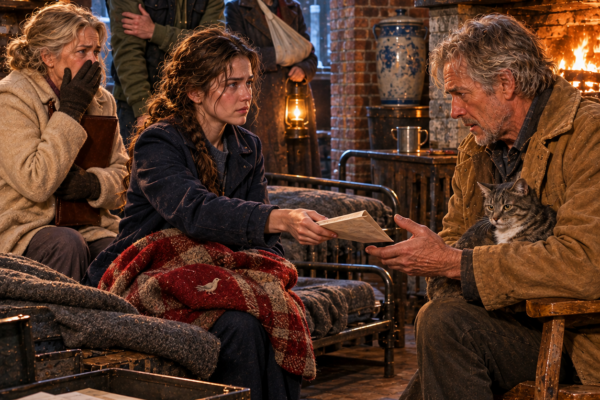
What Was Behind the Cracked Oven Wall of the Old Bakery?
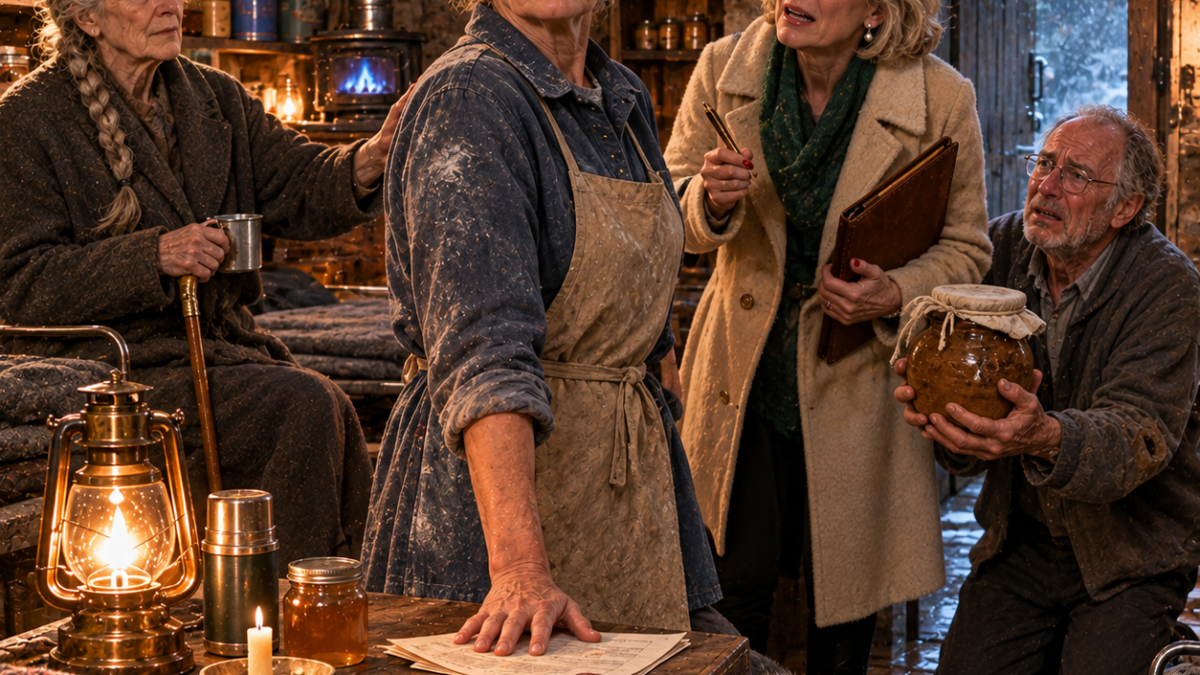
What Was Behind the Cracked Oven Wall of the Old Bakery?
At 62, Greta Vasek had stopped asking her little sister for anything because the answer was always a smile.
So, when Sylvia took the house on Linden Hill, the bankbook with $6,300 of flower money and the crock that held their grandfathers sourdough and called the old bakery what mother wanted, Greta thanked her.
The bakery stood shut and cold as a cellar.
On her second night there, a warm breath came out of the brick beside the cold oven smelling of caraway and old yeast and the stray dog she had fed would not stop scratching at the wall. Behind it lay a room her grandfather had bricked up 60 years before and a building her sister had called a money pit and would soon come back to buy.
To understand what she found, you have to start with the morning her sister drove her to her new home. It was the 11th of January, a Monday, and the kitchen windows at Linden House were furred with frost.
The kitchen smelled of cold toast and furniture polish.
Cardboard boxes stood in a row under the copper pots and on the table sat a stack of papers squared to the edge with a gold pen laid across them like a bar across a gate.
Greta stood by the stove with a cup of tea gone lukewarm.
She was a short, solid woman with gray curls cut close, dark eyes in a round face, and forearms scarred silver from 36 years of oven doors. She had lived in this house for 11 weeks since the autumn her mother stopped managing the stairs and had given up her rented rooms over the hardware store to do it.
Her mother had been dead for 13 days. Its all settled, Greta, said Sylvia.
You signed on Wednesday and Mr.Dacy filed it Thursday, and theres no sense dragging things out in the cold.
Sylvia Pratt was 59, slim and polished with a sleek silver blonde bob, a cream wool coat she had not bothered to take off, gold reading glasses on a chain, and nails the color of a ripe cherry.
She had been the pretty one, always, and had grown into a woman who made kindness sound like an invoice. Nobody is throwing you out, Sylvia said.
Im moving you somewhere you can breathe. Russell and I have plans for this house, and mother wanted you to have the bakery.
She said so to me, too, said Greta quietly.
In the hospital, she didnt say anything about the house.
Well, there you are. Sylvia smiled.
Now, let me carry the little things for you. Youve had such a dreadful month.
It took them 6 minutes. Greta would count them afterward, in the dark, and it always came to six.
First, the keys to their mothers old green station wagon on a cracked leather tag that said Lucille.
The car was estate property until probate closed, Sylvia explained, and Greta would hardly need it, being so close to everything.
Greta laid them on her palm and then in her sisters.
Then the bankbook, a small blue book from the credit union, which recorded every Friday for 40 years.
$6,311.
Her mother had called it the flower fund in case the bakery ever opened again.
Sylvia said it would be folded into the estate account for safekeeping.
Its only prudent, Sylvia said. Let me carry that for you.
Then their mothers cameo ring, which Greta had asked for and which Sylvia said she would put by.
Greta knew perfectly well what by meant.
Last of all, the crock. It sat on the shelf over the radiator, a squat brown stoneware pot with a chipped lip and a linen cloth tied over the top with string.
Inside was the starter. Her grandfather Josef had mixed it in the back room of the bakery in the winter of 1948 from flour and water and a handful of rye and it had been fed every morning since by Josef and by Gretas father Anton and then by Greta.
It was 78 years old and it was the only living thing in the family older than the house.
That, said Sylvia, will have to go.
Honestly, Greta, its a health hazard and I cant have it in a kitchen Im going to show to buyers.
Russell will see that its taken care of. Taken care of how?
Oh, in the proper way.
Sylvias smile did not alter. Russell?
Her husband had been standing in the pantry doorway the whole time. Russell Pratt was 60, soft and balding with kind, tired blue eyes behind smudged glasses and a gray cardigan with a hole in the elbow.
He crossed the kitchen and lifted the crock in both arms like a man carrying a sleeping child and for one instant his eyes met Gretas over the linen cloth and there was something in them she could not read.
Then he looked at the floor and carried it out the back door into the snow. Her sister held out a $20 bill and a second 20.
For groceries, she said.
And theres a bag in the car.
I wont have it said I sent you off hungry.
The bag held a loaf of supermarket bread in a plastic sleeve, a jar of peanut butter, a small box of tea, two cans of soup, a stick of butter, and a bag of oats. Greta said nothing because there is a kind of cruelty so well-mannered that to answer it is to appear unkind.
They drove down Linden Hill in Sylvias white car. It was 11 minutes by the dashboard clock.
Alder Falls lay below them in the white morning, a river town gone quiet with the shut mill by the water and its stack standing against the sky like a finger raised for silence. Nobody was out.
The bank clock on Third Street said nine below zero.
Vaseks Bakery stood on the corner of Third and Cooper, a two-story brick building from 1948 with a flat tin roof and its name on the glass in faded gold letters. It had been shut since the spring of 2017 when the supermarket opened out by the highway.
A drift of snow lay against the door.
Its solid brick, Sylvia said, switching off the engine. The gas company shut the line off years ago and the electrics off at the panel.
Harbor Line sends someone around every month to look and I told them they neednt bother you.
She laughed lightly. It really is a money pit, dear, but its yours, free and clear, and thats more than most people get.
Youll thank me when youre warm.
Theres no heat, said Greta. Theres the stove upstairs.
Sylvia glanced at the dashboard clock. Russell will send the rest of your boxes.
She got out and opened Gretas door for her, which she had not done since they were girls.
She kissed the air beside Gretas cheek, then she got back into the car and the white car pulled away from the curb with its signal blinking at the empty street and turned the corner at Fourth and did not look back. Greta stood on the sidewalk with a cardboard box in in arms and $40 in her pocket.
She had not been inside for 9 years.
She found the key under the loose brick by the back step, where it had always been, and it still turned.
Inside, the bakery was a cathedral of cold.
She stood in the doorway of the front shop and let her eyes learn the dark.
The long oak counter under its sheet, the glass cases dull with dust, the shelves where loaves had once stood in rows like choir boys. Her breath hung before her face.
The apartment upstairs was worse.
The pipes burst, and a long gray tongue of plaster hanging over the bed.
She came back down to the production room at the rear, where the great gas oven stood black and dead, and the steel table scarred with a thousand mornings, and the flour bin in the corner with its lid shut like a closed eye.
Well, Papa, she said aloud, and at the back, filling the whole east wall, stood the old oven.
Her grandfather had built it in the autumn of 1948 out of 2,000 firebrick with an arched iron door and a chimney that ran up through the roof like a spine.
It had baked every loaf in the town for 23 years until Josef put in the gas oven, and after that, it had stood in its corner like a retired horse.
Greta put down her box.
She looked at the iron door and the chimney and the pile of wooden pallets by the delivery door, where someone had left them a dozen winters ago. A thing came into her face that had not been there since the funeral.
It was not hope. It was the look of a woman who had been given a problem with a shape.
She found the matches in the drawer under the register, where her father had always kept them.
There were six left in the box. It took her an hour to break the pallets into slats with her fathers old hatchet and another to clear the flue.
The damper was rusted shut and she worked it with the flat of the hatchet until it gave with a groan like a tired animal. She laid a small teepee of kindling on the firebrick floor the way she had watched her grandfather do it and held a lit twist of newspaper up the chimney until the flame leaned upward.
The draft was pulling. She struck the first match.
It went out. The third caught.
The kindling took with a small crackling sound like a child clearing its throat. Then the slats caught and the heat came out of the iron door and touched her face and Greta Vassik sat down on an upturned bucket on the floor of her grandfathers bakery and cried like a girl.
She ate the heel of the plastic loaf that night warmed on a slat against the iron door.
She made a bed of flour sacks in the glow and slept in her parka with her boots on and woke in the small hours to feed the fire another slat and listen to the old chimney tick as it warmed.
On Tuesday it was 11 below.
She woke stiff with her breath frozen in a rhyme on her collar. The old oven had burned down to coals.
She went to the back door to look for more pallet and pulled it open on a morning so bright and cold that the snow rang.
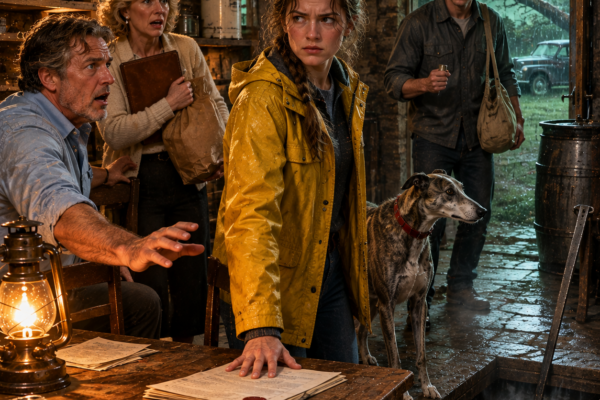
A dog lay on the back step. It was a small long-bodied creature rust red and white with short legs a white blaze down its face and one ear that stood up while the other lay folded.
Its muzzle was gray. It lay curled with its nose under its tail shaking and when the door opened it raised its head and looked at her out of dark patient eyes like someone who had waited at this door a good many mornings.
Oh, Greta said. Oh, you old thing.
She knew what was left in the bag.
One can of soup, half a stick of butter, a third of a loaf, enough to last until Thursday if she was careful. She stood doing that arithmetic, and then she did what the arithmetic did not recommend.
She warmed the soup in a tin cup at the mouth of the oven and set it on the step.
The dog rose in two stages, front and then back, like an old man getting out of a chair.
It drank the soup in six long, careful laps, and when the cup was clean, it looked at Greta with such solemn dignity that she laughed in spite of herself. Crum, she said, you look like a crum.
A distinguished one.
She had no idea why the word had come. Come in, out of this.
The dog went past her into the warm, as if it had been invited long ago. It crossed the production room, nails clicking on the tile, and lay down against the east side of the old oven with its spine along the brick and let out a long sigh.
It was the smallest kindness she would do that week. It would be repaid in a coin she could not yet imagine.
She spent Tuesday melting snow in a stock pot on the iron top of the oven and breaking the ice on the standpipe with the hatchet. At dusk, the bank clock across the street blinked 19 below.
By 9:00, she had banked the fire and sat on the flour sacks with her back to the warm brick, and Crum lay beside her with his chin on his paws.
The shop was quiet in the way that cold things are quiet, as if listening.
It was Crum who noticed first.
He lifted his head. His one standing ear turned like a dish toward the east wall, where the brick met the plaster in the corner by the stair.
He got up, went to the wall with his stiff, careful gait, sniffed along a seam from the floor to his shoulder, and began to scratch. The dog looked back at her once, over his shoulder, and she smelled it.
It was faint at first, a thread in the air, caraway and old yeast, dark and sweet and dry, the smell of rye bread on the second day.
It was the smell of her grandfathers coat.
It was not coming from the oven, which smelled of ash and pine. It was coming from the wall.
She got to her feet slowly and crossed the room with the lantern.
The whole east wall was furred with frost.
Every course of brick drawn in lace, every course but one.
At the height of her shoulder, in the corner by the stair, was a patch of bare dark brick the size of a breadboard.
No frost clung to it. It glistened faintly, as a window does when someone has breathed on it.
She laid her palm against it.
The brick was warm, not hot, but warm, like the flank of an animal, and through the mortar, a steady, thin current of air was moving, soft and dry, and smelling of caraway.
A wall does not breathe.
She ran her fingers along the edge of the warm patch and found a line so fine she would have missed it, where the mortar was newer, straight as a ruled pencil. It ran up and across and down and up again to make a rectangle the size of a narrow door.
And at the height of her hip, hidden by a century of soot in the groove between two bricks, her thumb found a small iron ring.
Her heart was going hard.
She said aloud, Papa. And heard how foolish it sounded in the cold, and did not care.
She took the ring and pulled. Nothing.
She set her boot against the base of the old oven and pulled again with all her weight, and the dog pressed against her knees, trembling. Then something gave inside the masonry with a deep, slow, greased click, as if a heavy weight were rolling over in its sleep.
A section of the wall, the size of a narrow door, swung out toward her on a hidden pivot with no sound at all, and warm, dry air poured over her face and her gloved hands, sweet with caraway and rye, and the lantern flame leaned over and fluttered and stood up again as if it had been told a secret.
Greta stood in the cold with her hand on the iron ring and could not make herself go in. Warm air kept pouring from the opening, soft against her face.
Behind her, the old oven ticked and settled. Grum pressed his shoulder against her knee, and then, because she did not move, went in ahead of her on his short legs and vanished into the dark.
She heard his nails on brick.
She heard him sniff and sneeze and sigh. Well, she said, and followed.
The room was no bigger than a pantry, perhaps 8 ft by 10, with a low arched ceiling of whitewashed brick and a floor of flat red tile. She held the lantern up.
A thermometer on a nail by the door said 46°.
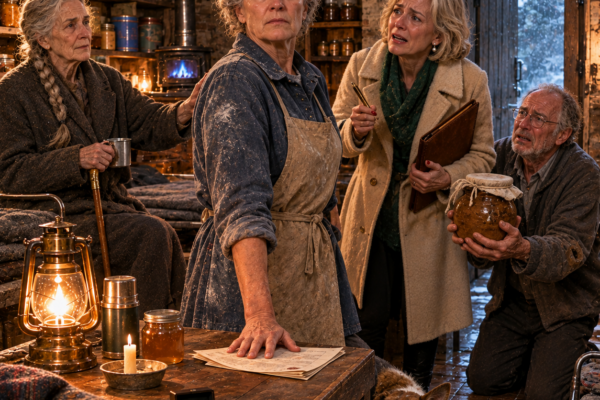
Two iron cots stood against the walls, each with a gray wool blanket folded square at its foot.
There were shelves along the back lined with tins and jars, a small kerosene stove on a brick shelf, two hurricane lanterns, a stool, and a worn pine table with a candle stub in a saucer.
The air was dry and still and smelled of rye.
It was the warmest room she had stood in for 2 days and it had been shut for longer than she had been alive.
Above the inner doorway, cut deep into a beam of dark oak, were six words in square capital letters. She read them aloud in a voice that did not sound like her own.
Bake one loaf more than you can sell.
Her grandfather had said it every morning of her childhood while the dough rose. She had thought it was only a bakers joke about waste.
She had never once thought it was a rule.
On the table lay a book.
It was a fat black notebook bound in oilcloth, tied shut with a length of bakers cord with a pencil stuck through the knot.
A label on the cover in her grandfathers blocky hand said the starter book. She sat down on the stool with the lantern on her knee, untied the cord, and opened the cover.
A single page of lined paper was folded inside. It was dated the 4th of March, 1998, 3 weeks before her grandfather died.
She read it by the lantern and Crumbs sat on her boot. Greta, I am going to say this the way I say everything, which is plainly.
In the winter of 1966, the snow came down for 6 days and shut Alder Falls like a lid. I kept the old oven lit and fed 41 people out of the back door and I learned that a town in trouble does not need a baker.
It needs a fire. So that spring I built this room in the heat of the oven wall where the chimney runs so that nobody in this town would sit cold while a Vasek had fuel.
I told nobody. Lucille knows enough to hold her tongue.
Your father does not know and I have let him not know because he never could abide a thing he could not sell. I will tell you something nobody told you.
I did not leave you the bakery because you were the one who stayed.
I left it because you were the one who listened to the dough.
Sylvia has the gift for people, and that is a real gift, and she will make her way, but you have the gift for bread, and bread outlasts people. You were not the second daughter.
You were the one I was saving the oven for.
Light the old oven.
Keep the damper open and the oak dry.
The tins on the shelf are good for a long time, and the kerosene will burn. The steel box under the left cot is not for today.
The key is where the bread is born.
You will know the place when you sit down to bake. Be kind to your sister, if you can.
Do not let her carry one more thing of yours out of a door. Papa Josef, Greta.
Read it twice. Then she folded it along its old creases and held it against her chest with both hands and sat very still on the stool and let herself be held by a room.
Do not let her carry one more thing out of a door.
She had read it three times before she noticed the dog was whining. He had gone to the opening in the wall and stood looking out at the cold, then back at her, then out again.
I know, she said.
I know. Its colder out there than in here, and youre an old man.
She went out and brought the lantern from the shop and stoked the old oven with the last of the slats. She dragged the flour sacks through the brick door and laid them on the right-hand cot under the gray blanket.
The blankets were stiff and smelled of cedar and were perfectly sound.
She shook one out and a small gray moth flew up, and she laughed aloud.
She lit the kerosene stove with the second-to-last match, and the blue flame took, and in 10 minutes the room was warmer than the shop.
At last she lifted Crum onto the cot, and he turned around twice and lay down with a groan and put his chin on her knee.
Some people leave a house behind, and some leave a warm place to wait out the storm.
Greta knelt and drew it out. It was a squat gray steel box the size of a bread pan with a brass lock and a dent in one corner.
She tried the lid. It did not move.
She turned it over and found nothing on the bottom but a coat of dust and a scratched paper tag which said in pencil, Not yet.
She slid it back where it had been and sat up and discovered that she was ravenous. The tins on the shelf were round and heavy with paper labels gone the color of tea.
There were oat crackers in one, hard as slate and perfectly sweet. There was a tin of sardines, one of peaches, one of condensed milk, and a row of mason jars of honey that had gone to sugar and gleamed like amber.
She ate crackers and honey by lantern light sitting on the edge of the cot and gave half of the second cracker to Crum who took it with ceremony and ate it on the tile.
It was the best meal she had eaten in 11 weeks. Each tin carried a paper label in her grandfathers blocky hand, a month and a year, and under it the same two words, For Thursday.
She turned one over in her fingers and could not think what Thursday had meant. It would be explained to her in time by someone who had been standing in line.
Afterward, she opened the starter book to the first page and began to read. It was not a diary.
It was a bakers ledger, kept by a man who wrote down what he did and not what he felt.
The first entry was dated the 12th of November, 1948, in a young mans pencil.
Rye, 40 lb, water, salt, started the crock. Put it on the shelf by the stove.
Wife says it smells like a swamp.
She will learn.
Page after page ran on, recipes and prices and weather, flour by the hundredweight, the day Anton was born, the day he first held a peel, the winter Lucille came into the family, shy and tall with a blue hat, and among the recipes were other lines that came from nowhere, like stones in a loaf. March 1966.
Gave the Hartley boy credit for the whole delivery. Told no one.
His father is in the ground 3 weeks and he is 22 and has a mill on his hands. Another, a year after.
Hartley paid.
Better than paid. Locked it in the box and on the last page but one, in a hand grown shaky and large, one line.
Greta was born in March. I held her in my two hands and she weighed less than a loaf.
She looked at me as though she already knew what I was going to say. She put her hand over her mouth.
She was 62 years old and she had not been held by anyone since the winter her father died.
She sat on the cot in her grandfathers secret room in a town that had forgotten her with a bakery that was officially worthless and a sister who had taken everything.
And she thought of the way Sylvia had said, Its the loveliest arrangement.
And for the first time in 6 days, a very small, very cold anger began to move in her, like a loaf starting to rise.
It had begun, she thought, at Mr.Daceys office.
It was the Wednesday after the funeral, the 6th of January, and the office was on the second floor of an old bank building on Main Street, with green carpet and a window onto the frozen river. Sylvia had driven her.
Sylvia had held her arm on the stairs.
Mr.Dacey was a long gray man with a bow tie and the weary courtesy of someone who has done a great many such mornings. And on the desk before him lay a document of 11 pages bound with a black clip.
Family Settlement Agreement and Mutual Release, it said at the top. Its only to keep us out of probate court, Sylvia had said.
Mothers will is old and muddled, and the lawyers would eat the estate alive. This just says what mother always wanted.
I get the house, you get the bakery.
Isnt that what she told you? She did say the bakery.
There you are. Sylvia had turned the pages with one bright nail.
This is the first page, the parties and the property. These are the numbers.
The rest is only boilerplate.
You know how they are.
Mr.Dacey will tell you its all standard. Mr.Dacey had looked at Sylvia and then at Greta and then at a thin blue folder on the corner of his desk with a cream label that said, Lucille Vasek Will.
Sylvias hand had come down on it very lightly, like a lid.
Thats only the old one, she had said.
Its been superseded.
Ms.Vasek, Mr.Dacey said carefully, you are entitled to take this away and read it, and to consult counsel of your own.
I represent your sister, and I would be doing you a disservice if I did not say so.
She doesnt need counsel, Warren. Silvias voice had gone soft as flannel.
She needs a nap. Shes grieving.
She has trusted me all her life.
And Greta, who had been awake for most of nine nights, and had buried her mother on Saturday, and who had trusted her sister all her life, had taken the gold pen and signed on the line with the yellow flag.
Eleven pages. She had read one.
She sat in the lantern light with her grandfathers book on her knee, and the old oven ticking beyond the wall, and understood that she had signed her name beneath a sentence she had never read. She did not know yet what it said.
She only knew that Warren Dacey had looked at a blue folder as a man looks at a door he has been told not to open, and that her sister had put her hand on it.
Crum let out a long, comfortable snore.
Greta turned to the very back of the starter book. There, glued to the inside of the cover, was a small square of paper she had not noticed, written in a slanted, careful hand she had known all her life.
She read it twice before she understood whose it was. Greta, it said.
Papa Josef made me promise never to tell, and I did not.
I could not say it with Silvia in the house, but I put it in my will instead. Everything within its walls.
Do not open the box until you have the law behind you. The key is in the flower bin under the floor.
Forgive me for waiting so long. I wanted you to want it for the right reasons.
Mother. The lantern flame stood perfectly still.
On the cot, Crum lifted his gray muzzle and lowered it again. Out in the production room, in the dark beyond the oven, the flour bin sat in its corner with its lid shut like a closed eye.
Greta slept that night in her grandfathers room with a dog on her feet, and for the first time in a week, she slept all the way through.
She woke on Wednesday to the sound of knuckles on glass.
It was a dry, patient tapping, three raps and a pause, and it came from the front of the shop.
She lay still a moment, not knowing where she was, and then she smelled the rye and remembered. The thermometer on the nail said 44.
She put on her boots and stepped out through the brick door into the cold, and pulled it shut behind her until it settled with its greased click, and Crum squeezed through the last gap and trotted ahead of her, tail up for the first time.
A woman stood on the sidewalk outside the front window with her breath smoking around her. She was very tall and very thin with a silver braid wound around her head like a crown, a long gray wool coat, and a cane with a brass tip, and she was holding a covered pot in both gloved hands.
When Greta turned the lock and dragged the door open, the woman looked her up and down once, the way a person checks a column of figures, and then looked down at the dog.
Well, she said, there you are, Mr.Crum.
I wondered where youd gone. You know him?
Everyone on Cooper Street knows him.
Hes been sleeping on your back steps since November, and Ive been leaving scraps at the foot of it and pretending to the neighbors that I havent.
She transferred the pot to one arm and put out her free hand. Philippa Aldridge.
I live across the way, above the old pharmacy.
I taught you the multiplication tables in the third grade, Greta Vasek, and you were the only child in my class who ever asked what the nines were for. Greta stared.
She had a sudden vivid memory of a tall young woman with a braid the color of wheat writing on a chalkboard and the squeak of the chalk. Miss Aldrich?
Philippa will do now that were both old. She lifted the lid of the pot.
A smell of onions and barley rose into the cold. That chimney of yours has not smoked in 9 years.
I was sitting at my window at 6:00 this morning, as I do, and I saw it breathe, and I thought either the building was on fire or a Vasek had come home. Either way, I wanted soup.
They ate in the kitchen of the production room at the steel table with the door of the old oven open and a slat burning in it.
Philippa sat bolt upright on a flour sack with her cane across her knees.
She ate neatly and fast and said nothing for a good while. Crum lay across her feet.
Hes Antons dog, she said at last.
Greta put down her spoon. Not the same dog.
The last pup of his last litter.
Philippas mouth twitched.
Your father began feeding a stray behind this shop in 2014.
She had five. He told everyone he was finding homes for them and found four, and the fifth, he said, was a mistake and kept.
Then he died and your mother couldnt have a dog at Linden House, so Stanley Ostrowski took him in next door. He was 91 and he was lonely.
Stanley went in November.
She tapped the cane once on the tile. The dog was sent to the shelter in the county seat, which is 40 minutes from here.
He walked back.
It took him 2 days.
I saw him come up Cooper Street in the sleet with his belly dragging and go straight to the back step of a building with no heat and no bread and lie down on the stone. He slept there every night since.
Greta looked at the dog. The dog looked at her mildly with his gray muzzle on his paws.
He didnt come for the bread, she said. No, he came for the person who used to feed him.
Hes been waiting for one of you to open that door. For a while neither of them spoke.
The fire talked to itself in the oven.
Then Greta said, Philippa, why did the whole town used to line up outside the back window on Thursdays? I remember it as a child.
I never knew why. Philippa Aldridge put down her spoon.
She folded her hands on the head of her cane and for the space of a breath she looked 19.
Because of the blizzard, she said.
February of 1966, I was home from teachers college for the break and it began on a Sunday night and did not stop for 6 days. The plows couldnt get through.
The trains stopped.
The power failed on the second night and the whole of Alder Falls sat in its kitchens and watched its breath and on the third morning someone saw smoke coming out of the bakery chimney.
The old oven your grandfather lit it and kept it lit for 6 days and fed it with whatever his customers could carry him.
Fence rails, furniture, a piano bench and he baked. He baked everything he had, flour and lard and rye and handed it out of the back window in the snow to anyone who came with no money and no questions.
41 families. I stood in that line myself in a borrowed coat and he put a loaf in my hands and said, Dont thank me.
Thank the oven.
It was warm through the paper.
I remember it was still warm when I got it home. She smiled a little.
After that, every Thursday for 16 years, he baked one loaf more than he could sell and put it in the window for whoever had no money. We called it the Thursday loaf.
When he retired, your father stopped it.
He said it was bad business.
Greta found she could not look at her.
He had a room, she said, in the oven wall. I found it last night.
She had not meant to say it. It simply came out in the warm, in the smell of onions and burning pine, to the only person in 30 years who had asked her a question and waited.
Philippa did not move.
But her fingers on the cane tightened until the knuckles showed white.
I always thought so, she said very softly. I thought it for 60 years.
I never asked.
A person who owns a secret that large has a right to keep it. And a person who knows better than to ask is the kind of person he trusts.
She let out a long breath.
Is it warm?
44° with the fire banked. Then the room is the towns, not just yours, and you will not tell me what is in it.
Not today.
The old teacher stood and pulled her coat around her.
But you will tell me this.
Why is Greta Vasec sleeping in a bakery in January with no heat, no car, and $40? I have watched your sisters white car go up and down Cooper Street for 2 years, Greta.
It has never once stopped at this door.
So Greta told her.
It took a quarter of an hour.
She told it plainly, in order, the way she would have read a recipe, with the cold bread and the keys and the bank book and the crock. And Philippa Aldrich listened with her head bent, saying nothing until the very end, when Greta came to the pantry door and the way Russell had carried the crock out into the snow, Philippa made a small sound in her throat.
11 pages, she said, and you read one.
I read one. Mhm.
It was exactly the sound Sylvia made, but in her it meant something quite different.
I have a thing to tell you, and Id like you to take it for what it is, which is an old womans observation and not a fact. Do you know what has been going on at Lyndon House?
Mother was ill and they There has been a dumpster in that front yard since September. Philippas voice was dry.
 [Tap here for the Next Part ]