Part 3: What Was Behind the Cracked Oven Wall of the Old Bakery?
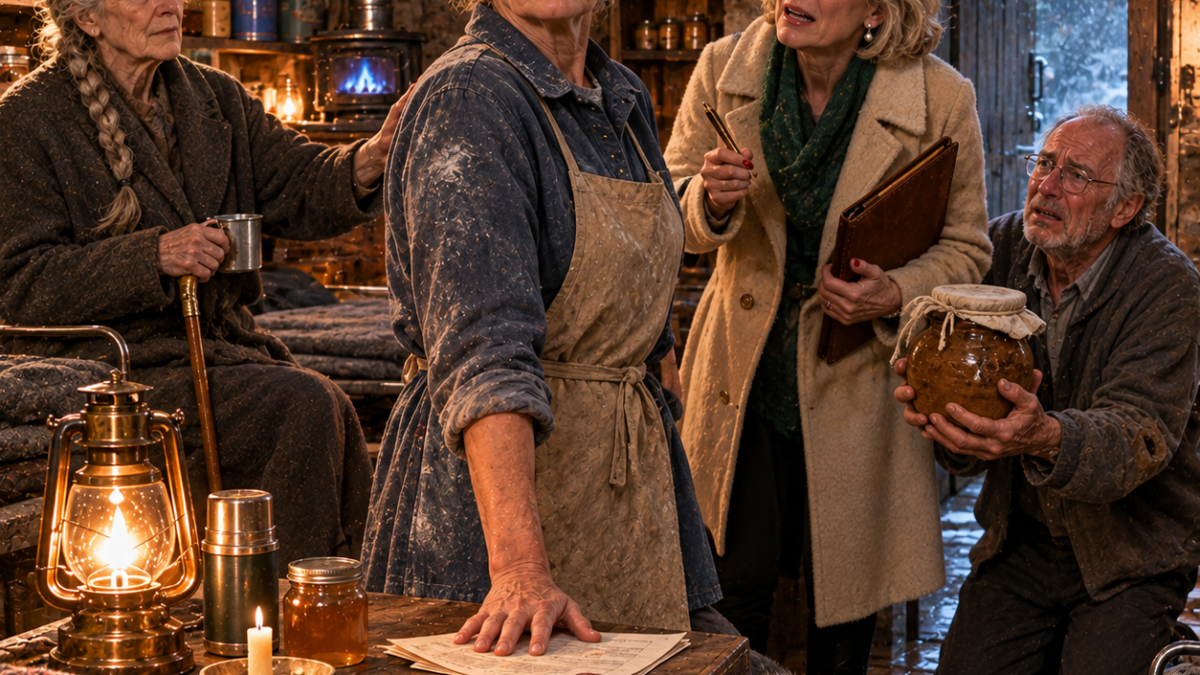
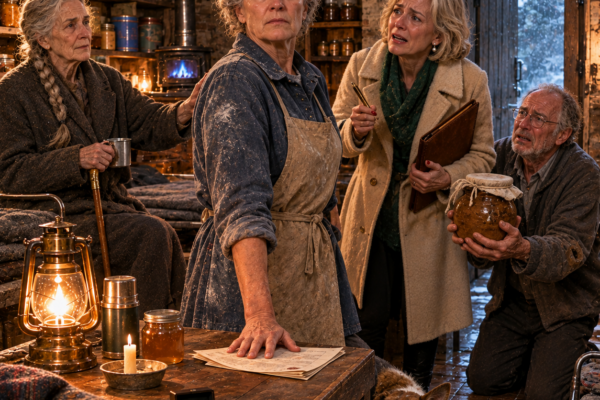
The room had stood shut for 60 years, and the food had not gone off because Josef Vassik had never in his life sealed a thing badly. Greta opened the peaches and the condensed milk and warmed the milk on the little kerosene stove in the tin cup with honey stirred in and passed it round.
She cut the oat crackers in halves.
Sylvia refused at first. She sat on the cot with her mouth set.
Then Philippa pressed a cup of hot, sweet milk into her hands without a word as one does to a child in a storm, and Sylvia looked at it for a long moment and drank it.
Near midnight, the wind rose to a pitch that made the lantern flame lean and fell away. The thermometer on the nails said 51.
It was Sylvia who spoke to nobody in a low, tired voice with her eyes on the quivering light. I was 14 when the mill closed down.
Did you know that?
You were 17 and you were already in the shop at 4:00 in the morning.
Papa took a second mortgage on the bakery and we ate the Thursday loaf for a year.
I sat in the school lunch room with a sandwich made of your bread.
Everyone in that room knew whose bread it was and what day and why. I swore I would never be that family, the one who takes the loaf from the window.
I married a man with a house.
I told myself that money was only a way of not being afraid. Then the inn and it was one loan and the contractor and it was another and I knew what mothers will said about the bakery, all within its walls and I thought it meant an oven that doesnt work and some pans.
She laughed very faintly with no breath behind it.
I told myself I was saving us. I was saving myself from a sandwich.
Thats all it was. I have been 14 years old in a lunch room for 46 years.
The lantern hissed. Outside the wind went on.
Greta looked at her sister for a long time.
She looked at the girl in the lunch room and the cherry red nails and the hand on the handbag.
She thought of her grandfathers two lines, be kind to your sister if you can and do not let her carry one more thing of yours out of a door.
I understand it, she said at last.
I do, Sylvia. I think that is the hardest part.
I am not going to tell you that its all right. It isnt and I dont know yet if if will be, but I know something Papa Josef knew.
A person doesnt have to be forgiven to be fed. She reached out and put the tin cup of peaches into her sisters hand.
Thats all.
Eat.
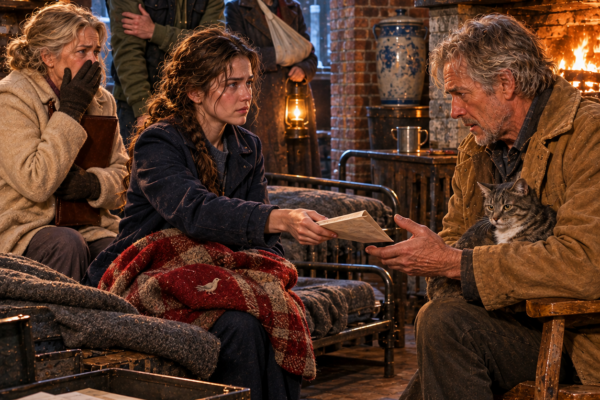
Sylvias face crumpled, slowly, like paper. She put her head down on her knees.
After a long while, Philippa moved to the cot beside her and laid a long gray hand between her shoulder blades and said, quite gently, There, now.
There, Sylvia.
I taught you the multiplication tables and you cried over those, too. The storm went on until nearly five.
Toward dawn, it dropped rather than ended, as a voice drops in a church. The last they heard was a thin whistling through the flue of the old oven and the tick of the brick as it cooled.
And in the stillness, Crum sighed and rearranged himself on Philippas feet. Greta lay on the cot with her eyes open, looking at the beam above the door.
Bake one loaf more than you can sell. When she opened the brick wall at seven, the light that fell through the gap was blue and white and perfectly still.
The shop was filled with snow.
It lay in a long, smooth drift across the oak counter and glittered on the floor. And the windows on the west side were gone, so that the street lay open to the room like a page.
The sky outside was a hard, pale blue.
The bank clock across the street, half buried in a drift, said 18 below.
Cooper Street had disappeared. Every car along it had been turned into a long, white loaf and the church steeple stood up out of the snow beyond the roofs, shining as though it had just been washed.
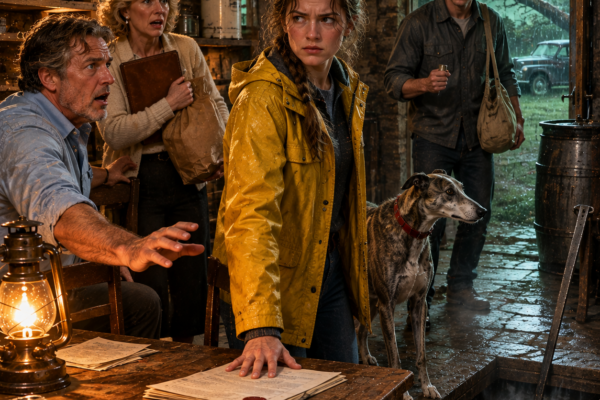
Well, said Philippa, were all alive. Were alive, said Greta.
She stepped over the sill and went to the back door and opened it, and the cold struck like a bell.
On the back step, where an old dog had slept every night since November, the snow lay smooth and unbroken.
And for the first time in her life, she understood what it was to be a place people came to, and not a place they were sent. Calvin Marsh arrived at 10:00 in the cab of a county plow, with a blanket over his shoulders and his glasses frozen, to find four people and a dog sitting on flower sacks around the open door of the old oven, eating hot oatmeal from tin cups.
He stood in the doorway for some time, with his mouth slightly open. I have an order, he said at last, signed by Judge Tilden at 11:00 last night, by flashlight.
Your grandfathers estate is reopened.
The option is stayed.
Hartley Foods has confirmed the escrow in writing.
He looked around.
I see that I am not required to tell you anything else. It took the rest of the winter to put it right, and most of it was paper.
The settlement was set aside by consent, and Sylvia made no claim on the certificate.
Calvin Marsh said afterward that she would have lost if she had. Sylvia signed it herself in Calvin Marshs office on a gray Tuesday, with a pen that did not belong to her.
She sold Linden House in March for just over $2 million to a retired couple from the Lakes who wanted the garden.
The loans were paid in full.
What was left was split down the middle, as the will had said, and Greta did not ask for a penny more or a penny less. Harborline Square withdrew from the block in February with a short, careful letter and a smaller company bought the old pharmacy and made it into a clinic.
Russell took a job at the lumberyard that had once refused him credit.
The inn was never built.
The Hartley sale closed on the 15th of February.
Gretas share arrived in the form of a wire and a letter from Judith Osay and a framed copy of Ned Hartleys clause, which she hung on the wall of the production room beside the old oven.
She put in a new furnace and a new roof.
She hired two people from the town who had been out of work since the mill shut and she paid them well.
She spent a little on herself, a good coat and a new pair of boots.
She put the rest in a fund at the credit union with a name she chose herself, the Thursday Loaf, so that for as long as there was a bakery on that corner, no one in Alder Falls would stand in the cold without bread.
The bakery opened on the first Thursday in March.
She had baked all night. At 6:00 in the morning, she set a single round loaf of rye in the front window with a card in it in her grandfathers blocky hand that she had copied from the starter book.
For whoever needs it.
Philippa Aldridge was the first one at the door.
She bought a baguette and paid for it and went out and gave it to a boy waiting on the corner and that was the start of it.
A year went by.
It was January again and snow. Greta stood in the doorway of the shop at 5:00 in the morning in her good coat with flour to the elbows and the old oven roaring behind her.
The brass bell over the door was bright. The crock stood in its place over the radiator with a clean linen cloth tied round the top and a dog of 12 slept under it on a folded quilt.
Sylvia came in on Thursdays. She stood at the end of the line with a scarf over her silver hair and bought one loaf at the price on the card and paid with exact change and Greta put a second loaf in the bag when she wasnt looking.
Neither of them mentioned it. Russell came on Saturdays to help fill the flour bin and said very little and left with a pie.
The bank clock said nine below. A figure was crossing the empty street.
She was a young woman, no more than 22, in a thin canvas jacket and sneakers wet to the ankles, with a duffel bag over one shoulder and her arms wrapped around herself.
She stopped at the curb.
She looked up at the lit window and the loaf on its sill and the name on the glass in gold letters, and her face worked as though she were trying to decide whether it was a kindness or a trap. Greta wiped her hands on her apron and went out into the cold.
She did not ask the girls name. She did not ask where she had come from.
She said, Theres bread and a fire and a chair. Nobody here will ask you a thing you dont want to answer.
Come in.
Her name was Tamsin Reeve.
She told Greta later, over the second cup of tea at the steel table, with the oven door open and her sneakers steaming on the tile, that she had missed the last bus from the county seat.
That was all she said.
Greta nodded and refilled the cup. My grandfather had a saying, she said, when the girl had stopped shaking.
He cut it into a beam. Bake one loaf more than you can sell.
I used to think it was about flour.
She smiled.
I think now he meant that theres always somebody still on the road. You dont have to know who.
You only have to leave a little more than you need.
Tamsin looked at her for a long moment and then down at her hands. A bit of her face came undone.
Outside, the first gray light was coming up over the mill and the snow was falling soft and slow on Third and Cooper as it had fallen on the morning a white car went away down the street.
In the window, on the sill, the loaf stood in its place.
On the back step, an old dog had lain down in the snow with his nose under his tail to wait, as he always waited, for whoever would open the door.